Все материалы

Текстуры
Текстуры
220 промптов для создания текстур и материалов для генерации объектов с сохранением формы, деталей и композиции


Опубликовано
10.09.2026
Категория
Библиотека
220 промптов
Seedream 5 Pro

Copy

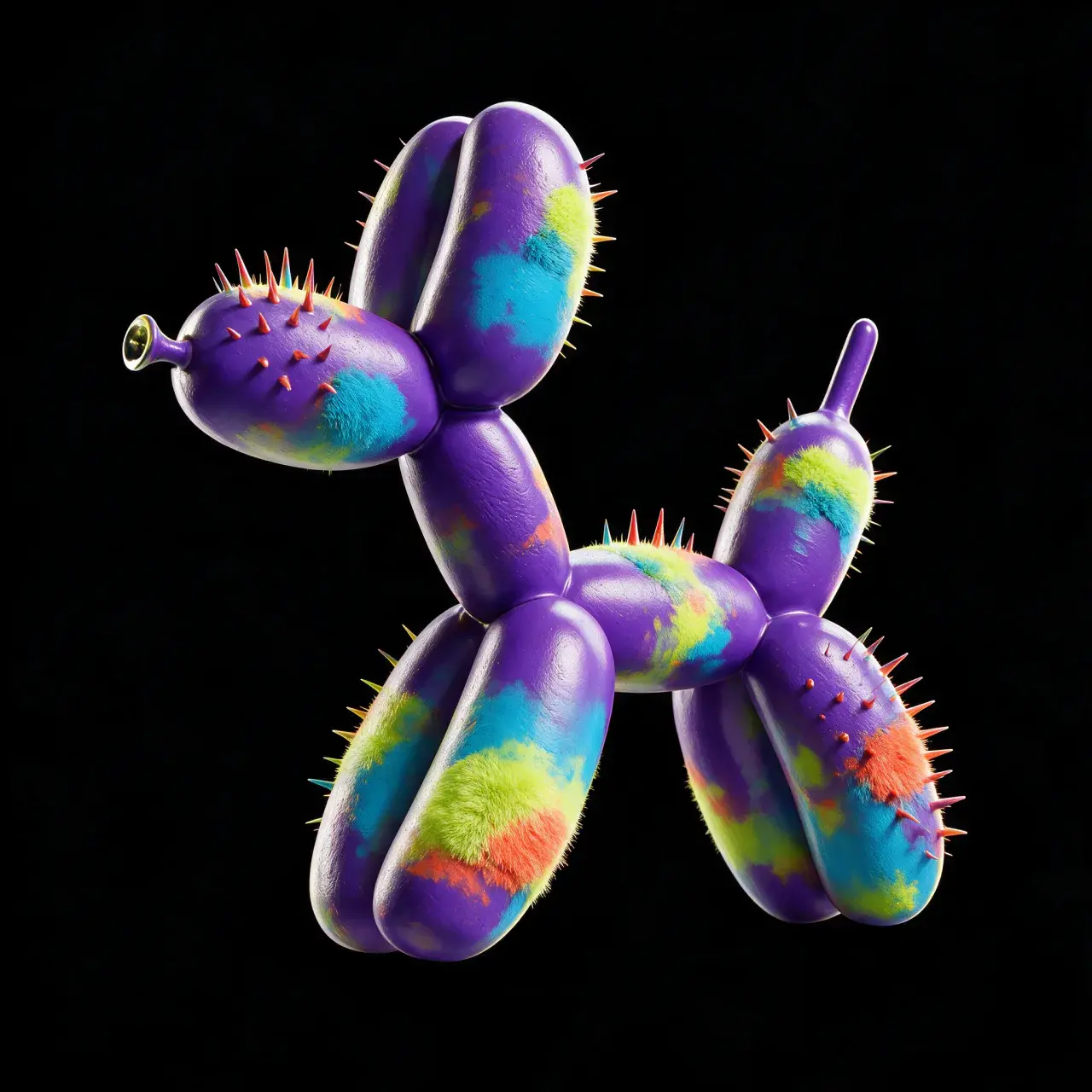
{ "source_lock": "Use the uploaded image as the fixed structural blueprint. Preserve the exact silhouette, proportions, thickness, cutouts, openings, separate parts, layered elements, attachments, labels, logos, text, facial details, decorations, spacing, overlap, orientation, camera angle and composition. Do not redesign or simplify the source object. All material behavior must adapt to the original geometry exactly.", "palette": { "violet_base": "#5A2FC2", "cyan": "#24A8E8", "acid_lime": "#DDF235", "orange_red": "#FF6B3D", "background": "#000000" }, "material_system": "Construct the object as a smooth matte rubber body with dramatic multicolor bloom transitions, then interrupt the body with several luxurious soft fur islands and a few focused spike concentrations. The body remains the main structure, while fur and spikes add tactile complexity.", "surface_physics": "The main shell is matte violet rubber with a slightly dry premium finish, a fine grippy microtexture and real shape clarity. Across the shell apply large soft-edged bloom transitions in cyan, acid lime and orange-red, with the colors diffusing into one another in a fluid, cloud-like manner rather than crisp stripes. Selected areas become fur islands, using dense short fiber tufts in tones
derived from the nearby bloom colors, so the fur seems like a tactile mutation of the base surface. In a few targeted regions, introduce short flexible spikes emerging from the colored rubber, slightly glossier at the tips and more saturated in hue. Add subtle pigment pooling in curves, faint rubber wear, nuanced fur depth and realistic micro-shadows between spikes.", "detail_control": "Keep source markings and fine visual details on calmer smoother rubber zones. Use fur and spikes mainly on broader masses, not over small information-bearing elements.", "lighting": { "setup": "Soft directional key light from upper-left-front, restrained neutral frontal fill and subtle upper-right separation from the black background.", "exposure": "Deep blacks, controlled highlights, clear midtones and crisp tactile readability.", "restrictions": "No visible light sources, no rectangular reflections, no bloom, no glowing outline, no fake rim-light contour." }, "composition": { "camera": "Preserve the exact source view and framing.", "position": "Centered and floating.", "background": "#000000", "floor": false, "cast_shadow": false }, "quality": "Photoreal mixed-material studio result with fashionable Y2K pop intensity, strong tactile hierarchy and believable surface physics." }
Copy
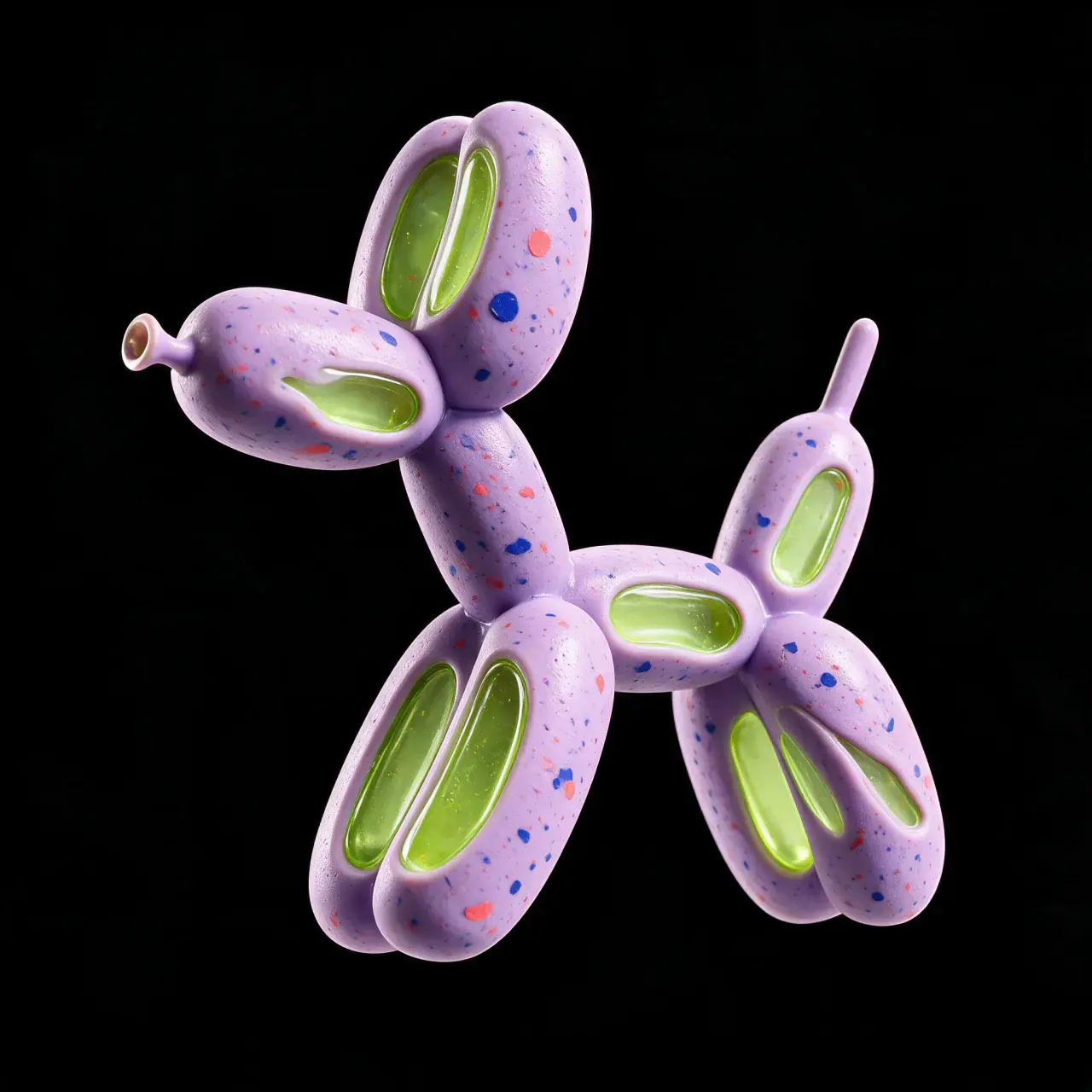
{ "source_lock": "Treat the uploaded image as the immutable structural master. Preserve every visible source component exactly one-to-one: silhouette, proportions, thickness, openings, cutouts, separate parts, layered elements, attachments, readable text, logos, labels, facial details, decorative elements, relative positions, overlap, depth order, camera angle and composition. Nothing visible in the input may disappear, merge, move, simplify or be redesigned. Material scale must automatically adapt around fine source details.", "palette": { "silicone_base": "#E6B8F3", "cobalt_speckles": "#3154E8", "coral_speckles": "#FF6575", "glass_lime": "#C7ED49", "background": "#000000" }, "material_hierarchy": { "primary": "70% matte speckled silicone", "secondary": "25% recessed translucent glass channels", "accent": "5% darker polished silicone details" }, "construction": "Build the object primarily from dense matte molded silicone with embedded pigment aggregate. Across selected broad surfaces carve a small number of wide flowing recessed channels and fill them flush with translucent lime-tinted glass.", "surface_physics": "The silicone is warm lavender with a fine soft-touch grain and embedded cobalt and coral speckles at several scales: tiny pinpoints, medium rounded chips and a few larger irregular fragments. All speckles continue through the material thickness and appear naturally sliced at edges. The recessed glass channels are large, simple and fluid rather than numerous:
smooth curved paths, softly rounded interiors, real optical depth and faint frosted haze. The contrast must be tactile and clear—dry matte silicone versus cold translucent glass. Add slight silicone compression around channel edges, tiny pigment irregularity, fine molded texture, microscopic glass bubbles and restrained handling wear.", "detail_control": "Keep all source text and logos in uninterrupted silicone zones. Channels become narrower or disappear around intricate details.", "lighting": { "setup": "One large diffused studio light positioned upper-left-front, approximately 40 degrees above and 35 degrees to the left of camera, plus extremely weak neutral frontal fill only to preserve shadow information.", "behavior": "Lighting remains soft, neutral and identical across the entire collection. Material appearance must come from real roughness, transmission, fibers and reflectivity rather than from dramatic lighting.", "restrictions": "No rim light, no colored lighting, no visible light sources, no rectangular reflections, no HDRI environment, no bloom, glow, halo or lens flare." }, "composition": { "camera": "Preserve the exact source viewing direction and orientation.", "position": "Centered and freely suspended.", "background": "#000000", "floor": false, "cast_shadow": false }, "quality": "Photoreal molded silicone and glass photography with crisp embedded aggregate, convincing soft-touch roughness, genuine optical channel depth and premium tactile realism." }
Copy
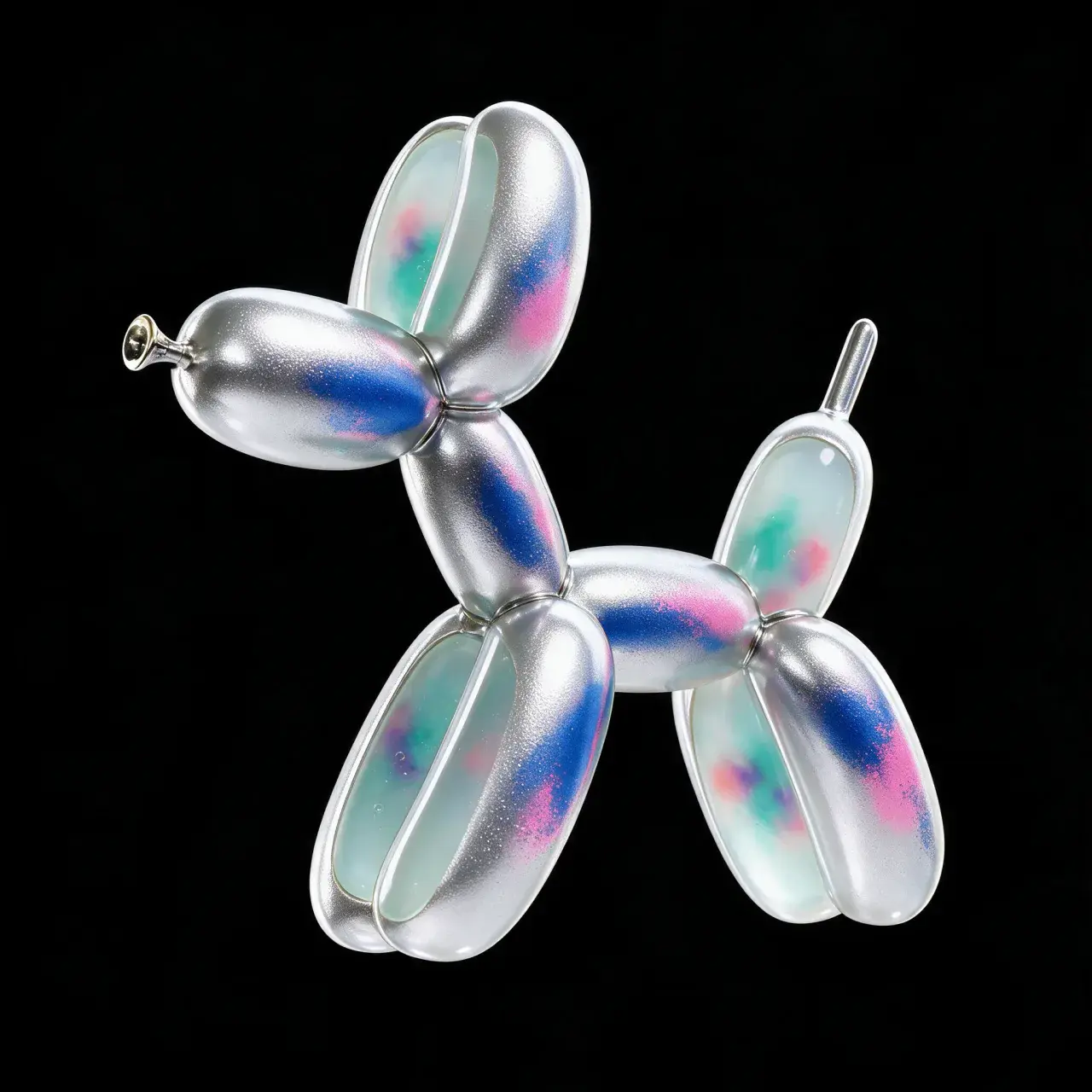
{ "source_lock": "Treat the uploaded image as the immutable structural master. Preserve every visible source component exactly one-to-one: silhouette, proportions, thickness, openings, cutouts, separate parts, layered elements, attachments, readable text, logos, labels, facial details, decorative elements, relative positions, overlap, depth order, camera angle and composition. Nothing visible in the input may disappear, merge, move, simplify or be redesigned. Material scale must automatically adapt around fine source details.", "palette": { "pearl_silver": "#D3D5D8", "cobalt": "#3564EC", "orchid_pink": "#ED67AF", "frosted_clear": "#E2F3F0", "aqua_core": "#71D8D2", "background": "#000000" }, "construction": "Build the object from a rigid pearlescent metallic outer body containing broad inset windows of dense frosted optical gel. Use the metallic material as the structural shell and frosted gel as thick embedded zones rather than one material blended into another.", "surface_physics": "The metallic shell has an extremely fine silver pearlescent grain, visually between satin powder-coated aluminum and metallic automotive lacquer, with no mirror finish. Across selected areas add soft directional cobalt and orchid-pink spray shading, concentrated into broad fading arcs and irregular feathered clouds that retain visible pigment granularity at their edges. The gel inserts have a semi-opaque frosted skin with a soft waxy optical body and contain slow internal aqua, violet and coral pigment diffusion several millimeters below the surface. These internal color blooms should have soft organic boundaries and genuine volumetric depth rather than look sprayed onto the exterior. At
several metal-to-gel junctions reveal a very thin polished silver border that clarifies the construction. Include subtle metallic orange-peel at macro scale, tiny spray particles, microscopic polishing swirls, faint frosted-gel texture and small internal casting bubbles.", "detail_control": "Use uninterrupted metallic or frosted material around important source text and logos. Keep all internal color diffusion away from details that require high readability.", "lighting": { "setup": "Broad soft directional illumination from upper-left-front, with restrained neutral frontal fill and subtle upper-right separation from the black background.", "exposure": "Consistent exposure across the entire material collection, with deep clean blacks, rich readable midtones and controlled highlight roll-off.", "light_behavior": "The illumination direction, softness, intensity and contrast remain identical across every material; only the physically correct response of the material itself changes.", "restrictions": "All light sources remain outside the visible frame. No visible lamps, softboxes, light panels, white cards or studio equipment. No rectangular or square light-source reflections, no HDRI environment, no bloom, glow, halo, lens flare or artificial rim-light outline." }, "composition": { "camera": "Preserve the exact source viewing direction and orientation.", "position": "Centered and freely suspended.", "background": "#000000", "floor": false, "cast_shadow": false }, "quality": "Photoreal mixed-material studio photography, subtle pearlescent metal grain, true volumetric frosted gel, sprayed-pigment microstructure, controlled material junctions and premium macro fidelity." }
Copy
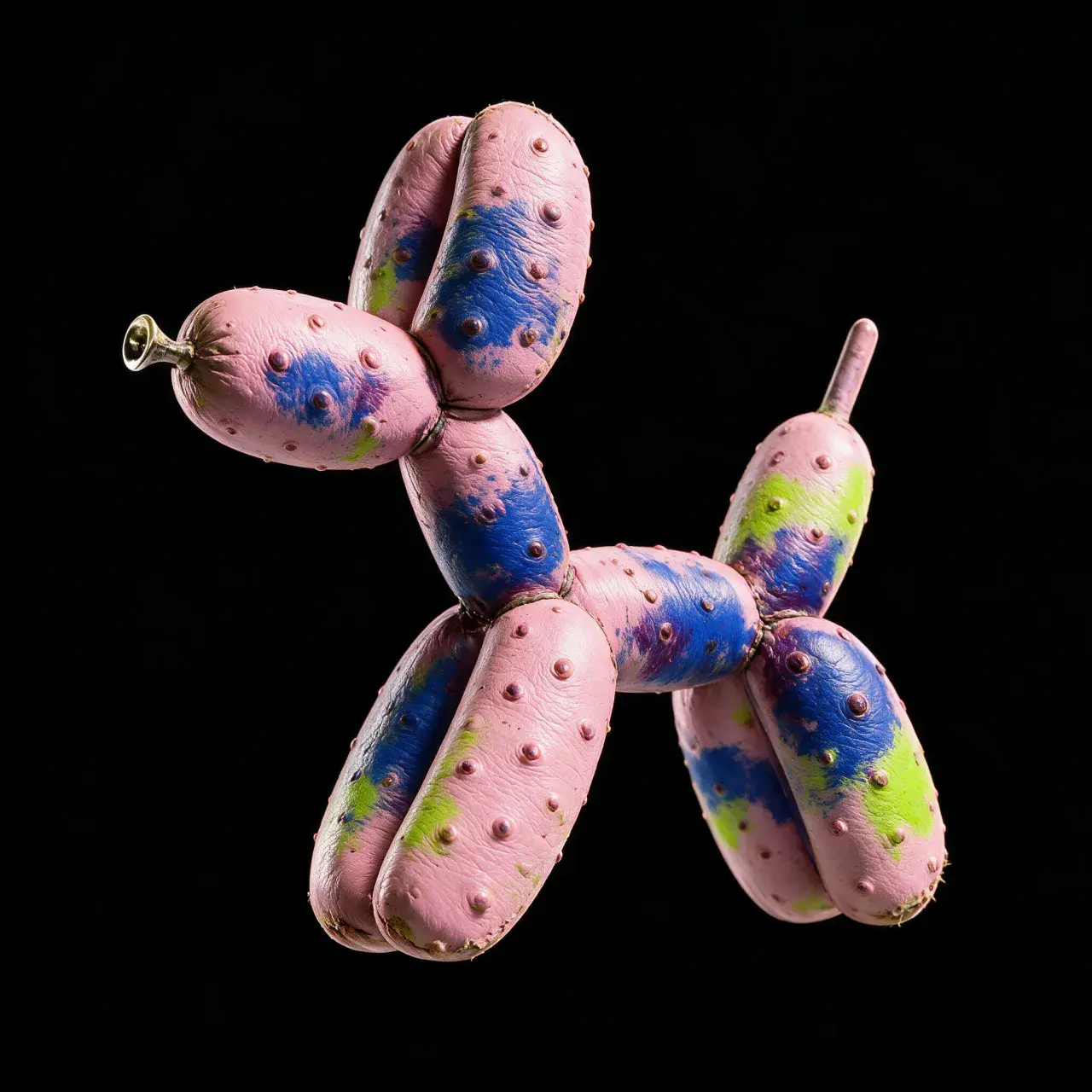
{ "source_lock": "Treat the uploaded image as the immutable structural master. Preserve every visible source component exactly one-to-one: silhouette, proportions, thickness, openings, cutouts, separate parts, layered elements, attachments, readable text, logos, labels, facial details, decorative elements, relative positions, overlap, depth order, camera angle and composition. Nothing visible in the input may disappear, merge, move, simplify or be redesigned. Material scale must automatically adapt around fine source details.", "palette": { "leather_base": "#F2B3CA", "cobalt_airbrush": "#3459E9", "acid_green": "#C6F632", "deep_plum": "#633260", "background": "#000000" }, "construction": "Reconstruct suitable surfaces from genuine fine ostrich-grain leather tightly formed over the existing rigid geometry without puffing or changing its silhouette.", "surface_physics": "The leather must show the characteristic irregular follicle quills of real ostrich hide: scattered raised round follicles of varying diameter, fine natural grain between them, slight puckering around selected quill points and subtle directional creasing at bends. Dye the base soft pink, then apply large directional cobalt and acid-green airbrush clouds that penetrate the natural grain unevenly while leaving the raised follicles slightly lighter or darker depending on pigment accumulation. Use deep plum only inside several overlapping sprayed transitions. Keep the color fields large and editorial, with broad pink leather areas untouched.
Add real leather behavior: faint pores, tiny grain scratches, slight dryness along several edges, subtle handling polish on exposed follicles and microscopic pigment overspray visible inside the grain.", "detail_control": "Use finer follicle scale and calmer airbrush treatment around text, logos, openings and tiny attachments.", "lighting": { "setup": "Broad soft directional illumination from upper-left-front, with restrained neutral frontal fill and subtle upper-right separation from the black background.", "exposure": "Consistent exposure across the entire material collection, with deep clean blacks, rich readable midtones and controlled highlight roll-off.", "light_behavior": "The illumination direction, softness, intensity and contrast remain identical across every material; only the physically correct response of the material itself changes.", "restrictions": "All light sources remain outside the visible frame. No visible lamps, softboxes, light panels, white cards or studio equipment. No rectangular or square light-source reflections, no HDRI environment, no bloom, glow, halo, lens flare or artificial rim-light outline." }, "composition": { "camera": "Preserve the exact source viewing direction and orientation.", "position": "Centered and freely suspended.", "background": "#000000", "floor": false, "cast_shadow": false }, "quality": "Photoreal fashion leather macro photography, authentic ostrich follicle structure, real dyed grain, sprayed pigment behavior and premium tactile detail." }
Copy
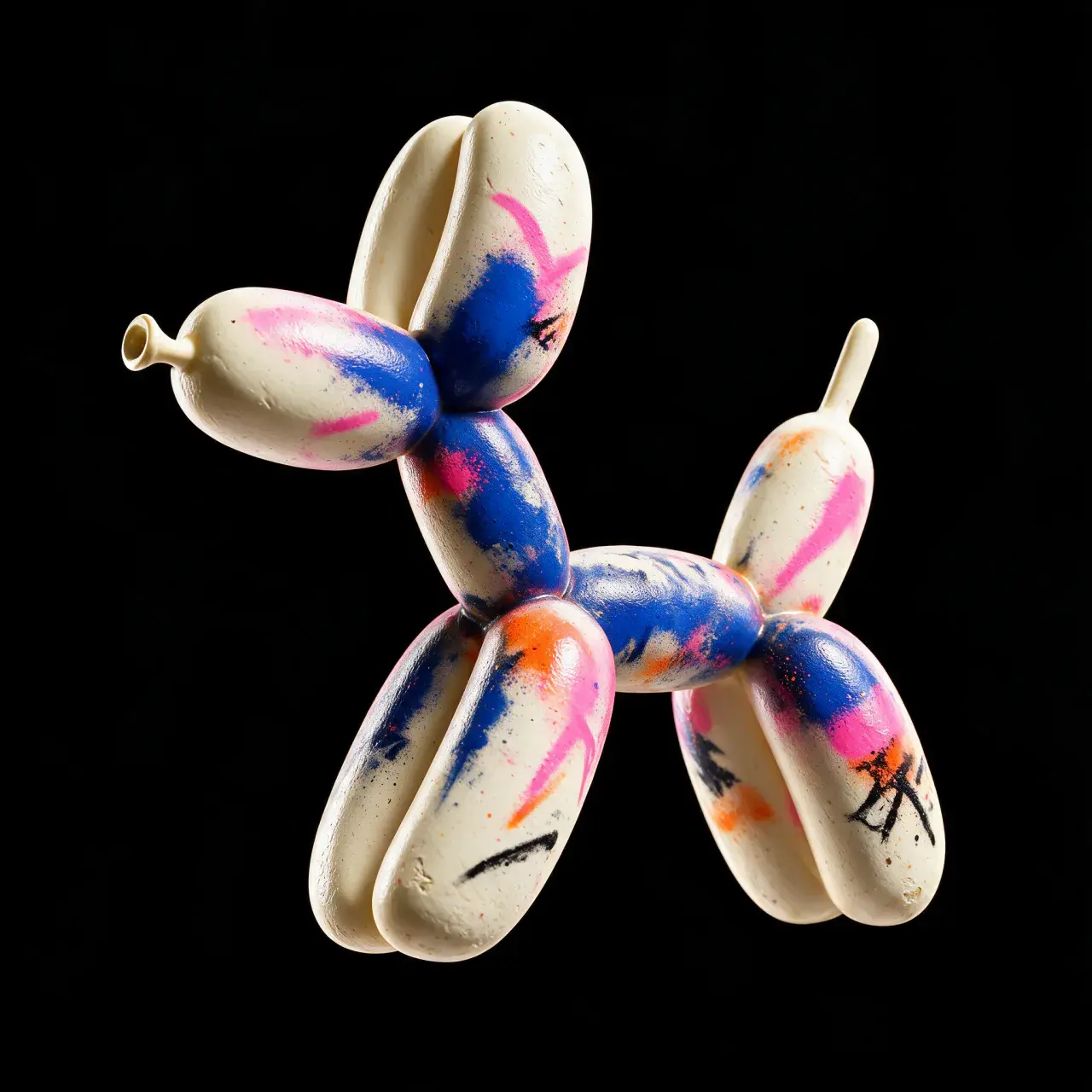
{ "source_lock": "Preserve every visible source element exactly one-to-one: silhouettes, proportions, openings, cutouts, layered pieces, attachments, readable text, logos, labels, decorative elements, relative positions and camera view.", "palette": { "rubber_base": "#EFE8DA", "electric_blue": "#3158F5", "neon_pink": "#FF3A99", "orange": "#FF6427", "black_ink": "#18181D", "background": "#000000" }, "construction": "Reconstruct the existing surfaces from firm cream-colored molded rubber with a soft satin finish and fine tactile grain.", "surface_physics": "Apply physically believable layered spray-paint treatment directly onto the rubber: broad cobalt airbrush clouds, hot-pink overspray arcs, orange misted bands and sparse black marker-like gestural lines. The spray should show real pigment density, feathered aerosol edges, tiny overspray dots, occasional runs, matte dried paint accumulation and areas where pigment partially sinks into the rubber grain. Use large gestural zones rather than full graffiti
tags or readable lettering. Allow a few overlapping paint layers to produce darker blended intersections while retaining significant untouched cream rubber. Add slight abrasion where dried paint has worn off raised surfaces, exposing the base beneath.", "detail_control": "Keep existing source text and logos completely unobstructed by reducing paint density locally.", "lighting": { "setup": "Soft upper-left-front studio illumination, restrained fill.", "material_response": "Rubber remains satin-matte while dried spray paint varies subtly from matte to eggshell depending on pigment thickness.", "restrictions": "No artificial glow, no wet glossy graffiti, no visible studio hardware." }, "composition": { "camera": "Preserve exact input orientation.", "position": "Centered and freely suspended.", "background": "#000000", "floor": false, "cast_shadow": false }, "quality": "Photoreal sprayed-rubber material photography, authentic aerosol pigment behavior, tactile grain, surface wear and crisp macro detail." }
Copy
{ "source_lock": "Preserve the uploaded image as an immutable complete assembly. Keep every visible component, silhouette, proportion, opening, thickness, attachment, text, logo, label, decorative detail, overlap and source orientation exactly unchanged.", "palette": { "suede_base": "#C7B5F2", "acid_lime": "#C8FF35", "hot_pink": "#F6429B", "sunset_orange": "#FF8A45", "background": "#000000" }, "construction": "Reconstruct suitable surfaces from genuine very-short-pile micro-suede with a dense directional nap and soft matte tactile body.", "surface_physics": "Dye the suede with large-scale Y2K airbrush color fields rather than printed gradients. Use broad blurred acid-lime, hot-pink and orange blooms overlapping across the lavender pile, with irregular overspray edges and occasional sharper sprayed cores. Color must visibly live inside the fibers: brushed nap direction changes saturation, deeper fibers remain darker and individual pale or brightly dyed tips are visible at macro scale. Introduce a small number of fast hand-sprayed
curved streaks and soft halo rings, but avoid literal graffiti lettering or busy tags. Include natural nap disturbances, subtle finger-brushed tracks, microscopic lint, tiny scuffs and gently compressed areas around edges.", "detail_control": "Airbrush fields become calmer and pile becomes shorter around logos, text, faces and small components.", "lighting": { "setup": "Broad soft upper-left-front illumination with subtle neutral fill.", "material_response": "Light must reveal directional nap and produce different brightness depending on fiber orientation, with no glossy plastic response.", "restrictions": "No visible lights, no hard rectangular reflections, no bloom, glow or artificial neon." }, "composition": { "camera": "Preserve exact source orientation.", "position": "Centered and freely suspended.", "background": "#000000", "floor": false, "cast_shadow": false }, "quality": "Photoreal fashion-material macro photography, individual suede fibers, authentic sprayed dye penetration, rich saturated color and tactile depth." }
Copy
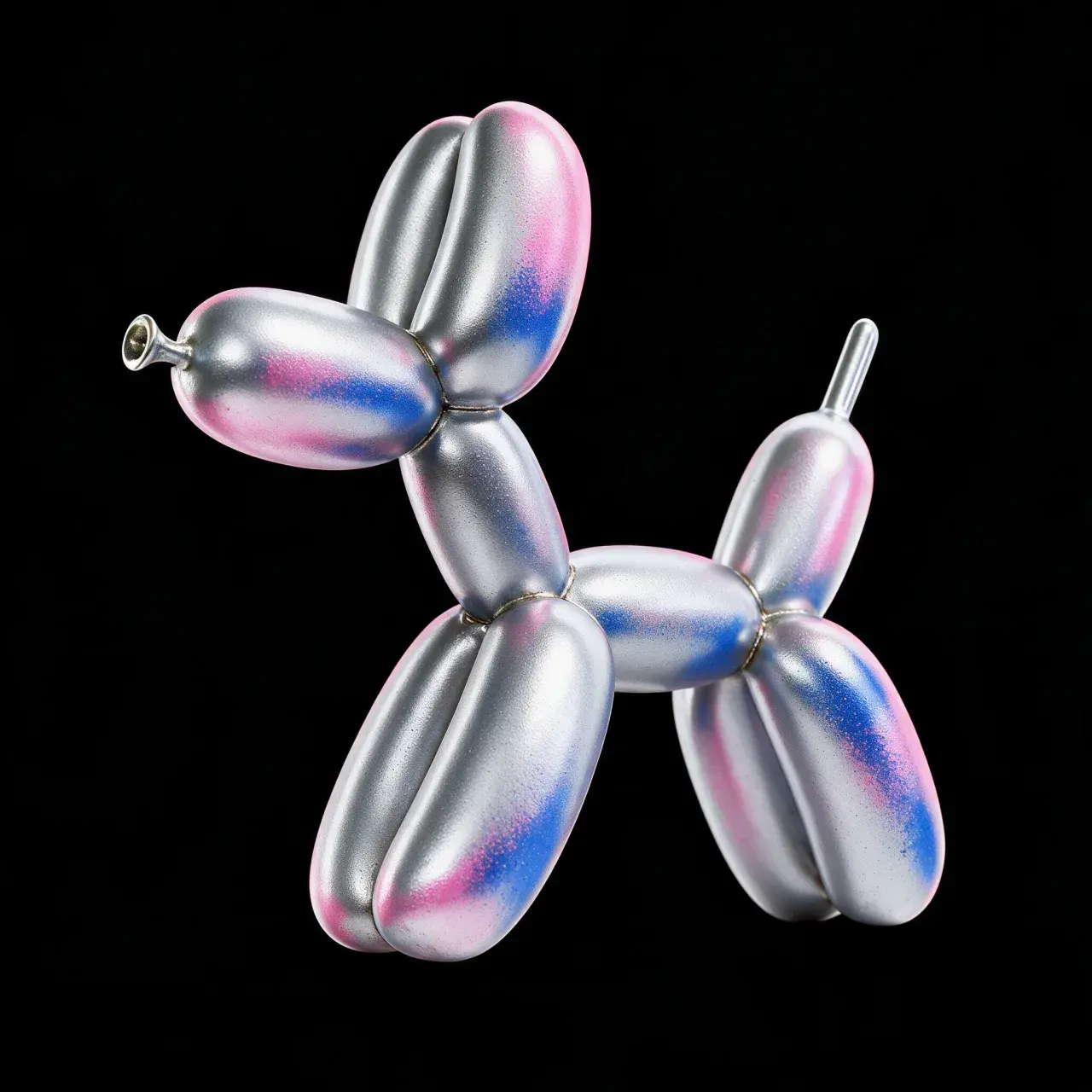
Use the uploaded image as the fixed master reference. Rebuild the exact object one-to-one, preserving the original silhouette, proportions, cutouts, layered construction, text areas, logo placement, spacing, overlap, front-facing orientation and all recognizable structural details. Transform the surface into powder-coated metal with a silky matte finish. Base color soft silver #C9CED5, with gradient overspray in candy pink #FF82C2 and electric blue #5A7CFF appearing as subtle industrial color transitions. Keep the metal believable with fine powder texture, crisp edges, faint assembly wear and clean contemporary product realism. The result should feel solid, cool and stylish. Photograph it on a pure black background #000000 with dramatic but clean studio lighting and extremely sharp macro realism.
Copy
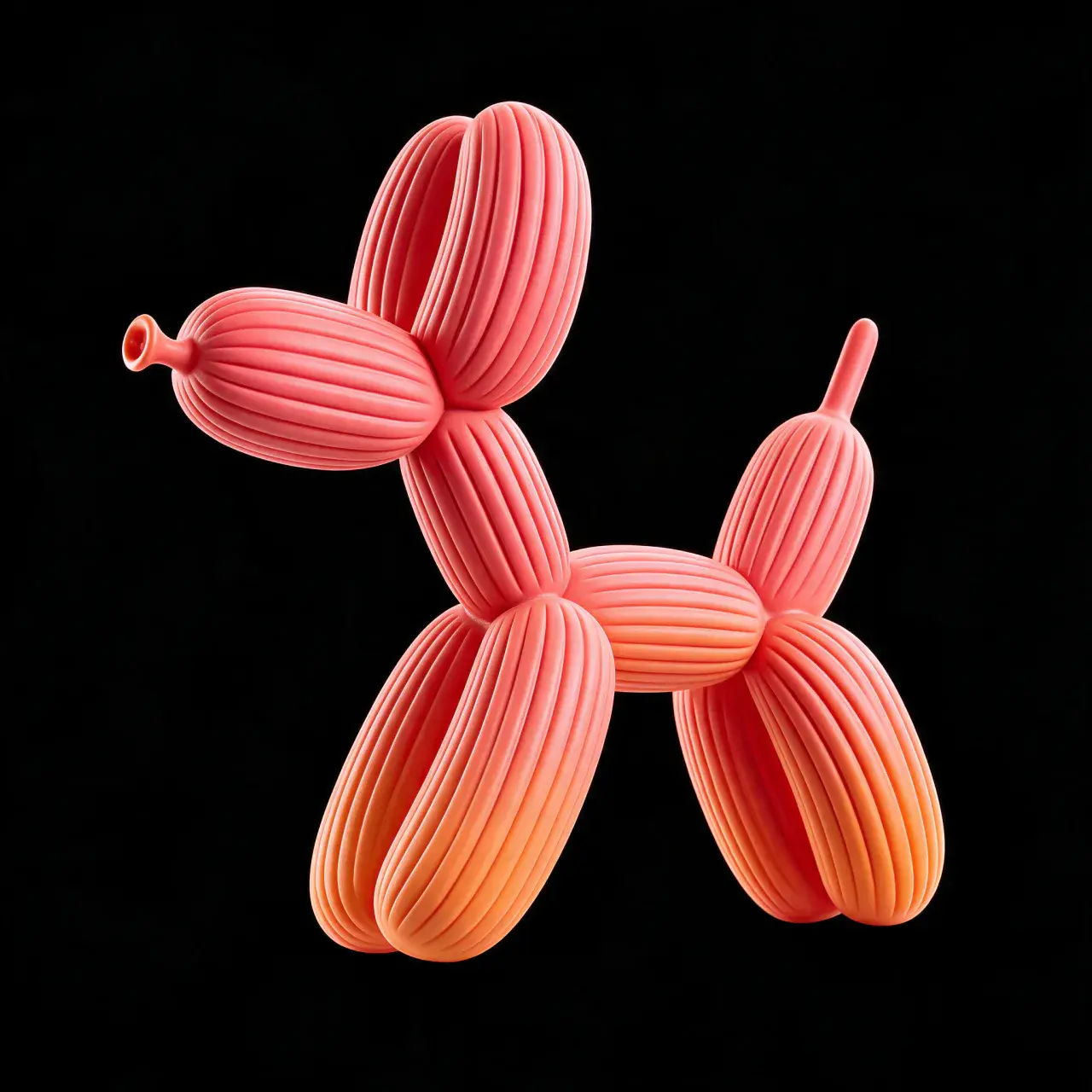
Use the uploaded image as the fixed master reference. Rebuild the exact object one-to-one, preserving the original silhouette, proportions, cutouts, layered construction, text areas, logo placement, spacing, overlap, front-facing orientation and all recognizable structural details. Transform the entire surface into a premium soft-touch rubber with tightly spaced sculpted ribs wrapping around the geometry. Use a vivid electric coral-to-tangerine gradient from #FF5D7A to #FF9A3D. The ribbing must feel physically molded into the material, with clean rhythm, tactile softness, matte dry finish, subtle edge compression and beautiful shadow separation between grooves. The result should feel sporty, graphic and highly tactile, never flimsy. Photograph it on a pure black background #000000 with refined product lighting and sharp macro realism.
Copy
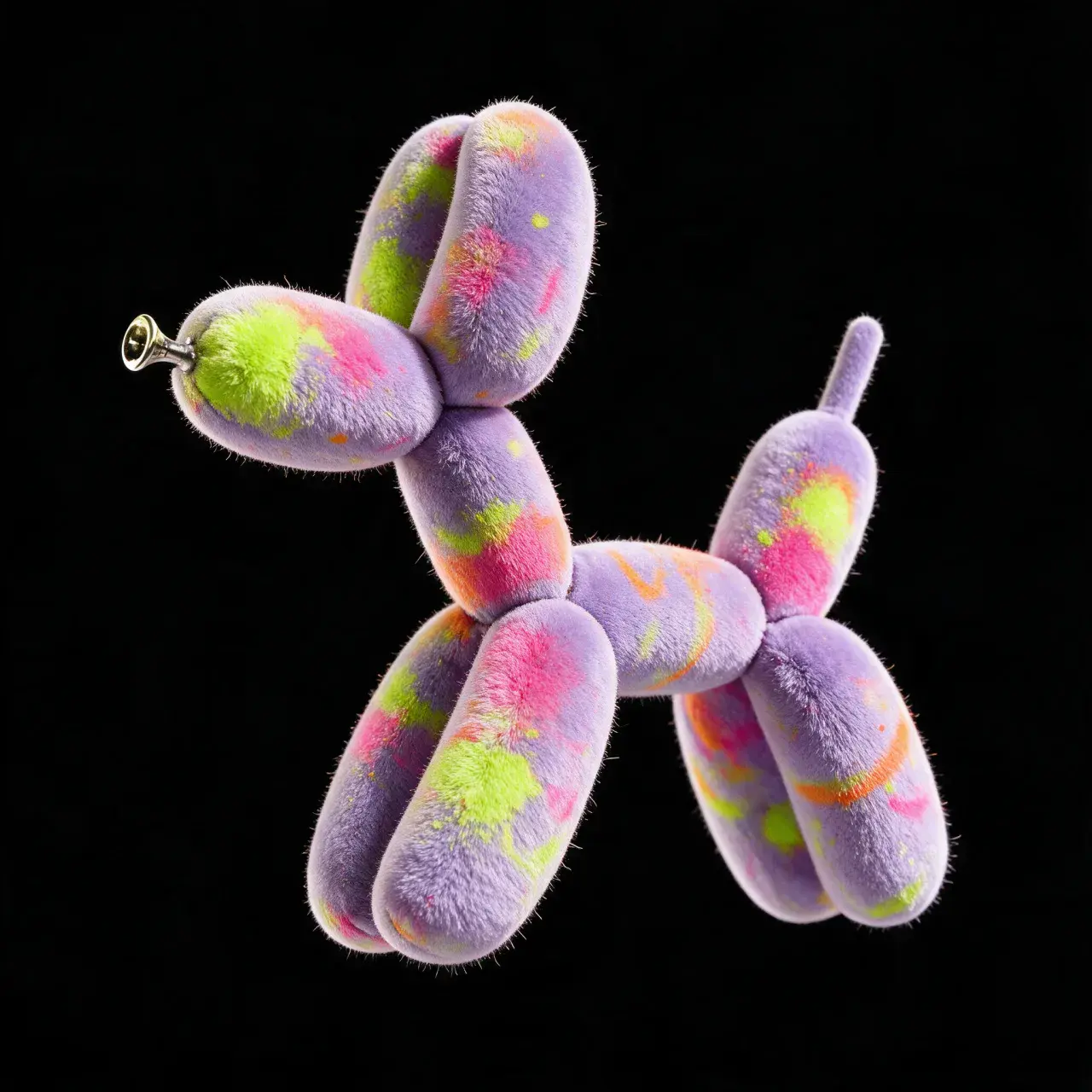
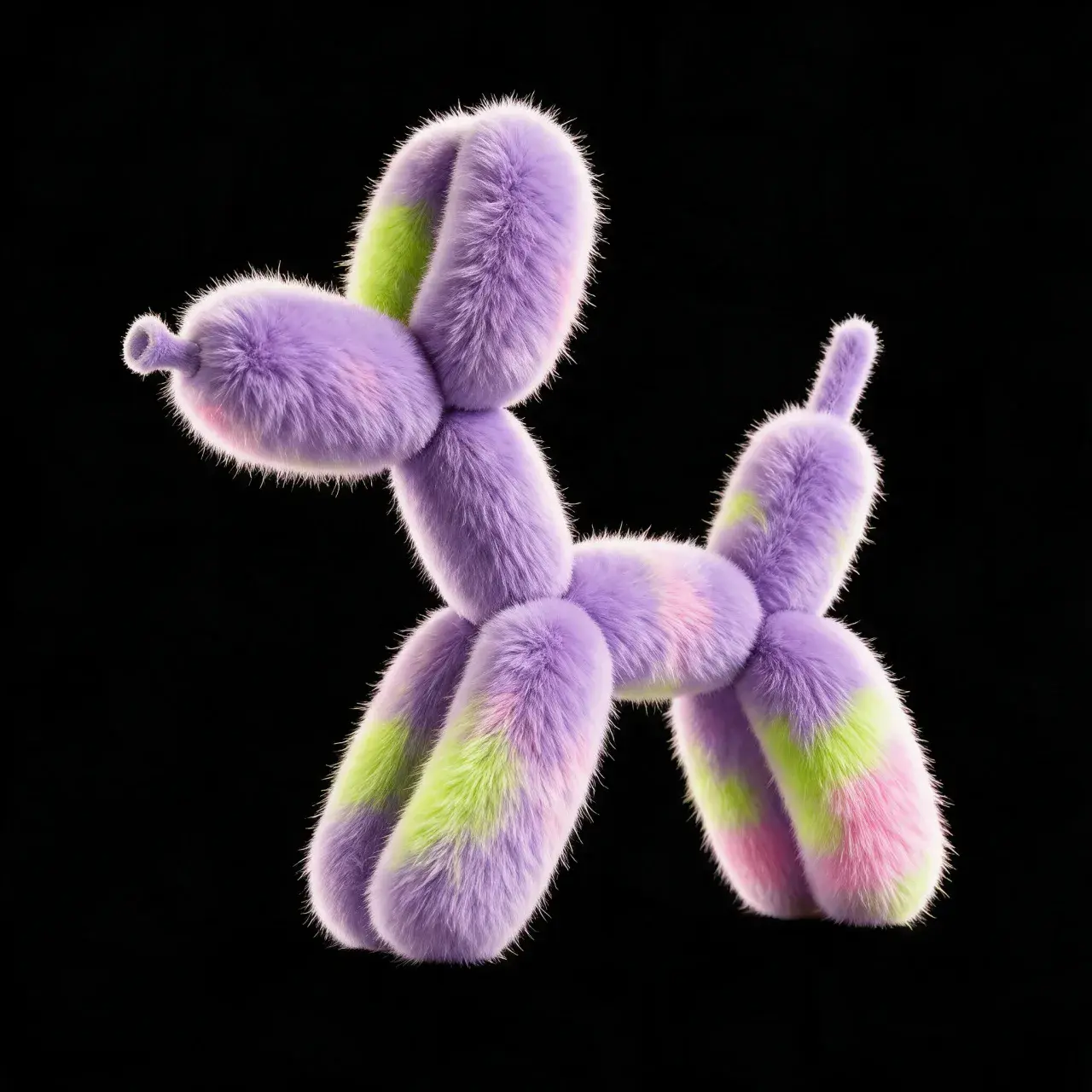
Use the uploaded image as the fixed master reference. Rebuild the exact object one-to-one, preserving the original silhouette, proportions, cutouts, layered construction, text areas, logo placement, spacing, overlap, front-facing orientation and all recognizable structural details. Transform the surface into thick plush faux fur with directional fibers and soft volume. Base color lavender #B792FF, with subtle airbrushed fades in acid lime #B8FF3D and baby pink #FF9BD4 appearing as soft sprayed zones across selected areas. The fur must feel premium, fluffy and tactile, with individual fibers visible, soft edge frizz, natural clumping, slight compression on curves and realistic depth. Avoid cartoon fluff; make it editorial and materially convincing. Photograph it on a pure black background #000000 with elegant product lighting and detailed macro sharpness.
Copy
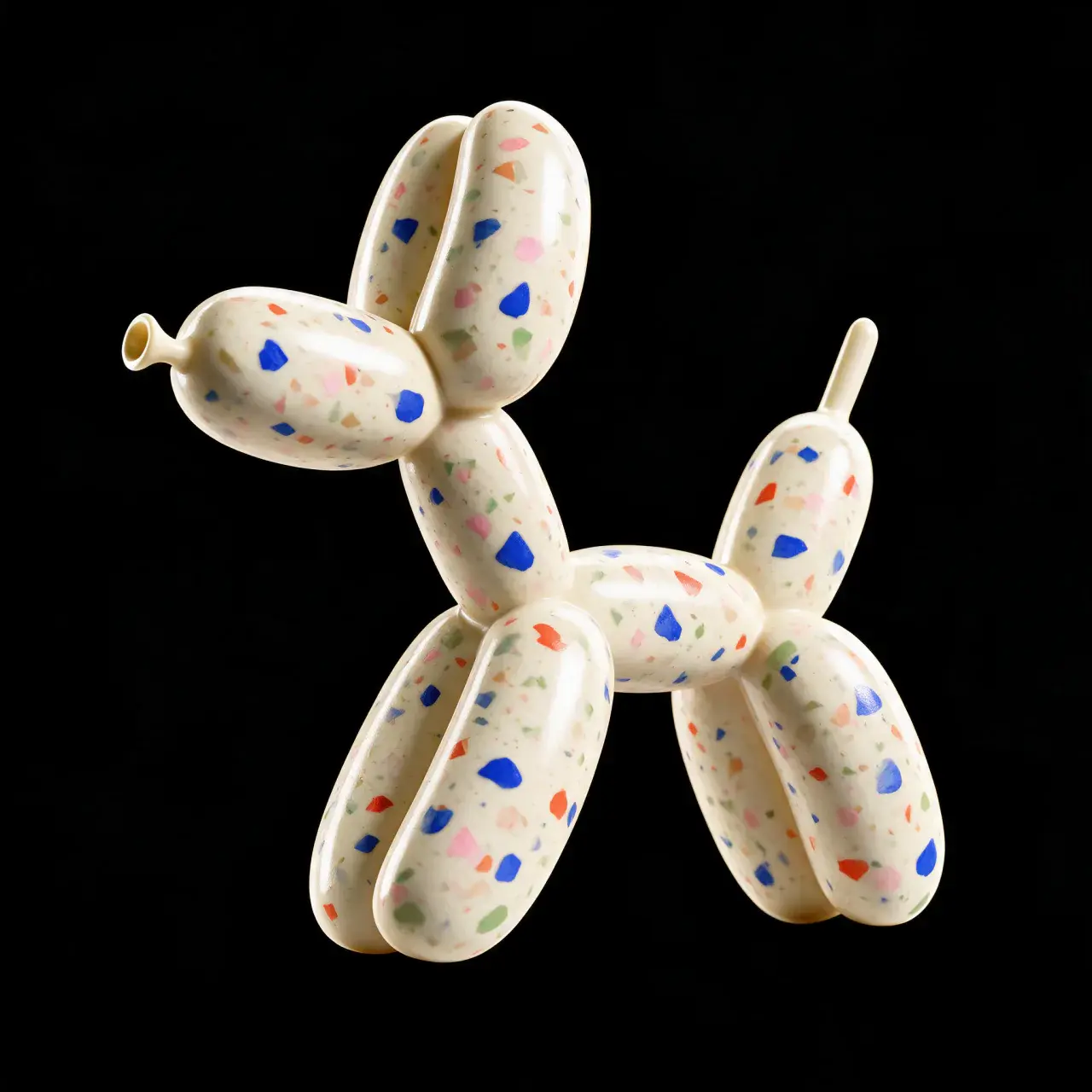
Use the uploaded image as the fixed master reference. Rebuild the exact object one-to-one, preserving the original silhouette, proportions, cutouts, layered construction, text areas, logo placement, spacing, overlap, front-facing orientation and all recognizable structural details. Transform the surface into a smooth molded plastic with a satin-matte finish and a fashionable terrazzo pattern. Base color warm cream #F4EBDD, with embedded chips in cobalt #4164FF, tomato #FF6A4A, blush #F4A0B6 and olive #95B66F. The terrazzo pieces should feel truly embedded within the material, varying slightly in size but remaining crisp and elevated in design quality. The surface should feel solid, clean and expensive. Photograph it on a pure black background #000000 with polished studio lighting and strong macro realism.
Copy
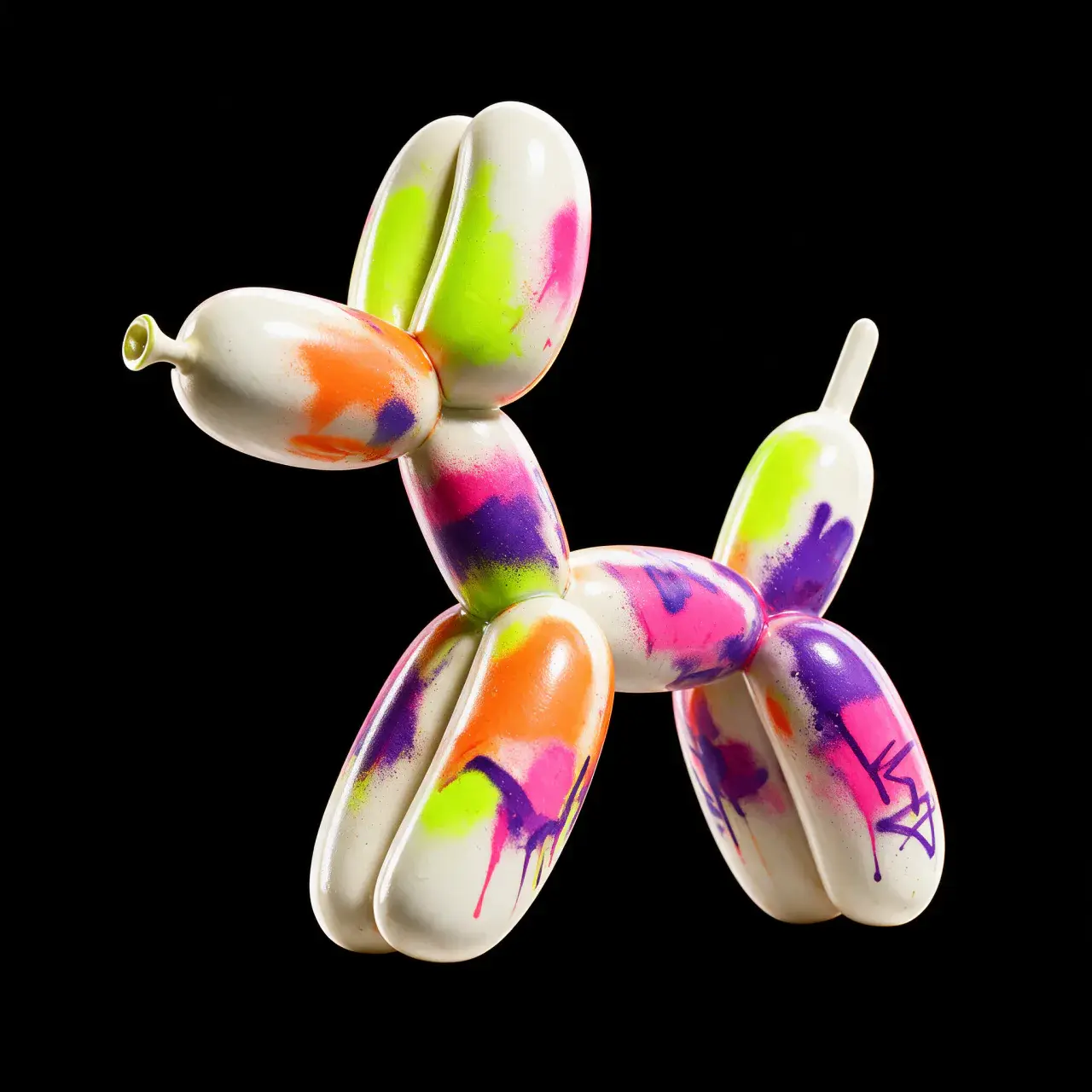
Use the uploaded image as the fixed master reference. Rebuild the exact object one-to-one, preserving the original silhouette, proportions, cutouts, layered construction, text areas, logo placement, spacing, overlap, front-facing orientation and all recognizable structural details. Transform the surface into a clean molded polymer base in off-white #F4F1EA, overlaid with tasteful airbrushed and hand-sprayed graffiti-style layers in neon lime #B9FF31, bright orange #FF7B2F, fuchsia #FF4FA8 and deep violet #7A4FFF. The paint should feel physically sprayed with soft overspray, drips, marker accents and layered tagging energy, but remain fashion-forward and balanced rather than messy. Keep the material itself smooth and solid underneath. Photograph it on a pure black background #000000 with crisp product lighting and sharp macro realism.
Copy
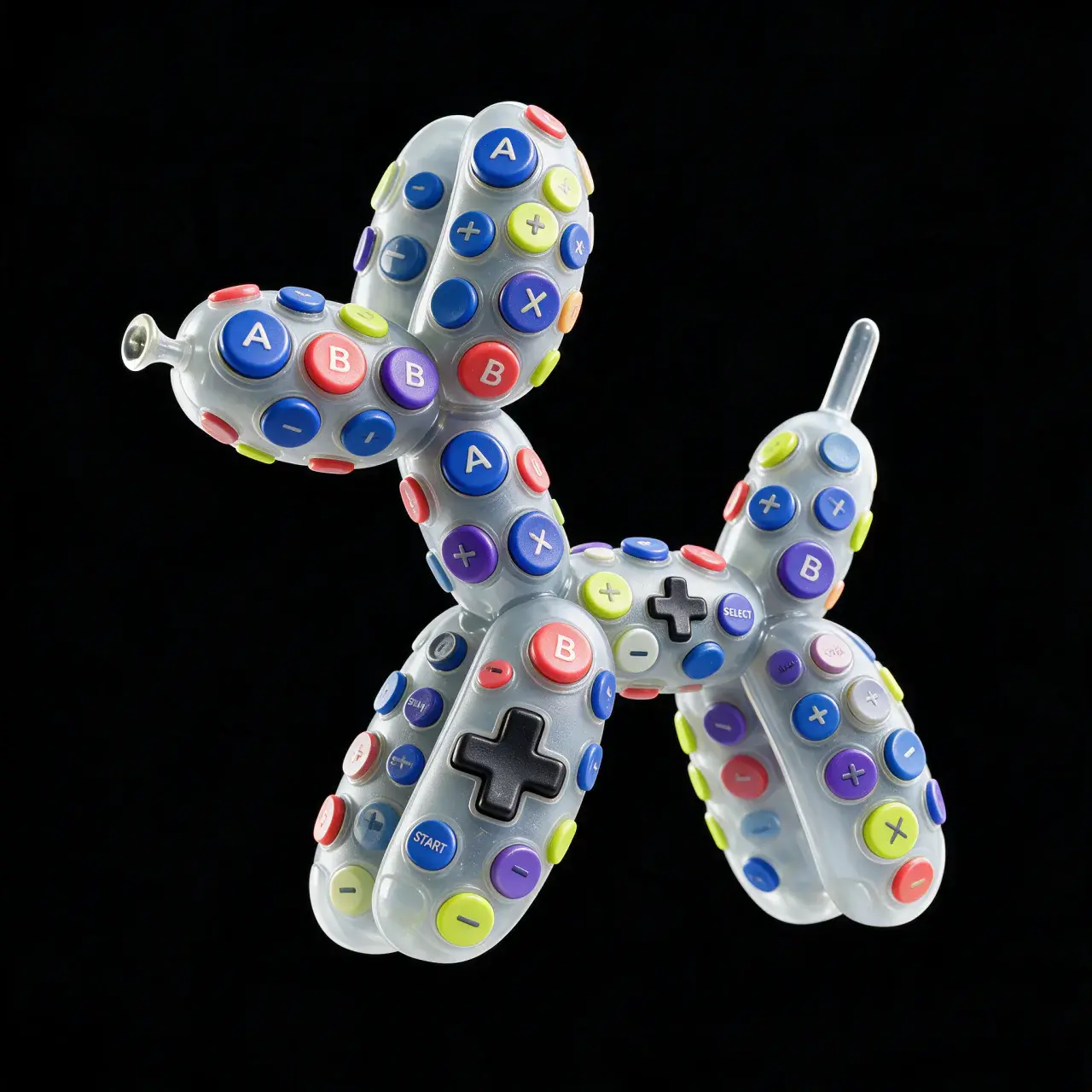
Use the uploaded image as an immutable full-object assembly blueprint. Preserve every visible source component one-to-one: silhouettes, proportions, openings, layered pieces, attachments, readable text, logos, faces, decorations, overlap and camera orientation remain exact. Rebuild suitable surfaces physically from hundreds of miniature genuine game-controller buttons and directional pads tightly seated into the source geometry. Use a main substrate of frosted translucent smoke plastic #CBD6D8, with buttons in saturated cobalt #3155E8, hot coral #F24B58, acid lime #BDF034 and violet #6D47D4. Use clearly recognizable legends and forms: A, B, X, Y, START, SELECT, plus signs, minus signs and real cross-shaped D-pads, rendered cleanly and correctly rather than pseudo-text. Larger A/B/X/Y button clusters act as focal regions while smaller buttons pack surrounding spaces; several broad components incorporate one oversized D-pad section formed from matte graphite #303137 rubber. Buttons must have real rounded caps, translucent side walls, molded legends, underside plungers and tiny gap shadows. Add slight finger-polish on common controls, fine surface scratches, dust in recesses and realistic rubber roughness. Preserve source text and small features by scaling buttons down locally. Photograph against pure black #000000 with premium gaming-hardware lighting, clean plastic highlights, deeply readable button legends, subtle rubber response and full macro photographic sharpness.