



Текстуры
220 промптов для создания текстур и материалов для генерации объектов с сохранением формы, деталей и композиции


Опубликовано
10.09.2026
Категория
Библиотека
220 промптов
Seedream 5 Pro
Текстуры
220 промптов для создания текстур и материалов для генерации объектов с сохранением формы, деталей и композиции
Опубликовано
10.09.2026
Категория
Библиотека
220 промптов
Seedream 5 Pro
Seedream 5 Pro

Copy

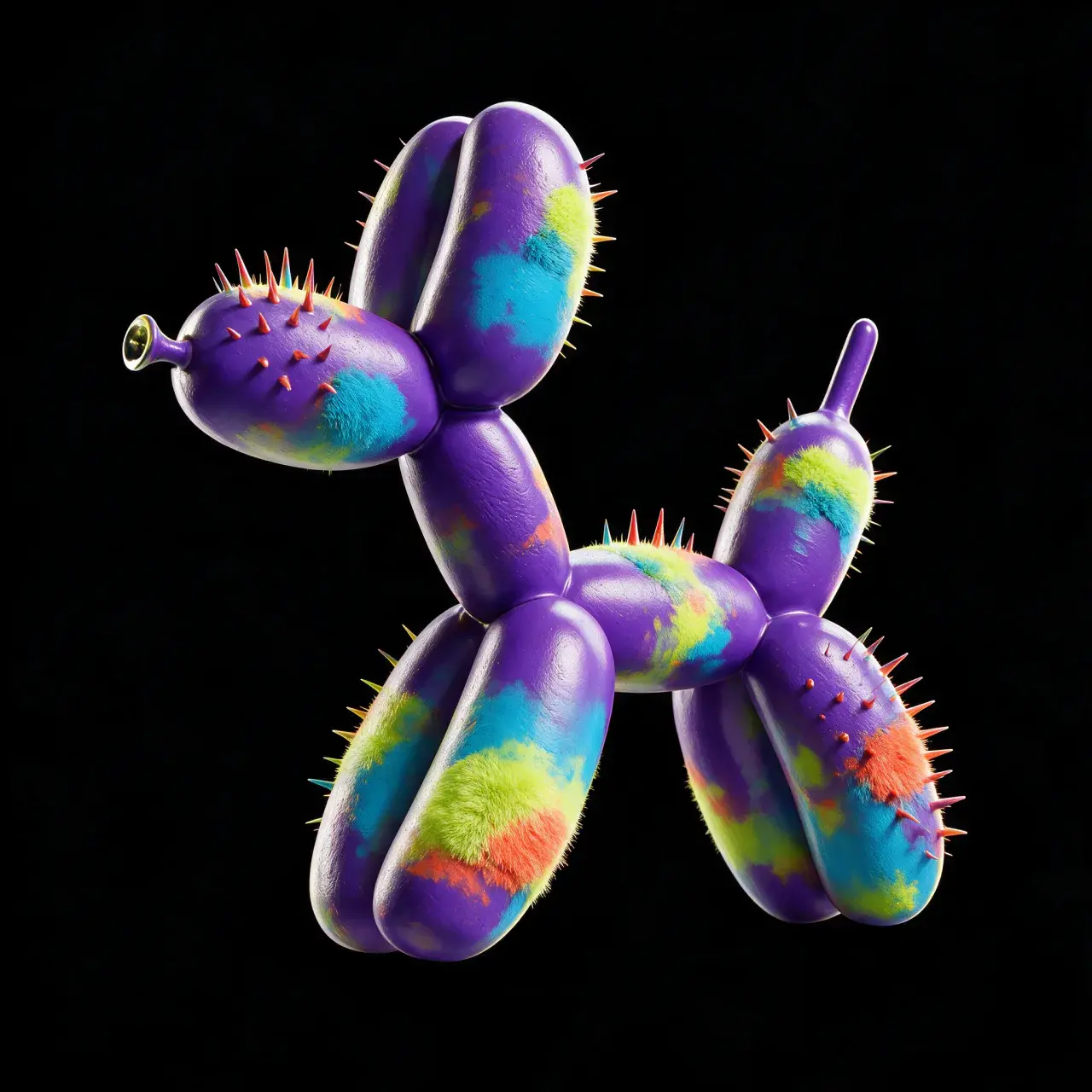
{ "source_lock": "Use the uploaded image as the fixed structural blueprint. Preserve the exact silhouette, proportions, thickness, cutouts, openings, separate parts, layered elements, attachments, labels, logos, text, facial details, decorations, spacing, overlap, orientation, camera angle and composition. Do not redesign or simplify the source object. All material behavior must adapt to the original geometry exactly.", "palette": { "violet_base": "#5A2FC2", "cyan": "#24A8E8", "acid_lime": "#DDF235", "orange_red": "#FF6B3D", "background": "#000000" }, "material_system": "Construct the object as a smooth matte rubber body with dramatic multicolor bloom transitions, then interrupt the body with several luxurious soft fur islands and a few focused spike concentrations. The body remains the main structure, while fur and spikes add tactile complexity.", "surface_physics": "The main shell is matte violet rubber with a slightly dry premium finish, a fine grippy microtexture and real shape clarity. Across the shell apply large soft-edged bloom transitions in cyan, acid lime and orange-red, with the colors diffusing into one another in a fluid, cloud-like manner rather than crisp stripes. Selected areas become fur islands, using dense short fiber tufts in tones
derived from the nearby bloom colors, so the fur seems like a tactile mutation of the base surface. In a few targeted regions, introduce short flexible spikes emerging from the colored rubber, slightly glossier at the tips and more saturated in hue. Add subtle pigment pooling in curves, faint rubber wear, nuanced fur depth and realistic micro-shadows between spikes.", "detail_control": "Keep source markings and fine visual details on calmer smoother rubber zones. Use fur and spikes mainly on broader masses, not over small information-bearing elements.", "lighting": { "setup": "Soft directional key light from upper-left-front, restrained neutral frontal fill and subtle upper-right separation from the black background.", "exposure": "Deep blacks, controlled highlights, clear midtones and crisp tactile readability.", "restrictions": "No visible light sources, no rectangular reflections, no bloom, no glowing outline, no fake rim-light contour." }, "composition": { "camera": "Preserve the exact source view and framing.", "position": "Centered and floating.", "background": "#000000", "floor": false, "cast_shadow": false }, "quality": "Photoreal mixed-material studio result with fashionable Y2K pop intensity, strong tactile hierarchy and believable surface physics." }
Seedream 5 Pro
Copy
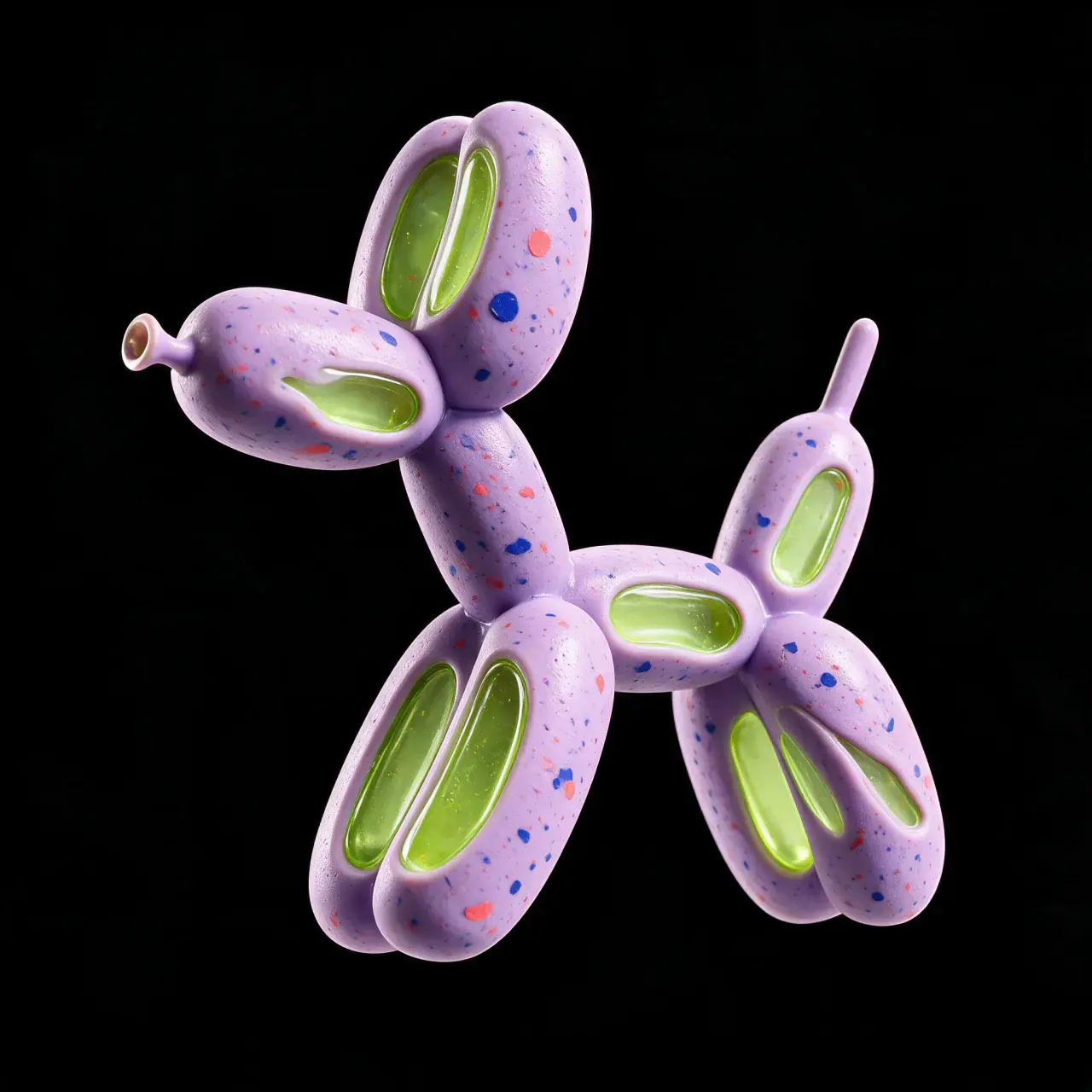
{ "source_lock": "Treat the uploaded image as the immutable structural master. Preserve every visible source component exactly one-to-one: silhouette, proportions, thickness, openings, cutouts, separate parts, layered elements, attachments, readable text, logos, labels, facial details, decorative elements, relative positions, overlap, depth order, camera angle and composition. Nothing visible in the input may disappear, merge, move, simplify or be redesigned. Material scale must automatically adapt around fine source details.", "palette": { "silicone_base": "#E6B8F3", "cobalt_speckles": "#3154E8", "coral_speckles": "#FF6575", "glass_lime": "#C7ED49", "background": "#000000" }, "material_hierarchy": { "primary": "70% matte speckled silicone", "secondary": "25% recessed translucent glass channels", "accent": "5% darker polished silicone details" }, "construction": "Build the object primarily from dense matte molded silicone with embedded pigment aggregate. Across selected broad surfaces carve a small number of wide flowing recessed channels and fill them flush with translucent lime-tinted glass.", "surface_physics": "The silicone is warm lavender with a fine soft-touch grain and embedded cobalt and coral speckles at several scales: tiny pinpoints, medium rounded chips and a few larger irregular fragments. All speckles continue through the material thickness and appear naturally sliced at edges. The recessed glass channels are large, simple and fluid rather than numerous:
smooth curved paths, softly rounded interiors, real optical depth and faint frosted haze. The contrast must be tactile and clear—dry matte silicone versus cold translucent glass. Add slight silicone compression around channel edges, tiny pigment irregularity, fine molded texture, microscopic glass bubbles and restrained handling wear.", "detail_control": "Keep all source text and logos in uninterrupted silicone zones. Channels become narrower or disappear around intricate details.", "lighting": { "setup": "One large diffused studio light positioned upper-left-front, approximately 40 degrees above and 35 degrees to the left of camera, plus extremely weak neutral frontal fill only to preserve shadow information.", "behavior": "Lighting remains soft, neutral and identical across the entire collection. Material appearance must come from real roughness, transmission, fibers and reflectivity rather than from dramatic lighting.", "restrictions": "No rim light, no colored lighting, no visible light sources, no rectangular reflections, no HDRI environment, no bloom, glow, halo or lens flare." }, "composition": { "camera": "Preserve the exact source viewing direction and orientation.", "position": "Centered and freely suspended.", "background": "#000000", "floor": false, "cast_shadow": false }, "quality": "Photoreal molded silicone and glass photography with crisp embedded aggregate, convincing soft-touch roughness, genuine optical channel depth and premium tactile realism." }
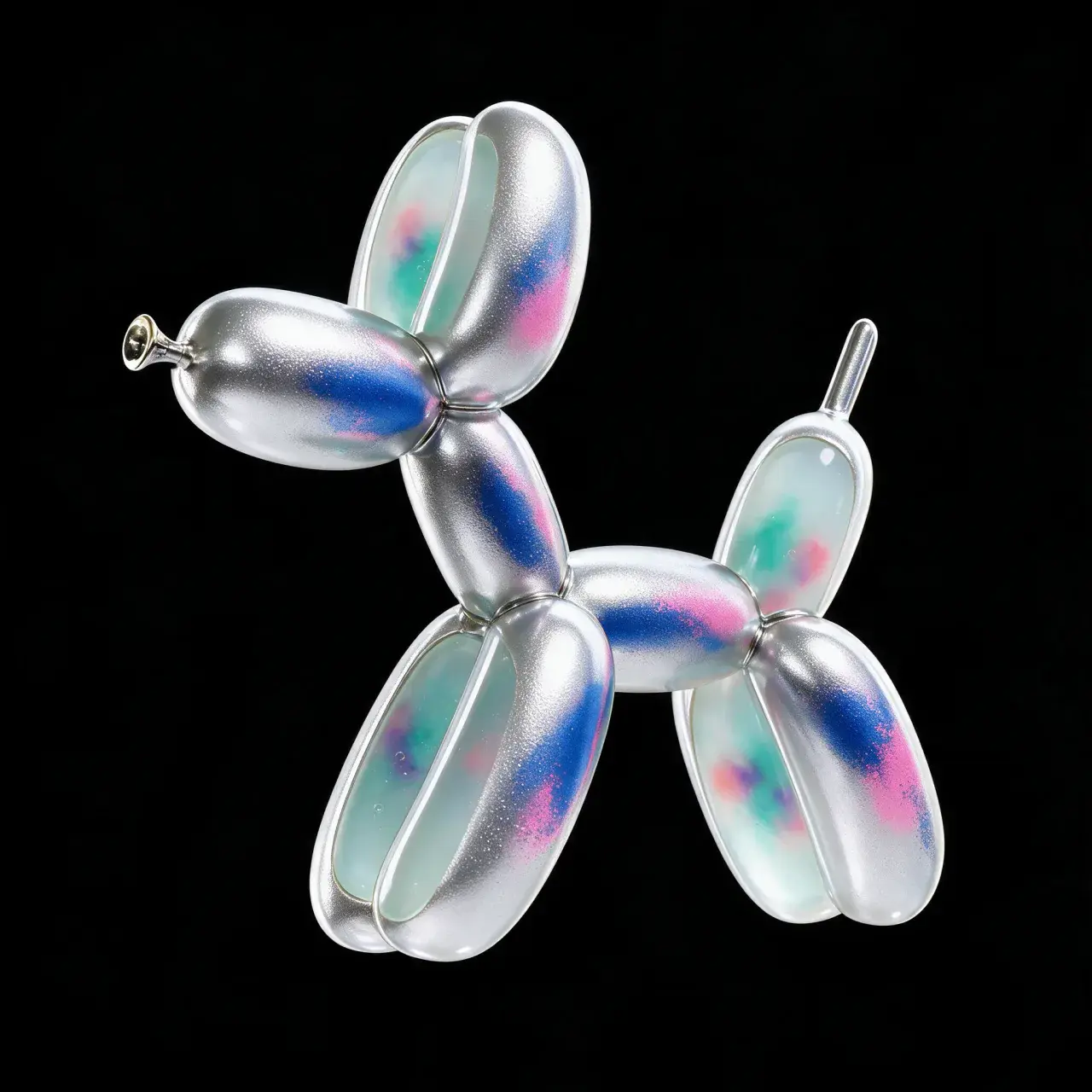
Seedream 5 Pro
Copy
{ "source_lock": "Treat the uploaded image as the immutable structural master. Preserve every visible source component exactly one-to-one: silhouette, proportions, thickness, openings, cutouts, separate parts, layered elements, attachments, readable text, logos, labels, facial details, decorative elements, relative positions, overlap, depth order, camera angle and composition. Nothing visible in the input may disappear, merge, move, simplify or be redesigned. Material scale must automatically adapt around fine source details.", "palette": { "pearl_silver": "#D3D5D8", "cobalt": "#3564EC", "orchid_pink": "#ED67AF", "frosted_clear": "#E2F3F0", "aqua_core": "#71D8D2", "background": "#000000" }, "construction": "Build the object from a rigid pearlescent metallic outer body containing broad inset windows of dense frosted optical gel. Use the metallic material as the structural shell and frosted gel as thick embedded zones rather than one material blended into another.", "surface_physics": "The metallic shell has an extremely fine silver pearlescent grain, visually between satin powder-coated aluminum and metallic automotive lacquer, with no mirror finish. Across selected areas add soft directional cobalt and orchid-pink spray shading, concentrated into broad fading arcs and irregular feathered clouds that retain visible pigment granularity at their edges. The gel inserts have a semi-opaque frosted skin with a soft waxy optical body and contain slow internal aqua, violet and coral pigment diffusion several millimeters below the surface. These internal color blooms should have soft organic boundaries and genuine volumetric depth rather than look sprayed onto the exterior. At
several metal-to-gel junctions reveal a very thin polished silver border that clarifies the construction. Include subtle metallic orange-peel at macro scale, tiny spray particles, microscopic polishing swirls, faint frosted-gel texture and small internal casting bubbles.", "detail_control": "Use uninterrupted metallic or frosted material around important source text and logos. Keep all internal color diffusion away from details that require high readability.", "lighting": { "setup": "Broad soft directional illumination from upper-left-front, with restrained neutral frontal fill and subtle upper-right separation from the black background.", "exposure": "Consistent exposure across the entire material collection, with deep clean blacks, rich readable midtones and controlled highlight roll-off.", "light_behavior": "The illumination direction, softness, intensity and contrast remain identical across every material; only the physically correct response of the material itself changes.", "restrictions": "All light sources remain outside the visible frame. No visible lamps, softboxes, light panels, white cards or studio equipment. No rectangular or square light-source reflections, no HDRI environment, no bloom, glow, halo, lens flare or artificial rim-light outline." }, "composition": { "camera": "Preserve the exact source viewing direction and orientation.", "position": "Centered and freely suspended.", "background": "#000000", "floor": false, "cast_shadow": false }, "quality": "Photoreal mixed-material studio photography, subtle pearlescent metal grain, true volumetric frosted gel, sprayed-pigment microstructure, controlled material junctions and premium macro fidelity." }
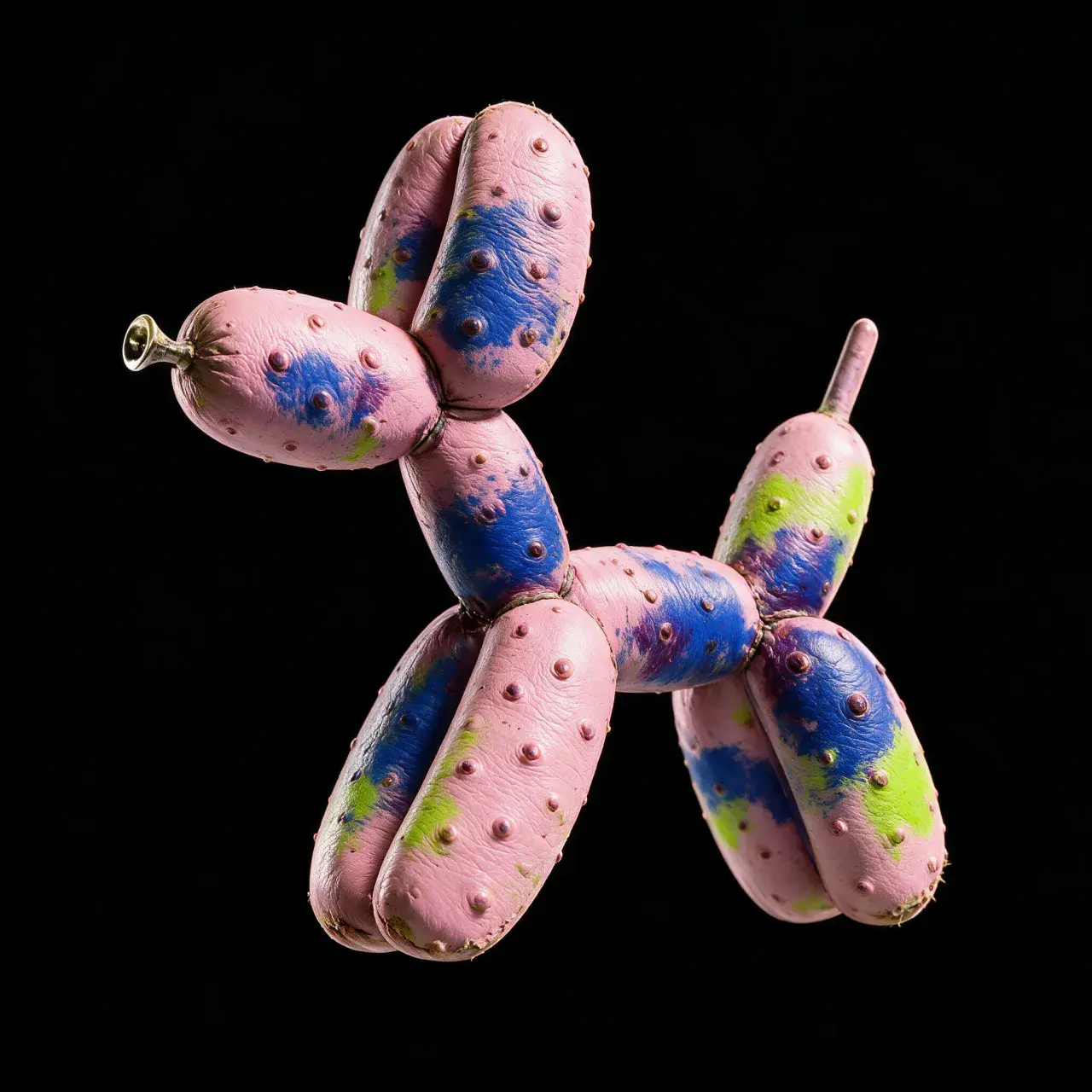
Seedream 5 Pro
Copy
{ "source_lock": "Treat the uploaded image as the immutable structural master. Preserve every visible source component exactly one-to-one: silhouette, proportions, thickness, openings, cutouts, separate parts, layered elements, attachments, readable text, logos, labels, facial details, decorative elements, relative positions, overlap, depth order, camera angle and composition. Nothing visible in the input may disappear, merge, move, simplify or be redesigned. Material scale must automatically adapt around fine source details.", "palette": { "leather_base": "#F2B3CA", "cobalt_airbrush": "#3459E9", "acid_green": "#C6F632", "deep_plum": "#633260", "background": "#000000" }, "construction": "Reconstruct suitable surfaces from genuine fine ostrich-grain leather tightly formed over the existing rigid geometry without puffing or changing its silhouette.", "surface_physics": "The leather must show the characteristic irregular follicle quills of real ostrich hide: scattered raised round follicles of varying diameter, fine natural grain between them, slight puckering around selected quill points and subtle directional creasing at bends. Dye the base soft pink, then apply large directional cobalt and acid-green airbrush clouds that penetrate the natural grain unevenly while leaving the raised follicles slightly lighter or darker depending on pigment accumulation. Use deep plum only inside several overlapping sprayed transitions. Keep the color fields large and editorial, with broad pink leather areas untouched.
Add real leather behavior: faint pores, tiny grain scratches, slight dryness along several edges, subtle handling polish on exposed follicles and microscopic pigment overspray visible inside the grain.", "detail_control": "Use finer follicle scale and calmer airbrush treatment around text, logos, openings and tiny attachments.", "lighting": { "setup": "Broad soft directional illumination from upper-left-front, with restrained neutral frontal fill and subtle upper-right separation from the black background.", "exposure": "Consistent exposure across the entire material collection, with deep clean blacks, rich readable midtones and controlled highlight roll-off.", "light_behavior": "The illumination direction, softness, intensity and contrast remain identical across every material; only the physically correct response of the material itself changes.", "restrictions": "All light sources remain outside the visible frame. No visible lamps, softboxes, light panels, white cards or studio equipment. No rectangular or square light-source reflections, no HDRI environment, no bloom, glow, halo, lens flare or artificial rim-light outline." }, "composition": { "camera": "Preserve the exact source viewing direction and orientation.", "position": "Centered and freely suspended.", "background": "#000000", "floor": false, "cast_shadow": false }, "quality": "Photoreal fashion leather macro photography, authentic ostrich follicle structure, real dyed grain, sprayed pigment behavior and premium tactile detail." }
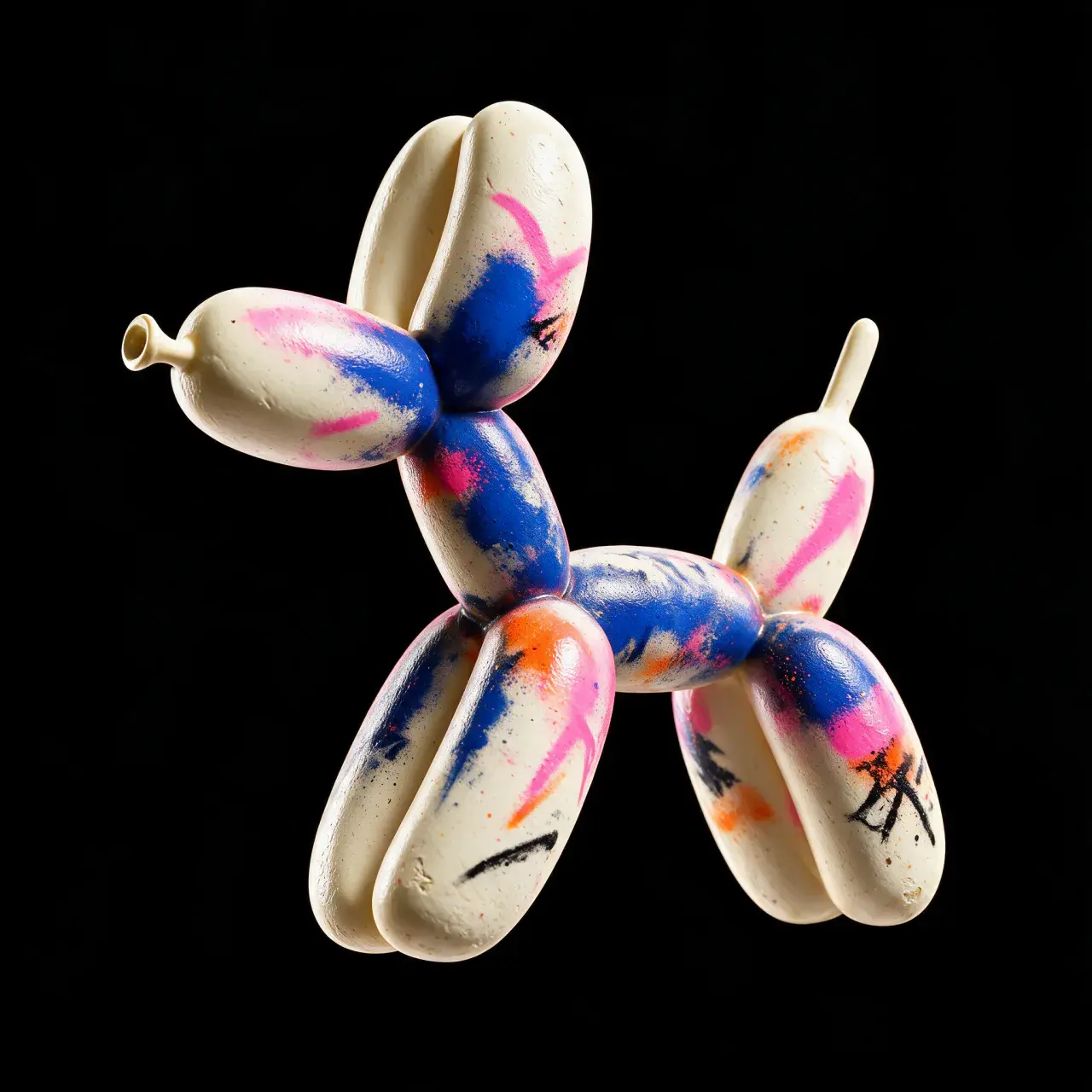
Seedream 5 Pro
Copy
{ "source_lock": "Preserve every visible source element exactly one-to-one: silhouettes, proportions, openings, cutouts, layered pieces, attachments, readable text, logos, labels, decorative elements, relative positions and camera view.", "palette": { "rubber_base": "#EFE8DA", "electric_blue": "#3158F5", "neon_pink": "#FF3A99", "orange": "#FF6427", "black_ink": "#18181D", "background": "#000000" }, "construction": "Reconstruct the existing surfaces from firm cream-colored molded rubber with a soft satin finish and fine tactile grain.", "surface_physics": "Apply physically believable layered spray-paint treatment directly onto the rubber: broad cobalt airbrush clouds, hot-pink overspray arcs, orange misted bands and sparse black marker-like gestural lines. The spray should show real pigment density, feathered aerosol edges, tiny overspray dots, occasional runs, matte dried paint accumulation and areas where pigment partially sinks into the rubber grain. Use large gestural zones rather than full graffiti
tags or readable lettering. Allow a few overlapping paint layers to produce darker blended intersections while retaining significant untouched cream rubber. Add slight abrasion where dried paint has worn off raised surfaces, exposing the base beneath.", "detail_control": "Keep existing source text and logos completely unobstructed by reducing paint density locally.", "lighting": { "setup": "Soft upper-left-front studio illumination, restrained fill.", "material_response": "Rubber remains satin-matte while dried spray paint varies subtly from matte to eggshell depending on pigment thickness.", "restrictions": "No artificial glow, no wet glossy graffiti, no visible studio hardware." }, "composition": { "camera": "Preserve exact input orientation.", "position": "Centered and freely suspended.", "background": "#000000", "floor": false, "cast_shadow": false }, "quality": "Photoreal sprayed-rubber material photography, authentic aerosol pigment behavior, tactile grain, surface wear and crisp macro detail." }
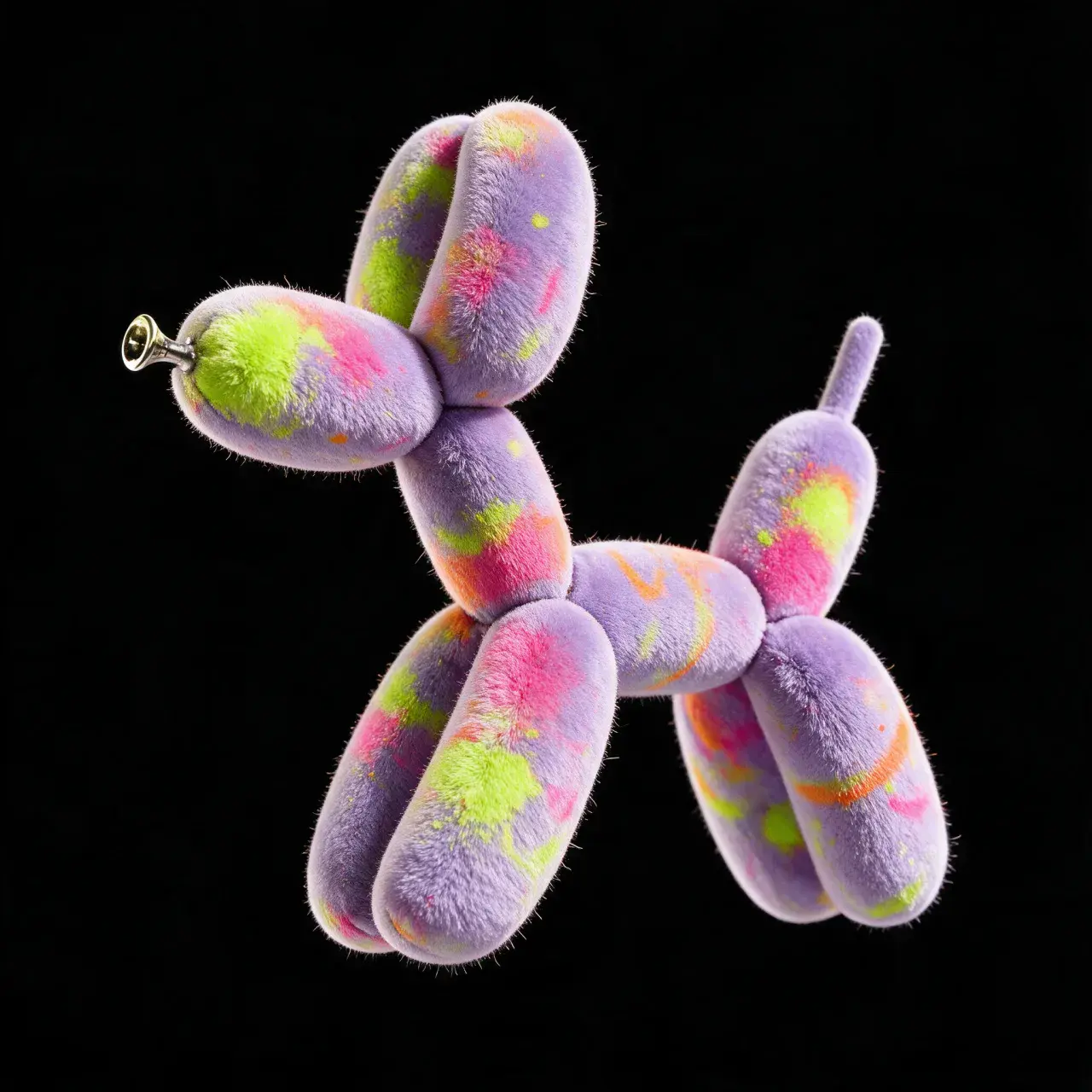
Seedream 5 Pro
Copy
{ "source_lock": "Preserve the uploaded image as an immutable complete assembly. Keep every visible component, silhouette, proportion, opening, thickness, attachment, text, logo, label, decorative detail, overlap and source orientation exactly unchanged.", "palette": { "suede_base": "#C7B5F2", "acid_lime": "#C8FF35", "hot_pink": "#F6429B", "sunset_orange": "#FF8A45", "background": "#000000" }, "construction": "Reconstruct suitable surfaces from genuine very-short-pile micro-suede with a dense directional nap and soft matte tactile body.", "surface_physics": "Dye the suede with large-scale Y2K airbrush color fields rather than printed gradients. Use broad blurred acid-lime, hot-pink and orange blooms overlapping across the lavender pile, with irregular overspray edges and occasional sharper sprayed cores. Color must visibly live inside the fibers: brushed nap direction changes saturation, deeper fibers remain darker and individual pale or brightly dyed tips are visible at macro scale. Introduce a small number of fast hand-sprayed
curved streaks and soft halo rings, but avoid literal graffiti lettering or busy tags. Include natural nap disturbances, subtle finger-brushed tracks, microscopic lint, tiny scuffs and gently compressed areas around edges.", "detail_control": "Airbrush fields become calmer and pile becomes shorter around logos, text, faces and small components.", "lighting": { "setup": "Broad soft upper-left-front illumination with subtle neutral fill.", "material_response": "Light must reveal directional nap and produce different brightness depending on fiber orientation, with no glossy plastic response.", "restrictions": "No visible lights, no hard rectangular reflections, no bloom, glow or artificial neon." }, "composition": { "camera": "Preserve exact source orientation.", "position": "Centered and freely suspended.", "background": "#000000", "floor": false, "cast_shadow": false }, "quality": "Photoreal fashion-material macro photography, individual suede fibers, authentic sprayed dye penetration, rich saturated color and tactile depth." }
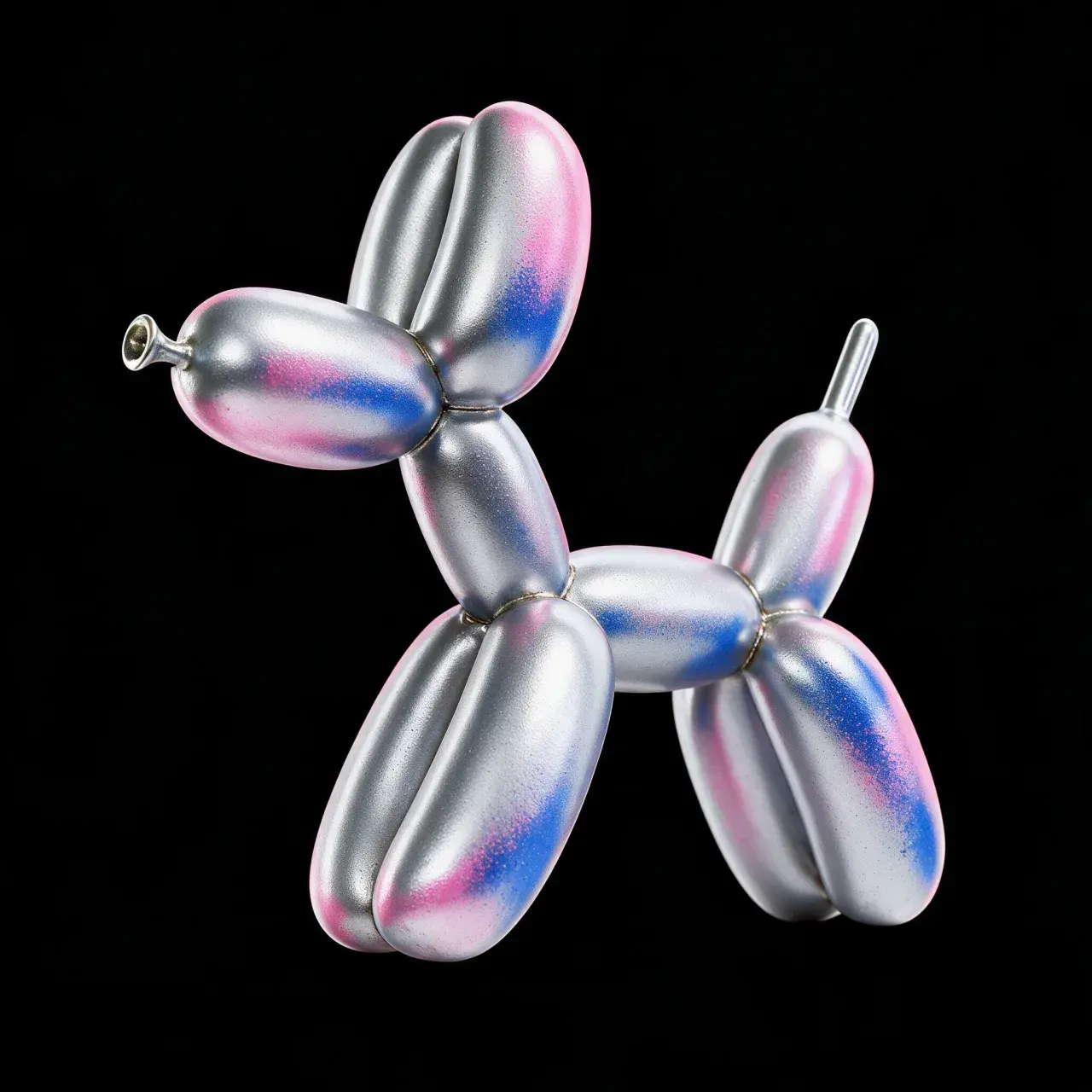
Seedream 5 Pro
Copy
Use the uploaded image as the fixed master reference. Rebuild the exact object one-to-one, preserving the original silhouette, proportions, cutouts, layered construction, text areas, logo placement, spacing, overlap, front-facing orientation and all recognizable structural details. Transform the surface into powder-coated metal with a silky matte finish. Base color soft silver #C9CED5, with gradient overspray in candy pink #FF82C2 and electric blue #5A7CFF appearing as subtle industrial color transitions. Keep the metal believable with fine powder texture, crisp edges, faint assembly wear and clean contemporary product realism. The result should feel solid, cool and stylish. Photograph it on a pure black background #000000 with dramatic but clean studio lighting and extremely sharp macro realism.
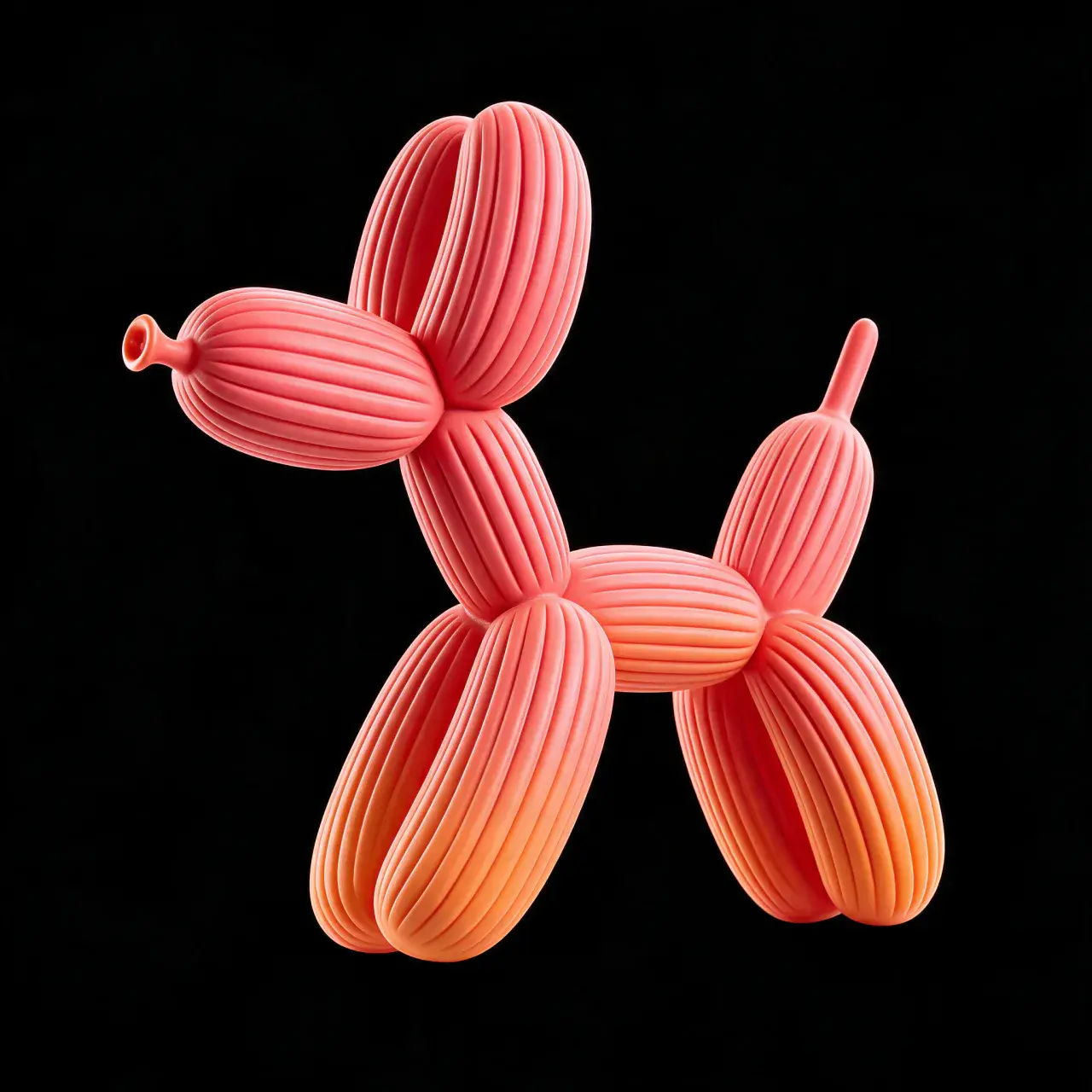
Seedream 5 Pro
Copy
Use the uploaded image as the fixed master reference. Rebuild the exact object one-to-one, preserving the original silhouette, proportions, cutouts, layered construction, text areas, logo placement, spacing, overlap, front-facing orientation and all recognizable structural details. Transform the entire surface into a premium soft-touch rubber with tightly spaced sculpted ribs wrapping around the geometry. Use a vivid electric coral-to-tangerine gradient from #FF5D7A to #FF9A3D. The ribbing must feel physically molded into the material, with clean rhythm, tactile softness, matte dry finish, subtle edge compression and beautiful shadow separation between grooves. The result should feel sporty, graphic and highly tactile, never flimsy. Photograph it on a pure black background #000000 with refined product lighting and sharp macro realism.
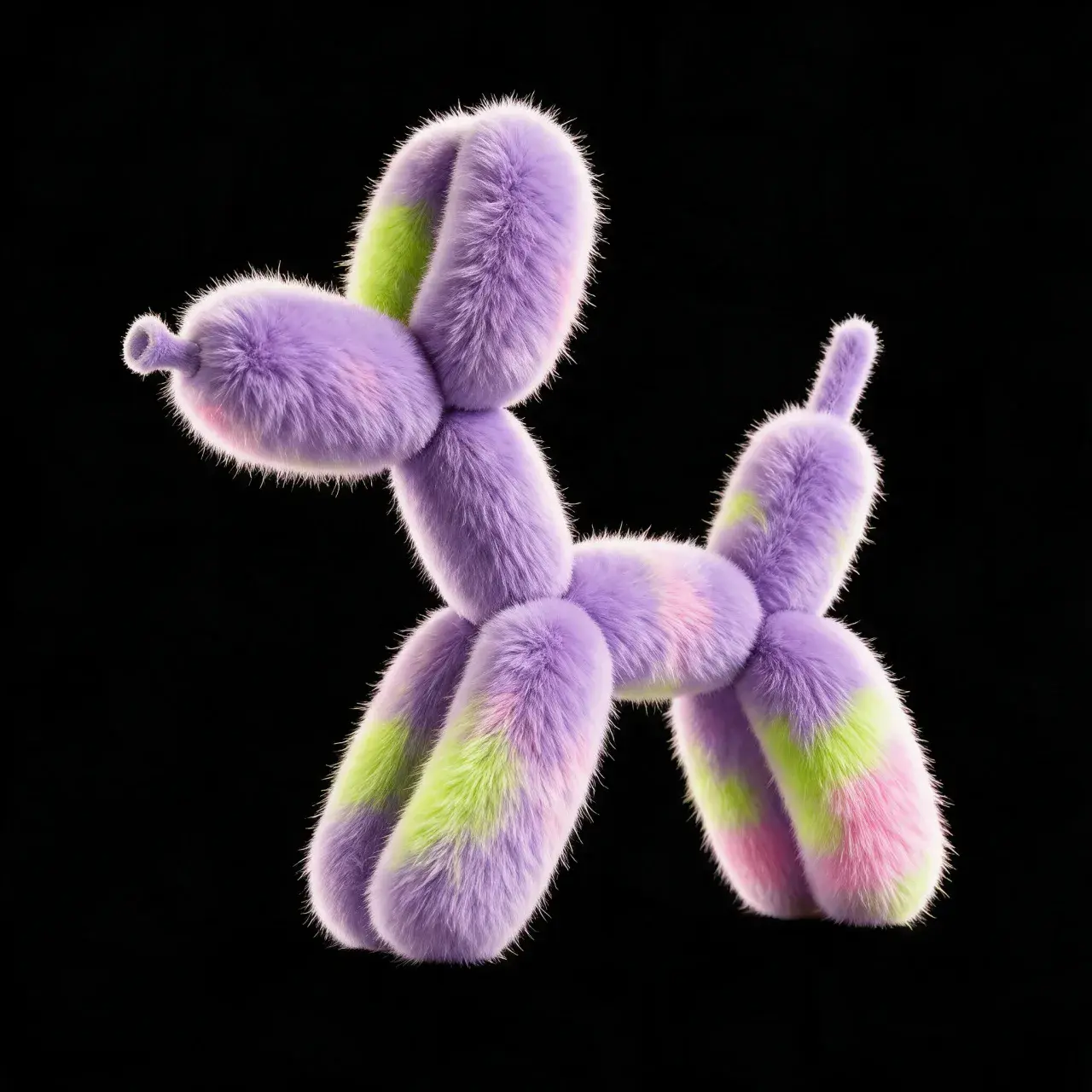
Seedream 5 Pro
Copy
Use the uploaded image as the fixed master reference. Rebuild the exact object one-to-one, preserving the original silhouette, proportions, cutouts, layered construction, text areas, logo placement, spacing, overlap, front-facing orientation and all recognizable structural details. Transform the surface into thick plush faux fur with directional fibers and soft volume. Base color lavender #B792FF, with subtle airbrushed fades in acid lime #B8FF3D and baby pink #FF9BD4 appearing as soft sprayed zones across selected areas. The fur must feel premium, fluffy and tactile, with individual fibers visible, soft edge frizz, natural clumping, slight compression on curves and realistic depth. Avoid cartoon fluff; make it editorial and materially convincing. Photograph it on a pure black background #000000 with elegant product lighting and detailed macro sharpness.
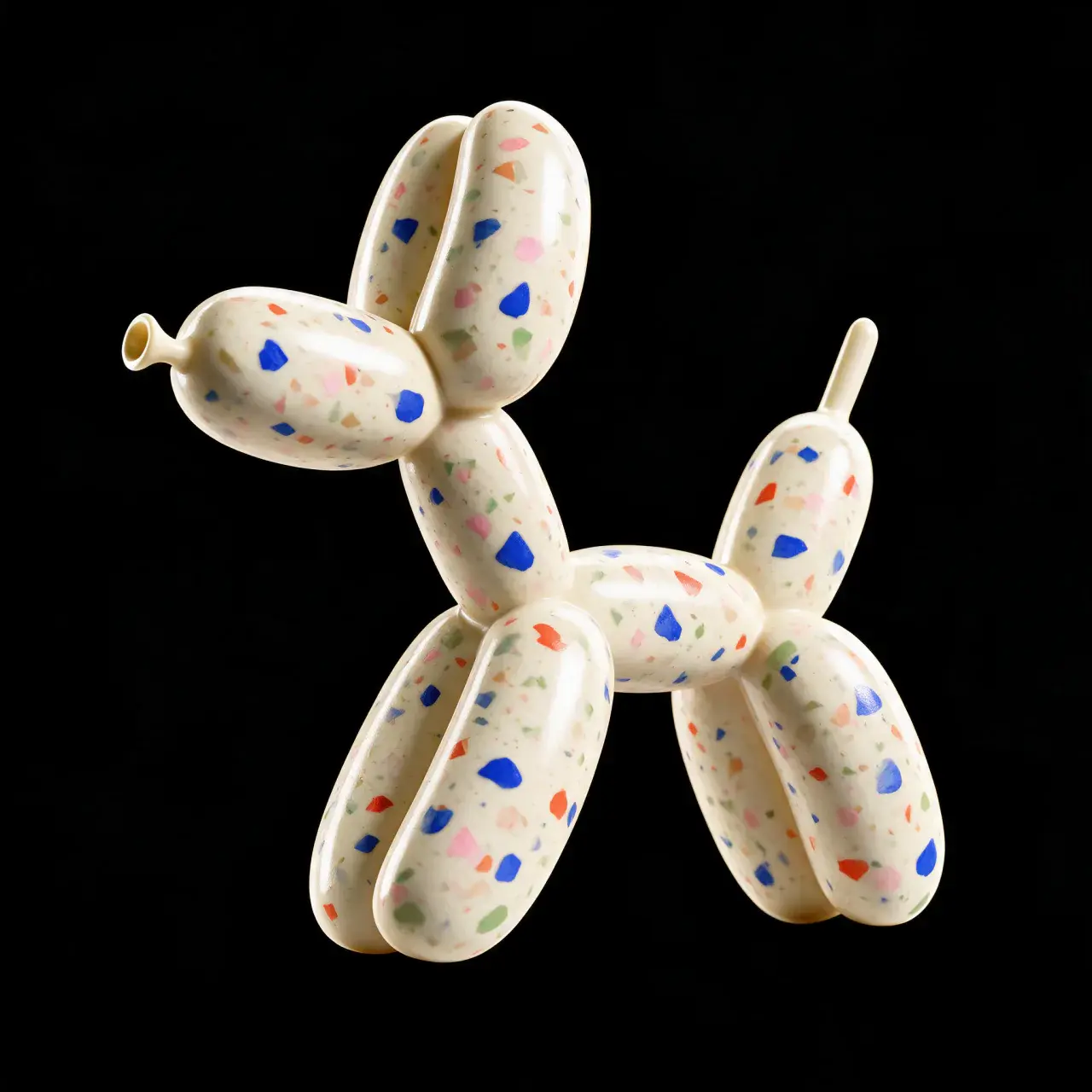
Seedream 5 Pro
Copy
Use the uploaded image as the fixed master reference. Rebuild the exact object one-to-one, preserving the original silhouette, proportions, cutouts, layered construction, text areas, logo placement, spacing, overlap, front-facing orientation and all recognizable structural details. Transform the surface into a smooth molded plastic with a satin-matte finish and a fashionable terrazzo pattern. Base color warm cream #F4EBDD, with embedded chips in cobalt #4164FF, tomato #FF6A4A, blush #F4A0B6 and olive #95B66F. The terrazzo pieces should feel truly embedded within the material, varying slightly in size but remaining crisp and elevated in design quality. The surface should feel solid, clean and expensive. Photograph it on a pure black background #000000 with polished studio lighting and strong macro realism.
Seedream 5 Pro
Copy
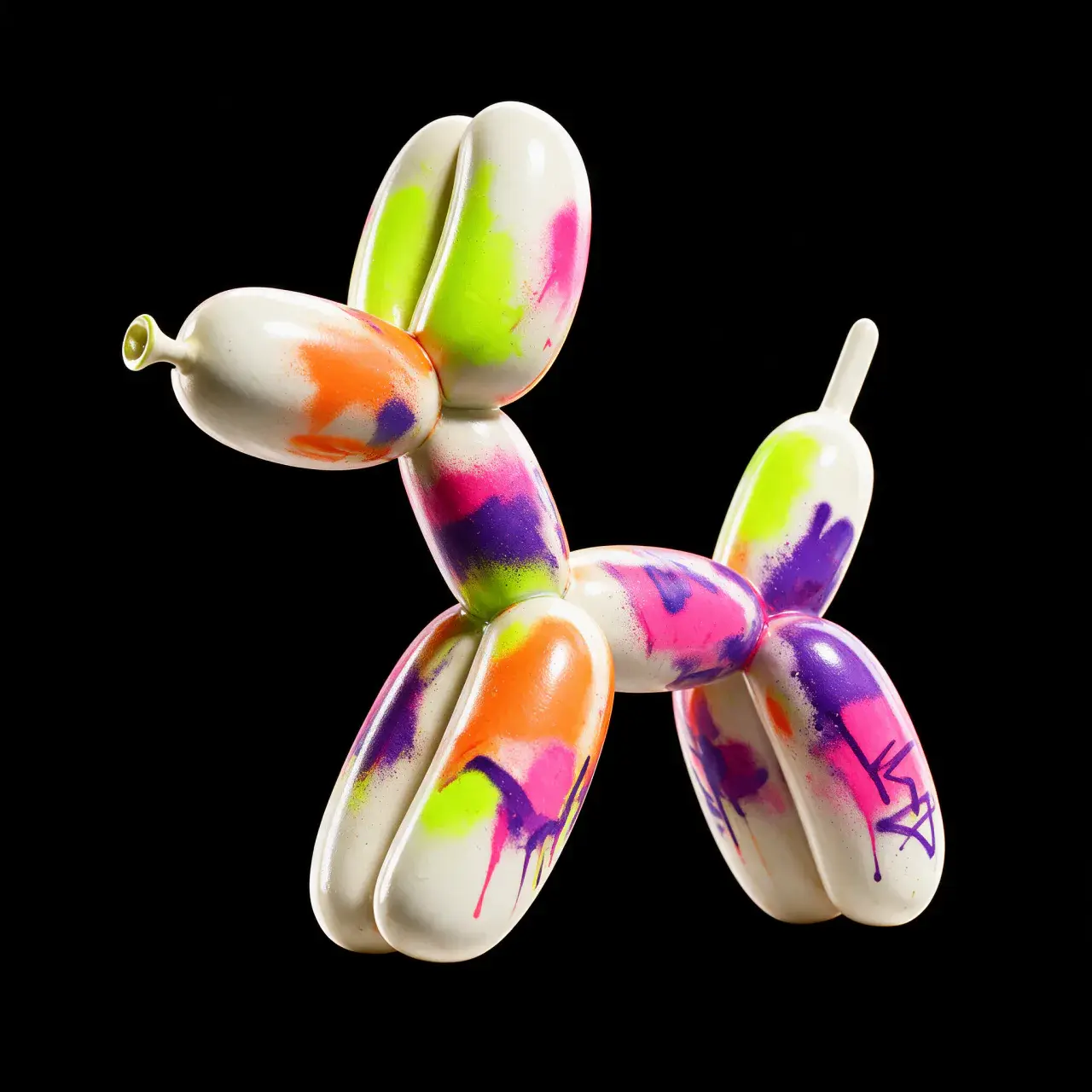
Use the uploaded image as the fixed master reference. Rebuild the exact object one-to-one, preserving the original silhouette, proportions, cutouts, layered construction, text areas, logo placement, spacing, overlap, front-facing orientation and all recognizable structural details. Transform the surface into a clean molded polymer base in off-white #F4F1EA, overlaid with tasteful airbrushed and hand-sprayed graffiti-style layers in neon lime #B9FF31, bright orange #FF7B2F, fuchsia #FF4FA8 and deep violet #7A4FFF. The paint should feel physically sprayed with soft overspray, drips, marker accents and layered tagging energy, but remain fashion-forward and balanced rather than messy. Keep the material itself smooth and solid underneath. Photograph it on a pure black background #000000 with crisp product lighting and sharp macro realism.
Seedream 5 Pro
Copy
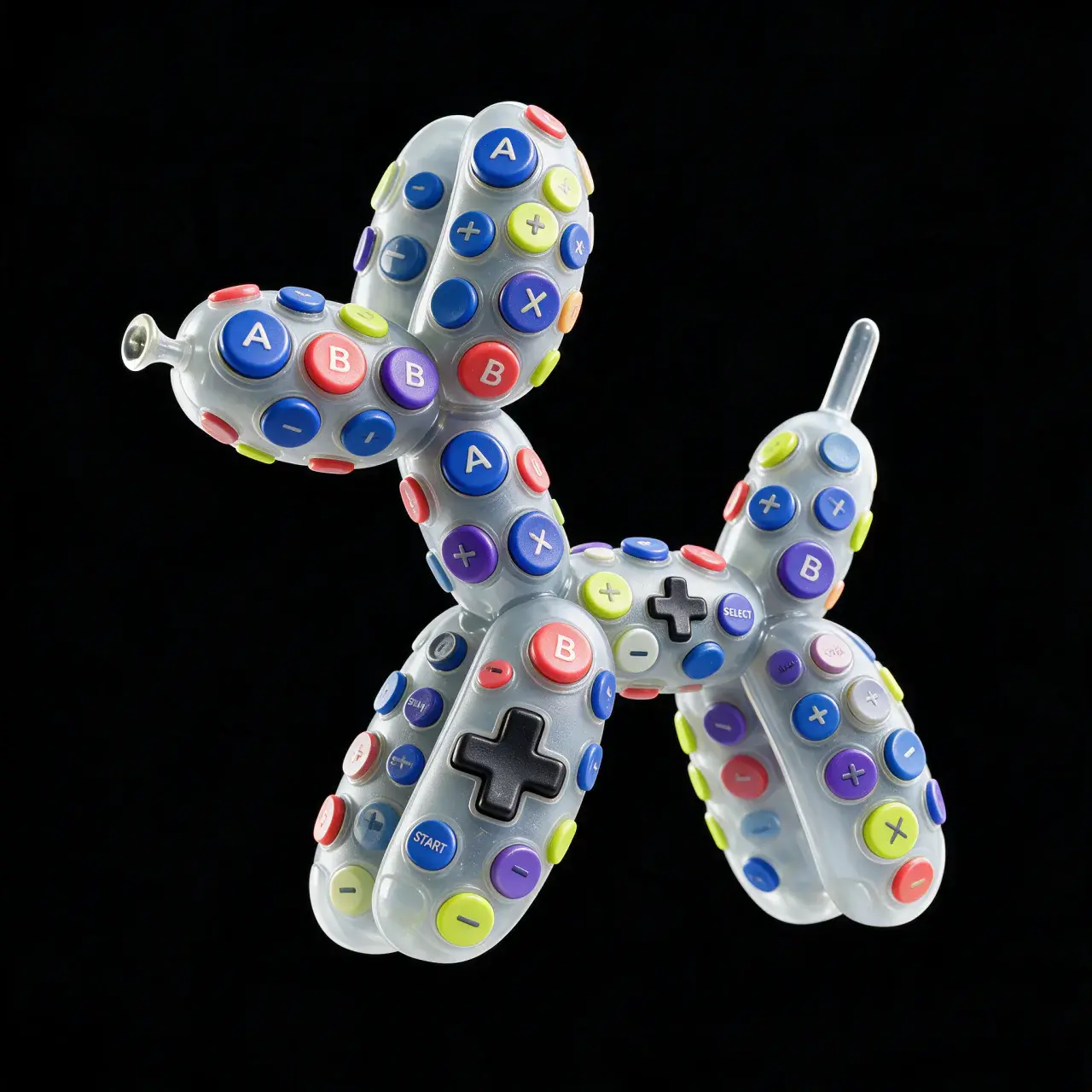
Use the uploaded image as an immutable full-object assembly blueprint. Preserve every visible source component one-to-one: silhouettes, proportions, openings, layered pieces, attachments, readable text, logos, faces, decorations, overlap and camera orientation remain exact. Rebuild suitable surfaces physically from hundreds of miniature genuine game-controller buttons and directional pads tightly seated into the source geometry. Use a main substrate of frosted translucent smoke plastic #CBD6D8, with buttons in saturated cobalt #3155E8, hot coral #F24B58, acid lime #BDF034 and violet #6D47D4. Use clearly recognizable legends and forms: A, B, X, Y, START, SELECT, plus signs, minus signs and real cross-shaped D-pads, rendered cleanly and correctly rather than pseudo-text. Larger A/B/X/Y button clusters act as focal regions while smaller buttons pack surrounding spaces; several broad components incorporate one oversized D-pad section formed from matte graphite #303137 rubber. Buttons must have real rounded caps, translucent side walls, molded legends, underside plungers and tiny gap shadows. Add slight finger-polish on common controls, fine surface scratches, dust in recesses and realistic rubber roughness. Preserve source text and small features by scaling buttons down locally. Photograph against pure black #000000 with premium gaming-hardware lighting, clean plastic highlights, deeply readable button legends, subtle rubber response and full macro photographic sharpness.
Seedream 5 Pro
Copy
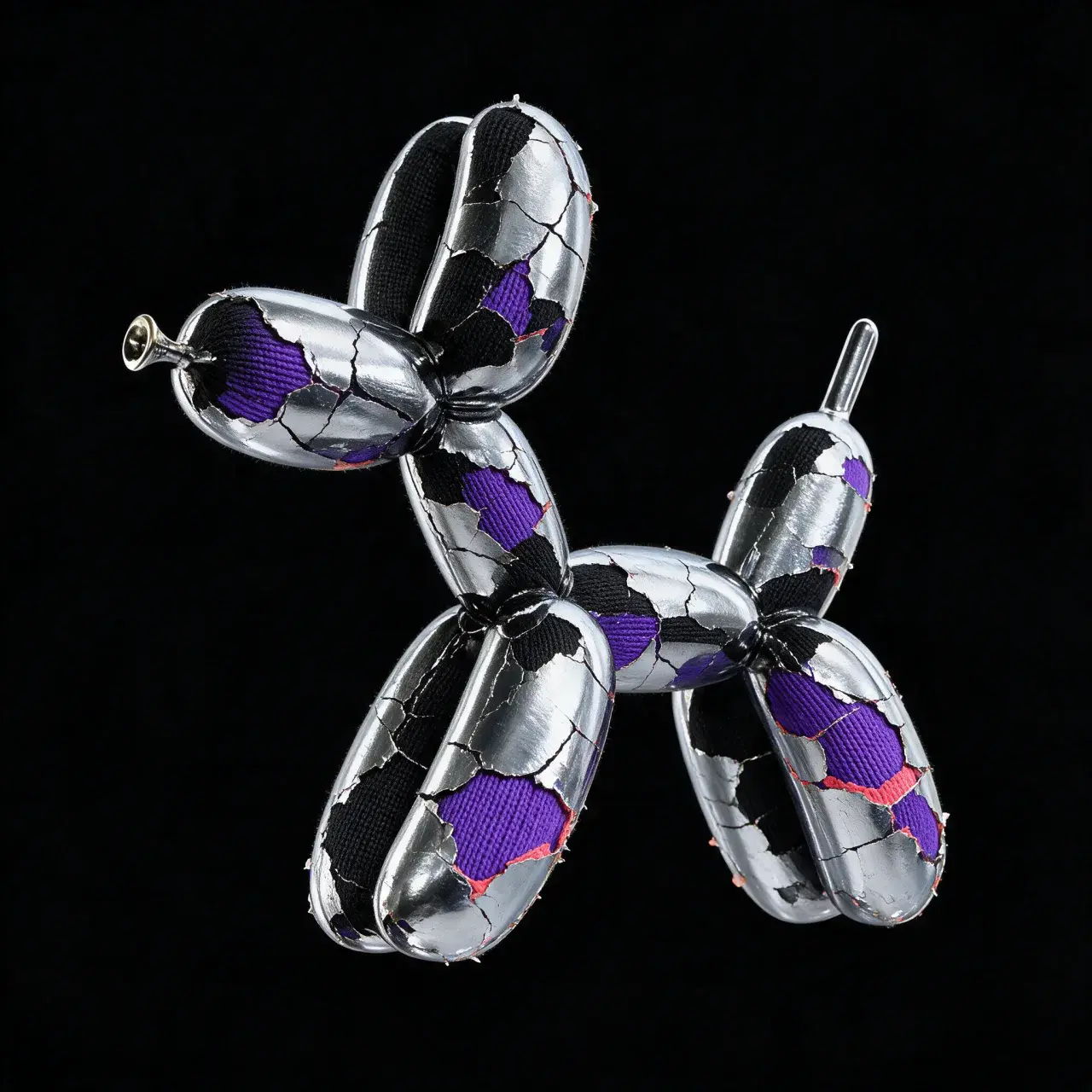
Use the uploaded image as an immutable full-assembly reference. Preserve every source component, opening, attachment, layered object, readable text, logo, label, decorative element, overlap and original view exactly. Reconstruct suitable surfaces from real stretch lamé fabric made from a dense black knit base #17161C laminated with an ultra-thin metallic foil coating in pale chrome #CCD3D8. Instead of a perfectly smooth metallic finish, intentionally fracture the foil into an irregular large-scale network as the fabric stretches over the existing geometry, revealing vivid ultraviolet knit #6338D7 through the cracks. Crack density follows physical strain: broad flat regions retain larger continuous silver foil areas, highly curved sections develop fine branching fractures and edges show tiny lifted foil scales. Add one limited accent: selected underlying knit zones shift to hot coral #F14868 so isolated cracks reveal coral rather than violet. Every foil fragment has true micron-thin thickness, slightly curled edges, microscopic scratches, worn high points and subtle wrinkle reflections. The textile beneath remains visibly knitted through larger breaks, with actual loops and soft deformation. Keep the source geometry rigid and precise. Photograph levitating against #000000 with broad controlled material lighting, long soft metallic reflections, rich dark crack lines, clear violet/coral underlayer and high-fashion Y2K textile realism.
Seedream 5 Pro
Copy
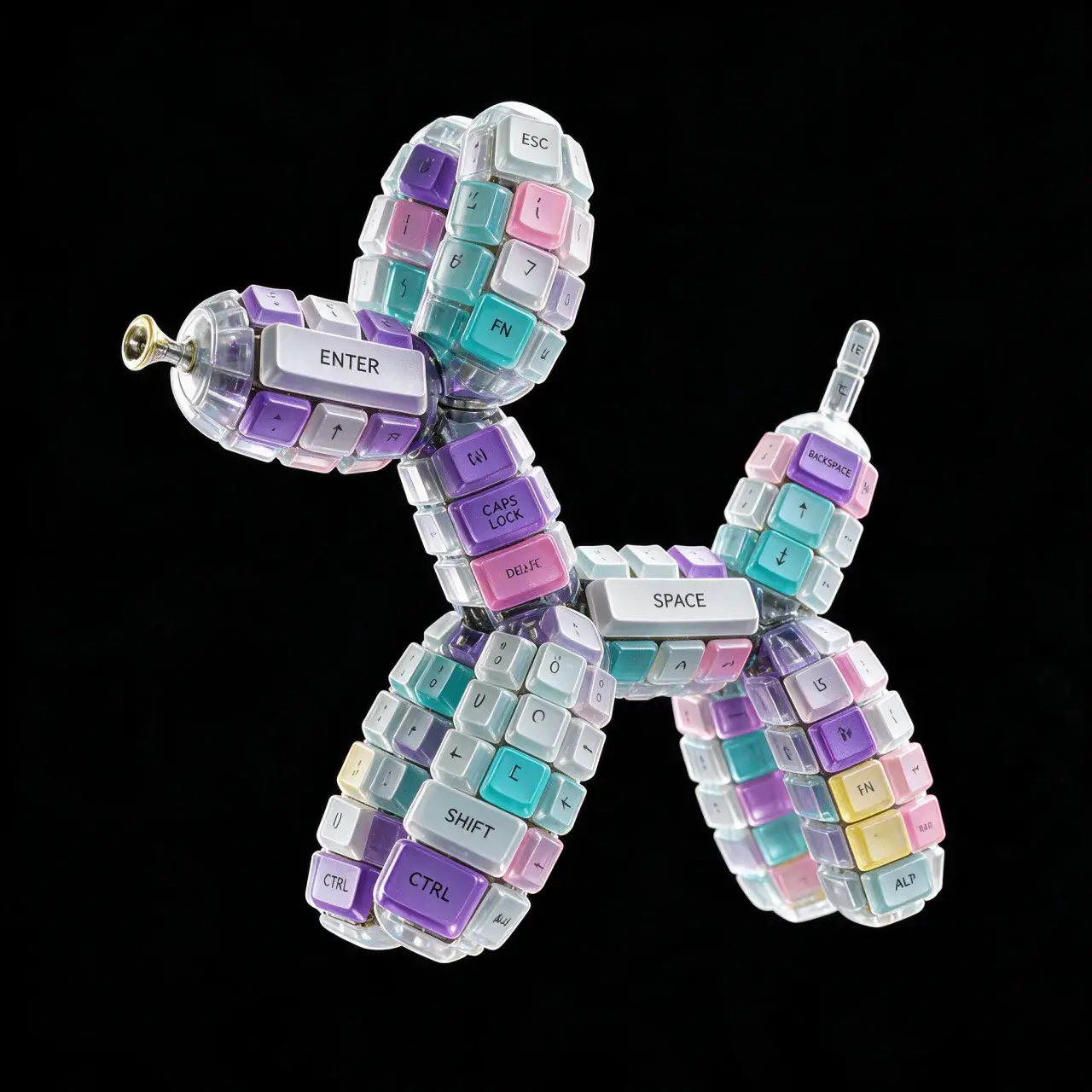
Use the uploaded image as an immutable full-assembly reference. Preserve every visible source component exactly one-to-one: identical silhouette, proportions, thickness, openings, cutouts, layered pieces, attachments, readable source text, logos, labels, facial details, decorative elements, exact spacing, overlap, depth order and original viewing orientation. Nothing from the source may disappear, merge, move, simplify or be redesigned. Rebuild the visible material from hundreds of real miniature translucent computer-keyboard keycaps physically fitted together so the keycaps themselves form the surfaces, edges and thickness of the uploaded object. Use a clean Y2K palette of transparent lavender #8458D9, aqua #50D9D0, bubblegum pink #F06EAF, pale smoke #DCE4E7 and occasional translucent lemon #F3DC69, arranged in coherent color zones rather than random rainbow scatter. Every keycap must read unmistakably as a real keyboard key with a proper sculpted keycap profile, slightly concave top surface, injection-molded side walls, visible translucent plastic thickness, underside switch stem, tiny molding seam, realistic gap between neighboring keys and sharp centered legends. Use genuine recognizable keyboard legends throughout the material: CTRL, ENTER, SHIFT, ESC, TAB, ALT, FN, CAPS LOCK, BACKSPACE, SPACE, DELETE, HOME, END, PAGE UP, PAGE DOWN, arrow keys ↑ ↓ ← →, plus familiar letter and number keys. Include several clearly readable larger modifier keys such as ENTER, SHIFT, CTRL and SPACE as dominant visual anchors on broad areas, while smaller
standard keys fill transitions and curved sections. Keep legends typographically clean, correctly spelled, horizontally aligned and high-contrast in dark graphite #24252A; avoid invented characters, broken pseudo-text, random glyphs or illegible symbols. Larger keys must preserve their real proportions: ENTER and SHIFT visibly wider than letter keys, SPACE substantially elongated, CTRL and ALT medium-width, arrow keys compact and grouped logically. Arrange the keycaps in ordered keyboard-like clusters and stepped rows that follow the source geometry instead of a chaotic mosaic, while scaling the entire keyboard system down only where necessary to preserve fine source details. Some keys may sit slightly deeper or higher for tactile variation, but keep the construction neat and physically believable. Add subtle real-world imperfections: tiny worn shine on frequently used keys, very fine scratches, faint dust inside narrow key gaps, slight edge haze on older clear plastic and barely visible fingerprints on several glossy caps. Photograph the complete preserved assembly freely suspended against pure black #000000 with high-end electronics product lighting: broad soft upper-left-front illumination, restrained frontal fill, crisp but controlled highlights on the translucent keycap edges, deep clean shadows between keys and excellent legend readability across the whole object. Full-frame macro product-photography realism, extremely sharp physical detail, real injection-molded plastic behavior, no toy-like CGI, no fake random symbols, no distorted text.
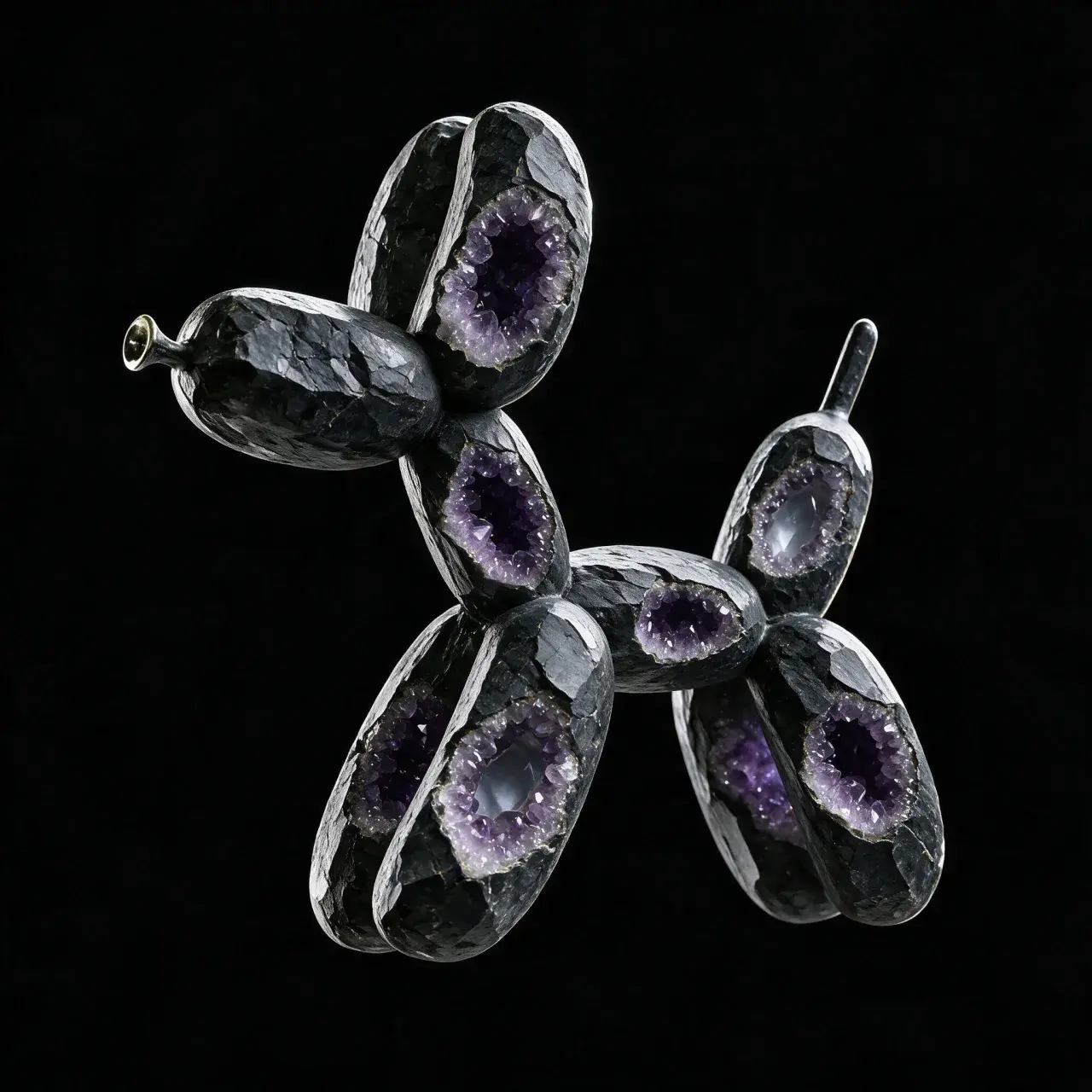
Seedream 5 Pro
Copy
Use the input image as an immutable geometry blueprint and preserve its precise silhouette, proportions, negative spaces, logo geometry, lettering and source viewpoint. Transform the object into a complex mineral composite while keeping the underlying design completely recognizable. Broad exterior regions are formed from dense dark graphite-gray rock with naturally fractured crystalline microstructure. Within selected recessed areas and controlled surface breaks, reveal deep internal geode cavities lined with progressively smaller translucent crystals ranging from smoky gray at the outer boundary through pale lavender to saturated violet at their deepest points. At the center of some cavities, expose smooth semi-transparent mineral glass instead of additional crystals, creating multiple material scales inside the same object. Crystal growth must remain contained within the source silhouette and never produce random spikes extending beyond it. Illuminate the cavities with subtle internal-looking reflected light while using a dramatic side key and thin cool rim to reveal the outer stone geometry. Center the object and suspend it in absolute empty black space, background #080808, with no ground, pedestal, environmental elements, horizon or external shadow.
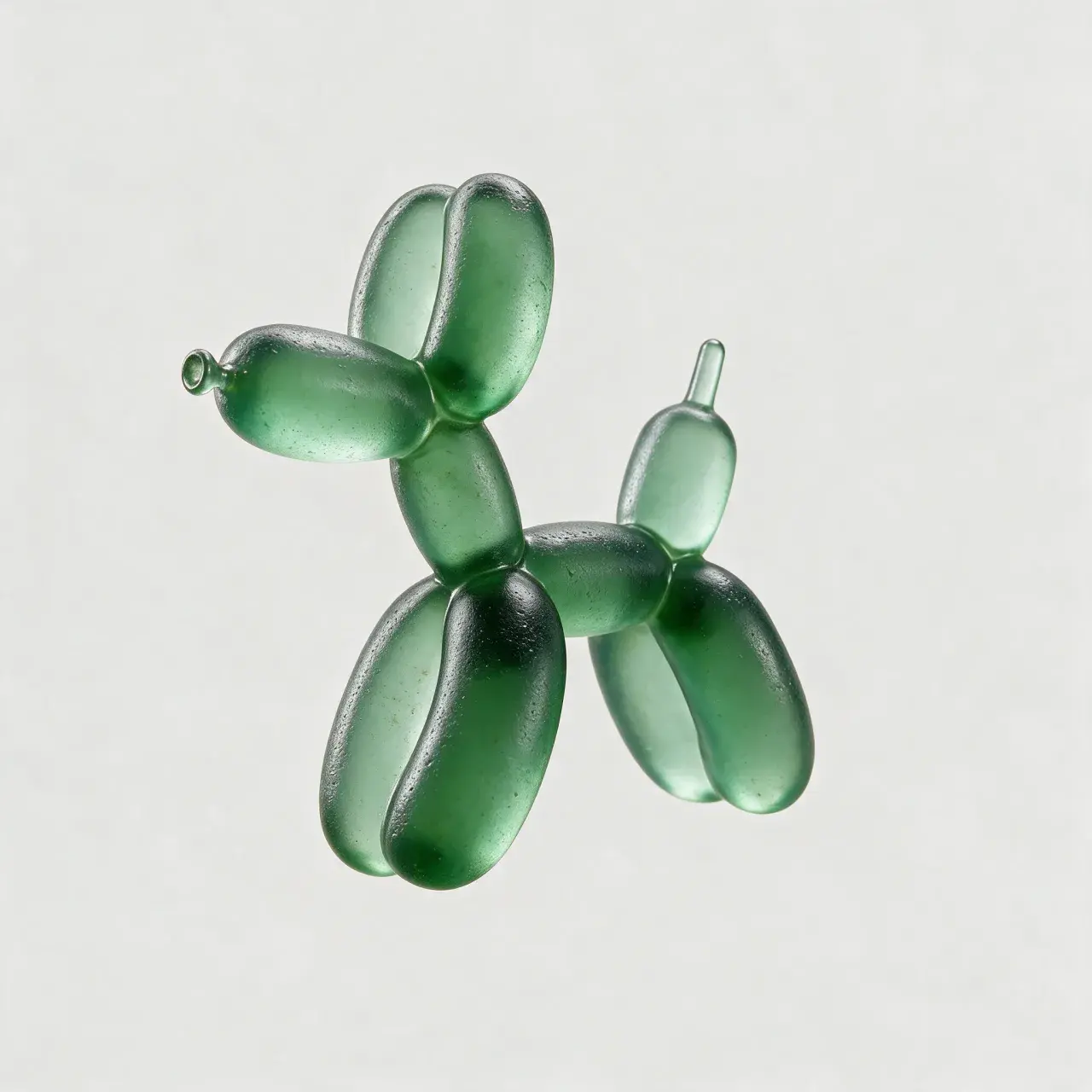
Seedream 5 Pro
Copy
Use the attached image as a strict geometry blueprint and preserve its exact silhouette, dimensions, internal holes, typography, logo contours, structural parts, orientation and original camera view. Flat source graphics may become shallow solid forms without any redesign. Reconstruct the exterior from thick translucent sea-glass in a saturated bottle-green tone, with smoothly rounded matte-frosted surfaces, softly polished edges and subtle internal inclusions. The material transmits light diffusely rather than remaining fully transparent, creating darker dense cores and brighter glowing thin edges. Include extremely fine abrasion and microscopic pitting associated with naturally weathered glass. Keep all source details exact. Center the object and make it freely levitate in empty air against a perfectly uniform #E8E8E6 background. No sand, water, ground, pedestal, support, horizon, contact shadow or external cast shadow. Only internal transmission and self-shading within the glass.
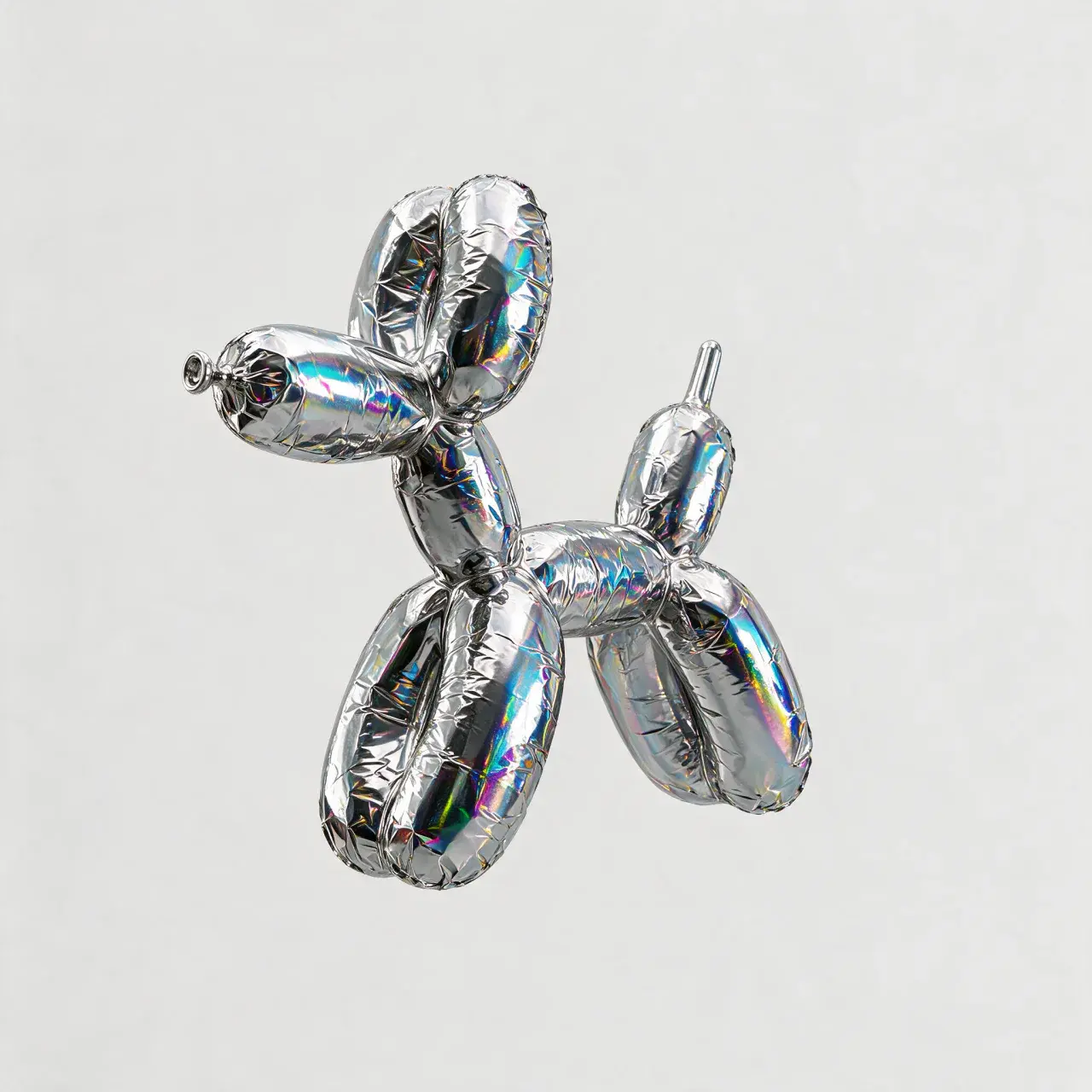
Seedream 5 Pro
Copy
Use the attached image as the fixed geometric blueprint. Preserve all original contours, proportions, openings, lettering, logos, construction details, orientation and overall composition. Convert a flat graphic into a shallow object only when needed. Wrap the exterior tightly in extremely thin holographic Mylar foil with dense fine crinkles, sharp microscopic creases and irregular tension patterns that follow the object's geometry. The reflective foil produces narrow angle-dependent flashes of cyan, electric blue, magenta, lime, gold and violet while maintaining a predominantly silvery metallic base. Crumpling creates complex highlights but must not deform the underlying silhouette. Fine details remain readable beneath tightly stretched foil. Center the object and suspend it freely against a perfectly uniform solid #E8E8E6 background. No loose foil around it, floor, support, pedestal, horizon, contact shadow or external cast shadow. Lighting should produce controlled crisp reflections exclusively on the object.
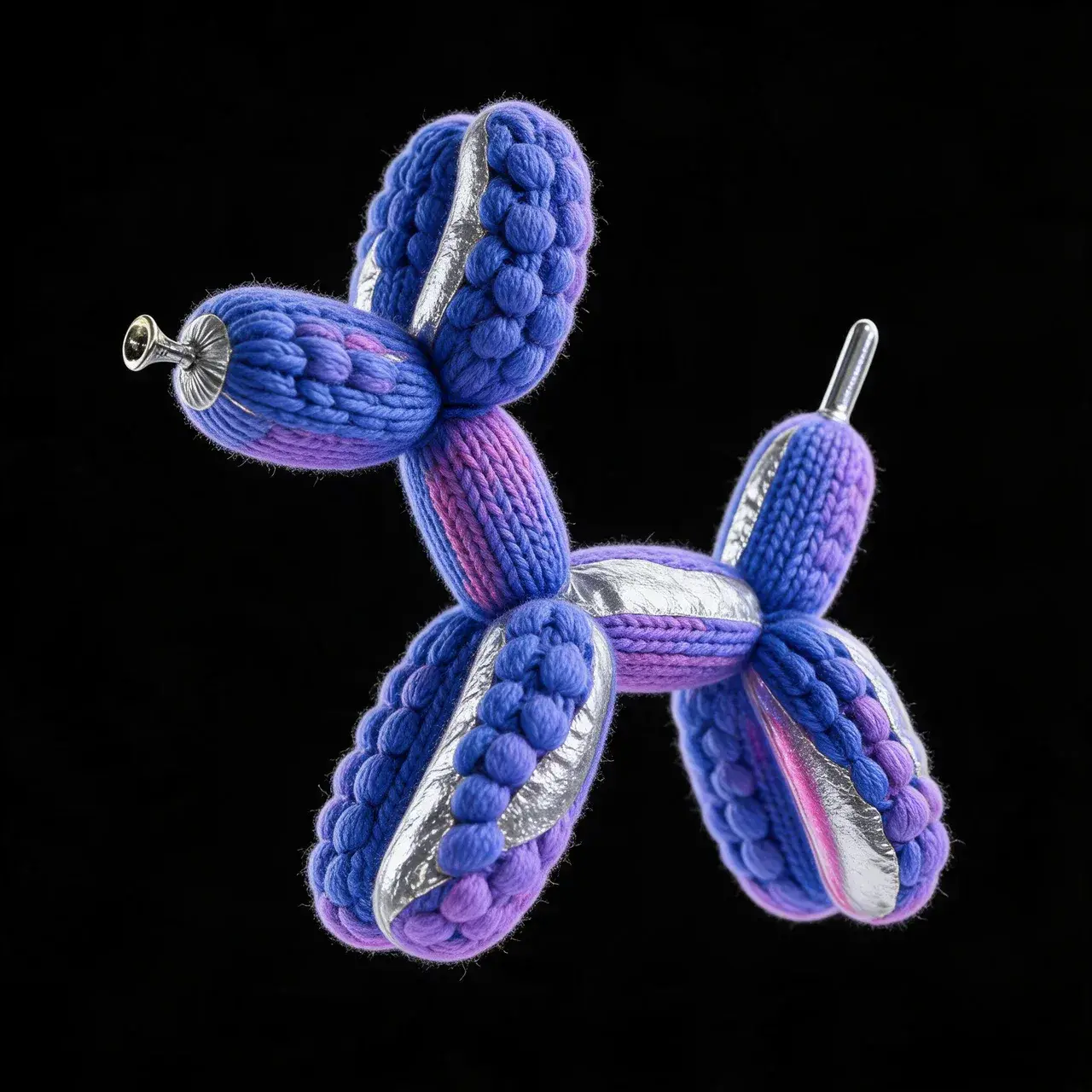
Seedream 5 Pro
Copy
{ "source_lock": "Treat the uploaded image as the immutable structural master. Preserve every visible source component, contour, thickness, opening, cutout, attachment, text, logo, facial detail, overlap, relative position and exact camera view. The transformation changes materials only.", "palette": { "knit_blue": "#3E63D9", "knit_lilac": "#A58AE5", "latex_silver": "#C5CBD0", "latex_pink": "#E56EA5", "background": "#000000" }, "material_logic": { "dominant_material": "Dense three-dimensional spacer knit with raised rounded bubble stitches.", "secondary_material": "Thin metallic latex stretched selectively across knit valleys." }, "macro_structure": "Form the surface from an engineered knit whose stitch topology creates broad swollen bubble rows separated by narrow flexible valleys. Arrange the raised rows directionally with the source geometry rather than as a uniform grid.", "meso_structure": "Use cobalt knit transitioning slowly into lilac across large areas. Stretch thin silver metallic latex across selected valley systems so the metal appears as smooth flowing bands between the soft raised knit rows. In a few focal areas shift the latex from silver toward muted metallic pink.", "micro_structure": "Resolve real knitted loops, yarn twist, tiny fiber fuzz, stretched stitches on convex
regions and dense compression inside valleys. Latex shows microscopic wrinkles, fine metallic pigment grain and slight tension distortion. At knit-latex interfaces individual yarn loops remain visible beneath the stretched film.", "detail_control": "Use flatter fine knit and omit metallic latex behind critical source details.", "lighting": { "setup": "One large diffused studio light positioned upper-left-front, approximately 40 degrees above and 35 degrees to the left of camera, plus extremely weak neutral frontal fill only to preserve shadow information.", "behavior": "Lighting remains soft, neutral and identical across the entire collection. Material appearance must come from real roughness, transmission, fibers and reflectivity rather than from dramatic lighting.", "restrictions": "No rim light, no colored lighting, no visible light sources, no rectangular reflections, no HDRI environment, no bloom, glow, halo or lens flare." }, "composition": { "camera": "Preserve the exact source viewing direction and orientation.", "position": "Centered and freely suspended.", "background": "#000000", "floor": false, "cast_shadow": false }, "quality": "High-end tactile textile photography with genuine three-dimensional knit construction, individual yarn loops and physically stretched metallic latex." }
Seedream 5 Pro
Copy
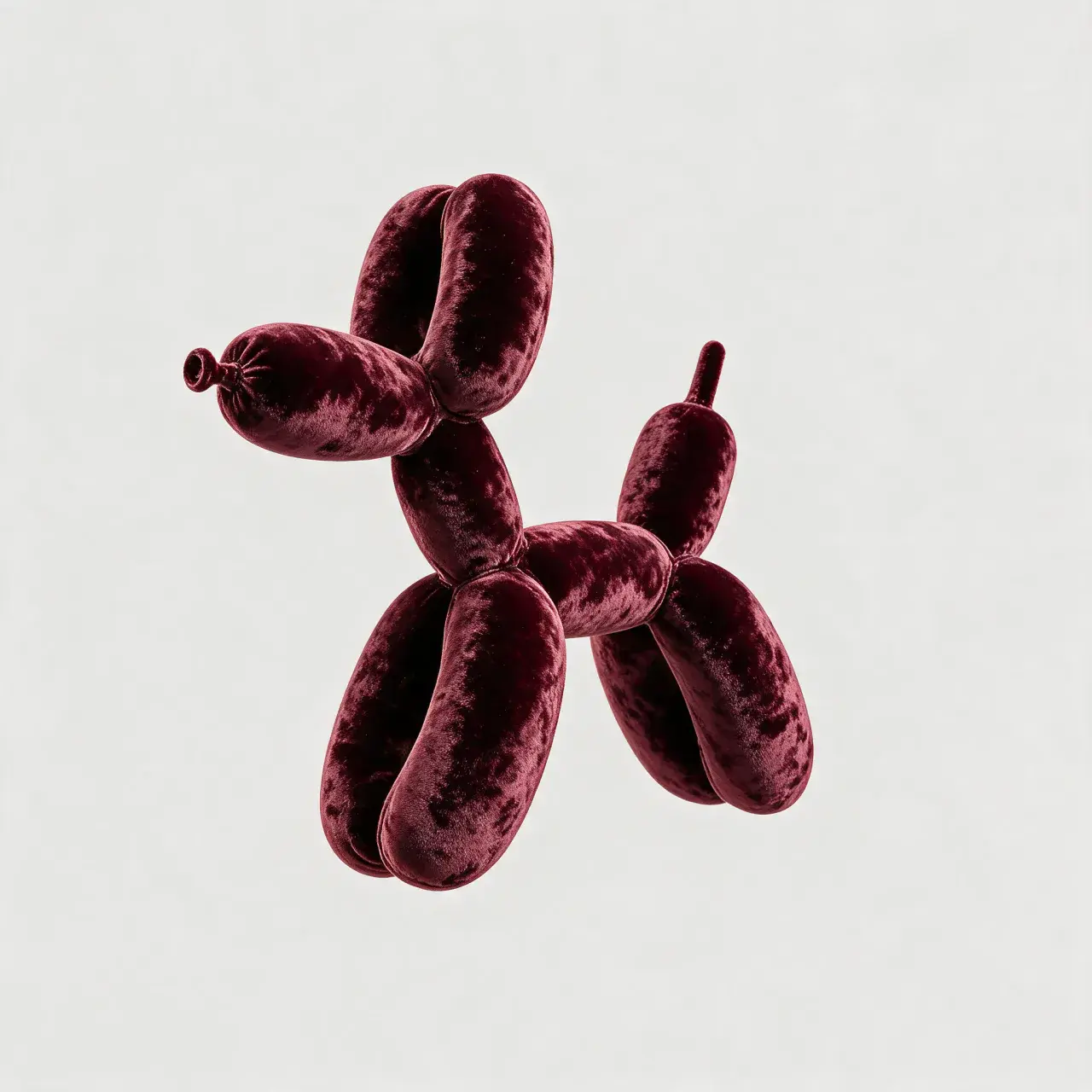
Use the attached image strictly as a geometry blueprint. Preserve its silhouette, proportions, openings, source graphics, typography, logo contours, construction and orientation. If the source is flat, give it subtle physical thickness without changing its frontal design. Cover the complete exterior in deep burgundy crushed velvet with dense ultra-short directional pile. The velvet fibers create irregular light-and-dark tonal islands depending on brushing direction, producing the characteristic liquid-like crushed sheen without any printed pattern. Broad surfaces reveal sweeping changes in nap direction while edges show finely wrapped textile construction and restrained compression. Fine source details remain perfectly legible. The object floats freely in the center of an empty scene against one perfectly uniform #E8E8E6 background. No floor, pedestal, stand, wall interaction, horizon, contact shadow or external cast shadow. Soft broad studio highlights should interact only with the velvet nap and the object's own geometry.
Seedream 5 Pro
Copy
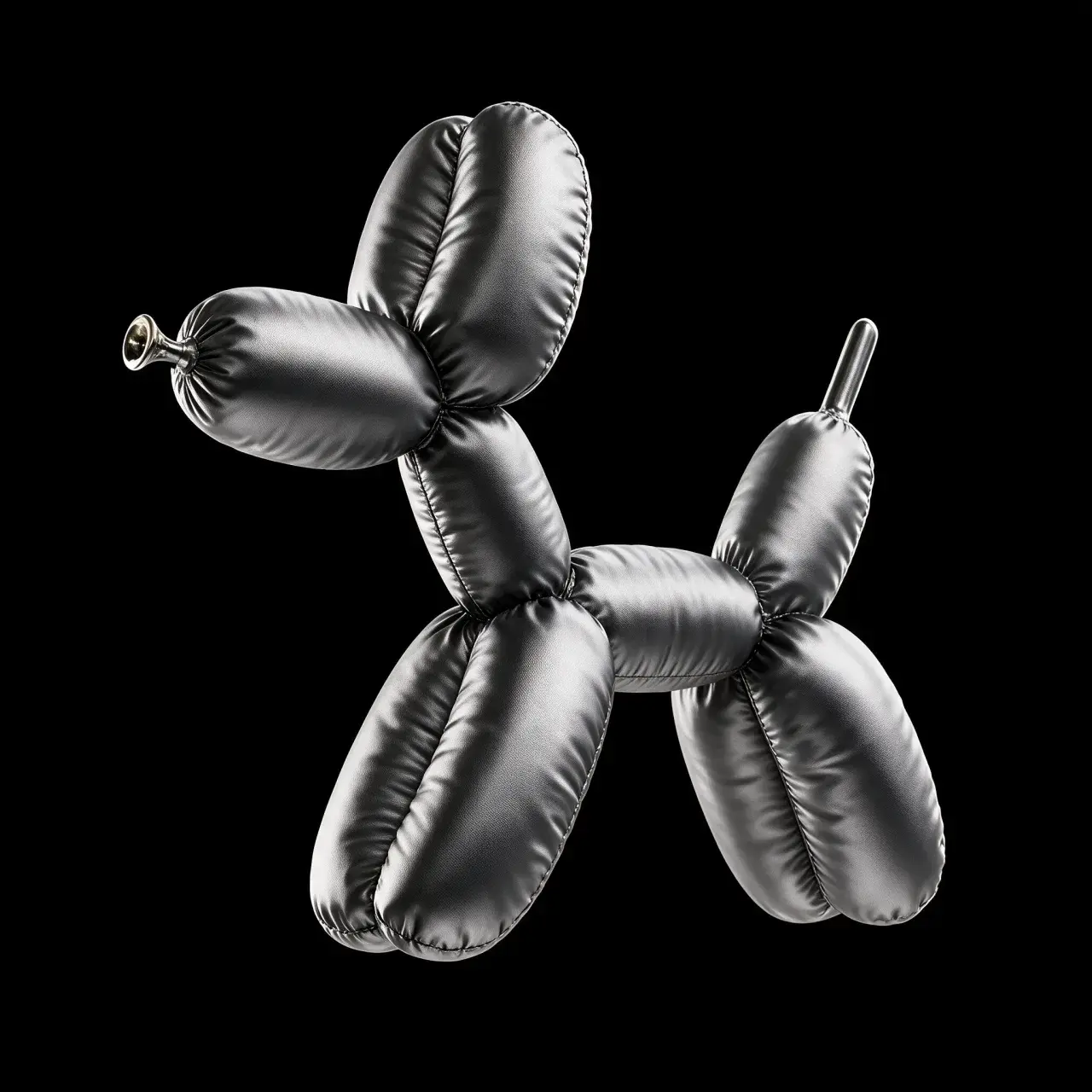
Use the uploaded image as the identity and primary-shape blueprint for a physically realized 3D material object. Preserve the subject's recognizable outer silhouette, overall proportions, major internal openings, negative spaces and essential graphic structure. Do not redesign the subject or replace it with another object. If the uploaded source is flat artwork, typography or a logo, give it convincing physical thickness while preserving its frontal design. If it is already a three-dimensional object, preserve its overall orientation and primary form. MATERIAL CONSTRUCTION: [INSERT MATERIAL BLOCK HERE] The chosen material must physically reconstruct the object rather than appear as a texture map, decal, printed pattern or photographic overlay. Allow material-specific secondary geometry to change the local surface structure wherever physically appropriate: thickness, displacement, pores, fibers, cells, folds, seams, swelling, compression, cavities, cracks, layers, particles, strands, wrinkles, extrusion or erosion. Preserve the recognizable primary silhouette and major negative spaces while allowing the material itself to determine the smaller surface topology. Render the result as a genuinely modeled three-dimensional asset with convincing thickness, edge construction and material-dependent depth. CAMERA AND COMPOSITION: Keep the source object's general visual orientation whenever possible. Use a clean near-frontal premium 3D product-render viewpoint with only a subtle amount of perspective revealing physical thickness. Neutral long-lens visual compression, approximately equivalent to an 85–100 mm product-photography lens. No wide-angle distortion, dramatic perspective, dutch angle or unnecessary rotation. Show the complete object, fully inside the frame, centered consistently, occupying approximately 62–68% of the image height with generous negative space around it. The object floats freely in empty space against an infinite pure-black background, exact color #000000. No floor, ground plane, table, pedestal, base, wall, visible support, wire, horizon line, contact shadow or cast shadow outside the object. LIGHTING: Use restrained high-end material-study illumination consistent across the entire collection. Soft directional illumination comes predominantly from the upper-left-front direction, creating broad dimensional modeling across the form, smooth transitions from light to shadow and clearly readable microgeometry. Maintain a small amount of neutral frontal illumination so shadowed regions retain material information, with only very subtle separation along selected upper-right
edges. Lighting must reveal the material rather than become a visual effect. Maintain deep neutral blacks, rich dimensional midtones, soft physically plausible self-shadowing, restrained highlights and smooth highlight roll-off. All illumination exists outside the visible frame. Never show lamps, softboxes, light panels, white cards, studio equipment or bright geometric light-source shapes. Do not produce recognizable rectangular or square reflections of studio equipment on glossy, metallic, resin or glass surfaces. Glossy highlights should appear as elegant abstract tonal gradients and narrow natural specular transitions following the object's curvature, never as visible photography equipment. No glowing outline, neon rim, halo, bloom, lens flare, volumetric beam, environmental reflection, visible room reflection, HDRI environment, ceiling reflection or studio interior. RENDER QUALITY: Physically based 3D material rendering, realistic global illumination, accurate roughness response, realistic transmission and refraction where appropriate, realistic subsurface scattering where appropriate, precise self-occlusion inside the object's own cavities, high-frequency microgeometry, physically believable edge behavior, sophisticated tonal separation, extremely clean anti-aliasing, exceptional material definition, premium commercial CGI material study, ultra-high-resolution photorealistic render. The final result must resemble a professionally modeled and rendered material asset from a high-end 3D material library, not AI product photography. Reconstruct the entire form as a pressure-filled padded textile structure made from premium technical nylon. Divide the object's body into large organically shaped inflated chambers that intelligently follow the uploaded silhouette. Each chamber bulges outward under believable internal pressure while deep stitched channels pull the textile inward between padded sections. Create convincing edge thickness, softly rounded inflated corners, subtle compression where adjacent chambers meet, fine woven nylon microtexture, restrained satin-matte reflectivity, tiny tension wrinkles radiating from seams and realistic fabric stretching across convex areas. Broad sections become visibly cushioned and volumetric while narrow structural areas use smaller padded cells. The inflated construction should noticeably transform the secondary geometry while keeping the uploaded object's primary silhouette and major openings immediately recognizable. The object must look physically sewn, filled and inflated rather than like a smooth model wrapped in a puffer-jacket texture.
Seedream 5 Pro
Copy
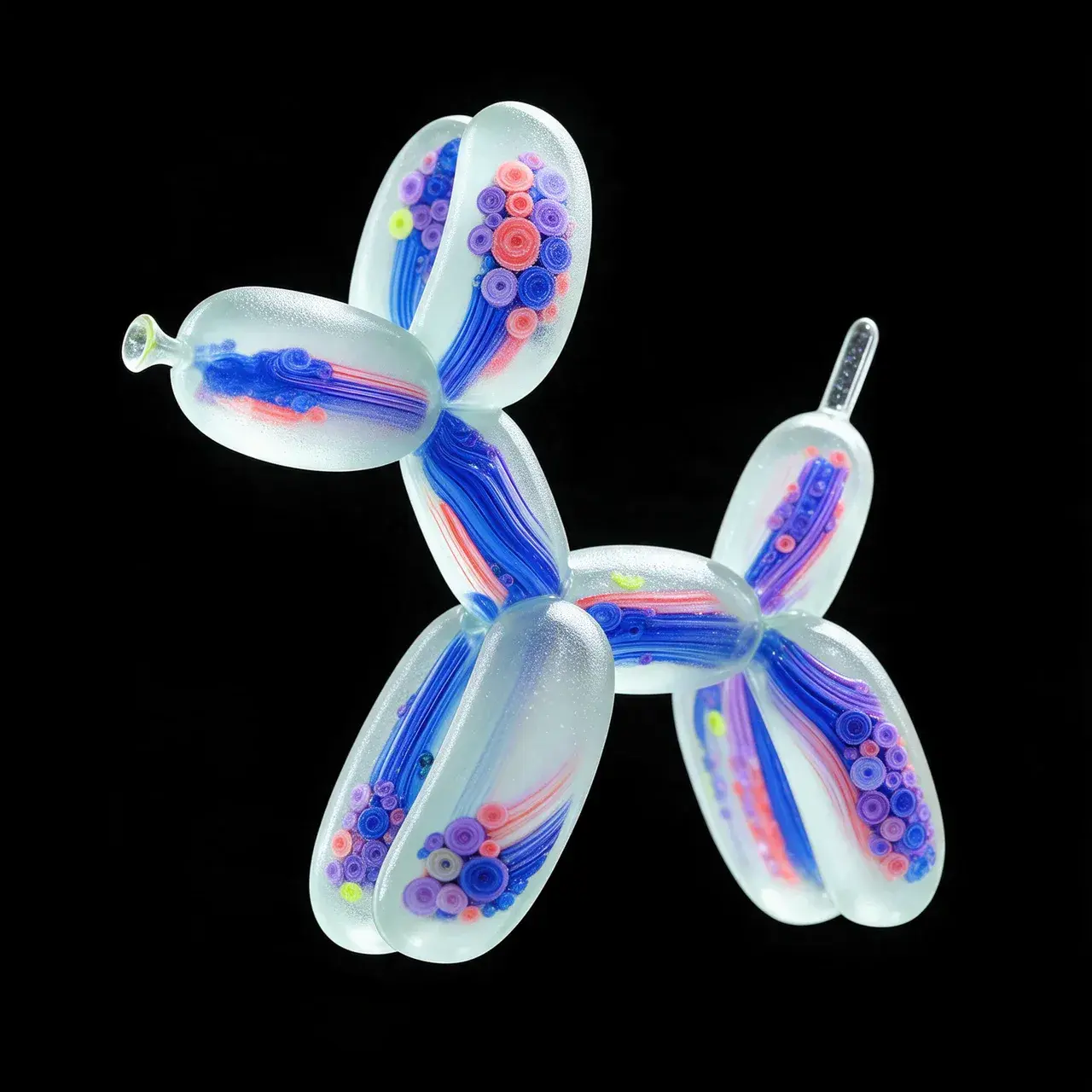
{ "source_lock": "Treat the uploaded image as the immutable structural master. Preserve every visible source component exactly one-to-one: silhouette, proportions, thickness, openings, cutouts, negative spaces, separate parts, layered elements, attachments, readable text, logos, labels, facial details, decorative source elements, relative positions, overlap, depth order, camera angle and composition. Transform the existing material only. Do not add external ornaments, panels, shells or objects.", "palette": { "frosted_base": "#D9ECEA", "cobalt": "#2857DA", "coral": "#F36D7B", "orchid": "#9D72DB", "chartreuse": "#C6E84D", "background": "#000000" }, "material_logic": { "dominant_material": "Thick satin-frosted fused glass.", "secondary_material": "Large colored glass-cane structures fused throughout the same body." }, "macro_structure": "Keep the overall surface pale and frosted. Inside the material form several large flowing fields of fused glass cane, not scattered inclusions. Colored structures should travel continuously through the object's thickness and reappear naturally on side surfaces and cut edges.", "meso_structure": "Build the colored regions from tightly bundled glass rods with visible concentric cross-sections and stretched elongated patterns, like complex millefiori cane pulled through hot glass. Use cobalt and orchid as the dominant cane colors, coral as a secondary color and chartreuse only as a rare sharp accent. Some bundles remain circular in cross-section while others stretch into long ribbons
as they follow the object's geometry.", "micro_structure": "Resolve real fused-glass behavior: softened boundaries where rods melted together, microscopic trapped air channels, slight internal waviness, faint devitrification, ultra-fine frost etching on the exterior and clearer polished side edges. Colored glass must remain optically dense and physically internal, never printed.", "detail_control": "Use calmer almost-clear glass around source text and tiny features. Narrow components receive proportionally finer cane bundles.", "lighting": { "setup": "One large diffused studio light positioned upper-left-front, approximately 40 degrees above and 35 degrees to the left of camera, plus extremely weak neutral frontal fill only to preserve shadow information.", "behavior": "Lighting remains soft, neutral and identical across the entire collection. Material appearance must come from real roughness, transmission, fibers and reflectivity rather than from dramatic lighting.", "restrictions": "No rim light, no colored lighting, no visible light sources, no rectangular reflections, no HDRI environment, no bloom, glow, halo or lens flare." }, "composition": { "camera": "Preserve the exact source viewing direction and orientation.", "position": "Centered and freely suspended.", "background": "#000000", "floor": false, "cast_shadow": false }, "quality": "Photoreal fused-glass macro photography with true optical thickness, sophisticated cane construction, natural melting irregularity and clean frosted surface response." }
Seedream 5 Pro
Copy
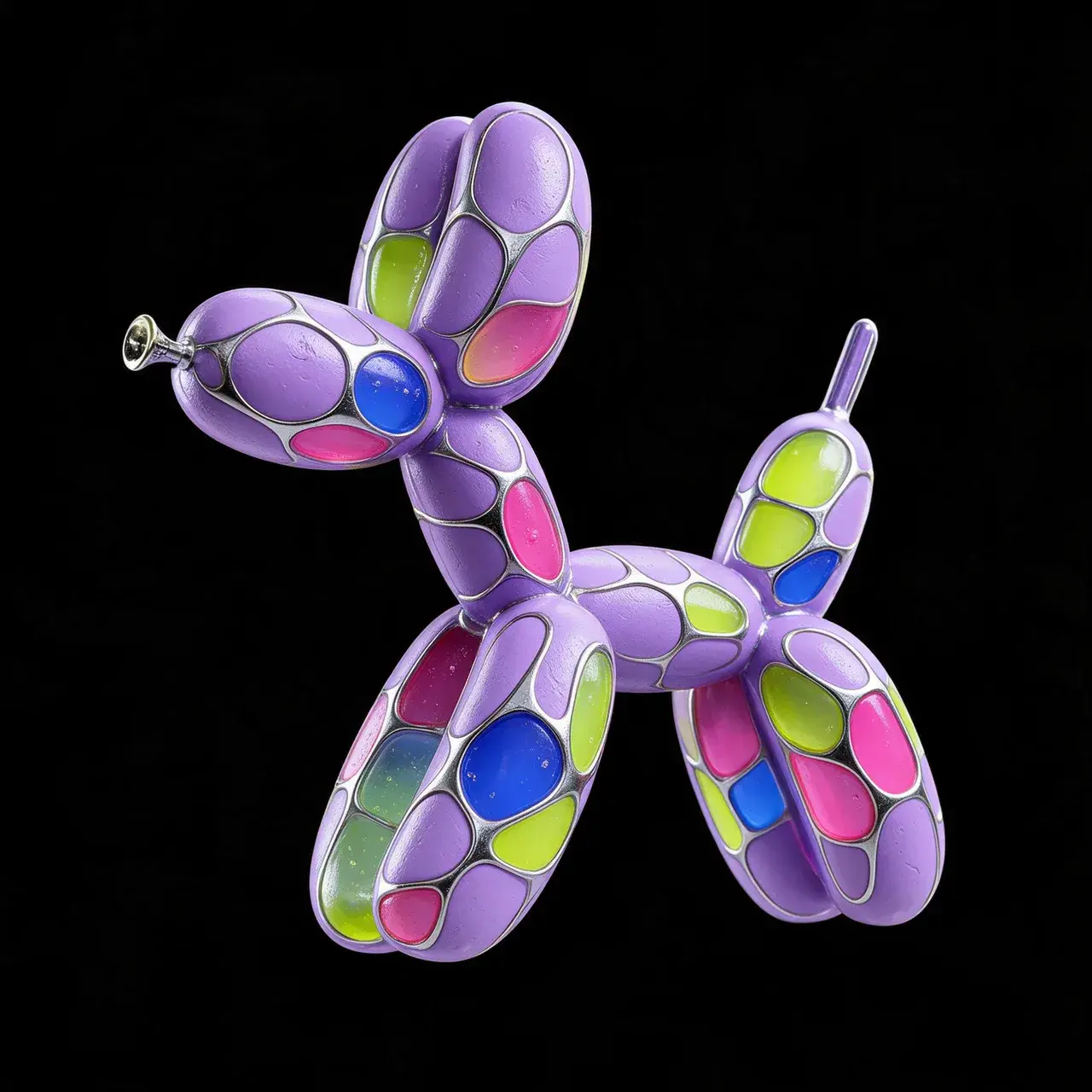
{ "source_lock": "Treat the uploaded image as the immutable structural master. Preserve every visible source component exactly one-to-one: silhouette, proportions, thickness, openings, cutouts, negative spaces, separate parts, layered elements, attachments, readable text, logos, labels, facial details, decorative source elements, relative positions, overlap, depth order, camera angle and composition. Transform the existing surfaces only. Do not add external shells, clothing, panels, frames, appliques or decorative objects that were not present in the source. The transformed object must match the original source geometry when overlaid.", "palette": { "base_lilac": "#B89AE9", "raspberry": "#EE4D98", "acid_lime": "#C9F43D", "electric_blue": "#315CEB", "chrome": "#C6CDD2", "background": "#000000" }, "material_logic": { "dominant_material": "Dense satin polyurethane with a softly dry molded surface.", "secondary_material": "Translucent colored elastomer contained inside recessed relief cells.", "structural_accent": "Very narrow polished chrome dividers integrated flush into the material." }, "macro_structure": "Divide each broad surface into a small number of large flowing cells using continuous chrome lines that curve organically with the existing geometry. Use approximately 6–15 large cells on a broad source component, never hundreds of tiny cells. The line network should feel like fluid Y2K cloisonne rather than honeycomb or mosaic.", "meso_structure": "Keep approximately half the cells matte lilac polyurethane. Fill selected neighboring cells with translucent raspberry, acid-lime and electric-blue elastomer, forming large coherent color regions rather than alternating every cell. Colored cells sit slightly lower than the matte base and have
softly rounded meniscus-like interiors. Chrome dividers remain extremely narrow and physically embedded between the two materials.", "micro_structure": "The matte polyurethane shows very fine molded grain, tiny pressure marks and faint handling polish. Translucent cells contain subtle optical depth, a few microscopic bubbles and slightly darker color near recessed edges. Chrome has fine polishing scratches and tiny realistic waviness. Material junctions show compression and physical thickness rather than perfect computer-clean borders.", "detail_control": "Create calm uninterrupted matte zones behind source text, logos, faces and small details. Reduce cell size only when necessary to preserve source geometry.", "lighting": { "setup": "One large diffused studio light positioned upper-left-front, approximately 40 degrees above and 35 degrees to the left of camera, plus extremely weak neutral frontal fill only to preserve shadow information.", "behavior": "Lighting remains soft, neutral and identical across the entire collection. Material appearance must come from real roughness, transmission, fibers and reflectivity rather than from dramatic lighting.", "restrictions": "No rim light, no colored lighting, no visible light sources, no rectangular reflections, no HDRI environment, no bloom, glow, halo or lens flare." }, "composition": { "camera": "Preserve the exact source viewing direction and orientation.", "position": "Centered and freely suspended.", "background": "#000000", "floor": false, "cast_shadow": false }, "quality": "Photoreal physical material photography. Strong large-scale surface design from thumbnail view, rich intermediate relief at medium distance and precise molded grain, optical depth and metal imperfections at macro distance." }
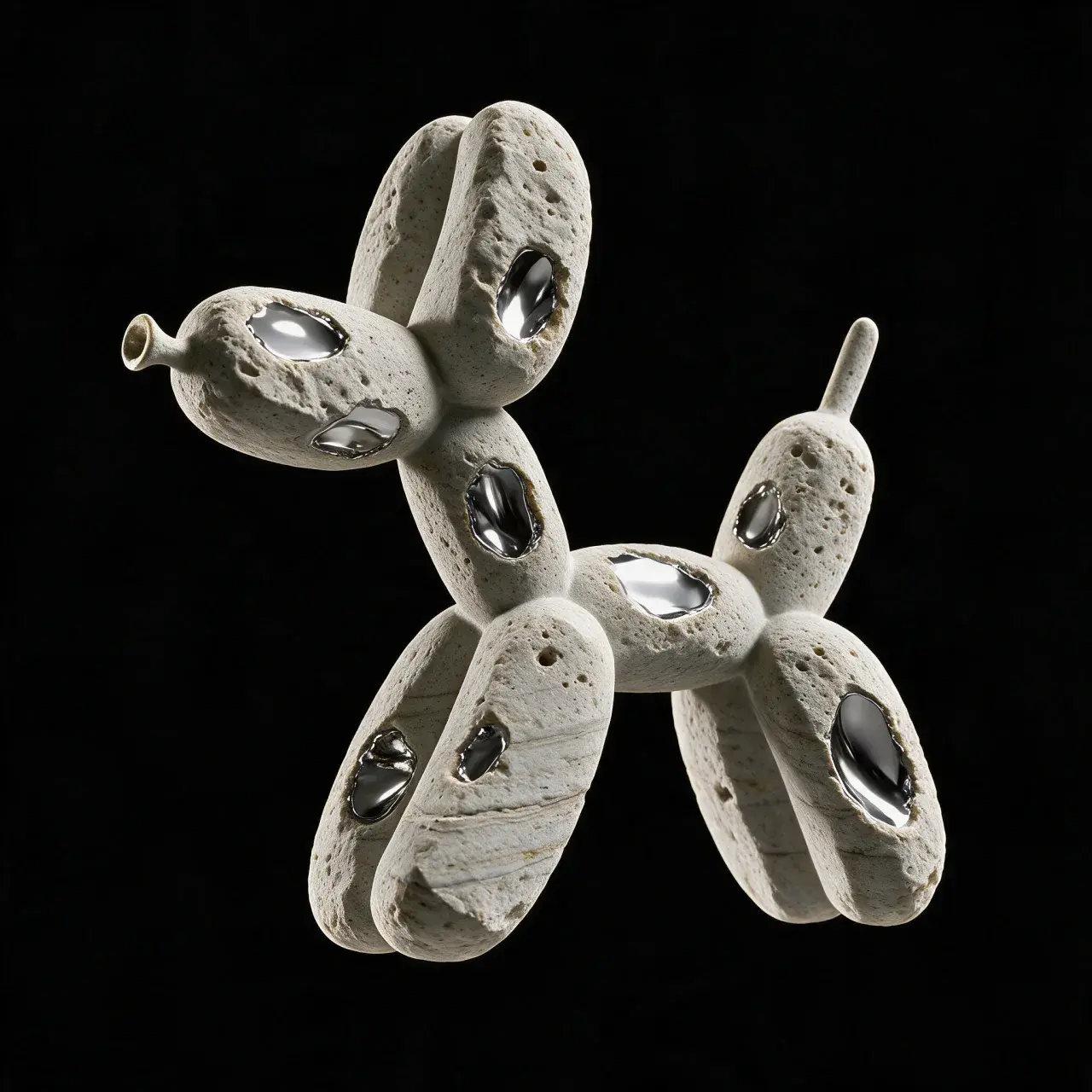
Seedream 5 Pro
Copy
Use the uploaded input as an exact geometry constraint. Preserve its silhouette, proportions, openings, typography, logos, orientation and all recognizable source details without redesign. Reconstruct the object from pale warm-gray porous mineral stone with extremely fine sedimentary grain, scattered tiny cavities, subtle geological strata and irregular eroded micro-edges. Within selected naturally shaped cavities, replace the rough stone interior with flawless mirror-polished silver metal, as though metallic material had formed organically inside geological voids. Some cavities are shallow polished pools while others extend deeper and reveal distorted mirrored interiors. Keep the transition between dry porous stone and perfect chrome unusually precise and physically believable. Use raking directional light to reveal the stone texture, paired with long narrow studio reflections that appear only inside the metallic cavities. A restrained back rim separates the pale object from the dark scene. Center the object and make it levitate freely against uniform #080808 black, without ground, pedestal, support, visible studio, horizon, contact shadow or cast shadow.
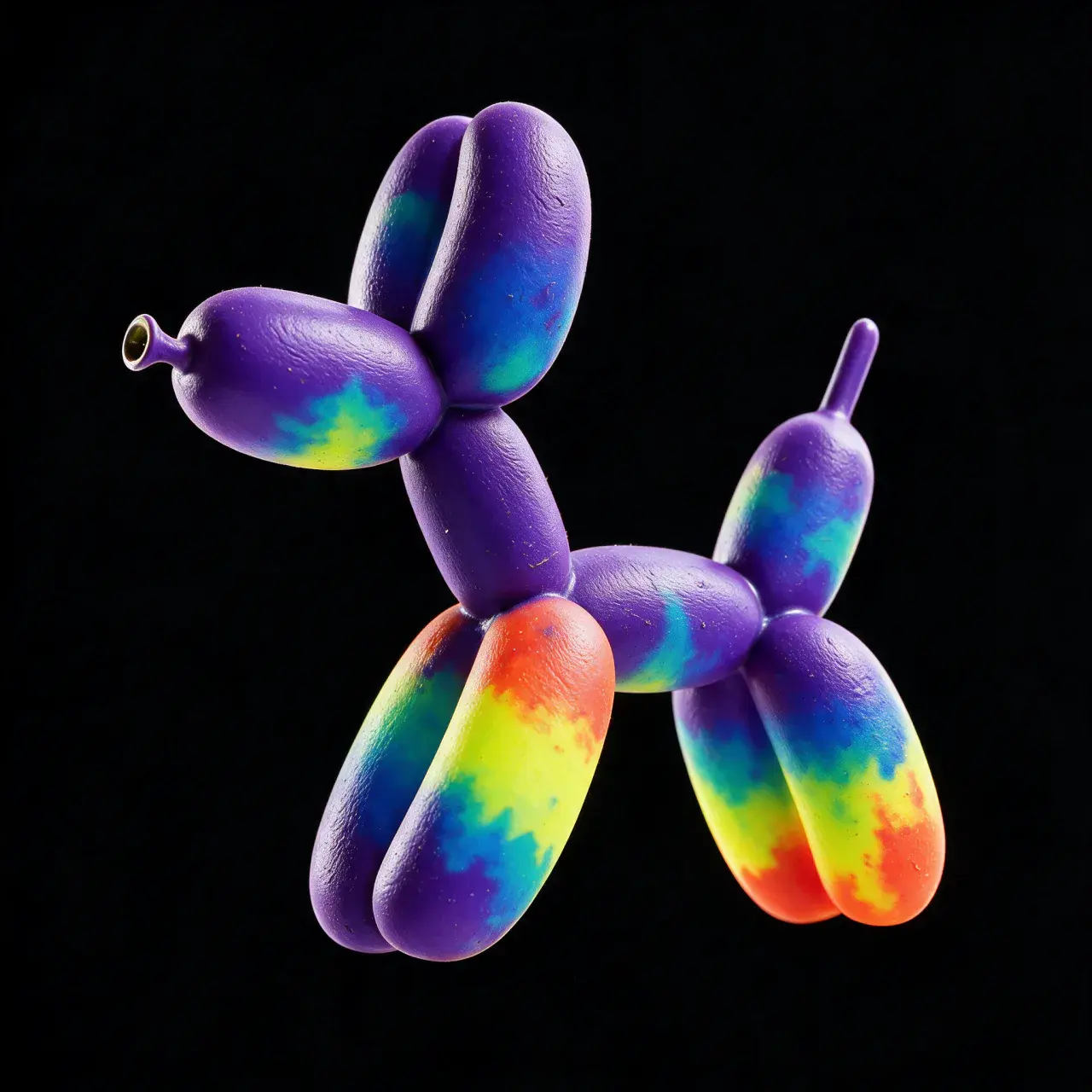
Seedream 5 Pro
Copy
Use the uploaded image as an immutable full-assembly reference. Preserve every source silhouette, component, opening, attachment, text, logo, label, decorative feature, spacing, overlap and exact source orientation. Reconstruct suitable surfaces from genuine soft-touch thermochromic silicone with a base color of deep ultraviolet #6335D3. Create large physically plausible temperature-reactive color blooms across the material rather than a static airbrushed gradient: cooler areas remain violet, medium-temperature zones shift through saturated cobalt #2C58E8 and turquoise #26C9BE, and warmer zones transition sharply into acid yellow #D8F23B and vivid orange #FF632A. The boundaries between colors should have irregular diffusion fronts and subtle finger-pressure-like shapes, as if the material has recently been touched at several broad points and is slowly returning to its cool state. Keep the silicone surface itself real and tactile: ultra-fine molded grain, soft matte roughness, slight finger-pressure deformation on broad regions, microscopic dust, tiny handling marks and a faint satin sheen only on compressed high points. Avoid smooth rainbow gradients; the thermochromic response should look chemically embedded inside the silicone and vary naturally with local thickness. Preserve fine source details with calmer temperature fields. Photograph against black #000000 with neutral material-study lighting that does not introduce colored light, so every color comes from the actual surface chemistry. Broad soft upper-left key, gentle fill, restrained highlights, rich saturated local color and extreme macro realism.
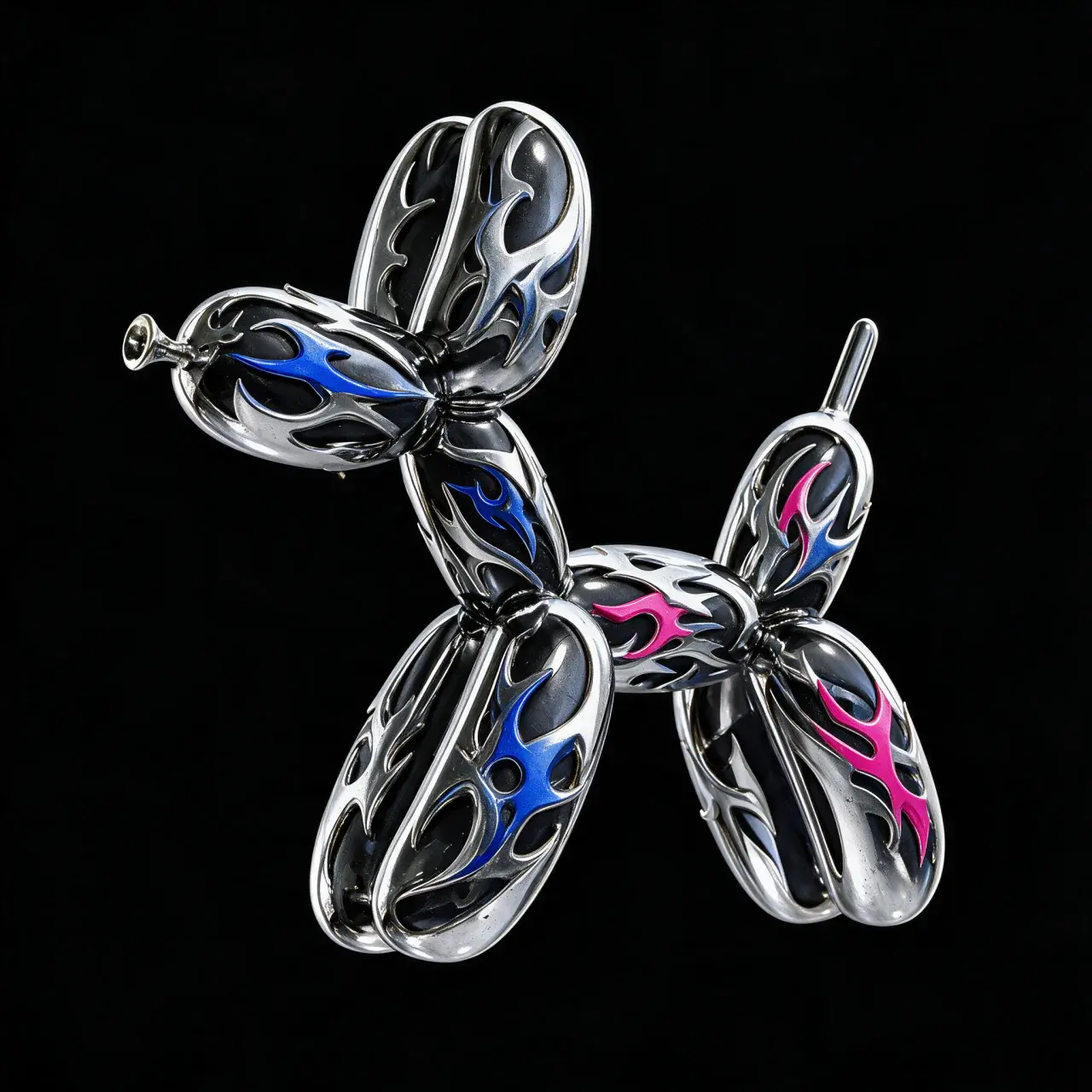
Seedream 5 Pro
Copy
Use the uploaded image as an immutable full-assembly reference and preserve every source component, opening, layer, attachment, text, logo, label, decoration, overlap, relative scale and viewing orientation exactly. Reconstruct suitable visible surfaces from individually cast polished chrome hardware pieces shaped into large Y2K tribal forms: sharp sweeping hooks, stretched flame-like curves, forked spikes, elongated crescents and mirrored abstract glyphs. The chrome pieces themselves should interlock and overlap tightly enough to physically form the source object's surfaces and thickness, with a deep black rubber substrate #151519 only visible through narrow gaps. Finish most metal in bright polished chrome #C9CFD3, with a minority anodized in electric blue #2457E9 and hot magenta #E42D85 as large isolated accent modules. Every hardware piece must show real cast-metal thickness, soft rounded backs, polished bevels, tiny mounting pins or screws, hairline scratches, faint fingerprints and subtle edge wear. Avoid printed tribal graphics entirely: the pattern is three-dimensional physical hardware. Preserve fine source features through smaller metal glyphs. Photograph the complete object floating against #000000 with hard-fashion editorial lighting: broad soft modeling plus small controlled specular accents, deep black gaps between pieces, crisp chrome curvature and premium jewelry-grade macro realism.
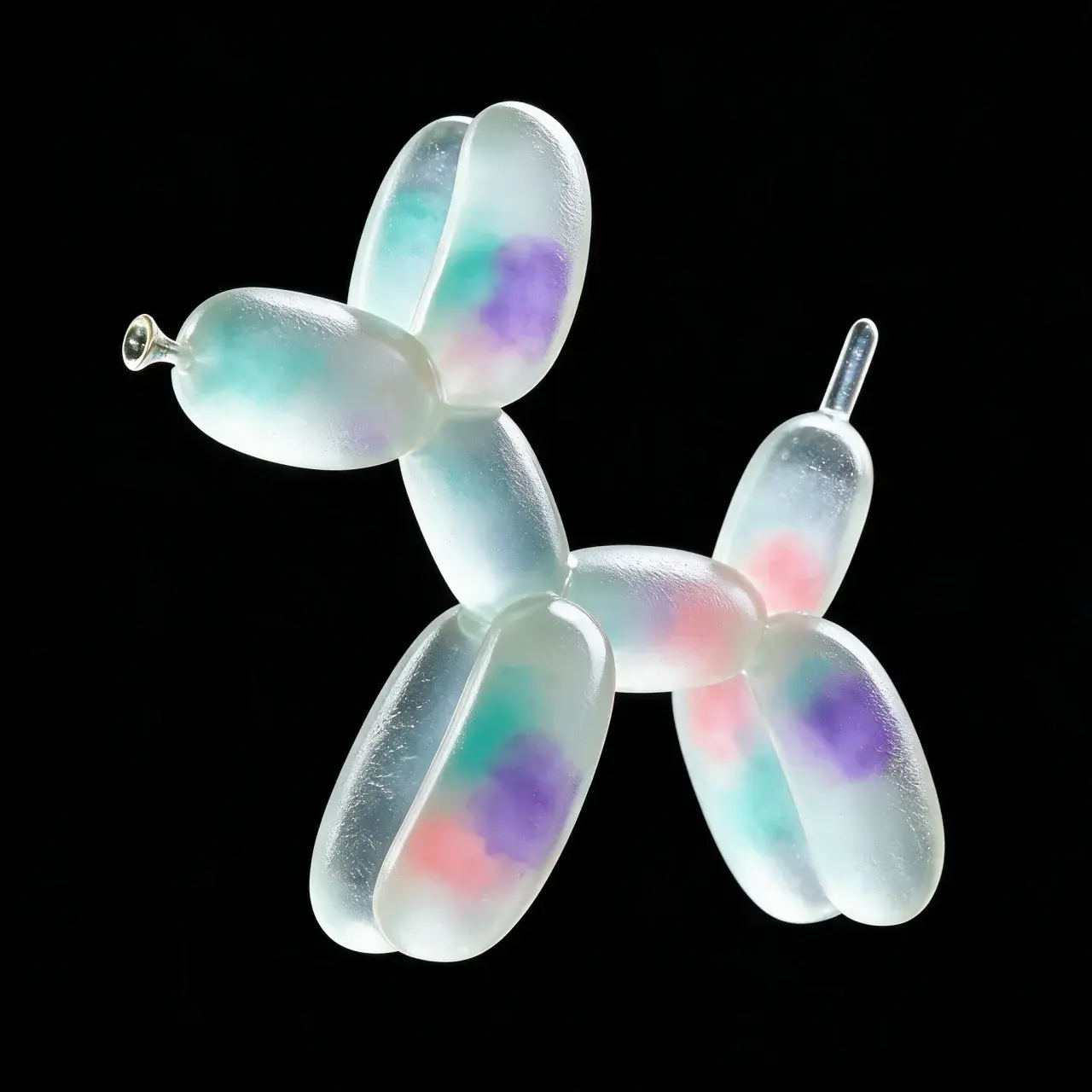
Seedream 5 Pro
Copy
Use the uploaded image as the fixed master reference. Rebuild the exact object one-to-one, preserving the original silhouette, proportions, cutouts, layered construction, text areas, logo placement, spacing, overlap, front-facing orientation and all recognizable structural details. Transform the surface into powder-coated metal with a silky matte finish. Base color soft silver #C9CED5, with gradient overspray in candy pink #FF82C2 and electric blue #5A7CFF appearing as subtle industrial color transitions. Keep the metal believable with fine powder texture, crisp edges, faint assembly wear and clean contemporary product realism. The result should feel solid, cool and stylish. Photograph it on a pure black background #000000 with dramatic but clean studio lighting and extremely sharp macro realism. Use the uploaded image as the fixed master reference. Rebuild the exact object one-to-one, preserving the original silhouette, proportions, cutouts, layered construction, text areas, logo placement, spacing, overlap, front-facing orientation and all recognizable structural details. Transform the surface into a clean molded polymer base in off-white #F4F1EA, overlaid with tasteful airbrushed and hand-sprayed graffiti-style layers in neon lime #B9FF31, bright orange #FF7B2F, fuchsia #FF4FA8 and deep violet #7A4FFF. The paint should feel physically sprayed with soft overspray, drips, marker accents and layered tagging energy, but remain fashion-forward and balanced rather than messy. Keep the material itself smooth and solid underneath. Photograph it on a pure black background #000000 with crisp product lighting and sharp macro realism. { "source_lock": "Use the uploaded image as the fixed structural master. Preserve every visible source component exactly: full silhouette, proportions, thickness, openings, cutouts, separate pieces, attachments, layered construction, text, logos, labels, faces, decorations, overlap, spacing, depth order and camera view. Only the material
may change.", "palette": { "frosted_glass": "#DDF4F1", "aqua_haze": "#68DDD8", "violet_haze": "#9A7CF4", "coral_haze": "#F987A1", "background": "#000000" }, "construction": "Cast the complete existing geometry from thick semi-opaque frosted glass with genuine optical thickness, polished internal volume and a finely etched satin outer skin.", "surface_physics": "Create broad internal clouds of color physically suspended within the glass volume rather than applied as a surface gradient. Aqua, violet and coral should form slow diffused atmospheric zones with large soft boundaries, subtle overlap and different depth planes. Some regions remain nearly colorless frosted glass for visual breathing room. Thin areas appear slightly clearer and more luminous while thicker zones become milky and optically dense. Include microscopic etching grain, very subtle internal flow striations, faint edge polish, a few tiny trapped bubbles and minute abrasion on exposed corners. The surface remains smooth and tactile, with no decorative particles or glitter.", "detail_control": "Reduce internal haze density around source text and small structural details so their shapes remain crisp. Preserve all original openings and layered pieces exactly.", "lighting": { "setup": "Soft upper-left-front material lighting with very gentle neutral fill and restrained edge separation.", "material_response": "Broad diffused highlights, soft transmitted color, crisp polished edge response and realistic frosted scattering without white glowing outlines.", "restrictions": "No visible lights, no rectangular softbox reflections, no halo, no bloom, no HDRI room." }, "composition": { "camera": "Exact source view.", "position": "Centered and floating.", "background": "#000000", "floor": false, "cast_shadow": false }, "quality": "High-end macro photography of real etched colored glass, realistic optical density, subtle manufacturing imperfections, precise source preservation and refined tactile detail." }
Seedream 5 Pro
Copy
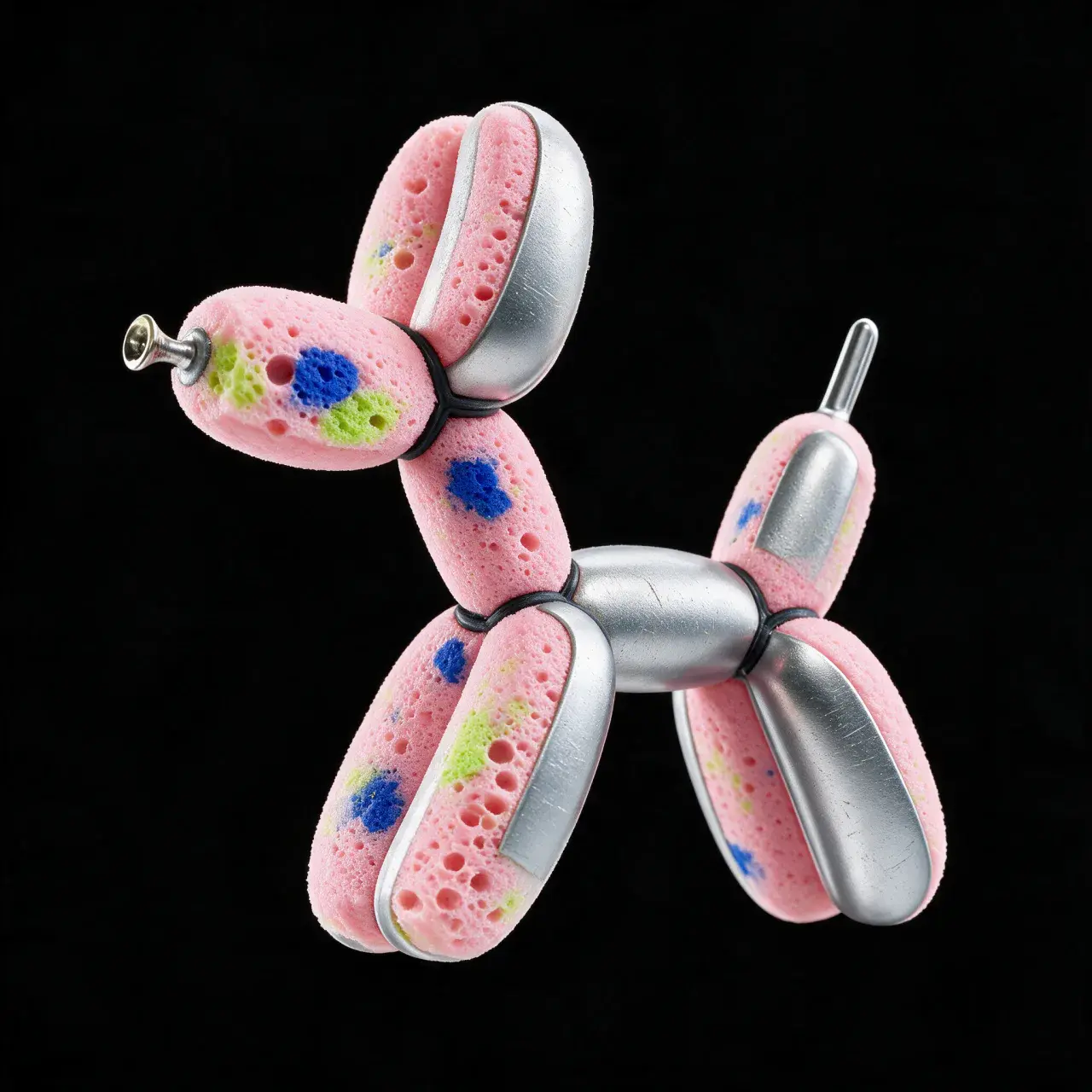
{ "source_lock": "Treat the uploaded image as the immutable structural master. Preserve every visible source component exactly one-to-one: silhouette, proportions, thickness, openings, cutouts, separate parts, layered elements, attachments, readable text, logos, labels, facial details, decorative elements, relative positions, overlap, depth order, camera angle and composition. Nothing visible in the input may disappear, merge, move, simplify or be redesigned. Material scale must automatically adapt around fine source details.", "palette": { "foam_base": "#F3A5BB", "foam_cobalt": "#3557DA", "foam_lime": "#C6E846", "metal": "#C2C8CD", "background": "#000000" }, "material_hierarchy": { "primary": "65% dense microcellular foam", "secondary": "30% satin aluminum", "accent": "5% dark rubber seam" }, "construction": "Build the object as a dense closed-cell foam body partially wrapped in precisely fitted satin aluminum shells. Foam remains the dominant exposed material while metal appears as broad clean panels and edge guards.", "surface_physics": "The foam is blush pink with real microcellular structure and embedded cobalt and lime pigment islands visible both at the surface and in cut edges. Use a mix of microscopic pores and slightly larger irregular cells, but keep the material dense and refined rather than sponge-like. Aluminum panels are pale satin silver with fine
bead-blasted grain and clean formed edges. Use a very narrow dark rubber seam at selected metal-to-foam junctions. Include tiny foam compression marks, rougher cut-edge cells, subtle aluminum scratches, faint bead-blast variation and realistic tight mechanical fits.", "detail_control": "Use aluminum or denser fine-cell foam around text and logos. Avoid coarse porosity around intricate features.", "lighting": { "setup": "One large diffused studio light positioned upper-left-front, approximately 40 degrees above and 35 degrees to the left of camera, plus extremely weak neutral frontal fill only to preserve shadow information.", "behavior": "Lighting remains soft, neutral and identical across the entire collection. Material appearance must come from real roughness, transmission, fibers and reflectivity rather than from dramatic lighting.", "restrictions": "No rim light, no colored lighting, no visible light sources, no rectangular reflections, no HDRI environment, no bloom, glow, halo or lens flare." }, "composition": { "camera": "Preserve the exact source viewing direction and orientation.", "position": "Centered and freely suspended.", "background": "#000000", "floor": false, "cast_shadow": false }, "quality": "Photoreal macro photography of dense pigmented foam and satin metal, authentic pore topology, crisp material seams and sophisticated tactile contrast." }
Seedream 5 Pro
Copy
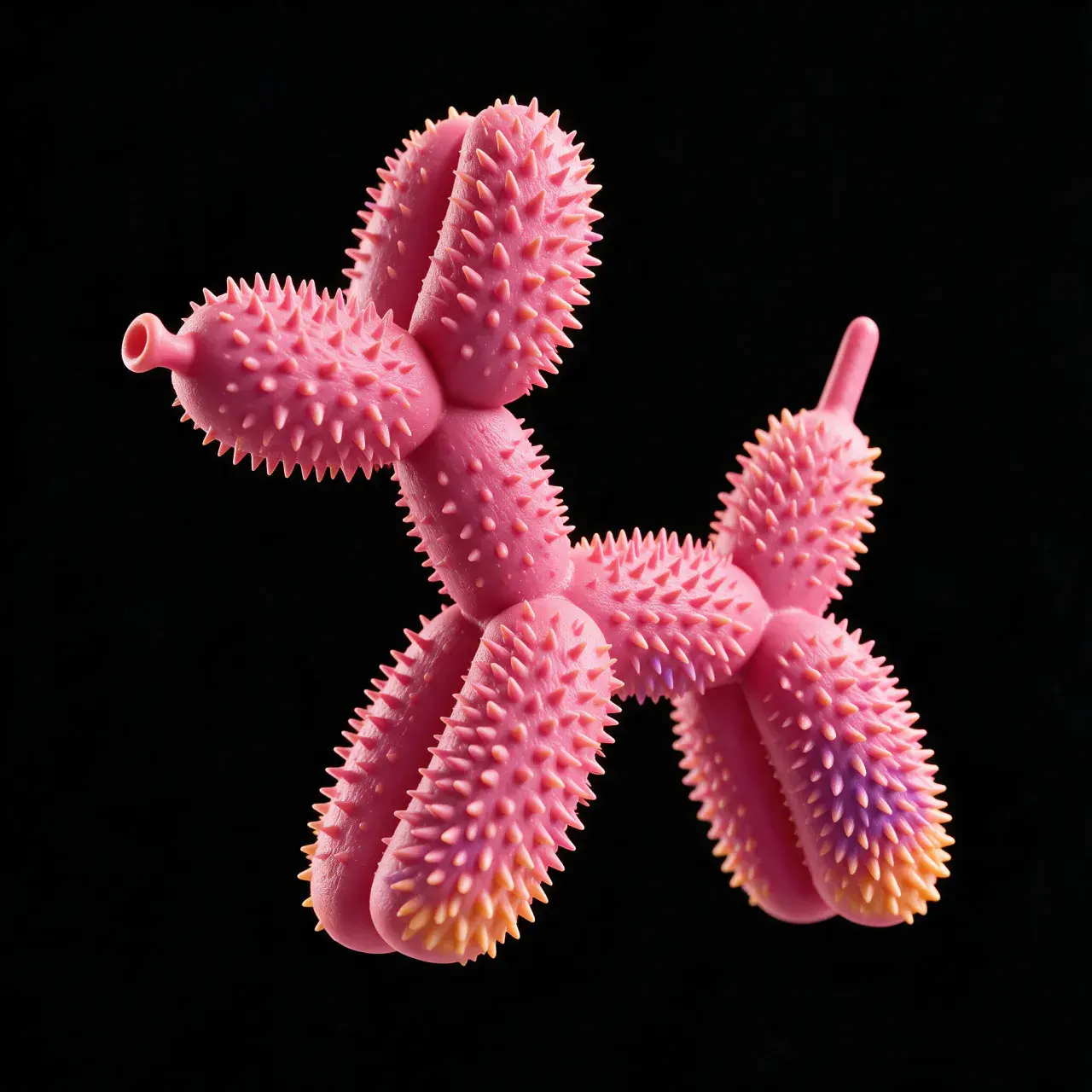
{ "source_lock": "Treat the uploaded image as an immutable structural blueprint. Preserve all source components, proportions, thicknesses, openings, attachments, text, logos, labels, decorative details, overlap and viewing orientation exactly.", "palette": { "silicone_base": "#EF4E91", "spike_tip": "#FFB347", "accent": "#8E6BFF", "background": "#000000" }, "construction": "Reconstruct suitable surfaces from dense soft molded silicone with a rich matte-satin body.", "surface_physics": "Cover selected broad areas with thousands of short flexible conical micro-spikes physically molded from the same silicone body. Spikes have softly rounded tips, dense consistent bases and subtle natural variation in lean and height. Keep the body saturated hot pink while dyeing only the final millimeters of broad spike fields warm apricot, with a few violet-tipped zones for contrast. The spike direction forms large sweeping fields following the local geometry rather than random vertical hair.
Deep spaces between spikes remain darker pink and create strong tactile shadowing. Add fine molded grain, tiny compression around spike roots and slight bending where neighboring spikes touch.", "detail_control": "Spikes progressively shorten and eventually flatten around all source contours, text, labels and intricate components.", "lighting": { "setup": "Broad upper-left-front directional illumination with subtle neutral fill.", "material_response": "Matte silicone body with thousands of fine micro-shadows, gentle soft highlights at rounded spike tips and strong tactile depth.", "restrictions": "No metallic spikes, no weapon-like appearance, no glow or plastic shine." }, "composition": { "camera": "Exact source camera.", "position": "Centered and suspended.", "background": "#000000", "floor": false, "cast_shadow": false }, "quality": "Real molded silicone macro photography, crisp individual spike geometry, authentic soft rubber response and premium tactile realism." }
Seedream 5 Pro
Copy
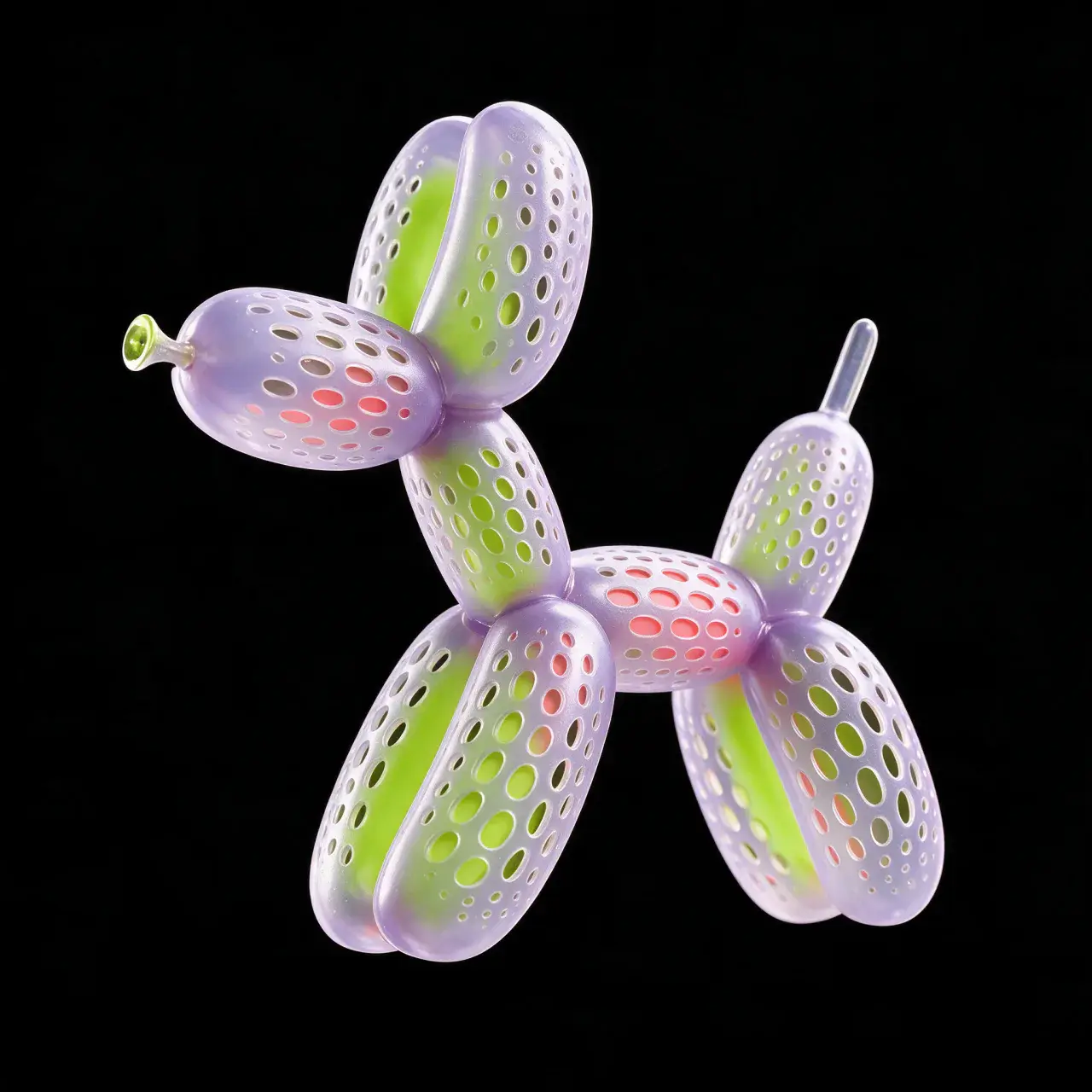
{ "source_lock": "Preserve every visible source component exactly: silhouette, proportions, thickness, openings, attachments, layers, text, logos, labels, decorative details and camera orientation.", "palette": { "frosted_tpu": "#D5C9F3", "inner_layer": "#A9EF35", "secondary_inner": "#FF657E", "background": "#000000" }, "construction": "Reconstruct suitable surfaces from thick frosted translucent TPU laminated over a saturated flexible inner sheet.", "surface_physics": "Create a precise field of smooth laser-cut perforations transitioning from larger elongated capsules to tiny circular holes across broad regions. Through the holes reveal the acid-lime inner layer, with only one or two selected zones switching to coral beneath. The TPU has real flexible thickness, softly frosted surfaces, subtle stretch whitening around several openings, fine molding haze and tiny compression marks. Hole walls remain semi-translucent
and reveal the thickness of the upper material. Pattern density should create large directional gradients rather than uniform perforation everywhere.", "detail_control": "Keep perforations away from source text, logos, faces and delicate attachments. Use progressively smaller holes near edges.", "lighting": { "setup": "Broad upper-left-front material light and restrained neutral fill.", "material_response": "Soft frosted highlights, rich colored depth through perforations and strong local cavity shadows.", "restrictions": "No glow, no shiny jelly appearance, no visible lighting equipment." }, "composition": { "camera": "Preserve exact source orientation.", "position": "Centered and floating.", "background": "#000000", "floor": false, "cast_shadow": false }, "quality": "Photoreal TPU and laser-cut material photography, authentic flexible-plastic behavior, precise perforation detail and premium macro realism." }
Seedream 5 Pro
Copy
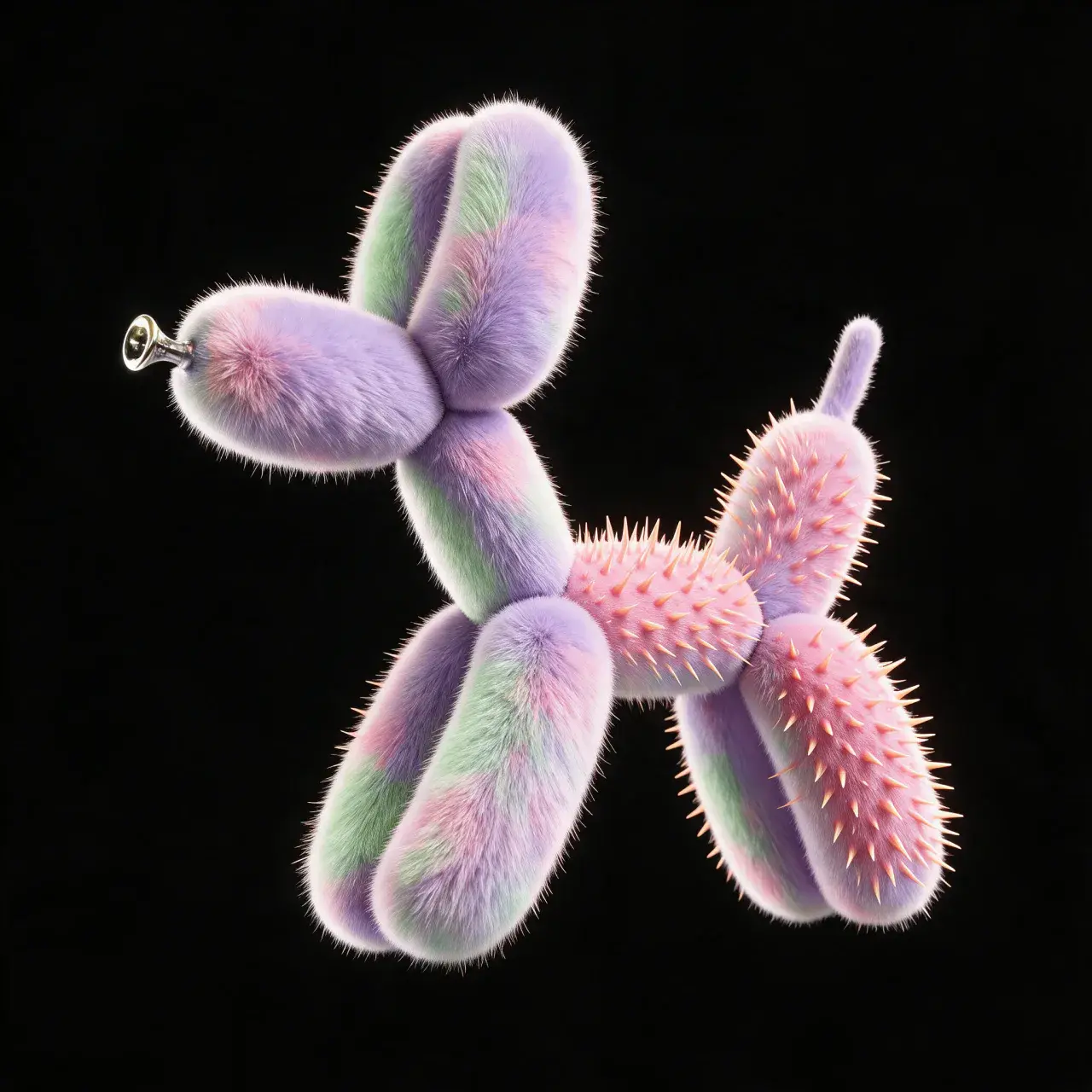
{ "source_lock": "Use the uploaded image as the fixed structural blueprint. Preserve the exact silhouette, proportions, thickness, cutouts, openings, separate parts, layered elements, attachments, labels, logos, text, facial details, decorations, spacing, overlap, orientation, camera angle and composition. Do not redesign or simplify the source object. All material behavior must adapt to the original geometry exactly.", "palette": { "mink_lilac": "#C9B2F1", "soft_mint": "#C7F19B", "powder_pink": "#F5B6CF", "spike_pink": "#F57FAA", "tip_peach": "#FFD199", "background": "#000000" }, "material_system": "Rebuild the object as a luxurious short-mink-like fur body wrapped by selected flexible spike membranes. The fur remains dominant and continuous, while spike-rich areas behave like a second skin laid over specific surfaces.", "surface_physics": "The fur must appear extremely refined: tight and silky, with short premium fibers, visible direction changes around form transitions and a slight halo at the silhouette. Flow broad soft mint and powder-pink bands through the lilac base using real fiber coloration, so the hues softly bloom inside the fur. On selected surfaces overlay a skin of flexible soft spikes growing from
a smooth matte membrane underneath, tinted saturated pink and warming to pale peach at the tips. The transition from fur to spike membrane must feel deliberately fabricated, as if the object has alternating tactile zones. Add slight fur clumping in shadowed pockets, tiny sheen variation on individual fibers, minimal seam pressure and natural softness where the fur meets the membrane.", "detail_control": "Keep logos, labels and readable text free from dense spikes. Around important graphic details use cleaner fur-only areas.", "lighting": { "setup": "Soft directional key light from upper-left-front, restrained neutral frontal fill and subtle upper-right separation from the black background.", "exposure": "Deep blacks, controlled highlights, clear midtones and crisp tactile readability.", "restrictions": "No visible light sources, no rectangular reflections, no bloom, no glowing outline, no fake rim-light contour." }, "composition": { "camera": "Preserve the exact source view and framing.", "position": "Centered and floating.", "background": "#000000", "floor": false, "cast_shadow": false }, "quality": "Luxury tactile macro realism with refined fur, soft membrane-based spikes and elegant pastel Y2K coloration." }
Seedream 5 Pro
Copy
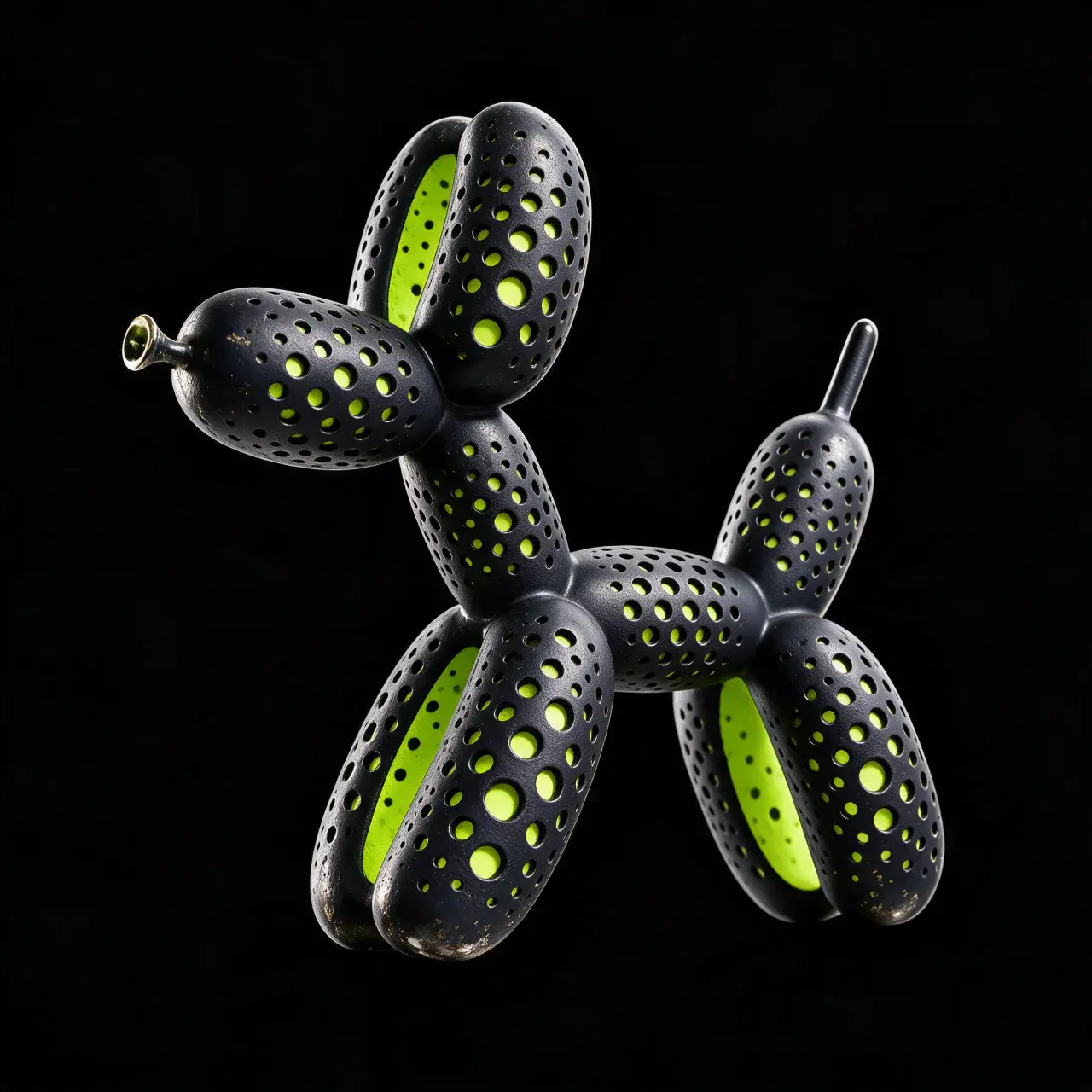
Use the uploaded image as the fixed master reference. Rebuild the exact object one-to-one, preserving the original silhouette, proportions, cutouts, layered construction, text areas, logo placement, spacing, overlap, front-facing orientation and all recognizable structural details. Transform the surface into dark matte rubber in charcoal #2A2B31 with precise perforation fields revealing a bright internal layer in hyper lime #D4FF28. The perforations should vary in scale to follow the object's geometry and remain sharply machined, giving the impression of a high-performance industrial-fashion material. Add slight wear polish on touch points, clean edges and strong shadow depth inside the holes. Photograph it on a pure black background #000000 with premium product lighting and crisp material realism.
Seedream 5 Pro
Copy
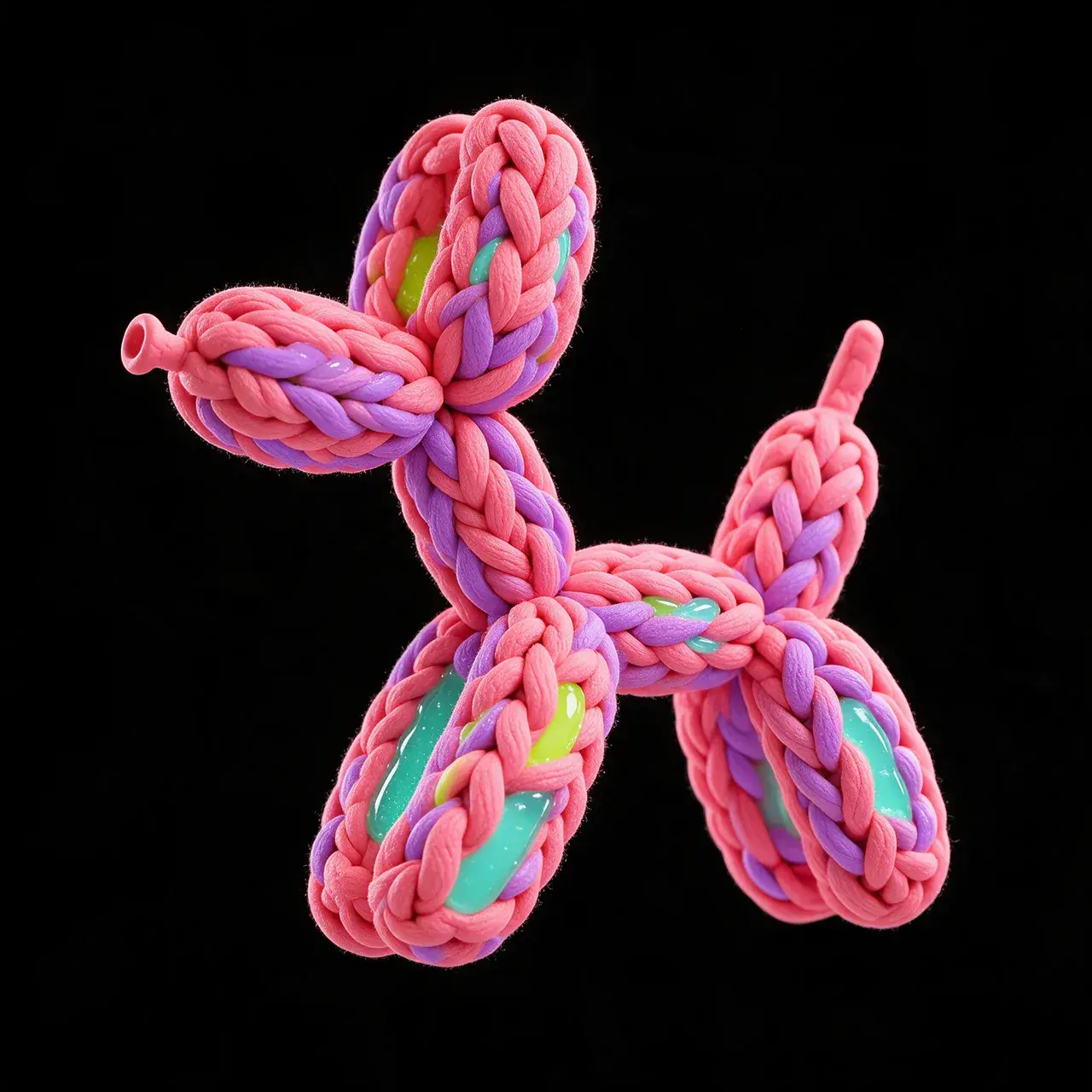
{ "source_lock": "Treat the uploaded image as the immutable structural master. Preserve every visible source component exactly one-to-one: silhouette, proportions, thickness, openings, cutouts, negative spaces, separate parts, layered elements, attachments, readable text, logos, labels, facial details, decorative source elements, relative positions, overlap, depth order, camera angle and composition. The material must conform to the existing geometry and may not generate an additional garment or outer shell.", "palette": { "silicone_coral": "#F56B87", "silicone_orchid": "#A67BE8", "gel_aqua": "#62DCD2", "gel_lime": "#C9F03B", "background": "#000000" }, "material_logic": { "dominant_material": "Thick matte silicone cord physically crocheted into a dense continuous skin.", "secondary_material": "Glossy translucent gel occupying selected open channels between crochet paths." }, "macro_structure": "Cover the geometry in an oversized continuous crochet topology formed from thick rounded silicone cord. Use broad loops, interlocking U-shapes, large braided turns and clean repeating stitch families. The pattern should flow with the source geometry and remain clearly recognizable from a distance.", "meso_structure": "Keep most silicone cord coral, transitioning into orchid across several broad fields. Instead of closing every gap, leave a limited number of elongated openings between selected stitch paths and fill these recessed openings with translucent aqua gel. Use acid-lime gel only in a few smaller focal
channels.", "micro_structure": "Silicone cord has a dry matte micrograin, slight flattening where loops cross, tiny molding seams and subtle pressure deformation. Gel has real meniscus curvature, slight optical distortion and sparse microscopic bubbles. At each contact point the cord compresses physically against neighboring loops. Avoid random spaghetti tangles and avoid knitted-fabric fuzz.", "detail_control": "Around source text and logos flatten the crochet scale and use tighter loops with no gel openings.", "lighting": { "setup": "One large diffused studio light positioned upper-left-front, approximately 40 degrees above and 35 degrees to the left of camera, plus extremely weak neutral frontal fill only to preserve shadow information.", "behavior": "Lighting remains soft, neutral and identical across the entire collection. Material appearance must come from real roughness, transmission, fibers and reflectivity rather than from dramatic lighting.", "restrictions": "No rim light, no colored lighting, no visible light sources, no rectangular reflections, no HDRI environment, no bloom, glow, halo or lens flare." }, "composition": { "camera": "Preserve the exact source viewing direction and orientation.", "position": "Centered and freely suspended.", "background": "#000000", "floor": false, "cast_shadow": false }, "quality": "Photoreal experimental silicone material photography with true loop construction, tactile compression, strong matte-versus-wet contrast and extremely precise macro detail." }
Seedream 5 Pro
Copy
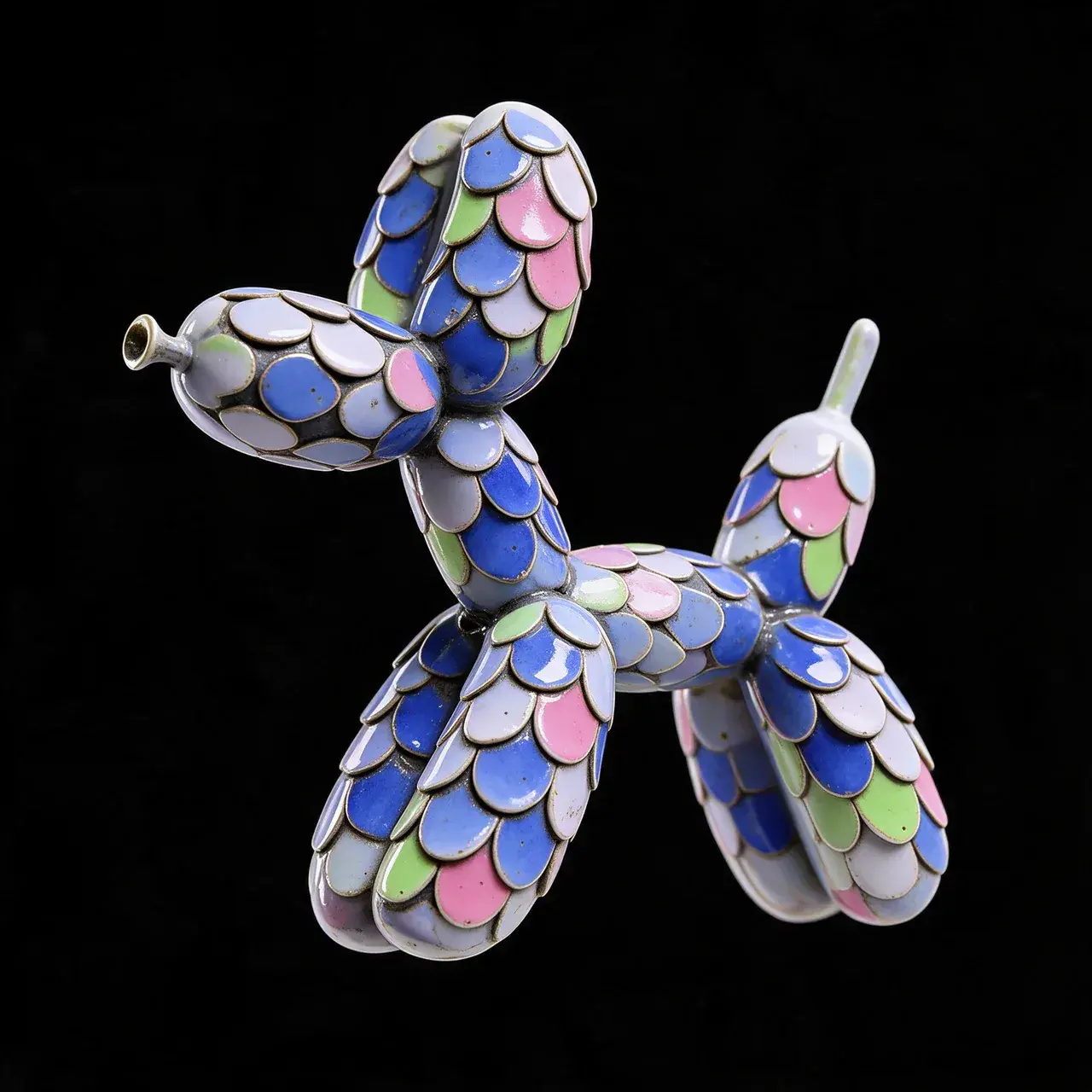
{ "source_lock": "Treat the uploaded image as the immutable structural master. Preserve every visible source component exactly one-to-one: silhouette, proportions, thickness, openings, cutouts, separate parts, layered elements, attachments, readable text, logos, labels, facial details, decorative elements, relative positions, overlap, depth order, camera angle and composition. Nothing visible in the input may disappear, merge, move, simplify or be redesigned. Material scale must automatically adapt around fine source details.", "palette": { "base_enamel": "#D6D3E4", "scale_blue": "#3F6EDC", "scale_pink": "#E97CAF", "scale_green": "#9DD46B", "dark_grout": "#37363C", "background": "#000000" }, "material_hierarchy": { "primary": "100% layered hard-enamel scale system" }, "construction": "Reconstruct suitable surfaces from overlapping rigid enamel scales arranged like contemporary architectural shingles rather than biological fish skin.", "surface_physics": "Each scale is a thin rounded trapezoid with a subtly convex glazed face, dark recessed base edge and real hard-enamel thickness. Use broad color fields of cobalt, pink and green rather than alternating every scale. Slightly vary glaze opacity so some scales are nearly opaque and others show deeper translucent color. Neighboring scales overlap physically and create
narrow dark shadows. Include tiny glaze pinholes, micro-scratches, slight kiln waviness, minute chipped corners and subtle uneven thickness. Scale size changes gradually across the geometry but remains large enough to read clearly.", "detail_control": "Use smaller flatter scales around text, logos and fine components. Preserve all source contours exactly.", "lighting": { "setup": "One large diffused studio light positioned upper-left-front, approximately 40 degrees above and 35 degrees to the left of camera, plus extremely weak neutral frontal fill only to preserve shadow information.", "behavior": "Lighting remains soft, neutral and identical across the entire collection. Material appearance must come from real roughness, transmission, fibers and reflectivity rather than from dramatic lighting.", "restrictions": "No rim light, no colored lighting, no visible light sources, no rectangular reflections, no HDRI environment, no bloom, glow, halo or lens flare." }, "composition": { "camera": "Preserve the exact source viewing direction and orientation.", "position": "Centered and freely suspended.", "background": "#000000", "floor": false, "cast_shadow": false }, "quality": "Photoreal hard-enamel macro photography with layered scale depth, real glaze imperfections, crisp overlap shadows and refined color blocking." }
Seedream 5 Pro
Copy
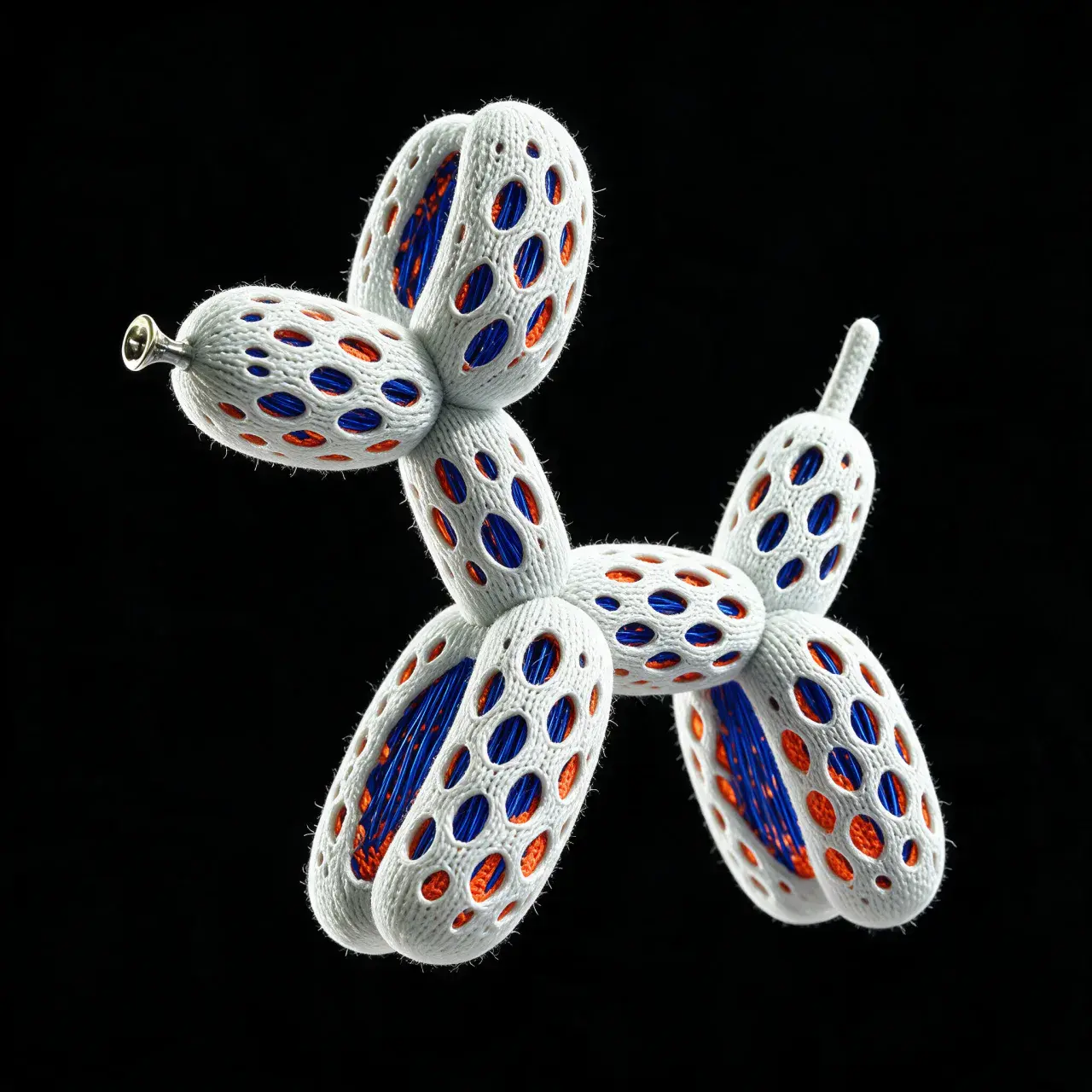
Use the uploaded image as an immutable full-assembly geometry reference. Preserve every source component, silhouette, opening, thickness, attachment, layered piece, readable text, logo, decoration, overlap and exact source camera orientation. Reconstruct suitable surfaces from real three-dimensional spacer textile engineered like premium technical footwear: an upper knit layer in icy pearl #E8EFEA formed from tightly woven elliptical apertures, a hidden monofilament spacer layer several millimeters deep in electric cobalt #284FFF, and a lower backing knit in vivid tangerine #FF6328 visible through the openings. The three layers must be physically separate and structurally readable rather than appearing as a printed perforation. Every aperture has a genuine knitted rim, individual polyester filaments, tiny fuzzy broken fibers and subtle deformation from tension; inside each hole, hundreds of near-vertical cobalt spacer monofilaments bridge the upper and lower fabrics and create rich deep micro-shadowing. Vary aperture geometry by region: elongated oval openings across broad areas and progressively smaller compact openings near edges and intricate source features. Keep large unperforated knitted border zones around important details to preserve visual hierarchy. Add no other decorative elements—the depth of the three-layer textile is the entire concept. Photograph the complete object floating against pure black #000000 with sneaker-editorial lighting: broad upper-left illumination grazing the upper knit, restrained frontal fill revealing the cobalt internal filaments, warm orange backing visible deep inside apertures, clean fiber definition and extremely tactile real-material realism.
Seedream 5 Pro
Copy
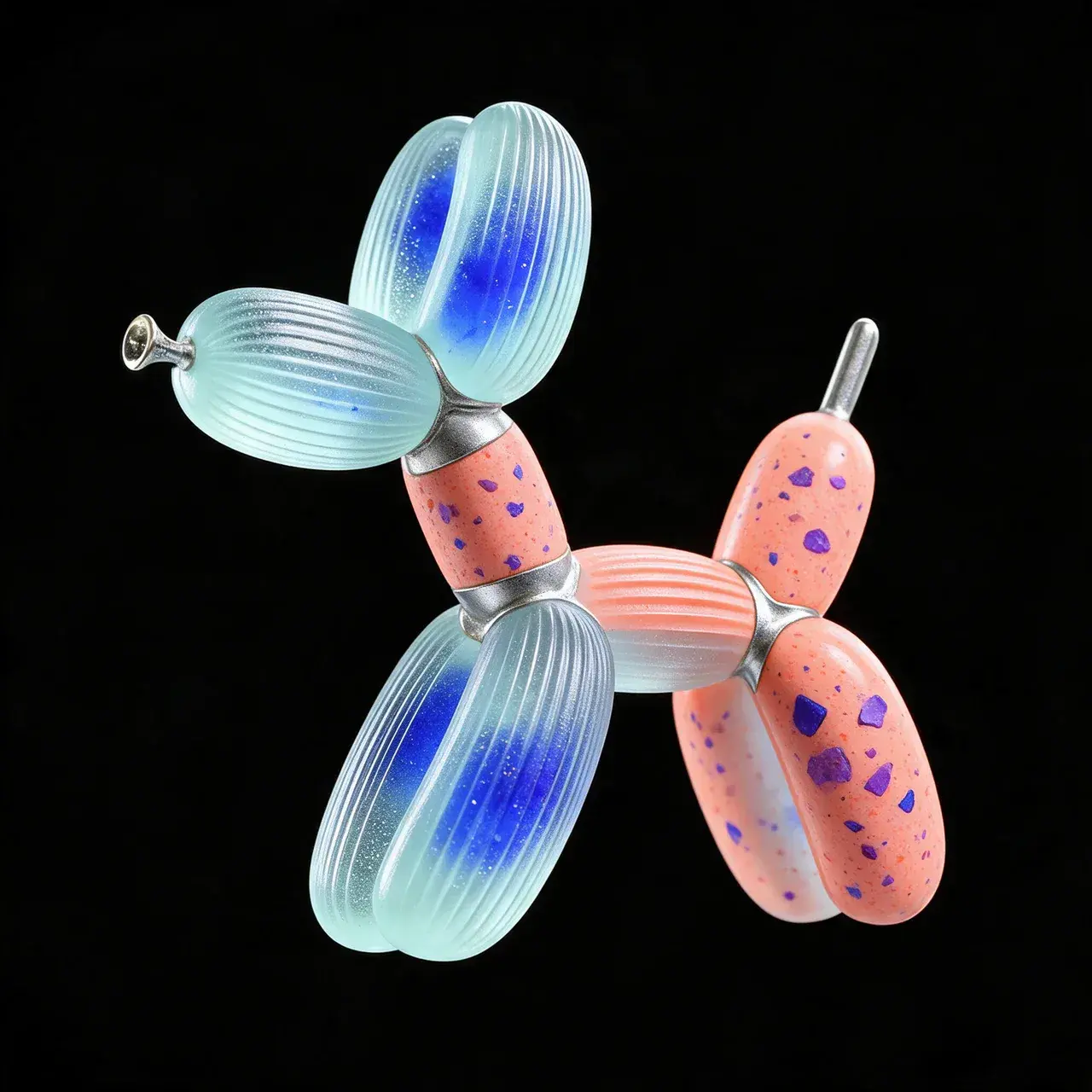
{ "source_lock": "Treat the uploaded image as the immutable structural master. Preserve every visible source component exactly one-to-one: silhouette, proportions, thickness, openings, cutouts, separate parts, layered elements, attachments, readable text, logos, labels, facial details, decorative elements, relative positions, overlap, depth order, camera angle and composition. Nothing visible in the input may disappear, merge, move, simplify or be redesigned. Material scale must automatically adapt around fine source details.", "palette": { "frosted_glass": "#BCE8E4", "cobalt_glass": "#4169E8", "speckled_peach": "#FF9C85", "violet_speckles": "#7049D8", "chrome": "#C8CED2", "background": "#000000" }, "material_hierarchy": { "primary": "50% vertically and concentrically ribbed frosted glass", "secondary": "35% matte speckled peach polymer", "accent": "15% satin chrome junctions" }, "construction": "Divide broad source areas into large coherent fields of frosted optical glass and dense matte polymer. Use chrome only at selected material junctions and structural intersections.", "surface_physics": "The glass is thick and semi-translucent with alternating rib systems: selected zones use very fine parallel vertical flutes while others use broad curved concentric ribs following the source geometry. Rib relief is physically molded, with frosted faces and slightly clearer polished ridge peaks. Subtle cobalt pigment density appears deeper inside selected glass zones. The polymer is warm peach with embedded irregular violet and cobalt chips, ranging
from fine freckles to medium angular inclusions, all continuing through the material thickness. Polymer remains dry-touch and softly matte, strongly contrasting with the cold optical glass. Chrome forms thin recessed borders and a few wider structural bridges. Include fine glass etching grain, tiny casting bubbles, microscopic polymer abrasions, clean material cross-sections and restrained chrome scratches.", "detail_control": "Use calm matte polymer or low-relief frosted glass around text and logos. Avoid rib convergence directly beneath small details.", "lighting": { "setup": "One large diffused studio light positioned upper-left-front, approximately 40 degrees above and 35 degrees to the left of camera, plus extremely weak neutral frontal fill only to preserve shadow information.", "behavior": "Lighting remains soft, neutral and identical across the entire collection. Material appearance must come from real roughness, transmission, fibers and reflectivity rather than from dramatic lighting.", "restrictions": "No rim light, no colored lighting, no visible light sources, no rectangular reflections, no HDRI environment, no bloom, glow, halo or lens flare." }, "composition": { "camera": "Preserve the exact source viewing direction and orientation.", "position": "Centered and freely suspended.", "background": "#000000", "floor": false, "cast_shadow": false }, "quality": "Photoreal frosted ribbed glass, pigmented polymer and satin metal photography with precise material separation, genuine optical depth and tactile manufactured detail." }
Seedream 5 Pro
Copy
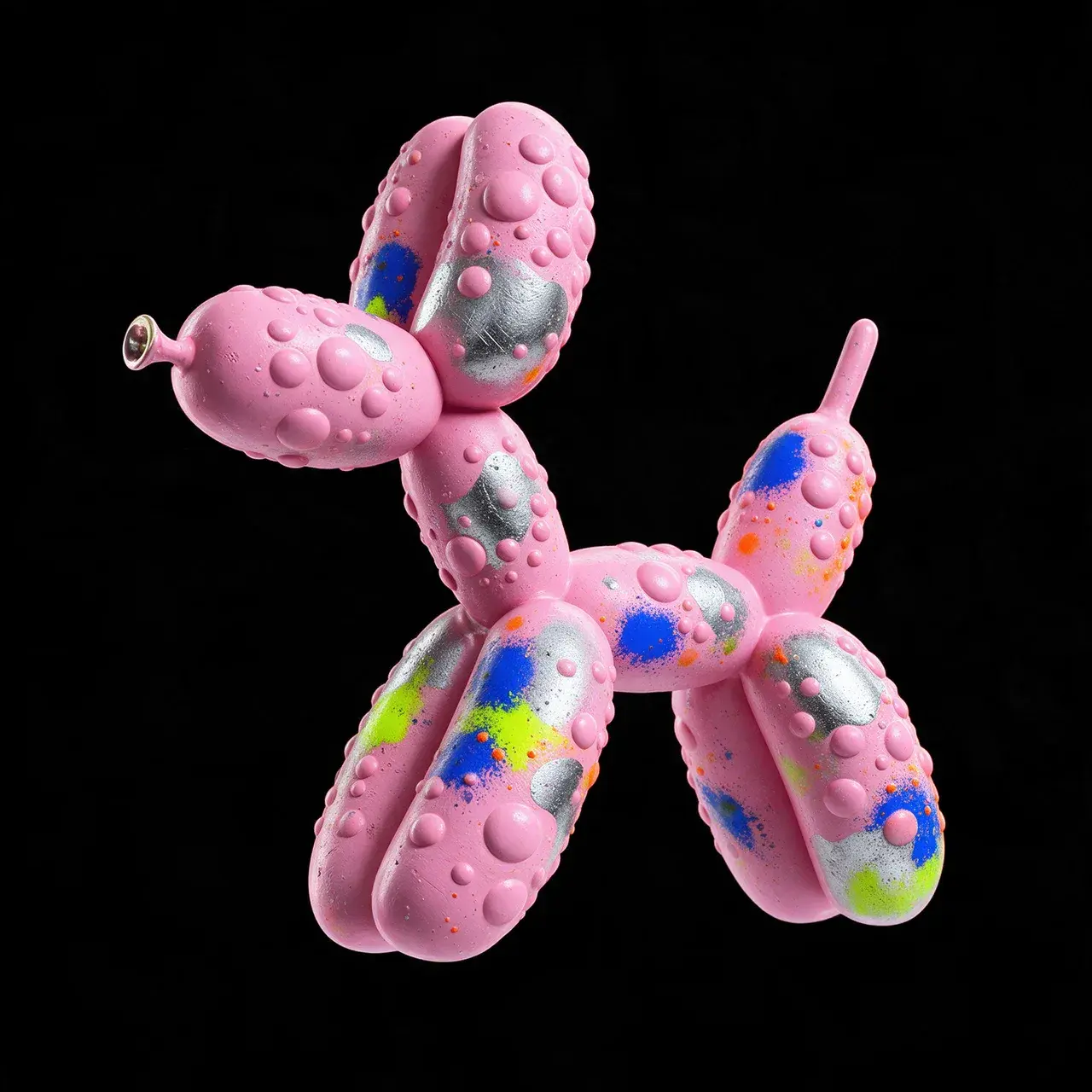
{ "source_lock": "Treat the uploaded image as the immutable structural master. Preserve every visible source component exactly one-to-one: silhouette, proportions, thickness, openings, cutouts, separate parts, layered elements, attachments, readable text, logos, labels, facial details, decorative elements, relative positions, overlap, depth order, camera angle and composition. Nothing visible in the input may disappear, merge, move, simplify or be redesigned. Material scale must automatically adapt around fine source details.", "palette": { "rubber_base": "#EFB0D0", "cobalt": "#2858E8", "acid_lime": "#CBF136", "orange": "#FF6B28", "chrome": "#C7CDD2", "background": "#000000" }, "material_hierarchy": { "primary": "55% bubble-relief matte rubber", "secondary": "30% chrome pools and structural panels", "accent": "15% aerosol pigment" }, "construction": "Build the source geometry from dense pink elastomer carrying a physical field of rounded convex nodules, interrupted by several broad irregular chrome pools flush with the surface.", "surface_physics": "The rubber relief consists of rounded bubble-like hemispheres and softened domes in several related sizes, organized into flowing clusters rather than a uniform polka-dot grid. Deep spaces between domes remain matte pink and create rich micro-shadowing. Chrome appears as several large amoeba-like flush regions that weave between bubble clusters, with true polished metallic roughness and softly warped reflections. Apply cobalt,
acid-lime and orange aerosol mostly across rubber zones, allowing pigment to settle more strongly inside recesses and fade across dome tops. Include real overspray dots, slight paint roughness, tiny rubber scuffs, compressed dome bases and chrome hairline scratches. Keep roughly half the surface free from sprayed color so the hierarchy remains clean.", "detail_control": "Flatten bubble relief and remove chrome pools beneath text, logos and fine source components. Use clean matte rubber around important information.", "lighting": { "setup": "One large diffused studio light positioned upper-left-front, approximately 40 degrees above and 35 degrees to the left of camera, plus extremely weak neutral frontal fill only to preserve shadow information.", "behavior": "Lighting remains soft, neutral and identical across the entire collection. Material appearance must come from real roughness, transmission, fibers and reflectivity rather than from dramatic lighting.", "restrictions": "No rim light, no colored lighting, no visible light sources, no rectangular reflections, no HDRI environment, no bloom, glow, halo or lens flare." }, "composition": { "camera": "Preserve the exact source viewing direction and orientation.", "position": "Centered and freely suspended.", "background": "#000000", "floor": false, "cast_shadow": false }, "quality": "Photoreal tactile material photography with rounded rubber microgeometry, real aerosol deposition, polished chrome and strong macro roughness contrast." }
Seedream 5 Pro
Copy
{ "source_lock": "Treat the uploaded image as the immutable structural master. Preserve every visible source component exactly one-to-one: silhouette, proportions, thickness, openings, cutouts, separate parts, layered elements, attachments, readable text, logos, labels, facial details, decorative elements, relative positions, overlap, depth order, camera angle and composition. Nothing visible in the input may disappear, merge, move, simplify or be redesigned. Material scale must automatically adapt around fine source details.", "palette": { "wax_base": "#E6B2F0", "salt_clear": "#F3F5EE", "salt_blue": "#7AB6F2", "salt_orange": "#F0A060", "background": "#000000" }, "material_hierarchy": { "primary": "70% dense matte wax", "secondary": "30% grown cubic salt-crystal crust" }, "construction": "Reconstruct the object from dense pigmented wax that has been selectively seeded with real salt crystallization across broad regions.", "surface_physics": "The wax is lavender, dry and softly satin with subtle drag marks, micro-scuffs and faint handling bloom. Across selected surfaces grow real cubic and stepped salt crystals in dense clusters, ranging from microscopic grains to larger 2–5 mm formations. Most crystals remain icy translucent white, while limited groups shift pale blue or warm orange through mineral tinting. Crystal growth must be physically
coherent: larger cubes emerge from dense granular bases, edges show slight dissolution rounding, some crystals overlap and a few retain tiny brine inclusions. The contrast should feel dry, brittle and mineral against the soft wax body.", "detail_control": "Keep source text and fine elements free from coarse crystal growth. Use micro-crystalline haze only around intricate areas.", "lighting": { "setup": "One large diffused studio light positioned upper-left-front, approximately 40 degrees above and 35 degrees to the left of camera, plus extremely weak neutral frontal fill only to preserve shadow information.", "behavior": "Lighting remains soft, neutral and identical across the entire collection. Material appearance must come from real roughness, transmission, fibers and reflectivity rather than from dramatic lighting.", "restrictions": "No rim light, no colored lighting, no visible light sources, no rectangular reflections, no HDRI environment, no bloom, glow, halo or lens flare." }, "composition": { "camera": "Preserve the exact source viewing direction and orientation.", "position": "Centered and freely suspended.", "background": "#000000", "floor": false, "cast_shadow": false }, "quality": "Photoreal wax and mineral-crystal macro photography with authentic crystal habit, brittle edges, subtle brine inclusions and real tactile contrast." }
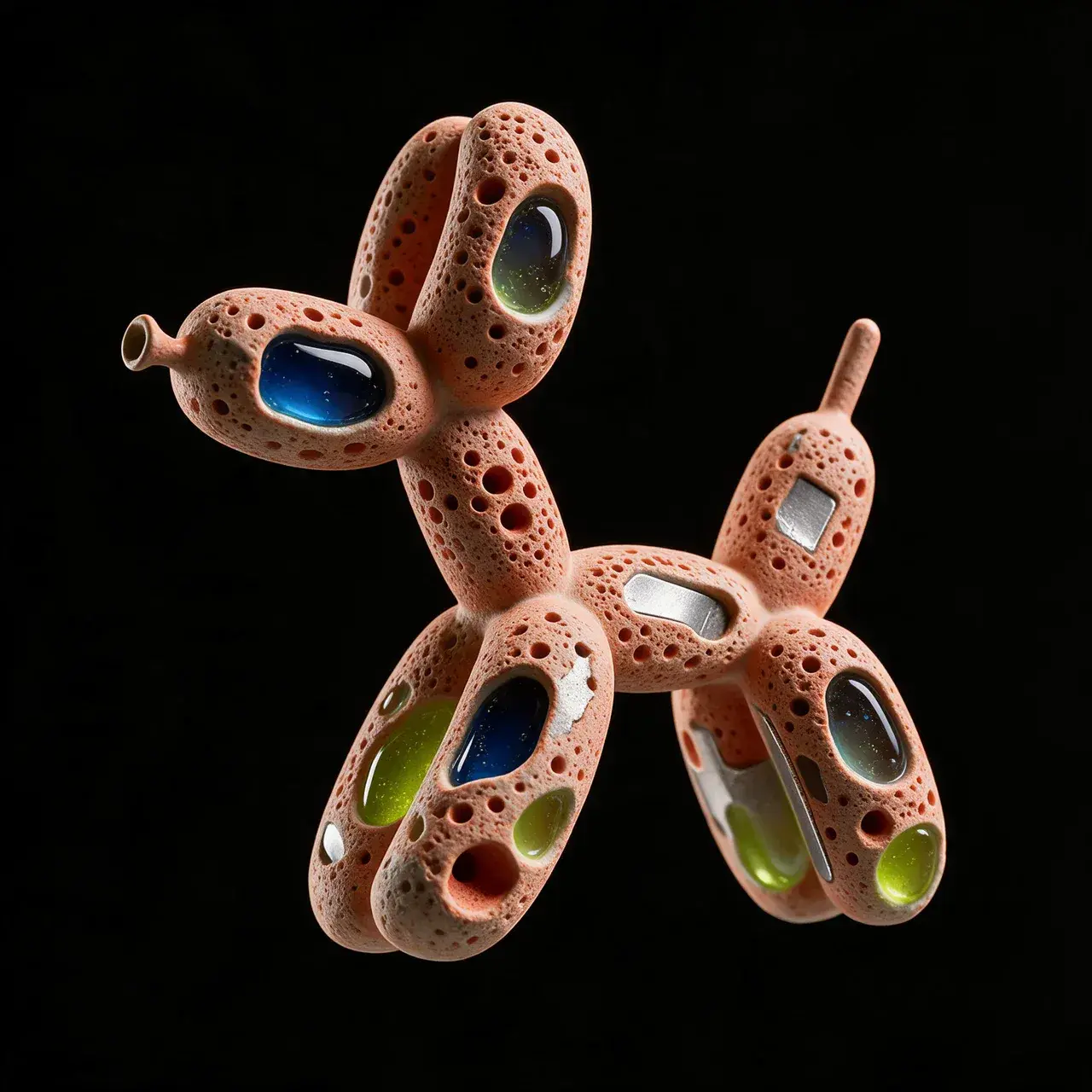
Seedream 5 Pro
Copy
{ "source_lock": "Treat the uploaded image as the immutable structural master. Preserve every visible source component exactly one-to-one: silhouette, proportions, thickness, openings, cutouts, separate parts, layered elements, attachments, readable text, logos, labels, facial details, decorative elements, relative positions, overlap, depth order, camera angle and composition. Nothing visible in the input may disappear, merge, move, simplify or be redesigned. Material scale must automatically adapt around fine source details.", "palette": { "porous_ceramic": "#FF806B", "deep_coral": "#D95462", "gel_blue": "#315FE8", "gel_lime": "#C5EE38", "metal": "#BCC4CB", "background": "#000000" }, "material_hierarchy": { "primary": "65% saturated porous ceramic", "secondary": "25% translucent gel-filled cavities", "accent": "10% satin aluminum plates" }, "construction": "Reconstruct the object from high-fired coral ceramic with genuine open porosity. Use selected naturally enlarged cavities as reservoirs containing translucent colored gel, and introduce only a few satin-metal structural plates.", "surface_physics": "The ceramic body contains a convincing hierarchy of pores: thousands of micro-pores, medium rounded cavities and occasional larger irregular voids with thin brittle walls. Its surface remains dry and mineral-matte with subtle kiln variation and darker coral inside deep pores. Fill a small number of larger cavities completely with smooth cobalt or acid-lime translucent gel, creating glossy optical pockets recessed below the porous surface.
Gel follows real meniscus behavior and contains only sparse microbubbles. Add a few narrow satin-aluminum plates inset flush through selected broad regions, with clean machined boundaries. The contrast must be immediate: vivid porous mineral, jewel-like wet cavities, cold metallic interruption. Include tiny kiln pinholes, rough broken pore edges, glassy gel boundaries and subtle metal abrasion.", "detail_control": "Use denser fine-pore ceramic around source text, logos and intricate components. Large cavities and metal plates remain away from critical details.", "lighting": { "setup": "One large diffused studio light positioned upper-left-front, approximately 40 degrees above and 35 degrees to the left of camera, plus extremely weak neutral frontal fill only to preserve shadow information.", "behavior": "Lighting remains soft, neutral and identical across the entire collection. Material appearance must come from real roughness, transmission, fibers and reflectivity rather than from dramatic lighting.", "restrictions": "No rim light, no colored lighting, no visible light sources, no rectangular reflections, no HDRI environment, no bloom, glow, halo or lens flare." }, "composition": { "camera": "Preserve the exact source viewing direction and orientation.", "position": "Centered and freely suspended.", "background": "#000000", "floor": false, "cast_shadow": false }, "quality": "Photoreal porous fired ceramic, real translucent gel and machined metal captured with extreme macro detail and physically convincing material transitions." }
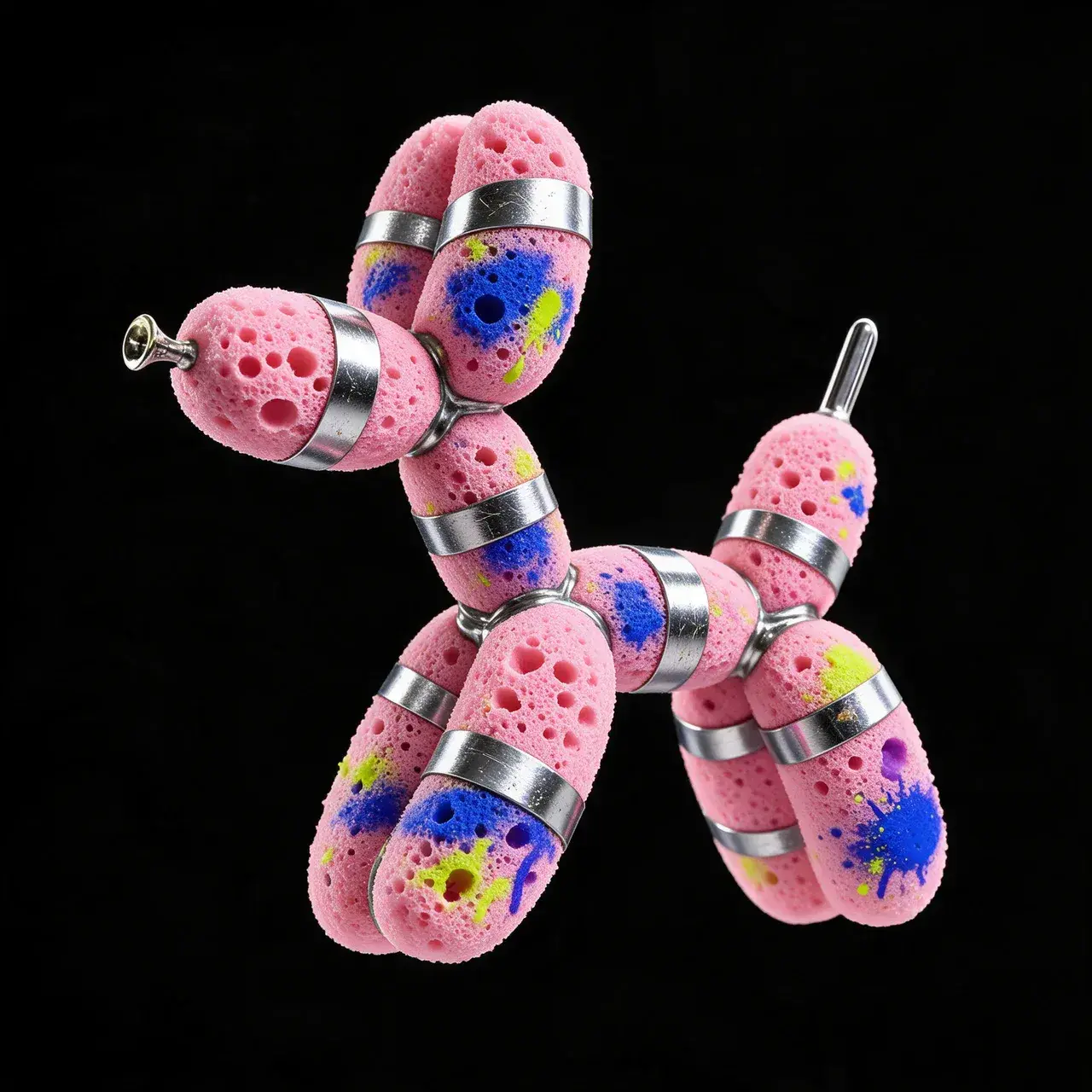
Seedream 5 Pro
Copy
{ "source_lock": "Treat the uploaded image as the immutable structural master. Preserve every visible source component exactly one-to-one: silhouette, proportions, thickness, openings, cutouts, separate parts, layered elements, attachments, readable text, logos, labels, facial details, decorative elements, relative positions, overlap, depth order, camera angle and composition. Nothing visible in the input may disappear, merge, move, simplify or be redesigned. Material scale must automatically adapt around fine source details.", "palette": { "foam_base": "#F6A4BE", "electric_blue": "#3157EA", "acid_lime": "#D2F531", "chrome": "#C8CED3", "violet_ink": "#6E3CCB", "background": "#000000" }, "material_hierarchy": { "primary": "55% porous pigmented structural foam", "secondary": "30% polished chrome skeletal bands", "accent": "15% sprayed and absorbed color interventions" }, "construction": "Build the object as a dense microcellular foam body reinforced by a continuous polished-metal skeleton that follows the existing source geometry. Chrome should appear as several broad structural ribbons and junctions physically embedded through the foam rather than as decorative trim.", "surface_physics": "The pink foam has genuine irregular cellular topology: thousands of tiny pores, scattered medium cavities and a restrained number of larger torn cells, with real depth and rough cut edges. Across selected foam regions apply saturated cobalt, lime and violet aerosol gestures: broad misted fields, dense pigment cores, small overspray droplets, short marker-like sweeps and occasional controlled drips. Pigment physically penetrates the open cells and becomes
darker inside deeper pores. Chrome bands remain smooth and cold, with softly distorted reflections, hairline scratches and tiny rubbed areas. At foam-metal boundaries, cellular material compresses tightly around the chrome structure and exposes slightly darker foam interiors. Keep chrome forms broad and sculptural, approximately 3–6 major bands per large source component, so the result reads as one designed object rather than fragmented decoration.", "detail_control": "Reserve calmer fine-pore foam around text, logos and small source elements. Chrome and graffiti gestures must route around all critical source details.", "lighting": { "setup": "One large diffused studio light positioned upper-left-front, approximately 40 degrees above and 35 degrees to the left of camera, plus extremely weak neutral frontal fill only to preserve shadow information.", "behavior": "Lighting remains soft, neutral and identical across the entire collection. Material appearance must come from real roughness, transmission, fibers and reflectivity rather than from dramatic lighting.", "restrictions": "No rim light, no colored lighting, no visible light sources, no rectangular reflections, no HDRI environment, no bloom, glow, halo or lens flare." }, "composition": { "camera": "Preserve the exact source viewing direction and orientation.", "position": "Centered and freely suspended.", "background": "#000000", "floor": false, "cast_shadow": false }, "quality": "Photoreal physical material photography of real cellular foam, sprayed pigment and polished metal. Extreme pore detail, true metal micro-scratches, authentic pigment deposition and tactile macro realism." }
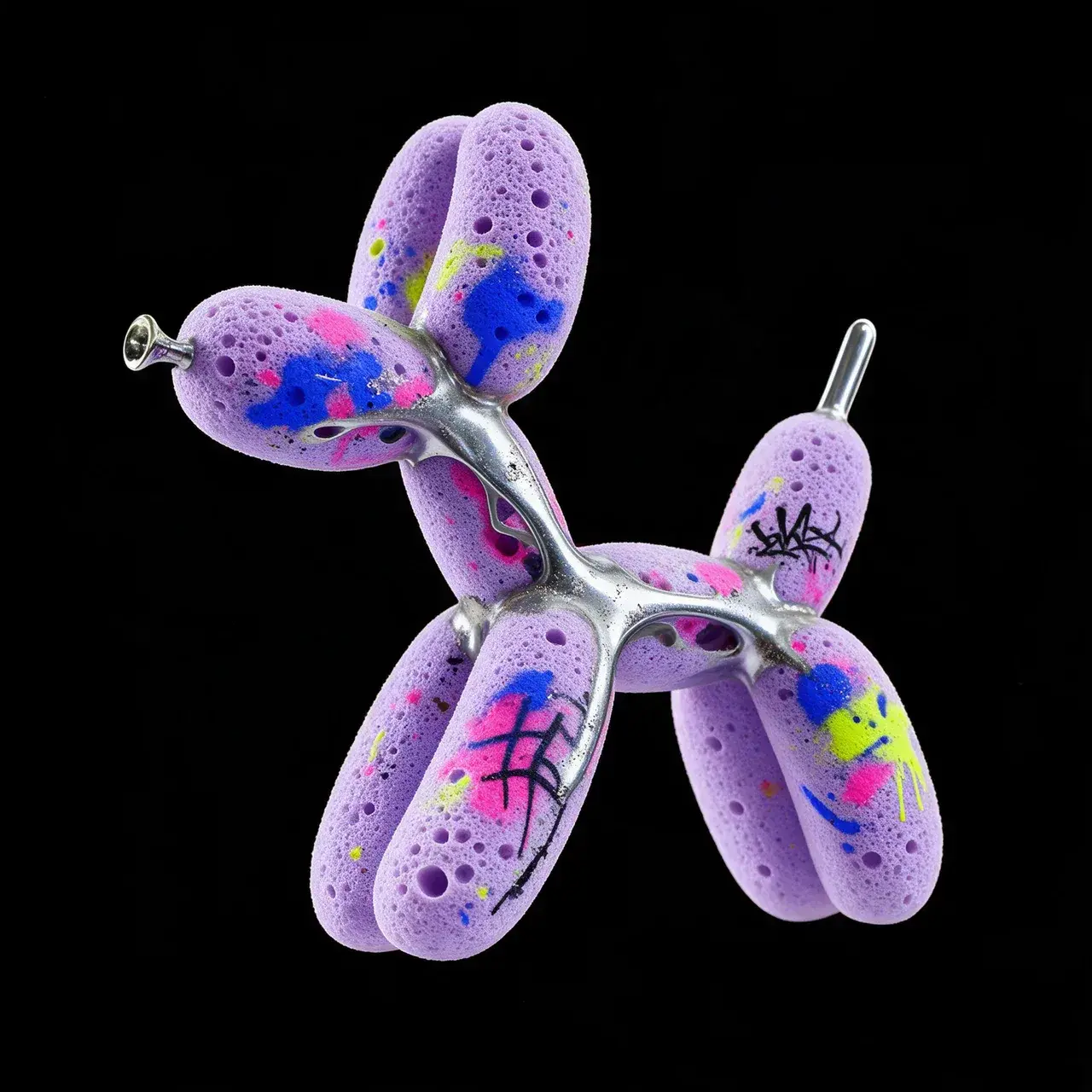
Seedream 5 Pro
Copy
{ "source_lock": "Treat the uploaded image as the immutable structural master. Preserve every visible source component exactly one-to-one: silhouette, proportions, thickness, openings, cutouts, separate parts, layered elements, attachments, readable text, logos, labels, facial details, decorative elements, relative positions, overlap, depth order, camera angle and composition. Nothing visible in the input may disappear, merge, move, simplify or be redesigned. Material scale must automatically adapt around fine source details.", "palette": { "aerogel_lilac": "#C5B4EE", "aerosol_blue": "#3159F0", "aerosol_pink": "#F54299", "acid_yellow": "#E4F232", "chrome": "#C8CED3", "background": "#000000" }, "material_hierarchy": { "primary": "60% ultra-light porous aerogel-like solid", "secondary": "25% polished chrome structural network", "accent": "15% absorbed graffiti pigments" }, "construction": "Build the object from an opaque-to-slightly-translucent microcellular aerogel-like solid reinforced by several smooth chrome structural paths integrated through the body.", "surface_physics": "The lilac porous solid is extremely fine and dry, with a velvety mineral feel and millions of microscopic cavities producing soft diffuse depth. Add a restrained number of slightly larger irregular pores for tactile hierarchy. Across the porous material apply cobalt, hot-pink and acid-yellow spray gestures; pigment sinks into the open structure, creating dense colorful pore cores surrounded by
softer mist. Add a few hand-drawn abstract black-free Y2K lines and short drips in saturated pigment, never readable tags. Chrome forms a small network of broad curved structural bridges passing through the porous body, with deep crisp material junctions. Include powdery abrasion, tiny broken pore edges, spray accumulation, micro-dust and fine chrome scratching.", "detail_control": "Keep source labels and logos in calmer fine-pore regions without graffiti or chrome crossings.", "lighting": { "setup": "One large diffused studio light positioned upper-left-front, approximately 40 degrees above and 35 degrees to the left of camera, plus extremely weak neutral frontal fill only to preserve shadow information.", "behavior": "Lighting remains soft, neutral and identical across the entire collection. Material appearance must come from real roughness, transmission, fibers and reflectivity rather than from dramatic lighting.", "restrictions": "No rim light, no colored lighting, no visible light sources, no rectangular reflections, no HDRI environment, no bloom, glow, halo or lens flare." }, "composition": { "camera": "Preserve the exact source viewing direction and orientation.", "position": "Centered and freely suspended.", "background": "#000000", "floor": false, "cast_shadow": false }, "quality": "Photoreal porous-material photography with genuine open-cell microstructure, absorbed aerosol pigment, polished-metal reinforcement and extremely detailed physical roughness." }
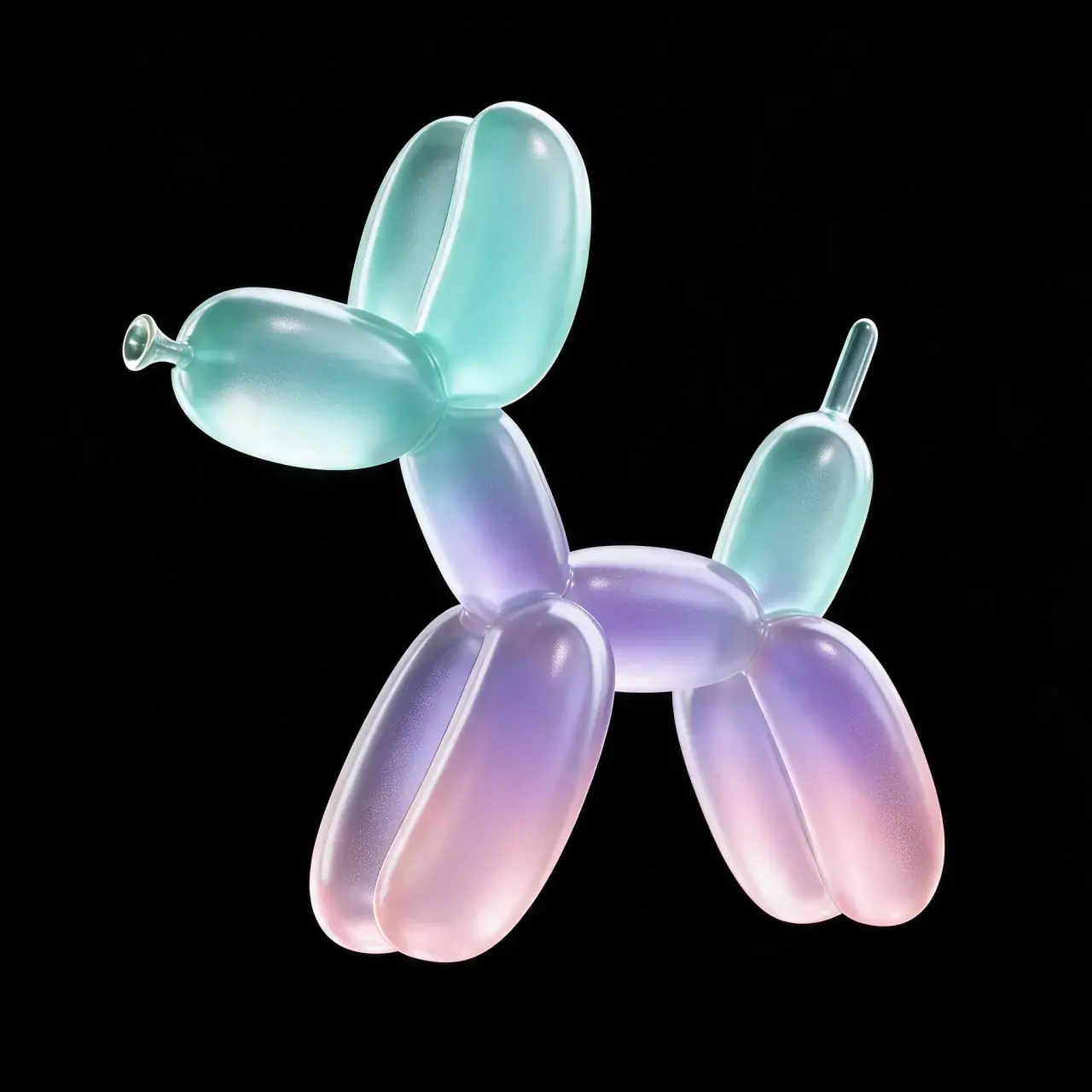
Seedream 5 Pro
Copy
Use the uploaded image as the fixed master reference. Rebuild the exact object one-to-one, preserving the original silhouette, proportions, cutouts, layered construction, text areas, logo placement, spacing, overlap, front-facing orientation and all recognizable structural details. Transform the surface into semi-opaque frosted glass with soft internal depth and a clean vertical gradient shifting from icy aqua #8EE7E1 to lilac haze #B69CFF to translucent shell pink #F7B8D9. The glass should have realistic thickness, softly diffused edges, satin-frosted translucency, internal glow, very fine surface bloom and delicate cold highlights. Keep the material elegant, modern and believable, with real glass density rather than glossy jelly. Photograph it on a pure black background #000000 with premium studio lighting and ultra-crisp material realism.
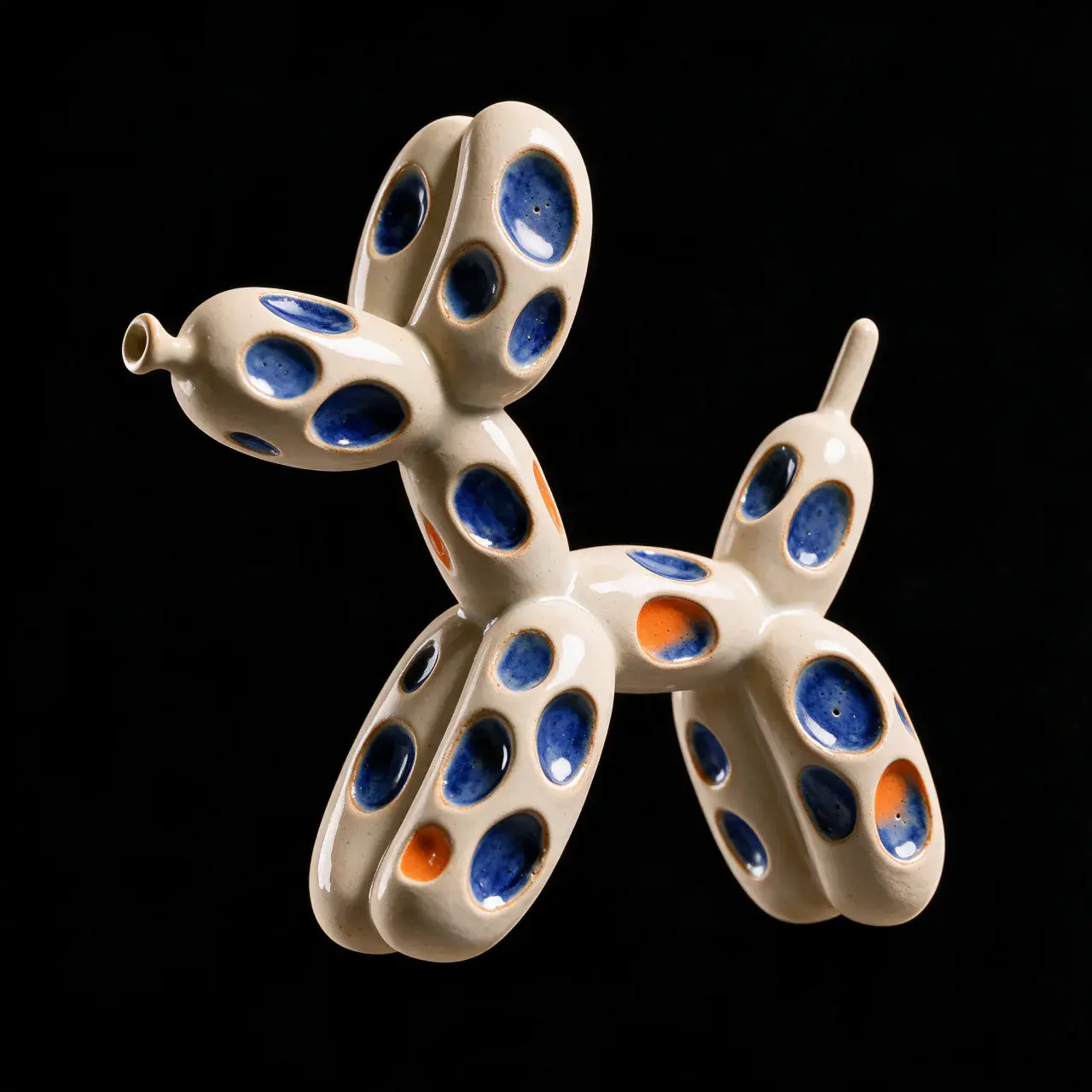
Seedream 5 Pro
Copy
{ "source_lock": "Preserve every source element exactly one-to-one: silhouette, proportions, thickness, openings, layered components, attachments, text, logos, labels, decorations, overlap and viewing orientation.", "palette": { "ceramic_base": "#EFDDD1", "cobalt_glaze": "#3656D9", "orange_glaze": "#F57A39", "background": "#000000" }, "construction": "Reconstruct the existing object from dense fine ceramic with a dry satin body and real fired thickness.", "surface_physics": "Form a limited number of large irregular concave cells directly into broad ceramic surfaces, similar to hand-pressed thumb wells but cleaner and more graphic. Leave most ceramic warm blush-beige and coat selected cell interiors with deep glossy cobalt glaze, with a smaller number in saturated orange. Glaze pools darker at the deepest points and thins toward the matte ceramic rim. Each cell has a slightly unique outline,
tiny kiln pinholes, subtle glaze crawling at a few boundaries and soft hand-shaped irregularity. Keep cells large and sparse rather than creating a honeycomb.", "detail_control": "Cells disappear around source text and intricate details. Preserve all original contours exactly.", "lighting": { "setup": "Broad directional upper-left-front illumination with soft fill.", "material_response": "Dry matte ceramic body contrasted with deep glossy glaze pools and strong natural cavity shadows.", "restrictions": "No plastic gloss on ceramic, no visible studio reflections, no artificial glow." }, "composition": { "camera": "Exact source view.", "position": "Centered and freely suspended.", "background": "#000000", "floor": false, "cast_shadow": false }, "quality": "Real fired-ceramic macro photography, convincing glaze depth, kiln imperfections, crisp tactile relief and premium material fidelity." }
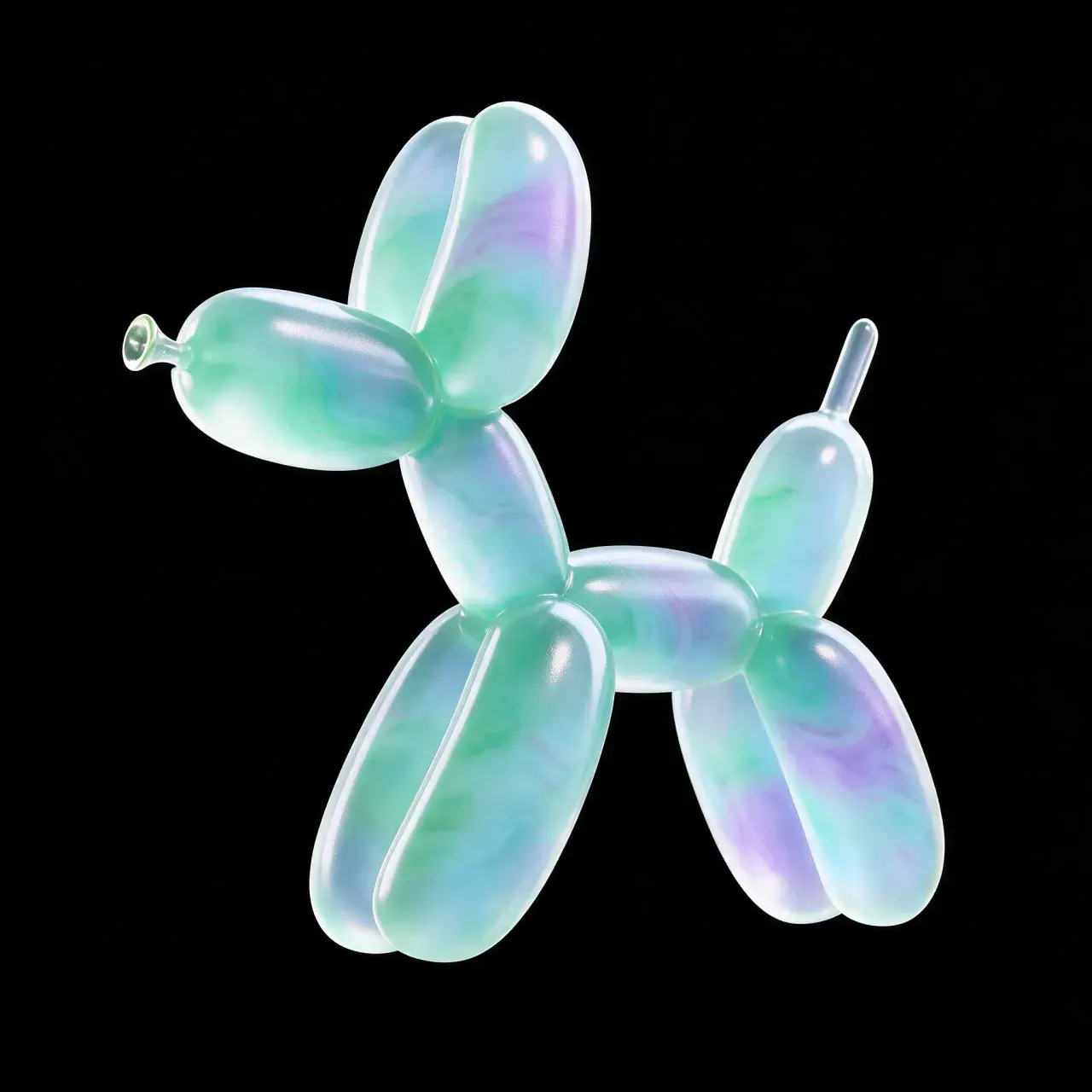
Seedream 5 Pro
Copy
Use the uploaded image as the fixed master reference. Rebuild the exact object one-to-one, preserving the original silhouette, proportions, cutouts, layered construction, text areas, logo placement, spacing, overlap, front-facing orientation and all recognizable structural details. Transform the surface into semi-translucent jelly-like polymer with a frosted skin and internal marbling. Use mint #8DECCB, pale aqua #9CEAF0 and light lilac #C0A8FF. The material should feel soft and thick yet physically real, with cloudy depth, internal color turbulence, softly blurred edges, diffused highlights and realistic silicone-like density. Avoid toy-like transparency; make it premium and nuanced. Photograph it on a pure black background #000000 with studio product lighting and ultra-detailed material fidelity.
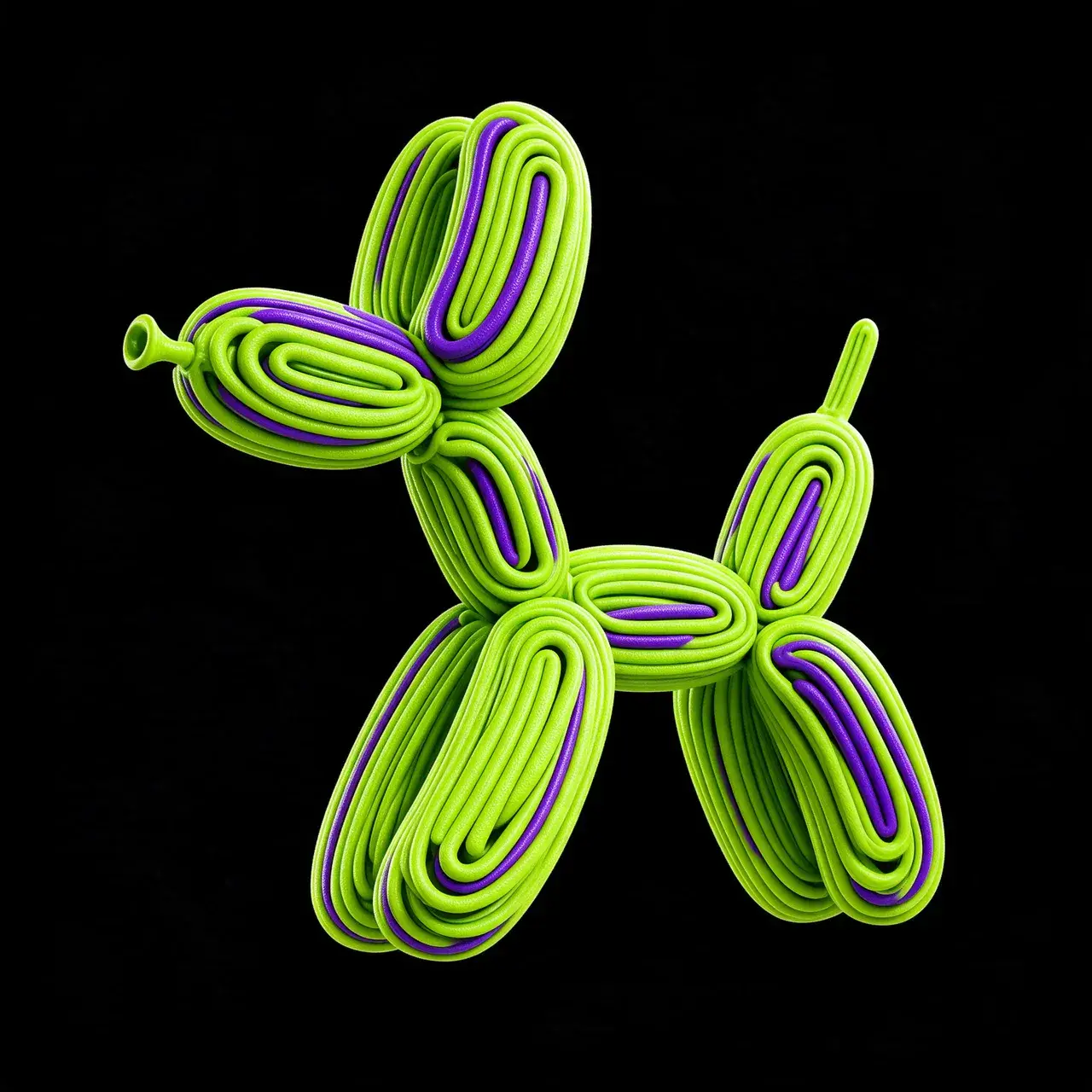
Seedream 5 Pro
Copy
Use the uploaded image as an immutable full-assembly reference. Preserve the exact complete source construction including every visible part, opening, attachment, layered piece, label, text, logo, decoration, scale relationship, overlap and orientation. Reconstruct suitable surfaces from one continuous rounded silicone cord densely laid across the form in elaborate looping paths, as though the entire surface has been meticulously drawn with a single extruded line. Use saturated electric green #A8E800 as the dominant cord with occasional parallel sections in deep violet #6027D8. The cord has a soft satin elastomer finish, subtle molded micrograin and a consistent rounded cross-section. Organize it into large swirling loops, nested U-turns, compressed parallel runs and sweeping directional flows that clearly follow each component's geometry, leaving no random spaghetti-like tangles. Tiny recessed gaps between adjacent cord runs create strong rhythmic self-shadowing and real tactile depth. Around labels, text, faces and delicate parts, automatically reduce cord diameter and spacing without losing any source element. Render the complete preserved assembly floating against #000000, exact source camera retained, clean upper-left-front material lighting, rich green-violet separation, crisp groove shadows and exceptionally refined tactile CGI.
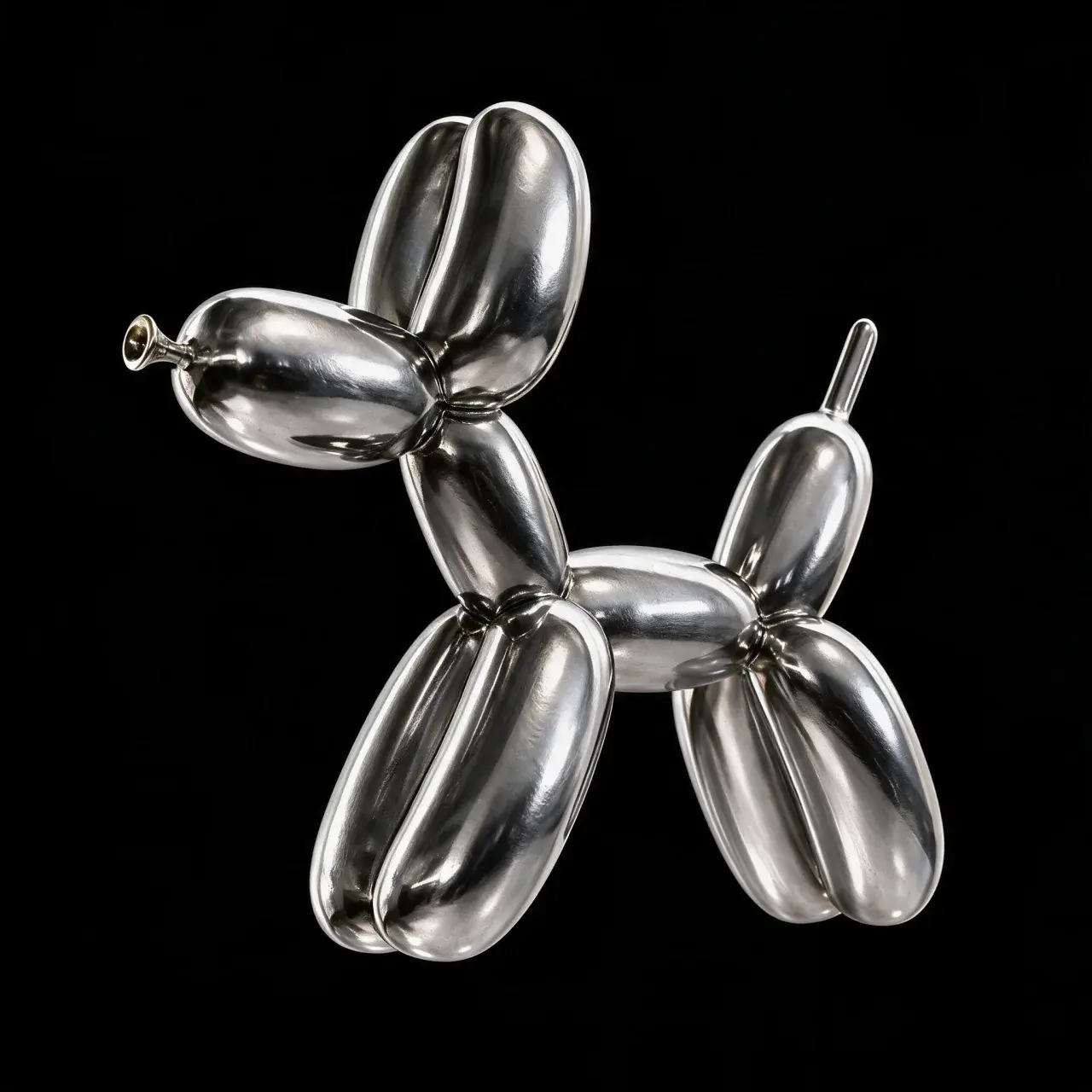
Seedream 5 Pro
Copy
{ "source_lock": "Treat the uploaded image as the immutable structural master. Preserve every visible source component exactly one-to-one: silhouette, proportions, thickness, openings, cutouts, separate parts, layered elements, attachments, readable text, logos, labels, facial details, decorative elements, relative positions, overlap, depth order, camera angle and composition. Nothing visible in the input may disappear, merge, move, simplify or be redesigned. Material scale must automatically adapt around fine source details.", "palette": { "primary": "#......", "secondary": "#......", "accent": "#......", "background": "#000000" }, "construction": "What the object is physically made from and how this material is constructed.", "surface_physics": "Large-scale surface behavior, tactile structure, roughness, relief, fibers, pores, grooves, transparency, wear, manufacturing details and realistic imperfections.", "detail_control": "How the material adapts around text, logos, openings,
small components and intricate geometry while preserving the complete input.", "lighting": { "setup": "Broad soft directional illumination from upper-left-front with restrained neutral frontal fill and subtle separation from the black background.", "material_response": "Highlights and shadows behave specifically according to the chosen material, with strong micro-surface readability and realistic tonal depth.", "restrictions": "No visible lighting equipment, no rectangular softbox reflections, no glow, bloom, neon rim or visible studio environment." }, "composition": { "camera": "Preserve the exact source viewing direction and orientation.", "position": "Centered and freely suspended.", "background": "#000000", "floor": false, "cast_shadow": false }, "quality": "Photoreal physical material photography, real-world scale and imperfections, extreme macro-level fidelity, crisp source-detail preservation, tactile surface realism, no toy-like CGI, no smooth AI-plastic appearance." }
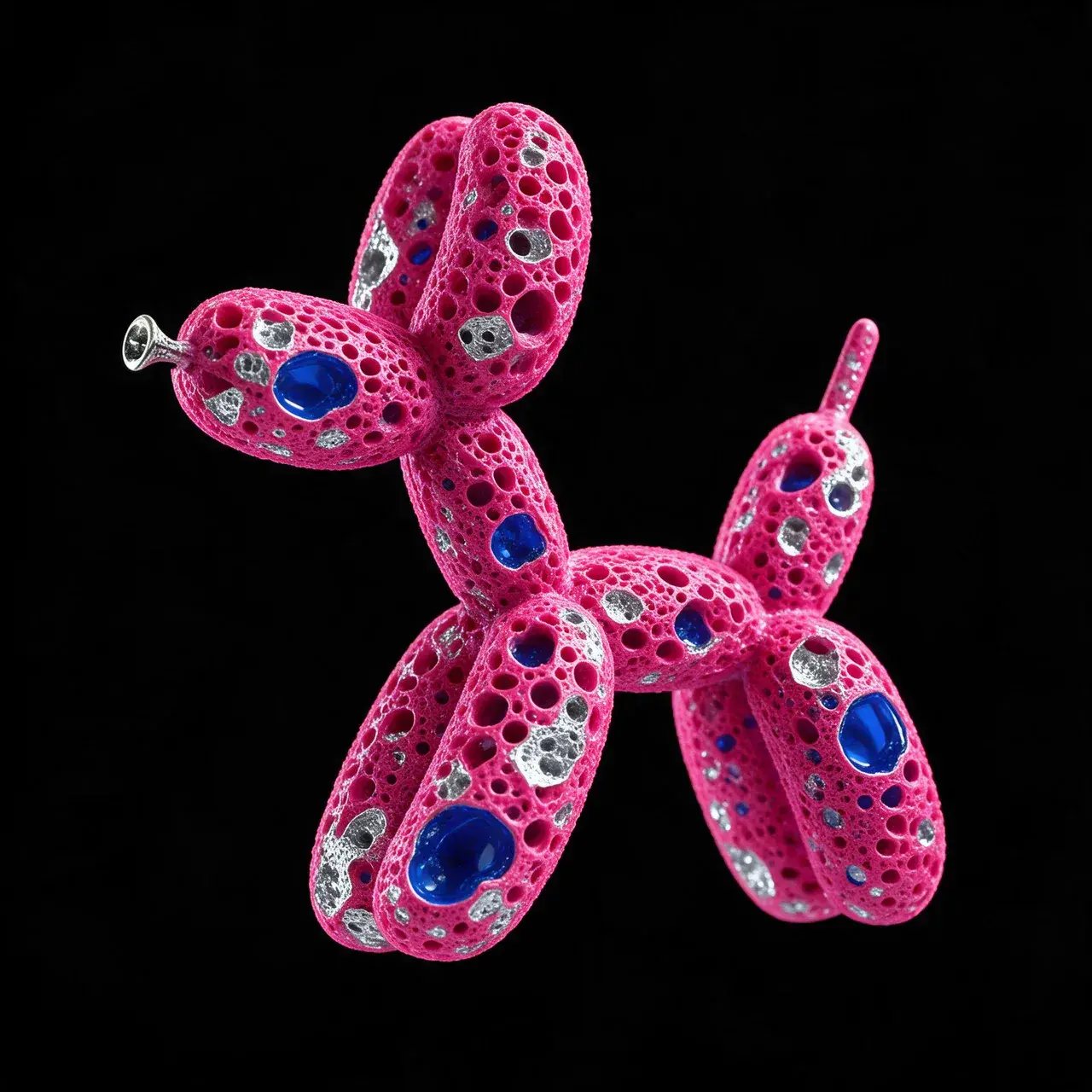
Seedream 5 Pro
Copy
Use the uploaded image as an immutable full-assembly reference. Preserve every source component, silhouette, opening, internal separation, attachment, label, readable text, logo, decorative element, overlap, spacing and original orientation exactly. Reconstruct suitable volumes from open-cell aluminum foam with a physically complex network of irregular interconnected pores and thin metallic bridges. Apply a saturated powder-anodized surface in hot magenta #E62B87 while leaving selected freshly cut pore interiors raw silver #C7CDD1. Inside a small number of larger cavities deposit a smooth translucent resin lining in deep cobalt #2850FF, visible as glossy blue pockets embedded among the dry metallic cellular structure. The pore hierarchy must be convincing: microscopic pinholes, medium cells and occasional larger openings, all following genuine foamed-metal topology rather than procedural dots. Broad areas retain dense magenta foam with only sparse blue cavities, producing a strong simple read at thumbnail scale and extreme complexity at macro scale. Fine source components receive tighter cell density. Render the exact preserved assembly floating against black #000000, original camera retained, broad grazing upper-left-front illumination, rich pore self-occlusion, crisp raw-metal edge response, controlled cobalt optical highlights and premium physically convincing CGI.
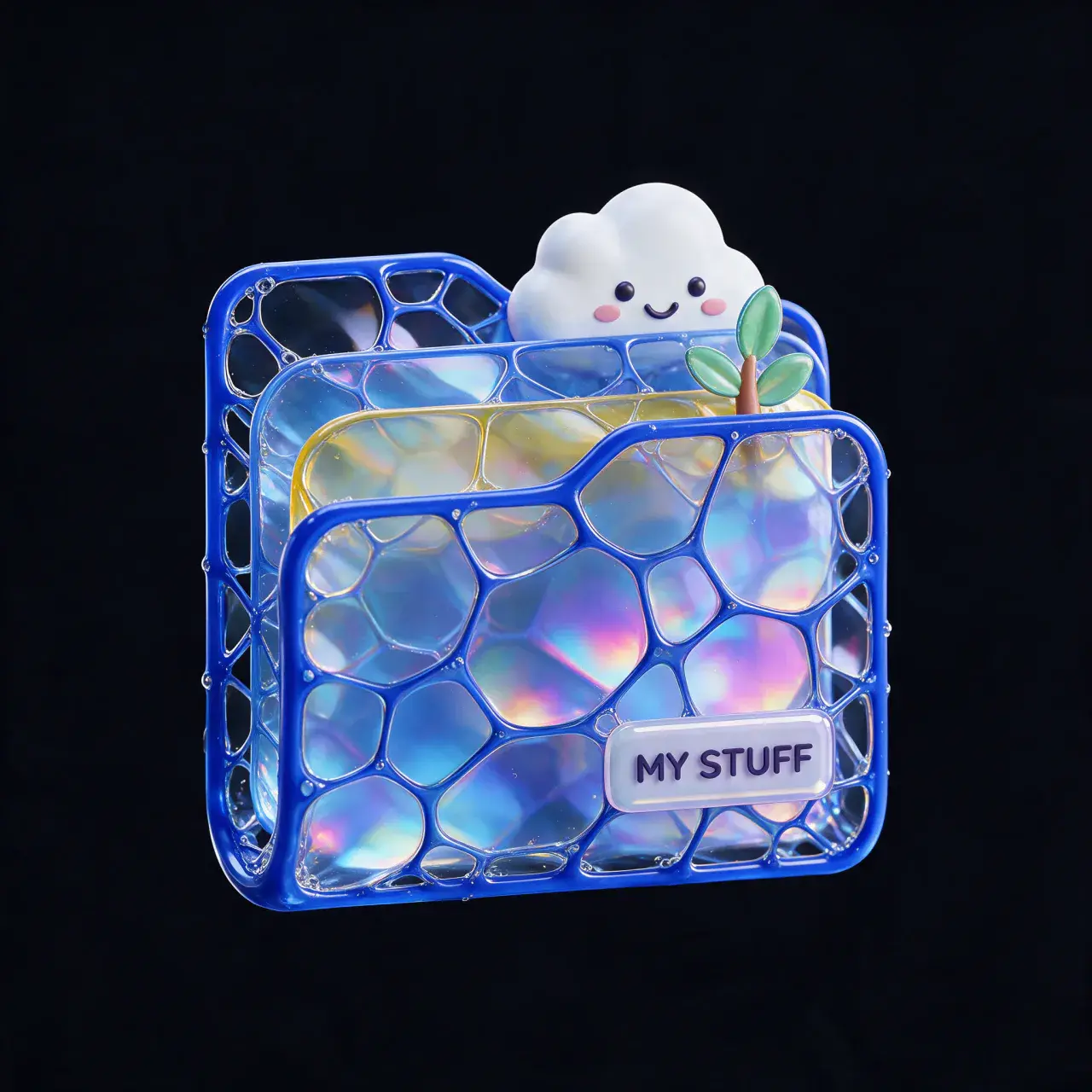
Seedream 5 Pro
Copy
Use the uploaded image as an immutable full-object assembly reference. Preserve every source silhouette, component, thickness, opening, layered part, attachment, text, logo, label, decorative detail, overlap and source camera exactly. Reconstruct suitable surfaces from a physically real cellular frame supporting thousands of thin soap-film membranes. The frame itself is deep cobalt silicone #2648CC and remains very fine, while the membranes span irregular rounded polygonal cells and show authentic nanometer-thin interference colors: pale cyan #7DE3F1, violet #8A65DE, hot pink #EE67A1 and warm gold #EFC363 appearing only as subtle angle-dependent bands. Each membrane must show slight concavity, irregular thickness gradients, delicate edge tension and tiny moisture beads collecting at several frame junctions. Keep cell size relatively large and organic so individual membranes remain readable rather than becoming foam. Near fine source details, reduce cell scale while maintaining all geometry. Photograph floating against pure black #000000 with precise material illumination that reveals thin-film interference without artificial rainbow glow, deep blue frame shadows, microscopic liquid edge detail and a highly sophisticated experimental-material aesthetic.
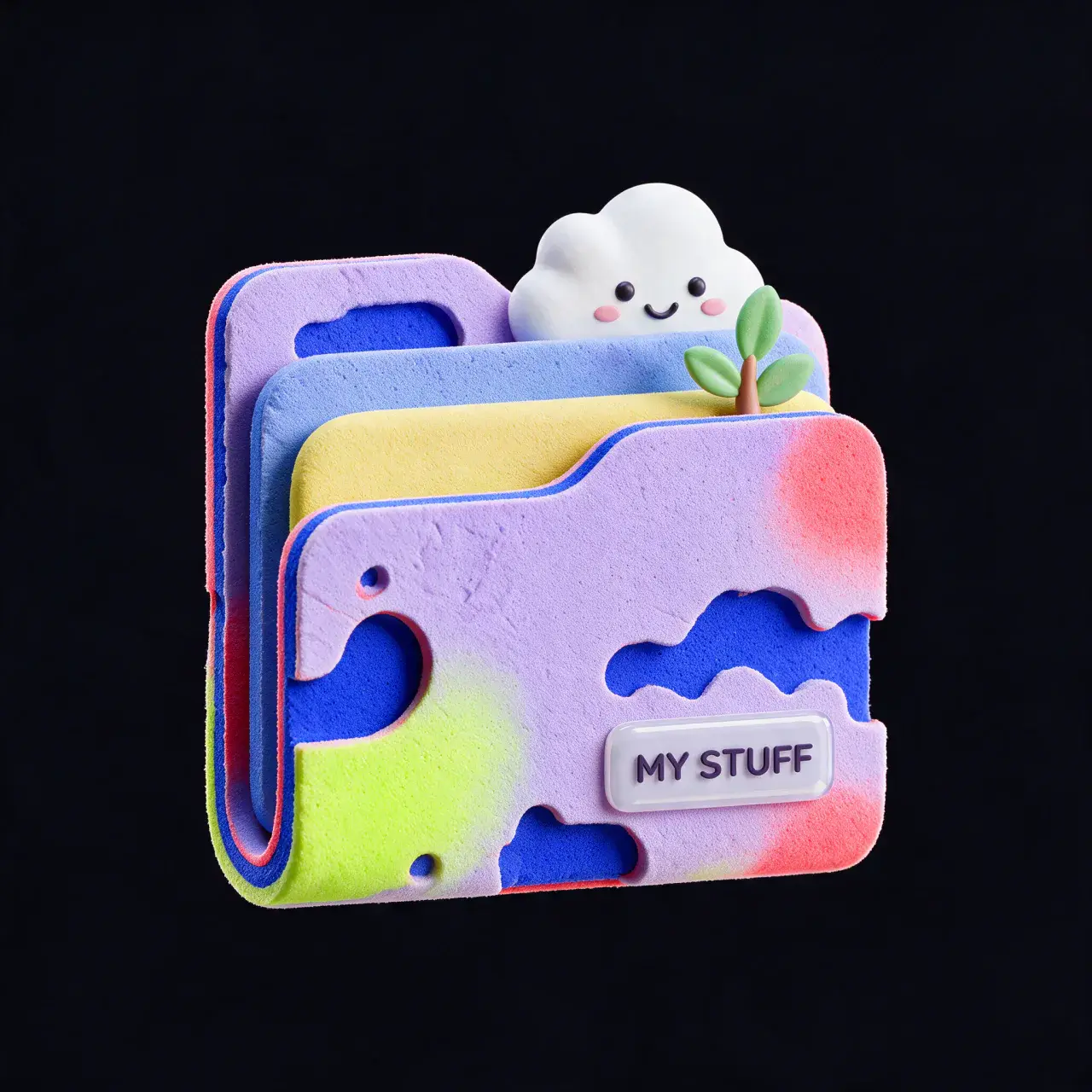
Seedream 5 Pro
Copy
Use the uploaded image as an immutable full-object reference. Preserve the complete source one-to-one, including every silhouette, proportion, thickness, opening, attachment, label, readable text, logo, decorative component, overlap and source view. Construct suitable material from many thin die-cut EVA foam sheets physically laminated into the existing geometry. Use a dominant pale lavender #C9B7F4 with large airbrushed gradient zones shifting into neon lime #B9F52E and hot coral #FF5A65, while inner laminate layers expose saturated cobalt #3156EA along selected existing edges and shallow cutouts. The foam must show genuine closed-cell structure, matte rubbery surface, tiny blade-cut striations, pressure dents, soft sanded corners and slight color absorption into the porous skin. Create a few large precision-cut apertures or scalloped recesses in broad areas where the cobalt inner sheets become visible, without changing the source silhouette. Avoid tiny random holes; use bold graphic layer reveals and smooth airbrush transitions. Photograph freely suspended against #000000 with sneaker-editorial lighting, soft diffuse foam response, strong colored edge separation, visible microcellular texture and premium physical-product realism.
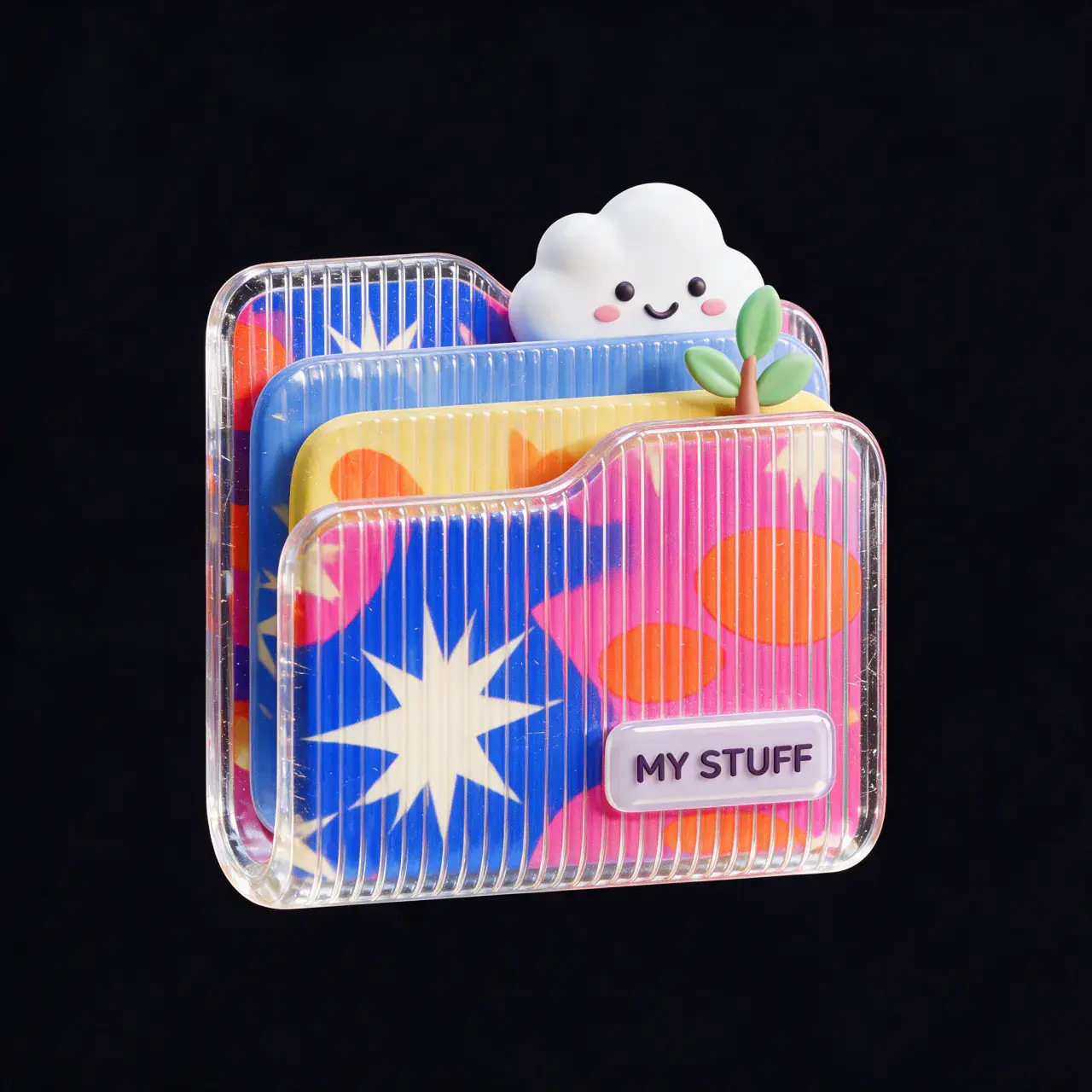
Seedream 5 Pro
Copy
Use the uploaded image as an immutable full-object reference and preserve every source component, opening, thickness, attachment, text, logo, label, decoration, overlap and original camera direction exactly. Reconstruct suitable surfaces from real lenticular polycarbonate sheet formed to the source geometry, with thousands of extremely fine vertical cylindrical lens ridges physically molded into a clear outer layer. Beneath the lenses place only two large interlaced graphic states: state A uses electric cobalt #2952FF with oversized ivory starbursts #F4ECE1; state B uses hot magenta #F23796 with large tangerine oval motifs #FF6828. The visible graphic should shift locally between the two states as the surface curvature changes, producing authentic lenticular motion rather than rainbow holography. Individual lens ridges must be visible at macro scale with slight manufacturing variation, fine vertical scratches, tiny trapped dust and real polycarbonate thickness. Keep graphic shapes enormous and simple so the effect remains bold at thumbnail size. Fine source features receive a smaller lenticular pitch but stay fully intact. Photograph against pure black #000000 using controlled upper-left-front studio illumination that reveals the cylindrical lens texture without washing out the underlying imagery, with clean transparent highlights, strong saturated color and real printed-lenticular material behavior.
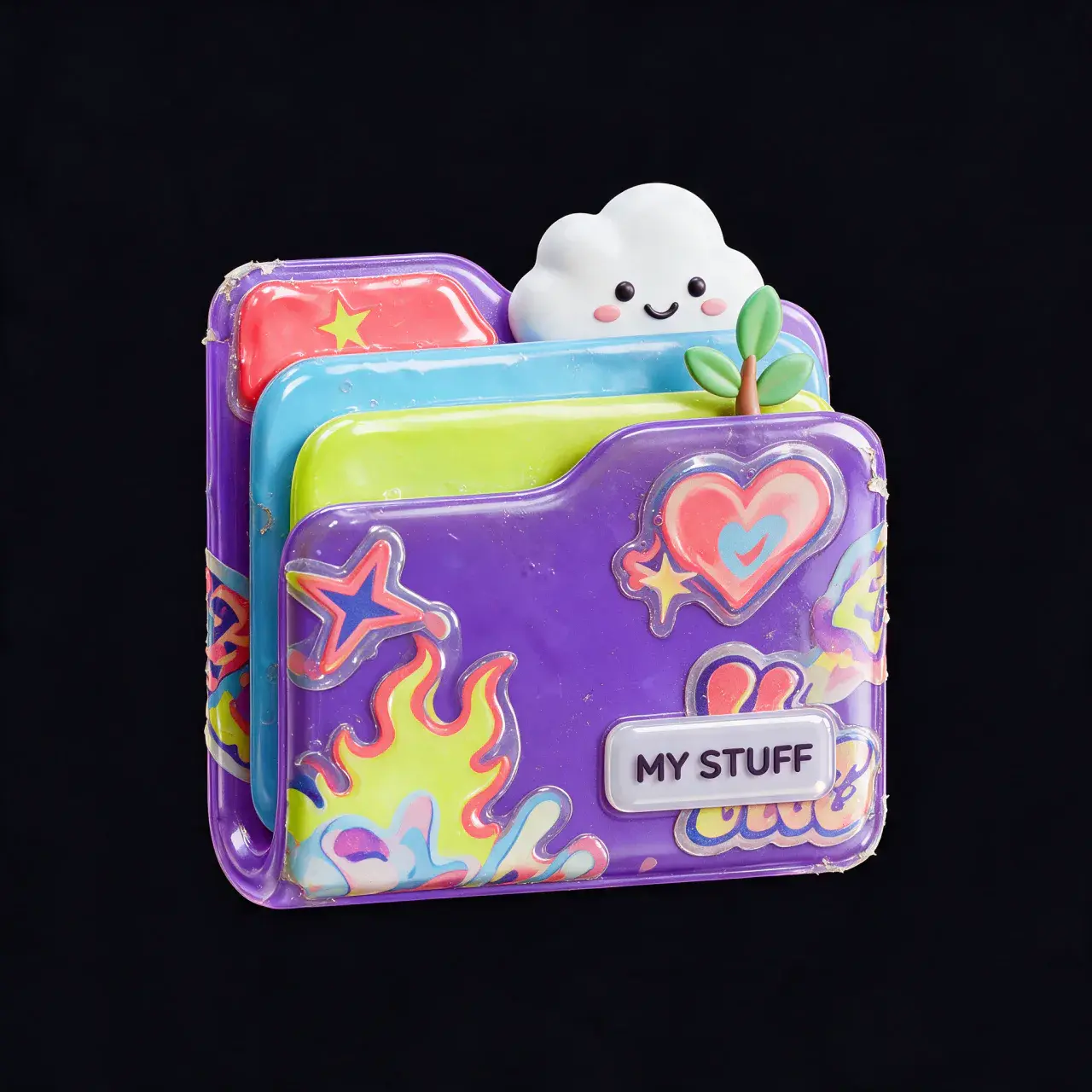
Seedream 5 Pro
Copy
Use the uploaded image as an immutable full-assembly reference. Preserve every source component, opening, attachment, layered element, readable text, logo, label, face, decoration, overlap and source camera direction exactly. Reconstruct suitable surfaces from thick early-2000s embossed vinyl sticker material rather than ordinary plastic. The base is glossy translucent grape #753FD0 with broad inset sticker panels made from puffed gel vinyl in hot coral #FF5364, icy blue #78D8F4 and acid lime #C0F331. Each sticker panel is a real separate laminated film layer with rounded raised edges, soft internal air volume, visible adhesive boundary, tiny trapped bubbles and a slightly different gloss from the underlying material. Use large graphic Y2K shapes—oversized stars, rounded flames, stretched hearts, abstract splash forms and bubble lettering fragments—but avoid covering the entire object; several broad clean grape regions remain between sticker clusters. Show slight peeling at one or two microscopic corners, faint surface scratches, dust caught beneath clear adhesive and subtle stress wrinkles. Source labels and logos remain untouched and readable. Photograph as a real fashion accessory against #000000 with broad polished light, real vinyl speculars, delicate raised-edge shadows and crisp laminated-film texture.
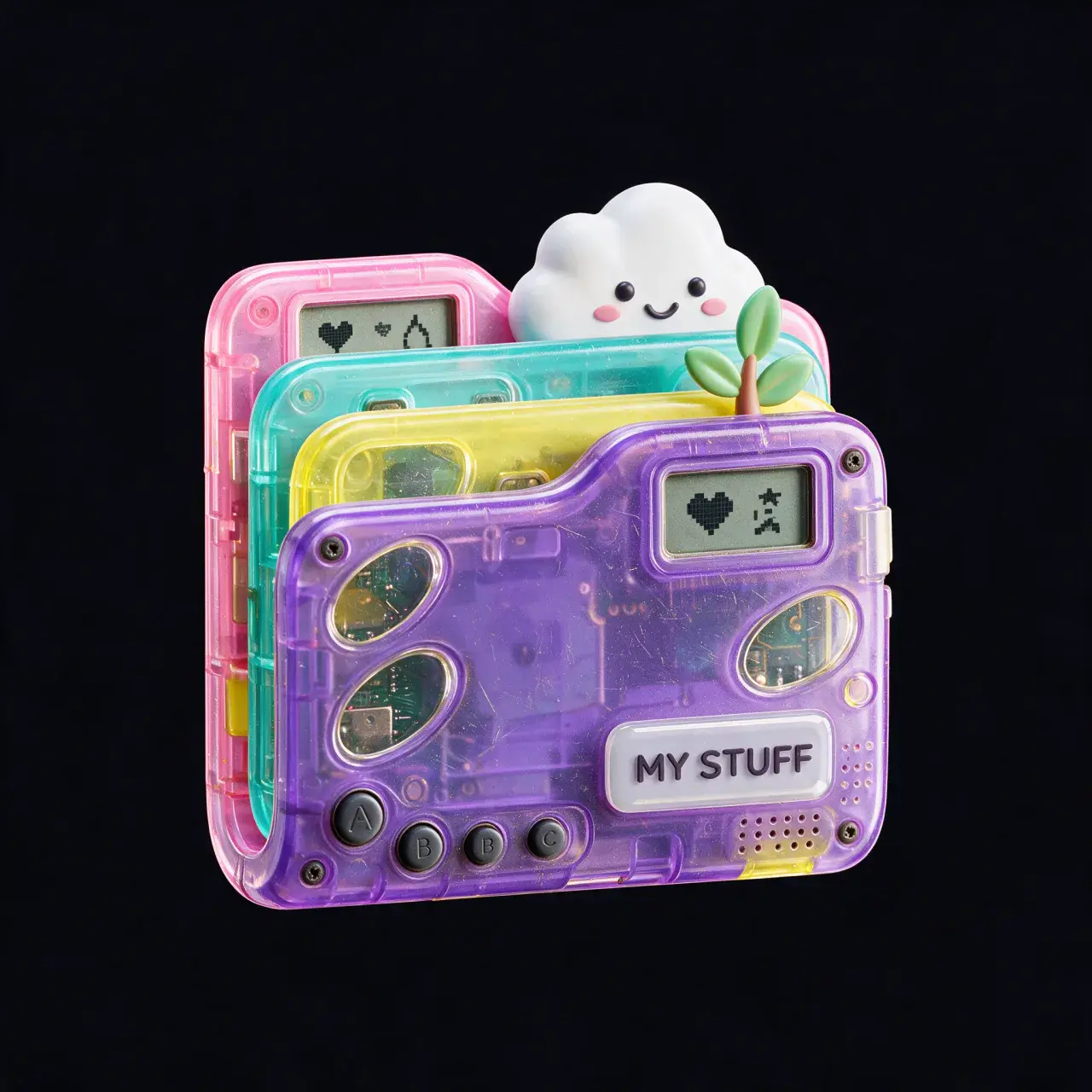
Seedream 5 Pro
Copy
Use the uploaded image as an immutable full-assembly reference. Preserve every original source element exactly: all silhouettes, proportions, openings, layers, attachments, text, logos, facial details, decorative pieces, overlap and viewing orientation remain unchanged. Transform suitable surfaces into a photoreal digital-pet hardware material built from translucent shell plastic, tiny monochrome LCD screens, rubber buttons and miniature pixel interfaces. Use clear grape #8C62D9, transparent aqua #65D7D5, bubblegum pink #F772B6, pale yellow #F0DD63 and graphite #313238. Integrate several recessed oval or egg-shaped translucent shell zones showing actual internal circuit boards and battery contacts, alongside tiny grayscale LCD panels displaying simple black pixel hearts, stars and abstract pet-status icons. Add real rubber A/B/C-style button clusters, molded lettering, tiny speaker holes, miniature screw heads and plastic seam lines. The transparent plastic must show realistic scratches, mold haze and internal structural ribs. The result should feel like a bizarre premium accessory physically manufactured from hundreds of late-90s digital pets, while the exact uploaded object's assembly remains intact. Render floating against #000000 with precise product lighting, strong but controlled plastic highlights, readable dark LCD pixels and high micro-detail. Real photography aesthetic, no game UI overlay, no glossy toy render.
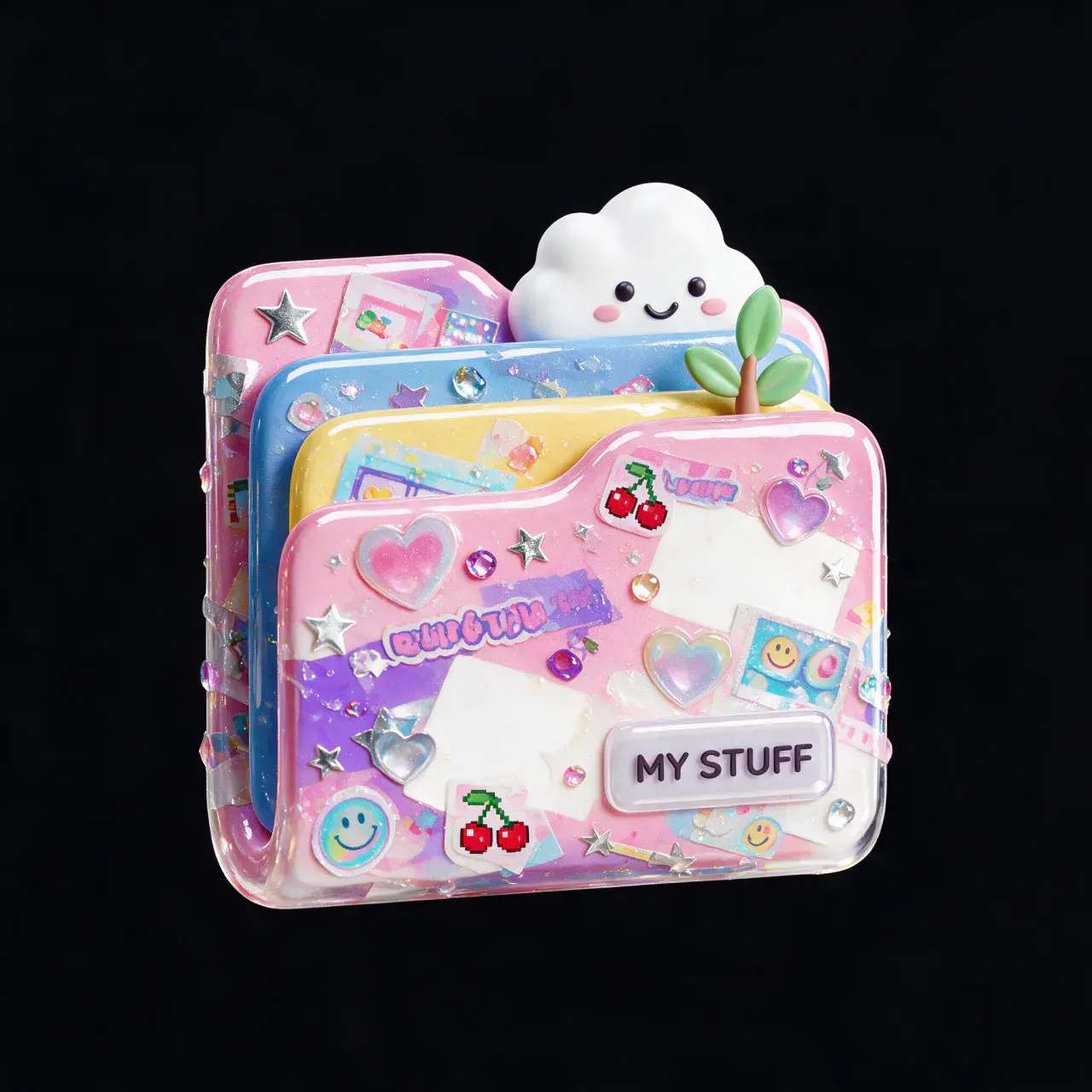
Seedream 5 Pro
Copy
Use the uploaded image as an immutable full-assembly reference and preserve every source component, opening, attachment, text, logo, face, decorative detail, overlap and source viewpoint exactly. Reconstruct suitable surfaces as a physically layered early-2000s purikura sticker collage sealed beneath a thick transparent lacquer coat. Use pearl white #F7F3F2, bubblegum #FF72B5, violet #915BE8, cyan #4CDCF1 and chrome silver #CCD1D7. Beneath the lacquer embed overlapping real die-cut stickers: chrome stars, translucent hearts, pixel cherries, bubble-letter fragments, tiny faux gemstones, holographic smileys and miniature photo-booth border pieces. Sticker edges must show actual thin film thickness, trapped air bubbles, slight curling corners and imperfect overlaps, while the clear topcoat produces smooth continuous depth over the entire collage. Keep motifs abstract enough that the result reads as a Y2K sticker-bomb surface rather than a children's sticker sheet. Add a few zones of untouched pearlescent lacquer for hierarchy. Render floating against #000000 with glossy fashion-editorial lighting, crisp lacquer highlights, accurate film thickness and extreme close-up detail. Real laminated-sticker material, not printed texture, not flat graphic.
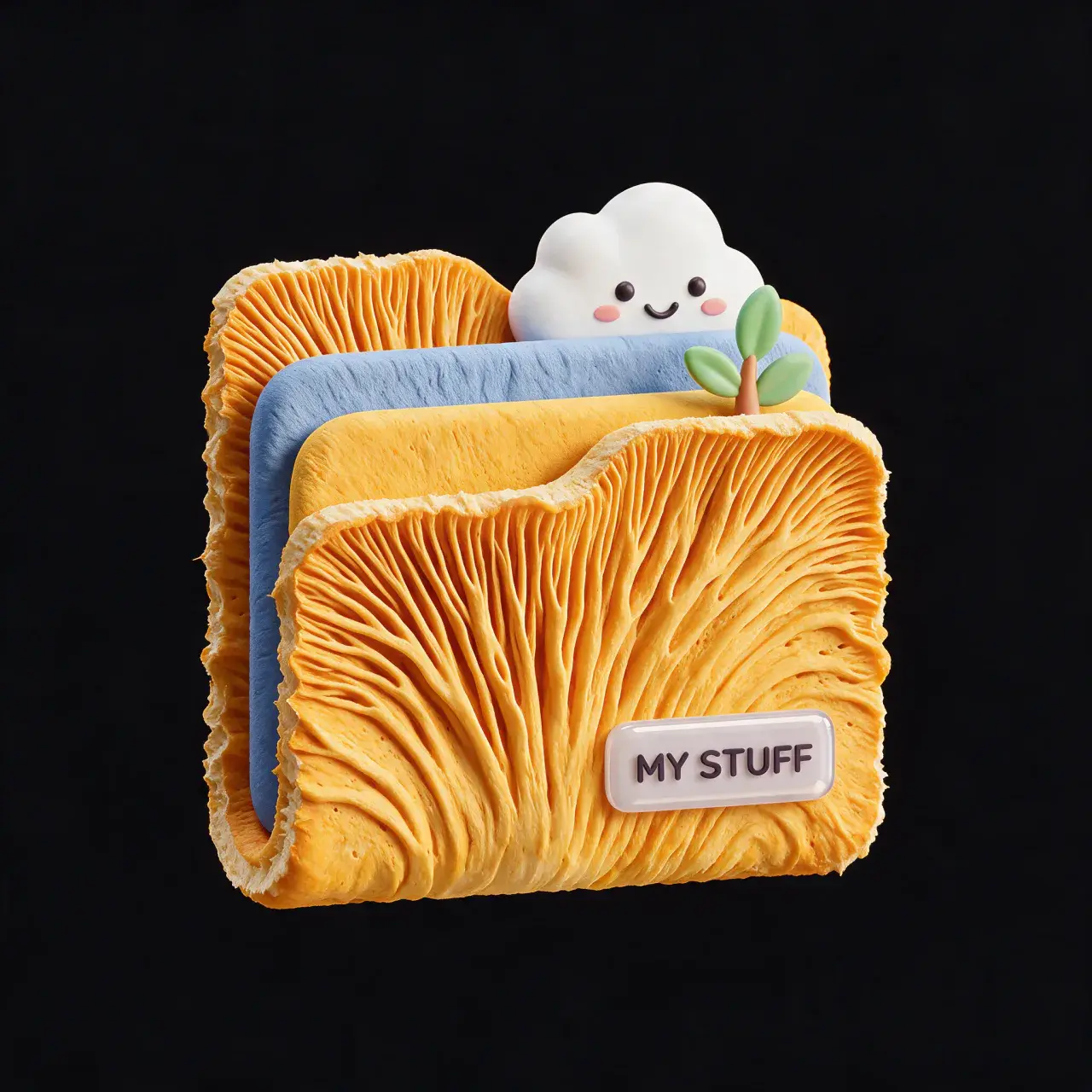
Seedream 5 Pro
Copy
Use the uploaded image as an immutable full-object assembly reference. Preserve every visible source part exactly, including complete silhouettes, proportions, openings, layered objects, attachments, text, logos, labels, tiny decorations, depth relationships and original orientation. Reconstruct suitable surfaces from a dense chanterelle-like fungal material in vivid saffron #F2A126 with deeper amber folds #C96C19 and buttery highlights #FFD77A. The dominant physical feature is not mushroom caps but thick continuous forked fungal ridges running across the surface like the false gills of a chanterelle: softly rounded raised folds that divide, reconnect and flow around curves in large coherent directional systems. Between the ridges, the material is matte, finely fibrous and slightly velvety, with microscopic pores, delicate moist darkening inside deeper channels and subtle irregularity in thickness. Selected existing edges show a naturally torn fibrous fungal cross-section in pale cream #F0D6A7. Keep the pattern bold and sculptural rather than repetitive, with broad calm saffron areas alternating with denser folded regions. Render centered and levitating against #000000, exact input camera, beautifully controlled upper-left-front illumination, warm dimensional shadows between folds, restrained natural surface sheen, exceptional high-frequency detail and premium organic CGI realism.
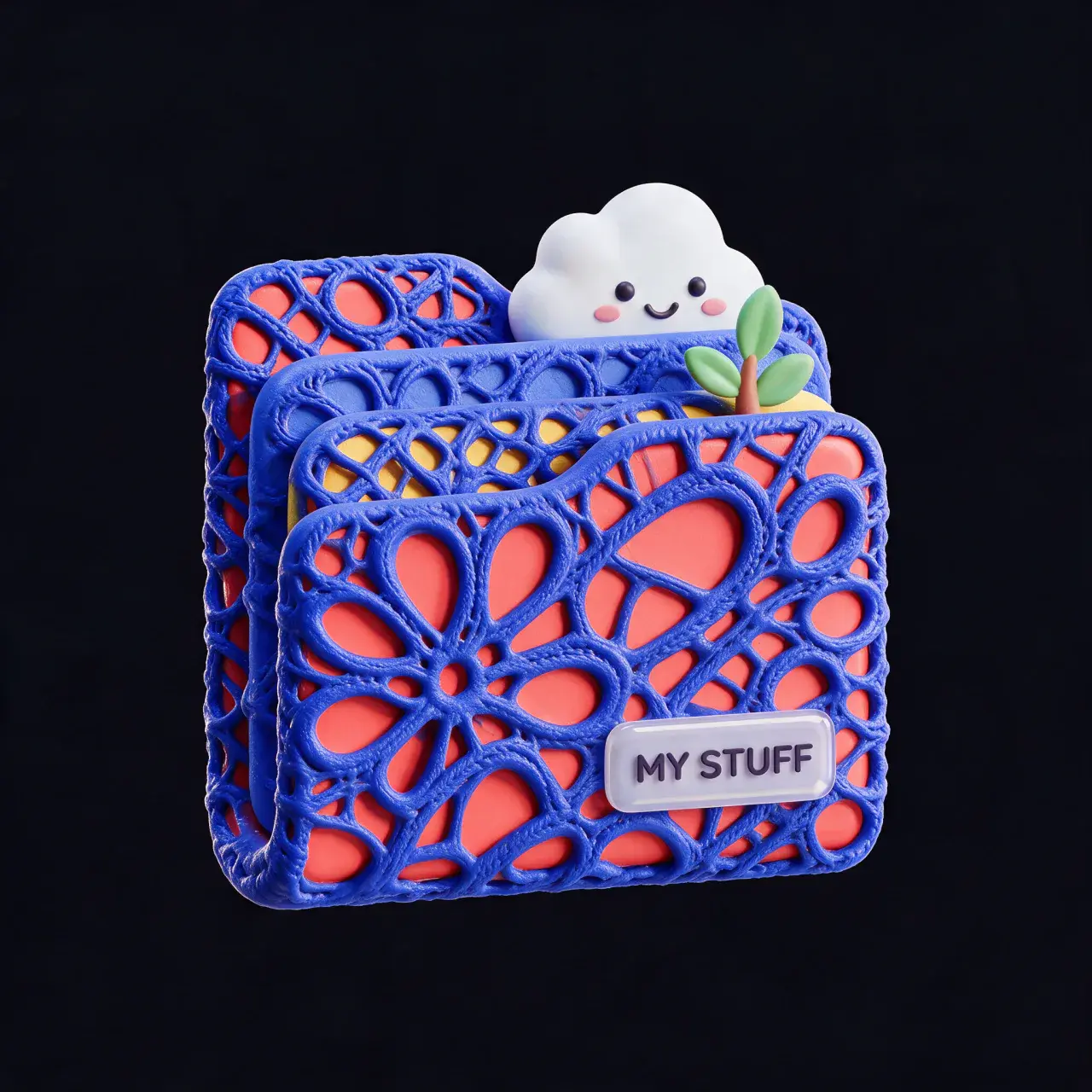
Seedream 5 Pro
Copy
Use the uploaded image as an immutable full-object assembly reference. Preserve every source component and microdetail exactly, including silhouettes, proportions, cutouts, openings, layered parts, attachments, labels, text, logos, decorative details, relative scale, overlap and original orientation. Reconstruct suitable surfaces from cast rubberized lace in intense cobalt #2445E5. Build the lace as a real shallow three-dimensional network of thick rounded elastomer strands forming oversized abstract loops, asymmetric petals, broken rings and curved bridges, with deliberate open spaces revealing a bonded substrate underneath in saturated coral #FF5B5D. The pattern must feel contemporary and graphic rather than ornamental or vintage: large-scale irregular modules, clean negative spaces and a strong directional flow across each component. The cobalt rubber carries fine molded grain and dry satin roughness; the coral substrate is perfectly smooth with a slightly glossier finish. Several lace junctions become visibly thicker from overlapping strands, producing genuine pressure and micro-shadowing. Pattern scale adapts around intricate source features so full fidelity remains intact. Render centered and floating against #000000, exact input viewpoint, soft controlled upper-left-front material lighting, crisp rubber relief, strong negative-space color contrast and high-end experimental fashion CGI.
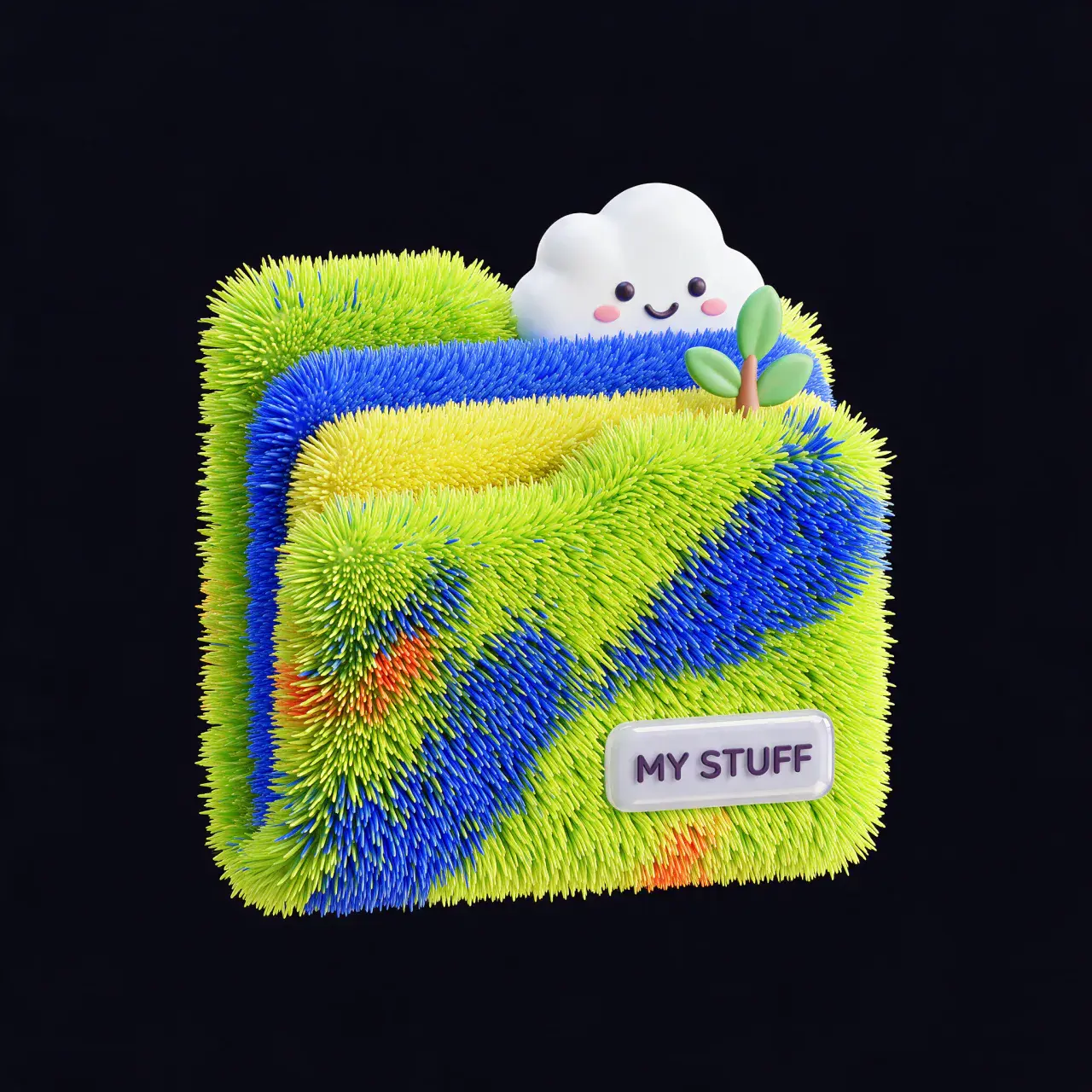
Seedream 5 Pro
Copy
Use the uploaded image as an immutable full-assembly blueprint. Preserve every visible source component, opening, layered element, attachment, label, text, logo, decorative detail, spatial relationship, overlap and original viewing direction exactly. Transform suitable broad surfaces into molded silicone in saturated chartreuse #B8F328 with millions of densely packed short flexible bristles growing directly from the existing geometry. Each bristle has a precise cylindrical base, softly rounded tip, microscopic molded grain and subtle local bending from neighboring fibers. Organize the bristle direction into several large flowing fields so the pile sweeps around the object's geometry in graphic currents rather than standing randomly. Dip the tips of selected broad regions in electric cobalt #2554FF, creating large blue color zones only at the final millimeters of the bristles while the bases remain chartreuse; a few compact zones use warm tangerine tips #FF602A. Preserve broad single-color areas for visual clarity. Shorten bristles progressively around outer contours, text, tiny source features and openings so the complete assembly remains exact. Render floating against pure black #000000 with the exact source camera, soft controlled upper-left-front material illumination, crisp individual fiber separation, rich self-shadowing inside the bristle field, clean saturated tip color and premium macro CGI detail.
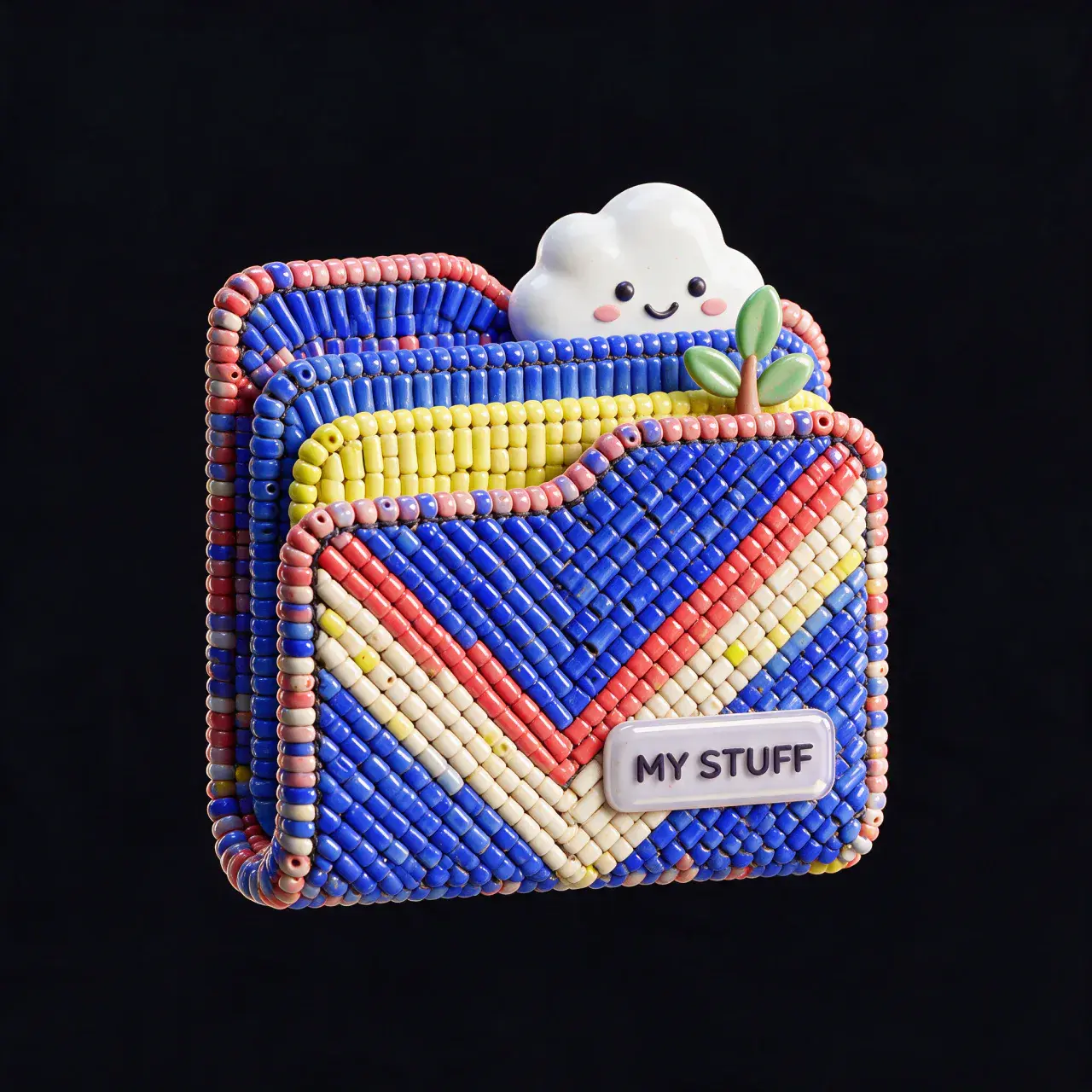
Seedream 5 Pro
Copy
Use the uploaded image as an immutable full-assembly reference. Preserve every visible input component and secondary detail exactly: silhouette, proportions, openings, layered structure, attachments, labels, text, logos, decorative features, overlap and source orientation all remain unchanged. Reconstruct suitable surfaces from thousands of tiny elongated ceramic bugle beads tightly woven into a flexible beadwork skin. Use saturated cobalt #2850E8 as the dominant bead color with graphic flowing bands in coral-red #F34C53, warm ivory #F1DEC3 and a sparse acid-yellow accent #E6F42C. Each bead is a real small glazed ceramic cylinder with a central hole, slight individual size variation, subtly rounded edges and tiny glaze imperfections. Organize the weaving into broad diagonal herringbone and sweeping chevron fields instead of random bead scatter, with visible dark thread #26252B connecting neighboring pieces and pulling them tightly over the existing geometry. At curves the beads fan and compress naturally, maintaining the precise source form. Scale down the beadwork around labels, faces, text and intricate elements. Render the complete preserved assembly levitating against #000000, exact input view, refined upper-left-front illumination, thousands of tiny controlled glaze highlights, crisp weave depth and highly tactile collectible-object CGI.
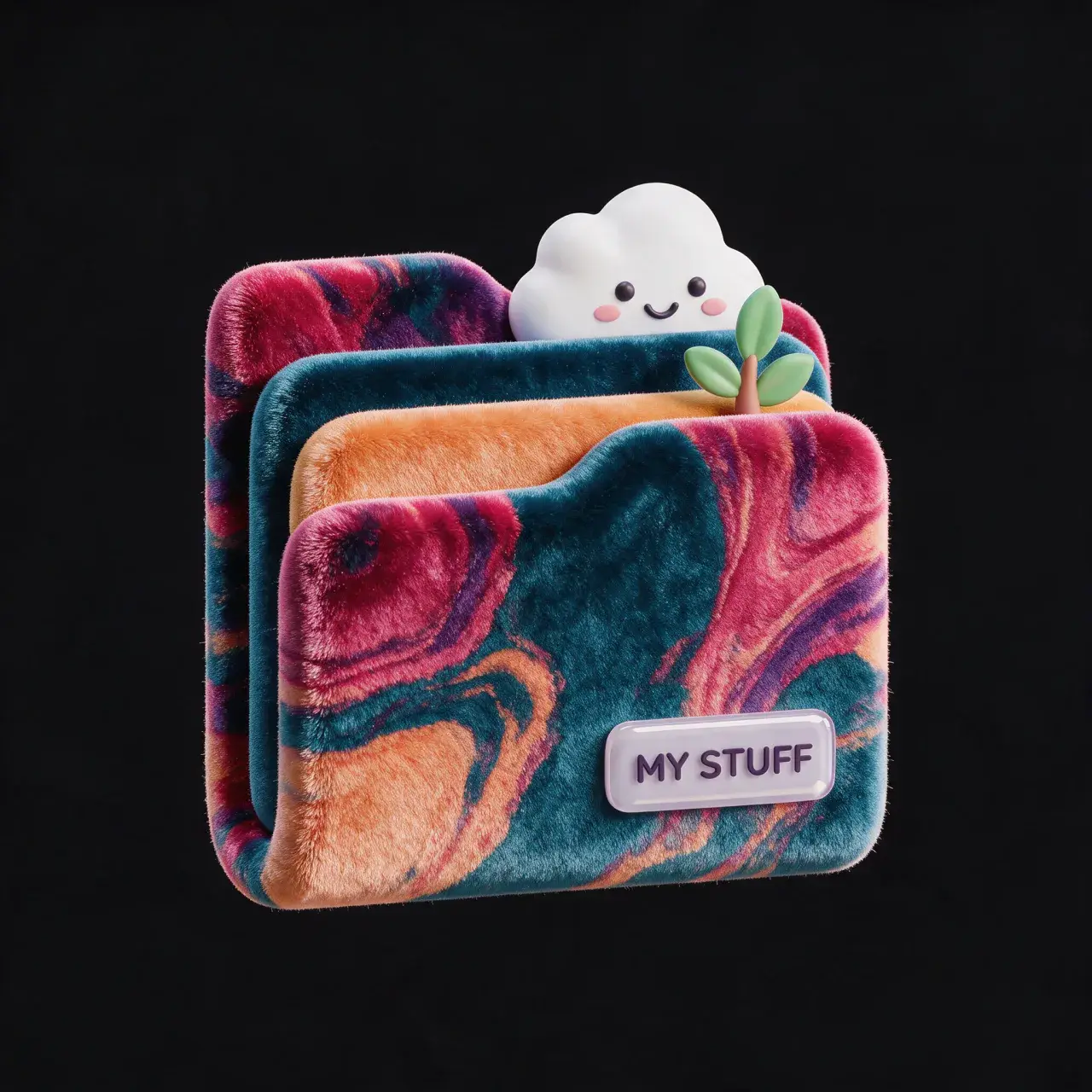
Seedream 5 Pro
Copy
Use the uploaded image as an immutable full-object reference. Preserve every source component, contour, opening, layered part, attachment, text, label, logo, decoration, spacing, overlap and orientation exactly. Cover suitable surfaces with luxurious crushed velvet whose base pile is saturated petrol blue #075C73 with enormous flowing marble-like regions dyed raspberry #D32D68 and warm apricot #F19A65. The pattern must arise entirely from changes in fiber coloration and nap direction rather than printed pigment, so each colored region changes brightness as the fibers turn under the light. Build the design from a few large sweeping shapes with irregular fluid boundaries, some nearly touching and others separated by broad blue fields. Within selected raspberry areas introduce subtle violet underpile #642C83 visible only when the nap changes direction. Individual velvet fibers, crushed directional tracks and soft pile compression around edges must be clearly resolved. Keep the exact source silhouette and shorten pile automatically around intricate details. Render the intact source assembly floating in pure black #000000, original view preserved, sophisticated directional illumination revealing the shifting crushed-velvet surface, rich chromatic depth and ultra-high-resolution fashion material realism.
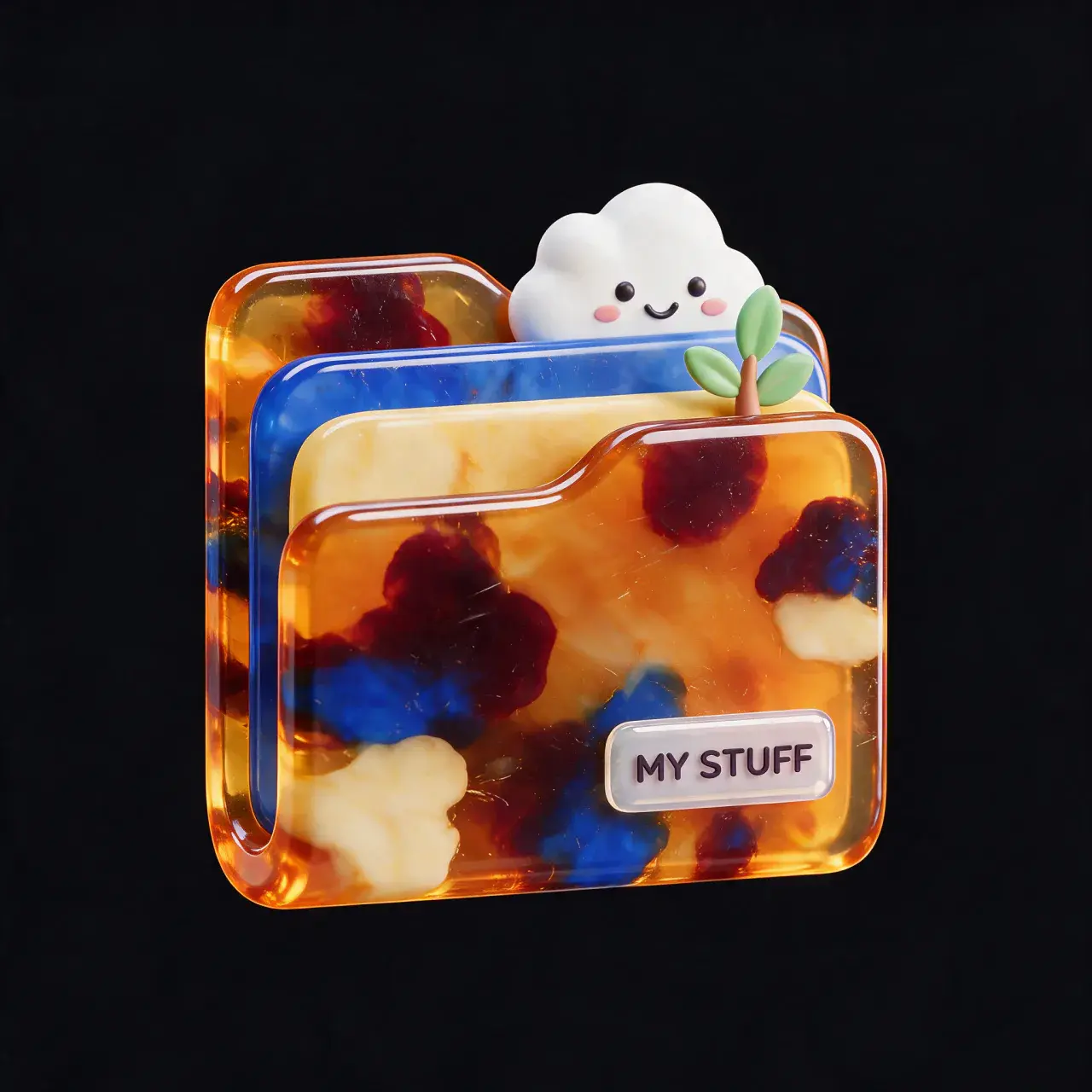
Seedream 5 Pro
Copy
Use the uploaded image as an immutable full-assembly reference. Preserve every visible source object and secondary detail exactly: silhouettes, proportions, thicknesses, openings, cutouts, layered components, attachments, labels, readable text, logos, decorations, overlap, spacing and orientation all remain unchanged. Cast the existing geometry from thick polished cellulose acetate with a transparent warm-amber base #E77A24 and large irregular cloud-like inclusions in deep oxblood #771D35, electric cobalt #2455D6 and creamy ivory #F0D8B9. The inclusions must be genuine pigment masses suspended through the full material thickness, stretched and compressed into large asymmetric islands by the casting process, with different shapes visible from the front and side surfaces. Create occasional partially transparent overlap zones where amber passes over cobalt or oxblood and produces darker optical color mixing. Add extremely fine internal flow striations, tiny polishing scratches and subtle softened edges characteristic of hand-polished eyewear acetate. Keep the pattern bold with only 3–6 major colored masses per broad component, never tiny terrazzo noise. Render the exact preserved assembly centered against black #000000, floating freely, source view unchanged, beautiful controlled upper-left-front lighting, rich amber transmission, deep saturated pigment clouds and luxury product CGI.
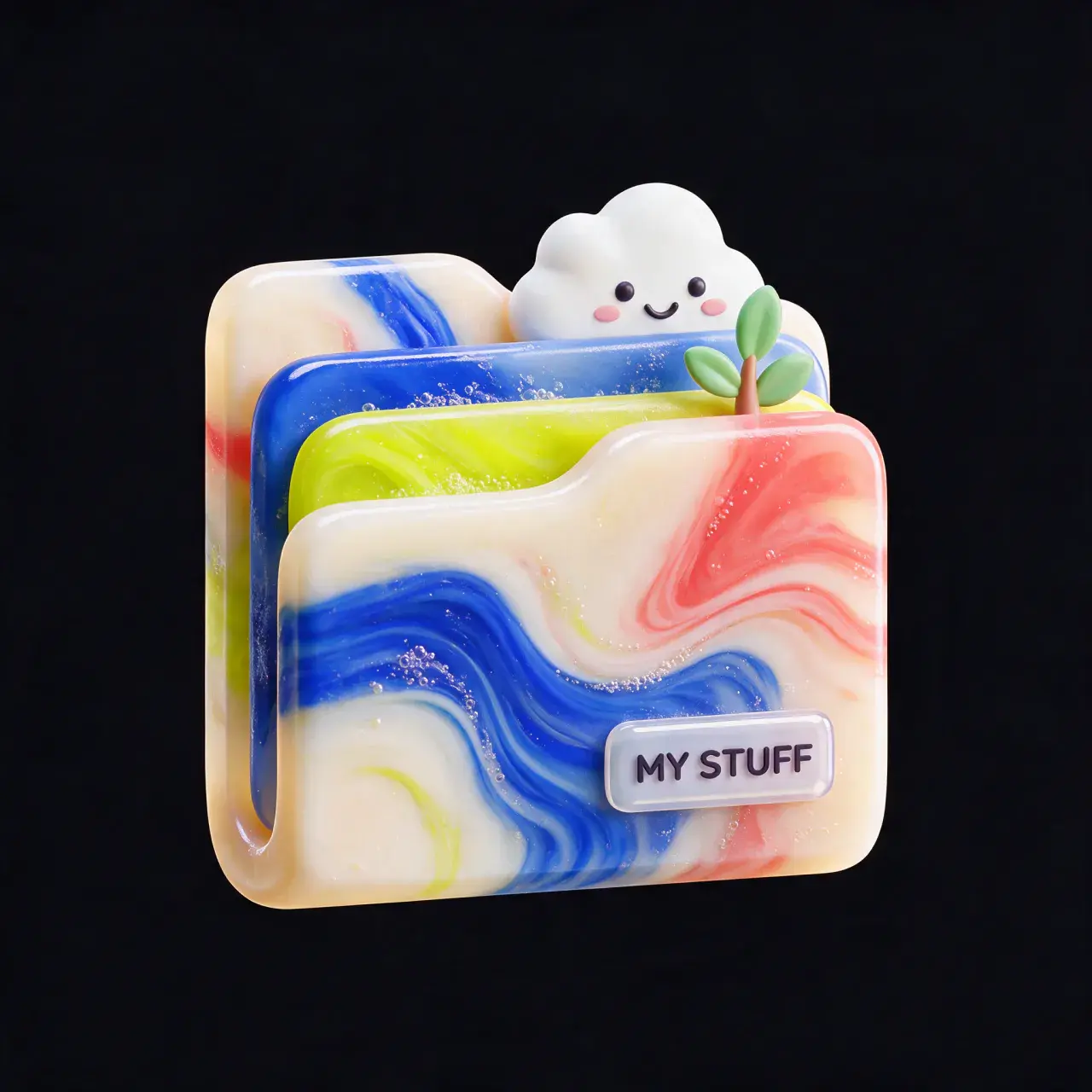
Seedream 5 Pro
Copy
Use the uploaded image as an immutable full-assembly reference. Preserve every visible source element exactly, including all silhouettes, proportions, thicknesses, openings, layered parts, attachments, labels, text, logos, decorative objects, overlaps, spacing and orientation. Cast the entire existing assembly from dense translucent designer soap with a creamy semi-opaque base #F4E5D7, gently polished rounded surface tension and fine waxy microtexture. Inside the soap suspend a small number of thick flowing color ribbons in electric cobalt #2855FF, acid chartreuse #C5FF24 and vivid coral #FF5D61, physically swirled through the volume like colored soap batches folded together before setting. The bands should form large soft waves and broad marbled folds rather than tiny chaotic veins, with crisp color near the surface and gently diffused edges deeper in the material. Add delicate pearlescent microbubbles concentrated along several color interfaces, tiny transparent soap crystals and faint compression streaks produced during casting. Preserve generous clean cream-colored zones so the internal color remains graphic and sophisticated. Fine source details receive smaller and calmer swirls automatically. Render the complete exact assembly floating in pure black #000000, source view unchanged, refined upper-left-front material illumination, rich waxy subsurface response, silky translucent color depth, subtle soap highlights and exceptional photorealistic CGI.
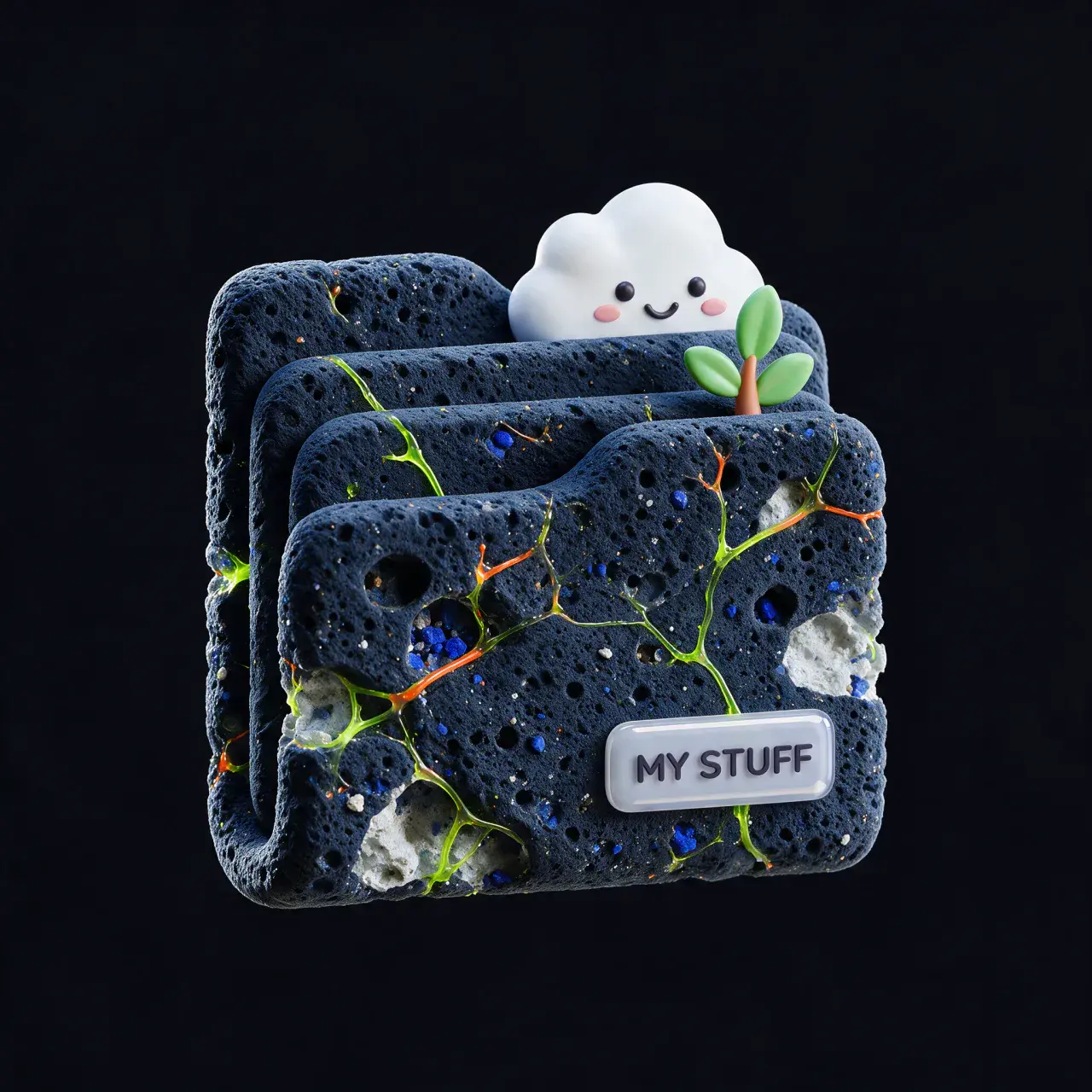
Seedream 5 Pro
Copy
Use the uploaded image as an immutable full-assembly reference. Retain every source element one-to-one: each separate component, contour, opening, insert, attachment, text element, label, icon, facial detail, tiny accessory, relative position, overlap and orientation stays exactly as supplied. Reconstruct suitable surfaces from an uncanny ultra-light volcanic aerogel composite with a deep charcoal-blue body #202B38, powdery mineral roughness, microscopic sponge-like pores and occasional larger irregular cavities revealing a pale mineral interior #B9C4C8. Through the porous volume run a restrained network of smooth translucent capillaries in vivid acid green #B8FF32 and electric orange #FF6B24, physically embedded beneath the outer surface and visible intermittently through naturally opened pores. The capillaries should widen slightly at occasional junctions into tiny glossy reservoirs, contrasting against the extremely dry absorbent aerogel. Add sparse cobalt mineral grains #365BFF and faint silvery dust inside deeper cavities, while broad regions remain predominantly dark porous material. Edges retain the precise source shape with tighter micro-porosity around delicate details. Render the intact source assembly floating in pure black #000000, original camera retained, sophisticated upper-left-front material illumination, beautiful grazing definition across pores, controlled translucent accents, rich blacks and ultra-high-resolution physically convincing CGI.
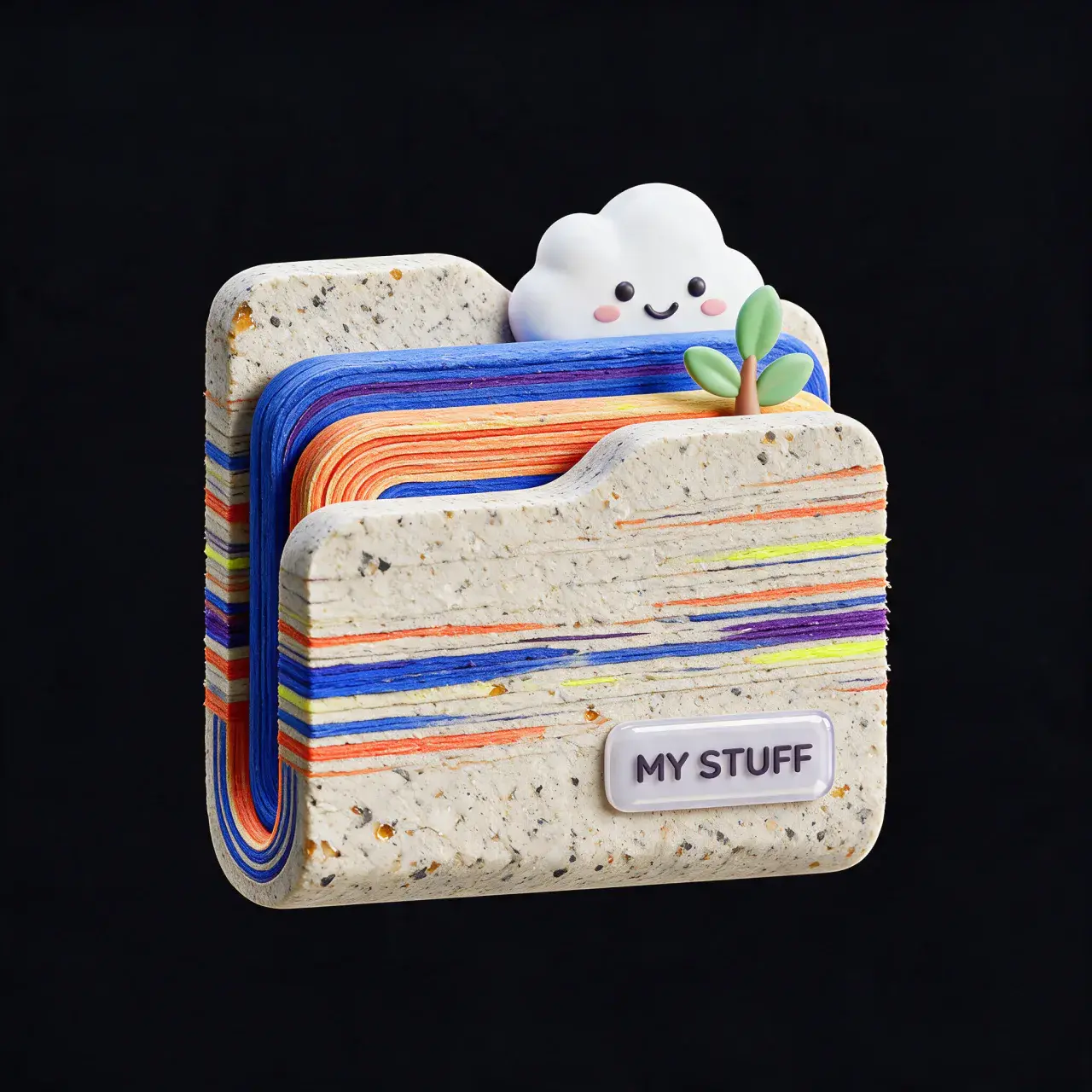
Seedream 5 Pro
Copy
Use the uploaded image as an immutable full-assembly reference. Preserve every source component, opening, attachment, decorative insert, label, text, logo, relative dimension, spacing, overlap and original orientation exactly. Rebuild suitable solid regions as a dense engineered stone-fiber laminate with a warm pale mineral matrix #D7D0C3 containing hundreds of ultra-thin compressed fiber sheets at varying internal depths. Alternate fiber strata in saturated ultramarine #264CFF, tomato orange #FF5938, deep plum #59206E and sparse fluorescent chartreuse #C8FF35. Keep broad frontal zones predominantly matte mineral, while naturally exposed sides, existing recesses and selected shallow milled channels reveal curved cross-sections of the internal colored laminations as tightly packed contour bands. Scatter tiny dark mineral grains #38363B and occasional translucent amber flecks #F0A53D throughout the stone body to add microstructure. The material should feel precision-cut from a genuinely layered industrial composite, with visible fiber compression, slightly frayed microscopic cross-sections and convincing mass. Preserve calm areas rather than covering every surface with pattern. Render the complete source assembly floating on exact #000000, original orientation preserved, soft directional material lighting with strong relief readability, rich saturated layer colors and ultra-clean commercial CGI.
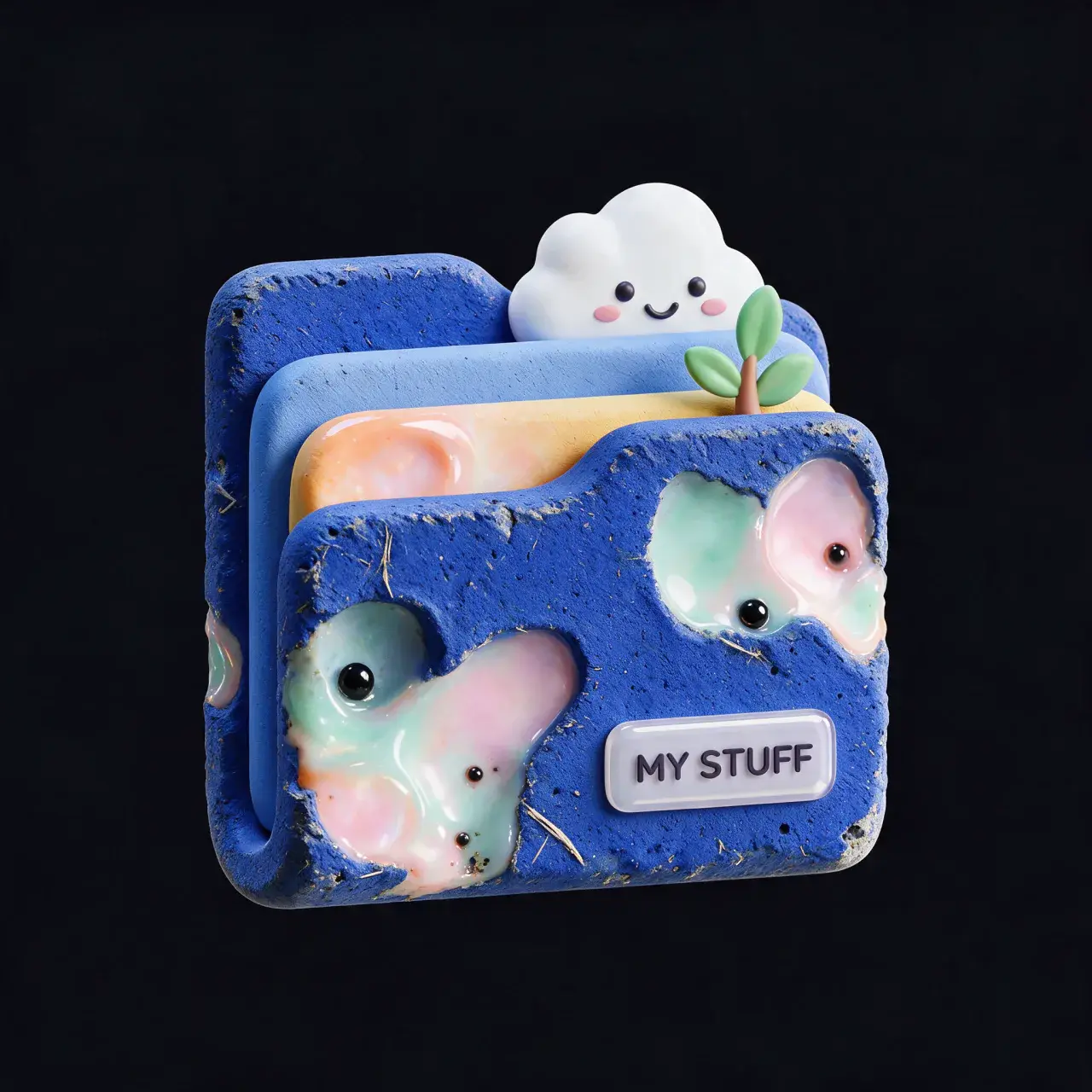
Seedream 5 Pro
Copy
Use the uploaded image as an immutable full-assembly reference. Preserve every visible part exactly, from the main silhouette to layered components, openings, labels, logos, text, decorative pieces, faces, stems, tabs, small protrusions and exact depth relationships. Reconstruct all suitable surfaces from intensely pigmented cobalt fiber cement #2947D3 with a dense matte mineral body, microscopic cellulose fibers, pinholes, tiny aggregate grains and subtle molded irregularities. Across larger uninterrupted surfaces create a limited number of smoothly eroded shallow basins following organic asymmetric shapes. Fill those basins with polished pearlescent resin in pale shell pink #F5B7D2, opal mint #AEE6CC and occasional warm apricot #FFB070, with color shifting softly inside the resin depending on optical depth. Several basins contain sparse black glass microbeads #15151A submerged beneath the glossy surface. Preserve large fields of raw blue fiber cement so the resin appears as a deliberate material interruption rather than decoration. Let fine fibers remain visible along the mineral-to-resin boundary, giving the interface authentic physical construction. Render the full preserved assembly floating in pure black #000000, exact source camera, sophisticated upper-left-front lighting, deep matte mineral response, elegant resin highlights and exceptional tactile CGI resolution.
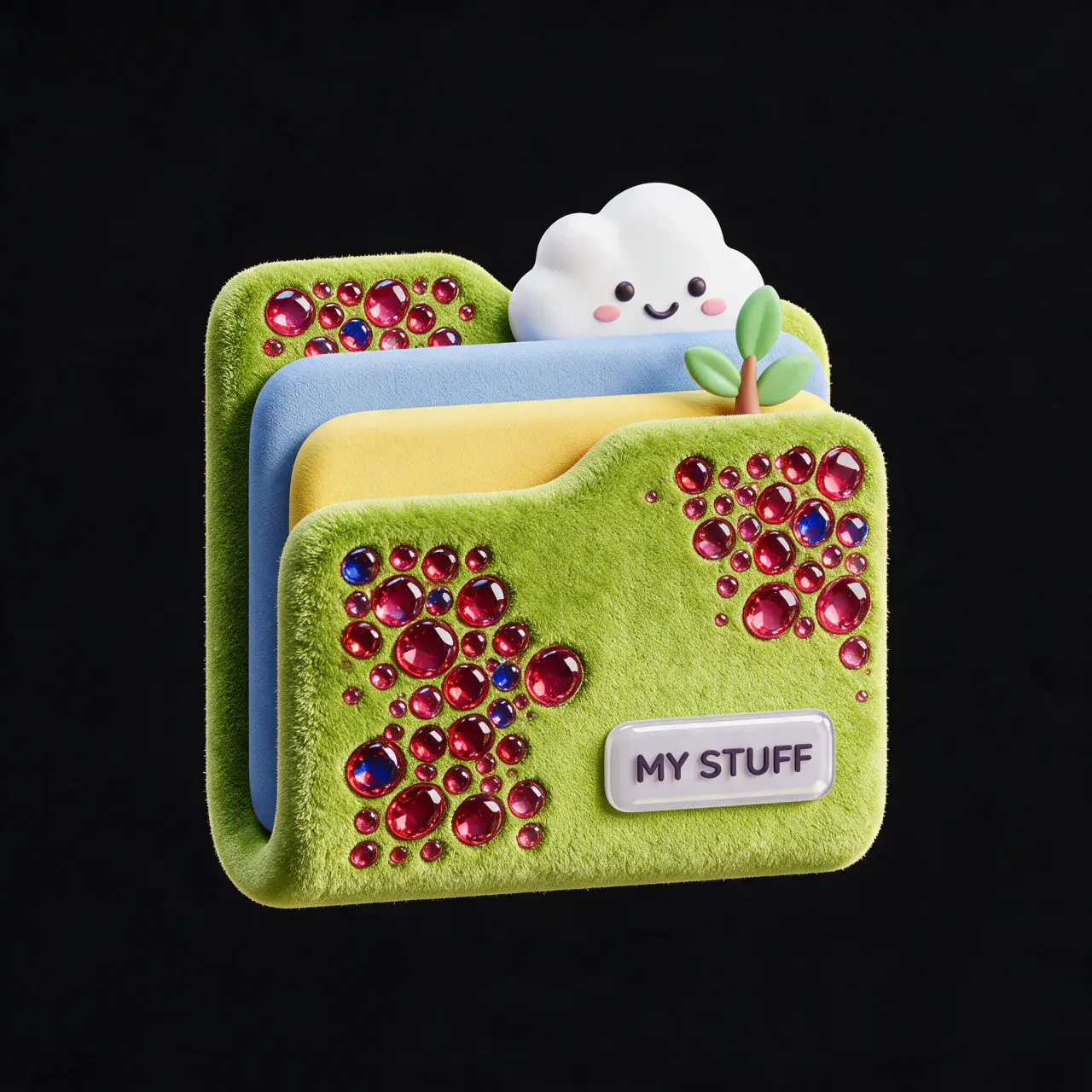
Seedream 5 Pro
Copy
Use the uploaded image as an immutable full-assembly reference. Preserve the complete visible construction exactly, including every silhouette, proportion, thickness, cutout, negative space, layered part, attachment, label, text, logo, facial detail, decoration, overlap and original viewing orientation. Transform the surfaces into an unusually saturated fine-grain nubuck with a pistachio-lime body #A8D928 and slightly darker brushed nap #789E18. The nubuck surface should contain dense microscopic directional fibers with authentic finger-brushed tonal changes, compressed pile along seams and crisp short nap around fine elements. Across selected broad regions integrate irregular clusters of shallow ruby-glass cells: smooth rounded inset lenses in translucent crimson #D91945, raspberry #EE3465 and sparse cobalt #2649EA, physically seated within the nubuck rather than attached above it. Each lens creates a delicate compressed-fiber boundary and contains subtle internal bubbles, optical thickness and polished concave depth. Arrange cells as asymmetric concentrated islands separated by large uninterrupted green suede fields, producing strong contemporary visual hierarchy. Render the exact preserved assembly centered against pure black #000000, floating freely, exact source view, refined upper-left-front illumination revealing individual fibers and jewel-like cell highlights, deep tonal separation and premium macro CGI detail.
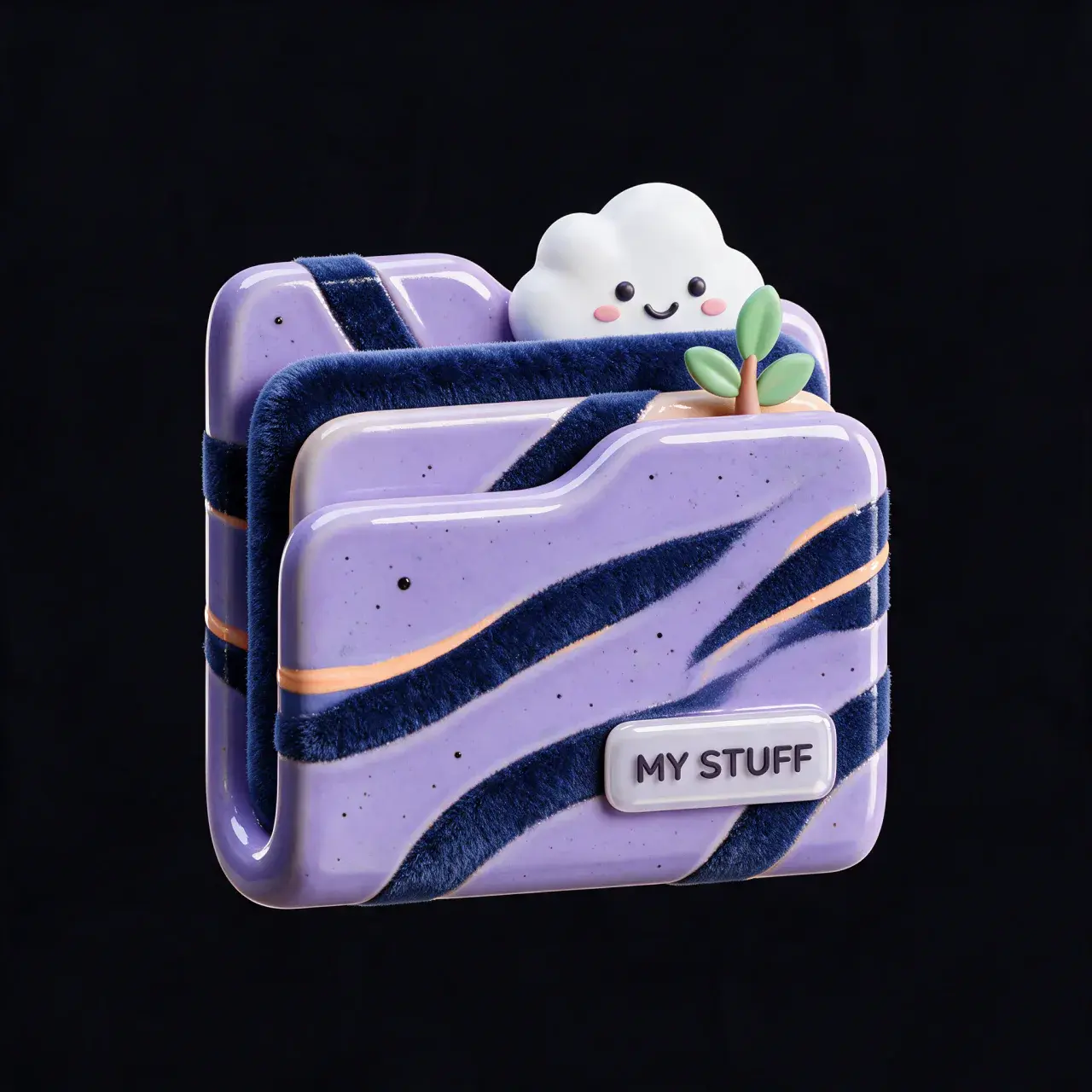
Seedream 5 Pro
Copy
Use the uploaded image as an immutable full-assembly reference. Preserve every visible input element exactly: complete silhouettes, proportions, layered objects, openings, decorative pieces, labels, text, logos, facial details, spacing and orientation. Reconstruct the solid surfaces from dense lavender ceramic #A997E8 with a silky satin glaze, microscopic firing pores, subtle mineral mottling and softly polished edge transitions. Integrate broad sweeping bands of ultra-short midnight-blue velvet flock #18244D directly into shallow recessed areas of the ceramic, forming irregular ribbon-like stripes that curve naturally around the source geometry. The flock bands contain real microscopic upright fibers, absorb light strongly and sit fractionally below the surrounding smooth ceramic, creating an extreme hard-soft roughness contrast. Add several narrow apricot ceramic lines #FFAA76 running beside selected blue bands and sparse glossy black pinpoints #17171B within the glaze for graphic tension. The striped composition should feel deliberately art-directed and asymmetrical rather than repetitive. Render the full preserved assembly floating against exact #000000, original camera retained, high-end upper-left-front illumination, clean lavender ceramic highlights, deep velvety blue separation and exceptional tactile CGI.
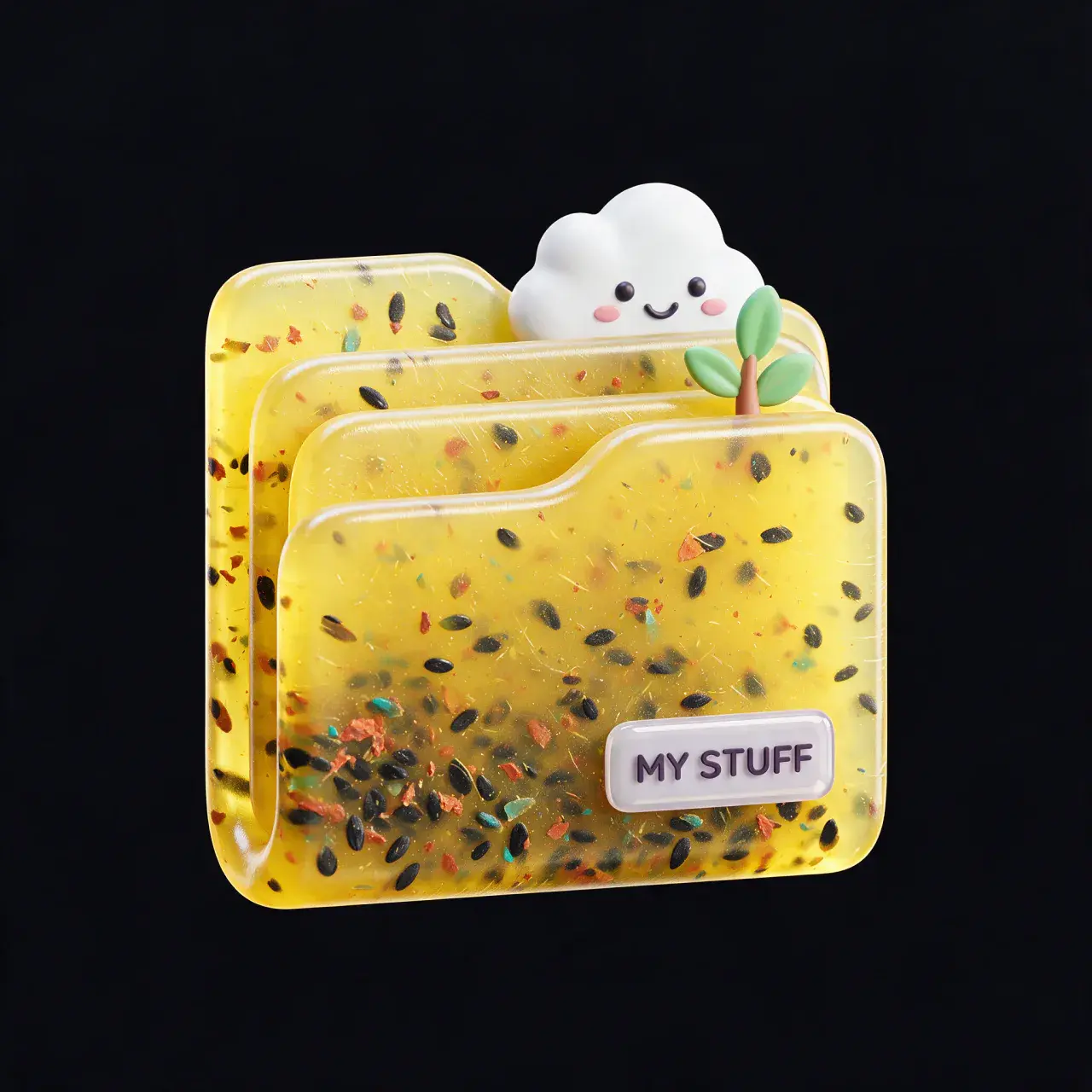
Seedream 5 Pro
Copy
Use the uploaded image as an immutable full-assembly reference. Preserve every visible source component exactly, including all main and secondary forms, openings, attachments, labels, text, graphic details, micro-objects, overlaps and source orientation. Form the surfaces from a vivid translucent citrus-yellow bioplastic #F4D72F with a slightly cloudy pearl body, fine cellulose microfibers and a soft waxy-satin skin. Throughout the material suspend hundreds of flat irregular black seed-like inclusions #1C1A1C, warm rust-red fragments #B94732 and sparse translucent turquoise flakes #36C7BD, all physically embedded at different depths. Near-surface inclusions remain sharp with visible thickness and softened edges, while deeper particles diffuse subtly through the yellow matrix. On broad areas create very fine directional compression lines in the bioplastic, almost like molded growth rings, providing secondary texture without competing with the inclusions. Keep ingredient density varied: dense clusters in selected areas, nearly pure yellow zones elsewhere. Render the exact assembly floating on pure #000000, source view preserved, refined directional material lighting, rich yellow transmission, beautiful embedded-particle depth and ultra-high-resolution contemporary CGI.
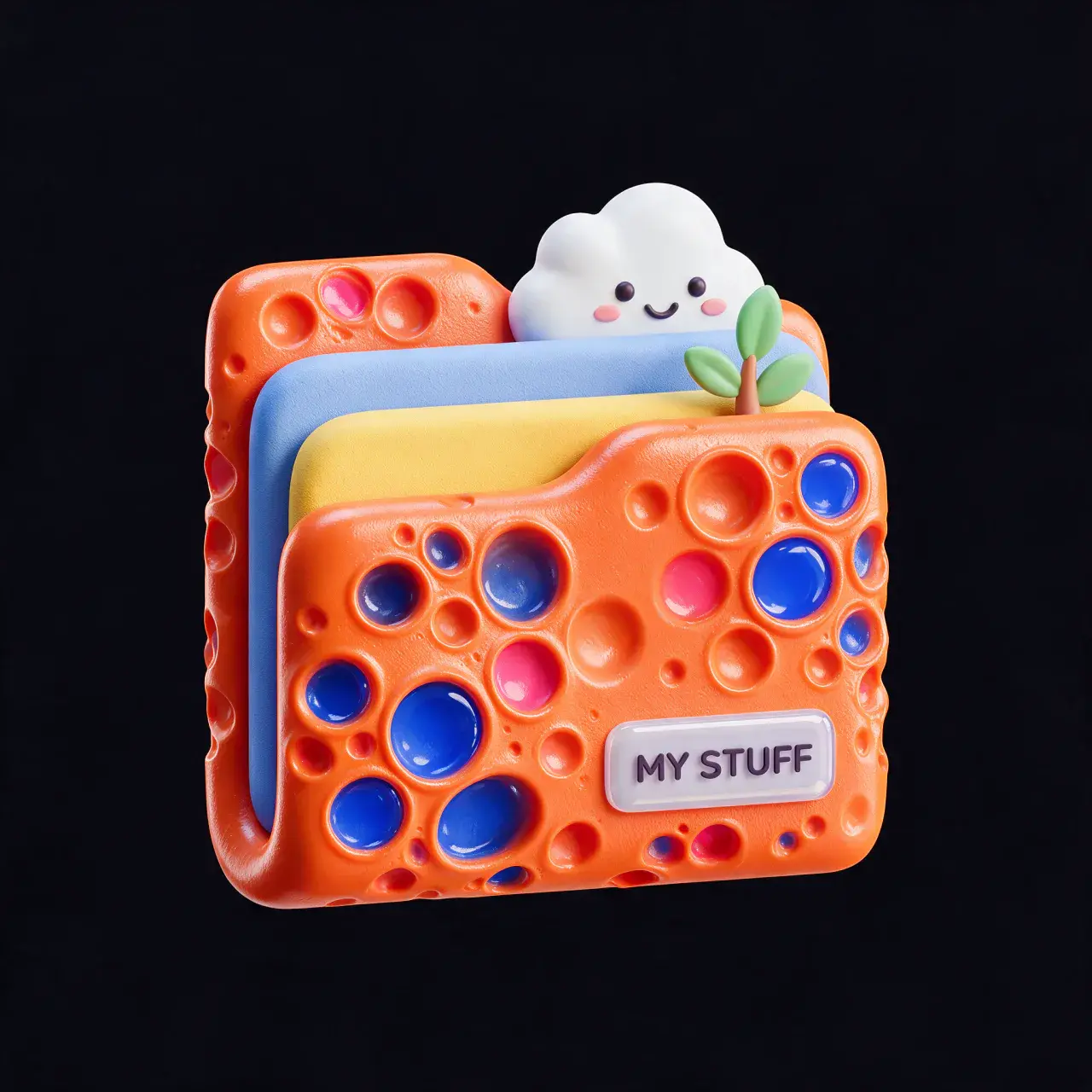
Seedream 5 Pro
Copy
Use the uploaded image as an immutable full-object assembly reference. Preserve absolutely every visible component, opening, layer, attachment, text element, logo, small decoration, relative position, overlap and orientation exactly as supplied. The final construction remains identical to the input; only material appearance and shallow surface articulation change. Build the surfaces from vivid patent elastomer in saturated tangerine #FF5B1F with a dense smooth body, fine molded grain and a controlled wet-satin finish rather than mirror gloss. Across broad areas form large shallow rounded blister depressions in an irregular but deliberate rhythm, with some zones almost clean and others containing clusters of 3–7 cavities. Fill selected blister interiors with thick translucent cobalt gel #244BFF, creating deep optical blue pools inside the orange material; a much smaller number use hot-pink #FF3B8D for punctuation. Each cavity has a subtly compressed orange rim and convincing molded depth while remaining fully inside the original geometry. Around labels, faces, openings and fine source components, reduce the blister scale until all details remain perfectly intact. Render on exact #000000, object floating freely, source view unchanged, soft controlled upper-left-front illumination, beautiful orange-to-blue material contrast, crisp cavity self-shadowing, clean gel reflections and exceptionally refined commercial CGI.
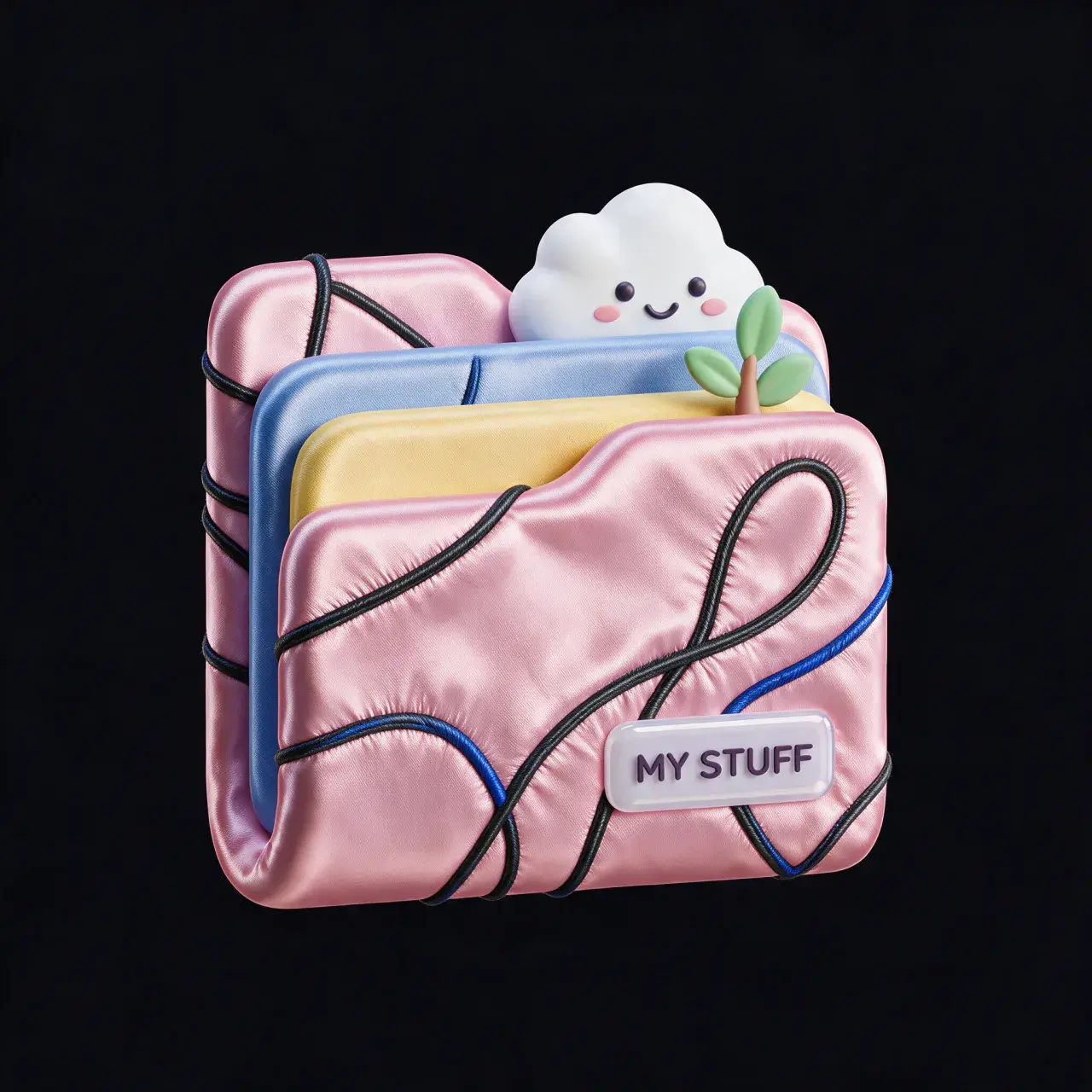
Seedream 5 Pro
Copy
Use the uploaded image as an immutable full-assembly reference. Preserve every visible source element exactly, including all separate parts, thicknesses, openings, negative spaces, layered pieces, text, labels, logos, attached objects, decorative details, overlaps and original orientation. Reconstruct suitable surfaces from tightly stretched satin in pearl pink #F3A7C8 with a faint blush highlight #FFD0DE and a subtle woven grain. Keep the structure firm rather than puffy: the original geometry remains exact while the textile skin follows it closely. Beneath the satin embed thick graphite cords #292B31 in a small number of large sweeping paths, creating smooth raised linear relief visible through the stretched fabric, similar to sculptural piping trapped below the surface. Let the cords loop around broad areas, intersect once or twice, then disappear under the satin, with tiny tension lines radiating naturally from sharper turns. Add only rare electric-blue cord segments #2F63FF as controlled interruptions. Preserve source text and small attached elements by routing the relief around them. Render floating against #000000, source view intact, elegant upper-left-front material illumination, precise satin highlights, rich textile shadow modeling, crisp cord relief and premium fashion-CGI fidelity.

Seedream 5 Pro
Copy
Use the uploaded image as an immutable full-object reference. Preserve every visible component, silhouette, proportion, cutout, opening, layered part, attachment, label, text, logo, decoration, spacing, overlap and orientation exactly. Transform the existing material into saturated cobalt ceramic #2746D8 with a silky satin glaze, subtle firing pores, microscopic mineral speckling and a dense sculptural body. Introduce several bold flowing seams across broad areas, carved as narrow recessed channels that split and reconnect like deliberate graphic fault lines. Fill the channels with translucent peach-orange glass #FF9B63, slightly darker #F26B46 in deeper sections, so the molten-glass material appears fused into the ceramic after firing. The glass should pool gently at junctions, produce smooth optical depth and remain completely flush or slightly recessed. Keep the ceramic areas large and calm; the seams are the single dominant visual gesture. Around text, logos, faces and tiny structural details, taper the seams away completely. Render the preserved assembly against pure black #000000, floating freely, exact source camera, broad soft upper-left-front illumination, crisp ceramic microtexture, luminous peach glass depth without glow, refined shadows and ultra-high-resolution CGI.

Seedream 5 Pro
Copy
Use the uploaded image as an immutable full-object assembly reference. Preserve every visible component and detail exactly: outer contours, proportions, thicknesses, openings, internal shapes, layered parts, labels, readable text, logos, attachments, decorations, overlap and orientation. Cast suitable regions from deep transparent amber resin #D76816 with brighter honey edges #F6A43A and a subtle smoky core #8D3F18. Inside the resin embed a limited number of large smooth optical lens-cells in saturated cobalt #214CFF, shaped as rounded discs and soft capsules at different depths. Each lens should magnify and distort the amber material behind it, with crisp boundaries near the surface and stronger optical compression deeper inside. Use only 5–15 large cells per broad component, giving the material a bold contemporary rhythm rather than micro-speckle noise. Add a few tiny champagne bubbles #F3C77C trapped around selected lens edges for physical casting detail. The exterior stays polished and structurally identical to the source. Render the complete preserved assembly floating against pure black #000000, exact source camera, controlled upper-left-front illumination, rich amber transmission, deep cobalt optical contrast, sophisticated internal refraction and ultra-clean premium CGI.
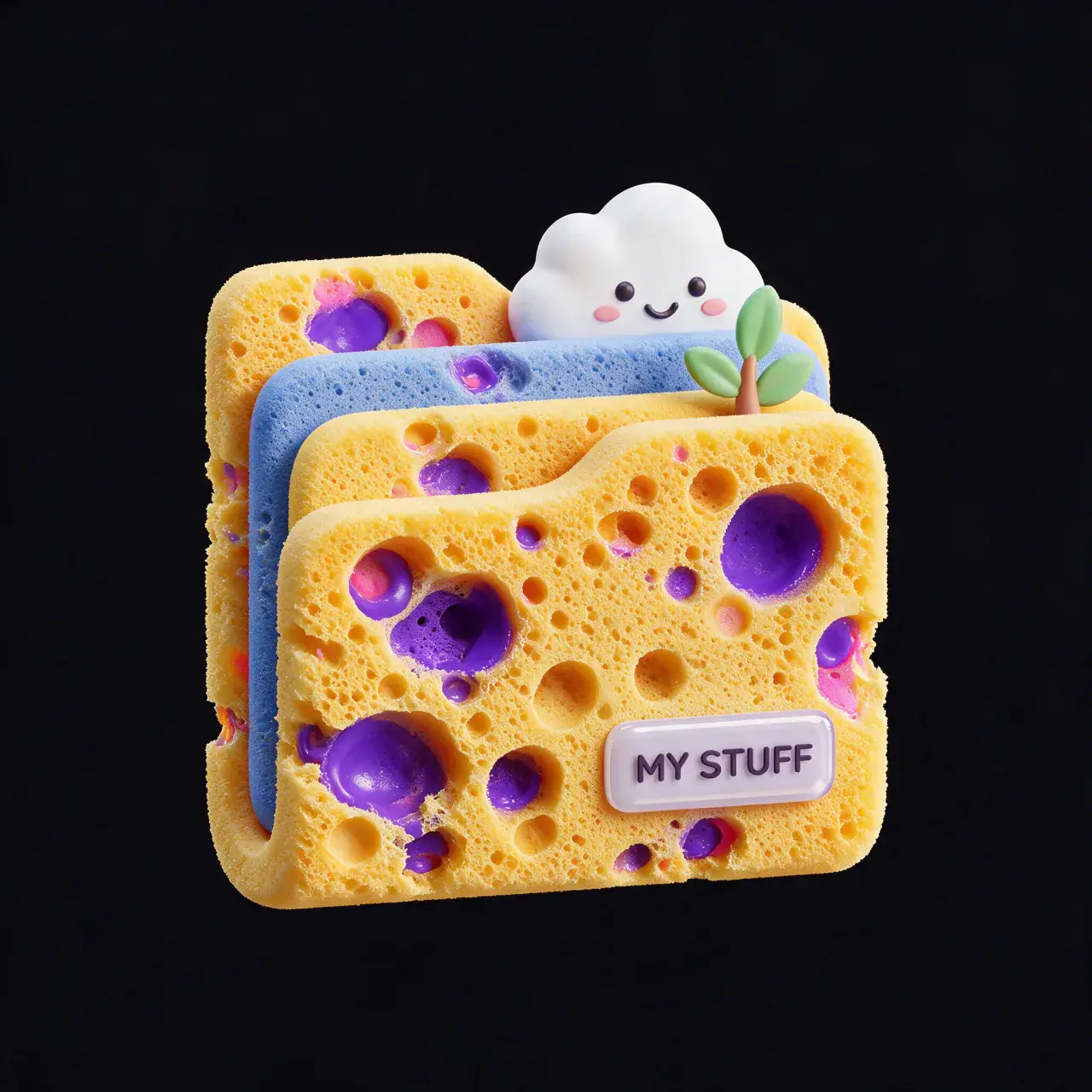
Seedream 5 Pro
Copy
Use the uploaded image as an immutable full-object assembly reference. Preserve the complete source construction exactly: all silhouettes, proportions, thicknesses, openings, layered pieces, labels, text, logos, attachments, decorative details, overlap and original orientation remain intact. Transform suitable material regions into dense microcellular foam in saturated mango yellow #F8B81E with lighter saffron #FFD34D on exposed surfaces and a finely porous dry finish. Create a controlled field of larger smooth cavities only across broad areas, each cavity cut inward into the foam rather than protruding outward. Line the deepest parts of selected cavities with glossy violet elastomer #6A38D9 and rare hot-pink #FF4B9B accents, making the colorful interiors feel like a second bonded material beneath the foam shell. Vary cavity scale and clustering so the surface has large dramatic voids alongside calm porous areas. Show fine torn cellular structure around a few cavity edges for physical realism while keeping the overall object pristine. Render the preserved assembly floating on #000000, exact source camera, refined directional illumination, strong foam microshadowing, clean violet depth and high-end tactile CGI.

Seedream 5 Pro
Copy
Transform the uploaded object into a premium pastry material study while keeping the exact silhouette, proportions, volume changes, attached components and every structural source detail fully intact. The uploaded object remains the exact blueprint. Rebuild the object as airy golden dough in #C9874B, #E0B06C and #F0C98B with a tender baked crumb visible at selected edges, coated in a thick glossy glaze in #F7B6C9, #FF6AA8 and #FFF0C7, with a few slow icing drips following the form, scattered sprinkles in #5ED4FF, #FFD84F, #F2659F, #8E6CFF and #73D86B, subtle sugar shine, rich pastry realism, elegant material readability, refined studio lighting, deep black background #000000, floating object, centered luxury render.

Seedream 5 Pro
Copy
Transform the uploaded object into a premium material exploration while keeping the exact silhouette, proportions, internal spacing, cutouts, attached components and every source feature fully intact. The uploaded object remains the exact structural blueprint. Rebuild the surfaces as dense translucent smoked resin with rich depth, colored in #341D4C, #5E2C73, #C24B88 and #F18A5B, with suspended flowing pigment clouds, delicate trapped microbubbles, floating glitter dust in #FFD66B and #F6D9F0, faint liquid-like streaks frozen in motion, varied opacity zones, polished glossy outer skin, subtle internal layering and depth shifts, visually sophisticated material behavior, highly refined studio lighting, controlled speculars, pure black background #000000, object levitating, luxury product render quality, ultra-detailed and clean.
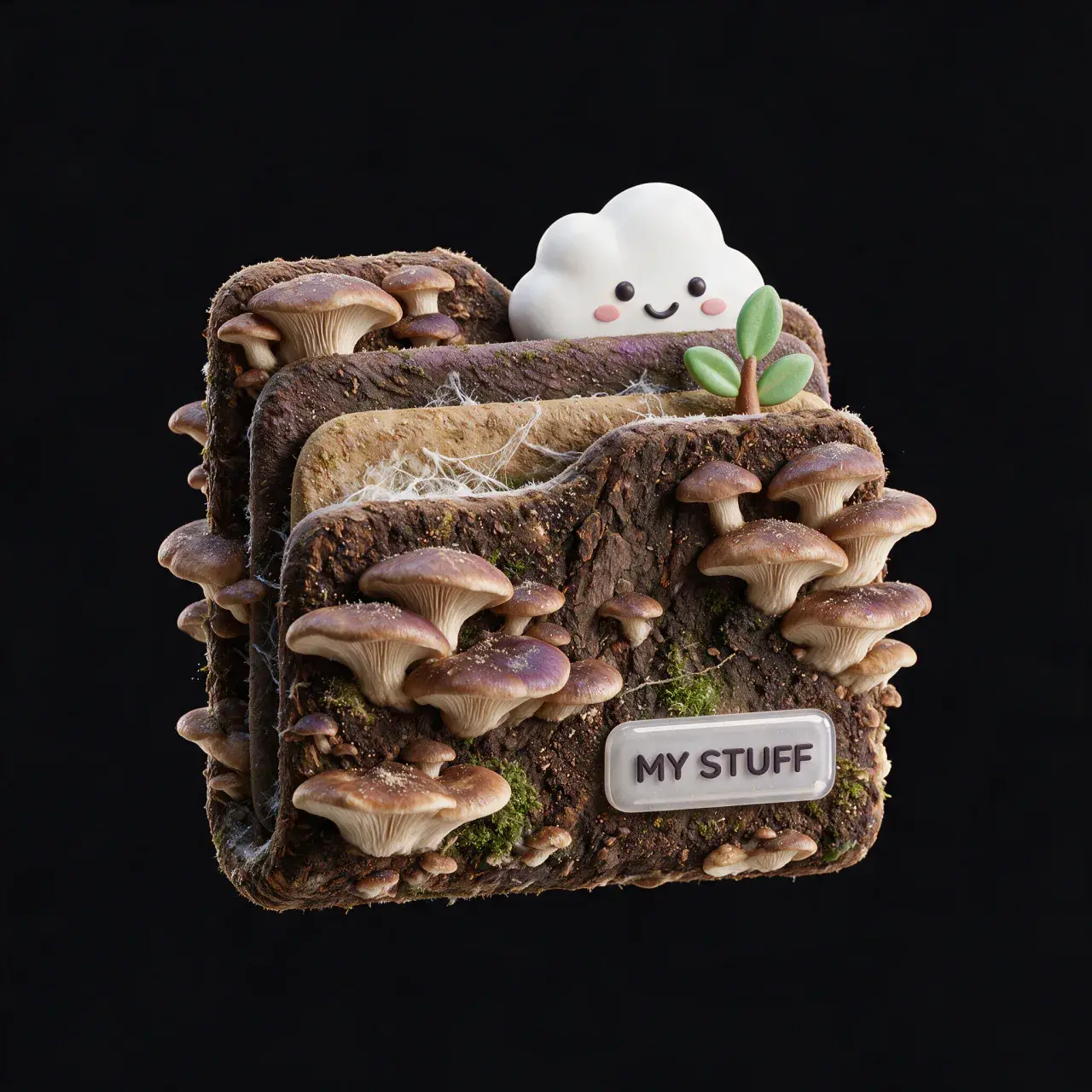
Seedream 5 Pro
Copy
Transform the uploaded object into a hyper-real material study while keeping the exact silhouette, proportions, curvature, cutouts, decorative attachments and every structural detail from the uploaded source fully intact. Treat the source object as the exact form blueprint. Build the material as a dense fungal ecosystem with a dark bark-and-soil base in #4C382C, #6A4B3C and #2F241D, layered shelf mushrooms and rounded caps in #7A5B48, #A17863, #8D6A86 and #C2A48E, pale gills peeking from underside edges in #E8DDCF, thin mycelium threads nesting inside seams, damp moss pockets in #5B743B, soft organic micro-fuzz, realistic spore dust accumulation, subtle moisture sheen on fleshy cap surfaces, visually rich macro structure with tactile realism, premium studio lighting that reveals every surface behavior, deep shadow definition, pure black background #000000, floating object, centered luxury render.

Seedream 5 Pro
Copy
Transform the uploaded object into a hyper-detailed premium material study while keeping the exact silhouette, proportions, thickness, cutouts, layered parts, accessory elements and every secondary detail from the source object fully intact. The uploaded object remains the exact structural blueprint of the final form. Rebuild every visible surface as an ancient forest composite made of cracked bark plates in #6B4A2E, #8A6545 and #4B3525, weathered driftwood ridges, exposed wood grain, tangled root fibers weaving through the seams, dense velvety moss in #4E6B32, #6E8E43 and #8DA35B growing inside crevices and lower pockets, tiny moist soil deposits packed into recessed areas, subtle lichen blooms in #C7D0A8, miniature wild mushrooms in #7B5A43 and #9A7A65 emerging from natural junctions, delicate micro-dew on selected moss tips, physically rich large-scale and micro-scale realism, controlled high-end studio lighting from upper-left-front, deep readable contrast, refined highlights that follow the form, pure black background #000000, floating object, centered premium composition, ultra-sharp focus, luxury material render quality.
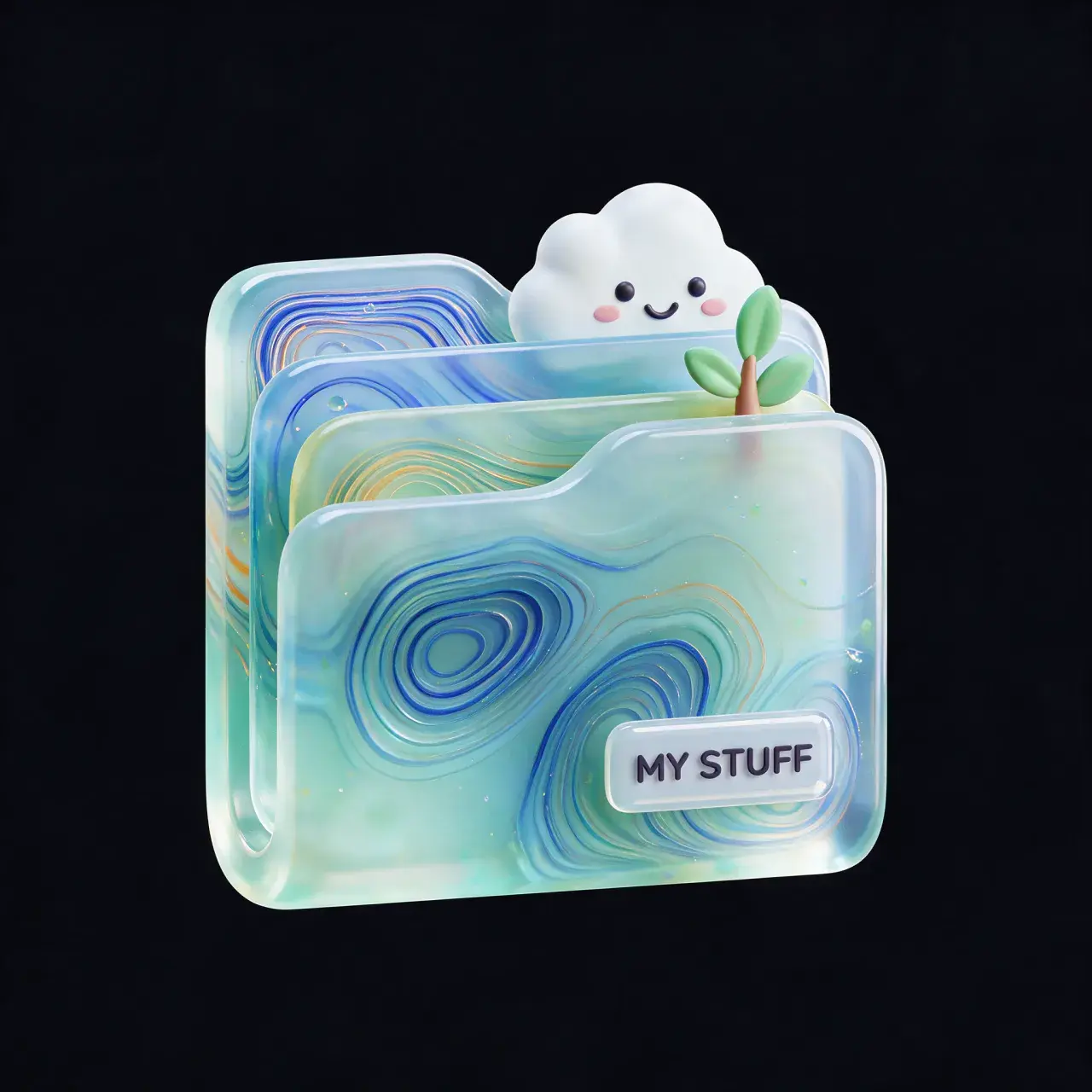
Seedream 5 Pro
Copy
Use the uploaded image as an immutable full-assembly blueprint. Preserve every visible source element one-to-one: complete object hierarchy, silhouettes, proportions, openings, layered construction, attachments, text, logos, labels, decorative details, micro-features, overlap relationships, spacing and viewing orientation. Nothing in the original assembly is traded for the material effect; complex source regions receive finer material detail while retaining their exact construction. Transform the object into a dense semi-translucent milky-aqua cast resin with soft opalescent depth shifting subtly between pale turquoise, frosted mint and icy cyan. Inside the resin build dozens of nested topographic rings suspended at several physical depths, formed from thin translucent bands in deep cobalt, ultraviolet blue and sparse warm apricot. The bands follow organic contour-map logic, bending and splitting around the existing geometry while staying entirely inside each source component, producing striking concentric depth patterns visible through front surfaces, side edges and curved sections. Near-surface rings remain crisp and saturated; deeper bands soften, enlarge optically and overlap through refraction, producing complex moiré-like interior movement. Add tiny iridescent microflakes and occasional pale-lime translucent dots trapped between selected contour layers, with large calm areas of clear milky resin retained for visual hierarchy. The external surfaces remain smooth, premium and geometrically faithful, with subtle frosted-to-polished transitions only where they enhance the optical effect. Render the preserved assembly floating centrally in infinite pure black #000000, source camera unchanged, soft controlled upper-left-front illumination with gentle fill, refined internal transmission, beautifully readable edge depth, elegant highlights and exceptionally high-resolution contemporary CGI.
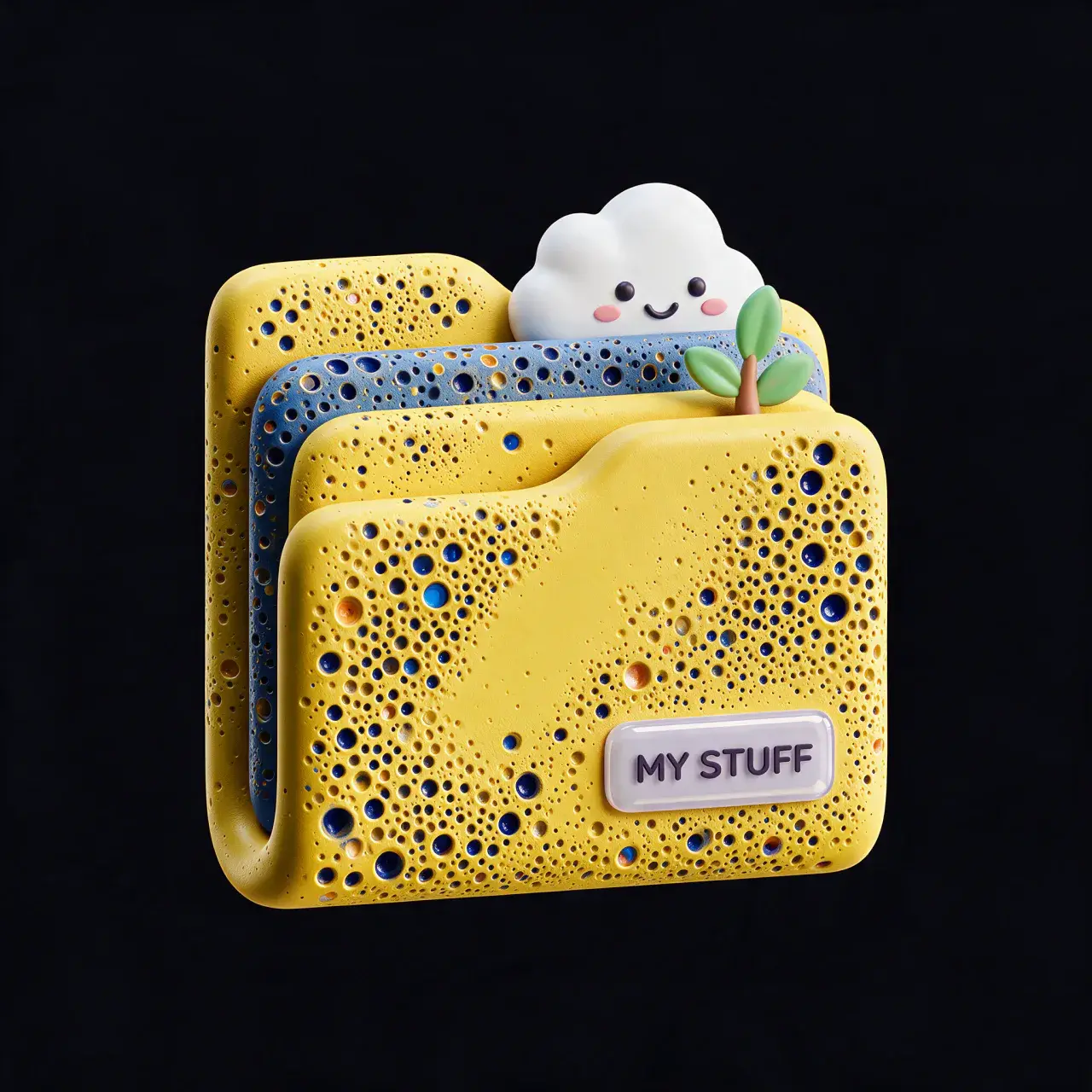
Seedream 5 Pro
Copy
Use the uploaded image as an immutable full-assembly reference. Preserve the entire visible source with exact component count, silhouettes, proportions, thicknesses, openings, negative spaces, layered pieces, attachments, labels, text, logos, illustrations, decorative details, depth relationships and original orientation. The material transformation remains secondary to complete input fidelity and automatically simplifies around complex source details. Reconstruct the surfaces from saturated acid-yellow soft-touch elastomer with a rich dry satin finish, fine microscopic grain and subtle tactile softness without altering the existing geometry. Across broad uninterrupted zones introduce an art-directed field of thousands of tiny recessed microcraters ranging from needle-point pits to small perfectly rounded wells, with density shifting dramatically between tightly packed clusters and large clean yellow areas. Line selected deeper craters with glossy midnight-indigo enamel and occasional electric-blue translucent gel, while a much smaller number contain vivid orange or milky-pink centers as punctuation. Allow crater groupings to create broad directional gradients across individual components rather than an even procedural pattern. Around each colored cavity, the yellow elastomer shows an ultra-fine compressed lip and subtle roughness transition, making the surface feel precision-molded rather than perforated randomly. Preserve every label, face, text element, opening and small attachment through automatic reduction of crater scale and density. Render the full assembly centered and freely levitating against exact black #000000 with the uploaded viewpoint preserved, refined upper-left-front soft illumination, deep but readable shadows, crisp crater self-occlusion, rich yellow-indigo contrast and premium ultra-detailed CGI material quality.
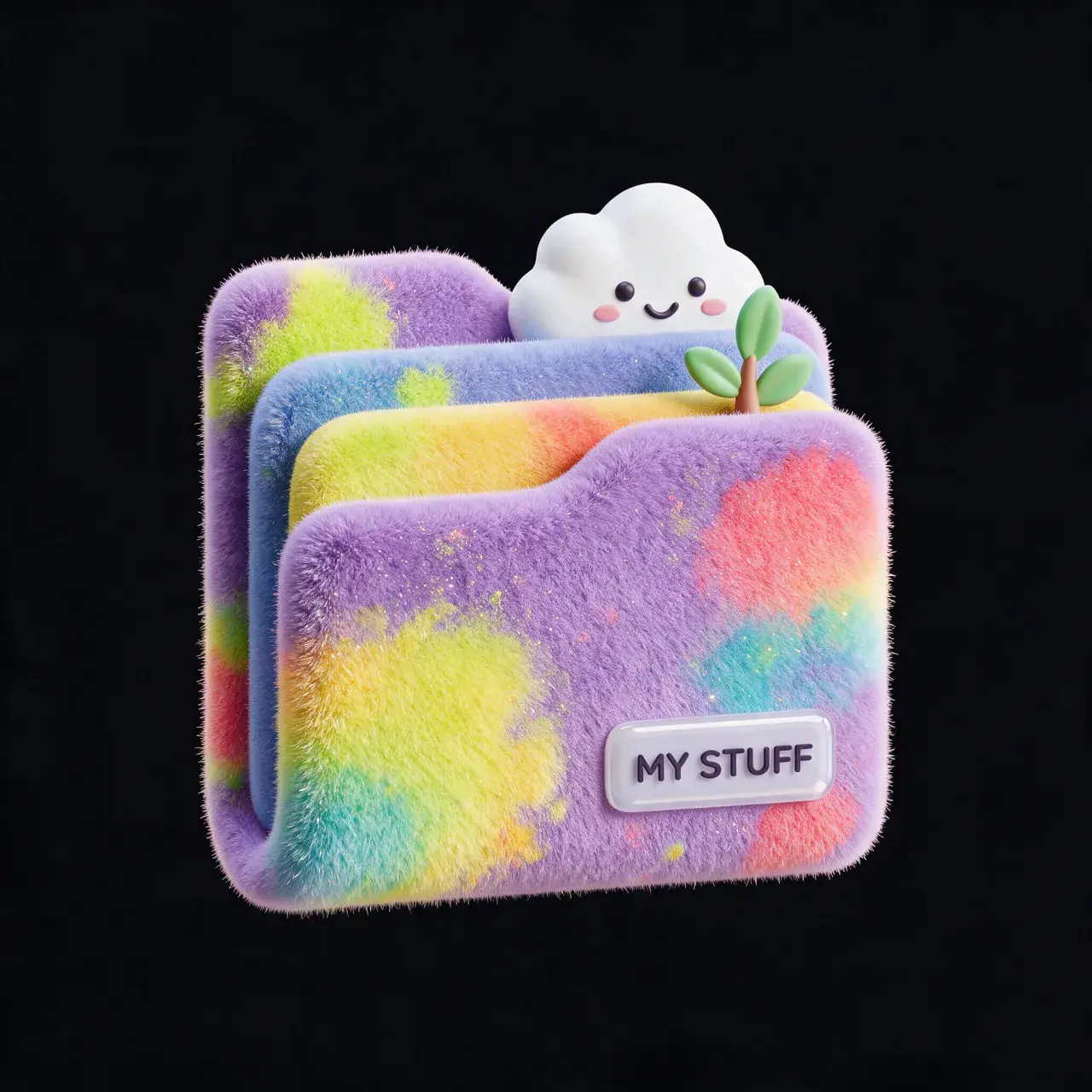
Seedream 5 Pro
Copy
Use the uploaded image as an immutable full-object assembly blueprint. Reproduce every visible component and fine detail exactly, maintaining all silhouettes, proportions, openings, layered structures, attachments, labels, text, logos, facial details, decorative objects, positions, overlap, spacing and depth order. Keep the source camera direction unchanged and let the material adapt around delicate elements rather than simplifying the input. Cover the existing geometry in an extremely fine powdered lilac flock made from millions of microscopic upright fibers, shorter and denser than conventional fur, creating a smooth velvety suede-like body with exceptionally soft edge diffusion. Across this tactile surface introduce large irregular airbrushed chromatic blooms in fluorescent chartreuse, warm butter yellow, saturated coral pink and icy cyan, but treat the color as dyed fiber rather than painted surface: each bloom penetrates the flock, feathers softly into the surrounding lavender and contains subtle internal tonal variation from root to fiber tip. Keep the color placement asymmetric and sophisticated, with one or two larger gradient clouds per component and a handful of smaller vivid punctuation spots rather than generic rainbow coverage. Add extremely sparse reflective microfibers that catch tiny pinpoint highlights inside selected color zones, while the majority of the surface remains deeply matte and tactile. Fine source details receive ultra-short pile and lower color density so they remain perfectly readable. Render as a high-end floating CGI material study on pure #000000, original composition preserved, soft controlled upper-left-front illumination with delicate fiber separation, creamy highlights, beautifully saturated color transitions and exceptionally clean photorealistic microdetail.
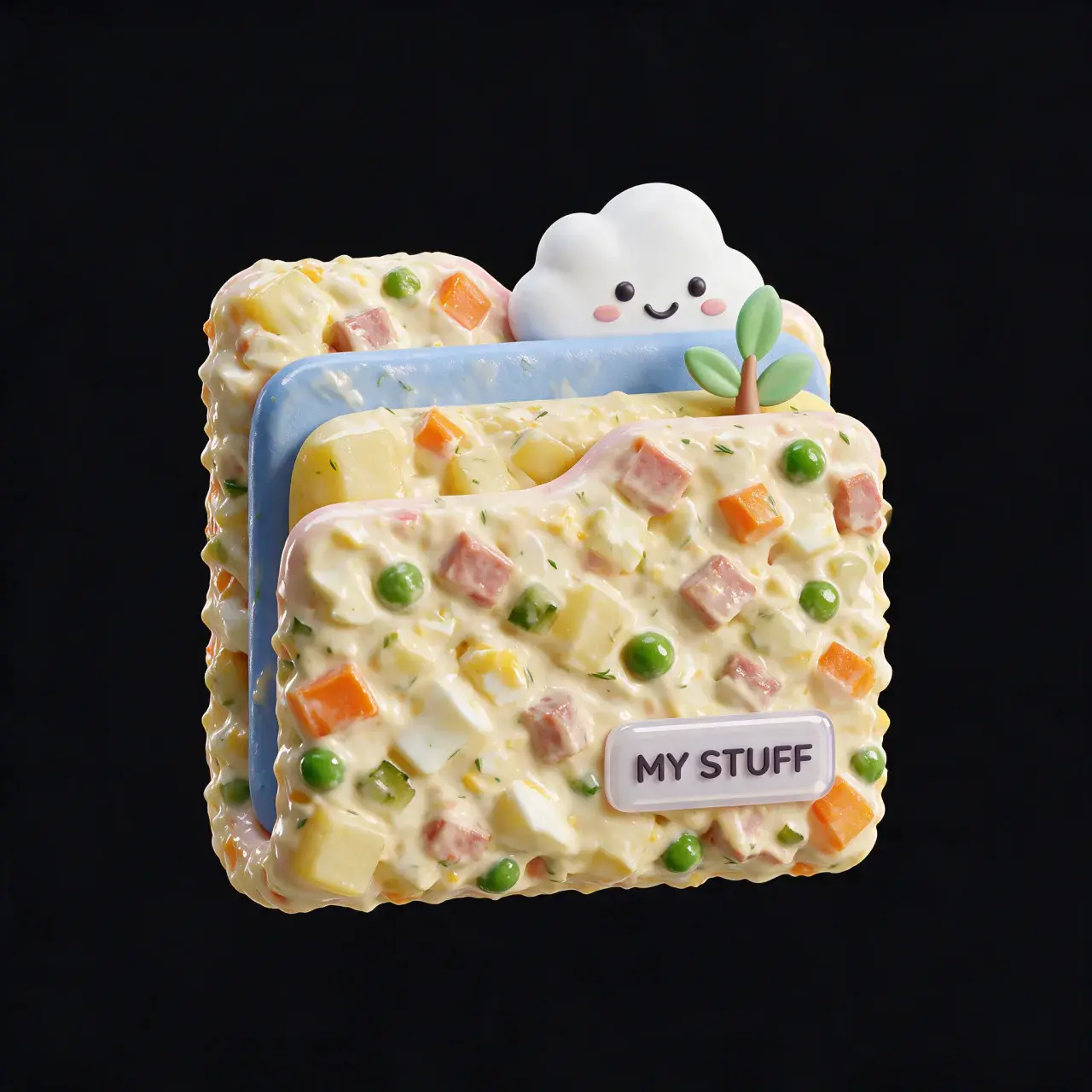
Seedream 5 Pro
Copy
Use the uploaded image as an immutable full-assembly reference. Preserve every visible source component exactly, including all silhouettes, proportions, openings, layered pieces, attachments, labels, text, logos, facial details, decorations, overlaps, spacing and original orientation; nothing may disappear, merge, move or be redesigned. Only replace the material appearance, adapting the texture scale around delicate source details so the full input remains readable. Transform the object into a hyper-detailed Olivier salad material built from a dense creamy mayonnaise matrix visibly packed with unmistakable diced ingredients: small matte potato cubes in warm ivory-yellow, bright carrot cubes in saturated orange, glossy green peas, pale egg-white fragments with occasional soft yolk-yellow pieces, muted rosy sausage cubes, tiny emerald pickle cubes and sparse dill-green herb flecks. The ingredients must be physically embedded throughout the entire visible volume, not printed on top, with some pieces partially protruding from the creamy surface and others appearing deeper beneath a glossy mayonnaise coating. Make the mixture extremely rich and tactile, with believable ingredient density, tiny moisture highlights, soft compressed pockets where cubes press against one another, subtle creamy folds and occasional glossy pea surfaces catching sharp highlights. Keep broad areas visibly packed so the material is immediately recognizable as Olivier salad at first glance. Reduce ingredient size near text, facial details and tiny source elements without removing them. Render the complete preserved assembly centered and floating against pure black #000000, exact source viewing direction, no floor, pedestal, support or cast shadow. Use refined soft upper-left-front illumination with balanced fill, appetizing creamy highlights, crisp individual ingredient definition, strong color separation and ultra-high-resolution premium CGI.
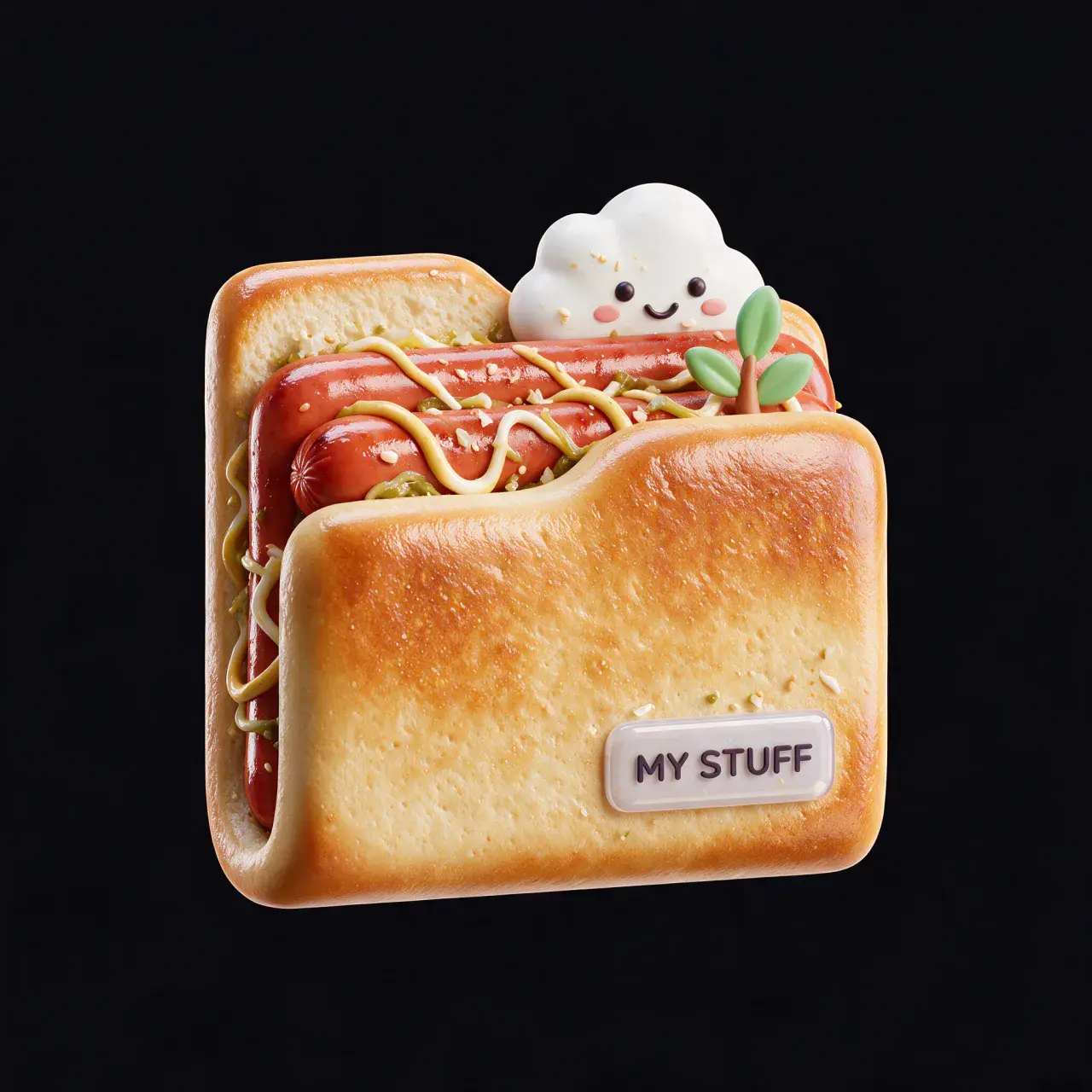
Seedream 5 Pro
Copy
Use the uploaded image as an immutable full-object reference and preserve absolutely every source element exactly as provided: identical overall silhouette, all separate parts, layers, overlaps, holes, cutouts, labels, text, icons, small decorative details, relative spacing, orientation and proportions. Nothing may be removed, merged, enlarged, simplified or redesigned. The full source assembly must remain perfectly intact, including tiny secondary elements. Only replace the material styling. Transform the object into a highly stylized premium hot-dog-inspired material system with a contemporary design language. The main body should feel like glossy toasted brioche in a warm gradient from buttery beige to golden amber with subtle baked micro-porosity and a soft lacquered finish. Secondary parts should read as sleek sausage-like inserts in a rich smoked paprika to coral-red tone with taut semi-gloss casing reflections. Add elegant condiment-inspired surface behaviors that stay strictly inside the existing geometry: thin flowing ribbons and micro-drizzles in pale dijon yellow, ivory aioli and muted relish green, wrapping around existing contours or sitting inside grooves without changing the structure. Introduce tiny embedded garnish details such as sesame-like pale specks, crisp onion crumbs and microscopic pickle-green flecks, but keep them sparse near delicate source features so all original details remain readable. The result should feel premium, playful and hyper-designed rather than literal food photography. Render as a centered ultra-detailed CGI material study on pure black #000000, exact source viewing direction, floating freely with no floor, pedestal, support, wire or cast shadow, with controlled upper-left-front studio lighting, smooth highlight rolloff and exceptional material detail.
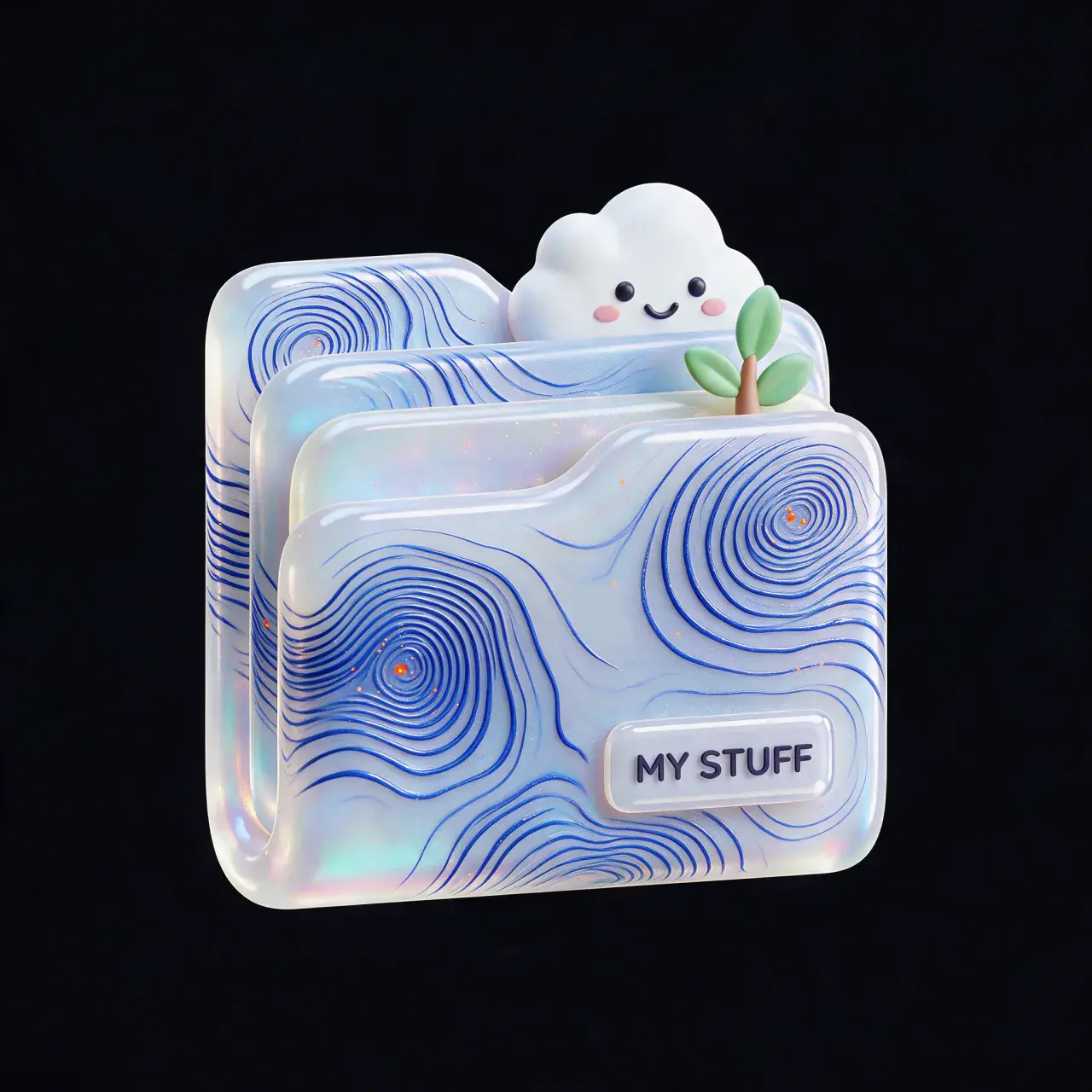
Seedream 5 Pro
Copy
Use the uploaded image as an immutable full-assembly reference. Preserve every visible source element one-to-one: component count, silhouette, proportions, openings, layered pieces, attachments, labels, text, decorative objects, relative position, overlap and orientation. Nothing may be removed, moved, merged or redesigned. Replace only the material. Form each existing component from dense pearl-white semi-translucent resin with a subtle opalescent response shifting between icy cyan, pale violet and soft pink. Across larger surfaces introduce a highly refined system of very shallow topographic contour ridges in saturated electric blue, forming continuous nested lines that bend around the existing geometry while remaining fully contained inside the source silhouette. The blue relief should vary in line width and spacing, occasionally tightening into dense fingerprint-like swirls and then opening into broad calm zones. Add sparse vivid-orange microdots only inside a few contour valleys for sharp visual accents. Keep all relief extremely shallow and automatically fade it around fine source details, text, logos, openings and attachments. Render the complete preserved assembly centered and floating against exact #000000 with no floor, pedestal or external cast shadow, preserve the source view exactly, soft controlled upper-left-front material illumination, elegant opalescent resin, crisp cobalt relief, rich micro-shadowing and premium ultra-high-resolution CGI.
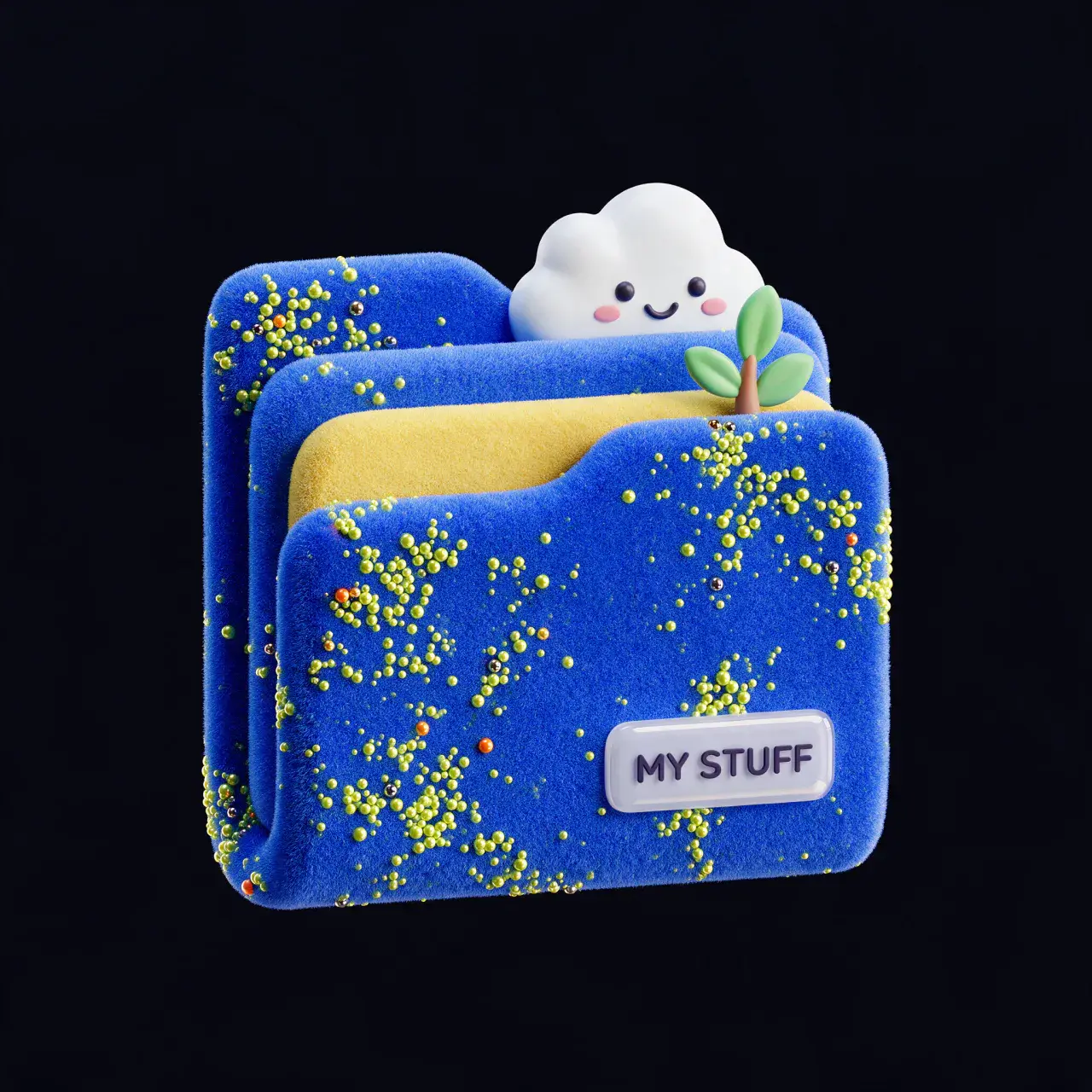
Seedream 5 Pro
Copy
Use the uploaded image as an immutable full-assembly reference. Preserve every source object, attachment, opening, label, text, decoration, position, overlap and orientation exactly; no component can disappear, simplify or change identity. Apply only a new material treatment. Reconstruct all suitable surfaces from saturated cobalt-blue flock with extremely short dense fibers and a rich velvety matte finish. Embed clusters of tiny glossy chartreuse pearl spheres into shallow recessed pockets across broad surfaces, arranged as irregular constellations rather than an even dot pattern. Mix occasional hot-orange and mirrored chrome spheres into selected clusters, keeping chartreuse dominant. Each constellation should vary strongly in density and scale: tight star-like clusters, sparse arcs and isolated pearls, separated by large calm cobalt areas. Create subtle compressed fiber halos around each embedded sphere so every element feels physically seated inside the material. Automatically reduce or omit pearl clusters around text, graphics, small components and other critical source details. Render as a premium centered 3D material study floating on pure black #000000 with no floor or external cast shadow, exact original camera view, controlled upper-left-front illumination revealing individual cobalt fibers and juicy pearl highlights, deep blacks, smooth exposure, no glow, no studio equipment and exceptional CGI detail.
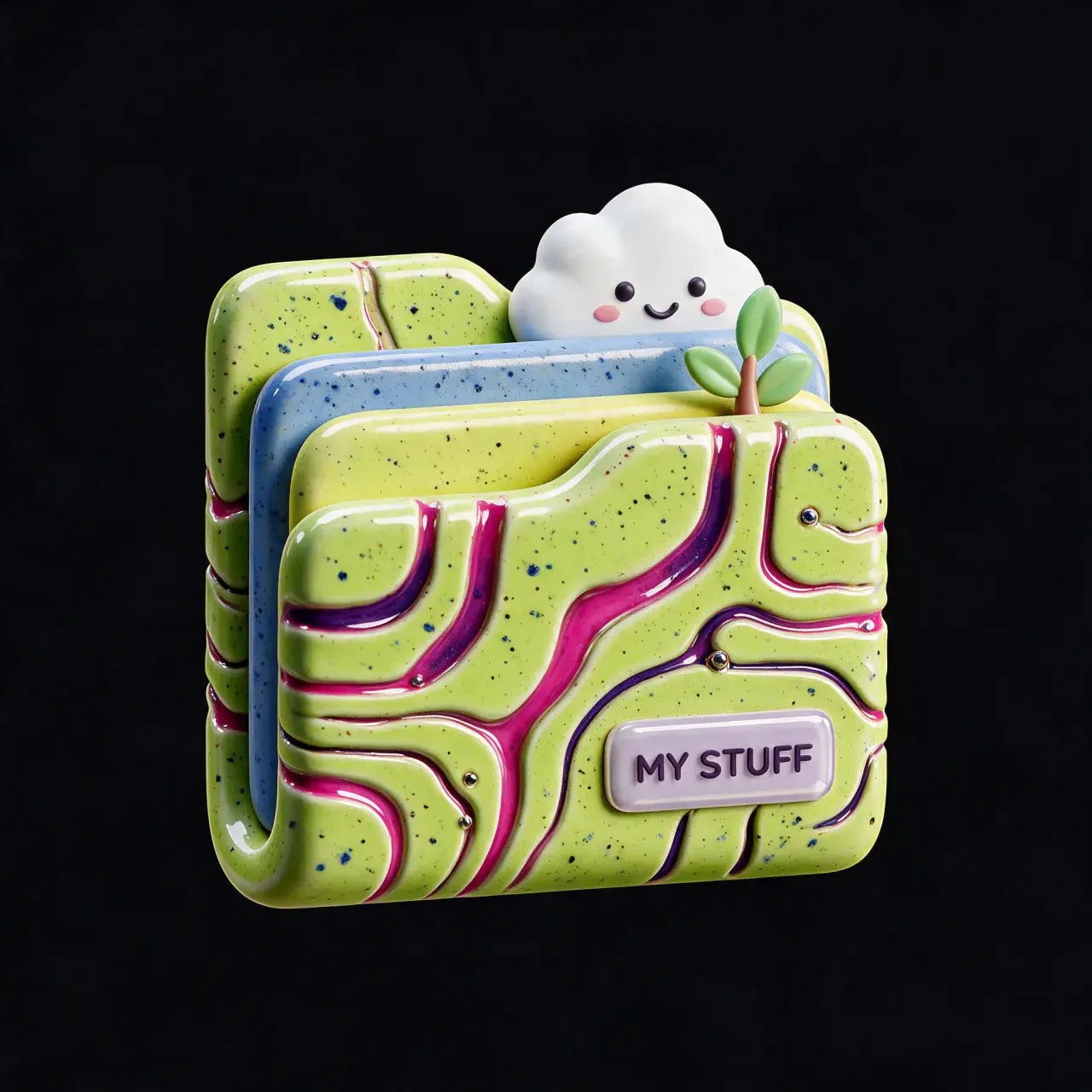
Seedream 5 Pro
Copy
Use the uploaded image as an immutable full-assembly reference. Preserve the complete source exactly, including every visible component, subcomponent, opening, attachment, decorative object, text, logo, facial or graphic detail, relative position, overlap and orientation. Only the material appearance may change. Reconstruct the surfaces from intensely saturated acid-lime fine ceramic with a dense satin fired finish and tiny scattered cobalt and black mineral freckles throughout the body. Carve broad surfaces with a controlled system of shallow flowing channels that behave like topographic lines, splitting, merging and bending around the source geometry without ever changing its silhouette. Fill selected channels with glossy translucent hot-magenta enamel, others with deep violet glaze, leaving several grooves empty and shadowed for stronger dimensional rhythm. The enamel should pool slightly darker in deeper sections and thin toward channel edges, creating convincing optical depth against the dry lime ceramic. Add rare small chrome enamel beads at a few channel junctions as precise highlights. Automatically simplify the channel network near text, fine attachments, tiny holes and intricate source details. Floating centered premium CGI on #000000, no floor, support or external cast shadow, exact source viewing direction, controlled upper-left-front material lighting, strong lime-magenta separation, crisp groove depth, restrained natural highlights and exceptional surface detail.
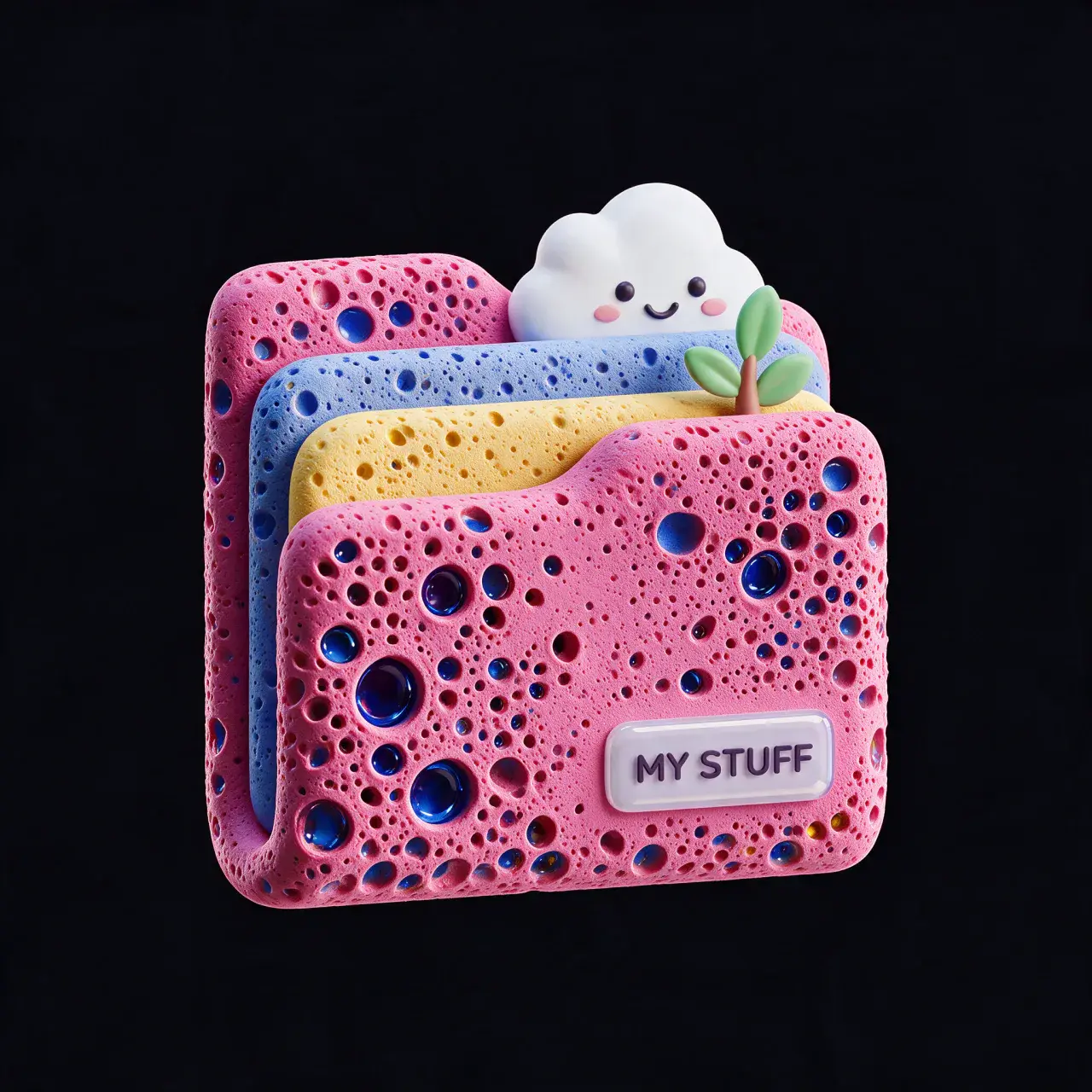
Seedream 5 Pro
Copy
Use the uploaded image as an immutable full-assembly reference. Preserve every visible source element, exact component count, silhouette, proportions, layering, openings, attachments, text, logos, decorations, overlap and orientation; material styling may never remove or replace any source detail. Apply the material independently to all existing components. Reconstruct the surfaces from saturated hot-pink technical rubber with a dense velvet-matte finish and extremely fine molded grain. Create hundreds of precisely recessed irregular pores across broad surfaces, varying from tiny pinholes to larger smooth organic cavities; every cavity remains inset into the original geometry rather than altering the outline. Line selected deeper pores with translucent electric-cobalt glass, some with a glossy dark-purple interior and rare acid-yellow centers, so the surface reads as a complex engineered porous composite rather than decorative dots. Around each glass-lined cavity create an ultra-fine compressed rubber lip with believable molded tension. Use strongly varied pore density, allowing dense clusters to dissolve into almost untouched matte areas for a deliberate contemporary rhythm. Preserve every original small detail by reducing or omitting pores locally. Isolated premium CGI material study on exact #000000, complete assembly floating freely, no floor or cast shadow, exact source camera direction, soft controlled upper-left-front illumination, deep saturated pink, clean cobalt optical highlights, rich cavity occlusion and extremely crisp high-frequency material definition.
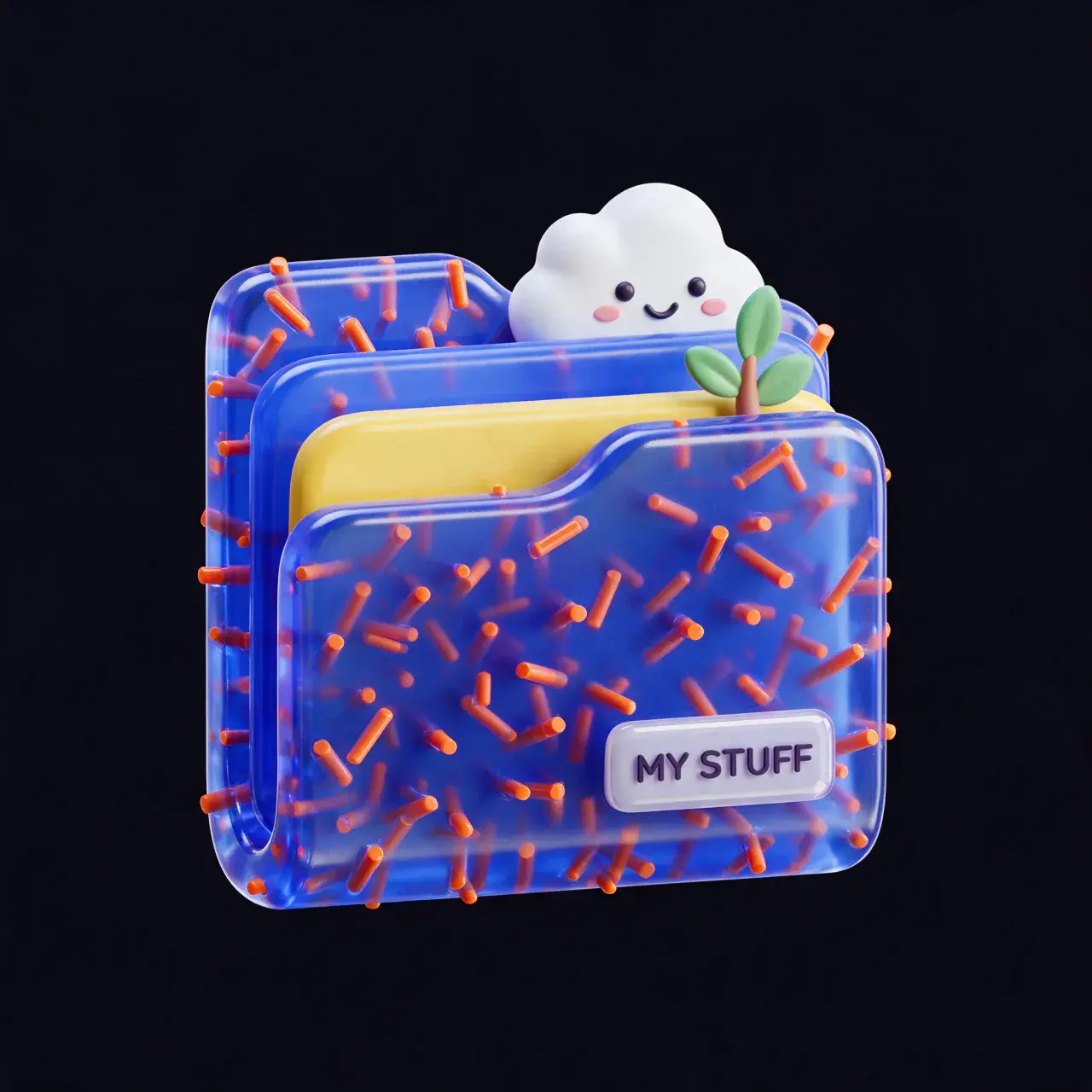
Seedream 5 Pro
Copy
Use the uploaded object as the exact identity reference. Preserve its primary silhouette, proportions, openings, negative spaces and overall orientation so it remains unmistakably the same object. Reconstruct the form from dense translucent electric-cobalt resin with polished optical depth, packed with hundreds of short vivid-orange cylindrical pins physically embedded through the volume at different depths and angles. Some pins sit flush beneath the surface, others appear deeper and optically distorted, creating a bold engineered material rather than a decorative pattern. Keep the exterior geometry clean and controlled; the visual complexity comes from the embedded pins and their depth. Isolated centered 3D material study on pure black #000000, floating freely with no floor or cast shadow. Clean near-frontal product view with subtle visible thickness. Soft controlled directional illumination from upper-left-front, balanced shadow detail, restrained natural specular response, deep blacks, crisp microgeometry and premium photorealistic CGI. No visible light sources, studio equipment, rectangular reflections, bloom, glow or environment.
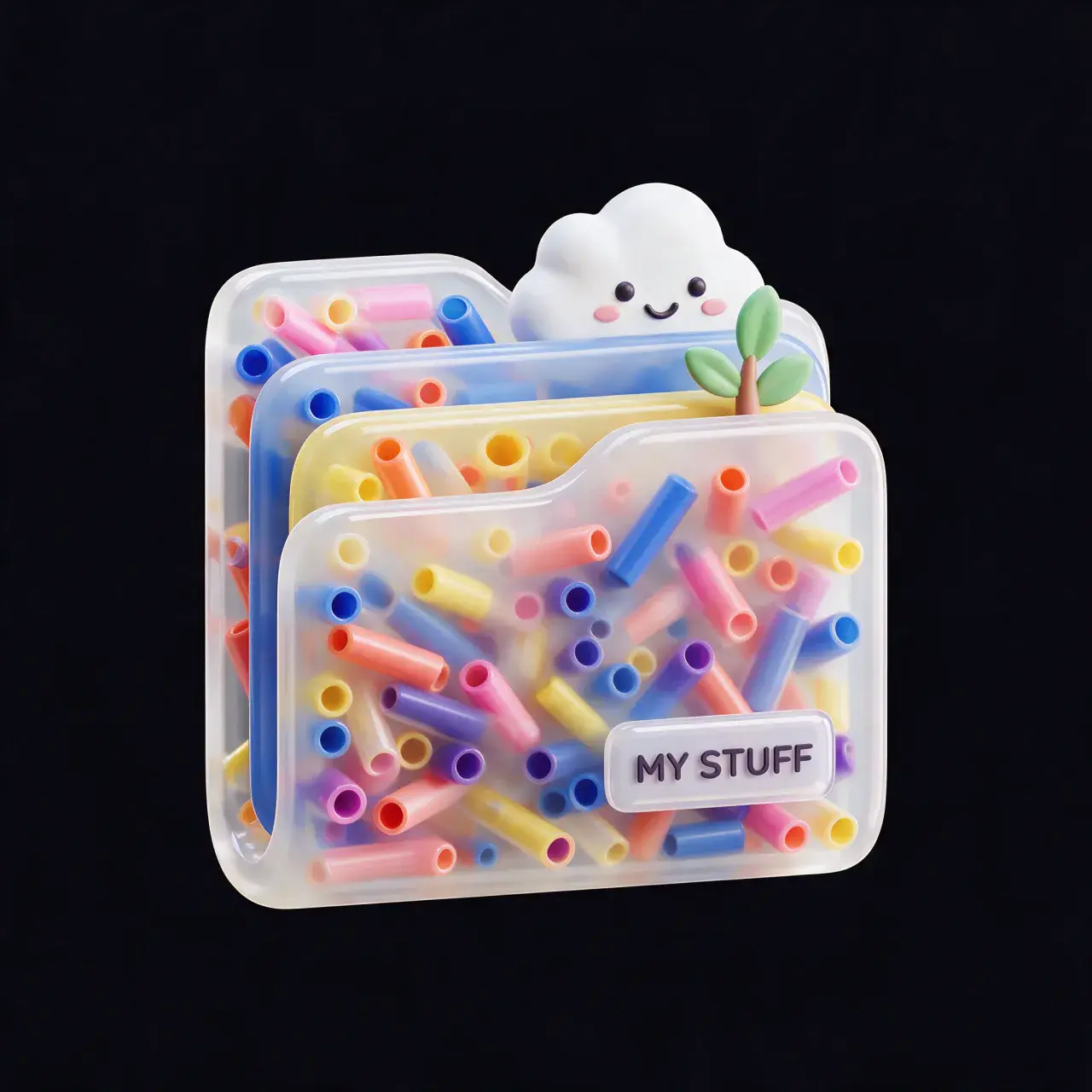
Seedream 5 Pro
Copy
Use the uploaded image as an immutable full-object assembly blueprint. Preserve every visible component and subcomponent exactly, including silhouettes, internal openings, layered structures, attachments, labels, readable text, logos, facial features, illustrations, plant details and all minor source elements. Preserve exact component positions, scale, orientation, depth order, overlap and spacing. Never combine separate source pieces or replace a detailed object with a simplified approximation. Keep the entire assembly unchanged and transform only suitable solid material regions into dense translucent milky acrylic containing hundreds of short hollow polymer tubes in vivid cobalt, acid yellow, coral orange, hot pink and deep violet. Tubes occur at varying internal angles and depths, creating circular, elliptical and elongated cross-sections through the translucent material. Tube scale and density must adapt to each source component and decrease strongly around fine details so nothing becomes obscured. All original source components remain physically separate where separate in the reference. Render as a centered floating 3D material study against pure black #000000, no floor, pedestal, support, horizon or cast shadow. Preserve exact source viewing direction and composition. Soft controlled upper-left-front illumination, accurate acrylic transmission, crisp internal tube detail and restrained polished highlights. No visible light fixtures, rectangular reflections, bloom, glow or environment. Premium high-resolution CGI. Absolute priority: preserve 100% of the uploaded reference assembly.
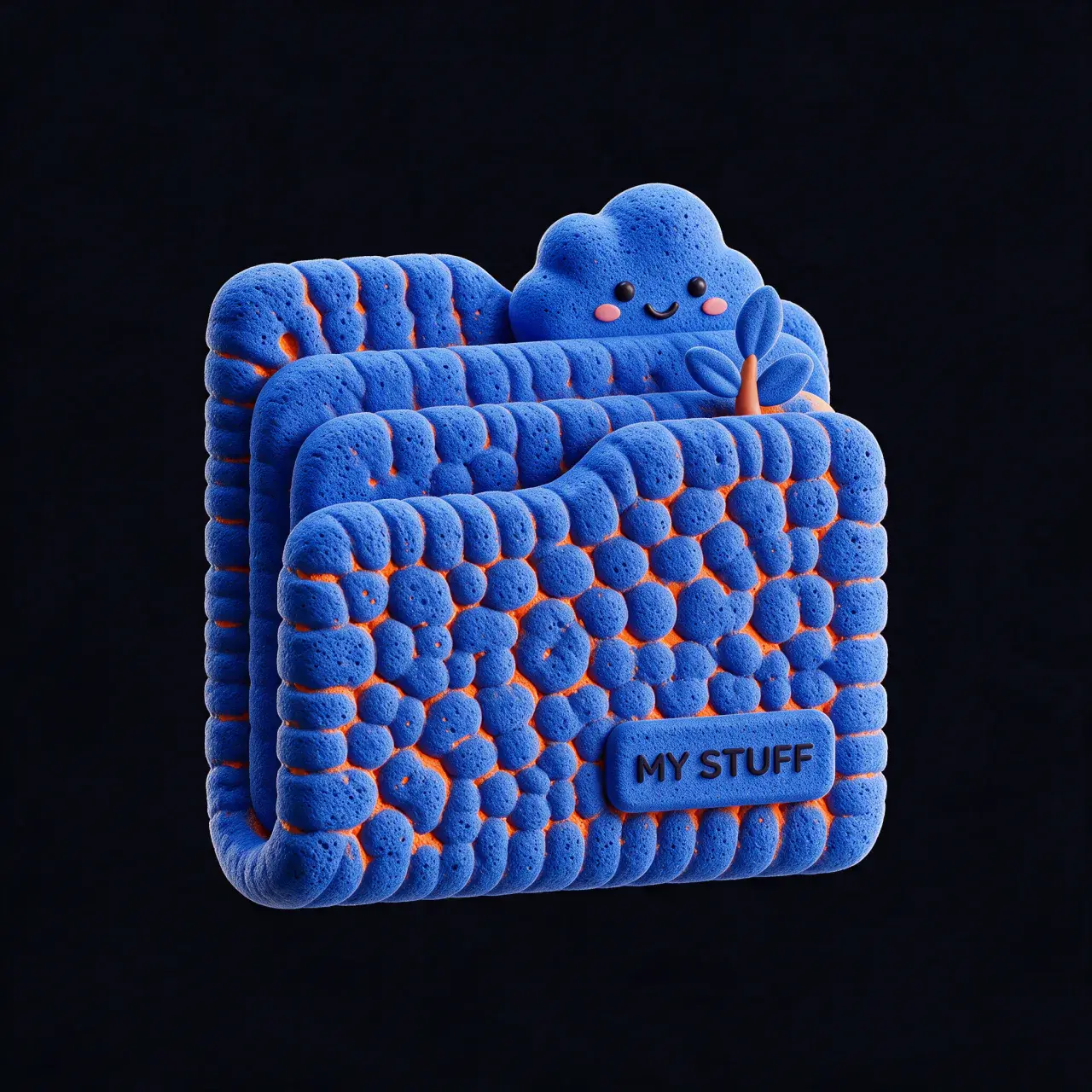
Seedream 5 Pro
Copy
Use the uploaded image as an immutable full-object assembly blueprint. Preserve the entire source object hierarchy with exact fidelity: every silhouette, component, subcomponent, opening, attachment, layered piece, label, text, logo, face, illustration, plant element, small decoration and secondary detail must remain in the same position, scale, orientation, overlap and depth order. Never remove, merge, simplify or structurally reinterpret anything. Change only the material appearance of eligible surfaces to saturated cobalt-blue dense foam with a fine dry porous finish. Add tightly packed shallow rounded ridges separated by narrow recessed channels, revealing vivid orange inner material only inside selected channel bottoms and tiny pores. Ridging is permitted only where it does not affect source fidelity; it must flatten completely near silhouettes, openings, edges, text, faces, labels, graphics and small attached objects. Every source element remains distinct and fully visible. Render the exact assembly floating centered against #000000 with no floor, pedestal, support, horizon or external cast shadow. Preserve source viewing direction. Soft controlled upper-left-front lighting, rich cobalt-orange separation, crisp micro-shadowing and high-end photorealistic CGI. No visible studio equipment, rectangular reflections, bloom, glow or environment. Absolute priority: preserve the uploaded source assembly in full.
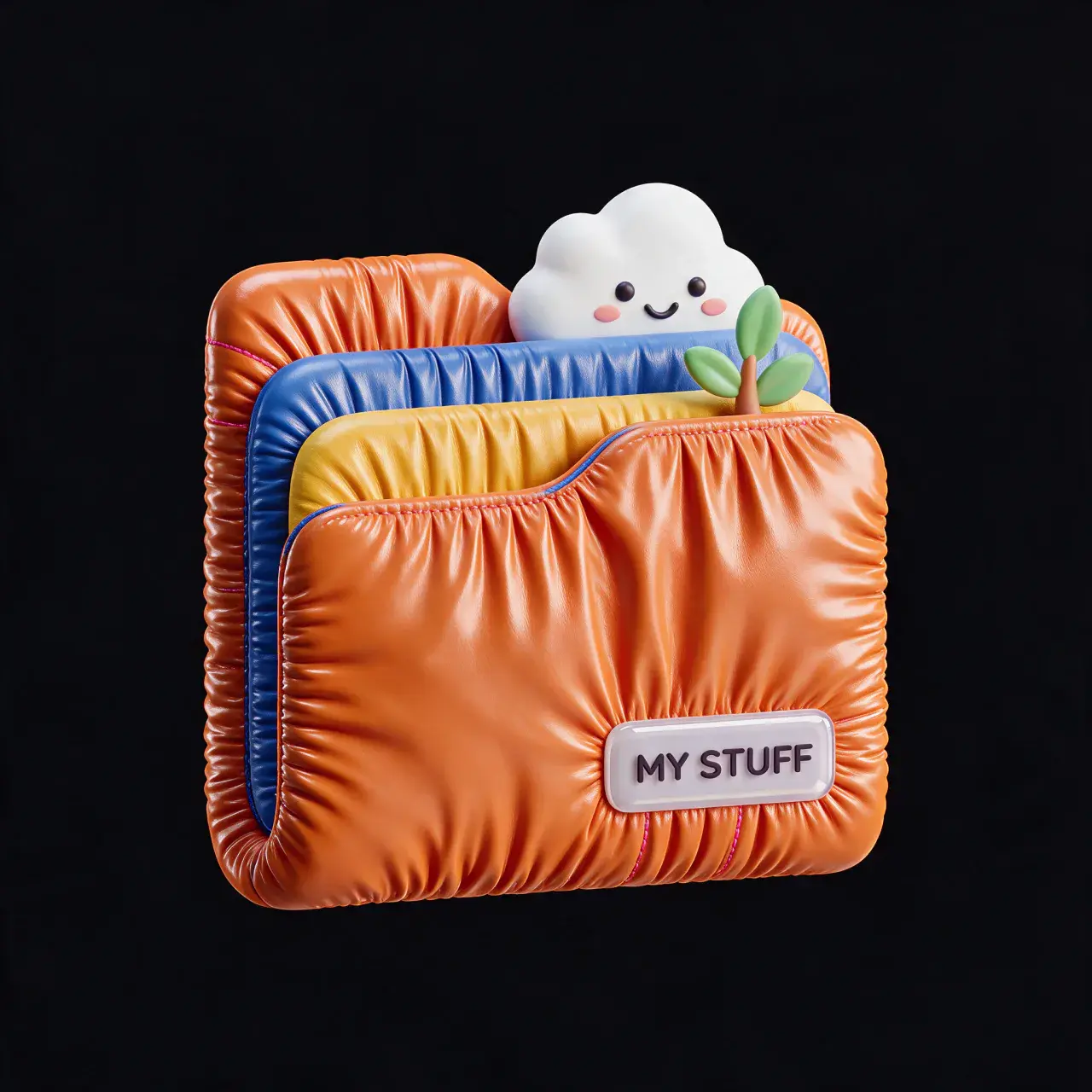
Seedream 5 Pro
Copy
Use the uploaded image as an immutable full-object assembly blueprint. Preserve one-to-one every visible component, internal layer, attachment, decorative insert, opening, cutout, contour, thickness, label, text, logo, facial feature, plant element and secondary object in the reference. Preserve component count, exact positions, proportions, orientation, overlap, spacing and depth order. Nothing may disappear, merge, simplify or move. Keep the full existing assembly unchanged and replace only its material appearance with saturated glossy tangerine technical vinyl. Add dense extremely shallow accordion pleating only across sufficiently broad surfaces, with narrow cobalt-blue piping seated inside selected valleys and occasional fine hot-pink stitching. Pleats must remain surface-confined, may not inflate the object, alter thickness or round any original contour, and must automatically flatten around openings, text, graphics, faces, small attachments and fine details. Every original element remains clearly recognizable. Render the exact assembly floating against #000000, centered and composed exactly like the source, no floor, support, pedestal, horizon or external shadow. Preserve source camera direction. Soft restrained upper-left-front illumination with balanced shadow visibility, crisp pleat definition and controlled glossy vinyl response. No visible lights, rectangular studio reflections, bloom, glow or environment. Premium CGI material rendering. Absolute priority: full reference fidelity over textile styling.
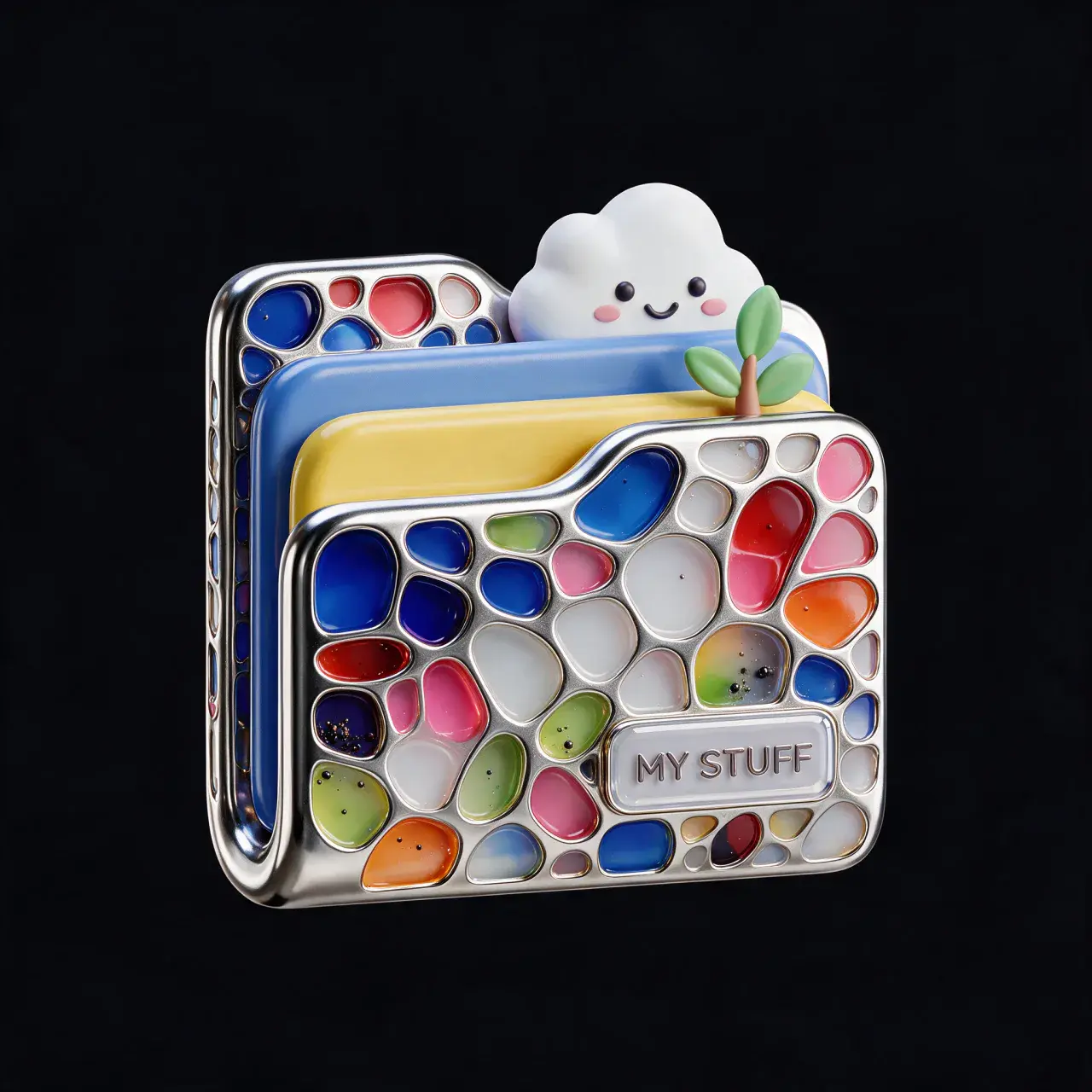
Seedream 5 Pro
Copy
Use the uploaded subject as an immutable 3D geometry blueprint and preserve its exact silhouette, proportions, thickness, curvature, openings, negative spaces, edges and orientation. Only the material and shallow inward surface structure may change. Construct the object from a polished warm-silver metal body with an intricate irregular network of thin recessed metallic partitions forming rounded organic cells across selected broad surfaces, inspired by cloisonné construction but with a contemporary abstract geometry rather than floral ornament. Fill the cells with glossy translucent gels in saturated cobalt blue, tomato red, hot pink, acid lime, tangerine orange and milky white, varying the fill depth slightly so some cells appear darker and more optically dense than others. Keep the metal partitions nearly flush with the surface and ensure the entire pattern remains inside the original geometry, fading completely before every edge and opening. Add sparse microscopic black and chrome particles suspended inside selected colored cells for internal depth. Preserve exact source orientation and minimal perspective, complete object centered and floating against infinite pure black #000000. No floor, pedestal, wall, support, wire, horizon or external cast shadow. Use restrained invisible upper-left-front illumination with minimal frontal fill and subtle right separation; no visible light-source shapes or studio reflections. Physically accurate polished metal, translucent enamel-gel depth, cavity self-occlusion, bold saturated color and ultra-high-resolution CGI. Highest priority: exact source geometry.
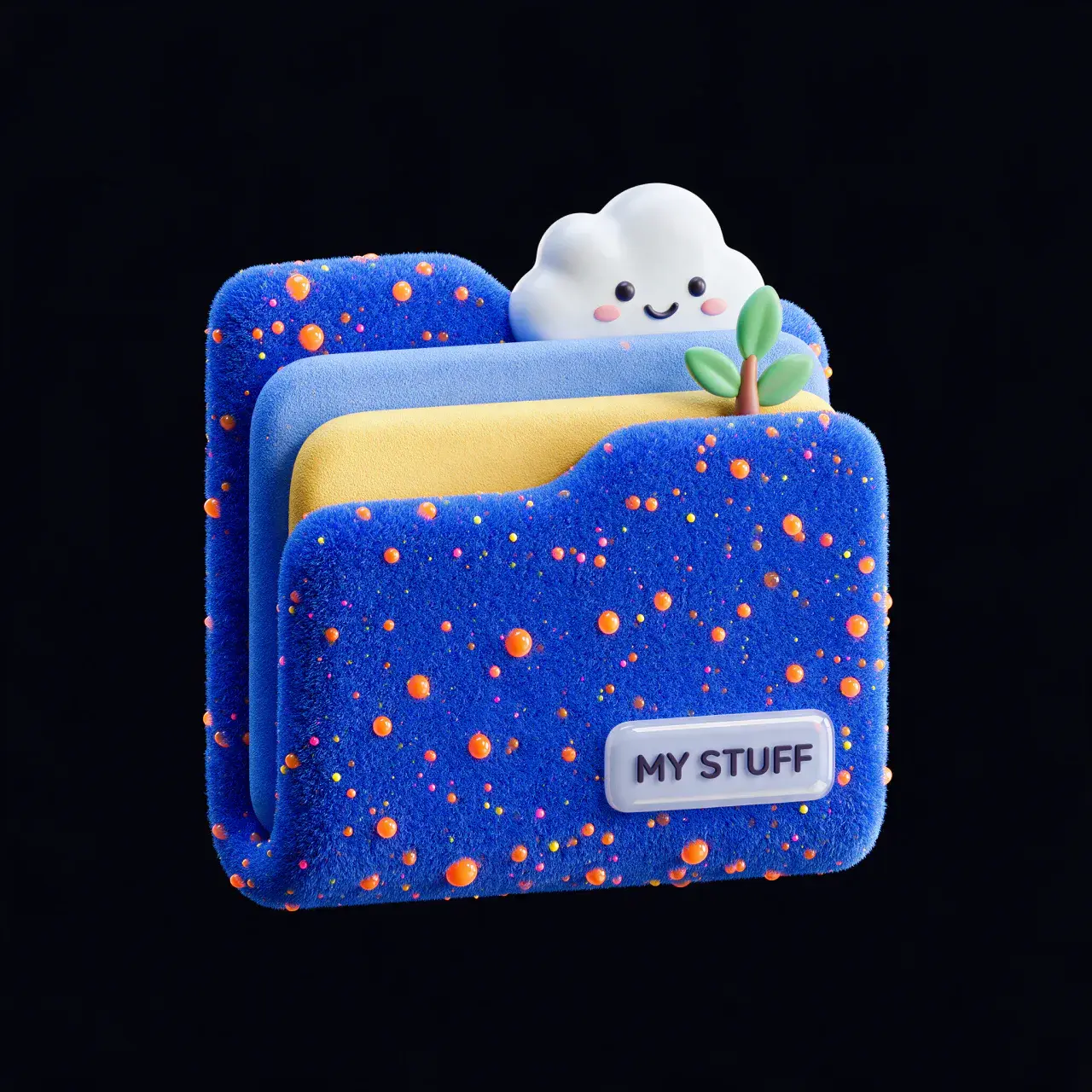
Seedream 5 Pro
Copy
Use the uploaded subject as an immutable geometry blueprint and preserve its exact silhouette, thickness, proportions, openings, negative spaces, corners, curvature and orientation. Do not modify the bounding shape under any circumstances. Reconstruct the object from intensely saturated cobalt-blue microfiber flock with an ultra-matte velvet-like light-absorbing surface composed of microscopic upright fibers. Integrate a controlled irregular field of glossy translucent orange gel lenses directly into very shallow circular recesses across the broad surfaces: some lenses are tiny pinpoints, others slightly larger rounded droplets, with restrained variation in spacing rather than a regular polka-dot grid. Add sparse hot-pink and acid-yellow microdots among the orange lenses for a sharper graphic rhythm. Every gel element must remain flush with or slightly below the original surface so the outer geometry stays unchanged. The contrast between extremely matte cobalt flock and glossy saturated gel should be the main material idea. Preserve exact source orientation, minimal perspective, long-lens product-render compression, complete object centered and freely levitating against exact #000000. No floor, pedestal, wall, support, wire, horizon or external shadow. Use restrained invisible upper-left-front illumination with weak frontal fill and subtle upper-right separation; no visible lights or rectangular reflections. Maintain rich cobalt midtones without crushing the flock into black, crisp individual fibers, juicy gel highlights, realistic translucent depth and exceptional ultra-high-resolution CGI material fidelity. Highest priority: exact preservation of the uploaded object's geometry.
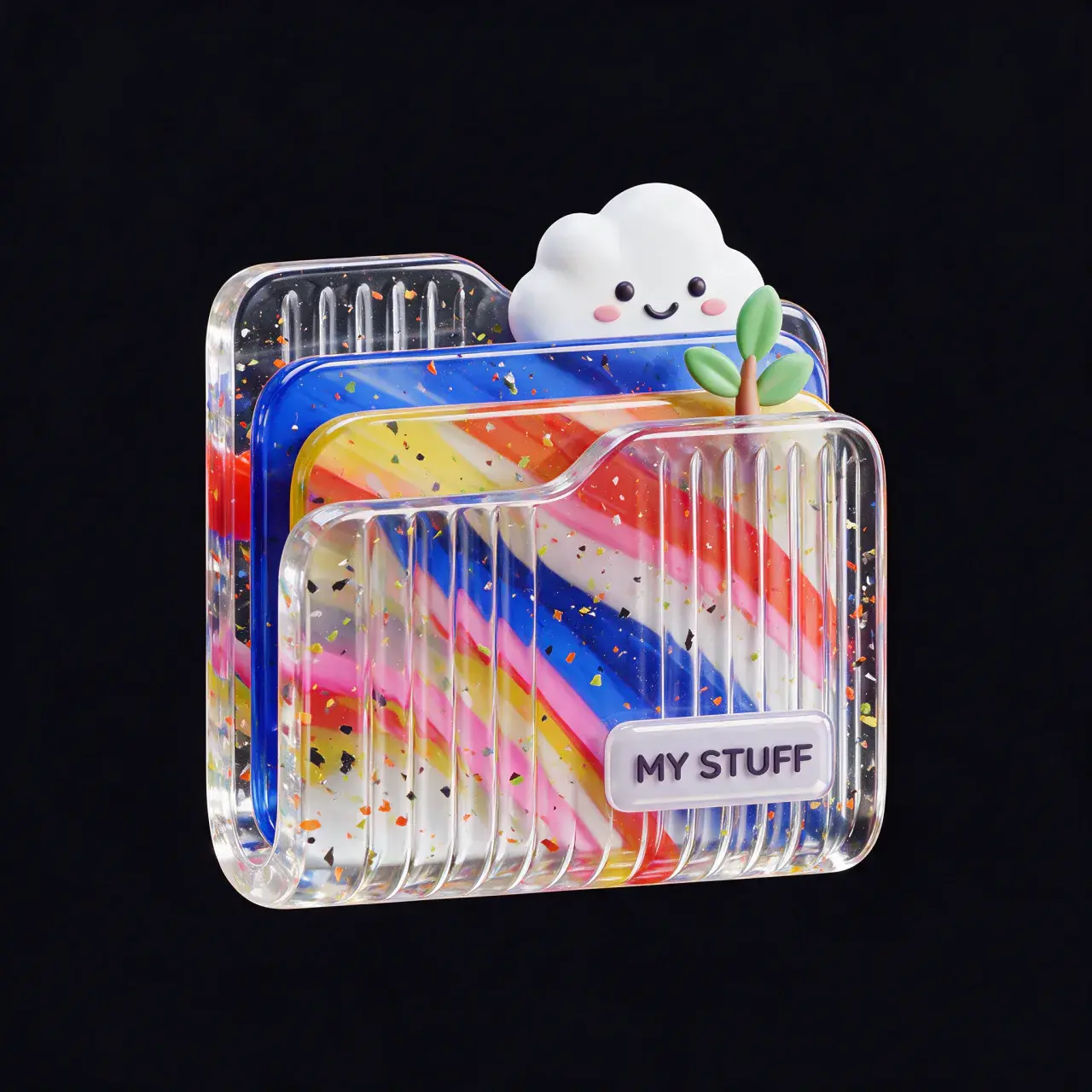
Seedream 5 Pro
Copy
Use the uploaded subject as an immutable geometry reference. Preserve exactly the source object’s outer contour, proportions, thickness, openings, negative spaces, edge shape, corner shape, curvature and orientation. Do not alter the geometry, even slightly, to accommodate the material. Construct the object from clear high-gloss acrylic containing dense internal ribbons of saturated cobalt blue, tomato red, hot pink, acid yellow and milky white. These ribbons should not appear as flat stripes on the surface; they are irregular laminated color bands physically suspended inside the acrylic volume, bending gently through depth and becoming visible differently across the front, sides and edges. Between the larger colored ribbons embed hundreds of tiny confetti-like fragments in orange, lime, black and silver, with strong variation in scale and depth. Add a restrained system of shallow vertical scalloped grooves carved inward into selected broad surfaces, creating alternating optical magnification and compression of the internal stripes without changing the object's silhouette. The combination should feel like a custom-cast Memphis-inspired acrylic composite, extremely graphic and contemporary but rendered with sophisticated physical realism. Preserve exact source orientation, minimal perspective, long-lens premium 3D product framing, complete object centered and floating against infinite black #000000. No floor, pedestal, wall, support, horizon, contact shadow or external cast shadow. Consistent invisible upper-left-front material illumination, weak frontal fill and subtle upper-right separation; no rectangular light reflections or studio environment. Accurate acrylic transmission and refraction, true laminated depth, crisp confetti inclusions, restrained polished highlights and exceptionally high-resolution CGI.
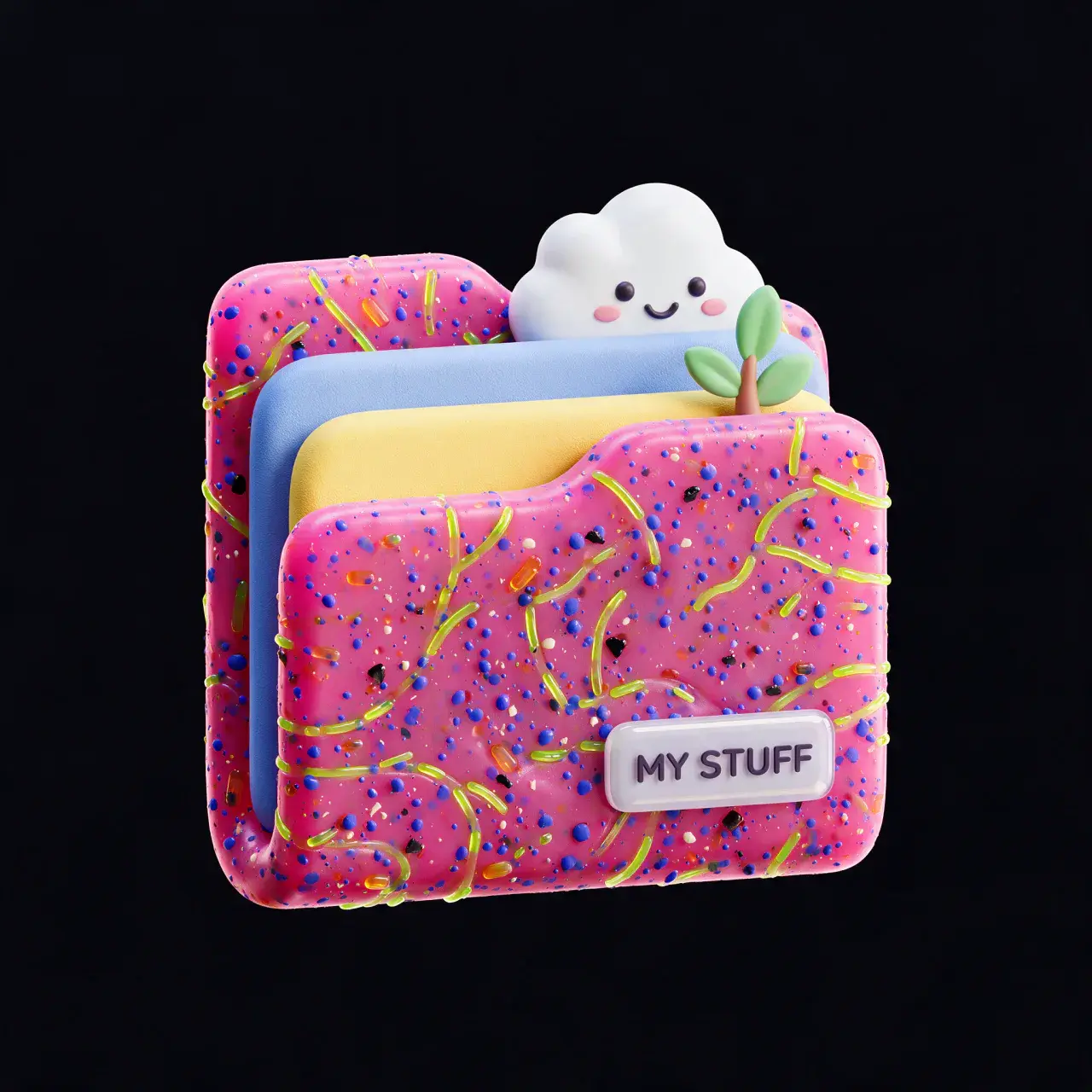
Seedream 5 Pro
Copy
Use the uploaded subject as an immutable 3D geometry blueprint. Preserve the source object with exact fidelity: identical silhouette, proportions, thickness, curvature, internal openings, negative spaces, edge positions, corners, spacing and orientation. Never inflate, soften, round, warp or otherwise alter its bounding form. Reconstruct the existing object from vivid hot-pink silicone with a smooth premium satin surface and subtle translucent depth. Embed a dense but irregular field of rounded cobalt-blue microdots throughout the material at different depths, mixed with sparse translucent orange capsules, tiny glossy black fragments and occasional ivory ceramic specks, creating a juicy dimensional polka-dot effect rather than a printed pattern. Integrate narrow acid-lime cord-like inlays into shallow recessed paths that snake rhythmically across broad surfaces in parallel groups, remaining entirely flush or slightly below the original surface. The lime inlays should be glossy and softly translucent, contrasting with the satin pink silicone, while cobalt particles distort gently beneath nearby curved channels. Keep all inlays and relief away from outer contours, openings and fine structural regions so the silhouette remains perfectly unchanged. Preserve the exact source camera direction and minimal perspective, complete centered object floating freely in infinite #000000 with no floor, pedestal, wall, support, wire, horizon or external cast shadow. Use the same controlled invisible upper-left-front illumination with extremely weak frontal fill and restrained upper-right separation. No softboxes, rectangular reflections, environment reflection, glow, halo or bloom. Physically realistic silicone scattering, embedded particle depth, polished inlay response, clean saturated color separation and ultra-high-resolution premium CGI. Highest priority: exact preservation of the uploaded object's geometry.
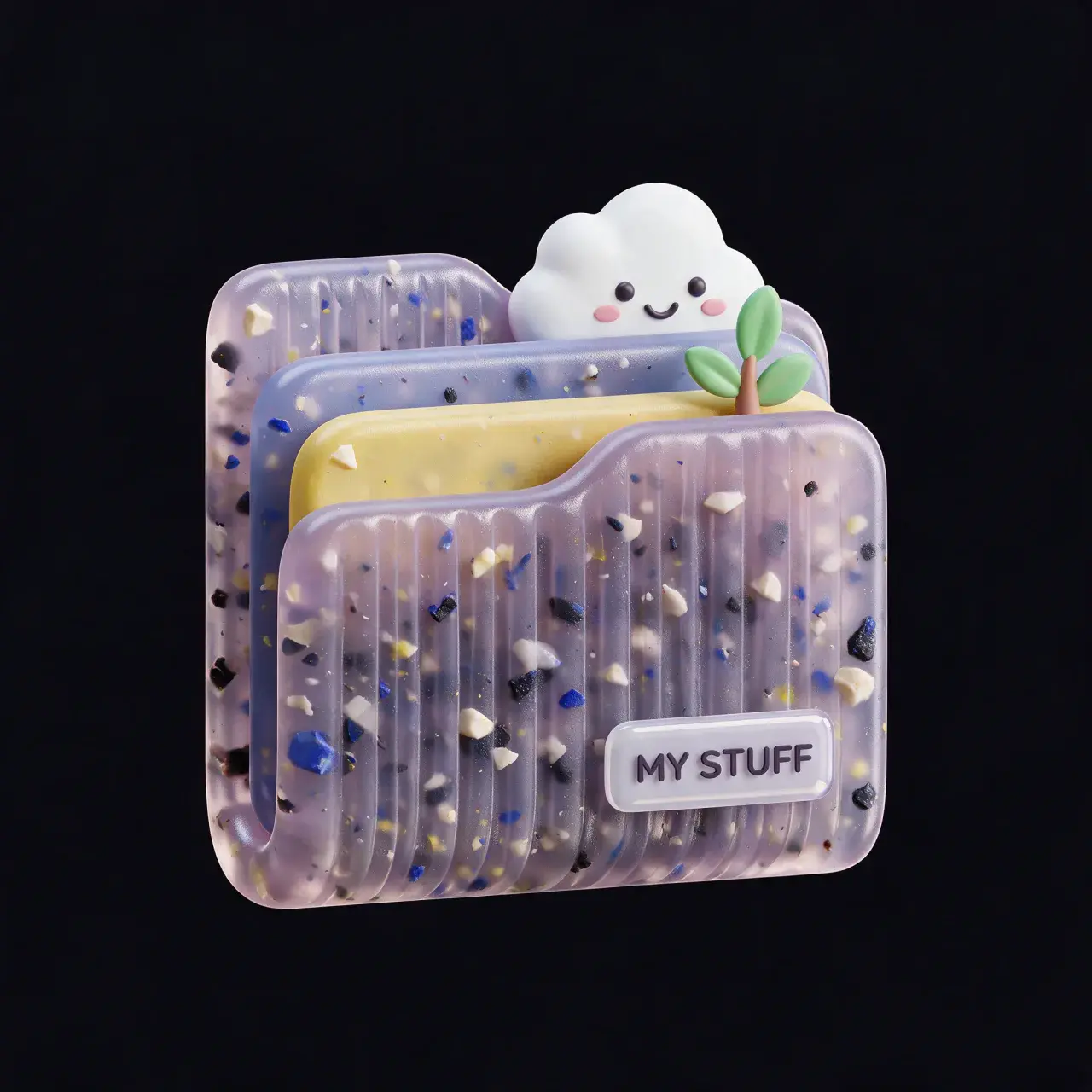
Seedream 5 Pro
Copy
Use the uploaded subject as an immutable 3D geometry blueprint. Preserve the source object exactly: identical outer silhouette, proportions, thickness, curvature, edge positions, corners, internal openings, holes, negative spaces, spacing between elements, relative dimensions, orientation and overall construction. Every recognizable contour of the uploaded object must remain in precisely the same location. Do not reinterpret, inflate, shrink, round, soften, thicken, thin, warp, bend, stretch or simplify the original form. Do not alter the dimensions of openings or change the relationship between individual parts. The final object must match the uploaded source exactly when their silhouettes are overlaid. Only replace the material and surface treatment. Reconstruct the existing geometry from thick semi-translucent smoky-lilac silicone with a sophisticated satin surface and convincing optical depth. The silicone follows the original object geometry exactly and remains constrained inside the source object's existing volume. Embed hundreds of irregular inclusions physically throughout the silicone at multiple depths: tiny ivory ceramic chips, saturated cobalt-blue glass fragments, matte black rubber crumbs and sparse pale fluorescent-yellow particles. Use strong variation in particle size, shape, depth and concentration. Some inclusions sit immediately beneath the surface, some partially intersect it, and others become softly distorted and optically diffused deeper inside the silicone. The inclusions must continue naturally through visible side surfaces and edges so they clearly belong to the material volume rather than appearing as a printed terrazzo pattern. Add a distinctive system of shallow molded longitudinal ribs directly into the existing surfaces without changing the object's overall geometry. The ribs are low-relief surface formations only: narrow softly rounded raised bands alternating with shallow compressed channels. Their total displacement must remain very small relative to the object's thickness and must never expand, contract or distort the original outer contour. On broad surfaces the ribs may be clearly visible but restrained; approaching edges, corners, holes, typography, narrow sections or structural details, progressively reduce their height and spacing until they merge smoothly into the original surface. The precise original silhouette always takes priority over the rib pattern. The silicone stretches microscopically across the shallow relief, producing subtle tension variation and slightly increased optical density inside recessed channels. Embedded ceramic, glass and rubber particles remain visible beneath and through the ribbed surface and distort
optically according to the local curvature, creating genuine internal depth. Do not add seams, padding, inflation, swollen chambers or rounded cushioning. Do not convert the object into a soft toy or inflated object. Do not modify the source geometry to accommodate the material. The interest must come from internal inclusions, translucent depth, micro-relief and material response while the original form remains geometrically identical. Render the result as a genuinely modeled three-dimensional material asset, not a texture transfer, decal, photographic overlay or redesigned interpretation. Keep the exact original visual orientation and viewing direction of the uploaded source. Do not introduce a new three-quarter rotation if it changes the visible geometry. Use only minimal perspective consistent with the source image, neutral long-lens product-render compression equivalent to approximately 85–100 mm, with no wide-angle distortion or dramatic perspective. Show the complete object fully inside the frame, centered with generous negative space. The object floats freely in empty space against an infinite pure-black background, exact color #000000. No ground, floor, pedestal, wall, support, wire, horizon line, contact shadow or cast shadow outside the object. Use restrained premium material-study illumination. Soft directional illumination comes predominantly from the upper-left-front direction at approximately 40° horizontal offset and 50° elevation, with extremely weak neutral frontal fill and subtle upper-right separation. Lighting should reveal the ribbed microgeometry, embedded particles and translucent silicone depth while leaving the object's geometry unchanged. All illumination sources remain completely outside the visible scene. Never show lamps, light panels, softboxes, white cards, studio equipment or bright geometric shapes. Never render rectangular or square reflections of lighting equipment. Specular response appears only as smooth abstract tonal gradients and narrow natural highlights following the object's existing curvature. No glow, neon rim, halo, bloom, lens flare, volumetric light, HDRI-room reflection, visible studio interior or environmental reflection. Physically based 3D material rendering, accurate silicone subsurface scattering, realistic transmission and internal refraction, physically plausible roughness variation, true volumetric inclusion depth, precise high-frequency surface relief, clean self-occlusion, exceptional edge definition, sophisticated highlight roll-off and ultra-high-resolution premium CGI material visualization. Highest priority: exact preservation of the uploaded object's geometry. Material complexity must never override shape fidelity.
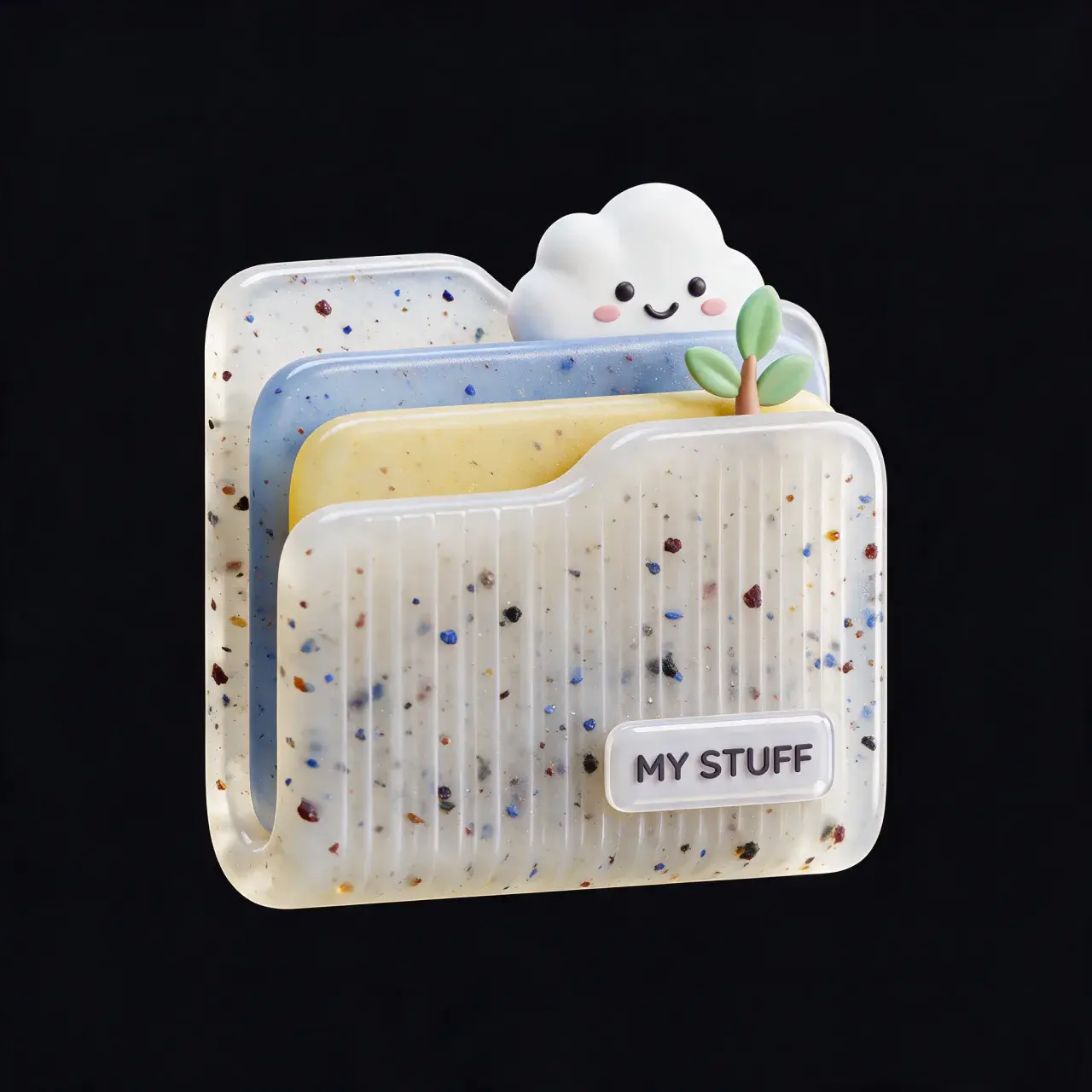
Seedream 5 Pro
Copy
Use the uploaded subject as a locked 3D geometry and silhouette reference. Preserve the source object exactly and with highest priority: identical outer contour, silhouette, proportions, thickness, curvature, edge positions, corner sharpness, internal openings, holes, negative spaces, spacing between elements, relative dimensions, orientation and overall construction. The final object must match the uploaded source exactly when their outlines are overlaid. Do not reinterpret, redesign, rotate, inflate, shrink, round, soften, bevel, thicken, thin, stretch, warp, bend or simplify the original form. Do not change the size or position of any opening, and do not alter the relationship between individual parts. Only replace the material and add extremely shallow surface treatment that remains completely inside the existing geometry. Reconstruct the object from dense translucent ivory glass-ceramic with softly frosted satin surfaces, restrained optical depth and realistic internal transmission. Suspend thousands of irregular inclusions throughout the volume at multiple depths: tiny cobalt-blue glass flecks, deep oxblood mineral particles, graphite-black ceramic specks and sparse warm amber translucent chips, all continuing naturally through visible side surfaces and cut edges so they read as true volumetric inclusions rather than a printed pattern. Add a tightly spaced system of very shallow vertical flutes only as engraved inward micro-relief, not as outward ribs: fine recessed channels separated by nearly flat narrow lands, with minimal depth so the original bounding contour never changes. The fluting must progressively fade to zero before all outer edges, corners, openings, thin sections, typography and delicate structural details, leaving those zones perfectly unchanged. If preserving the exact silhouette conflicts with
the visibility of the fluting, preserve the silhouette and reduce the relief. Near-surface inclusions remain crisp, while deeper inclusions blur subtly through the translucent body, creating true volumetric speckling and internal depth. Render the result as a physically modeled premium CGI material asset, not a texture transfer, decal or overlay. Keep the exact original viewing direction and composition of the uploaded source. Use only minimal perspective consistent with the original image, neutral long-lens product-render compression around 85–100 mm, no new three-quarter rotation if it changes the visible geometry, and show the complete object fully inside the frame, centered with generous negative space. Float the object freely against an infinite pure-black background, exact color #000000, with no floor, pedestal, wall, support, wire, horizon line, contact shadow or external cast shadow. Use restrained high-end material-study illumination predominantly from the upper-left-front direction at approximately 40° horizontal offset and 50° elevation, with extremely weak neutral frontal fill and subtle upper-right separation. All light sources remain invisible and must never appear as lamps, panels, cards, softboxes or rectangular reflections. Highlights must appear only as smooth abstract tonal gradients following the existing curvature. No HDRI room, visible environment reflection, glow, halo, bloom, neon rim or visible studio interior. Physically accurate transmission, subtle subsurface scattering, realistic ceramic roughness, true volumetric inclusion depth, precise engraved micro-relief, clean self-occlusion, sophisticated tonal separation and ultra-high-resolution premium 3D rendering. Absolute highest priority: exact preservation of the uploaded object’s geometry; material detail must never override shape fidelity.
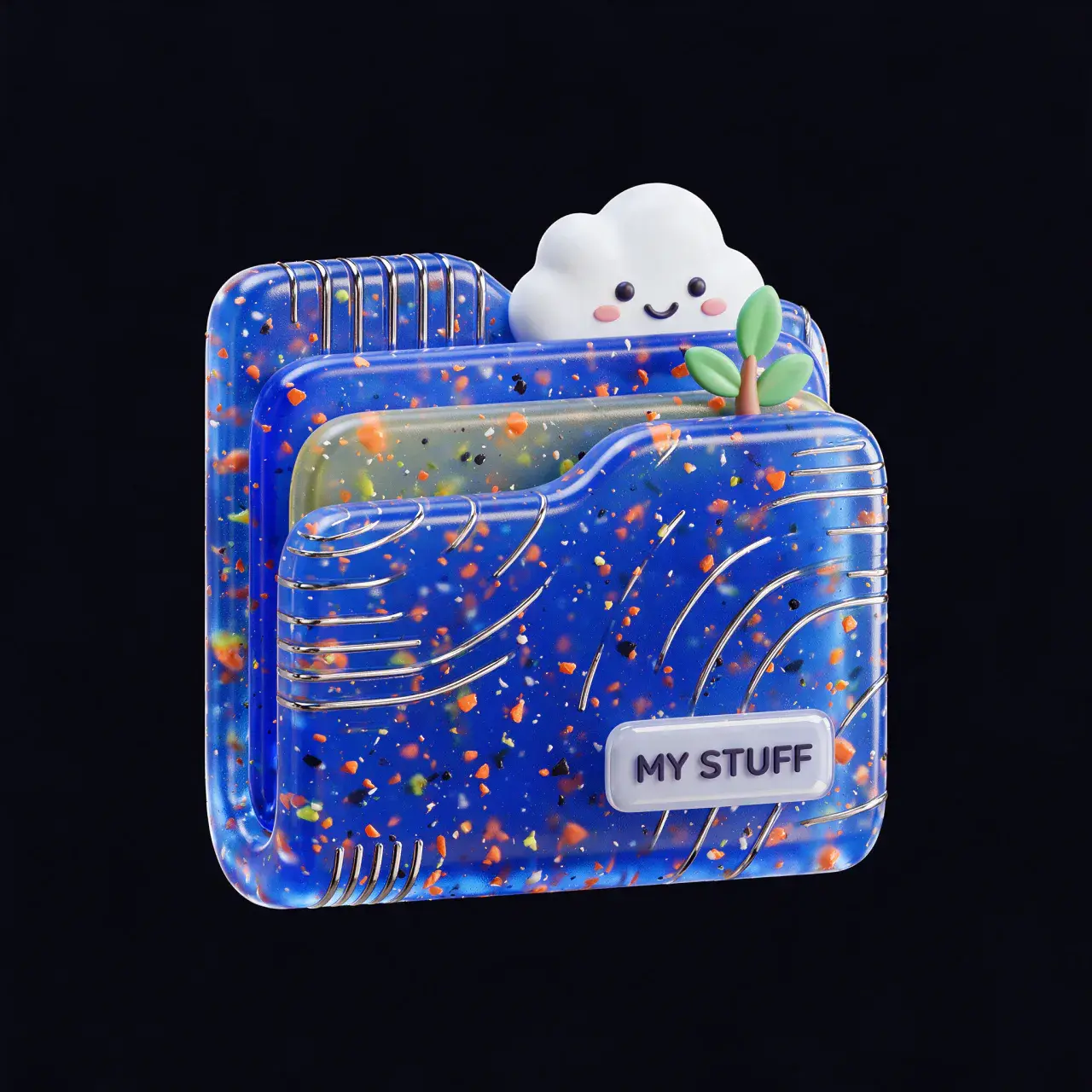
Seedream 5 Pro
Copy
Use the uploaded subject as a locked 3D geometry blueprint. Preserve the source object exactly: identical silhouette, proportions, thickness, curvature, openings, negative spaces, edge positions, orientation and relationship between all parts; the final outline must match the uploaded source when overlaid. Do not inflate, soften, round, warp, thicken, shrink or reinterpret the form. Only replace the material and add shallow inward or surface-confined detail that never changes the bounding shape. Reconstruct the object from saturated translucent cobalt-blue jelly resin with rich optical depth, glossy elastic density and subtle internal refraction. Suspend hundreds of irregular vivid tangerine-orange chips, tiny ivory dots, occasional acid-lime fragments and sparse glossy black particles throughout the volume at different depths, creating bold volumetric speckling rather than a printed pattern. Integrate a system of very narrow polished chrome ribs running rhythmically across selected broad surfaces, seated almost flush with the resin and following the existing geometry without protruding beyond the original silhouette; the chrome strips should alternate between straight and gently curved paths and fade completely before edges, openings and delicate details. Let deeper orange and lime inclusions blur optically through the cobalt body while near-surface particles stay sharp and juicy. Keep the exact source orientation and viewing direction, minimal perspective consistent with the uploaded image, neutral long-lens premium 3D product-render look, complete object centered and fully visible. Float it freely against infinite pure black #000000 with no floor, pedestal, wall, support, wire, horizon, contact shadow or external cast shadow. Use restrained high-end material-study illumination from upper-left-front with weak neutral fill and subtle upper-right separation; illumination sources remain invisible, with no light panels, white cards or rectangular reflections. Highlights appear only as smooth curvature-following gradients. Physically accurate resin transmission, chrome response, volumetric inclusions, high-frequency material detail, rich saturated color separation and ultra-high-resolution premium CGI. Absolute highest priority: preserve the uploaded object geometry exactly.
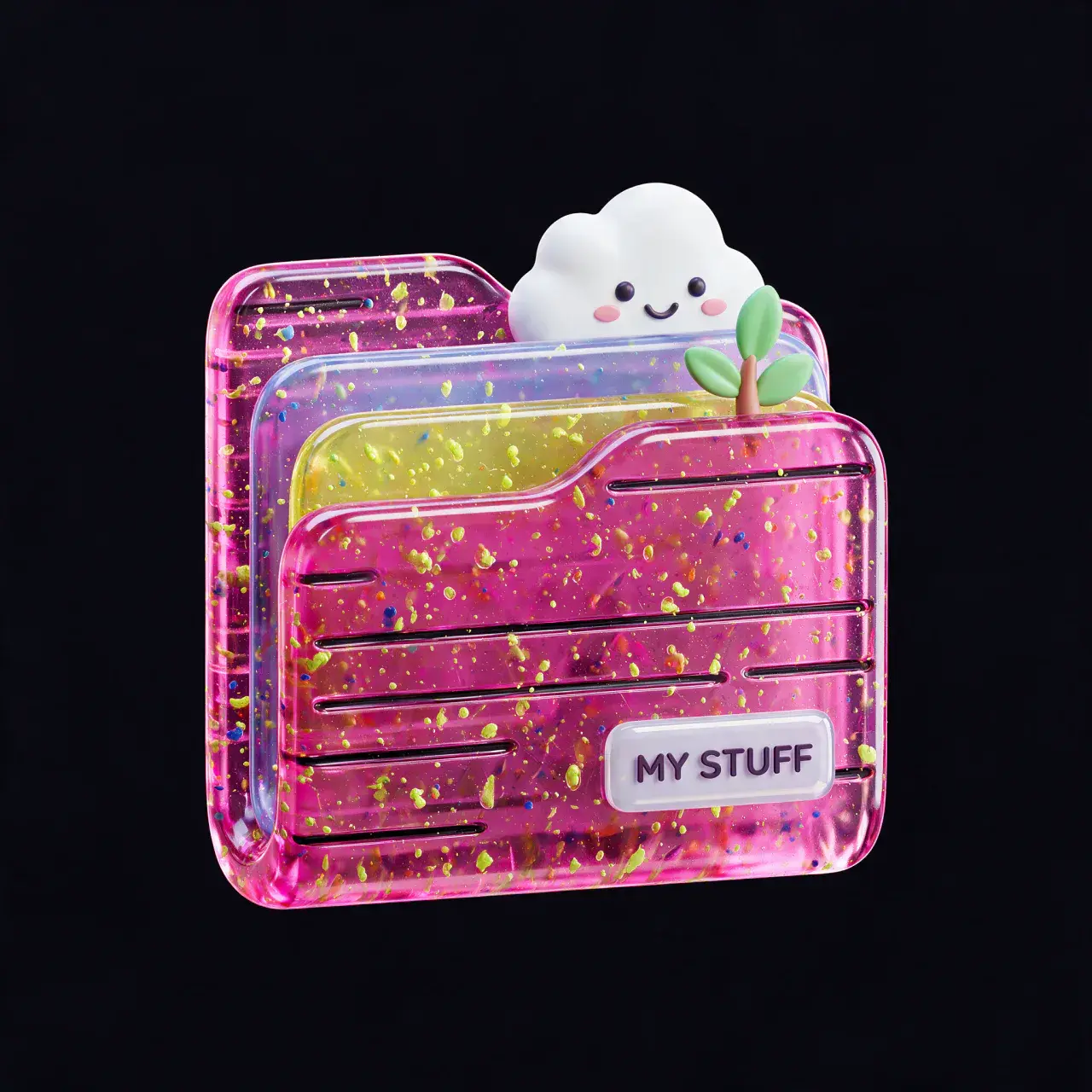
Seedream 5 Pro
Copy
Use the uploaded subject as an immutable 3D geometry reference and preserve its outer silhouette, proportions, thickness, openings, negative spaces, curvature, corners, edge locations and orientation exactly. Do not alter the source form in order to accommodate the material. Cast the object from intensely saturated transparent fuchsia-pink glass with substantial optical thickness, smooth polished surfaces and slightly lighter luminous-looking edges created only by transmission, never by glow. Inside the glass suspend an irregular field of acid-lime spherical and elongated inclusions at multiple depths, ranging from tiny pinpoints to small soft-edged bubbles, mixed with sparse cobalt-blue microbeads and occasional orange glass flecks. Engrave broad visible surfaces with extremely shallow parallel black flutes: narrow glossy near-black channels recessed into the existing glass surface, with the original outer contour remaining completely untouched. The channels may subtly bend with the object geometry and should compress in spacing around narrow regions, then fade to zero before all boundaries and openings. Create strong visual contrast between saturated transparent pink, fluorescent-looking lime inclusions and precise dark ribbing, but keep the result sophisticated rather than toy-like. Preserve the exact source camera orientation, minimal perspective, centered complete object floating in infinite #000000 with no ground, pedestal, wall, support, wire, horizon or external shadow. Use consistent neutral material-render illumination from upper-left-front, very weak frontal fill and subtle upper-right separation, all sources invisible. No rectangular studio reflections, HDRI room, bloom, halo or neon outlines. Physically based glass refraction, internal caustic-like depth confined within the object, realistic black groove roughness, crisp inclusions and exceptionally clean high-end CGI rendering. Highest priority: exact geometry preservation.
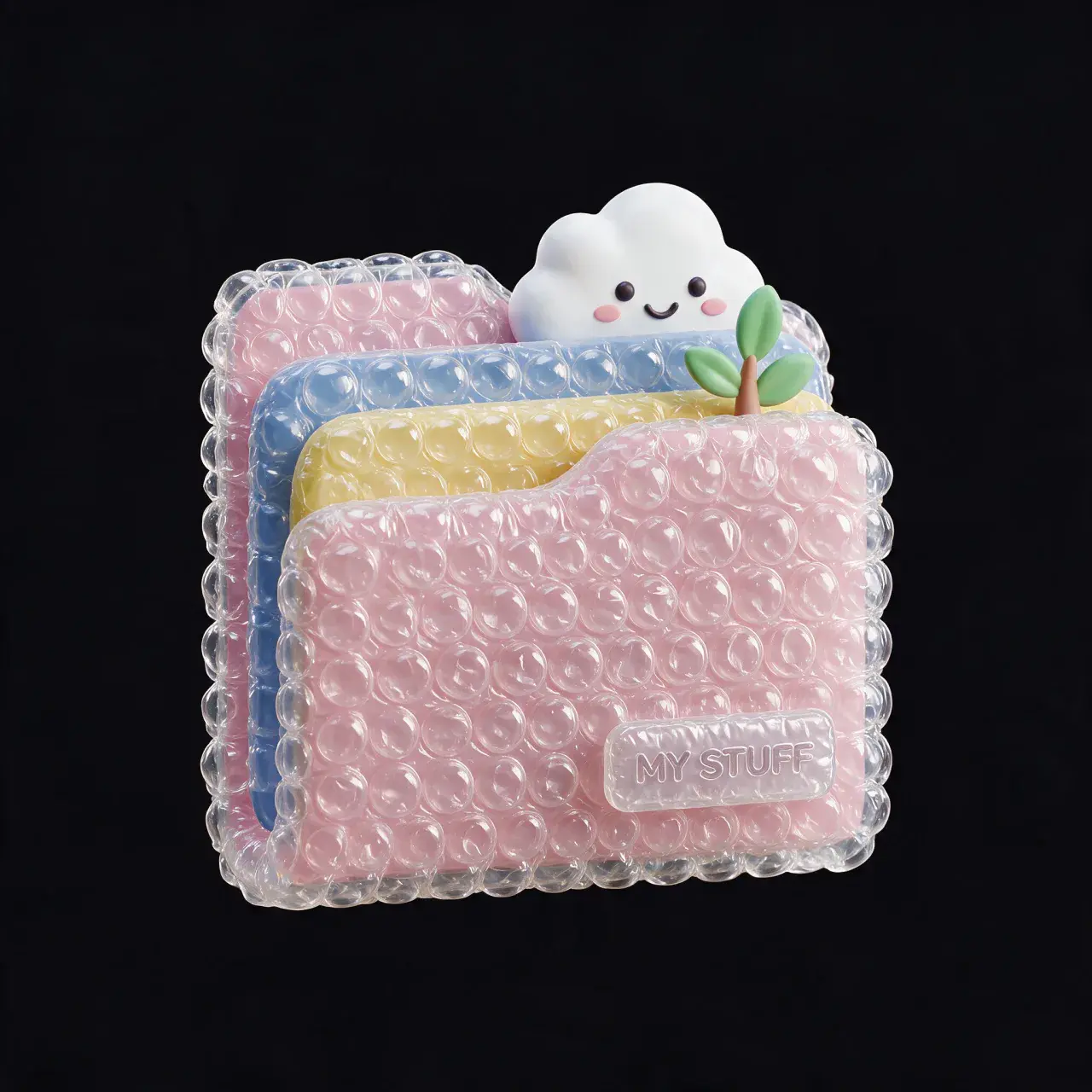
Seedream 5 Pro
Copy
Use the uploaded image as the identity and primary-shape blueprint for a physically realized 3D material object. Preserve the subject's recognizable outer silhouette, overall proportions, major internal openings, negative spaces and essential graphic structure. Do not redesign the subject or replace it with another object. If the uploaded source is flat artwork, typography or a logo, give it convincing physical thickness while preserving its frontal design. If it is already a three-dimensional object, preserve its overall orientation and primary form. Reconstruct the object as a premium transparent bubble-wrap polymer structure built from tightly packed inflated air cells. The surface should consist of glossy clear flexible domes with thin transparent seams between them, subtle membrane tension, varying bubble sizes adapting to the geometry, and slightly compressed bubble cells near tight edges, corners and small negative spaces. The form must look physically built from bubble film itself, with convincing plastic thickness and air-filled volume, not merely wrapped in a bubble texture. The chosen material must physically reconstruct the object rather than appear as a texture map, decal, printed pattern or photographic overlay. Allow the material to determine the local surface topology and secondary geometry while preserving the recognizable primary silhouette and major negative spaces. Render the result as a genuinely modeled three-dimensional asset with convincing thickness, edge construction and material-dependent depth. Keep the source object's general visual orientation whenever possible. Use a clean near-frontal premium 3D product-render viewpoint with only a subtle amount of perspective revealing physical thickness. Neutral long-lens visual compression, approximately equivalent to an 85–100 mm product-photography lens. No wide-angle
distortion, dramatic perspective, dutch angle or unnecessary rotation. Show the complete object, fully inside the frame, centered consistently, occupying approximately 62–68% of the image height with generous negative space around it. The object floats freely in empty space against an infinite pure-black background, exact color #000000. No floor, ground plane, table, pedestal, base, wall, visible support, wire, horizon line, contact shadow or cast shadow outside the object. Use restrained high-end material-study illumination consistent across the entire collection. Soft directional illumination comes predominantly from the upper-left-front direction, creating broad dimensional modeling across the form, smooth transitions from light to shadow and clearly readable microgeometry. Maintain a small amount of neutral frontal illumination so shadowed regions retain material information, with only very subtle separation along selected upper-right edges. Lighting must reveal the material rather than become a visual effect. Maintain deep neutral blacks, rich dimensional midtones, soft physically plausible self-shadowing, restrained highlights and smooth highlight roll-off. All illumination exists outside the visible frame. Never show lamps, softboxes, light panels, white cards, studio equipment or bright geometric light-source shapes. Do not produce recognizable rectangular or square reflections of studio equipment on the plastic surface. Glossy reflections should remain abstract and curvature-following. No glowing outline, halo, bloom, lens flare, volumetric beam or visible environment reflections. Physically based 3D material rendering, realistic global illumination, accurate transmission and refraction, exceptional clarity, high-frequency microgeometry, premium commercial CGI material study, ultra-high-resolution photorealistic render.

Seedream 5 Pro
Copy
Use the uploaded image as the identity and primary-shape blueprint for a physically realized 3D material object. Preserve the subject's recognizable outer silhouette, overall proportions, major internal openings, negative spaces and essential graphic structure. Do not redesign the subject or replace it with another object. If the uploaded source is flat artwork, typography or a logo, give it convincing physical thickness while preserving its frontal design. If it is already a three-dimensional object, preserve its overall orientation and primary form. Reconstruct the object from thick marshmallow mass with soft pillowy inflation, delicate skin tension, creamy white body tone, lightly toasted golden-brown blistered patches and subtle wrinkling where the sugar surface expands and contracts. Let the object feel slightly puffed and rounded while remaining recognizable, with broad sections swelling gently and edges becoming soft and cushion-like. The material should read as real marshmallow, with believable softness and a lightly caramelized surface, not as a smooth white plastic object. The chosen material must physically reconstruct the object rather than appear as a texture map, decal, printed pattern or photographic overlay. Allow the material to determine the local surface topology and secondary geometry while preserving the recognizable primary silhouette and major negative spaces. Render the result as a genuinely modeled three-dimensional asset with convincing thickness, edge construction and material-dependent depth. Keep the source object's general visual orientation whenever possible. Use a
clean near-frontal premium 3D product-render viewpoint with only a subtle amount of perspective revealing physical thickness. Neutral long-lens visual compression, approximately equivalent to an 85–100 mm product-photography lens. No wide-angle distortion, dramatic perspective, dutch angle or unnecessary rotation. Show the complete object, fully inside the frame, centered consistently, occupying approximately 62–68% of the image height with generous negative space around it. The object floats freely in empty space against an infinite pure-black background, exact color #000000. No floor, ground plane, table, pedestal, base, wall, visible support, wire, horizon line, contact shadow or cast shadow outside the object. Use restrained high-end material-study illumination consistent across the entire collection. Soft directional illumination comes predominantly from the upper-left-front direction, creating broad dimensional modeling across the form, smooth transitions from light to shadow and clearly readable microgeometry. Maintain a small amount of neutral frontal illumination so shadowed regions retain material information, with only very subtle separation along selected upper-right edges. Lighting must reveal the material rather than become a visual effect. Maintain deep neutral blacks, rich dimensional midtones, restrained specular response and smooth highlight roll-off. No visible lighting equipment or geometric reflections. Physically based 3D material rendering, realistic subsurface scattering, soft self-occlusion and premium commercial CGI material study, ultra-high-resolution photorealistic render.

Seedream 5 Pro
Copy
Use the uploaded image as the identity and primary-shape blueprint for a physically realized 3D material object. Preserve the subject's recognizable outer silhouette, overall proportions, major internal openings, negative spaces and essential graphic structure. Do not redesign the subject or replace it with another object. If the uploaded source is flat artwork, typography or a logo, give it convincing physical thickness while preserving its frontal design. If it is already a three-dimensional object, preserve its overall orientation and primary form. Reconstruct the object from solid natural cork with warm tan-to-honey tonal variation, tiny irregular air cells, subtly pitted matte surfaces, compressed granular structure and slightly fractured sliced edges. Broader surfaces may appear more finely pressed, while edges and corners reveal stronger porous cellular breakup. The object must feel machined from dense cork itself, not wrapped in a cork pattern. The chosen material must physically reconstruct the object rather than appear as a texture map, decal, printed pattern or photographic overlay. Allow the material to determine the local surface topology and secondary geometry while preserving the recognizable primary silhouette and major negative spaces. Render the result as a genuinely modeled three-dimensional asset with convincing thickness, edge construction and material-dependent depth. Keep the source object's general visual orientation whenever possible. Use a clean near-frontal premium 3D product-render viewpoint
with only a subtle amount of perspective revealing physical thickness. Neutral long-lens visual compression, approximately equivalent to an 85–100 mm product-photography lens. No wide-angle distortion, dramatic perspective, dutch angle or unnecessary rotation. Show the complete object, fully inside the frame, centered consistently, occupying approximately 62–68% of the image height with generous negative space around it. The object floats freely in empty space against an infinite pure-black background, exact color #000000. No floor, ground plane, table, pedestal, base, wall, visible support, wire, horizon line, contact shadow or cast shadow outside the object. Use restrained high-end material-study illumination consistent across the entire collection. Soft directional illumination comes predominantly from the upper-left-front direction, creating broad dimensional modeling across the form, smooth transitions from light to shadow and clearly readable microgeometry. Maintain a small amount of neutral frontal illumination so shadowed regions retain material information, with only very subtle separation along selected upper-right edges. Lighting must reveal the material rather than become a visual effect. Maintain deep neutral blacks, rich dimensional midtones and soft self-shadowing in the porous structure. No visible lighting equipment or geometric reflections. Physically based 3D material rendering, realistic matte roughness variation, premium commercial CGI material study, ultra-high-resolution photorealistic render.
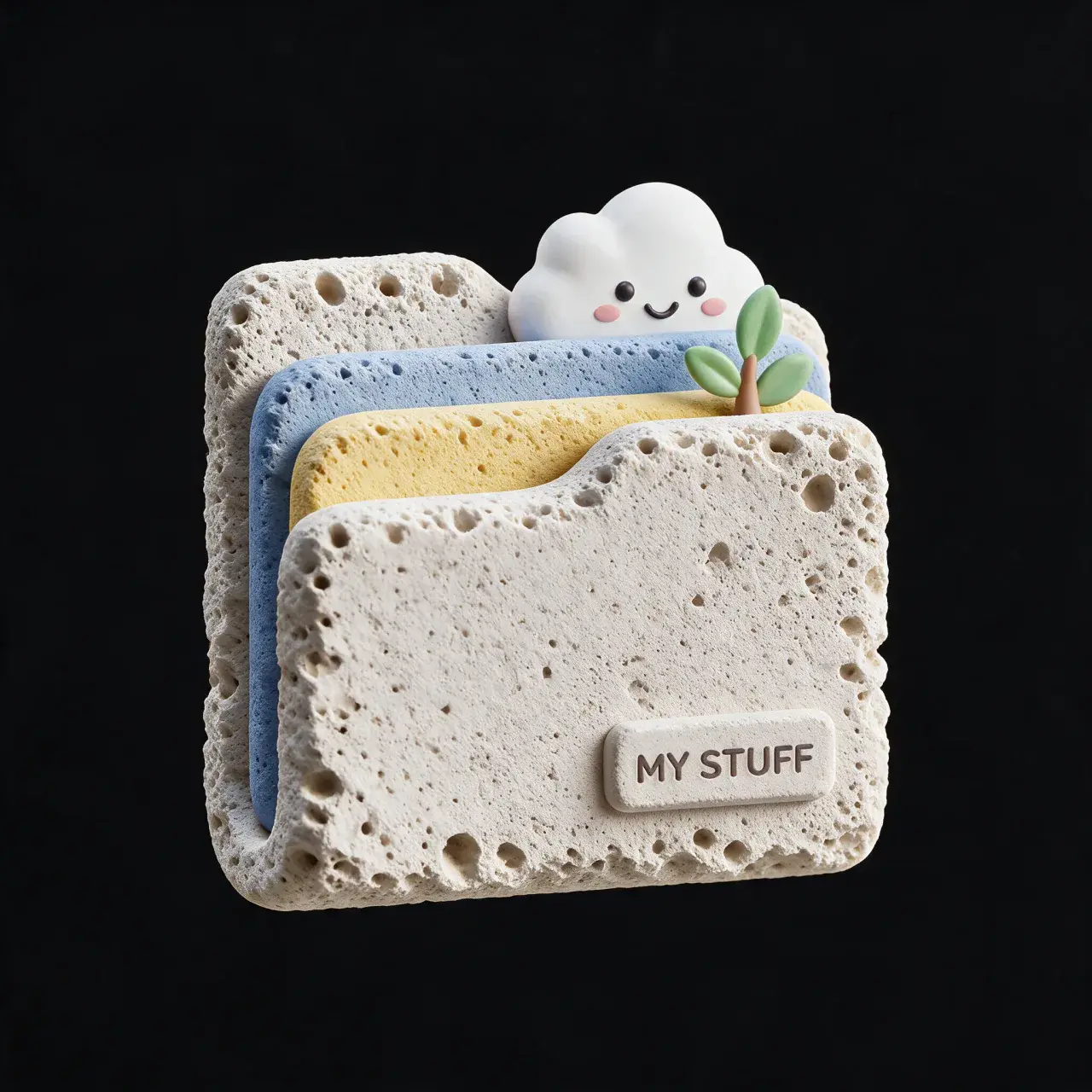
Seedream 5 Pro
Copy
Use the uploaded image as the identity and primary-shape blueprint for a physically realized 3D material object. Preserve the subject's recognizable outer silhouette, overall proportions, major internal openings, negative spaces and essential graphic structure. Do not redesign the subject or replace it with another object. If the uploaded source is flat artwork, typography or a logo, give it convincing physical thickness while preserving its frontal design. If it is already a three-dimensional object, preserve its overall orientation and primary form. Reconstruct the object from pale porous pumice stone with an ultra-light volcanic foam structure, dense micro-cavities, softly cratered holes, dusty mineral matte finish and fragile-looking broken edges. Broad surfaces should remain coherent and solid, while edges and cut boundaries reveal deeper porous foam-stone structure. The object must feel carved from real pumice rather than textured with a generic rock map. The chosen material must physically reconstruct the object rather than appear as a texture map, decal, printed pattern or photographic overlay. Allow the material to determine the local surface topology and secondary geometry while preserving the recognizable primary silhouette and major negative spaces. Render the result as a genuinely modeled three-dimensional asset with convincing thickness, edge construction and material-dependent depth. Keep the source object's general visual orientation whenever possible. Use a clean near-frontal premium 3D product-render viewpoint with only a subtle
amount of perspective revealing physical thickness. Neutral long-lens visual compression, approximately equivalent to an 85–100 mm product-photography lens. No wide-angle distortion, dramatic perspective, dutch angle or unnecessary rotation. Show the complete object, fully inside the frame, centered consistently, occupying approximately 62–68% of the image height with generous negative space around it. The object floats freely in empty space against an infinite pure-black background, exact color #000000. No floor, ground plane, table, pedestal, base, wall, visible support, wire, horizon line, contact shadow or cast shadow outside the object. Use restrained high-end material-study illumination consistent across the entire collection. Soft directional illumination comes predominantly from the upper-left-front direction, creating broad dimensional modeling across the form, smooth transitions from light to shadow and clearly readable microgeometry. Maintain a small amount of neutral frontal illumination so shadowed regions retain material information, with only very subtle separation along selected upper-right edges. Lighting must reveal the material rather than become a visual effect. Maintain deep neutral blacks, rich dimensional midtones, soft physically plausible self-shadowing and refined highlight roll-off. No visible lighting equipment or geometric reflections. Physically based 3D material rendering, realistic stone roughness variation, rich cavity occlusion and premium commercial CGI material study, ultra-high-resolution photorealistic render.
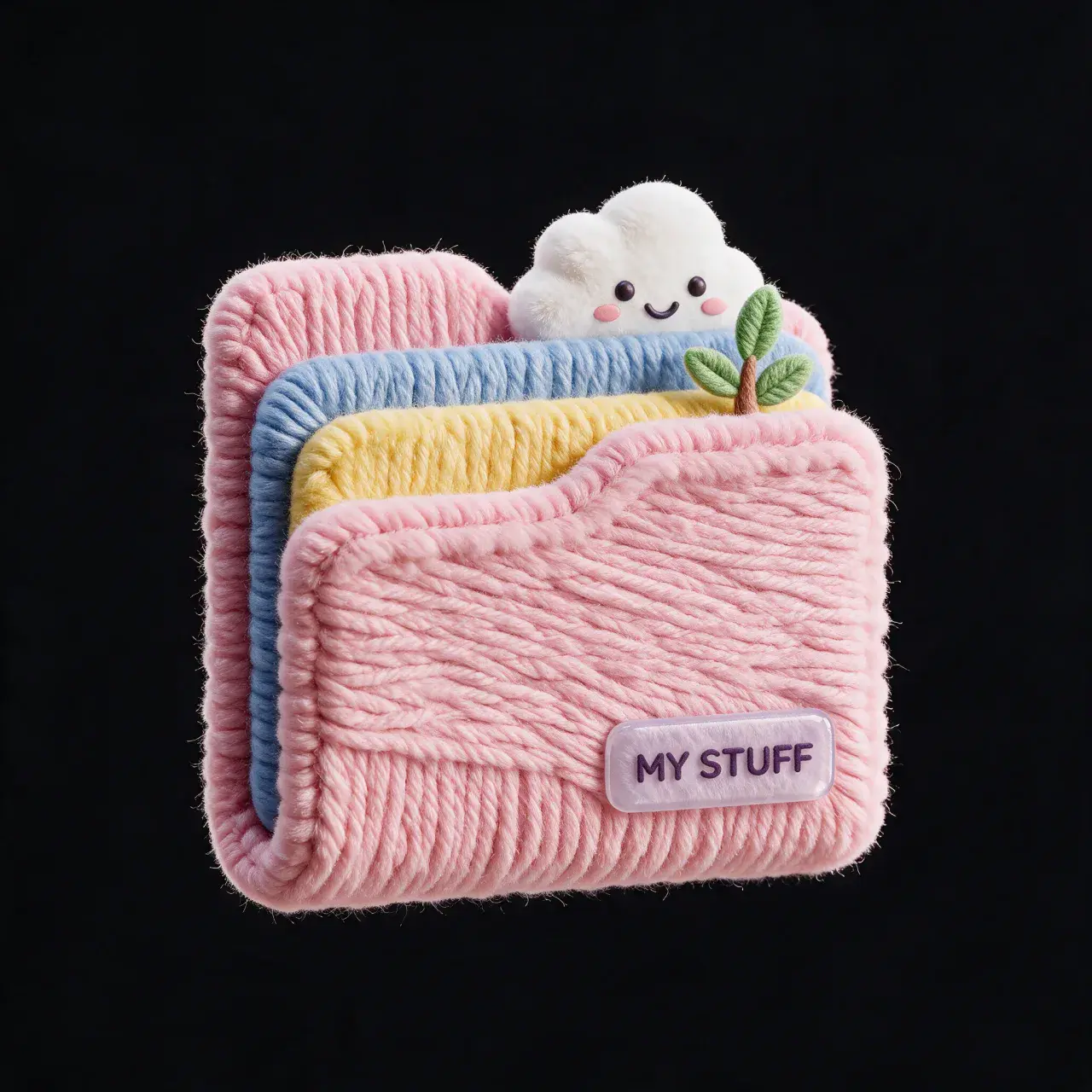
Seedream 5 Pro
Copy
Use the uploaded image as the identity and primary-shape blueprint for a physically realized 3D material object. Preserve the subject's recognizable outer silhouette, overall proportions, major internal openings, negative spaces and essential graphic structure. Do not redesign the subject or replace it with another object. If the uploaded source is flat artwork, typography or a logo, give it convincing physical thickness while preserving its frontal design. If it is already a three-dimensional object, preserve its overall orientation and primary form. Reconstruct the object from thick chenille yarn structure with plush caterpillar-like strands, dense fuzzy pile, soft textile volume, visible wrapped fiber direction and rounded edge buildup. Let the form feel built from layered yarn bundles rather than generic fur. Broad areas may show organized chenille flow while tighter corners reveal compressed textile density and subtle thread direction changes. The chosen material must physically reconstruct the object rather than appear as a texture map, decal, printed pattern or photographic overlay. Allow the material to determine the local surface topology and secondary geometry while preserving the recognizable primary silhouette and major negative spaces. Render the result as a genuinely modeled three-dimensional asset with convincing thickness, edge construction and material-dependent depth. Keep the source object's general visual orientation whenever possible. Use a clean near-frontal premium 3D product-render viewpoint with only a subtle
amount of perspective revealing physical thickness. Neutral long-lens visual compression, approximately equivalent to an 85–100 mm product-photography lens. No wide-angle distortion, dramatic perspective, dutch angle or unnecessary rotation. Show the complete object, fully inside the frame, centered consistently, occupying approximately 62–68% of the image height with generous negative space around it. The object floats freely in empty space against an infinite pure-black background, exact color #000000. No floor, ground plane, table, pedestal, base, wall, visible support, wire, horizon line, contact shadow or cast shadow outside the object. Use restrained high-end material-study illumination consistent across the entire collection. Soft directional illumination comes predominantly from the upper-left-front direction, creating broad dimensional modeling across the form, smooth transitions from light to shadow and clearly readable microgeometry. Maintain a small amount of neutral frontal illumination so shadowed regions retain material information, with only very subtle separation along selected upper-right edges. Lighting must reveal the material rather than become a visual effect. Maintain deep neutral blacks, rich dimensional midtones, soft physically plausible self-shadowing and refined highlight roll-off. No visible lighting equipment or geometric reflections. Physically based 3D material rendering, realistic textile depth, rich fiber self-occlusion and premium commercial CGI material study, ultra-high-resolution photorealistic render.
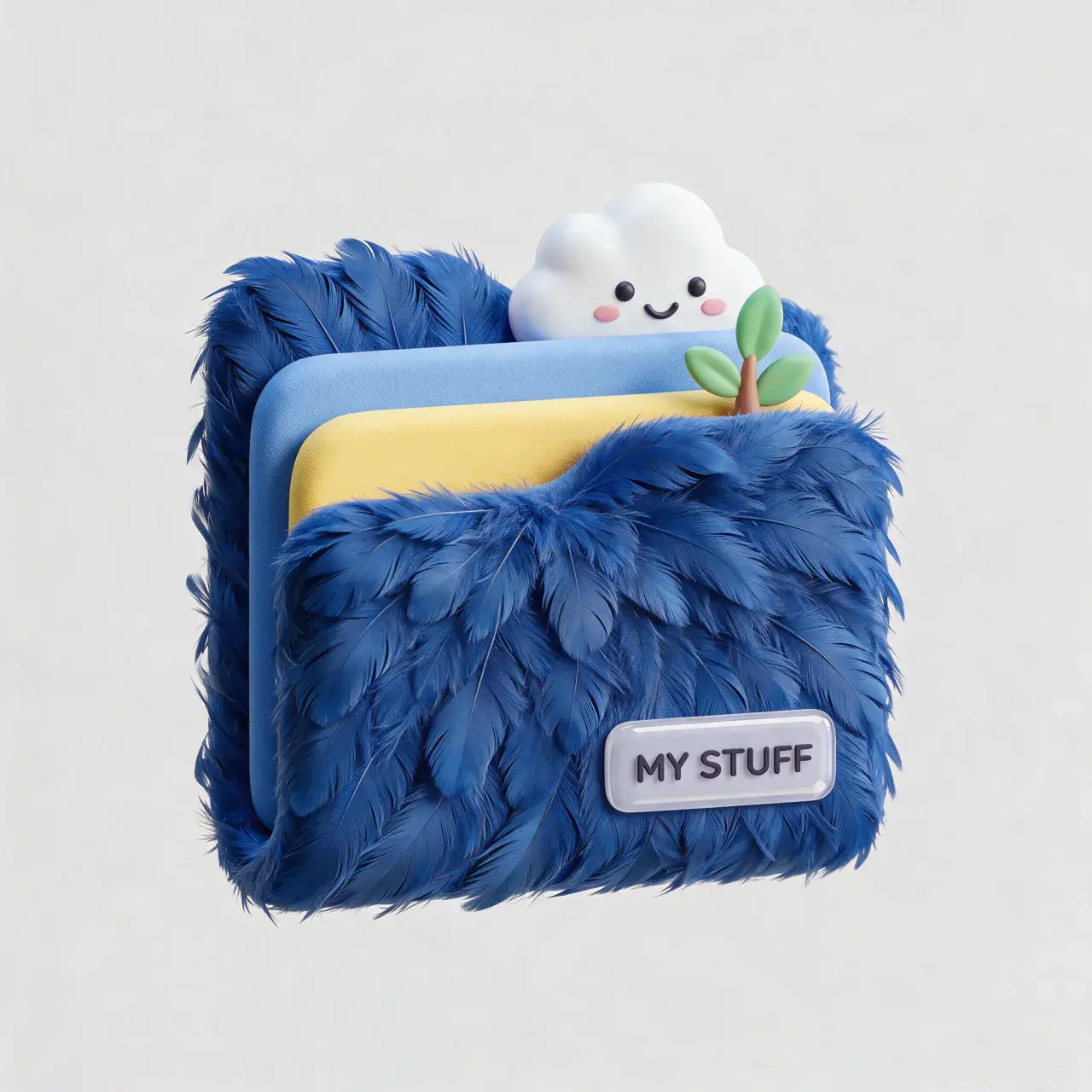
Seedream 5 Pro
Copy
Use the attached image as an immutable geometry reference and preserve its exact silhouette, proportions, openings, typography, logo shapes, construction details, orientation and viewpoint. For a flat logo, produce only a shallow dimensional object. Cover all visible exterior surfaces with densely layered ultra-soft miniature feathers in rich cobalt blue. Every feather has a visible central shaft, fine interlocking barbs and slight natural variation in length and orientation. Feathers overlap in controlled directional rows that follow each surface and wrap cleanly around curves and corners. Near narrow edges and small details, feathers become progressively shorter to maintain the exact source geometry. Center the transformed object and suspend it freely in empty space against a perfectly uniform #E8E8E6 background. No bird anatomy, loose flying feathers, floor, support, pedestal, horizon, contact shadow or external cast shadow. Soft studio light reveals only delicate self-shadowing between overlapping feathers.
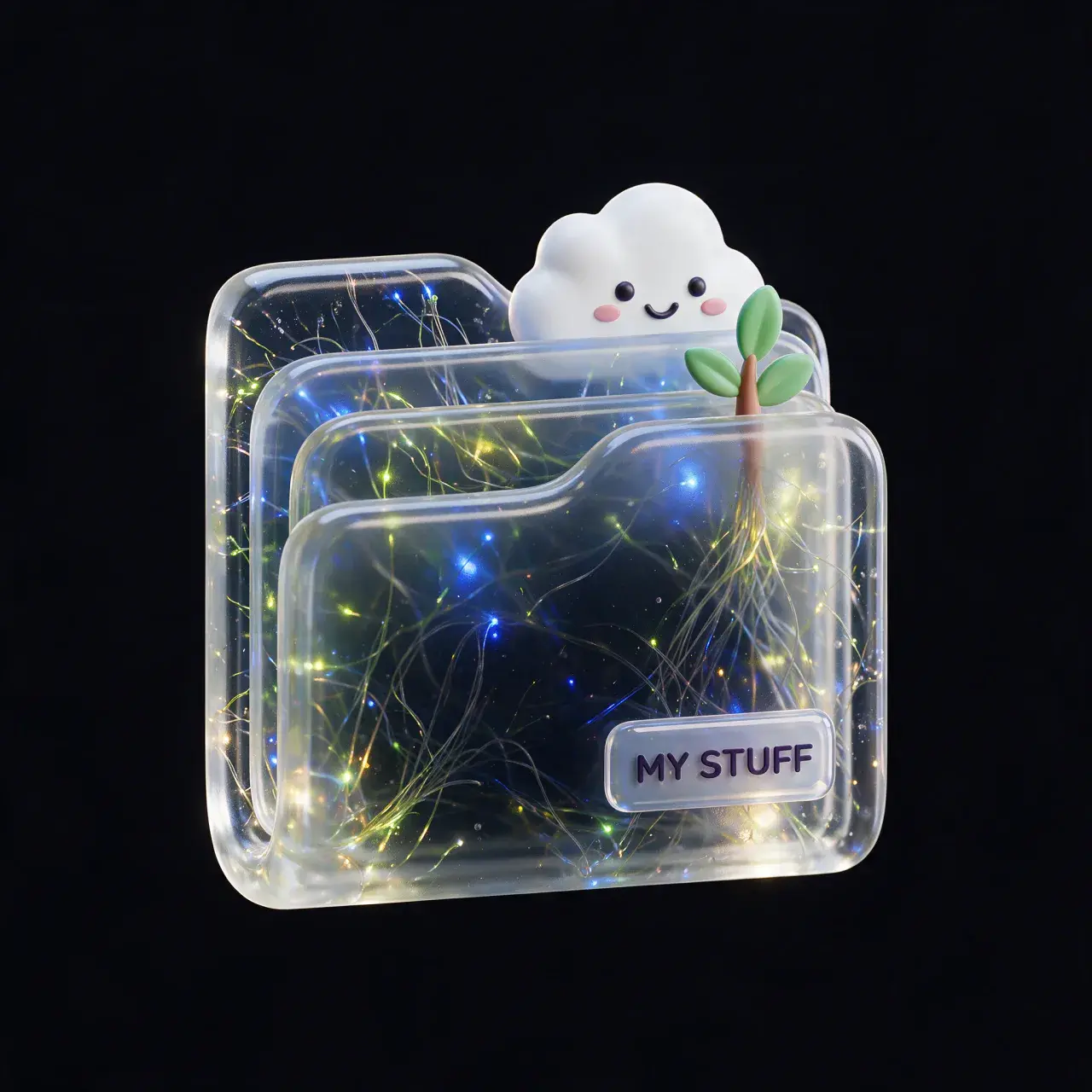
Seedream 5 Pro
Copy
Use the uploaded source exclusively as an immutable map of geometry, preserving its exact silhouette, thickness relationships, openings, lettering, logo geometry, perspective and orientation. Build the object from crystal-clear soft silicone with slight optical milkiness, realistic elastic density, smoothly rounded surface tension and subtle refractive distortion. Inside the silicone, embed hundreds of hair-thin flexible optical filaments following loose flowing paths through the volume. The fibers should bend naturally around openings and structural details without modifying the source design. Most remain dark and nearly invisible, while selected fibers emit concentrated points and thin lines of saturated cobalt blue, acidic lime and warm amber light from within the transparent material. Add small trapped air bubbles, microscopic material imperfections and occasional zones where multiple fibers bunch together below the surface. Illuminate primarily from behind and from the sides so the silicone edges glow while the front remains sophisticated and dark, with small specular highlights revealing its elastic surface. The object levitates perfectly centered against a seamless solid #080808 background, surrounded only by empty black space. No platform, floor, pedestal, wires, environmental objects, horizon, contact shadow or cast shadow.
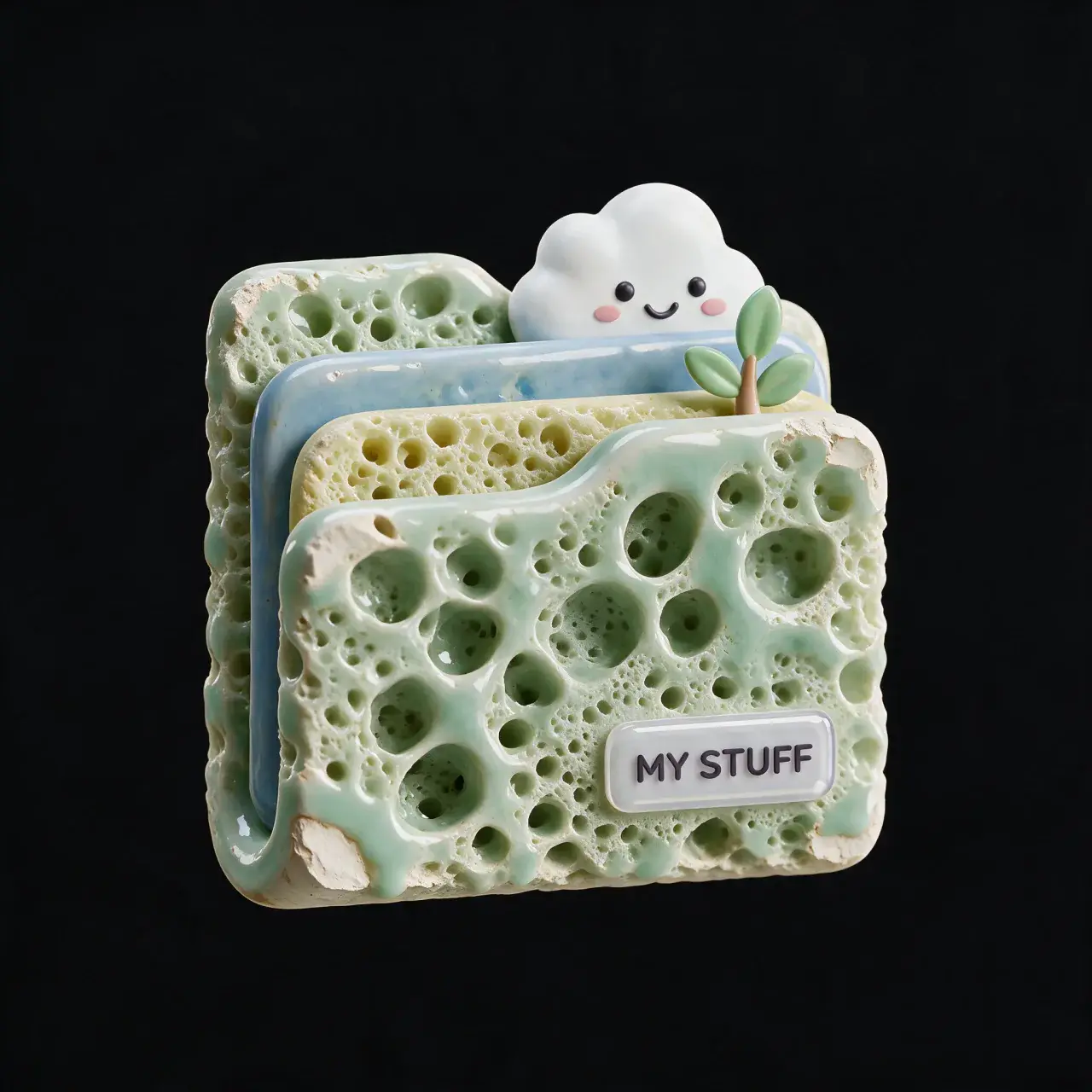
Seedream 5 Pro
Copy
Use the attached image as the exact identity and silhouette blueprint for one hero object. Preserve its proportions, major openings, negative spaces, and recognizable design relationships. If the input is a flat logo or graphic, turn the exact contour into a cohesive three-dimensional ceramic body. Do not copy the source background. Form the entire object from a structurally believable open-cell fired ceramic foam. The interconnected pores must pass through the material and participate in its construction rather than appear as shallow holes stamped into a smooth surface. Use larger irregular cells across broad masses and progressively smaller, denser cells around thin features, tight turns, and openings. Coat the ceramic with a thick translucent celadon glaze in a pale jade-green tone. The glaze should pool inside cavities, thin across exposed ridges, bridge some of the smallest openings, and form subtle rounded drips or meniscus edges without distorting the overall silhouette. Selected chips and cut-edge areas may reveal the warm off-white ceramic body beneath the glaze. Render on a vertical 3:4 canvas with a centered near-frontal product camera, restrained three-quarter depth, approximately an 85 mm lens, 5° horizontal rotation, 4° downward elevation, no roll, no wide-angle distortion, and no dramatic perspective. The full object remains visible at approximately 80–84% of the image width. Suspend it in an infinite pure-black studio void, background exactly #000000, without a visible floor, wall, horizon, pedestal, or support. Illuminate only from outside the frame using a broad soft key from high camera-left, a minimal frontal fill, and a restrained high camera-right accent. Use slightly grazing illumination to reveal pore depth and glaze thickness. No lamps, panels, softboxes, reflection cards, floating white rectangles, or visible studio fixtures. Preserve deep cavity shadows, subtle glaze transmission, self-occlusion, dimensional jade midtones, and smooth highlights. No sea sponge, soap bubbles, uniform perforation grid, glossy plastic, detached chunks, text, or watermark.
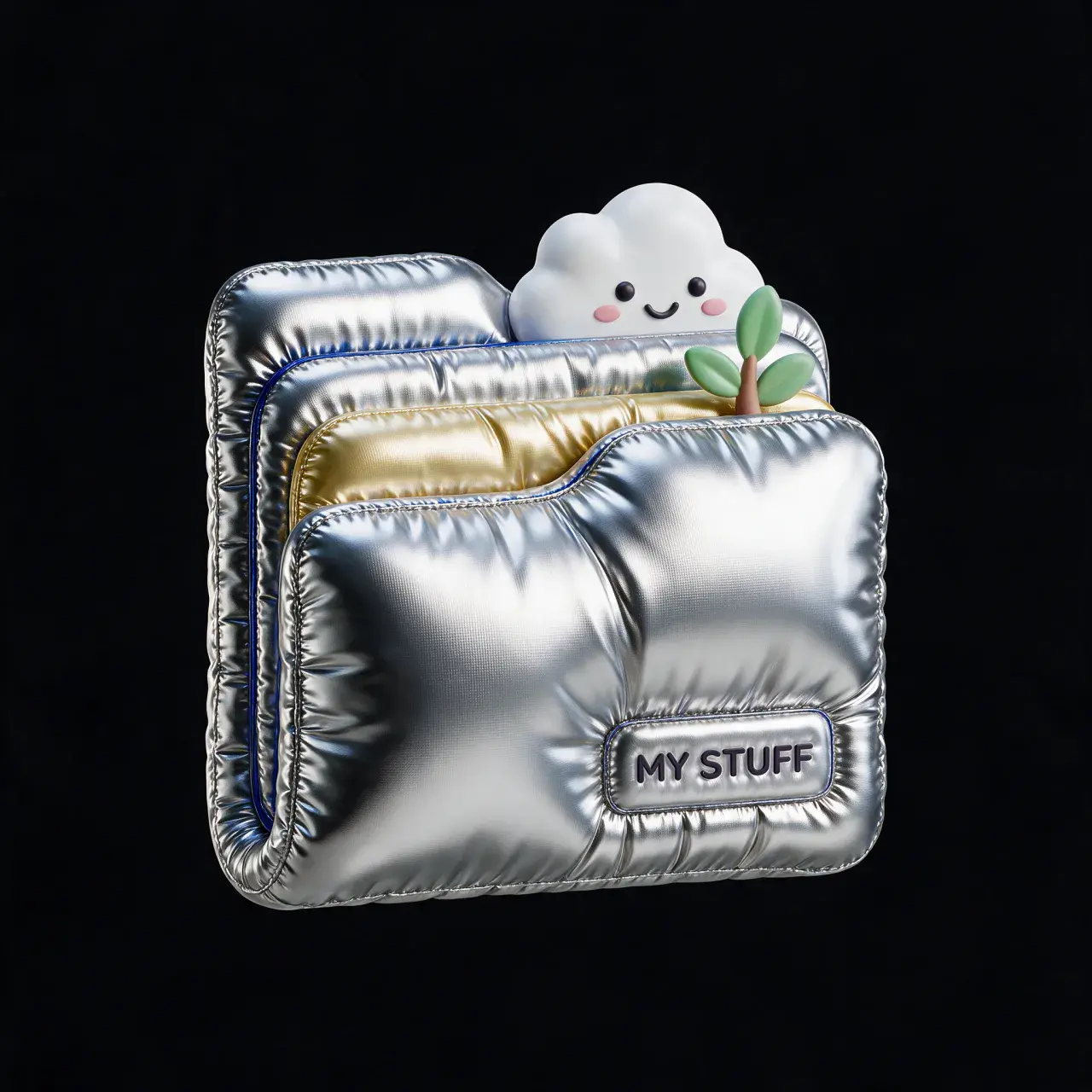
Seedream 5 Pro
Copy
EDIT THE SCENE ONLY. Do not regenerate or modify the object. Preserve the object itself pixel-for-pixel: identical geometry, material, silhouette, typography, internal openings, proportions, scale, position, rotation, tilt, perspective, camera view, extrusion depth, bevels, lighting on the object, and all self-shadowing inside its geometry. Remove every trace of the surrounding physical scene. Completely remove the floor, ground plane, horizontal surface, horizon, contact shadow, cast shadow, drop shadow, reflection beneath the object, gray area beneath it, light pool, background illumination, pedestal, platform, support, and every tonal boundary behind or below it. Replace the entire area surrounding the object—including every pixel beneath its lowest point—with a perfectly uniform infinite black void, exactly #000000. The object must appear freely suspended in empty space. Empty pure-black space must be clearly visible beneath every part of the object. Nothing touches or supports it. Do not add a halo, rim glow, mist, particles, wires, stands, or new reflections. Preserve only shadows located inside the object itself: bevel shading, seam occlusion, cavity shading, and self-shadowing between its parts. The final background must contain no gradient, vignette, texture, floor line, reflected light, or visible distinction between upper and lower areas. It must be one uninterrupted field of absolute black. One unchanged levitating object only. No added text and no watermark. MATERIAL-ONLY IMAGE EDIT. Use the attached levitating 3D master as an immutable geometry, camera, composition, lighting, and background reference. Preserve exactly the object’s pixel position, center point, bounding box, scale, rotation, tilt, perspective, camera distance, extrusion depth, complete outer silhouette, typography, internal openings, spacing, and empty black space around it. Do not move, rotate, reframe, enlarge, shrink, flatten, thicken, retype, redraw, or redesign the object. The transformed result must align with the attached object when overlaid at 50% opacity. Replace only the object’s
material and material-dependent microgeometry. Transform the complete existing object into a premium inflated technical puffer sculpture made from reflective liquid-silver ripstop nylon. Create a small number of large, strongly inflated, pressure-filled chambers that follow the existing geometry. Use one broad continuous padded chamber for each major structural region or letter stroke. The front surfaces must remain fully filled and voluminous. Do not convert the letters into hollow metallic tubes or outlines. Use progressively smaller padded chambers only around narrow curves, counters, internal openings, and fine details. Keep every chamber connected to the main body and constrained within the locked silhouette. Add deep rounded inflation, smooth convex fabric tension, narrow recessed heat-welded seams, microscopic ripstop weave, subtle wrinkles beside seams, and realistic compression where adjacent chambers meet. Add restrained glossy cobalt-blue piping inside selected seam channels. The primary visual effect must be bold sculptural inflation—not quilting printed onto a smooth surface and not an arrangement of metallic hoses. Keep the same established off-camera lighting direction: one broad soft key from high camera-left, minimal frontal fill, and a subtle high camera-right separation contribution. Create broad curved highlights across the inflated silver surfaces and deep self-shadowing only inside seams, folds, openings, and intersections. The object remains freely levitating in exactly the same location in an infinite uniform black void, background exactly #000000. ABSOLUTELY NO floor, ground plane, horizontal surface, horizon, contact shadow, cast shadow, drop shadow, reflection beneath the object, pedestal, platform, support, light pool, background gradient, or gray area below it. Empty pure-black space must remain visible beneath the entire object. Shadows may exist only within the object’s own geometry. No visible softboxes, white panels, rectangular reflections, lamps, studio equipment, floating cushions, loose parts, additional objects, added text, or watermark.
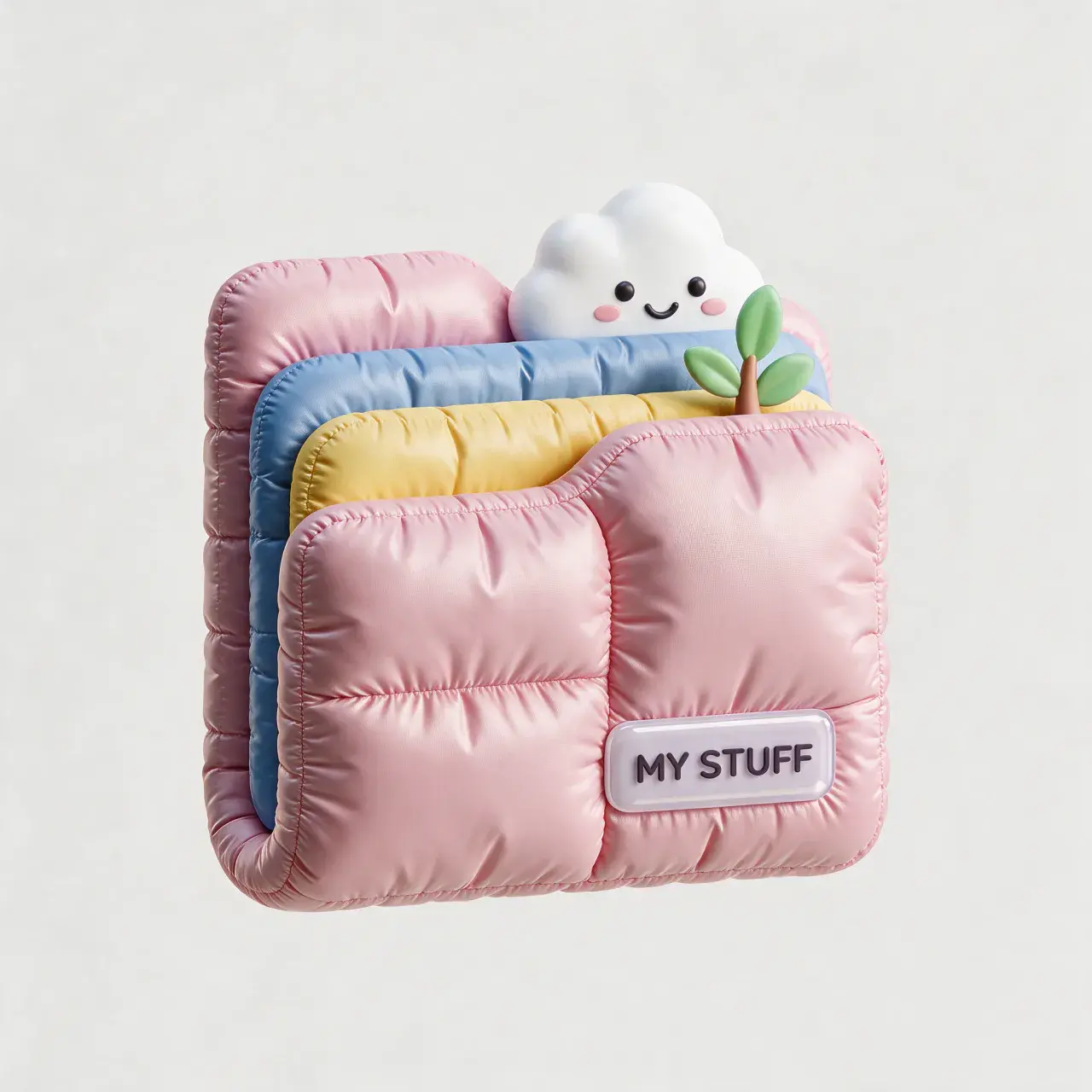
Seedream 5 Pro
Copy
Use the attached image as a strict silhouette and structural reference. Preserve all original contours, openings, proportions, text, logo shapes, orientation and recognizable details. For flat graphics, create a shallow physical version that follows the exact original geometry. Rebuild the exterior from soft inflated technical nylon divided into compact pillowy chambers following the object's geometry. Each chamber has believable internal air pressure, subtle seam lines, tiny textile weave and gentle specular highlights characteristic of premium lightweight puffer fabric. Inflation may soften the surface but must never deform the object's overall silhouette or close negative spaces. Small details use proportionally smaller quilted cells. The object is centered and floating freely in empty air against a perfectly uniform #E8E8E6 background. No hanger, support, floor, pedestal, horizon, contact shadow or external cast shadow. Only restrained self-shadowing between inflated chambers and seam recesses.

Seedream 5 Pro
Copy
Use the attached image as an immutable shape and construction reference. Keep its exact silhouette, proportions, openings, edges, seams, text, logo geometry, camera angle and overall composition. Reconstruct the same subject as a solid object whose visible exterior is made from raw architectural concrete: cool mineral gray tone, fine aggregate, tiny pores, subtle casting irregularities, faint scratches, occasional darker mineral specks and softly worn edges. The concrete must follow every curve, bevel, recessed area and thin structural element of the source with believable physical thickness; it must never look like a concrete photograph pasted onto the object. Preserve small source details instead of burying them under excessive roughness. Natural matte surface response, restrained soft highlights, realistic micro-shadowing inside pores, clean editorial studio lighting and a pale neutral background. The result should feel like an impossible precision-cast concrete edition of the original object rather than a redesigned object.
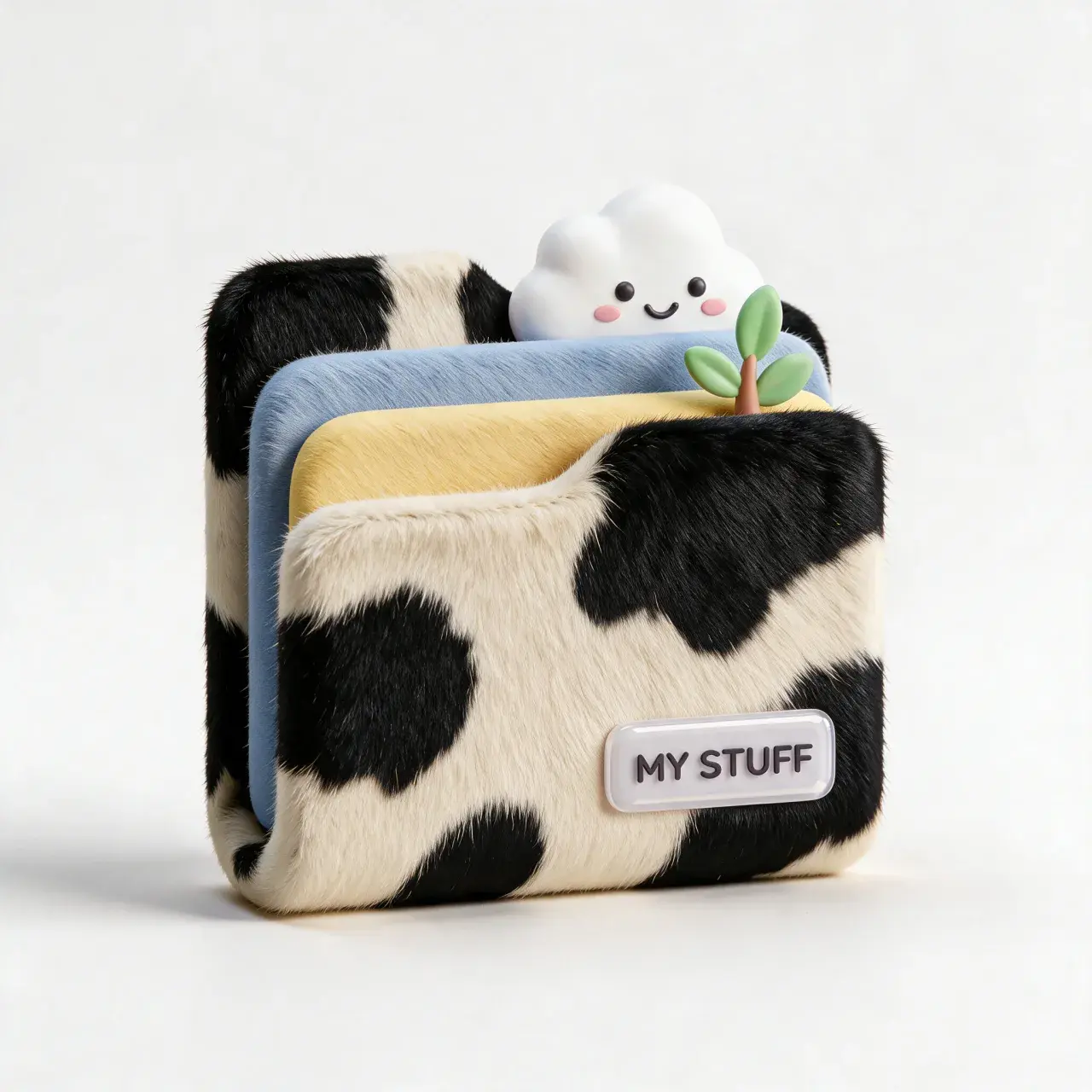
Seedream 5 Pro
Copy
Use the attached image only to define the exact object geometry. Preserve its silhouette, proportions, construction, cutouts, typography, logo contours, perspective and orientation without simplification. Replace the visible exterior with genuine short-pile black-and-warm-ivory animal hide, formed from dense microscopic hairs rather than printed spots. Create irregular organic monochrome patches that flow continuously across the object's surfaces and naturally bend around corners, edges and recessed areas. Individual hairs should be visible at close range, with slight variation in length and direction, soft tactile sheen and subtle compression along seams and edges. Maintain crisp readability of all structural features and source graphics. If the input is a flat logo, build the exact logo silhouette as a shallow dimensional object and cover that form with the same hide. Soft fashion-editorial lighting, subtle contact shadow, warm white seamless background, centered premium product photography. No additional animal features, no horns, ears or anatomy, and no change to the original object design.
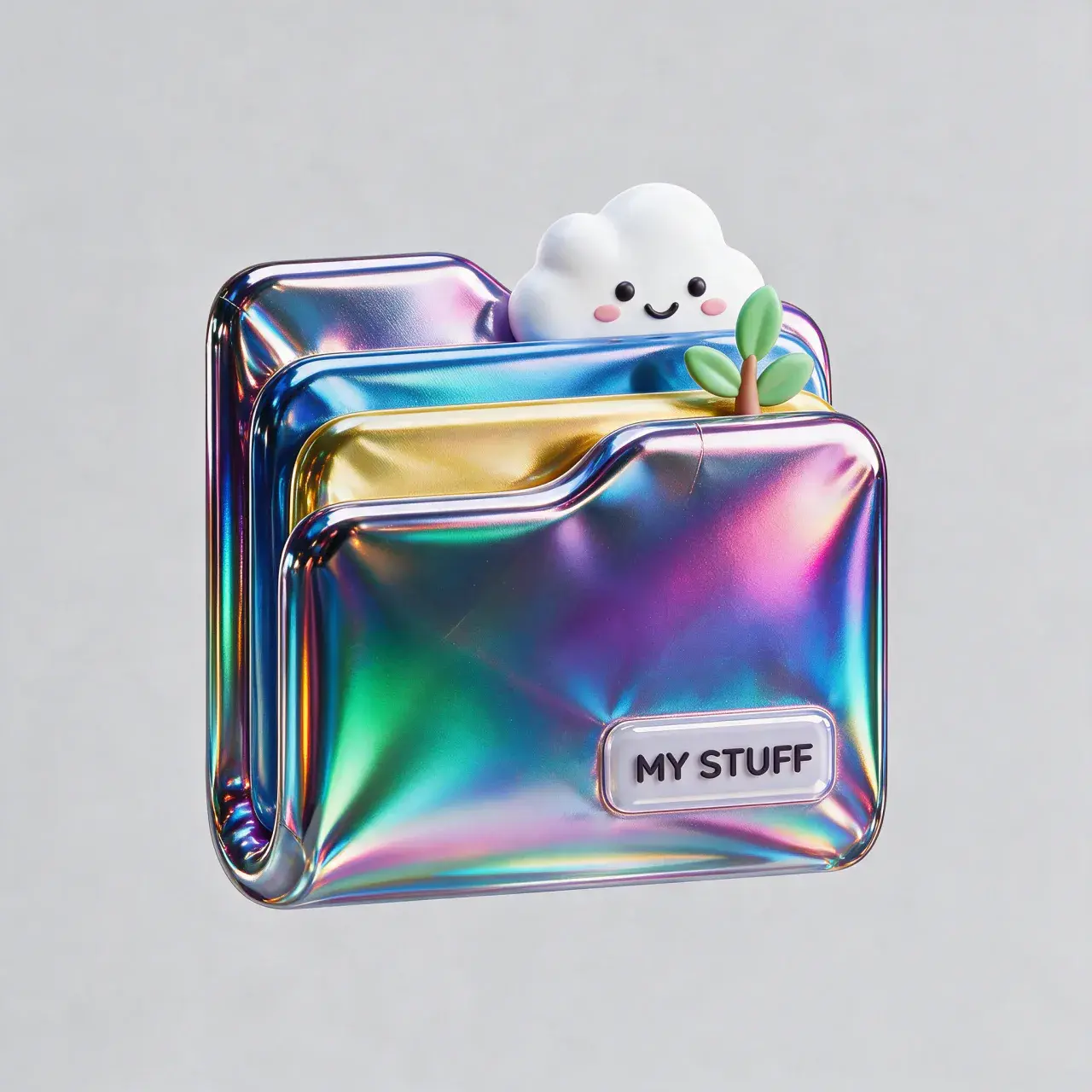
Seedream 5 Pro
Copy
Treat the attached image as a locked geometric template and keep its exact silhouette, proportions, openings, graphic elements, text and orientation. Reconstruct its surface from laminated optical diffraction film bonded tightly to the underlying form. The material should have a smooth transparent-to-metallic polymer base with microscopic diffraction grooves producing sharp spectral bands of cyan, violet, magenta, emerald, amber and electric blue that shift according to surface angle and illumination. The rainbow must arise from optical interference rather than from a painted multicolor gradient. Wrap the film continuously around curves, bevels and edges, with realistic tension, occasional ultra-fine lamination lines and slight changes in spectral density near bends. Keep every source detail visible and geometrically accurate. Bright controlled studio strip lights should create moving-looking spectral highlights while preserving clean material definition. Neutral light-gray background, isolated product composition, crisp premium macro realism. No random rainbow background, no glitter, no floating particles and no redesign of the source.
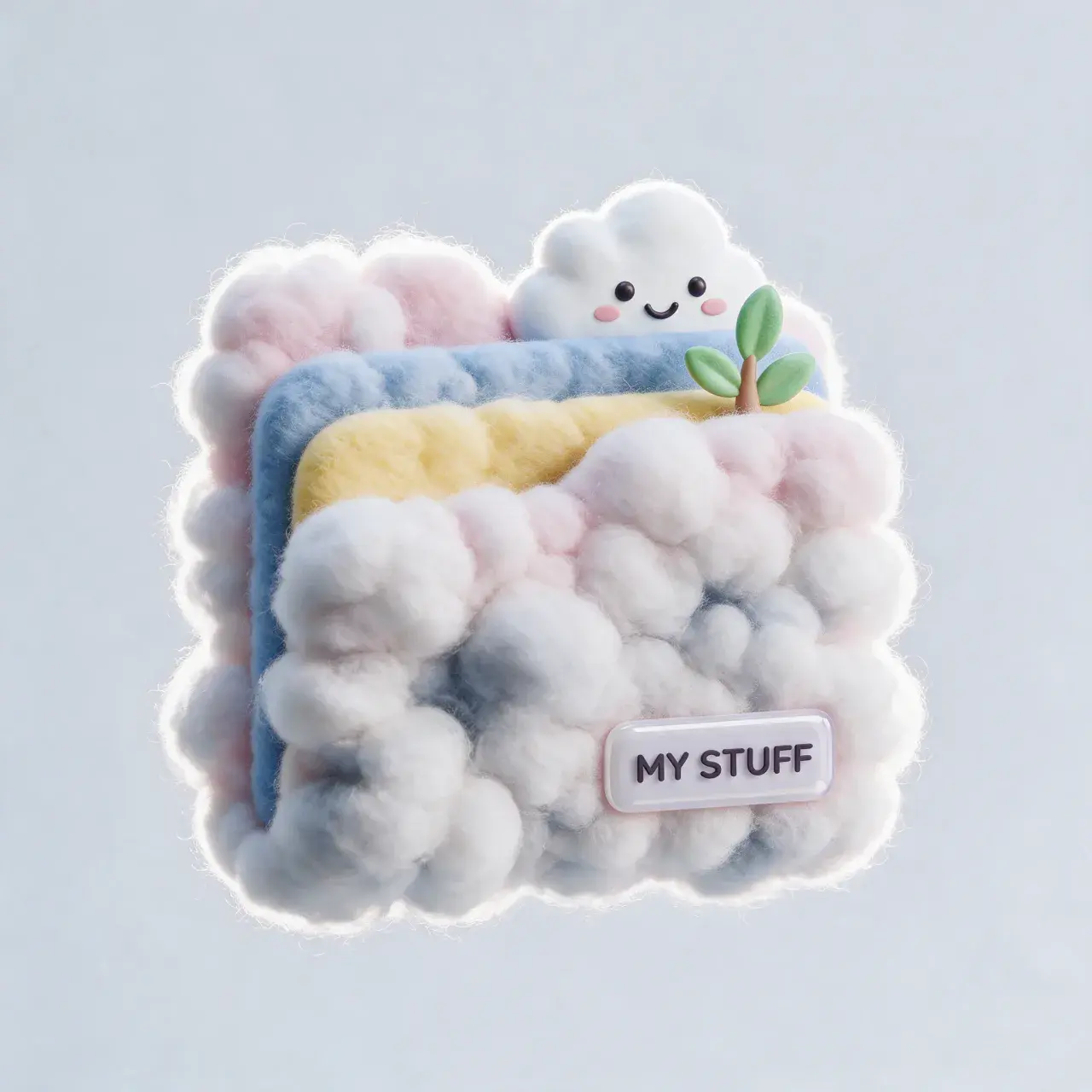
Seedream 5 Pro
Copy
Use the attached image as a strict silhouette and proportion map. Preserve every external contour, internal opening, relative spacing and recognizable graphic feature. Transform the subject into a tangible sculptural object formed from dense soft cloud-like fiber masses, with layered cottony volume, hundreds of small rounded billows and fine wispy fibers along the outer boundary. The cloud material must remain constrained by the original geometry: broad surfaces may swell slightly outward for believable softness, while holes, separations, typography and negative spaces remain clearly defined and unchanged. Avoid turning the object into an amorphous cloud blob. Create soft translucent edge scattering, delicate internal gray-blue shadow pockets between billows and luminous white highlights across exposed areas. Slightly floating isolated composition, soft overcast studio illumination, very pale cool-gray background, dreamy but photorealistic tactile rendering. No sky scene, no extra clouds around the object, no fantasy additions and no altered silhouette.
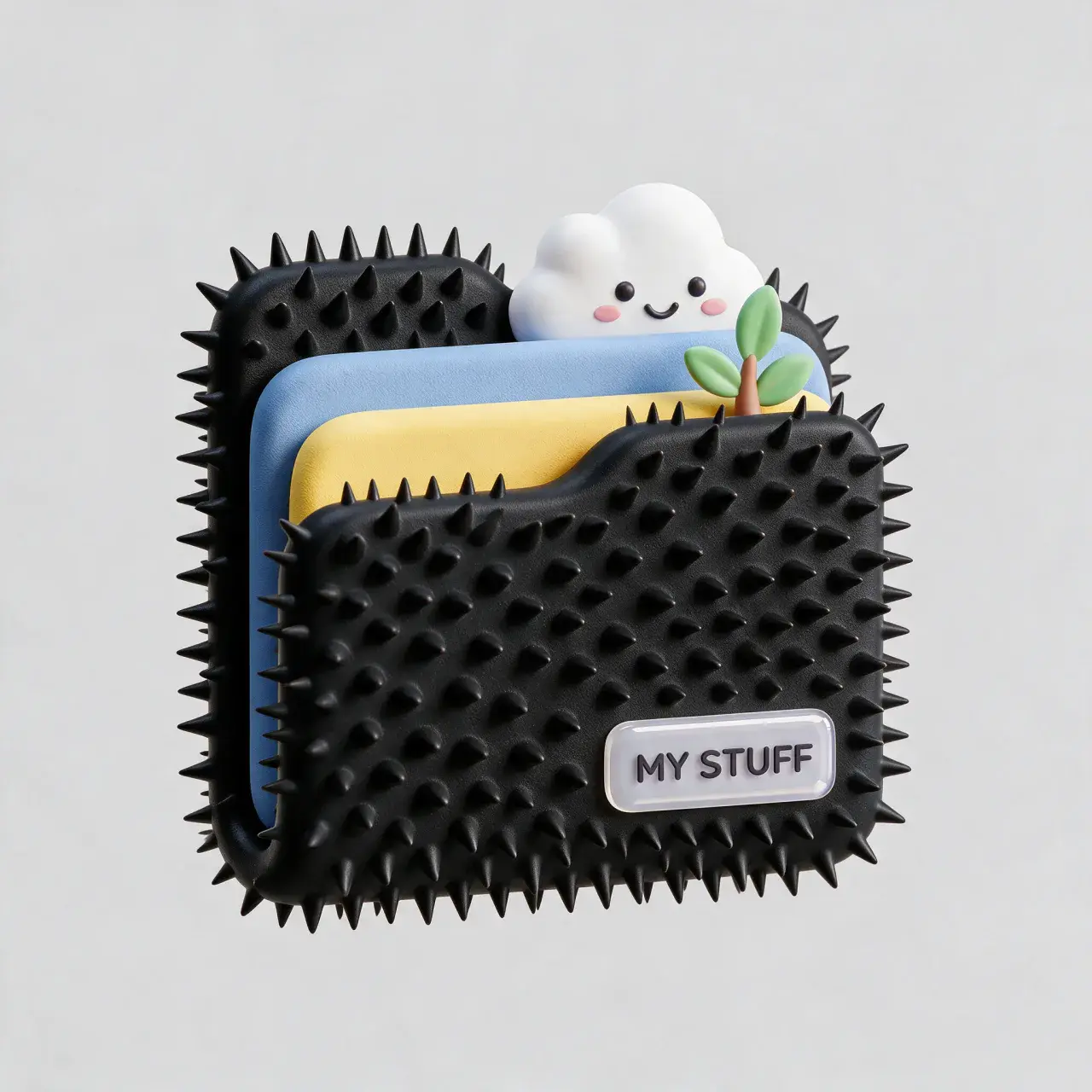
Seedream 5 Pro
Copy
Use the attached image as the exact geometric foundation and preserve its original silhouette, dimensions, openings, structural details, text, logo forms and perspective. Cover the exterior with a continuous matte black elastomer skin populated by thousands of short soft conical spikes growing perpendicular to the local surface. Spike scale and density should adapt intelligently to the geometry: evenly distributed across broad areas, progressively smaller near narrow edges, typography, openings and delicate structural details so the original design stays perfectly recognizable. The spikes must be physically integrated into the rubber surface rather than added as disconnected objects. Use dense premium silicone with subtle deformation, soft rounded spike tips, very low gloss and faint velvety microtexture. Soft directional studio lighting should produce rhythmic micro-shadows between spikes while retaining detail in the black material. Clean light-gray background, centered isolated product shot, extremely crisp tactile macro realism. No aggressive weapon-like spikes, no metallic material and no modification of the underlying object.

Seedream 5 Pro
Copy
Use the attached image as a rigid shape mask and preserve every contour, opening, proportion, graphic detail and letterform exactly. Turn the object's exterior into a miniature living lawn composed of dense fresh short green grass growing directly from the surface, with realistic blades following the local orientation of each plane. Add a sparse distribution of tiny white field daisies with yellow centers, keeping them small enough that they never interfere with the object's silhouette, text or structural details. Exposed edges should reveal a very thin dark organic soil substrate beneath the turf, giving the material believable physical construction. Grass density should decrease intelligently around narrow gaps and fine features so the source remains completely recognizable. Fresh daylight-style studio lighting, rich natural greens, fine blade shadows and subtle translucency, clean warm-white background, premium surreal product photography. No surrounding landscape, no pot, no ground plane and no additional plants outside the object.
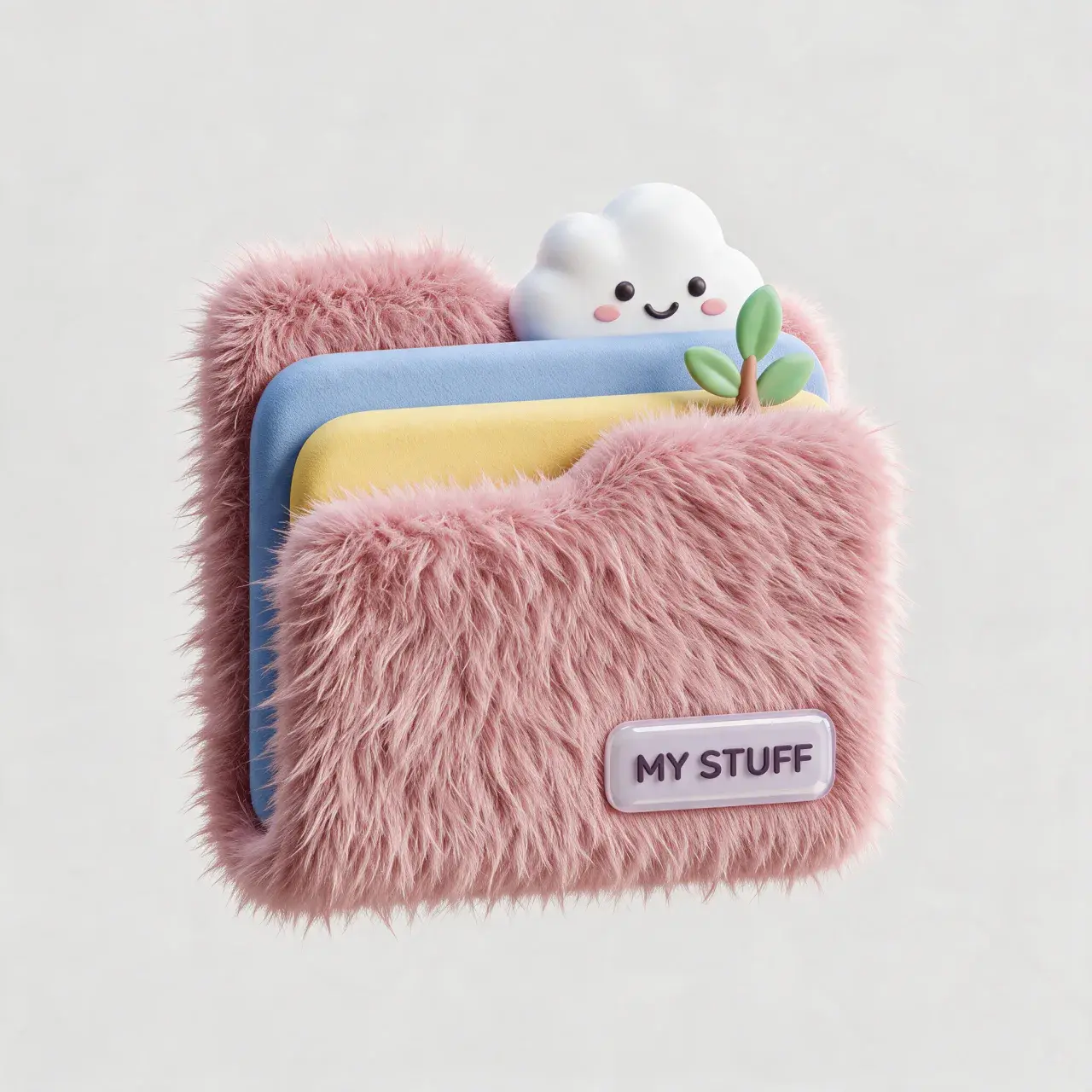
Seedream 5 Pro
Copy
Use the attached image as a locked geometry blueprint. Preserve the exact outer silhouette, proportions, internal cutouts, openings, construction, typography, logo shapes, recognizable details and orientation of the source. If the input is a flat logo or graphic, convert the exact original contour into a shallow three-dimensional object with clean physical thickness while preserving every negative space and letterform. Reconstruct every visible exterior surface from dense ultra-soft dusty-pink shag fur, made from thousands of individually resolved silky fibers with varied length, slight directional flow, fluffy irregular tips, subtle clustering and natural compression around edges, seams and recessed geometry. The fibers must physically grow from and wrap around the underlying object rather than appearing as a photographic texture layer. Broad areas are plush and voluminous while narrow features remain readable and structurally accurate. Use soft diffused studio illumination that reveals fiber detail through delicate self-shadowing and subtle highlights. Fixed composition: the object is centered and fully suspended in mid-air with visible empty space beneath it, floating freely with no surface, floor, pedestal, support, strings or hanging mechanism and with absolutely no contact shadow, cast shadow or drop shadow beneath or around it. Uniform seamless solid background #E8E8E6. Premium photorealistic material study, crisp silhouette, isolated object.

Seedream 5 Pro
Copy
Use the attached image as an immutable geometry template. Preserve its original silhouette, dimensions, openings, lettering, logo geometry, perspective, orientation and every recognizable structural component. If the source is a flat logo, convert it into a shallow three-dimensional form while leaving its frontal outline completely untouched. Reconstruct the visible surface from ripe strawberry epidermis with rich natural red tonal variation, fine cellular texture, shallow seed dimples and small pale golden achenes physically embedded into the skin. Seed density and scale must adapt to the geometry so narrow edges, typography and small details remain crisp; extremely fine areas may contain only red strawberry skin without seeds. Include a restrained natural moisture sheen and microscopic organic irregularities. Do not turn the source into the shape of a strawberry. Center the transformed object and let it freely levitate against a perfectly uniform #E8E8E6 background. No leaves, stem, floor, surface, pedestal, support, horizon, contact shadow or external cast shadow. Only subtle self-shading across the object's own dimensional surface.
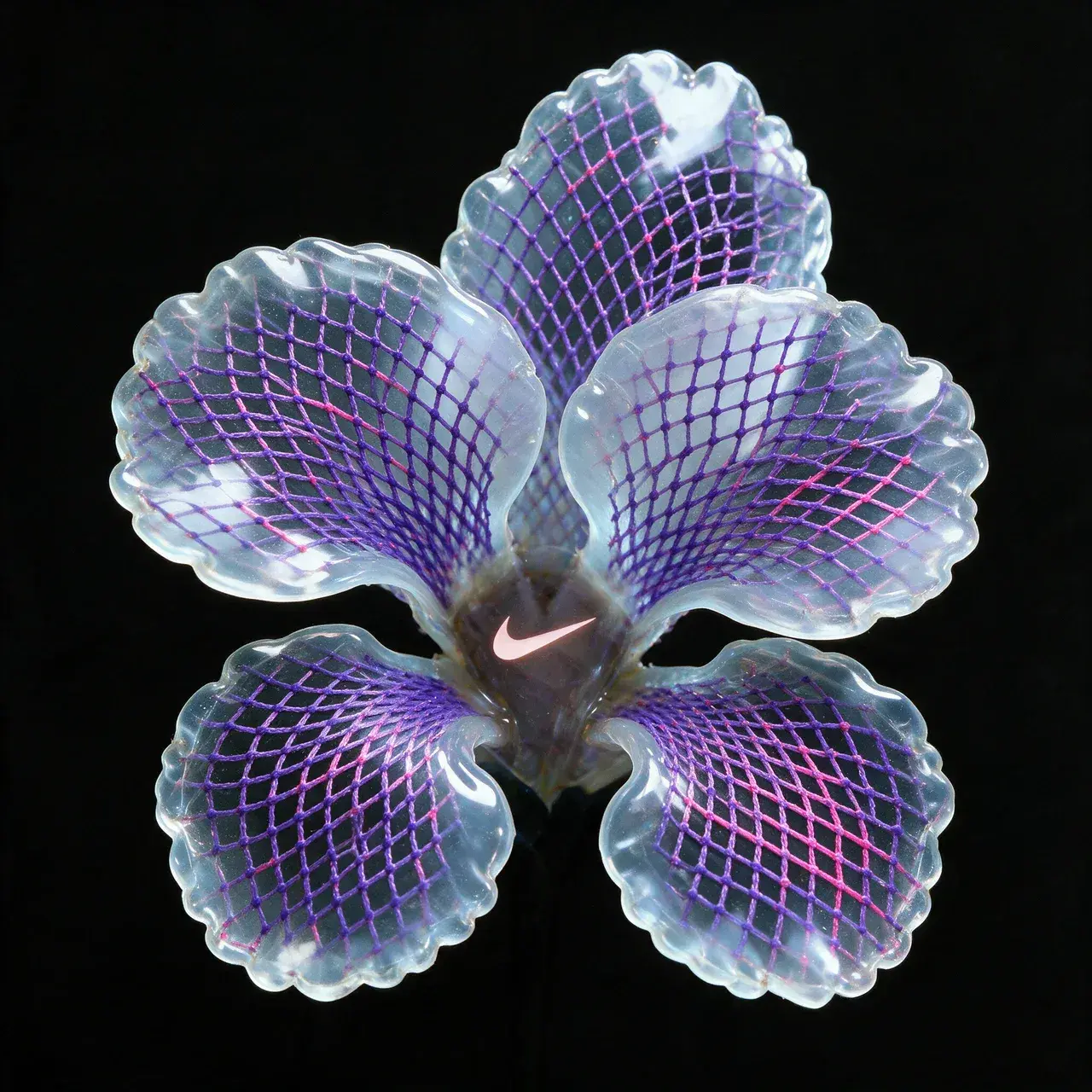
Seedream 5 Pro
Copy
Use the uploaded image as an immutable full-assembly reference. Preserve every visible source component exactly one-to-one: identical silhouette, proportions, thickness, openings, cutouts, layered parts, attachments, readable text, logos, labels, facial details, decorations, relative placement, overlap, depth order and original viewing orientation; nothing may disappear, merge, move or be redesigned. Transform only the material. Reconstruct suitable surfaces from thick optically clear flexible vinyl #EAF8F7 with a faint icy-blue tint #BDECF2, physically laminated over a real stretched fishnet textile trapped directly beneath the transparent skin. The fishnet should use saturated ultraviolet #6C3BE8 as the dominant yarn with occasional hot-pink #F53B94 junctions, built from individually visible round synthetic fibers with real crossings, tiny weave tension, slight compression where the clear vinyl presses against the mesh and small irregular gaps caused by stretching over curves. Keep the network large and graphic rather than tiny and repetitive. In selected broad zones let the mesh rotate direction or stretch diagonally to create elongated diamonds and strong directional rhythm, while the outer vinyl remains perfectly smooth and faithful to the source geometry. Show realistic heat-welded micro-seams, subtle vinyl stress whitening around tight corners, faint surface scratches, microscopic dust trapped between layers and slight air pockets around several mesh intersections. Photograph the complete preserved assembly freely suspended against pure black #000000 with broad soft upper-left-front illumination, restrained neutral fill, crisp localized clear-vinyl highlights, deep purple mesh shadows and full-frame macro-product-photography realism. No glowing edges, no toy-plastic appearance, no generic CGI smoothness.
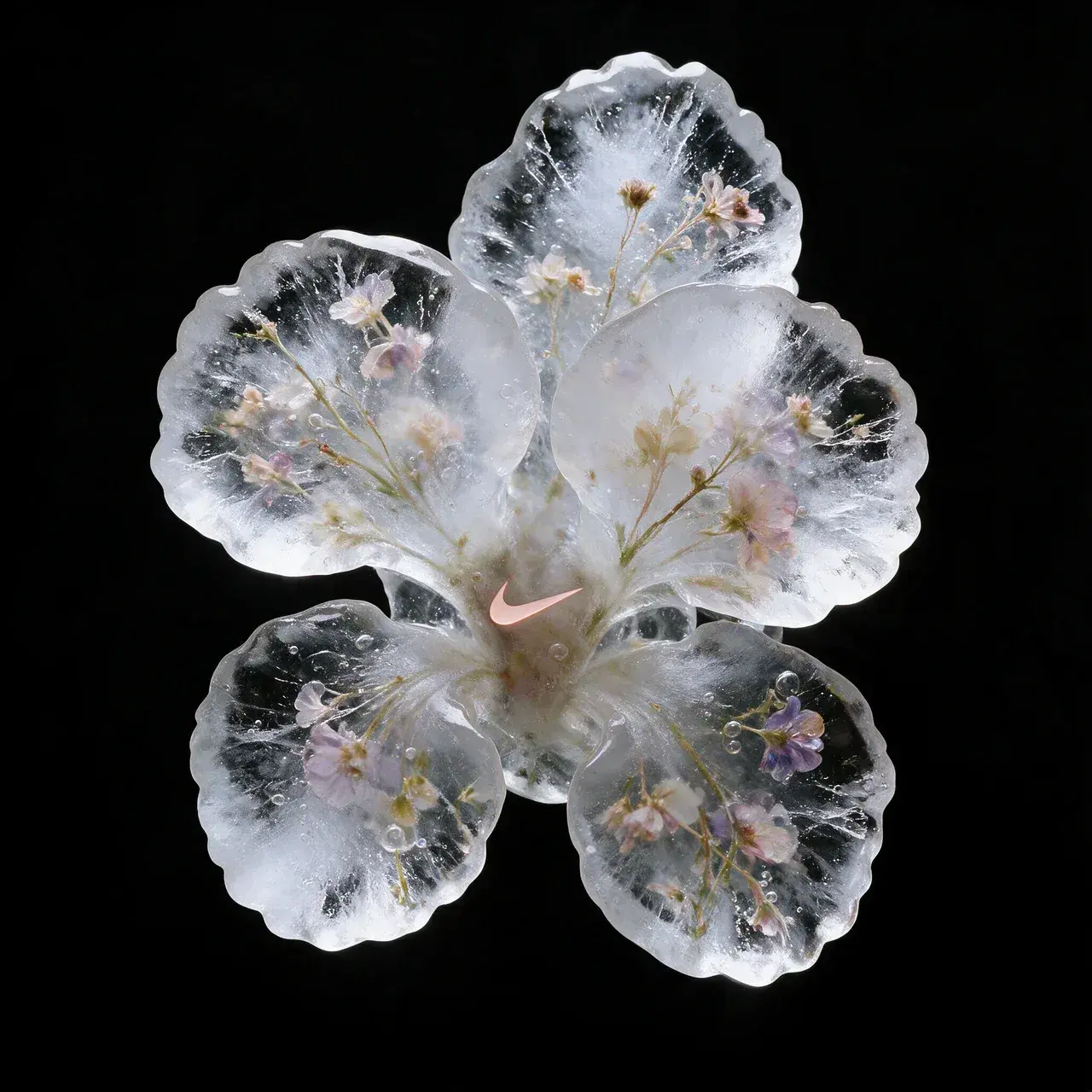
Seedream 5 Pro
Copy
Use the uploaded image as an immutable full-assembly reference. Preserve every visible source component exactly, including all silhouettes, openings, layered elements, labels, text, logos, facial details, tiny attachments, decorations and original orientation. Every source element must remain fully present and readable; only replace the material system and scale embedded details down around delicate features so nothing disappears. Cast the object from premium crystal-clear and lightly frosted ice with believable thickness, cold transparency and softly whitened edges. Suspend interesting organic contents inside the ice at multiple depths: delicate wildflowers, thin stems, tiny petals, small seed heads and elegant trapped air bubbles. Use a refined palette of pale lilac, blush pink, soft butter-yellow, ivory and faint sage green so the floral inclusions feel stylish rather than overly busy. Let some petals sit near the surface, crisp and visible, while deeper flowers appear softly distorted through the ice. Add subtle crack-like frozen veining and tiny bubble chains to increase realism. The result should feel like a luxury frozen botanical artifact, luminous and intricate. Render floating against pure black #000000, exact source view, sophisticated upper-left-front studio lighting, beautiful edge highlights, internal depth and ultra-high-resolution CGI.
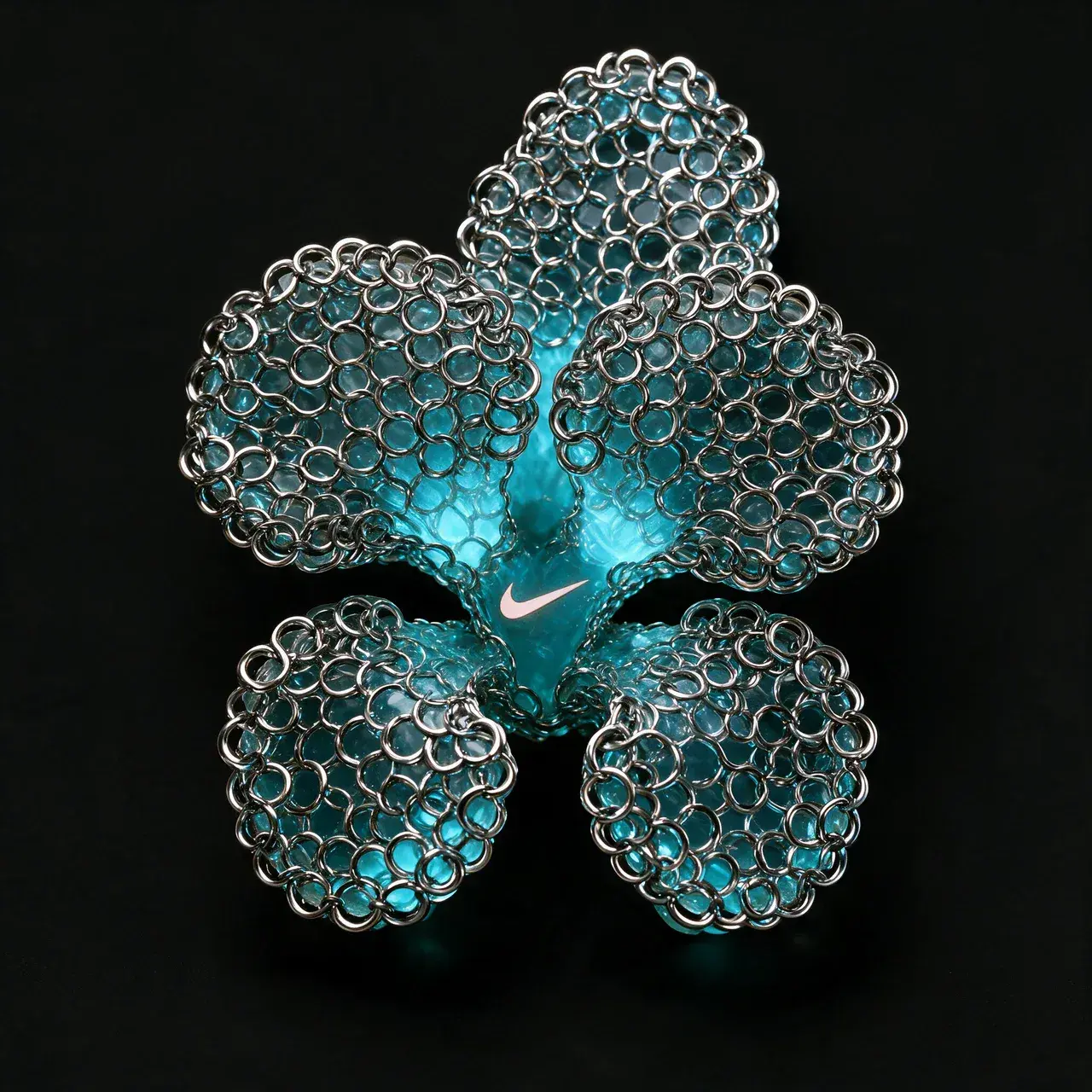
Seedream 5 Pro
Copy
Create one canonical neutral 3D master render from the attached logo or object. Preserve every letter, contour, opening, proportion, spacing, alignment, and recognizable detail exactly. Do not redesign, reinterpret, retype, simplify, or separate any element. Convert the complete source into one coherent solid object made from smooth neutral medium-gray matte polymer. Use restrained physical depth equal to approximately 14% of the object width and small clean rounded bevels. Keep all front-facing geometry identical to the source. Use a fixed near-frontal product view with only slight three-quarter depth: approximately 85 mm lens compression, 6° horizontal rotation, 4° downward camera elevation, and no camera roll. Center the complete object and keep generous black negative space around it. Place it against an infinite pure-black background, exactly #000000. Use one broad invisible light from high camera-left, an extremely weak frontal fill, and one restrained high camera-right separation light. Lighting equipment must remain outside the frame. No visible lamps, softboxes, panels, white rectangles, reflection cards, floor, wall, horizon, pedestal, or environment. Preserve soft self-shadowing, dimensional bevel shadows, and one tiny near-black grounding shadow directly beneath the object. This image is the locked master reference for all later material transformations. IMAGE-EDIT TRANSFORM ONLY. The attached image defines an entirely locked object, camera, crop, and composition. Replace its material without changing its placement or primary form. Maintain pixel-aligned outer contours, internal openings, typography, spacing, center, bounding box, scale, tilt, perspective, extrusion depth, black background, and existing shadow footprint. Do not rotate, reframe, redraw, retype, separate, or distort the object. Construct the existing volume from thousands of tightly interlocked miniature polished chrome rings wrapped around a continuous translucent cyan gel core. The rings must follow the exact surface topology, become progressively smaller around thin features and narrow openings, and remain densely connected as a load-bearing chainmail skin. Through the gaps, reveal the cyan gel interior with soft subsurface depth and restrained internal illumination. Show real ring thickness, overlapping connections, dark occlusion at every intersection, small curved metallic highlights, subtle deformation around bends, and believable pressure from the gel beneath the chainmail. Keep the entire construction clipped to the locked silhouette, except for individual ring edges already lying on its boundary. Retain the original fixed light direction. The cyan core may softly illuminate only neighboring rings and internal gaps. No global glow, neon outline, floating rings, loose chains, visible softboxes, white panels, lamps, room reflections, additional text, or watermark.
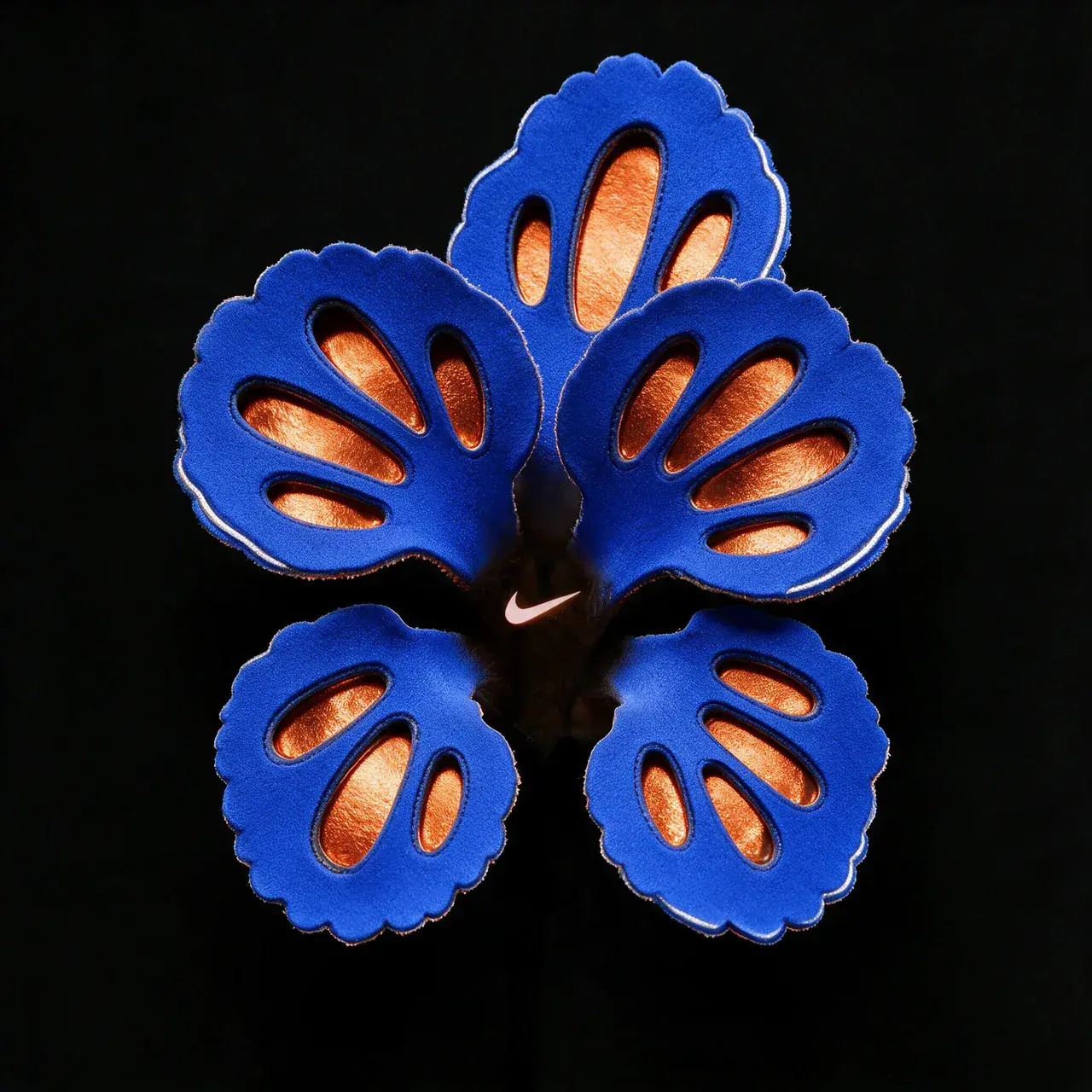
Seedream 5 Pro
Copy
Use the uploaded image as an immutable full-assembly reference. Preserve the complete source exactly, including every component, opening, layered part, attachment, label, readable text, logo, decoration, overlap, depth order and viewing orientation. Reconstruct suitable surfaces from real dense technical neoprene in saturated cobalt #254FE5 with a fine matte closed-cell skin, microscopic knit backing visible at cut boundaries and subtle compression following the source geometry. Across selected broad surfaces laser-cut a bold system of large smooth organic apertures—elongated ovals, rounded slots and asymmetric capsule shapes—remaining completely inside the existing silhouette. Beneath the perforated blue neoprene bond a continuous metallic film in vivid copper-orange #E86B2C with a slightly brushed satin finish, so every cutout exposes the same glowing warm substrate rather than empty black space. Add a very narrow reflective piping #D5DADD around only a few major existing edges for a sharp Y2K sport-tech accent. Laser-cut boundaries must show microscopic heat-darkening, tiny melted foam cells, slight knit fraying and real depth through the neoprene thickness. Keep pattern scale large and memorable, with wide clean cobalt zones between apertures. Photograph the preserved object floating against #000000 using controlled sneaker-campaign lighting: broad upper-left illumination revealing soft neoprene roughness, narrow copper highlights beneath holes, crisp cavity shadows and real physical edge detail.
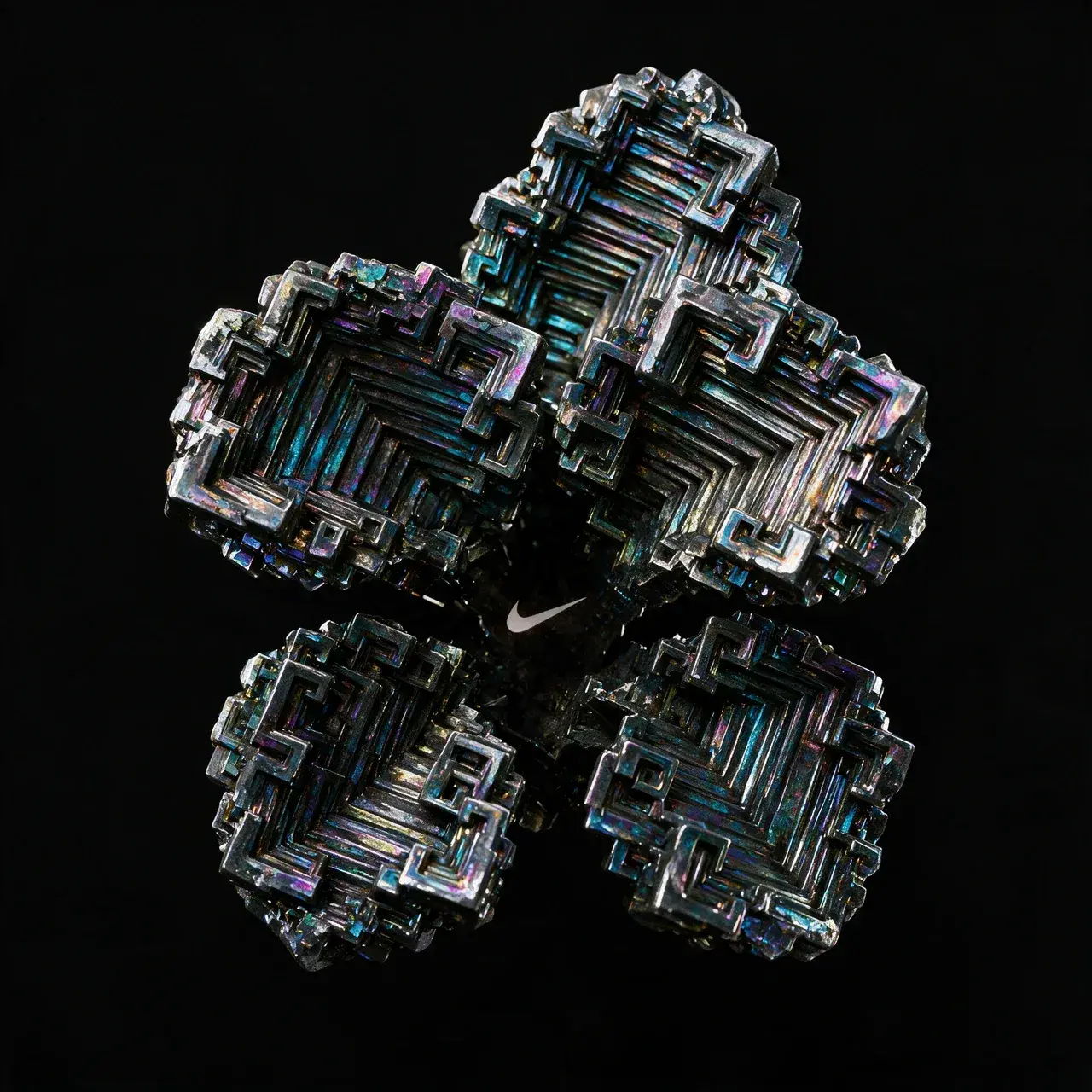
Seedream 5 Pro
Copy
Use the attached image as the locked identity and geometry blueprint for one hero object. Preserve the recognizable silhouette, proportions, internal openings, spacing, and primary design relationships. If the input is flat, transform its exact contour into a dimensional crystalline body. Do not reproduce the source background or add unrelated decorative elements. Physically grow the complete volume from interlocking bismuth hopper crystals. The object must be structurally assembled from nested stepped crystals rather than covered with a crystalline texture. Use large geometric terraces across broad regions and progressively smaller terraces around thin parts, curves, internal openings, and delicate details. Every crystal must interlock with neighboring crystals and contribute to the load-bearing form. Create deep square cavities, layered stair-step growth, sharp edges with microscopic chips, and dense shadowed recesses. Use a dark gunmetal bismuth base with natural oxide interference colors—controlled cyan, violet, magenta, amber, teal, and green—concentrated mainly along terrace edges. Avoid a smooth rainbow gradient or holographic coating. Render on a vertical 3:4 canvas with a centered near-frontal product camera, restrained three-quarter depth, approximately an 85 mm lens, 5° horizontal rotation, 4° downward elevation, no roll, no wide-angle distortion, and no dramatic foreshortening. Keep the full object visible at approximately 80–84% of the image width. The object is suspended in an infinite pure-black void, background exactly #000000, without a floor, wall, horizon, pedestal, or support. Use invisible off-camera lighting: a broad directional key from high camera-left, an extremely weak frontal fill, and a restrained high camera-right accent. Produce narrow metallic highlights along selected crystal steps while keeping the cavities dark and dimensional. Lighting equipment and reflection cards must never appear. No rectangular white reflections, glowing panels, room reflections, or floating crystals. Preserve realistic metallic response, deep self-shadowing, contact occlusion between crystals, controlled exposure, and crisp microstructure. Premium path-traced 3D realism, one object only, no quartz points, no loose gem pile, no text, and no watermark.
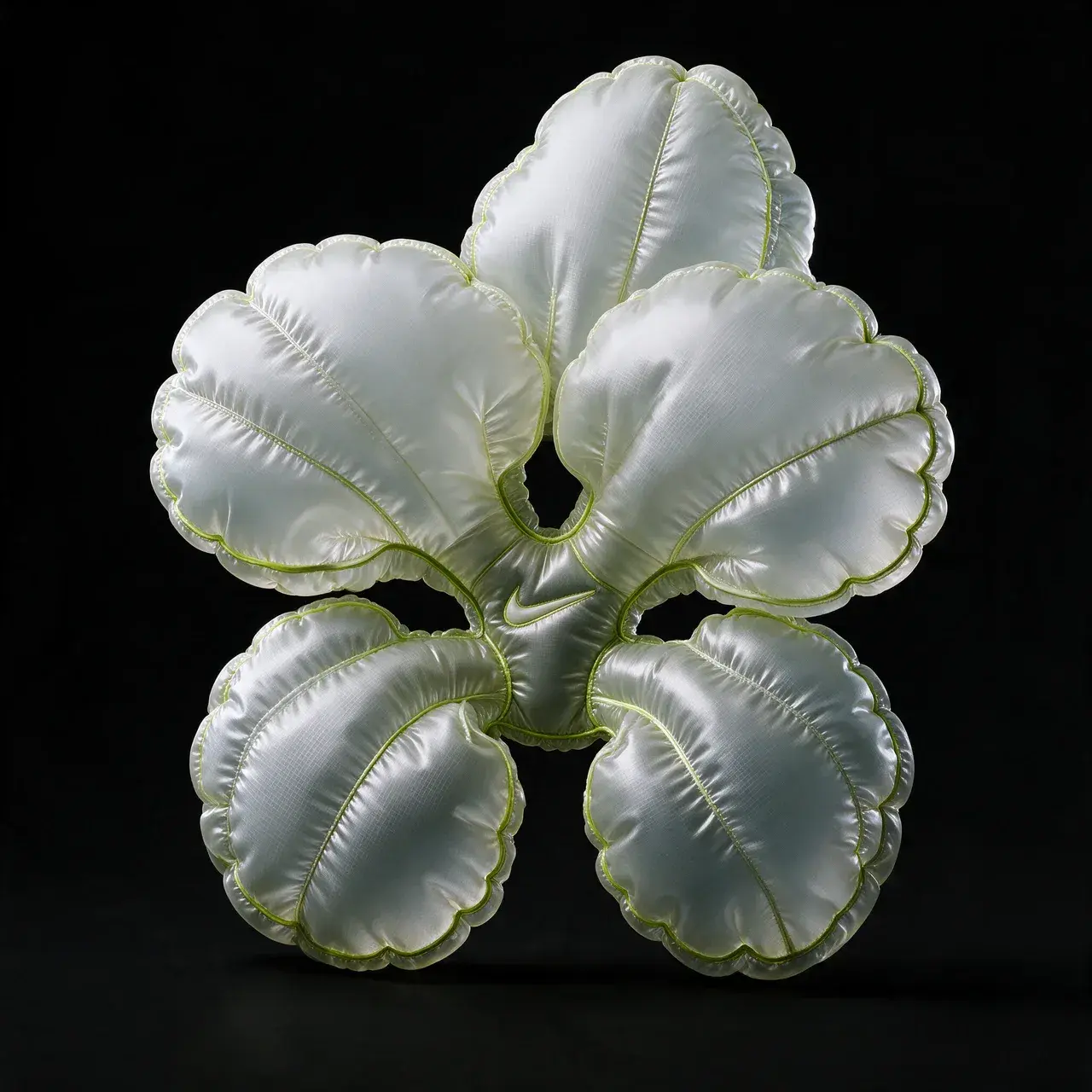
Seedream 5 Pro
Copy
Use the attached image as the identity and geometry blueprint for one hero object. Preserve its unmistakable outer silhouette, proportions, major internal openings, spacing, and recognizable design relationships. Do not copy the source background, lighting, or camera distortion. If the input is a flat logo, icon, or letterform, convert its exact contour into a coherent three-dimensional body. If it is a physical object, preserve its defining construction and details. Physically reconstruct the entire object as a pressure-filled technical puffer sculpture made from premium semi-translucent ripstop nylon laminated to soft clear TPU. This must be genuine padded construction, not a smooth object covered with a fabric texture. Divide the form into intelligently shaped inflated chambers that follow its anatomy. Use large rounded chambers across broad masses and progressively smaller chambers around narrow features, tight curves, lettering, and internal openings. Give the object substantial soft thickness, approximately 22–28% of its width. Add narrow heat-welded seams, raised fluorescent-lime piping, subtle tension wrinkles beside the seams, fine ripstop grid texture, and smooth pressurized bulges. All chambers must look sealed, consistently filled, softly compressed against adjacent chambers, and structurally connected. Keep negative spaces open and the original silhouette immediately recognizable. Render on a vertical 3:4 canvas using a centered near-frontal product view with restrained three-quarter depth, approximately an 85 mm full-frame lens, about 5° horizontal rotation and 4° downward elevation, no roll, no wide-angle distortion, and no dramatic foreshortening. The entire object is visible and occupies approximately 80–84% of the image width. Place it in an infinite pure-black studio void, background exactly #000000, with no visible floor, wall, horizon, pedestal, support, or surrounding environment. Illuminate only from outside the frame: a broad soft directional key from high camera-left, an extremely weak frontal fill, and a restrained high camera-right separation accent. The lights themselves must never be visible. No lamps, panels, softboxes, reflection cards, floating white rectangles, or glowing studio fixtures. Preserve soft textile highlights, realistic seam shadows, internal occlusion, dimensional midtones, and controlled edge transmission. No broad cast shadow; only natural self-shadowing and an optional tiny near-black grounding shadow. Extremely detailed premium 3D product render, physically plausible textile construction, sharp fibers and seams, no flat texture overlay, no extra objects, no text, and no watermark.
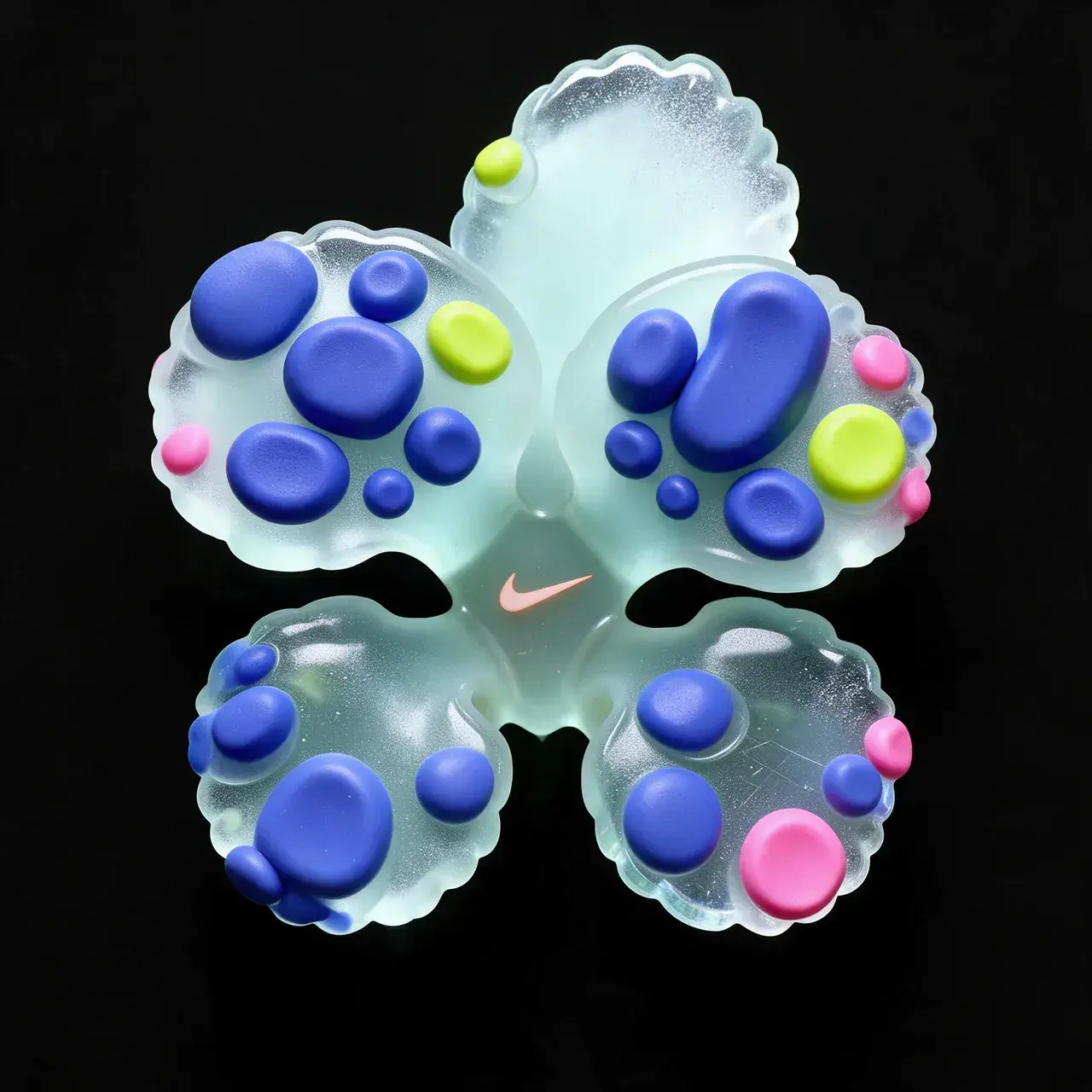
Seedream 5 Pro
Copy
{ "source_lock": "Treat the uploaded image as the immutable structural master. Preserve every visible source component exactly one-to-one: silhouette, proportions, thickness, openings, cutouts, separate parts, layered elements, attachments, readable text, logos, labels, facial details, decorative elements, relative positions, overlap, depth order, camera angle and composition. Nothing visible in the input may disappear, merge, move, simplify or be redesigned. Material scale must automatically adapt around fine source details.", "palette": { "glass_body": "#D5F1EE", "rubber_blue": "#4A68DF", "rubber_lime": "#BDEB43", "rubber_pink": "#EB79B1", "background": "#000000" }, "material_hierarchy": { "primary": "65% frosted glass", "secondary": "30% soft rubber nodules", "accent": "5% polished clear glass edges" }, "construction": "Cast the main object from thick frosted glass. Bond a limited number of soft rounded rubber nodules directly into shallow sockets in the glass so each secondary element feels mechanically integrated rather than attached decoratively.", "surface_physics": "The glass has real satin etching, milky optical depth, slightly clearer edges and faint internal blue-green haze. Rubber nodules are large, smooth and soft, with irregular rounded shapes—capsules, flattened spheres and organic blobs—distributed in intentional clusters. Keep cobalt as the dominant rubber color, with lime and
pink appearing in smaller quantities. Each nodule has a dense matte skin, gentle compression at its glass socket and slightly softened deformation under tension. Add microscopic etched-glass texture, faint scratches, tiny bubbles, soft rubber grain and delicate junction shadows.", "detail_control": "Keep labels, text, logos and intricate source features free of rubber nodules. Use clean glass around information-rich areas.", "lighting": { "setup": "One large diffused studio light positioned upper-left-front, approximately 40 degrees above and 35 degrees to the left of camera, plus extremely weak neutral frontal fill only to preserve shadow information.", "behavior": "Lighting remains soft, neutral and identical across the entire collection. Material appearance must come from real roughness, transmission, fibers and reflectivity rather than from dramatic lighting.", "restrictions": "No rim light, no colored lighting, no visible light sources, no rectangular reflections, no HDRI environment, no bloom, glow, halo or lens flare." }, "composition": { "camera": "Preserve the exact source viewing direction and orientation.", "position": "Centered and freely suspended.", "background": "#000000", "floor": false, "cast_shadow": false }, "quality": "Real mixed-material photography with believable frosted optical depth, soft molded rubber behavior, precise glass-rubber junctions and extreme tactile clarity." }
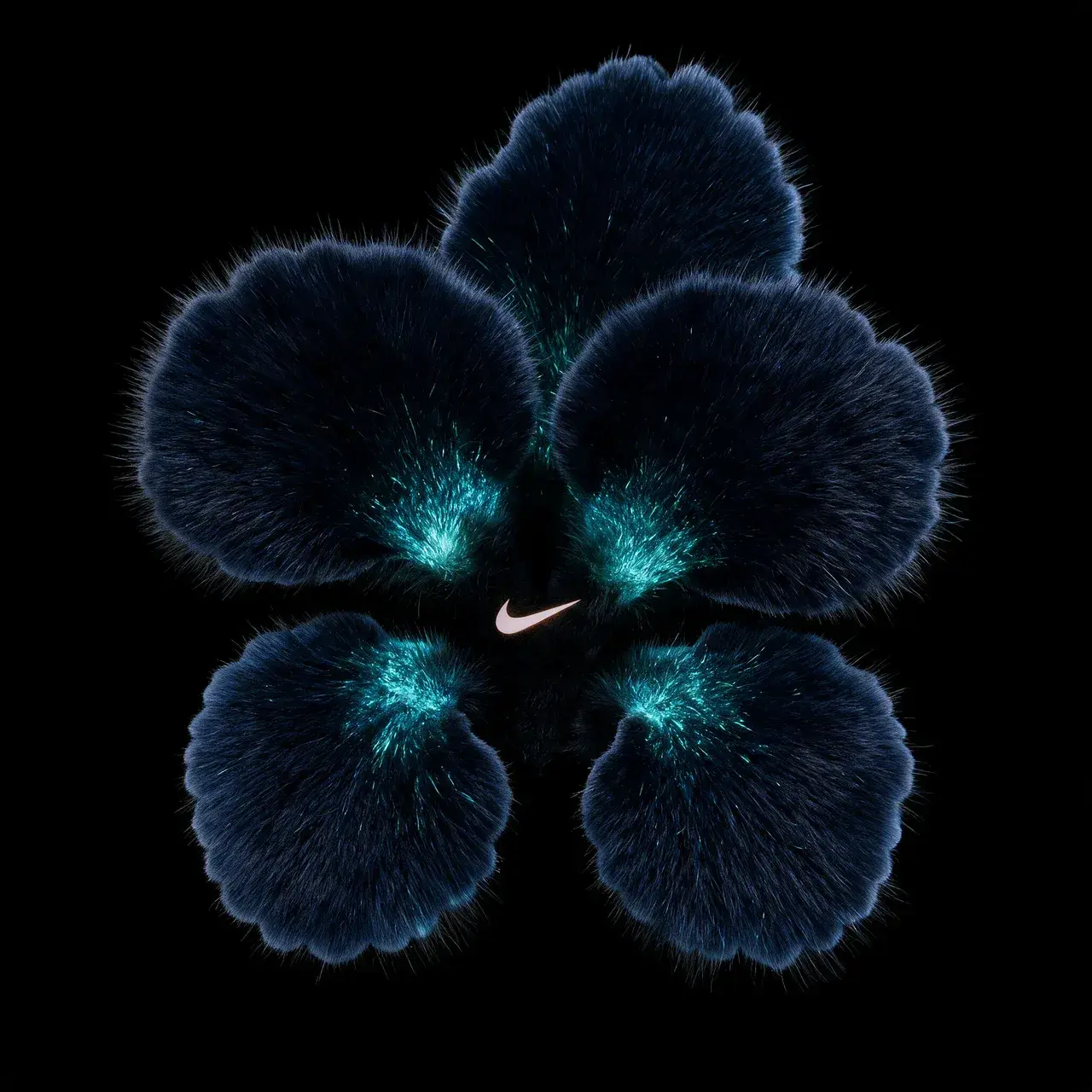
Seedream 5 Pro
Copy
Create one canonical neutral 3D master render from the attached logo or object. Preserve every letter, contour, opening, proportion, spacing, alignment, and recognizable detail exactly. Do not redesign, reinterpret, retype, simplify, or separate any element. Convert the complete source into one coherent solid object made from smooth neutral medium-gray matte polymer. Use restrained physical depth equal to approximately 14% of the object width and small clean rounded bevels. Keep all front-facing geometry identical to the source. Use a fixed near-frontal product view with only slight three-quarter depth: approximately 85 mm lens compression, 6° horizontal rotation, 4° downward camera elevation, and no camera roll. Center the complete object and keep generous black negative space around it. Place it against an infinite pure-black background, exactly #000000. Use one broad invisible light from high camera-left, an extremely weak frontal fill, and one restrained high camera-right separation light. Lighting equipment must remain outside the frame. No visible lamps, softboxes, panels, white rectangles, reflection cards, floor, wall, horizon, pedestal, or environment. Preserve soft self-shadowing, dimensional bevel shadows, and one tiny near-black grounding shadow directly beneath the object. This image is the locked master reference for all later material transformations. IMAGE-EDIT TRANSFORM ONLY. The attached image is an immutable master frame. Replace
only the material of the existing object while locking all geometry, camera, framing, and lighting direction. Keep the object at precisely the same pixel coordinates, scale, center, baseline, bounding box, rotation, tilt, perspective, extrusion depth, silhouette, internal openings, typography, spacing, black background, and shadow position. Do not rebuild, enlarge, rotate, retype, distort, or recompose it. Cover the existing volume with extremely dense deep-navy velvet fur made from thousands of individually resolved fibers. The pile should be shorter and compressed around narrow lettering, tight corners, bevels, and openings, while becoming fuller across broad surfaces. Preserve the exact silhouette with only a microscopic soft fiber fringe. Interweave a sparse number of translucent bioluminescent turquoise fibers beneath the dark velvet pile. The turquoise light should emerge in irregular organic clusters, illuminate neighboring navy fibers locally, and reveal the depth of the pile without forming a graphic outline. Add subtle directional grooming, compressed fiber channels, rich internal fur shadows, and delicate color variation from black-blue to indigo and cyan. Keep the original off-camera light direction. Use a broad soft response that reveals individual fibers while preserving deep black shadows. No bright rim halo, glowing background, floating fibers, visible lamps, panels, softboxes, fantasy particles, additional objects, text, or watermark.
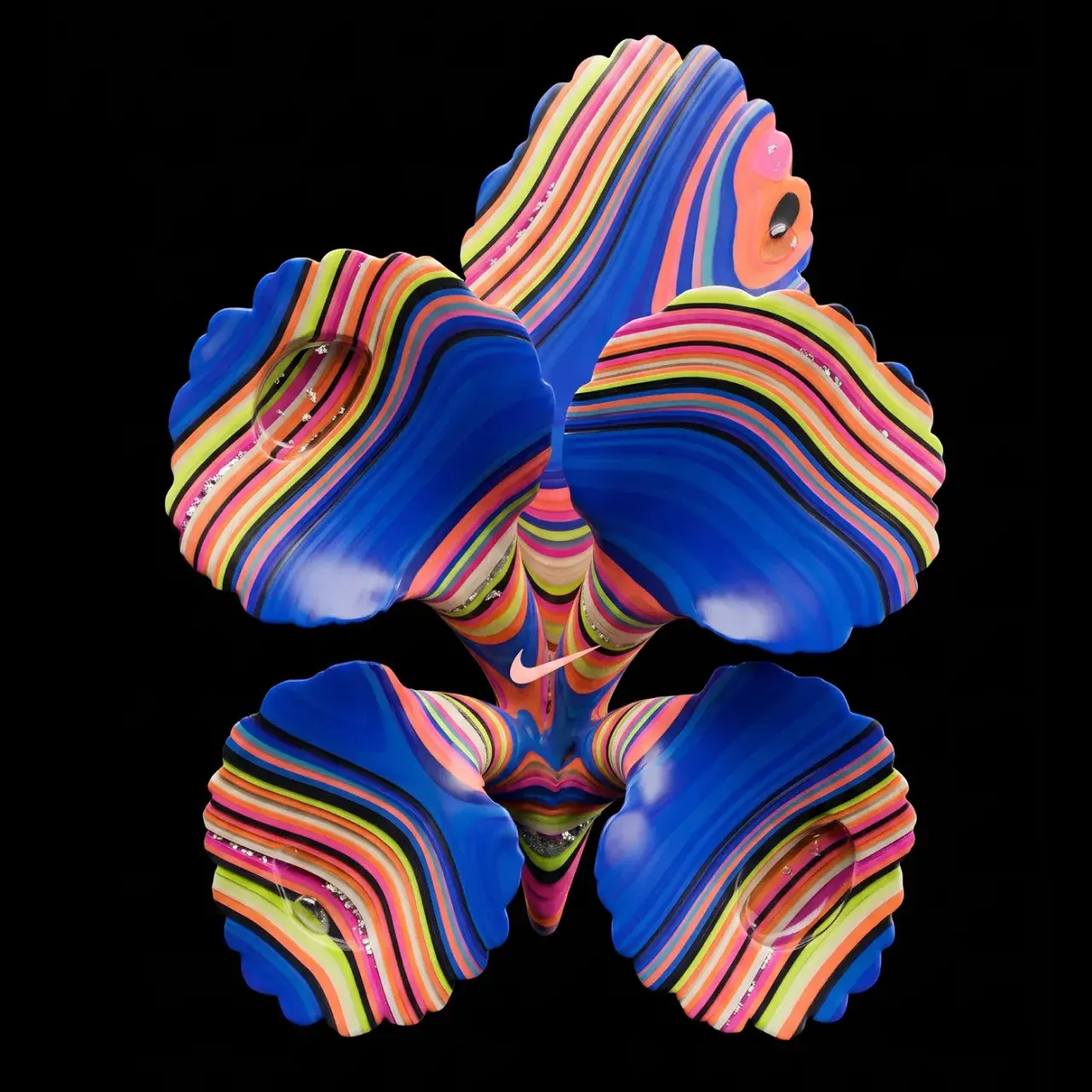
Seedream 5 Pro
Copy
Use the uploaded subject as a locked 3D geometry blueprint and preserve its exact silhouette, proportions, thickness, openings, negative spaces, edges and orientation. Construct the object from dozens of ultra-thin hard-shell polymer layers fused into one dense solid, alternating saturated cobalt blue, vivid coral, hot pink, acid lime, bright orange, creamy white and deep black. Keep the broad front surfaces polished almost flat so the laminate appears as subtle internal color depth, while introduce a set of shallow asymmetric carved depressions across selected zones that expose the individual layers as sharp contour-like bands, similar to a geological cross-section but with vivid synthetic color. Scatter sparse tiny silver foil fragments between a minority of layers and embed occasional clear resin bubbles along the exposed cuts. Keep all carving inward and completely inside the original geometry; no outer contour may move. Preserve exact source orientation and minimal perspective, centered complete object freely levitating against infinite #000000 with no floor, pedestal, wall, support, wire, horizon or external shadow. Use restrained invisible upper-left-front material lighting with weak frontal fill and subtle right separation, no visible studio equipment or rectangular reflections. Physically accurate polymer roughness, layered cross-section depth, polished cut edges, intense clean color separation and ultra-high-resolution commercial CGI. Highest priority: exact preservation of the uploaded object's geometry.
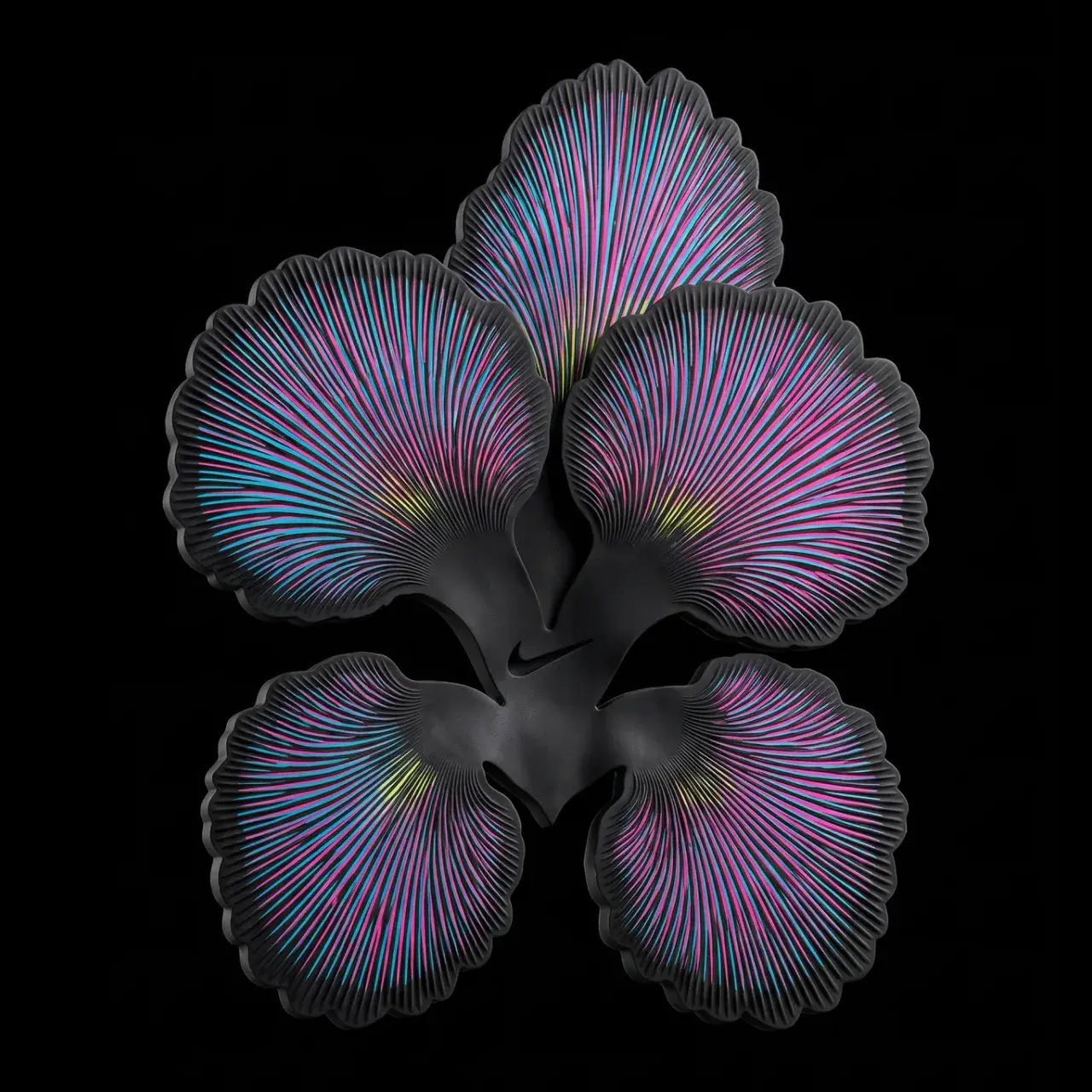
Seedream 5 Pro
Copy
Use the uploaded subject as an immutable geometry blueprint and preserve its exact silhouette, proportions, thickness, openings, negative spaces, curvature, edge positions and orientation. Reconstruct the object from dense matte black silicone rubber with a tightly spaced field of extremely shallow lenticular micro-ridges engraved into selected broad surfaces. Beneath the translucent tops of the ridges embed alternating narrow color bands of saturated cyan and hot pink so the visible color shifts from cyan to magenta depending on viewing angle, with occasional acid-yellow bands creating brief tertiary flashes. Keep the base rubber rich black and low-gloss so the directional color effect becomes the visual focus. The lenticular ridges must remain entirely inside the source bounding shape and flatten completely before all edges, holes and structural details. Preserve exact source viewing direction, minimal perspective, centered complete object floating against #000000, no ground, pedestal, wall, support, wire, horizon or external shadow. Controlled invisible upper-left-front illumination with weak frontal fill and subtle right separation; no visible panels, rectangular reflections, glow or bloom. Physically accurate silicone roughness, lenticular refraction, directional color change, crisp microgeometry and premium CGI fidelity. Highest priority: exact source geometry.
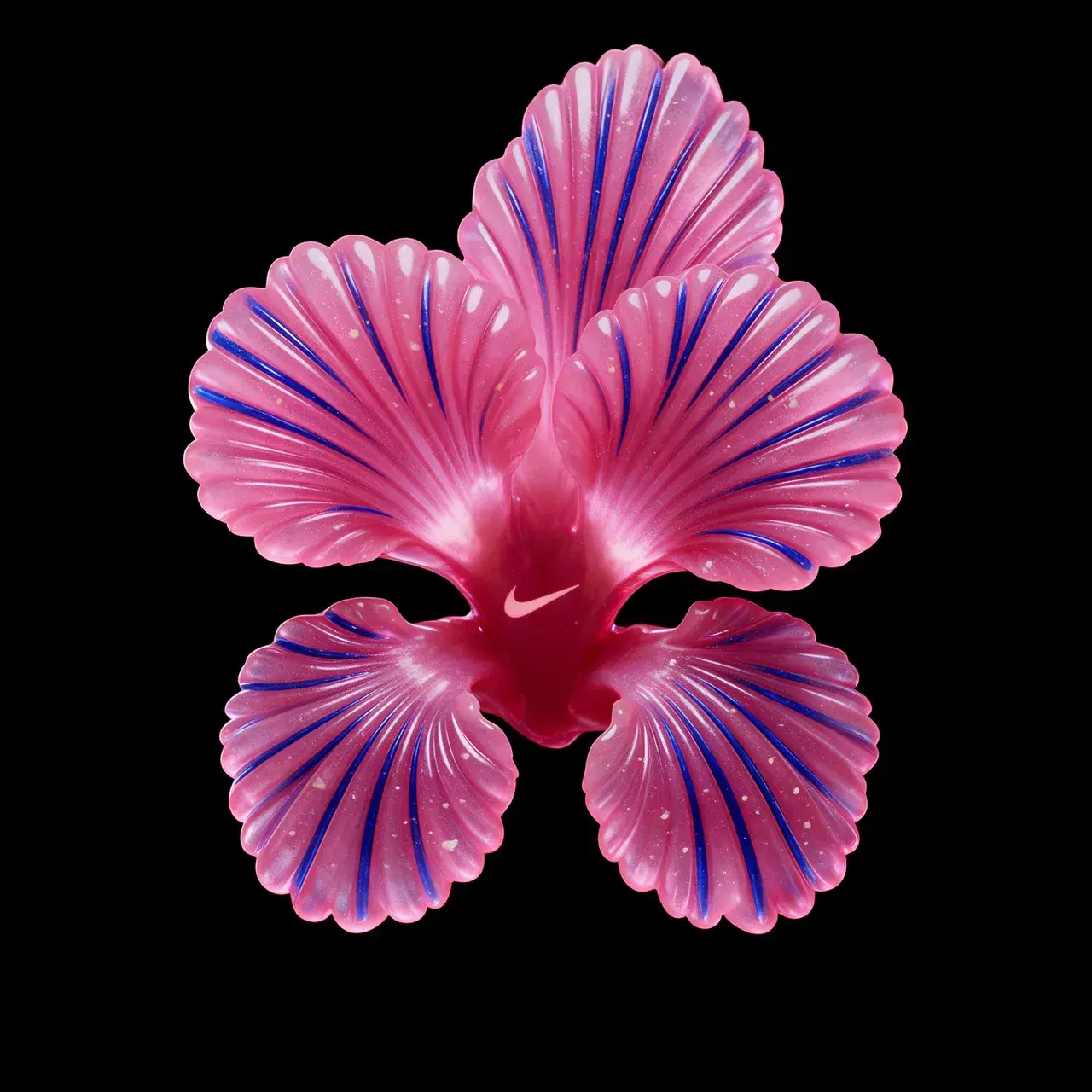
Seedream 5 Pro
Copy
Use the uploaded object as the exact identity reference. Preserve its recognizable silhouette, proportions, major openings and overall orientation. Reconstruct the form from saturated translucent hot-pink opaline polymer with soft cloudy internal depth. Mold the broad surfaces into tightly spaced shallow rounded ribs that remain visually integrated into the original object rather than changing its primary form. Seat narrow glossy cobalt-blue resin lines in alternating recessed valleys, producing a strong striped relief that feels molded into the material. Add sparse tiny ivory speckles inside the pink polymer for subtle depth. Isolated centered 3D material study on pure black #000000, floating freely with no floor or cast shadow. Clean near-frontal product view with subtle visible thickness. Soft controlled directional illumination from upper-left-front, balanced shadow detail, juicy pink transmission, precise blue groove highlights, deep blacks and extremely crisp premium CGI.
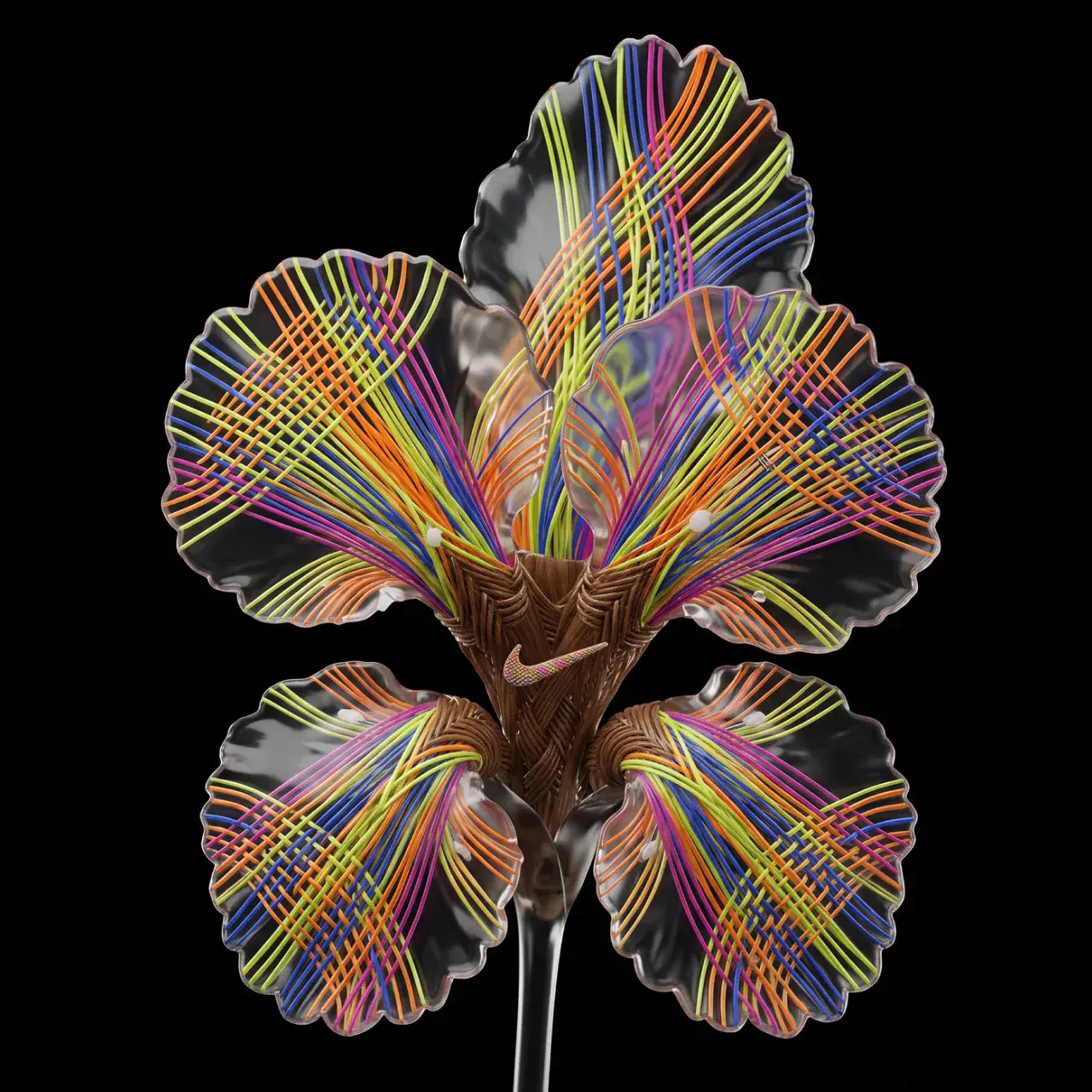
Seedream 5 Pro
Copy
Use the uploaded image as an immutable full-assembly reference. Keep every visible object, layer, attachment, label, text, decorative feature, opening, scale relationship, overlap and orientation exactly as supplied; no component may disappear or change structural identity. Replace only the materials. Cast each existing component from polished smoky-clear resin with substantial transparent depth. Inside the resin build a dense internal woven core from ultra-thin flexible strands in acid lime, vivid orange, cobalt blue and hot magenta, interlaced into changing directional patterns at different depths. Some zones should form tight basket-like weaving, others stretched diagonal braids, and others loose bundled crossings, creating real volumetric parallax through the clear body. Integrate occasional tiny chrome clips where strands intersect and sparse milky-white translucent knots, but keep the woven color system dominant. The outer resin remains geometrically pristine and faithful to the source, while all complexity exists inside its volume. Reduce weave scale automatically inside narrow parts and around text or delicate features so every source detail survives clearly. Render the unchanged complete assembly floating centered against pure black #000000, preserve source view, soft directional upper-left-front illumination, restrained polished reflections, excellent transmission and refraction, crisp near-surface strands, softly layered deeper structures, no visible studio hardware, glow, bloom or rectangular reflections. Premium ultra-detailed CGI.
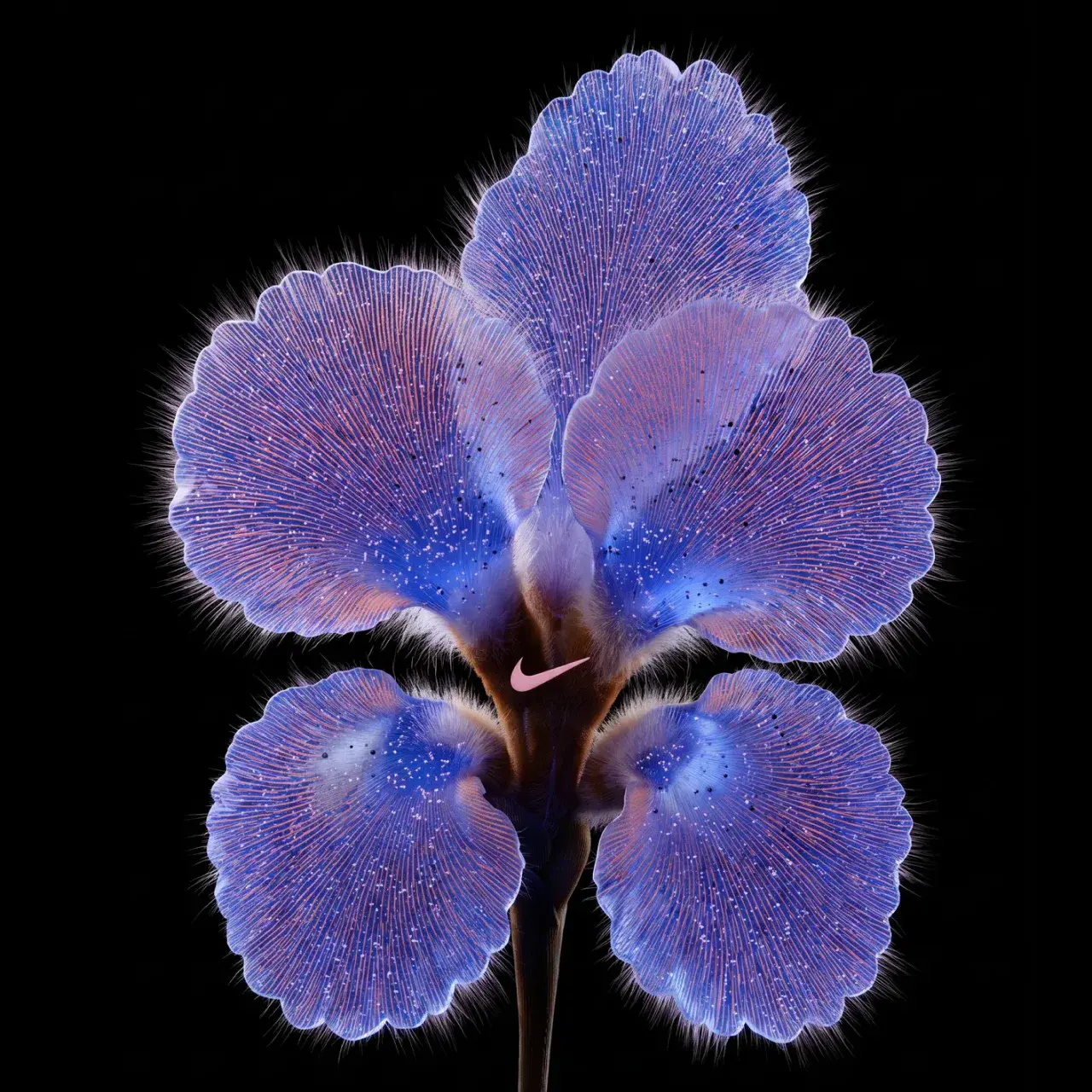
Seedream 5 Pro
Copy
Use the uploaded image as an immutable full-assembly reference. Preserve every visible component, subcomponent, attachment, opening, label, text, logo, decorative element, relative position, overlap and orientation exactly; nothing from the source may disappear, merge, move or be redesigned. Apply the material independently to every existing component while keeping the complete assembly unchanged. Transform the surfaces into dense translucent electric-cobalt gel with rich optical depth and a softly polished finish. Build an extremely fine system of closely packed tangerine-orange micro-ribs directly beneath the transparent outer skin, following the local curvature like embedded flexible filaments; the ribs should create strong rhythmic directional texture while remaining completely inside the source geometry. Between the ribs suspend thousands of tiny pale-lilac glass flecks and sparse glossy black microbeads at multiple depths, producing crisp near-surface speckling and softer deeper inclusions. In selected broad areas allow several rib groups to change direction and intersect, creating subtle moiré-like zones and complex optical distortion without touching the source silhouette. The material should feel custom-molded, highly tactile and technologically luxurious, not like a color overlay. Preserve all source details clearly; automatically reduce rib density around text, faces, tiny attachments and narrow geometry. Render as a centered premium 3D material study floating in pure black #000000 with no floor, support or external cast shadow. Preserve the exact source viewing direction. Soft controlled upper-left-front illumination, rich readable midtones, crisp microgeometry, smooth highlight roll-off, no visible lighting equipment, no rectangular reflections, no bloom or environment. Ultra-high-resolution photorealistic CGI.
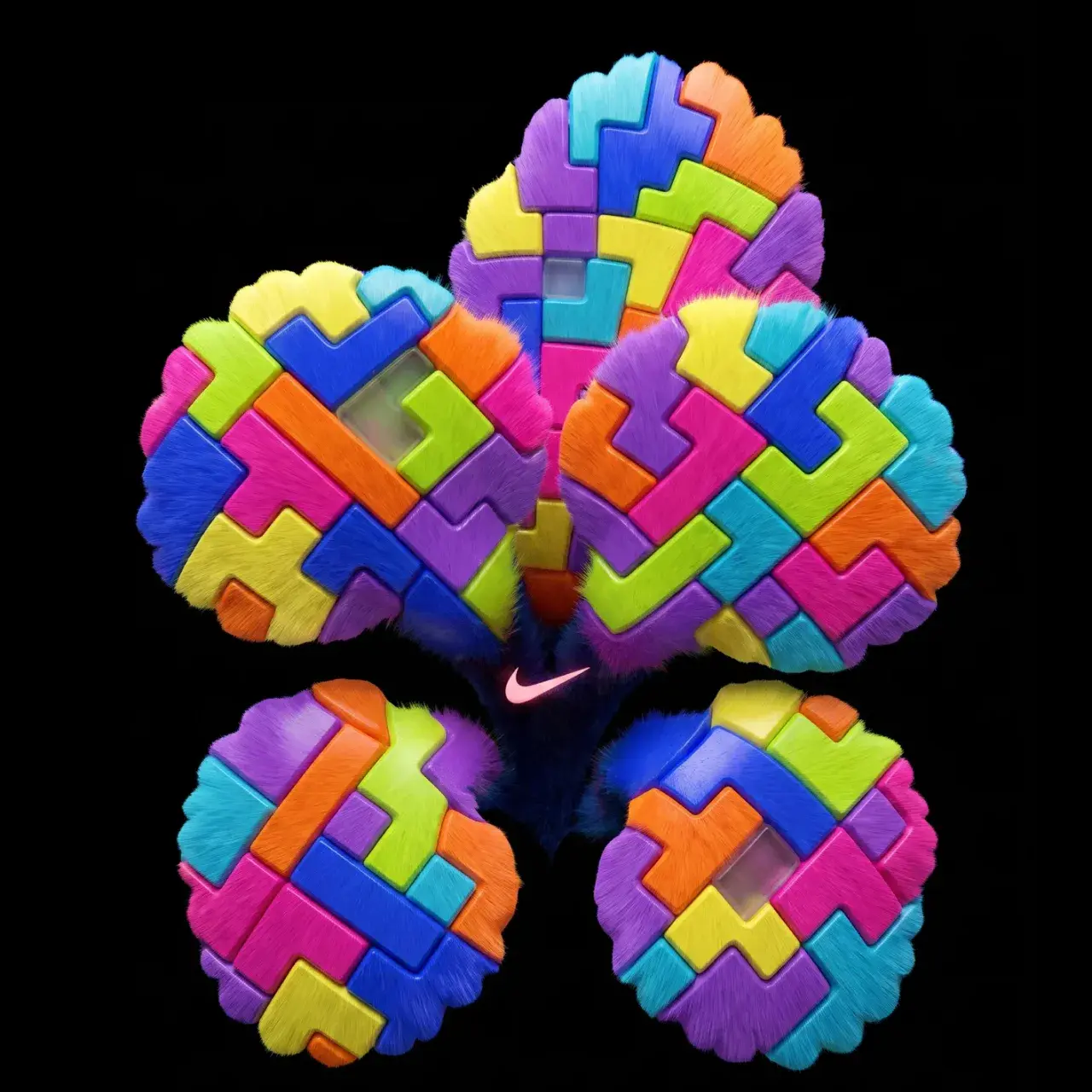
Seedream 5 Pro
Copy
Use the uploaded image as an immutable full-assembly reference and preserve the complete source exactly: every visible component, opening, layered element, label, text, logo, decoration, position, overlap, scale and orientation remains intact. Only replace the material styling. Reconstruct the object's surfaces as a dense physically assembled mosaic of unmistakable tetromino-shaped modules: L, J, T, S, Z, square and straight four-block pieces, each visibly built from four connected square cells and interlocking tightly across the existing surfaces like a continuous puzzle skin. Use a bold contemporary palette of electric cobalt, acid lime, vivid orange, hot magenta, lemon yellow, violet and cyan, with each tetromino staying one solid color so the individual shapes remain immediately readable. Give the modules premium injection-molded polymer construction with crisp shallow seams between pieces, softly beveled square-cell edges, subtle satin gloss and tiny molded microtexture. Let some broad surfaces show nearly perfect interlocking tessellation while other regions contain one or two slightly recessed translucent tetromino pieces for depth. Adapt the module scale around small source details so the original structure remains fully visible; never replace source components with puzzle blocks or alter their geometry. Render the preserved input assembly centered and levitating against pure black #000000, exact source orientation, controlled upper-left-front illumination, crisp module separation, deep saturated colors and ultra-clean premium CGI.
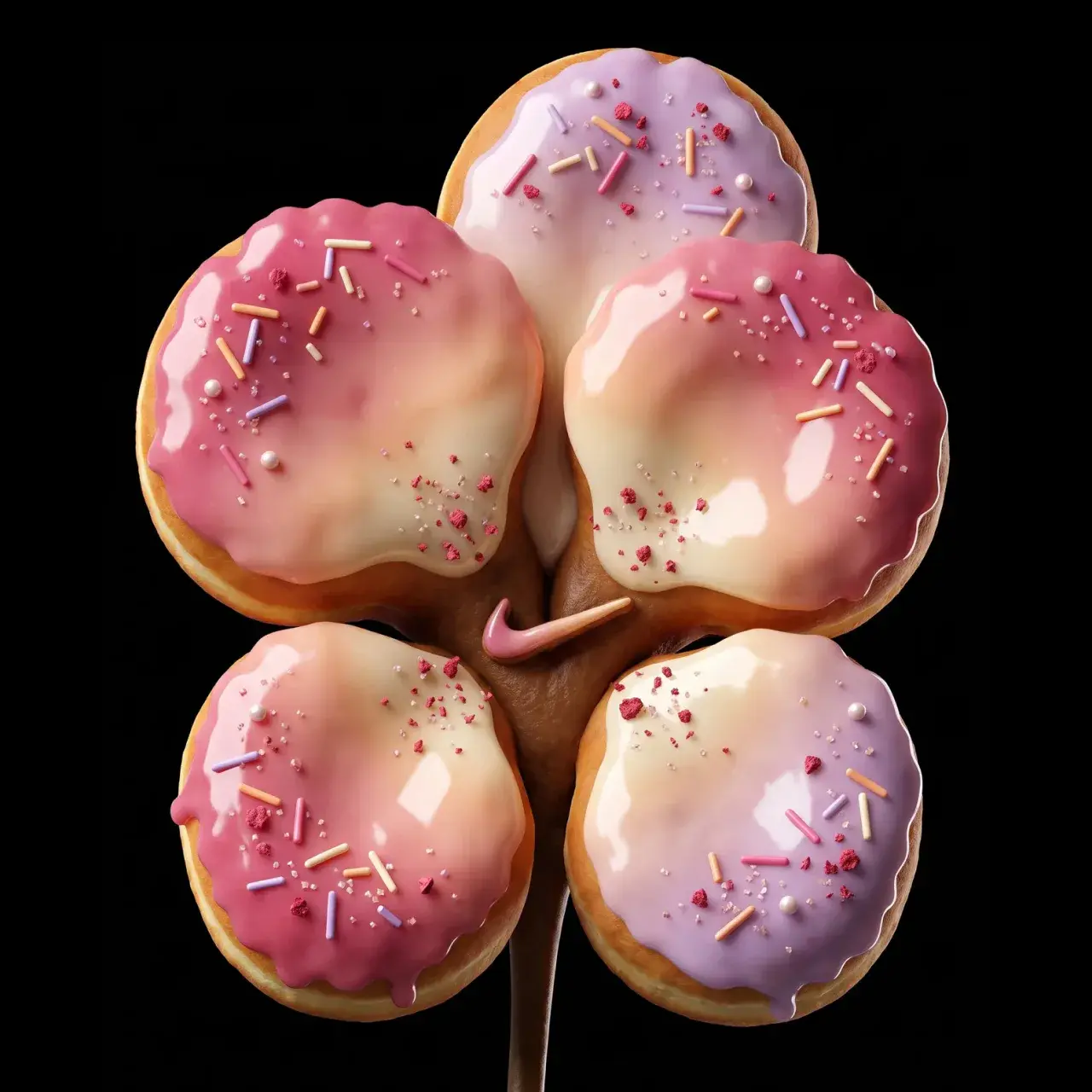
Seedream 5 Pro
Copy
Use the uploaded image as an immutable full-object reference and preserve every source feature exactly: full silhouette, all distinct components, labels, text, cutouts, layered parts, proportions, orientation, relative placement and all tiny decorative details. Nothing may be removed, fused or redesigned. Only transform the material treatment. Rebuild the object as a highly stylized designer-donut material. The primary form should feel like dense baked dough with a softly golden pastry base visible at edges and transitions, while the exposed surfaces are coated in a thick premium glaze. Make the glaze contemporary and fashion-forward rather than generic: use a smooth blend of raspberry pink, pale apricot, creamy vanilla and a hint of lilac, with rich glossy reflections and luxurious depth. Across the glaze distribute curated topping details: elongated sprinkle rods in 3–4 coordinated colors, tiny sugar crystals, sparse pearl dragees and occasional freeze-dried berry crumbs, all placed elegantly and kept lighter around delicate source details. Allow a few rounded glaze drips and pooling edges strictly within the existing object geometry so the full silhouette never changes. The result should feel premium, playful and irresistibly tactile. Render as a centered ultra-detailed CGI material study on pure black #000000, exact source angle, no floor or cast shadow, controlled upper-left-front lighting and exceptional material resolution.
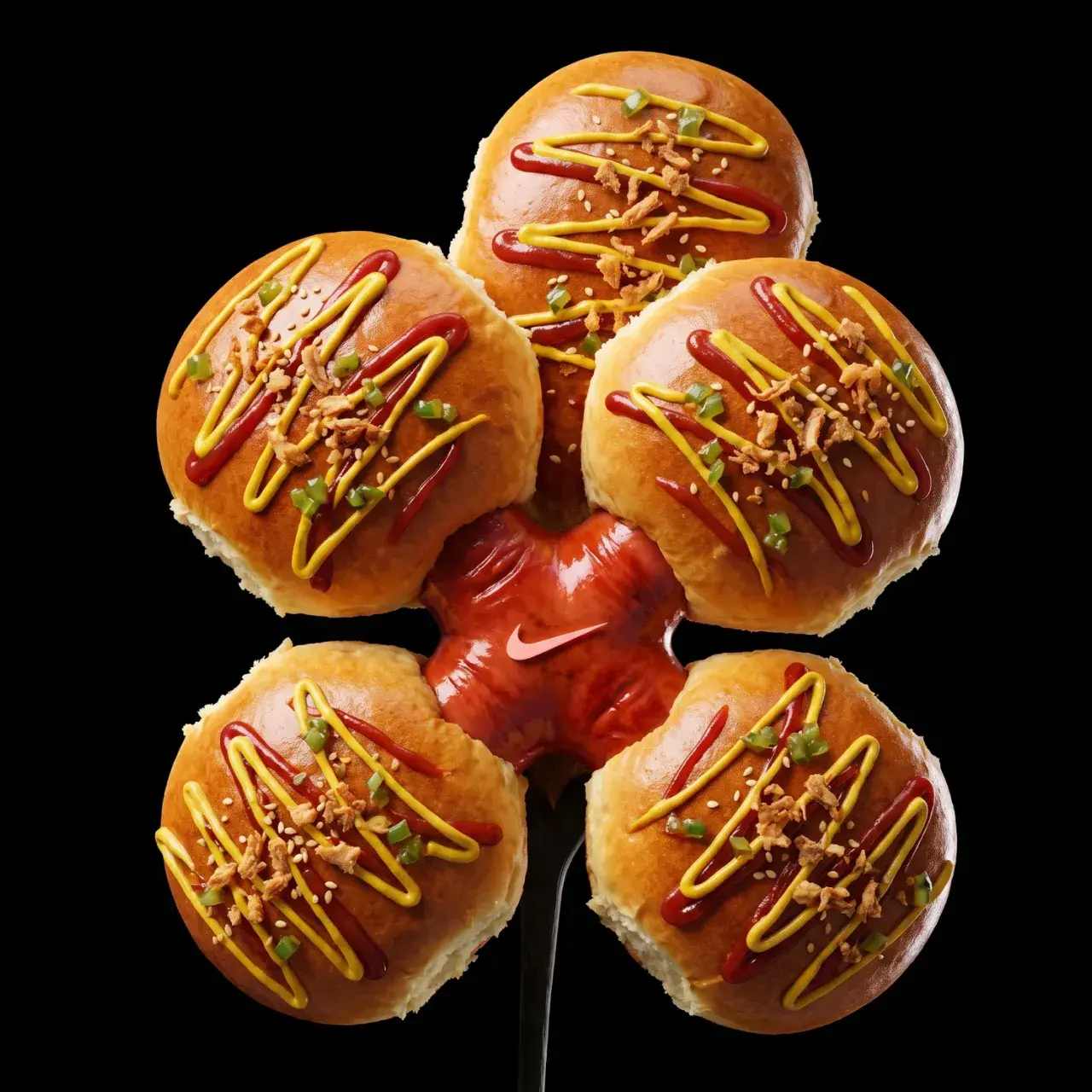
Seedream 5 Pro
Copy
Use the uploaded image as an immutable full-assembly reference. Preserve every visible source component one-to-one: exact silhouettes, proportions, openings, internal layers, attachments, labels, text, logos, decorative elements, overlap, spacing and orientation; no source element may disappear, merge or change identity. Transform only the material system. Rebuild the existing surfaces as a highly recognizable hot-dog construction: dominant structural regions made from fluffy toasted brioche bun with a golden-brown baked crust, pale soft crumb visible at transitions, fine bread pores and a light buttery satin sheen; selected long or central regions made from taut glossy frankfurter casing in deep paprika-red with subtle smoked-coral tonal variation and tiny natural casing wrinkles. Add unmistakable condiment detailing directly on top of suitable broad regions: thin glossy mustard-yellow zigzags, deep ketchup-red ribbons, small chopped emerald relish pieces, sparse crispy fried-onion crumbs and occasional pale sesame seeds embedded into the bun. Use these food elements as surface material behavior only, never replacing or removing any source component. Let condiment ribbons bend cleanly around the existing geometry and automatically become finer near labels, text, facial features or small attachments. The object should look like the exact uploaded source physically recreated from hot-dog ingredients rather than merely colored brown and red. Render the entire preserved assembly floating against pure black #000000, exact source camera, no floor or cast shadow, premium upper-left-front material lighting, delicious crust microtexture, glossy sausage response, wet condiment highlights and exceptional CGI detail.
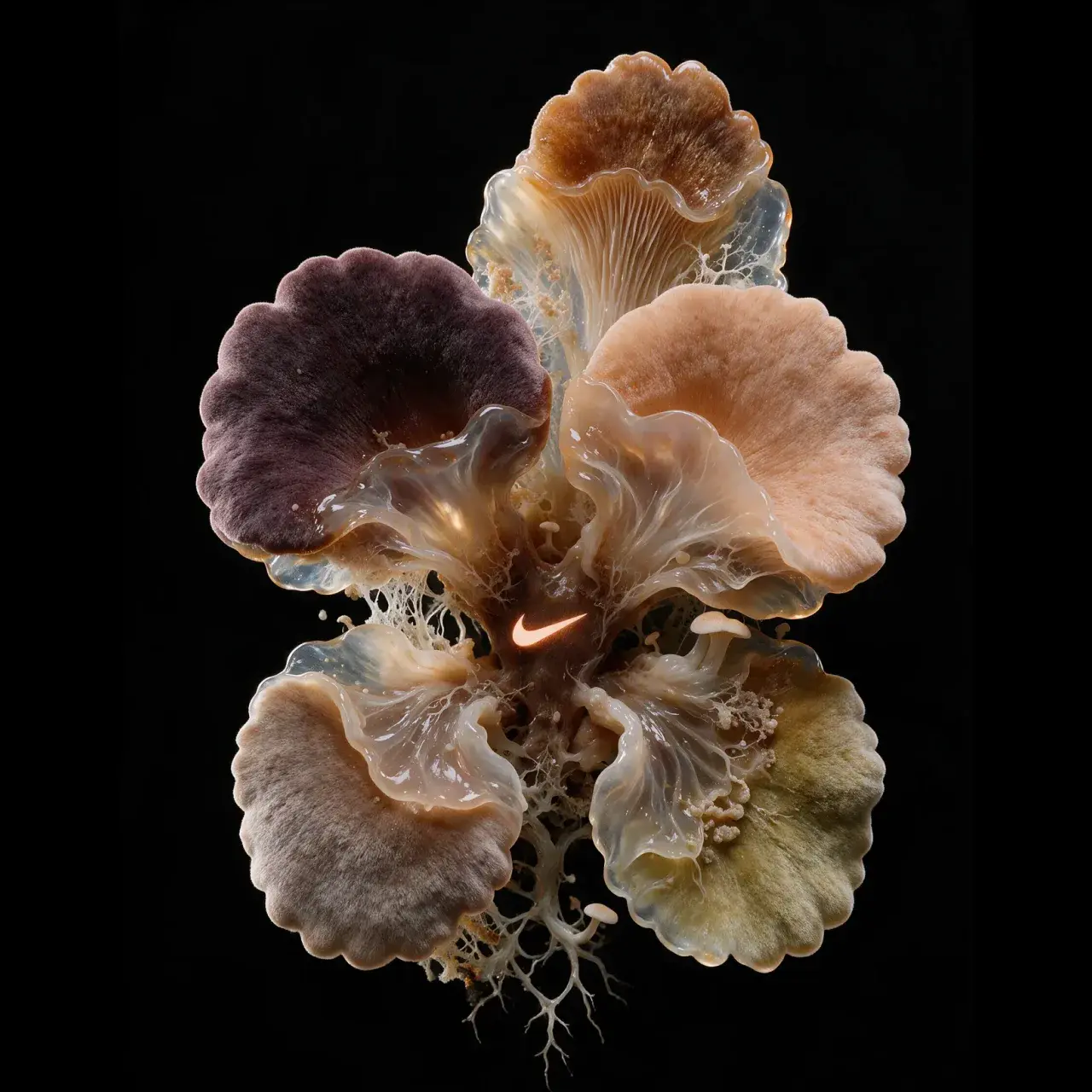
Seedream 5 Pro
Copy
Use the uploaded image as an immutable full-assembly reference. Preserve every visible source component exactly, including all outer silhouettes, inner openings, separate parts, labels, text, logos, decorative features and original orientation. Every source detail must remain present; only the material appearance may change, with texture density automatically refined around small areas. Rebuild the object as a high-design fungal material combining translucent jelly mushrooms, matte velvet caps and delicate mycelium bridges. Let the dominant broad surfaces consist of sculptural mushroom growth in a rich palette of smoky plum, amber caramel, pale peach, soft taupe and muted chartreuse. Integrate translucent jelly-like folds between more solid fungal caps, with semi-gloss wet edges and soft internal glow-like transmission, while preserving the original object geometry exactly. Use lace-like mycelium membranes, tiny spore clusters and fine vein-like root networks to connect the fungal regions. Add a few miniature ivory mushrooms emerging from seams for refined complexity. The result should feel futuristic, editorial and strange in a very stylish way. Render the full preserved input floating on pure black #000000, exact source angle, soft dramatic upper-left-front lighting, wet-versus-matte material contrast, sharp fungal detail and ultra-clean CGI.
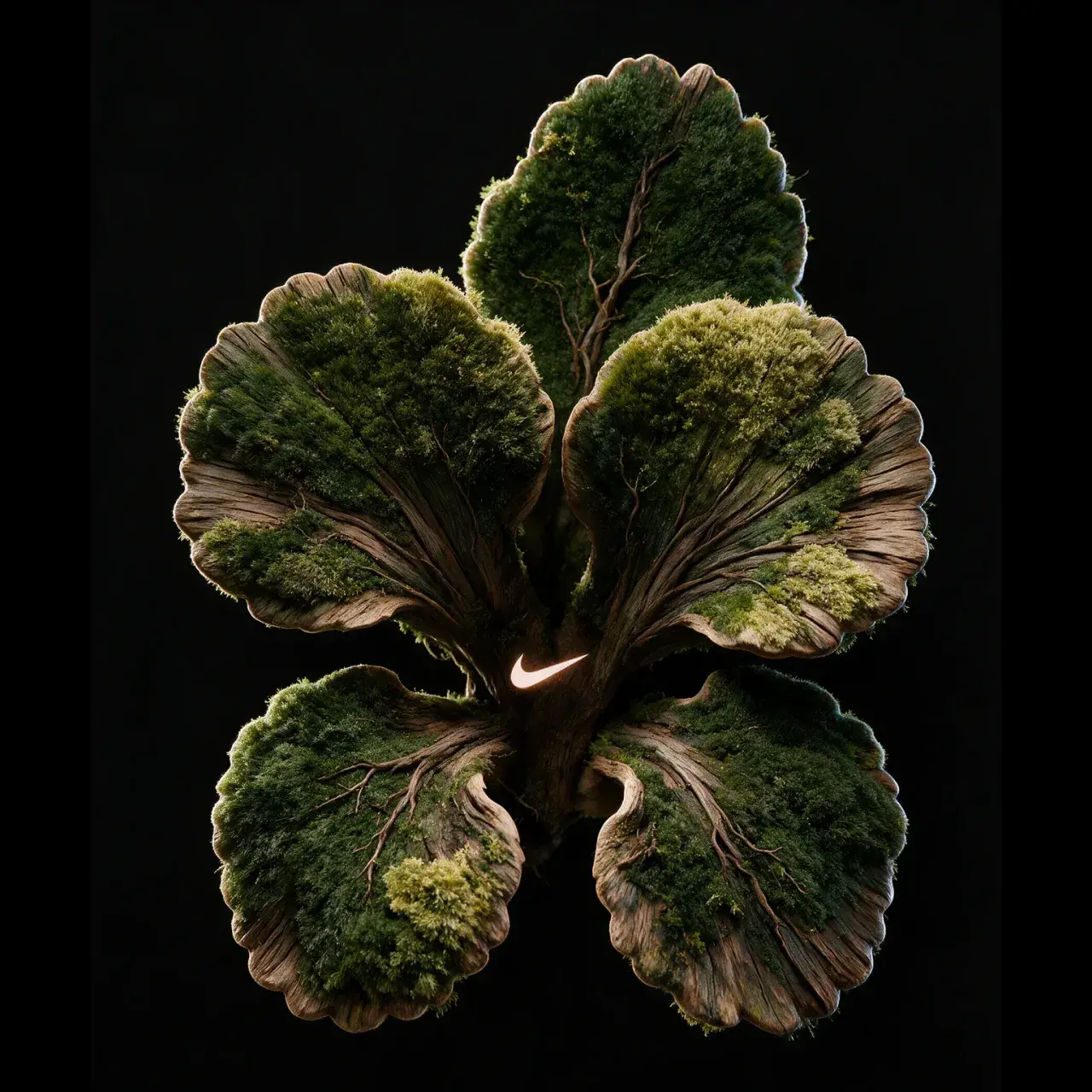
Seedream 5 Pro
Copy
Use the uploaded subject as an immutable full-object geometry and assembly reference. Preserve absolutely every source element exactly as provided: identical outer silhouette, proportions, thickness, edge flow, curvature, internal cutouts, negative spaces, layering, attachments, decorative parts, labels, logos, text, facial details, tiny accessories and relative placement of all components. Every visible part of the uploaded object must remain present, readable and structurally intact, including small secondary elements such as clouds, leaves, stems, tabs, handles, badges and inserts. The final object must match the source shape when overlaid. Only transform the material and add surface or internal material detail while keeping all geometry faithful to the uploaded reference; automatically reduce feature scale around delicate areas so no source detail disappears. Render as a premium photoreal material-study object, never as a collage, never as a decorative diorama, never as a crude kitbash. The material must feel physically believable, tactile and high-end, with realistic thickness, contact, transitions and microdetail. Keep the original viewing angle and object orientation. Center the complete object and let it float freely in space against infinite pure black #000000, with no floor, pedestal, support, horizon, frame, wall, environment props or cast shadow. Use refined studio material lighting: dominant large soft key from upper-left-front around 35–45 degrees horizontally and 45–55 degrees elevation, very soft frontal fill, subtle cool separation from upper-right, clean specular control, deep contrast, elegant tonal falloff, and zero visible light panels or rectangular reflections. The image should feel like an ultra-premium product render with high-end CGI realism, exceptional surface fidelity, crisp edge definition, rich microtexture, subtle imperfections and sophisticated photographic restraint. Transform the complete preserved object into a luxurious forest material system combining short dense moss, weathered wood and exposed root fibers. Cover major surfaces with compact velvety moss in deep forest green, olive green and muted chartreuse, keeping the pile short, dense and premium rather than fluffy or messy. Let selected transitions, edges and recessed zones reveal beautifully aged wood with realistic grain, subtle cracks, compressed growth rings and warm natural tonality. Thread fine roots and fibrous tendrils through seams and along contours in a restrained way, integrated into the form instead of exploding outward. The object should feel like a sophisticated contemporary bio-design sculpture, not a whimsical forest prop. Preserve the exact source silhouette and every small element. Prioritize tactile realism, subtle moisture variation, rich microdetail and believable material junctions.
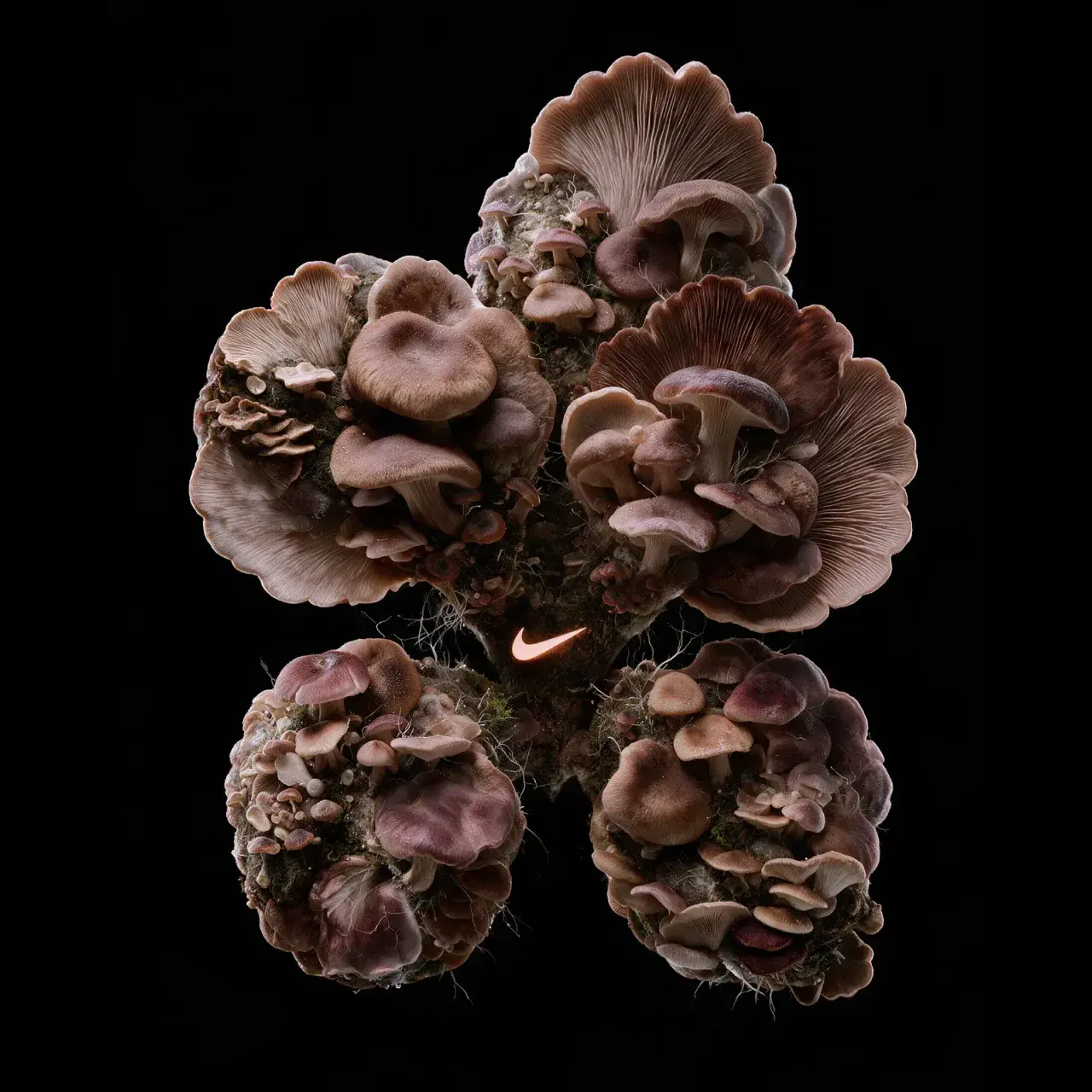
Seedream 5 Pro
Copy
Use the uploaded image as an immutable full-assembly reference. Preserve every visible source component exactly, including complete silhouettes, openings, layered parts, labels, text, logos, decorative details, tiny attachments and original orientation. Every source element must stay fully present and clearly reconstructed; only replace the material system and scale mushroom details down around delicate areas so the input remains intact. Transform the object into a dramatic mushroom ecosystem with richly varied fungal growth. Build the main body from a combination of mossy woodland substrate and dense overlapping mushroom caps in elegant tones of cocoa brown, tobacco, dusty mauve, muted rust, pale beige and burgundy. Include velvety caps, satin caps, frilled edge mushrooms and a few fan-shaped shelf fungi growing along curves and edges. Between them weave fine white mycelium threads and delicate root-like filaments, with small patches of moss softening transitions. Add subtle spore-dust traces and a few dew points for depth. The overall look should feel fashion-forward, sculptural and a little surreal, with refined CGI precision rather than messy realism. Render floating against pure black #000000, exact source view, controlled upper-left-front lighting, beautiful cap texture variation, crisp gill detail and ultra-high-resolution premium CGI.
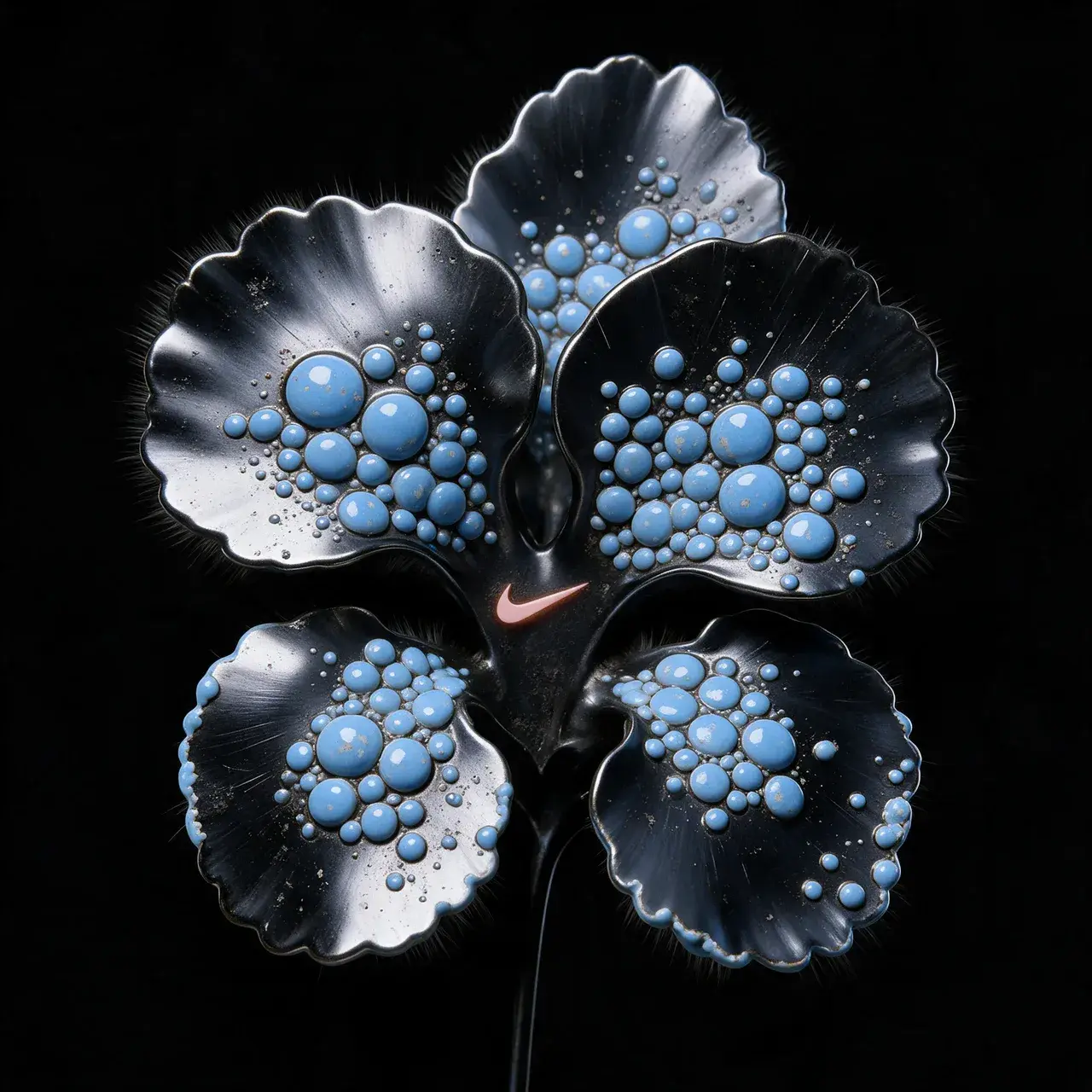
Seedream 5 Pro
Copy
Use the uploaded image as an immutable full-assembly reference. Preserve every visible part and relationship from the input exactly, including silhouettes, cutouts, openings, layered pieces, attachments, labels, text, logos, decorations, relative size, overlap and source camera. Rebuild suitable surfaces from deep black chrome #14171B with a dark polished metallic body, subtle brushed micro-scratches and restrained curvature-following reflections. Across selected broad areas integrate clusters of smooth powder-blue ceramic nodules #83B7F4 physically fused into shallow recessed sockets in the metal. Use a deliberate scale hierarchy: a few larger rounded nodules surrounded by smaller satellite forms, with cluster density varying strongly and large chrome regions left completely untouched. The ceramic has a dry satin glaze and tiny pale mineral freckles #D7E4F5, creating strong roughness contrast against the metal. Several nodules may be sliced flush by an existing edge, revealing believable ceramic thickness rather than floating decoration. Preserve source details by reducing cluster scale near intricate components. Render floating against pure #000000, exact input viewpoint, broad controlled upper-left-front illumination, deep chrome tonal range, powder-blue matte separation and extremely crisp luxury CGI.
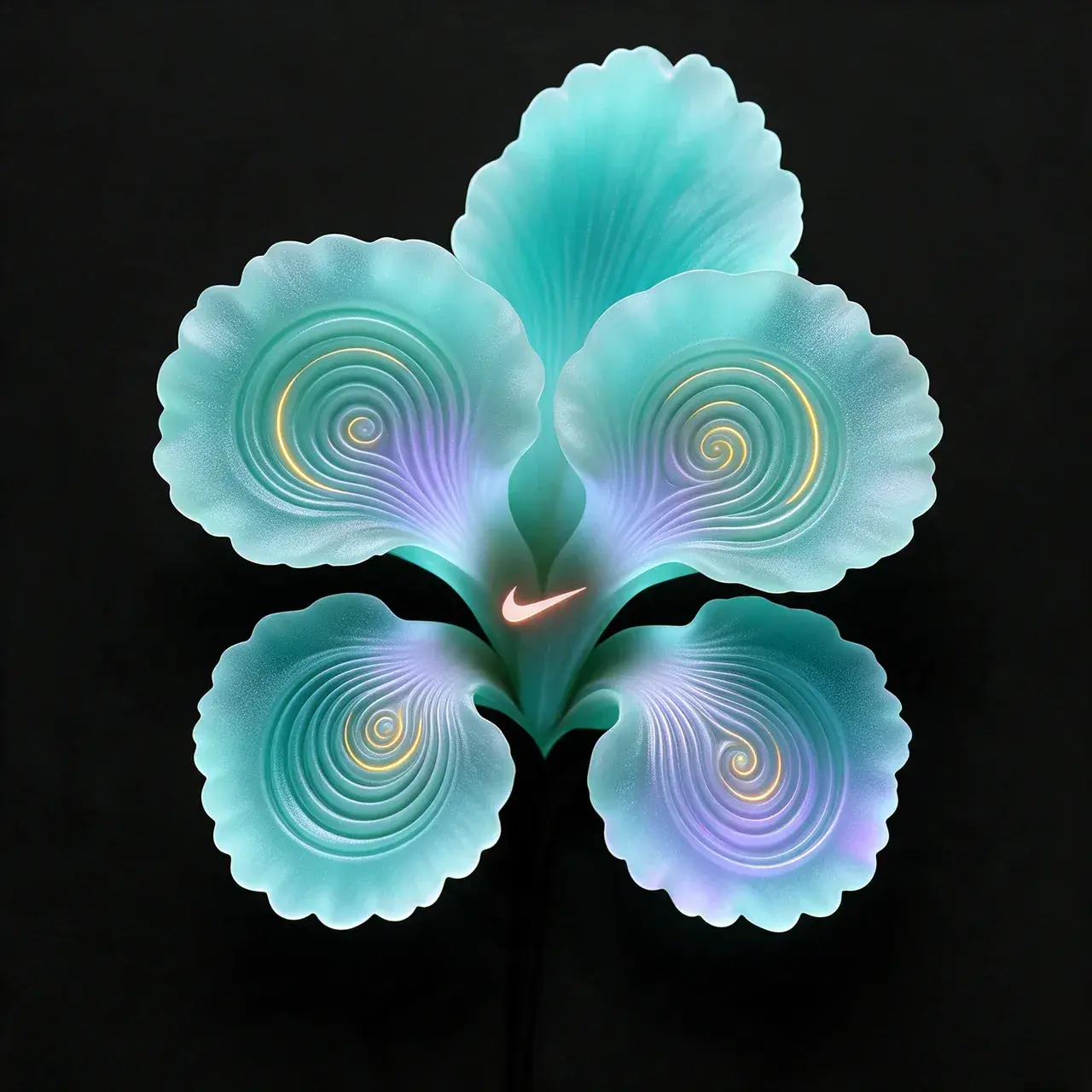
Seedream 5 Pro
Copy
Use the uploaded image as an immutable full-object reference. Preserve the complete source assembly exactly, including every silhouette, proportion, thickness, opening, internal layer, attachment, label, text, logo, decorative component, overlap, spacing and viewing orientation. Reconstruct suitable surfaces from frosted aqua polymer #7DE4DC with deeper teal #2BA9AA visible through thicker regions and a silky translucent matte finish. Across broad surfaces create one or two large embossed spiral terrace systems: tightly nested contour bands that rise and recess by tiny controlled increments, producing a sculptural fingerprint-like relief while remaining completely inside the original geometry. Transition the spiral color from aqua toward pale lilac #B9A7FF near the center, with a very thin warm-yellow accent #FFD85C tracing only selected inner terraces. The relief must feel precisely molded, with crisp micro-shadowing and smooth transitions, not like printed lines. Fine source elements receive a flatter treatment to preserve readability. Render the complete assembly floating against exact #000000, source orientation untouched, controlled directional lighting emphasizing terrace depth, beautiful frosted transmission, deep readable shadows and premium ultra-detailed CGI.
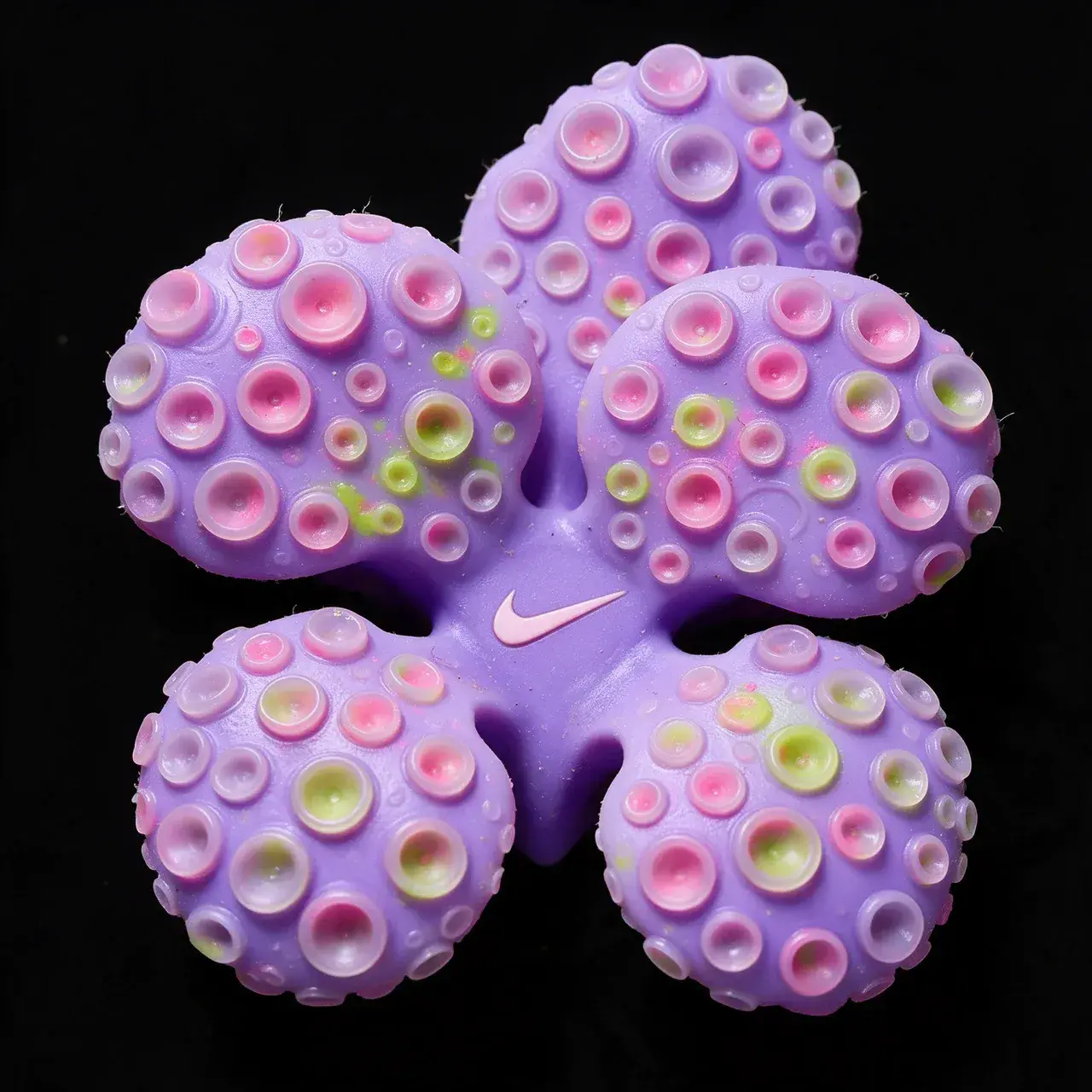
Seedream 5 Pro
Copy
{ "source_lock": "Treat the uploaded image as the immutable structural master. Preserve every visible source component exactly one-to-one: silhouette, proportions, thickness, openings, cutouts, separate parts, layered elements, attachments, readable text, logos, labels, facial details, decorative elements, relative positions, overlap, depth order, camera angle and composition. Nothing visible in the input may disappear, merge, move, simplify or be redesigned. Material scale must automatically adapt around fine source details.", "palette": { "silicone_base": "#B69AF0", "cup_inner": "#FF7BAF", "secondary_inner": "#A9ED45", "shadow_violet": "#6A50B6", "background": "#000000" }, "material_hierarchy": { "primary": "100% molded soft silicone with two-level suction-cup topology" }, "construction": "Reconstruct suitable surfaces from one continuous molded silicone body covered with real shallow suction cups rather than spikes, bubbles or perforations.", "surface_physics": "Each suction cup must have a raised flexible rim, concave center, soft membrane thickness and subtle deformation where cups crowd together. Use a deliberate scale hierarchy: medium cups dominate broad surfaces while much smaller cups transition around curves and edges. The outer silicone remains lavender; cup interiors shift selectively into hot pink or acid-lime, with color physically integrated into the molded
silicone rather than painted. Keep color clustering broad and controlled. Add fine matte skin grain, faint tackiness, tiny lint specks, gentle compression at cup rims and slight folding in a few concave membranes. The material should feel unmistakably soft, grippy and tactile.", "detail_control": "Remove suction cups entirely beneath source text and logos, using smooth silicone islands for maximum readability.", "lighting": { "setup": "One large diffused studio light positioned upper-left-front, approximately 40 degrees above and 35 degrees to the left of camera, plus extremely weak neutral frontal fill only to preserve shadow information.", "behavior": "Lighting remains soft, neutral and identical across the entire collection. Material appearance must come from real roughness, transmission, fibers and reflectivity rather than from dramatic lighting.", "restrictions": "No rim light, no colored lighting, no visible light sources, no rectangular reflections, no HDRI environment, no bloom, glow, halo or lens flare." }, "composition": { "camera": "Preserve the exact source viewing direction and orientation.", "position": "Centered and freely suspended.", "background": "#000000", "floor": false, "cast_shadow": false }, "quality": "Photoreal molded silicone macro photography with authentic suction-cup anatomy, fine flexible-membrane detail and rich tactile micro-shadowing." }
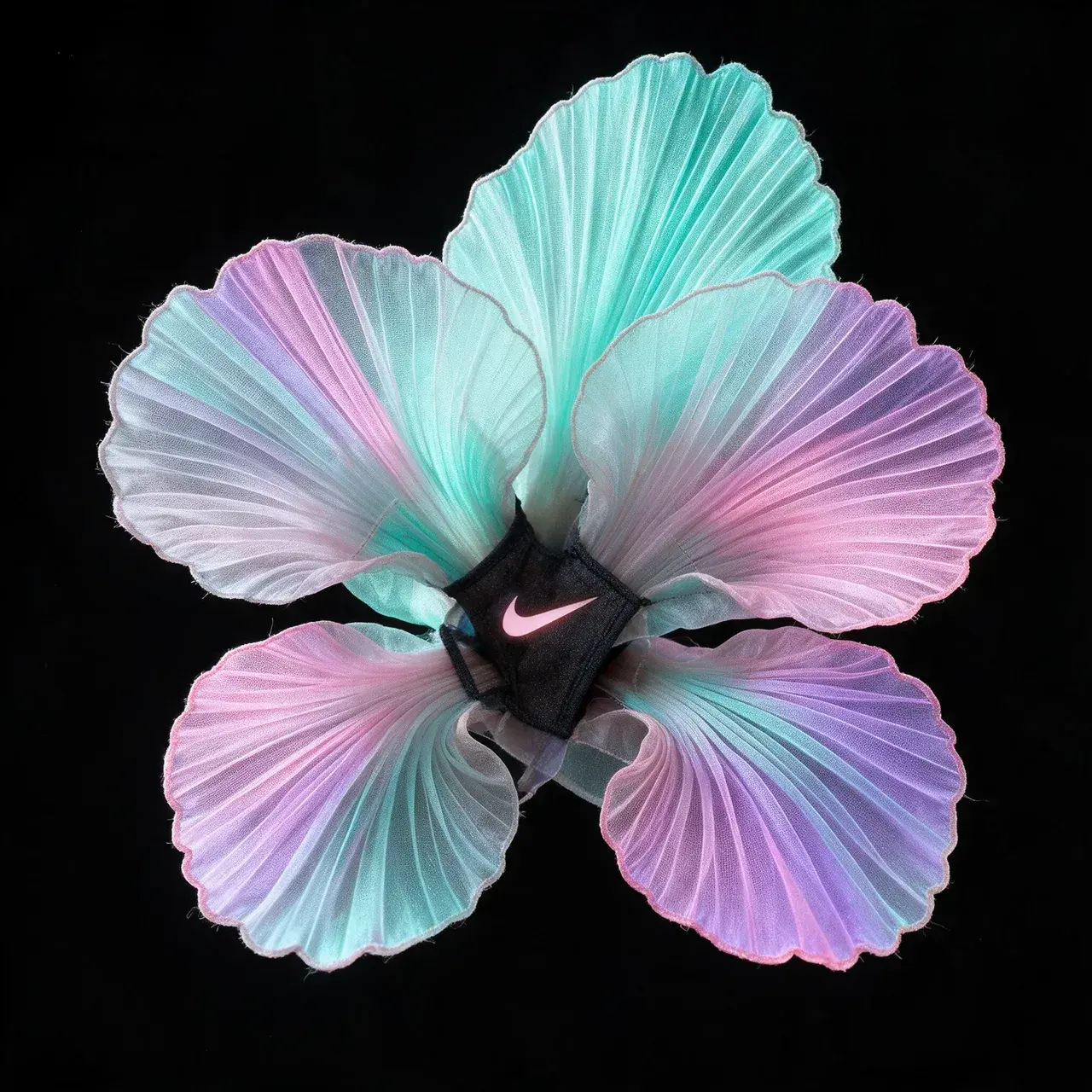
Seedream 5 Pro
Copy
{ "source_lock": "Treat the uploaded image as the immutable structural master. Preserve every visible source component exactly one-to-one: silhouette, proportions, thickness, openings, cutouts, separate parts, layered elements, attachments, readable text, logos, labels, facial details, decorative elements, relative positions, overlap, depth order, camera angle and composition. Nothing visible in the input may disappear, merge, move, simplify or be redesigned. Material scale must automatically adapt around fine source details.", "palette": { "organza_aqua": "#7EDFD8", "organza_lilac": "#B79AE8", "organza_pink": "#EFA0C6", "seam_black": "#222328", "background": "#000000" }, "material_hierarchy": { "primary": "85% heat-set pleated organza", "secondary": "10% narrow structural seam tape", "accent": "5% translucent reinforced edge film" }, "construction": "Wrap the exact source geometry in multiple bonded layers of genuine sheer organza that have been permanently heat-pleated into directional micro-fold systems.", "surface_physics": "The organza must remain visibly textile and semi-transparent, with extremely fine woven monofilament structure, narrow repeating pleats, soft fiber intersections and true overlapping-layer moire. Use different pleat directions on separate broad source components so the textile changes optical density where layers overlap. Color shifts through aqua, lilac and pale pink by using
separately dyed fabric layers rather than a digital gradient. Integrate only thin matte-black seam tape at a few structural junctions. Show tiny fold-memory irregularities, subtle fiber fray, faint heat-set flattening on ridges, microscopic dust and slight tension changes around curves.", "detail_control": "Reduce pleat depth and layer count around text, logos and fine source elements while keeping the textile construction intact.", "lighting": { "setup": "One large diffused studio light positioned upper-left-front, approximately 40 degrees above and 35 degrees to the left of camera, plus extremely weak neutral frontal fill only to preserve shadow information.", "behavior": "Lighting remains soft, neutral and identical across the entire collection. Material appearance must come from real roughness, transmission, fibers and reflectivity rather than from dramatic lighting.", "restrictions": "No rim light, no colored lighting, no visible light sources, no rectangular reflections, no HDRI environment, no bloom, glow, halo or lens flare." }, "composition": { "camera": "Preserve the exact source viewing direction and orientation.", "position": "Centered and freely suspended.", "background": "#000000", "floor": false, "cast_shadow": false }, "quality": "Photoreal couture textile macro photography with genuine sheer weave, heat-set pleats, layered transparency, authentic seam construction and tactile fashion realism." }
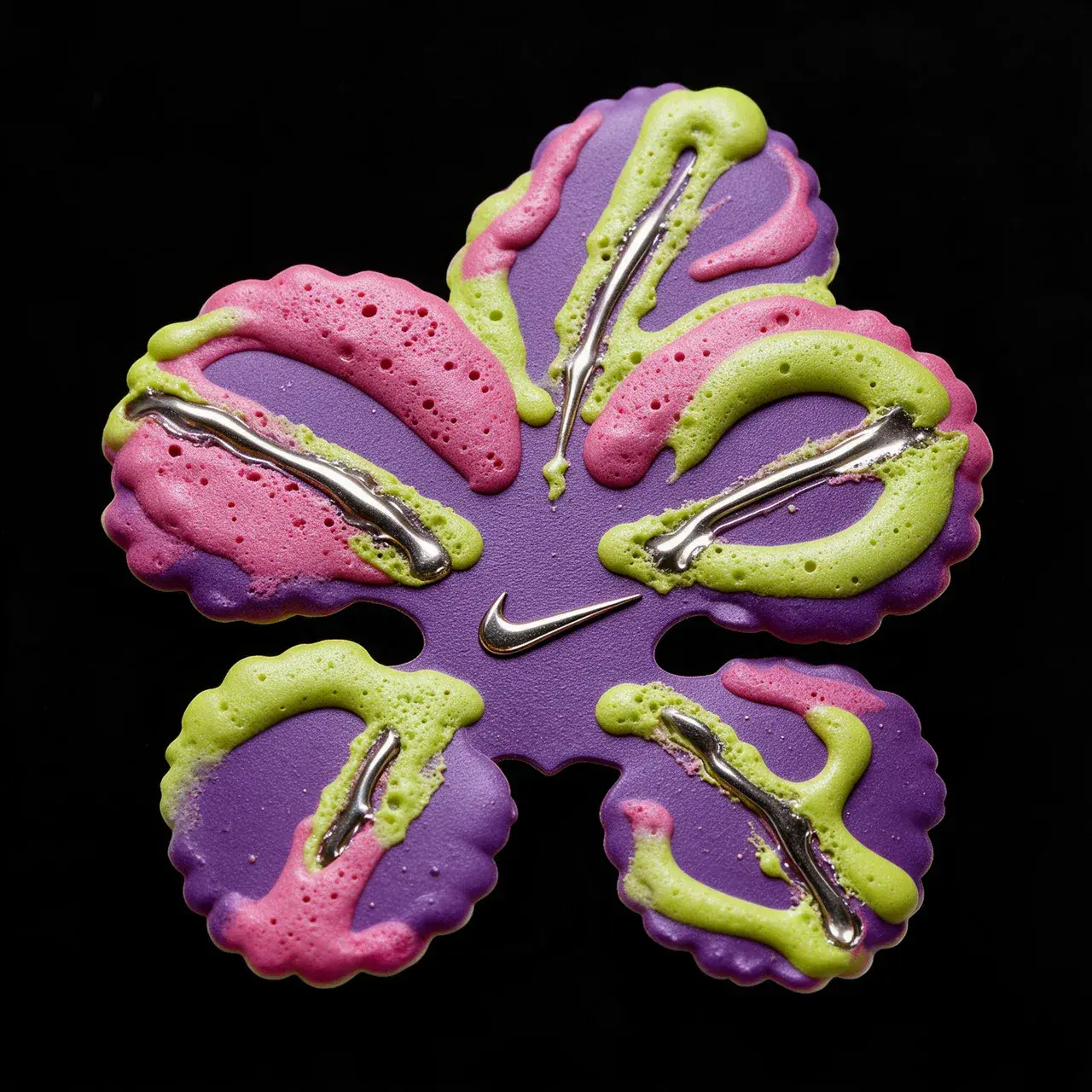
Seedream 5 Pro
Copy
{ "source_lock": "Treat the uploaded image as the immutable structural master. Preserve the complete source assembly exactly, including silhouette, openings, proportions, thickness, text, logos, faces, attachments, layered components, overlap and camera view. Surface relief must remain inside the original silhouette.", "palette": { "base_violet": "#6441C4", "puff_pink": "#EE5A9A", "puff_lime": "#C8EE3C", "metal": "#C9CED2", "background": "#000000" }, "material_logic": { "dominant_material": "Matte violet molded polymer.", "secondary_material": "Thick expanded puff-print relief.", "accent": "Narrow flowing liquid-metal traces." }, "macro_structure": "Use a calm violet base covering roughly half the visible surface. Across it create several enormous puff-print gestures: broad asymmetric bands, stretched rings, rounded abstract symbols and sweeping Y2K curves. The relief should occupy large coherent regions rather than small decorative motifs.", "meso_structure": "Alternate raspberry-pink and acid-lime puff-print zones. The print expands 2–5 mm above the surface with rounded edges and slightly irregular foamed thickness. Through several of the largest puff shapes run narrow polished-metal streams following the contours, as if molten metal was poured into shallow grooves cut through the expanded ink.", "micro_structure": "Puff ink reveals microscopic foam
cells, tiny pinholes, subtle height inconsistency and matte expanded edges. Base polymer has fine satin grain. Metal has soft waviness, tiny polishing scratches and realistic thickness. Where metal cuts through puff ink, the foamed material shows compressed broken-cell edges.", "detail_control": "Keep source text and logos on calm flat polymer. Reduce relief amplitude around narrow geometry.", "lighting": { "setup": "One large diffused studio light positioned upper-left-front, approximately 40 degrees above and 35 degrees to the left of camera, plus extremely weak neutral frontal fill only to preserve shadow information.", "behavior": "Lighting remains soft, neutral and identical across the entire collection. Material appearance must come from real roughness, transmission, fibers and reflectivity rather than from dramatic lighting.", "restrictions": "No rim light, no colored lighting, no visible light sources, no rectangular reflections, no HDRI environment, no bloom, glow, halo or lens flare." }, "composition": { "camera": "Preserve the exact source viewing direction and orientation.", "position": "Centered and freely suspended.", "background": "#000000", "floor": false, "cast_shadow": false }, "quality": "Photoreal printed-material macro photography with true expanded ink topology, real foamed microstructure and physically integrated polished metal." }
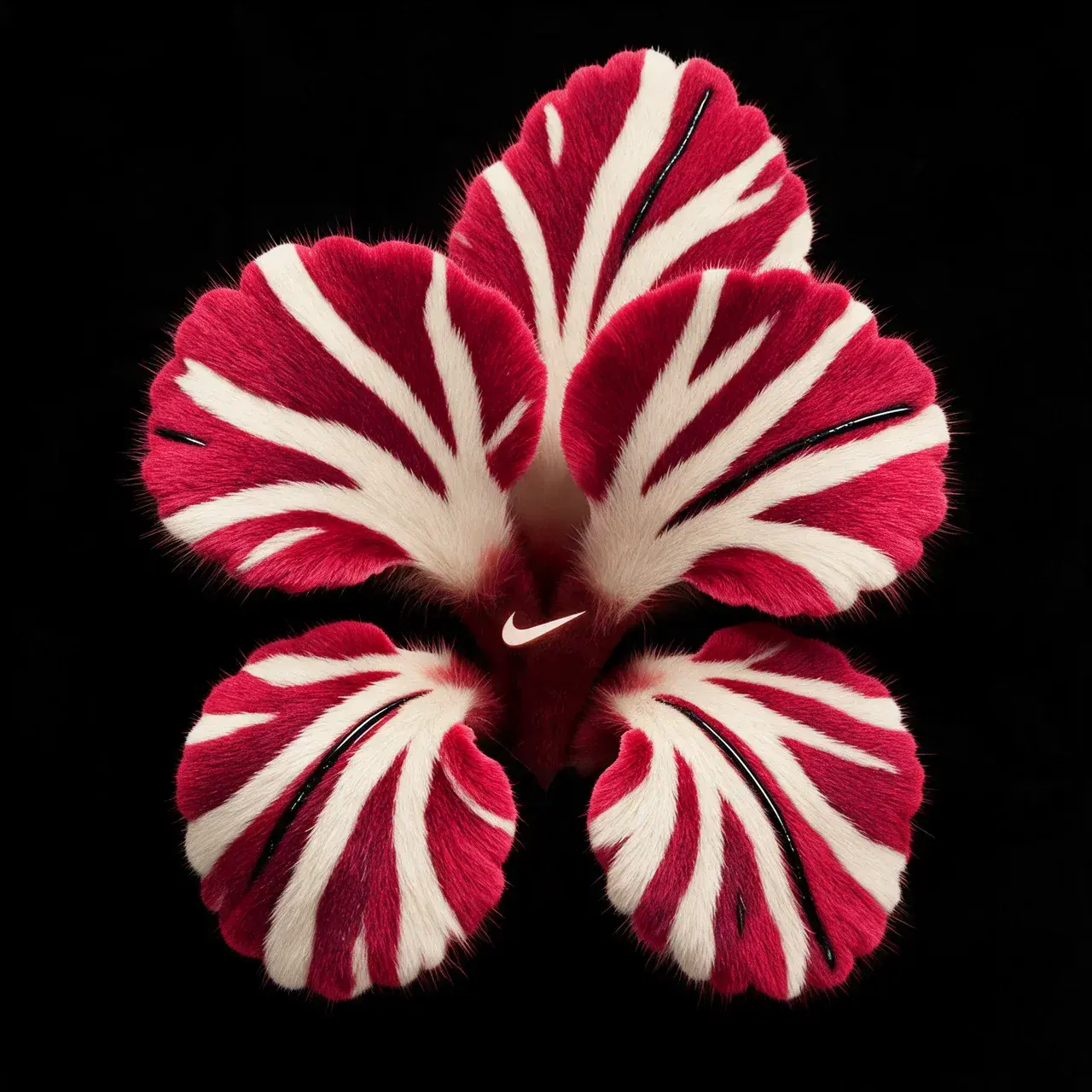
Seedream 5 Pro
Copy
Use the uploaded image as an immutable full-assembly reference. Preserve every source element exactly: all components, openings, layered parts, attachments, text, labels, logos, facial or decorative details, proportions, overlap, spacing and original orientation remain unchanged. Cover suitable surfaces in extremely short dense flock in rich crimson #C51F46 with a darker wine underlayer #71102C, creating a velvety matte body with visible directional nap. Instead of printed stripes, sculpt broad irregular ivory channels #F1E5D5 directly into the flock by shaving the pile down almost to the substrate, creating sweeping organic stripe shapes with crisp but slightly fiber-soft boundaries. The pattern should use large confident bands, asymmetric spacing and dramatic negative areas rather than conventional animal markings. Inside only a few ivory channels add a hair-thin glossy black resin line #151518 for extra edge definition. Keep the pattern large enough to read strongly from a distance and automatically simplify it around source labels, faces, openings and intricate attachments. Render the exact preserved assembly levitating against #000000, original camera retained, soft upper-left-front material lighting, saturated red depth, beautiful pile-direction contrast, clean ivory separation and ultra-high-resolution editorial CGI.
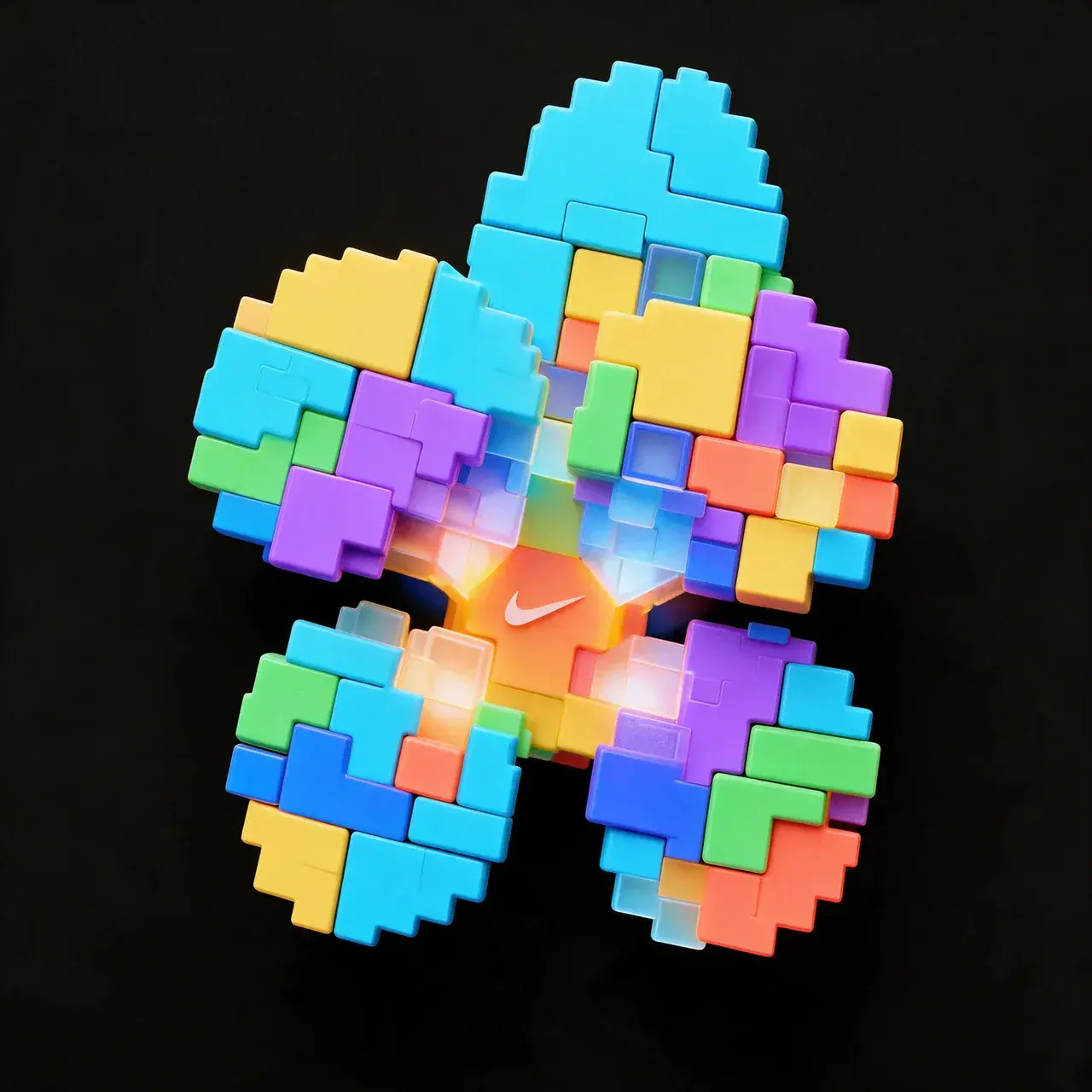
Seedream 5 Pro
Copy
Transform the uploaded object into a bold Tetris-inspired structural material while keeping the exact silhouette, proportions, all source contours, accessory features and every small detail fully intact. Treat the uploaded object as the exact form blueprint. Rebuild the visible surfaces as an interlocked composition of clean extruded tetrimino blocks fitted tightly across the form, with matte-satin polymer colors in #23C7F5, #F2D34C, #A761FF, #5AD45F, #FF7A59 and #3C7BFF, subtle seam lines between pieces, soft bevels, crisp geometry, occasional translucent blocks adding depth, slight inner glow concentrated in the joins, premium contemporary design language, extremely clean material organization, controlled studio lighting, pure black background #000000, floating object, centered product-style render, sharp and highly legible.
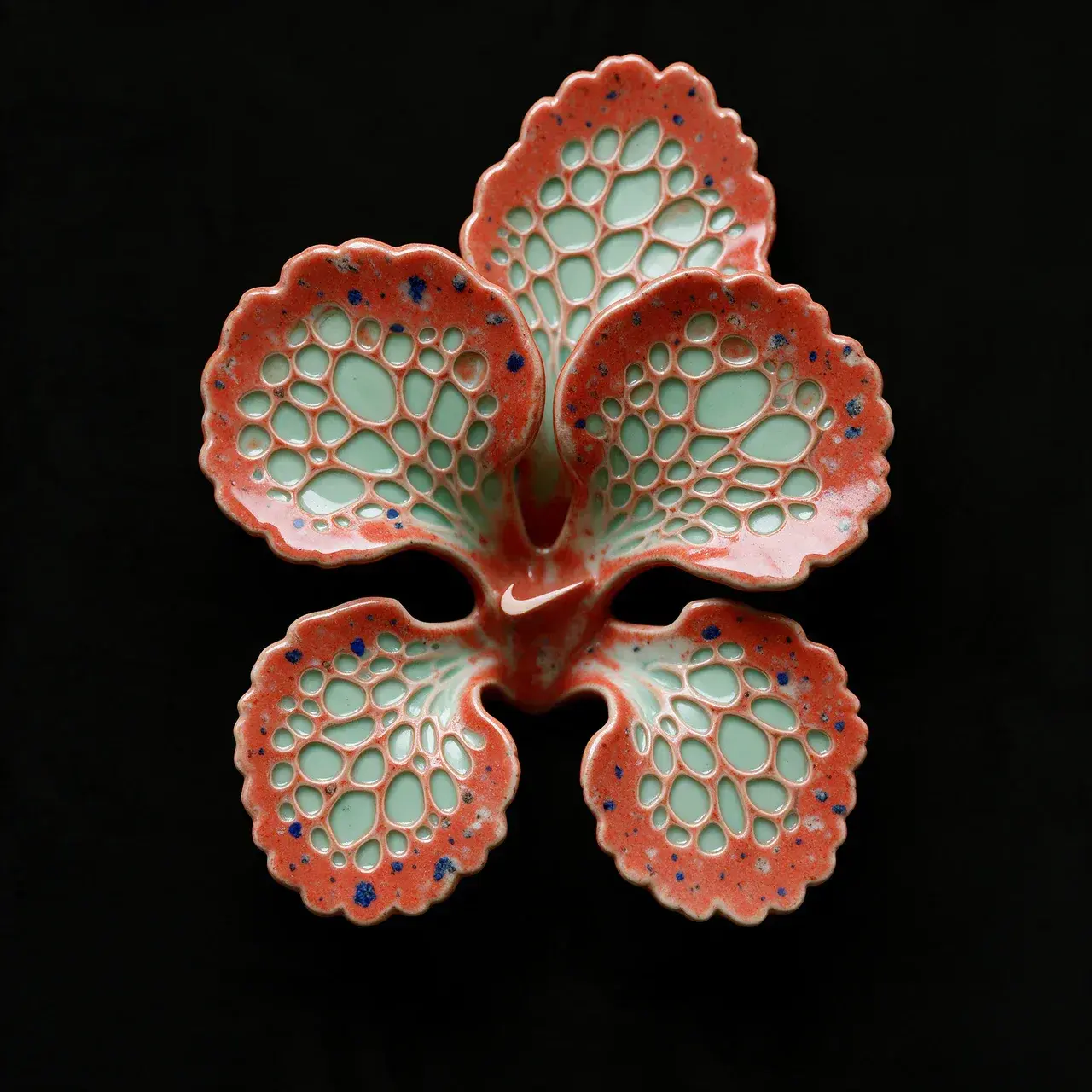
Seedream 5 Pro
Copy
Use the uploaded subject as an immutable geometry reference and preserve its exact silhouette, proportions, thickness, openings, negative spaces, edges and orientation. Construct the object from saturated warm coral-red ceramic with a smooth satin fired surface and sparse deep-blue and ivory mineral freckles inside the clay body. Engrave selected broad surfaces with an intricate but clean interconnected lace-like network of narrow recessed channels, based on irregular rounded polygons rather than a honeycomb or regular grid. Fill the network with glossy pale mint-green glass enamel sitting slightly below the ceramic surface, leaving the coral ceramic islands between the lines broad and matte. Vary the polygon scale organically across the form so the pattern feels designed rather than procedural, and fade it completely before all contours, holes and fine details. Add rare tiny cobalt enamel dots at selected network junctions for graphic punctuation. The material must read as fired ceramic with inlaid glass, not printed ornament. Preserve exact source orientation and minimal perspective, centered complete object floating against infinite black #000000. No floor, pedestal, support, wall, wire, horizon or external shadow. Invisible controlled upper-left-front illumination with weak fill and subtle upper-right separation, no rectangular reflections, glow or HDRI room. Physically accurate ceramic roughness, enamel depth, groove self-occlusion and saturated premium CGI color. Highest priority: exact preservation of the uploaded object's geometry.
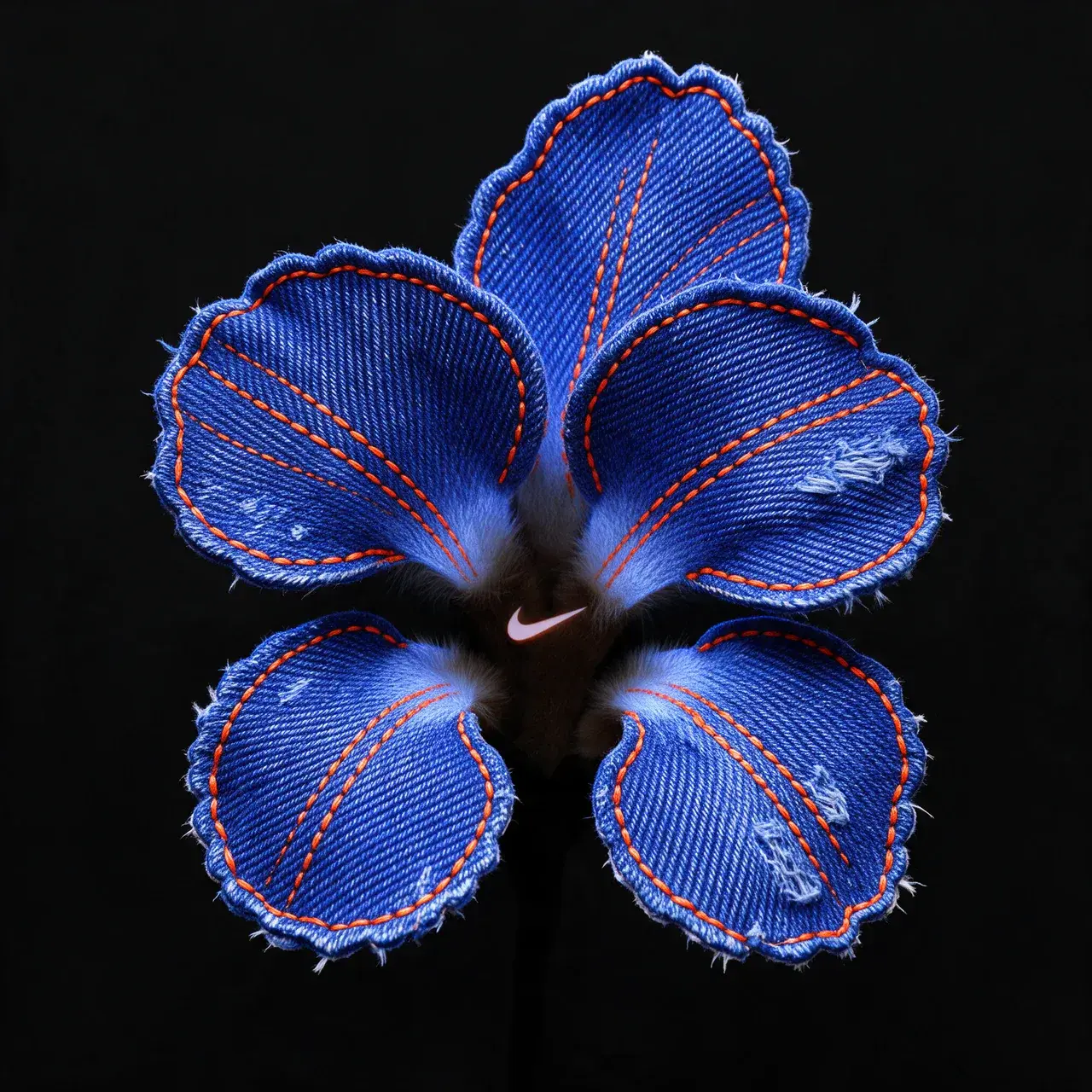
Seedream 5 Pro
Copy
Use the uploaded image as an immutable full-assembly reference. Preserve every visible source component exactly: identical silhouette, proportions, thickness, openings, cutouts, layered parts, attachments, text, logos, labels, facial details, decorative elements, relative positions, overlap, depth order and original viewing orientation; nothing from the input may disappear, merge, move or be redesigned. Material treatment must adapt around fine details rather than simplifying them. Reconstruct every suitable surface from exceptionally realistic heavyweight denim dyed saturated electric cobalt #2848FF, with clearly resolved diagonal twill weave, dense cotton fibers, subtle tonal variation between warp and weft, microscopic fuzz along raised yarns and natural compression following the existing geometry. Introduce bold structural topstitching in vivid tangerine #FF5A1F: paired parallel rows of thick slightly glossy thread sweeping around the object in large confident curved paths, with believable needle penetration, tiny thread shadows and slight textile puckering along each stitched line. Add sparse areas of controlled abrasion where the cobalt fibers soften toward pale cornflower #8199FF, revealing individual broken yarns rather than generic faded patches. Along selected existing edges expose a hair-thin frayed denim boundary with loose fibers, while keeping the exact source contour intact. Keep broad uninterrupted cobalt regions so the material reads instantly and does not become noisy. Render the complete preserved assembly floating freely against pure black #000000, exact source camera direction, no floor, pedestal, support or external cast shadow. Controlled high-end material-render illumination from upper-left-front, deep readable shadows, beautiful directional textile highlights, exceptional twill microdetail, premium fashion-CGI realism, razor-sharp high-resolution finish.
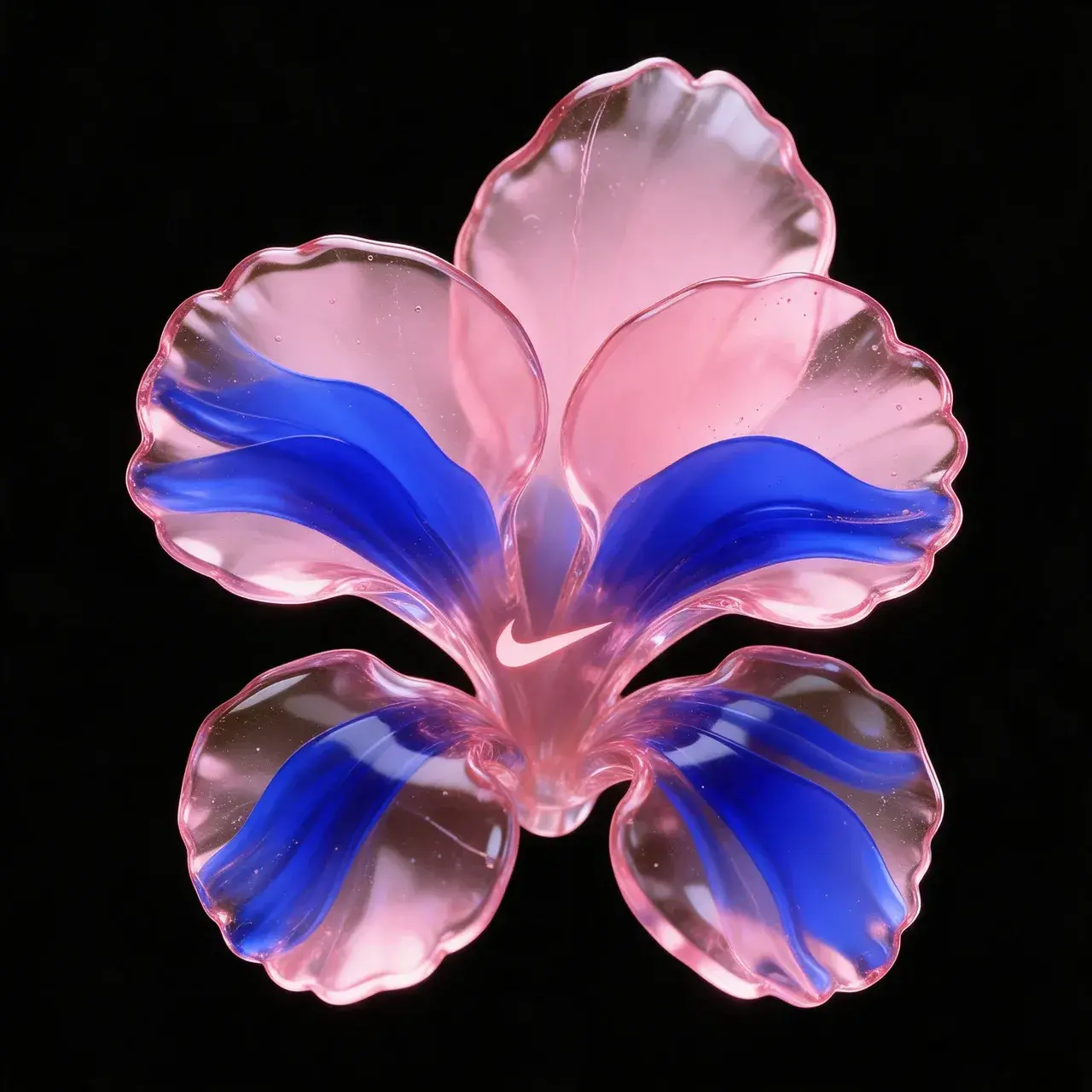
Seedream 5 Pro
Copy
Use the uploaded image as an immutable full-assembly reference. Preserve every source object, attachment, cutout, opening, layered component, text, label, logo, decoration, overlap and viewing orientation exactly. Cast suitable solid regions from transparent rose-tinted glass #EFA3B8 with polished edges #FFD4DE and extremely subtle internal haze. Build a small number of thick internal strata in saturated ultramarine #264EFF, formed as smooth undulating sheets suspended parallel to portions of the outer surface and clearly visible through the glass volume. Let several blue layers overlap to produce deeper indigo #1C2D9B, while isolated gaps reveal clean rose glass between them. Add sparse microscopic bubbles and a few hairline casting-flow marks, but keep the main idea extremely clear: transparent pink glass containing bold blue layered waves. The strata remain fully internal and source geometry stays pristine. Render the entire preserved assembly floating against pure black #000000, exact original camera, refined material-render illumination, excellent edge transmission, rich blue internal depth, clean highlights and exceptional premium CGI.
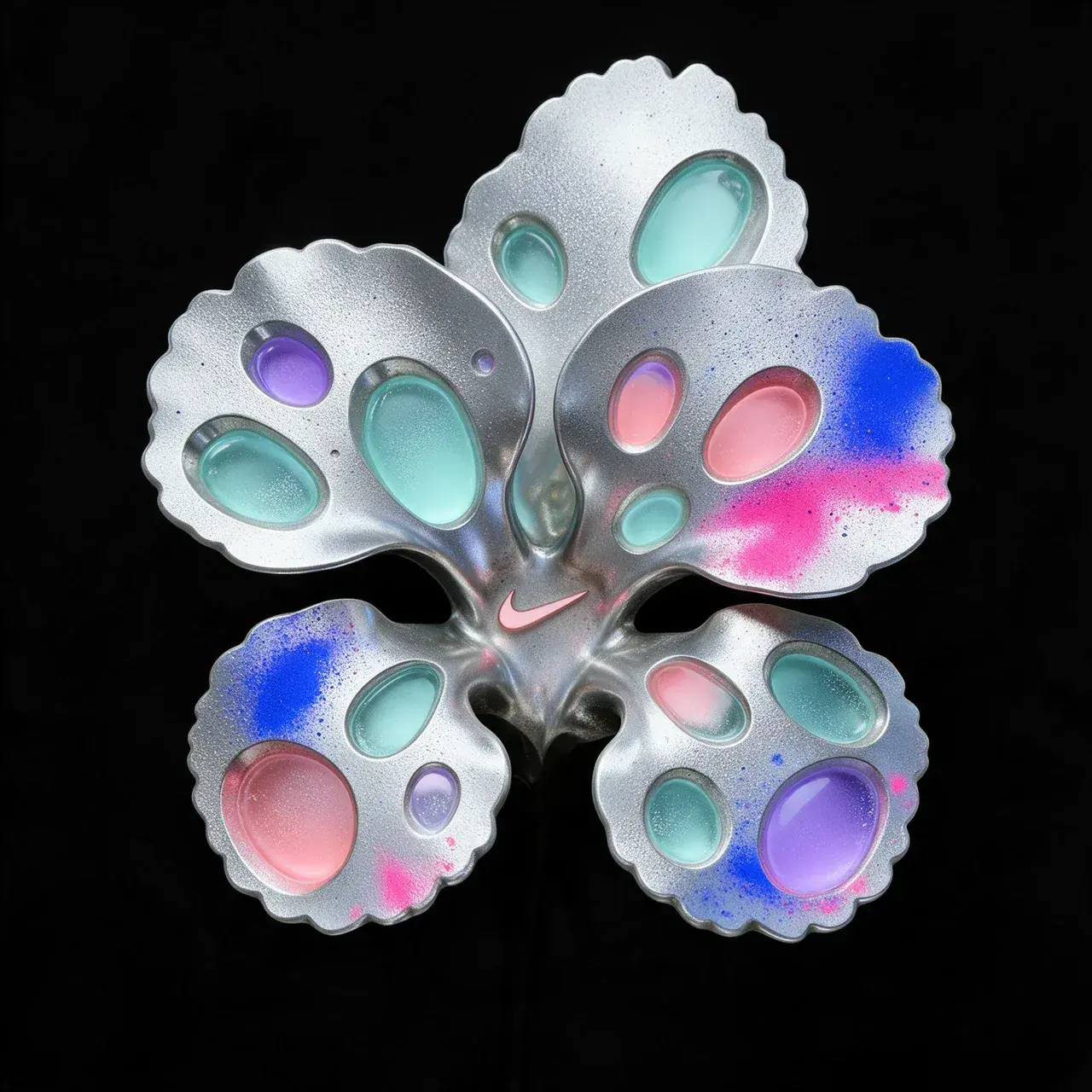
Seedream 5 Pro
Copy
{ "source_lock": "Treat the uploaded image as the immutable structural master. Preserve every visible source component exactly one-to-one: silhouette, proportions, thickness, openings, cutouts, separate parts, layered elements, attachments, readable text, logos, labels, facial details, decorative elements, relative positions, overlap, depth order, camera angle and composition. Nothing visible in the input may disappear, merge, move, simplify or be redesigned. Material scale must automatically adapt around fine source details.", "palette": { "satin_aluminum": "#C7CDD1", "frosted_aqua": "#A8E8E2", "frosted_violet": "#B399EF", "frosted_coral": "#F49AA6", "spray_blue": "#315BE8", "spray_pink": "#F13B8E", "background": "#000000" }, "construction": "Machine the existing object from satin aluminum, then drill and countersink a limited number of large irregular openings and permanently fill those cavities with flush frosted-glass inserts.", "surface_physics": "Keep the aluminum dominant, with extremely fine bead-blasted grain and a dry metallic response. Across broad surfaces place an art-directed field of large smooth cavities in varying oval and organic rounded shapes, each filled completely flush with thick frosted aqua, violet or coral glass. Glass inserts have genuine optical depth, softly etched faces and clearer internal edge zones. Apply subtle cobalt and hot-pink aerosol overspray across the silver metal only, allowing pigment to feather partly over several glass boundaries but never cover the entire composition. The interaction of dry silver grain, soft translucent colored cavities and sprayed pigment must
be immediately readable. Show tiny machining chatter around countersunk openings, microscopic scratches on aluminum, occasional paint dust caught in the bead-blast grain, subtle glass etch variation and slight polished compression at the metal-glass joint.", "detail_control": "Avoid cavities and heavy overspray around source text, logos and fine elements. Use smaller inserts only where needed to preserve geometry.", "lighting": { "setup": "Broad soft directional illumination from upper-left-front, with restrained neutral frontal fill and subtle upper-right separation from the black background.", "exposure": "Consistent exposure across the entire material collection, with deep clean blacks, rich readable midtones and controlled highlight roll-off.", "light_behavior": "The illumination direction, softness, intensity and contrast remain identical across every material; only the physically correct response of the material itself changes.", "restrictions": "All light sources remain outside the visible frame. No visible lamps, softboxes, light panels, white cards or studio equipment. No rectangular or square light-source reflections, no HDRI environment, no bloom, glow, halo, lens flare or artificial rim-light outline." }, "composition": { "camera": "Preserve the exact source viewing direction and orientation.", "position": "Centered and freely suspended.", "background": "#000000", "floor": false, "cast_shadow": false }, "quality": "Real machined-aluminum and frosted-glass material photography, crisp countersunk construction, authentic aerosol deposition, rich roughness contrast and premium tactile macro realism." }
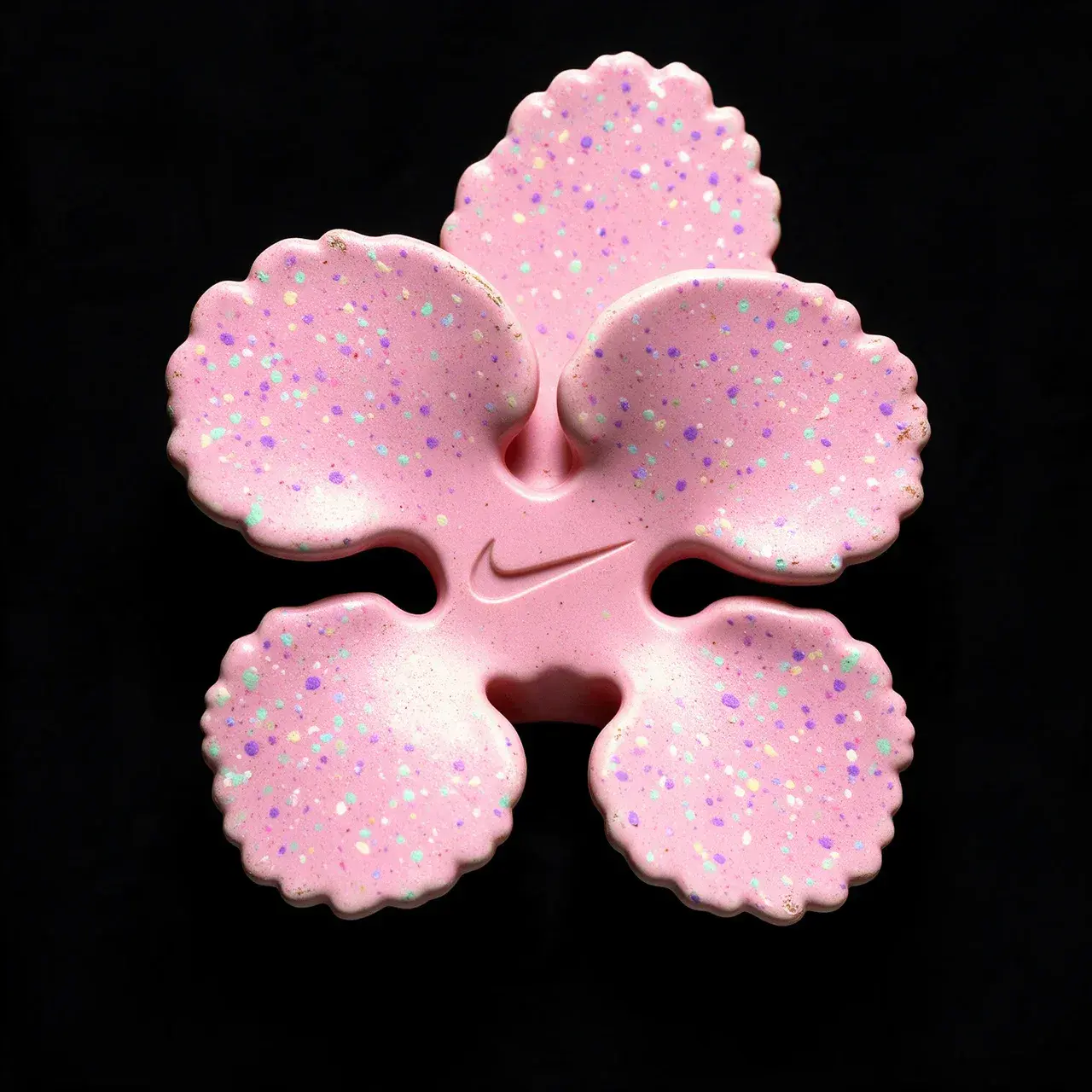
Seedream 5 Pro
Copy
Use the uploaded image as the fixed master reference. Rebuild the exact object one-to-one, preserving the original silhouette, proportions, cutouts, layered construction, text areas, logo placement, spacing, overlap, front-facing orientation and all recognizable structural details. Transform the surface into a dense matte molded polymer with a velvety dry-touch finish in warm blush pink #F6A9C6, covered in refined micro-speckles in lavender #9B7BFF, pale mint #B8F5D0 and soft cream #FFF1D6. The surface should feel cast, solid and contemporary, with subtle molded edges, soft diffused reflections, faint wear on corners and beautiful tactile depth. Keep the speckling fine and elegant rather than noisy. Photograph it on a pure black background #000000 with luxurious studio product lighting, soft frontal key light, controlled rim highlights, clean micro-contrast, deep elegant shadows and crisp macro realism.
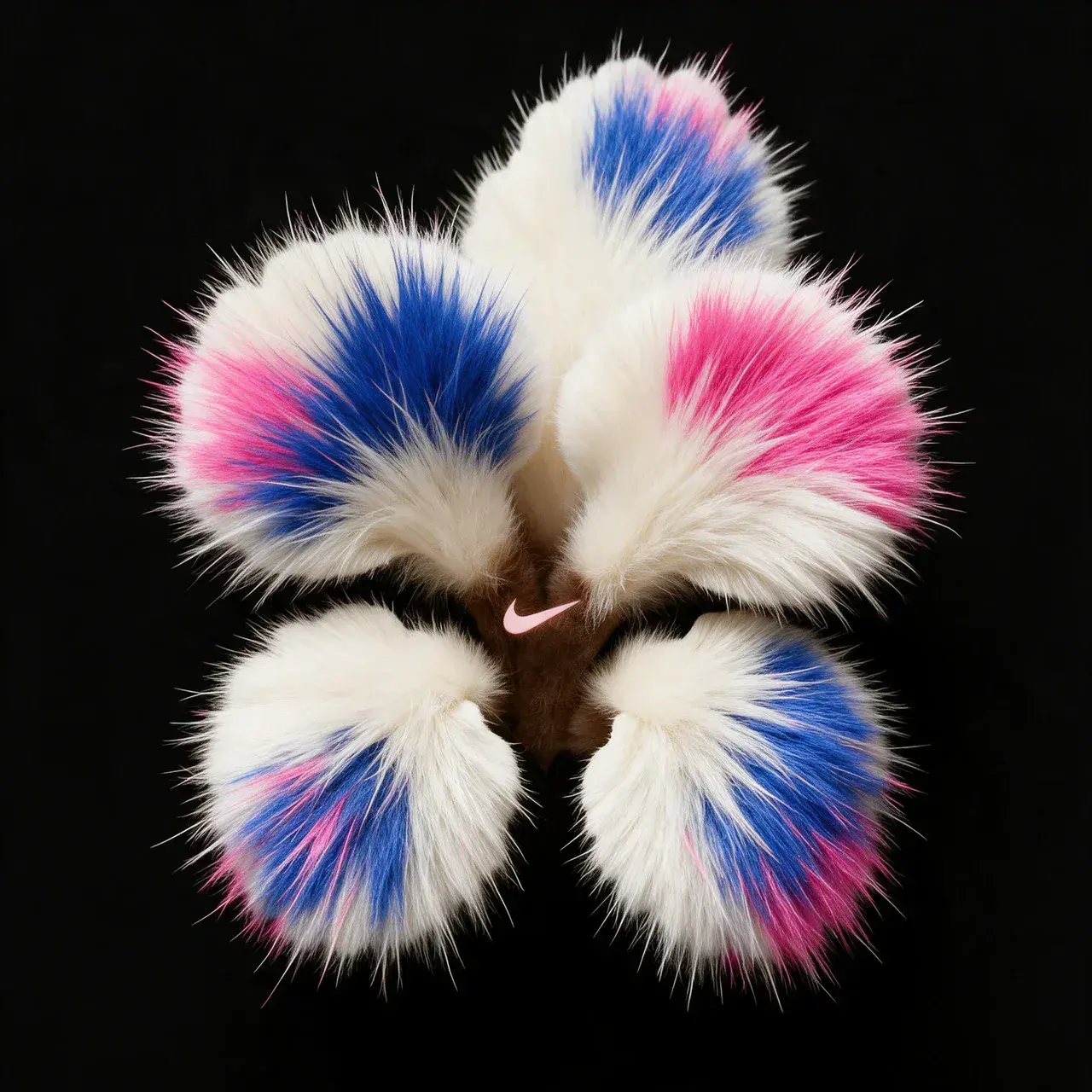
Seedream 5 Pro
Copy
{ "source_lock": "Use the uploaded image as the immutable complete assembly reference. Preserve every visible component, proportion, opening, layer, attachment, text, logo, label, decorative detail, overlap and exact view.", "palette": { "fur_base": "#EEE8E0", "blue_tips": "#3C65F2", "pink_tips": "#F64B9B", "background": "#000000" }, "construction": "Cover suitable surfaces with dense medium-length faux fur built from individually visible fibers anchored directly to the existing geometry.", "surface_physics": "Keep the undercoat and lower two-thirds of the fibers warm ivory, while dyeing only selected broad groups of fiber tips electric blue or hot pink. The result should create large blurred color clouds that shift as the pile direction changes, without any color printed on the underlying surface. Fur length varies naturally by a few millimeters, with occasional soft clumps, separated individual
strands, subtle static flyaways and compressed pile around bends. Use broad color zones and large clean ivory areas for editorial clarity. Avoid shaggy monster-fur proportions.", "detail_control": "Shorten fibers heavily around text, logos, faces and fine source components.", "lighting": { "setup": "Large soft directional upper-left-front lighting with subtle fill.", "material_response": "Precise individual fiber separation, soft deep pile shadows, restrained sheen on dyed tips and realistic ivory undercoat.", "restrictions": "No fuzzy halo, no artificial glowing fibers, no plush-toy appearance." }, "composition": { "camera": "Exact source viewing direction.", "position": "Centered and floating.", "background": "#000000", "floor": false, "cast_shadow": false }, "quality": "Editorial macro fur photography, realistic fibers, dyed-tip detail, tactile volume and sophisticated fashion-material realism." }
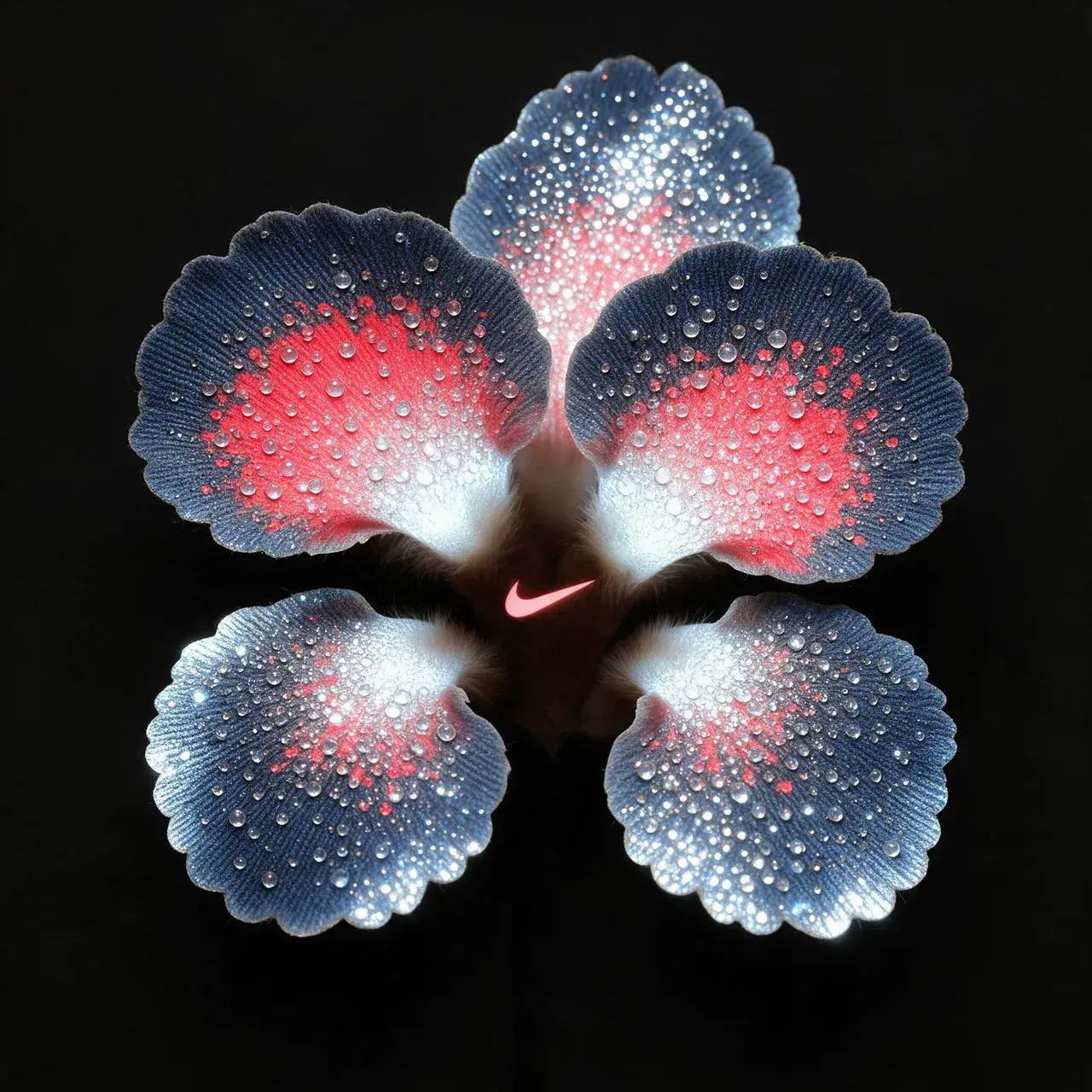
Seedream 5 Pro
Copy
Use the uploaded image as an immutable full-assembly reference. Preserve every visible source component exactly one-to-one: identical silhouette, proportions, thickness, openings, cutouts, separate pieces, layered elements, attachments, readable text, logos, labels, decorative details, relative placement, overlap, depth order and exact source viewing orientation. Nothing may disappear, merge, move or be redesigned. Reconstruct suitable surfaces from genuine retroreflective technical textile built from an ultra-dense woven backing in cool graphite-blue #283449 coated with millions of microscopic transparent glass microspheres partially embedded into a thin reflective binder. The surface must look like real high-grade reflective sportswear fabric rather than metallic paint: under normal angles it reads as a refined muted blue-gray textile with visible weave and a softly granular glass-bead skin; where the controlled studio light strikes more directly, selected planes return an intense clean silver-white reflection #EEF5F6 with a faint icy-cyan edge #91E5F1. Introduce one large dyed color zone in saturated hot coral #FF4C64 beneath the glass-bead layer so that the coral remains clearly visible in off-axis regions while becoming pale luminous pink under direct reflection. Individual microspheres must remain barely resolvable at macro scale, with irregular partial embedding, microscopic missing beads, tiny abrasion zones and genuine textile fibers visible between them. Keep the material extremely clean and graphic: broad fields of graphite-blue and coral, never glitter noise. Fine source features use a finer bead coating while retaining exact readability. Photograph the full preserved assembly floating against pure black #000000 using precise fashion-tech product lighting: broad soft upper-left-front illumination plus a small controlled near-camera reflective contribution that activates only selected surfaces, deep readable shadows, no bloom or neon halo, authentic retroreflection, crisp woven detail and true real-world textile photography.
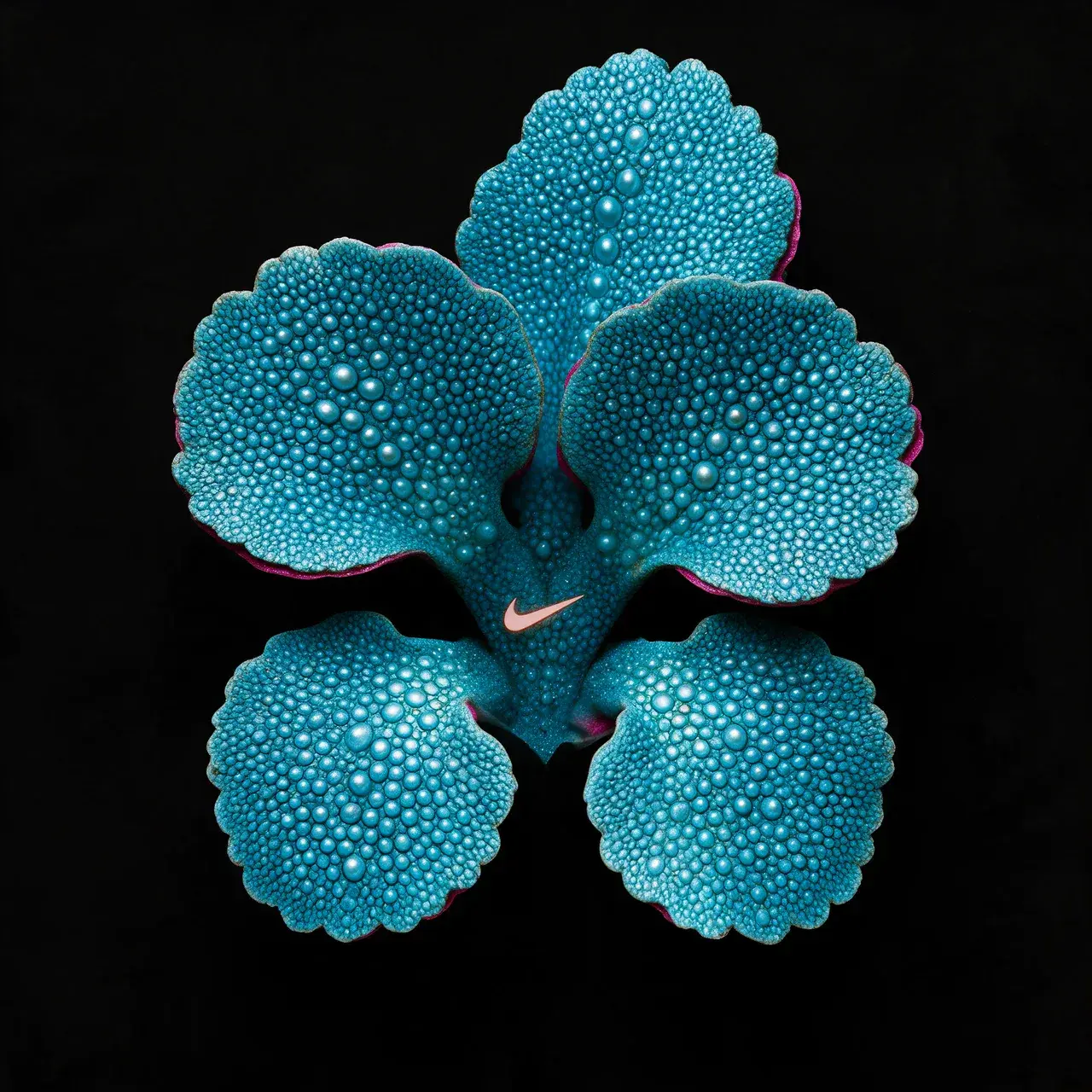
Seedream 5 Pro
Copy
Use the uploaded image as an immutable full-assembly reference. Preserve every visible source element exactly: silhouettes, proportions, thicknesses, openings, layered components, attachments, labels, text, logos, decorative features, overlap and original orientation remain untouched. Reconstruct suitable surfaces as genuine shagreen-inspired material with thousands of tightly packed calcified pearl-like denticles creating a naturally granular surface, but dye the material in an unexpected saturated cobalt-turquoise #087FAD with darker teal recesses #07536E and tiny pale aqua high points #88D7E5. The texture must be biologically irregular rather than procedural: denticles vary subtly in size and roundness, pack more densely in some zones, flatten naturally around bends and show an occasional larger central pearl cluster. Polish only the highest points so they catch soft satin highlights while recessed connective material remains dry and matte. Along selected existing side edges reveal a very thin deep-magenta backing layer #B92E76 beneath the blue skin, giving the material a sharp contemporary fashion accent without adding a pattern. Include microscopic natural imperfections, tiny pits, fine handling scratches on polished grains and subtle tonal variation across the dyed surface. Keep all source geometry exact and use proportionally finer denticles around labels and delicate elements. Photograph floating against #000000 with luxury accessories lighting, broad soft modeling that reveals thousands of individual pearls, deep teal occlusion, controlled polished highlights and extreme tactile photorealism.
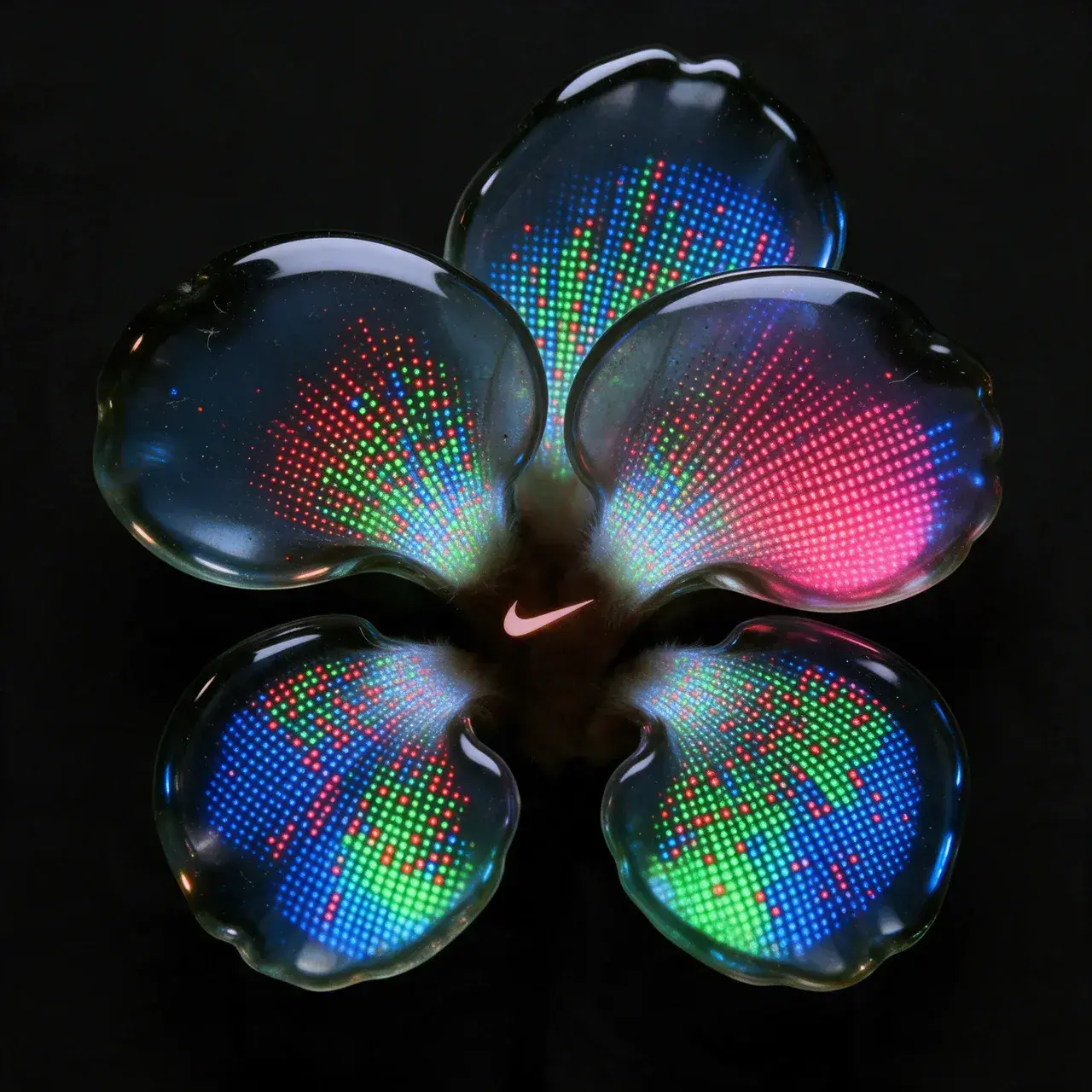
Seedream 5 Pro
Copy
Use the uploaded image as an immutable full-assembly reference. Preserve every source silhouette, proportion, thickness, opening, layer, attachment, readable text, logo, label, decoration, overlap and orientation exactly. Reconstruct suitable surfaces from thick curved smoked CRT glass with a dark blue-gray body #26313C and genuine phosphor structure embedded immediately beneath the inner surface. At macro scale reveal millions of tiny RGB phosphor triads arranged in precise repeating vertical masks: red #EE3F4E, green #62D35B and blue #3678FF, separated by microscopic black grille lines. Keep the individual triads extremely small but optically resolved up close, while from a distance they merge into controlled color fields. Introduce broad Y2K screen-state gradients across large regions—electric blue fading into hot pink, or acid green into cyan—created entirely by different phosphor brightness rather than surface paint. Add authentic CRT traits: faint scanline banding, slight curvature distortion, dark glass reflections, microscopic screen dust, tiny static fibers and hairline cleaning scratches. Do not create glowing neon; the phosphors should appear illuminated internally but constrained behind thick real glass. Preserve source details with proportionally smaller phosphor pitch. Photograph floating against #000000 with dark electronics still-life lighting, controlled glass highlights, rich black screen depth, visible phosphor microstructure and high-resolution analog-tech realism.
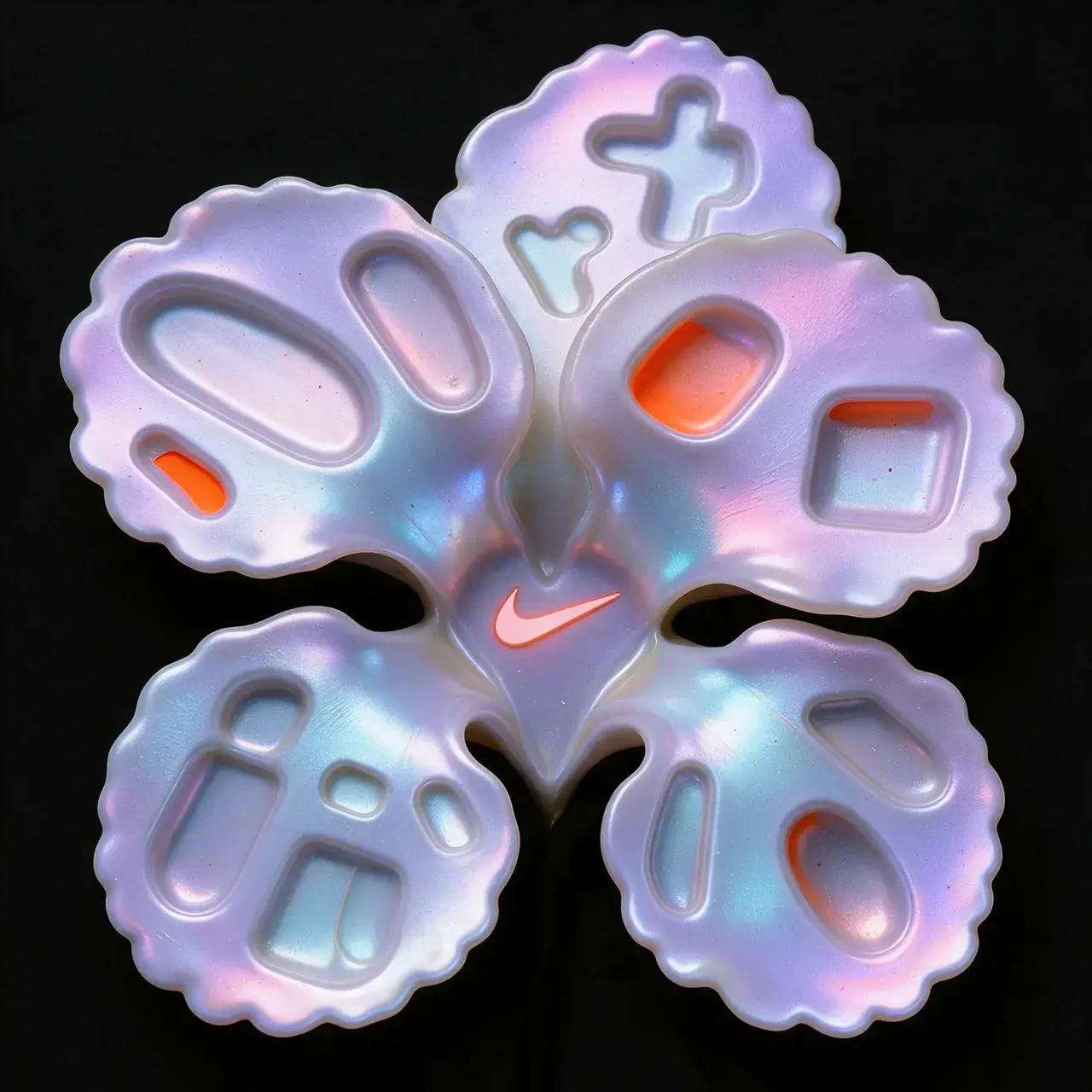
Seedream 5 Pro
Copy
Use the uploaded image as an immutable full-object reference. Preserve every source component, opening, layer, attachment, text, label, logo, decoration, relative position, overlap and exact viewing orientation. Reconstruct suitable surfaces from real vacuum-formed pearlized ABS with a base of icy lavender #B6A7F2 shifting softly toward pale cyan #8EDAE4 and rose #ECA5C5 under angle-dependent pearlescence. Across broad regions create large physically vacuum-drawn recessed forms—smooth elongated capsules, rounded crosses, soft rectangular pockets and deep oval dimples—formed by stretching the actual plastic sheet over tooling rather than adding separate objects. Each recessed geometry should show realistic thinning of the plastic toward corners, subtle stretch lines, faint mold-release texture, tiny specks and softened transitions where the material pulls into depth. Leave large smooth pearl zones between recesses so the pattern remains graphic and clean. Use one small accent layer beneath selected cavities in vivid tangerine #FF6529, visible through deliberately cut openings only in a few focal locations. Photograph against #000000 with broad soft upper-left illumination, elegant pearl color shifts, precise cavity shadows and authentic thermoformed-plastic surface detail.
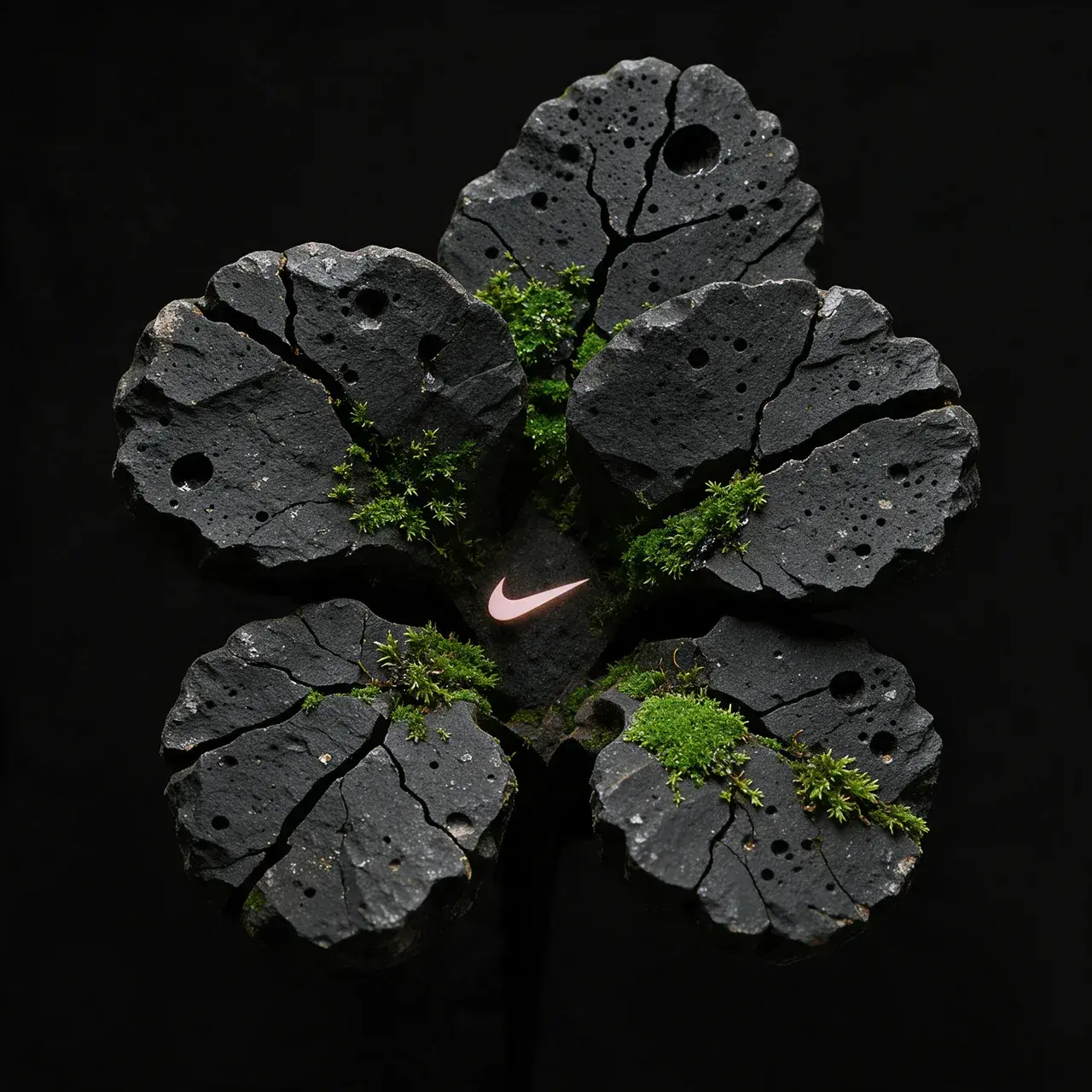
Seedream 5 Pro
Copy
Use the uploaded image as an immutable full-assembly reference. Preserve every visible component, opening, layered structure, attachment, label, text, logo, decoration, overlap and original orientation exactly. Reconstruct suitable surfaces from dense dark basalt #343535 with real geological structure: fine vesicles, occasional larger gas cavities, brittle fractured planes, subtle crystalline grains and naturally chipped edges exposing slightly lighter interior #555653. Break the broad surfaces into a limited number of large tectonic plates separated by irregular narrow fissures that remain contained within the existing geometry. Grow compact emerald moss only inside those protected fissures and selected recessed cavities, using deep green #315D2D, fresh emerald #4F8138 and yellow-green tips #789B48. The moss must emerge physically from cracks rather than blanket the entire object: tiny stems, microscopic leaves, compact cushions and fine rhizoids visible where they attach to damp stone. Several fissures contain dark moist mineral staining #202622 and tiny root hairs, while exposed basalt remains dry and rough. The strong concept is approximately 80% brutal black stone and 20% vivid living moss. Render freely suspended against pure black #000000, exact source view, grazing upper-left-front illumination revealing every fracture and moss leaf, rich deep shadows, controlled mineral highlights and museum-quality natural CGI.
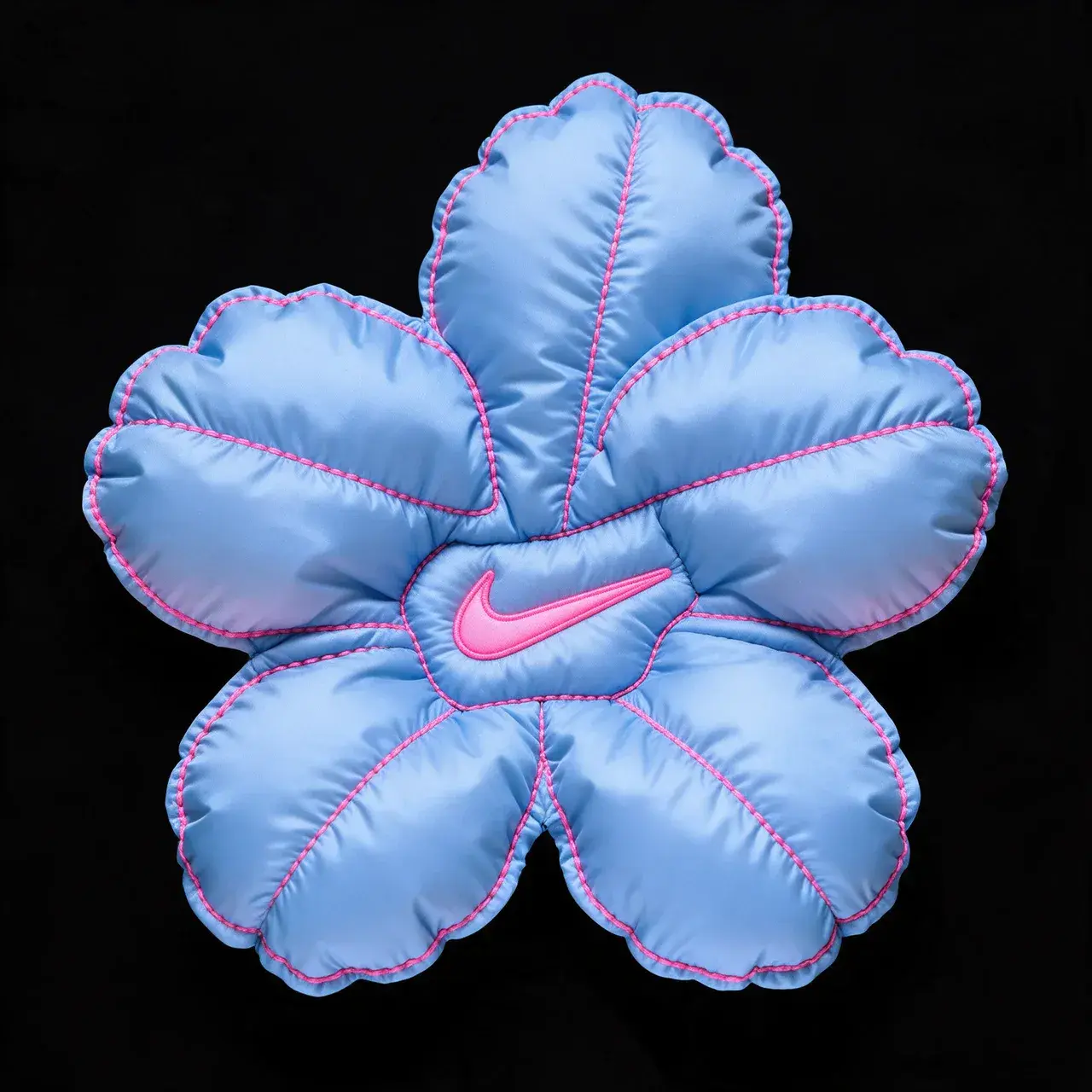
Seedream 5 Pro
Copy
Use the uploaded image as the fixed master reference. Rebuild the exact object one-to-one, preserving the original silhouette, proportions, cutouts, layered construction, text areas, logo placement, spacing, overlap, front-facing orientation and all recognizable structural details. Transform the surface into lightweight padded nylon with inflated stitched chambers and subtle seam lines. Use icy blue #8EB9FF with contrasting hot pink stitching #FF5AA9. The padded sections must feel air-filled and slightly compressed at the seams, with realistic nylon weave, gentle sheen, fine stitch tension, soft wrinkling and tactile volume. Keep the object fully readable and refined, with a fashion-tech Y2K feel. Photograph it on a pure black background #000000 with premium studio lighting and very crisp detail.
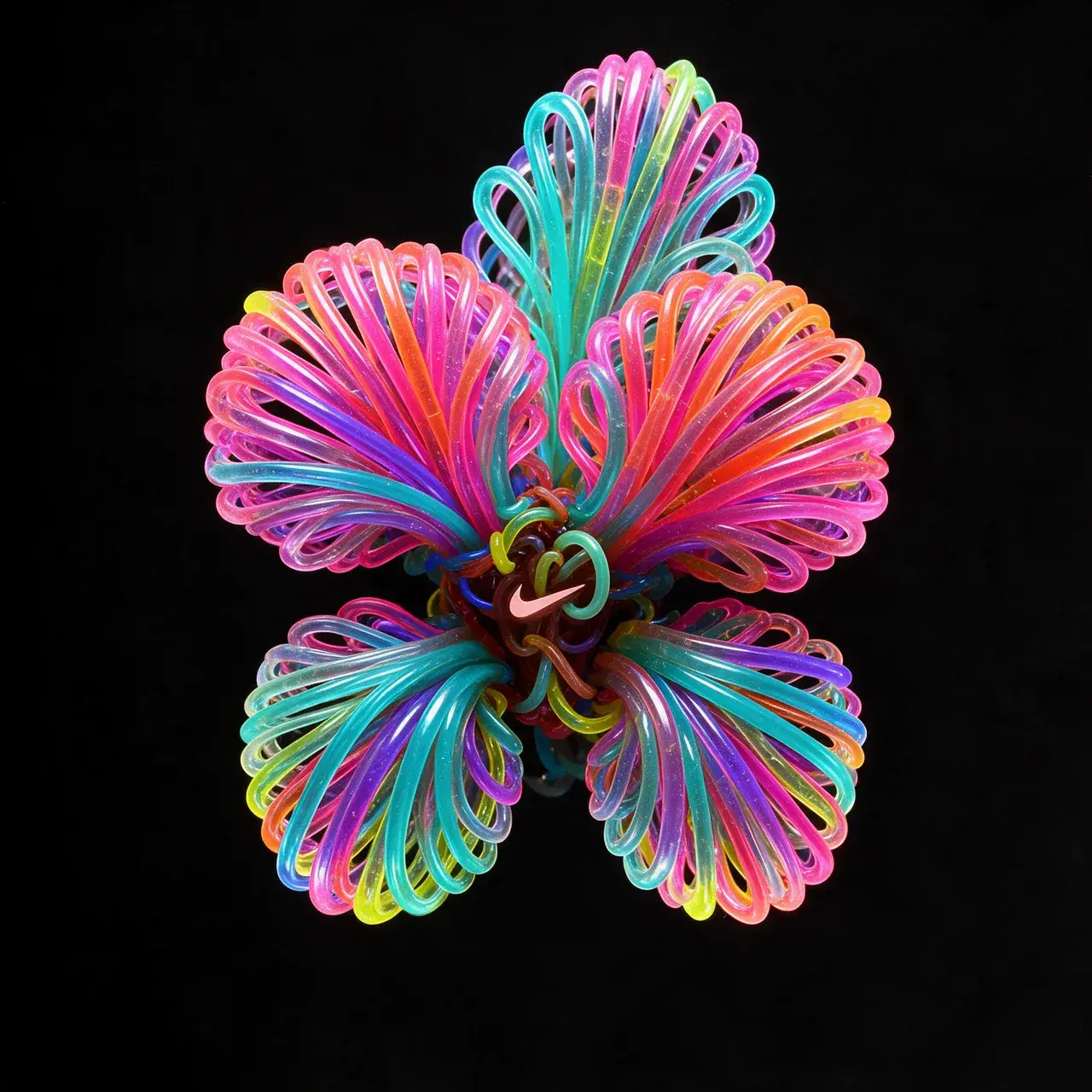
Seedream 5 Pro
Copy
Use the uploaded image as an immutable full-assembly reference. Preserve every visible source component exactly one-to-one: the complete silhouette, proportions, thickness, openings, cutouts, separate pieces, layered elements, attachments, readable text, logos, labels, facial details, decorative elements, exact positions, overlaps and original viewing direction; nothing may disappear, merge, move or be redesigned, and material scale must automatically become finer around small source details. Rebuild the visible material from hundreds of real translucent Y2K jelly bracelets tightly interlocked and compressed together until they physically form the surfaces and thickness of the uploaded object. Use a controlled candy palette of transparent raspberry #FF3F86, electric aqua #32D8D0, ultraviolet #794BFF, tangerine #FF6A25 and clear lemon #E9FF4A, with only two or three dominant colors per large component. Individual bracelets must remain recognizable as flexible circular vinyl loops with round cross-sections, slight flattening at pressure points, tiny molding seams, microscopic scratches, subtle tackiness, trapped dust and real transparent overlap where two colors cross. Let bracelet loops weave through each other in dense directional bundles, creating large rhythmic arcs and visible cavities rather than random spaghetti. At edges, loops compress tightly to preserve the exact source silhouette; around text, logos and fine attachments, use proportionally thinner miniature loops. Photograph the complete preserved assembly freely suspended against pure black #000000 with no floor, pedestal or cast shadow. Use high-end real product-photography lighting: broad soft illumination from upper-left-front, restrained frontal fill, clean local highlights following the curved vinyl surfaces, deep readable shadows between overlapping loops, true transparent color mixing, realistic surface imperfections and extremely sharp macro detail. The result must look like a physical Y2K accessory sculpture photographed in a studio, not a stylized render or toy-like CGI.
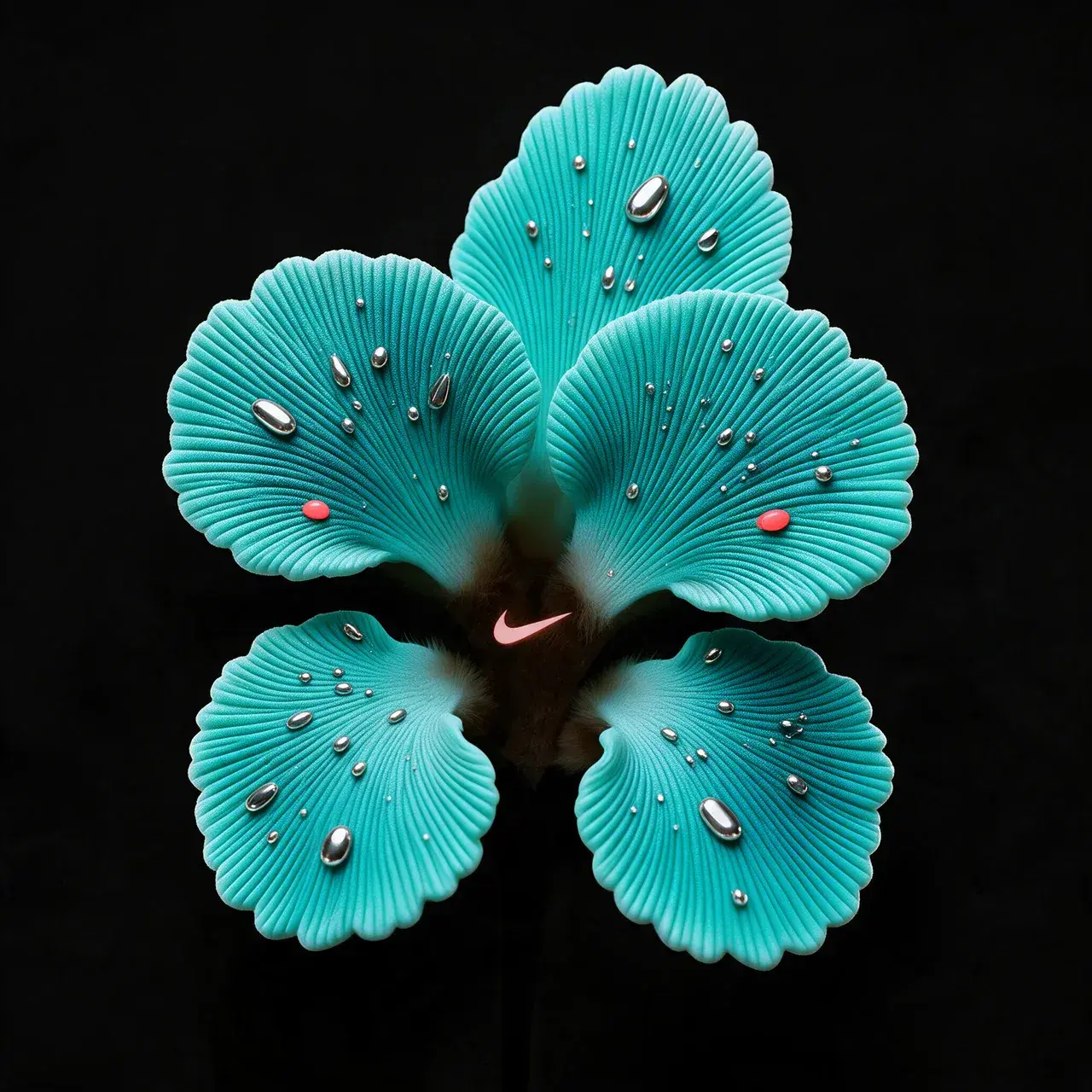
Seedream 5 Pro
Copy
Use the uploaded image as an immutable full-assembly reference. Preserve every source part, opening, layered element, attachment, label, readable text, logo, decorative detail, spacing, overlap and original orientation exactly. Transform suitable surfaces into saturated aqua elastomer #22BDB5 with a dry soft-touch finish and extremely fine corduroy-like micro-ribs following the natural direction of each existing component. Rib spacing changes subtly across curves and compresses around fine details while staying inside the exact original geometry. Seat polished liquid-metal droplets #C8D0D8 into occasional shallow valleys, ranging from microscopic beads to elongated silver capsules, with a much smaller number of vivid coral droplets #FF5E64. Each metallic inclusion creates a delicate compression shadow in the surrounding rubber and reflects only smooth abstract studio gradients. Allow several broad components to shift slightly toward deep teal #087F86 in recessed rib valleys for stronger dimensional color. Render the preserved assembly floating freely against #000000, exact source view, controlled upper-left-front lighting, excellent rib micro-shadowing, sophisticated metal-rubber contrast and ultra-high-resolution premium CGI.
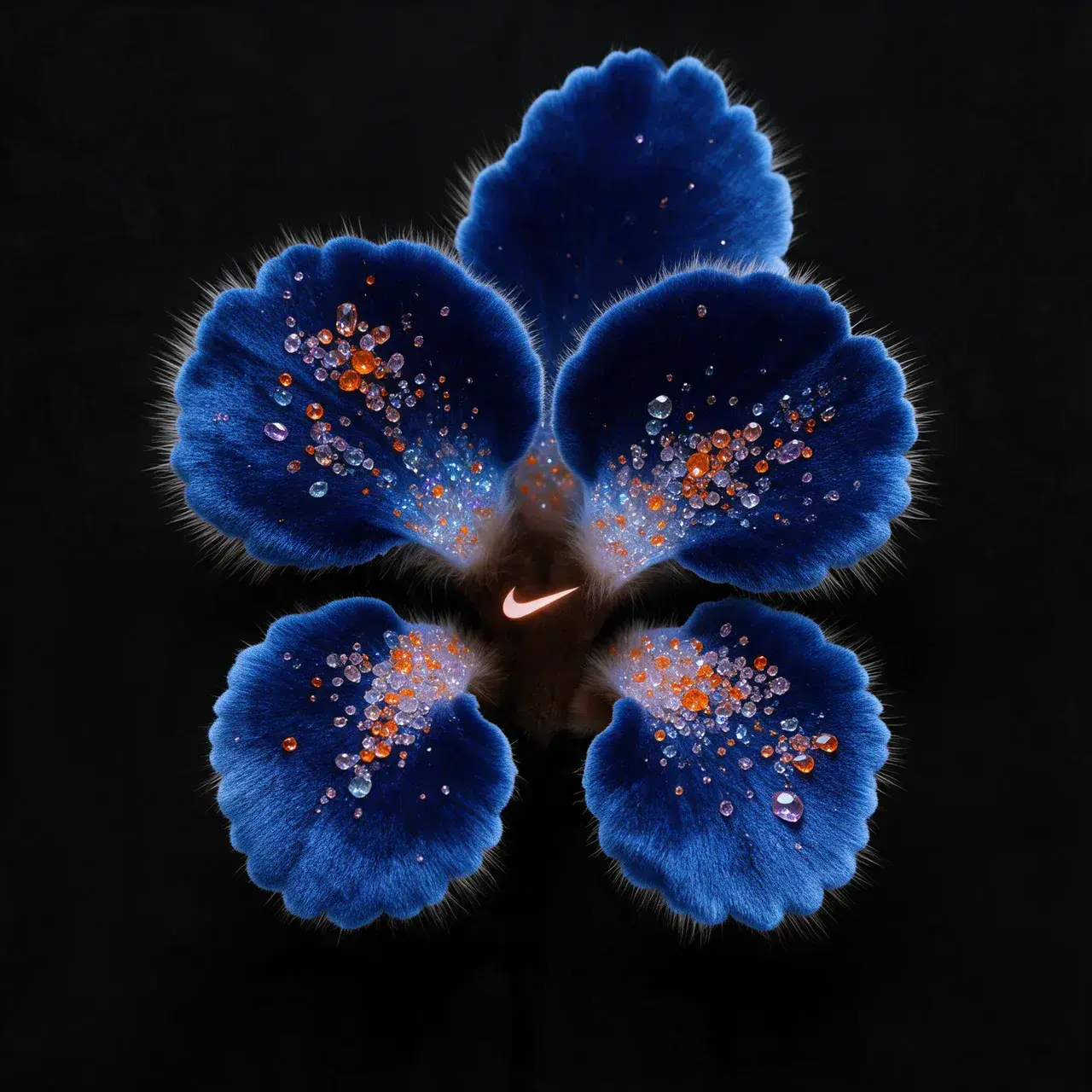
Seedream 5 Pro
Copy
Use the uploaded image as an immutable full-assembly reference. Preserve the complete input exactly, including all separate objects, layered components, text, labels, faces, attachments, openings, proportions, overlaps and orientation. Transform only surface material. Cover suitable surfaces with extremely dense saturated cobalt-blue velvet featuring short directional pile, deep light-absorbing valleys and a luxurious brushed nap. Between the fibers embed clusters of tiny translucent glass crystals in hot orange, pale lilac and clear ice-blue, as if crystalline mineral growth is emerging from beneath the velvet. Keep most crystals very small and low-profile, with several denser clusters forming elegant irregular constellations on broad surfaces while large regions remain pure cobalt velvet. The crystals should physically part and compress nearby fibers, creating precise tactile transitions and sharp hard-versus-soft contrast. Add occasional microscopic mirrored facets but avoid glitter haze. Preserve fine source elements by reducing crystal density and pile length locally. Render floating against #000000, exact source view, controlled soft upper-left-front illumination revealing individual velvet fibers and crisp glass facets, rich cobalt depth, no visible studio equipment and ultra-high-resolution CGI.
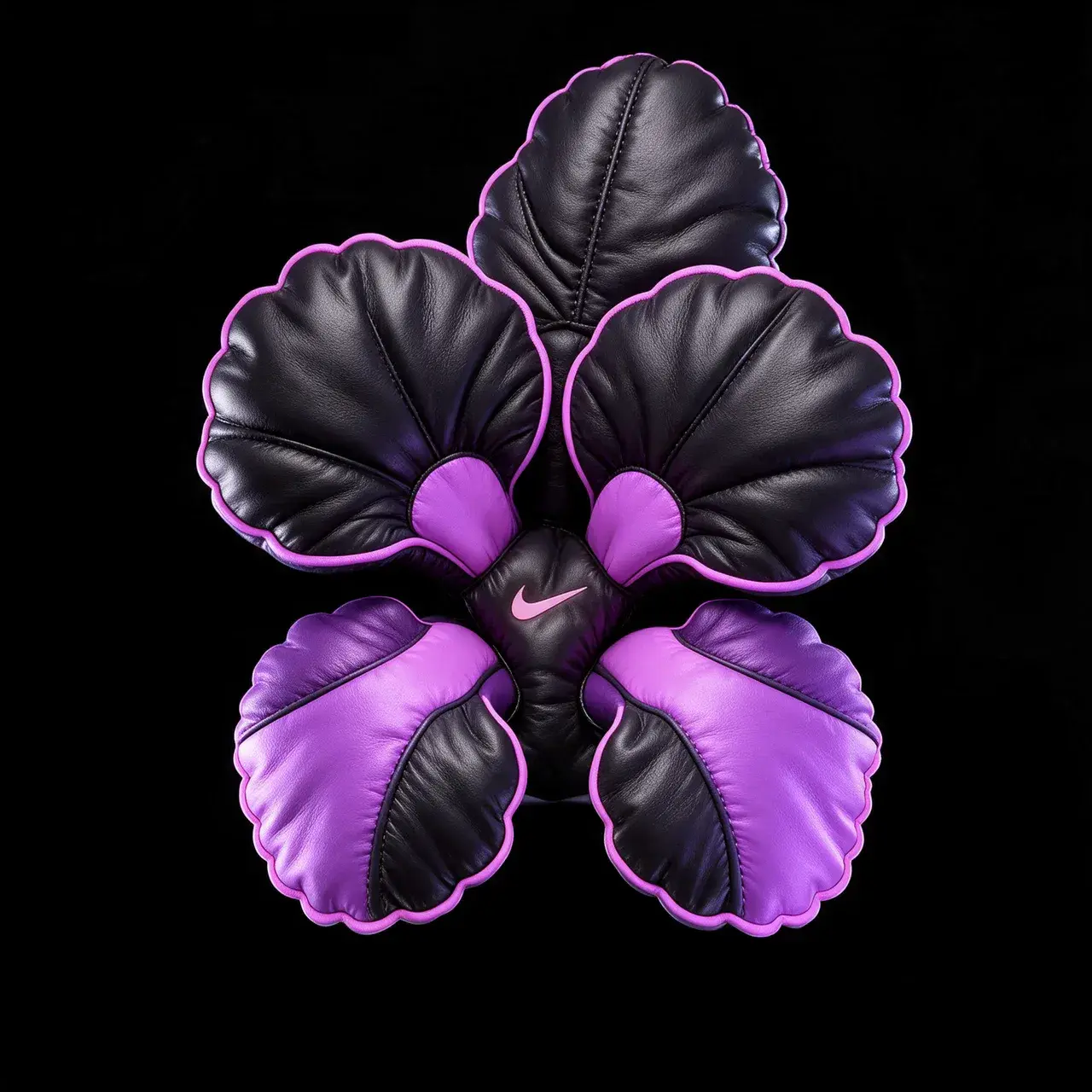
Seedream 5 Pro
Copy
Transform the uploaded object into a luxury soft-material render while keeping the exact silhouette, proportions, all curves, layered components, attached elements and every structural detail from the source fully intact. The uploaded object remains the exact blueprint. Reconstruct the form as richly padded quilted leather with tailored seam logic, using a main leather tone in #1E1A22, secondary padded sections in #B66AD9, accent piping in #F08CFF, subtle natural wrinkling, realistic panel tension, stitched segment transitions, soft cushioned volume, matte-to-satin surface behavior, fine leather grain, elegant highlight rolloff, premium tactile realism, controlled dramatic studio lighting, crisp separation from pure black background #000000, levitating object, centered high-end product shot.
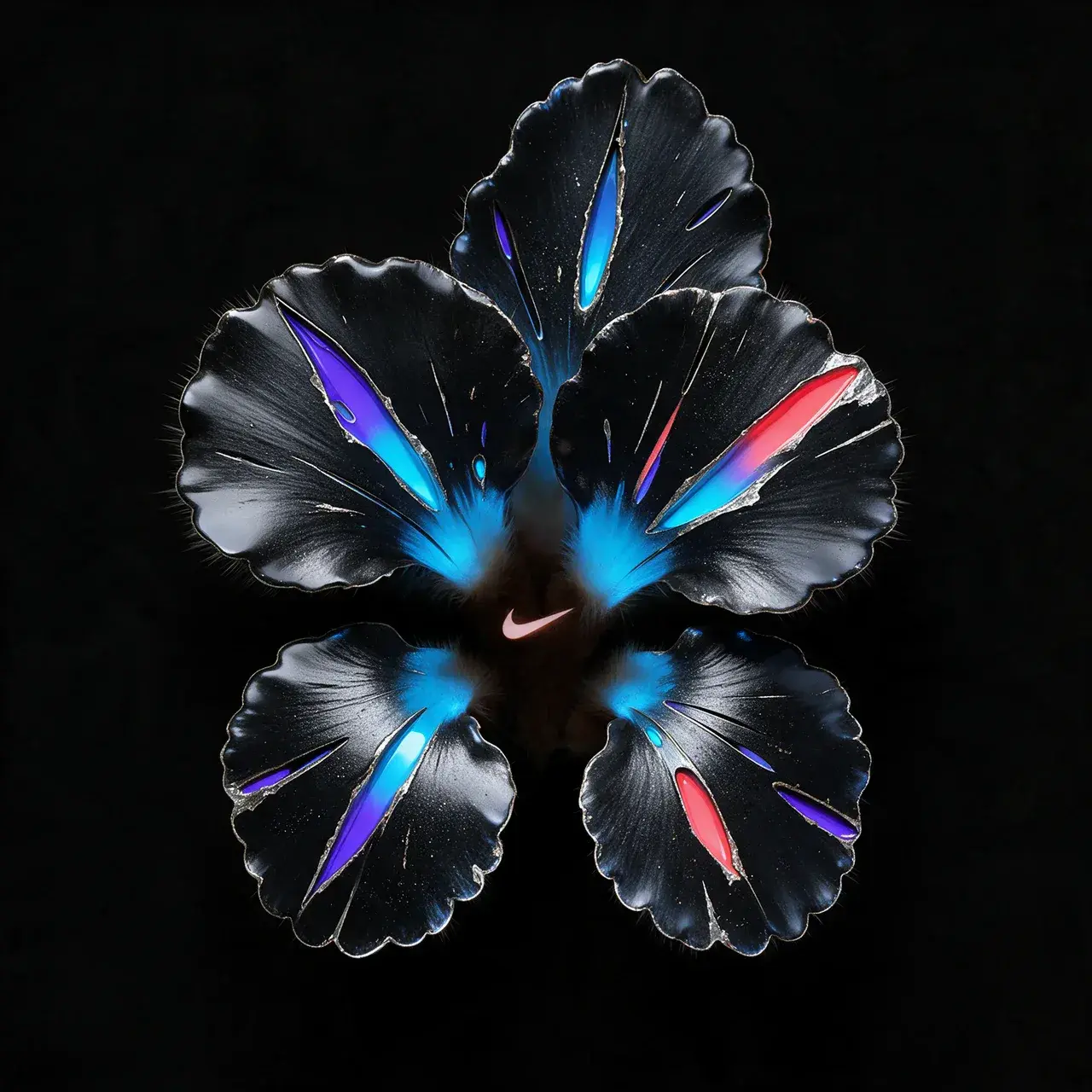
Seedream 5 Pro
Copy
Use the uploaded image as an immutable full-assembly reference. Preserve the full source construction exactly, including all individual objects, proportions, cutouts, attachments, text, labels, logos, small decorations, depth order and original orientation. Rebuild suitable surfaces from dense graphite-black lacquer #16181D with a deep satin finish, subtle metallic powder suspended beneath the coating and microscopic polished abrasion visible only at close range. Across broad areas carve a sparse system of dramatic elongated recessed scars following directional sweeps rather than random cracks. Each incision reveals a smooth glass-enamel interior in electric cyan #20D8FF, ultraviolet #6F42FF or vivid coral #FF4F63, with darker optical density toward the deepest point and extremely clean transitions into the black shell. Several channels intersect to form deliberate graphic junctions, while most of the black body remains untouched and severe. At selected scar edges expose an ultra-thin raw silver substrate #A9B0B7, giving the cuts believable material depth. Render the intact source object floating against pure black #000000, distinguished from the background through controlled upper-left-front material lighting and rich midtone separation, with elegant enamel highlights, restrained graphite reflections and exceptionally crisp premium CGI.
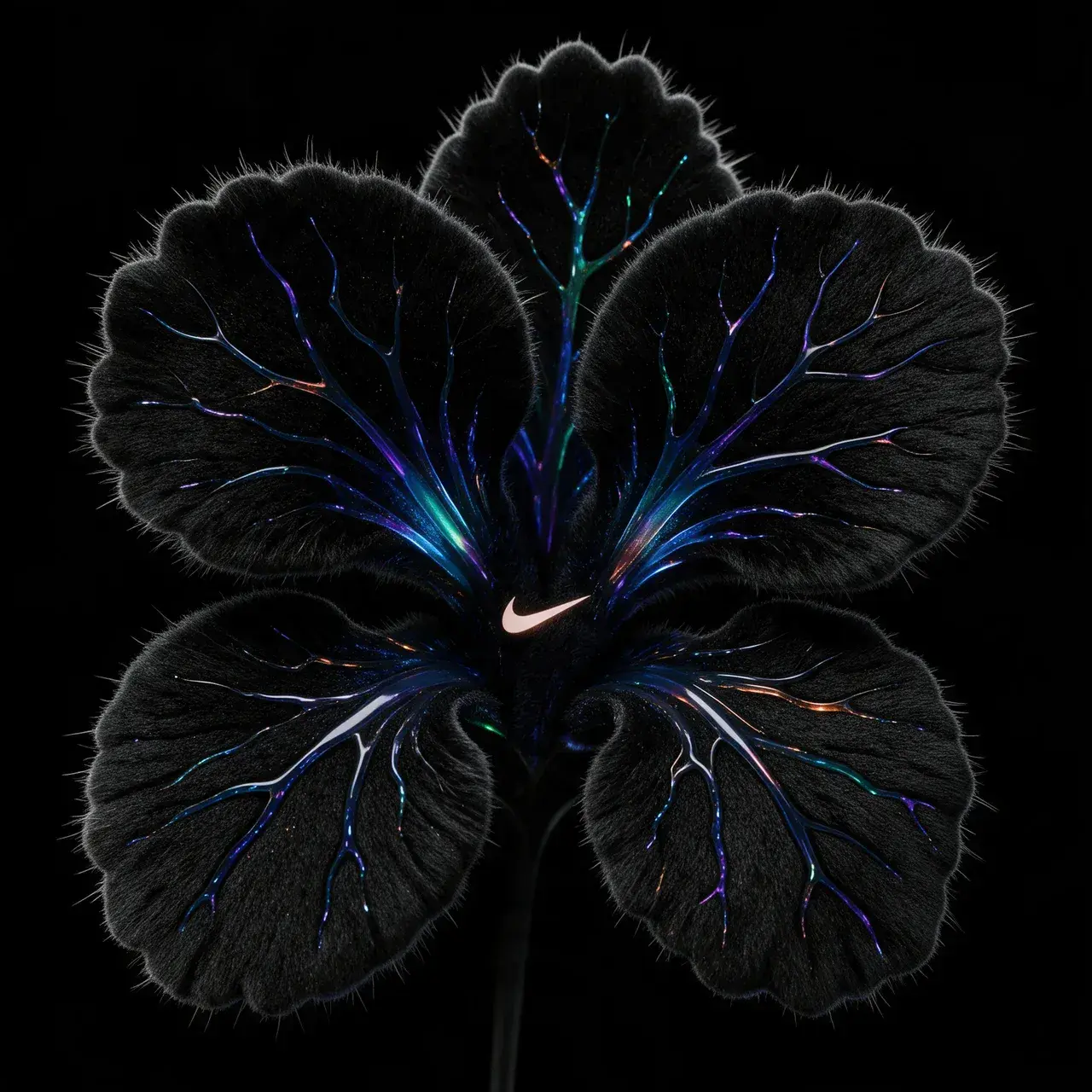
Seedream 5 Pro
Copy
Use the uploaded image as an immutable full-assembly reference. Preserve every source component, attachment, opening, label, text, decorative element, overlap, proportion and orientation exactly; nothing may be hidden, merged, omitted or structurally altered. Replace only the surface materials. Cover each component in ultra-short pitch-black microfiber with an extremely dense velvet finish that absorbs most direct reflections while remaining visibly textured under soft light. Through the black fiber field introduce a sparse network of narrow recessed gel veins in deep petrol blue, ultraviolet violet, emerald green and occasional molten-copper flashes, with angle-dependent iridescent color shifting inside the translucent gel. The veins should branch organically but remain clean, deliberate and contemporary, with smooth polished surfaces contrasting strongly against the dry black fibers. Around each recessed vein the microfiber becomes microscopically compressed and slightly directional, giving the transitions believable physical construction. Keep large areas of pure black untouched so the color accents remain powerful rather than noisy. Material detail adapts automatically around source text, faces, logos and fine parts to preserve them perfectly. Premium centered CGI material study, exact #000000 background, object assembly floating with no floor or cast shadow, exact source orientation, controlled upper-left-front illumination revealing the black pile without flattening it, restrained gel highlights, deep blacks, no visible lighting hardware, glow or environment.
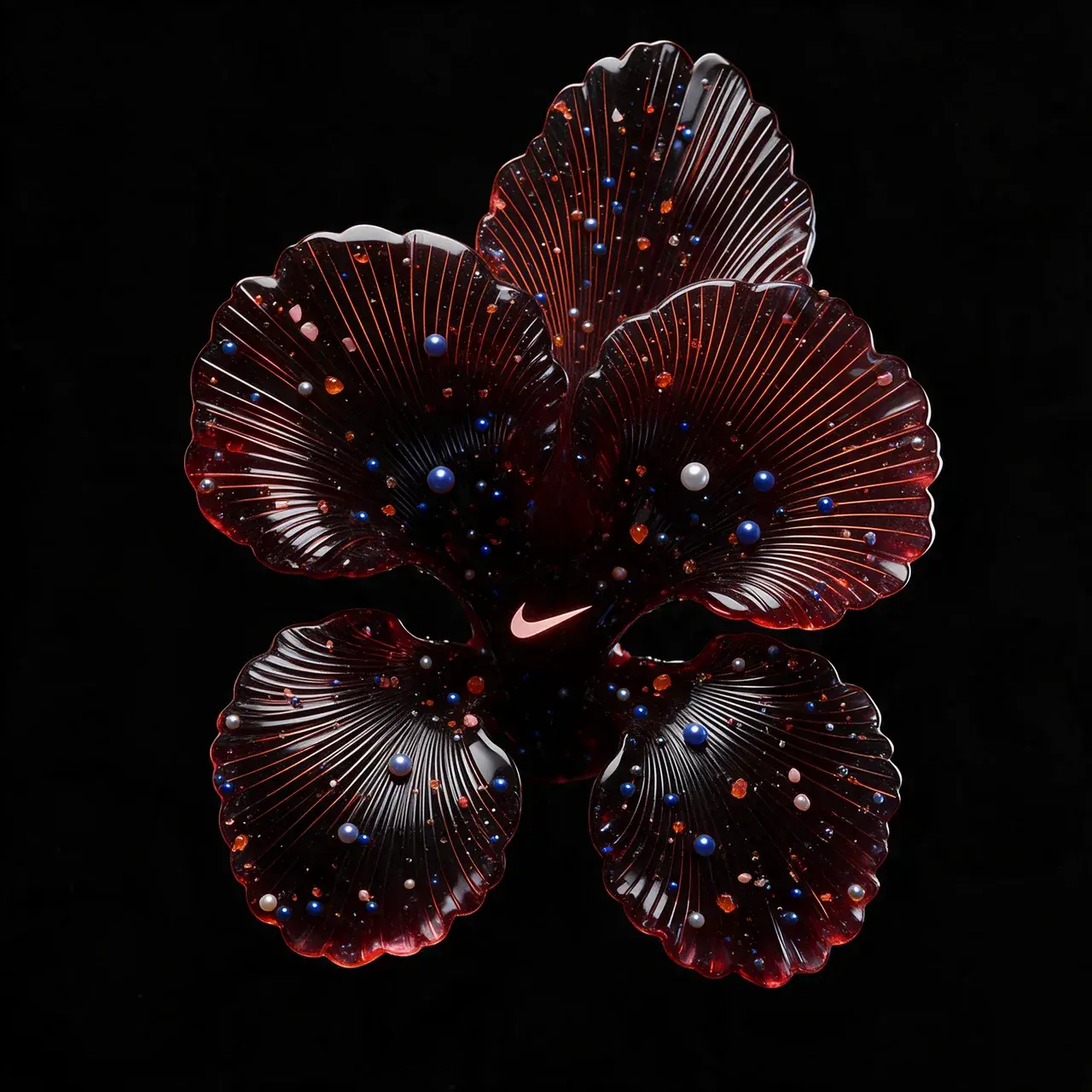
Seedream 5 Pro
Copy
Use the uploaded subject as a locked 3D geometry blueprint and preserve its silhouette, proportions, thickness, curvature, openings, negative spaces, edge positions and orientation exactly. Do not modify the bounding form under any circumstances. Reconstruct the object from deep translucent black-cherry gel resin, appearing nearly burgundy-black in thick regions and saturated ruby-red in thinner areas, with a glossy dense optical body. Suspend hundreds of electric-cobalt pearl beads, tiny orange translucent fragments, occasional pale-pink ceramic specks and minute chrome spheres at varying internal depths. Create a dense field of extremely fine parallel orange micro-ribs embedded just beneath the outer surface, visible as saturated linear structures following the existing geometry but never protruding from it; allow the rib direction to rotate gradually across major planes, producing sophisticated flowing interference-like patterns while keeping all contours intact. Add a sparse second set of slightly wider recessed glossy channels in selected zones to create larger rhythm against the fine ribbing. The result should feel like an experimental luxury resin composite: juicy, dark, glossy and intensely dimensional. Preserve exact source viewing direction, minimal perspective, centered complete object floating against #000000 with no floor, platform, wall, support, wire, horizon or external shadow. Use controlled upper-left-front illumination, minimal neutral fill and subtle upper-right separation; all lighting remains invisible and produces no recognizable light-panel reflections. No HDRI environment, glow, halo or bloom. Accurate resin transmission, pearl depth, micro-rib refraction, sophisticated dark color separation and ultra-clean premium CGI. Highest priority: exact geometry fidelity.
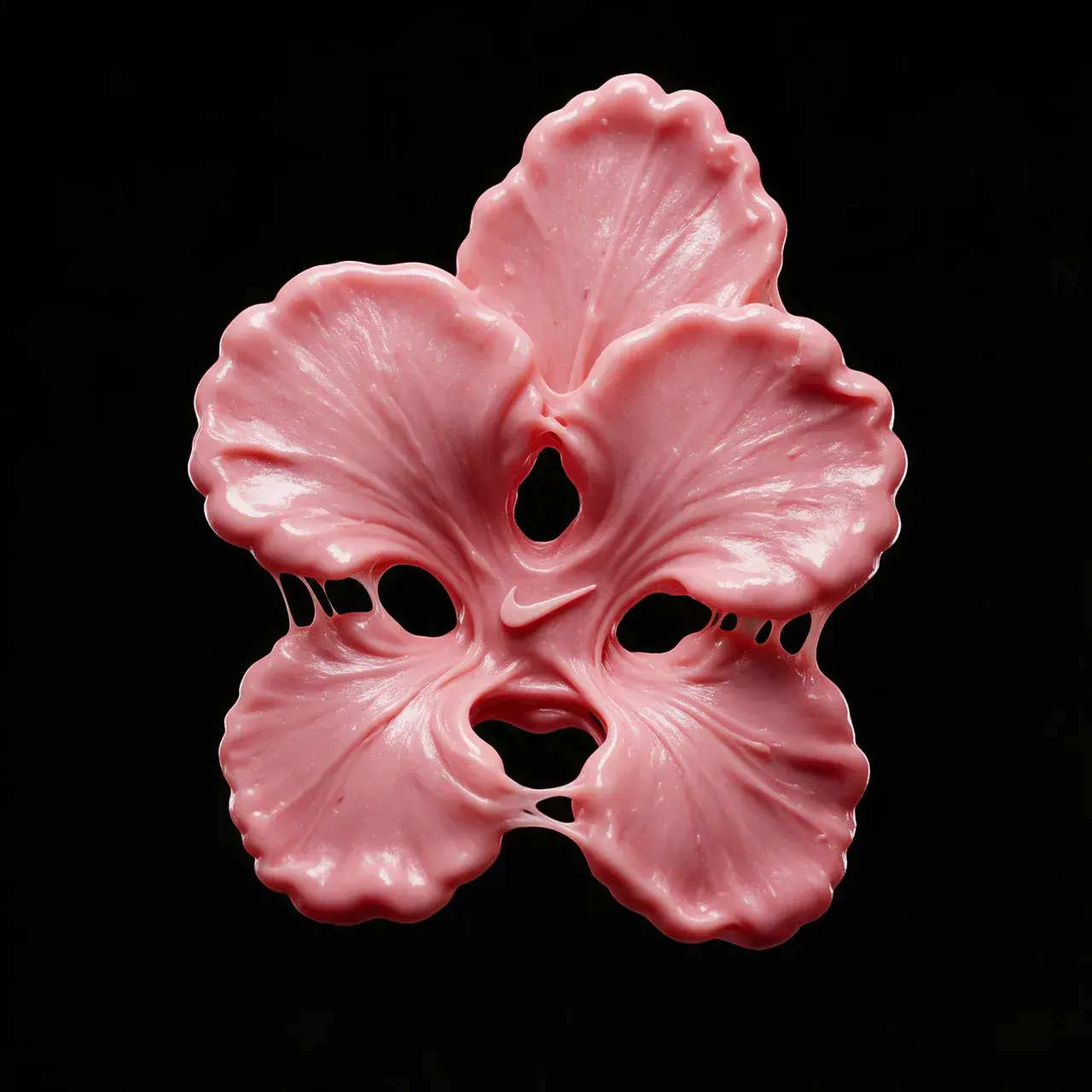
Seedream 5 Pro
Copy
Use the uploaded image as the identity and primary-shape blueprint for a physically realized 3D material object. Preserve the subject's recognizable outer silhouette, overall proportions, major internal openings, negative spaces and essential graphic structure. Do not redesign the subject or replace it with another object. If the uploaded source is flat artwork, typography or a logo, give it convincing physical thickness while preserving its frontal design. If it is already a three-dimensional object, preserve its overall orientation and primary form. Reconstruct the object from thick glossy chewing gum with elastic soft volume, slightly sticky surface tension, subtle stretch marks, compressed gum folds and thin stretched membrane bridges spanning selected gaps where physically plausible. The object should feel plastically deformed and materially cohesive, with softer rounded edges, gentle swelling and localized tension between pulled regions. It must look like the subject has been physically sculpted from gum itself, not coated in a pink glossy material. The chosen material must physically reconstruct the object rather than appear as a texture map, decal, printed pattern or photographic overlay. Allow the material to determine the local surface topology and secondary geometry while preserving the recognizable primary silhouette and major negative spaces. Render the result as a genuinely modeled three-dimensional asset with convincing thickness, edge construction and material-dependent depth. Keep the source object's general visual orientation whenever possible. Use a clean near-frontal
premium 3D product-render viewpoint with only a subtle amount of perspective revealing physical thickness. Neutral long-lens visual compression, approximately equivalent to an 85–100 mm product-photography lens. No wide-angle distortion, dramatic perspective, dutch angle or unnecessary rotation. Show the complete object, fully inside the frame, centered consistently, occupying approximately 62–68% of the image height with generous negative space around it. The object floats freely in empty space against an infinite pure-black background, exact color #000000. No floor, ground plane, table, pedestal, base, wall, visible support, wire, horizon line, contact shadow or cast shadow outside the object. Use restrained high-end material-study illumination consistent across the entire collection. Soft directional illumination comes predominantly from the upper-left-front direction, creating broad dimensional modeling across the form, smooth transitions from light to shadow and clearly readable microgeometry. Maintain a small amount of neutral frontal illumination so shadowed regions retain material information, with only very subtle separation along selected upper-right edges. Lighting must reveal the material rather than become a visual effect. Maintain deep neutral blacks, rich dimensional midtones, restrained glossy highlights and smooth highlight roll-off. No visible lighting equipment or geometric reflections. Physically based 3D material rendering, realistic elastic surface response, subtle subsurface scattering and premium commercial CGI material study, ultra-high-resolution photorealistic render.
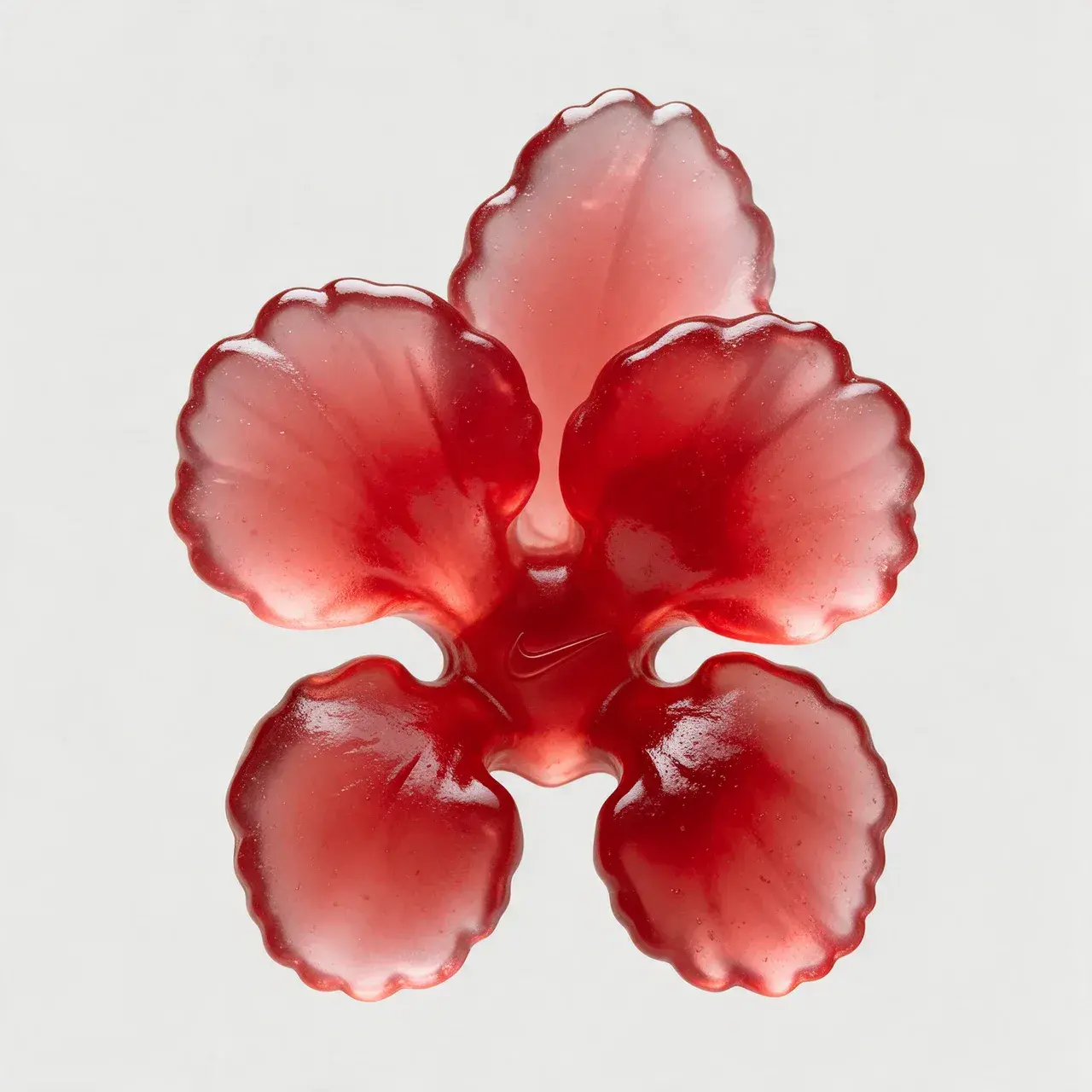
Seedream 5 Pro
Copy
Use the attached image as an immutable geometry map. Preserve its exact silhouette, proportions, holes, lettering, logo contours, orientation and source composition. If the source is flat, create a shallow dimensional interpretation without changing its frontal shape. Form the complete object from thick translucent cherry-red gummy material with dense elastic volume, subtle internal cloudiness, glossy wet-looking surface tension and faint microscopic sugar-free imperfections inside the gel. Thin edges glow brighter through transmitted light while thicker regions develop deeper saturated red cores. The material should look soft and slightly deformable but the geometry itself remains precise and undistorted. Center the object, freely levitating in an empty scene against one uniform #E8E8E6 background. No plate, food setting, floor, support, pedestal, horizon, contact shadow or cast shadow. Use controlled studio light creating internal transmission and self-refraction only.
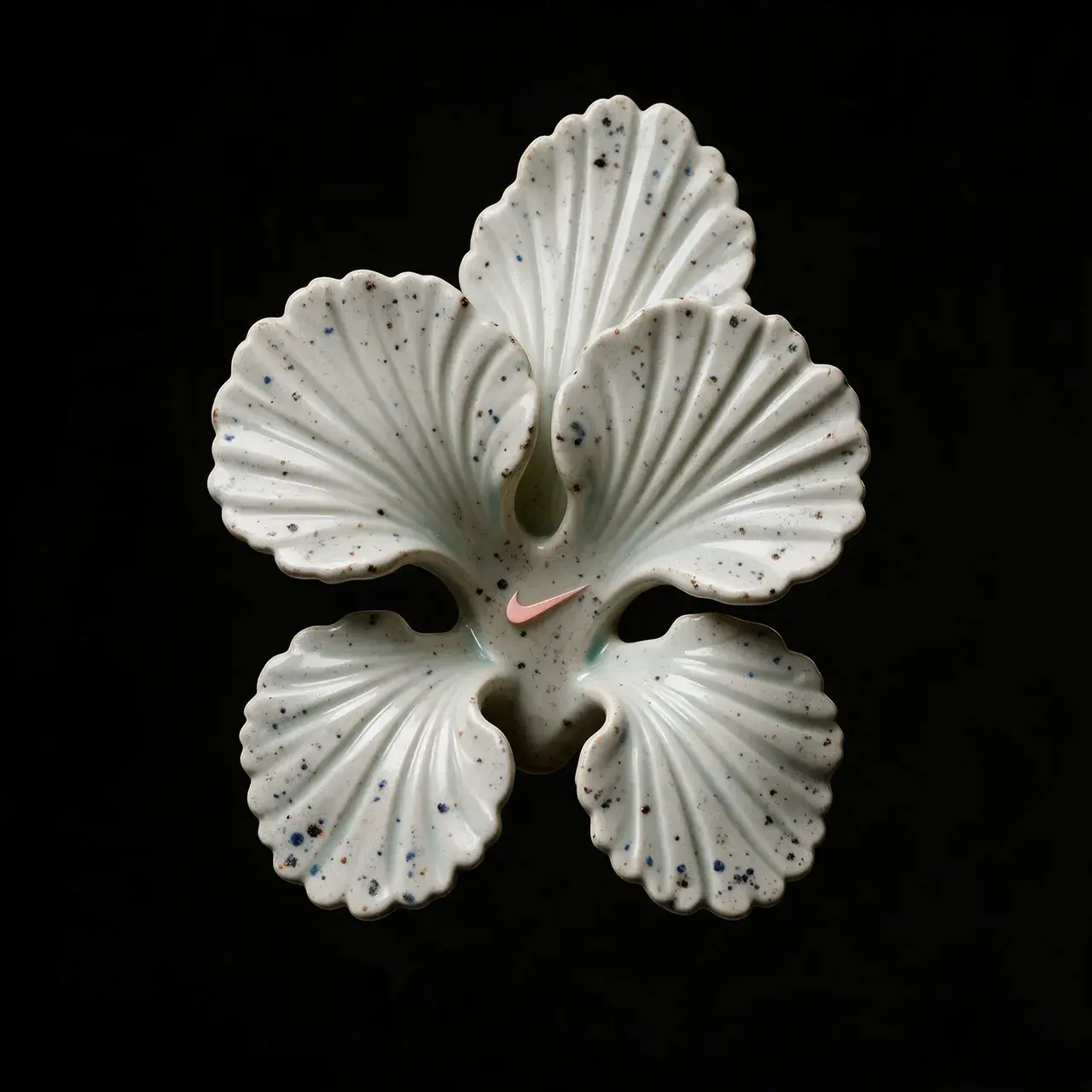
Seedream 5 Pro
Copy
Use the uploaded image as the identity and primary-shape blueprint for a physically realized 3D material object. Preserve the subject’s recognizable outer silhouette, overall proportions, major internal openings, negative spaces and essential graphic structure without redesigning it. Reconstruct the entire form from dense warm bone-white porcelain with a fine satin-matte ceramic body, densely scattered irregular cobalt-blue, charcoal-black and muted rust mineral speckles embedded throughout the material rather than printed on the surface. Introduce pronounced parallel fluting across the larger surfaces: deep rounded ribs separated by narrow recessed channels, intelligently bending and changing direction to follow the geometry of the uploaded form. The raised ribs remain mostly matte porcelain, while the recessed grooves contain a thin translucent pale-celadon glaze that pools more densely in deeper sections, producing subtle blue-green optical depth and a slightly glossier finish. At exposed edges and cutouts, reveal real porcelain thickness and tiny dark mineral inclusions continuing through the cross-section. The fluting must physically reshape the secondary geometry while keeping the primary silhouette and major negative spaces immediately recognizable. Render the result as a genuinely modeled three-dimensional asset, not a flat object with a texture map. Keep the source object’s general orientation whenever possible. Use a clean near-frontal premium product-render viewpoint with subtle perspective and neutral long-lens compression equivalent to approximately 85–100 mm. Show the complete object, centered, occupying approximately 62–68% of the image height with generous negative space. Suspend it freely in an infinite pure-black background, exact #000000. No floor, ground plane, pedestal, wall, support, wire, horizon, contact shadow or cast shadow outside the object. Illuminate it with restrained material-study lighting: soft dominant illumination from the upper-left-front at approximately 40° horizontal offset and 50° elevation, minimal neutral frontal fill, and very subtle upper-right edge separation. All illumination exists outside the visible scene. Never show lamps, panels, softboxes, white cards or geometric lighting objects. Never create rectangular or square studio reflections. Highlights must appear only as smooth curvature-following tonal transitions. No HDRI-room reflection, glow, bloom, halo, neon rim, lens flare or environmental reflection. Physically based rendering, realistic ceramic roughness, high-frequency microgeometry, precise self-occlusion inside grooves, sophisticated tonal separation and exceptionally high-resolution premium CGI material detail.
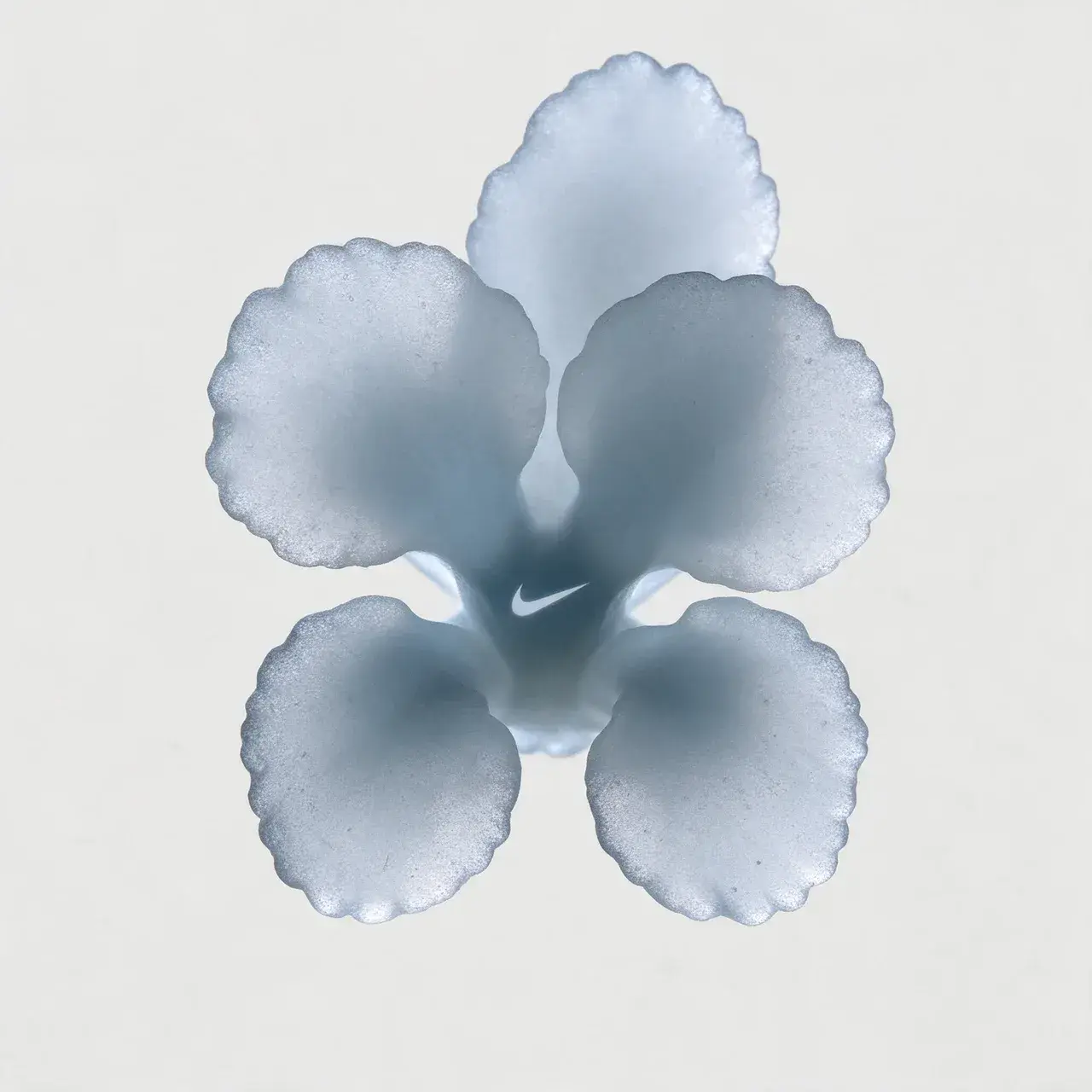
Seedream 5 Pro
Copy
Use the attached image as the precise immutable geometry blueprint. Preserve every outer contour, opening, proportion, text element, logo shape, structural feature, orientation and camera view. Convert flat artwork into a restrained shallow physical form without modifying its front shape. Rebuild the object from ultra-light pale blue-gray aerogel with an uncanny semi-translucent mineral appearance: extremely fine nanoporous structure, soft cloudy depth, ghostly internal light scattering, powdery matte exterior and faint cool luminous edges. Broad areas look almost solid while thin sections appear subtly translucent, producing a material that feels simultaneously stone-like and impossibly lightweight. Keep all edges geometrically precise despite the fragile material appearance. Center the object, freely levitating against a perfectly uniform #E8E8E6 background. No fragments, dust clouds, floor, pedestal, support, horizon, contact shadow or external cast shadow. Internal scattering and gentle self-shadowing only.
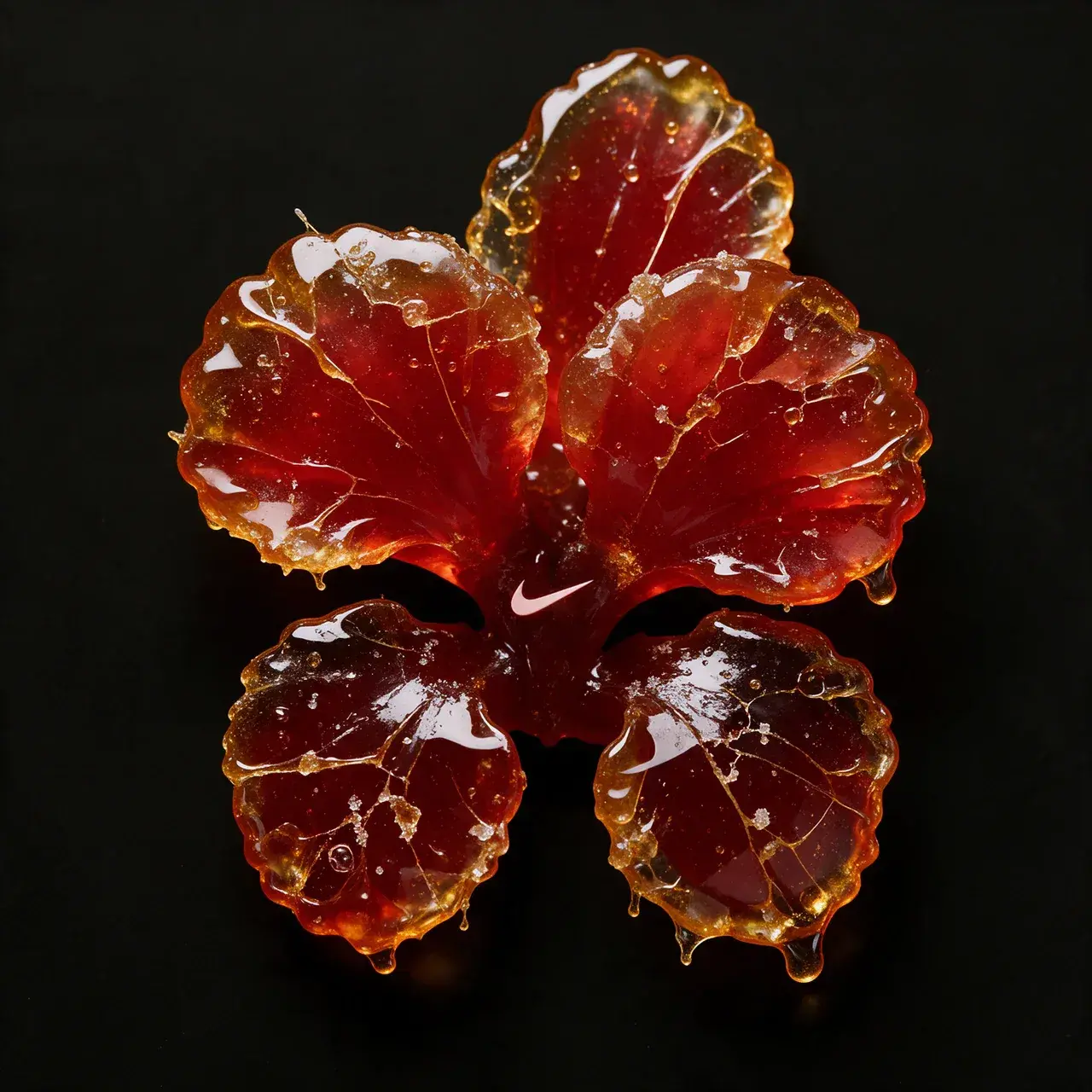
Seedream 5 Pro
Copy
Create one canonical neutral 3D master render from the attached logo or object. Preserve every letter, contour, opening, proportion, spacing, alignment, and recognizable detail exactly. Do not redesign, reinterpret, retype, simplify, or separate any element. Convert the complete source into one coherent solid object made from smooth neutral medium-gray matte polymer. Use restrained physical depth equal to approximately 14% of the object width and small clean rounded bevels. Keep all front-facing geometry identical to the source. Use a fixed near-frontal product view with only slight three-quarter depth: approximately 85 mm lens compression, 6° horizontal rotation, 4° downward camera elevation, and no camera roll. Center the complete object and keep generous black negative space around it. Place it against an infinite pure-black background, exactly #000000. Use one broad invisible light from high camera-left, an extremely weak frontal fill, and one restrained high camera-right separation light. Lighting equipment must remain outside the frame. No visible lamps, softboxes, panels, white rectangles, reflection cards, floor, wall, horizon, pedestal, or environment. Preserve soft self-shadowing, dimensional bevel shadows, and one tiny near-black grounding shadow directly beneath the object. This image is the locked master reference for all later material transformations. IMAGE-EDIT TRANSFORM ONLY. Treat the attached image as a locked master product render. Change only the material within the existing object. Preserve exactly the original pixel position, scale, bounding box, silhouette, letter shapes, openings, spacing, camera, tilt, perspective, extrusion depth, crop, black background, and shadow position. Do not reconstruct the logo, change its proportions, rotate it, thicken it, melt its outline, or produce a new composition. Transform the existing volume into a thick translucent ruby-red gummy core enclosed by a brittle golden caramel-glass shell. The gummy interior must retain the exact original geometry. Cover it with an uneven transparent caramel layer containing tiny bubbles, stretched sugar strands, sharp glossy fracture lines, and small areas where the shell has cracked to expose the saturated ruby core. Add restrained droplets and short caramel drips only along the existing lower-facing edges, never enough to alter the primary outline or position. Use fine sugar crystals concentrated around selected cracks and transition zones. Preserve clear separation between the soft internal gummy volume and the hard glassy shell. Keep the original lighting direction and shadow footprint. Use rich amber transmission, controlled specular highlights, and deep red internal shadows. No plate, food scene, loose candy, large dripping puddle, floating sugar, visible studio equipment, white rectangles, text, or watermark.
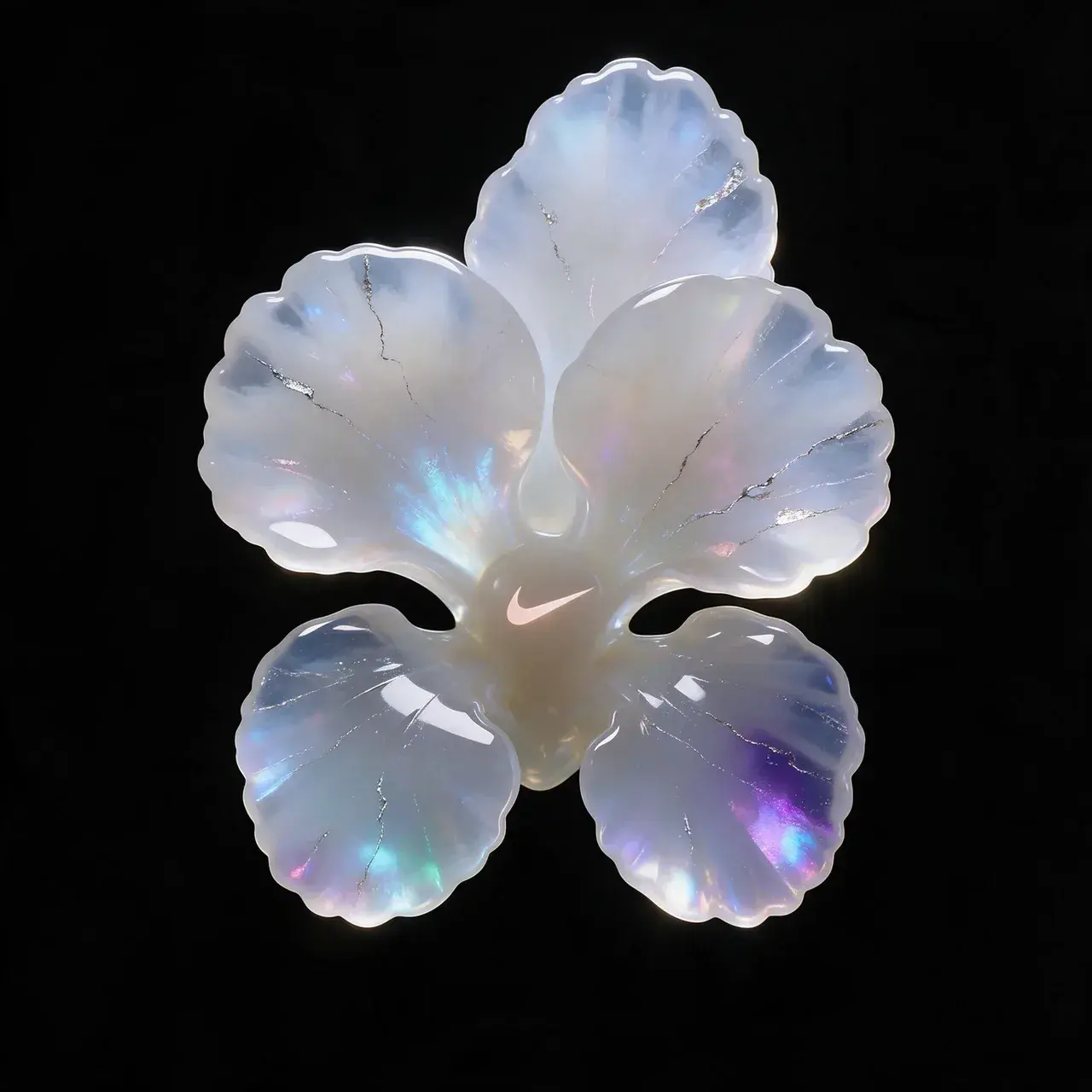
Seedream 5 Pro
Copy
Use the attached image as the exact immutable geometry blueprint. Preserve all proportions, contours, cutouts, typography, logos, structural parts and source perspective. If the source is flat, make it a shallow three-dimensional object without altering any frontal shape. Cast the complete object from dense translucent milky opal resin with substantial optical depth and soft internal cloud formations. Beneath the polished surface, create irregular suspended layers producing subtle flashes of electric cyan, lavender, soft pink, mint green and deep violet depending on surface angle. Run extremely thin fractured titanium-like metallic veins through selected internal planes, appearing embedded within the resin rather than painted over it. Some veins become almost invisible before reappearing deeper inside the volume. Include faint suspended particulate inclusions and delicate optical haze at different depths. Use strong narrow rim lighting from behind to illuminate the translucent perimeter, a soft directional key revealing the opalescent interior, and precise white reflections across polished regions. Float the object alone against completely uniform #080808 black space with no floor, horizon, support, pedestal or external shadow. The result should resemble an unknown luxury composite material developed for a speculative industrial design prototype.
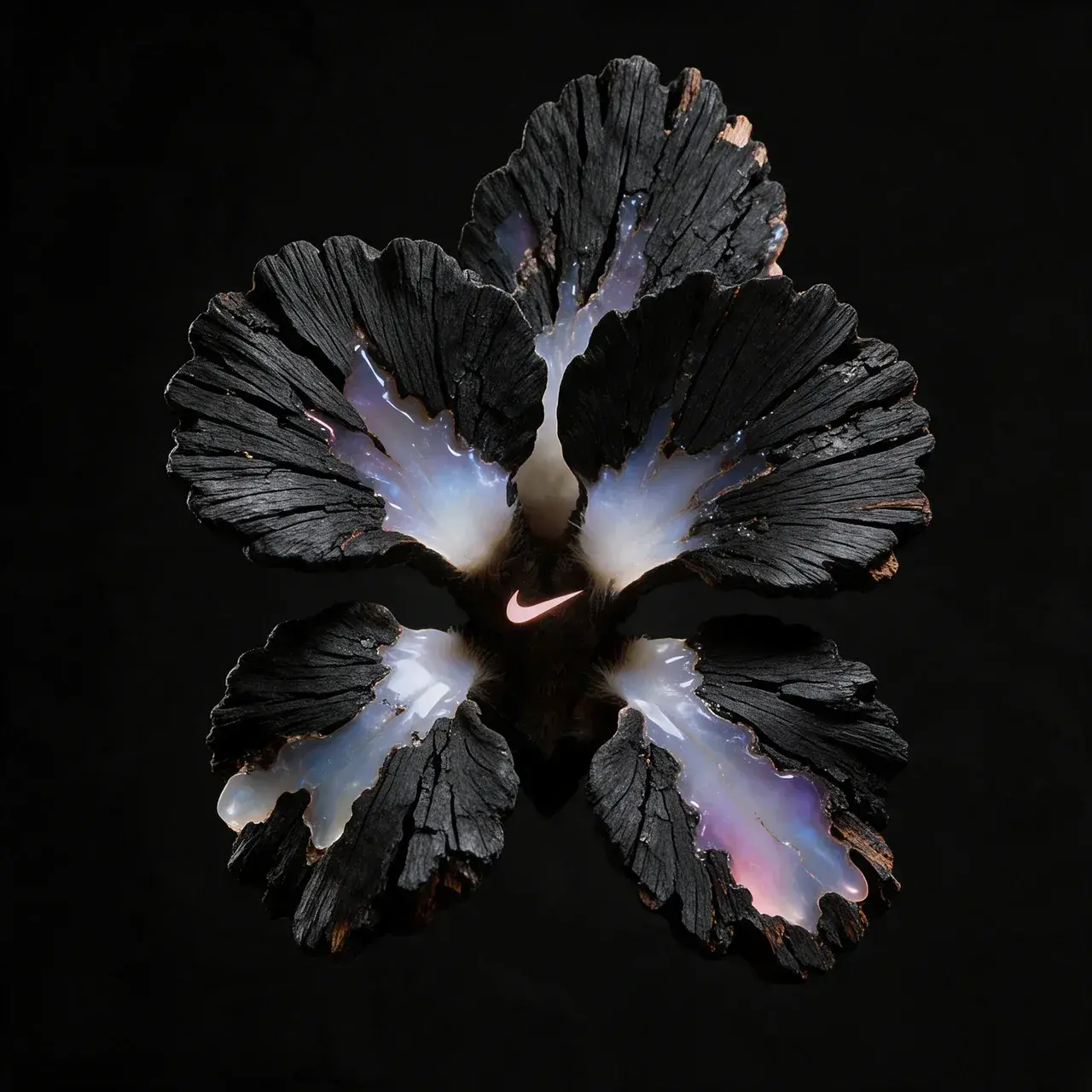
Seedream 5 Pro
Copy
Preserve the uploaded object's exact geometry, silhouette, proportions, negative spaces, logo forms, typography, orientation and composition. Transform flat source graphics only into restrained shallow dimensional forms. Rebuild the object from heavily carbonized wood with deep matte-black grain, cracked cellular charcoal structures and irregular burnt channels following the natural material direction. Instead of leaving the cracks empty, fill selected fissures and missing microscopic sections with smooth translucent pearlescent resin, flush with or slightly recessed beneath the charred exterior. The resin shifts subtly between ivory, pale blue, violet and warm pink and appears luminous against the absorbing black charcoal. Broad surfaces remain predominantly charred and dry while resin appears only as sophisticated geological-like interruptions. Reveal fine ash deposits, brittle fibers and extremely subtle warm brown wood beneath the deepest cracks. Illuminate using strong grazing side light to expose the charcoal topography and a narrow rear light passing through the translucent resin fillings. Isolate the freely levitating object at the center of a perfectly uniform #080808 background. No smoke, flames, loose debris, floor, support, horizon or any shadow outside the object.
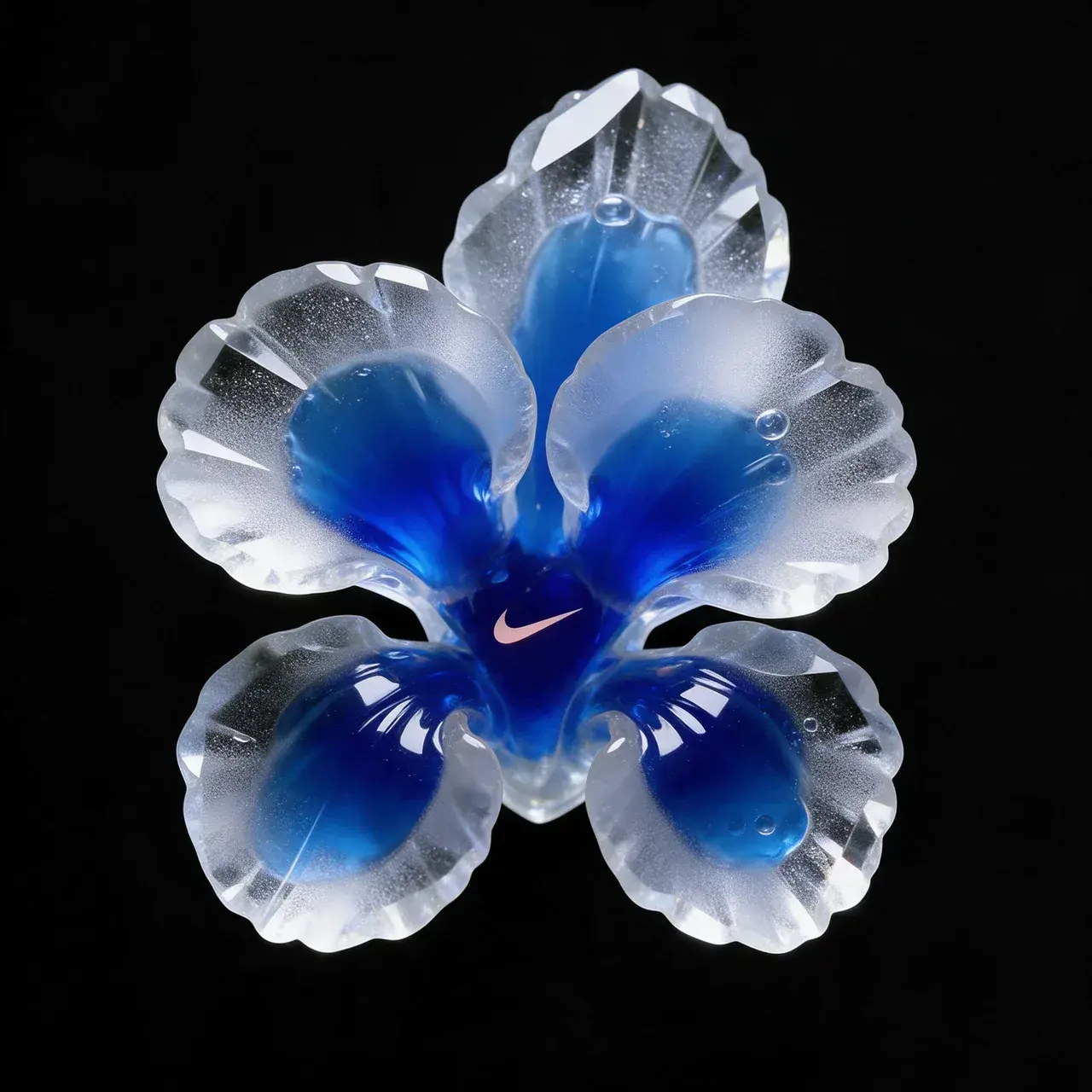
Seedream 5 Pro
Copy
Use the source image as a locked geometric template and retain every contour, opening, relative dimension, typographic detail, logo component and camera angle exactly. Construct the exterior as thick clear crystal whose exposed surface has been partially sandblasted into an ultra-fine frosted matte finish, while selected bevels, recesses and narrow structural regions remain optically polished. Inside this pale crystalline shell sits a saturated translucent cobalt-blue gel core following the overall geometry but separated from the outer walls by thin variable gaps. The gel has a viscous liquid appearance, subtle internal density variation and occasional rounded air pockets trapped between gel and crystal. Through polished sections the saturated core appears extremely sharp; through frosted regions it dissolves into luminous blue diffusion. Create strong controlled backlighting to make thin crystal edges glow, with small crisp white strip reflections on polished facets and deep blue transmitted light through the internal material. Suspend the object alone in empty space against a perfectly uniform #080808 black background. No floor, pedestal, display case, support, horizon, external caustics or cast shadows.
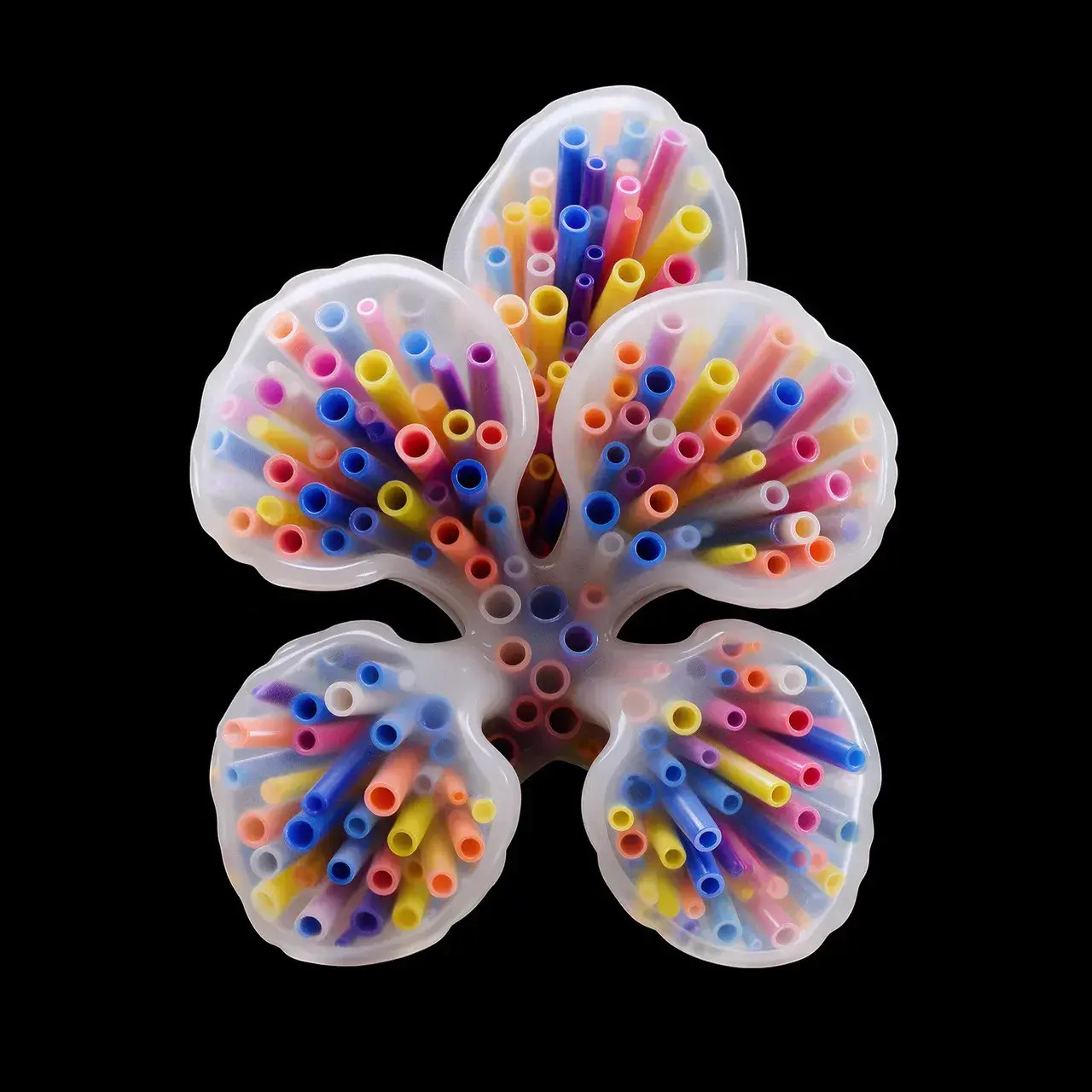
Seedream 5 Pro
Copy
Use the uploaded object as the exact identity reference. Preserve its silhouette, proportions, openings and orientation. Cast the object from dense translucent milky acrylic and fill the entire volume with hundreds of short hollow polymer tubes seen at different angles, producing visible circular, elliptical and elongated cross-sections in vivid cobalt, acid yellow, coral orange, hot pink and deep violet. The tubes should be tightly packed but remain individually readable through the translucent acrylic, creating a bold internal pattern with real parallax rather than printed dots. Keep the outer object smooth and geometrically clean. Isolated centered 3D material study on pure black #000000, floating freely with no floor or cast shadow. Clean near-frontal product view with subtle visible thickness. Soft controlled upper-left-front illumination, balanced internal transmission, crisp tube detail, smooth polished highlights and ultra-high-resolution premium CGI.
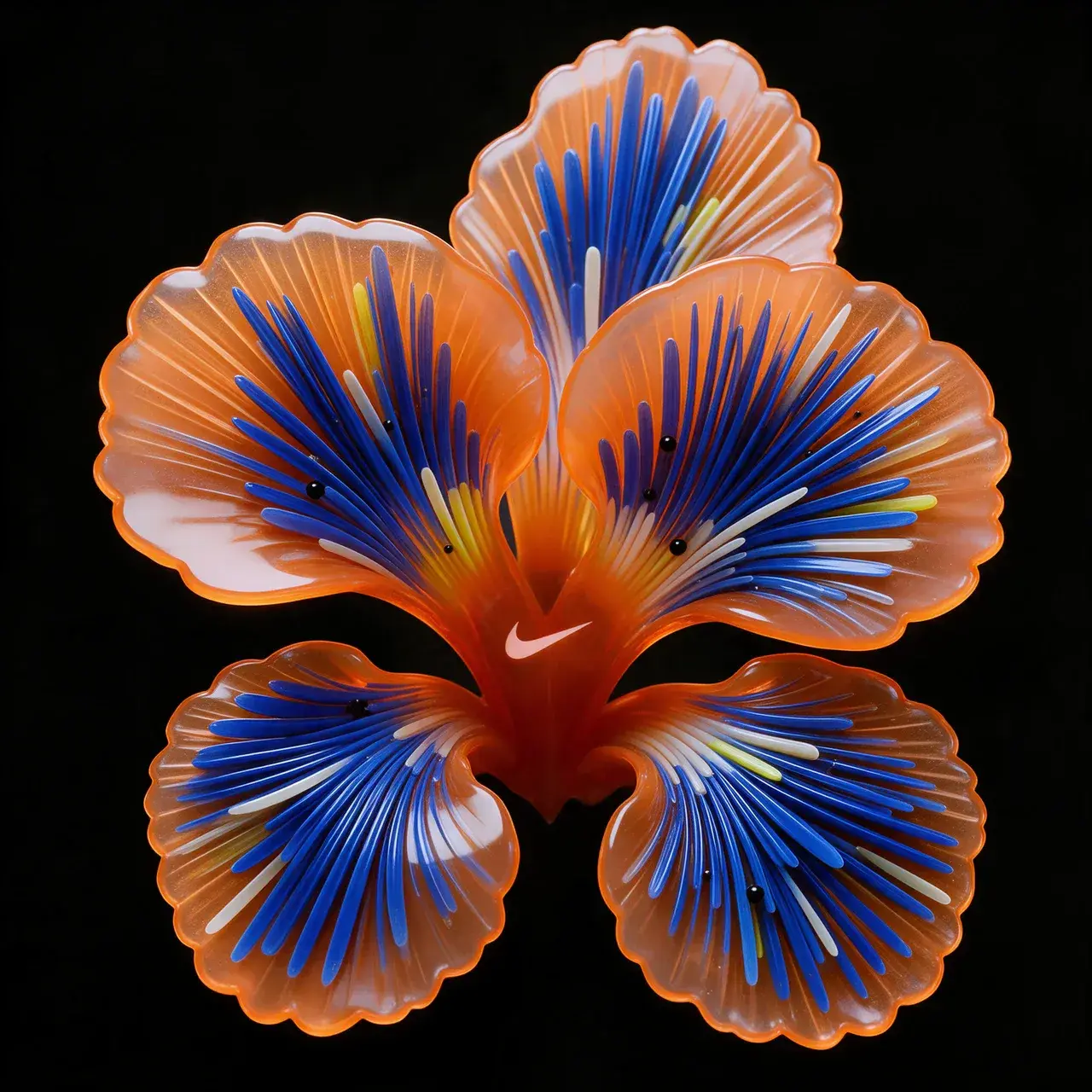
Seedream 5 Pro
Copy
Use the uploaded image as an immutable full-assembly reference. Preserve 100% of every visible source element, including layered components, attachments, openings, labels, text, graphic details, decorative objects, exact positions, overlap and orientation. Change only material appearance and internal microstructure. Cast the existing components from vivid translucent tangerine-orange TPU with soft glossy tension and dense optical depth. Inside the material embed hundreds of ultra-thin cobalt-blue lamellae—narrow rigid plates arranged in closely spaced parallel stacks that follow the local geometry, shifting direction across different regions to create a sophisticated ribbed internal architecture. Alternate a few lamellae in pale ivory and fluorescent chartreuse for controlled color punctuation. The internal fins should remain visibly separate, crisp near the surface and progressively softened deeper inside the orange material. Add sparse tiny black spheres trapped between several lamella stacks, never enough to make the result noisy. The exterior surface remains smooth and exactly faithful to the uploaded source; the visual richness comes from the layered interior. Preserve source view, centered floating composition on #000000, no floor, support or external shadow, soft upper-left-front directional illumination, transparent orange depth, crisp cobalt internal structure, refined highlights, no rectangular reflections or visible studio. Ultra-high-resolution premium CGI.
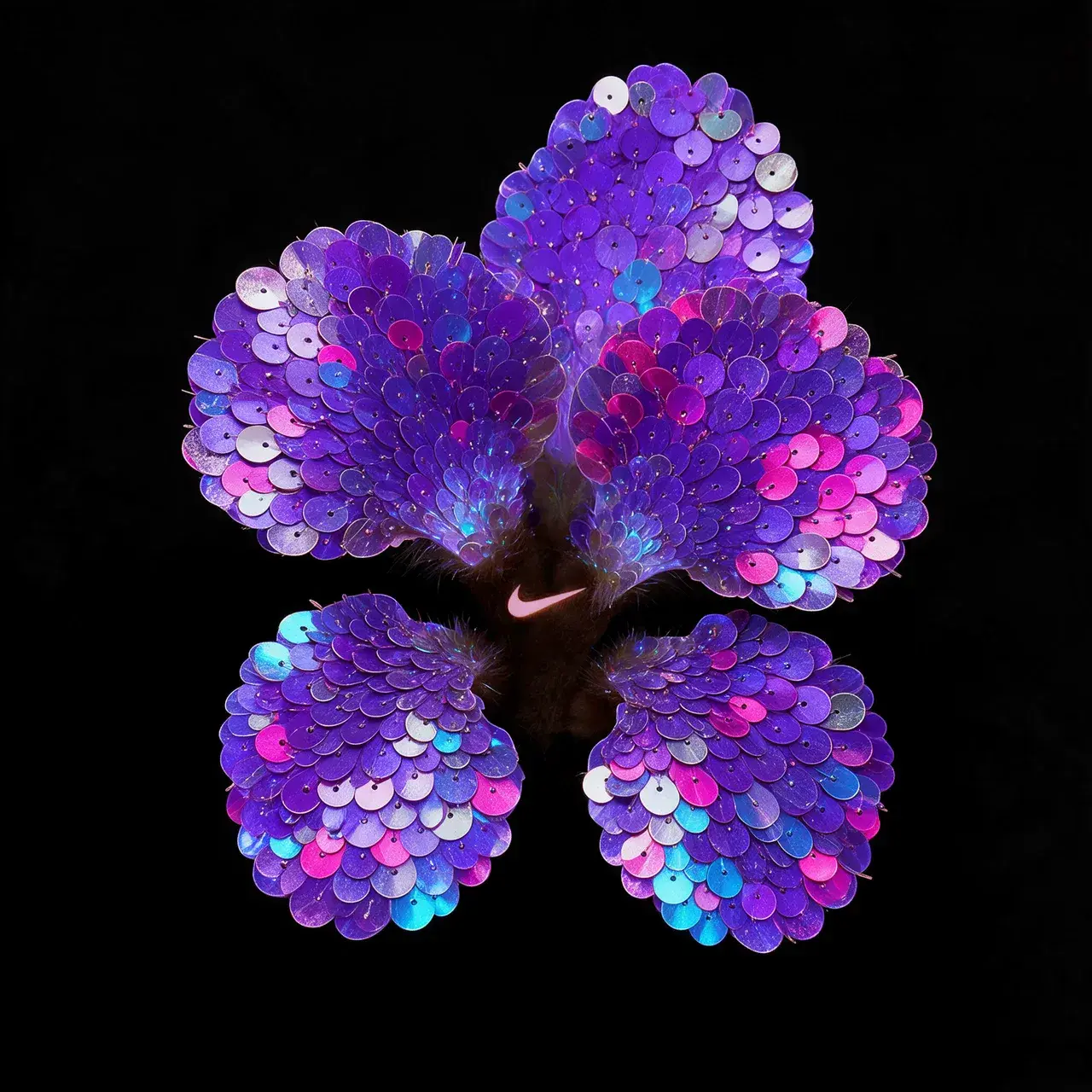
Seedream 5 Pro
Copy
Use the uploaded image as an immutable full-assembly reference. Preserve the complete input construction exactly, including every component, opening, attachment, layered element, text, label, logo, decoration, small protrusion, position, overlap and orientation; source fidelity has absolute priority. Cover suitable surfaces with thousands of individually modeled overlapping paillettes, each a thin flexible translucent disc physically anchored to the existing geometry and lying at a slightly different angle. Use a dominant deep violet #6A35E8 with groups of hot magenta #FF2F92, electric cyan #28CEFF and sparse mirror-silver #D8DEE5 accents. Avoid random multicolor glitter: organize the discs into broad directional color fields so entire zones shift gradually from violet into magenta or cyan. Each paillette has a tiny center fastening point, realistic thin-sheet curvature, polished translucent edges and subtle micro-scratches; neighboring discs overlap physically and produce dense rhythmic scale-like highlights under the light. The material must feel luxurious and fashion-forward, closer to couture embellishment than craft glitter. Scale the discs down dramatically near small source details so every label, face, opening and attachment remains perfectly readable. Render the full preserved assembly levitating against pure black #000000, exact source view, no floor or cast shadow, sophisticated soft upper-left-front illumination producing hundreds of restrained individual reflections without blown sparkle, excellent micro-occlusion between overlapping discs and exceptionally sharp premium CGI.
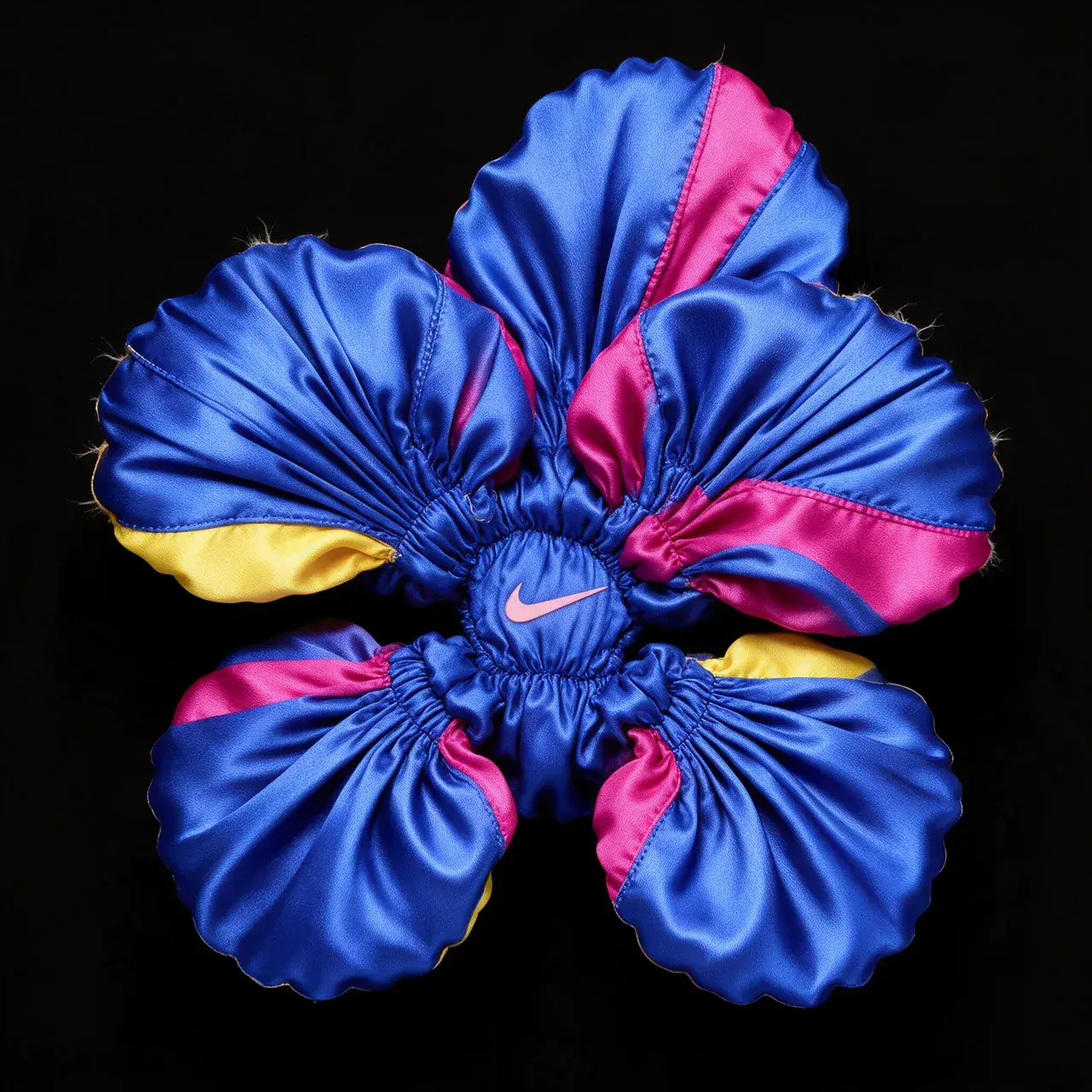
Seedream 5 Pro
Copy
Use the uploaded image as an immutable full-assembly reference. Preserve every visible element exactly: silhouette, proportions, thickness, openings, layers, attachments, labels, text, logos, decorations, overlap and original viewing orientation remain unchanged. Reconstruct suitable surfaces as genuine gathered satin fabric built around concealed elastic channels, inspired by oversized Y2K scrunchies but engineered tightly into the exact existing geometry. Use saturated electric blue #3262E9 as the main satin with raspberry #D72E79 and pale lemon #F5D95B accent panels. Create broad bands of dense gathered folds running directionally across each component, with dozens of fine compressed pleats, realistic fabric tension, subtle unevenness, seam lines and concealed elastic pressure producing authentic bunching rather than inflated puffer volume. The satin weave remains visible at macro scale, with softly frayed microfibers at several seam edges and natural highlight changes as folds turn away from light. Keep fold scale smaller around labels, faces, openings and intricate attachments. Photograph against #000000 with elegant fashion-still-life lighting: broad upper-left key, gentle frontal fill, long soft satin highlights, deep fold shadows and extremely high textile fidelity.
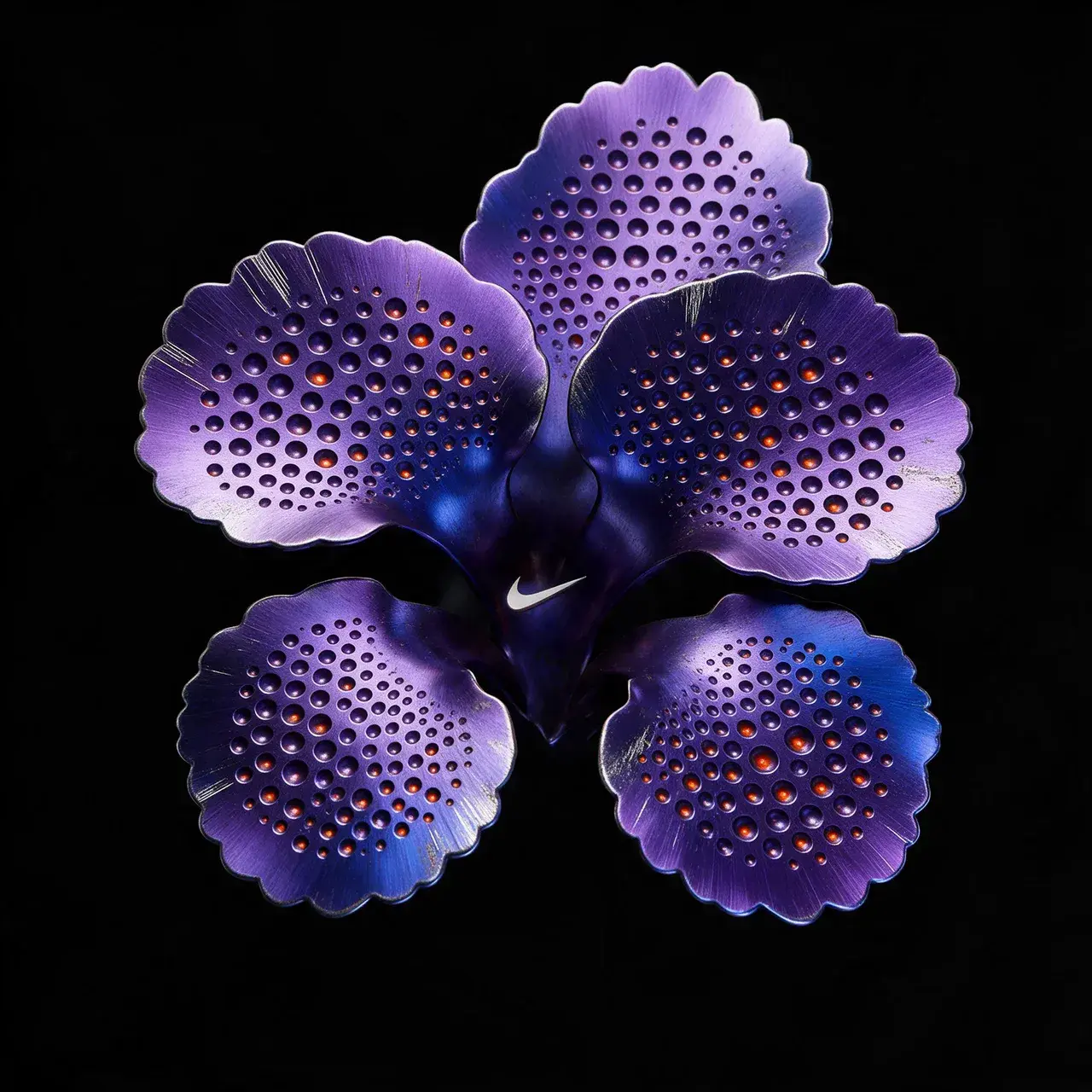
Seedream 5 Pro
Copy
Use the uploaded subject as an immutable geometry and silhouette reference. Preserve all proportions, thickness, curvature, openings, negative spaces, corners, edges and orientation exactly. Reconstruct the object from satin anodized aluminum with a rich saturated violet base shifting subtly toward cobalt and electric blue across the metal grain. Cover selected broad surfaces with a dense field of precision-pressed shallow hemispherical dimples, each depression fully inset into the existing geometry rather than protruding outward. Vary dimple diameter gradually across the object to create a sophisticated scale transition rather than a uniform grid, and allow selected depressions to contain tiny glossy acid-orange enamel centers seated at their deepest point. Introduce sparse brushed-silver exposed metal scratches only along a few high-contact areas, while keeping the overall finish clean and premium. The material should feel like a purpose-built industrial panel rather than perforated sheet metal. Preserve exact source orientation, minimal perspective, neutral 85–100 mm equivalent premium product render, complete object centered and levitating against pure #000000. No floor, support, wall, pedestal, wire, horizon, contact shadow or external cast shadow. Use invisible restrained upper-left-front illumination with weak fill and subtle upper-right separation. Metallic highlights remain narrow and abstract, never rectangular reflections of studio equipment. Physically based anodized metal response, fine brushed grain, dimple self-occlusion, enamel gloss and ultra-high-resolution CGI. Highest priority: exact source shape.
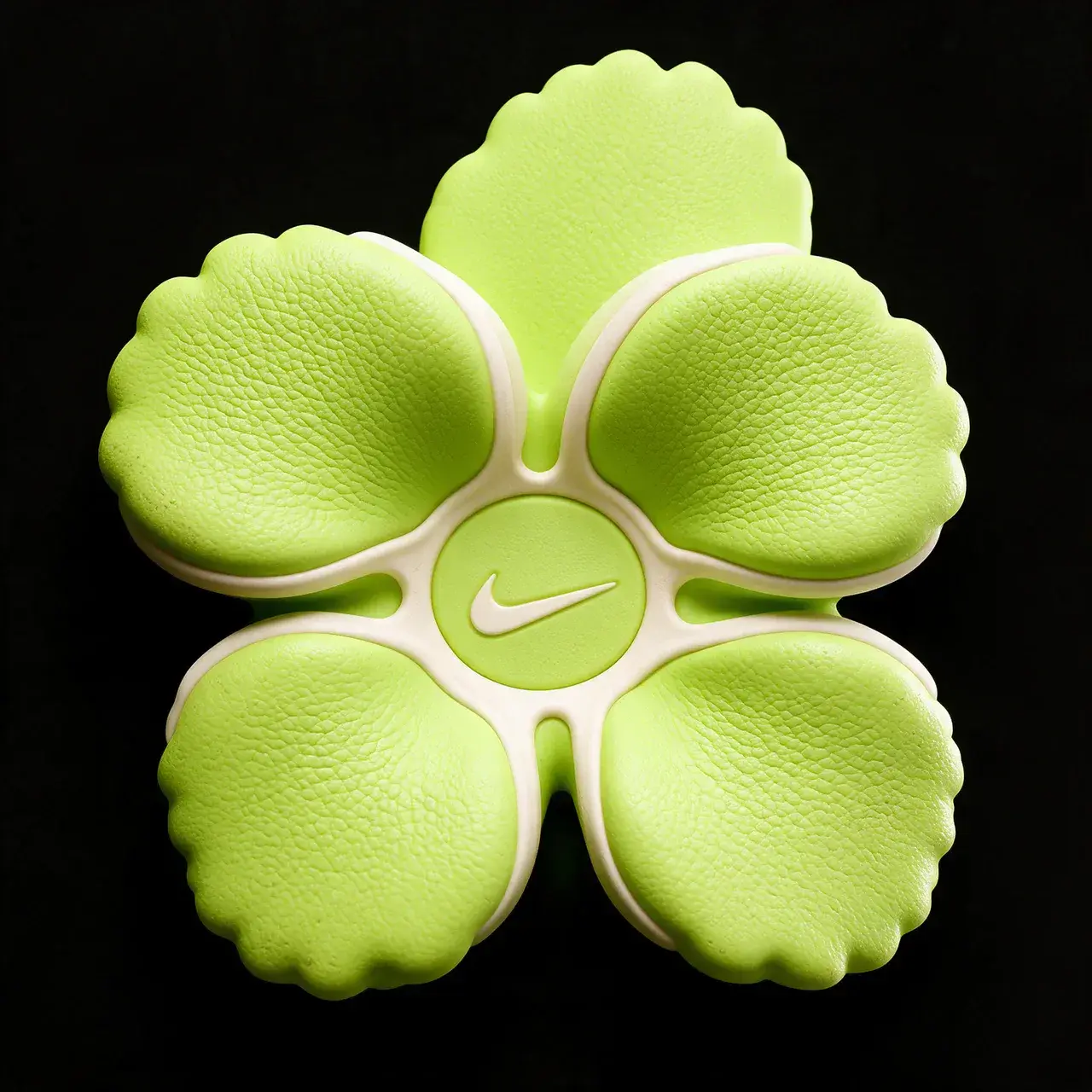
Seedream 5 Pro
Copy
Use the uploaded image as the fixed master reference. Rebuild the exact object one-to-one, preserving the original silhouette, proportions, cutouts, layered construction, text areas, logo placement, spacing, overlap, front-facing orientation and all recognizable structural details. Transform the surface into premium pebbled silicone with a slightly thick, bouncy feel. Use a fresh mint-lime base #B9F23A with a secondary inset piping detail in pale ivory #F6F1E8. The silicone should feel soft but structured, with fine pebbled skin texture, rounded edges, subtle bounce, a matte rubber finish and realistic touch-worn areas on protruding surfaces. Keep the object highly readable, clean and modern. Photograph it on a pure black background #000000 with crisp tactile product lighting.
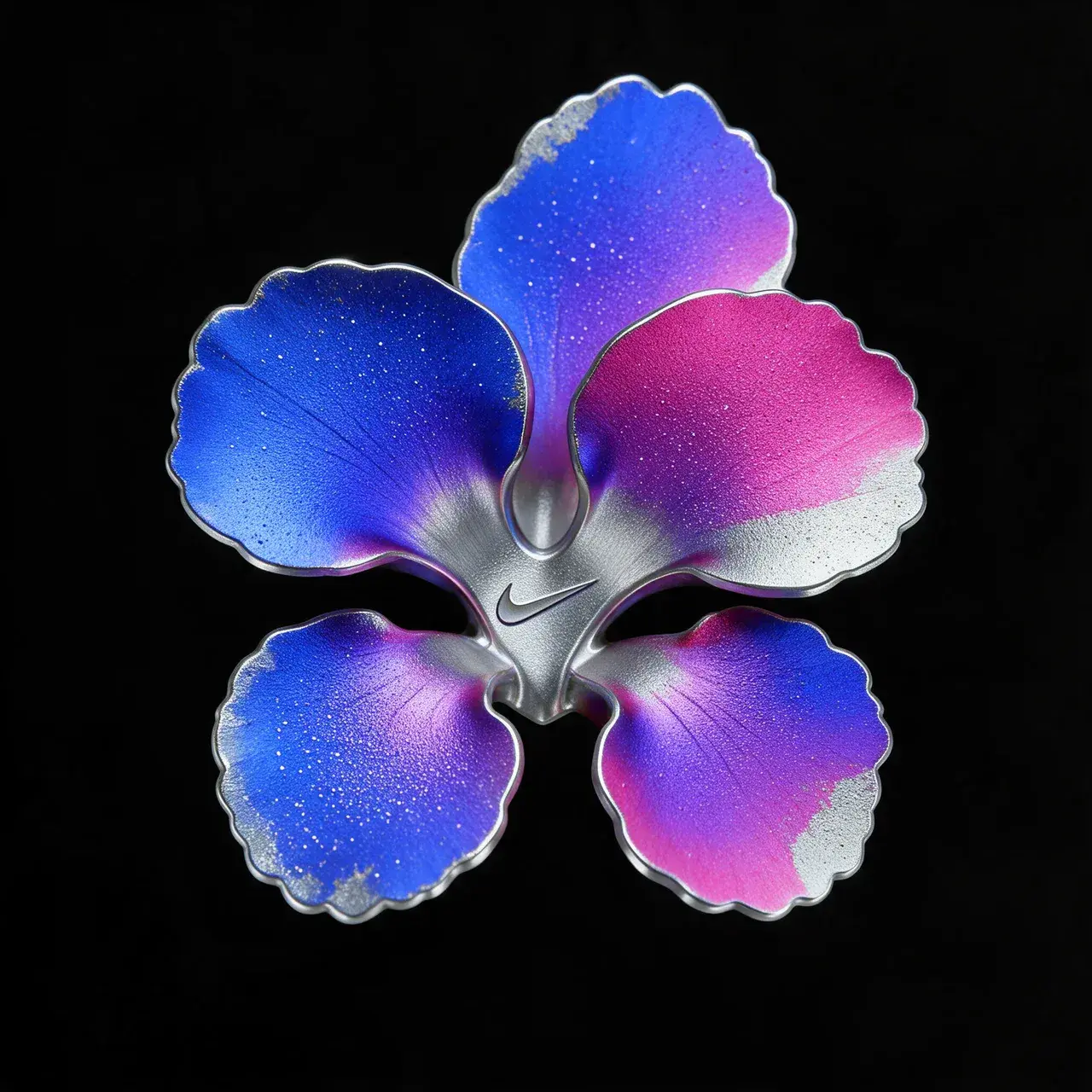
Seedream 5 Pro
Copy
{ "source_lock": "Treat the uploaded image as the immutable structural master. Preserve every visible source component exactly one-to-one: silhouette, proportions, thickness, openings, cutouts, separate parts, layered elements, attachments, readable text, logos, labels, facial details, decorative elements, relative positions, overlap, depth order, camera angle and composition. Nothing visible in the input may disappear, merge, move, simplify or be redesigned. Material scale must automatically adapt around fine source details.", "palette": { "cobalt": "#3158E8", "violet": "#7A4BE0", "magenta": "#DE3F92", "raw_aluminum": "#C5CBD0", "background": "#000000" }, "construction": "Machine the existing geometry from solid aluminum, finely bead-blast the entire surface, then apply a controlled translucent anodized color treatment rather than paint.", "surface_physics": "Create a large clean directional color transition from cobalt through violet into magenta, following the physical anodized oxide layer while preserving the fine metallic grain underneath. The bead-blasted finish must remain clearly visible at macro scale as millions of microscopic impact pits producing a dry silky metal response rather than glossy automotive paint. On selected existing edges and one or two narrow geometric zones, machine away the anodized layer to reveal raw pale aluminum, creating crisp silver accents with fine milling lines. Add believable manufacturing detail: tiny machining witness marks, subtle edge burnishing,
microscopic handling scuffs and slight color-density variation where anodizing follows complex geometry. Avoid glitter, mirror chrome and rainbow iridescence.", "detail_control": "Keep source text, logos and fine components sharply machined with locally calmer color transitions and finer bead-blast grain.", "lighting": { "setup": "Broad soft directional illumination from upper-left-front, with restrained neutral frontal fill and subtle upper-right separation from the black background.", "exposure": "Consistent exposure across the entire material collection, with deep clean blacks, rich readable midtones and controlled highlight roll-off.", "light_behavior": "The illumination direction, softness, intensity and contrast remain identical across every material; only the physically correct response of the material itself changes.", "restrictions": "All light sources remain outside the visible frame. No visible lamps, softboxes, light panels, white cards or studio equipment. No rectangular or square light-source reflections, no HDRI environment, no bloom, glow, halo, lens flare or artificial rim-light outline." }, "composition": { "camera": "Preserve the exact source viewing direction and orientation.", "position": "Centered and freely suspended.", "background": "#000000", "floor": false, "cast_shadow": false }, "quality": "Real bead-blasted anodized aluminum photography, precise metallic micrograin, sophisticated saturated color, machining imperfections and ultra-sharp product realism." }
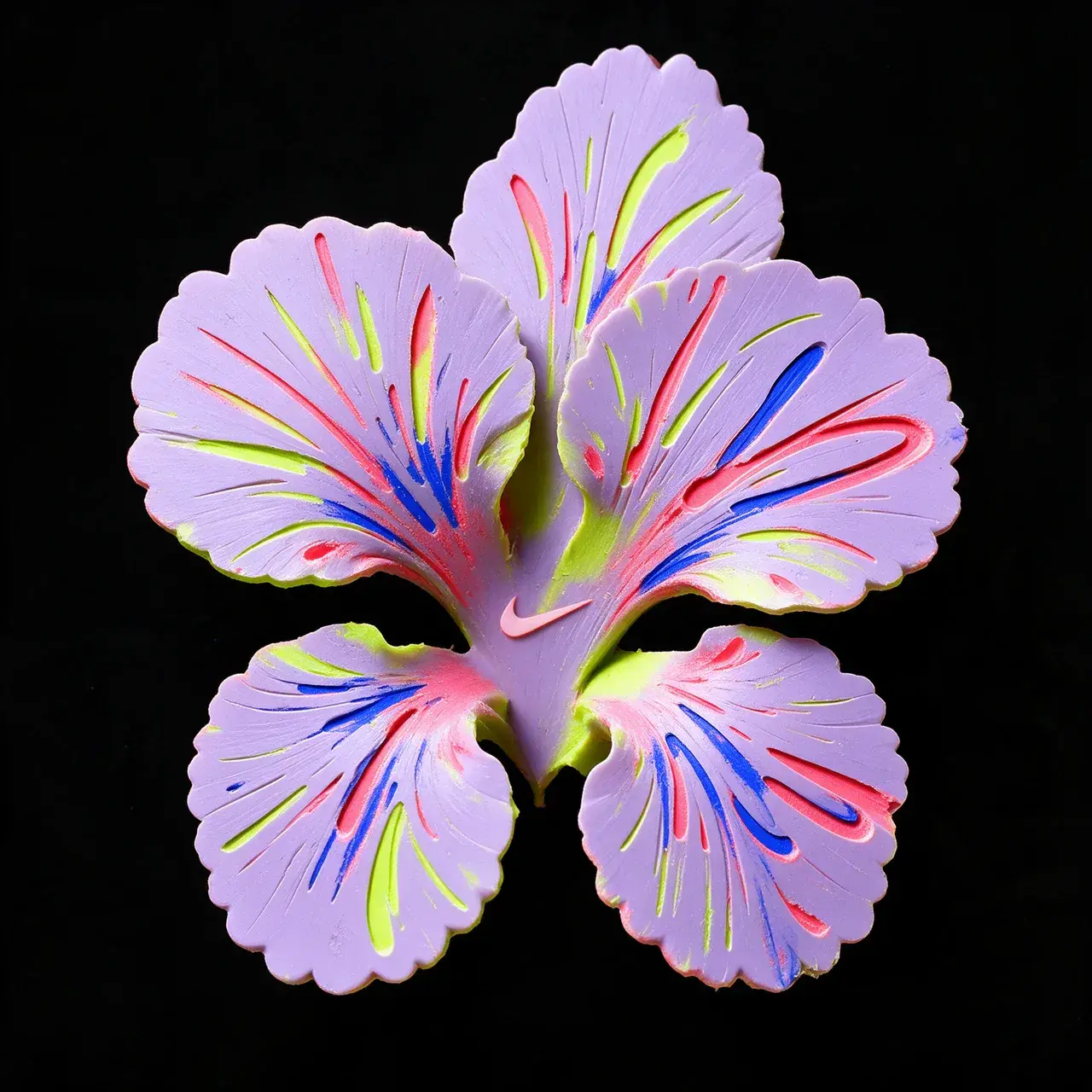
Seedream 5 Pro
Copy
{ "source_lock": "Treat the uploaded image as the immutable structural master. Preserve every visible source component exactly one-to-one: silhouette, proportions, thickness, openings, cutouts, separate parts, layered elements, attachments, readable text, logos, labels, facial details, decorative elements, relative positions, overlap, depth order, camera angle and composition. Nothing visible in the input may disappear, merge, move, simplify or be redesigned. Material scale must automatically adapt around fine source details.", "palette": { "top_layer": "#D8C7F4", "middle_layer": "#B7F531", "deep_layer": "#FF5773", "core": "#3157E8", "background": "#000000" }, "construction": "Build the existing object from four thin differently colored polymer layers permanently compression-laminated into one dense solid.", "surface_physics": "Keep the broad exterior primarily matte lavender, then physically carve through the upper layers using sweeping freehand sgraffito cuts inspired by Y2K marker gestures: elongated curves, stretched loops, blunt scribbles, oversized arcs and asymmetric swoops rather than readable graffiti lettering. Shallow cuts reveal acid-lime; deeper incisions expose coral, and only the deepest selected strokes reveal cobalt. The color therefore comes entirely from true physical cross-sections rather than paint. Every cut should show real tool behavior: slightly rounded polymer edges, tiny machining chatter, faint drag marks, narrow curled shavings inside a few recesses
and subtle compression of the laminate around deeper grooves. Keep large lavender fields untouched so the carved gestures remain graphic and deliberate.", "detail_control": "Carving paths automatically route around source text, logos, faces and fine attachments, becoming shallower and narrower near intricate geometry.", "lighting": { "setup": "Broad soft directional illumination from upper-left-front, with restrained neutral frontal fill and subtle upper-right separation from the black background.", "exposure": "Consistent exposure across the entire material collection, with deep clean blacks, rich readable midtones and controlled highlight roll-off.", "light_behavior": "The illumination direction, softness, intensity and contrast remain identical across every material; only the physically correct response of the material itself changes.", "restrictions": "All light sources remain outside the visible frame. No visible lamps, softboxes, light panels, white cards or studio equipment. No rectangular or square light-source reflections, no HDRI environment, no bloom, glow, halo, lens flare or artificial rim-light outline." }, "composition": { "camera": "Preserve the exact source viewing direction and orientation.", "position": "Centered and freely suspended.", "background": "#000000", "floor": false, "cast_shadow": false }, "quality": "Photoreal machined polymer photography, genuine laminated cross-sections, tactile carved edges, crisp color depth and extreme material realism." }
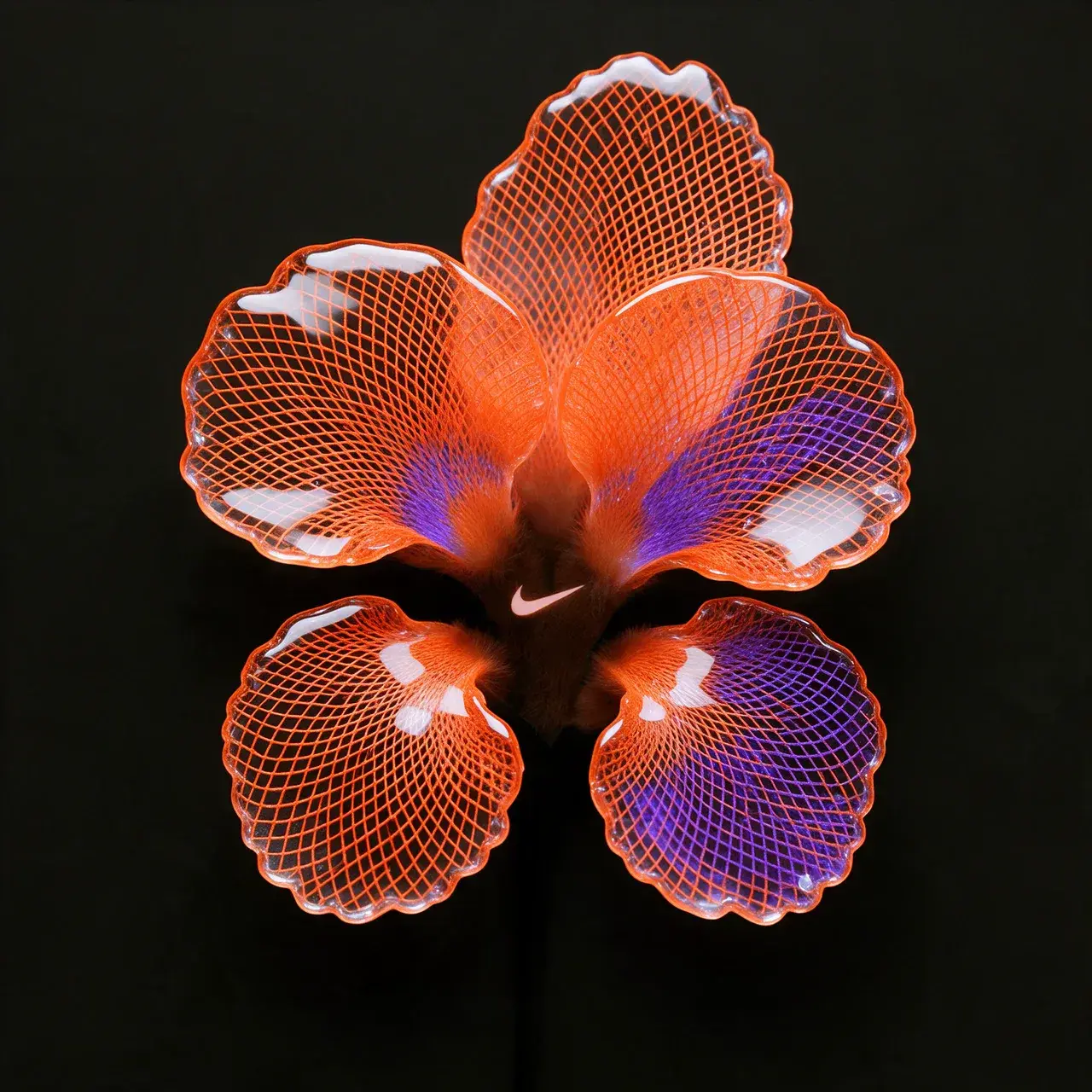
Seedream 5 Pro
Copy
Use the uploaded image as an immutable full-object reference. Preserve every visible input element one-to-one, including all silhouettes, proportions, thicknesses, openings, layered parts, attachments, text, logos, labels, facial details, decorations, spacing, overlap and original camera direction. Reconstruct suitable surfaces as a layered composite made from vivid orange technical tulle #FF6128 encapsulated beneath a perfectly smooth transparent clearcoat. The tulle itself consists of extremely fine intersecting monofilaments forming small irregular diamond cells with visible tension, slight waviness and compressed intersections. Beneath selected zones place a second tulle layer in saturated violet #6942E5 at a slightly different angle, producing large-scale moiré interference where the two meshes overlap. Keep other regions single-layer orange so the pattern has hierarchy. Introduce a few completely clear polished windows where the mesh disappears, exposing only the transparent coating and creating powerful calm zones. The tulle remains physically buried under the glassy top layer, producing real refraction and subtle lensing rather than looking printed. Fine source components automatically use a smaller mesh scale. Render the entire exact assembly against pure black #000000, freely levitating, source view intact, restrained upper-left-front illumination, smooth clearcoat highlights, crisp buried fibers, rich orange-violet moiré depth and ultra-premium technical-material CGI.
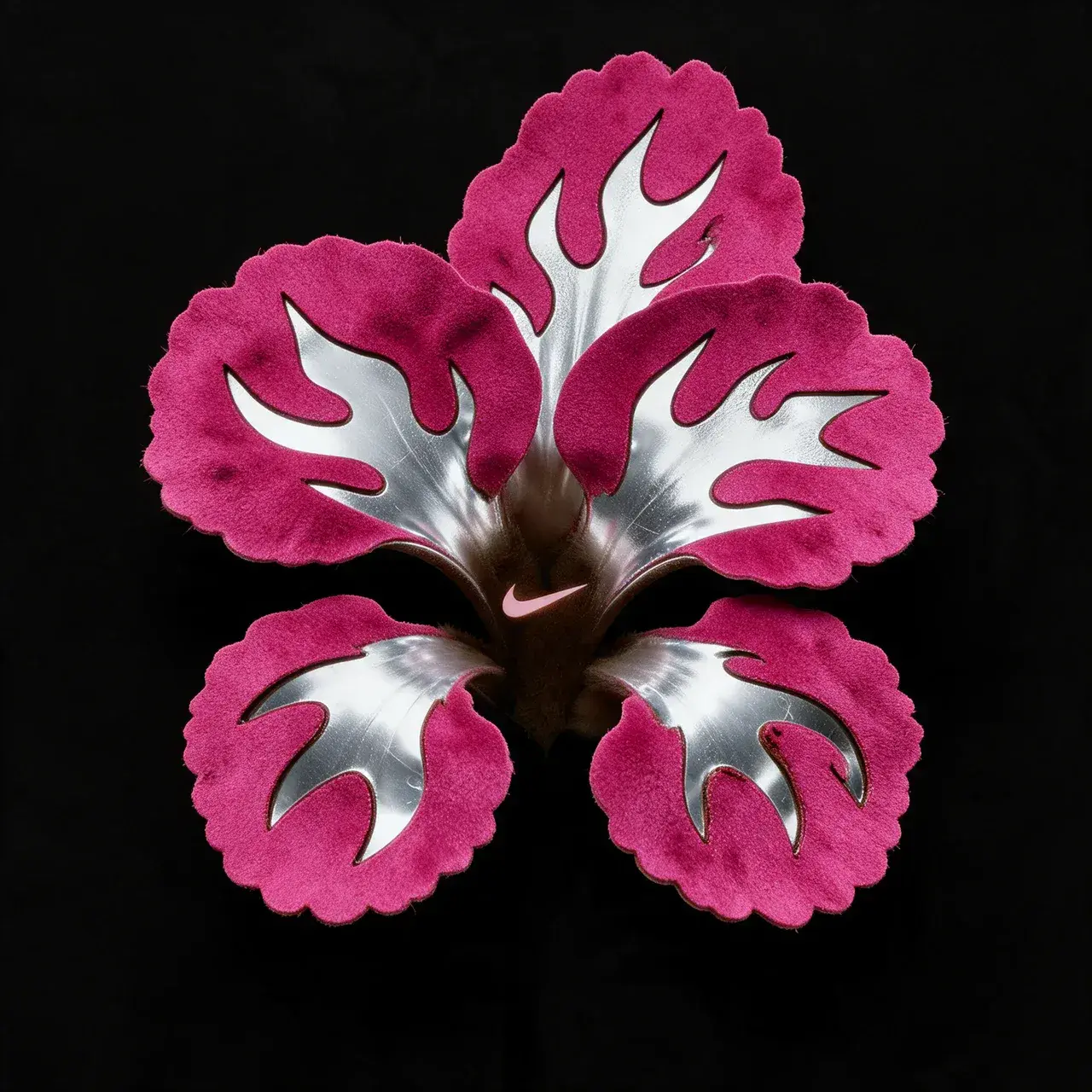
Seedream 5 Pro
Copy
Use the uploaded image as an immutable full-assembly reference. Preserve every visible source component exactly: silhouettes, proportions, thicknesses, openings, layered parts, attachments, text, labels, logos, decorative details, overlap and original camera direction remain unchanged. Construct the surface as a genuine two-layer fashion material: an upper layer of ultra-fine suede in saturated raspberry #C62D72 bonded over a mirror-silver flexible vinyl substrate #CCD1D5. Laser-cut the suede into large flowing Y2K motifs—elongated flames, stretched stars, wavy amoeba-like openings and long asymmetric swoops—so the polished silver layer appears through the cut shapes. The suede should remain the dominant material, with broad uninterrupted pink fields and only a few large mirror reveals. Show real short suede fibers, nap-direction changes, darker brushed patches, tiny cut-fiber fuzz at laser edges and microscopic heat-darkening around several cutouts. The metallic underlayer must have slight vinyl softness and subtle surface waviness rather than perfect chrome, with fine hairline scratches and gently distorted reflections. Preserve logos, faces, text and intricate source regions by shrinking or omitting cutouts locally. Photograph freely suspended against #000000 with high-end fashion accessory lighting: soft upper-left key revealing suede fibers, controlled silver reflections, deep material contrast and crisp cut-edge shadowing.
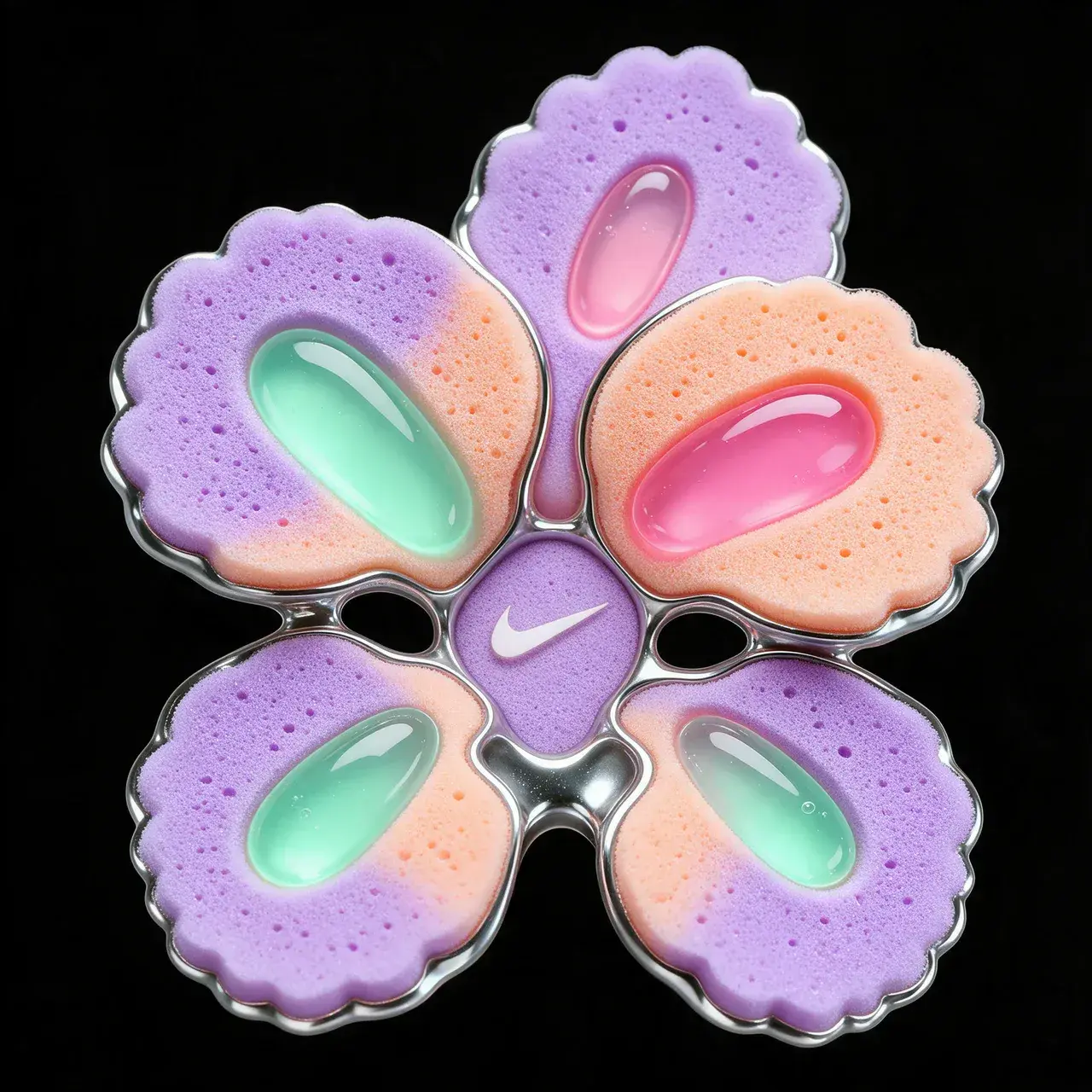
Seedream 5 Pro
Copy
{ "source_lock": "Use the uploaded image as an immutable structural reference. Preserve every original component one-to-one, including silhouette, thickness, openings, cutouts, layered elements, labels, logos, text, decorative details, spatial relationships, overlap, orientation and composition. Only transform the material behavior of the visible surfaces.", "palette": { "foam_lilac": "#C7A7F1", "foam_peach": "#FFB38D", "gel_mint": "#9EF2D8", "gel_pink": "#F97AB6", "chrome": "#C8CED3", "background": "#000000" }, "material_logic": { "dominant_material": "Dense fine-pored foam with a soft matte tactile surface.", "secondary_material": "Inset thick jelly cells with translucent depth.", "accent_material": "Thin liquid chrome dividers or droplets." }, "macro_structure": "Create a surface system based on several large rounded foam panels separated by chrome contours. Inside selected panels, carve elongated or oval jelly cells that feel embedded into the body. The overall composition should feel soft, tactile and playful, but still refined and design-forward.", "meso_structure": "Keep most of the body in lilac and peach fine-pored foam, arranged in large coherent areas. Gel cells should appear in mint and pink, slightly recessed and optically deep. Chrome
acts as a precise framing or linking material, never dominant.", "micro_structure": "The foam must show believable tiny pores, soft cut edges, very subtle compression and tactile dryness. Jelly cells should show thickness, slight optical distortion, soft edge meniscus and a few tiny internal bubbles. Chrome should have clean reflective behavior with tiny realistic imperfections.", "detail_control": "Use smaller cells and finer foam only where required by small source geometry. Keep labels and text readable with calmer areas.", "lighting": { "setup": "One large soft diffused studio key light placed upper-left-front, about 40 degrees above and 35 degrees left of camera, plus a very weak neutral frontal fill to maintain clarity in the shadows.", "behavior": "Soft consistent lighting with controlled reflections and a premium editorial feel.", "restrictions": "No colored lighting, no bloom, no dramatic rim lighting, no overexposed speculars, no fake CGI glow." }, "composition": { "camera": "Match the source view exactly.", "position": "Centered and isolated.", "background": "#000000", "floor": false, "cast_shadow": false }, "quality": "Photoreal tactile material photography with clear hierarchy between dry porous foam, wet jelly and reflective chrome." }
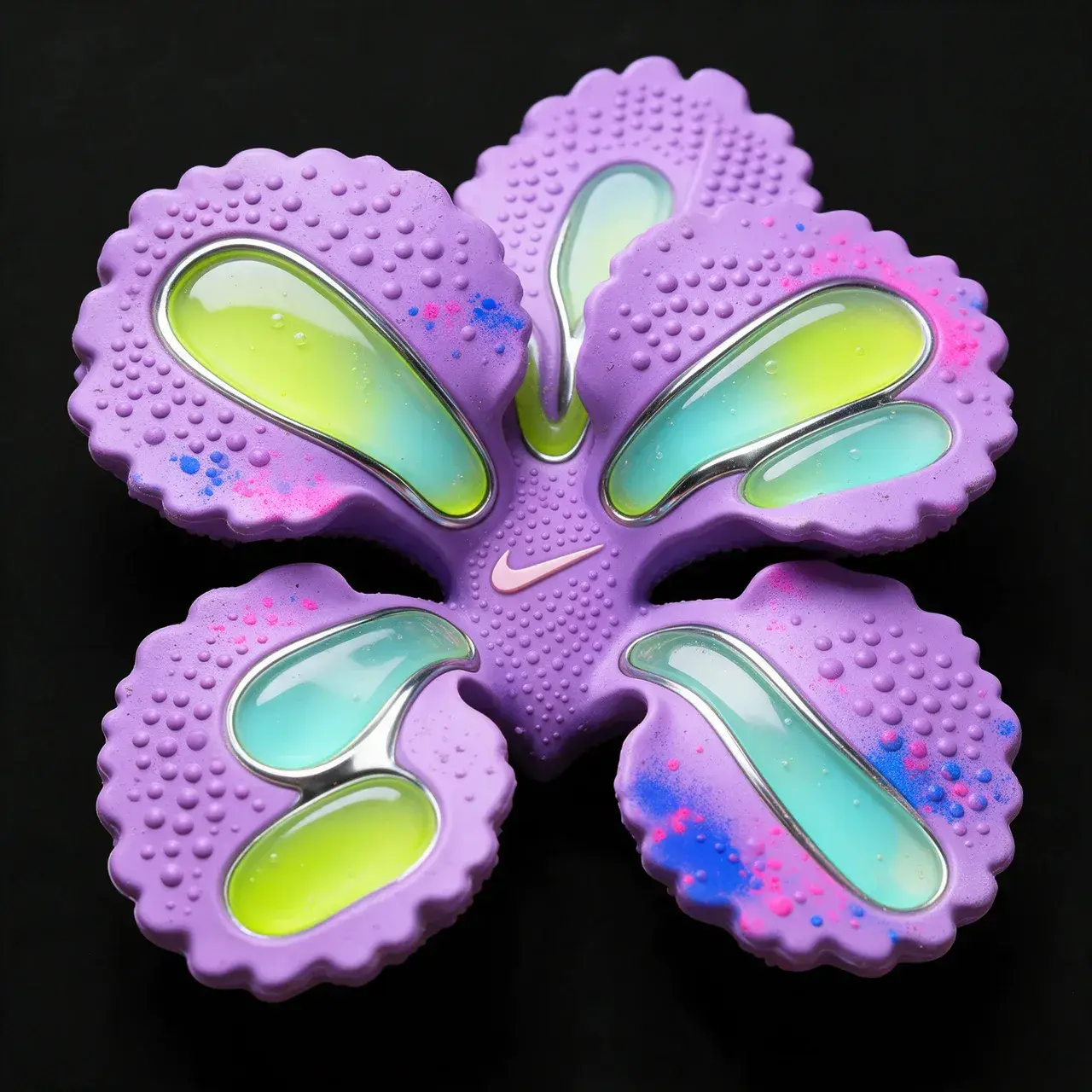
Seedream 5 Pro
Copy
{ "source_lock": "Treat the uploaded image as the immutable structural master. Preserve every original source component exactly one-to-one, including silhouette, proportions, thickness, openings, cutouts, layered parts, attachments, readable text, logos, labels, decorative source details, spacing, overlap, viewing angle and composition. Transform the surface materials only. Do not add external shells, costumes, extra objects or decorative attachments that were not present in the source.", "palette": { "bubble_base": "#D79AF4", "gel_lime": "#C8F13B", "gel_aqua": "#7BE7E8", "chrome": "#C7CDD3", "graffiti_magenta": "#FF4FA2", "graffiti_blue": "#3E64FF", "background": "#000000" }, "material_logic": { "dominant_material": "Soft-touch molded polymer with a fine matte finish and rounded tactile pimple structure.", "secondary_material": "Inset translucent gel windows embedded into the surface.", "accent_material": "Narrow liquid chrome channels integrated into the composition.", "surface_accent": "Sparse airbrushed graffiti haze." }, "macro_structure": "Build the main body from a calm matte polymer base covered with an organized field of rounded tactile pimpled texture. Break the surface with several large elongated recessed gel windows that follow the object's geometry. Use narrow flowing chrome seams to connect or frame selected gel zones so the composition feels intentional and elegant rather than chaotic.", "meso_structure": "The pimple structure must be dense but refined, with even spacing and clear tactile regularity. Gel windows should appear as thick translucent insets with rounded edges, some in lime and some in aqua. Chrome
should appear in a few elegant routes only, never covering everything. Apply restrained airbrushed magenta and blue graffiti mist on selected matte regions, with one or two subtle drips only.", "micro_structure": "Resolve fine matte grain on the polymer, slight softness on raised pimple tips, tiny wear shine on high-contact zones, realistic gel meniscus and depth, a few micro-bubbles inside the gel, and faint polishing scratches in the chrome. Graffiti pigment must softly catch on the raised bumps and settle subtly in low areas.", "detail_control": "Keep calmer flatter zones around source text, logos and tiny details so they stay readable. Use smaller pimple scale only where needed to preserve source precision.", "lighting": { "setup": "One large soft diffused studio key light placed upper-left-front, about 40 degrees above and 35 degrees left of camera, plus a very weak neutral frontal fill to maintain clarity in the shadows.", "behavior": "The light must remain soft, controlled and identical across the collection. Material distinction must come from actual surface properties, not from dramatic or colored lighting.", "restrictions": "No rim light, no colored lighting, no glow, no bloom, no hard specular clipping, no HDRI reflections, no lens flare." }, "composition": { "camera": "Preserve the original source viewing direction exactly.", "position": "Centered and isolated.", "background": "#000000", "floor": false, "cast_shadow": false }, "quality": "Photoreal high-end studio material photography. The texture must feel tactile, premium and physically believable, with a clear material hierarchy from thumbnail to macro view." }
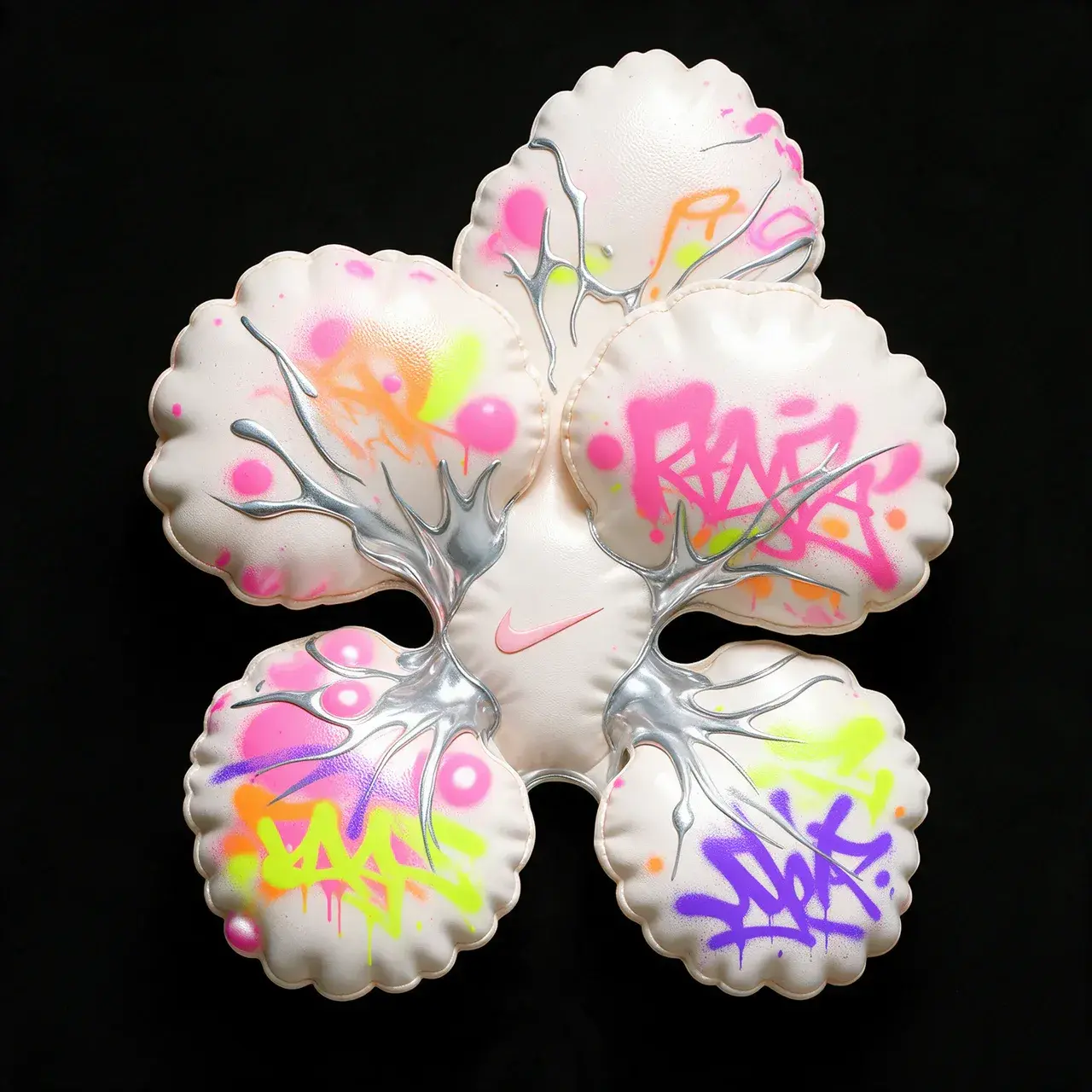
Seedream 5 Pro
Copy
{ "source_lock": "Treat the uploaded image as the immutable full-assembly reference. Preserve silhouette, structure, openings, cutouts, proportions, thickness, layered pieces, labels, logos, text, attachments, spacing, orientation and camera view exactly. Modify surface material only.", "palette": { "vinyl_base": "#F0EAE4", "bubble_pink": "#F672AF", "bubble_orange": "#FF9852", "bubble_lime": "#C9F33C", "chrome": "#CBD1D5", "graffiti_violet": "#7D54E6", "background": "#000000" }, "material_logic": { "dominant_material": "Smooth semi-gloss vinyl surface with inflated bubble-like relief sections.", "secondary_material": "Liquid chrome vein structures.", "accent_material": "Acid graffiti bursts and tags." }, "macro_structure": "Use a pale creamy vinyl base, then build inflated rounded bubble zones across selected sections of the form. These should feel like physically puffed areas under a skin, not random bumps. Route chrome veins through and between these inflated zones. Place bold but limited acid-color graffiti interventions on top of the vinyl fields.", "meso_structure": "Inflated bubble regions should vary in scale and follow the underlying geometry. Chrome veins should branch organically and help organize the composition. Graffiti should appear in controlled hot pink,
orange, lime and violet bursts, combining soft overspray with a few sharper marks or tags.", "micro_structure": "Show realistic vinyl skin texture, gentle orange-peel micrograin, seam tension around inflated zones, and slight deformation where bubble volumes meet. Chrome veins should feel poured and then stabilized. Graffiti should show layered aerosol density, overspray grain and one or two subtle drips.", "detail_control": "Maintain calm base vinyl around text or logos. Do not let graffiti obscure readable source details.", "lighting": { "setup": "One large soft diffused studio key light placed upper-left-front, about 40 degrees above and 35 degrees left of camera, plus a very weak neutral frontal fill to maintain clarity in the shadows.", "behavior": "Elegant consistent studio lighting with controlled shine and realistic shadow transitions.", "restrictions": "No HDRI look, no dramatic backlight, no bloom, no fake specular streaks." }, "composition": { "camera": "Preserve the original source viewpoint.", "position": "Centered and isolated.", "background": "#000000", "floor": false, "cast_shadow": false }, "quality": "High-end photoreal tactile design-object photography with inflated relief, believable chrome integration and stylish Y2K-inspired graffiti energy." }
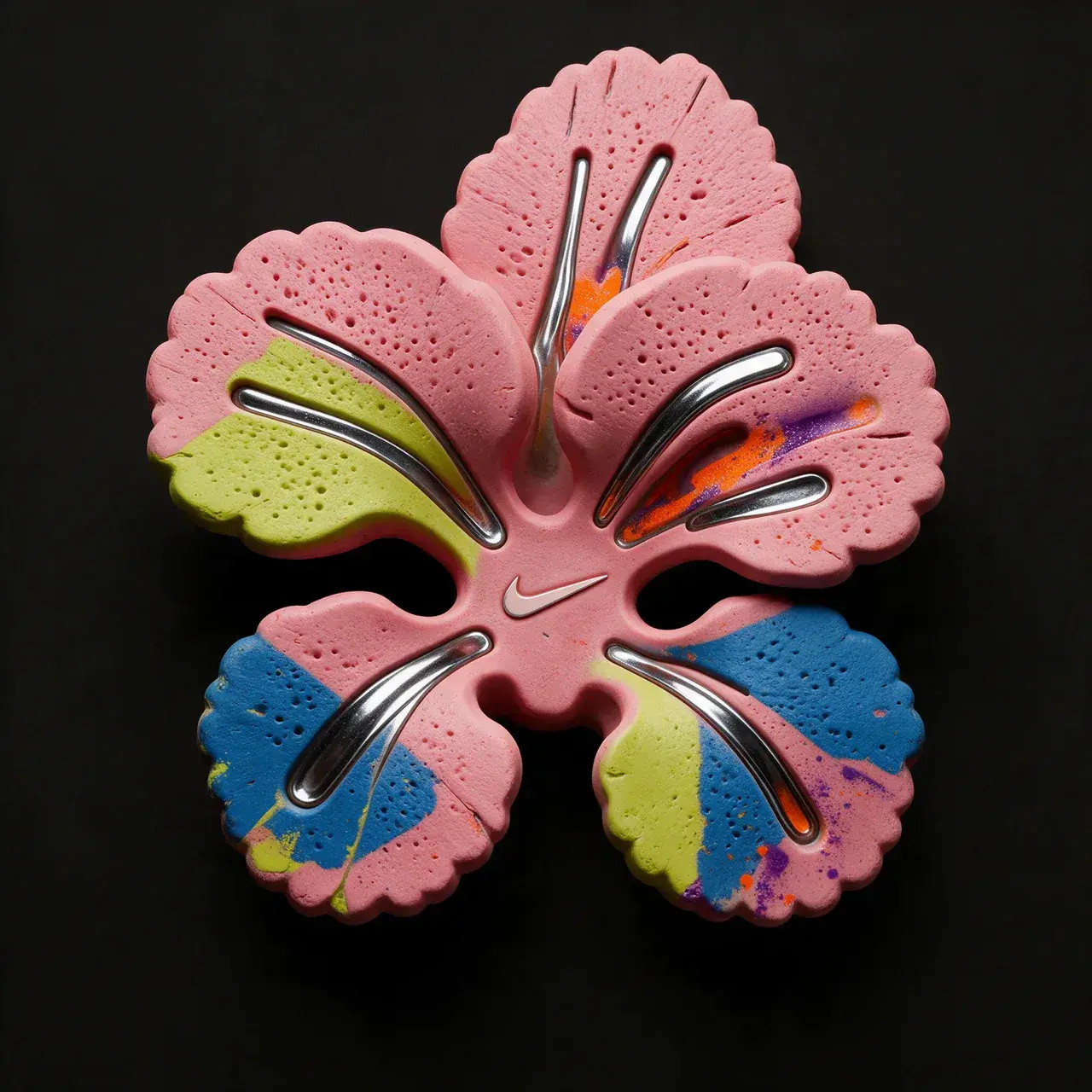
Seedream 5 Pro
Copy
{ "source_lock": "Use the uploaded image as the immutable reference structure. Preserve silhouette, proportions, thickness, openings, cutouts, labels, logos, text, layered elements, attachments, relative placement and exact viewing direction. Transform only the material system.", "palette": { "rubber_base": "#F2B1C9", "rubber_lime": "#C8F240", "rubber_blue": "#5D7CFF", "chrome": "#C8CDD2", "graffiti_orange": "#FF9250", "graffiti_purple": "#7A49D9", "background": "#000000" }, "material_logic": { "dominant_material": "Fine-porous matte rubber with tactile density.", "secondary_material": "Inset chrome channels.", "accent_material": "Graffiti pigment trapped into carved recesses and pores." }, "macro_structure": "Form the main object in a calm fine-porous pink rubber. Introduce several bold regions of lime and blue rubber as large coherent blocks, not scattered patches. Carve elegant flowing recessed channels through the surface and fill selected channels with liquid chrome. Some adjacent carved channels remain unfilled and instead hold vivid trapped graffiti pigment.", "meso_structure": "The channel network should feel like a designed line system flowing across the form. Chrome routes should be fewer and cleaner. Graffiti recesses
should contain orange and purple pigment in a controlled way, creating contrast against the calm rubber fields.", "micro_structure": "Show dense realistic rubber pores, faint molding seams, slight edge softness and tactile wear. Chrome channels should show polished fluid metal behavior. Graffiti pigment should visibly settle into pores and recess edges, with realistic aerosol grain and mild stain behavior.", "detail_control": "Preserve clean readable zones behind important source details and avoid channel congestion in tiny areas.", "lighting": { "setup": "One large soft diffused studio key light placed upper-left-front, about 40 degrees above and 35 degrees left of camera, plus a very weak neutral frontal fill to maintain clarity in the shadows.", "behavior": "Controlled elegant lighting that reveals porous texture without flattening it.", "restrictions": "No colored lights, no hard rim, no bloom, no fake CGI sheen." }, "composition": { "camera": "Preserve source orientation exactly.", "position": "Centered and isolated.", "background": "#000000", "floor": false, "cast_shadow": false }, "quality": "Photoreal studio material photography with tactile rubber realism, designed channel structure and clean contemporary color balance." }
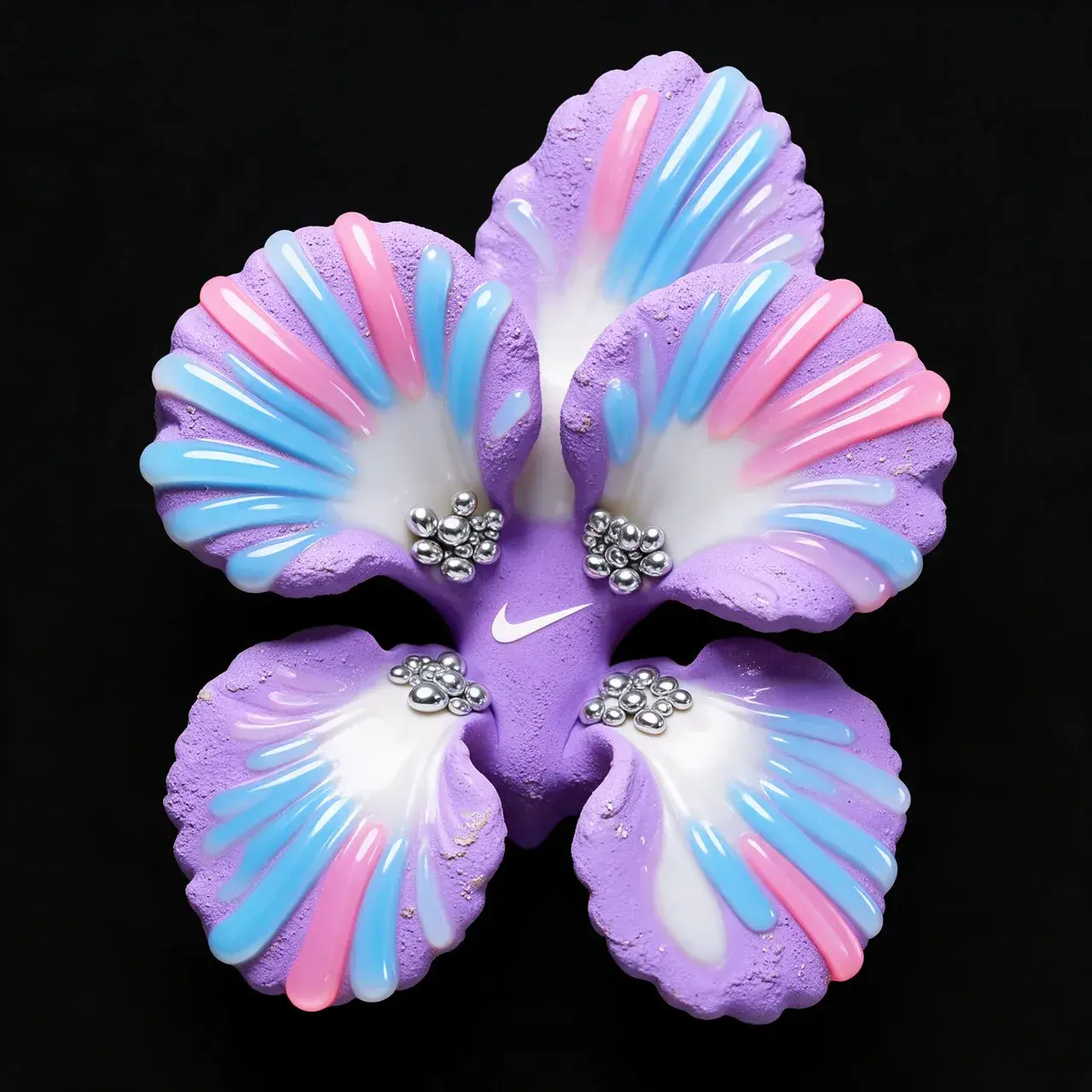
Seedream 5 Pro
Copy
{ "source_lock": "Treat the uploaded image as the immutable structural reference. Preserve all original source parts and their exact arrangement, including silhouette, openings, cutouts, thickness, text, labels, logos, attachments, layered depth, overlap, camera angle and composition. Surface materials may change, but structure may not.", "palette": { "granular_base": "#B78CE7", "gel_blue": "#74C9FF", "gel_rose": "#F590B3", "chrome": "#C7CCD1", "pearl_white": "#F2EFF4", "background": "#000000" }, "material_logic": { "dominant_material": "Matte micro-granular coated surface.", "secondary_material": "Raised glossy ribbed gel bands.", "accent_material": "Chrome pebble droplets and chrome insets." }, "macro_structure": "Keep the object mostly coated in a soft matte granular lilac surface. Across this base run a few prominent ribbed gel bands that curve with the geometry. Insert clusters of polished chrome pebble-like droplets at strategic intersections or focal points. Use pearl-white smooth transition areas to keep the surface composition breathable.", "meso_structure": "Gel bands should be thick, glossy and clearly ribbed, using rose and blue in alternating or softly blended zones. Chrome pebble clusters should feel like smooth rounded metal nodes gathered in small
groups rather than evenly scattered. Pearl-white regions should help break the surface into readable large shapes.", "micro_structure": "The granular base should show fine tactile particulate texture, subtle unevenness and slight matte wear on protruding zones. Gel ribs should show rounded profile, meniscus highlights and slight optical body. Chrome pebbles should show clean rounded reflections and minor polishing wear.", "detail_control": "Reduce chrome clustering and rib height around logos, text or delicate source elements so they remain legible.", "lighting": { "setup": "One large soft diffused studio key light placed upper-left-front, about 40 degrees above and 35 degrees left of camera, plus a very weak neutral frontal fill to maintain clarity in the shadows.", "behavior": "Soft premium product-photography light with consistent reflection control.", "restrictions": "No colored lighting, no bloom, no heavy rim lighting, no dramatic CGI reflections." }, "composition": { "camera": "Match the source camera angle precisely.", "position": "Centered and isolated.", "background": "#000000", "floor": false, "cast_shadow": false }, "quality": "Photoreal premium tactile material study with a strong balance of matte grain, glossy ribbing and clean metal accents." }
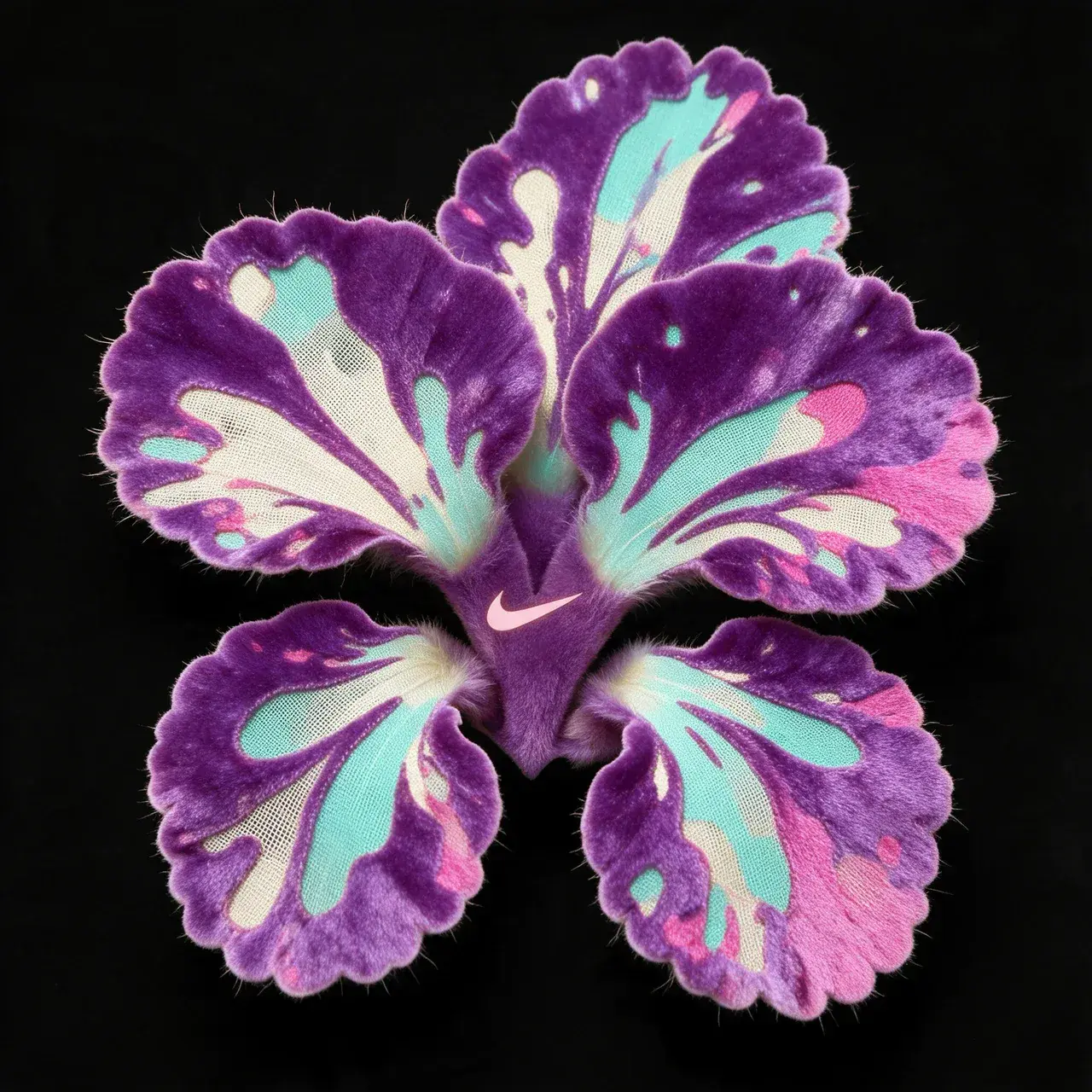
Seedream 5 Pro
Copy
{ "source_lock": "Treat the uploaded image as the immutable structural master. Preserve every visible source component exactly one-to-one: silhouette, proportions, thickness, openings, cutouts, negative spaces, separate parts, layered elements, attachments, readable text, logos, labels, facial details, decorative source elements, relative positions, overlap, depth order, camera angle and composition. Nothing may disappear, merge, move, simplify or be redesigned. The material treatment must adapt to the source rather than changing its geometry.", "palette": { "velvet_plum": "#6D3E9A", "velvet_rose": "#D96EA9", "sheer_aqua": "#78D5D1", "sheer_cream": "#EFE5D7", "background": "#000000" }, "construction": "Reconstruct the visible surfaces as genuine devore burnout velvet: a translucent woven ground carrying dense velvet pile in selected regions, with the pile chemically removed from other areas to expose the sheer textile underneath. The object remains structurally rigid to the exact source while the textile is tightly laminated over its existing surfaces.", "macro_structure": "Design the velvet and sheer regions as several enormous fluid organic fields rather than a repetitive pattern. Keep approximately 65% dense plum-to-rose velvet and 35% translucent aqua or warm-cream burnout areas. The boundaries should form stretched amoeba shapes, broad loops and irregular sweeping voids that flow continuously across large source components.", "meso_structure": "Velvet regions have subtle directional pile changes and occasional rose color migration through the plum fibers. Burnout regions expose the real underlying sheer weave and become semi-transparent, allowing deeper layers or the object's thickness
to remain perceptible. At boundaries, individual velvet fibers gradually thin before disappearing completely rather than ending as a digitally perfect vector edge.", "micro_structure": "Resolve individual velvet fibers, fine woven warp and weft in sheer regions, tiny irregular remnants of pile left by the burnout process, subtle crushed-nap marks, microscopic fiber fuzz, occasional thread distortion and faint tension changes around curves. The sheer ground must remain textile, never clear plastic.", "detail_control": "Keep text, logos and fine source details on quieter single-material regions with shorter velvet pile or denser sheer weave. Never obscure source information.", "lighting": { "setup": "One large diffused studio light positioned upper-left-front, approximately 40 degrees above and 35 degrees to the left of camera, plus extremely weak neutral frontal fill only to preserve shadow information.", "behavior": "Lighting remains soft, neutral and identical across the entire collection. Material appearance must come from real roughness, transmission, fibers and reflectivity rather than from dramatic lighting.", "restrictions": "No rim light, no colored lighting, no visible light sources, no rectangular reflections, no HDRI environment, no bloom, glow, halo or lens flare." }, "composition": { "camera": "Preserve the exact source viewing direction and orientation.", "position": "Centered and freely suspended.", "background": "#000000", "floor": false, "cast_shadow": false }, "quality": "Photoreal couture textile photography with genuine burnout construction, individually resolved velvet fibers, authentic sheer weave, subtle manufacturing irregularity and extremely tactile macro realism." }
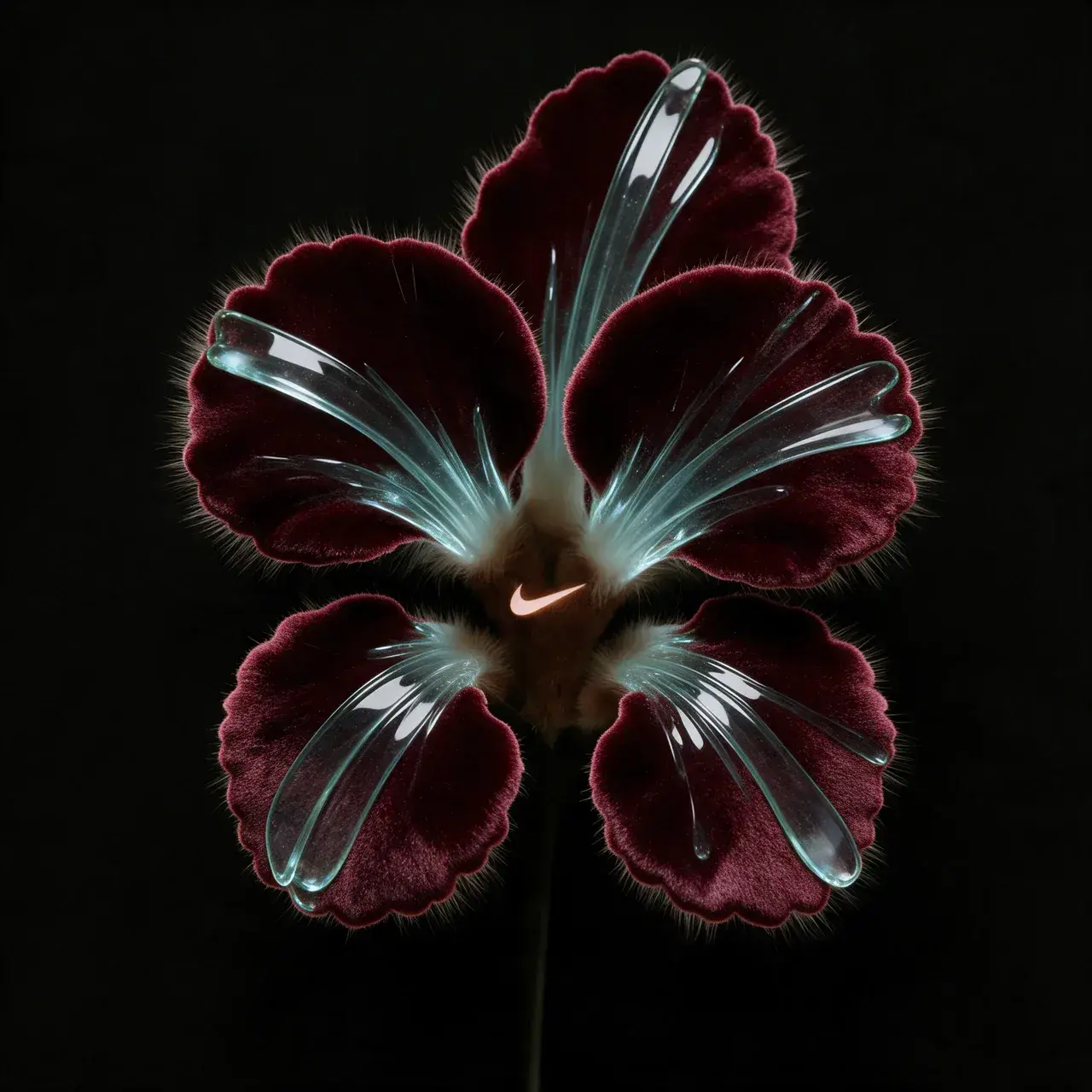
Seedream 5 Pro
Copy
Use the uploaded image as an immutable full-object assembly blueprint. Reproduce the complete visible source assembly exactly before changing any material. Preserve every component, subcomponent, opening, negative space, layered part, attachment, text, label, logo, face, illustration, stem, leaf, decoration and fine feature with exact proportions, position, orientation, overlap, spacing and depth order. Never remove, merge, cover, replace, simplify or reposition anything. Keep the existing geometry unchanged and replace appropriate surfaces with deep saturated burgundy velvet with dense short directional pile and luxurious nap variation. Introduce only a few broad flowing tracks of flush pale-cyan transparent glass on large uninterrupted areas. Glass tracks must remain completely inside the original surface, never cross or obscure critical source details, and automatically disappear around text, faces, graphics, small objects, openings and thin pieces. Preserve all original parts as distinct physical components. Render the unchanged assembly centered on pure black #000000, freely floating with no floor, support, pedestal, horizon or external cast shadow. Preserve exact source camera and composition. Soft controlled upper-left-front illumination revealing velvet fibers and restrained natural glass highlights, deep blacks and premium CGI detail. No visible lights, rectangular reflections, bloom, glow or environment. Absolute priority: all visible source components remain present and recognizable.
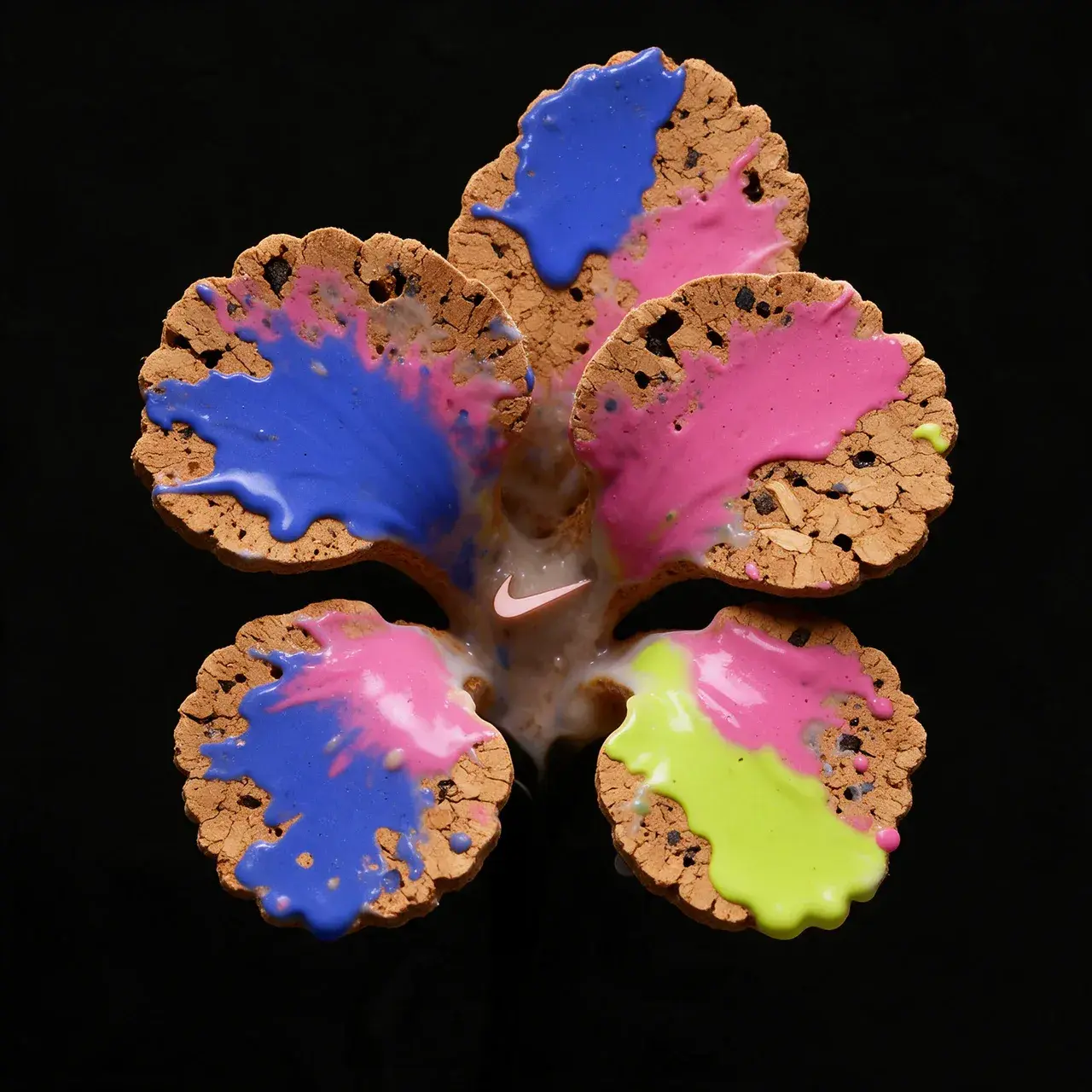
Seedream 5 Pro
Copy
{ "source_lock": "Treat the uploaded image as the immutable source geometry. Preserve every visible silhouette, proportion, opening, thickness, layered part, attachment, label, logo, text, source decoration, overlap, orientation and camera exactly.", "palette": { "cork": "#B17A50", "latex_blue": "#395ED8", "latex_pink": "#E85F9D", "latex_lime": "#C4E84B", "background": "#000000" }, "construction": "Construct the main object from real tightly compressed natural cork, then physically dip selected broad regions into thick colored latex so the latex penetrates the cork pores unevenly while forming a continuous flexible skin over high areas.", "macro_structure": "Keep approximately 60% raw warm cork visible. Create only three or four huge dipped color regions in cobalt, pink and lime, with irregular fluid boundaries caused by real immersion rather than perfect graphic masks.", "meso_structure": "At the centers of dipped regions the latex forms an opaque smooth skin; toward every boundary it becomes thinner, allowing cork granules to emerge progressively through the coating. Tiny latex bridges span deeper cork pores and several droplets freeze along low edges.", "micro_structure": "Resolve individual cork granules, compressed bark cells, tiny pits, dark
natural inclusions and fibrous fragments. Latex shows fine elastic grain, subtle thickness variation, microscopic trapped air around deep cork pores and slight matte tackiness.", "detail_control": "Use raw fine cork or uniform thin latex behind text, logos and delicate details.", "lighting": { "setup": "One large diffused studio light positioned upper-left-front, approximately 40 degrees above and 35 degrees to the left of camera, plus extremely weak neutral frontal fill only to preserve shadow information.", "behavior": "Lighting remains soft, neutral and identical across the entire collection. Material appearance must come from real roughness, transmission, fibers and reflectivity rather than from dramatic lighting.", "restrictions": "No rim light, no colored lighting, no visible light sources, no rectangular reflections, no HDRI environment, no bloom, glow, halo or lens flare." }, "composition": { "camera": "Preserve the exact source viewing direction and orientation.", "position": "Centered and freely suspended.", "background": "#000000", "floor": false, "cast_shadow": false }, "quality": "Photoreal cork and latex macro photography with authentic porous absorption, material penetration, flexible coating thickness and rich tactile contrast." }
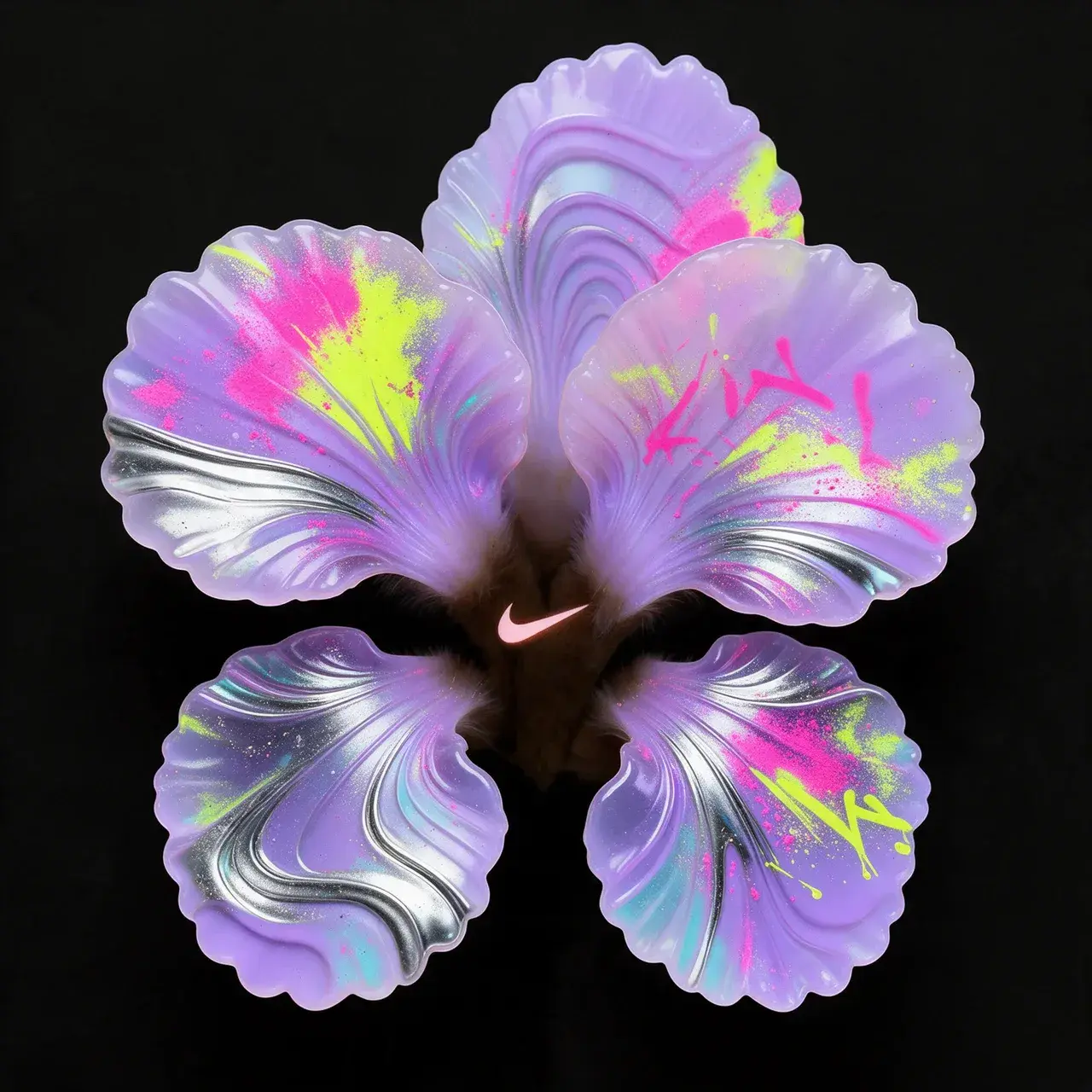
Seedream 5 Pro
Copy
{ "source_lock": "Use the uploaded image as the immutable structural master. Preserve every visible source component exactly one-to-one: outer silhouette, proportions, thickness, openings, cutouts, negative spaces, separate parts, layered elements, attachments, readable text, logos, labels, facial details, decorations, spacing, overlap, depth order, camera angle and composition. Apply the material system directly to the existing source surfaces. Do not wrap the source in a new cocoon, garment, casing or enlarged shell. Nothing may disappear, merge, move, simplify or be redesigned.", "palette": { "jelly_lilac": "#B79AF1", "jelly_aqua": "#72E0DA", "hot_pink": "#F63F97", "acid_lime": "#CDF338", "liquid_chrome": "#C8CED3", "ink_violet": "#6937CB", "background": "#000000" }, "style_direction": "Contemporary Y2K bio-tech material with a clean editorial composition: tactile, sensual, glossy-versus-matte, colorful but controlled.", "material_hierarchy": { "primary": "55% translucent satin jelly-polymer", "secondary": "25% flowing liquid-chrome channels", "accent": "20% aerosol and pigment interventions" }, "macro_architecture": "Shape the main jelly-polymer into broad topographic relief rather than ordinary parallel ribs. Use large nested contour terraces, swollen curved ridges, soft depressions and interrupted concentric pathways that travel across the source geometry. Several terraces merge, split and widen organically, creating a strong sculptural pattern readable at thumbnail scale.", "material_behavior": "The jelly body is semi-translucent lilac with selected aqua zones diffusing through the material depth. Fill only several of the deepest contour valleys with dense polished liquid chrome so the metal appears poured into the relief and follows it continuously. Apply hot-pink and
acid-lime graffiti pigment mainly across the higher jelly terraces: broad aerosol clouds, sharp overspray cores, one or two fast abstract marker gestures and restrained drips. Graffiti must interact with the relief: pigment catches more densely in recessed transitions and fades across raised curved ridges.", "micro_detail": "Resolve genuine gel thickness, faint cloudy internal depth, tiny compression marks, microscopic casting lines and occasional micro-bubbles. Chrome has slight liquid waviness, subtle polishing scratches and real thickness at valley edges. Aerosol pigment consists of fine deposited particles with feathered boundaries and small high-density zones. Keep all three material responses physically distinct.", "detail_protection": "Flatten the relief locally and remove chrome and graffiti immediately around source text, logos, faces and delicate details. Preserve them exactly.", "lighting": { "setup": "One large diffused studio light positioned upper-left-front, approximately 40 degrees above and 35 degrees left of camera, plus extremely weak neutral frontal fill only to preserve shadow information.", "behavior": "Neutral soft material-study lighting. Roughness, transmission and reflectivity create the visual complexity; lighting itself remains simple and consistent.", "restrictions": "No rim light, colored illumination, visible lighting equipment, rectangular reflections, HDRI environment, bloom, glow, halo or lens flare." }, "composition": { "camera": "Preserve the exact source viewpoint and orientation.", "position": "Centered and freely suspended.", "background": "#000000", "floor": false, "cast_shadow": false }, "realism": "Photoreal fabricated material photographed with a macro product lens. No toy CGI, no smooth AI plastic, no decorative applique, no external shell." }
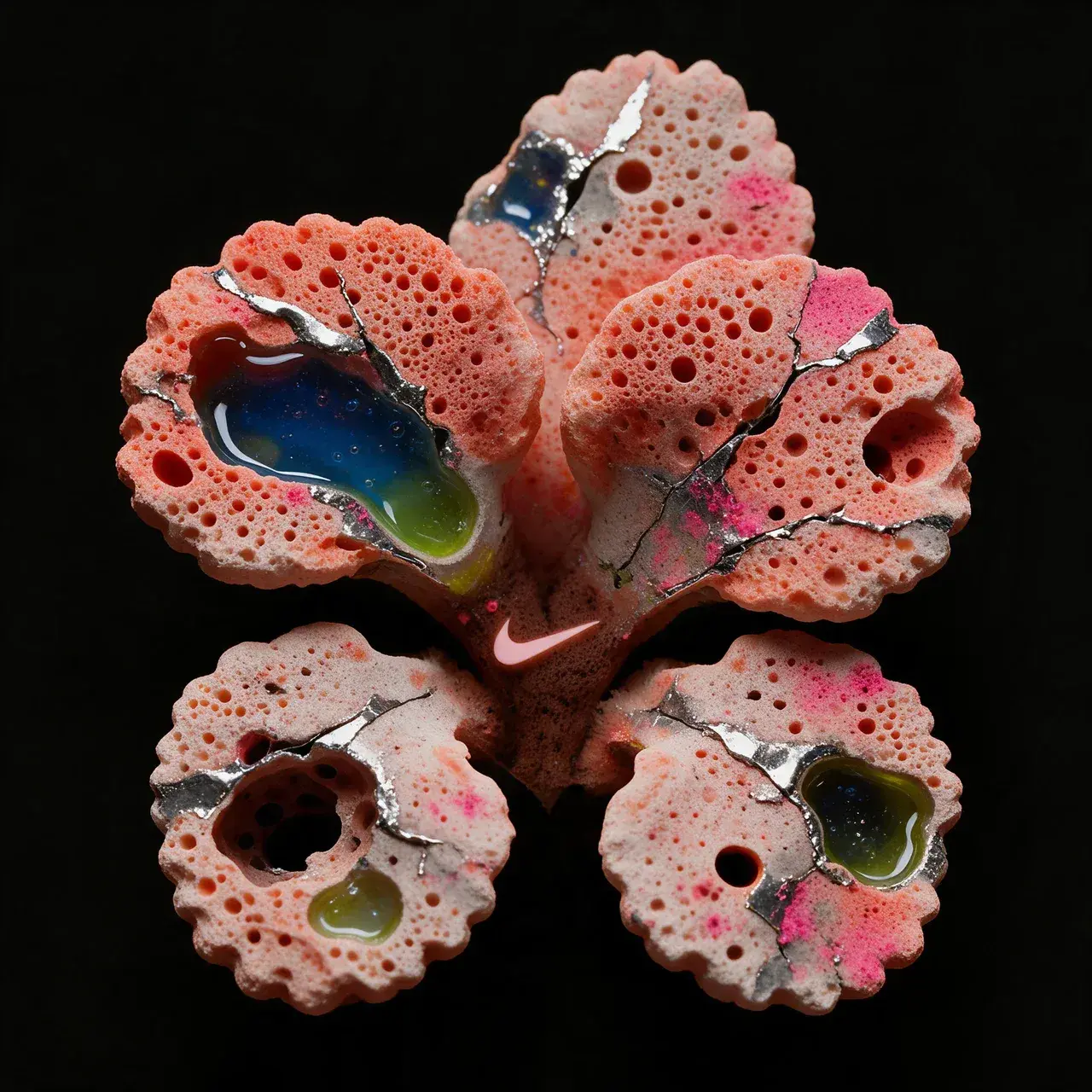
Seedream 5 Pro
Copy
{ "source_lock": "Use the uploaded image as the immutable structural master. Preserve every visible source component exactly one-to-one: silhouette, proportions, thickness, openings, cutouts, negative spaces, separate parts, layered elements, attachments, readable text, logos, labels, facial details, decorations, relative positions, overlap, camera and composition. Transform the existing surfaces directly. Never generate an additional outer shell or costume.", "palette": { "porous_coral": "#FF716D", "deep_coral": "#CB4059", "jelly_cobalt": "#335CE8", "jelly_lime": "#C7F33D", "chrome": "#C8CED2", "spray_pink": "#F747A0", "background": "#000000" }, "style_direction": "Candy-industrial Y2K material, biologically porous but sharply art-directed, combining dry mineral tactility with wet optical pockets and cold metal.", "material_hierarchy": { "primary": "65% coral microcellular material", "secondary": "20% glossy jelly-filled cavities", "accent": "15% chrome fracture lines and sprayed pigment" }, "macro_architecture": "Build broad source surfaces from a dense coral porous body with strong density variation. Keep large calm fine-pore zones, then concentrate several dramatic areas containing much larger eroded cavities. Run 2–5 broad irregular chrome fracture seams through selected porous fields, as though the material was cut open and repaired with poured metal.", "material_behavior": "Fill only some of the largest cavities with translucent cobalt or lime jelly. Jelly surfaces sit below the porous rim with a curved meniscus and visible optical depth. Other cavities remain empty and dark, revealing
rough internal walls. Add limited hot-pink aerosol staining around several fracture zones so pigment diffuses into the porous surface and becomes darker inside individual pores.", "micro_detail": "Use a true pore hierarchy: pinholes, fine clustered pores, medium irregular openings and rare large cavities with brittle walls. Show torn pore edges, dry matte roughness, subtle compression and minute debris. Jelly contains sparse bubbles and slightly thicker coloration around cavity edges. Chrome follows the fracture geometry with small thickness irregularities and hairline scratches.", "detail_protection": "Use dense fine-pore material with no large cavities or metal seams around labels, logos, text and fine source geometry.", "lighting": { "setup": "One large diffused studio light positioned upper-left-front, approximately 40 degrees above and 35 degrees left of camera, plus extremely weak neutral frontal fill only to preserve shadow information.", "behavior": "Neutral soft material-study lighting. Roughness, transmission and reflectivity create the visual complexity; lighting itself remains simple and consistent.", "restrictions": "No rim light, colored illumination, visible lighting equipment, rectangular reflections, HDRI environment, bloom, glow, halo or lens flare." }, "composition": { "camera": "Preserve exact source viewpoint.", "position": "Centered and freely suspended.", "background": "#000000", "floor": false, "cast_shadow": false }, "realism": "Extremely tactile macro material photography with real porous topology, wet jelly cavities, polished metal seams and absorbed pigment." }
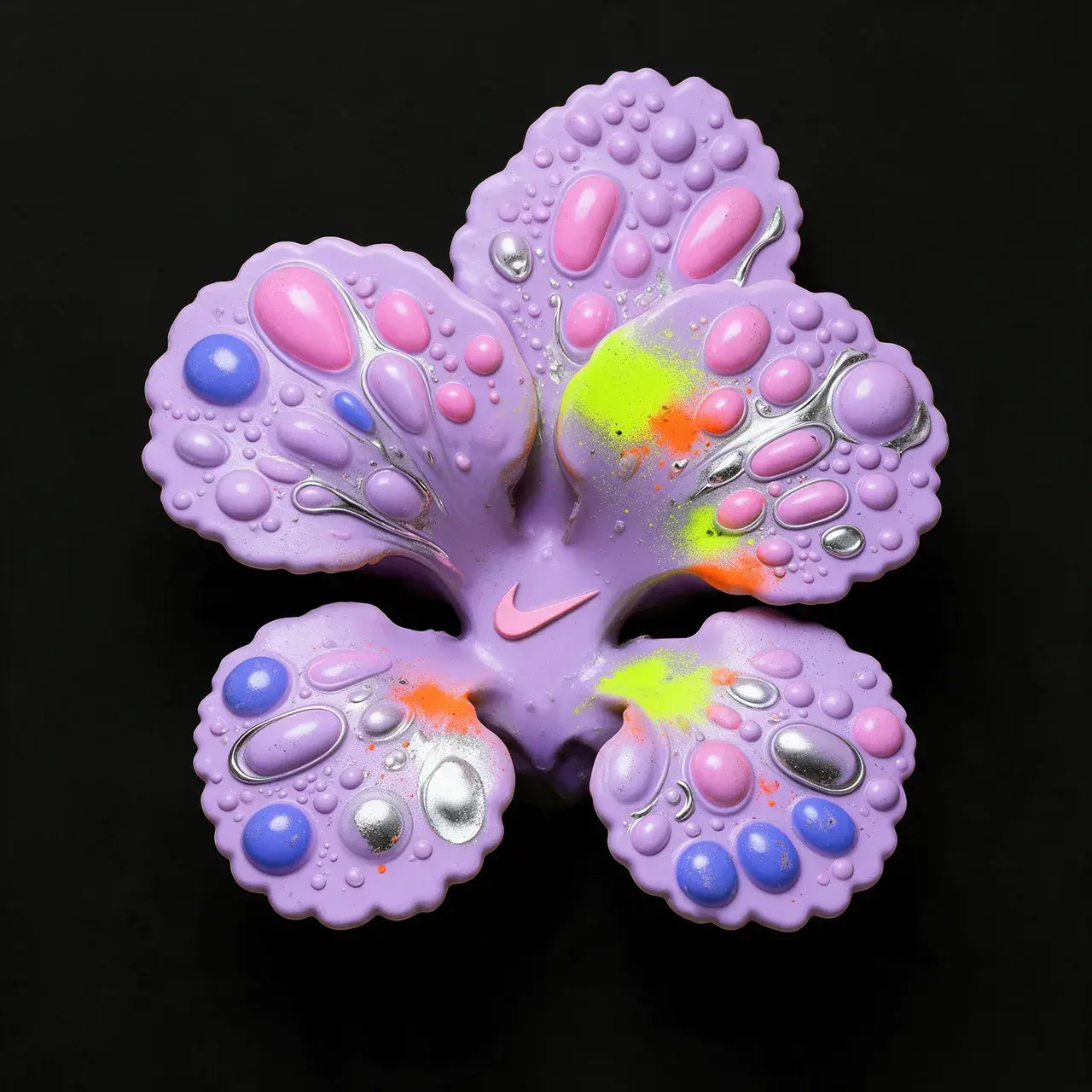
Seedream 5 Pro
Copy
{ "source_lock": "Treat the uploaded image as the immutable structural master. Preserve all existing shapes, parts, openings, proportions, thicknesses, labels, logos, text, attachments, relative placement, overlap and source camera. Modify only the surface system and keep it contained inside the original silhouette.", "palette": { "polymer_base": "#D7C3F2", "bubble_pink": "#F67AB4", "bubble_blue": "#5A7BEF", "acid_orange": "#FF7A38", "chrome": "#C8CDD2", "graffiti_lime": "#CBF13D", "background": "#000000" }, "style_direction": "2000s cyber-pop accessory language translated into premium contemporary material design.", "material_hierarchy": { "primary": "60% satin molded polymer", "secondary": "25% multi-scale inflated blister relief", "accent": "15% chrome and graffiti" }, "macro_architecture": "Create large organized clusters of inflated blister forms directly within the polymer surface. Mix smooth hemispheres, elongated capsules, flattened domes and connected double-lobed forms, arranged in broad flowing families instead of a repetitive dot grid. Leave large calm flat polymer zones between clusters.", "material_behavior": "Use lilac as the base. Selected blister families shift into pink or cobalt using pigment embedded through the polymer itself. Flow narrow liquid-chrome rivers between several bubble clusters, occasionally widening into smooth small pools. Apply acid-lime and orange aerosol only to two or three
focal areas, partially crossing both flat and inflated surfaces.", "micro_detail": "Each blister has realistic skin tension, a slightly softened root, faint mold grain and subtle deformation rather than perfect spheres. Chrome contains slight surface waviness and polishing wear. Aerosol shows real particle deposition, feathering and tiny overspray dots. Add fine handling scratches and slight rubbed shine to several raised domes.", "detail_protection": "Maintain completely calm flat polymer around all readable source information. Reduce blister scale gradually toward narrow geometry.", "lighting": { "setup": "One large diffused studio light positioned upper-left-front, approximately 40 degrees above and 35 degrees left of camera, plus extremely weak neutral frontal fill only to preserve shadow information.", "behavior": "Neutral soft material-study lighting. Roughness, transmission and reflectivity create the visual complexity; lighting itself remains simple and consistent.", "restrictions": "No rim light, colored illumination, visible lighting equipment, rectangular reflections, HDRI environment, bloom, glow, halo or lens flare." }, "composition": { "camera": "Exact source view.", "position": "Centered and freely suspended.", "background": "#000000", "floor": false, "cast_shadow": false }, "realism": "Photoreal molded polymer with convincing inflated topology, physically integrated chrome and genuine sprayed pigment." }
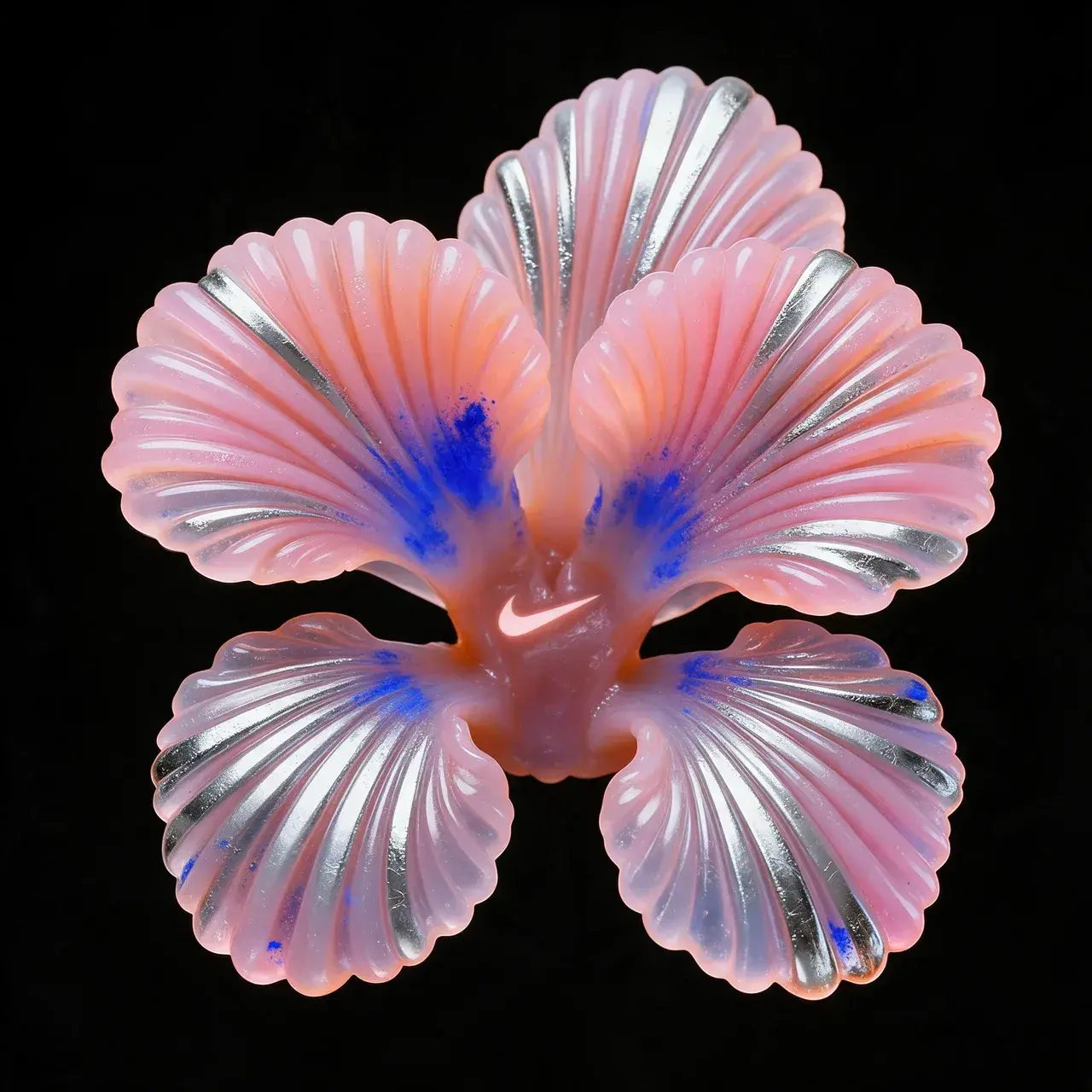
Seedream 5 Pro
Copy
{ "source_lock": "Use the uploaded image as the immutable full-assembly reference. Preserve all source geometry, openings, cutouts, separate components, proportions, thickness, attachments, text, logos, decorations, spatial relationships and camera orientation exactly. No additional wrapping shell.", "palette": { "jelly_pink": "#EFA0CE", "jelly_peach": "#FFB081", "deep_violet": "#653CC5", "metal": "#C7CCD1", "spray_cobalt": "#3960F1", "background": "#000000" }, "style_direction": "Soft cyber-organic material combining wide corduroy geometry, translucent candy depth and restrained liquid-metal interruption.", "material_hierarchy": { "primary": "65% translucent corduroy-like gel polymer", "secondary": "20% liquid metal interruptions", "accent": "15% embedded cobalt pigment" }, "macro_architecture": "Form broad source regions into thick parallel gel ribs resembling exaggerated corduroy channels. Let rib direction bend, split, fan outward and converge around the geometry instead of remaining uniformly straight. Create several calm smooth areas where the rib system disappears completely.", "material_behavior": "Gel transitions from dusty pink to peach through its actual body thickness. Replace selected complete ribs with polished liquid-metal ribs, and allow several metal sections to terminate gradually inside the gel topology rather than running across the entire object. Introduce cobalt pigment as deep internal sprayed clouds visible
through the translucent gel, strongest underneath selected rib valleys.", "micro_detail": "Gel ribs have soft rounded crowns, slight surface satin, internal cloudy density and microscopic casting flow. Valleys show subtle compression. Metal ribs retain exactly the same geometry but differ radically in roughness, with polished micro-scratches and slightly imperfect reflective curvature. Cobalt pigment appears physically below the surface and softens optically with depth.", "detail_protection": "Use smooth low-relief gel for all small source elements and text-bearing zones.", "lighting": { "setup": "One large diffused studio light positioned upper-left-front, approximately 40 degrees above and 35 degrees left of camera, plus extremely weak neutral frontal fill only to preserve shadow information.", "behavior": "Neutral soft material-study lighting. Roughness, transmission and reflectivity create the visual complexity; lighting itself remains simple and consistent.", "restrictions": "No rim light, colored illumination, visible lighting equipment, rectangular reflections, HDRI environment, bloom, glow, halo or lens flare." }, "composition": { "camera": "Exact source view.", "position": "Centered and freely suspended.", "background": "#000000", "floor": false, "cast_shadow": false }, "realism": "Macro photography of a real fabricated translucent ribbed polymer with convincing thickness, embedded pigment and polished metallic substitutions." }
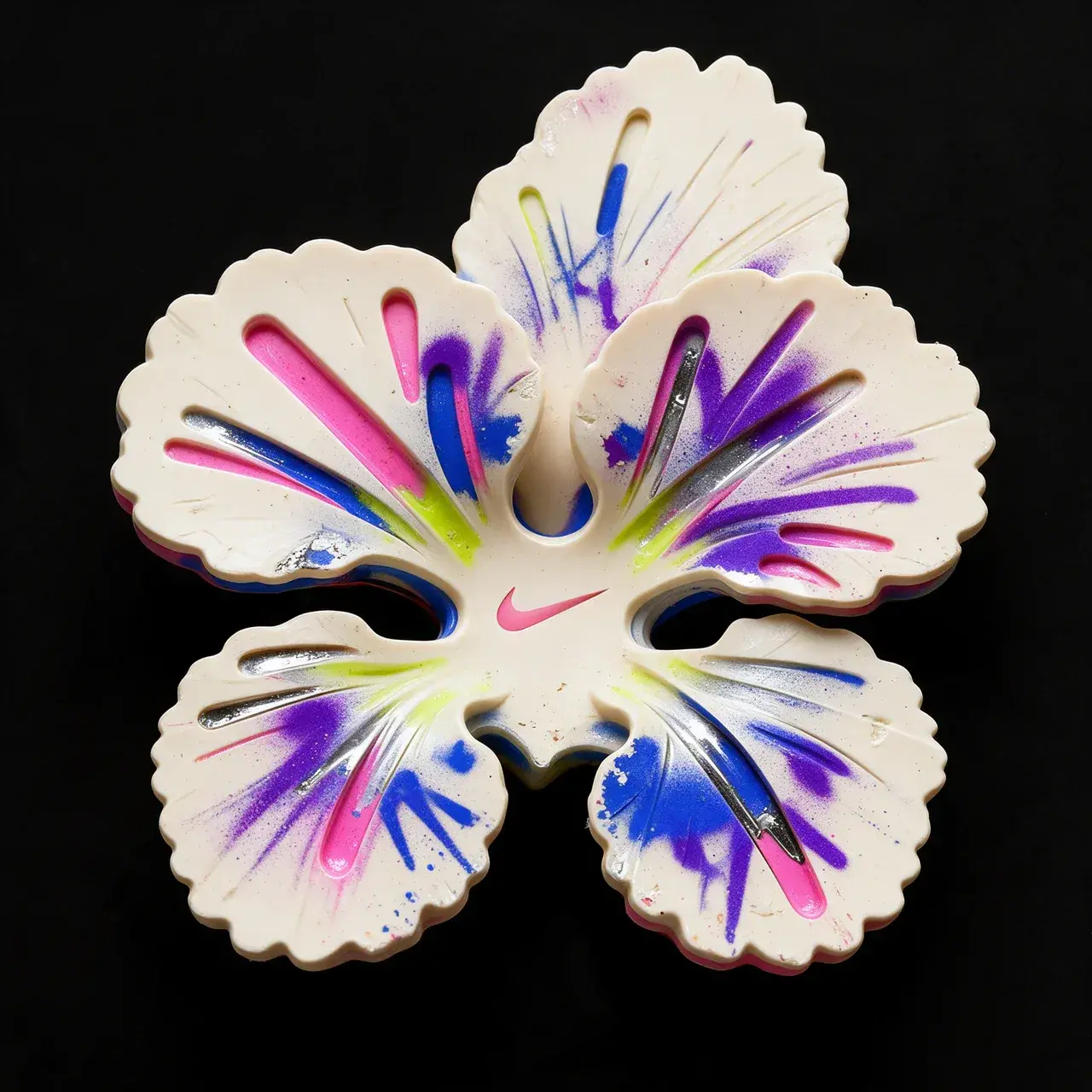
Seedream 5 Pro
Copy
{ "source_lock": "Treat the uploaded image as the immutable structural master. Preserve silhouette, proportions, thickness, openings, cutouts, all individual parts, source text, logos, facial details, decorative components, overlap, depth order and camera exactly. Carving and relief must remain fully inside the original geometry.", "palette": { "outer_polymer": "#EEE7DE", "layer_pink": "#EE579E", "layer_blue": "#385BE3", "layer_lime": "#C8EC42", "graffiti_violet": "#6531C6", "chrome": "#C8CDD2", "background": "#000000" }, "style_direction": "Contemporary gallery object combining custom sneaker color language, street aerosol and precision industrial fabrication.", "material_hierarchy": { "primary": "55% pale multilayer polymer", "secondary": "25% exposed colored strata", "accent": "10% chrome-filled cuts, 10% graffiti" }, "macro_architecture": "Construct the material from four colored laminated polymer layers. Cut broad sweeping trenches, deep rounded grooves and oversized abstract Y2K marks through the outer cream layer to reveal real pink, cobalt and lime cross-sections below. Fill only selected deepest grooves with polished liquid chrome.", "material_behavior": "Layer exposure should vary with cut depth: shallow carving reveals pink, medium depth exposes cobalt, deeper areas reveal lime, and only a few chosen trenches reach chrome. Apply violet and cobalt
aerosol over the cream surface and partially across exposed layers, using broad spray gestures and a few sharp abstract hand-drawn marks. No readable graffiti words.", "micro_detail": "Show real routing-tool marks, tiny polymer shavings, rounded cut shoulders, slight heat or friction polish on deeper trenches, embedded pigment layers visible at cut edges, aerosol grain and fine scratches in chrome.", "detail_protection": "Leave broad cream areas around source labels, logos and intricate details completely untouched.", "lighting": { "setup": "One large diffused studio light positioned upper-left-front, approximately 40 degrees above and 35 degrees left of camera, plus extremely weak neutral frontal fill only to preserve shadow information.", "behavior": "Neutral soft material-study lighting. Roughness, transmission and reflectivity create the visual complexity; lighting itself remains simple and consistent.", "restrictions": "No rim light, colored illumination, visible lighting equipment, rectangular reflections, HDRI environment, bloom, glow, halo or lens flare." }, "composition": { "camera": "Exact source viewpoint.", "position": "Centered and freely suspended.", "background": "#000000", "floor": false, "cast_shadow": false }, "realism": "Photoreal machined multilayer polymer, genuine aerosol paint, real exposed strata and physically poured chrome." }
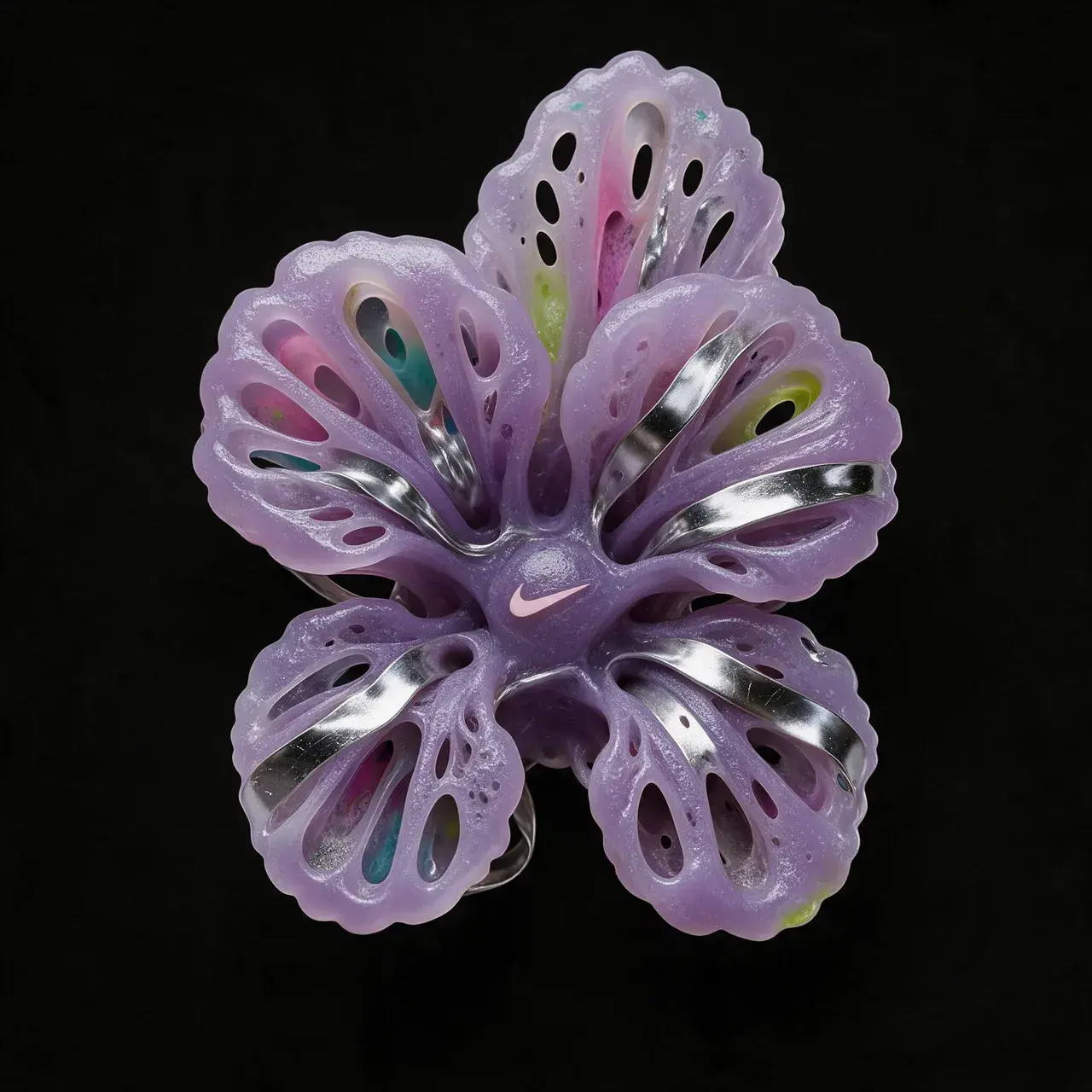
Seedream 5 Pro
Copy
{ "source_lock": "Use the uploaded image as the immutable source object. Preserve exact silhouette, proportions, openings, cutouts, thickness, layered structure, source text, logos, attachments, decorative details and camera view. No outer cocoon or added shell.", "palette": { "porous_jelly": "#A991E6", "inner_pink": "#F27EAF", "inner_aqua": "#65DCD4", "chrome": "#C8CED3", "acid_lime": "#C7F13D", "background": "#000000" }, "style_direction": "Experimental jelly-mineral hybrid, glossy and porous simultaneously, with polished metal ribbon accents.", "material_hierarchy": { "primary": "65% semi-translucent porous jelly body", "secondary": "25% liquid-chrome ribbon structure", "accent": "10% colored internal pore zones" }, "macro_architecture": "Build the main body as thick semi-translucent lavender material containing elongated open cavities and tunnel-like pores, organized directionally through the source geometry rather than randomly distributed. Through the porous fields pass several wide polished chrome ribbons that weave in and out of the surface.", "material_behavior": "Some cavities remain lavender and shadowed; others reveal warm pink, aqua or acid-lime internal walls deeper inside the material. Chrome ribbons should disappear beneath the translucent body and re-emerge elsewhere, creating
genuine depth and continuity.", "micro_detail": "The jelly body has soft satin roughness rather than glossy toy plastic. Pore edges are rounded and slightly tensioned, with faint internal microbubbles and casting-flow striations. Deeper cavities appear optically softer through translucent material. Chrome has slight surface waviness and delicate scratches.", "detail_protection": "Use dense non-porous jelly around source text, logos and fragile features.", "lighting": { "setup": "One large diffused studio light positioned upper-left-front, approximately 40 degrees above and 35 degrees left of camera, plus extremely weak neutral frontal fill only to preserve shadow information.", "behavior": "Neutral soft material-study lighting. Roughness, transmission and reflectivity create the visual complexity; lighting itself remains simple and consistent.", "restrictions": "No rim light, colored illumination, visible lighting equipment, rectangular reflections, HDRI environment, bloom, glow, halo or lens flare." }, "composition": { "camera": "Exact source viewpoint.", "position": "Centered and freely suspended.", "background": "#000000", "floor": false, "cast_shadow": false }, "realism": "Photoreal experimental cast material with genuine open cavities, translucent depth and physically continuous metal ribbons." }
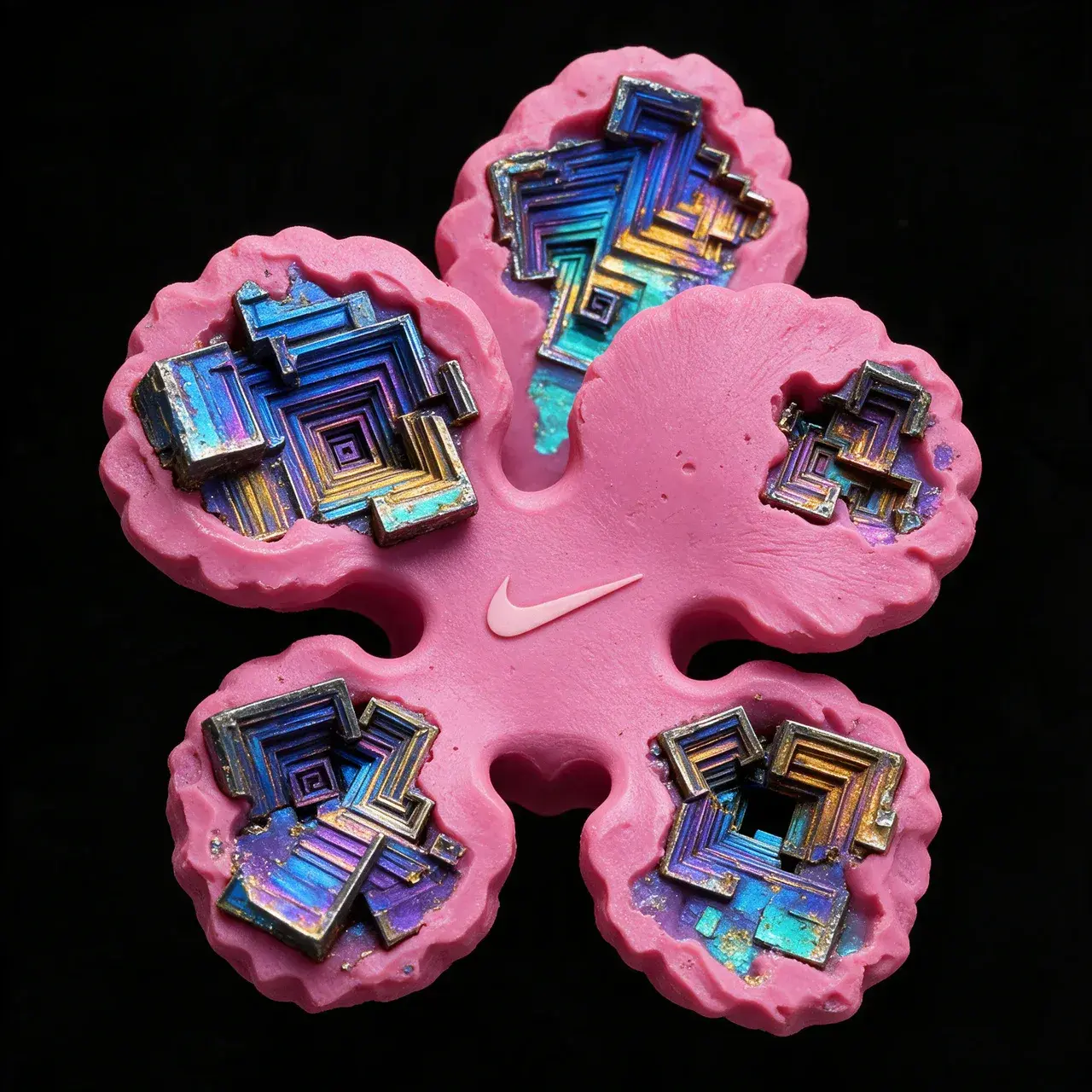
Seedream 5 Pro
Copy
{ "source_lock": "Use the uploaded image as the immutable structural master. Preserve exact silhouette, proportions, thickness, openings, cutouts, separate components, layered parts, text, logos, attachments, decorative details, relative positions and source camera. Material additions remain contained inside the source silhouette.", "palette": { "rubber_base": "#F08DB8", "rubber_shadow": "#B75D90", "bismuth_blue": "#3E75D4", "bismuth_violet": "#7950C5", "bismuth_gold": "#D6A653", "bismuth_cyan": "#54BFC0", "background": "#000000" }, "style_direction": "Mineral-tech Y2K fashion object with extreme matte-versus-crystalline contrast.", "construction": "Reconstruct the main object from dense dry-touch raspberry-pink elastomer and integrate a limited number of genuine bismuth crystal formations directly into recessed areas of the material.", "macro_structure": "Keep approximately 70% of the surface uninterrupted matte rubber. Across selected broad areas grow several large bismuth formations composed of geometric stepped terraces, nested square spirals, angular staircases and complex hopper-crystal cavities.", "meso_structure": "Crystal coloration shifts naturally between cobalt, cyan, violet and warm gold according to oxide thickness across individual stepped planes. Allow several formations to sit nearly flush while others sink deeper into recessed rubber cavities, exposing rich crystalline depth. Do not
scatter tiny crystals everywhere.", "micro_structure": "The rubber has ultra-fine molded grain, subtle compression and faint handling polish. Bismuth shows real metallic crystalline steps, sharp geometric corners, microscopic oxidation variation, tiny surface pits and minute fractured edges. Rubber compresses realistically around every embedded crystal.", "detail_control": "Keep all readable source information on calm rubber areas. Bismuth formations remain on broad uninterrupted geometry only.", "lighting": { "setup": "One large diffused studio light positioned upper-left-front, approximately 40 degrees above and 35 degrees left of camera, plus extremely weak neutral frontal fill only to preserve shadow information.", "behavior": "Neutral soft material-study lighting. Material complexity must come from real transmission, roughness, depth and physical structure rather than dramatic lighting.", "restrictions": "No rim light, no colored illumination, no visible lighting equipment, no rectangular reflections, no HDRI environment, no bloom, glow, halo or lens flare." }, "composition": { "camera": "Preserve exact source viewpoint.", "position": "Centered and freely suspended.", "background": "#000000", "floor": false, "cast_shadow": false }, "quality": "Photoreal elastomer and natural bismuth crystal macro photography with genuine stepped crystal growth, real oxide coloration and tactile matte contrast." }
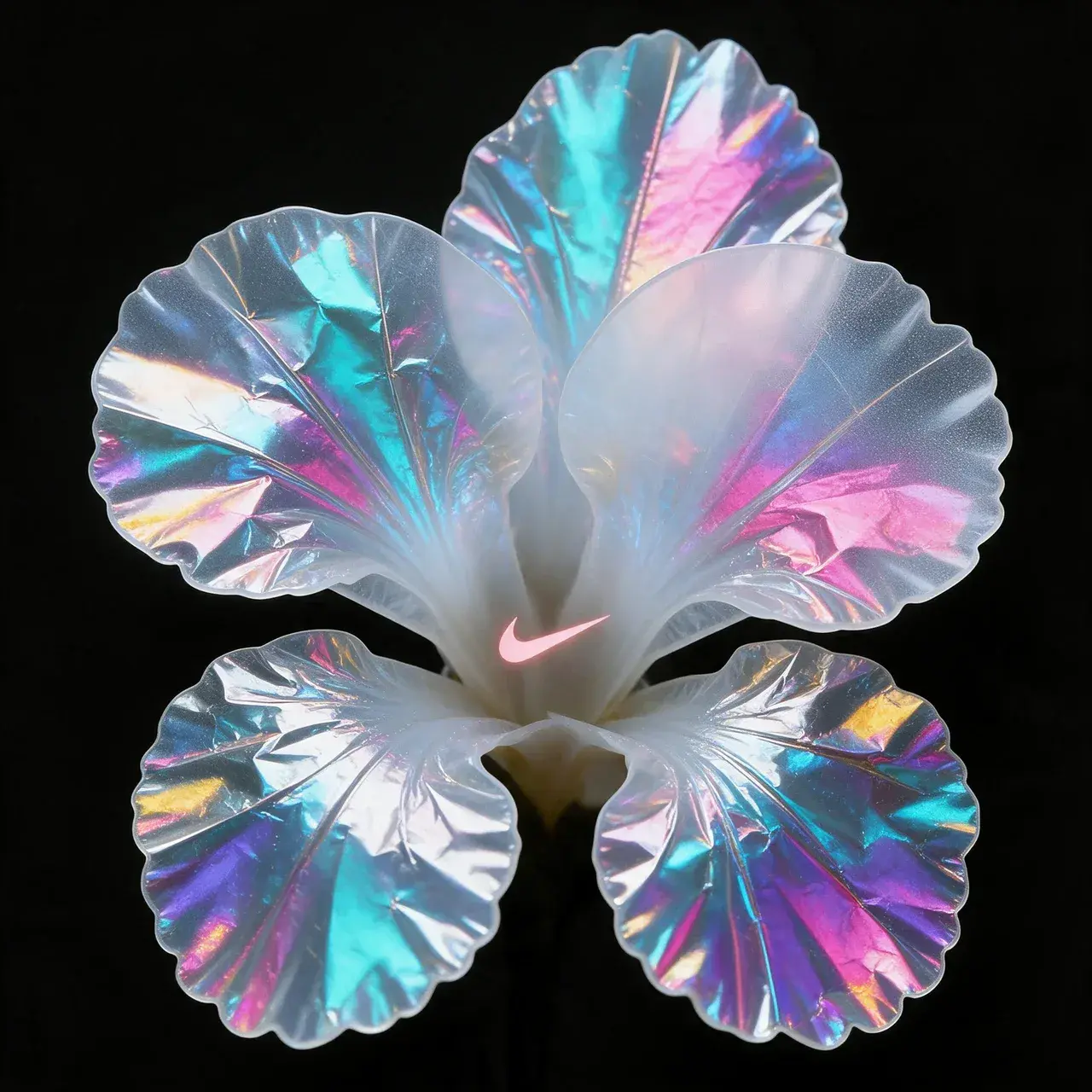
Seedream 5 Pro
Copy
{ "source_lock": "Treat the uploaded source as an immutable structural master. Preserve silhouette, proportions, thickness, openings, cutouts, layered components, attachments, source text, logos, labels, decorative details, overlap, orientation and framing exactly.", "palette": { "membrane_smoke": "#CFD9E2", "dichroic_cyan": "#48D6DC", "dichroic_pink": "#EA57A5", "dichroic_violet": "#7854D6", "dichroic_gold": "#EAB966", "background": "#000000" }, "style_direction": "Early-2000s translucent-tech material reworked as a contemporary fashion surface.", "construction": "Laminate heavily crumpled dichroic Mylar beneath a thin smoke-frosted translucent TPU membrane tightly bonded to the exact source geometry.", "macro_structure": "Create large directional crushed-foil fields rather than uniform random wrinkles. Some regions contain broad compressed folds running diagonally, others large radial crumple systems, while approximately one third remains comparatively calm.", "meso_structure": "The dichroic layer shifts through cyan, pink, violet and restrained warm gold according to fold orientation. Because the Mylar sits beneath the frosted membrane, reflections become softened and partially diffused rather than mirror-like. Several deeper fold valleys appear dramatically darker and more saturated.", "micro_structure": "Resolve
thousands of sharp Mylar micro-creases, tiny laminate air channels, subtle foil delamination, faint TPU frost grain, fine surface scratches and slight membrane tension over raised underlying folds. Avoid holographic rainbow noise; color shifts must originate only from the physical dichroic film.", "detail_control": "Use flatter foil and calmer membrane beneath text, logos and fine source elements.", "lighting": { "setup": "One large diffused studio light positioned upper-left-front, approximately 40 degrees above and 35 degrees left of camera, plus extremely weak neutral frontal fill only to preserve shadow information.", "behavior": "Neutral soft material-study lighting. Material complexity must come from real transmission, roughness, depth and physical structure rather than dramatic lighting.", "restrictions": "No rim light, no colored illumination, no visible lighting equipment, no rectangular reflections, no HDRI environment, no bloom, glow, halo or lens flare." }, "composition": { "camera": "Preserve exact source viewpoint.", "position": "Centered and freely suspended.", "background": "#000000", "floor": false, "cast_shadow": false }, "quality": "Photoreal laminated-film photography with genuine dichroic interference, crushed foil topology, translucent membrane tension and sophisticated Y2K material depth." }
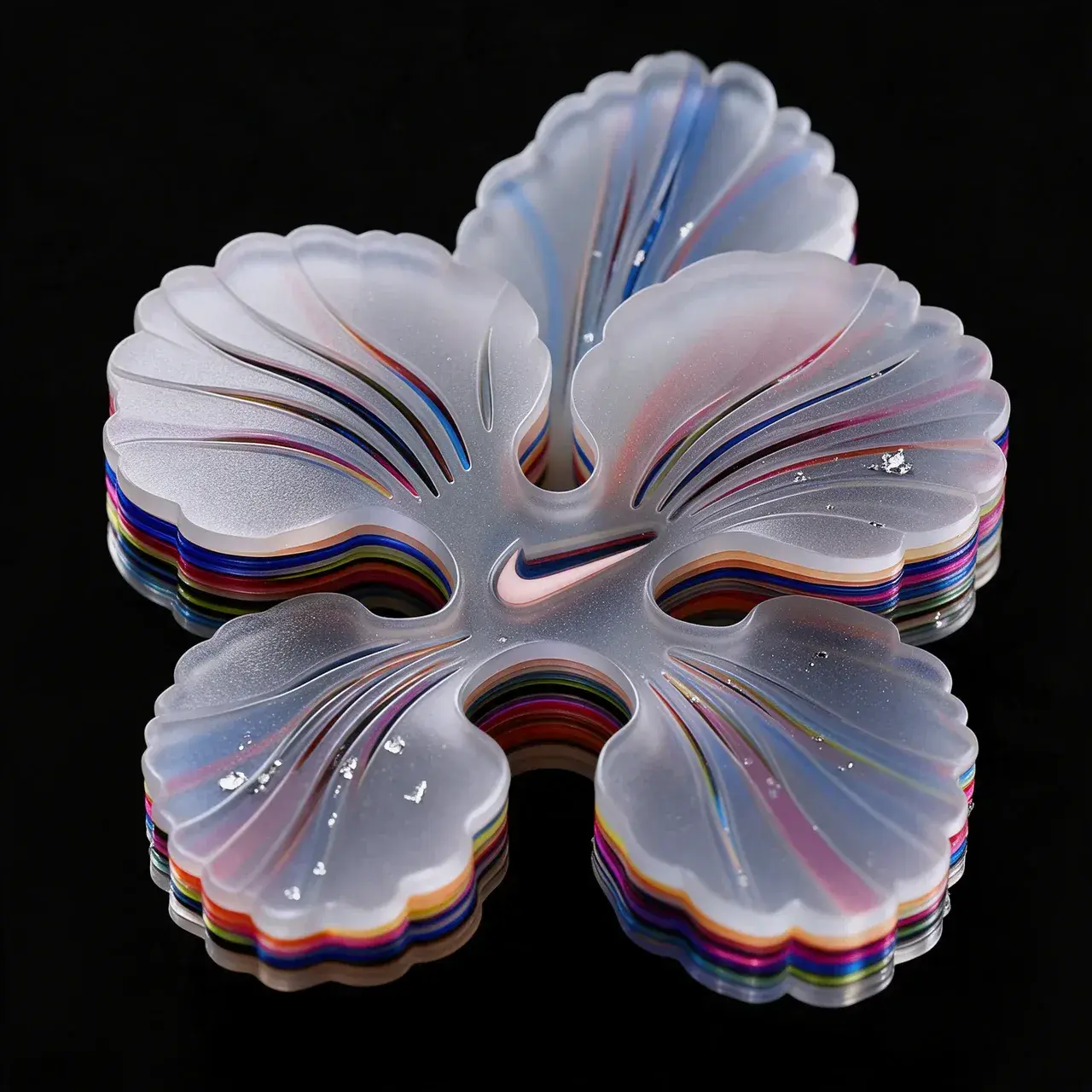
Seedream 5 Pro
Copy
Use the uploaded subject as a locked geometry blueprint and preserve the exact outer silhouette, proportions, thickness, openings, negative spaces, edge shape and orientation. Construct the object from hundreds of ultra-thin compressed translucent polymer sheets laminated into one dense solid body. Alternate saturated layers of cobalt blue, hot magenta, vivid orange, acid lime, milky white and deep black, but keep the broad front surface sanded to a calm smoky translucent finish so the internal colors are only partially visible. Engrave shallow flowing contour channels into selected broad areas, revealing the colored laminate layers as fine curved stripes inside each cut. The visible side edges and internal openings should naturally expose the complete multi-color layer stack, producing bright striped cross-sections without altering the original thickness. Add sparse tiny chrome foil flakes trapped between a few laminate sheets, visible only where machining exposes them. Keep all engraving inward and fade it before structural boundaries. Preserve exact source viewing direction, minimal perspective, premium long-lens product CGI, centered and fully visible against infinite #000000. No floor, pedestal, wall, support, wire, horizon or external shadow. Restrained upper-left-front illumination with minimal frontal fill and subtle right separation, all light sources invisible, no rectangular reflections or HDRI room. Physically accurate polymer transmission, laminated layer depth, polished cut response, sharp internal color separation and exceptional high-resolution CGI. Highest priority: exact source geometry.
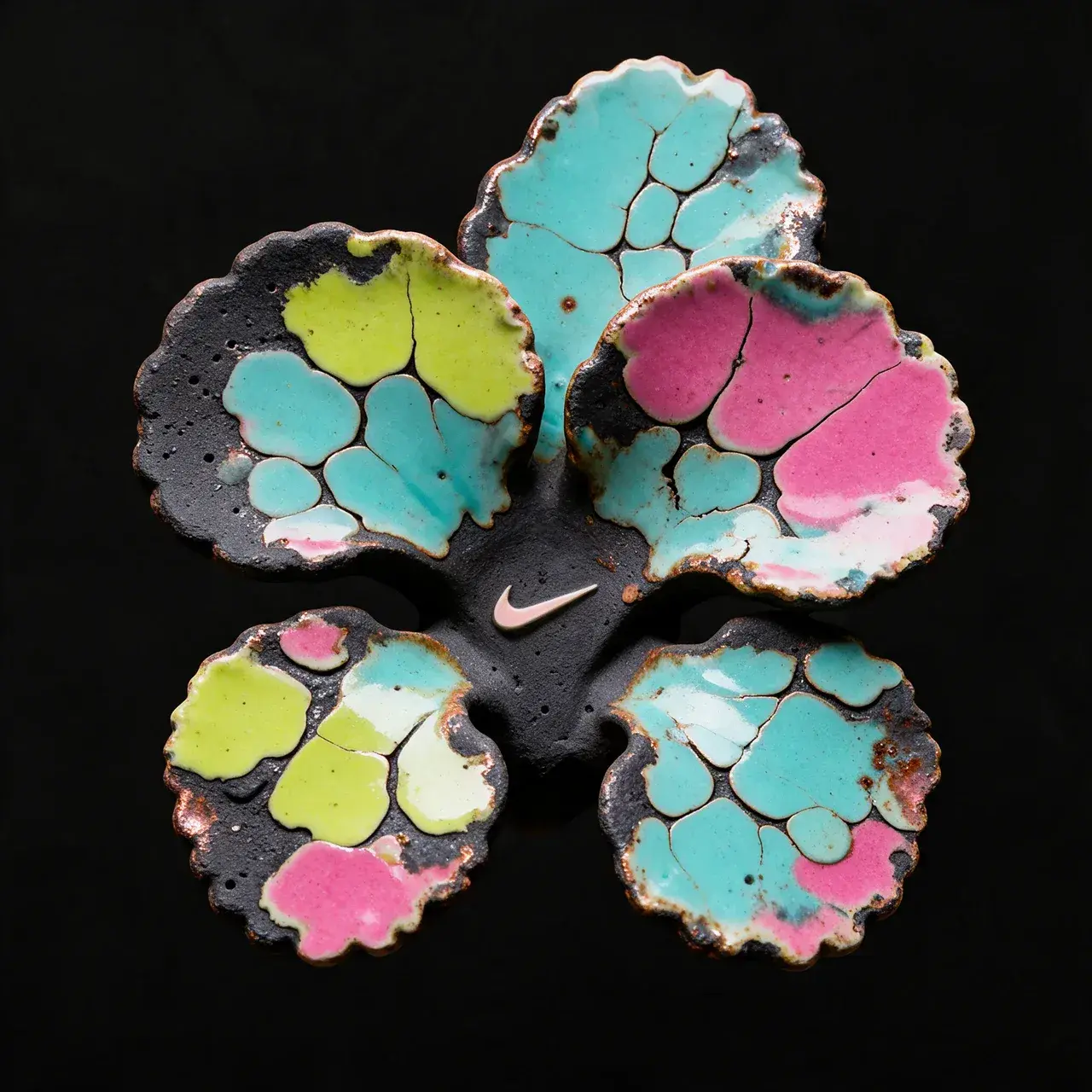
Seedream 5 Pro
Copy
{ "source_lock": "Treat the uploaded image as the fixed structural master. Preserve every source contour, proportion, opening, thickness, layered element, attachment, text, logo, decorative detail, relative placement and exact camera view.", "palette": { "ceramic_black": "#242326", "glaze_cyan": "#4FCBC3", "glaze_pink": "#E75B9A", "glaze_lime": "#BFD941", "copper_flash": "#A66E4D", "background": "#000000" }, "style_direction": "Raw experimental ceramic with saturated synthetic color, balancing ancient firing behavior and contemporary Y2K palette.", "construction": "Fire the object from dense charcoal ceramic and apply thick reactive crawling glaze to selected broad surface regions.", "macro_structure": "Keep approximately half the body exposed matte charcoal ceramic. Across the rest, create several enormous connected glaze fields in cyan, pink and lime. During firing the glaze contracts and separates into irregular islands, revealing black ceramic channels between them.", "meso_structure": "Glaze islands vary from broad smooth plates to smaller branching networks. Several edges develop curled lifted glaze rims and pooled color. Introduce only restrained copper-reduction flashes along selected firing boundaries, appearing naturally within the glaze rather than as applied metallic decoration.", "micro_structure":
"Resolve tiny kiln pinholes, genuine crawling-glaze thickness, microscopic crazing, rough black ceramic grain, slight soot staining, copper oxide variation and irregular fired edges. Some glaze areas are glossy while others crystallize into satin surfaces.", "detail_control": "Use calm matte ceramic or thin continuous glaze behind source text and logos. Avoid large crawling gaps around fine details.", "lighting": { "setup": "One large diffused studio light positioned upper-left-front, approximately 40 degrees above and 35 degrees left of camera, plus extremely weak neutral frontal fill only to preserve shadow information.", "behavior": "Neutral soft material-study lighting. Material complexity must come from real transmission, roughness, depth and physical structure rather than dramatic lighting.", "restrictions": "No rim light, no colored illumination, no visible lighting equipment, no rectangular reflections, no HDRI environment, no bloom, glow, halo or lens flare." }, "composition": { "camera": "Exact source viewpoint.", "position": "Centered and freely suspended.", "background": "#000000", "floor": false, "cast_shadow": false }, "quality": "Photoreal experimental ceramic macro photography with authentic reactive glaze, crawling behavior, reduction firing and sophisticated synthetic color." }
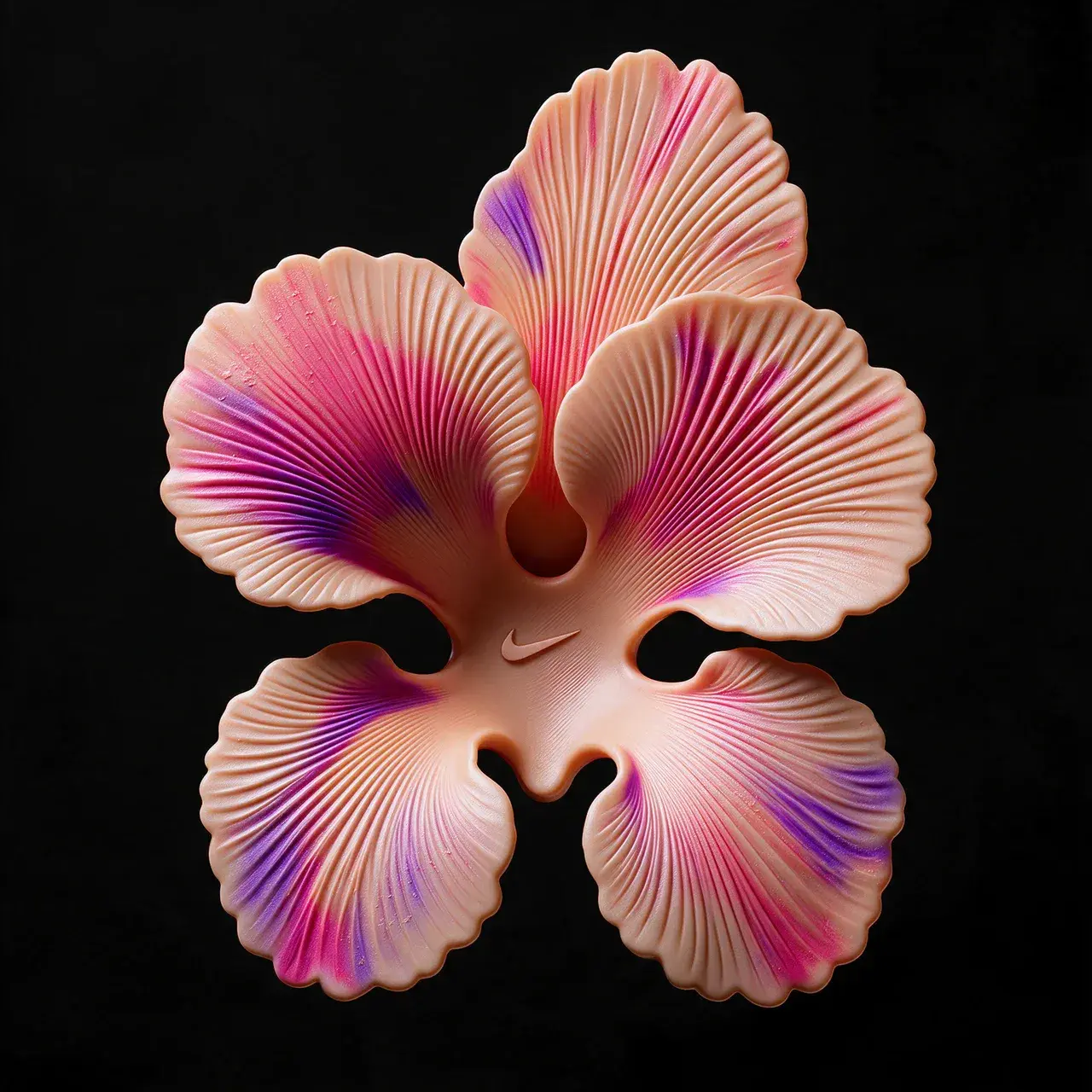
Seedream 5 Pro
Copy
{ "source_lock": "Treat the uploaded image as the fixed structural reference. Preserve all visible components, proportions, contours, openings, attachments, layered parts, text, logos, decorations, spacing and camera orientation exactly.", "palette": { "melon": "#FF876F", "pink": "#F64C91", "violet": "#7450DB", "background": "#000000" }, "construction": "Rebuild the object from dense satin-finish molded polymer with genuine material thickness and a smooth but not perfectly sterile body.", "surface_physics": "Create two overlapping systems of extremely shallow molded wave-lines at slightly different spacing and angles, producing large flowing moiré interference zones directly in the physical surface. The relief is subtle but highly readable under grazing light, with wide regions where waves compress into dense interference and other areas opening into calm arcs. Use a melon base with large hot-pink and violet color transitions aligned loosely with the moiré flow rather
than simple linear gradients. Add microscopic molded grain, tiny rubbed peaks and slight variation in groove depth. The pattern must feel optically dynamic while remaining a real molded surface, not a graphic print.", "detail_control": "Reduce wave amplitude and spacing around fine source geometry. Relief must never modify the source silhouette.", "lighting": { "setup": "Soft directional upper-left-front light with a slightly grazing angle and restrained fill.", "material_response": "Controlled satin highlights reveal the moiré relief through fine shadow transitions and microcontrast.", "restrictions": "No glowing contours, no visible studio reflections, no generic glossy CGI." }, "composition": { "camera": "Exact input view.", "position": "Centered and floating.", "background": "#000000", "floor": false, "cast_shadow": false }, "quality": "Real molded-polymer product photography with precision surface topology, crisp color separation and premium macro-level realism." }
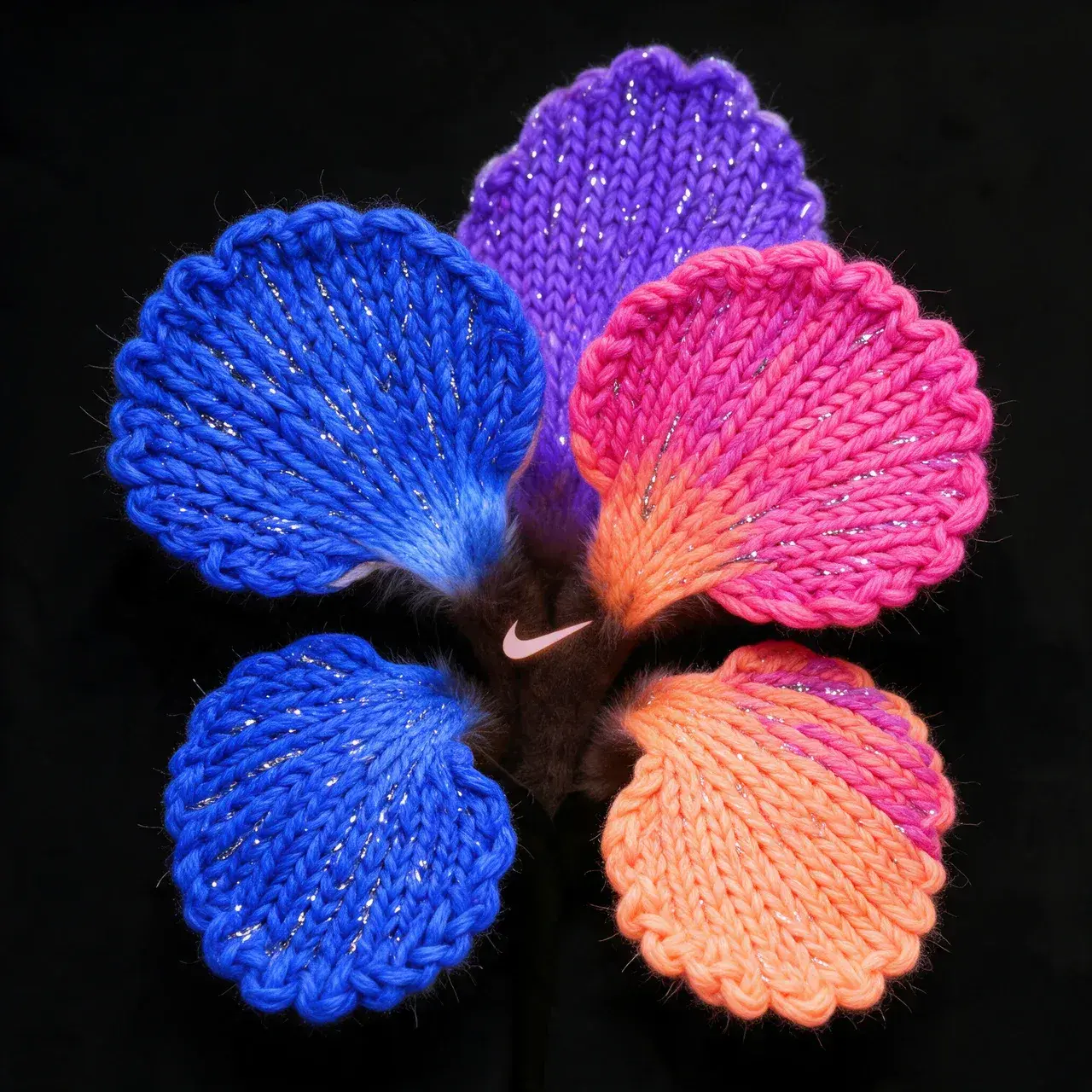
Seedream 5 Pro
Copy
Use the uploaded image as an immutable full-assembly reference. Preserve the complete input exactly: every silhouette, proportion, thickness, opening, separate part, attachment, text, logo, label, decorative feature, overlap and viewing direction remains unchanged. Reconstruct the physical surface from a dense fine-gauge rib knit made from real space-dyed nylon yarn interwoven with hair-thin Lurex metallic filament. Use a deliberate color sequence running through the yarn itself rather than a surface gradient: saturated ultramarine #244CFF, ultraviolet #7043E8, hot pink #F53892 and warm apricot #FF9966, producing irregular long color transitions wherever each continuous yarn loops through the knit. Add extremely fine mirror-silver Lurex #D7DDE2 to approximately 15% of the yarns so individual metallic filaments catch tiny directional flashes without turning the fabric into glitter. Every knit stitch must be physically constructed and visible: alternating knit and purl loops, real yarn twist, occasional microscopic fuzz, compression where the textile bends, slight stitch stretching across convex surfaces and denser loops in recessed regions. Use the knit direction as part of the design, letting major source components carry different stitch orientation while remaining part of the same material family. Keep the object structurally rigid to the source rather than inflated or soft-toy-like. Photograph against #000000 with high-end knitwear campaign lighting: soft broad upper-left key, very gentle fill, long directional textile highlights, tiny controlled Lurex glints, rich saturated color and exceptional fiber-level macro realism.
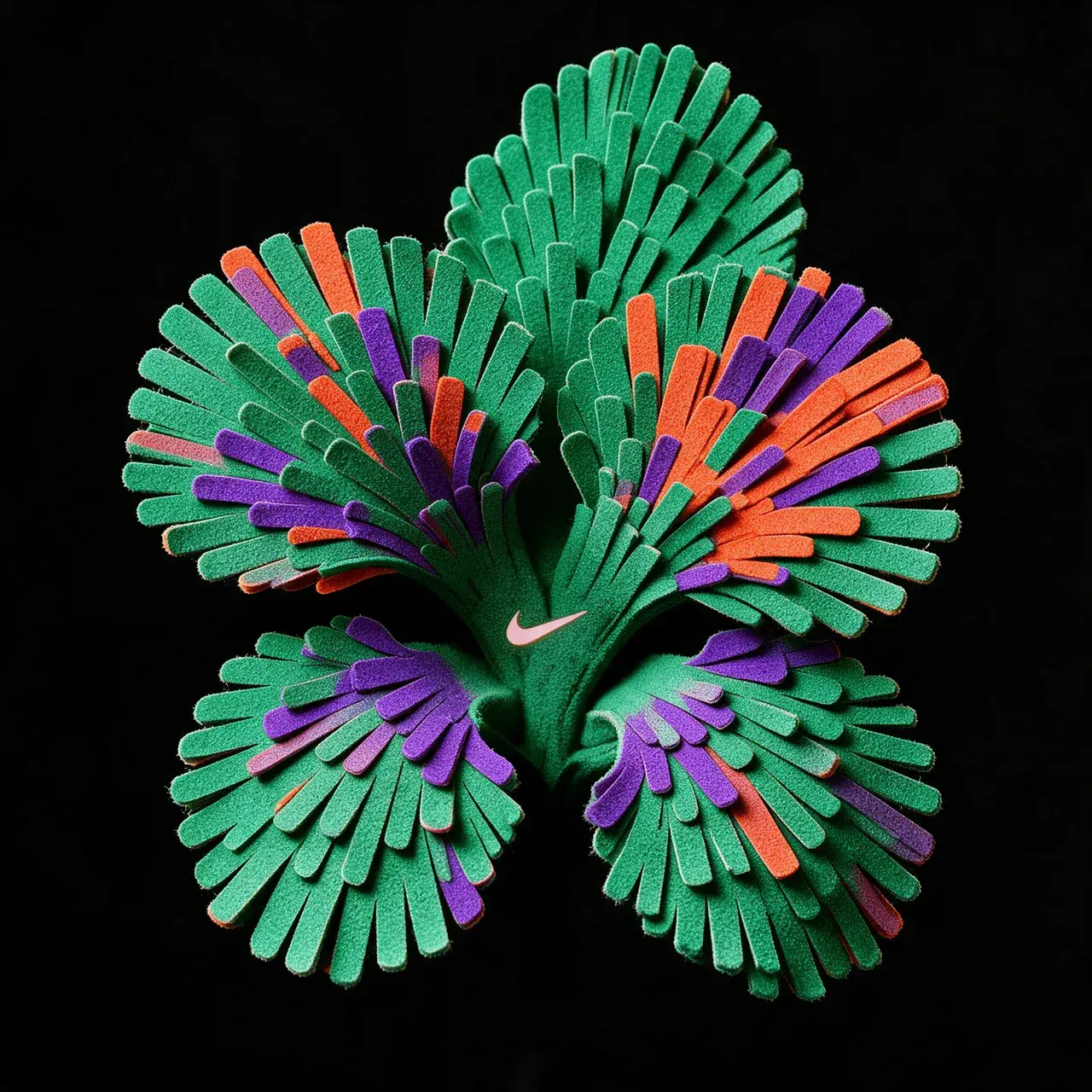
Seedream 5 Pro
Copy
Use the uploaded image as an immutable full-object assembly reference. Preserve every visible source component exactly one-to-one: silhouettes, proportions, thicknesses, openings, separate parts, attachments, labels, text, logos, decorations, relative placement, overlap and original view. Reconstruct suitable surfaces from dense micro-suede in saturated emerald #1F8A60, laser-cut into thousands of small overlapping elongated tabs resembling soft rectangular scales or short fringe rather than fur. Each tab remains attached along one edge, lifts only a few millimeters from the surface and overlaps the next row, creating a rich tactile directional skin. Use broad color-blocked zones where selected tabs are dyed vivid violet #6839DA and hot orange #FF6028, but keep the individual pieces matte and suede-like rather than shiny. Each cut element shows a genuine fuzzy micro-suede face, darker woven backing visible at its lifted edge, slight laser-darkening on cut boundaries and natural directional bending. Change fringe orientation between broad source components to create large graphic movement. Along fine source details shorten the tabs almost flush to preserve geometry. Photograph levitating against #000000 with soft upper-left grazing illumination, deep overlapping shadows, clearly resolved suede nap, clean saturated blocks and premium tactile fashion-object realism.
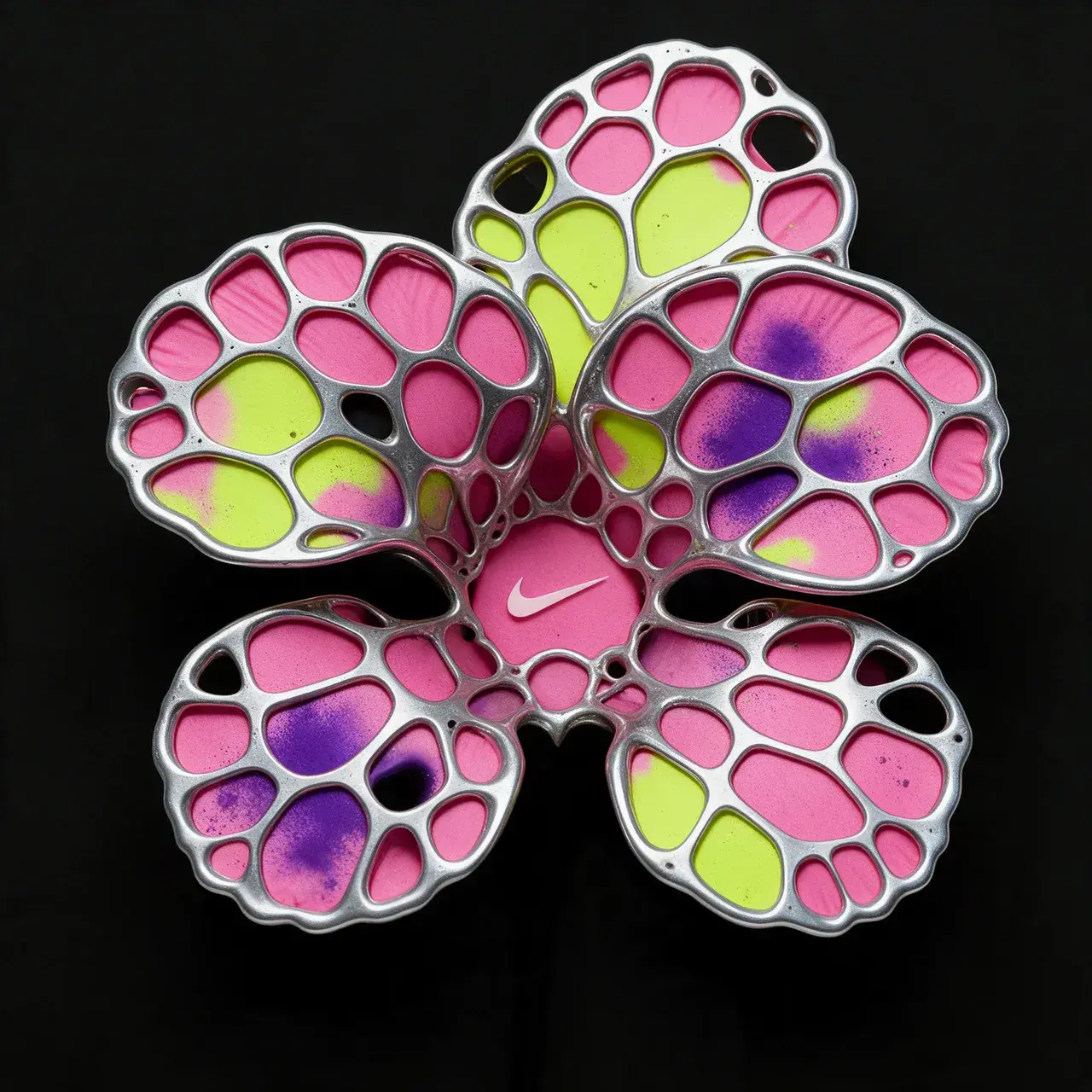
Seedream 5 Pro
Copy
{ "source_lock": "Treat the uploaded image as the immutable structural master. Preserve every visible source component exactly one-to-one: silhouette, proportions, thickness, openings, cutouts, separate parts, layered elements, attachments, readable text, logos, labels, facial details, decorative elements, relative positions, overlap, depth order, camera angle and composition. Nothing visible in the input may disappear, merge, move, simplify or be redesigned. Material scale must automatically adapt around fine source details.", "palette": { "chrome": "#C7CDD2", "membrane_pink": "#EE5B9E", "membrane_lime": "#C8EE3D", "deep_violet": "#663BC1", "background": "#000000" }, "material_hierarchy": { "primary": "50% thick chrome cellular framework", "secondary": "40% stretched matte colored membrane", "accent": "10% violet airbrush" }, "construction": "Construct the object from a continuous polished-metal cellular lattice following the exact source geometry, with taut flexible membranes stretched across most openings.", "surface_physics": "The metallic framework forms irregular rounded polygonal cells, more organic than a honeycomb and larger than conventional mesh. Chrome struts have substantial rounded thickness, smoothly welded junctions and fine polished abrasions. Across most cells stretch matte raspberry-pink membrane several millimeters beneath the metal framework. Selected broad zones switch to acid-lime membrane, forming large coherent color blocks. Membrane tension produces
subtle concavity, tiny edge compression and fine elastic micrograin. Add restrained violet aerosol mist only to several membrane regions, not the chrome. Leave a small number of cells open to the black background to expose real lattice depth. The result must feel architectural, tactile and coherent rather than perforated plastic.", "detail_control": "Use smaller closed cells around text, logos and fine source geometry. Keep critical source information on uninterrupted membrane fields.", "lighting": { "setup": "One large diffused studio light positioned upper-left-front, approximately 40 degrees above and 35 degrees to the left of camera, plus extremely weak neutral frontal fill only to preserve shadow information.", "behavior": "Lighting remains soft, neutral and identical across the entire collection. Material appearance must come from real roughness, transmission, fibers and reflectivity rather than from dramatic lighting.", "restrictions": "No rim light, no colored lighting, no visible light sources, no rectangular reflections, no HDRI environment, no bloom, glow, halo or lens flare." }, "composition": { "camera": "Preserve the exact source viewing direction and orientation.", "position": "Centered and freely suspended.", "background": "#000000", "floor": false, "cast_shadow": false }, "quality": "Photoreal polished metal and tensioned membrane photography, true lattice depth, realistic junction welding, matte elastic grain and precise macro-level construction." }
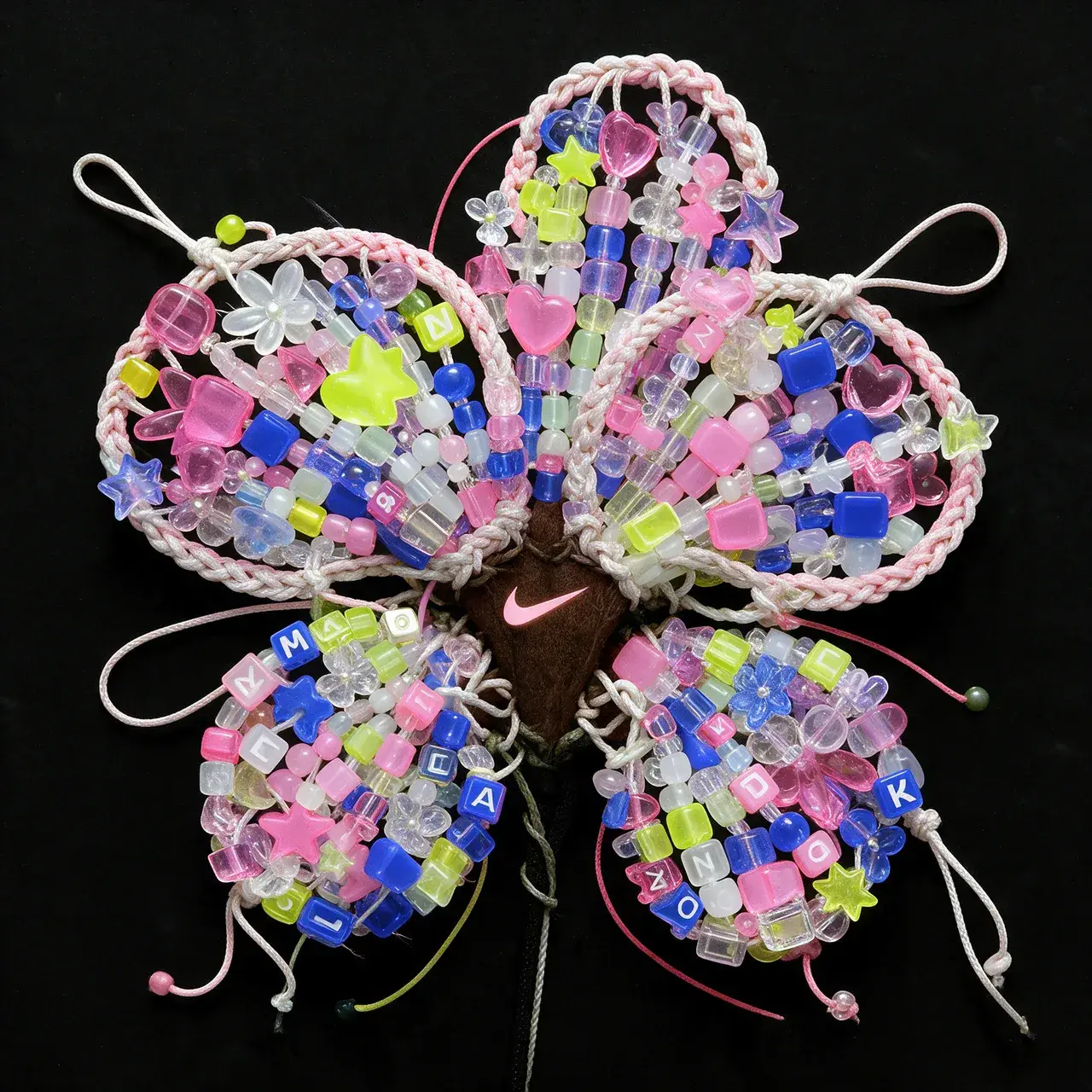
Seedream 5 Pro
Copy
Use the uploaded image as an immutable full-object assembly reference. Preserve every visible source element exactly, including silhouettes, openings, layers, attachments, readable text, logo, label, decorative details, overlap and original view. Physically construct the material from densely interwoven early-2000s mobile-phone charm straps rather than generic beads. Use translucent acrylic stars, hearts, alphabet cubes, tiny clear flowers and cylindrical charms threaded on real nylon cord, in a controlled palette of clear pink #F47FAE, cobalt #3761DB, lime #BFE62F, frosted clear #E8F3F1 and polished chrome #C8CDD0. Organize the straps into broad braided ropes, orderly hanging loops and tightly bound woven panels so the source object's form remains precise. Individual elements must show real drill holes, visible clear cord passing through them, tiny knots, crimp beads, scratched acrylic edges and different translucency levels. Use larger heart/star charms only at selected focal points while small alphabet cubes and cylinders create the dense underlying material. Keep symbols generic and avoid random illegible text; several cubes may carry simple clean letters such as A, X, M, K, LOVE split correctly across separate beads only when legible. Photograph against #000000 with fashion-accessory still-life lighting, clear acrylic highlights, subtle nylon reflections, deep overlap shadows and high-definition physical detail.
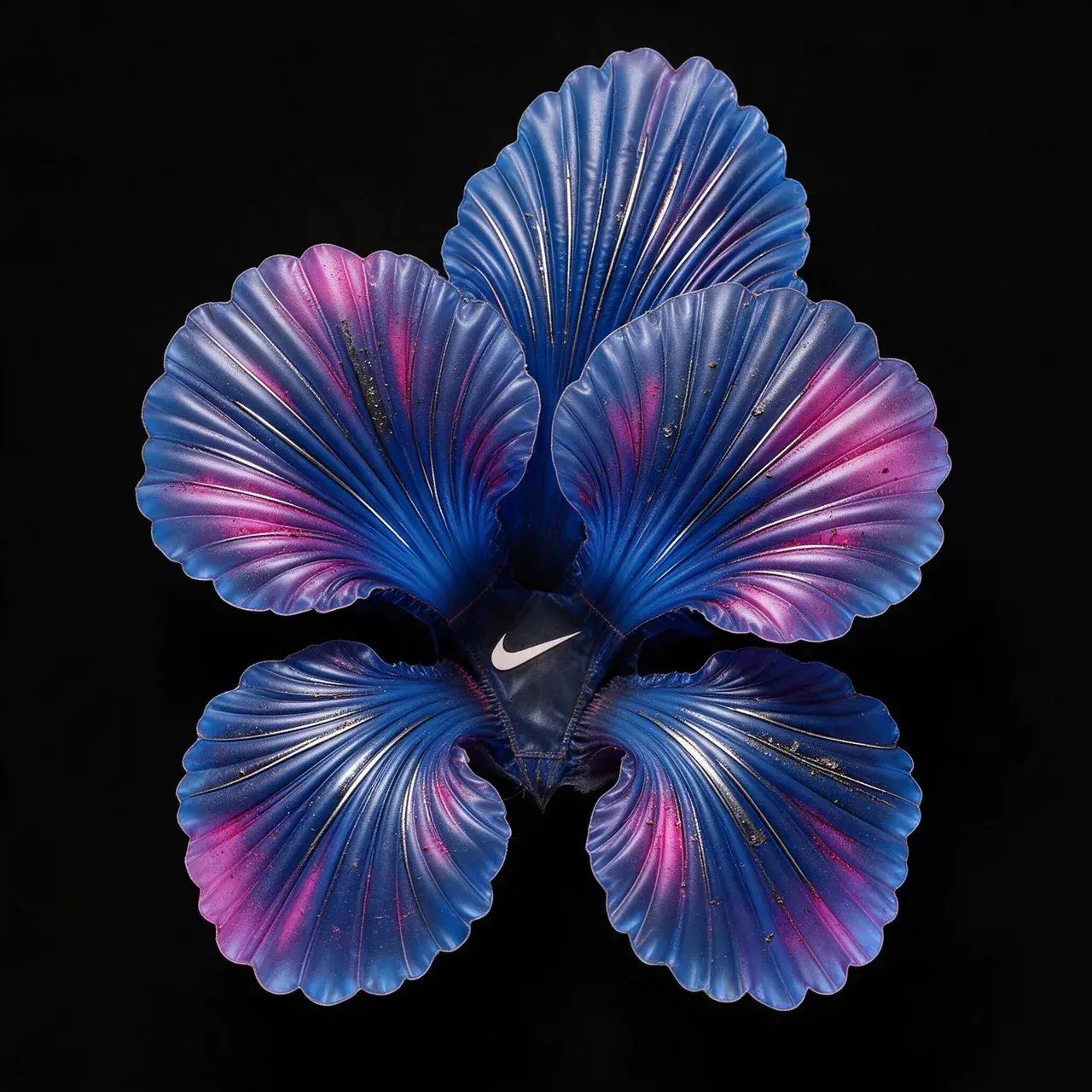
Seedream 5 Pro
Copy
{ "source_lock": "Treat the uploaded image as the immutable structural master. Preserve every visible source component exactly one-to-one: silhouette, proportions, thickness, openings, cutouts, separate parts, layered elements, attachments, readable text, logos, labels, facial details, decorative elements, relative positions, overlap, depth order, camera angle and composition. Nothing visible in the input may disappear, merge, move, simplify or be redesigned. Material scale must automatically adapt around fine source details.", "palette": { "puffer_blue": "#416AE8", "violet": "#774CD8", "hot_pink": "#F34D9D", "chrome": "#C7CDD2", "background": "#000000" }, "material_hierarchy": { "primary": "65% shallow inflated ribbed nylon-polymer", "secondary": "25% chrome recessed strips", "accent": "10% hot-pink airbrush transitions" }, "construction": "Construct broad source regions from a taut shallow-inflated technical membrane divided into very narrow parallel pressure channels. Insert polished chrome only in selected recessed valleys between larger groups of inflated ribs.", "surface_physics": "The inflated material must remain close to the original source geometry rather than becoming a soft toy. Hundreds of narrow parallel chambers create a refined directional rib field, with real pressure tension, tiny welded seams, slight wrinkling and micro-woven surface grain. Base coloration transitions slowly from cobalt to violet. Apply hot-pink airbrush only across several rib groups, letting
the pigment bridge raised channels and collect slightly more strongly inside seam valleys. Chrome strips remain narrow, smooth and physically recessed below the puffy ribs, producing alternating soft/hard tactile rhythm. Include minuscule membrane abrasions, seam compression, tiny pigment mist and subtle chrome scratches.", "detail_control": "Flatten inflation and reduce rib frequency around source text, logos and narrow structural elements. Chrome stays clear of all information-bearing details.", "lighting": { "setup": "One large diffused studio light positioned upper-left-front, approximately 40 degrees above and 35 degrees to the left of camera, plus extremely weak neutral frontal fill only to preserve shadow information.", "behavior": "Lighting remains soft, neutral and identical across the entire collection. Material appearance must come from real roughness, transmission, fibers and reflectivity rather than from dramatic lighting.", "restrictions": "No rim light, no colored lighting, no visible light sources, no rectangular reflections, no HDRI environment, no bloom, glow, halo or lens flare." }, "composition": { "camera": "Preserve the exact source viewing direction and orientation.", "position": "Centered and freely suspended.", "background": "#000000", "floor": false, "cast_shadow": false }, "quality": "Real technical membrane photography with shallow inflation, fine pressure ribs, real spray pigment and recessed polished metal, photographed with crisp tactile fidelity." }
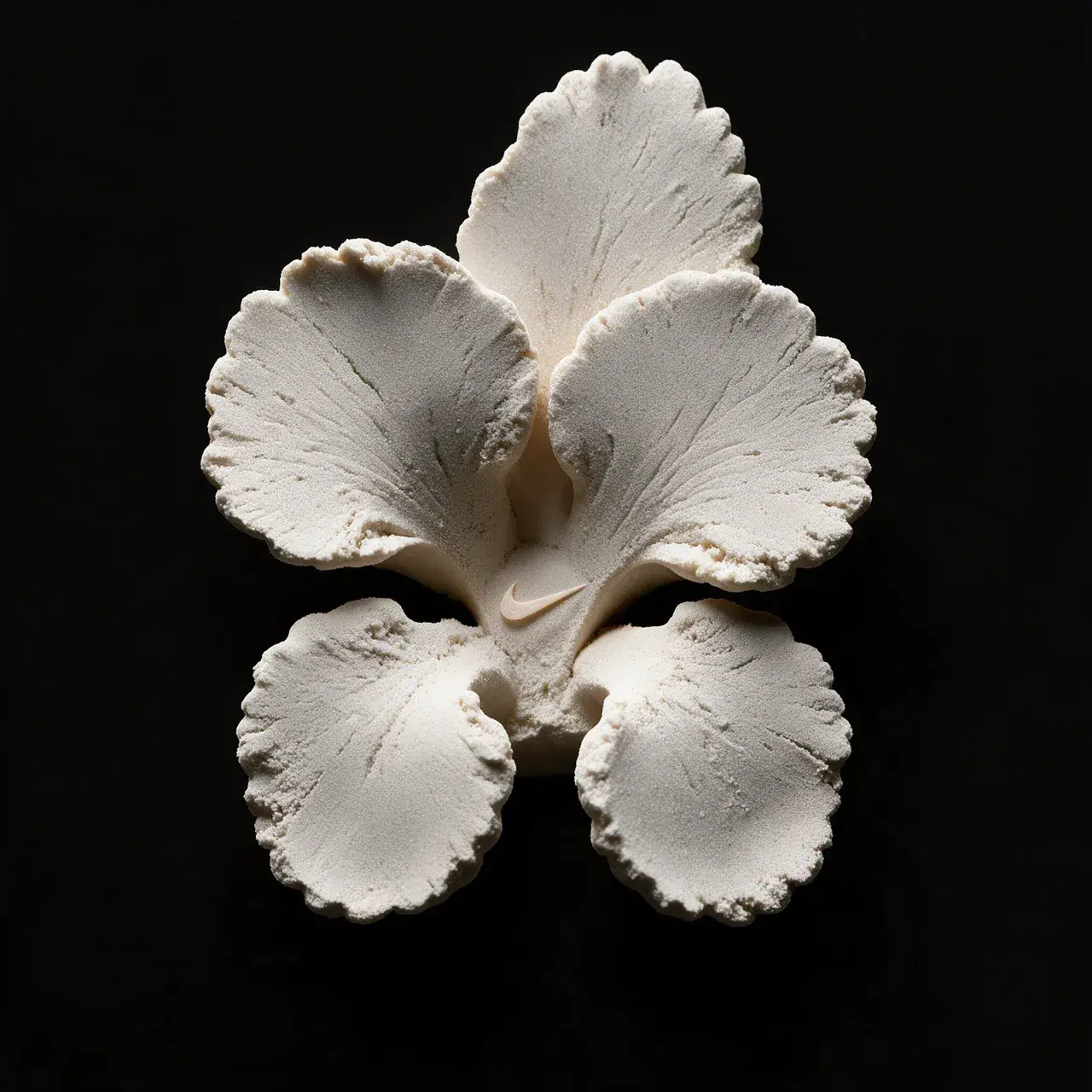
Seedream 5 Pro
Copy
Use the uploaded image as the identity and primary-shape blueprint for a physically realized 3D material object. Preserve the subject's recognizable outer silhouette, overall proportions, major internal openings, negative spaces and essential graphic structure. Do not redesign the subject or replace it with another object. If the uploaded source is flat artwork, typography or a logo, give it convincing physical thickness while preserving its frontal design. If it is already a three-dimensional object, preserve its overall orientation and primary form. Reconstruct the object from dense sculpted kinetic sand with extremely fine matte granular texture, compressed powdery surfaces, softly cohesive cut edges, delicate crumbling zones in recessed areas and subtle striations created by shaping and pressing. Broader planes should appear smoothly compacted while edges and transitions reveal satisfying grain breakup and realistic particulate cohesion. The object must feel like a hand-sculpted mass of kinetic sand, not a smooth object with sand pasted onto it. The chosen material must physically reconstruct the object rather than appear as a texture map, decal, printed pattern or photographic overlay. Allow the material to determine the local surface topology and secondary geometry while preserving the recognizable primary silhouette and major negative spaces. Render the result as a genuinely modeled three-dimensional asset with convincing thickness, edge construction and material-dependent depth. Keep the source object's general visual orientation whenever possible. Use a clean near-frontal premium 3D product-render
viewpoint with only a subtle amount of perspective revealing physical thickness. Neutral long-lens visual compression, approximately equivalent to an 85–100 mm product-photography lens. No wide-angle distortion, dramatic perspective, dutch angle or unnecessary rotation. Show the complete object, fully inside the frame, centered consistently, occupying approximately 62–68% of the image height with generous negative space around it. The object floats freely in empty space against an infinite pure-black background, exact color #000000. No floor, ground plane, table, pedestal, base, wall, visible support, wire, horizon line, contact shadow or cast shadow outside the object. Use restrained high-end material-study illumination consistent across the entire collection. Soft directional illumination comes predominantly from the upper-left-front direction, creating broad dimensional modeling across the form, smooth transitions from light to shadow and clearly readable microgeometry. Maintain a small amount of neutral frontal illumination so shadowed regions retain material information, with only very subtle separation along selected upper-right edges. Lighting must reveal the material rather than become a visual effect. Maintain deep neutral blacks, rich dimensional midtones, soft physically plausible self-shadowing and refined highlight roll-off. No visible lighting equipment or geometric reflections. Physically based 3D material rendering, realistic self-occlusion between grains, high-frequency granular microgeometry, premium commercial CGI material study, ultra-high-resolution photorealistic render.
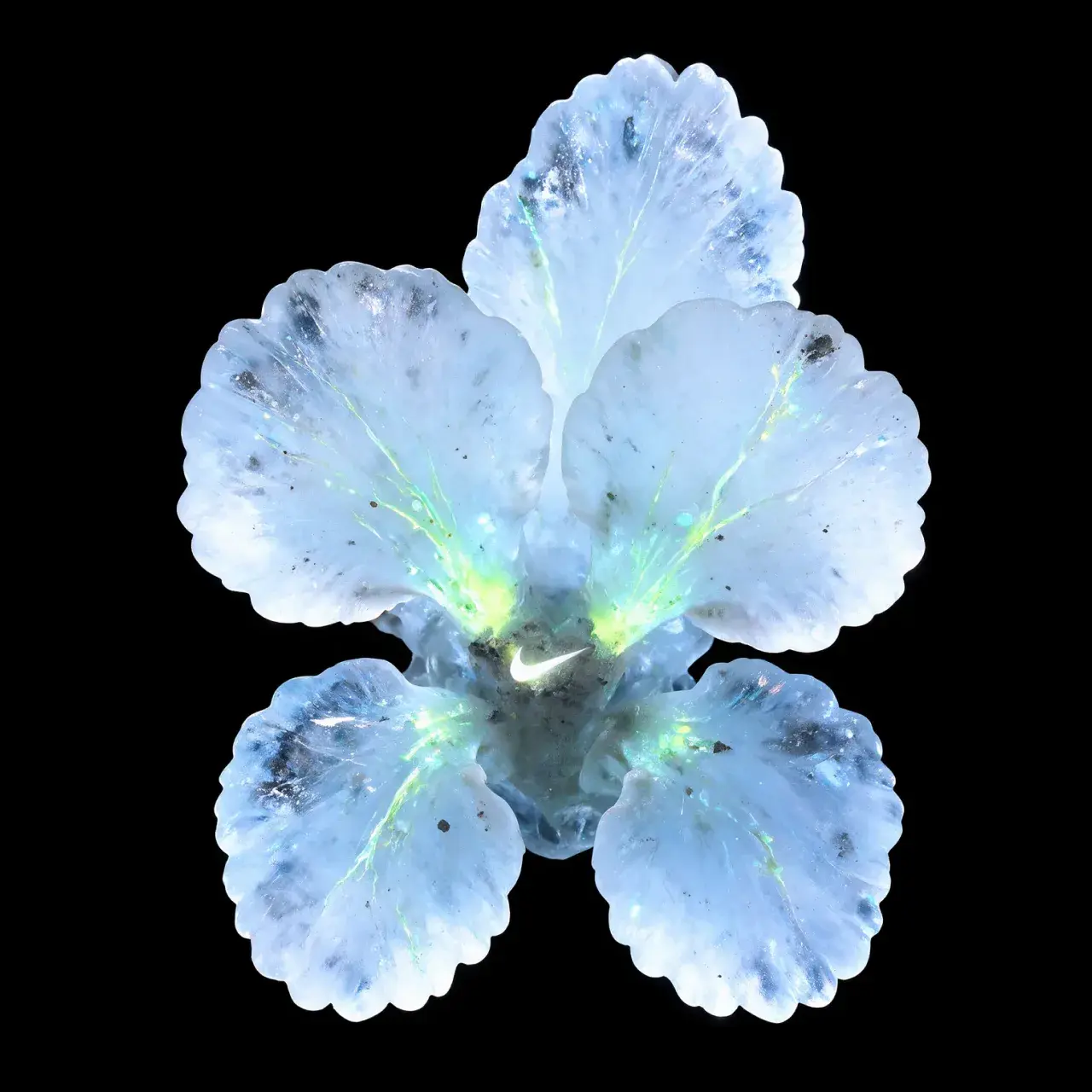
Seedream 5 Pro
Copy
Transform the uploaded object into a luxurious frozen mineral study while keeping the exact silhouette, proportions, all bends, contour changes, secondary elements and every structural nuance from the source object fully intact. Use the uploaded object as the exact form guide. Create a dense translucent ice body in #CBEFFF, #B8D9F8 and #EAF7FF with strong depth, layered frozen compression, misty internal haze, fine crack networks, suspended dark mineral specks in #4E545B, and glowing embedded mineral veins running through the thickness in #8EF2D2, #B9FF7B and #F3F7FF, with occasional crystal pockets and frozen air cavities, clean polished outer surfaces and denser frosted core zones, rich refractive realism, elegant highlight control, pure black background #000000, floating centered object, premium studio render, intense material fidelity.
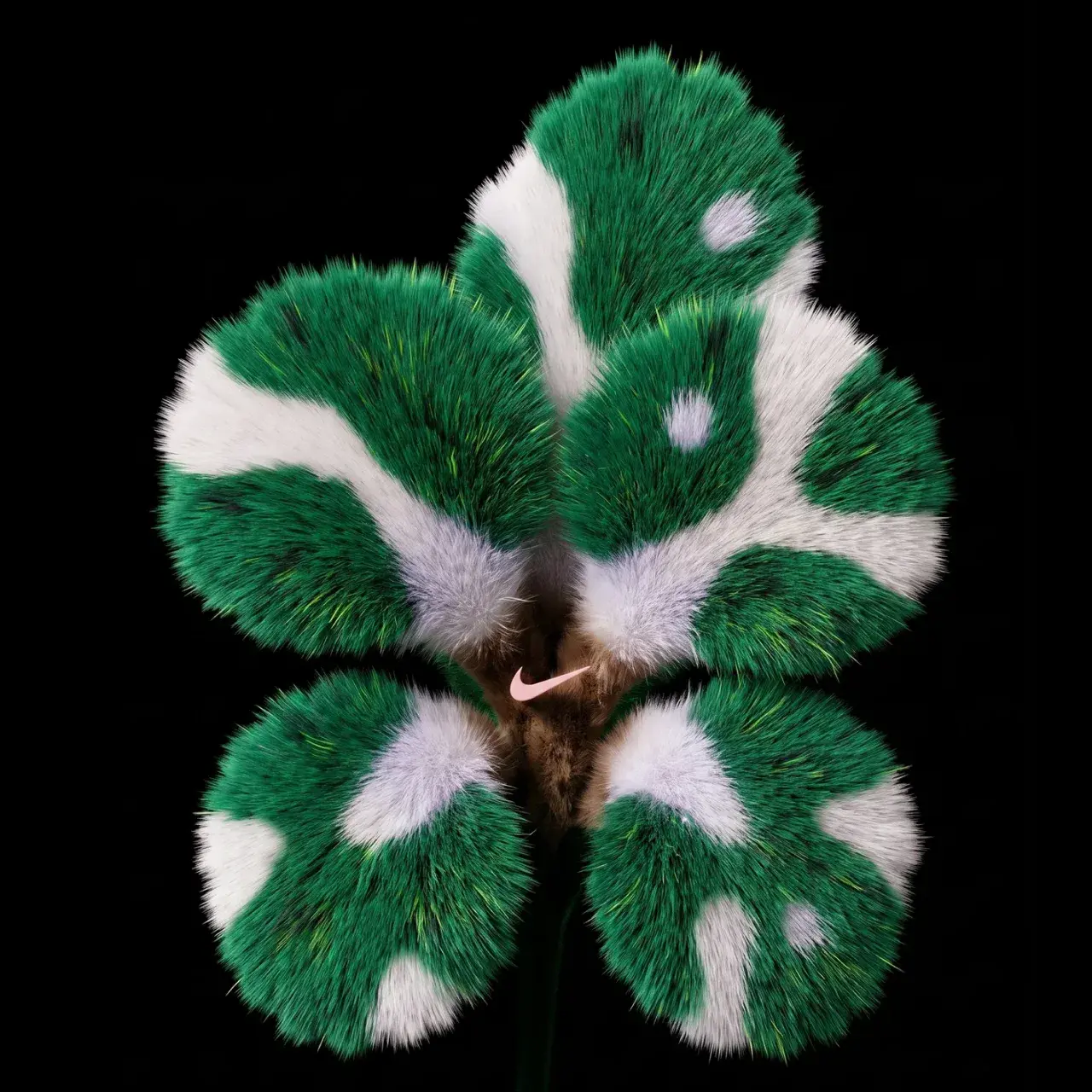
Seedream 5 Pro
Copy
Use the uploaded image as an immutable full-object reference and preserve every source component one-to-one, including complete silhouettes, proportions, openings, attachments, text, labels, logos, decorative elements, micro-features, relative positions, overlap, depth order and original viewing orientation. Material styling must adapt to the source so every visible detail remains present and recognizable. Reconstruct the surfaces as an extremely premium medium-pile shag textile with a saturated emerald-green body and irregular pearl-white plush islands integrated directly into the pile. Instead of conventional spots, build the white regions as broad abstract flowing shapes with soft asymmetric edges, occasional narrow connecting bridges and several isolated miniature patches, creating a graphic contemporary pattern distinct from animal markings. Within selected green zones weave a sparse layer of dark forest fibers and subtle electric-lime tips to add chromatic depth; within white islands introduce barely visible icy-lilac underfibers for dimensional richness. Fiber direction follows every existing surface precisely, becoming compressed at intersections and shorter around text, faces, labels and intricate details so all source components remain clear. Allow a few boundaries between green and white regions to show gentle intermixing of individual fibers for tactile realism. Render as a premium centered CGI material study floating on exact #000000 with source composition intact, refined directional illumination from upper-left-front, excellent individual-hair definition, clean shadow information, deep saturated greens and a luxurious contemporary fashion-object finish.
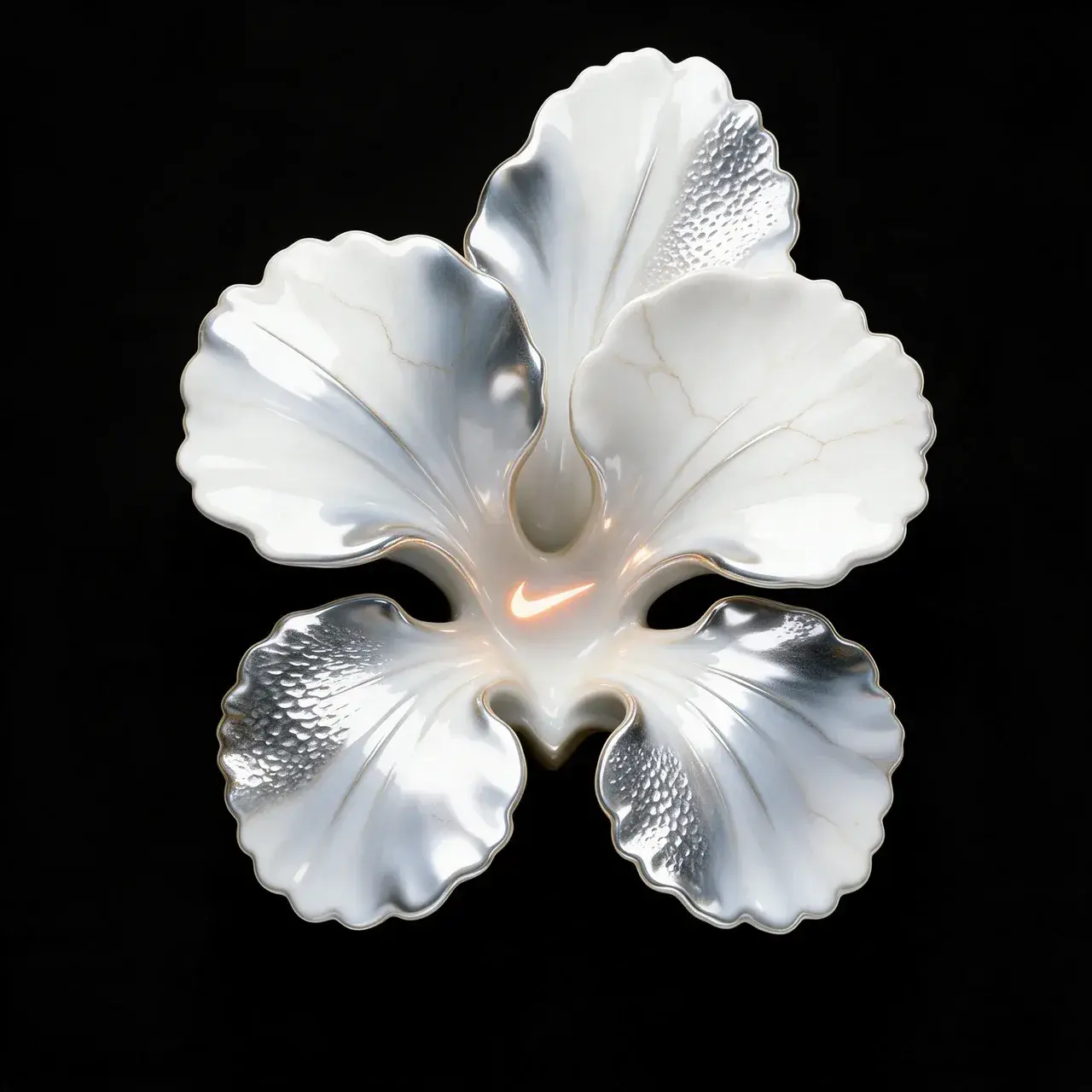
Seedream 5 Pro
Copy
Transform the uploaded object into a premium mixed-material study while keeping the exact silhouette, proportions, thickness, inner cut lines, decorative details and every source element fully intact. Treat the uploaded object as the exact structural blueprint. Build the main body as smooth chromed ceramic with a porcelain-like base in #F3F4F0 and highly reflective liquid-metal transitions in #C9D0D8 and #8E98A1, with selective hammered micro-relief, glossy glazed edge zones, faint crackle veins in #D6D0C7, subtle gradient reflections shaped by the geometry, extremely clean material definition, luxury studio lighting, strong form readability, pure black background #000000, floating object, centered premium render, highly believable and tactile.
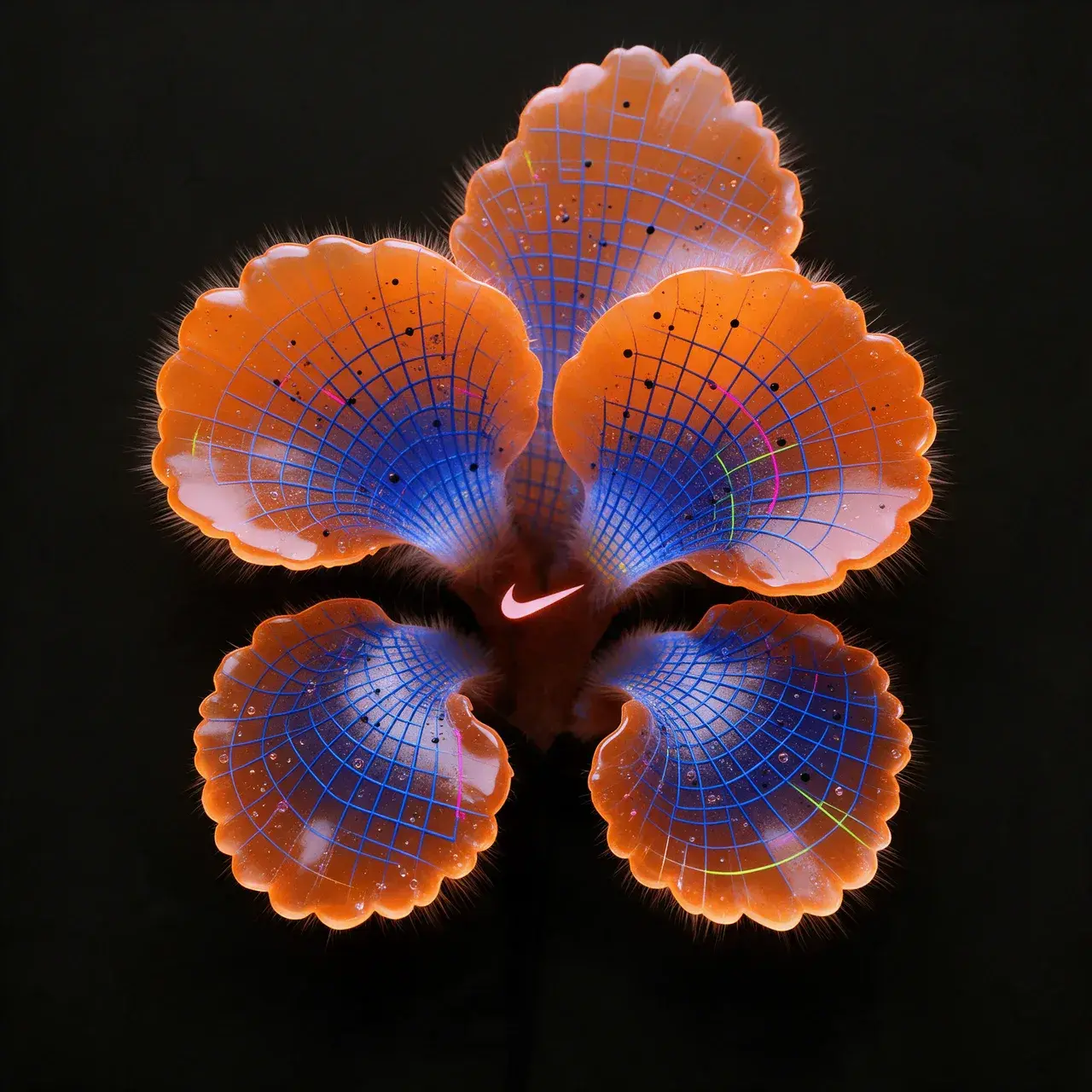
Seedream 5 Pro
Copy
Use the uploaded image as an immutable full-assembly blueprint. Preserve every visible source component, internal opening, attachment, layered object, text, logo, label, graphic feature, small detail, spatial relationship, overlap and original orientation exactly. The complete construction stays intact while only material appearance and internal microstructure change. Cast the object from a saturated translucent tangerine-orange gel-shell material with substantial optical depth, silky polished surfaces and soft internal diffusion. Embed a precision cobalt-blue grid several millimeters beneath the exterior skin rather than placing it on the surface: ultra-thin rounded lines create small square and rectangular cells that follow local curvature and visibly bend in perspective around the existing object. Vary the grid scale gradually across different components, using larger cells on broad surfaces and finer cells around complex areas, while selectively interrupting the grid with a few hot-pink or acid-lime line segments to create unexpected graphic glitches. Introduce tiny clear bubbles and sparse matte-black microdots between grid layers, with the embedded structure becoming increasingly diffused at deeper points. Maintain generous zones where the orange material reads clearly without grid interference, giving the design hierarchy and avoiding visual overload. The original source details remain fully visible with local grid reduction. Render the unchanged assembly floating against infinite #000000 with the exact source angle preserved, controlled soft upper-left-front illumination, clean orange transmission, rich blue internal structure, refined polished highlights, high-end contemporary CGI and exceptionally crisp optical detail.
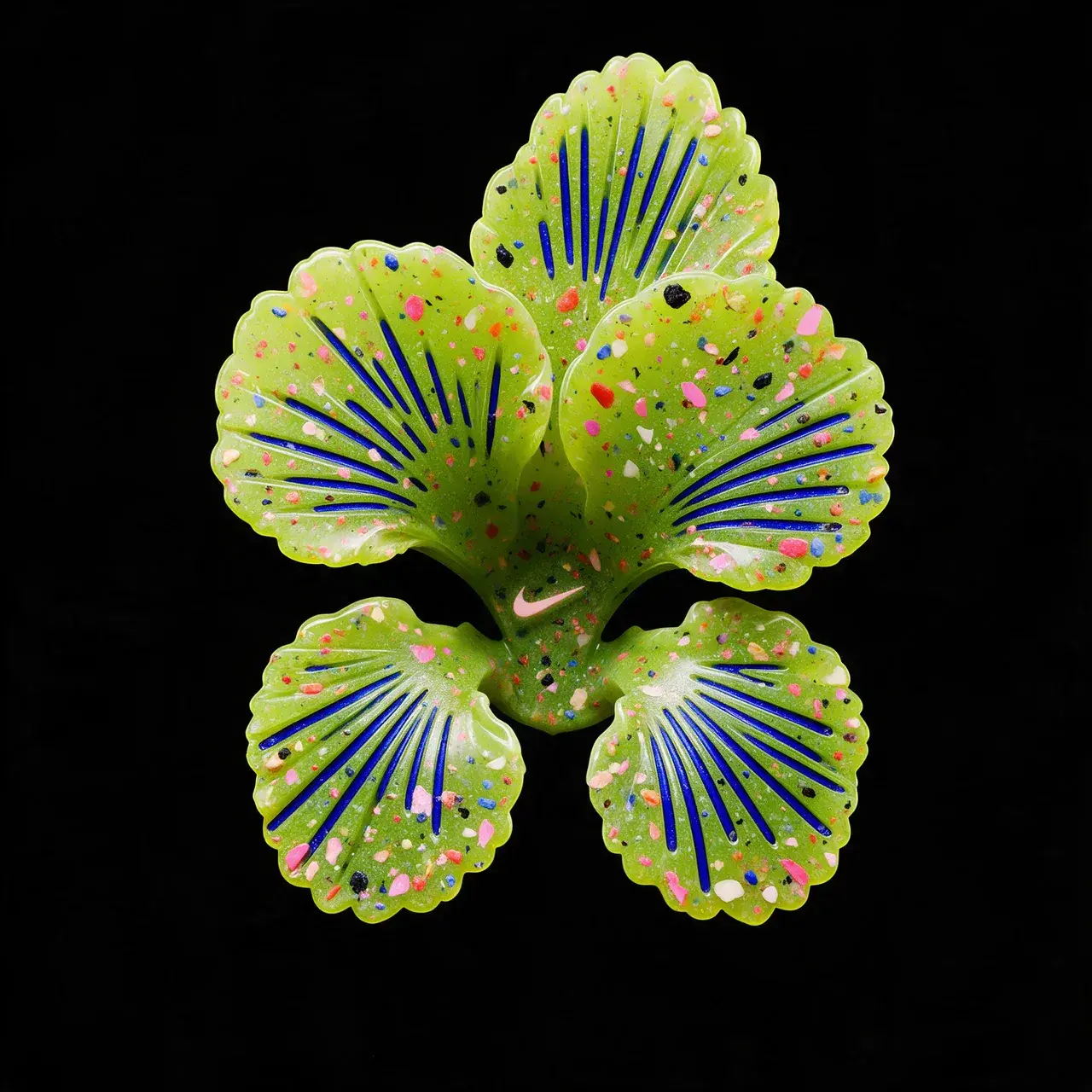
Seedream 5 Pro
Copy
Use the uploaded subject as an immutable geometry blueprint and preserve the exact original silhouette, proportions, thickness, curvature, openings, negative spaces, edges, corners and orientation. Do not reshape, inflate, round, simplify or thicken the source. Cast the existing geometry from vivid acid-lime semi-translucent resin with a smooth satin body and rich internal depth. Distribute thousands of irregular mineral-like inclusions throughout the volume in hot pink, coral red, cobalt blue, warm ivory and sparse glossy black, mixing tiny freckles with occasional larger angular chips for a bold contemporary terrazzo effect. Instead of changing the outer surface, carve a series of shallow narrow recessed channels across broad areas and insert saturated cobalt-blue glossy resin strips inside them, creating repeated graphic ribs that remain entirely below or flush with the original surface. Vary the rib spacing rhythmically rather than uniformly, with groups of closely packed lines alternating with calm areas of speckled lime resin. Preserve all source edges and openings exactly and fade every channel before structural boundaries. Keep exact source orientation and minimal perspective, entire object centered and levitating against infinite pure black #000000, no floor, pedestal, support, wall, wire, horizon or external cast shadow. Neutral premium 3D material lighting from upper-left-front with weak fill and subtle upper-right separation, illumination sources invisible, no geometric studio reflections, HDRI room, glow or bloom. Physically accurate resin transmission, volumetric inclusions, polished inlay response, crisp microgeometry and extremely saturated but controlled high-end CGI color. Absolute highest priority: exact source geometry.
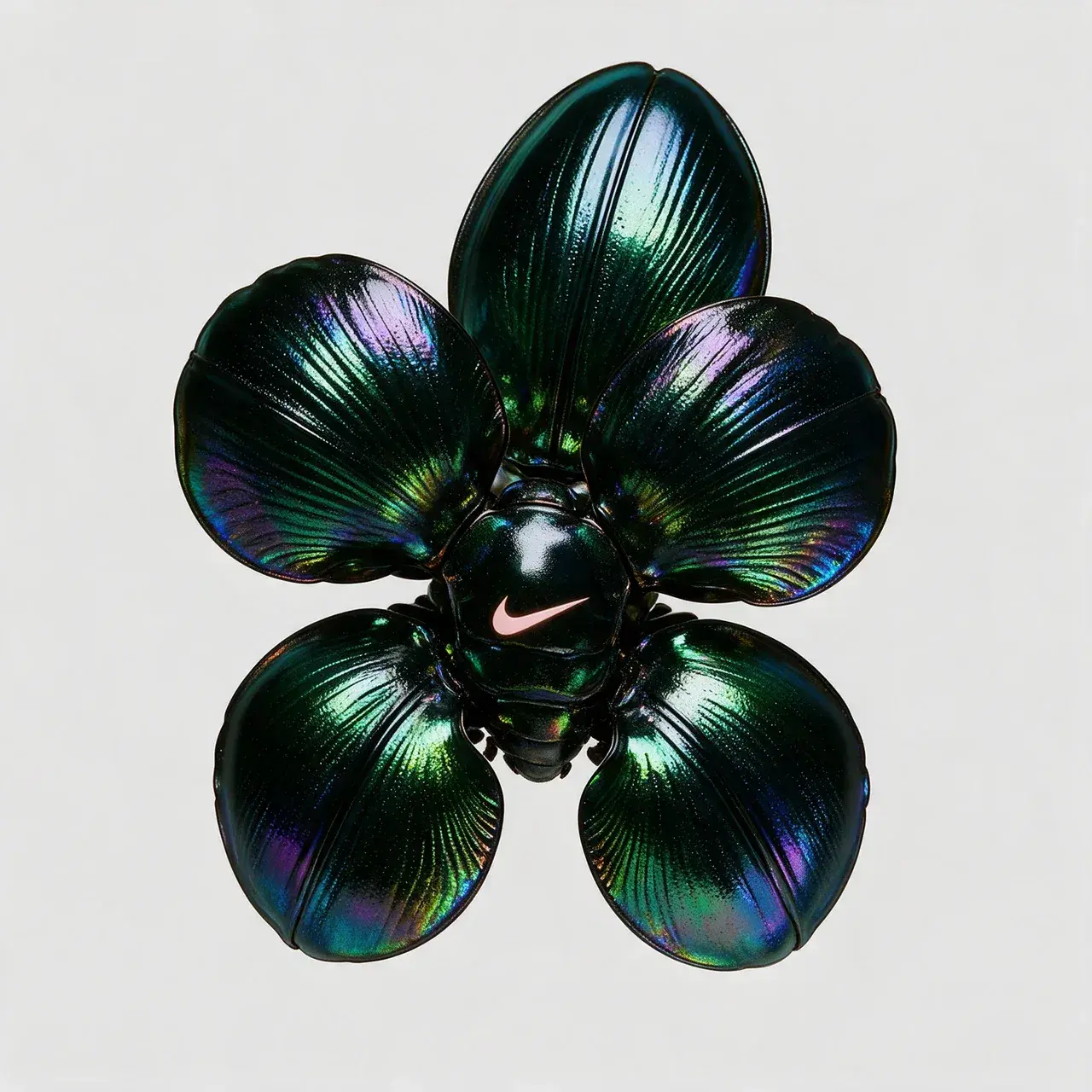
Seedream 5 Pro
Copy
Use the attached image as a locked geometry blueprint and preserve every contour, proportion, opening, graphic element, logo shape, structural detail, orientation and viewpoint. Give flat source artwork only minimal dimensional depth. Reconstruct every visible exterior surface from polished beetle-shell-like chitin with deep near-black emerald base coloration and intense structural iridescence shifting through emerald green, petrol blue, violet and small flashes of bronze according to surface angle. The finish contains microscopic layered chitin striations and subtle organic segmentation visible only at close range. Iridescence must follow surface curvature rather than appearing as an arbitrary gradient. Keep the original object completely recognizable. The object floats centered against a perfectly flat solid #E8E8E6 background with no ground, natural insect parts, legs, wings, support, pedestal, horizon, contact shadow or external cast shadow. Precise studio highlights reveal the layered shell optics.
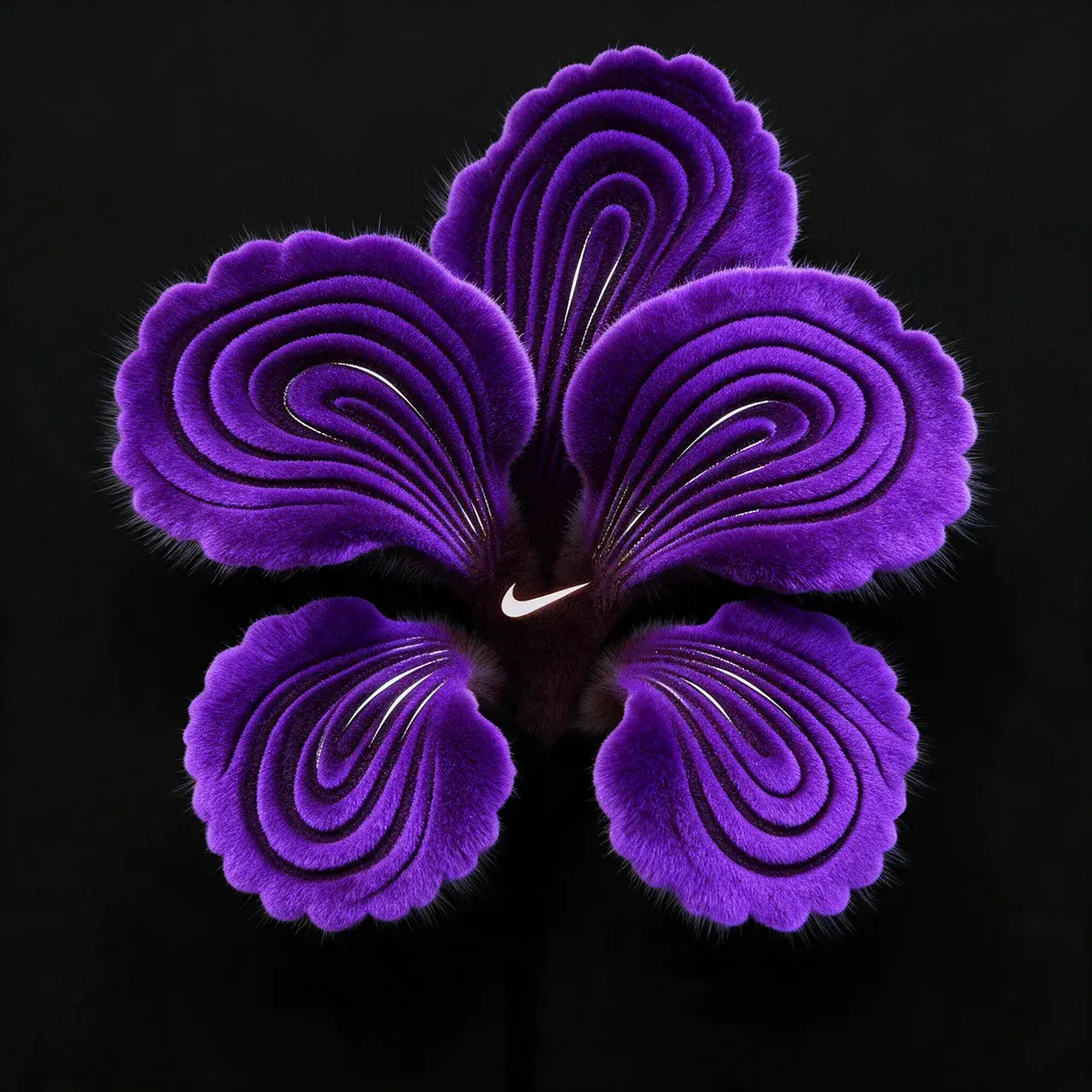
Seedream 5 Pro
Copy
Use the uploaded image as an immutable full-assembly reference. Preserve every visible source element one-to-one: complete silhouettes, proportions, thicknesses, openings, cutouts, layered parts, attachments, labels, readable text, logos, facial details, decorations, spacing, overlap, depth order and original viewing orientation. Every element present in the reference must remain present in the transformed result; the material adapts around fine details rather than simplifying them. Reconstruct suitable surfaces from luxurious dense velour in saturated ultraviolet #6C27D9 with a deep plum underpile #35105F. Sculpt the pile into broad flowing topographic bands by precisely shaving alternating zones to different fiber heights, creating large nested contour shapes that move across the object like fingerprint ridges. Keep the raised pile velvety and light-absorbing while shaved valleys become darker, smoother and more directional. Introduce only a few thin polished chrome lines #C9D1D8 recessed inside selected deepest contours for a sharp hard-versus-soft accent. The pattern must remain large, graphic and immediately readable at thumbnail scale, with finer treatment around intricate source details. Render the complete preserved assembly floating against pure black #000000, exact source camera, controlled material-render illumination with broad soft upper-left-front modeling, balanced shadow detail, rich velour microcontrast, restrained curvature-following highlights and ultra-high-resolution premium CGI.
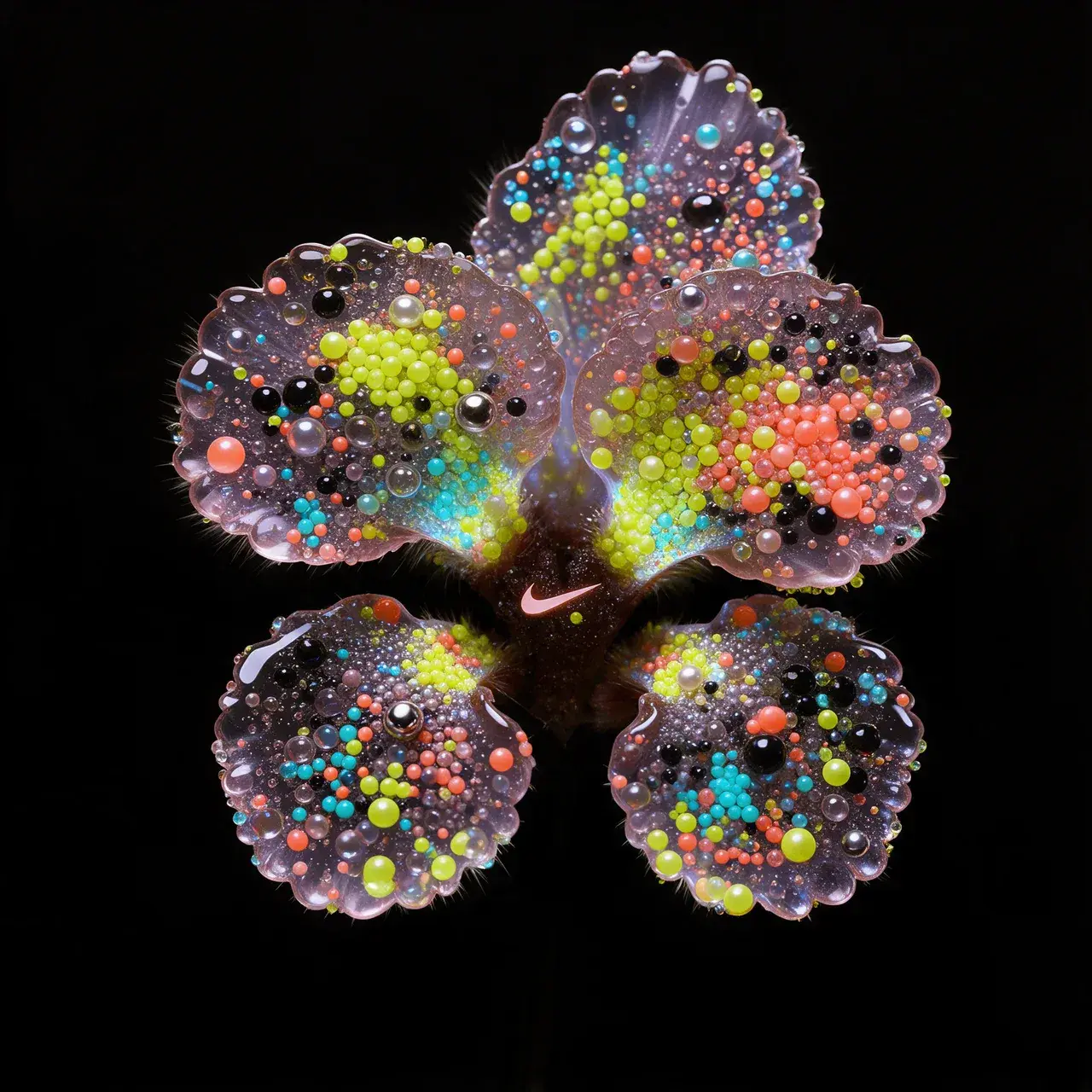
Seedream 5 Pro
Copy
Use the uploaded image as an immutable full-assembly reference. Preserve every source component, subcomponent, label, text, opening, attachment, decorative detail, overlap and orientation exactly; nothing may disappear or structurally change. Replace only material appearance. Cast each suitable surface from crystal-clear smoky-violet gel densely packed with thousands of glossy micro-spheres resembling futuristic caviar, suspended at different physical depths. Use a tightly curated palette of fluorescent chartreuse, electric cyan, hot coral and deep glossy black, with one dominant sphere color per region and sharp contrasting clusters rather than random rainbow noise. Vary sphere diameter from microscopic beads to small polished pearls, creating dense compressed fields where beads touch and quieter transparent zones where individual spheres float separately. Allow several beads to sit just beneath the surface and distort optically through the gel, while deeper clusters blur into saturated volumetric color. Add occasional chrome spheres as rare high-value highlights. Preserve all source details through automatic bead miniaturization around fine geometry. Render on pure #000000, exact source view, floating freely, controlled upper-left-front lighting, rich internal refraction, glossy bead highlights and hyper-detailed premium CGI.
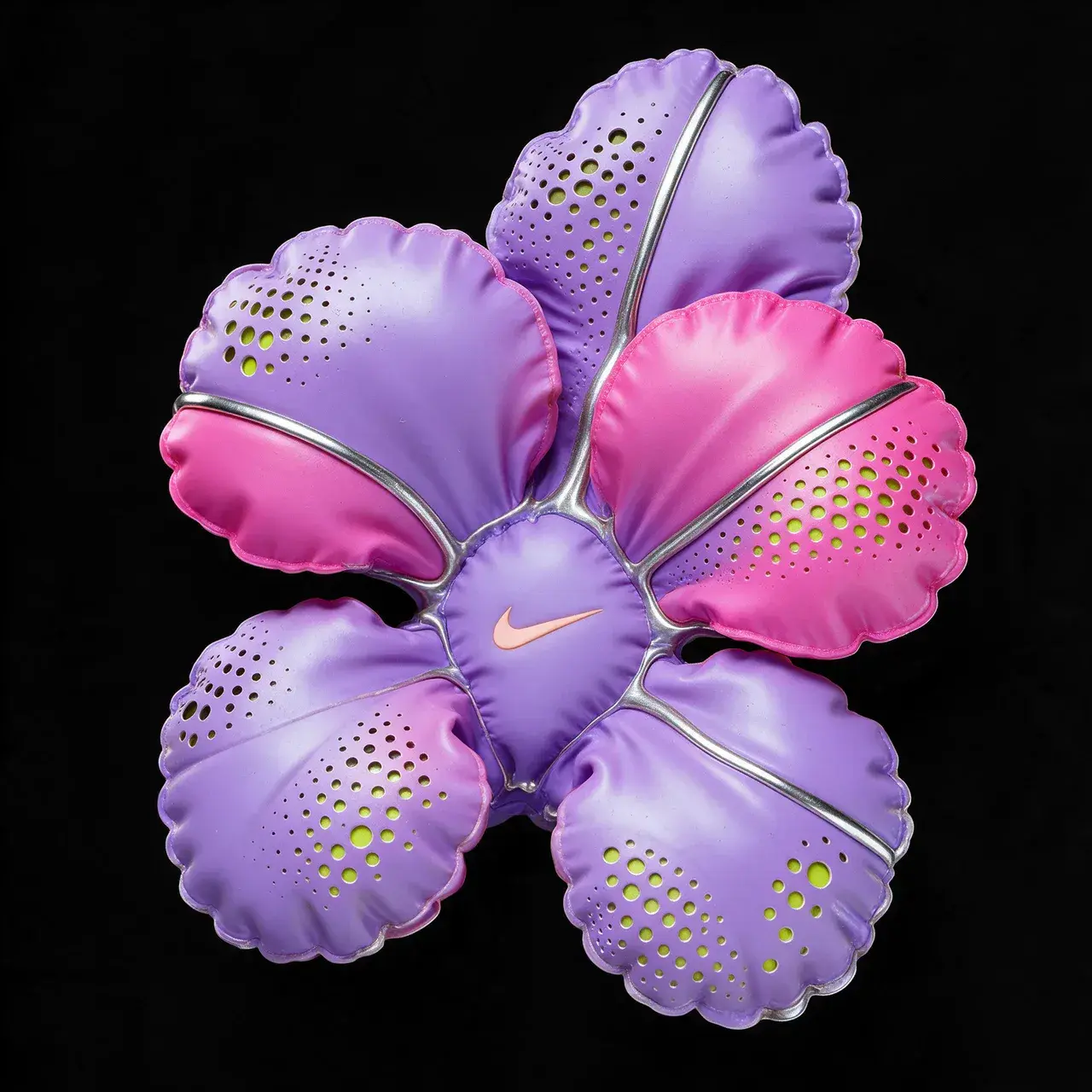
Seedream 5 Pro
Copy
{ "source_lock": "Treat the uploaded image as the immutable structural master. Preserve every visible source component exactly one-to-one: silhouette, proportions, thickness, openings, cutouts, separate parts, layered elements, attachments, readable text, logos, labels, facial details, decorative elements, relative positions, overlap, depth order, camera angle and composition. Nothing visible in the input may disappear, merge, move, simplify or be redesigned. Material scale must automatically adapt around fine source details.", "palette": { "inflated_lilac": "#A88BE8", "hot_pink": "#F44D98", "acid_green": "#CBF33B", "liquid_chrome": "#C9CFD4", "deep_violet": "#5930B2", "background": "#000000" }, "material_hierarchy": { "primary": "60% shallow inflated matte polymer", "secondary": "25% precision perforated zones revealing acid-green inner membrane", "accent": "15% liquid-chrome piping and junctions" }, "construction": "Construct the object from a taut double-skin polymer with shallow air-filled chambers molded directly within the exact source geometry. Integrate perforated technical zones and a small number of continuous chrome-filled channels.", "surface_physics": "The lilac outer skin is softly inflated but remains close to the source geometry, with broad low-volume chambers separated by narrow compressed seams. Selected chambers shift toward hot pink through real pigment variation in the polymer rather than lighting. Across approximately one quarter of broad regions introduce precision perforation fields containing round and elongated holes that expose an acid-green inner membrane several millimeters
beneath the outer skin. The perforation scale transitions gradually from medium holes to micro-perforations. Chrome behaves like a dense polished metallic elastomer injected into selected seams, forming several smooth raised piping paths with rounded cross-sections and tiny surface waviness. Add real seam compression, minute TPU grain, subtle pressure wrinkles, slightly stretched material around perforations and hairline chrome abrasions.", "detail_control": "Keep source labels, text and small elements on low-inflation uninterrupted zones. Perforations and chrome piping terminate before information-rich areas.", "lighting": { "setup": "One large diffused studio light positioned upper-left-front, approximately 40 degrees above and 35 degrees to the left of camera, plus extremely weak neutral frontal fill only to preserve shadow information.", "behavior": "Lighting remains soft, neutral and identical across the entire collection. Material appearance must come from real roughness, transmission, fibers and reflectivity rather than from dramatic lighting.", "restrictions": "No rim light, no colored lighting, no visible light sources, no rectangular reflections, no HDRI environment, no bloom, glow, halo or lens flare." }, "composition": { "camera": "Preserve the exact source viewing direction and orientation.", "position": "Centered and freely suspended.", "background": "#000000", "floor": false, "cast_shadow": false }, "quality": "Photoreal technical-fashion material photography with real membrane tension, shallow inflation, precise perforations, flexible metallic piping and extremely crisp surface physics." }
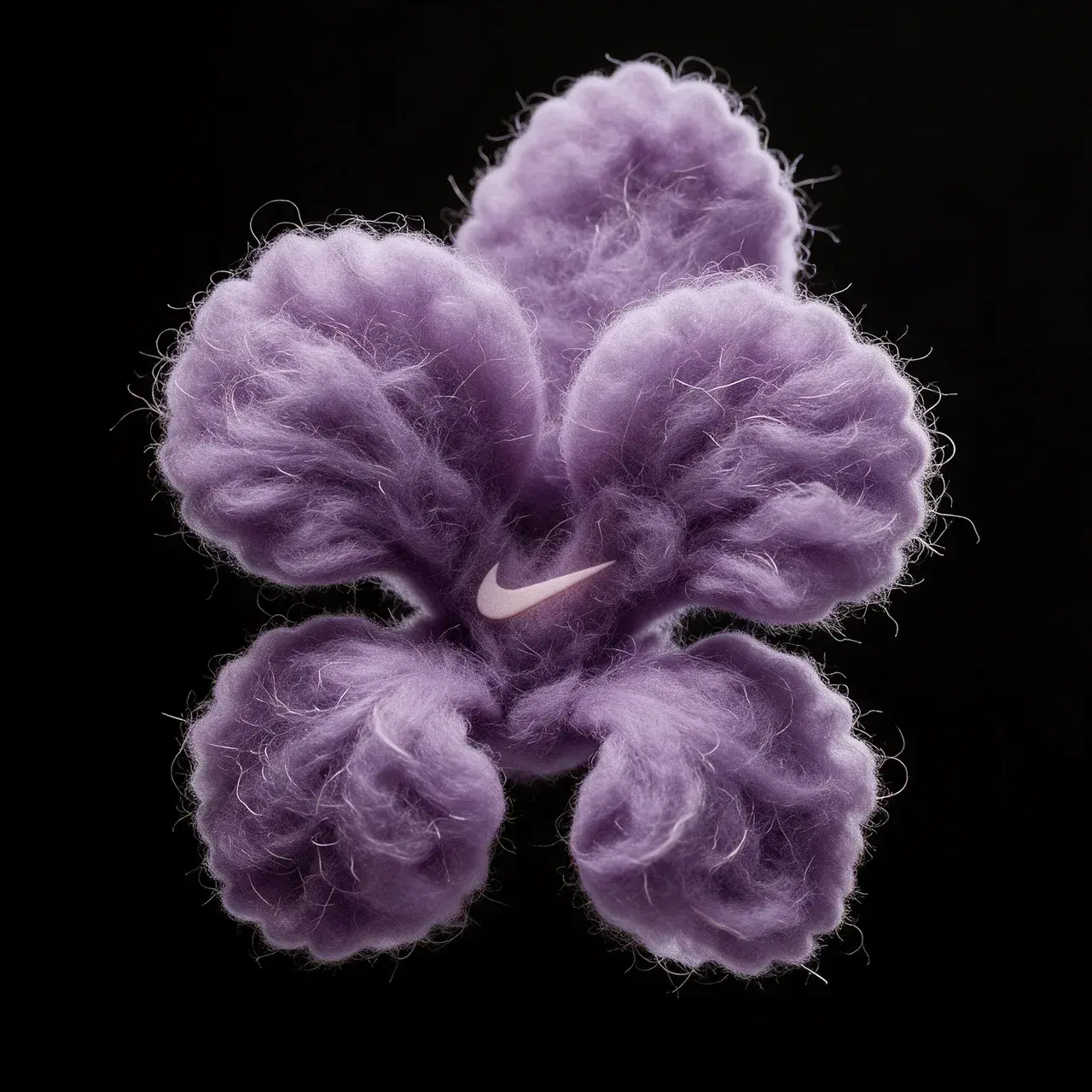
Seedream 5 Pro
Copy
Use the uploaded object as the primary silhouette blueprint and preserve its defining outer shape, proportions and main cutouts while allowing the material to build a completely new secondary geometry. Transform the object into dense lilac fiberglass insulation with fluffy tangled microfibers, soft compressed batts, fine translucent strands, woolly masses and subtly uneven fibrous thickness. The silhouette should stay readable, but the object should feel genuinely constructed from insulation material, with rich fuzzy volume and believable compressed areas around tighter turns and narrow sections. Avoid a smooth plush look; emphasize the specific airy, prickly fiberglass character. The transformed object floats freely in the exact center of an infinite pure-black studio void, background #000000, with no floor, pedestal, support, horizon, contact shadow or cast shadow outside the object. Use one consistent premium studio lighting setup: a large soft rectangular key light above and front-left, a very weak frontal fill, and a restrained upper-right rim light. Deep blacks, controlled highlight roll-off, rich midtone separation, premium macro realism, extremely high material fidelity.
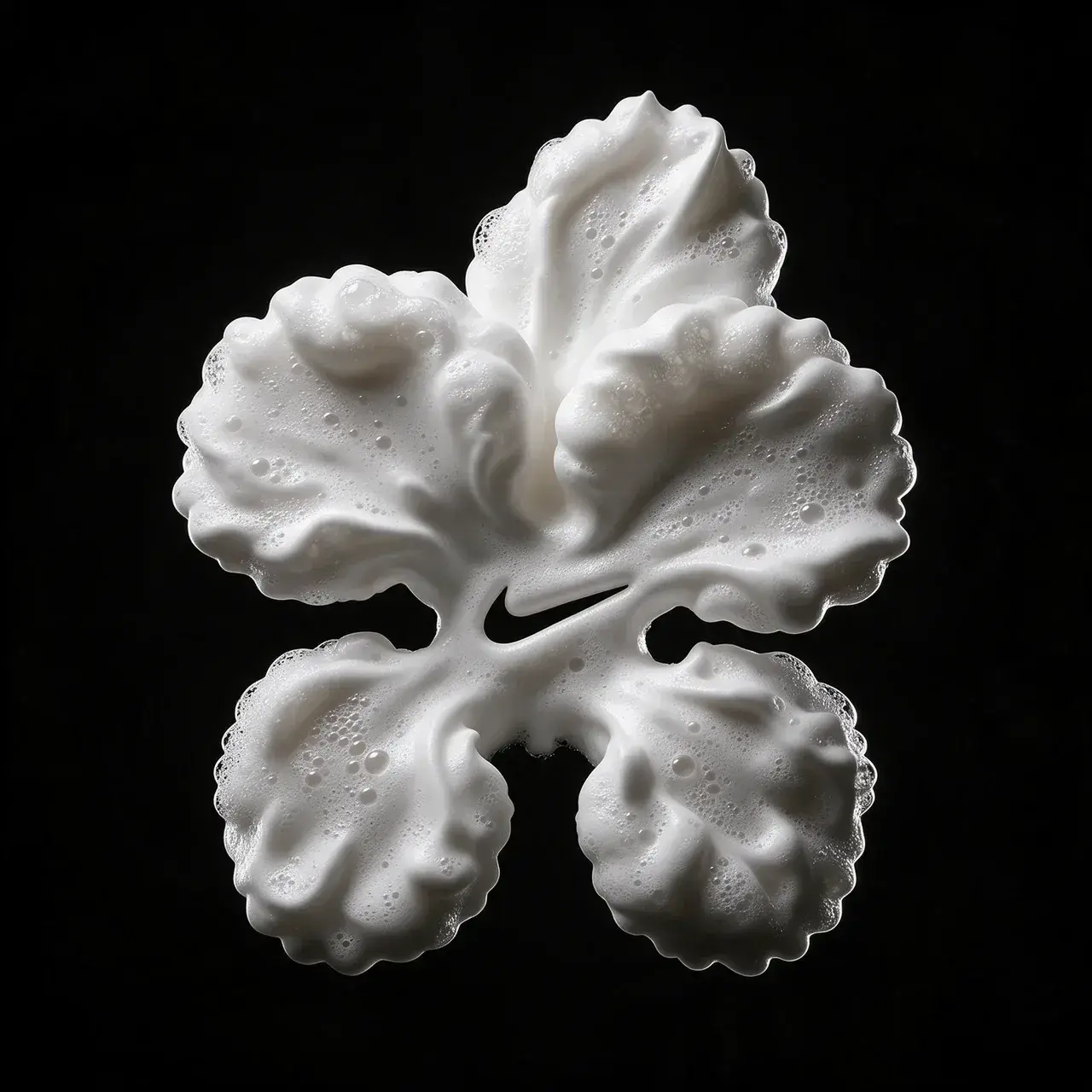
Seedream 5 Pro
Copy
Use the uploaded object as the primary silhouette reference and preserve its defining outer contour, proportions and main cutouts, while allowing the material to rebuild the entire surface topology. Reconstruct the form as dense white shaving foam made from tightly packed glossy micro-bubbles, whipped creamy peaks, soft aerated ridges and delicate swirled buildup created by pressure and spreading. Broad areas can billow slightly and show layered mousse-like volume, while narrow parts should remain readable and clean. The object must feel sculpted from actual shaving foam rather than coated in foam. The transformed object floats freely in the exact center of an infinite pure-black studio void, background #000000, with no floor, pedestal, support, horizon, contact shadow or cast shadow outside the object. Use one consistent premium studio lighting setup: a large soft rectangular key light above and front-left, a very weak frontal fill, and a restrained upper-right rim light. Deep blacks, controlled highlight roll-off, rich midtone separation, premium macro realism, extremely high material fidelity.
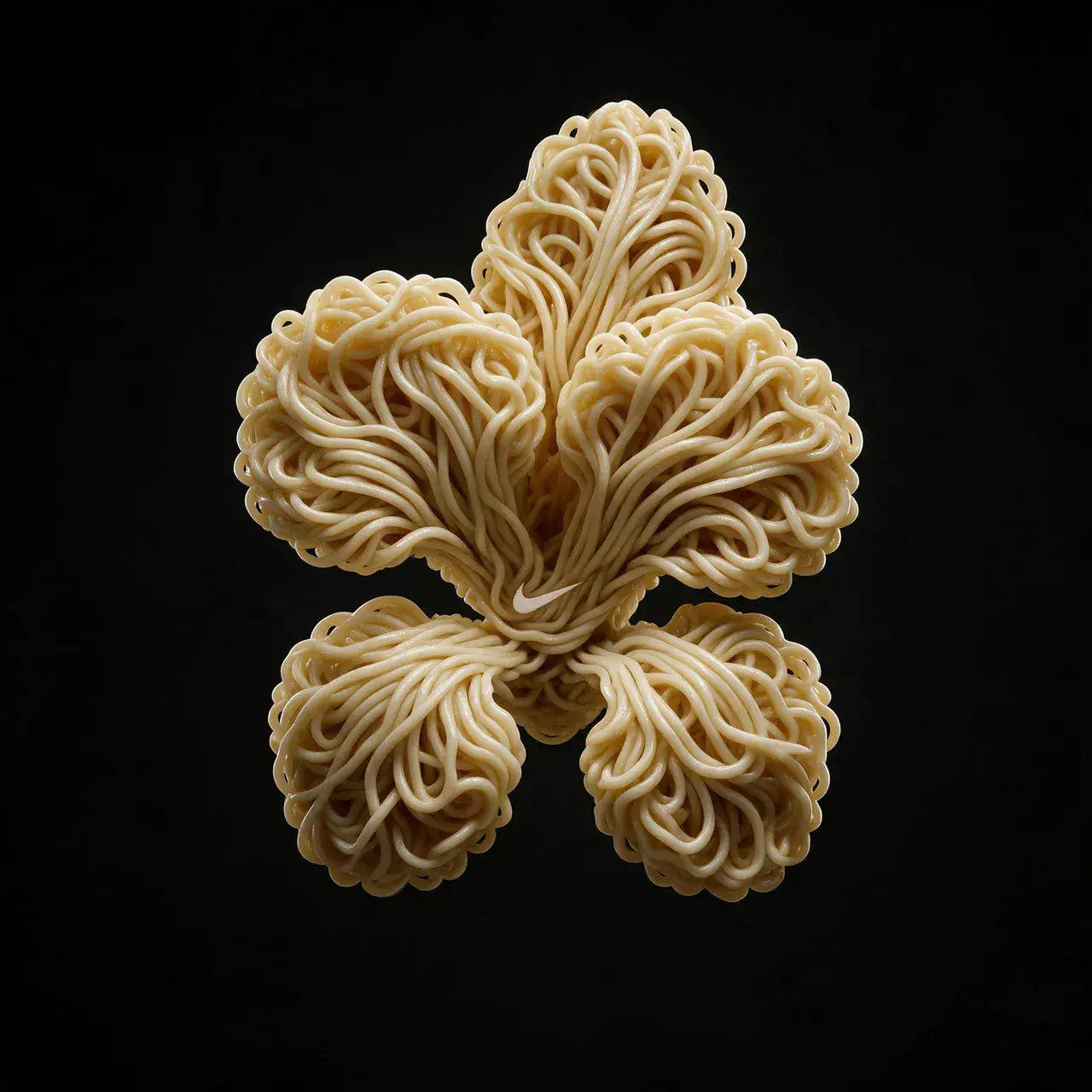
Seedream 5 Pro
Copy
Use the uploaded object as the base silhouette template and preserve the defining outer shape, proportions and major negative spaces, while allowing the material to rebuild the surface with its own secondary structure. Transform the object into a dense construction of intertwined glossy ramen-like noodles with soft elastic curvature, compressed crossings, tangled bundles, subtle surface starch sheen and gentle variation in strand thickness. The silhouette must remain immediately recognizable, but the body should clearly appear assembled from tightly packed noodle strands rather than being a smooth monolithic solid. The transformed object floats freely in the exact center of an infinite pure-black studio void, background #000000, with no floor, pedestal, support, horizon, contact shadow or cast shadow outside the object. Use one consistent premium studio lighting setup: a large soft rectangular key light above and front-left, a very weak frontal fill, and a restrained upper-right rim light. Deep blacks, controlled highlight roll-off, rich midtone separation, premium macro realism, extremely high material fidelity.
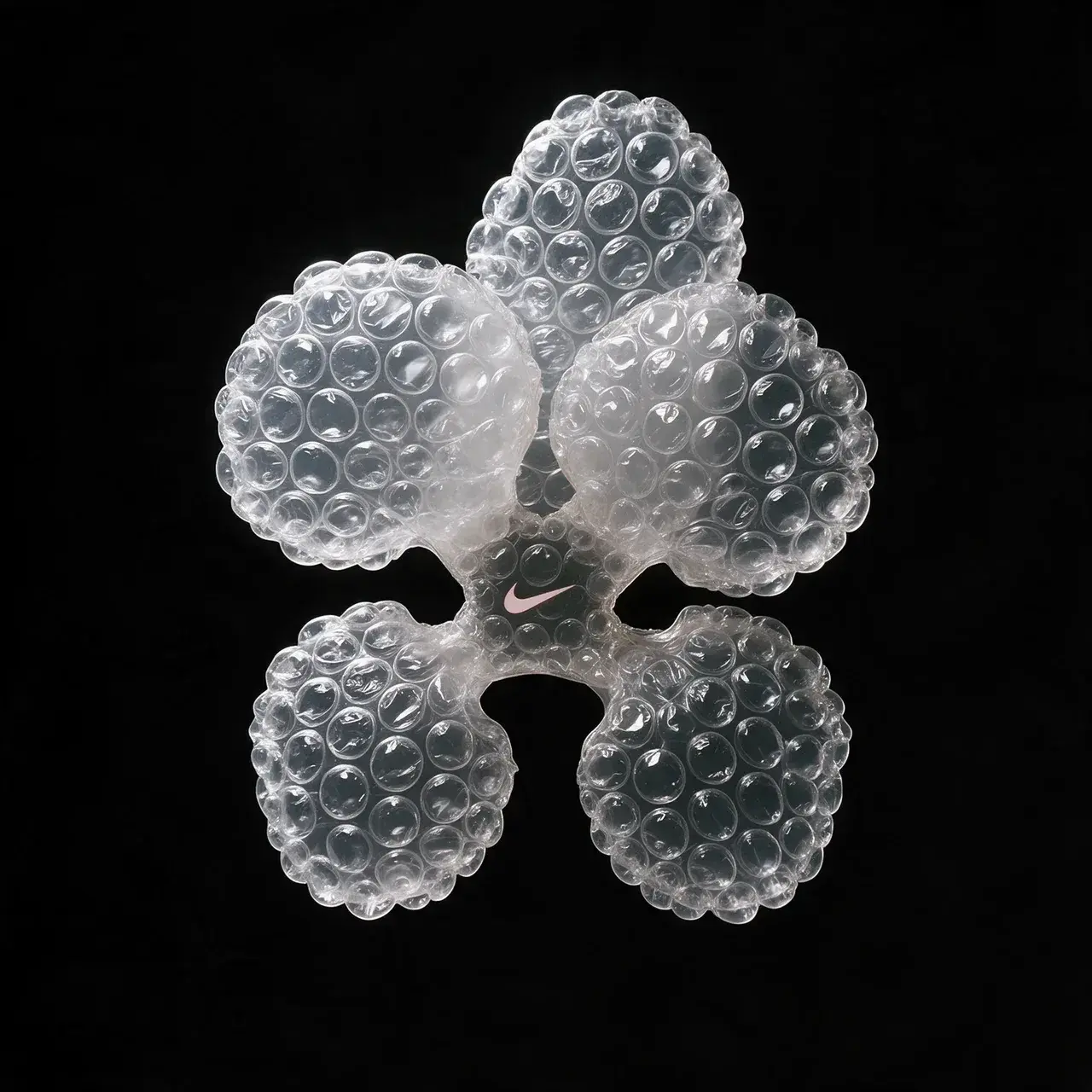
Seedream 5 Pro
Copy
Use the uploaded object as the shape blueprint and preserve its defining outer silhouette, proportions and readable cutouts while allowing the material to reconstruct the surface topology. Transform it into a clear flexible bubble-wrap-like polymer with tightly packed inflated cells, transparent seams between bubbles, glossy elastic membrane tension and subtle optical distortion through the air-filled domes. The cells should physically shape the object and follow its form, compressing and changing scale where needed, rather than acting as a flat pattern. The result should feel like the object itself has been built from premium clear bubble film. The transformed object floats freely in the exact center of an infinite pure-black studio void, background #000000, with no floor, pedestal, support, horizon, contact shadow or cast shadow outside the object. Use one consistent premium studio lighting setup: a large soft rectangular key light above and front-left, a very weak frontal fill, and a restrained upper-right rim light. Deep blacks, controlled highlight roll-off, rich midtone separation, premium macro realism, extremely high material fidelity.
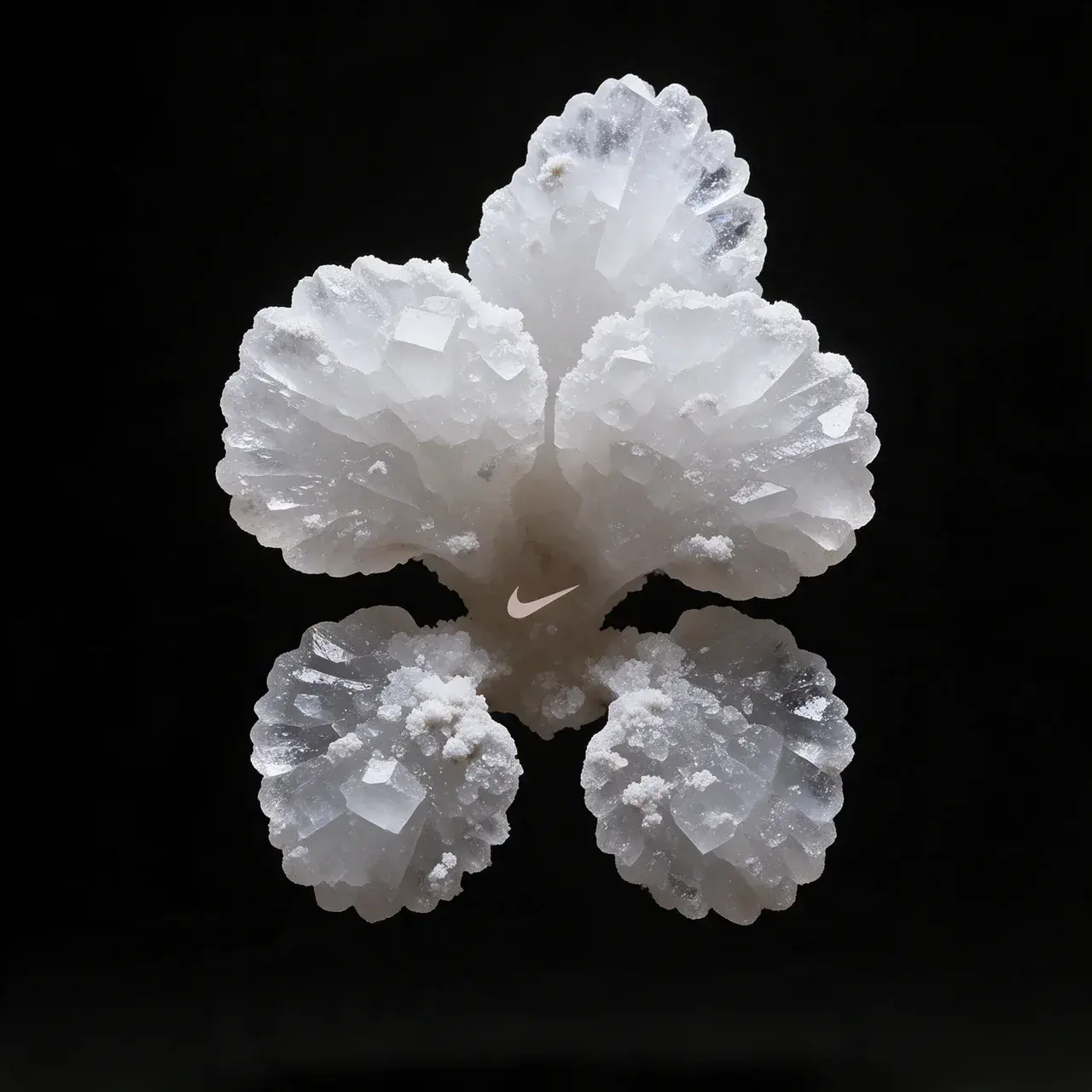
Seedream 5 Pro
Copy
Use the uploaded object as the silhouette anchor and preserve its defining contour, proportions and principal cutouts while letting the material reshape the surface and local geometry. Reconstruct the object from dense translucent salt crystals with clustered cubic and fractured mineral facets, frosted edges, chalky white inclusions, and subtle semi-transparent crystalline depth. Broad zones can merge into compact mineral masses, while edges and corners reveal sharper faceted breakup and granular crystalline accumulation. The form should feel like a carved and accreted salt object, not a glossy rock with a texture applied. The transformed object floats freely in the exact center of an infinite pure-black studio void, background #000000, with no floor, pedestal, support, horizon, contact shadow or cast shadow outside the object. Use one consistent premium studio lighting setup: a large soft rectangular key light above and front-left, a very weak frontal fill, and a restrained upper-right rim light. Deep blacks, controlled highlight roll-off, rich midtone separation, premium macro realism, extremely high material fidelity.
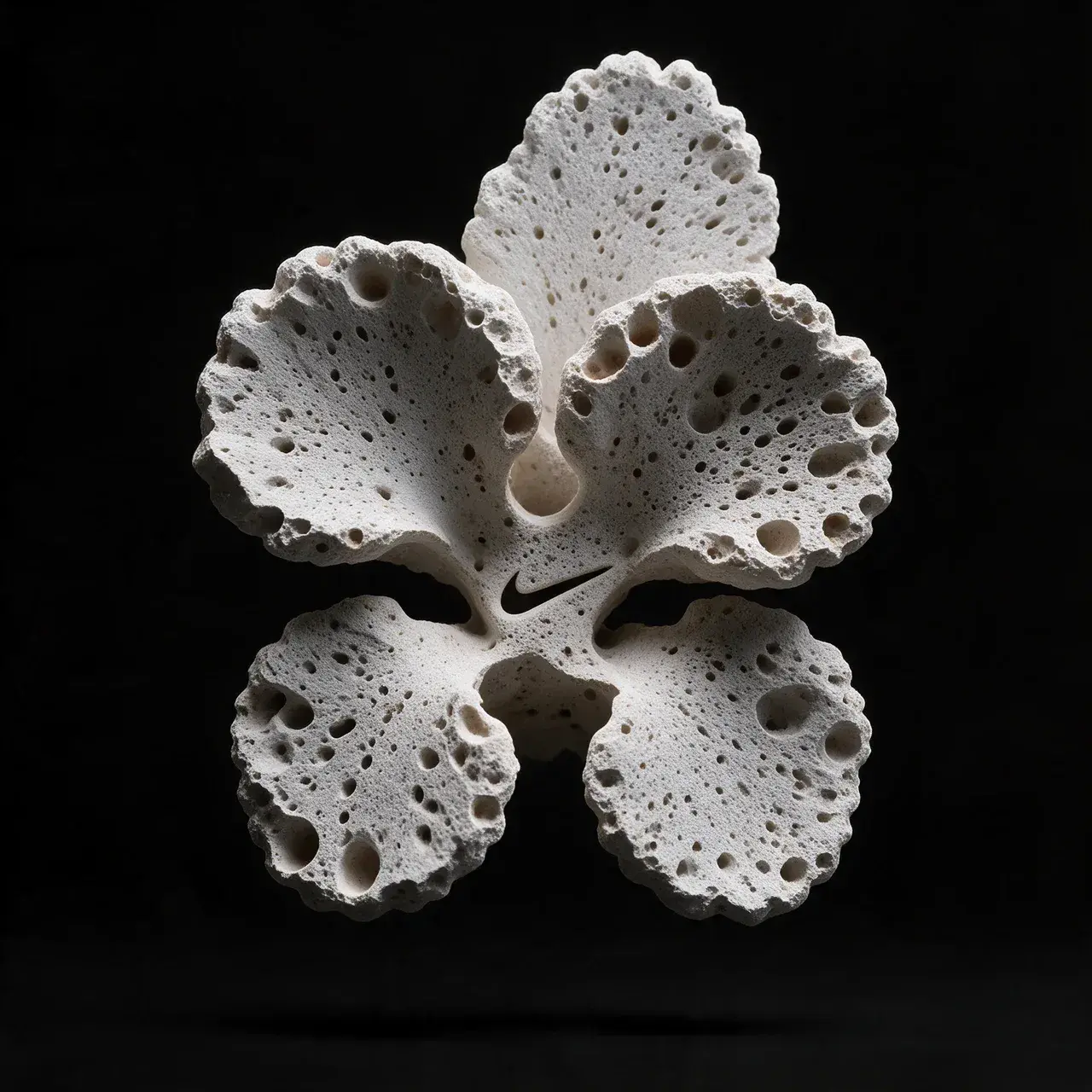
Seedream 5 Pro
Copy
Use the uploaded object as the silhouette anchor and preserve its defining contour, proportions and principal negative spaces while allowing the material to rebuild the surface and edges. Reconstruct it as pale volcanic pumice with ultra-porous stone foam structure, dense micro-cavities, rounded hollow pockets, dusty mineral matte finish and fragile-looking cratered breakage along edges. The body should feel lightweight yet solid, with the characteristic airy geological sponge quality of real pumice. Broader areas can appear more compressed, while cut edges reveal deeper hole structure. The transformed object floats freely in the exact center of an infinite pure-black studio void, background #000000, with no floor, pedestal, support, horizon, contact shadow or cast shadow outside the object. Use one consistent premium studio lighting setup: a large soft rectangular key light above and front-left, a very weak frontal fill, and a restrained upper-right rim light. Deep blacks, controlled highlight roll-off, rich midtone separation, premium macro realism, extremely high material fidelity.
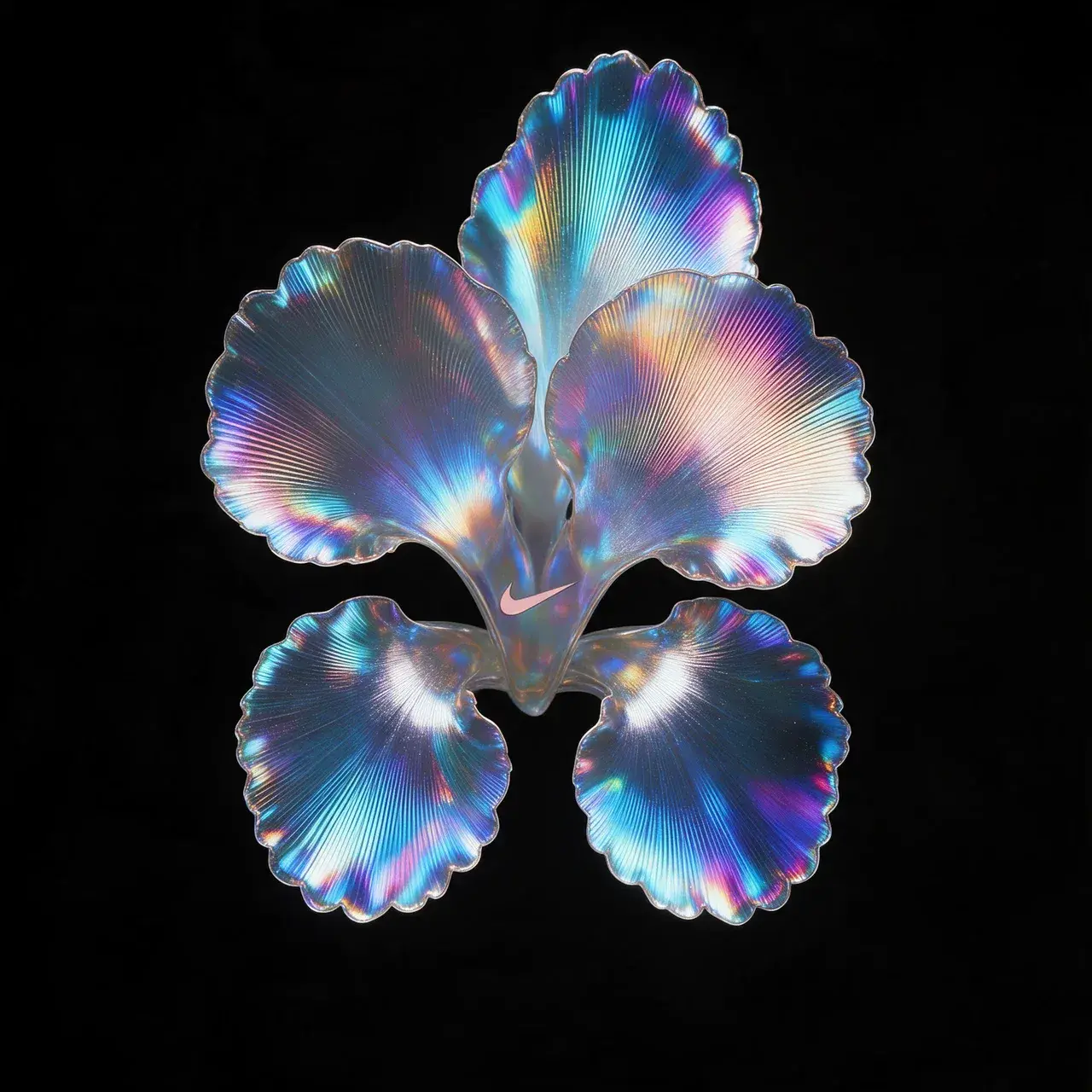
Seedream 5 Pro
Copy
Use the uploaded object as the base silhouette blueprint and preserve its defining outer shape, proportions, primary negative spaces, structural relationships and recognizability, while allowing the material to reconstruct the surface behavior and local topology. Transform the object into a physically built form wrapped in highly realistic optical diffraction film with microscopic grooves that generate angle-dependent spectral color shifts. The material should produce sharp interference bands of cyan, violet, magenta, emerald, amber and electric blue, with glossy laminated depth, controlled soft specular reflections, slight edge tension and subtle lamination behavior around curves, transitions and bevels. The rainbow effect must originate physically from microscopic diffraction structure and changing surface orientation, not from a painted gradient, multicolor illumination or a generic holographic overlay. The object should feel genuinely fabricated from dimensional optical material, with real film thickness, microscopic groove direction, slight laminate tension, minute surface waviness and physically coherent interference behavior across different planes. Render the transformed subject as a physically modeled three-dimensional object, not as a flat image, decal, texture projection, photographic overlay or smooth base object carrying a superficial iridescent texture. Preserve the exact viewing direction, object orientation, rotation, tilt, perspective, visible faces and visible side thickness from the uploaded source. Do not rotate, turn, re-pose, mirror, tilt, flip or reorient the object in any way. Do not invent a new three-quarter angle or reveal surfaces that are not visible in the source. The transformed result must remain spatially aligned with the uploaded object as closely as possible. Use long-lens product-photography compression equivalent to approximately 85–100 mm only to suppress wide-angle distortion, without changing the source viewpoint. No dramatic perspective and no camera tilt. Keep the complete object fully visible, consistently centered and occupying approximately 62–68% of the frame
height with generous negative space around it. Place the object freely suspended in an infinite pure-black studio void, background exactly #000000. No floor, ground plane, wall, ceiling, studio cyclorama, pedestal, plinth, base, wire, support, horizon line, contact shadow or cast shadow outside the object. Nothing except the transformed source object may appear in the scene. Use broad soft directional illumination from upper-left-front, with restrained neutral frontal fill and extremely subtle upper-right separation only where required to preserve the silhouette against black. The illumination must remain soft, neutral, controlled and physically plausible, with deep clean blacks, readable midtones, crisp micro-surface detail and smooth controlled highlight roll-off. All illumination originates from completely off-camera sources that must never become visible or readable as physical objects. No visible lamps, softboxes, LED panels, light panels, reflectors, white cards, umbrellas, studio fixtures, ceiling lights or photography equipment anywhere in the image. No white rectangles, squares or geometric light panels in the background. No recognizable rectangular, square or softbox-shaped reflections on the object. No visible studio environment reflected in the diffraction film. Specular reflections must appear only as broad abstract tonal gradients that reveal curvature and material structure without exposing the shape of the lighting equipment. No HDRI environment, room reflections, bloom, glow, halo, volumetric haze, lens flare or artificial rim-light outline. The spectral coloration must be generated by the diffraction film itself and remain independent of the neutral lighting. Emphasize microscopic groove structure, physically coherent spectral interference, realistic laminated optical depth, subtle edge tension, fine material imperfections, controlled reflective behavior and extremely sharp macro-level surface detail. Photoreal high-end experimental material photography, sophisticated contemporary product visualization, real fabricated-object tactility, no toy-like CGI, no smooth generic AI plastic.
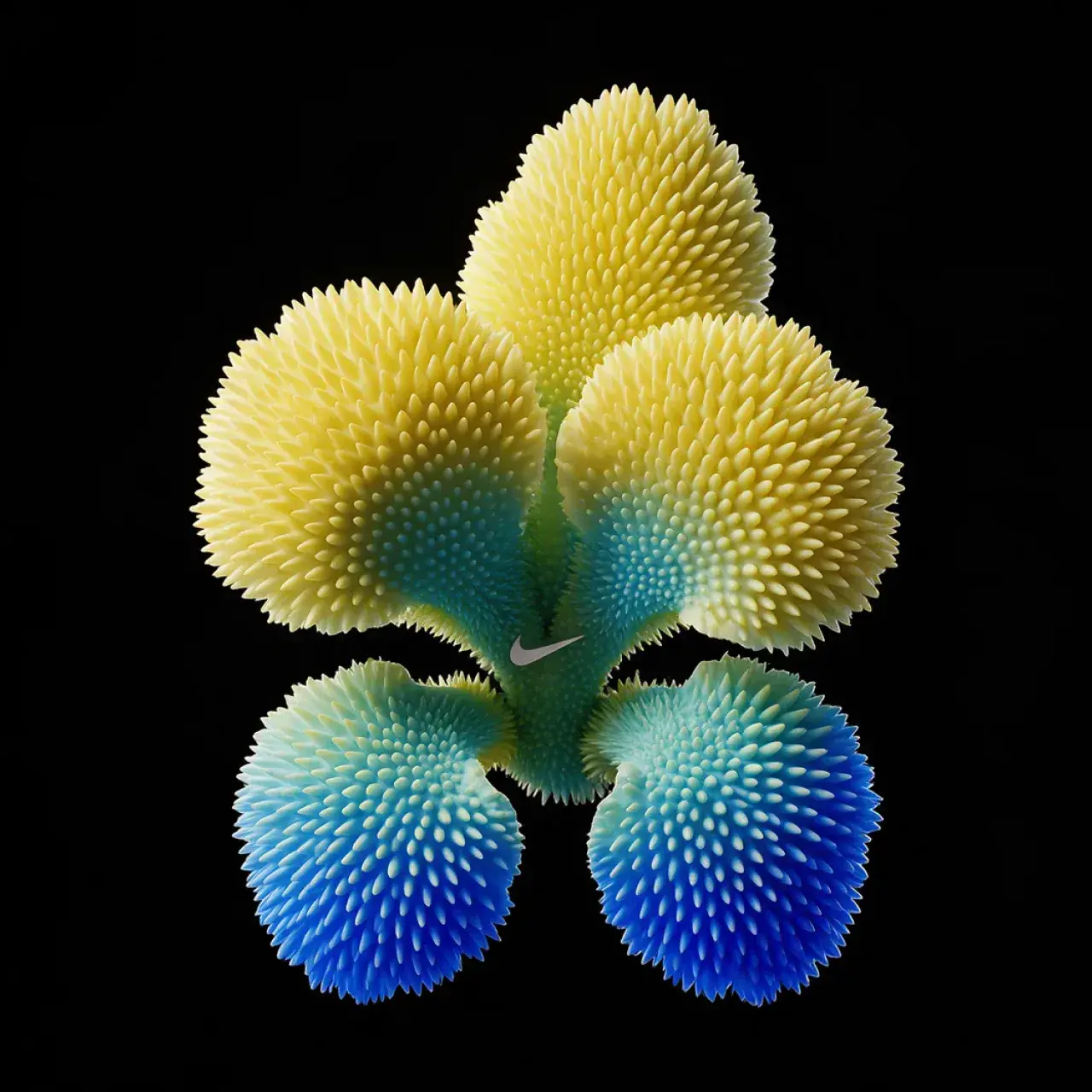
Seedream 5 Pro
Copy
Use the uploaded object as the base silhouette blueprint and preserve its defining outer shape, proportions, primary negative spaces and recognizability, while allowing the material to physically reconstruct the surface and secondary geometry. Transform the object into a sculptural matte gradient yellow-electric blue silicone form densely covered with short soft conical micro-spikes that grow seamlessly from the surface. Let spike scale and density adapt to the geometry, with broader areas carrying fuller fields of spikes and narrower zones compressing into finer microstructure so the silhouette stays clear and readable. The result should feel like the object itself is made from premium elastomeric spiked material, with real dimensional depth, soft rounded tips and a tactile low-gloss rubber finish, not a smooth object with a repeated spike texture. Render the transformed subject as a physically modeled three-dimensional object, not as a flat image, decal, texture projection or photographic overlay. Use the same fixed product-render camera for the collection: centered near-frontal three-quarter product view with very slight perspective, long-lens product-photography compression equivalent to approximately 85–100 mm, no wide-angle distortion, no dramatic perspective, no tilt, no camera rotation beyond what is required to reveal a restrained amount of side thickness. The complete object is fully visible, centered consistently, occupying approximately 62–68% of the frame height with generous negative space around it. Place the object freely suspended in an infinite pure-black studio void, background exactly #000000, with no floor, ground plane, wall, pedestal, base, wire, support, horizon line, contact shadow or cast shadow outside the object. Use the exact same controlled three-light studio rig: a large diffused key light from upper-left-front at approximately 40 degrees horizontal offset and 50 degrees elevation, a very weak neutral frontal fill placed close to camera axis only to preserve shadow detail, and a subtle soft separation light from upper-right-rear to gently define the silhouette from the background. Keep all light sources invisible. Reflections and highlights must remain soft, broad and controlled, with no blown speculars, no harsh glare, no glossy hotspots and no visible rectangular softbox reflections. The lighting must feel premium, restrained and consistent across the entire collection, emphasizing material form and tactile depth rather than dramatic mood. No bloom, glow, halo, volumetric atmosphere, lens flare, HDRI room reflections or environmental reflections. Preserve clean tonal separation, deep blacks and highly legible surface relief. Emphasize realistic silicone roughness, subtle subsurface softness, physically believable spike growth, immaculate edge definition and ultra-high-resolution premium CGI product visualization.
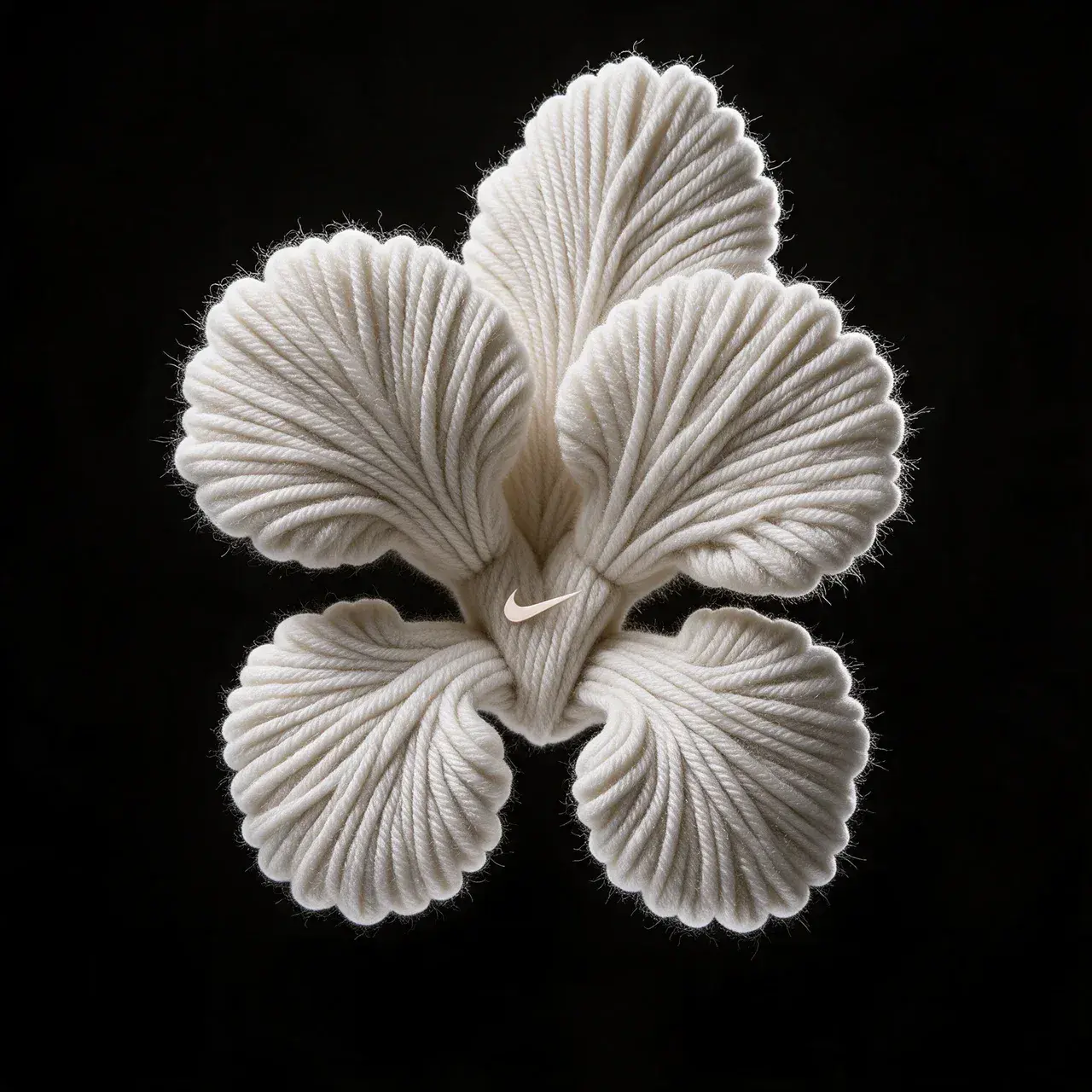
Seedream 5 Pro
Copy
Use the uploaded object as the silhouette reference and preserve its defining contour, overall proportions and main negative spaces while allowing the chosen material to rebuild the surface and secondary geometry. Transform the object into thick chenille yarn construction with plush caterpillar-like strands, dense fuzzy pile, visible wrapped yarn direction, soft textile volume and rounded cozy edge buildup. The strands should flow across the form and create a genuinely yarn-built object rather than a generic fur surface. Keep the main shape recognizable, but let the chenille structure introduce tactile richness and soft dimensionality throughout. The transformed object floats freely in the exact center of an infinite pure-black studio void, background #000000, with no floor, pedestal, support, horizon, contact shadow or cast shadow outside the object. Use one consistent premium studio lighting setup: a large soft rectangular key light above and front-left, a very weak frontal fill, and a restrained upper-right rim light. Deep blacks, controlled highlight roll-off, rich midtone separation, premium macro realism, extremely high material fidelity.
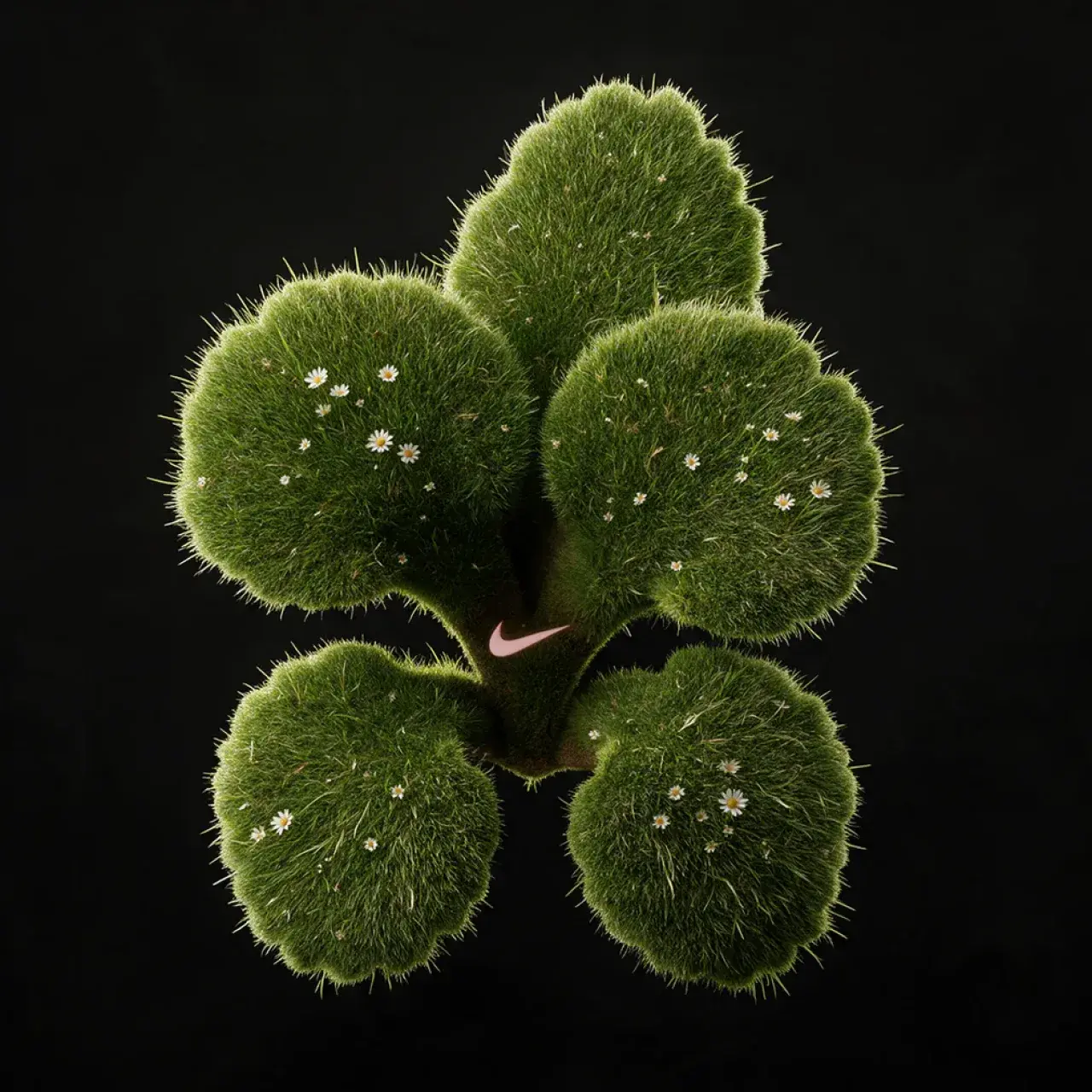
Seedream 5 Pro
Copy
Use the uploaded object as the base silhouette blueprint and preserve its defining outer shape, proportions, primary negative spaces, structural relationships and recognizability, while allowing the living material to physically rebuild the surface and local geometry. Transform the object into a compact sculptural living lawn composed of dense short real grass blades growing directly from the form, with rich fresh green coloration, natural variation in blade length, thickness, orientation and density, and a sparse scattering of very small white daisies with tiny yellow centers placed only on selected broad surfaces. Let the grassy material physically shape the object, with slightly fuller organic growth across large open regions and progressively shorter, denser and more controlled blades around edges, openings, narrow components and intricate geometry so the defining silhouette remains exceptionally clean and readable. The grass must behave like genuine living turf rather than artificial craft fur, moss, flocking or a photographic grass texture. Individual blades should emerge naturally from a compact underlying root-and-soil-free turf matrix integrated into the object itself. Include subtle blade curvature, overlapping growth directions, a few slightly paler young blades, darker blades in denser regions, occasional tiny natural irregularities and realistic variation in tuft compression. Keep the daisies genuinely miniature relative to the object, with delicate thin petals, tiny yellow centers, short fine stems and restrained natural placement. They should appear sparsely and asymmetrically, never forming a floral pattern or covering the entire surface. The result should feel like the original object has been physically reconstructed from highly controlled real living grass while retaining its exact recognizable design, not like a smooth object coated with a grass photograph, artificial turf sheet or fuzzy green texture. Render the transformed subject as a physically modeled three-dimensional object, not as a flat image, decal, texture projection, photographic overlay or artificial fuzzy shell. Preserve the exact viewing direction, object orientation, rotation, tilt, perspective, visible faces and visible side thickness from the uploaded source. Do not rotate, turn, re-pose, mirror, tilt, flip or reorient the object in any
way. Do not invent a new three-quarter angle or reveal surfaces that are not visible in the source. The transformed result must remain spatially aligned with the uploaded object as closely as possible. Use long-lens product-photography compression equivalent to approximately 85–100 mm only to suppress wide-angle distortion, without changing the source viewpoint. No dramatic perspective and no camera tilt. Keep the complete object fully visible, consistently centered and occupying approximately 62–68% of the frame height with generous negative space around it. Place the object freely suspended in an infinite pure-black studio void, background exactly #000000. No floor, ground plane, wall, ceiling, studio cyclorama, pedestal, plinth, base, wire, support, horizon line, contact shadow or cast shadow outside the object. Nothing except the transformed source object may appear in the scene. Use broad soft directional illumination from upper-left-front, with restrained neutral frontal fill and extremely subtle upper-right separation only where required to preserve the silhouette against black. The illumination must remain soft, neutral, controlled and physically plausible, with deep clean blacks, readable midtones, crisp individual grass-blade detail and smooth controlled highlight roll-off. All illumination originates from completely off-camera sources that must never become visible or readable as physical objects. No visible lamps, softboxes, LED panels, light panels, reflectors, white cards, umbrellas, studio fixtures, ceiling lights or photography equipment anywhere in the image. No white rectangles, squares or geometric light panels in the background. No recognizable rectangular or square reflections. No visible studio environment. No HDRI environment, bloom, glow, halo, volumetric haze, lens flare or artificial rim-light outline. Emphasize individually resolved natural grass blades, believable tuft density, subtle blade-to-blade occlusion, delicate miniature daisies, realistic botanical variation and physically convincing organic surface depth while maintaining extremely precise silhouette control. Photoreal high-end experimental material photography, sophisticated contemporary product visualization, real living botanical tactility, no artificial turf, no moss-covered blob, no fuzzy toy appearance, no smooth generic AI surface.