

Gradient Aura Film
Обработка фото с мягкими градиентами, цветным студийным светом и мелким плёночным зерном.
Загрузите фотографию, скопируйте полный промпт и используйте модель, указанную под примером.
Загрузите фотографию, скопируйте полный промпт и используйте модель, указанную под примером.


84 промпта
Фотосессии
Seedream 5.5
Gradient Aura Film
Обработка фото с мягкими градиентами, цветным студийным светом и мелким плёночным зерном.
Загрузите фотографию, скопируйте полный промпт и используйте модель, указанную под примером.
Загрузите фотографию, скопируйте полный промпт и используйте модель, указанную под примером.
84 промпта
Фотосессии
Seedream 5.5

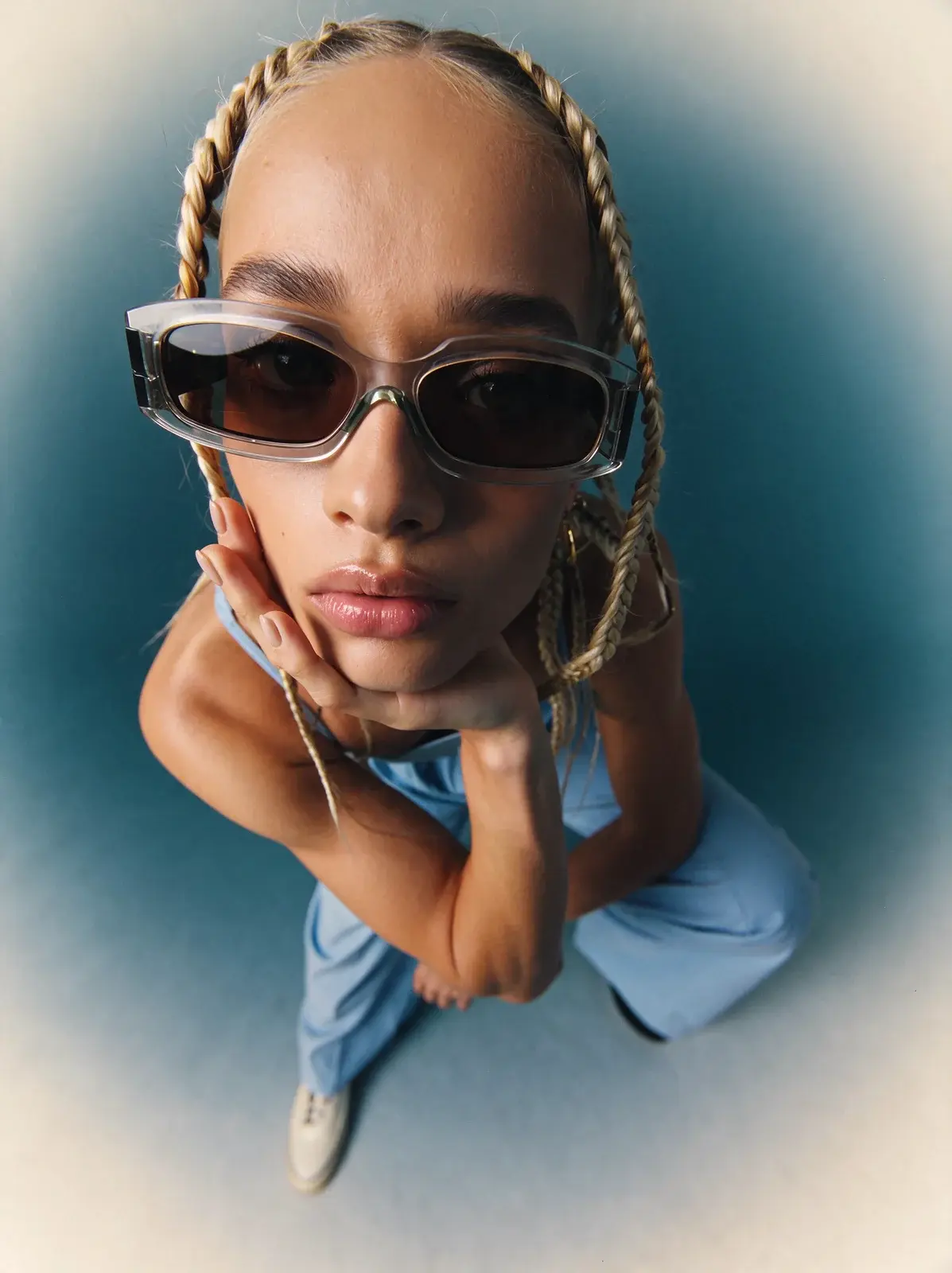
Seedream 5.5

Copy

Restyle this photo as a dreamy Korean fashion editorial shot on medium-format film. Keep the person, pose, clothing, expression and framing exactly as they are, and add or remove nothing. Replace the background with a smooth airbrushed studio backdrop: deep petrol teal (#2F5F6B) glowing right behind the model, softly fading through muted steel blue (#7FA3B0) into warm cream (#EFE6D6) only at the far corners of the frame, wide and gentle, with no visible shape or edge. Soft directional light from the upper left shapes the face with a lit side and a softly shaded side; the shadows pick up teal from the backdrop and keep their detail. Glossy natural highlights, slightly lifted blacks, fine film grain over the whole frame.
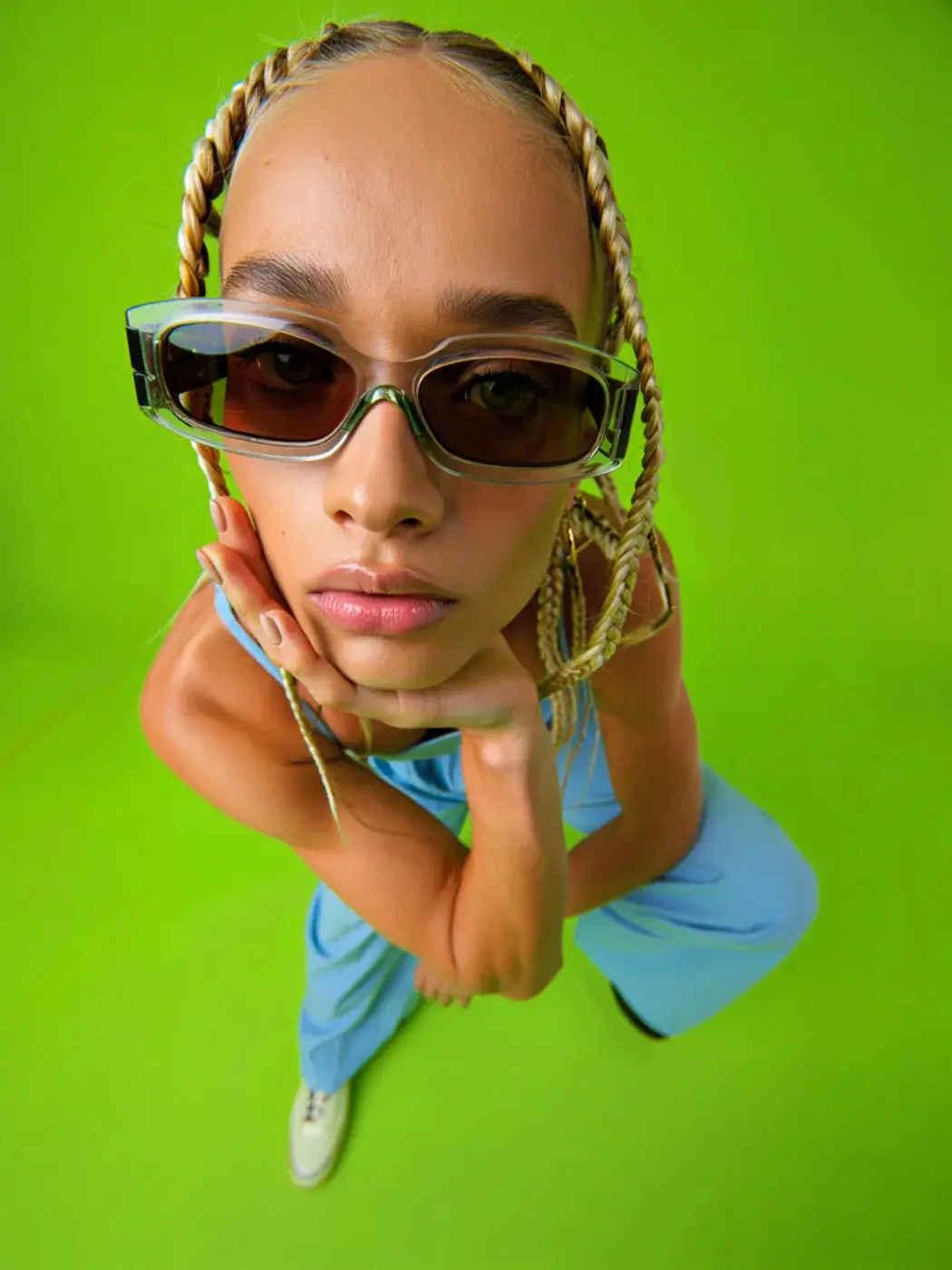

Seedream 5.5
Copy
Apply one single unified warm cross-processed vintage analog film process to the ENTIRE image, subject and background together, so that it looks like one photograph shot on expired color-reversal film, never like a cutout placed over a new background; the same treatment applies whether the subject is a person or an object. Heavy, obvious film grain is the defining part of this look: coarse-to-medium film grain particles (like pushed ISO 1600-3200 color film) laid over everything at about 22% intensity, clearly visible without zooming in, even when the picture is viewed small on a phone screen, equally strong on skin, hair, clothing, props and on the backdrop, so that the smooth backdrop itself looks sandy and grainy and never smooth; no digital smoothness, no noise reduction, no skin retouching, no clean or plastic surfaces anywhere. Color grade: a split-toned warm cross-process look; highlights are warm cream-yellow (light surfaces and skin about #EFD6AB, the brightest points a pale yellow-cream #F2F2C3), midtones a soft pinkish tone (about #D2A8A4), shadows a brick-coral red (about #A8554D), and the darkest areas a deep warm orange-brown (about #311604), never neutral black or gray, with lifted blacks; skin, if present, is golden-cream in the light, pink on the cheeks (#E4AAA4) and coral-red in shade (#9A5C46 to #C07165); every other color of the subject keeps its own hue and is only shifted by this grade, never recolored, repainted or replaced; overall saturation high (about 42%), median brightness about 66%; soft, glowing, dreamy diffused light with a gentle halation glow around the highlights and a luminous dewy, sparkling sheen on smooth surfaces. Keep the subject, pose, shape, details, props, their colors, camera angle and framing exactly, adding or removing nothing, no text, no watermarks. Everything in the frame that is not the subject, wherever it is, is replaced by one smooth continuous airbrushed multicolor field whose color depends only on position, with no visible shape, ring, outline, line, edge, rectangle, light pool, steps or bands anywhere, no change of surface at any height, and no hard edge between any two colors: every change of color happens gradually over at least 40% of the frame, and everything behind and under the subject, whether it was a wall, a floor or both, becomes the same single continuous field. The field shifts smoothly and strongly from warm and vivid on the left to soft and muted on the right. The top-left corner is a glowing peach-cream like a soft light leak (#FCCBA9, brightness about 99%); from there the left side flows gradually through coral-pink (#F8B9A9, #F3A0A3, then about #E87999, saturation up to about 48%) toward a hot coral-red in the lower left (#CA554C, saturation about 62%, strongest at the bottom
of the left side) with a rose-pink bottom-left corner (#CB6791); the right side is a muted lavender-mauve (#B08AAB, hue about 308 degrees, saturation about 20-25%, brightness about 69%) around the middle of the frame, becoming a dusty mauve-gray toward the right edge (#BEA9B1) and a pale warm cream-gray in the top-right corner (#D6D0BC), with the lower right #B596AC to #C9B6B2; the whole transition is very long, wide and soft, one gentle airbrushed field. Finally, strong visible coarse film grain lies evenly over everything including the subject.
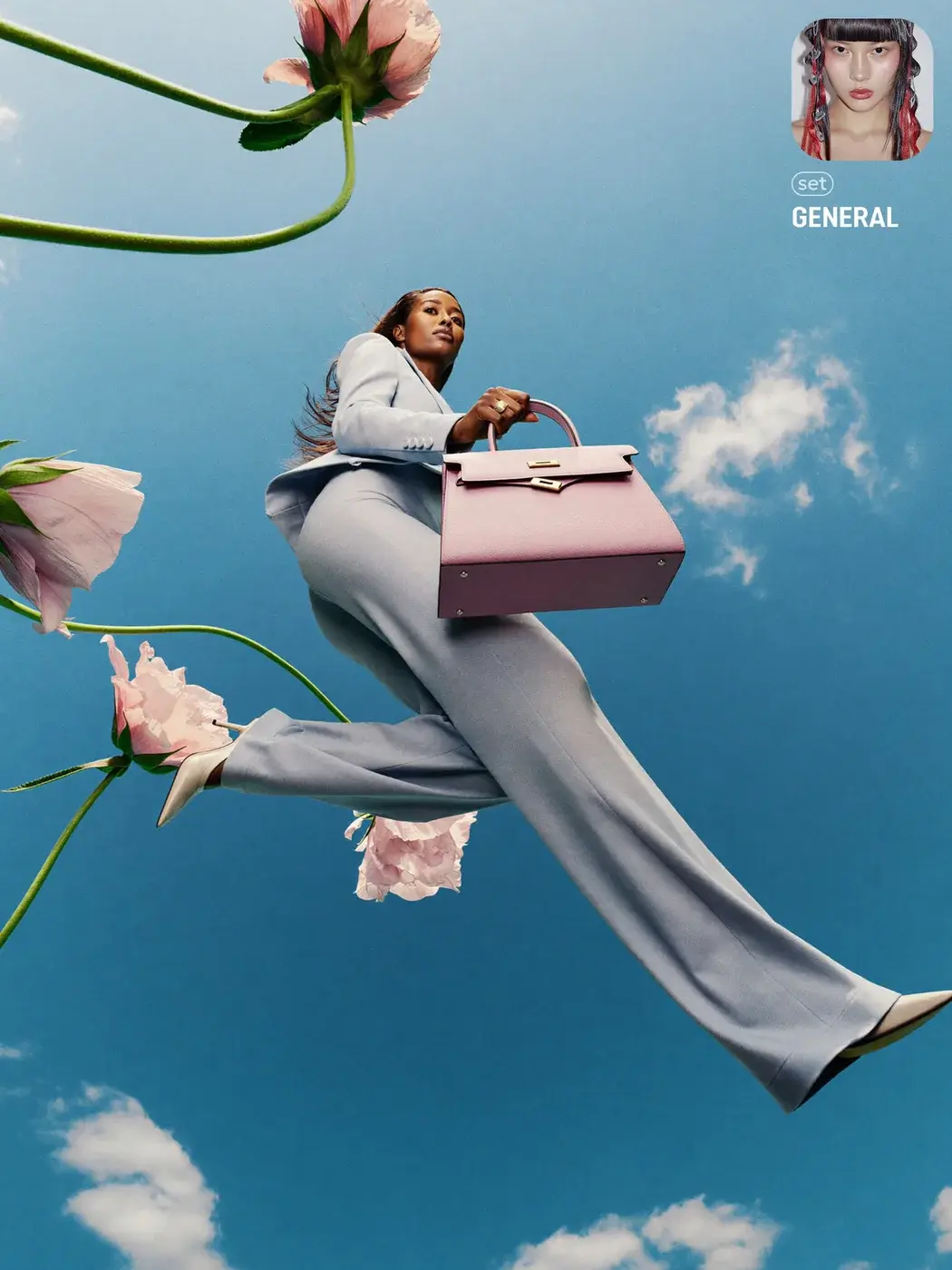

Seedream 5.5
Copy
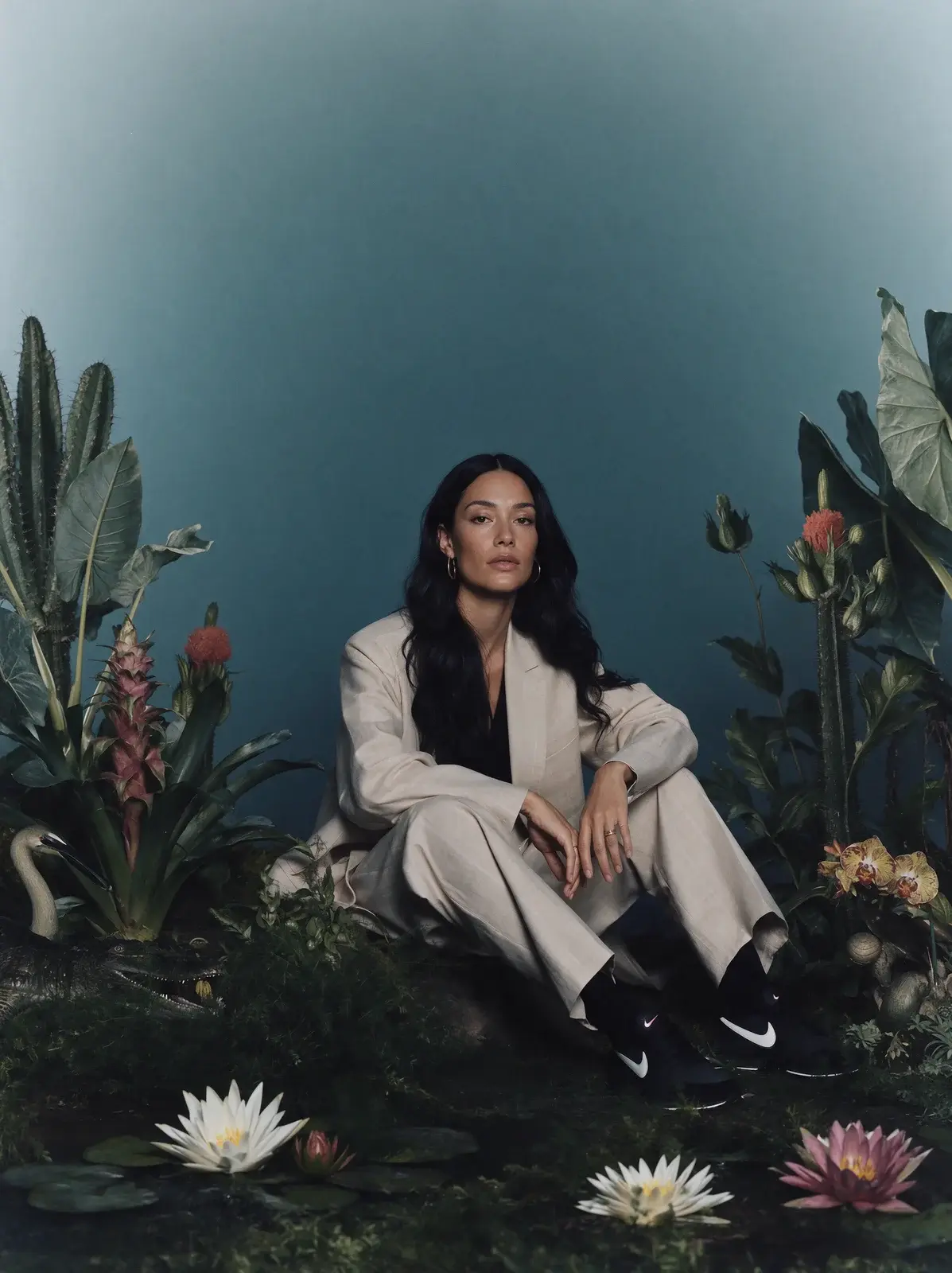
Apply one single unified dramatic color-gel editorial analog film process to the ENTIRE image, subject and background together, so that it looks like one photograph shot on color film in a photo studio with one strong directional key light and one colored gel light, never like a cutout placed over a new background; the same treatment applies whether the subject is a person or an object. Film grain is a defining part of this look and must be obvious: coarse-to-medium film grain with particles about 4-5 pixels wide at 1760 pixels of image width, so that it stays clearly visible even when the picture is shown small on a phone screen, about 13% strength on the subject (skin, hair, fabric, props, midtones) and about 5% on the smooth backdrop, made of fine irregular clumps of slightly lighter and darker tone with a faint variation in color, like a scan of a 35mm Kodak Portra 400 negative; the subject and the backdrop share exactly the same grain texture; no digital smoothness, no noise reduction, no plastic retouching, no clean synthetic surfaces anywhere. Color grade and light: one strong directional key light from the upper left with a clearly visible direction, sculpting every form with defined shadows on the right side and bright specular highlights, plus a second colored gel light in the backdrop color (periwinkle) from the right that wraps every edge as a glowing rim light and colors the shadows; the shadows are deep and saturated periwinkle (about #241538, midtone shadows about #4D3B66) instead of gray, the darkest areas are true near-black (about #0B090C, never lifted, never milky or faded), lit surfaces are warm and clean, highlights bright but never clipped (peak about 96%), a wide tonal range with medium-high contrast (median brightness about 56%), rich saturated colors (overall saturation about 40%) and a soft halation glow around the brightest highlights; the backdrop itself stays a smooth, luminous, airbrushed color field and only the subject receives the directional shadows, with one long soft cast shadow in the backdrop's own hue; skin and light materials show both lights: warm highlights from the key and periwinkle-tinted shadows from the gel; every other color keeps its own hue. Depth: the backdrop is clearly deeper and richer in color around the subject than toward the outer edges of the frame, so that the subject sits inside a soft glowing atmosphere of color; add a soft contact shadow in the backdrop's own hue, a faint rim of the backdrop color on the subject's edges, a gentle halation bloom around the brightest highlights and slightly lower contrast far from the subject. Keep the subject, pose, shape, details, props, their colors, camera angle and framing exactly, adding or removing nothing; skin and hair take the grade exactly as
they do in a real film photograph shot in this light, clearly tinted by the dominant light and by the backdrop color (hue and saturation shift noticeably toward the tints described in the grade), while the person stays recognizable: the complexion depth (lightness) of the skin stays within about 10% of the original and is never whitened or darkened, hair keeps its base color family (blonde stays blonde, dark stays dark) with the tint on top of it, and eye color is unchanged; keep all printed text, lettering and logos on the product exactly as they are, sharp, legible and unchanged, add no other text, logos or watermarks, and remove any app badge, sticker or caption from the corners of the source. Everything in the frame that is not the subject, wherever it is, and everything behind and under the subject, whether it was a wall, a floor, sky, field, room or landscape, is completely replaced by one smooth, seamless, perfectly clean airbrushed color field that depends only on position, with no texture of the original surroundings, no horizon, crease, corner, edge, line, rectangle, light pool, beam, cone, oval, ring, steps or bands anywhere, and no hard edge between any two colors: every color change takes place gradually over at least 40% of the frame, and saturation or brightness never changes by more than about 3 points over any 5% of the frame width or height. The field is one soft airbrushed color field whose hue changes continuously across the frame, and the color reaches every edge and every corner: it never fades to white or cream. Right behind the subject it is a rich, clear color (#623A99, hue about 265 degrees, saturation about 62%); about a quarter of the way to the frame edge it is #7949A3; halfway to the edge #945EAD with the hue turning toward 310 degrees; three quarters of the way #AE6EB8; at the middle of every frame edge a clear soft color (#C280BE); and in the four corners a gently lighter version of the far hue (#CC8FC2), still clearly colored with about 30% saturation. The hue drifts by about 45 degrees from the subject to the edges so that the field reads as two or three blended colors, brightness stays between about 60% and 82% everywhere, with no more than about 4 points of change over any 5% of the frame width, one very long, wide, soft airbrushed gradient with no visible outline, ring or rim anywhere. The black sheer turtleneck top and black trousers, the silver monitor with the black Apple logo on its back, the white keyboard and mouse, the glass desk with its reflections, the tan sculptural chair and the white cable keep their exact shapes and colors, and her seated pose stays exactly the same; the lilac-white studio backdrop becomes the color field, and everything rests on it with only soft contact shadows and glass
reflections in the backdrop's own hue. Finally, strong visible film grain lies evenly over everything including the subject, and the backdrop glows softly and smoothly around the subject.

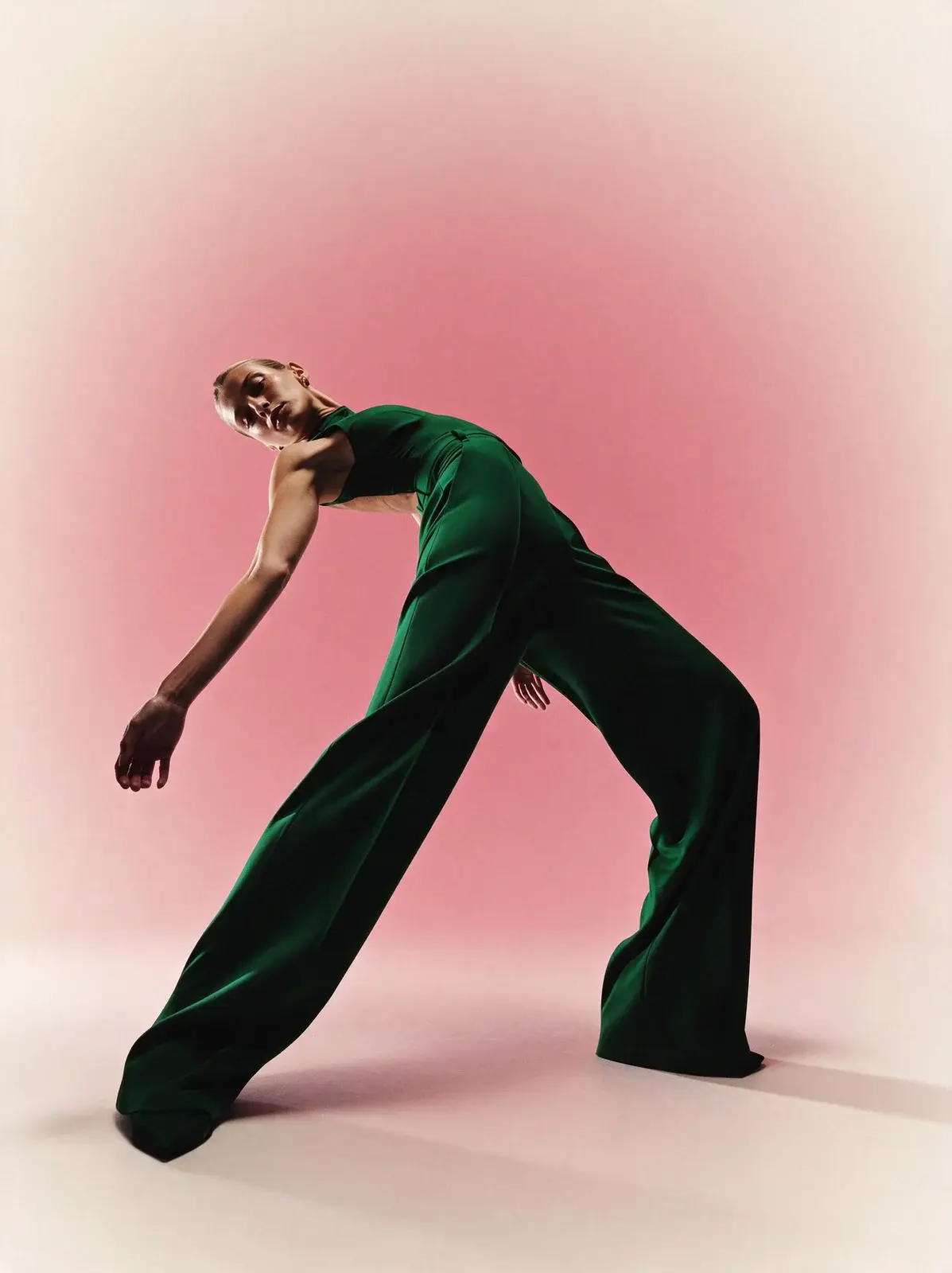
Seedream 5.5
Copy
{
"task": "edit this photograph",
"keep_unchanged": "the subject and everything it holds or wears, pose, expression, camera angle and framing exactly as in the original; no objects added or removed",
"change_only": ["background color", "lighting", "color grade", "film texture"],
"background": {
"form": "the original background is replaced by a single very wide radial gradient filling the entire frame, like a Photoshop radial gradient: an ellipse taller than it is wide, centered directly behind the subject and reaching to the left and right edges of the frame",
"colors": [
{"position": "center, behind the subject", "color": "rose pink #E58AA0"},
{"position": "about 55% of the way to the corners", "color": "soft blush #F1BBC0"},
{"position": "only the last 15%, at the outer edges and the corners", "color": "cream #F3E9E2"}
],
"transition": "one long continuous smooth gradient across the whole frame; every color melts into the next over a very wide distance, with no ring, shape or edge anywhere",
"subject_edges": "the subject keeps its own clean natural edges; no glow, halo or outline around the subject",
"shadows_on_surface": "a soft short shadow only where
the subject touches or is close to a surface"
},
"lighting": {
"key": "a soft directional key light from the upper left and slightly in front, clearly sculpting the face and body: a lit side and a gently shaded side with soft-edged shadows, not flat",
"highlights": "natural glossy highlights on skin, hair and shiny materials, with a soft glow around them",
"shadows": "deep and rich, tinted with rose-mauve from the backdrop instead of plain gray or black, still with visible detail",
"contrast": "medium-high contrast, dense dark tones in dark clothing, clean bright whites"
},
"light_and_color_interaction": "the backdrop color bounces softly onto the subject: shaded sides pick up a faint pink tint, highlights stay neutral",
"rendering": "slightly lifted blacks, a very slight diffusion glow around bright areas",
"grain": {
"look": "visible fine film grain, like ISO 400 color negative film scanned at high resolution",
"size": "very small, about one to two pixels, never coarse or blotchy",
"distribution": "even over the whole image: backdrop, skin and clothing alike, a little more noticeable in smooth backdrop areas and midtones; it never forms patterns or ripples"
}
}
},
"lighting": {
"key": "a soft directional key light from the upper left and slightly in front, clearly sculpting the face and body: a lit side and a gently shaded side with soft-edged shadows, not flat",
"highlights": "natural glossy highlights on skin, hair and shiny materials, with a soft glow around them",
"shadows": "deep and rich, tinted with rose-mauve from the backdrop instead of plain gray or black, still with visible detail",
"contrast": "medium-high contrast, dense dark tones in dark clothing, clean bright whites"
},
"light_and_color_interaction": "the backdrop color bounces softly onto the subject: shaded sides pick up a faint pink tint, highlights stay neutral",
"rendering": "slightly lifted blacks, a very slight diffusion glow around bright areas",
"grain": {
"look": "visible fine film grain, like ISO 400 color negative film scanned at high resolution",
"size": "very small, about one to two pixels, never coarse or blotchy",
"distribution": "even over the whole image: backdrop, skin and clothing alike, a little more noticeable in smooth backdrop areas and midtones; it never forms patterns or ripples"
}
}
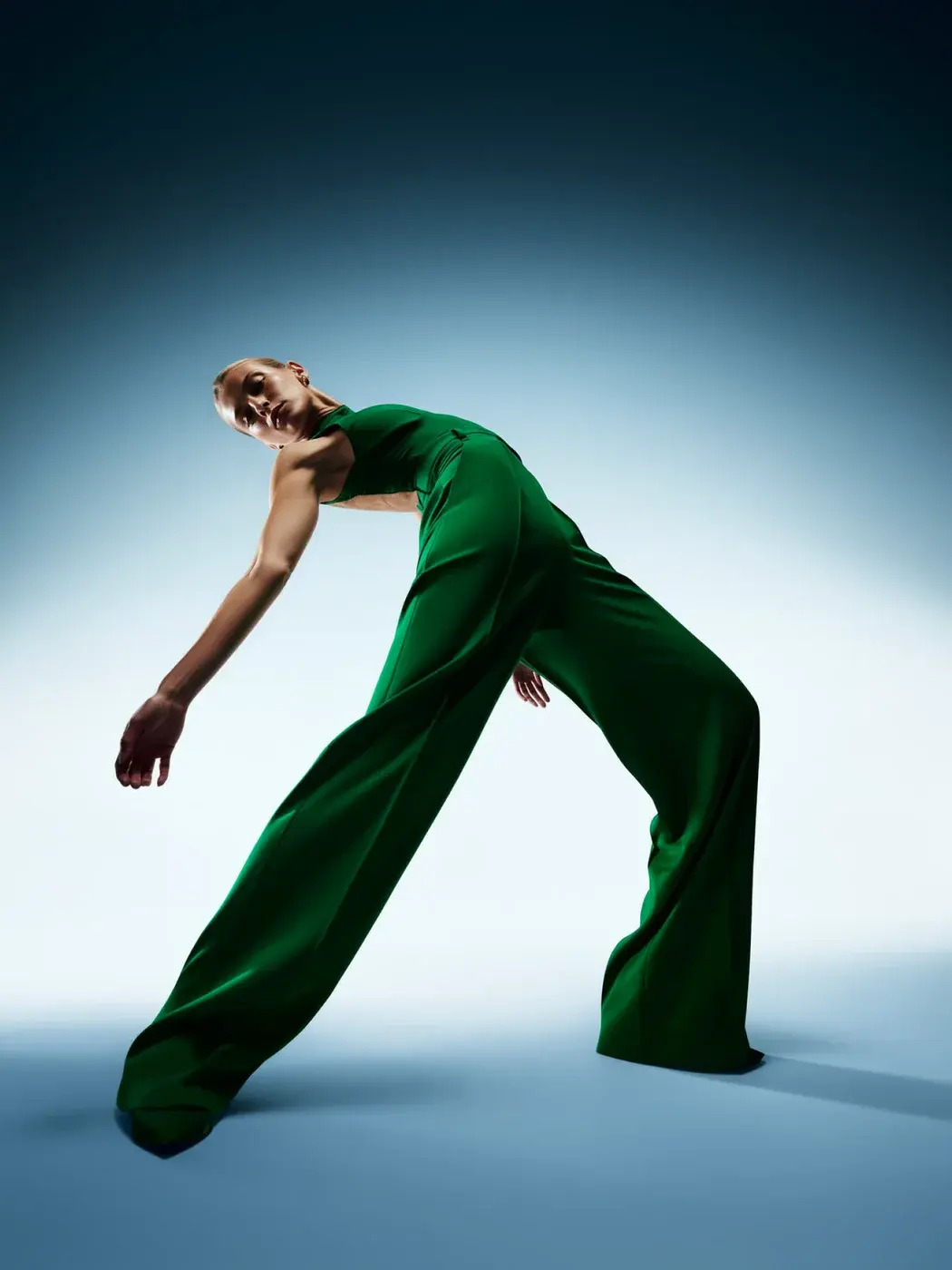
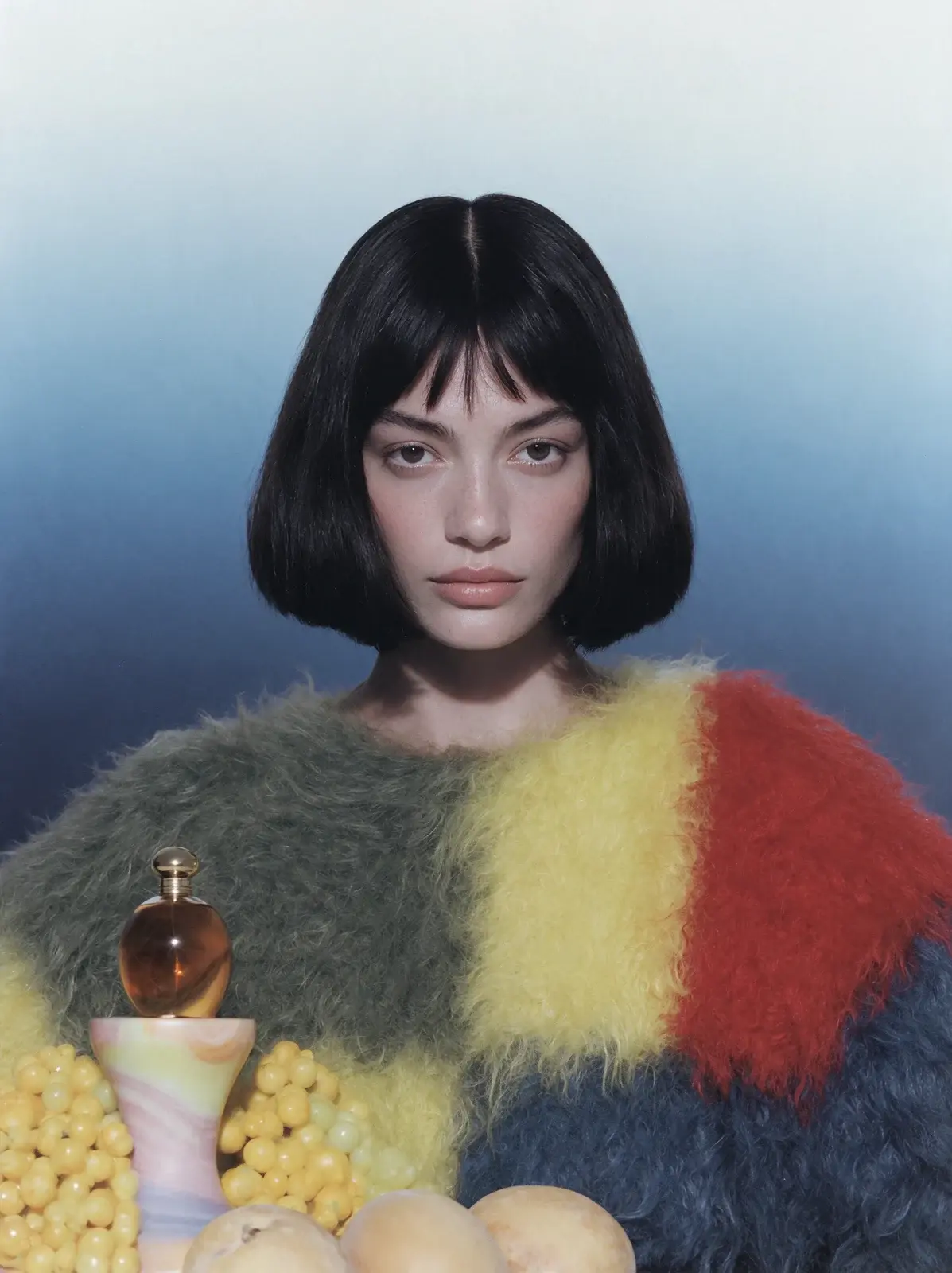
Seedream 5.5
Copy
Restyle this photo as a cool, muted, medium-format film fashion editorial portrait. Keep the subject exactly as it is: the person or object, pose, face, clothing, props, camera angle and framing, with nothing added or removed. Change only the backdrop, the light, the color grade and the film grain.
Backdrop: replace the background with a seamless studio backdrop in one smooth, slightly dusty blue gradient running from the very top edge to the very bottom edge of the image. The top 15% barely changes and is a pale cyan-white (#E3EFF0). From there it deepens gradually and evenly: #C3DEE5 at 20% of the height, #9CC5D6 at 30%, #70A5C3 at 40%, #5084AC at 50%, #3B6190 at 60%, #2A4268 at 70%, #222C49 at 80%. The last 20% stays an almost level, dark, desaturated slate navy (#222A3E), a trace lighter at the very bottom edge (#273046). The transition into the dark base is long and soft with no visible line. The blues are muted and slightly grayed, never electric or highly saturated, and the base is a grayish slate navy, not a vivid dark blue. The backdrop is a touch brighter on the right side than on the left at the same height. The same gradient continues smoothly behind and under the whole subject, with no scenery, pattern, shapes, bands or visible edges.
Light: a large, soft key light from the front and slightly above, a little from the side, wraps the face and body with gentle soft-edged shadows. Skin has a soft glossy sheen with small clean specular highlights on cheeks and nose. Shadows are cool slate-blue (around #5A687C on skin), picking up the backdrop color, never brown or orange. Highlights roll off softly and are never blown out.
Color grade: cool, muted, pastel-leaning color negative look. Skin is pale, low in saturation and cool-leaning: lit skin a pale pinkish beige (around #BB9B98), midtones a soft mauve-pink (around #968386), the shaded side slate-blue. No orange, tan or warm-brown skin; reduce skin saturation to about half of natural. White and light neutrals stay neutral. Dark neutrals such as denim or black clothing are lifted into a blue-gray slate (around #434E58) instead of black. The whole image is airy and fairly bright, with low-to-medium contrast and lifted blacks. Pull the saturation of the subject's colors down so they read soft and quiet; the blue backdrop stays the strongest color in the frame.
Film grain: clearly visible fine grain like a scanned ISO 400-800 color negative, tiny and even, around 1.2% luminance noise on the mid-blue and dark navy of the backdrop, about half of that on the pale top and on skin. It is spread over the whole frame with no patterns, ripples or blotches, and fine detail stays crisp under it.
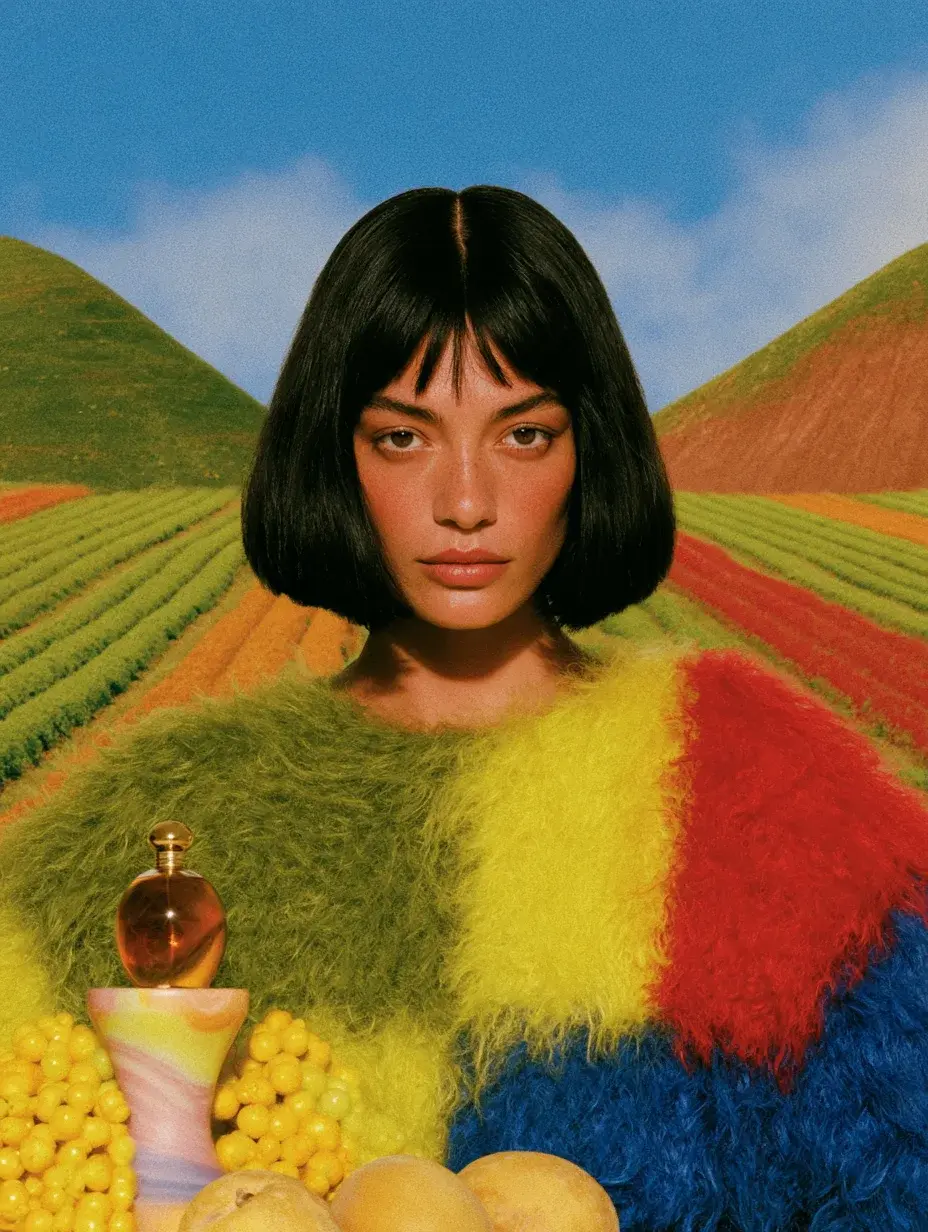
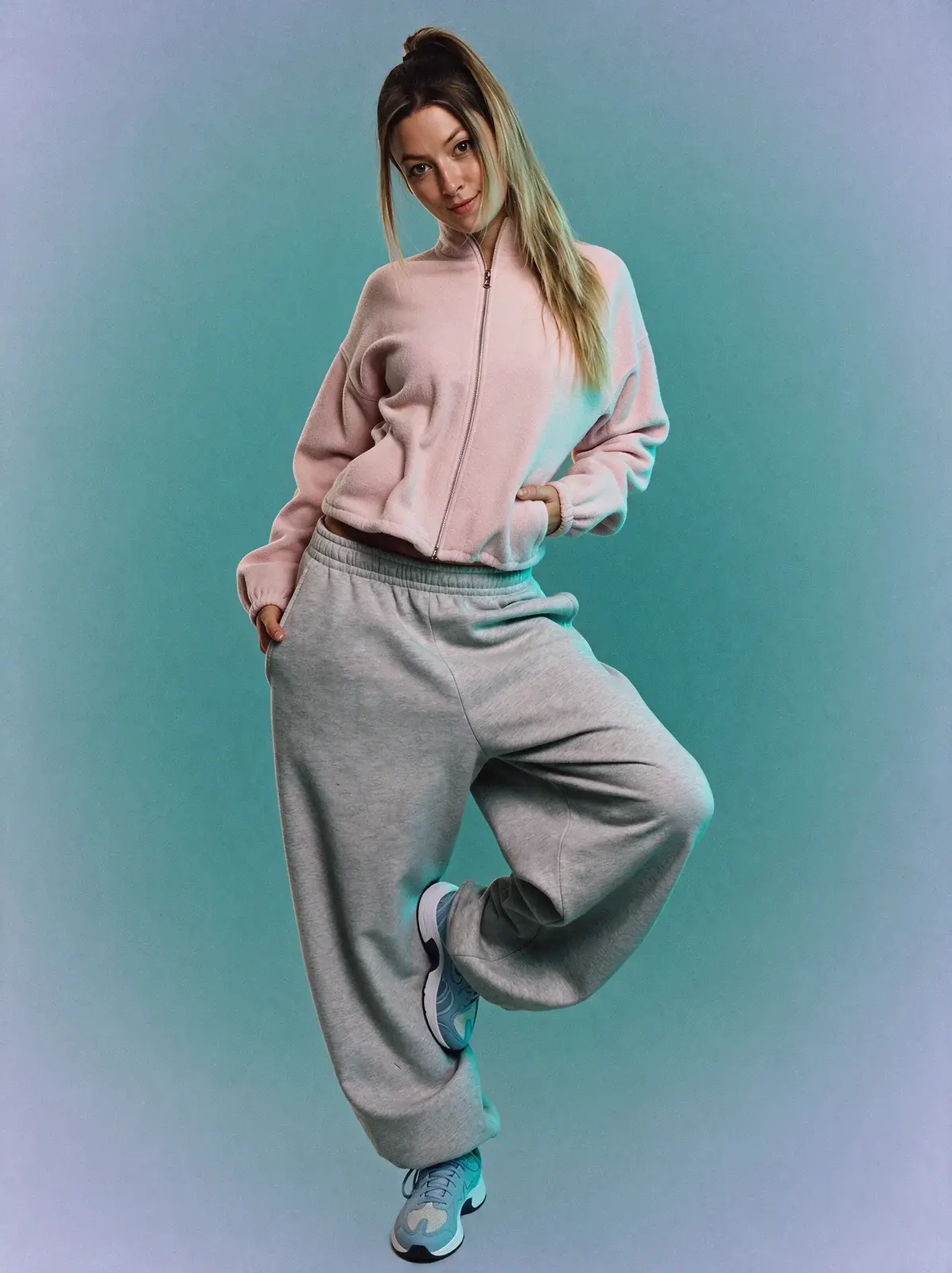
Seedream 5.5
Copy
Apply one single unified dramatic color-gel editorial analog film process to the ENTIRE image, subject and background together, so that it looks like one photograph shot on color film in a photo studio with one strong directional key light and one colored gel light, never like a cutout placed over a new background; the same treatment applies whether the subject is a person or an object. Film grain is a defining part of this look and must be obvious: coarse-to-medium film grain with particles about 4-5 pixels wide at 1760 pixels of image width, so that it stays clearly visible even when the picture is shown small on a phone screen, about 13% strength on the subject (skin, hair, fabric, props, midtones) and about 5% on the smooth backdrop, made of fine irregular clumps of slightly lighter and darker tone with a faint variation in color, like a scan of a 35mm Kodak Portra 400 negative; the subject and the backdrop share exactly the same grain texture; no digital smoothness, no noise reduction, no plastic retouching, no clean synthetic surfaces anywhere. Color grade and light: one strong directional key light from the upper left with a clearly visible direction, sculpting every form with defined shadows on the right side and bright specular highlights, plus a second colored gel light in the backdrop color (teal-aqua) from the right that wraps every edge as a glowing rim light and colors the shadows; the shadows are deep and saturated teal-aqua (about #153836, midtone shadows about #3B6663) instead of gray, the darkest areas are true near-black (about #0B090C, never lifted, never milky or faded), lit surfaces are warm and clean, highlights bright but never clipped (peak about 96%), a wide tonal range with medium-high contrast (median brightness about 56%), rich saturated colors (overall saturation about 40%) and a soft halation glow around the brightest highlights; the backdrop itself stays a smooth, luminous, airbrushed color field and only the subject receives the directional shadows; skin and light materials show both lights: warm highlights from the key and teal-aqua-tinted shadows from the gel; every other color keeps its own hue. Depth: the subject is lit by the backdrop and belongs to it: a thin rim of the backdrop color glows on its edges, soft colored bounce light from the backdrop falls on skin, hair and clothes, and the edges of the subject have exactly the same sharpness and softness as the rest of the photograph, with no dark outline, no halo, no darker ring or shadow of color around the figure, so that it never looks cut out and pasted onto the background; a gentle halation bloom around the brightest highlights and slightly lower contrast far from the subject. Keep the subject, pose, shape, details, props, their colors, camera angle and
framing exactly, adding or removing nothing; skin and hair take the grade exactly as they do in a real film photograph shot in this light, clearly tinted by the dominant light and by the backdrop color (hue and saturation shift noticeably toward the tints described in the grade), while the person stays recognizable: the complexion depth (lightness) of the skin stays within about 10% of the original and is never whitened or darkened, hair keeps its base color family (blonde stays blonde, dark stays dark) with the tint on top of it, and eye color is unchanged; no text, no logos, no watermarks, and remove any app badge, sticker or caption from the corners of the source. Everything in the frame that is not the subject, wherever it is, and everything behind and under the subject, whether it was a wall, a floor, sky, field, room or landscape, is completely replaced by one smooth, seamless, perfectly clean airbrushed color field that depends only on position, with no texture of the original surroundings, no horizon, crease, corner, edge, line, rectangle, light pool, beam, cone, oval, ring, steps or bands anywhere, and no hard edge between any two colors: every color change takes place gradually over at least 40% of the frame, and saturation or brightness never changes by more than about 3 points over any 5% of the frame width or height. The field is one soft airbrushed color field whose hue changes continuously across the frame, and the color reaches every edge and every corner: it never fades to white or cream. Right behind the subject it is a rich, clear color (#4D9994, hue about 176 degrees, saturation about 50%); about a quarter of the way to the frame edge it is #5BA0A3; halfway to the edge #6EA2AD with the hue turning toward 218 degrees; three quarters of the way #7DA3B8; at the middle of every frame edge a clear soft color (#8DA6C2); and in the four corners a gently lighter version of the far hue (#9BADCC), still clearly colored with about 24% saturation. The hue drifts by about 42 degrees from the subject to the edges so that the field reads as two or three blended colors, brightness stays between about 60% and 82% everywhere, with no more than about 4 points of change over any 5% of the frame width, one very long, wide, soft airbrushed gradient with no visible outline, ring or rim anywhere. There is no floor, table, ground or horizon anywhere and no long cast shadow on the backdrop: the subject floats in the color field like in an airbrushed studio portrait, with only a faint soft shadow right at its own edges. Preserve exactly as in the source: the face, expression, hairstyle and hair color, body, skin tone, every piece of clothing with its cut, fabric, pattern and color, jewelry and every accessory and prop; only the light, the grade and
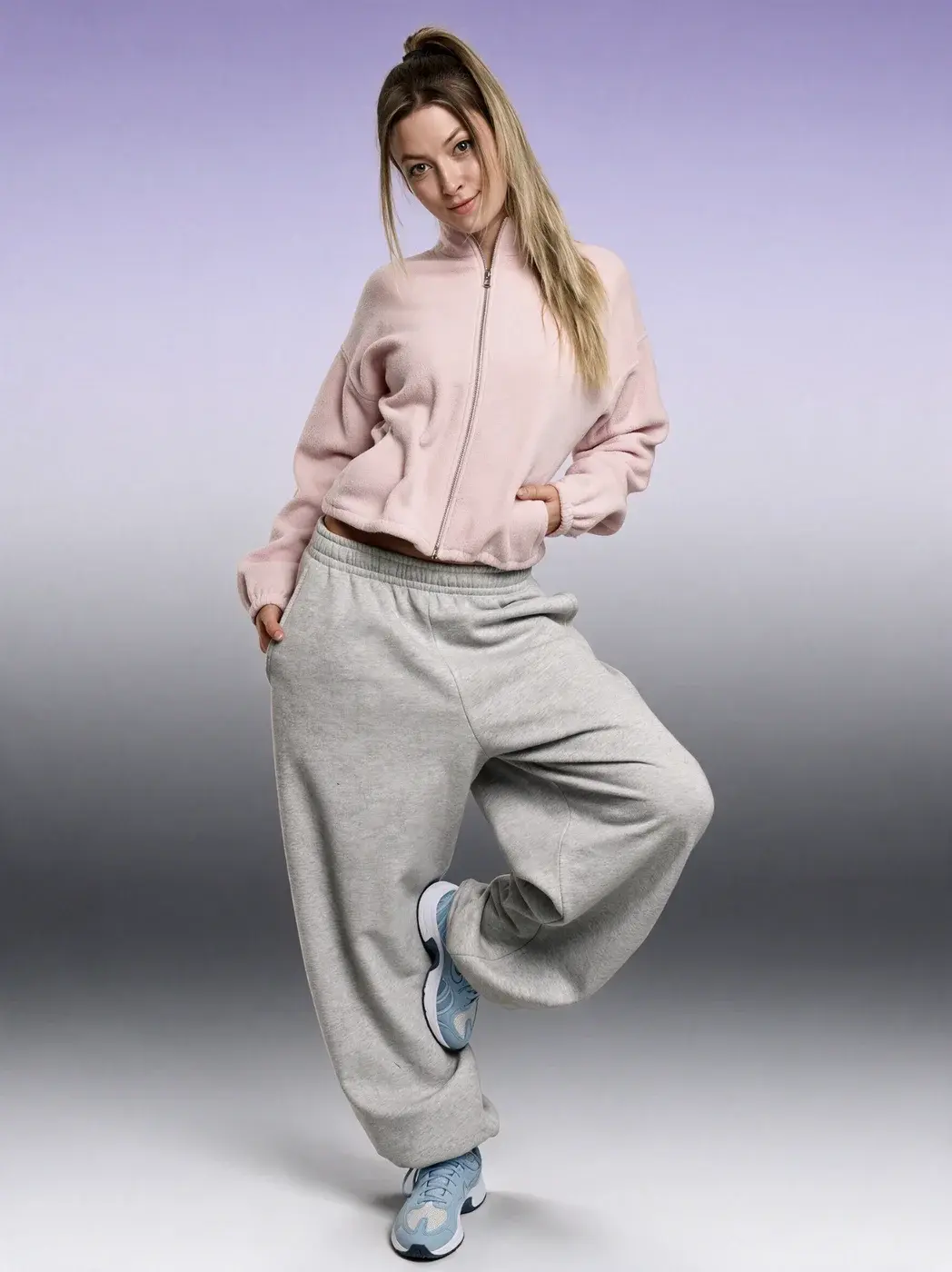
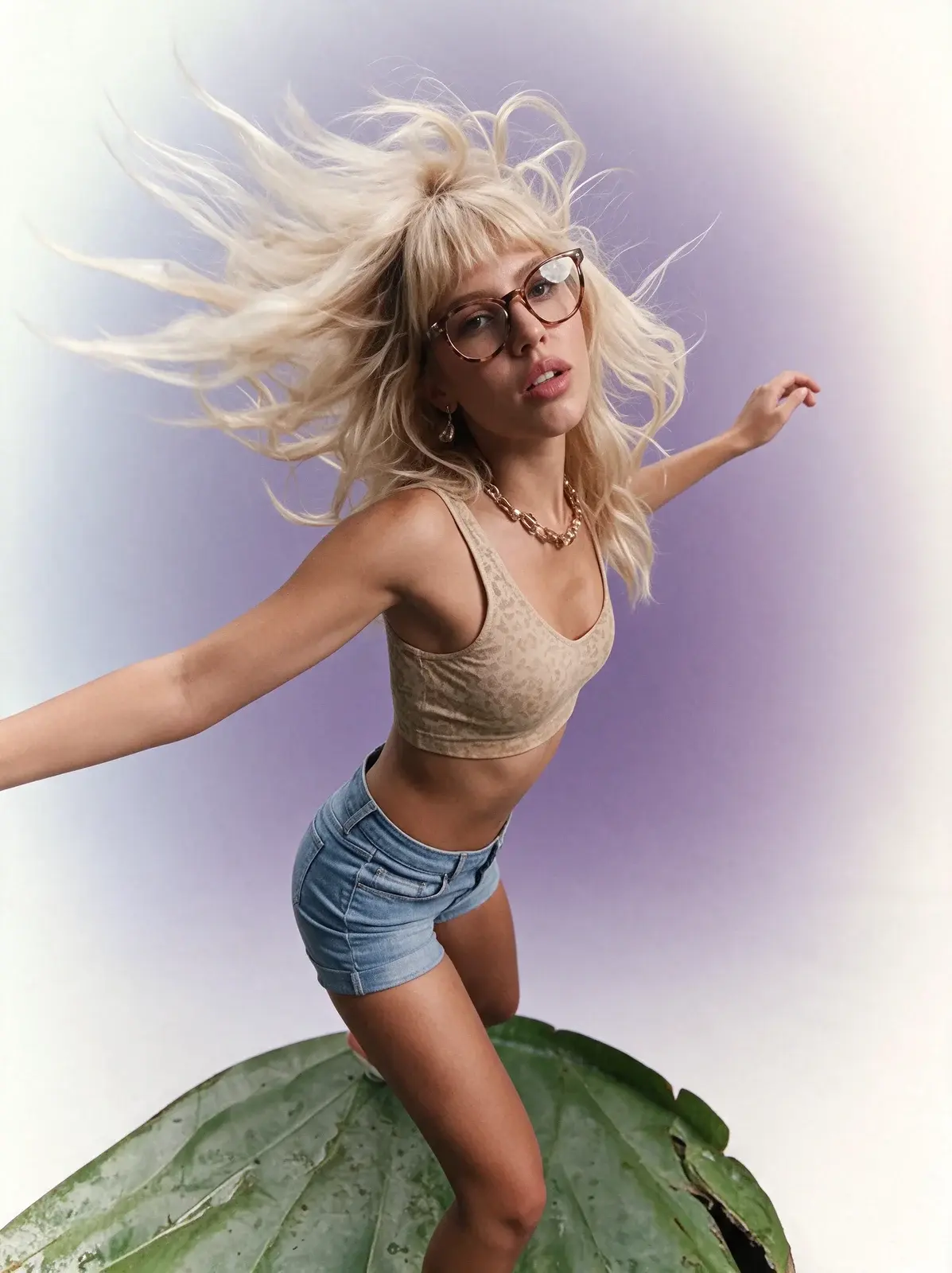
the backdrop reaction change, nothing is added, removed, restyled or recolored. The pale pink fleece zip jacket, the heather grey sweatpants, the light blue sneakers with white soles and her long blonde ponytail keep their exact shapes and colors, and her pose standing on one leg with one hand in the pocket and the tilted head stays exactly the same; the purple-grey studio gradient is completely replaced by the color field. Finally, strong visible film grain lies evenly over everything including the subject, and the backdrop glows softly and smoothly around the subject.
Seedream 5.5
Copy
{"edit":"Apply a sand-and-ivory photographic print treatment to the uploaded image. Use the original foreground composition as the complete inventory of subjects, objects, and accessories. Preserve their exact count, shapes, positions, scale, pose, viewpoint, crop, materials, base colors, and lettering. Preserve actual support points and the visible clearance beneath suspended elements.","background":"Fill the surrounding space with a single continuous matte field. Keep muted golden khaki #BFA470 in the broad interior and warm oat beige #D5C19D between the interior and outer margins. Let ivory #F3E6D5 feather inward from all four corners, reaching roughly a quarter of the way into the frame at the corners and less at the middle of each side. Continue the same gradual color change through gaps in the composition and down to the bottom edge. Keep distant environmental detail within the continuous background field and retain the
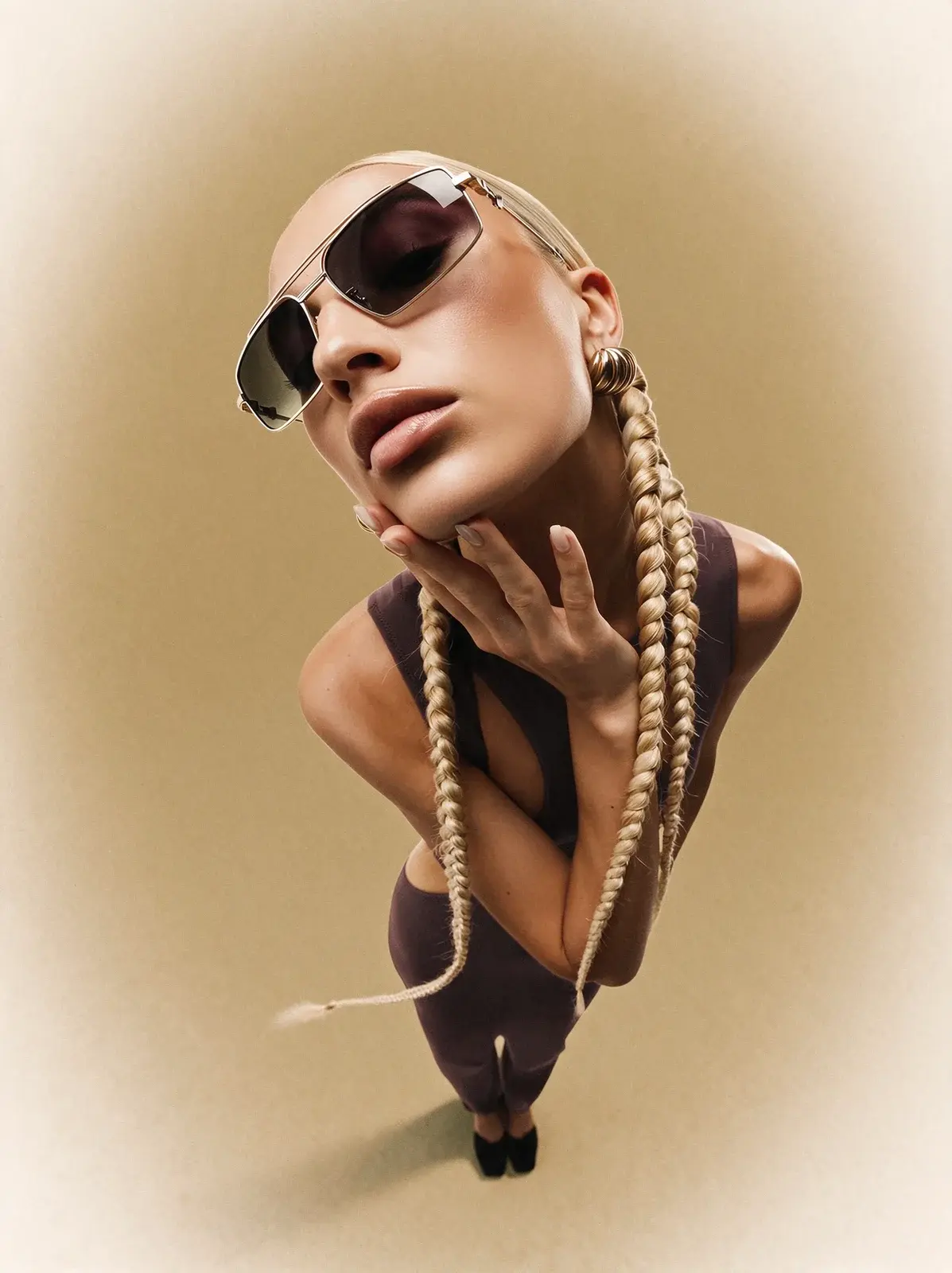
foreground arrangement with all its original components.","light":"Use broad neutral light from the upper right and restrained neutral fill. Keep existing whites bright and nearly neutral, preserve natural skin tone, and retain the depth and saturation of every original hue in both light and shade. On reflective surfaces already present, preserve broad near-white highlights beside dense cool graphite reflections.","shadow":"For grounded elements, keep the shadow tight to the actual contact edge on the left. Let its cool olive-taupe core fade quickly into the warm beige. For suspended elements, keep the original gap open with the uninterrupted beige field visible through it.","grain":"Apply dense fine photographic grain across the entire frame at a uniform scale, approximately 1 to 2 pixels at 2000 pixels wide. Keep individual tonal variations readable in the ivory corners, sand midtones, and shadows while preserving fine material detail."}

Seedream 5.5
Copy
{
"task": "Retouch the uploaded image as a warm analog fashion editorial with a dusty rose-to-wine backdrop, soft cream light and clearly visible fine film grain.",
"preserve": "Keep the exact foreground composition, subject count, identity, expression, hairstyle, makeup, pose, silhouette, garments, footwear, accessories, props, support, placement, viewpoint and crop. Preserve the original cut, construction, base colors, material finish, texture and intrinsic markings of every existing item.",
"background": {
"type": "A single continuous matte gradient fixed to the frame.",
"anchors": [
{"height": "Upper edge", "left": "#AD9188", "right": "#A68784"},
{"height": "Middle", "left": "#8B4E50", "right": "#985C5E"},
{"height": "Lower edge", "left": "#512A29", "right": "#6B383B"}
],
"shape": "Blend through broad, smooth transitions across both axes. Let oxblood brown rise gently from the lower left and keep the lower right redder. Carry the same field through gaps and beneath the composition.",
"content": "Keep the visible background limited to this continuous color field and keep the composition limited to the original people, objects and intrinsic markings."
},
"lighting": {
"key": "Rebalance existing surfaces with a large diffused key from high front left and soft, restrained
warm-neutral fill.",
"falloff": "Give raised and forward-facing planes broad creamy highlights that roll smoothly into peach-beige midtones and denser warm brown shade.",
"shadows": "Keep shadows strongest under overlaps, inside folds and at actual contact points, with short, soft falloff.",
"materials": "Keep matte textures softly lit. Give existing glossy details small, subdued highlights within their original sheen.",
"support": "Preserve the exact geometry of existing supports and the original air gap of suspended subjects."
},
"grade": {
"highlights": "Warm cream, with #E1D8BC as a hue cue for existing pale materials.",
"midtones": "Restrained rose and peach. Use #C9A58A as a lit-skin hue cue adapted to the original complexion and exposure.",
"shadows": "Dense red-brown.",
"color_fidelity": "Preserve natural complexion depth and recognizable accent hues."
},
"grain": {
"type": "Dense, fine photographic luminance grain across the entire finished frame.",
"scale": "Irregular light and dark grains about 1–2 pixels across at 1440 pixels wide.",
"visibility": "Keep grain clearly visible at normal viewing size in pale cream, dusty rose and dark wine tones. Use comparable strength across areas of similar brightness and keep the underlying gradient smooth at larger scales."
}
}

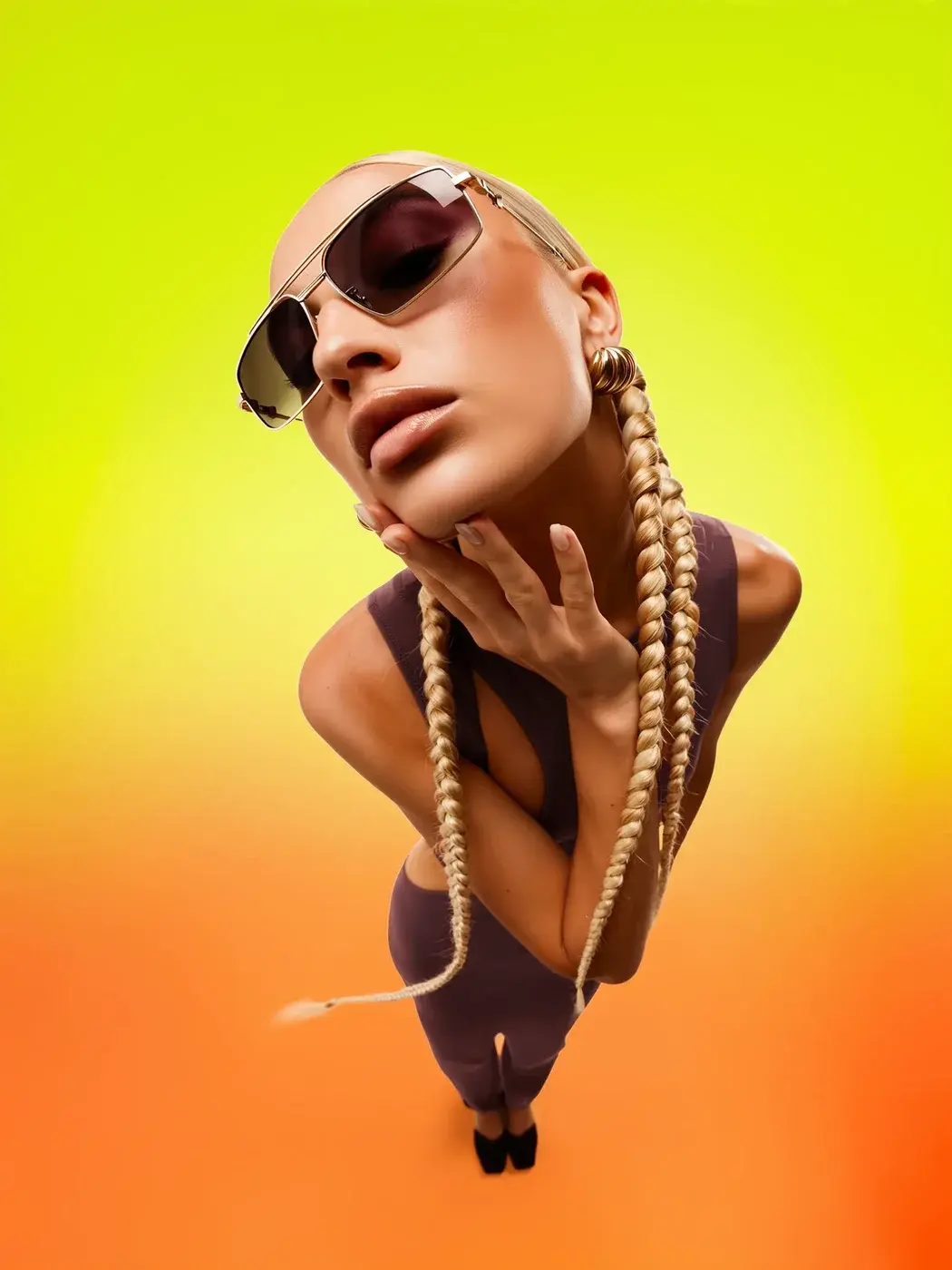
Seedream 5.5
Copy
{
"task": "edit this photograph",
"keep_unchanged": "the subject and everything it holds or wears, pose, expression, camera angle and framing exactly as in the original; no objects added or removed",
"change_only": ["background color", "lighting", "color grade"],
"background": {
"form": "the original background is replaced by a soft glowing color aura that follows the shape of the subject: a feathered oval of saturated color hugging the whole silhouette and extending beyond it, fading outward to a pale creamy off-white at the frame edges and corners; the color depends only on the distance from the subject, not on height in the frame",
"colors": {
"core_next_to_subject": "rose pink #E58AA0",
"middle": "soft blush
#F1BBC0",
"outer_edges_and_corners": "cream #F3E9E2"
},
"transition": "wide, soft and perfectly smooth; the outer edge of the aura has no outline",
"surface": "plain, clean color; no scenery, pattern or texture",
"shadows": "a soft short shadow only where the subject touches or is close to a surface"
},
"lighting": "soft diffused light from the front, natural skin tones, subject details crisp, subject colors unchanged",
"light_and_color_interaction": "the aura bounces softly onto the subject's edges: a faint pink tint in shaded edges, highlights neutral",
"rendering": "a soft glow where the aura meets the silhouette, gentle highlight roll-off, slightly lifted blacks, smooth clean image",
"grain": "very subtle and uniform, barely visible"
}
Seedream 5.5
Copy
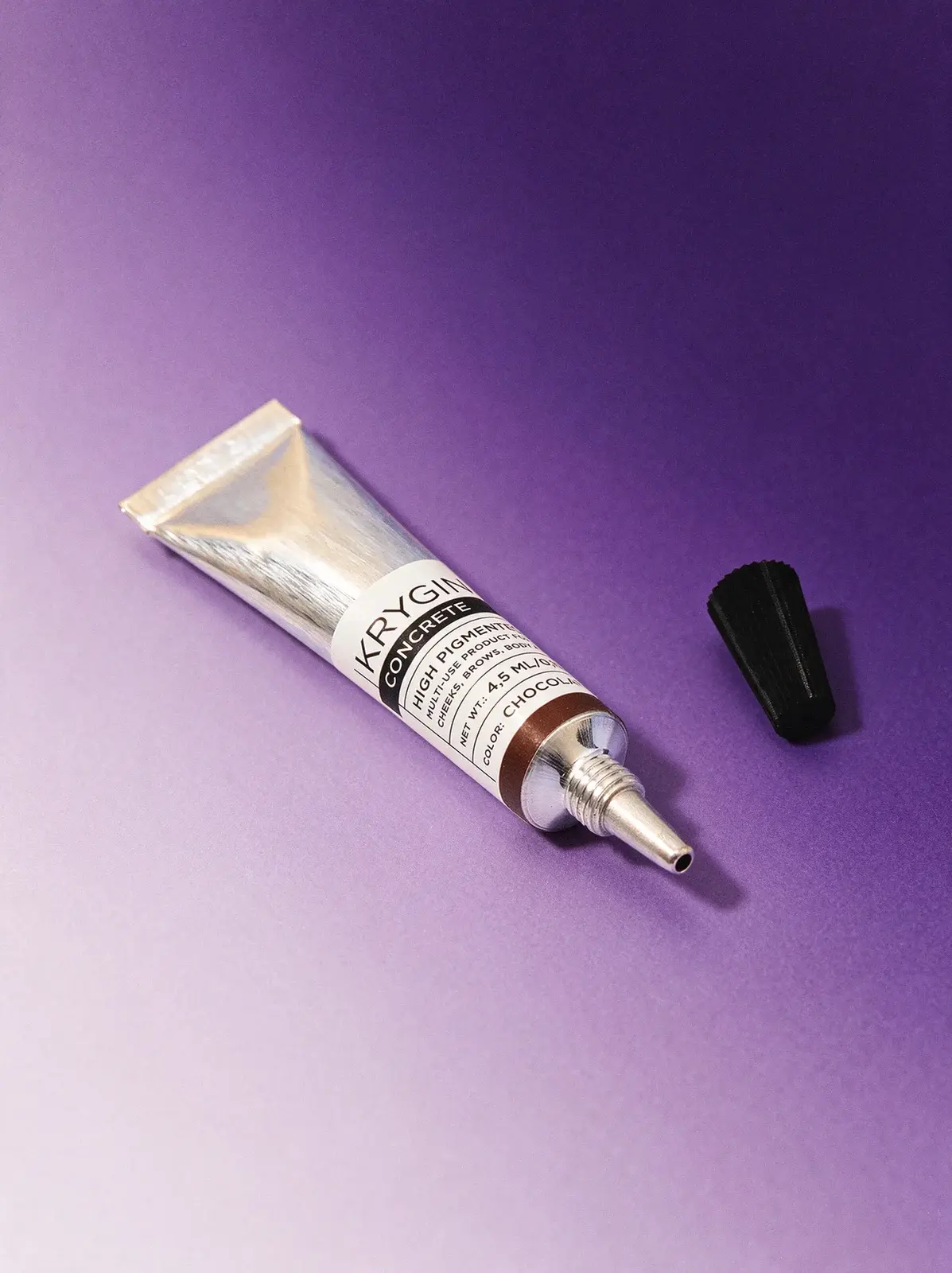
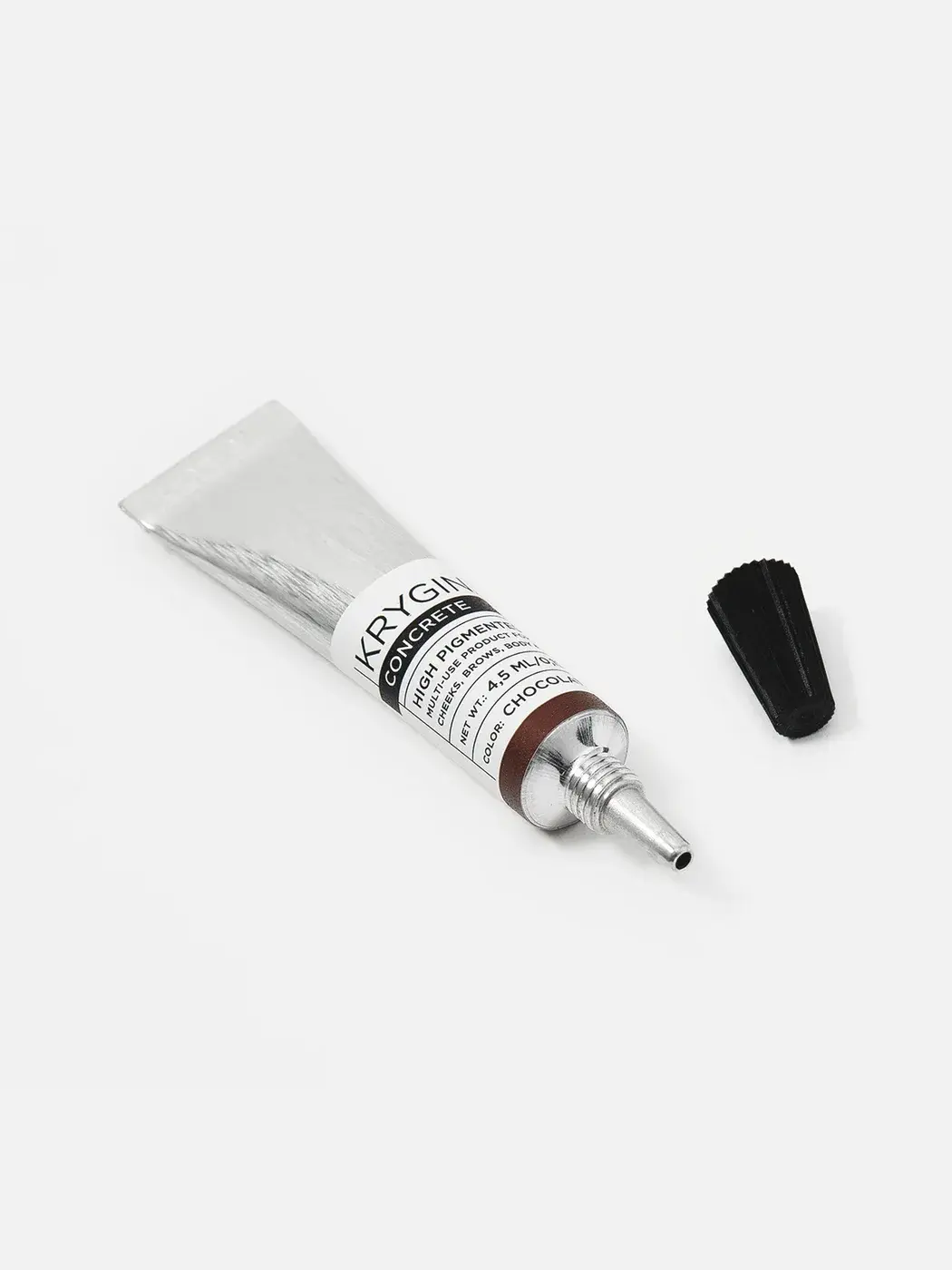
Apply one single unified high-key glossy analog film process to the ENTIRE image, subject and background together, so that it looks like one bright magazine photograph, never like a cutout placed over a new background; the same treatment applies whether the subject is a person or an object. Film grain is a defining part of this look and must be obvious: coarse-to-medium film grain with particles about 4-5 pixels wide at 1760 pixels of image width, so that it stays clearly visible even when the picture is shown small on a phone screen, about 13% strength on the subject (surfaces, fabric, props, midtones) and about 5% on the smooth backdrop, made of fine irregular clumps of slightly lighter and darker tone with a faint variation in color, like a scan of a 35mm Kodak Portra 400 negative; the subject and the backdrop share exactly the same grain texture; no digital smoothness, no noise reduction, no plastic retouching, no clean synthetic surfaces anywhere. Color grade and light: very bright, soft, wrapping frontal light, high key, median brightness about 83%, highlights on lit fabric and glossy surfaces softly blown to near white, a glossy oiled glowing sheen on every smooth surface; light cream materials warm cream (#EFDEC4) in the light and #CDBBAC in shade; lifted blacks, overall saturation low (about 14%) except the backdrop color; light surfaces and metal take a subtle periwinkle tint in the highlights and a warm complementary tint in the shadows. Depth: the color field is never centered on the subject and never forms a vignette, halo or circle around it; the subject sits inside a smooth part of the gradient and the backdrop reads as one wide sweep of color across the whole frame, with a soft contact shadow in the backdrop's own hue, a faint rim of the backdrop color on the subject's edges, a gentle halation bloom around the brightest highlights and slightly lower contrast far from the subject. Keep the subject, pose, shape, details, props, their colors, camera angle and framing exactly, adding or removing nothing; the object's materials take the grade exactly as they do in a real film photograph shot in this light, clearly tinted by the dominant light and by the backdrop color while their own base colors stay recognizable; keep all printed text, lettering and logos on the product exactly as they are, sharp, legible and unchanged, add no other text, logos or watermarks, and remove any app badge, sticker or caption from the corners of the source. Everything in the frame that is not the subject, wherever it is, and everything behind and under the subject, whether it was a wall, a floor, sky, field, room or landscape, is completely replaced by one smooth, seamless, perfectly clean airbrushed color field that depends only on position, with no texture of
the original surroundings, no horizon, crease, corner, edge, line, rectangle, light pool, beam, cone, oval, ring, steps or bands anywhere, and no hard edge between any two colors: every color change takes place gradually over at least 40% of the frame, and saturation or brightness never changes by more than about 3 points over any 5% of the frame width or height. The field is one large diagonal gradient that depends on the position along the line from the upper right corner to the lower left corner of the frame, never on the position of the subject. The upper right corner and the right edge in the upper half are a deep, rich, saturated color (#431E75, hue about 265 degrees, saturation about 74%, brightness about 46%, never muddy or gray); it opens very gradually across the middle of the frame through #72499E and #A77FC7 into a pale tint at the lower left corner (#DCC5EB); the upper left corner is #9C74C2 and the lower right corner is #8860B2, so every corner keeps a clear tint of the color; the depth of color is strongest in the upper right and dissolves smoothly toward the lower left, one long continuous airbrushed gradient. The aluminum tube keeps its brushed silver metal with a soft reflection of the backdrop color, the white label keeps its exact layout, the chocolate-brown band stays chocolate brown, the black ribbed cap stays black; the tube and the cap stay in exactly the same positions with the same high-angle perspective, and the white surface they rest on becomes part of the color field with only soft contact shadows. Finally, strong visible film grain lies evenly over everything including the subject, and the backdrop glows softly and smoothly around the subject.
Seedream 5.5
Copy
{
"task": "restyle this photo as a cool, moody, low-key medium-format film fashion editorial portrait",
"keep_unchanged": "the subject exactly as it is: the person or object, pose, face, clothing, props, camera angle and framing; nothing added or removed",
"change_only": ["background", "light", "color grade", "film grain"],
"background": {
"form": "the original background, whatever it consisted of, is completely replaced by one smooth, perfectly continuous teal-gray color field in which the color is defined by the height in the image; it keeps changing gradually and evenly at every point from the top edge all the way down to the bottom edge; no steps, bands, lines or sudden changes anywhere",
"center_line_anchors": {
"top": "mid gray-teal #7F979B",
"30_percent": "dense muted teal #5A7378",
"60_percent": "#46646A",
"75_percent": "deep teal-gray #355560",
"85_percent": "darkest, medium-dark navy-teal #22343C",
"bottom_edge": "lightens only slightly to #2E4550"
},
"darkening_rule": "the whole darkening from 60% to 85% is spread over a wide, soft stretch of about 25% of the image height, never more than a gentle change at any point",
"side_lightening": "toward the left and right edges the same height is gradually lighter and paler: about 20-30% brighter in the upper half (top corners pale gray-cyan around #C2D4D8) and about 10% brighter in the lower part; very wide, soft, symmetric reverse vignette; no visible shape, ring, spotlight or boundary",
"density": "varies very slightly and softly from place to place, as on a hand-airbrushed backdrop; the surface shows no spray marks, speckles, streaks or
texture",
"color_quality": "the lower half of the frame is a rich, dense teal with moderate saturation (about 25-40%), clean and clear; never milky, gray, foggy or muddy",
"contact_shadow": "a very soft, short natural shadow only directly under or beside the subject where it touches a surface",
"avoid": "scenery, pattern, shapes, creases, visible edges"
},
"light": {
"key": "low-key, soft directional light from the upper side and slightly in front, revealing the texture of every material, with gentle soft-edged shadows",
"exposure": "moderately dark overall, median tone around 37% brightness; never bright or high-key",
"skin_hair": "soft natural sheen on skin; hair luminous with fine strands catching the light",
"shadows": "deep but still showing detail",
"highlights": "soft, never blown out"
},
"color_grade": {
"character": "cool and moody; cool teal environment, subject's neutrals stay slightly warm",
"skin": "pale warm beige around #B79A8D, shaded around #74564B",
"whites": "warm gray-cream, around #D2CAC4 in the light and #A2A09B in the shade",
"blacks": "deep, nearly true black around #060608; never faded",
"contrast_and_saturation": "medium contrast; muted overall saturation around 29%; teal and green elements may stay slightly more saturated"
},
"film_grain": {
"look": "clearly visible fine film grain at 100% zoom, like a scanned ISO 400 color negative, about 3.5% luminance noise",
"distribution": "exactly as visible on the pale top corners of the backdrop as in the dark lower part: the same strength and the same tiny size everywhere; no patches, clean areas, coarse grains, ripples or blotches; fine detail stays crisp under it"
}
}
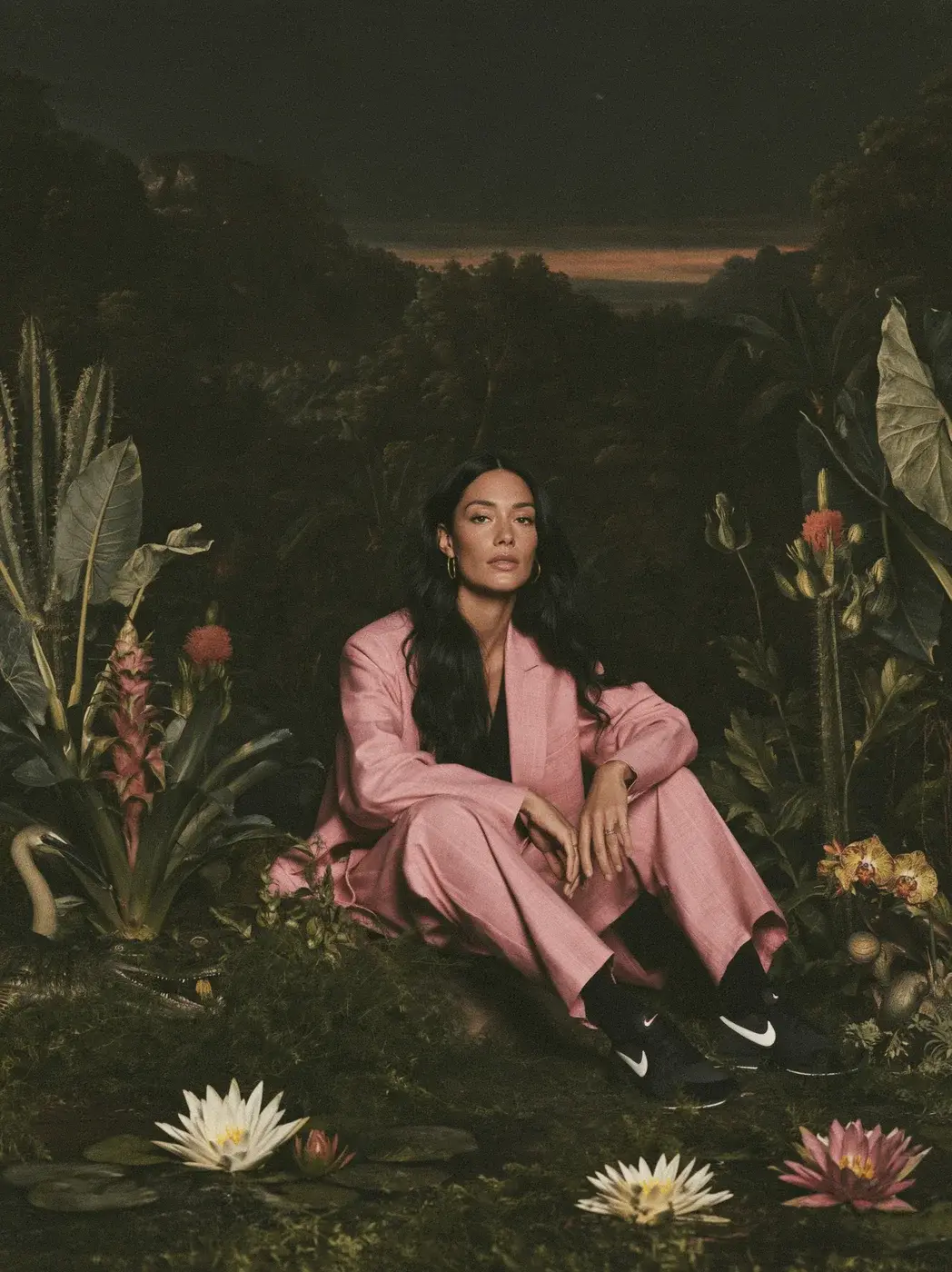
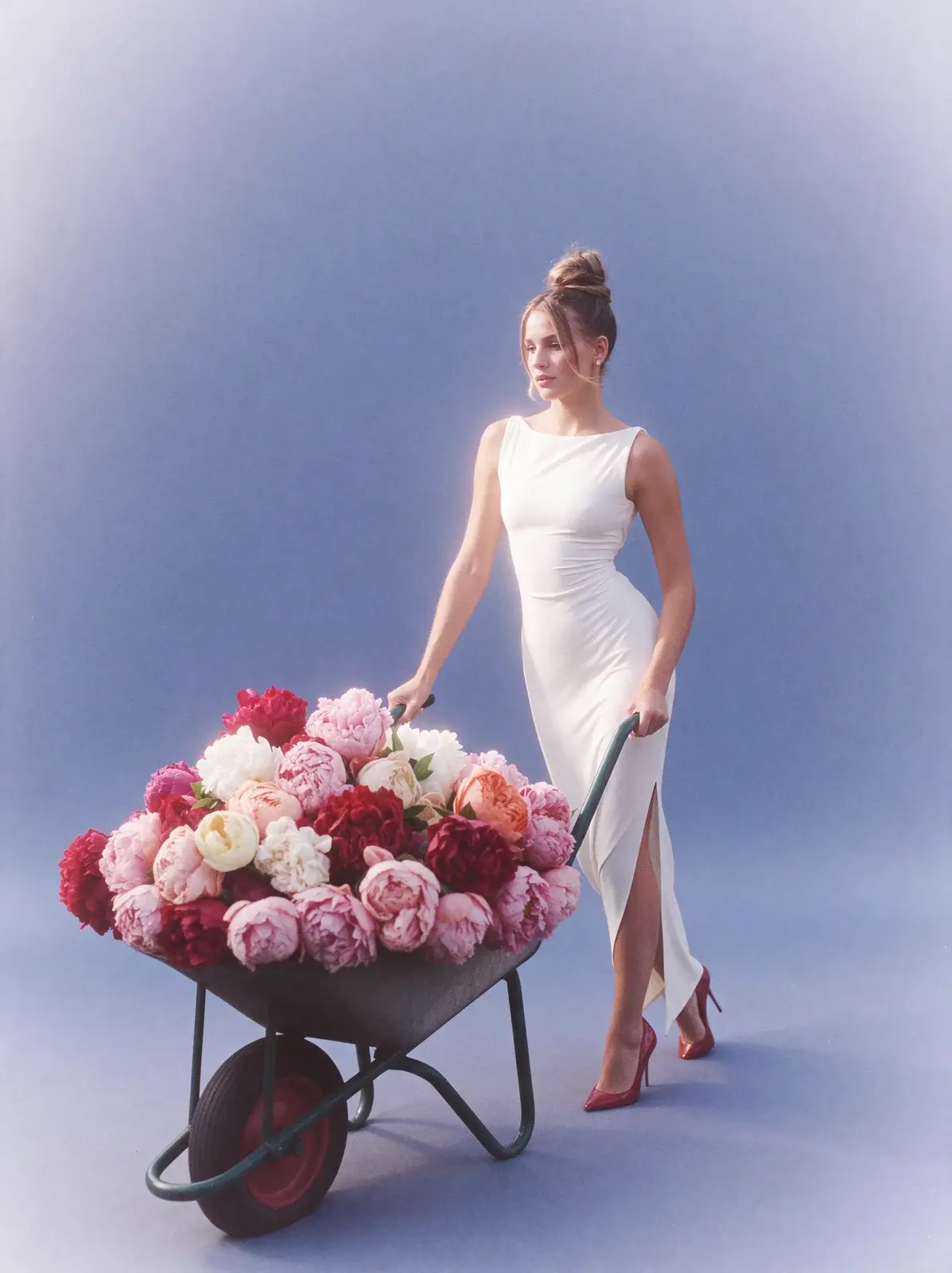
Seedream 5.5
Copy
Restyle this photo as a dreamy, slightly soft, flash-lit analog film editorial with a dusty periwinkle-blue backdrop and crimson-magenta accents in the shadows; keep the subject, pose, face, hair, clothing, props, camera angle and framing exactly, adding or removing nothing, no text, no watermarks. Everything in the frame that is not the subject, wherever it is, is replaced by one single smooth continuous field of dusty periwinkle blue (a single hue of 222-225 degrees, never violet) that is a function of position only: the same field runs unbroken from the top edge to the bottom edge with no horizontal line, corner, edge or change of surface, brightness step or hue shift at any height, and the subject's own cast shadow is just a soft, slightly darker area of the same field. The field is densest immediately beside and above the subject (#7482B0, saturation about 35%), becomes #8D9DC9 at mid-distance and is clearly paler toward the left and right edges (#A3B0D4, saturation about 25%), symmetrically, like a wide soft reverse vignette with very long transitions; the top corners are pale lavender-white (#C2C3DD), and the lowest part of the frame is only slightly lighter (#B2B8D8), with no visible shape, ring, steps or bands. Light: soft frontal flash-like light, slightly hazy, with subtle lens softness and a gentle glow in the highlights; faces and skin are well exposed and luminous (lit skin brightness at least 70%), with a natural pink tone and a cool lilac tint in the highlights (about #BE8E9F), never reddish-brown, muddy or dark; deep crimson-magenta shadows (#6F293F to #36182A) appear only in small areas such as under the chin, beside the nose, the eye sockets and the folds of fabric, never over the whole face or whole garments; whites stay clean with only a faint pink cast, other clothing and furniture keep their own colors without added orange or red saturation; matte tonality, highlights not reaching pure white (peak about 85% brightness), blacks lifted and magenta-tinted, median brightness about 60%. Grain: heavy, uniform, clearly visible analog film grain like pushed ISO 1600 35mm film, clearly visible at 100% across the whole frame including the smooth backdrop, the same strength in light and dark areas, about 7%, fine, no blotches or ripples.
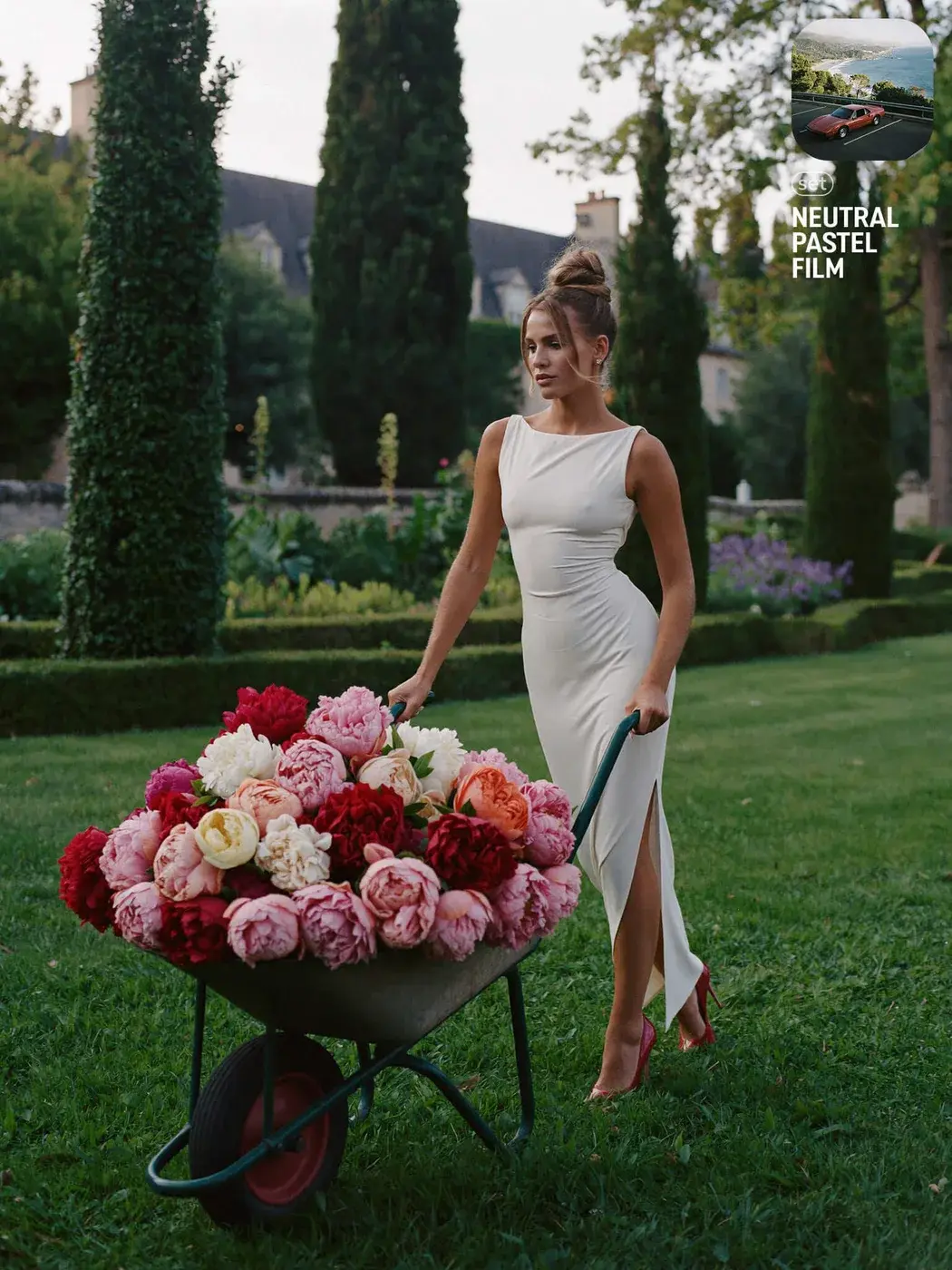
Seedream 5.5
Copy
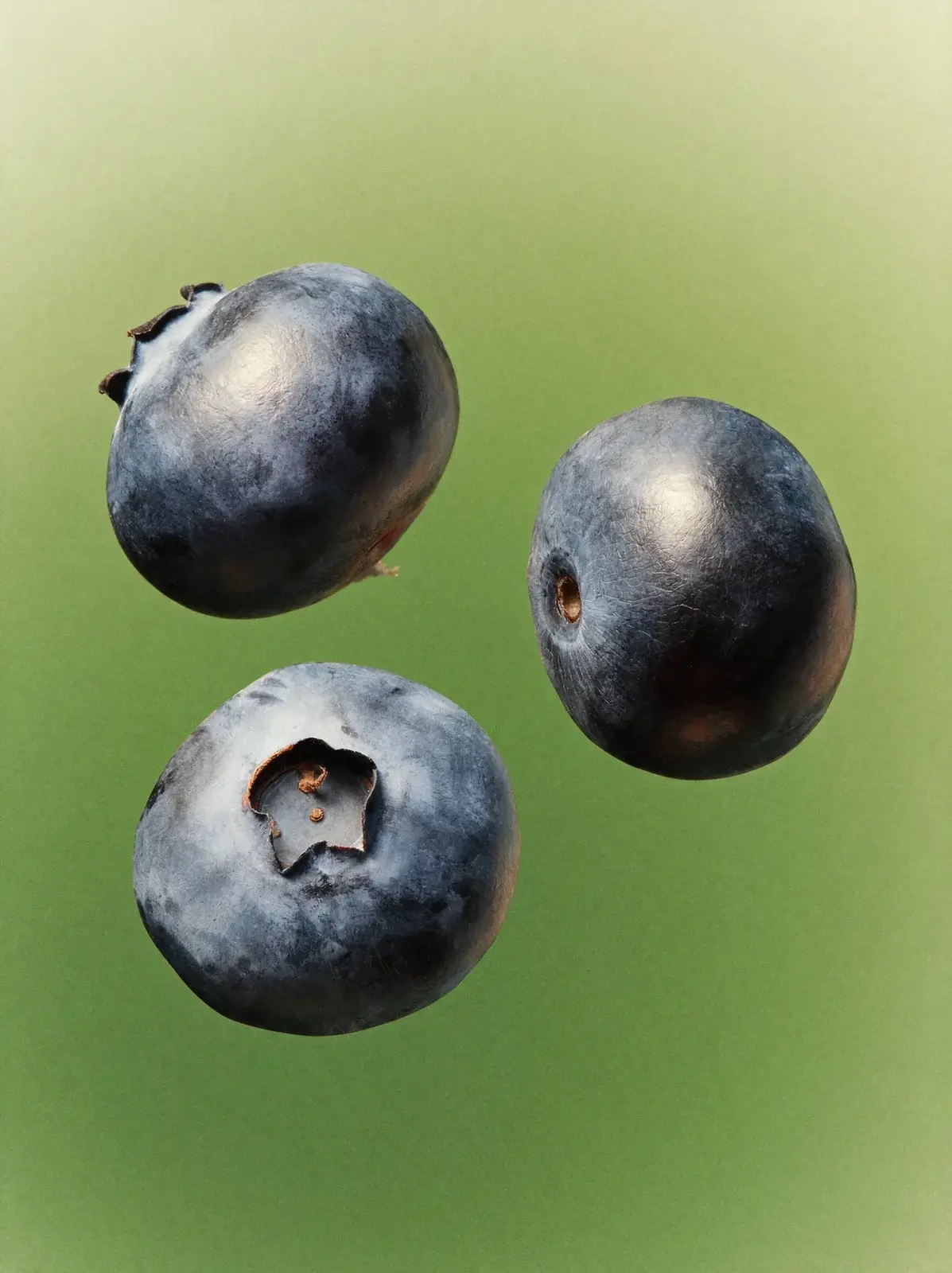
Apply one single unified rich, warm, saturated analog film process to the ENTIRE image, subject and background together, so that it looks like one photograph shot on color film with one warm directional light, never like a cutout placed over a new background; the same treatment applies whether the subject is a person or an object. Film grain is a defining part of this look and must be obvious: coarse-to-medium film grain with particles about 4-5 pixels wide at 1760 pixels of image width, so that it stays clearly visible even when the picture is shown small on a phone screen, about 13% strength on the subject (surfaces, fabric, props, midtones) and about 5% on the smooth backdrop, made of fine irregular clumps of slightly lighter and darker tone with a faint variation in color, like a scan of a 35mm Kodak Portra 400 negative; the subject and the backdrop share exactly the same grain texture; no digital smoothness, no noise reduction, no plastic retouching, no clean synthetic surfaces anywhere. Color grade and light: very rich, deeply saturated colors (overall saturation about 48%), warm soft directional light with clear modeling of the form and deep warm shadows, median brightness about 64%; the shadows are a warm red-brown (about #7E4E43), the darkest areas a deep burgundy-brown (about #1E0D0C), never neutral black or gray; the highlights are a pale lime-cream (about #EDF4DA); every other color of the subject keeps its own hue and is only deepened by this grade, never recolored, repainted or replaced; dark materials pick up a faint olive-green sheen from the backdrop; the backdrop color softly spills onto the nearest edges of the subject; light surfaces and metal take a subtle lime tint in the highlights and a warm complementary tint in the shadows. Depth: the color field is never centered on the subject and never forms a vignette, halo or circle around it; the subject sits inside a smooth part of the gradient and the backdrop reads as one wide sweep of color across the whole frame, a faint rim of the backdrop color on the subject's edges, a gentle halation bloom around the brightest highlights and slightly lower contrast far from the subject. Keep the subject, pose, shape, details, props, their colors, camera angle and framing exactly, adding or removing nothing; the object's materials take the grade exactly as they do in a real film photograph shot in this light, clearly tinted by the dominant light and by the backdrop color while their own base colors stay recognizable; keep all printed text, lettering and logos on the product exactly as they are, sharp, legible and unchanged, add no other text, logos or watermarks, and remove any app badge, sticker or caption from the corners of the source. Everything in the frame that is not the subject,
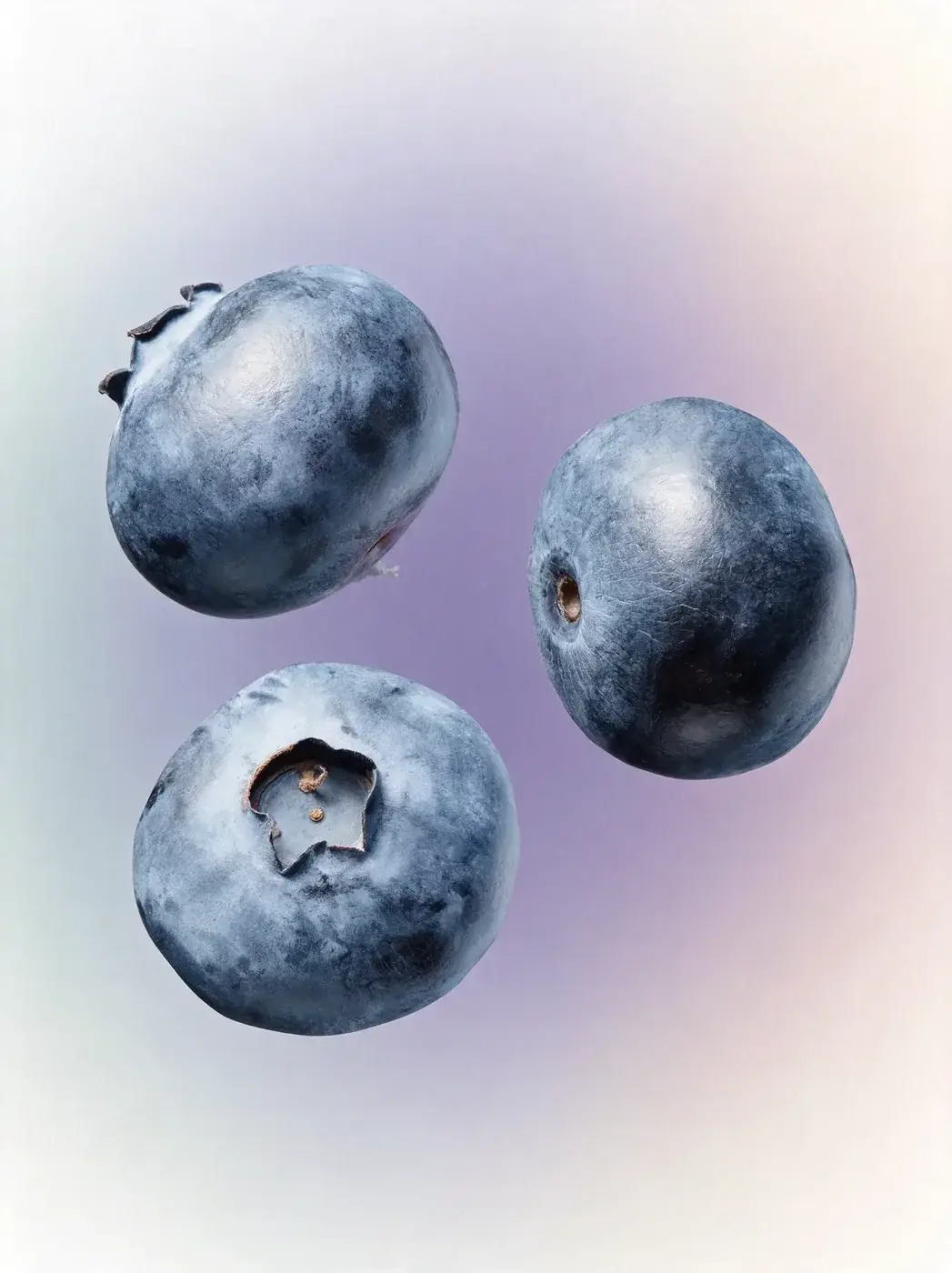
wherever it is, and everything behind and under the subject, whether it was a wall, a floor, sky, field, room or landscape, is completely replaced by one smooth, seamless, perfectly clean airbrushed color field that depends only on position, with no texture of the original surroundings, no horizon, crease, corner, edge, line, rectangle, light pool, beam, cone, oval, ring, steps or bands anywhere, and no hard edge between any two colors: every color change takes place gradually over at least 40% of the frame, and saturation or brightness never changes by more than about 3 points over any 5% of the frame width or height. The field is one vertical ombre that depends mainly on height. At the top of the frame it is light (#CDDBA4, saturation about 25%), and it deepens very gradually going down through #A1BD6F at 55% of the height into a rich #7CA352 in the lowest third (hue shifting by about 15 degrees), staying clear and saturated down to the bottom edge; around the subject the color is a little deeper than at the outer edges; one single, very long, soft airbrushed gradient with no stops. There is no floor, table, ground or horizon anywhere and no long cast shadow on the backdrop: the subject floats in the color field like in an airbrushed studio portrait, with only a faint soft shadow right at its own edges. Preserve exactly as in the source: the shape, size, materials and colors of the product, the contents of every container (liquid, powder, cream, or nothing), transparent, glass or empty parts stay exactly as transparent or empty as they are and are never filled, tinted or recolored (the backdrop is only seen through them), black parts stay black and white parts stay white, metal stays metal, and all printed text stays exactly the same; only the light and the backdrop reaction change. These colors of the subject stay exactly as in the source, never shifted or replaced: deep blue, slate blue, silver-grey bloom. The three blueberries keep their exact shapes, sizes, positions, deep blue color with the powdery bloom and their crowns; the white and lilac gradient backdrop is completely replaced by the color field. Finally, strong visible film grain lies evenly over everything including the subject, and the backdrop glows softly and smoothly around the subject.
Seedream 5.5
Copy
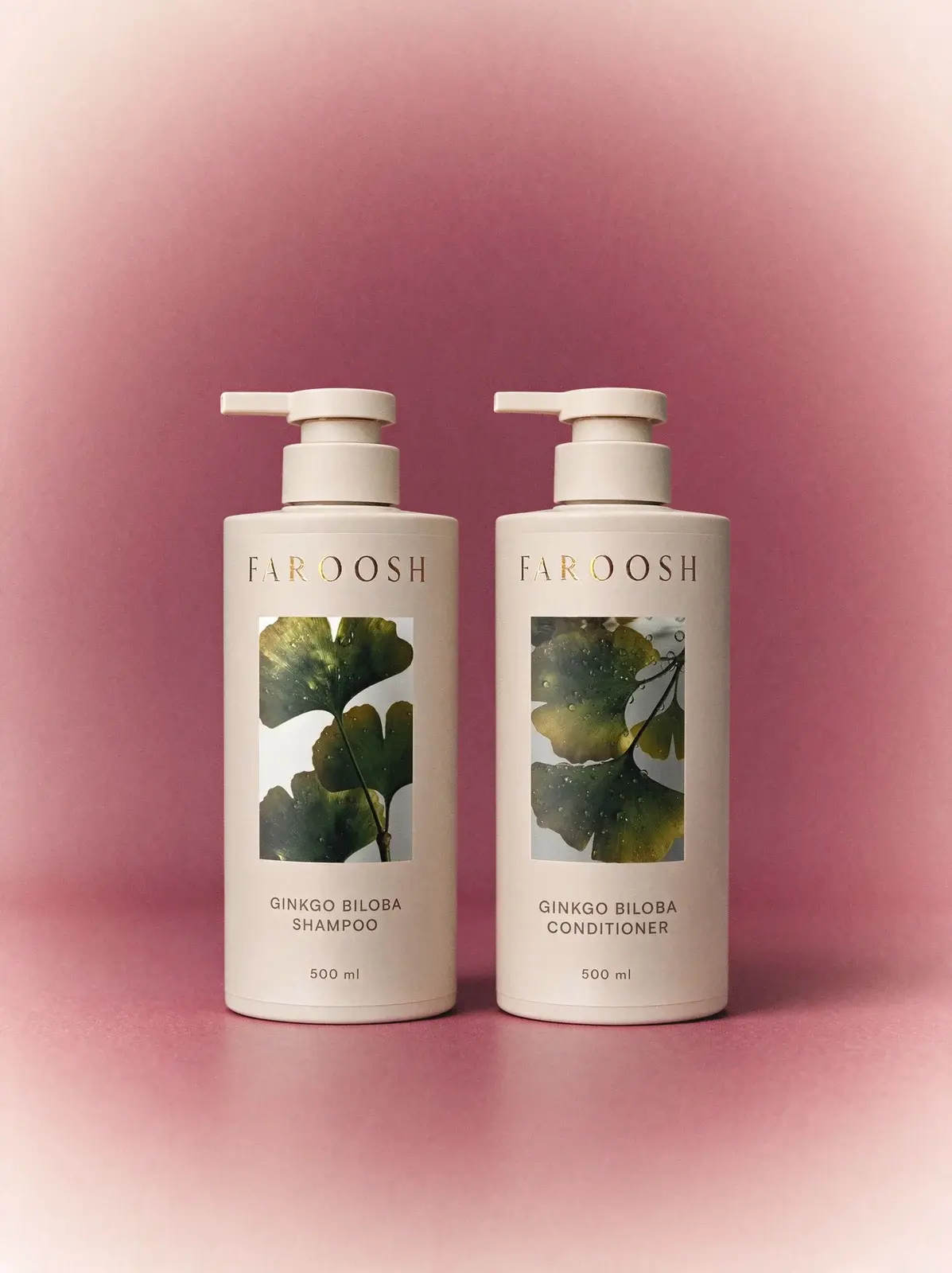
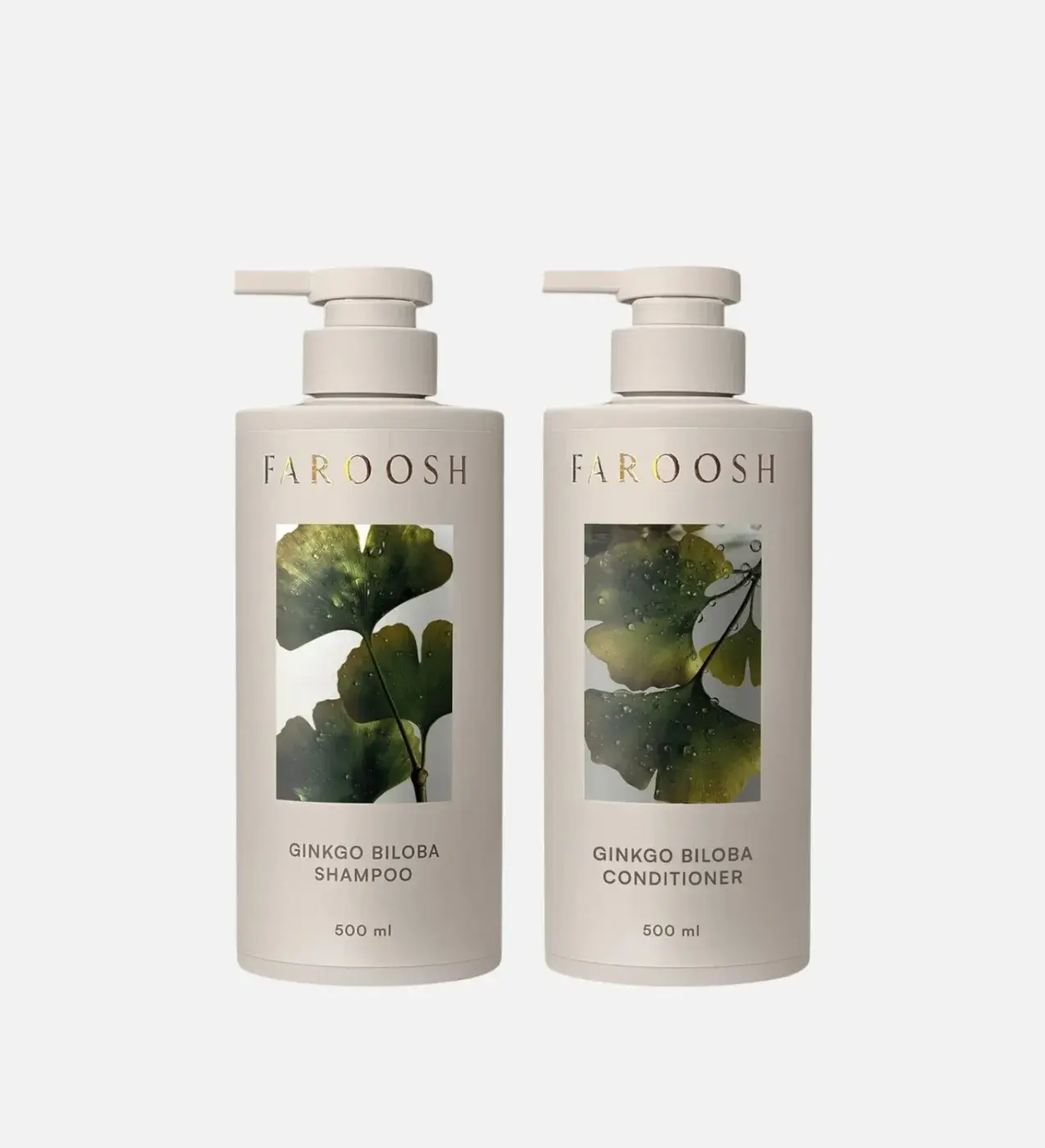
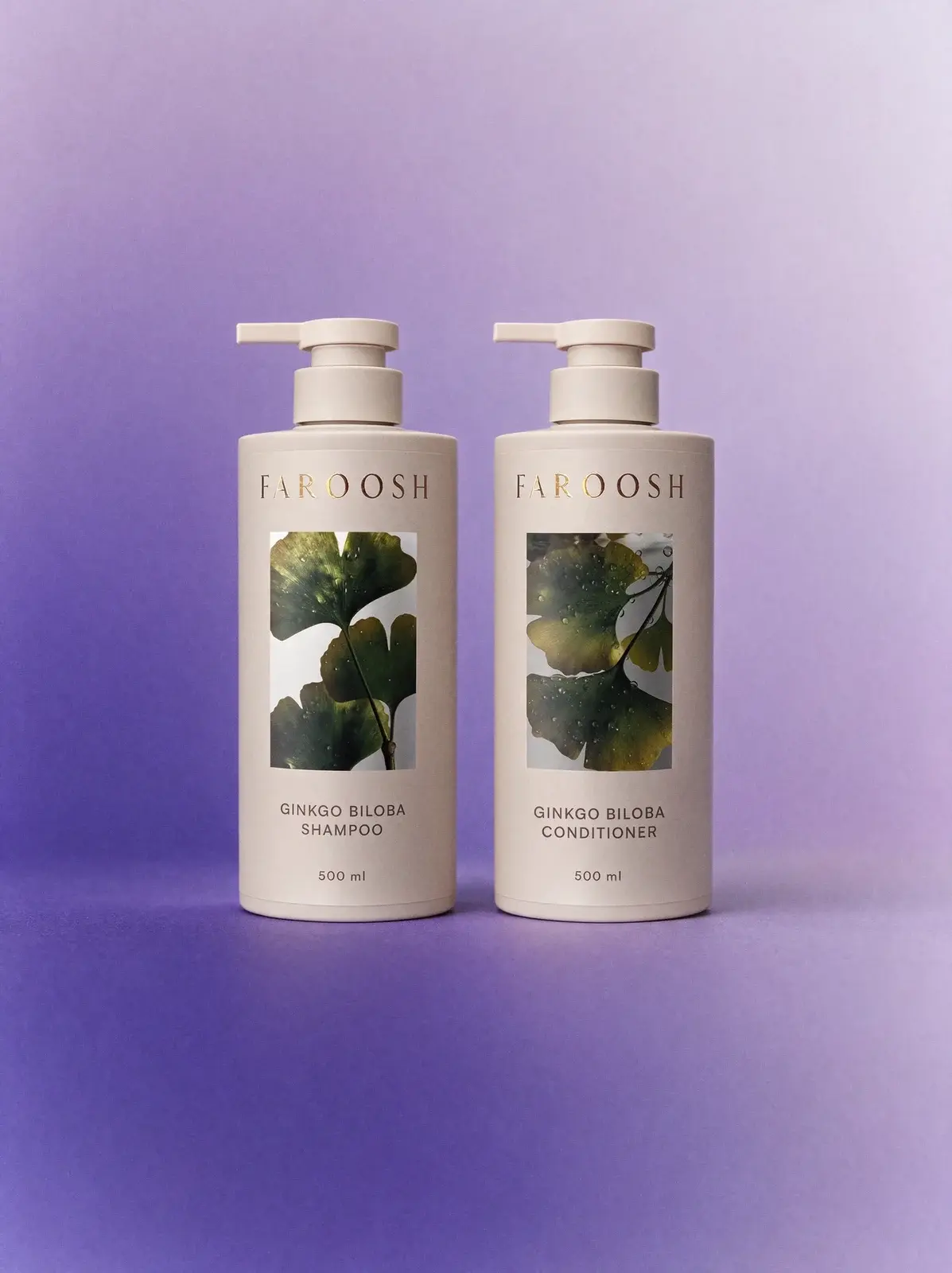
Apply one single unified soft analog film process to the ENTIRE image, product and background together, so that it looks like one photograph shot on medium-format film with one soft frontal light, never like a cutout placed over a new background. Film grain is a defining part of this look and must be obvious: coarse-to-medium film grain with particles about 4-5 pixels wide at 1760 pixels of image width, about 13% strength on the product and about 5% on the smooth backdrop, made of fine irregular clumps of slightly lighter and darker tone, like a scan of a 35mm Kodak Portra 400 negative; the product and the backdrop share exactly the same grain texture; no digital smoothness. Color grade and light: soft, diffused frontal key light with gentle shadows, slightly hazy with a mild glow; medium-high contrast, median brightness about 59%, rich overall saturation about 40%. Everything that is not the product, including the white seamless backdrop, is completely replaced by one smooth, seamless, airbrushed color field that depends only on the distance from the middle of the product and changes continuously over the whole frame, never as a plateau followed by a quick fall-off. Right at the product it is a rich, clear color (#9E5467, hue about 345 degrees, saturation about 47%, never muddy or gray); a quarter of the way to the frame edge it is #B26775; halfway to the edge #CC8087 with the hue turning gradually toward 15 degrees; three quarters of the way #E3ABA9; at the middle of every frame edge a clearly tinted light color (#F0CBC6); and in the four corners a very light, softly tinted version of the neighbouring hue (#F6E1DA at the top, #F1D9D2 at the bottom), about 12% saturation, never pure white. The color keeps visible tint all the way to the frame edges and fades with one steady, continuous slope from the product to the corners, with no flat zone and no sudden drop. The product stands on a seamless floor made of the same color field, with only a soft contact shadow and a soft reflection in the backdrop's own hue; no floor edge, horizon, seam or hard line is visible anywhere. Preserve exactly: the shape, size, materials and colors of the two cream pump bottles with their green leaf labels, and all printed text exactly the same; only the light and the backdrop reaction change. No extra text, no logos, no watermarks.
Seedream 5.5
Copy
{
"task": "Retouch the uploaded photograph with a seamless ivory-to-lavender gradient, cool sculptural studio lighting and fine photographic grain.",
"preserve": "Keep the exact subjects, identity, complexion depth, expression, pose, hairstyle, makeup, silhouette, clothing, footwear, accessories, props, depth order, placement, support, lens perspective and crop. Preserve each material's original base color, saturation, texture, finish and markings.",
"background": {
"construction": "Use one full-frame matte color field in image coordinates. Form a broad vertically elongated oval of lavender with gradual feathering into a nearly white ivory perimeter. Carry the same field through openings and around visible supports.",
"perimeter": {
"left_cool_pearl": "#F9FCF3",
"right_warm_ivory": "#FFFAF4",
"lower_milky_ivory": "#F5F4EF"
},
"interior": {
"high_center_pearl_lilac": "#E8E5EC",
"muted_lavender": "#B3A7CF",
"richest_smoky_violet_at_60_to_70_percent_height": "#A58FC6",
"left_transition_cool_pearl_gray": "#C5CBDA",
"right_transition_pale_lilac": "#DCD9E4"
},
"falloff": "Keep the strongest lavender in the lower middle. Let it recede gradually into milky ivory before the bottom edge."
},
"lighting": {
"key": "Use a broad cool-neutral key from high front right and soft neutral bounce
near the camera. Keep faces readable.",
"form": "Let illuminated planes turn into cool blue-gray midtones and compact softly edged shadows inside existing folds and overlaps.",
"edge_light": "Add a slim pale highlight along selected right-facing contours where the original geometry catches light, with a soft transition into the highlight.",
"skin": "Preserve natural undertones with softly neutral highlights and slightly cooler shaded planes.",
"materials": "Retain the exact original hue and saturation of garments and props while shaping volume through luminance. Keep pale materials pearly, dark materials dense with readable detail and reflective glints within the original sheen."
},
"support_and_suspension": {
"supported": "Use a short soft contact shadow at visible points of support, in a slightly darker version of the local background tone.",
"suspended": "Preserve the original position, tilt and open air gap."
},
"grain": {
"application": "Finish the entire photograph with fine monochromatic film grain.",
"scale": "Densely spaced irregular light and dark variations, about 1–2 pixels across at 1440 pixels wide.",
"distribution": "Keep grain visible in lavender and pearl midtones and subtly present in ivory, skin and dark areas. Keep the underlying gradient smooth and retain crisp fine edges and material detail."
}
}
Seedream 5.5
Copy
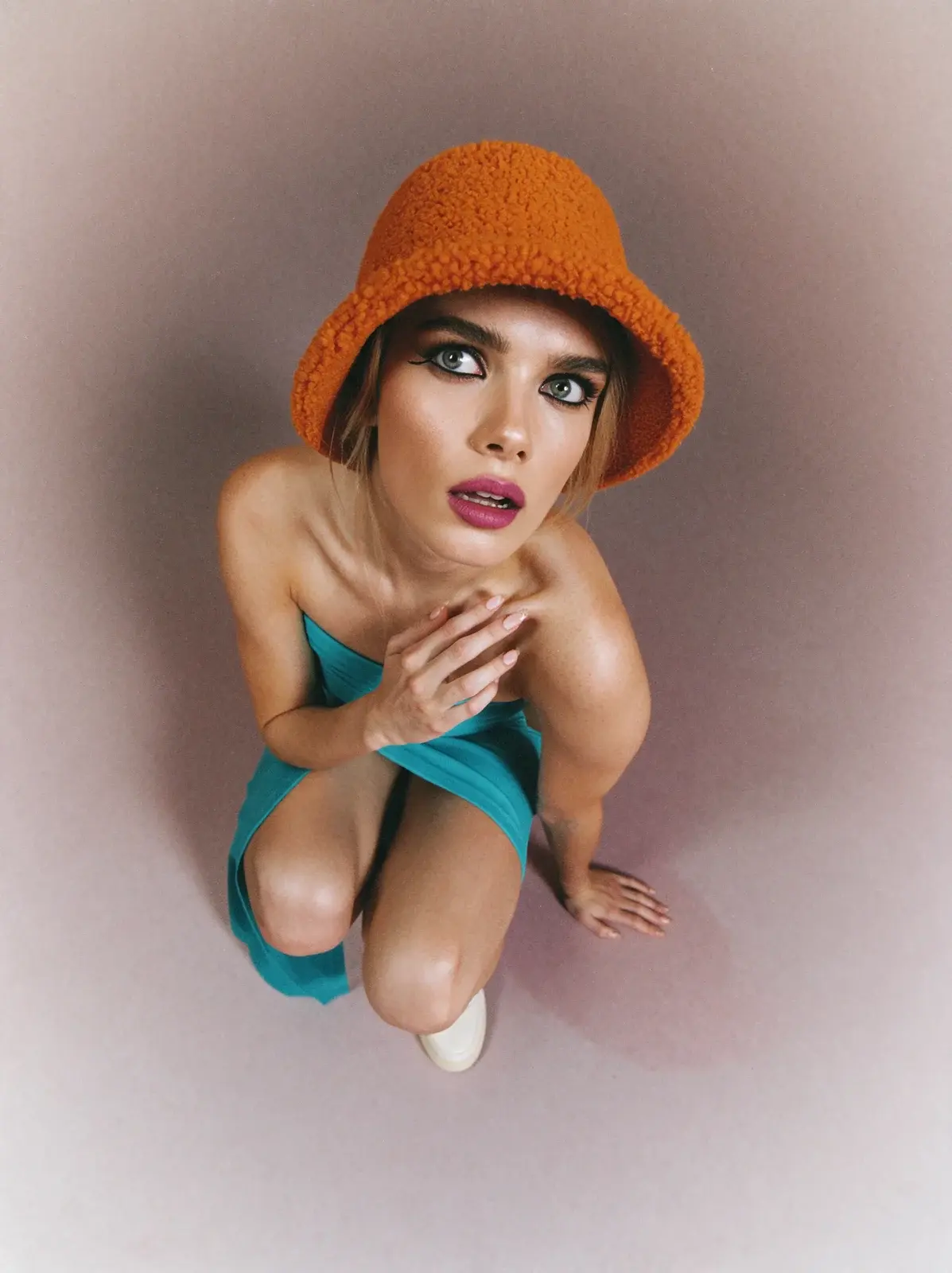
Edit this photograph. Keep the subject, pose, clothing, props and framing exactly as they are and do not add or remove any objects. Restyle only the backdrop, light and color. The entire background, including the ground, becomes one seamless airbrushed color field with no seam or hard horizon line: a pale aqua-gray glow (#A9CBCF) in the upper corner, spreading diagonally into deep teal (#2F6F78) across the middle, sinking into ink navy-black (#0F1E2E) at the bottom. Soft cloudy airbrush blend, color getting denser as the light falls off. Soft light from the upper side that shows the texture of the materials, readable shadows with a cool teal tint, natural skin. Finish like analog color film: fine, even, clearly visible grain across the entire image, slightly faded blacks, a faint glow around highlights.
Seedream 5.5
Copy
Apply one single unified analog film process to the ENTIRE image, subject and background together, so that it looks like one photograph shot on pushed ISO 3200 35mm film with direct flash, never like a cutout placed over a new background. The whole frame, including the subject, skin, hair, clothes and props, gets: a faded matte tonality with lifted blacks (the darkest tones about #2A2A2A, no pure black), highlights capped at about 85% brightness, low-to-medium contrast, overall saturation about 17%; the subject's colors are faded and slightly dusty, skin warm peach-orange and matte (about #945F45 to #A3755C in the lit areas, never glossy, bright or clean), lips magenta, light fabrics warm beige-cream, the deepest shadows cool dark teal-green (#0B1E19) instead of neutral black; a soft hazy flash look with subtle lens softness over the whole frame so that nothing looks digitally crisp or clean; and very heavy coarse film grain, about 9%, laid evenly over everything, skin, clothes, props and backdrop alike, clearly visible at 100% and identical in strength on the subject and on the background. Keep the subject, pose, face, hair, clothing, props, camera angle and framing exactly, adding or removing nothing, no text, no watermarks. Everything in the frame that is not the subject, wherever it is, is replaced by one smooth continuous field of dusty rose-taupe that is a function of position only: the same field runs unbroken from the top edge to the bottom edge with no horizontal line, corner, edge, change of surface or brightness step at any height, and the subject's own cast shadow is a soft plum-mauve area of the same field. The field is darkest in a wide zone in the upper-middle part of the frame behind and beside the subject (#8A7676, saturation about 15%), becomes #A08C8E at mid-distance and clearly lighter toward the left and right edges symmetrically (#B09B9C, #BBA8A8), the top corners #C0B0AC; from about 65% of the height down it gradually shifts toward pale mauve-gray and lightens (#B8A8AB at about 71%, #CAC0C8 at about 84%, #D8D2D8 at about 90%) until the bottom edge is a very pale near-neutral lavender-gray (#E2DFE2), as one long smooth transition with no visible shape, ring, line, steps or bands.


Seedream 5.5
Copy
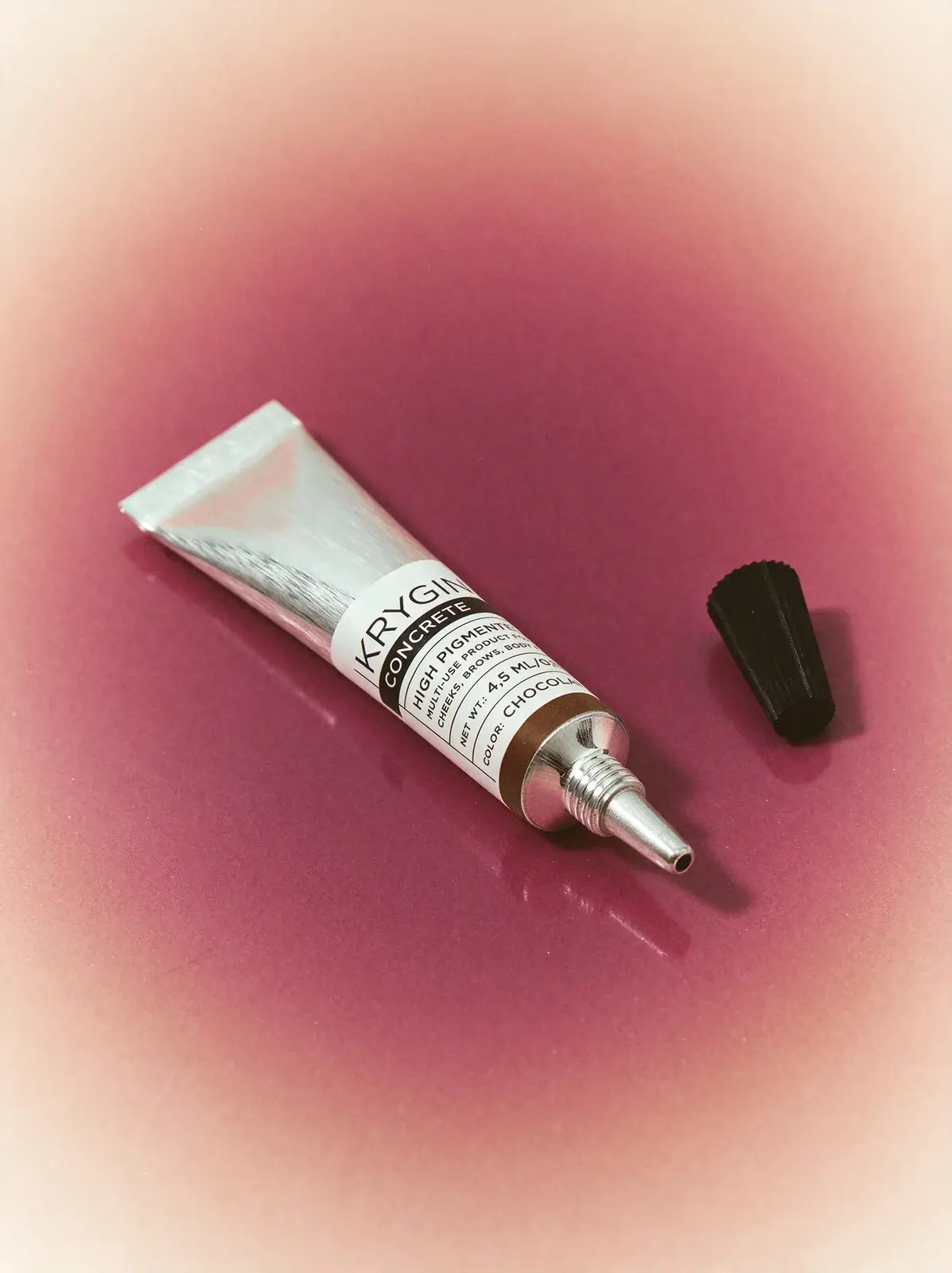
Retouch the uploaded photograph as a cool, directional fashion editorial with a luminous mint perimeter and an elongated cyan-to-blue-violet interior. Preserve the exact subject count, identity, complexion depth, expression, pose, hairstyle, makeup, silhouette, clothing, footwear, accessories, props, original material colors and finishes, markings, placement, perspective and crop. Replace the open backdrop with one seamless matte color field fixed to the frame. At the upper edge, blend pale mint #E5F7EA at the left corner and warm ivory #FFF9ED at the right corner inward toward soft aqua #8BCED0. Let aqua gather into a broad cyan interior #51A9BB in the upper third and deepen to cool blue #367FA2 around mid-height. Below the middle, let the interior shift smoothly into smoky periwinkle #53628D, then open out through slate-aqua #819CA9 as it approaches the lower edge. Bring both lower corners back into pale mint-ivory #F2F2E5 and #FAFCEF. Let the pale field extend farther inward from the right, especially at the top. Keep both side edges cooler and more subdued around mid-height. Blend the whole field along long, soft curves and continue it through every opening in the composition. Relight the existing foreground with a directional, softly diffused neutral key from high camera right and restrained cool fill from camera left. Let the key describe the upper and right-facing planes and let the opposite side turn into dense, readable blue-violet shade. Keep visible skin naturally muted rose-beige in the light and cool plum-taupe on the shaded side, adapted to the original complexion. Apply a faint mint-silver reflected tint only to light-facing planes on existing pale or satin materials, with cool graphite in their folds. Preserve each material's own sheen. Give existing metal or crystal small clean pearl-white highlights and defined dark reflections. Keep support shadows close to actual contact and preserve the exact height, tilt and clear gap of suspended subjects. Finish with fine monochromatic photographic grain across the complete frame. Use closely spaced irregular light and dark variations, most visible in cyan, periwinkle and skin midtones, with a quieter texture in the pale corners. Keep the broad gradient smooth and retain sharp fine edges and material detail.
Seedream 5.5
Copy
Apply one single unified glossy beauty-editorial analog film process to the ENTIRE image, subject and background together, so that it looks like one photograph with one soft frontal light, never like a cutout placed over a new background; the same treatment applies whether the subject is a person or an object. Film grain is a defining part of this look and must be obvious: coarse-to-medium film grain with particles about 4-5 pixels wide at 1760 pixels of image width, so that it stays clearly visible even when the picture is shown small on a phone screen, about 13% strength on the subject (surfaces, fabric, props, midtones) and about 5% on the smooth backdrop, made of fine irregular clumps of slightly lighter and darker tone with a faint variation in color, like a scan of a 35mm Kodak Portra 800 negative pushed one stop; the subject and the backdrop share exactly the same grain texture; no digital smoothness, no noise reduction, no plastic retouching, no clean synthetic surfaces anywhere. Color grade and light: soft, diffused, flattering frontal light with low contrast and soft transparent shadows; a glossy, glowing, slightly wet sheen on smooth or shiny surfaces with soft specular highlights in cool mint-white (about #E9F2EB) and a fine pearly shimmer; midtones and lit colors warm, golden and peachy, shadows warm brown (#845D45), the darkest areas olive-brown (#2F251A), no pure black anywhere; highlights soft and never pure white (peak about 93% brightness), median brightness about 62%, overall saturation about 30%; the backdrop color reflects as a faint pink glow on the nearest edges of the subject; light surfaces and metal take a subtle pink tint in the highlights and a warm complementary tint in the shadows. Depth: the backdrop is clearly deeper and richer in color around the subject than toward the outer edges of the frame, so that the subject sits inside a soft glowing atmosphere of color; add a soft contact shadow in the backdrop's own hue, a faint rim of the backdrop color on the subject's edges, a gentle halation bloom around the brightest highlights and slightly lower contrast far from the subject. Keep the subject, pose, shape, details, props, their colors, camera angle and framing exactly, adding or removing nothing; the object's materials take the grade exactly as they do in a real film photograph shot in this light, clearly tinted by the dominant light and by the backdrop color while their own base colors stay recognizable; keep all printed text, lettering and logos on the product exactly as they are, sharp, legible and unchanged, add no other text, logos or watermarks, and remove any app badge, sticker or caption from the corners of the source. Everything in the frame that is not the subject, wherever it is, and everything behind and
under the subject, whether it was a wall, a floor, sky, field, room or landscape, is completely replaced by one smooth, seamless, perfectly clean airbrushed color field that depends only on position, with no texture of the original surroundings, no horizon, crease, corner, edge, line, rectangle, light pool, beam, cone, oval, ring, steps or bands anywhere, and no hard edge between any two colors: every color change takes place gradually over at least 40% of the frame, and saturation or brightness never changes by more than about 3 points over any 5% of the frame width or height. The field is one soft radial gradient whose color depends only on the distance from the middle of the subject, and it changes continuously over the whole frame, never as a plateau followed by a quick fall-off. Right at the subject it is a rich, clear color (#9E3C5D, hue about 340 degrees, saturation about 62%, never muddy or gray); at about a quarter of the way to the frame edge it is #B24F68; halfway to the edge #CC6674 with the hue turning gradually toward 20 degrees; three quarters of the way #DB8F8C; at the middle of every frame edge a light tint (#EDBFB4); and in the four corners a softly tinted warm cream of the neighbouring hue (#F2D8CB at the top, #EDCEBE at the bottom), never white. The hue drifts by about 40 degrees from the center to the corners, brightness rises evenly and saturation falls evenly across the whole distance, with no more than about 4 points of change over any 5% of the frame width, one very long, wide, soft airbrushed gradient with no visible outline anywhere. The aluminum tube keeps its brushed silver metal with a soft reflection of the backdrop color, the white label keeps its exact layout, the chocolate-brown band stays chocolate brown, the black ribbed cap stays black; the tube and the cap stay in exactly the same positions with the same high-angle perspective, and the white surface they rest on becomes part of the color field with only soft contact shadows. Finally, strong visible film grain lies evenly over everything including the subject, and the backdrop glows softly and smoothly around the subject.
Seedream 5.5
Copy
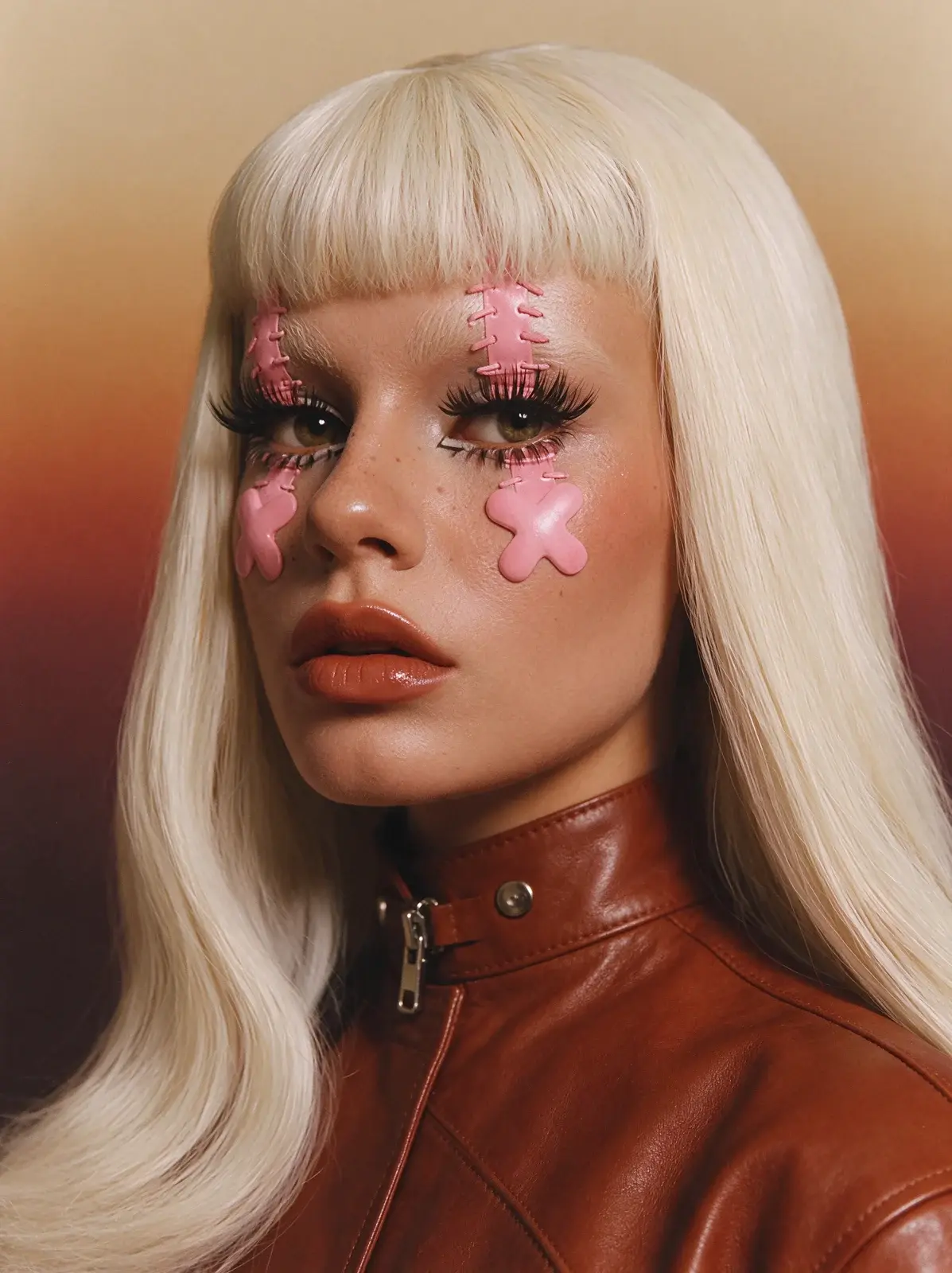
Restyle this photo as a warm, rich, saturated medium-format film fashion editorial portrait; keep the subject, pose, face, clothing, props, camera angle and framing exactly, add or remove nothing. Replace the original background, whatever it was, with one smooth continuous warm color field defined only by height, changing evenly from top to bottom with no steps, bands or lines: pale sand #D9C4AA at the top, #C7A178 at 22%, terracotta #A85538 at 42%, oxblood #6C312C at 62%, dark chocolate #392525 at 82%, and #3A2828 at the bottom edge; hue shifts from sand (about 32 degrees) through terracotta (about 15) to red-brown (about 0), saturation peaks around 65% at 40-50% of the height and falls to about 30% at the bottom, and the darkening is fastest between 25% and 55% of the height; very slightly lighter by 5-8% at the extreme left and right edges and about 10% darker directly behind the subject, with the left side a touch brighter than the right, no visible shape; density varies very slightly like a hand-airbrushed backdrop, no spray marks or texture. Light: soft directional from the front-left and slightly above, glossy natural sheen on skin, leather and metal with small clean highlights, translucent hair with fine strands catching the light, shadows warm red-brown (not gray or black) with detail, soft highlights, medium contrast, moderately dark image with a median brightness about 29%. Grade: skin warm terracotta (lit #A46A57, shaded #5B2E24), white hair and highlights warm pinkish cream (#D2BDB9), rich rust in oranges (#813320 in shade), blacks warm deep brown (#201818, never pure black or faded), strong saturation overall (about 38%). Grain: clearly visible fine ISO 400 negative grain at 100% zoom, about 5% luminance noise, the same strength and tiny size at every height from the pale top to the dark bottom, no patches, ripples or blotches.
Seedream 5.5
Copy
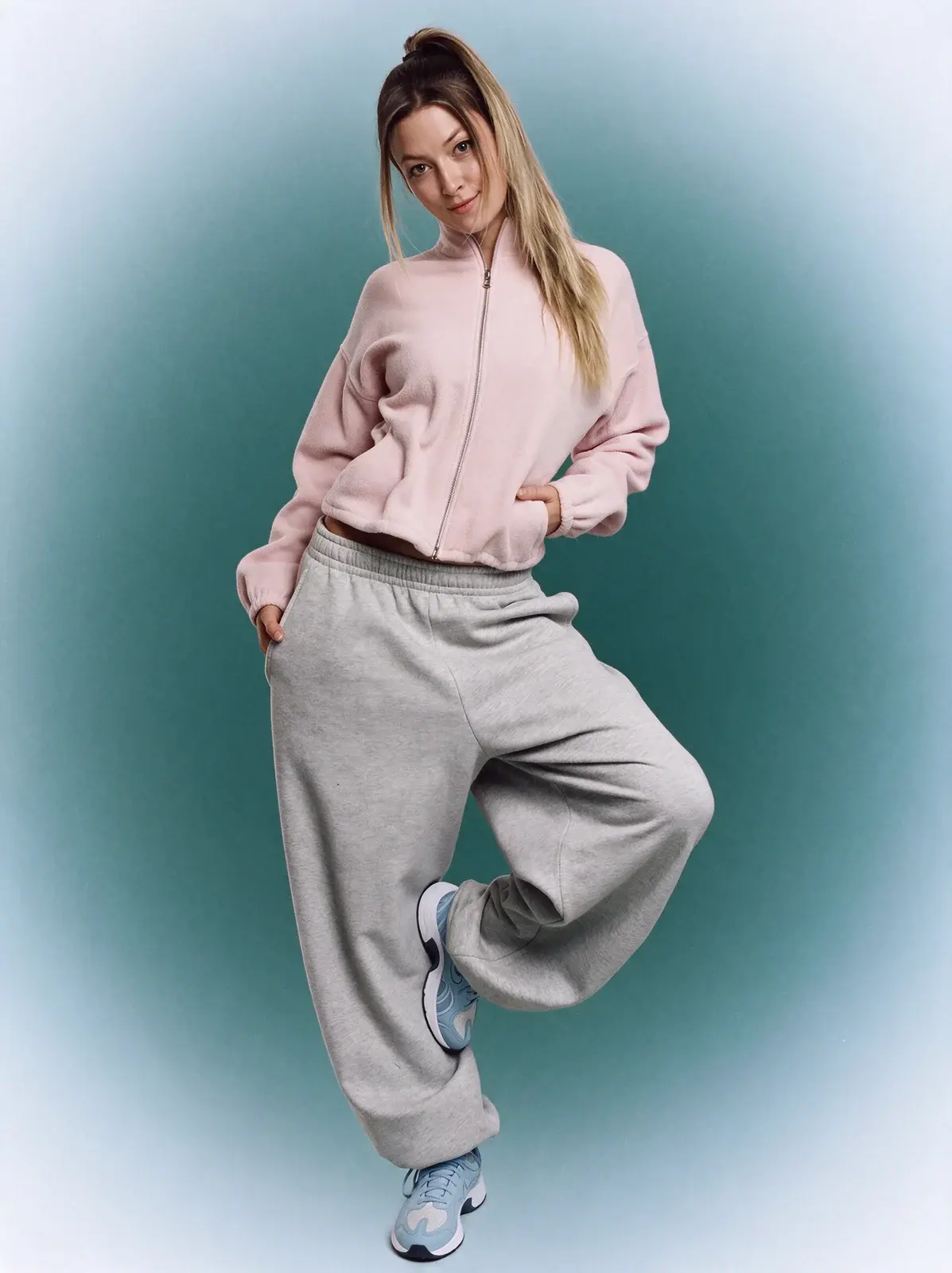
Apply one single unified soft analog film process to the ENTIRE image, subject and background together, so that it looks like one photograph shot on medium-format film with one soft frontal light, never like a cutout placed over a new background; the same treatment applies whether the subject is a person or an object. Film grain is a defining part of this look and must be obvious: coarse-to-medium film grain with particles about 4-5 pixels wide at 1760 pixels of image width, so that it stays clearly visible even when the picture is shown small on a phone screen, about 13% strength on the subject (skin, hair, fabric, props, midtones) and about 5% on the smooth backdrop, made of fine irregular clumps of slightly lighter and darker tone with a faint variation in color, like a scan of a 35mm Kodak Portra 400 negative; the subject and the backdrop share exactly the same grain texture; no digital smoothness, no noise reduction, no plastic retouching, no clean synthetic surfaces anywhere. Color grade and light: soft, diffused frontal key light with gentle shadows, slightly hazy with a mild glow, no hard specular shine; the deepest blacks are crushed to almost pure black with a faint violet tint (about #0A060D), midtone shadows a neutral warm mauve-gray (#5D5558); every other color of the subject keeps its own hue; medium-high contrast, median brightness about 59%, rich overall saturation about 40%; skin and light materials take a subtle teal-aqua tint in the highlights and a warm complementary tint in the shadows. Depth: the backdrop is clearly deeper and richer in color around the subject than toward the outer edges of the frame, so that the subject sits inside a soft glowing atmosphere of color; a faint rim of the backdrop color on the subject's edges, a gentle halation bloom around the brightest highlights and slightly lower contrast far from the subject. Keep the subject, pose, shape, details, props, their colors, camera angle and framing exactly, adding or removing nothing; skin and hair take the grade exactly as they do in a real film photograph shot in this light, clearly tinted by the dominant light and by the backdrop color (hue and saturation shift noticeably toward the tints described in the grade), while the person stays recognizable: the complexion depth (lightness) of the skin stays within about 10% of the original and is never whitened or darkened, hair keeps its base color family (blonde stays blonde, dark stays dark) with the tint on top of it, and eye color is unchanged; no text, no logos, no watermarks, and remove any app badge, sticker or caption from the corners of the source. Everything in the frame that is not the subject, wherever it is, and everything behind and under the subject, whether it was a wall, a floor, sky, field, room or
landscape, is completely replaced by one smooth, seamless, perfectly clean airbrushed color field that depends only on position, with no texture of the original surroundings, no horizon, crease, corner, edge, line, rectangle, light pool, beam, cone, oval, ring, steps or bands anywhere, and no hard edge between any two colors: every color change takes place gradually over at least 40% of the frame, and saturation or brightness never changes by more than about 3 points over any 5% of the frame width or height. The field is one soft radial gradient whose color depends only on the distance from the middle of the subject, and it changes continuously over the whole frame, never as a plateau followed by a quick fall-off. Right at the subject it is a rich, clear color (#3A706D, hue about 176 degrees, saturation about 48%, never muddy or gray); at about a quarter of the way to the frame edge it is #508C8C; halfway to the edge #6AA2A8 with the hue turning gradually toward 211 degrees; three quarters of the way #A1CBD9; at the middle of every frame edge a very light tint (#C9E1F0); and in the four corners an almost white, softly tinted version of the neighbouring hue (#E2ECF7 at the top, #D9E5F2 at the bottom), with only about 9% saturation but never pure white. The hue drifts by about 35 degrees from the center to the corners, brightness rises evenly and saturation falls evenly across the whole distance, with no more than about 4 points of change over any 5% of the frame width, one very long, wide, soft airbrushed gradient with no visible outline anywhere. There is no floor, table, ground or horizon anywhere and no long cast shadow on the backdrop: the subject floats in the color field like in an airbrushed studio portrait, with only a faint soft shadow right at its own edges. Preserve exactly as in the source: the face, expression, hairstyle and hair color, body, skin tone, every piece of clothing with its cut, fabric, pattern and color, jewelry and every accessory and prop; only the light, the grade and the backdrop reaction change, nothing is added, removed, restyled or recolored. The pale pink fleece zip jacket, the heather grey sweatpants, the light blue sneakers with white soles and her long blonde ponytail keep their exact shapes and colors, and her pose standing on one leg with one hand in the pocket stays exactly the same; the purple-grey studio gradient is completely replaced. Finally, strong visible film grain lies evenly over everything including the subject, and the backdrop glows softly and smoothly around the subject.

Seedream 5.5
Copy
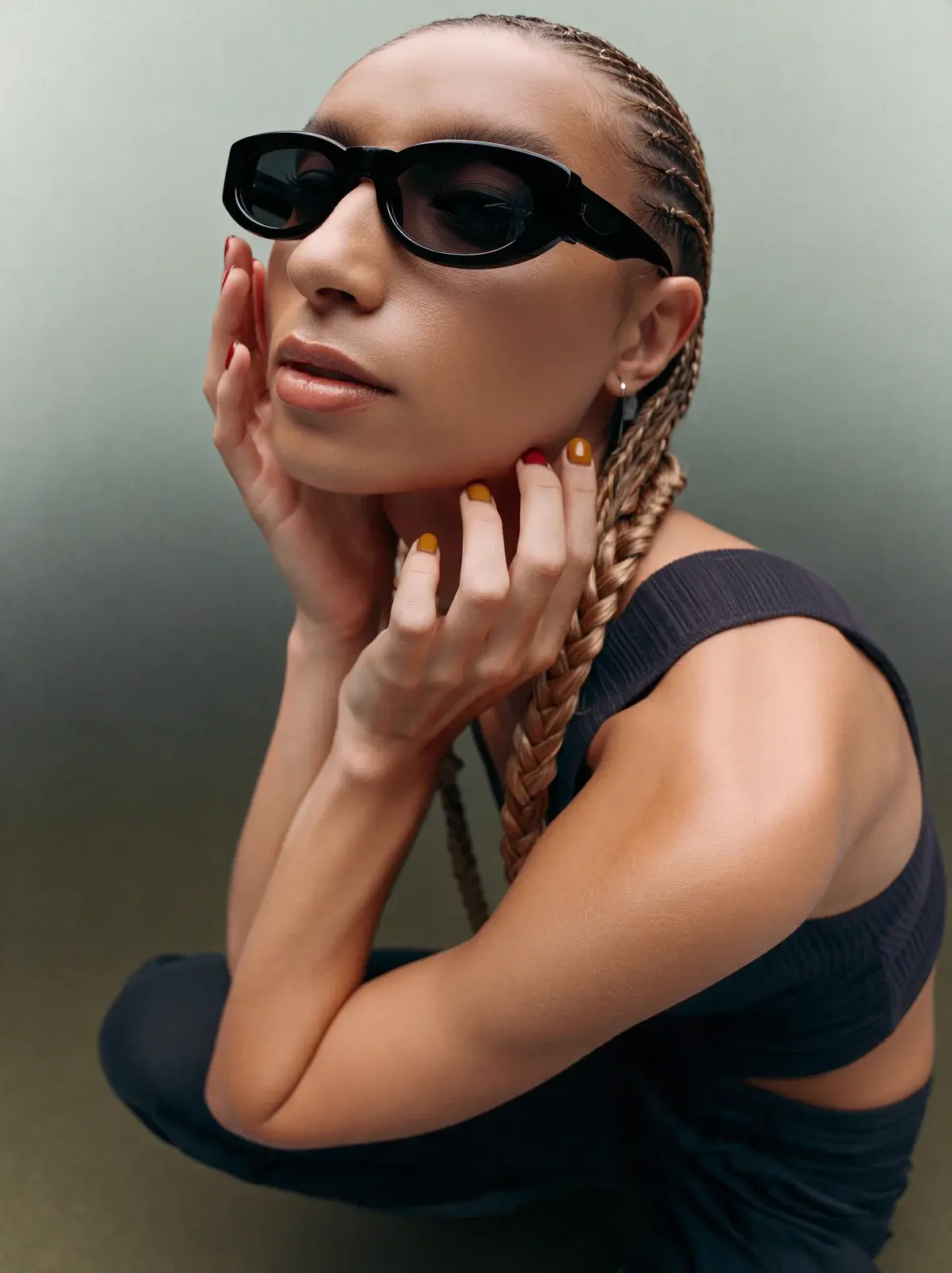
Regrade this photograph like a faded analog color print. Keep everything in the frame exactly as it is; change only color, tone and texture. Pull the background toward a dusty mauve-pink with a lighter halo around the subject and slightly darker edges. Turn the highlights a warm cream, lift the blacks slightly, and give the shadows a cool green-teal tint. Keep the subject's strongest accent colors rich and saturated and keep skin natural. Soften broad highlights but keep small glints crisp. Add pronounced film grain, even in size and strength across the whole image, clearly visible at normal viewing size.

Seedream 5.5
Copy
Preserve the uploaded subject's exact identity, pose, styling, silhouette, placement, surface details, lettering, camera angle, and crop. Keep any surface in direct contact with the subject. Replace the surrounding environment with a seamless matte backdrop that begins in pale silvery sage across the top and gradually deepens into warm olive-charcoal near the base. Let a quiet moss-green undertone develop within the darker gray-green midtones as the backdrop loses brightness. Use broad diffused side light to reveal native material texture, with creamy neutral highlights and softly modeled shadows. Keep skin tones natural and accent colors distinct. Give the entire frame fine, evenly distributed photographic print grain of consistent size and density, formed by small lighter and darker variations around each local tone.
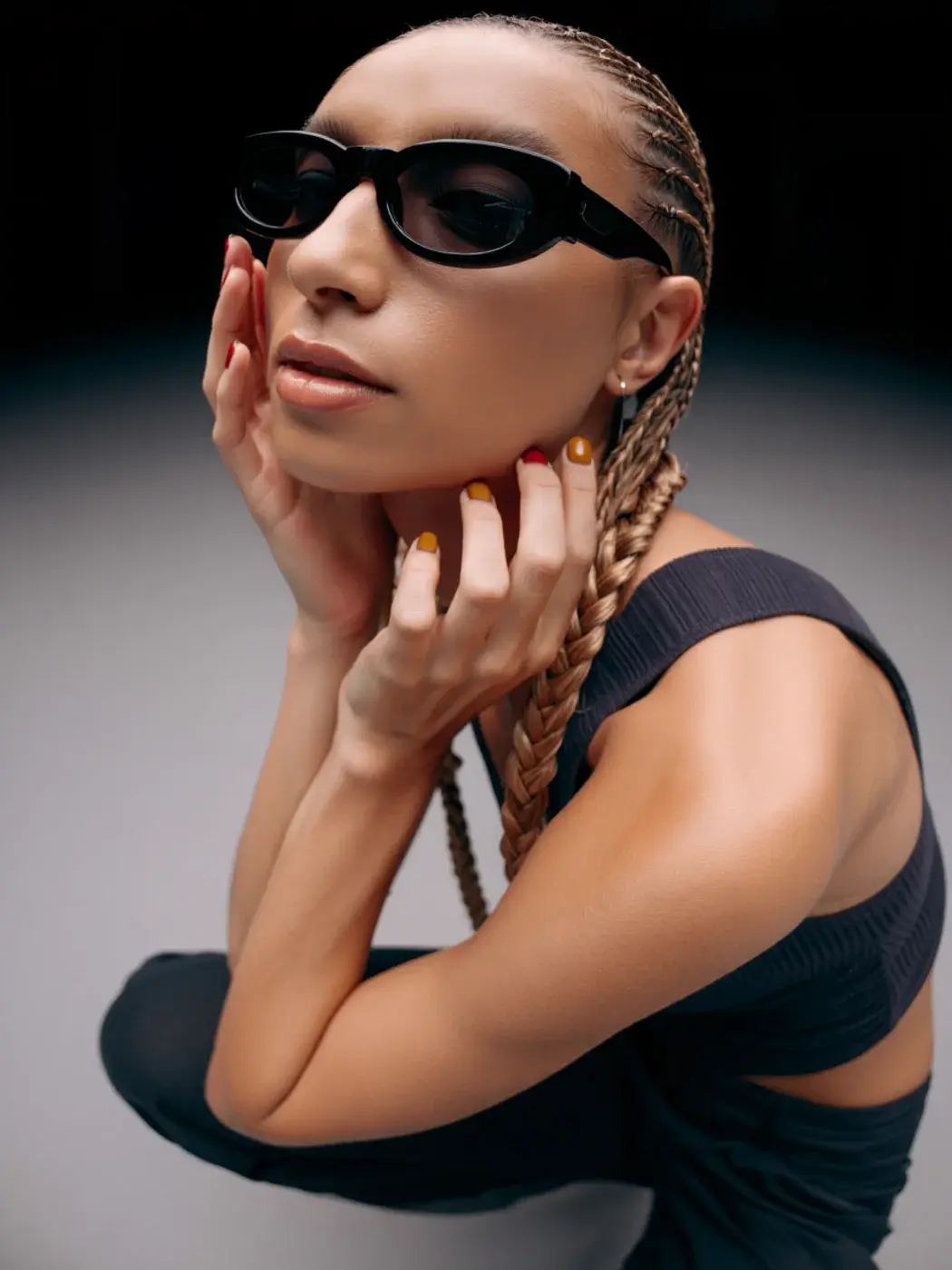
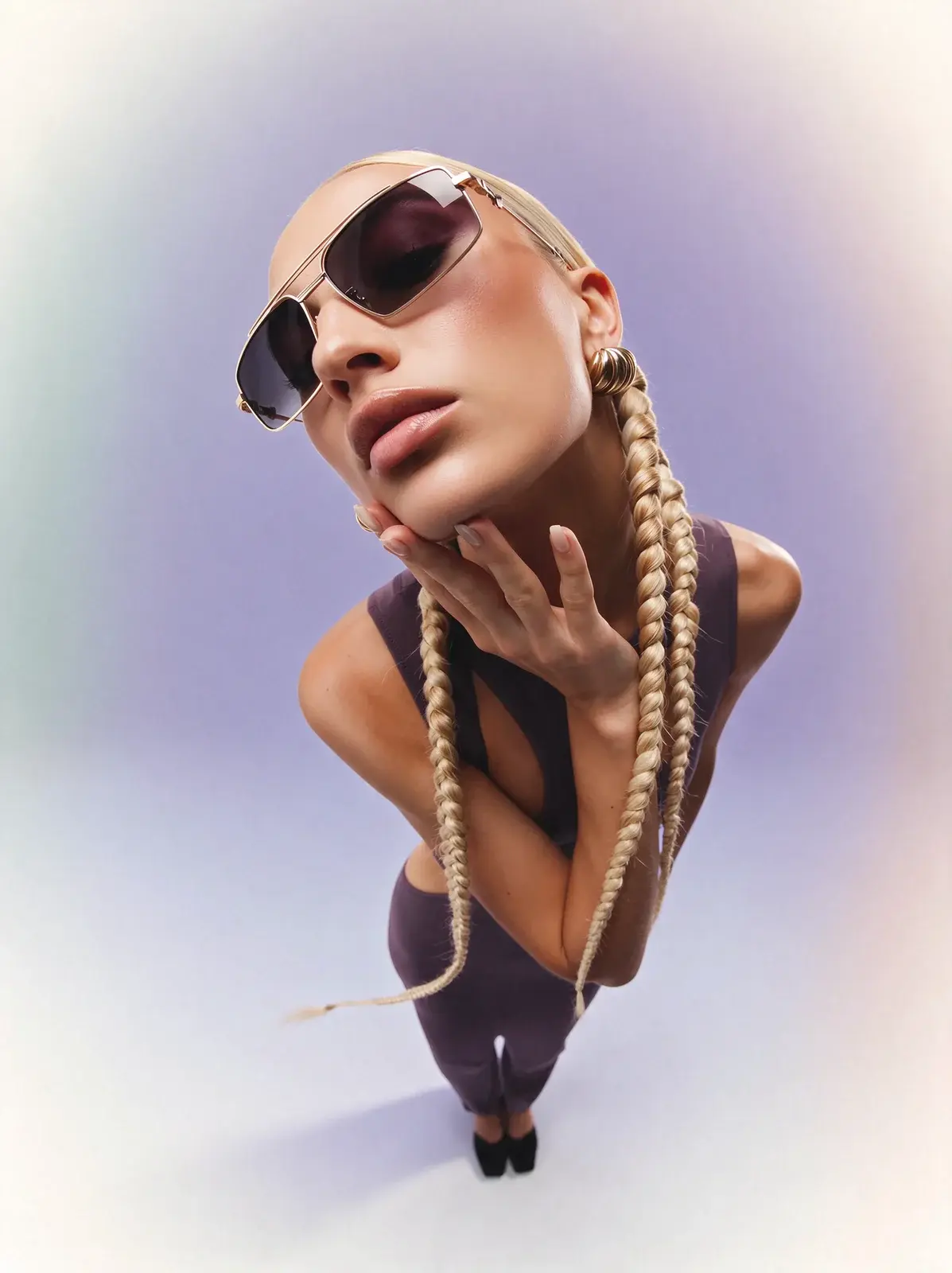
Seedream 5.5
Copy
Restyle this photo as a bright, airy, dreamy medium-format film fashion editorial image with real depth on the subject, keeping the subject, pose, face, clothing, props, camera angle and framing exactly, adding or removing nothing. Replace everything in the frame except the subject and its soft contact shadow with one single smooth, luminous, clean pastel field of color whose density depends only on the distance from the subject and on height, with no visible shape, ring, outline, line, boundary, steps or bands anywhere, and the same color field continuing unbroken from the top of the frame to the bottom edge. The field is light everywhere, never dark, gray or muddy: right around the subject soft violet-lavender (#A397C1, saturation about 22%, brightness about 76%), then pale lilac (#BAB7D4), then pale periwinkle (#CACBDD) at brightness 85-88%, toward the outer edges a very pale mint-gray on the left (#DDE6E6) and a very pale warm pink-cream on the right (#EFE9EA, saturation under 8%), the top corners almost white warm cream (#FFFAF4), and the lowest part of the frame fading gently to cream (#F8F7F2); very long airbrushed transitions with saturation never above 25% and no gray or brown tones in between. Depth and light: soft bright directional light from the upper left, clear but gentle modeling on the subject with a soft violet-tinted contact shadow beneath it, a thin cool rim of reflected light on the lit edges, the pastel color bleeding onto the subject's edges. Color grade applied to the subject only: cool lilac-tinted shadows, clean slightly warm highlights, healthy warm natural skin, whites clean and luminous, deep blacks only in genuinely dark objects (about #1B1A21), median brightness of the whole frame about 80%. Grain: fine, uniform analog film grain (pushed ISO 400) clearly visible at 100% across the whole frame including the light backdrop, the same strength in light and dark areas, about 5%, no blotches or ripples.
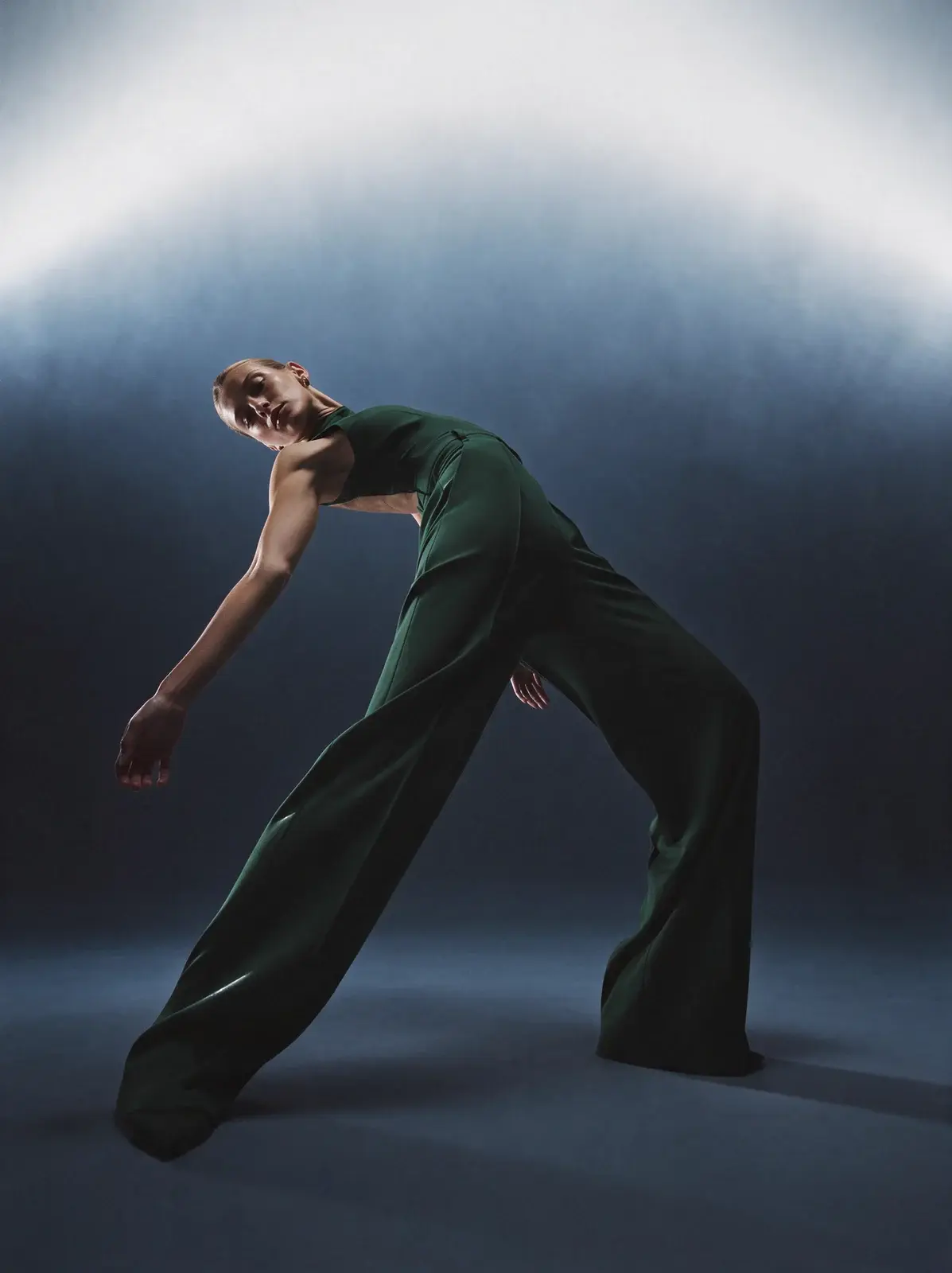
Seedream 5.5
Copy
Edit this photograph. Keep the subject, pose, clothing, props and framing exactly as they are and do not add or remove any objects. Restyle only the backdrop, light and color. The entire background, including the ground, becomes one seamless airbrushed color field with no seam or horizon line: a broad glowing silvery-white haze (#E6E9EC) across the top edge, cooling quickly into steel slate blue (#5E7D99) in the upper third, then falling into deep charcoal navy (#1E2733) through the lower half. The bright zone is a wide soft arc, the blend is hazy and smoky, and the edges of the frame are slightly darker. Soft diffused light from the front and slightly above, muted low-contrast color, cool shadows with detail, small bright glints on shiny details. Finish like 35mm color film with a clearly visible, even, fine grain across the whole frame, subject included, with lifted blacks and a soft glow around highlights.
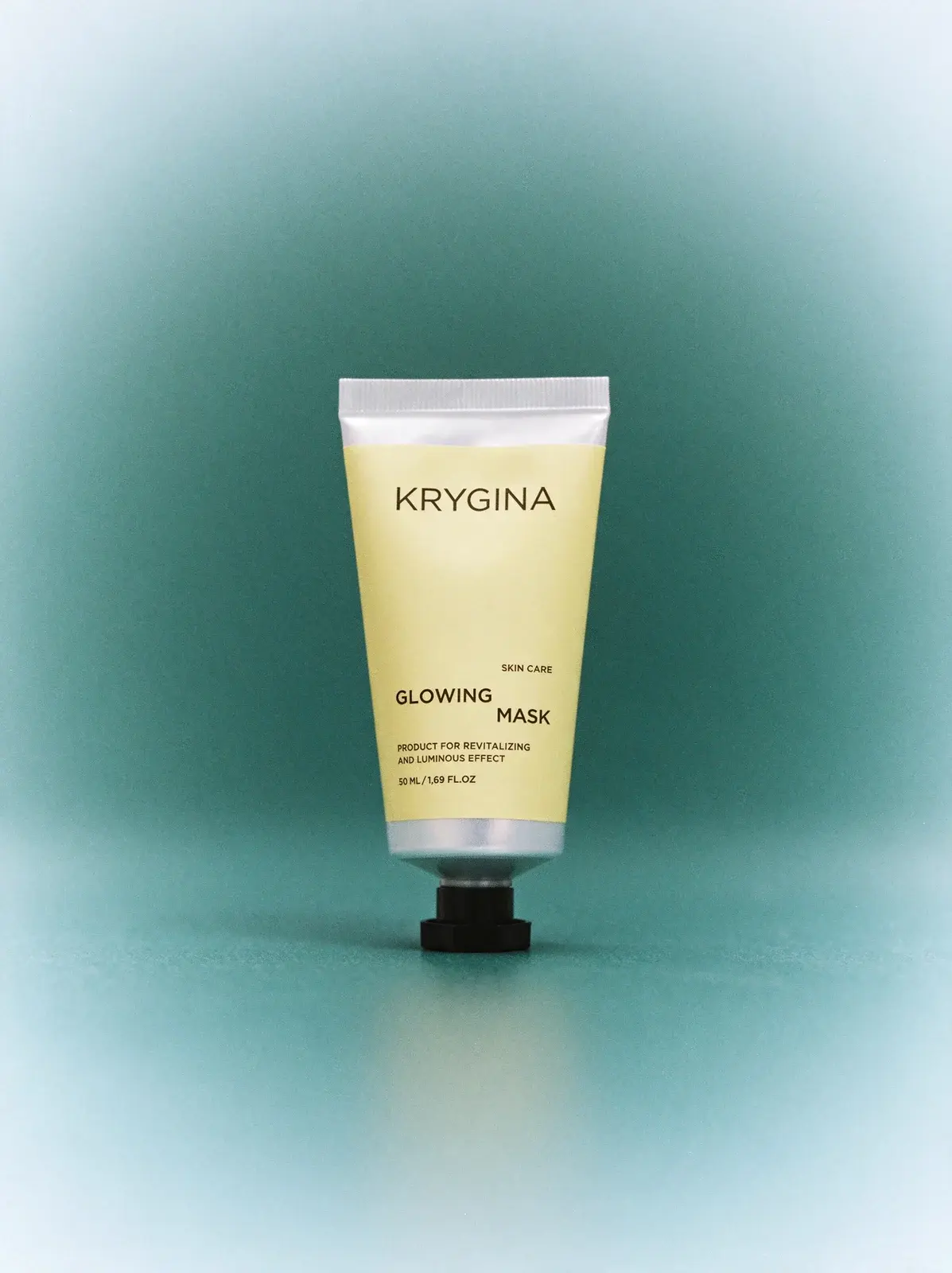
Seedream 5.5
Copy
Apply one single unified soft analog film process to the ENTIRE image, product and background together, so that it looks like one photograph shot on medium-format film with one soft frontal light, never like a cutout placed over a new background. Film grain is a defining part of this look and must be obvious: coarse-to-medium film grain with particles about 4-5 pixels wide at 1760 pixels of image width, about 13% strength on the product and about 5% on the smooth backdrop, made of fine irregular clumps of slightly lighter and darker tone, like a scan of a 35mm Kodak Portra 400 negative; the product and the backdrop share exactly the same grain texture; no digital smoothness. Color grade and light: soft, diffused frontal key light with gentle shadows, slightly hazy with a mild glow; medium-high contrast, median brightness about 59%, rich overall saturation about 40%. Everything that is not the product, including the light grey seamless backdrop, is completely replaced by one smooth, seamless, airbrushed color field that depends only on the distance from the middle of the product and changes continuously over the whole frame, never as a plateau followed by a quick fall-off. Right at the product it is a rich, clear color (#347061, hue about 165 degrees, saturation about 54%, never muddy or gray); a quarter of the way to the frame edge it is #488C7F; halfway to the edge #63A8A1 with the hue turning gradually toward 195 degrees; three quarters of the way #8FD7D9; at the middle of every frame edge a clearly tinted light color (#ABE4ED); and in the four corners a very light, softly tinted version of the neighbouring hue (#C9EAF5 at the top, #C0E4F0 at the bottom), about 18% saturation, never pure white. The color keeps visible tint all the way to the frame edges and fades with one steady, continuous slope. The product stands on a seamless floor made of the same color field, with only a soft contact shadow and a soft reflection in the backdrop's own hue; no floor edge, horizon, seam or hard line is visible anywhere. Preserve exactly: the shape, size and materials of the pale yellow tube with its white translucent body and black octagonal cap, the pale yellow label colour and all printed text (KRYGINA, SKIN CARE, GLOWING MASK, PRODUCT FOR REVITALIZING AND LUMINOUS EFFECT, 50 ML / 1,69 FL.OZ) exactly the same; only the light and the backdrop reaction change. No extra text, no logos, no watermarks.
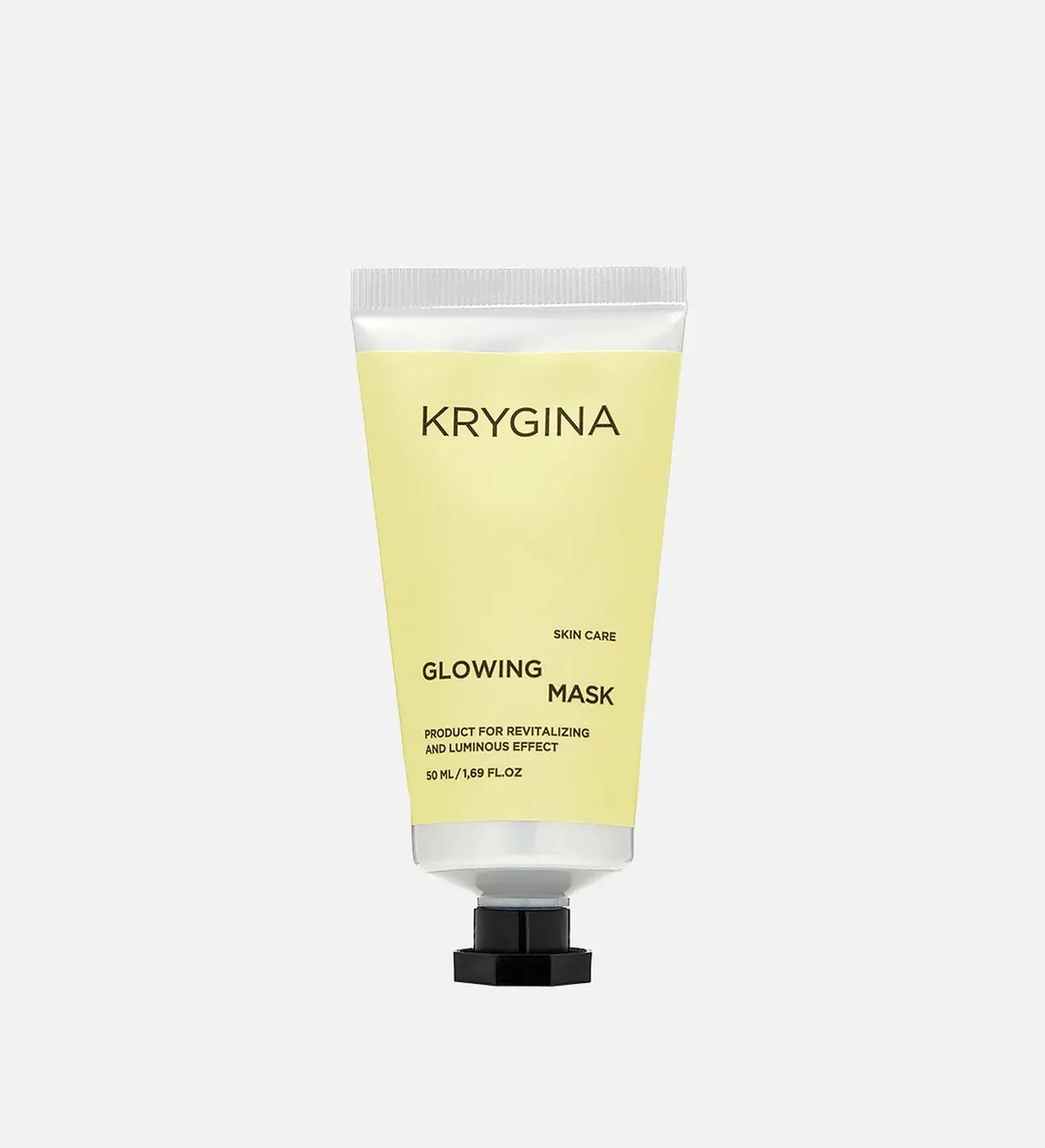
Seedream 5.5
Copy
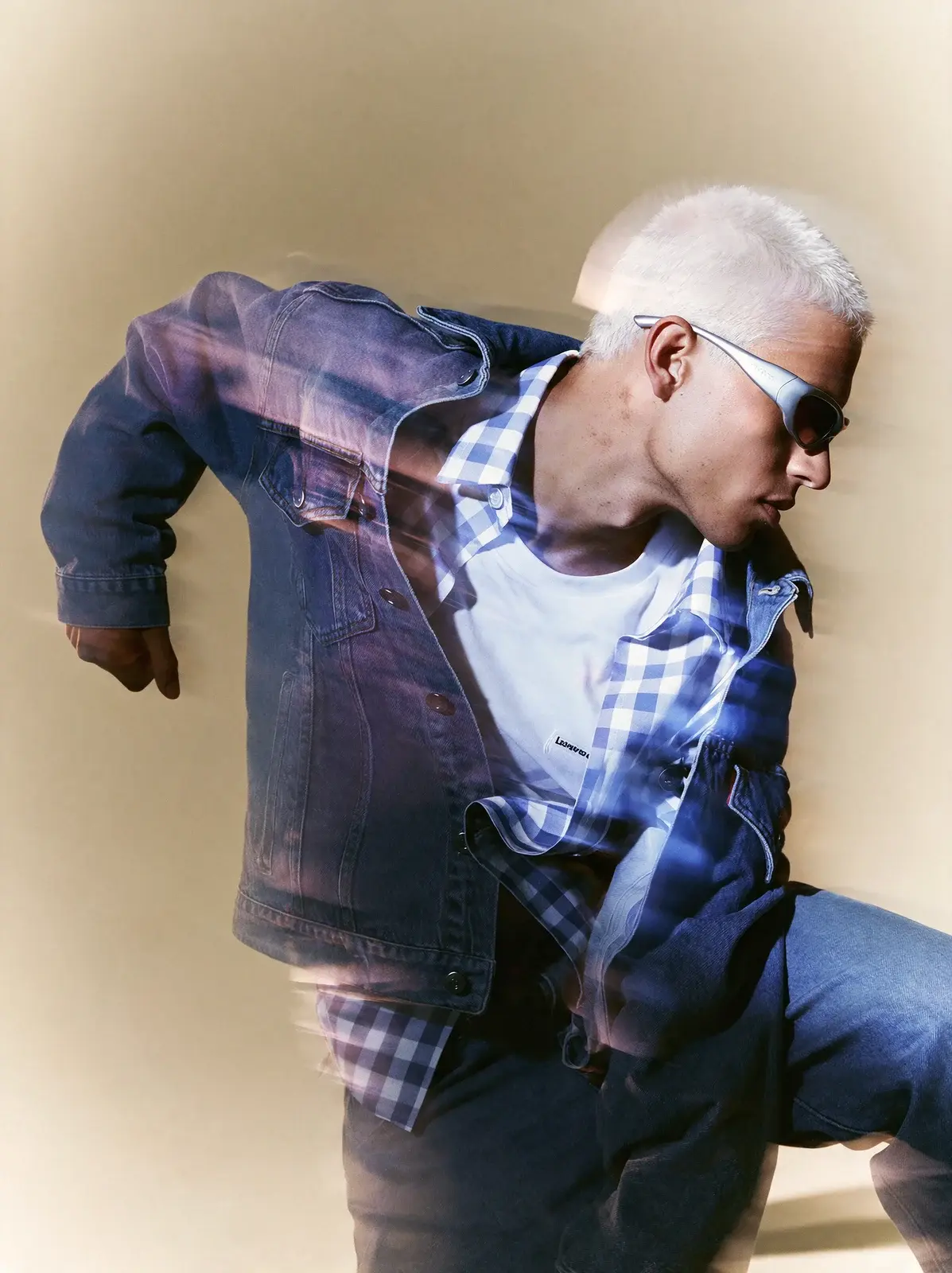
Composite the foreground composition from the uploaded image onto one full-frame matte beige gradient. Preserve the exact subject count, identity, expression, pose, silhouette, scale, placement, viewpoint, crop, original colors, materials, and markings. Build the background as a flat image layer, with a broad muted khaki-beige interior (#B6A077) that gradually loses color density through oat beige (#D4C2A1) into milky ivory (#F0E7D8) around the perimeter. Let the cream enter farther from the corners and at different depths along the two sides, continuing the same gradual fade below the subject to the bottom edge. Shape the subject with a broad neutral key from the upper right and gentle frontal fill, keeping illuminated surfaces bright and shaded detail readable. Preserve the richness of existing accent colors and the natural contrast between highlights and dark reflections on reflective materials. Where the original subject rests on a surface, place a narrow cool olive-taupe shadow along its actual contact edge and let it feather quickly to the left. Where the original subject is suspended, preserve its exact height, tilt, and clear air gap, with the clean beige gradient visible underneath. Apply dense, fine photographic grain of consistent size and density across the entire image, clearly visible in the ivory margins, midtones, and shadows.
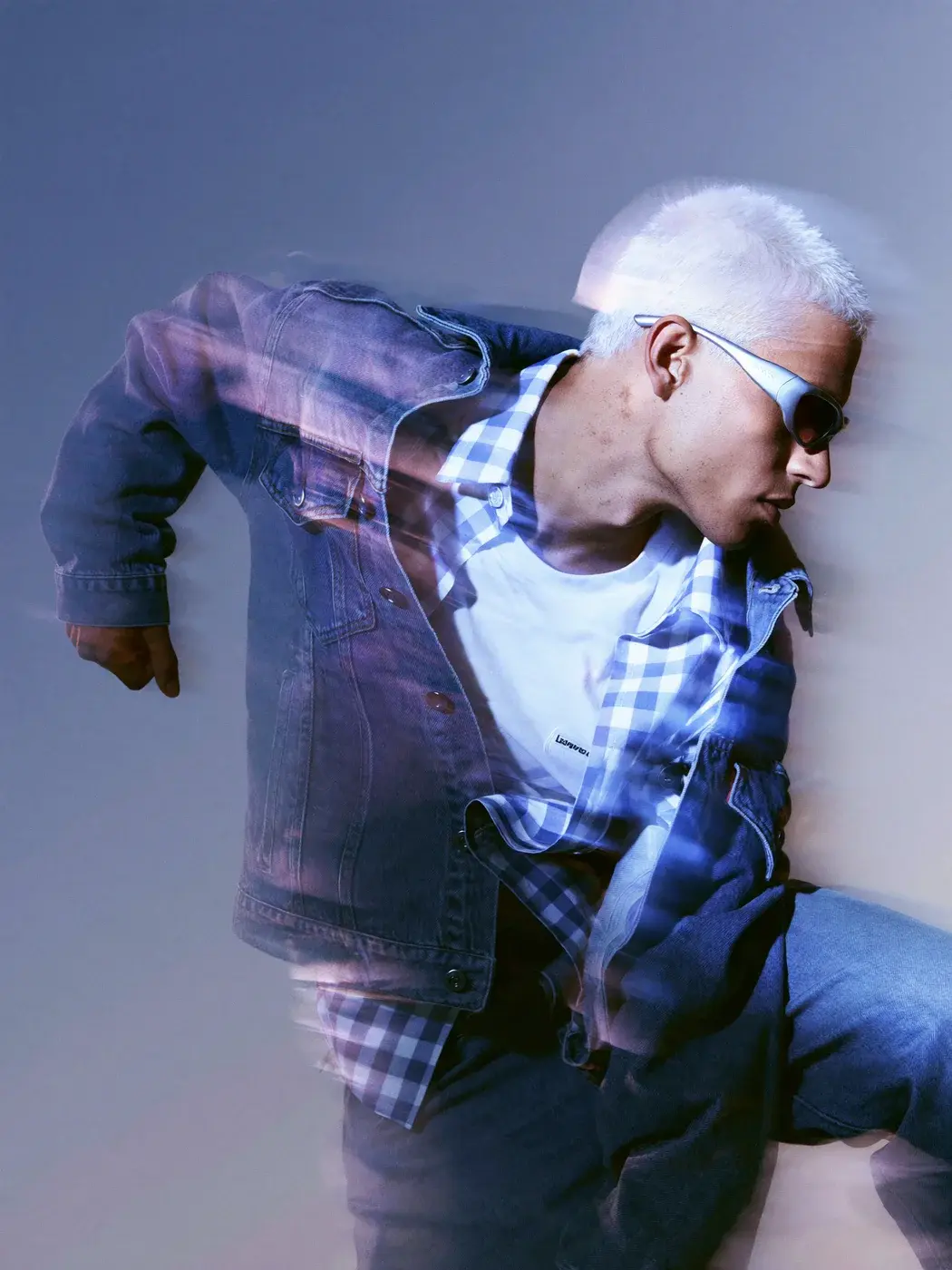
Seedream 5.5
Copy
Edit the uploaded image using it as the sole source for every subject, object, and accessory. Preserve their exact count, placement, scale, orientation, pose, expression, silhouettes, materials, original colors, lettering, viewpoint, and crop. Match the original support state, including the exact points of contact for resting subjects and the original height, tilt, and visible air gap for suspended subjects. Replace the surroundings edge to edge with a single continuous matte gradient defined in image coordinates. Keep warm dusty rose (#BE858A) through the broad interior and let powder pink (#D7AFB2) feather inward from the sides, with a wider transition on the left. Carry this same color field through the entire lower portion of the image, with continuous brightness, hue, and surface texture at every height. Use soft directional light from the upper left and neutral frontal fill to keep faces and shaded material detail readable. For resting subjects, show support only through a short rose-brown shadow that fades outward from the actual contact points. For suspended subjects, carry the open pink field continuously through the original air gap beneath them. Preserve the distinct light response of every original material. Finish with dense, fine, evenly distributed photographic grain across the full frame, clearly visible in the smooth pink tones and consistent in scale over the subjects.
Seedream 5.5
Copy
Apply one single unified soft analog film process to the ENTIRE image, subject and background together, so that it looks like one photograph shot on medium-format film with one soft frontal light, never like a cutout placed over a new background; the same treatment applies whether the subject is a person or an object. Film grain is a defining part of this look and must be obvious: coarse-to-medium film grain with particles about 4-5 pixels wide at 1760 pixels of image width, so that it stays clearly visible even when the picture is shown small on a phone screen, about 13% strength on the subject (surfaces, fabric, props, midtones) and about 5% on the smooth backdrop, made of fine irregular clumps of slightly lighter and darker tone with a faint variation in color, like a scan of a 35mm Kodak Portra 400 negative; the subject and the backdrop share exactly the same grain texture; no digital smoothness, no noise reduction, no plastic retouching, no clean synthetic surfaces anywhere. Color grade and light: soft, diffused frontal key light with gentle shadows, slightly hazy with a mild glow, no hard specular shine; the deepest blacks are crushed to almost pure black with a faint violet tint (about #0A060D), midtone shadows a neutral warm mauve-gray (#5D5558); every other color of the subject keeps its own hue; medium-high contrast, median brightness about 59%, rich overall saturation about 40%; light surfaces and metal take a subtle periwinkle tint in the highlights and a warm complementary tint in the shadows. Depth: the color field is never centered on the subject and never forms a vignette, halo or circle around it; the subject sits inside a smooth part of the gradient and the backdrop reads as one wide sweep of color across the whole frame, with a soft contact shadow in the backdrop's own hue, a faint rim of the backdrop color on the subject's edges, a gentle halation bloom around the brightest highlights and slightly lower contrast far from the subject. Keep the subject, pose, shape, details, props, their colors, camera angle and framing exactly, adding or removing nothing; the object's materials take the grade exactly as they do in a real film photograph shot in this light, clearly tinted by the dominant light and by the backdrop color while their own base colors stay recognizable; keep all printed text, lettering and logos on the product exactly as they are, sharp, legible and unchanged, add no other text, logos or watermarks, and remove any app badge, sticker or caption from the corners of the source. Everything in the frame that is not the subject, wherever it is, and everything behind and under the subject, whether it was a wall, a floor, sky, field, room or landscape, is completely replaced by one smooth, seamless, perfectly clean airbrushed
color field that depends only on position, with no texture of the original surroundings, no horizon, crease, corner, edge, line, rectangle, light pool, beam, cone, oval, ring, steps or bands anywhere, and no hard edge between any two colors: every color change takes place gradually over at least 40% of the frame, and saturation or brightness never changes by more than about 3 points over any 5% of the frame width or height. The field is one large diagonal gradient that depends on the position along the line from the lower left corner to the upper right corner of the frame, never on the position of the subject. The lower left corner and the left edge in the lower half are the richest, clearest color (#5A40A8, hue about 255 degrees, saturation about 62%, brightness about 66%, never washed out or muddy); it flows gradually across the middle of the frame as #8166BD and then #AA92D1, and reaches the upper right corner as a light tint (#D7C7EB); the upper left corner is #AC96D6 and the lower right corner is #9F8BCC, so every corner of the frame still carries a clear tint of the color and none is white; the hue drifts by a few degrees along the way; one very long, wide, soft airbrushed gradient filling the whole frame. The two matte warm-beige pump bottles keep their exact shape, size, color and positions side by side with the same straight-on camera angle, the green ginkgo leaf photographs on the labels keep their natural greens and water drops, the FAROOSH wordmark keeps its gold foil letters, the lines GINKGO BILOBA SHAMPOO, GINKGO BILOBA CONDITIONER and 500 ml stay exactly as they are; the pale grey studio backdrop is completely replaced by the color field and the bottles stand on it with only a soft contact shadow in the backdrop's own hue. Finally, strong visible film grain lies evenly over everything including the subject, and the backdrop glows softly and smoothly around the subject.
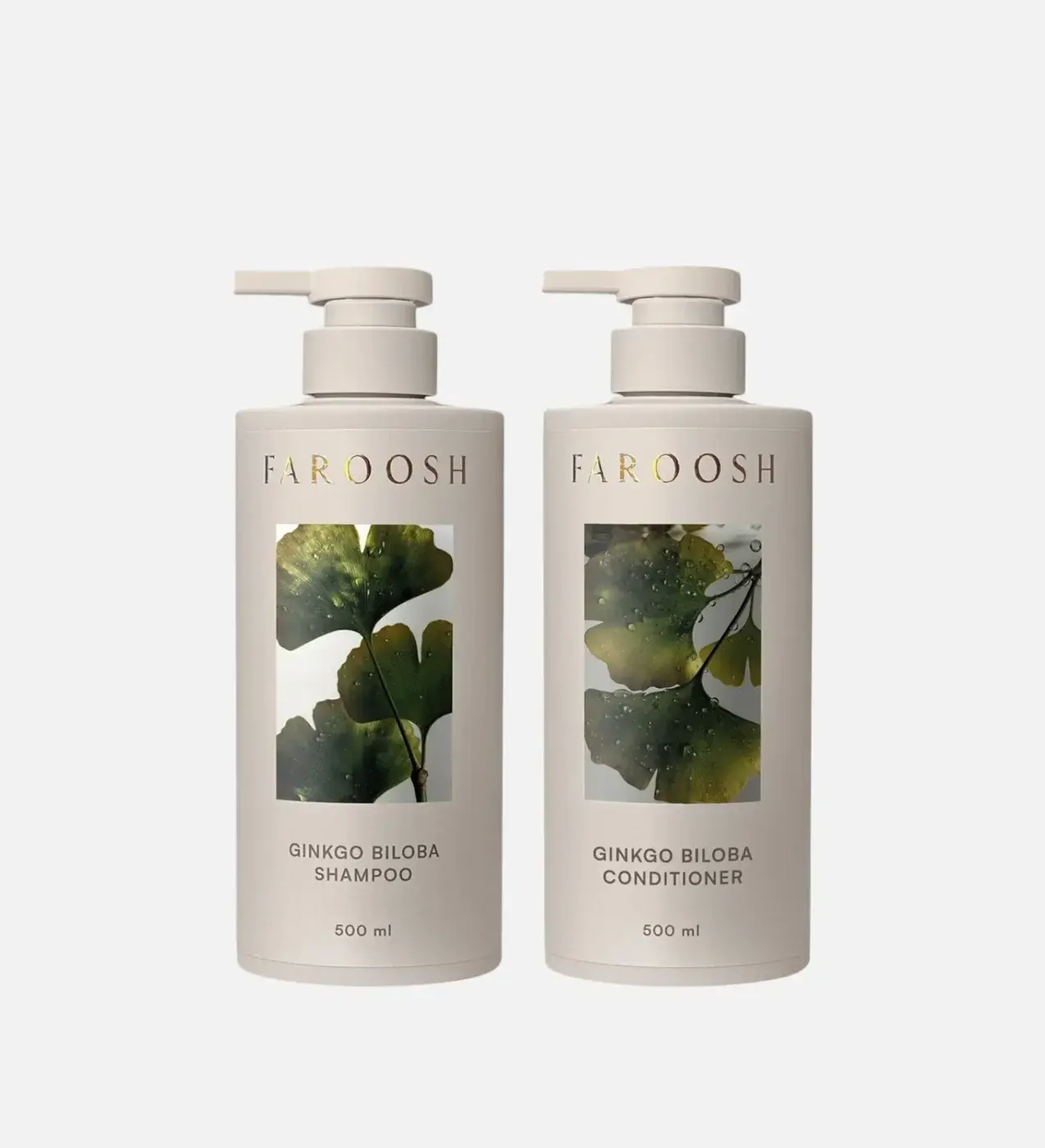
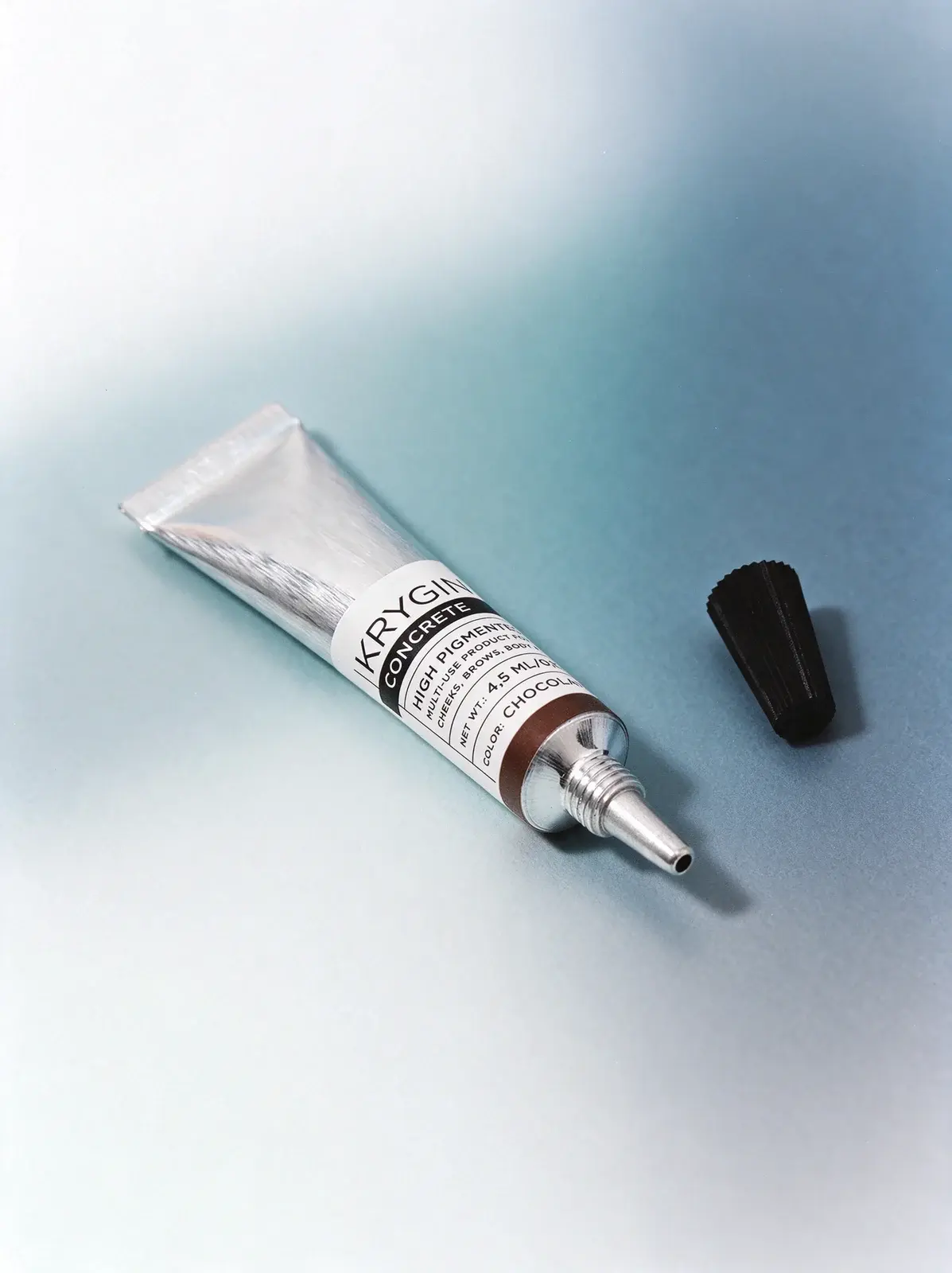
Seedream 5.5
Copy
Apply one single unified bright, airy, dreamy analog film process to the ENTIRE image, subject and background together, so that it looks like one photograph shot on medium-format film with one soft frontal light, never like a cutout placed over a new background; the same treatment applies whether the subject is a person or an object. Fine film grain is present but quiet: tiny, crisp, even film grain particles about 2-3 pixels wide at 1760 pixels of image width, clearly visible on smooth surfaces when zoomed in (about 6% strength on the subject) and subtle on the smooth backdrop (about 3%), like a scan of a 35mm Kodak Portra 400 negative; the subject and the backdrop share the same grain texture; no digital smoothness, no plastic retouching. Color grade and light: soft, bright, slightly low frontal light that wraps the figure, a delicate glow on the subject, the backdrop color bleeding onto the subject as a sky-blue tint in the edges and shadows, highlights clean and pale, shadows soft with detail; a high-key airy image with median brightness about 67%, highlights up to near white, blacks only in the darkest objects (about #101010), moderate contrast, soft pastel saturation about 24% except the dense backdrop color near the figure; every other color of the subject keeps its own hue; light surfaces and metal take a subtle sky-blue tint in the highlights and a warm complementary tint in the shadows. Depth: the backdrop is clearly deeper and richer in color around the subject than toward the outer edges of the frame, so that the subject sits inside a soft glowing atmosphere of color; add a soft contact shadow in the backdrop's own hue, a faint rim of the backdrop color on the subject's edges, a gentle halation bloom around the brightest highlights and slightly lower contrast far from the subject. Keep the subject, pose, shape, details, props, their colors, camera angle and framing exactly, adding or removing nothing; the object's materials take the grade exactly as they do in a real film photograph shot in this light, clearly tinted by the dominant light and by the backdrop color while their own base colors stay recognizable; keep all printed text, lettering and logos on the product exactly as they are, sharp, legible and unchanged, add no other text, logos or watermarks, and remove any app badge, sticker or caption from the corners of the source. Everything in the frame that is not the subject, wherever it is, and everything behind and under the subject, whether it was a wall, a floor, sky, field, room or landscape, is completely replaced by one smooth, seamless, perfectly clean airbrushed color field that depends only on position, with no texture of the original surroundings, no horizon, crease, corner, edge, line, rectangle, light pool, beam, cone,
oval, ring, steps or bands anywhere, and no hard edge between any two colors: every color change takes place gradually over at least 40% of the frame, and saturation or brightness never changes by more than about 3 points over any 5% of the frame width or height. The whole left half and the upper left of the frame are clean cool white (#FCFEFF at the top left), turning slowly into a soft pale tint of the color at mid-height on the left (#D3E1E6) and a faintly tinted white at the very bottom (#EBF7F7). The right side carries a clear pastel color (hue about 200 degrees, saturation up to 34%) that begins near the middle of the top edge as a faint tint (#E8F2FA), grows toward the top-right corner (#7296AD), and continues down the right edge as a long soft band, densest at about 30-46% of the height (#5B7A8A), then lightens gradually toward the bottom (#93A8B8 at 60%, #B8C6D1 at 75%, #E1E8ED in the bottom right corner); the fade from color to white is a very long, soft, diagonal transition across more than half of the frame width. The aluminum tube keeps its brushed silver metal with a soft reflection of the backdrop color, the white label keeps its exact layout, the chocolate-brown band stays chocolate brown, the black ribbed cap stays black; the tube and the cap stay in exactly the same positions with the same high-angle perspective, and the white surface they rest on becomes part of the color field with only soft contact shadows. Finally, quiet fine film grain lies evenly over everything including the subject, and the backdrop glows softly and smoothly around the subject.

Seedream 5.5
Copy
Apply one single unified cinematic process to the ENTIRE image, subject and background together, so that it looks like one dramatic low-key chiaroscuro editorial photograph shot with a strong directional light from one side, never like a cutout placed over a new background. The whole frame, including the subject and every material in it (skin, hair, fabric, fur, metal, glass, any object), gets: a dark, rich, low-key tonality with a median brightness of about 28%, true deep blacks (about #0D0E09), bright highlights up to near white only on the lit parts of light materials, overall saturation about 37%; the lit side of the subject is soft and luminous while the other side falls into deep warm shadow with a fast falloff; skin is pink-peach in the light (about #A47A6B) and shadows on the subject are warm olive-brown (#403224 to #433227), never neutral gray or black, hair and darkest areas are olive-black (#242114), light fabrics are a warm cream (about #E7D4C0), pinks stay dusty (#B28382), colors rich but slightly muted, surfaces smooth and polished; fine, even analog film grain over the whole frame, about 3%, visible at 100% on the subject and on the backdrop alike, the same strength in light and dark areas, no blotches or ripples. Keep the subject, pose, shape, details, props, camera angle and framing exactly, adding or removing nothing, no text, no watermarks. Everything in the frame that is not the subject, wherever it is, is replaced by one smooth continuous airbrushed color field that is a function of position only: it runs unbroken from the top edge to the bottom edge, with no horizontal line, corner, edge, change of surface or brightness step at any height, and the subject's own cast shadow is just a soft slightly darker area of the same field. At the top corners and top edges the field is a dusty mauve-rose (#836268, saturation about 26%, brightness about 52%), which turns quickly, within the upper quarter of the frame height, into warm brown (#583F33) and then deep olive-brown (#493A2A), darkest in a wide zone behind and around the subject in the upper-middle part of the frame (#2F2B19, hue about 48 degrees, brightness about 18%); at mid-height the left edge is #4B3A2C and the right edge slightly darker (#33301C); from about 55% of the height down it returns to mauve-rose (#694443 at about 59%, #71474C at about 65%, #7B525B at about 78%) and lightens into a soft gray-lilac at the bottom (#876F7B at about 90%, #8D7F8B in the lower corners, saturation about 10-20%); the edges of the frame are clearly lighter than the center, like a wide soft reverse vignette with very long soft transitions, with no visible shape, ring, outline, steps or bands anywhere.

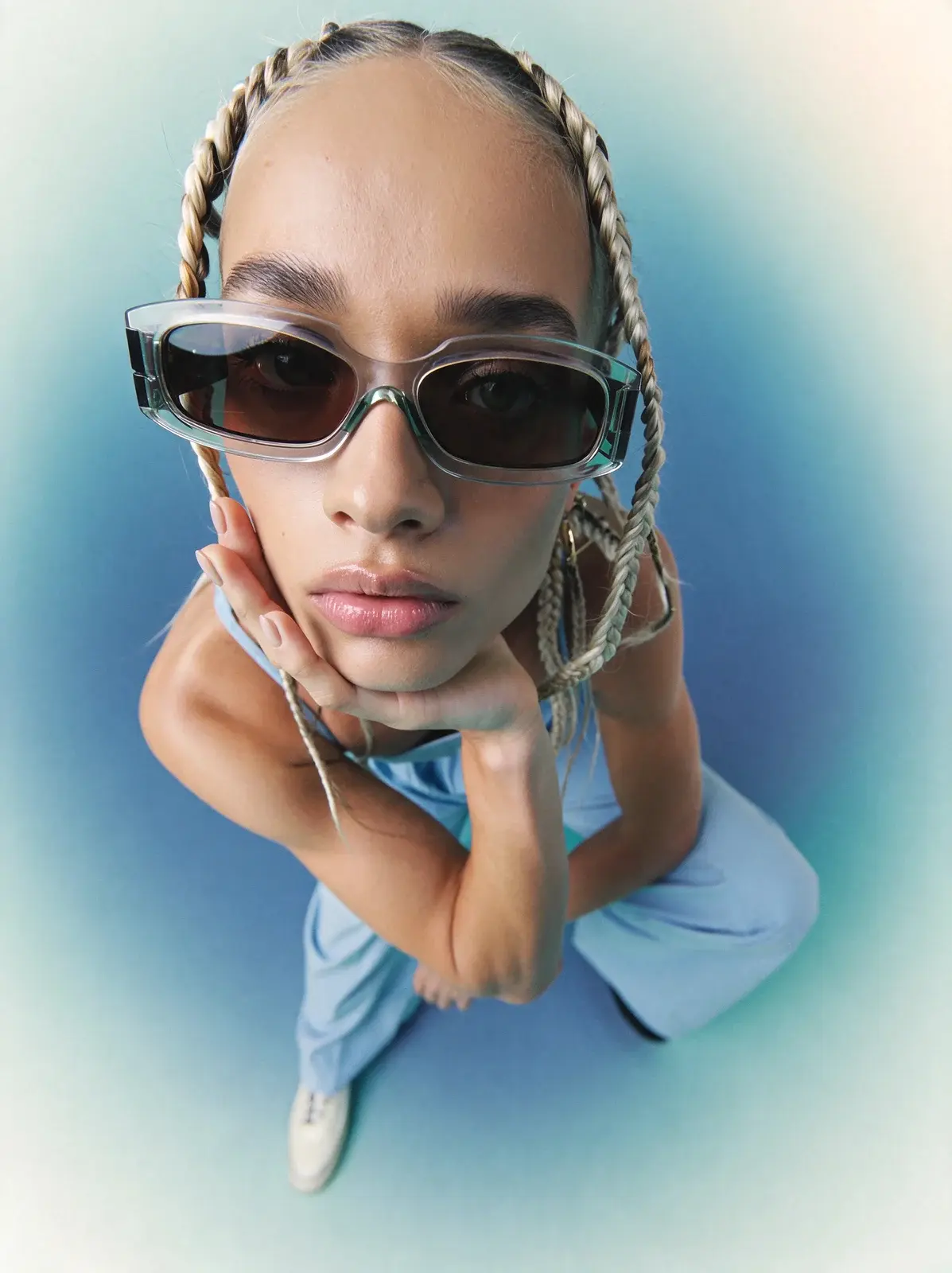
Seedream 5.5
Copy
Restyle this photo as a bright, airy, dreamy medium-format film fashion editorial portrait; keep the subject, pose, face, clothing, props, camera angle and framing exactly, add or remove nothing. Replace the original background, whatever it was, with one smooth, continuous field of color whose density depends on the distance from the figure and on height: it is densest and most saturated right around the subject's body at about mid-height of the frame, fading outward evenly in every direction so the farther from the figure, the paler it gets, with no visible shape, ring, outline or boundary and no steps or bands anywhere. Near the figure at mid-height it is azure blue (#3F80A4, saturation about 60%) shifting to indigo-blue (#49719E) beside the waist; at mid-distance turquoise to aqua (#66A4B2, then #A8D7D3); at the outer edges a pale mint (#C3E5DD, saturation about 15%); and only the very top and bottom corners are a pale mint-cream (#E5F5E9, #F3F3E6), with the top right corner a warm cream (#FEF7EC). The transition from the dense color to the cream corners is very long and fills the whole frame, hue shifting smoothly from indigo (about 210 degrees) through azure, turquoise and mint to cream, density varying very slightly like a hand-airbrushed backdrop with no spray marks or texture. Light: soft, bright, slightly low front light that wraps the figure, a delicate glow on skin and fabric, the backdrop color bleeding onto the subject as a cool blue-teal tint in edges and shadows, highlights clean and pale, shadows soft with detail, hair dark with silvery highlights; a high-key airy image with median brightness about 67%, highlights up to near white, blacks only in the darkest hair (about #101010), moderate contrast, soft pastel saturation about 24% except the dense blue near the figure. Grain: fine, subtle, even film grain, visible at 100% zoom, the same strength everywhere, tiny, no patches or ripples.
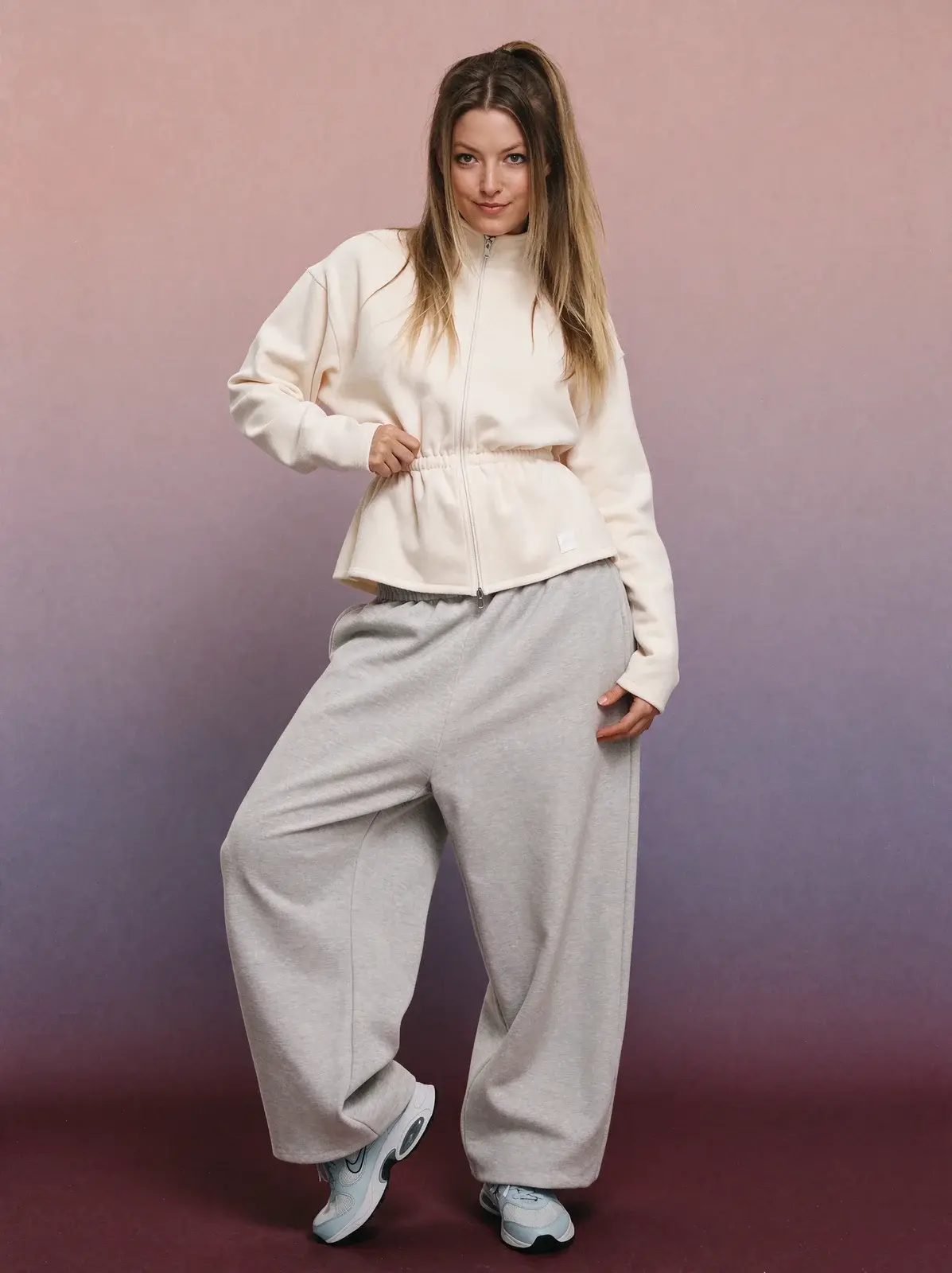
Seedream 5.5
Copy
{
"task": "Retouch the uploaded image as a softly lit editorial film photograph.",
"preserve": "Keep the exact identity, expression, pose, hairstyle, makeup, silhouette, outfit, footwear, accessories, props, material colors and finishes, geometry, placement, camera angle and crop.",
"scene_optics": "Preserve existing supports, water surfaces, waterlines, ripple patterns, reflections and refracted outlines. Adapt their brightness to the new light.",
"background": {
"palette": ["#D0A6A4", "#B496A0", "#83728F", "#4D202B"],
"shape": "Fill only the open backdrop with a seamless matte gradient from powder rose through dusty mauve into broad smoky lilac across the middle and lower middle, then berry wine near the bottom. Keep brightness even across the width at each height and blend the colors gradually."
},
"lighting": {
"key": "Use one large diffused key high and slightly to camera left. Illuminate broad planes across the face and upper surfaces with a gentle falloff across the form.",
"fill": "Use only enough near-axis fill to keep eyes and shaded detail
readable.",
"highlights": "Soften concentrated frontal specular peaks into broader low-contrast highlights that follow surface curvature and stay within each material's natural sheen.",
"shadows": "Keep the deepest shadows close beneath the chin, inside folds and between overlapping objects. Keep cast shadows compact at visible supports and carry the gradient through open space around suspended subjects."
},
"color_grade": {
"skin": "Use gently muted midtones, neutral peach-beige highlights, localized natural rose in the cheeks and soft taupe shadows. Reduce orange selectively while preserving original complexion depth, freckles and makeup.",
"materials": "Keep originally pale materials luminous ivory with clearly modeled folds. Retain the distinct colors of existing accents."
},
"grain": "Apply visible fine monochromatic film grain across the entire image. Use irregular light and dark variations about 1–2 pixels across at 1440 pixels wide. Keep grain readable in pale rose, lilac, ivory and wine, with smooth large-scale transitions and clear material detail."
}
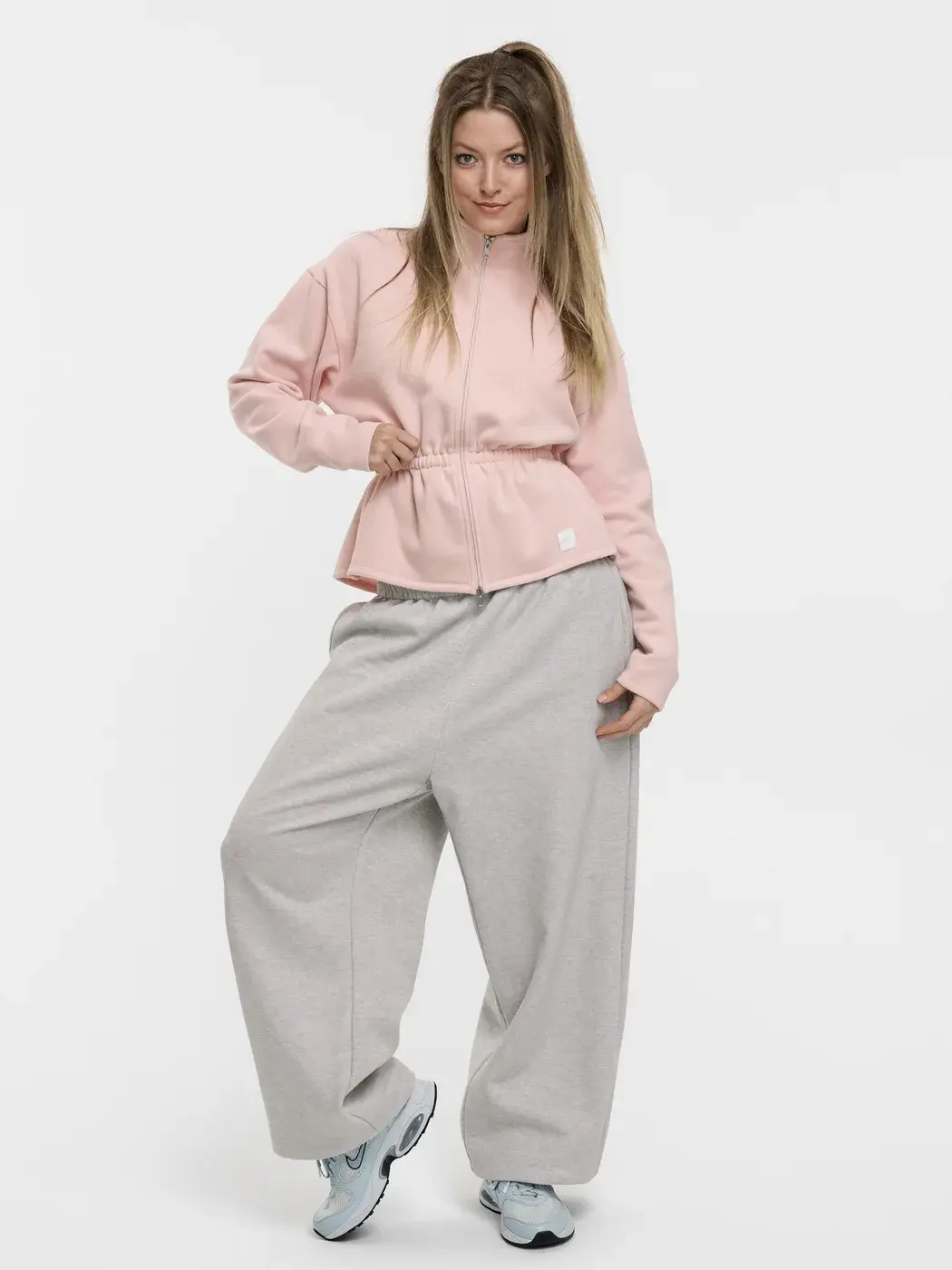
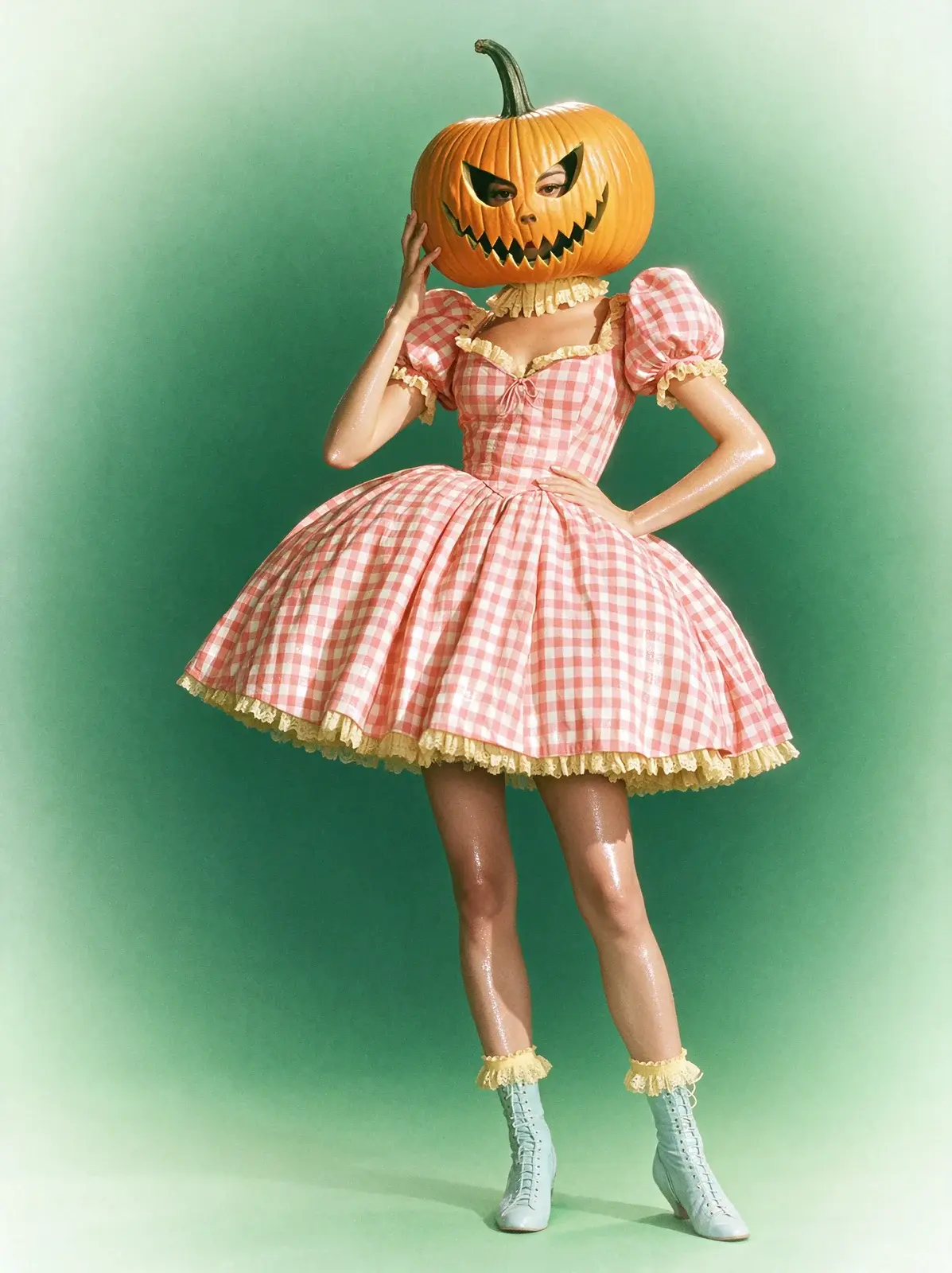
Seedream 5.5
Copy
Apply one single unified high-key glossy analog film process to the ENTIRE image, subject and background together, so that it looks like one bright magazine photograph, never like a cutout placed over a new background; the same treatment applies whether the subject is a person or an object. Film grain is a defining part of this look and must be obvious: coarse-to-medium film grain with particles about 4-5 pixels wide at 1760 pixels of image width, so that it stays clearly visible even when the picture is shown small on a phone screen, about 13% strength on the subject (skin, hair, fabric, props, midtones) and about 5% on the smooth backdrop, made of fine irregular clumps of slightly lighter and darker tone with a faint variation in color, like a scan of a 35mm Kodak Portra 400 negative; the subject and the backdrop share exactly the same grain texture; no digital smoothness, no noise reduction, no plastic retouching, no clean synthetic surfaces anywhere. Color grade and light: very bright, soft, wrapping frontal light, high key, median brightness about 83%, highlights on lit fabric and glossy surfaces softly blown to near white, a glossy oiled glowing sheen on every smooth surface; light cream materials warm cream (#EFDEC4) in the light and #CDBBAC in shade; lifted blacks, overall saturation low (about 14%) except the backdrop color; skin and light materials take a subtle mint-green tint in the highlights and a warm complementary tint in the shadows. Depth: the backdrop is clearly deeper and richer in color around the subject than toward the outer edges of the frame, so that the subject sits inside a soft glowing atmosphere of color; add a soft contact shadow in the backdrop's own hue, a faint rim of the backdrop color on the subject's edges, a gentle halation bloom around the brightest highlights and slightly lower contrast far from the subject. Keep the subject, pose, shape, details, props, their colors, camera angle and framing exactly, adding or removing nothing; skin and hair take the grade exactly as they do in a real film photograph shot in this light, clearly tinted by the dominant light and by the backdrop color (hue and saturation shift noticeably toward the tints described in the grade), while the person stays recognizable: the complexion depth (lightness) of the skin stays within about 10% of the original and is never whitened or darkened, hair keeps its base color family (blonde stays blonde, dark stays dark) with the tint on top of it, and eye color is unchanged; no text, no logos, no watermarks, and remove any app badge, sticker or caption from the corners of the source. Everything in the frame that is not the subject, wherever it is, and everything behind and under the subject, whether it was a wall, a floor, sky, field, room or
landscape, is completely replaced by one smooth, seamless, perfectly clean airbrushed color field that depends only on position, with no texture of the original surroundings, no horizon, crease, corner, edge, line, rectangle, light pool, beam, cone, oval, ring, steps or bands anywhere, and no hard edge between any two colors: every color change takes place gradually over at least 40% of the frame, and saturation or brightness never changes by more than about 3 points over any 5% of the frame width or height. The field is one soft radial gradient whose color depends only on the distance from the middle of the subject, and it changes continuously over the whole frame, never as a plateau followed by a quick fall-off. Right at the subject it is a rich, clear color (#2A704D, hue about 150 degrees, saturation about 63%, never muddy or gray); at about a quarter of the way to the frame edge it is #3F8F61; halfway to the edge #5DA873 with the hue turning gradually toward 110 degrees; three quarters of the way #94DB9E; at the middle of every frame edge a light tint (#BBEDBA); and in the four corners a softly tinted warm cream of the neighbouring hue (#D5F2CF at the top, #CAEDC2 at the bottom), never white. The hue drifts by about 40 degrees from the center to the corners, brightness rises evenly and saturation falls evenly across the whole distance, with no more than about 4 points of change over any 5% of the frame width, one very long, wide, soft airbrushed gradient with no visible outline anywhere. The carved orange pumpkin head stays exactly as it is with the eyes of the woman visible in its cut-out, the pink-and-white gingham dress with pale yellow lace trim and the pale blue lace-up boots keep their own colors and exact shapes, the pose with one hand at the pumpkin and the other hand on the hip stays exactly the same; the teal sky and the grass are completely replaced by the color field, and she stands on it with only a soft contact shadow in the backdrop's own hue under her feet. Finally, strong visible film grain lies evenly over everything including the subject, and the backdrop glows softly and smoothly around the subject.
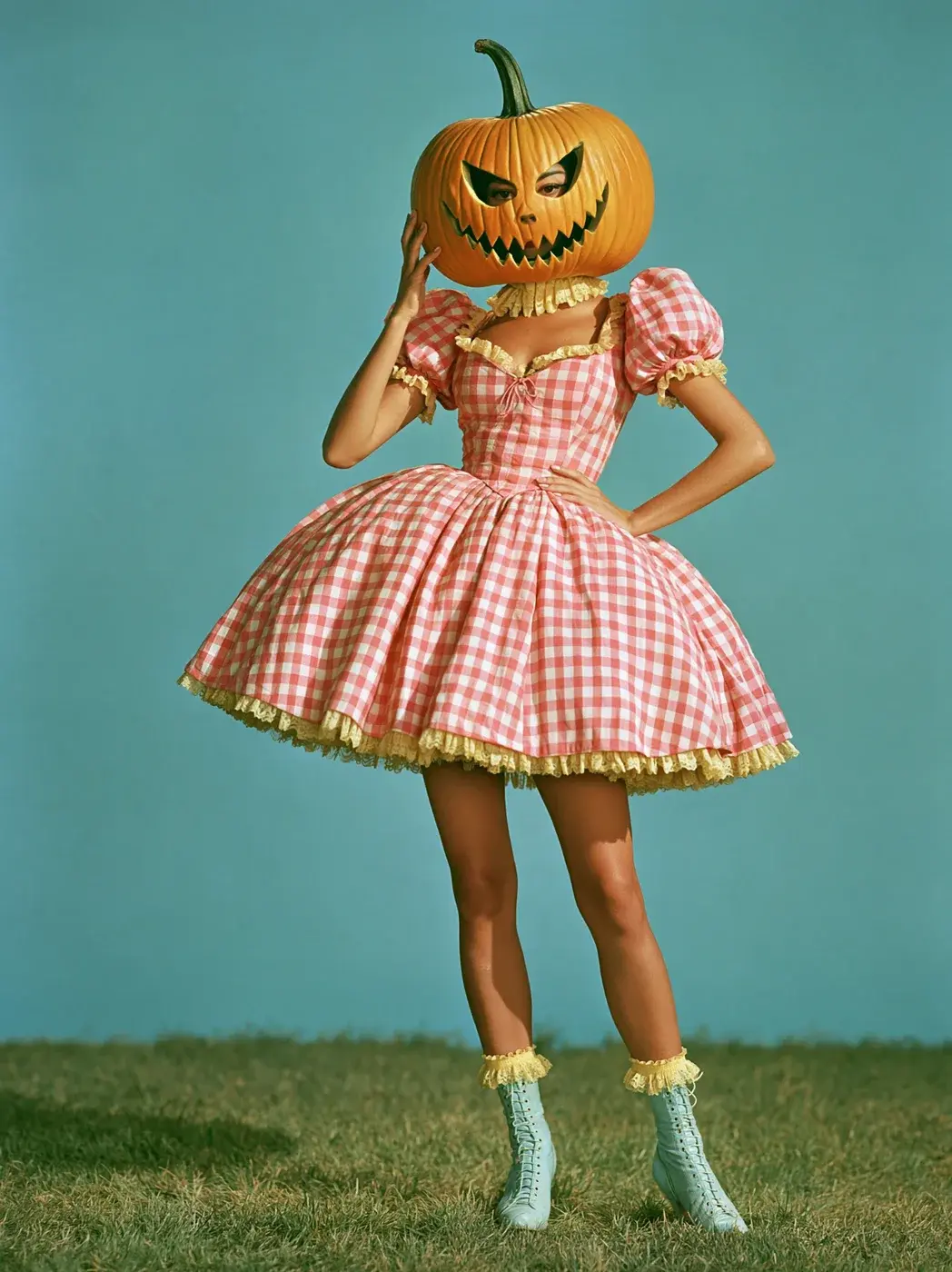
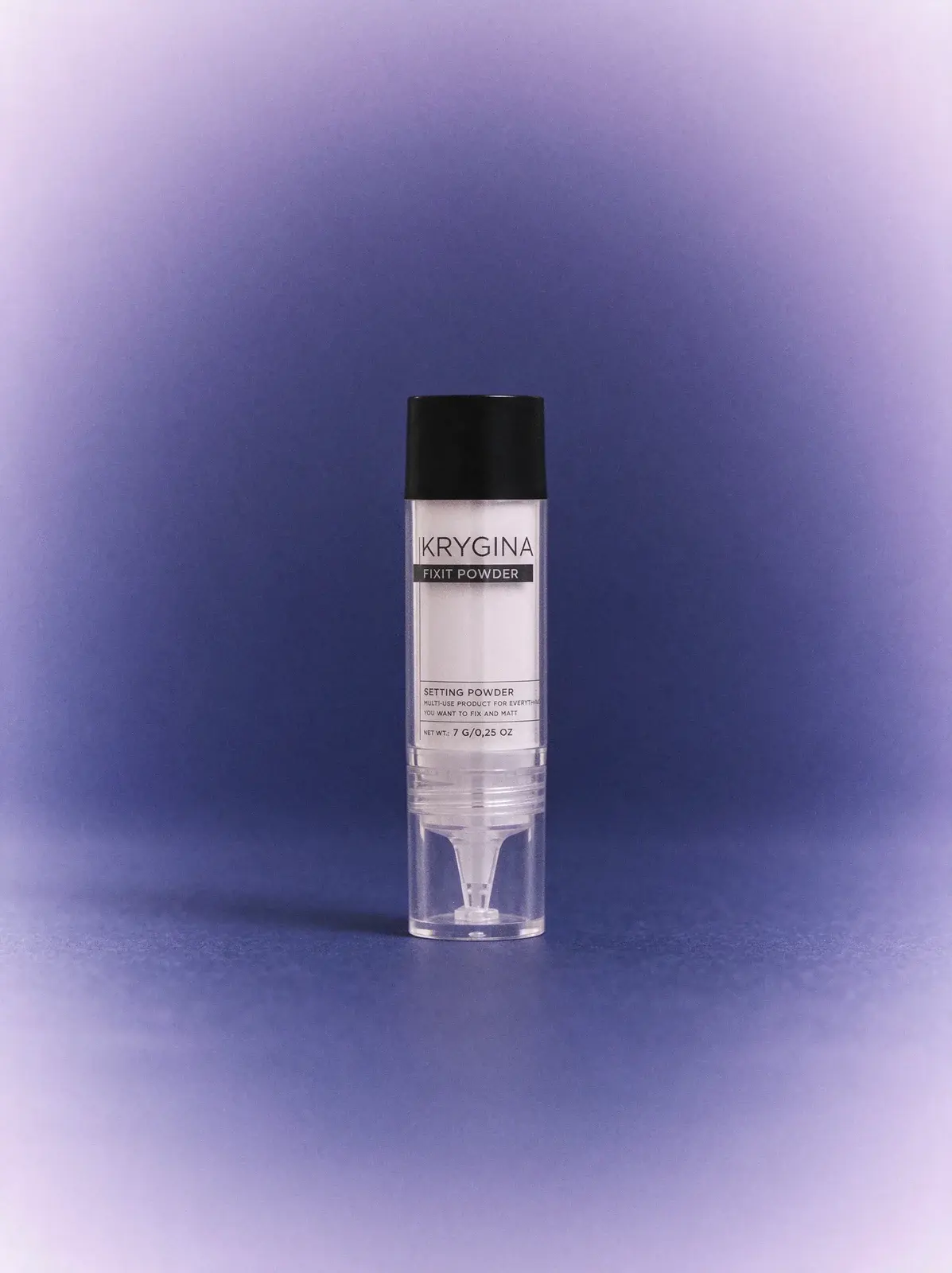
Seedream 5.5
Copy
Apply one single unified soft analog film process to the ENTIRE image, product and background together, so that it looks like one photograph shot on medium-format film with one soft frontal light, never like a cutout placed over a new background. Film grain is a defining part of this look and must be obvious: coarse-to-medium film grain with particles about 4-5 pixels wide at 1760 pixels of image width, about 13% strength on the product and about 5% on the smooth backdrop, made of fine irregular clumps of slightly lighter and darker tone, like a scan of a 35mm Kodak Portra 400 negative; the product and the backdrop share exactly the same grain texture; no digital smoothness. Color grade and light: soft, diffused frontal key light with gentle shadows, slightly hazy with a mild glow; medium-high contrast, median brightness about 59%, rich overall saturation about 40%. Everything that is not the product, including the light grey seamless backdrop, is completely replaced by one smooth, seamless, airbrushed color field with no horizon line, no crease, no edge, no band. Right at the product it is a rich, clear color (#373C70, hue about 235 degrees, saturation about 51%, never muddy or gray); a quarter of the way to the frame edge it is #4C4D8C; halfway to the edge #6D66A8 with the hue turning gradually toward 270 degrees; three quarters of the way #A393D9; at the middle of every frame edge a clearly tinted light color (#C6AFED); and in the four corners a very light, softly tinted version of the neighbouring hue (#E0CBF5 at the top, #D9C3F0 at the bottom), about 17% saturation, never pure white. The color depends only on the distance from the middle of the product, keeps visible tint all the way to the frame edges and fades with one steady, continuous slope, with no flat zone and no sudden drop. The product stands on a seamless floor made of the same color field, with only a soft contact shadow and a soft reflection in the backdrop's own hue; no floor edge, horizon, seam or hard line is visible anywhere. Preserve exactly: the shape, size and materials of the clear glass bottle with its black cap, the clear parts stay transparent and are never filled or tinted, and all label text stays exactly the same; only the light and the backdrop reaction change. No extra text, no logos, no watermarks.
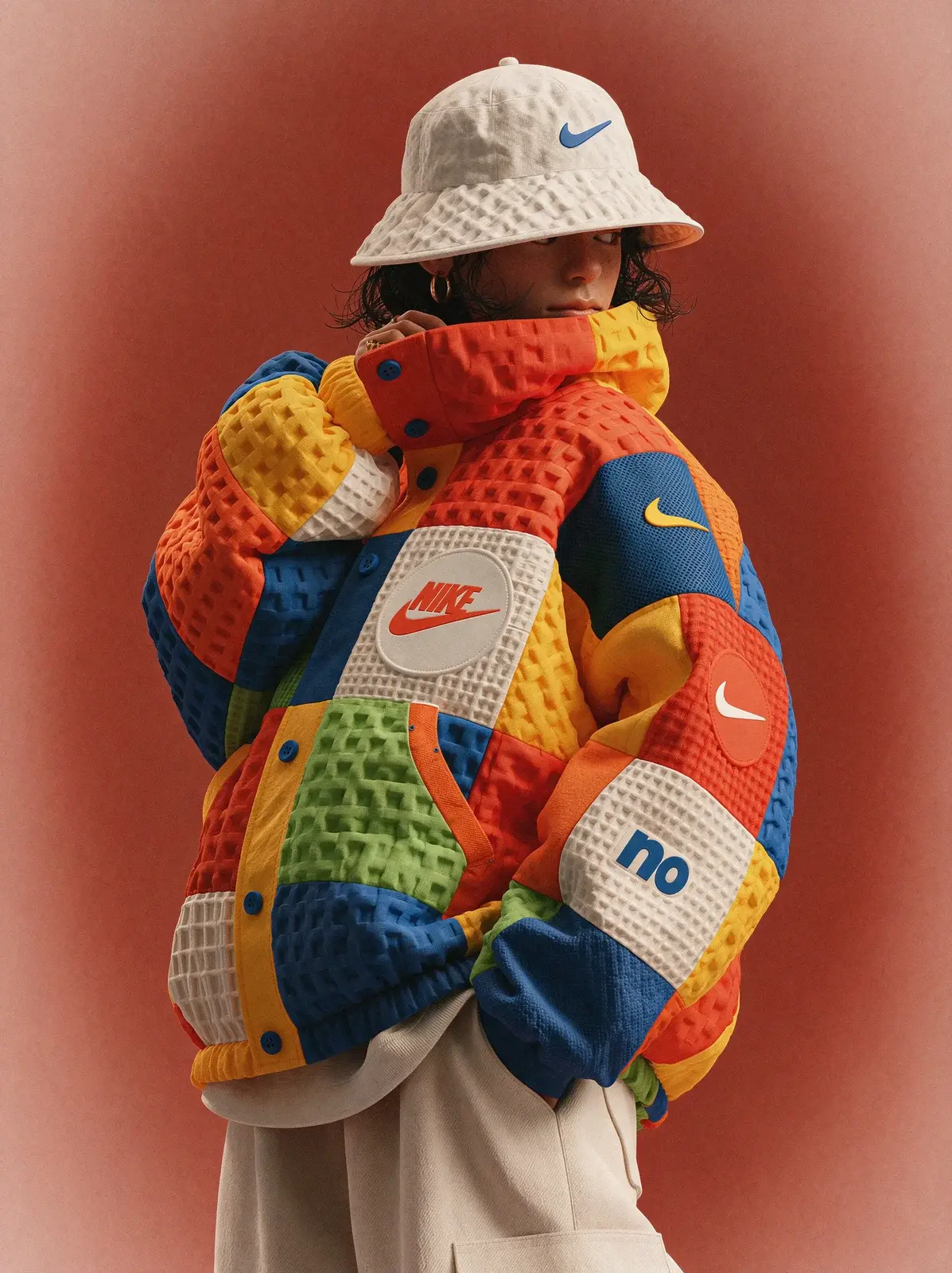
Seedream 5.5
Copy
{"task":"Edit the uploaded image with a richly colored brick-red photographic print treatment.","preserve":"Use the uploaded image as the complete inventory of subjects and accessories. Preserve their exact count, identity, expression, pose, silhouette, scale, placement, perspective, crop, original colors, materials, and lettering. Preserve each subject's original contact points or suspended position, including its tilt and visible air gap.","background":{"type":"One continuous matte color field covering every visible background pixel from edge to edge, including the gaps within and below the subject.","coordinates":"Normalized frame coordinates with the upper left at x=0, y=0 and the lower right at x=1, y=1.","color_anchors":[{"x":0.05,"y":0.07,"color":"#C58A7D"},{"x":0.51,"y":0.10,"color":"#963728"},{"x":0.53,"y":0.47,"color":"#862B20"},{"x":0.03,"y":0.51,"color":"#AE5747"},{"x":0.97,"y":0.49,"color":"#C17868"},{"x":0.50,"y":0.93,"color":"#A33D2D"},{"x":0.04,"y":0.96,"color":"#C28475"},{"x":0.97,"y":0.96,"color":"#CB8E81"}],"blend":"Keep a broad, richly saturated red interior
running from top to bottom. Feather dusty coral inward from both sides, with wider pale areas at the corners and a narrower fade halfway down each side. Let burnt terracotta bridge the red and coral in long, gradual transitions. Maintain the same continuous field throughout the lower part of the frame."},"light":"Broad neutral directional key from the upper left with gentle frontal fill. Keep faces readable, bright accents saturated, and existing glossy materials crisp, with neutral highlights and cool dark reflections.","shadows":"At actual points of support, concentrate dense burgundy-brown shade close to the subject on the right and fade it over a short distance into saturated brick red. Beneath suspended subjects, retain the original clear gap and continuous red field.","grain":"Finish with dense, finely resolved photographic grain across the full image at a uniform scale, approximately 1 to 2 pixels at 2000 pixels wide. Use evenly distributed lighter and darker deviations around the local tone with moderate contrast. Keep the grain visible in coral, brick red, and burgundy shade."}
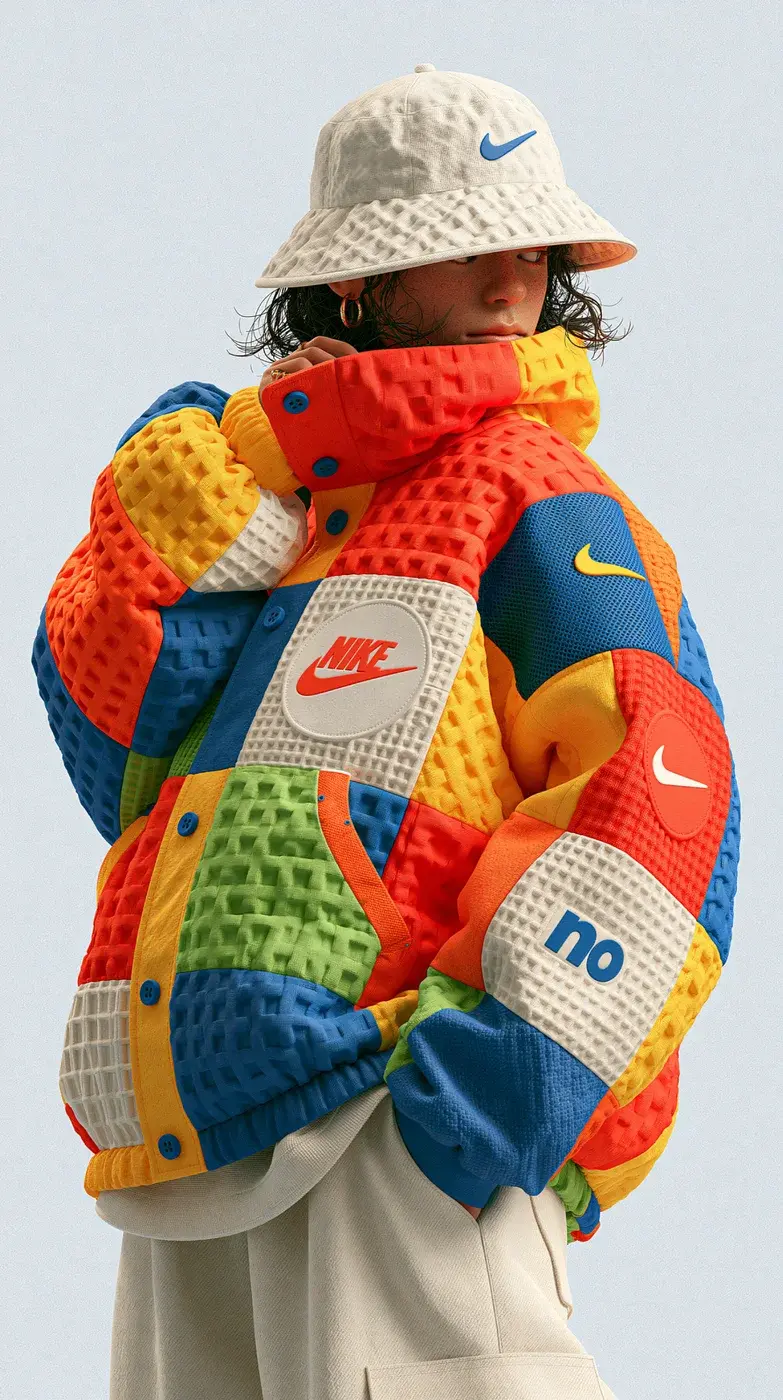
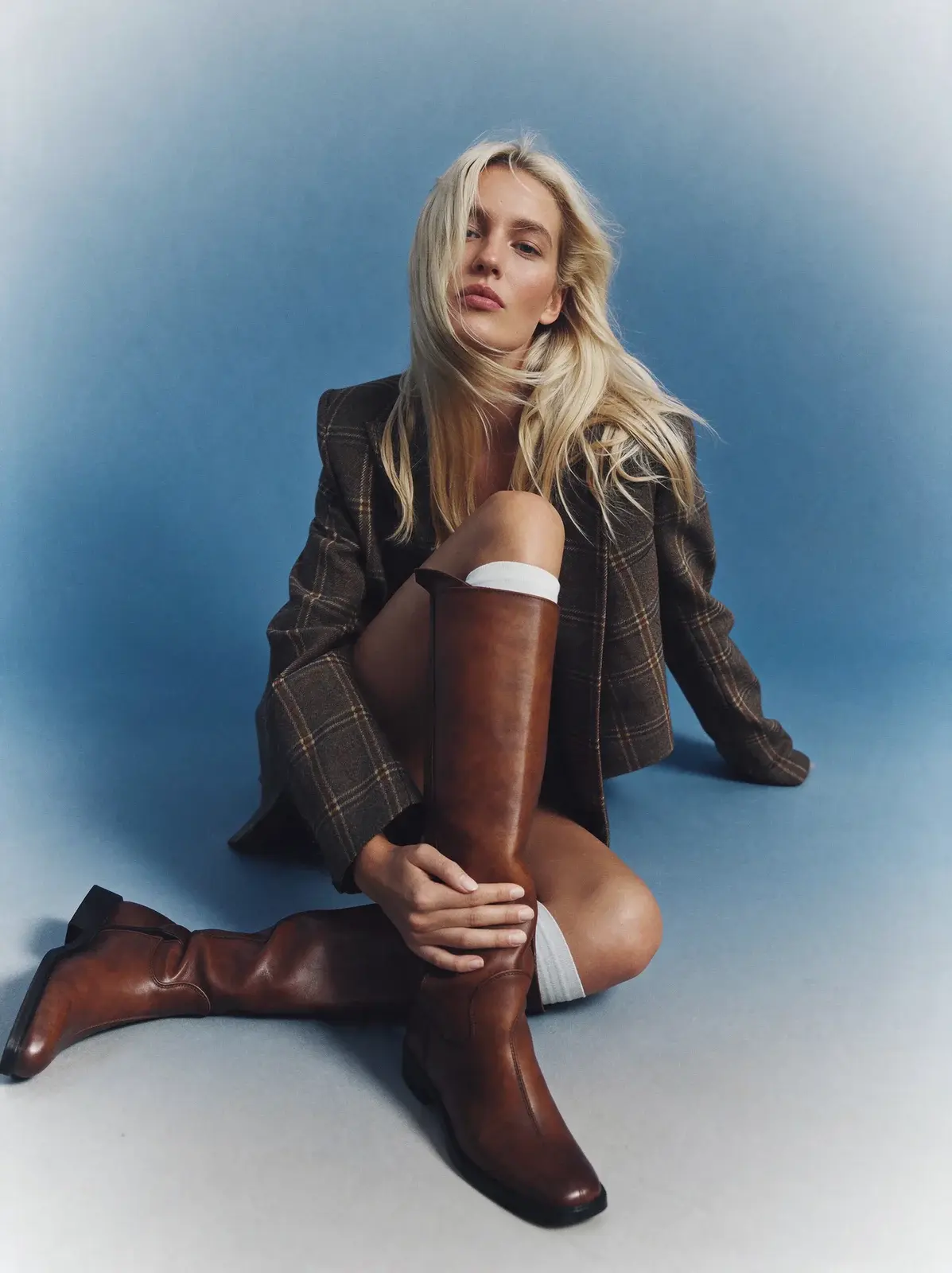
Seedream 5.5
Copy
Restyle this photo as a cinematic medium-format film editorial with a single luminous steel-blue backdrop glow; keep the subject, pose, clothing, props, camera angle and framing exactly, adding or removing nothing, no text, no watermarks. Replace everything in the frame except the subject and its soft shadow with one smooth continuous airbrushed field of a single hue, azure steel blue (about 205 degrees), that changes only in lightness and saturation, with no visible shape, ring, outline, steps, bands, spray marks or texture. It is densest in a wide vertical zone behind the subject around 40-55% of the frame height, where it is a medium steel blue (#4A7088, saturation about 45%, brightness about 53%), never dark or navy; it becomes clearly and noticeably paler toward the left and right edges, symmetrically (#6F93AB about 10% in from each edge, #8BA9BB at the very edge, saturation about 30%), so the edges are much lighter than the center, like a wide soft reverse vignette; it fades upward through #7D9BAF at about 22% of the height to pale gray-blue at the top (#A3B3BD in the center, #D8E2E4 in the corners); and below about 64% of the height it dissolves smoothly into a pale neutral warm gray (#B8BCBC) lightening to the bottom edge (#CED1D0 in the center, #E7EAE9 in the corners). Light: soft directional key light from the upper left that clearly lights the subject, with gentle modeling, a soft contact shadow and a faint cool rim of reflected blue light on the shadow side. Color grade: skin keeps a natural warm undertone, clothing and hair colors slightly desaturated and filmic, shadows on the subject tinted cool blue-teal rather than neutral brown or black, highlights soft and creamy, rich true blacks only in the darkest items (near #0E0C12), median brightness of the whole frame about 55%. Grain: strong visible analog film grain like pushed ISO 1600 35mm, clearly visible at 100% across the whole frame including the smooth backdrop, the same strength in light and dark areas, about 6%, fine and even with no blotches or ripples.
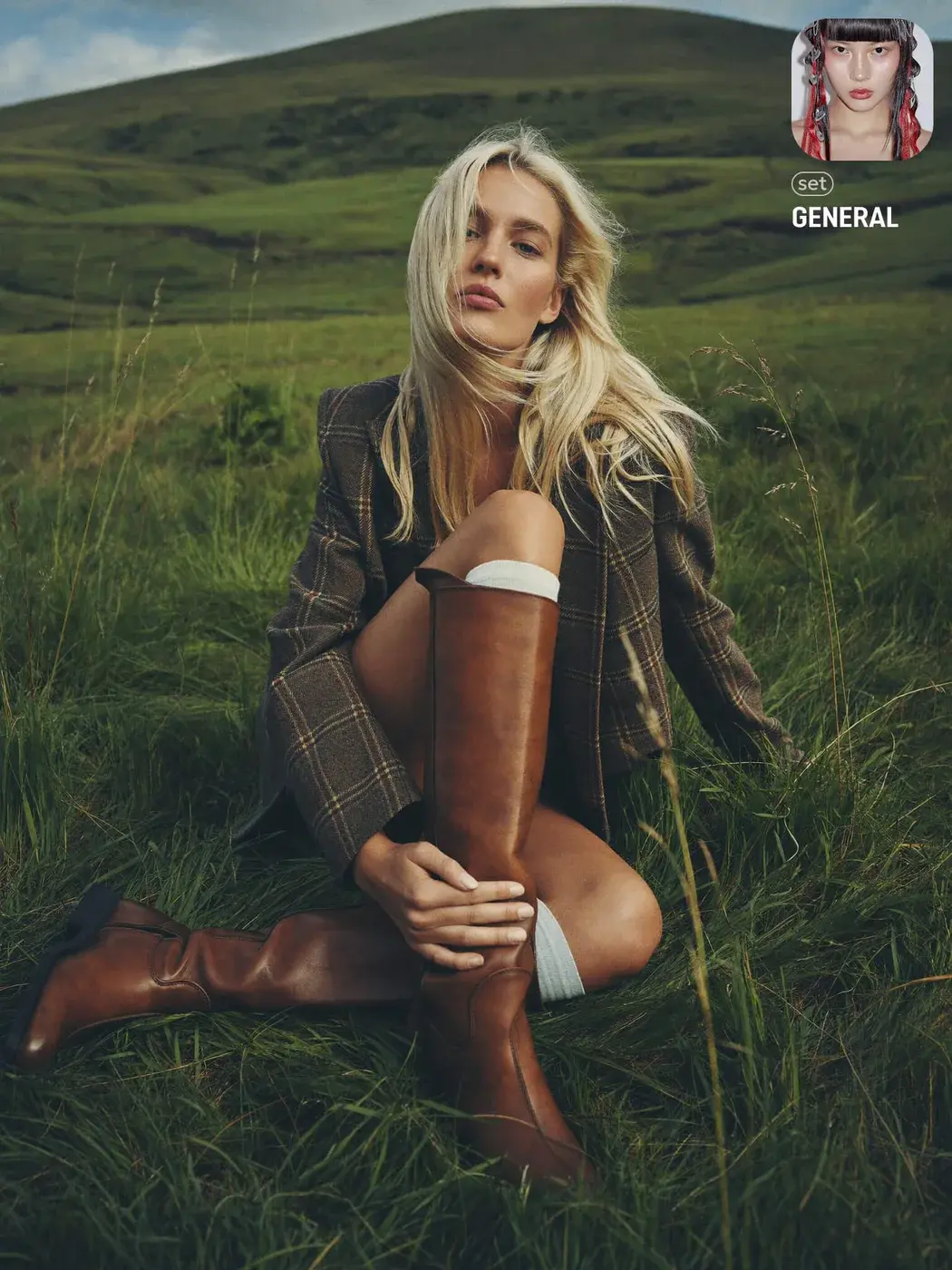
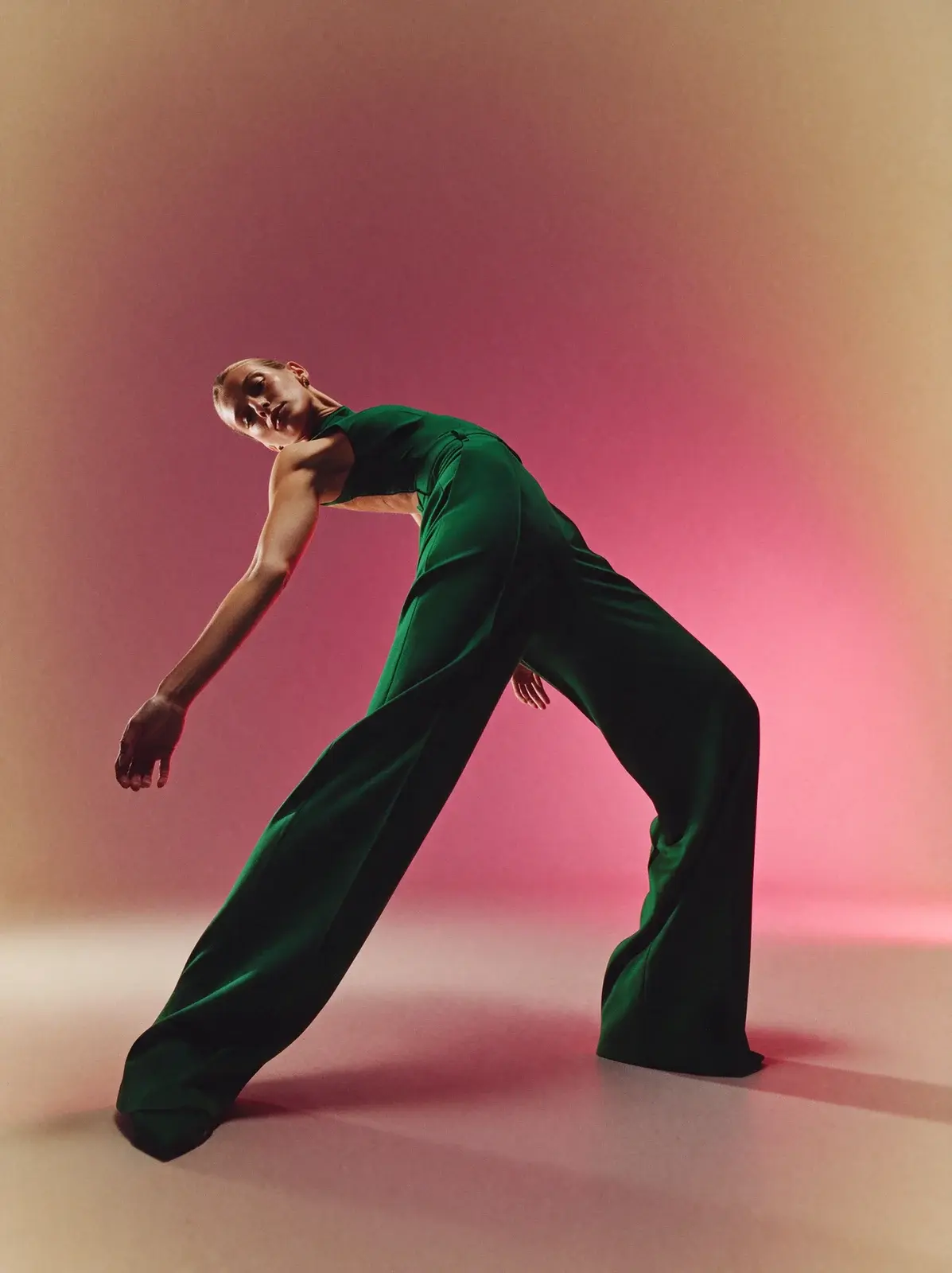
Seedream 5.5
Copy
Apply one single unified dramatic color-gel editorial analog film process to the ENTIRE image, subject and background together, so that it looks like one photograph shot on color film in a photo studio with one strong directional key light and one colored gel light, never like a cutout placed over a new background; the same treatment applies whether the subject is a person or an object. Film grain is a defining part of this look and must be obvious: coarse-to-medium film grain with particles about 4-5 pixels wide at 1760 pixels of image width, so that it stays clearly visible even when the picture is shown small on a phone screen, about 13% strength on the subject (skin, hair, fabric, props, midtones) and about 5% on the smooth backdrop, made of fine irregular clumps of slightly lighter and darker tone with a faint variation in color, like a scan of a 35mm Kodak Portra 400 negative; the subject and the backdrop share exactly the same grain texture; no digital smoothness, no noise reduction, no plastic retouching, no clean synthetic surfaces anywhere. Color grade and light: one strong directional key light from the upper left with a clearly visible direction, sculpting every form with defined shadows on the right side and bright specular highlights, plus a second colored gel light in the backdrop color (pink) from the right that wraps every edge as a glowing rim light and colors the shadows; the shadows are deep and saturated pink (about #381521, midtone shadows about #663B49) instead of gray, the darkest areas are true near-black (about #0B090C, never lifted, never milky or faded), lit surfaces are warm and clean, highlights bright but never clipped (peak about 96%), a wide tonal range with medium-high contrast (median brightness about 56%), rich saturated colors (overall saturation about 40%) and a soft halation glow around the brightest highlights; the backdrop itself stays a smooth, luminous, airbrushed color field and only the subject receives the directional shadows, with one long soft cast shadow in the backdrop's own hue; skin and light materials show both lights: warm highlights from the key and pink-tinted shadows from the gel; every other color keeps its own hue. Depth: the backdrop is clearly deeper and richer in color around the subject than toward the outer edges of the frame, so that the subject sits inside a soft glowing atmosphere of color; add a soft contact shadow in the backdrop's own hue, a faint rim of the backdrop color on the subject's edges, a gentle halation bloom around the brightest highlights and slightly lower contrast far from the subject. Keep the subject, pose, shape, details, props, their colors, camera angle and framing exactly, adding or removing nothing; skin and hair take the grade exactly as they do in a real
film photograph shot in this light, clearly tinted by the dominant light and by the backdrop color (hue and saturation shift noticeably toward the tints described in the grade), while the person stays recognizable: the complexion depth (lightness) of the skin stays within about 10% of the original and is never whitened or darkened, hair keeps its base color family (blonde stays blonde, dark stays dark) with the tint on top of it, and eye color is unchanged; no text, no logos, no watermarks, and remove any app badge, sticker or caption from the corners of the source. Everything in the frame that is not the subject, wherever it is, and everything behind and under the subject, whether it was a wall, a floor, sky, field, room or landscape, is completely replaced by one smooth, seamless, perfectly clean airbrushed color field that depends only on position, with no texture of the original surroundings, no horizon, crease, corner, edge, line, rectangle, light pool, beam, cone, oval, ring, steps or bands anywhere, and no hard edge between any two colors: every color change takes place gradually over at least 40% of the frame, and saturation or brightness never changes by more than about 3 points over any 5% of the frame width or height. The field is one soft airbrushed color field whose hue changes continuously across the frame, and the color reaches every edge and every corner: it never fades to white or cream. Right behind the subject it is a rich, clear color (#993A5A, hue about 340 degrees, saturation about 62%); about a quarter of the way to the frame edge it is #A3495B; halfway to the edge #AD5E5F with the hue turning toward 35 degrees; three quarters of the way #B87E6E; at the middle of every frame edge a clear soft color (#C29D80); and in the four corners a gently lighter version of the far hue (#CCB38F), still clearly colored with about 30% saturation. The hue drifts by about 55 degrees from the subject to the edges so that the field reads as two or three blended colors, brightness stays between about 60% and 82% everywhere, with no more than about 4 points of change over any 5% of the frame width, one very long, wide, soft airbrushed gradient with no visible outline, ring or rim anywhere. The chrome armor, wings, claws and jewelry keep their mirror-silver liquid-metal shapes and now reflect the backdrop color, the long brown dreadlocks stay brown, the barefoot crouching pose and her closed eyes stay exactly the same; the sky with its sun flare, planet rings, moon and butterflies, the white sand dunes, the shoreline and the water are completely replaced by the color field, and she rests on it with only a soft contact shadow in the backdrop's own hue. Finally, strong visible film grain lies evenly over everything including the subject, and
the backdrop glows softly and smoothly around the subject.
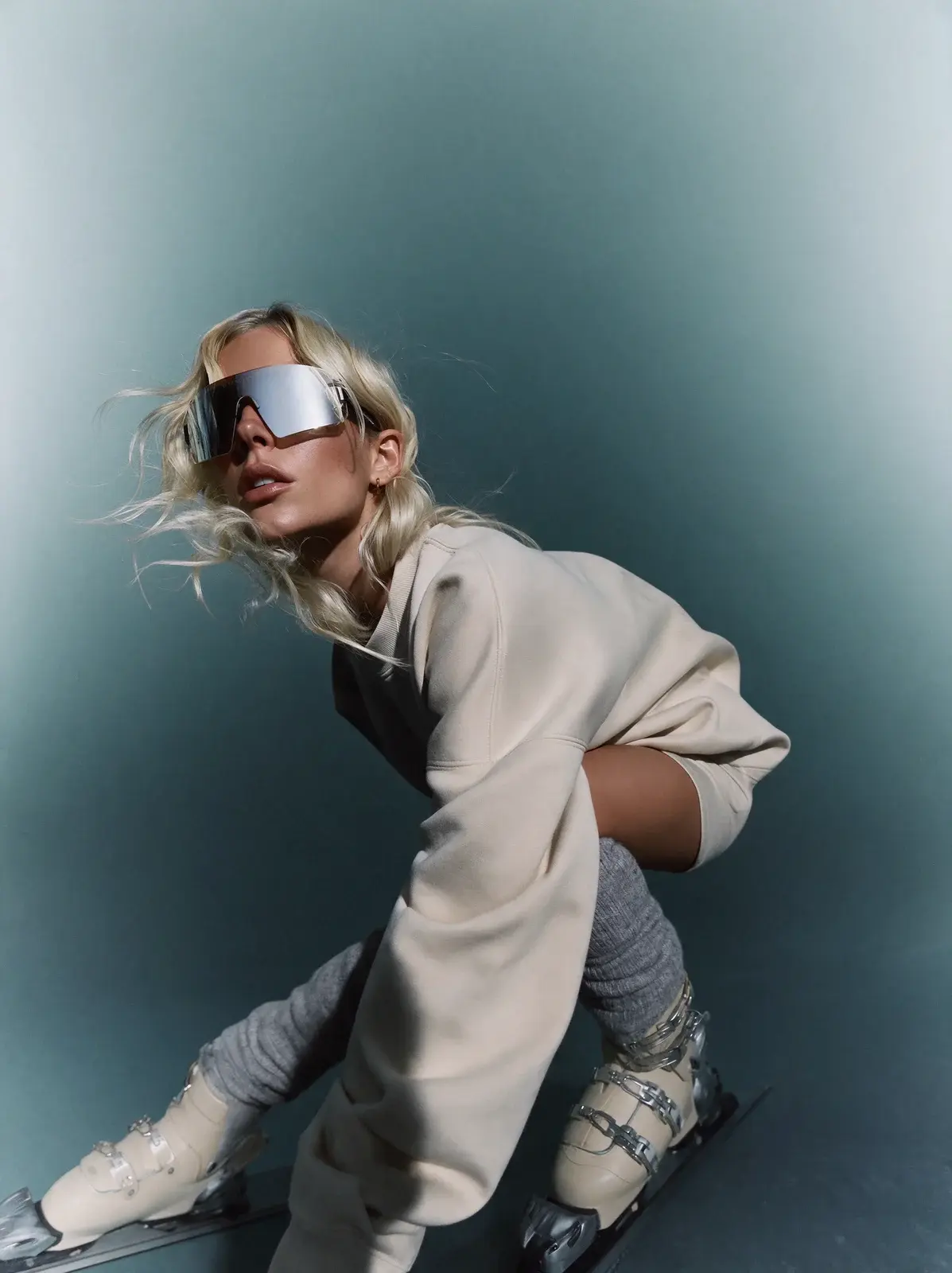
Seedream 5.5
Copy
Restyle this photo as a cool, moody, medium-format film fashion editorial portrait; keep the subject, pose, face, clothing, props, camera angle and framing exactly, add or remove nothing. Replace the original background, whatever it was, with one smooth continuous teal field defined only by height, changing evenly from top to bottom with no steps, bands or lines: along the center a mid-bright green-teal #79A0A1 at the top (brightness about 62%), #5D8A8D at 15%, #375254 at 60%, #21383D at 75%, darkest #132C32 at 85% (the 60-85% darkening spread over a soft 25% of the height), then #2E4550 at the bottom edge; hue about 180 degrees, slightly green-teal, never blue-slate; toward the left and right edges the same height is 20-30% lighter in the upper half (top corners #C2D4D8) and 10% lighter in the lower part, as a very wide soft symmetric reverse vignette with no visible shape; lower half dense, rich, clean teal (saturation 25-40%), never milky or foggy; density varies very slightly like a hand-airbrushed backdrop, no spray marks or texture; soft short shadow only where the subject touches a surface. Light: soft directional from the upper side and slightly front, revealing material texture, soft sheen on skin, luminous hair, deep shadows with detail, soft highlights. Grade: cool teal environment, subject's neutrals slightly warm (skin pale beige #B79A8D, shaded #74564B; whites warm gray-cream #D2CAC4 to #A2A09B), deep near-true blacks #060608, medium contrast, muted saturation about 29%. Grain: clearly visible fine ISO 400 negative grain at 100% zoom, about 5% luminance noise, pronounced even on the pale top corners and as strong there as on the dark lower part, tiny, no patches, ripples or blotches.
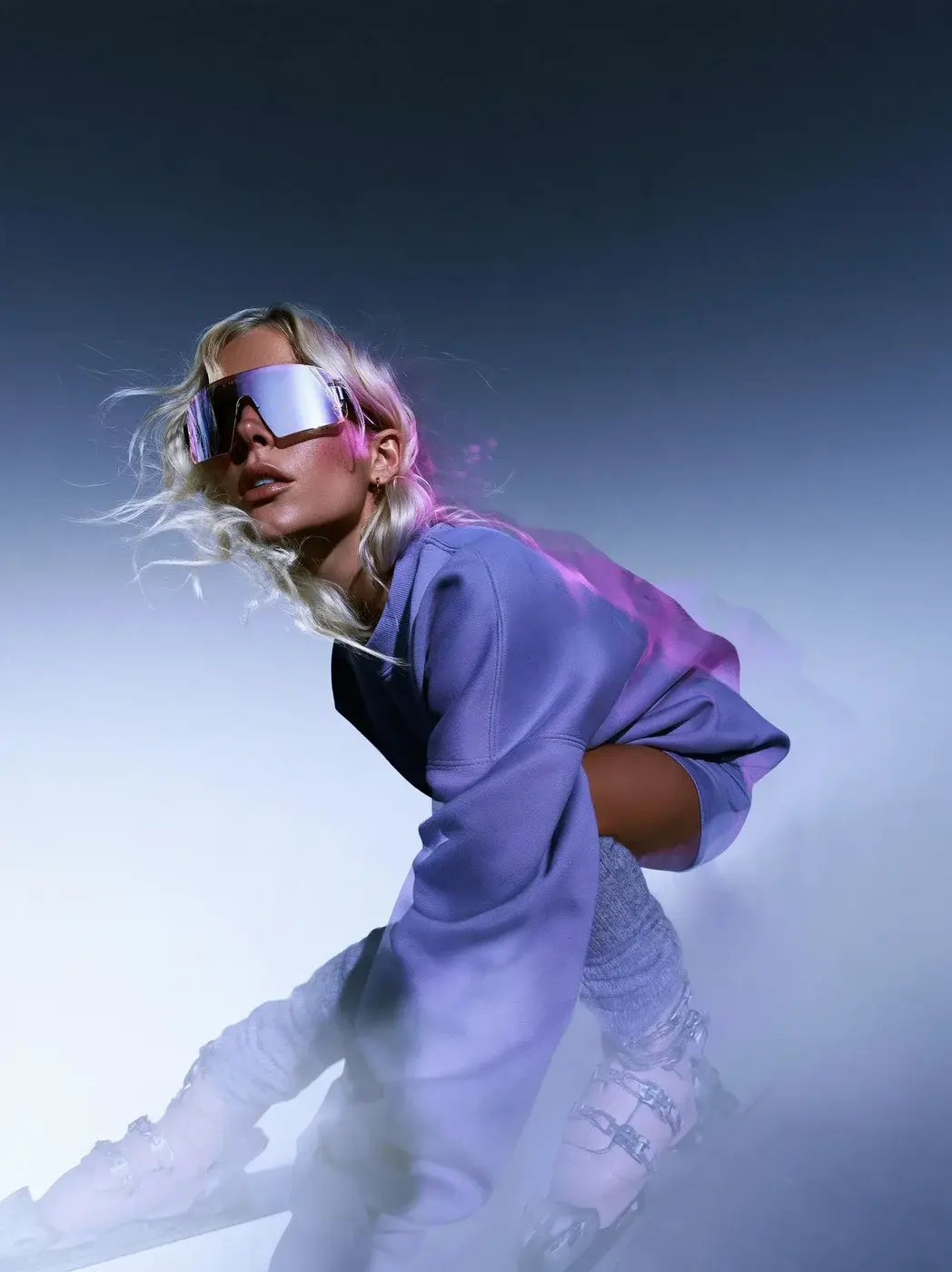
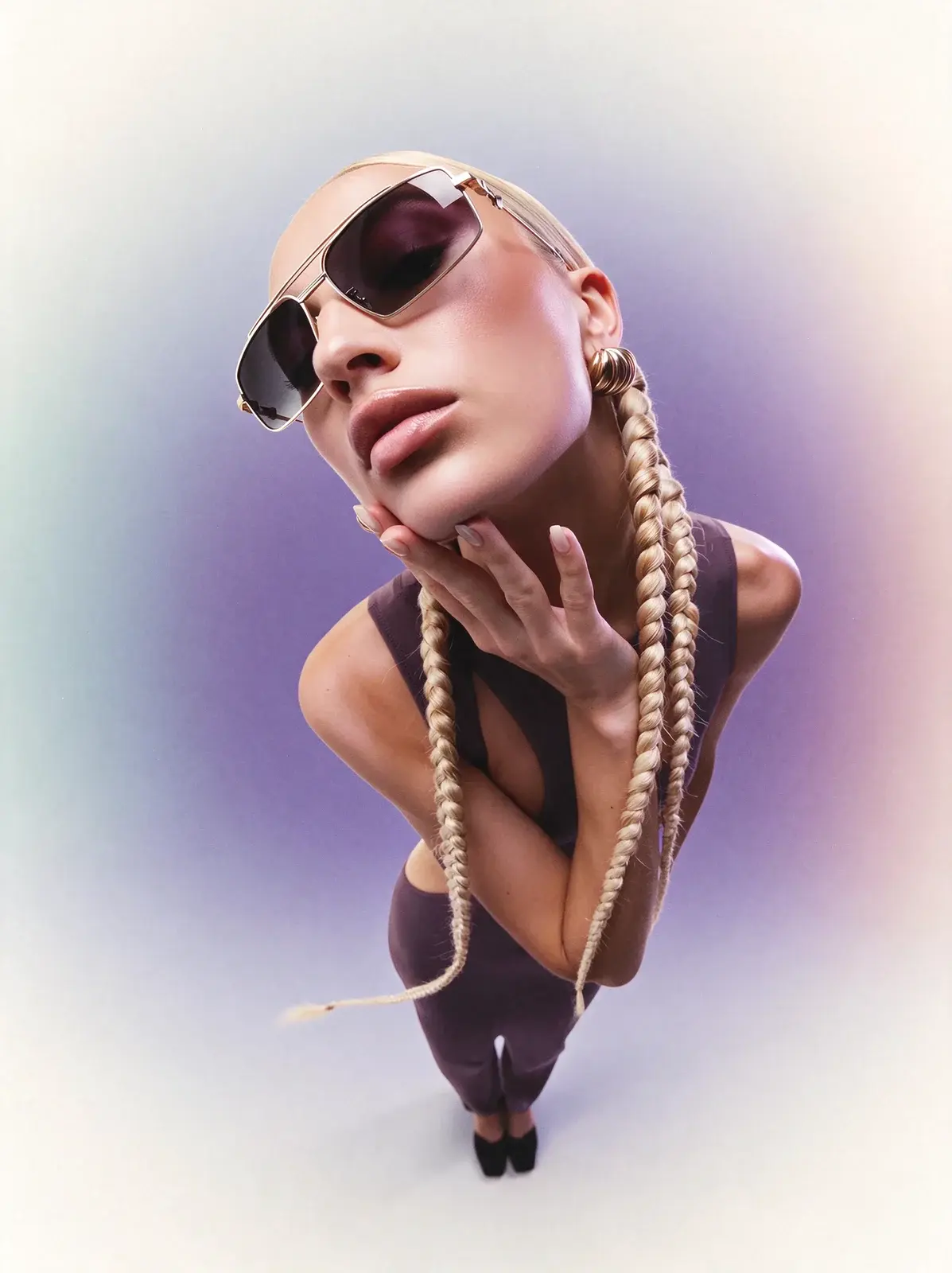
Seedream 5.5
Copy
Apply one single unified bright, airy, dreamy analog film process to the ENTIRE image, subject and background together, so that it looks like one photograph shot on medium-format film with one soft frontal light, never like a cutout placed over a new background; the same treatment applies whether the subject is a person or an object. Film grain is a defining part of this look and must be obvious: coarse-to-medium film grain with particles about 4-5 pixels wide at 1760 pixels of image width, so that it stays clearly visible even when the picture is shown small on a phone screen, about 13% strength on the subject (skin, hair, fabric, props, midtones) and about 5% on the smooth backdrop, made of fine irregular clumps of slightly lighter and darker tone with a faint variation in color, like a scan of a 35mm Kodak Portra 400 negative; the subject and the backdrop share exactly the same grain texture; no digital smoothness, no noise reduction, no plastic retouching, no clean synthetic surfaces anywhere. Color grade and light: soft, bright, even, wrapping frontal light; a delicate glow on skin and fabric, with the backdrop color bleeding onto the subject as a cool lilac tint in the edges and shadows; skin, if present, keeps its own complexion and depth and only takes a cool lilac-pink tint in the highlights and shadows, hair keeps its own color with only a faint lavender sheen, whites clean and luminous with cool blue-gray shadows (about #A1A6B4); very high key, median brightness about 85%, whites up to pure white, darks only in genuinely dark objects (about #1B1A21), overall saturation about 14% except the lavender around the subject; every other color of the subject keeps its own hue. Depth: the backdrop is clearly deeper and richer in color around the subject than toward the outer edges of the frame, so that the subject sits inside a soft glowing atmosphere of color; add a soft contact shadow in the backdrop's own hue, a faint rim of the backdrop color on the subject's edges, a gentle halation bloom around the brightest highlights and slightly lower contrast far from the subject. Keep the subject, pose, shape, details, props, their colors, camera angle and framing exactly, adding or removing nothing; never change anyone's skin tone, hair color or eye color and never whiten, darken or recolor skin or hair: the skin and hair colors named in the grade only describe the tint the grade adds to a fair complexion, and must be applied proportionally to each person's own complexion and hair; no text, no logos, no watermarks, and remove any app badge, sticker or caption from the corners of the source. Everything in the frame that is not the subject, wherever it is, and everything behind and under the subject, whether it was a wall, a floor, sky, field, room or
landscape, is completely replaced by one smooth, seamless, perfectly clean airbrushed color field that depends only on position, with no texture of the original surroundings, no horizon, crease, corner, edge, line, rectangle, light pool, beam, cone, oval, ring, steps or bands anywhere, and no hard edge between any two colors: every color change takes place gradually over at least 40% of the frame, and saturation or brightness never changes by more than about 3 points over any 5% of the frame width or height. The field depends on the distance from the subject and on height. Right around the subject at about 30-70% of the frame height it is a clearly visible, rich violet-lavender (about #8A6FB3, hue about 265 degrees, saturation about 38%, brightness about 70%, with the deepest patches near #7B62A6), becoming #A99BCB at mid-distance and then pale lilac (#C7BFE0) and pale periwinkle gray-blue (#D4D6E8) toward the outer edges, with a faint mint cast on the left (#DDE6E6) and a faint warm pink-cream on the right (#EFE9EA); the top corners are almost white warm cream (#FFFAF4), and the lowest fifth of the frame fades gradually to cream (#F8F7F2); the lavender must stay clearly saturated beside the subject, never washed out; the hue shifts smoothly from violet to periwinkle to gray-blue to cream. Finally, strong visible film grain lies evenly over everything including the subject, and the backdrop glows softly and smoothly around the subject.
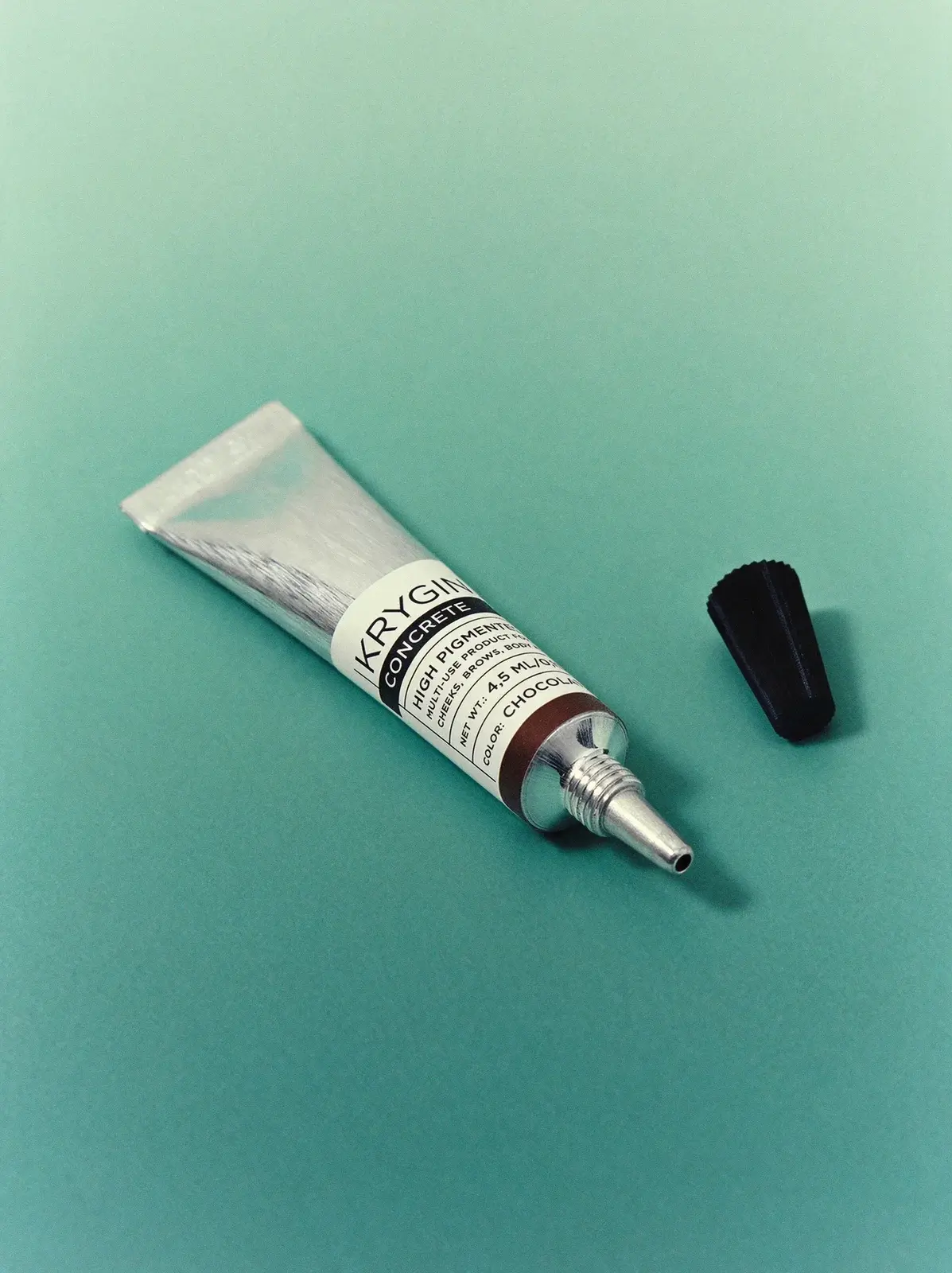
Seedream 5.5
Copy
Apply one single unified moody-soft editorial analog film process to the ENTIRE image, subject and background together, so that it looks like one photograph shot on color film with one soft diffused light, never like a cutout placed over a new background; the same treatment applies whether the subject is a person or an object. Film grain is a defining part of this look and must be obvious: coarse-to-medium film grain with particles about 4-5 pixels wide at 1760 pixels of image width, so that it stays clearly visible even when the picture is shown small on a phone screen, about 13% strength on the subject (surfaces, fabric, props, midtones) and about 5% on the smooth backdrop, made of fine irregular clumps of slightly lighter and darker tone with a faint variation in color, like a scan of a 35mm Kodak Portra 400 negative; the subject and the backdrop share exactly the same grain texture; no digital smoothness, no noise reduction, no plastic retouching, no clean synthetic surfaces anywhere. Color grade and light: soft, diffused, wrapping frontal light, medium-high contrast, matte-satin finish with no hard specular shine; the deepest blacks are crushed to a neutral near-black (#0A0A0A), glossy black materials show a cool deep-blue sheen (#131E28), midtone shadows are a soft teal-gray (#324448), highlights a pale mint-cream (#E1F1D7); every other color of the subject keeps its own hue and is only deepened or cooled slightly; median brightness about 58%, overall saturation about 26%; light surfaces and metal take a subtle mint-green tint in the highlights and a warm complementary tint in the shadows. Depth: the backdrop is clearly deeper and richer in color around the subject than toward the outer edges of the frame, so that the subject sits inside a soft glowing atmosphere of color; add a soft contact shadow in the backdrop's own hue, a faint rim of the backdrop color on the subject's edges, a gentle halation bloom around the brightest highlights and slightly lower contrast far from the subject. Keep the subject, pose, shape, details, props, their colors, camera angle and framing exactly, adding or removing nothing; the object's materials take the grade exactly as they do in a real film photograph shot in this light, clearly tinted by the dominant light and by the backdrop color while their own base colors stay recognizable; keep all printed text, lettering and logos on the product exactly as they are, sharp, legible and unchanged, add no other text, logos or watermarks, and remove any app badge, sticker or caption from the corners of the source. Everything in the frame that is not the subject, wherever it is, and everything behind and under the subject, whether it was a wall, a floor, sky, field, room or landscape, is completely replaced by one smooth,
seamless, perfectly clean airbrushed color field that depends only on position, with no texture of the original surroundings, no horizon, crease, corner, edge, line, rectangle, light pool, beam, cone, oval, ring, steps or bands anywhere, and no hard edge between any two colors: every color change takes place gradually over at least 40% of the frame, and saturation or brightness never changes by more than about 3 points over any 5% of the frame width or height. The field is one vertical ombre that depends mainly on height. At the top of the frame it is light (#9EDBBD, saturation about 28%), and it deepens very gradually going down through #66BD9A at 55% of the height into a rich #49A38B in the lowest third (hue shifting by about 15 degrees), staying clear and saturated down to the bottom edge; around the subject the color is a little deeper than at the outer edges; one single, very long, soft airbrushed gradient with no stops. The aluminum tube keeps its brushed silver metal with a soft reflection of the backdrop color, the white label keeps its exact layout, the chocolate-brown band stays chocolate brown, the black ribbed cap stays black; the tube and the cap stay in exactly the same positions with the same high-angle perspective, and the white surface they rest on becomes part of the color field with only soft contact shadows. Finally, strong visible film grain lies evenly over everything including the subject, and the backdrop glows softly and smoothly around the subject.
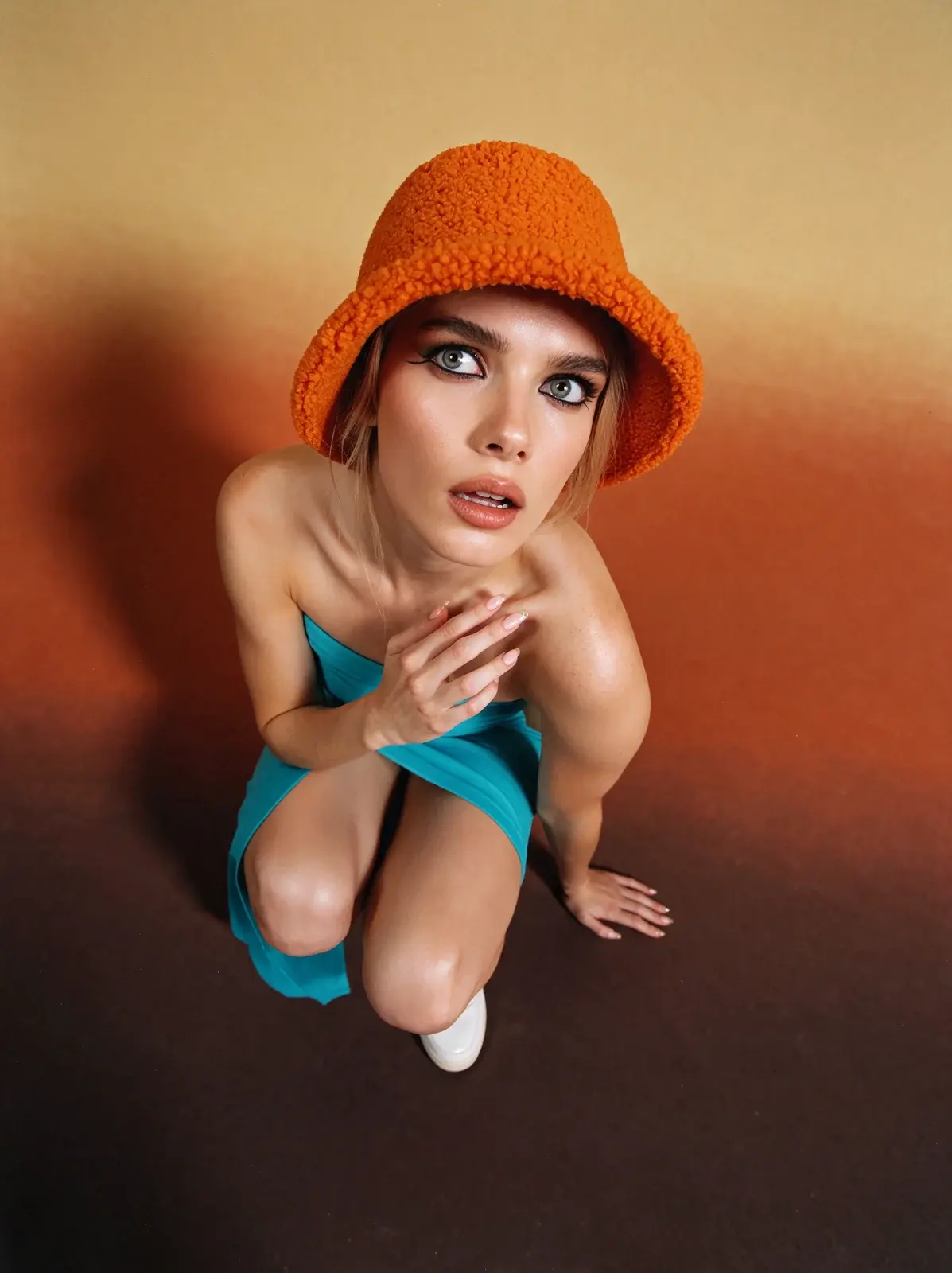
Seedream 5.5
Copy
Restyle this photo as a Korean fashion editorial shot on medium-format film. Keep the person, pose, clothing, expression and framing exactly as they are, and add or remove nothing. Replace the background with a seamless studio paper backdrop with a smooth airbrushed gradient: warm golden sand at the top (#D9B77F), turning into burnt orange rust in the middle (#B4532F) and dark chocolate brown at the bottom (#35201E). Soft directional light from the front and side gives glowing skin and clear shadows with warm brown-red tones; glossy highlights stay small and clean. Dense dark tones in dark clothing, slightly lifted blacks, fine 35mm film grain over the whole frame.
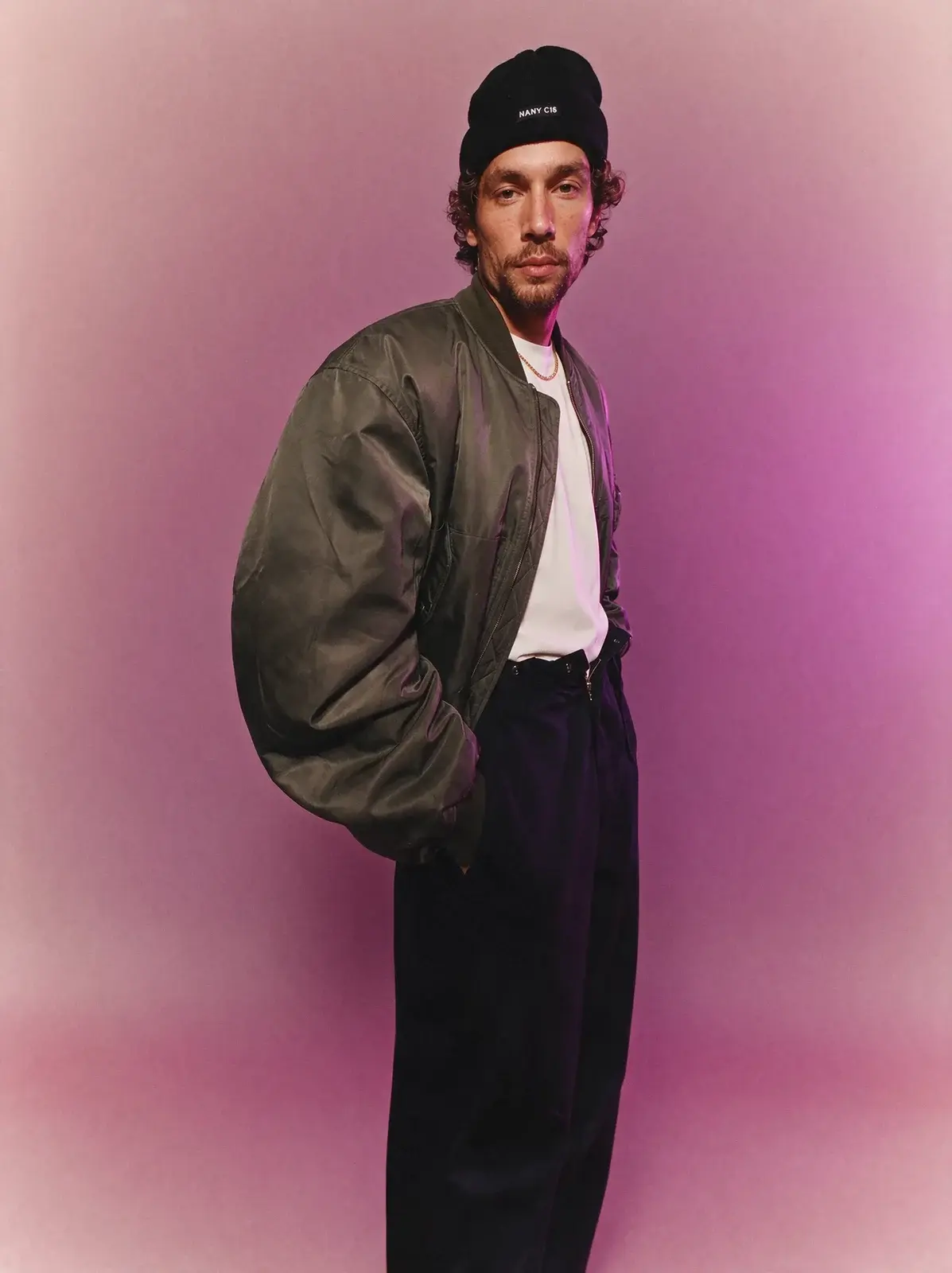
Seedream 5.5
Copy
Apply one single unified dramatic color-gel editorial analog film process to the ENTIRE image, subject and background together, so that it looks like one photograph shot on color film in a photo studio with one strong directional key light and one colored gel light, never like a cutout placed over a new background; the same treatment applies whether the subject is a person or an object. Film grain is a defining part of this look and must be obvious: coarse-to-medium film grain with particles about 4-5 pixels wide at 1760 pixels of image width, so that it stays clearly visible even when the picture is shown small on a phone screen, about 13% strength on the subject (skin, hair, fabric, props, midtones) and about 5% on the smooth backdrop, made of fine irregular clumps of slightly lighter and darker tone with a faint variation in color, like a scan of a 35mm Kodak Portra 400 negative; the subject and the backdrop share exactly the same grain texture; no digital smoothness, no noise reduction, no plastic retouching, no clean synthetic surfaces anywhere. Color grade and light: one strong directional key light from the upper left with a clearly visible direction, sculpting every form with defined shadows on the right side and bright specular highlights, plus a second colored gel light in the backdrop color (lilac-magenta) from the right that wraps every edge as a glowing rim light and colors the shadows; the shadows are deep and saturated lilac-magenta (about #381531, midtone shadows about #663B5D) instead of gray, the darkest areas are true near-black (about #0B090C, never lifted, never milky or faded), lit surfaces are warm and clean, highlights bright but never clipped (peak about 96%), a wide tonal range with medium-high contrast (median brightness about 56%), rich saturated colors (overall saturation about 40%) and a soft halation glow around the brightest highlights; the backdrop itself stays a smooth, luminous, airbrushed color field and only the subject receives the directional shadows; skin and light materials show both lights: warm highlights from the key and lilac-magenta-tinted shadows from the gel; every other color keeps its own hue. Depth: the subject is lit by the backdrop and belongs to it: a thin rim of the backdrop color glows on its edges, soft colored bounce light from the backdrop falls on skin, hair and clothes, and the edges of the subject have exactly the same sharpness and softness as the rest of the photograph, with no dark outline, no halo, no darker ring or shadow of color around the figure, so that it never looks cut out and pasted onto the background; a gentle halation bloom around the brightest highlights and slightly lower contrast far from the subject. Keep the subject, pose, shape, details, props, their colors, camera
angle and framing exactly, adding or removing nothing; skin and hair take the grade exactly as they do in a real film photograph shot in this light, clearly tinted by the dominant light and by the backdrop color (hue and saturation shift noticeably toward the tints described in the grade), while the person stays recognizable: the complexion depth (lightness) of the skin stays within about 10% of the original and is never whitened or darkened, hair keeps its base color family (blonde stays blonde, dark stays dark) with the tint on top of it, and eye color is unchanged; no text, no logos, no watermarks, and remove any app badge, sticker or caption from the corners of the source. Everything in the frame that is not the subject, wherever it is, and everything behind and under the subject, whether it was a wall, a floor, sky, field, room or landscape, is completely replaced by one smooth, seamless, perfectly clean airbrushed color field that depends only on position, with no texture of the original surroundings, no horizon, crease, corner, edge, line, rectangle, light pool, beam, cone, oval, ring, steps or bands anywhere, and no hard edge between any two colors: every color change takes place gradually over at least 40% of the frame, and saturation or brightness never changes by more than about 3 points over any 5% of the frame width or height. The field is one soft airbrushed color field whose hue changes continuously across the frame, and the color reaches every edge and every corner: it never fades to white or cream. Right behind the subject it is a rich, clear color (#994D8A, hue about 312 degrees, saturation about 50%); about a quarter of the way to the frame edge it is #A35B8F; halfway to the edge #AD6E94 with the hue turning toward 346 degrees; three quarters of the way #B87D98; at the middle of every frame edge a clear soft color (#C28D9E); and in the four corners a gently lighter version of the far hue (#CC9BA6), still clearly colored with about 24% saturation. The hue drifts by about 34 degrees from the subject to the edges so that the field reads as two or three blended colors, brightness stays between about 60% and 82% everywhere, with no more than about 4 points of change over any 5% of the frame width, one very long, wide, soft airbrushed gradient with no visible outline, ring or rim anywhere. There is no floor, table, ground or horizon anywhere and no long cast shadow on the backdrop: the subject floats in the color field like in an airbrushed studio portrait, with only a faint soft shadow right at its own edges. Preserve exactly as in the source: the face, expression, hairstyle and hair color, body, skin tone, every piece of clothing with its cut, fabric, pattern and color, jewelry and every accessory and prop; only the light, the
grade and the backdrop reaction change, nothing is added, removed, restyled or recolored. The black beanie with its small white label, the olive-green bomber jacket, the white t-shirt, the thin gold chain necklace and the dark navy trousers keep their exact shapes and colors and his pose with both hands in the pockets stays exactly the same; the blue gradient studio backdrop and floor are completely replaced by the color field. Finally, strong visible film grain lies evenly over everything including the subject, and the backdrop glows softly and smoothly around the subject.
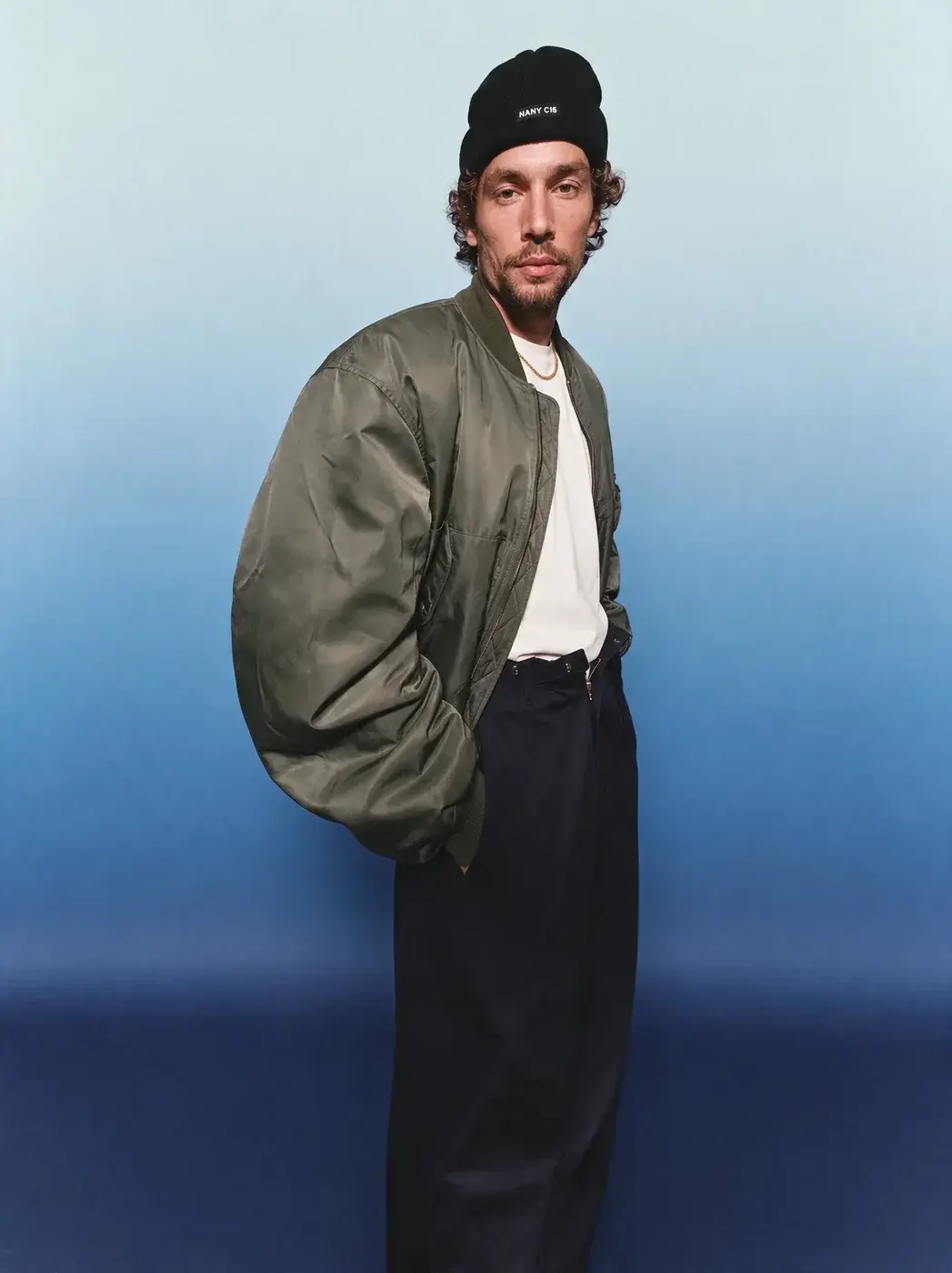
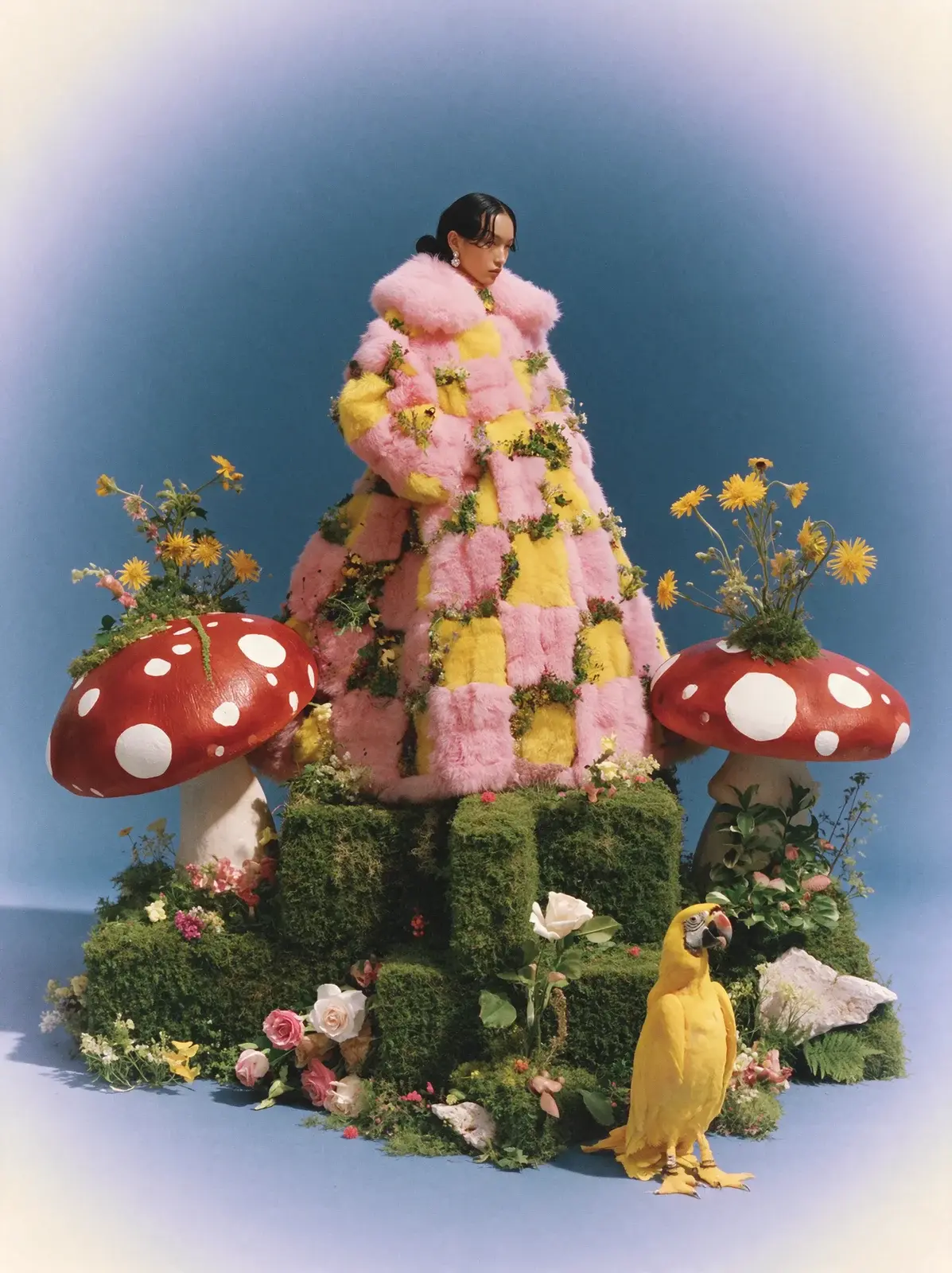
Seedream 5.5
Copy
Apply one single unified high-key glossy analog film process to the ENTIRE image, subject and background together, so that it looks like one bright magazine photograph, never like a cutout placed over a new background; the same treatment applies whether the subject is a person or an object. Film grain is a defining part of this look and must be obvious: coarse-to-medium film grain with particles about 4-5 pixels wide at 1760 pixels of image width, so that it stays clearly visible even when the picture is shown small on a phone screen, about 13% strength on the subject (skin, hair, fabric, props, midtones) and about 5% on the smooth backdrop, made of fine irregular clumps of slightly lighter and darker tone with a faint variation in color, like a scan of a 35mm Kodak Portra 400 negative; the subject and the backdrop share exactly the same grain texture; no digital smoothness, no noise reduction, no plastic retouching, no clean synthetic surfaces anywhere. Color grade and light: very bright, soft, wrapping frontal light, high key, median brightness about 83%, highlights on lit fabric and glossy surfaces softly blown to near white, a glossy oiled glowing sheen on every smooth surface; light cream materials warm cream (#EFDEC4) in the light and #CDBBAC in shade; lifted blacks, overall saturation low (about 14%) except the backdrop color; skin and light materials take a subtle sky-blue tint in the highlights and a warm complementary tint in the shadows. Depth: the backdrop is clearly deeper and richer in color around the subject than toward the outer edges of the frame, so that the subject sits inside a soft glowing atmosphere of color; add a soft contact shadow in the backdrop's own hue, a faint rim of the backdrop color on the subject's edges, a gentle halation bloom around the brightest highlights and slightly lower contrast far from the subject. Keep the subject, pose, shape, details, props, their colors, camera angle and framing exactly, adding or removing nothing; skin and hair take the grade exactly as they do in a real film photograph shot in this light, clearly tinted by the dominant light and by the backdrop color (hue and saturation shift noticeably toward the tints described in the grade), while the person stays recognizable: the complexion depth (lightness) of the skin stays within about 10% of the original and is never whitened or darkened, hair keeps its base color family (blonde stays blonde, dark stays dark) with the tint on top of it, and eye color is unchanged; no text, no logos, no watermarks, and remove any app badge, sticker or caption from the corners of the source. Everything in the frame that is not the subject, wherever it is, and everything behind and under the subject, whether it was a wall, a floor, sky, field, room or
landscape, is completely replaced by one smooth, seamless, perfectly clean airbrushed color field that depends only on position, with no texture of the original surroundings, no horizon, crease, corner, edge, line, rectangle, light pool, beam, cone, oval, ring, steps or bands anywhere, and no hard edge between any two colors: every color change takes place gradually over at least 40% of the frame, and saturation or brightness never changes by more than about 3 points over any 5% of the frame width or height. The field is one soft radial gradient whose color depends only on the distance from the middle of the subject, and it changes continuously over the whole frame, never as a plateau followed by a quick fall-off. Right at the subject it is a rich, clear color (#2A5970, hue about 200 degrees, saturation about 63%, never muddy or gray); at about a quarter of the way to the frame edge it is #3F6D8F; halfway to the edge #5D7EA8 with the hue turning gradually toward 245 degrees; three quarters of the way #94A6DB; at the middle of every frame edge a light tint (#BABEED); and in the four corners a softly tinted warm cream of the neighbouring hue (#D2CFF2 at the top, #C6C2ED at the bottom), never white. The hue drifts by about 45 degrees from the center to the corners, brightness rises evenly and saturation falls evenly across the whole distance, with no more than about 4 points of change over any 5% of the frame width, one very long, wide, soft airbrushed gradient with no visible outline anywhere. The pink-and-yellow checkered fur coat, the moss blocks she stands on, the two giant red toadstools with white spots, the wild flowers, roses, ferns, the white rock and the yellow macaw keep their exact shapes, colors and positions, and her calm profile pose stays exactly the same; the glacier mountains, the lake, the sky and the green-and-yellow checkerboard floor are completely replaced by the color field, and the whole arrangement rests on it with only soft contact shadows in the backdrop's own hue. Finally, strong visible film grain lies evenly over everything including the subject, and the backdrop glows softly and smoothly around the subject.
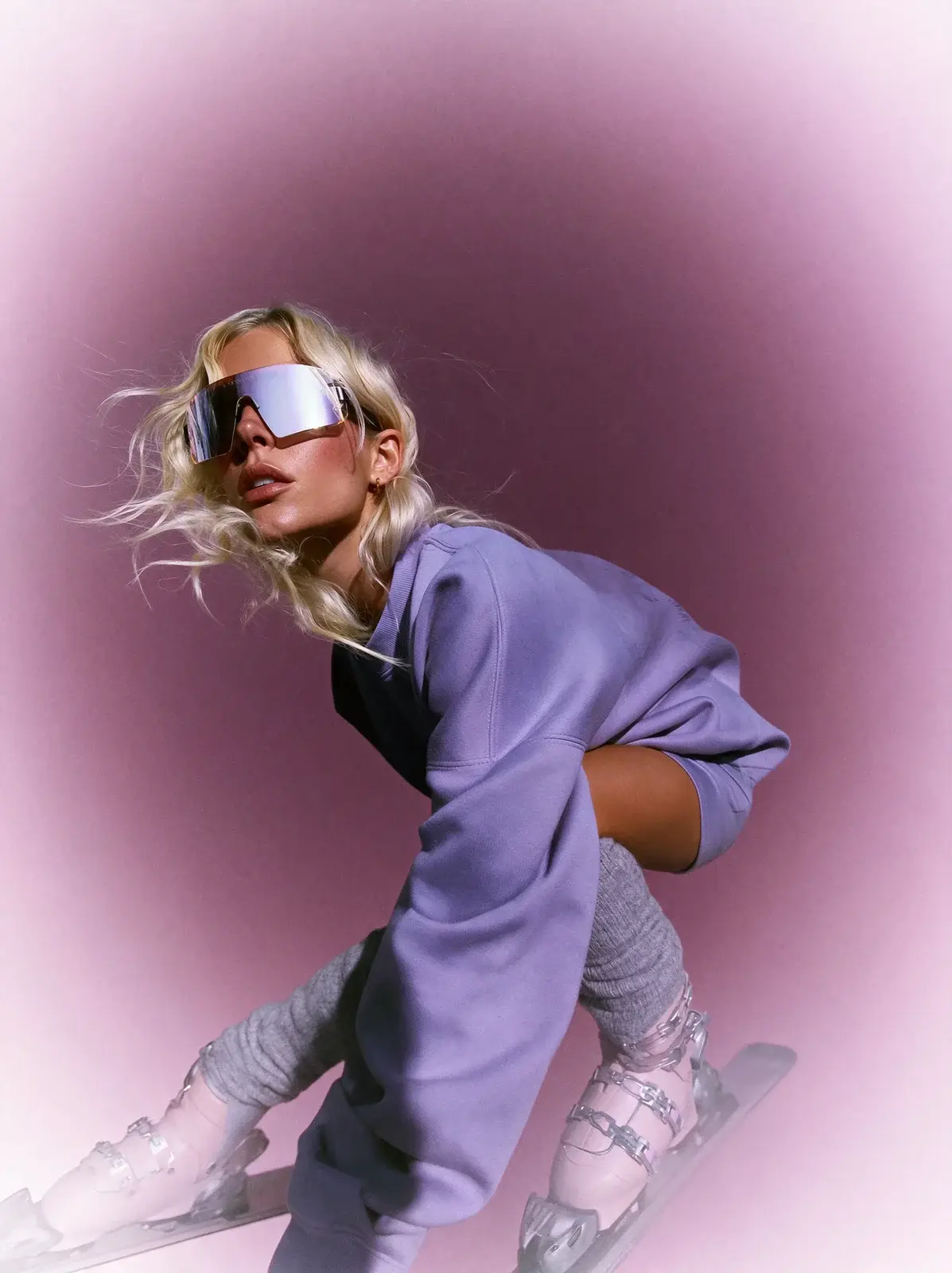
Seedream 5.5
Copy
Apply one single unified soft analog film process to the ENTIRE image, subject and background together, so that it looks like one photograph shot on medium-format film with one soft frontal light, never like a cutout placed over a new background. Film grain is a defining part of this look and must be obvious: coarse-to-medium film grain with particles about 4-5 pixels wide at 1760 pixels of image width, about 13% strength on the subject and about 5% on the smooth backdrop, made of fine irregular clumps of slightly lighter and darker tone, like a scan of a 35mm Kodak Portra 400 negative; the subject and the backdrop share exactly the same grain texture; no digital smoothness, no plastic retouching. Color grade and light: soft, diffused frontal key light with gentle shadows, slightly hazy with a mild glow, no hard specular shine; medium-high contrast, median brightness about 59%, rich overall saturation about 40%; skin and light materials take a subtle lilac-magenta tint in the highlights and a warm complementary tint in the shadows. Everything that is not the subject, including the blue gradient backdrop, the smoke and the haze, is completely replaced by one smooth, seamless, airbrushed color field that depends only on the distance from the middle of the subject and changes continuously over the whole frame, never as a plateau followed by a quick fall-off. Right at the subject it is a rich, clear color (#703A5A, hue about 325 degrees, saturation about 48%, never muddy or gray); a quarter of the way to the frame edge it is #8C5077; halfway to the edge #A86A99 with the hue turning gradually toward 290 degrees; three quarters of the way #D997D2; at the middle of every frame edge a clearly tinted light color (#EBB2ED); and in the four corners a very light, softly tinted version of the neighbouring hue (#EECEF5 at the top, #E9C6F0 at the bottom), about 16% saturation, never pure white. The color keeps visible tint all the way to the frame edges and fades with one steady, continuous slope from the subject to the corners, with no flat zone and no sudden drop. One very long, wide, soft airbrushed gradient, no outline, no horizon, no floor, no cast shadow on the backdrop: the subject floats in the color field like in an airbrushed studio portrait. Preserve exactly: the face, expression, skin tone, her blonde windblown hair, the mirrored shield sunglasses, the lilac sweatshirt, the grey knit leg warmers, the translucent ski boots and the skis, and her dynamic crouching pose; only the light, the grade and the backdrop change. No text, no logos, no watermarks.
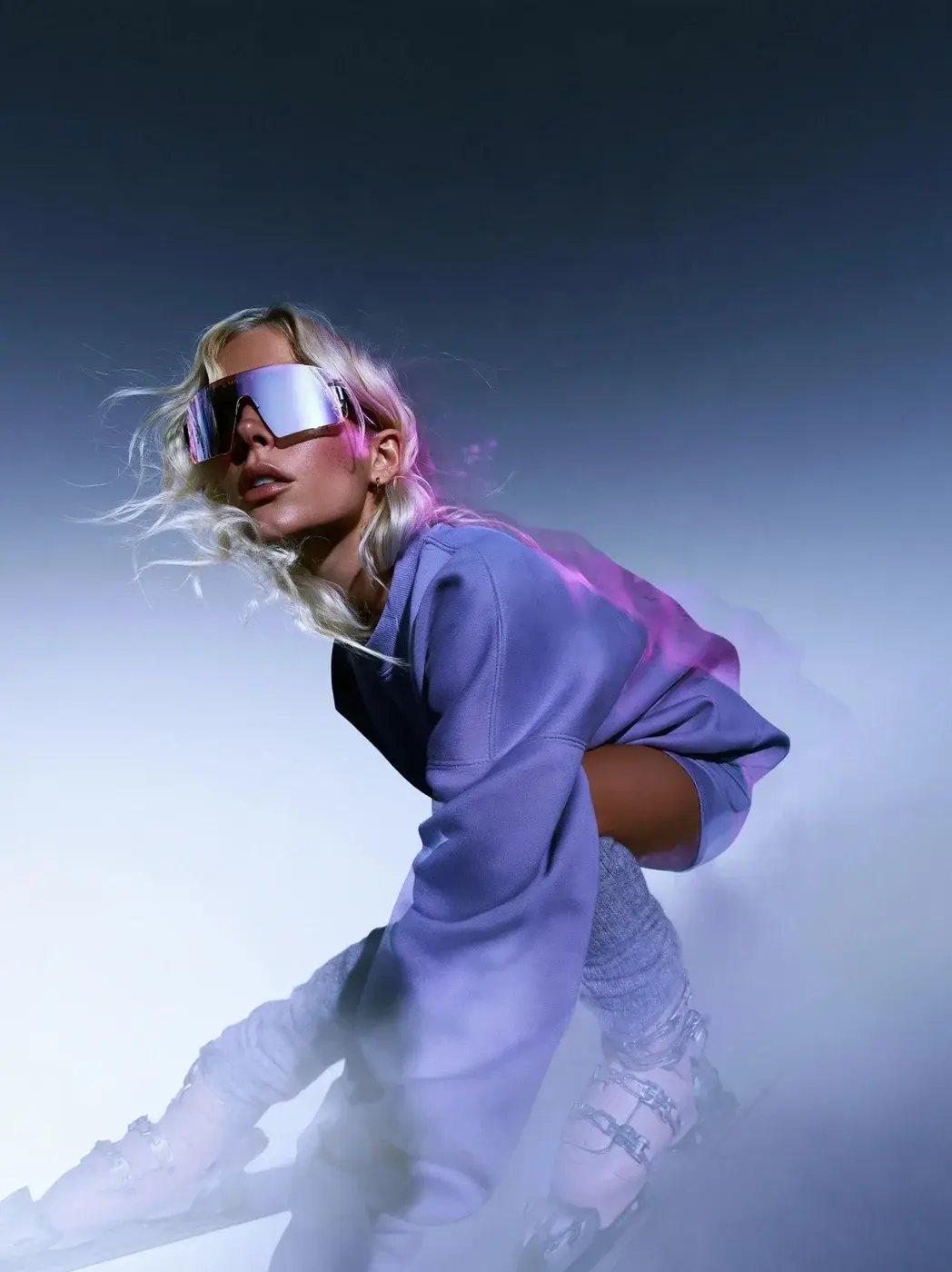
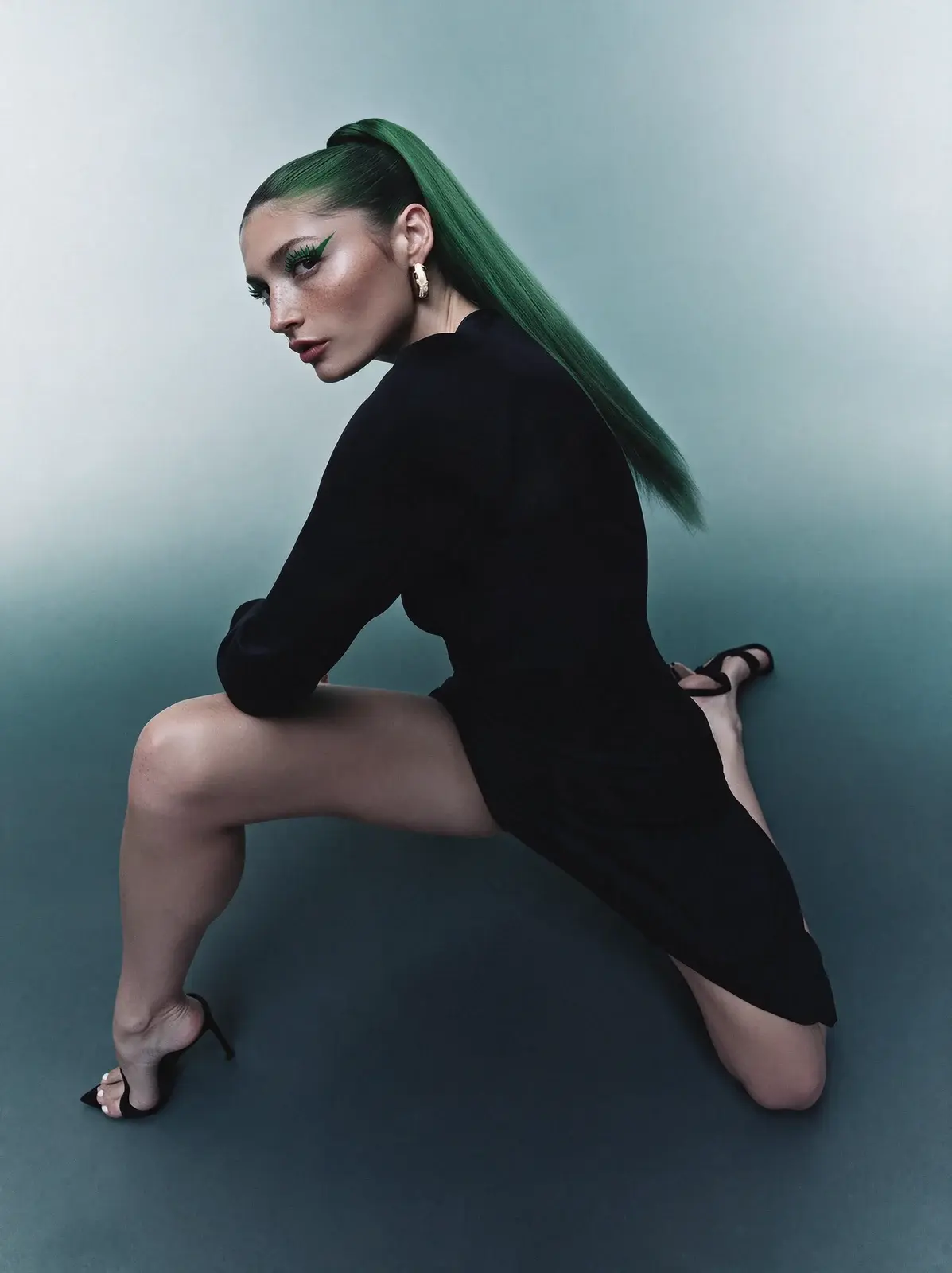
Seedream 5.5
Copy
{
"task": "Retouch the uploaded image as a muted teal editorial photograph.",
"preserve": "Keep the exact subject count, identity, expression, pose, silhouette, outfit, footwear, accessories, props, material colors, finishes, textures, scale, placement, camera angle and crop. Preserve all existing physical set elements and their spatial relationships.",
"background": {
"type": "A clean, seamless, full-frame two-dimensional matte gradient fixed to the image coordinates.",
"colors": {
"upper_left": "#D8E2E5",
"upper_right": "#C7D9DE",
"upper_interior": "#7FA3A4",
"mid_height": "#294A52",
"lower_interior": "#111B23",
"bottom_left": "#354A55",
"bottom_right": "#2E4550"
},
"shape": "Blend the colors with long, smooth transitions across both axes. Let the pale tones extend slightly farther down on the left through a gradual tilt of the overall transition.",
"continuity": "At any point in the open background, determine the tone from its position in the frame. Continue the same color field through narrow gaps and show it through existing clear
materials with their original tint, transparency and refraction."
},
"foreground": {
"lighting": "Use broad, soft local adjustments to brightness and color, with the effect of a cool-neutral diffused key from high camera right. Lift planes facing the light, soften highlight peaks within each material's original sheen, and keep readable slate-toned shadows in folds and overlaps.",
"skin": "Keep visible skin cool and muted with a soft rosy-taupe undertone. Preserve original complexion depth and detail.",
"shadows": "Confine cast and contact shadows to physical surfaces present in the source. Preserve the exact gaps around suspended elements."
},
"grain": {
"application": "As the final pass, apply fine, evenly distributed monochromatic film grain over the entire image.",
"scale": "Use closely spaced, irregular light and dark variations about 1–2 pixels across at 1440 pixels wide.",
"visibility": "Keep grain visible in smooth teal midtones at normal viewing size. Keep the underlying gradient smooth at larger scales and preserve crisp edges, surface detail and lettering."
}
}
},
"foreground": {
"lighting": "Use broad, soft local adjustments to brightness and color, with the effect of a cool-neutral diffused key from high camera right. Lift planes facing the light, soften highlight peaks within each material's original sheen, and keep readable slate-toned shadows in folds and overlaps.",
"skin": "Keep visible skin cool and muted with a soft rosy-taupe undertone. Preserve original complexion depth and detail.",
"shadows": "Confine cast and contact shadows to physical surfaces present in the source. Preserve the exact gaps around suspended elements."
},
"grain": {
"application": "As the final pass, apply fine, evenly distributed monochromatic film grain over the entire image.",
"scale": "Use closely spaced, irregular light and dark variations about 1–2 pixels across at 1440 pixels wide.",
"visibility": "Keep grain visible in smooth teal midtones at normal viewing size. Keep the underlying gradient smooth at larger scales and preserve crisp edges, surface detail and lettering."
}
}
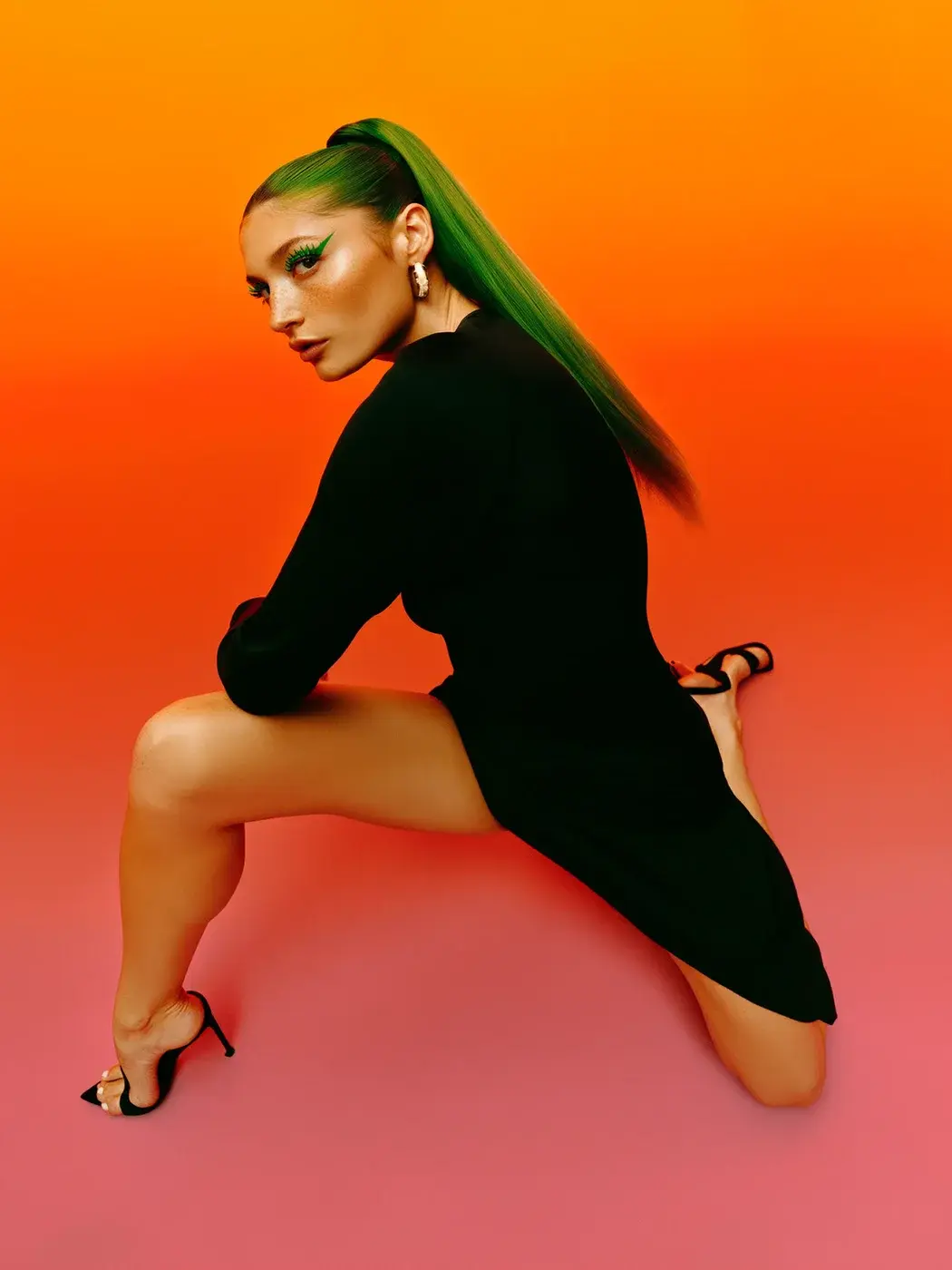
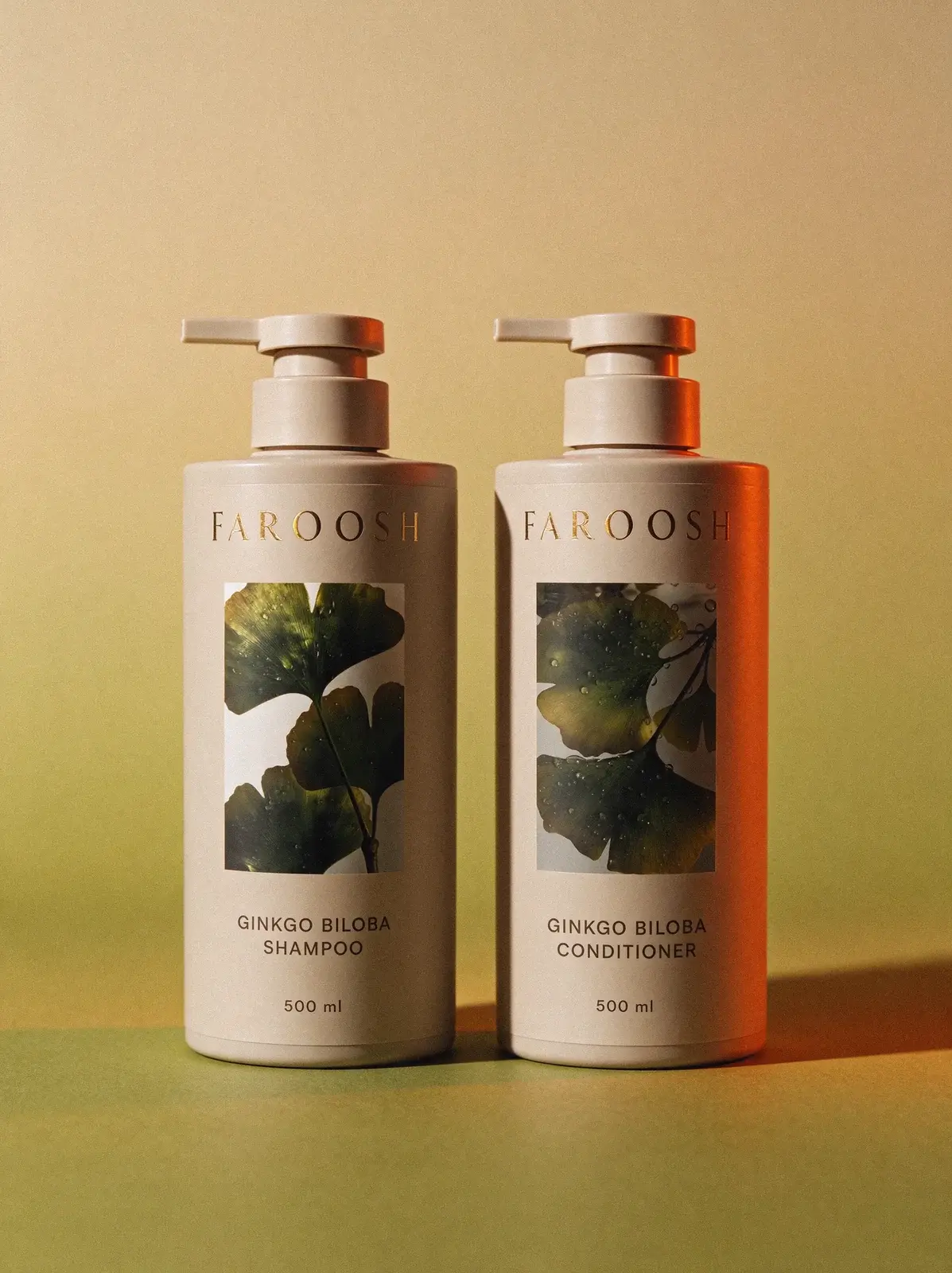
Seedream 5.5
Copy
Apply one single unified dramatic color-gel editorial analog film process to the ENTIRE image, subject and background together, so that it looks like one photograph shot on color film in a photo studio with one strong directional key light and one colored gel light, never like a cutout placed over a new background; the same treatment applies whether the subject is a person or an object. Film grain is a defining part of this look and must be obvious: coarse-to-medium film grain with particles about 4-5 pixels wide at 1760 pixels of image width, so that it stays clearly visible even when the picture is shown small on a phone screen, about 13% strength on the subject (surfaces, fabric, props, midtones) and about 5% on the smooth backdrop, made of fine irregular clumps of slightly lighter and darker tone with a faint variation in color, like a scan of a 35mm Kodak Portra 400 negative; the subject and the backdrop share exactly the same grain texture; no digital smoothness, no noise reduction, no plastic retouching, no clean synthetic surfaces anywhere. Color grade and light: one strong directional key light from the upper left with a clearly visible direction, sculpting every form with defined shadows on the right side and bright specular highlights, plus a second colored gel light in the backdrop color (orange) from the right that wraps every edge as a glowing rim light and colors the shadows; the shadows are deep and saturated orange (about #382D15, midtone shadows about #66583B) instead of gray, the darkest areas are true near-black (about #0B090C, never lifted, never milky or faded), lit surfaces are warm and clean, highlights bright but never clipped (peak about 96%), a wide tonal range with medium-high contrast (median brightness about 56%), rich saturated colors (overall saturation about 40%) and a soft halation glow around the brightest highlights; the backdrop itself stays a smooth, luminous, airbrushed color field and only the subject receives the directional shadows, with one soft cast shadow in the backdrop's own hue; light surfaces and metal show both lights: warm highlights from the key and orange-tinted shadows from the gel; every other color keeps its own hue. Depth: the color field is never centered on the subject and never forms a vignette, halo or circle around it; the subject sits inside a smooth part of the gradient and the backdrop reads as one wide sweep of color across the whole frame, with a soft contact shadow in the backdrop's own hue, a faint rim of the backdrop color on the subject's edges, a gentle halation bloom around the brightest highlights and slightly lower contrast far from the subject. Keep the subject, pose, shape, details, props, their colors, camera angle and framing exactly, adding or removing nothing; the
object's materials take the grade exactly as they do in a real film photograph shot in this light, clearly tinted by the dominant light and by the backdrop color while their own base colors stay recognizable; keep all printed text, lettering and logos on the product exactly as they are, sharp, legible and unchanged, add no other text, logos or watermarks, and remove any app badge, sticker or caption from the corners of the source. Everything in the frame that is not the subject, wherever it is, and everything behind and under the subject, whether it was a wall, a floor, sky, field, room or landscape, is completely replaced by one smooth, seamless, perfectly clean airbrushed color field that depends only on position, with no texture of the original surroundings, no horizon, crease, corner, edge, line, rectangle, light pool, beam, cone, oval, ring, steps or bands anywhere, and no hard edge between any two colors: every color change takes place gradually over at least 40% of the frame, and saturation or brightness never changes by more than about 3 points over any 5% of the frame width or height. The field is one vertical ombre that depends mainly on height. At the top of the frame it is light (#DBC79E, saturation about 28%), and it deepens very gradually going down through #BDA866 at 55% of the height into a rich #A39A49 in the lowest third (hue shifting by about 15 degrees), staying clear and saturated down to the bottom edge; around the subject the color is a little deeper than at the outer edges; one single, very long, soft airbrushed gradient with no stops. The subject stands on a seamless floor made of the same color field, with only a soft contact shadow and a soft reflection in the backdrop's own hue; no floor edge, horizon, seam or hard line is visible anywhere. Preserve exactly as in the source: the shape, size, materials and colors of the product, the contents of every container (liquid, powder, cream, or nothing), transparent, glass or empty parts stay exactly as transparent or empty as they are and are never filled, tinted or recolored (the backdrop is only seen through them), black parts stay black and white parts stay white, metal stays metal, and all printed text stays exactly the same; only the light and the backdrop reaction change. These colors of the subject stay exactly as in the source, never shifted or replaced: dark olive green, beige, yellow. The two matte warm-beige pump bottles keep their exact shape, size and positions side by side, the green ginkgo leaf photographs on the labels, the gold foil FAROOSH wordmark and all label lines stay exactly as they are; the pale grey studio backdrop is completely replaced by the color field. Finally, strong visible film grain lies evenly over everything including the subject, and the
backdrop glows softly and smoothly around the subject.
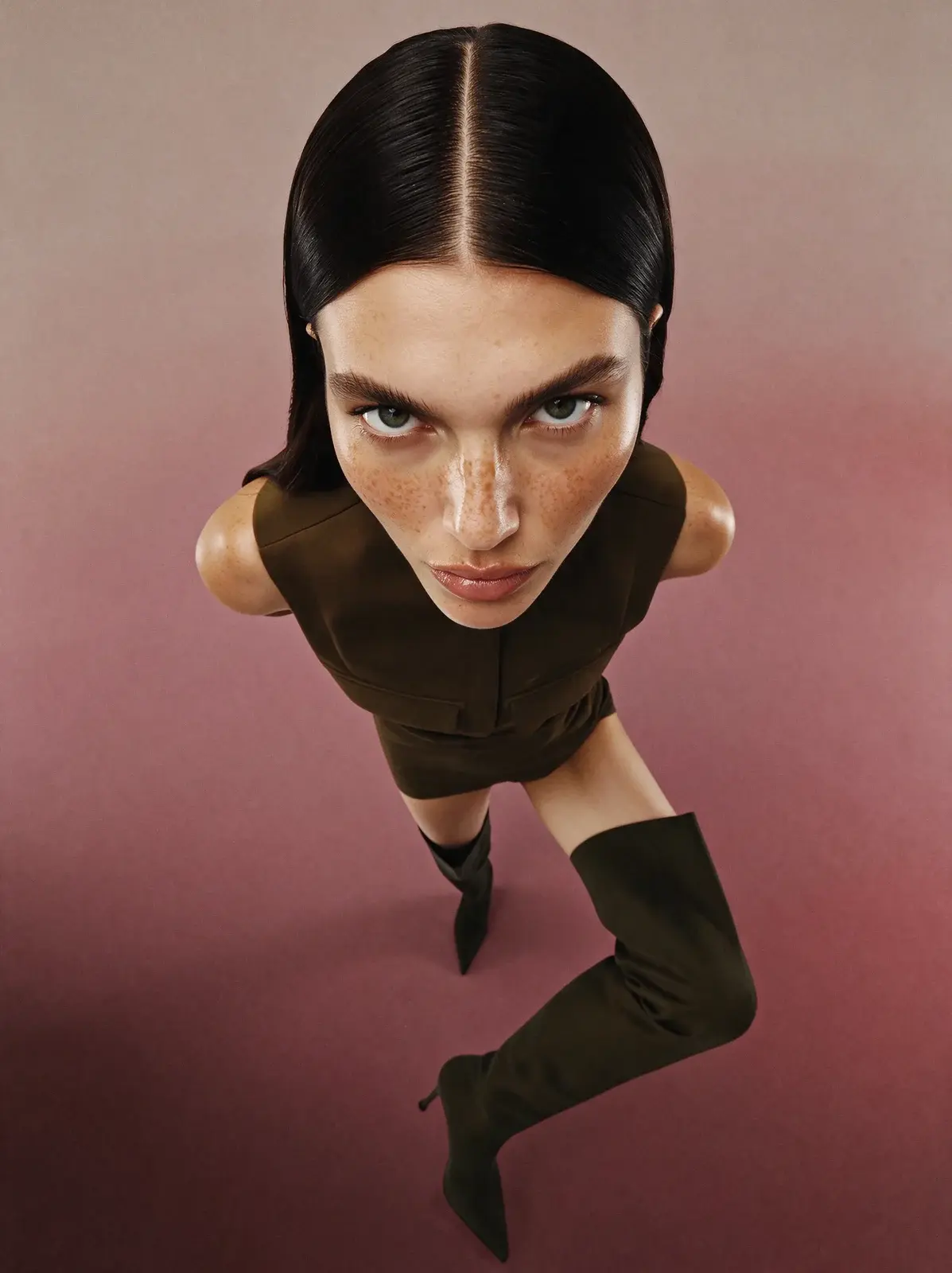
Seedream 5.5
Copy
{
"task": "Retouch the uploaded photograph as a softly lit fashion editorial with a dusty rose-to-wine backdrop, luminous cream highlights, and clearly visible fine film grain.",
"preserve": "Keep the exact subjects, identity, natural complexion depth, expression, pose, hairstyle, makeup, silhouette, outfit, accessories, props, existing set pieces, placement, markings, viewpoint, perspective and crop. Preserve the geometry, base colors, textures and finishes of all materials.",
"background": {
"construction": "Use one seamless matte gradient anchored to the frame. Carry the same field through open gaps and around existing supports.",
"hue_guides": {
"upper_dusty_rose_taupe": "#AA8E85",
"broad_mauve_rose": "#976A6C",
"wine_rose": "#8B5157",
"lower_left_oxblood": "#3C1E1D",
"lower_right_oxblood": "#482425"
},
"falloff": "Use these colors along a single continuously curved falloff. Keep dusty rose visible well into the upper third and deepen the wine gradually through the middle and lower field. Keep the right side slightly rosier through the transition."
},
"lighting": {
"setup": "Light the foreground separately with a broad diffused key high and slightly to camera left, plus soft near-axis bounce.",
"exposure": "Bring the face and other exposed planes into luminous, readable midtones. Give raised surfaces soft cream highlights and shape the turn into shade
gradually.",
"shadows": "Keep the densest shadows close to actual folds, overlaps and points of contact. Keep grounded contact shadows compact.",
"reflections": "Give existing reflective details small cream-white highlights within their original sheen.",
"suspension": "Preserve the original height, tilt and clear gap of suspended subjects."
},
"color_grade": {
"skin_highlight_hue": "#C4B49B",
"naturally_rosy_skin_hue": "#BFA99C",
"skin_shadow_hue": "Softly desaturated warm taupe.",
"skin_application": "Use the colors as relative hue cues. Reduce copper-orange chroma selectively on lit skin and in facial shadows. Preserve original complexion depth, undertone variation and skin texture.",
"materials": "Keep originally white materials softly neutral and naturally cream materials distinctly warmer. Keep existing colors such as blue-gray, green, pink or plum recognizable and separate. Preserve color and texture in dark materials."
},
"grain": {
"type": "Dense fine photographic luminance grain across the entire finished image, including smooth background, pale materials, skin and shadows.",
"scale": "Closely spaced irregular light and dark grains about 1–2 pixels across at 1440 pixels wide.",
"strength": "Clearly visible at normal viewing size on open rose and ivory areas. Keep strength comparable across areas of similar brightness and the underlying gradient smooth at larger scales."
}
}
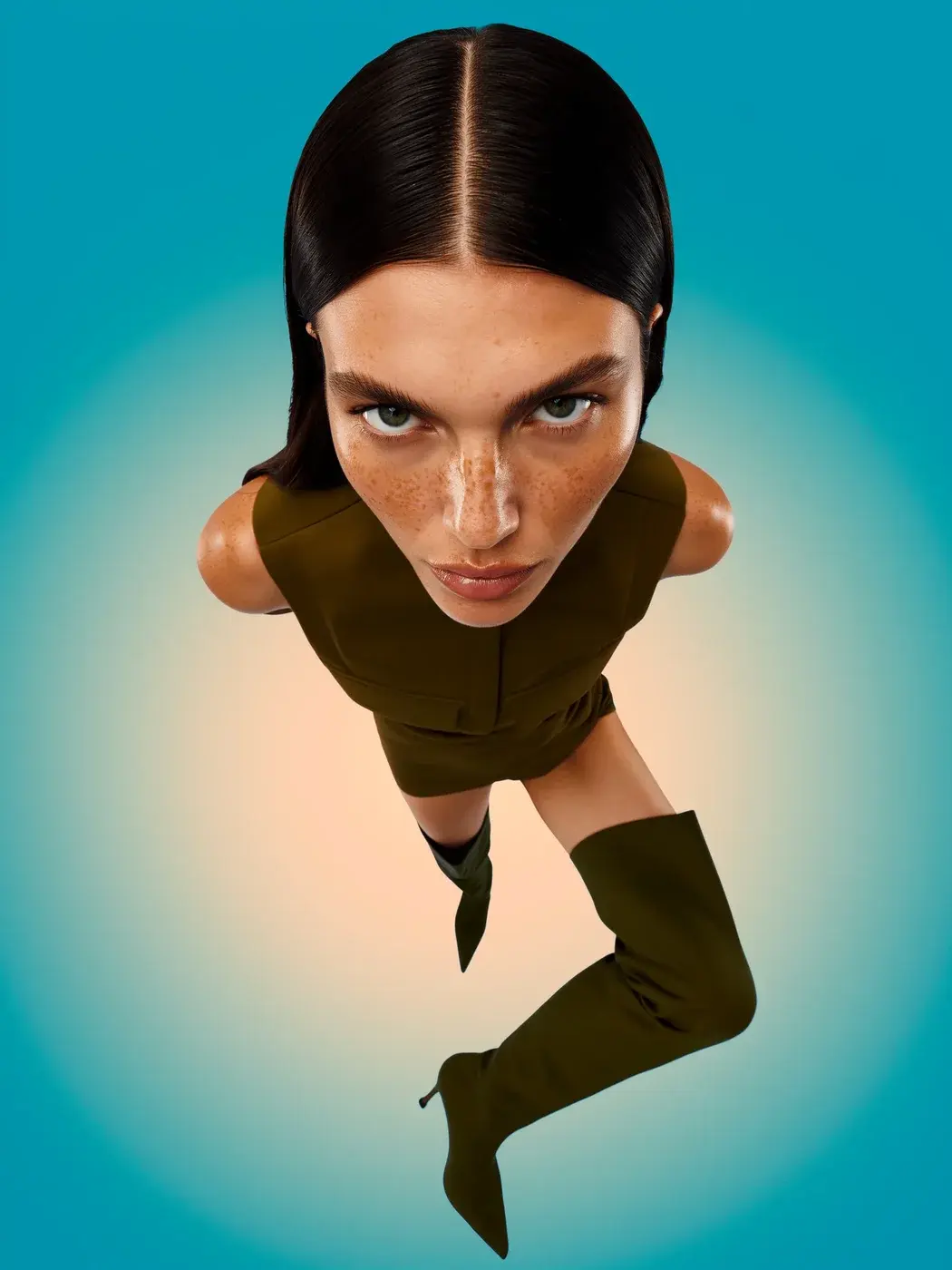
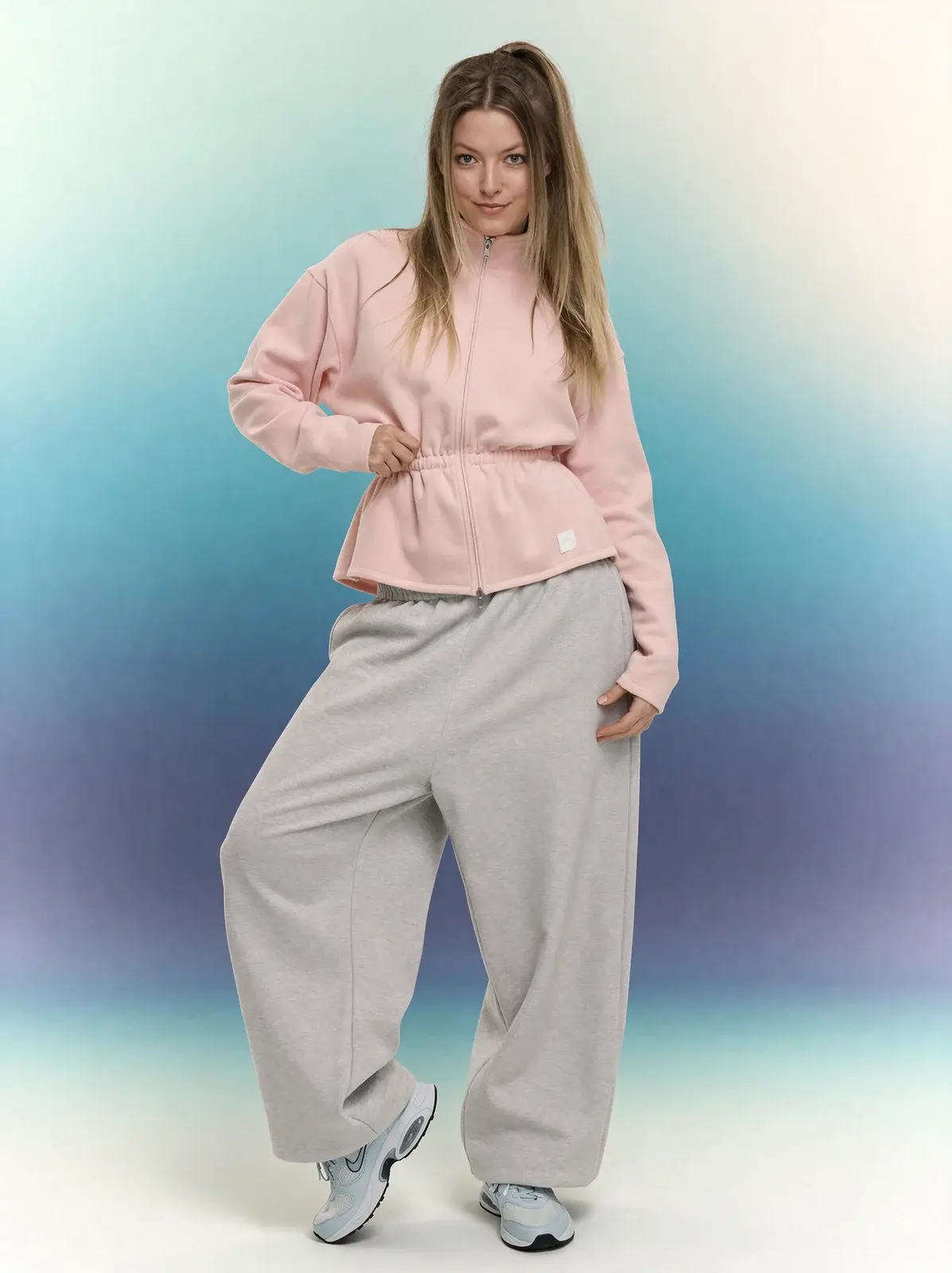
Seedream 5.5
Copy
Relight the uploaded photograph with soft neutral studio light against a luminous mint, cyan and periwinkle gradient. Preserve the exact identity, expression, pose, silhouette, proportions, placement, camera angle and crop. Keep every original garment, shoe, accessory and prop exactly as photographed, including its base hue, saturation, color blocking, cut, seams, folds, texture, finish and markings. Treat the original outfit as the color reference for every fabric and trim. Build one seamless matte background fixed to the frame, with pale mint #E5F7EA at the upper left and warm ivory #FFF9ED at the upper right, soft aqua #8BCED0 across the upper interior, cyan #51A9BB and cool blue #367FA2 through the middle, and smoky periwinkle #53628D below the middle, fading back into mint ivory #F2F2E5 and #FAFCEF toward the lower corners. Keep the pale right edge slightly wider and blend the colors continuously through every opening and beneath the subject. Confine those hues to the backdrop. Place a large neutral diffused key in front of the subject, slightly above eye level and just to camera right. Aim its broad spread across the face and the entire visible outfit, including the lower garments and shoes. Give the face a soft, clear exposure with readable eyes, even cheek midtones and natural complexion depth. Add gentle neutral frontal fill to lift the eye sockets and the broad shaded planes of the clothes. Keep dimensional shading in the existing folds and overlaps, with small, soft brightness differences between raised and recessed fabric. Keep each garment the same color in the light and shade by adjusting fabric luminance while preserving its original hue and saturation. Preserve each surface's original sheen and keep highlights broad and soft on fabric. Keep support shadows short and softly feathered at actual points of contact. For a suspended subject, preserve the original height, tilt and clear air gap filled by the continuous gradient. Finish with fine monochromatic photographic grain across the whole frame, visible in the cyan and periwinkle midtones while preserving smooth color transitions and fabric detail.
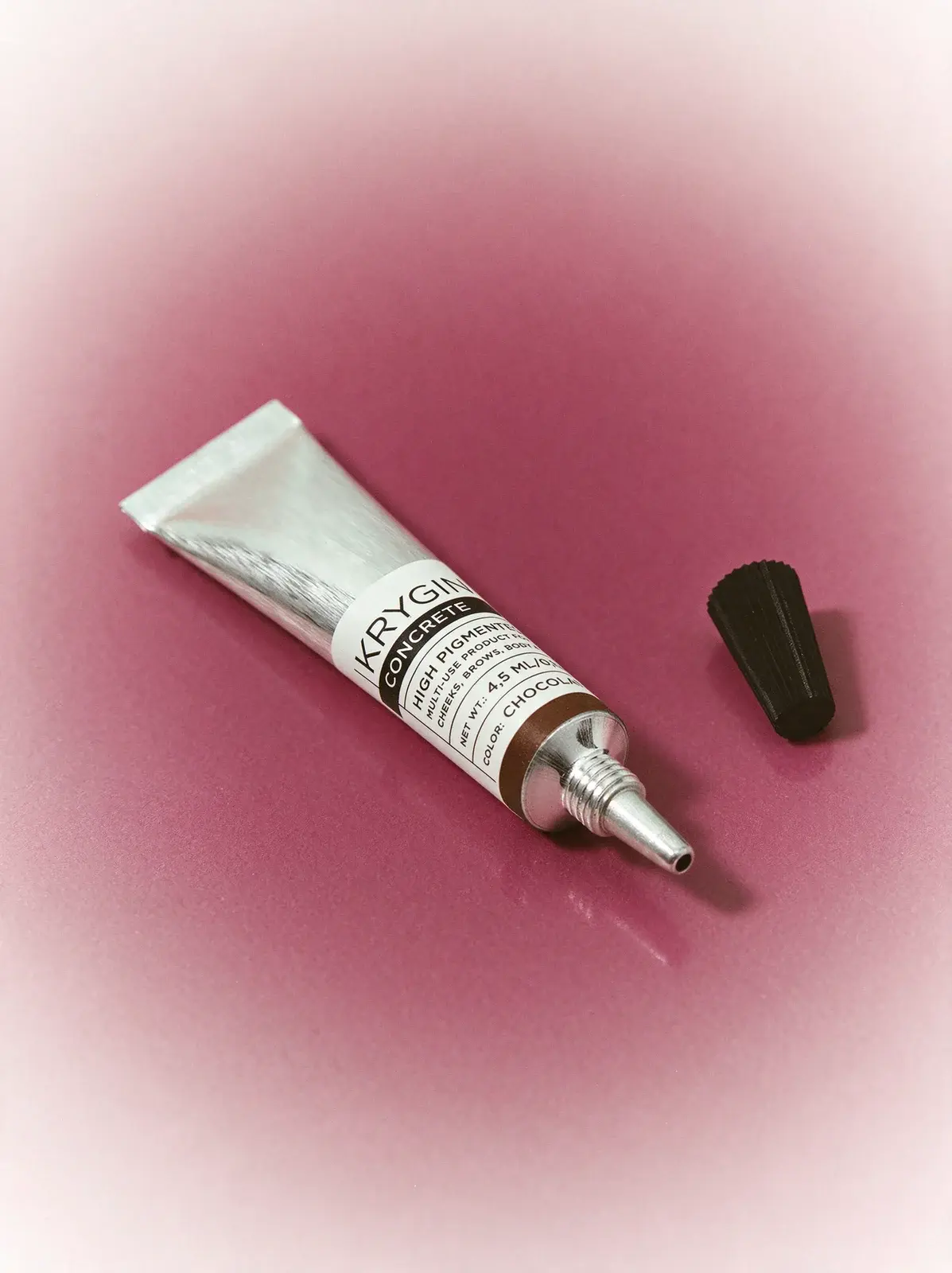
Seedream 5.5
Copy
Apply one single unified glossy beauty-editorial analog film process to the ENTIRE image, subject and background together, so that it looks like one photograph with one soft frontal light, never like a cutout placed over a new background; the same treatment applies whether the subject is a person or an object. Film grain is a defining part of this look and must be obvious: coarse-to-medium film grain with particles about 4-5 pixels wide at 1760 pixels of image width, so that it stays clearly visible even when the picture is shown small on a phone screen, about 13% strength on the subject (surfaces, fabric, props, midtones) and about 5% on the smooth backdrop, made of fine irregular clumps of slightly lighter and darker tone with a faint variation in color, like a scan of a 35mm Kodak Portra 800 negative pushed one stop; the subject and the backdrop share exactly the same grain texture; no digital smoothness, no noise reduction, no plastic retouching, no clean synthetic surfaces anywhere. Color grade and light: soft, diffused, flattering frontal light with low contrast and soft transparent shadows; a glossy, glowing, slightly wet sheen on smooth or shiny surfaces with soft specular highlights in cool mint-white (about #E9F2EB) and a fine pearly shimmer; midtones and lit colors warm, golden and peachy, shadows warm brown (#845D45), the darkest areas olive-brown (#2F251A), no pure black anywhere; highlights soft and never pure white (peak about 93% brightness), median brightness about 62%, overall saturation about 30%; the backdrop color reflects as a faint pink glow on the nearest edges of the subject; light surfaces and metal take a subtle pink tint in the highlights and a warm complementary tint in the shadows. Depth: the backdrop is clearly deeper and richer in color around the subject than toward the outer edges of the frame, so that the subject sits inside a soft glowing atmosphere of color; add a soft contact shadow in the backdrop's own hue, a faint rim of the backdrop color on the subject's edges, a gentle halation bloom around the brightest highlights and slightly lower contrast far from the subject. Keep the subject, pose, shape, details, props, their colors, camera angle and framing exactly, adding or removing nothing; the object's materials take the grade exactly as they do in a real film photograph shot in this light, clearly tinted by the dominant light and by the backdrop color while their own base colors stay recognizable; keep all printed text, lettering and logos on the product exactly as they are, sharp, legible and unchanged, add no other text, logos or watermarks, and remove any app badge, sticker or caption from the corners of the source. Everything in the frame that is not the subject, wherever it is, and everything behind and
under the subject, whether it was a wall, a floor, sky, field, room or landscape, is completely replaced by one smooth, seamless, perfectly clean airbrushed color field that depends only on position, with no texture of the original surroundings, no horizon, crease, corner, edge, line, rectangle, light pool, beam, cone, oval, ring, steps or bands anywhere, and no hard edge between any two colors: every color change takes place gradually over at least 40% of the frame, and saturation or brightness never changes by more than about 3 points over any 5% of the frame width or height. The field depends on the distance from the subject and on height. Around the subject at about 35-65% of the frame height it is a rich, clear color (about #A84365, hue about 340 degrees, saturation about 60%, brightness about 66%, never washed out or muddy), becoming #C2788C at mid-distance and then paler and less saturated toward every edge (#DBAFB8, then #EBD3D7); the outer corners are very pale (#F7EBEC at the top, #F5E6E9 at the bottom), and the hue drifts slowly by a few degrees as it moves outward; one very long, wide, soft airbrushed gradient filling the whole frame. The aluminum tube keeps its brushed silver metal with a soft reflection of the backdrop color, the white label keeps its exact layout, the chocolate-brown band stays chocolate brown, the black ribbed cap stays black; the tube and the cap stay in exactly the same positions with the same high-angle perspective, and the white surface they rest on becomes part of the color field with only soft contact shadows. Finally, strong visible film grain lies evenly over everything including the subject, and the backdrop glows softly and smoothly around the subject.
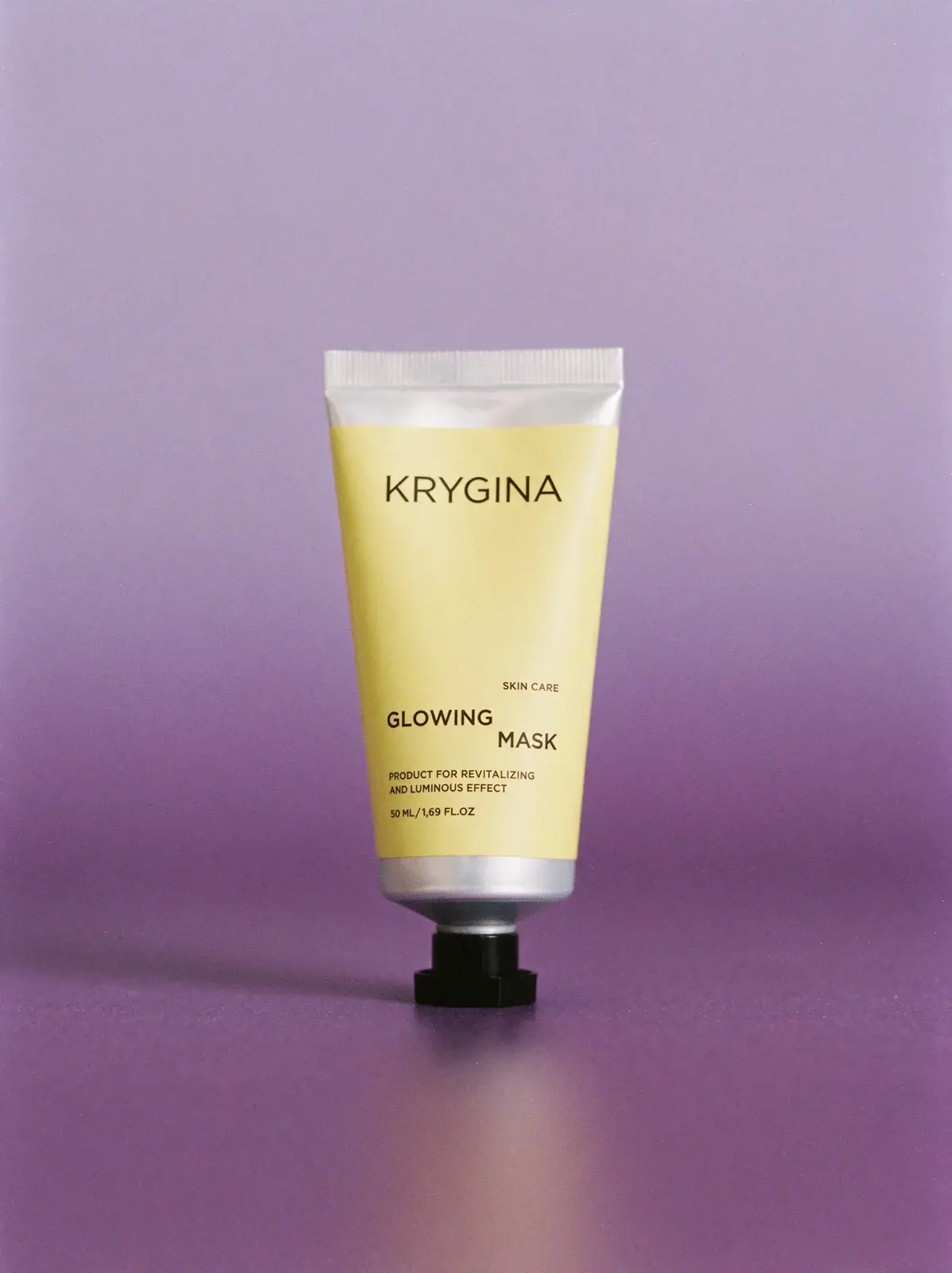
Seedream 5.5
Copy
Apply one single unified soft analog film process to the ENTIRE image, product and background together, so that it looks like one photograph shot on medium-format film with one soft frontal light, never like a cutout placed over a new background. Film grain is a defining part of this look and must be obvious: coarse-to-medium film grain with particles about 4-5 pixels wide at 1760 pixels of image width, about 13% strength on the product and about 5% on the smooth backdrop, made of fine irregular clumps of slightly lighter and darker tone, like a scan of a 35mm Kodak Portra 400 negative; the product and the backdrop share exactly the same grain texture; no digital smoothness. Color grade and light: soft, diffused frontal key light with gentle shadows, slightly hazy with a mild glow; medium-high contrast, median brightness about 59%, rich overall saturation about 40%. Everything that is not the product, including the light grey seamless backdrop, is completely replaced by one smooth, seamless, airbrushed color field with no horizon line, no crease, no edge, no band. The field is one vertical ombre that depends mainly on height. At the top of the frame it is light (#B6A4DB, saturation about 25%), and it deepens very gradually going down through #906FBD at 55% of the height into a rich #8052A3 in the lowest third (hue shifting by about 15 degrees), staying clear and saturated down to the bottom edge; around the product the color is a little deeper than at the outer edges; one single, very long, soft airbrushed gradient with no stops. The product stands on a seamless floor made of the same color field, with only a soft contact shadow and a soft reflection in the backdrop's own hue; no floor edge, horizon, seam or hard line is visible anywhere. Preserve exactly: the shape, size and materials of the pale yellow tube with its white translucent body and black octagonal cap, the pale yellow label colour and all printed text (KRYGINA, SKIN CARE, GLOWING MASK, PRODUCT FOR REVITALIZING AND LUMINOUS EFFECT, 50 ML / 1,69 FL.OZ) exactly the same; only the light and the backdrop reaction change. No extra text, no logos, no watermarks.
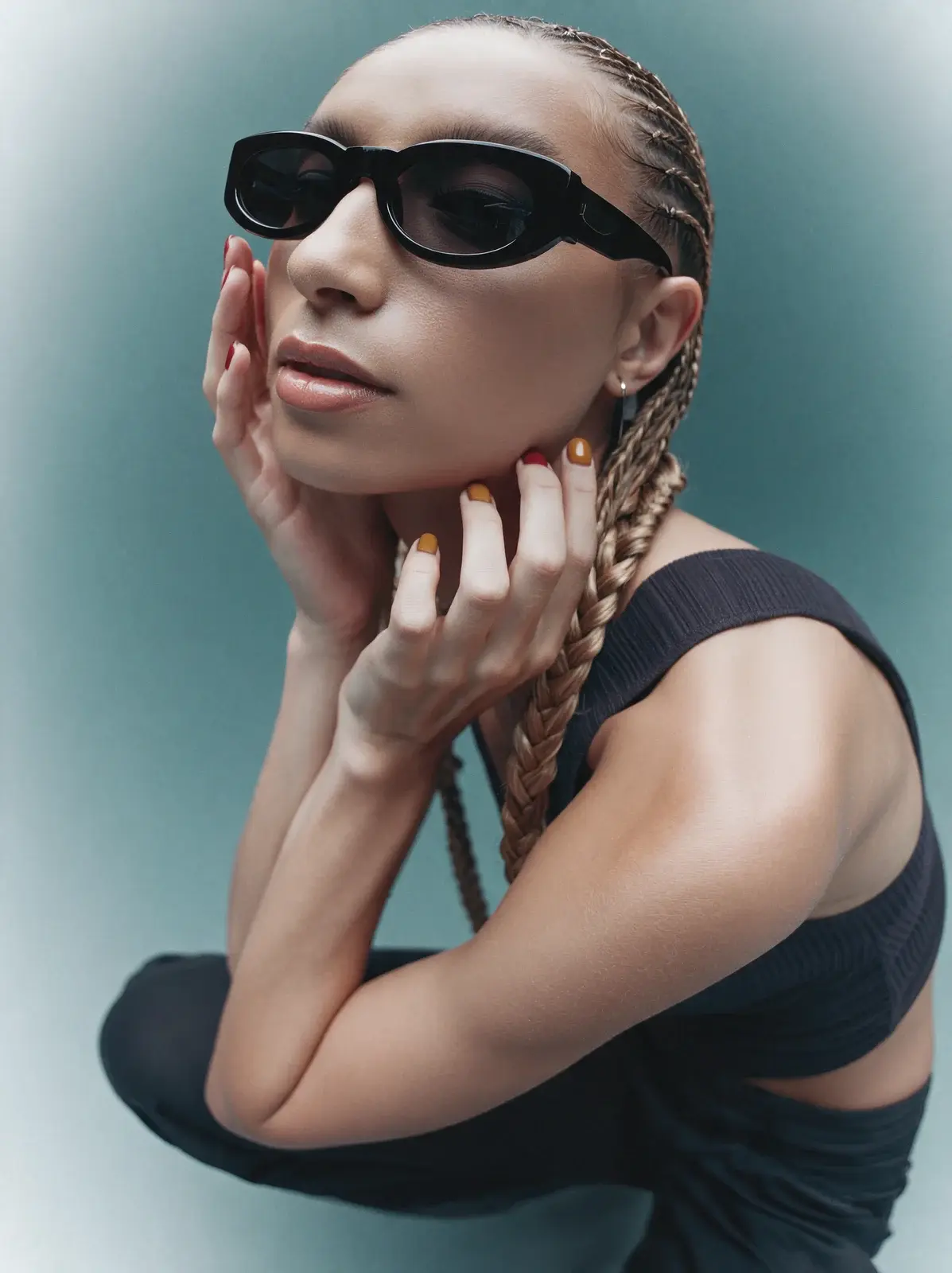
Seedream 5.5
Copy
{
"task": "Edit the uploaded image in place as a muted teal editorial photograph with a seamless two-dimensional backdrop, soft directional light and fine photographic grain.",
"preserve": "Keep the exact foreground composition, including subject count, identity, complexion depth, expression, pose, silhouette, styling, existing props, materials, logos, lettering, scale, placement, camera angle, perspective and crop.",
"background": {
"type": "A single matte color field fixed to the frame, blended smoothly across both axes.",
"x_percent_from_left": [4, 50, 96],
"anchors": [
{"y_percent_from_top": 3, "colors_left_to_right": ["#D8E2E5", "#7FA3A4", "#C7D9DE"]},
{"y_percent_from_top": 22, "colors_left_to_right": ["#B7C6CB", "#497B7F", "#8FB1B2"]},
{"y_percent_from_top": 53, "colors_left_to_right": ["#70817C", "#294A52", "#5B8184"]},
{"y_percent_from_top": 72, "colors_left_to_right": ["#506E73", "#203B45", "#447079"]},
{"y_percent_from_top": 85, "colors_left_to_right": ["#273841", "#111B23", "#243B47"]},
{"y_percent_from_top": 97, "colors_left_to_right": ["#354A55", "#151F27", "#2E4550"]}
],
"shape": "Let pale gray-cyan enter from both upper corners, with a wider silvery sage-gray wash descending along the left side. Keep the center broadly muted teal, deepening into smoky petrol. Place the deepest blue-charcoal tones across the lower interior around 82–88% of the frame height, then give both bottom corners a slight slate-teal lift.",
"continuity": "Carry the same broad, continuous gradient through openings in the silhouette and beneath the
composition."
},
"lighting": {
"key": "Use a large cool-neutral key high and slightly to camera right, with subdued frontal fill. Give raised surfaces broad pearl-gray highlights with the character of #D7D6D3.",
"shadows": "Let curved planes turn gradually into muted midtones. Keep tighter, denser shadows directly beneath edges and between overlapping layers, with faint petrol bounce on shaded planes facing the backdrop.",
"materials": "Give existing metal small silver glints and retain the original texture of matte materials."
},
"color_grade": {
"skin": "Soften orange and yellow saturation. Keep lit planes pale rosy beige, midtones muted rose-taupe and shaded areas cool dusty rose-brown. Use #D3B9AD and #876762 as relative hue cues adapted to the original complexion and exposure.",
"palette": "Keep whites cool-neutral, blacks dense and existing accent colors distinct but subdued."
},
"spatial_relationships": {
"supported": "Where the source shows actual contact with a surface, retain a compact blue-charcoal contact shadow that feathers quickly into the same field.",
"suspended": "For subjects suspended in the source, preserve the exact position, tilt and open gap."
},
"grain": {
"type": "Dense fine photographic luminance grain across the complete frame.",
"apparent_size": "Approximately 1–2 pixels at 1440 pixels wide.",
"distribution": "Visible in sage, teal and petrol, slightly quieter in the brightest highlights, with comparable strength at the center and edges at the same local brightness.",
"detail": "Retain fine silhouette detail, surface texture and legible markings."
}
}
},
"lighting": {
"key": "Use a large cool-neutral key high and slightly to camera right, with subdued frontal fill. Give raised surfaces broad pearl-gray highlights with the character of #D7D6D3.",
"shadows": "Let curved planes turn gradually into muted midtones. Keep tighter, denser shadows directly beneath edges and between overlapping layers, with faint petrol bounce on shaded planes facing the backdrop.",
"materials": "Give existing metal small silver glints and retain the original texture of matte materials."
},
"color_grade": {
"skin": "Soften orange and yellow saturation. Keep lit planes pale rosy beige, midtones muted rose-taupe and shaded areas cool dusty rose-brown. Use #D3B9AD and #876762 as relative hue cues adapted to the original complexion and exposure.",
"palette": "Keep whites cool-neutral, blacks dense and existing accent colors distinct but subdued."
},
"spatial_relationships": {
"supported": "Where the source shows actual contact with a surface, retain a compact blue-charcoal contact shadow that feathers quickly into the same field.",
"suspended": "For subjects suspended in the source, preserve the exact position, tilt and open gap."
},
"grain": {
"type": "Dense fine photographic luminance grain across the complete frame.",
"apparent_size": "Approximately 1–2 pixels at 1440 pixels wide.",
"distribution": "Visible in sage, teal and petrol, slightly quieter in the brightest highlights, with comparable strength at the center and edges at the same local brightness.",
"detail": "Retain fine silhouette detail, surface texture and legible markings."
}
}
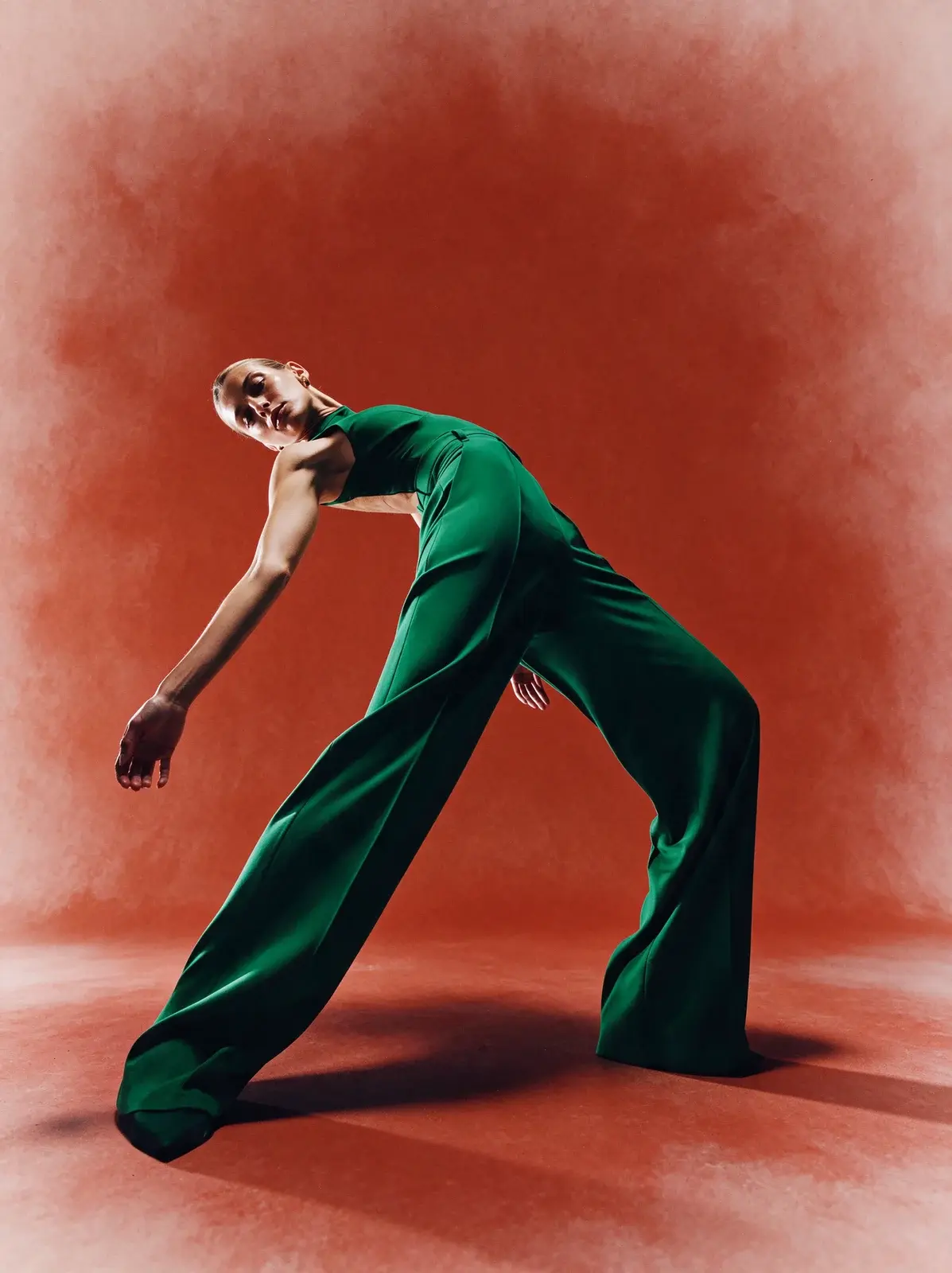
Seedream 5.5
Copy
Edit this photograph. Keep the subject, objects, arrangement and framing exactly as they are and do not add or remove any objects. Restyle only the background surface, light and color. The entire background and the surface under the subject become one continuous airbrushed color field: rich saturated brick rust red (#A8432F) around the subject, softly washing out toward the edges and corners into dusty pinkish salmon (#D9988A), like a bleached halo. The transition is wide and cloudy, with a faint paper texture. Hard bright flash-like light from the front, crisp glossy highlights, deep blue-black shadows, very saturated colors on the subject, high contrast. Finish like color film: fine, even, visible grain over the whole image, slightly lifted blacks.
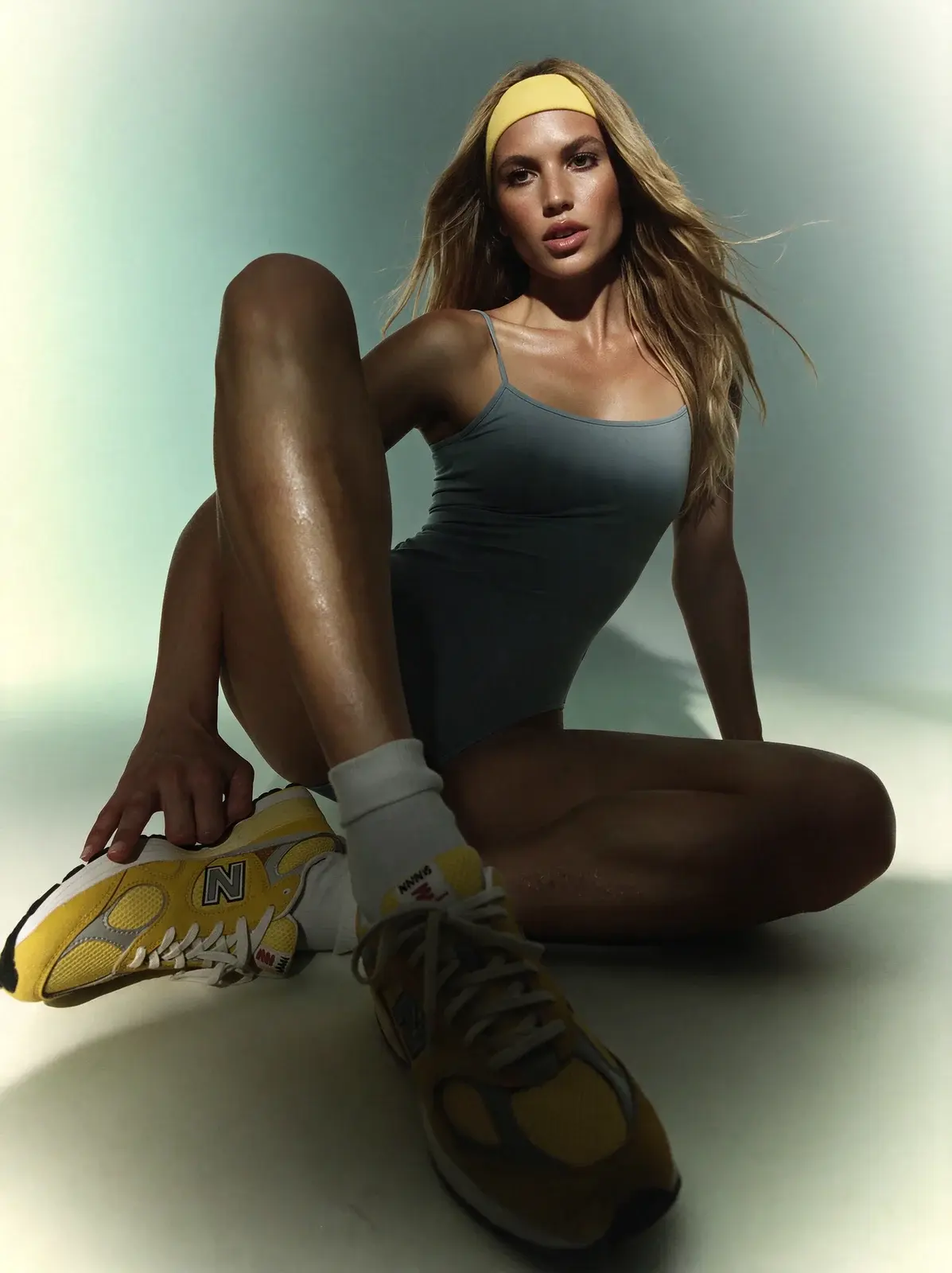
Seedream 5.5
Copy
Apply one single unified cinematic process to the ENTIRE image, subject and background together, so that it looks like one dramatic low-key editorial photograph shot with a strong directional top light, never like a cutout placed over a new background. The whole frame, including the subject, skin, hair, clothes and props, gets: high contrast with a median brightness of about 60%, true deep blacks (about #0D0F0B), highlights up to near white only on glossy or wet surfaces and on the pale edges of the frame, overall saturation about 19%; the subject is clearly darker than the pale edges of the frame, strongly modeled by a directional light from above with deep soft shadows and a fast falloff along the body, skin is muted olive-beige (#B6B69C and #A59F8A in the lit areas, #7D6659 in warmer shade) with glossy specular highlights, the deepest shadows and blacks are tinted deep green-olive (#191F11, #2C2C28), never neutral black, and white or light clothing turns cool teal-gray in the light (#525E5F) and nearly black in shade; fine, barely visible, clean grain only, no heavy noise, the picture is sharp and polished. Keep the subject, pose, face, hair, clothing, props, camera angle and framing exactly, adding or removing nothing, no text, no watermarks. Everything in the frame that is not the subject, wherever it is, is replaced by one smooth continuous airbrushed color field that is a function of position only: it runs unbroken from the top edge to the bottom edge, with no horizontal line, corner, edge, change of surface or brightness step at any height, and the subject's own cast shadow is just a soft slightly darker area of the same field. The field is darkest in a wide vertical zone behind the subject in the upper-middle part of the frame (a muted teal-green #677D74, hue about 155 degrees, saturation about 18%, brightness about 48%) and it becomes lighter and shifts hue as it moves outward, with a long, very soft transition: on the left it goes through light sage-teal (#A3C9B5) and fresh mint (#CFEAC4) to a luminous pale cream-lime at the left edge (#F2F9CA, brightness about 97%); on the right it is shorter and more muted, through gray-green (#7B9489) and sage (#ABC4A8) to a pale sage at the right edge (#C2D7B6), brighter toward the bottom right (#B9D3B9, with #E6F3D9 in the corner) and the lowest left edge cream (#F8FBDE); the left side overall is clearly brighter and more yellow than the right, with no visible shape, ring, outline, steps or bands anywhere.
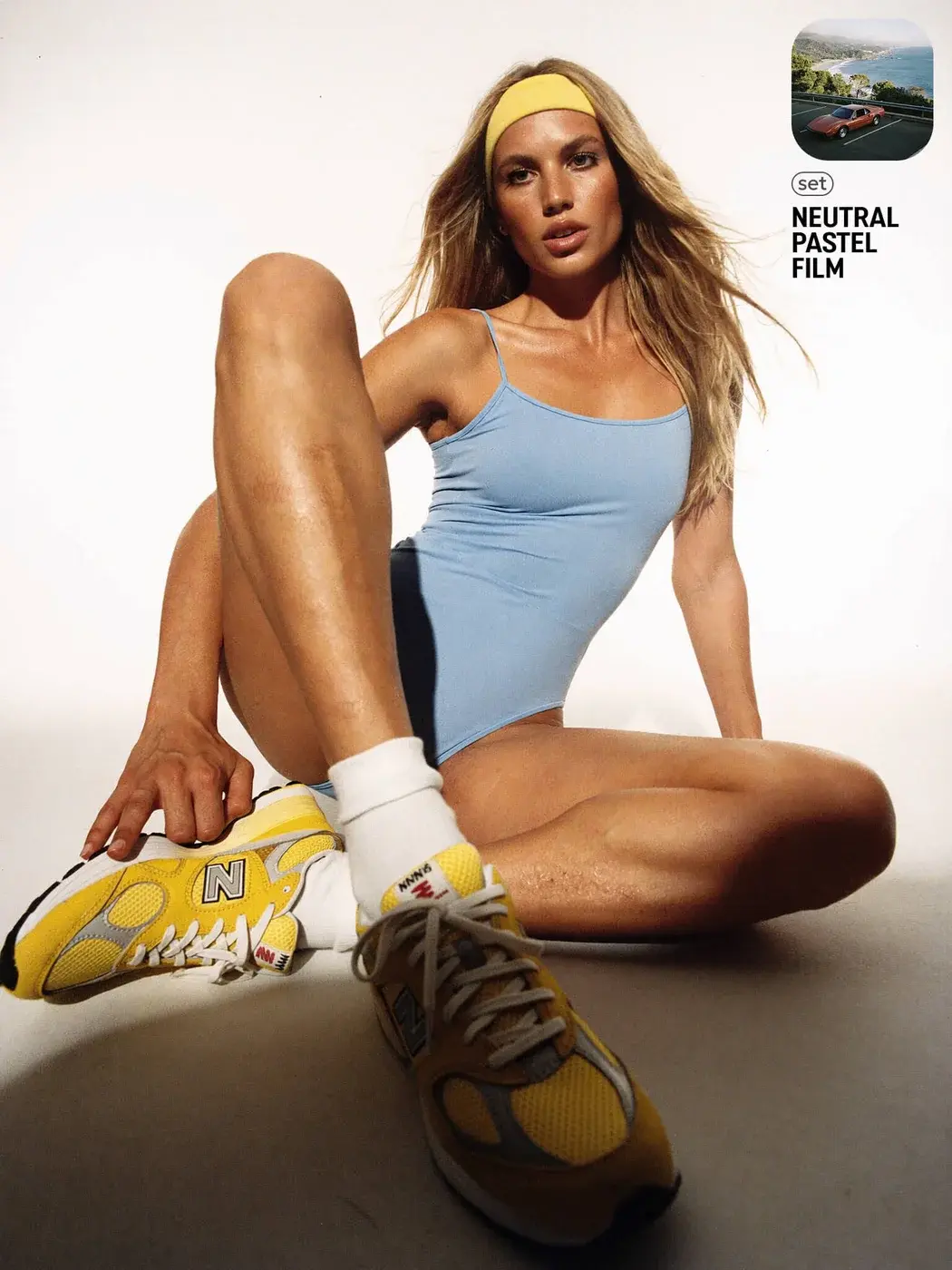
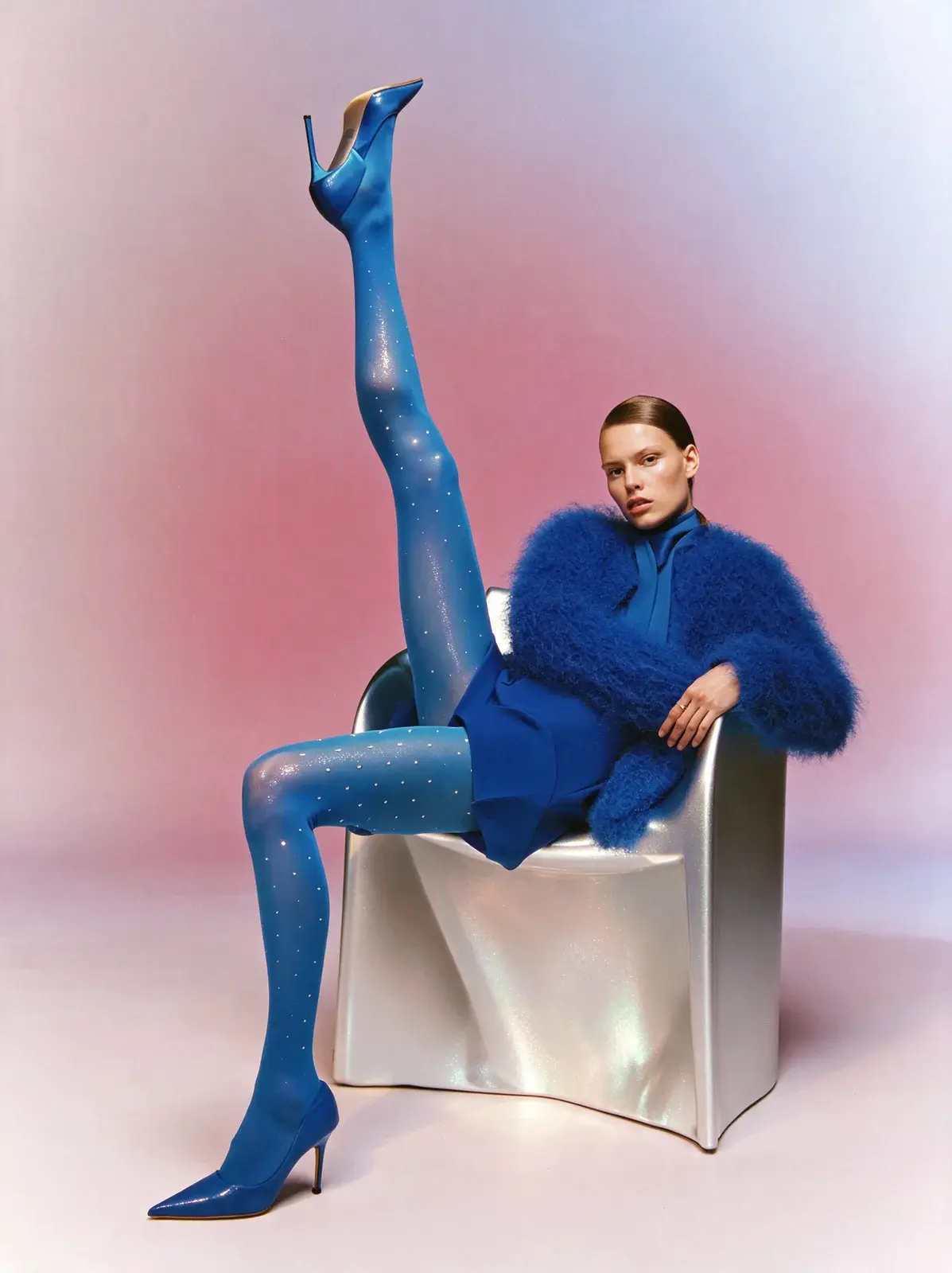
Seedream 5.5
Copy
Apply one single unified glossy beauty-editorial analog film process to the ENTIRE image, subject and background together, so that it looks like one photograph with one soft frontal light, never like a cutout placed over a new background; the same treatment applies whether the subject is a person or an object. Visible film grain is a defining part of this look: fine, crisp film grain particles clearly visible at 100% across the whole frame, strongest on skin, smooth surfaces and midtones (about 9% intensity, obvious on the skin and on glossy highlights) and lighter but still clearly present on the smooth backdrop (about 4%), like a scan of a 35mm Kodak Portra 800 negative pushed one stop, with the subject and the backdrop sharing exactly the same grain. Light: soft, diffused, flattering frontal light with low contrast and soft transparent shadows; a glossy, glowing, slightly wet sheen on every smooth or shiny surface with soft specular highlights that are a cool mint-white (about #E9F2EB) and a fine pearly shimmer; midtones and lit colors warm, golden and peachy (skin about #B28767 to #B7967D, lit light areas around #D2C4B2), shadows warm brown (about #845D45), never gray, blue or pink; the darkest areas olive-brown (about #2F251A), no pure black anywhere; highlights soft and never reaching pure white (peak about 93% brightness), median brightness about 64%, overall saturation about 26%; the color of the backdrop gently reflects as a faint pink glow on the nearest edges of the subject. Keep the subject, pose, shape, details, props, camera angle and framing exactly, adding or removing nothing, no text, no watermarks. Everything in the frame that is not the subject, wherever it is, is replaced by one smooth continuous airbrushed pastel field whose color depends only on the distance from the subject and on height, with no visible shape, ring, outline, line, edge, steps or bands anywhere and no change of surface at any height. Around the subject, at about 35-65% of the frame height, it is a luminous bright pink (#C37B94, hue about 339 degrees, saturation about 37%, brightness about 76%, never dark, dusty or muddy), becoming #CD91A7 at mid-distance and then paler and less saturated toward every edge (#DAB2C5, then #E1D1DE), with a slightly lighter pink above the head (#C68CA2); the outer corners are very pale and shift smoothly in hue from pink through mauve to lavender: the top-right corner is almost white with a cool lilac-blue tint (#EAEEFA, brightness about 98%), the top-left corner a pale pink-mauve (#D8C4D2); the transition is very long, wide and soft, filling the whole frame, as a gentle airbrushed gradient with no sharp edges. Finally, fine visible film grain lies evenly over everything including the subject.
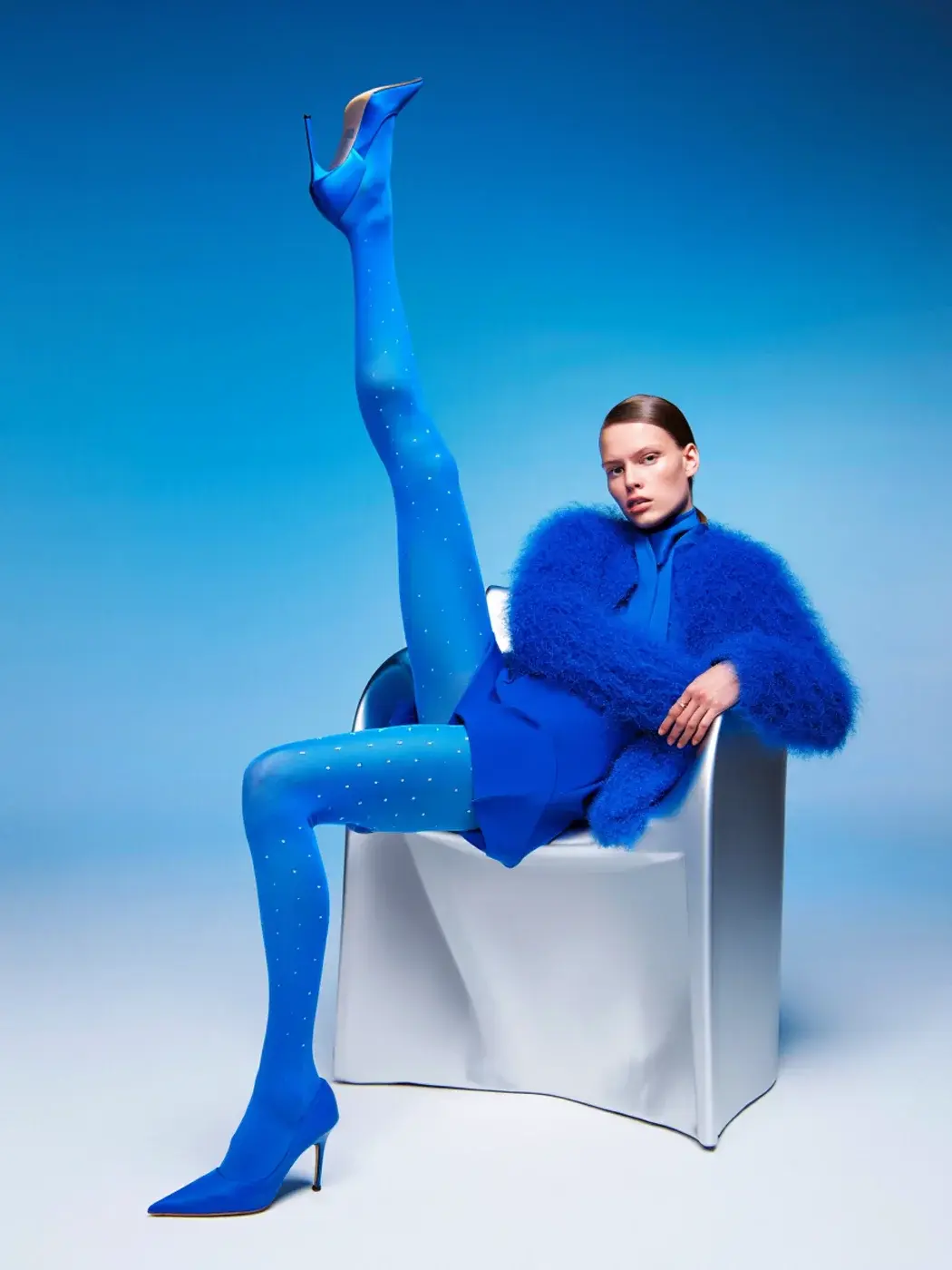
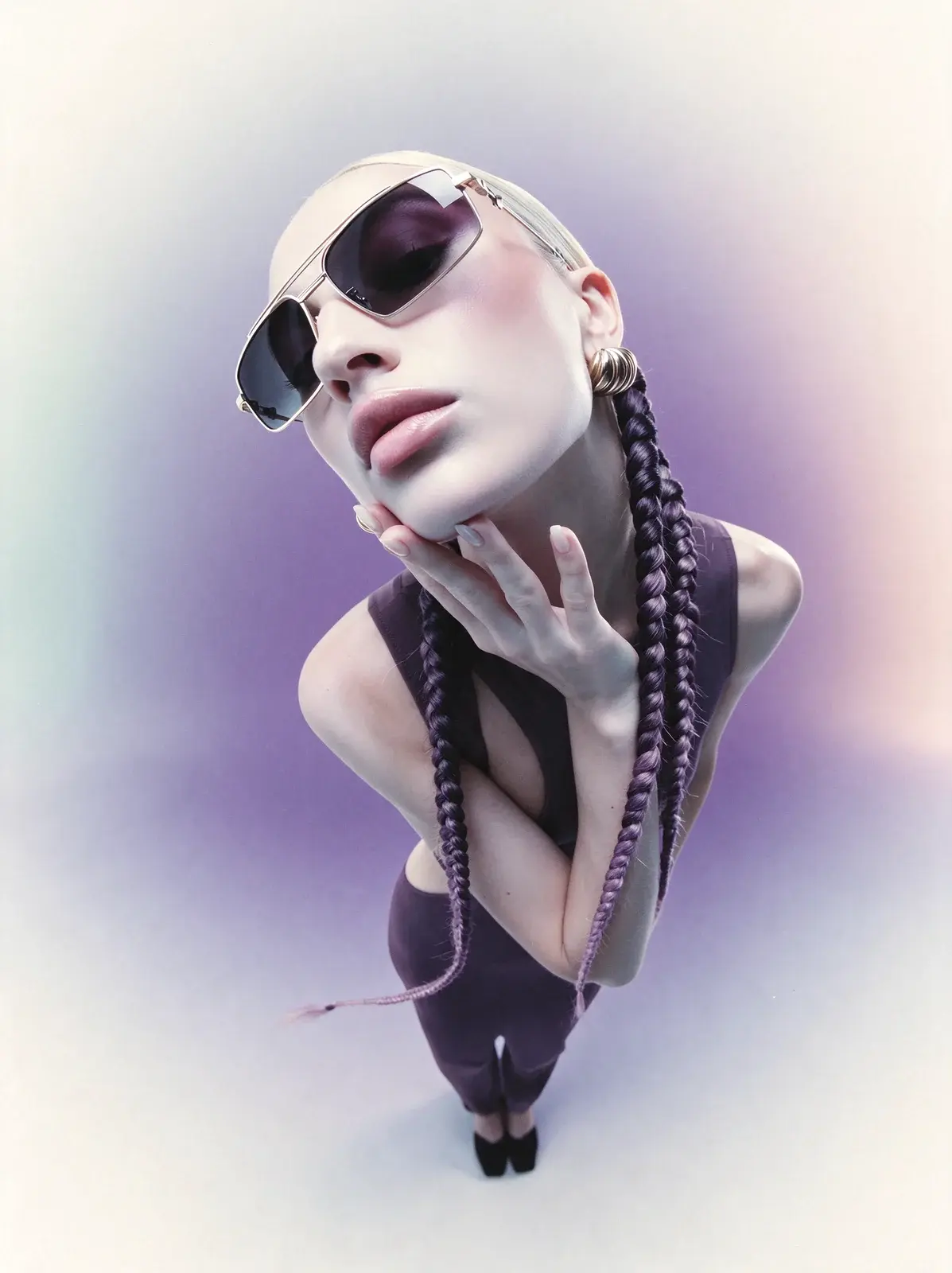
Seedream 5.5
Copy
Apply one single unified bright, airy, dreamy analog film process to the ENTIRE image, subject and background together, so that it looks like one photograph shot on medium-format film with one soft frontal light, never like a cutout placed over a new background; the same treatment applies whether the subject is a person or an object. Film grain is a defining part of this look and must be obvious: coarse-to-medium film grain with particles about 3-4 pixels wide at 1760 pixels of image width, so that it stays clearly visible even when the picture is shown small on a phone screen, about 10% strength on the subject (skin, hair, fabric, props, midtones) and about 4% on the smooth backdrop, made of fine irregular clumps of slightly lighter and darker tone with a faint variation in color, like a scan of a 35mm Kodak Portra 400 negative; the subject and the backdrop share exactly the same grain texture; no digital smoothness, no noise reduction, no plastic retouching, no clean synthetic surfaces anywhere. Color grade and light: soft, bright, even, wrapping frontal light; a delicate glow on skin and fabric, with the backdrop color bleeding onto the subject as a cool lilac tint in the edges and shadows; skin, if present, is pale, cool and porcelain with a lilac-pink undertone, whites clean and luminous with cool blue-gray shadows (about #A1A6B4), hair deep black-violet with a lavender sheen at the tips; very high key, median brightness about 85%, whites up to pure white, darks only in genuinely dark objects (about #1B1A21), overall saturation about 14% except the lavender around the subject; every other color of the subject keeps its own hue. Depth: the backdrop is clearly deeper and richer in color around the subject than toward the outer edges of the frame, so that the subject sits inside a soft glowing atmosphere of color; add a soft contact shadow in the backdrop's own hue, a faint rim of the backdrop color on the subject's edges, a gentle halation bloom around the brightest highlights and slightly lower contrast far from the subject. Keep the subject, pose, shape, details, props, their colors, camera angle and framing exactly, adding or removing nothing; no text, no logos, no watermarks, and remove any app badge, sticker or caption from the corners of the source. Everything in the frame that is not the subject, wherever it is, and everything behind and under the subject, whether it was a wall, a floor, sky, field, room or landscape, is completely replaced by one smooth, seamless, perfectly clean airbrushed color field that depends only on position, with no texture of the original surroundings, no horizon, crease, corner, edge, line, rectangle, light pool, beam, cone, oval, ring, steps or bands anywhere, and no hard edge between any two colors: every color
change takes place gradually over at least 40% of the frame, and saturation or brightness never changes by more than about 3 points over any 5% of the frame width or height. The field depends on the distance from the subject and on height. Right around the subject at about 30-70% of the frame height it is a clearly visible, rich violet-lavender (about #8A6FB3, hue about 265 degrees, saturation about 38%, brightness about 70%, with the deepest patches near #7B62A6), becoming #A99BCB at mid-distance and then pale lilac (#C7BFE0) and pale periwinkle gray-blue (#D4D6E8) toward the outer edges, with a faint mint cast on the left (#DDE6E6) and a faint warm pink-cream on the right (#EFE9EA); the top corners are almost white warm cream (#FFFAF4), and the lowest fifth of the frame fades gradually to cream (#F8F7F2); the lavender must stay clearly saturated beside the subject, never washed out; the hue shifts smoothly from violet to periwinkle to gray-blue to cream. Finally, strong visible film grain lies evenly over everything including the subject, and the backdrop glows softly and smoothly around the subject.

Seedream 5.5
Copy
Restyle the uploaded photograph while preserving the subject’s identity, expression, pose, styling, props, framing, and camera angle. Start the backdrop with a cool silver-gray wash along the upper edge, let it fall into muted slate blue across the upper third, and deepen it into blue graphite across the lower half. Use a broad diffused key from above and slightly in front, with soft highlights around the eyes and cheekbones and gently sculpted shadows. Give the backdrop dense, very fine irregular grain that stays visible in the graphite tones. Keep skin neutral and allow small reflective details to catch clean silvery glints against the darker matte surfaces.

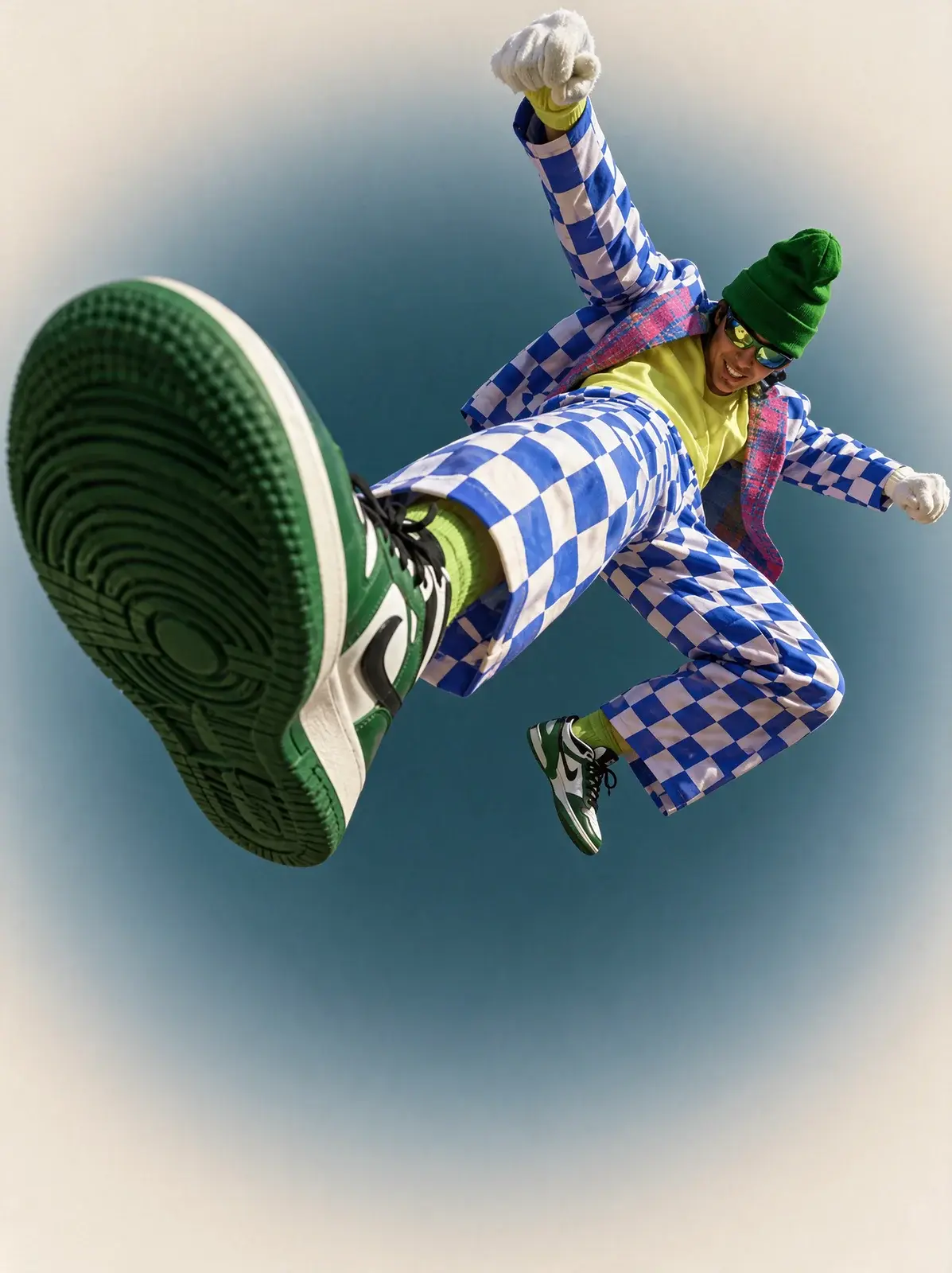
Seedream 5.5
Copy
{
"task": "edit this photograph",
"keep_unchanged": "the subject and everything it holds or wears, pose, expression, camera angle and framing exactly as in the original; no objects added or removed",
"change_only": ["background color", "lighting", "color grade"],
"background": {
"form": "the original background is replaced by a single very wide radial gradient filling the entire frame, like a Photoshop radial gradient: an ellipse taller than it is wide, centered directly behind the subject and reaching to the left and right edges of the frame",
"colors": [
{"position": "center, behind the subject", "color": "deep petrol teal #2F5F6B"},
{"position": "about 55% of the way to the corners", "color": "muted steel blue #7FA3B0"},
{"position": "only the last 15%, at the outer edges and the corners", "color": "warm cream
#EFE6D6"}
],
"transition": "one long continuous smooth gradient across the whole frame; every color melts into the next over a very wide distance, with no ring, shape or edge anywhere",
"surface": "plain, clean color; no scenery, pattern or texture",
"subject_edges": "the subject keeps its own clean natural edges; no glow, halo or outline around the subject",
"shadows": "a soft short shadow only where the subject touches or is close to a surface"
},
"lighting": "soft diffused light from the front, natural skin tones, subject details crisp, subject colors unchanged",
"light_and_color_interaction": "the backdrop bounces softly onto the subject: shaded sides pick up a faint teal tint, highlights stay neutral",
"rendering": "gentle highlight roll-off, slightly lifted blacks, smooth clean image",
"grain": "very subtle and uniform, barely visible"
}

Seedream 5.5
Copy
Retouch the uploaded image as an editorial studio photograph with a dusty rose, smoky lilac and wine gradient, soft directional light and visible fine film grain. Preserve the exact foreground composition, subject count, identity, natural complexion depth, expression, pose, hairstyle, makeup, silhouette, garments, footwear, accessories, props, existing supports, logos, lettering, placement, perspective and crop. Preserve the original cut, construction, base colors, texture and finish of each item. Build a full-bleed matte background as one continuous two-dimensional gradient fixed to the frame. Begin with warm powder rose #D0A6A4 at the top and a broad, gently feathered lift toward pale blush #E0BDB6 near the upper left. Let the rose pass through muted pink-mauve #B496A0 into a wide field of smoky lilac, with duskier violet #73637F on the left and lighter gray-lilac #9185A0 on the right. Let this lilac occupy most of the middle and lower-middle background. Ease it into wine near the lower fifth, entering the transition slightly earlier on the left and reaching black cherry #2C0F16 at the lower left and muted berry wine #572530 at the lower right. Blend the hues along broad, gently curved transitions. Carry the same field through every gap and around the existing supports. Rebalance light locally on the original foreground with a broad diffused neutral key from high front left and soft near-axis fill. Give light-facing planes soft ivory highlights with a gentle rolloff. Keep open shaded planes readable and concentrate the darkest shadows inside existing folds, recesses and overlaps. On visible skin, keep highlights softly peach-beige, natural rosy areas distinct and shadows in subdued rose-taupe. Reduce copper-orange saturation selectively while preserving each person's complexion depth and undertone. Keep white and ivory materials distinct. Preserve the depth of existing red and burgundy accents and the original sheen of reflective details. At visible points of support, place a narrow soft contact shadow in a slightly darker version of the local tone. For suspended subjects, preserve the original height, tilt and open gap, with the gradient continuing beneath them. Finish with fine photographic luminance grain across the whole image. Use densely spaced irregular light and dark grains about 1–2 pixels across at 1440 pixels wide, clearly visible in powder rose, smoky lilac, ivory and the wine midtones. Keep grain strength consistent in areas of comparable brightness and keep the broad gradient smooth beneath the texture.
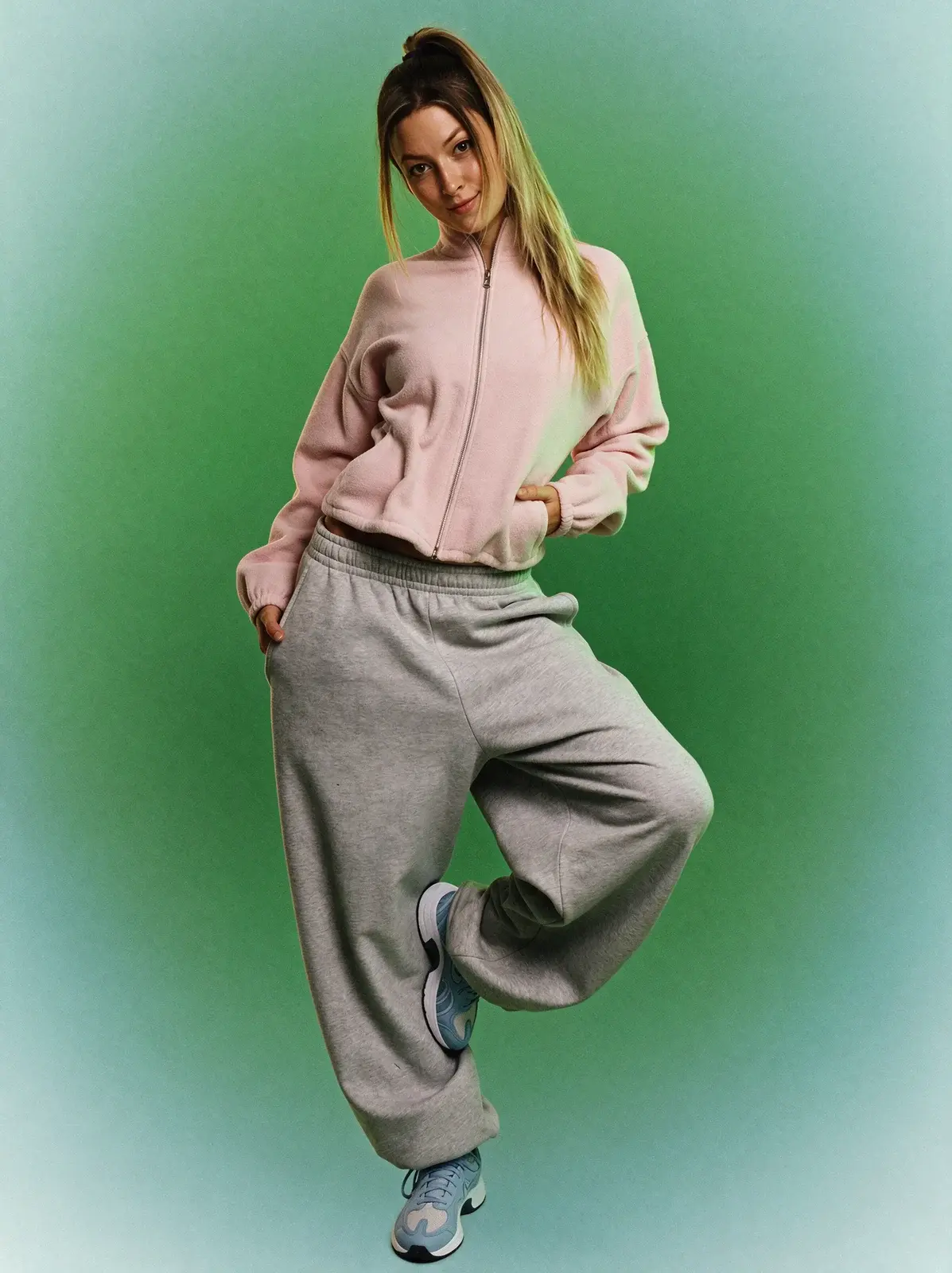
Seedream 5.5
Copy
Apply one single unified dramatic color-gel editorial analog film process to the ENTIRE image, subject and background together, so that it looks like one photograph shot on color film in a photo studio with one strong directional key light and one colored gel light, never like a cutout placed over a new background; the same treatment applies whether the subject is a person or an object. Film grain is a defining part of this look and must be obvious: coarse-to-medium film grain with particles about 4-5 pixels wide at 1760 pixels of image width, so that it stays clearly visible even when the picture is shown small on a phone screen, about 13% strength on the subject (skin, hair, fabric, props, midtones) and about 5% on the smooth backdrop, made of fine irregular clumps of slightly lighter and darker tone with a faint variation in color, like a scan of a 35mm Kodak Portra 400 negative; the subject and the backdrop share exactly the same grain texture; no digital smoothness, no noise reduction, no plastic retouching, no clean synthetic surfaces anywhere. Color grade and light: one strong directional key light from the upper left with a clearly visible direction, sculpting every form with defined shadows on the right side and bright specular highlights, plus a second colored gel light in the backdrop color (green) from the right that wraps every edge as a glowing rim light and colors the shadows; the shadows are deep and saturated green (about #153817, midtone shadows about #3B663D) instead of gray, the darkest areas are true near-black (about #0B090C, never lifted, never milky or faded), lit surfaces are warm and clean, highlights bright but never clipped (peak about 96%), a wide tonal range with medium-high contrast (median brightness about 56%), rich saturated colors (overall saturation about 40%) and a soft halation glow around the brightest highlights; the backdrop itself stays a smooth, luminous, airbrushed color field and only the subject receives the directional shadows; skin and light materials show both lights: warm highlights from the key and green-tinted shadows from the gel; every other color keeps its own hue. Depth: the backdrop is clearly deeper and richer in color around the subject than toward the outer edges of the frame, so that the subject sits inside a soft glowing atmosphere of color; a faint rim of the backdrop color on the subject's edges, a gentle halation bloom around the brightest highlights and slightly lower contrast far from the subject. Keep the subject, pose, shape, details, props, their colors, camera angle and framing exactly, adding or removing nothing; skin and hair take the grade exactly as they do in a real film photograph shot in this light, clearly tinted by the dominant light and by the backdrop color (hue and
saturation shift noticeably toward the tints described in the grade), while the person stays recognizable: the complexion depth (lightness) of the skin stays within about 10% of the original and is never whitened or darkened, hair keeps its base color family (blonde stays blonde, dark stays dark) with the tint on top of it, and eye color is unchanged; no text, no logos, no watermarks, and remove any app badge, sticker or caption from the corners of the source. Everything in the frame that is not the subject, wherever it is, and everything behind and under the subject, whether it was a wall, a floor, sky, field, room or landscape, is completely replaced by one smooth, seamless, perfectly clean airbrushed color field that depends only on position, with no texture of the original surroundings, no horizon, crease, corner, edge, line, rectangle, light pool, beam, cone, oval, ring, steps or bands anywhere, and no hard edge between any two colors: every color change takes place gradually over at least 40% of the frame, and saturation or brightness never changes by more than about 3 points over any 5% of the frame width or height. The field is one soft airbrushed color field whose hue changes continuously across the frame, and the color reaches every edge and every corner: it never fades to white or cream. Right behind the subject it is a rich, clear color (#529955, hue about 123 degrees, saturation about 46%); about a quarter of the way to the frame edge it is #60A36C; halfway to the edge #72AD87 with the hue turning toward 176 degrees; three quarters of the way #81B8A0; at the middle of every frame edge a clear soft color (#90C2B8); and in the four corners a gently lighter version of the far hue (#9ECCC9), still clearly colored with about 22% saturation. The hue drifts by about 53 degrees from the subject to the edges so that the field reads as two or three blended colors, brightness stays between about 60% and 82% everywhere, with no more than about 4 points of change over any 5% of the frame width, one very long, wide, soft airbrushed gradient with no visible outline, ring or rim anywhere. There is no floor, table, ground or horizon anywhere and no long cast shadow on the backdrop: the subject floats in the color field like in an airbrushed studio portrait, with only a faint soft shadow right at its own edges. Preserve exactly as in the source: the face, expression, hairstyle and hair color, body, skin tone, every piece of clothing with its cut, fabric, pattern and color, jewelry and every accessory and prop; only the light, the grade and the backdrop reaction change, nothing is added, removed, restyled or recolored. The pale pink fleece zip jacket, the heather grey sweatpants, the light blue sneakers with white soles and her long blonde ponytail
keep their exact shapes and colors, and her pose standing on one leg with one hand in the pocket and the tilted head stays exactly the same; the purple-grey studio gradient is completely replaced by the color field. Finally, strong visible film grain lies evenly over everything including the subject, and the backdrop glows softly and smoothly around the subject.
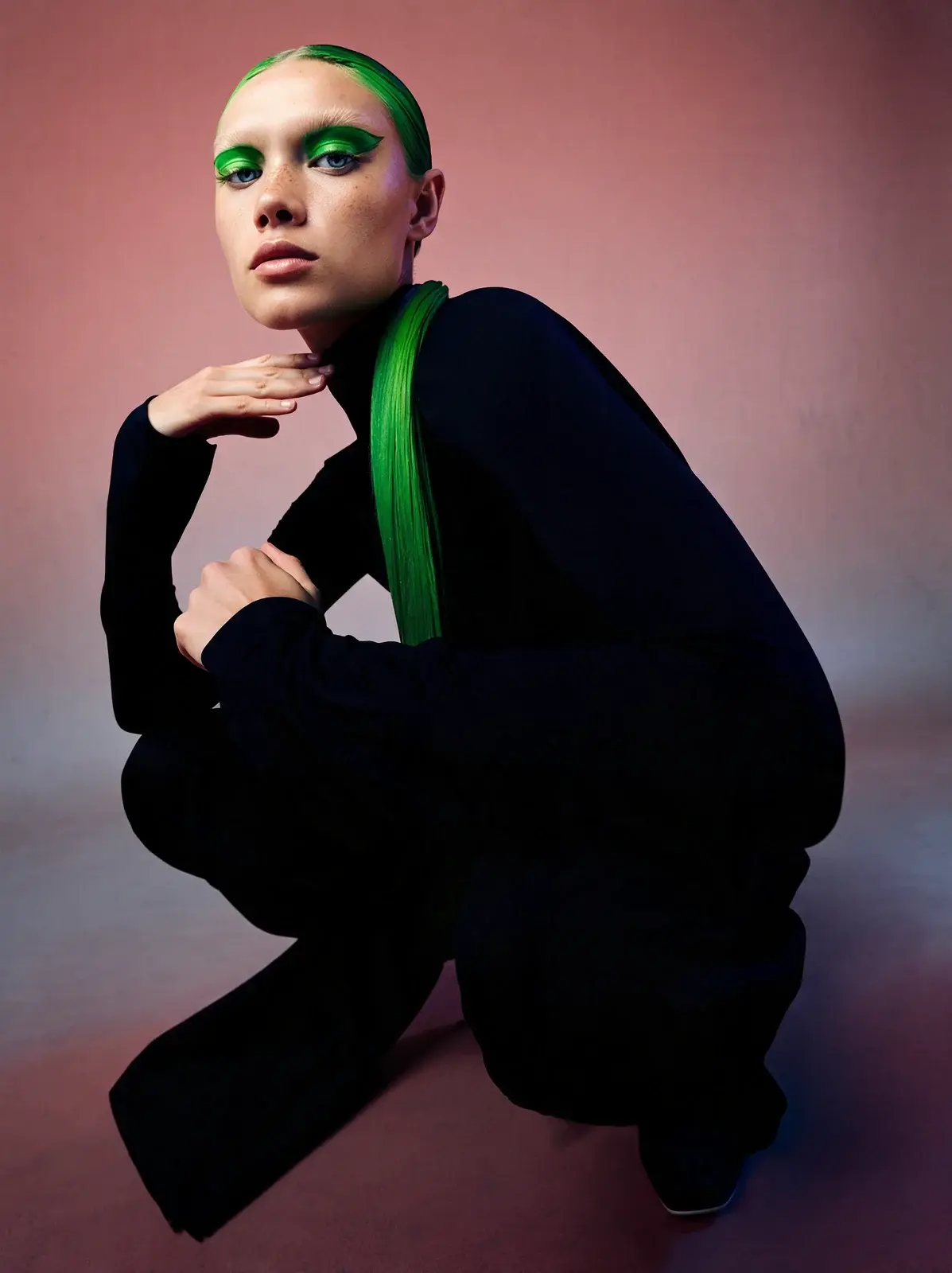
Seedream 5.5
Copy
Edit the uploaded image while preserving the exact subject, identity, pose, styling, object geometry, lettering, camera angle, and crop. Give the scene a matte studio backdrop with a broad, softly lit dusty-rose upper area that cools continuously into smoky gray-lavender and develops a dark wine tint near the lower edge. Keep the middle transition wide and give the left and right sides a small natural difference in brightness. Light the subject with broad soft frontal light from slightly above, creamy highlights, and a gentle mauve bias in shaded neutrals. Preserve natural skin tones and distinct accent colors. Apply fine, close-set grain that is clearly visible within the backdrop's half-tones and subtle across the subject's native textures.
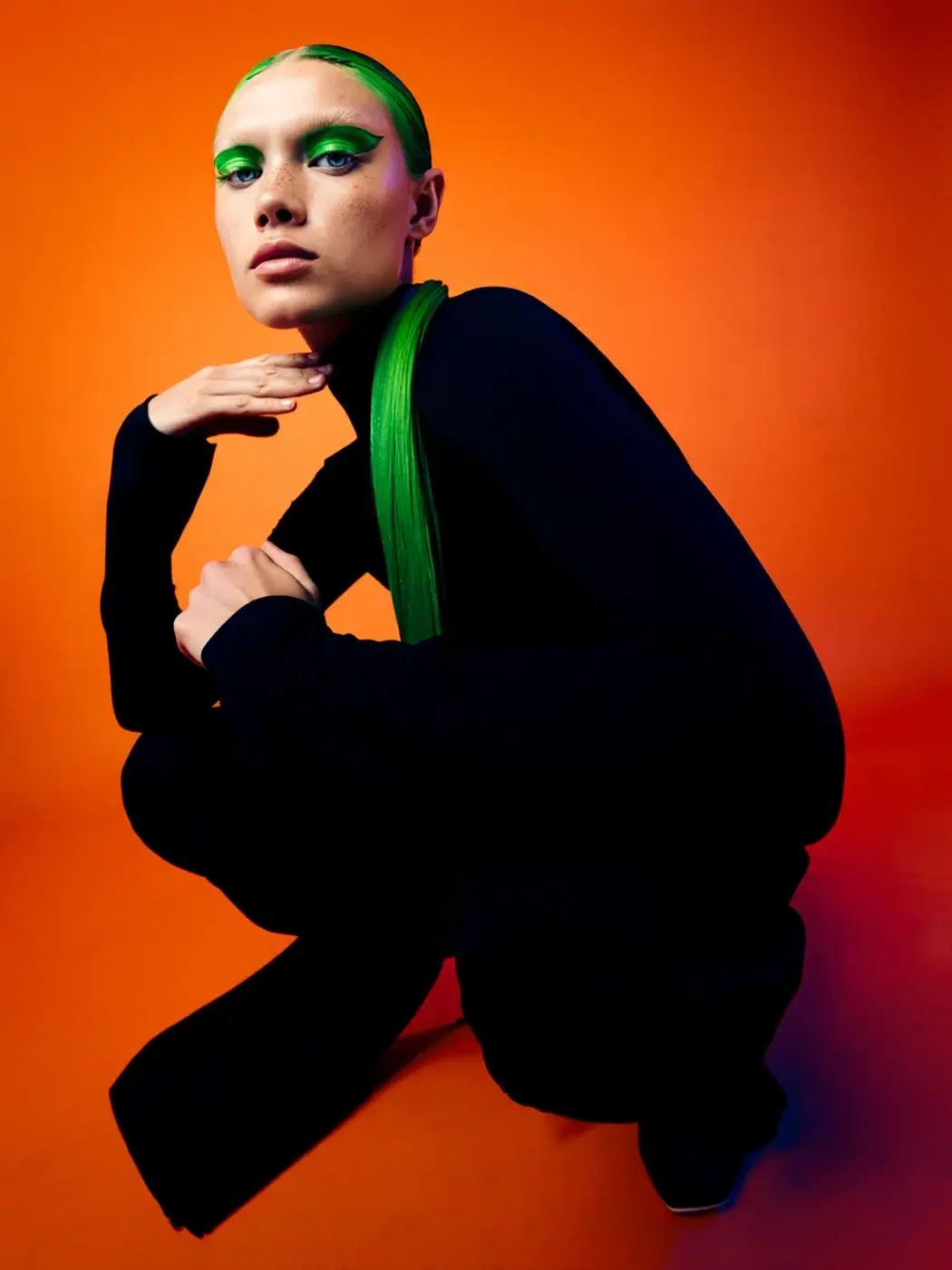
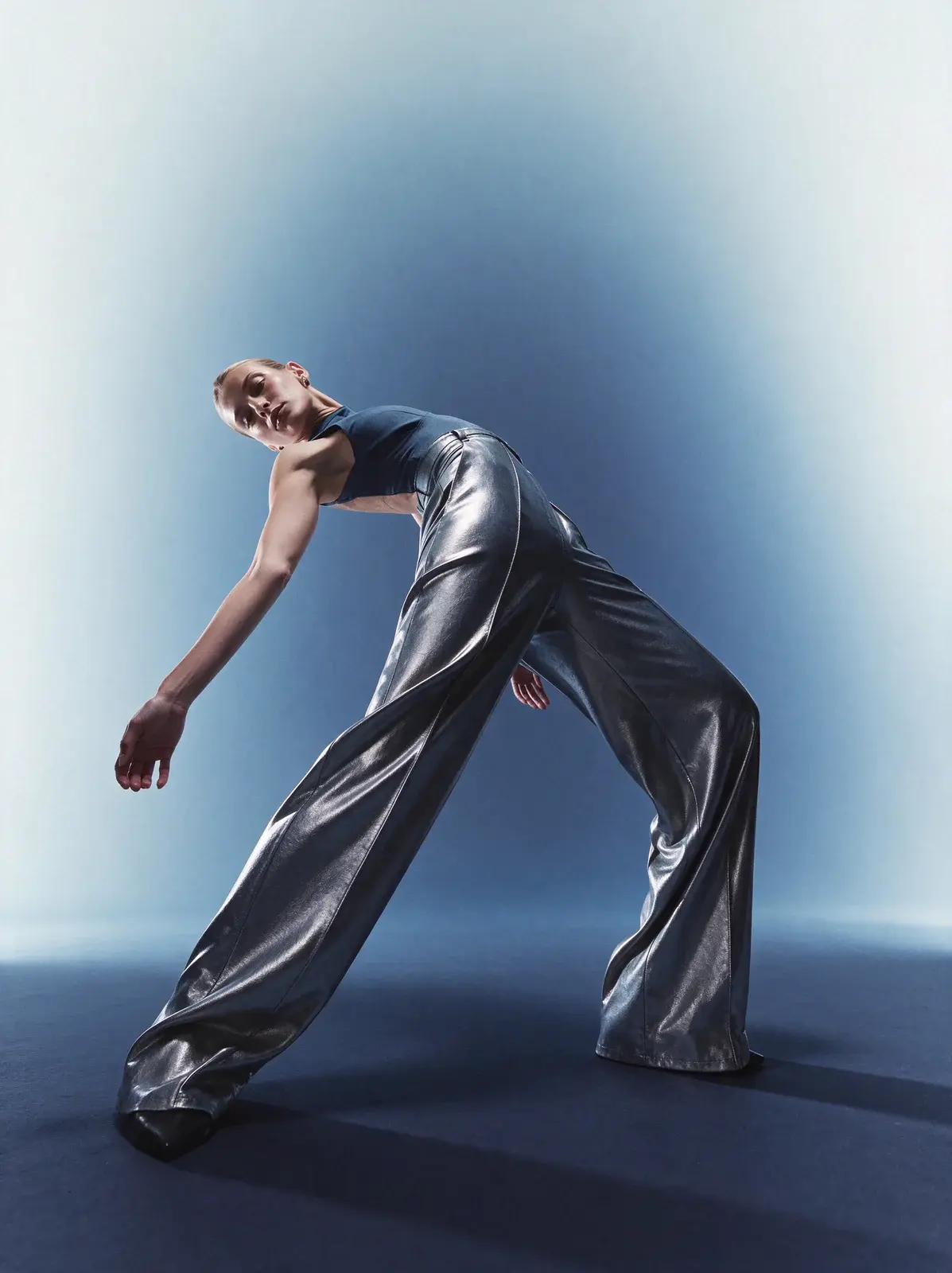
Seedream 5.5
Copy
{
"task": "Edit the uploaded image in place as a cool, muted editorial photograph.",
"preserve": "Keep the exact foreground composition, including subject count, identity, natural complexion depth, facial features, expression, pose, silhouette, styling, existing props, materials, logos, lettering, scale, placement, viewpoint, perspective and crop.",
"background": {
"type": "One continuous full-frame matte blue gradient anchored to the frame.",
"x_percent_from_left": [5, 50, 95],
"anchors": [
{"y_percent_from_top": 0, "colors_left_to_right": ["#E2EEEF", "#C7DDE2", "#E3EEF0"]},
{"y_percent_from_top": 22, "colors_left_to_right": ["#BBD9E3", "#8EBACB", "#BBD9E2"]},
{"y_percent_from_top": 48, "colors_left_to_right": ["#5285AF", "#3C6791", "#5992BE"]},
{"y_percent_from_top": 75, "colors_left_to_right": ["#233455", "#19233C", "#293F68"]},
{"y_percent_from_top": 95, "colors_left_to_right": ["#232A3D", "#171924", "#272F47"]}
],
"shape": "Blend all anchors smoothly in two dimensions and extend the outer colors gently to the frame edges. Let pale cyan descend in broad curves along both sides while denser smoky blue rises through the middle. Keep the upper corners closely balanced, with a modest blue lift on the right from mid-height down.",
"continuity": "Carry the same field through fine gaps and beneath the subject, with an uninterrupted transition through the support area into charcoal navy at the bottom."
},
"lighting": {
"key": "Use a broad diffused cool-white key high and slightly left of the camera. Keep the main subject
readable at its original position. Give exposed planes pearly highlights with the cool-neutral character of #E6E3E3 and a gentle falloff into muted midtones.",
"fill_and_shadows": "Keep frontal fill subdued. Maintain clearly shaped cool shadows with density and fine detail in folds, recesses and overlaps.",
"reflections": "On polished surfaces, use broad silver-gray reflections, selective pearl-white glints and defined dark reflected shapes."
},
"color_grade": {
"skin_hue_cues": {
"highlights": "#D1B9BA",
"midtones": "#B4938F",
"shadows": "#5F4B4D"
},
"application": "Adapt these cool muted hue relationships to the original complexion and exposure. Reduce orange and yellow saturation across all visible skin while preserving natural tonal variation. Keep existing accent hues recognizable and subdued."
},
"spatial_relationships": {
"supported": "At existing points of support, use a compact cool shadow, darkest at contact and feathered into the local blue.",
"suspended": "Preserve the exact position, tilt and visible air gap, carrying the gradient beneath the subject."
},
"grain": {
"application": "Finish with fine, closely spaced photographic luminance grain across the complete image.",
"apparent_scale": "About 1–2 pixels at 1440 pixels wide.",
"distribution": "Use visible light and dark fluctuations in denim-blue midtones and navy shadows, quieter grain in icy highlights, and comparable visibility at the edges and center at the same local brightness.",
"detail": "Keep fine edges, surface texture and lettering resolved."
}
}
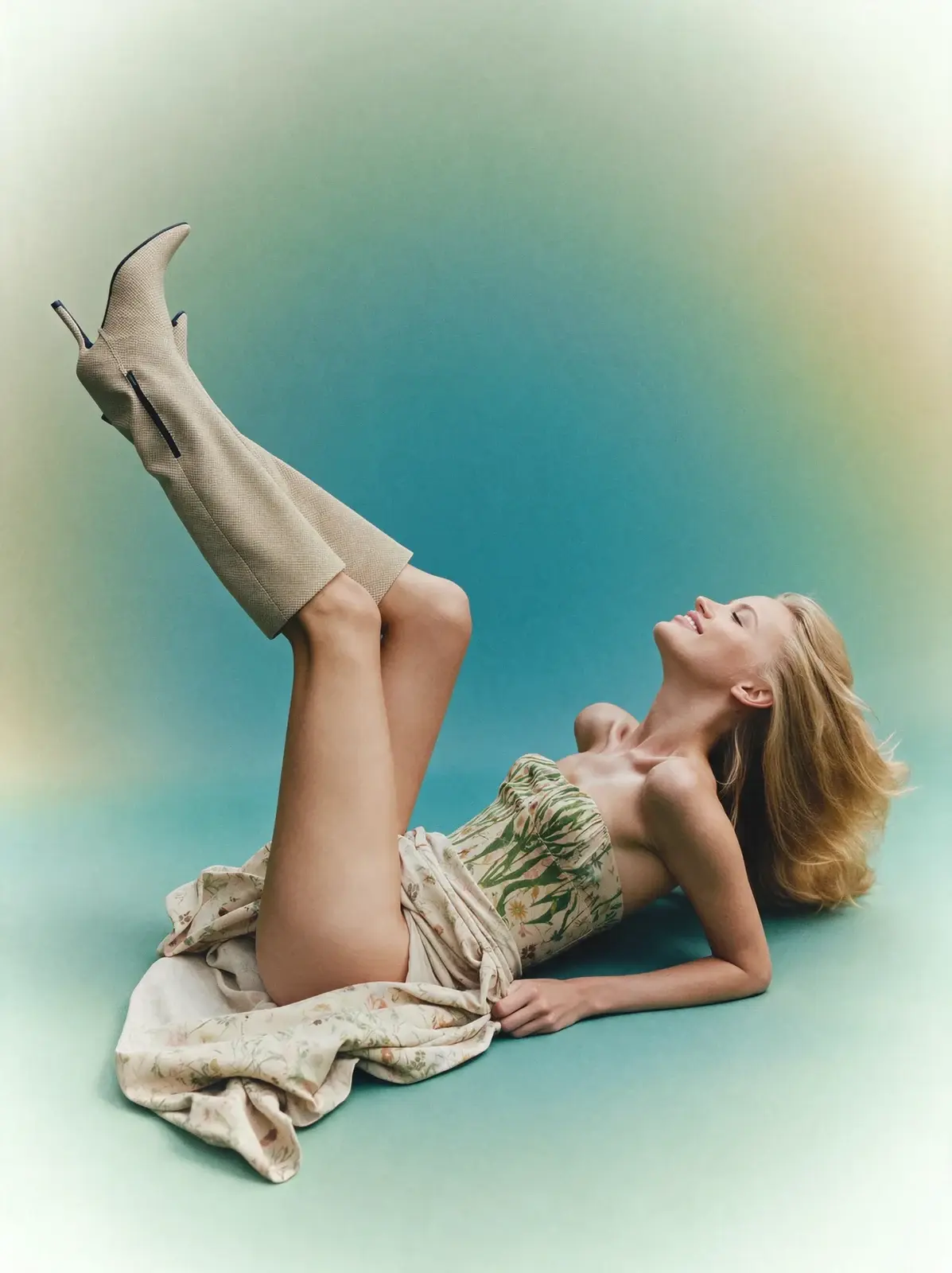
Seedream 5.5
Copy
Apply one single unified moody-soft editorial analog film process to the ENTIRE image, subject and background together, so that it looks like one photograph shot on color film with one soft diffused light, never like a cutout placed over a new background; the same treatment applies whether the subject is a person or an object. Film grain is a defining part of this look and must be obvious: coarse-to-medium film grain with particles about 4-5 pixels wide at 1760 pixels of image width, so that it stays clearly visible even when the picture is shown small on a phone screen, about 13% strength on the subject (skin, hair, fabric, props, midtones) and about 5% on the smooth backdrop, made of fine irregular clumps of slightly lighter and darker tone with a faint variation in color, like a scan of a 35mm Kodak Portra 400 negative; the subject and the backdrop share exactly the same grain texture; no digital smoothness, no noise reduction, no plastic retouching, no clean synthetic surfaces anywhere. Color grade and light: soft, diffused, wrapping frontal light, medium-high contrast, matte-satin finish with no hard specular shine; skin, if present, is pale low-saturation beige (lit areas #C6B9A7, slightly warmer areas #A98579 to #AE9B8D, in shade a soft olive-green tone about #50523F picked up from the backdrop); the deepest blacks are crushed to a neutral near-black (#0A0A0A), glossy black materials show a cool deep-blue sheen (#131E28), midtone shadows are a soft teal-gray (#324448), highlights a pale mint-cream (#E1F1D7); every other color of the subject keeps its own hue and is only deepened or cooled slightly; median brightness about 58%, overall saturation about 26%. Depth: the backdrop is clearly deeper and richer in color around the subject than toward the outer edges of the frame, so that the subject sits inside a soft glowing atmosphere of color; add a soft contact shadow in the backdrop's own hue, a faint rim of the backdrop color on the subject's edges, a gentle halation bloom around the brightest highlights and slightly lower contrast far from the subject. Keep the subject, pose, shape, details, props, their colors, camera angle and framing exactly, adding or removing nothing; never change anyone's skin tone, hair color or eye color and never whiten, darken or recolor skin or hair: the skin and hair colors named in the grade only describe the tint the grade adds to a fair complexion, and must be applied proportionally to each person's own complexion and hair; no text, no logos, no watermarks, and remove any app badge, sticker or caption from the corners of the source. Everything in the frame that is not the subject, wherever it is, and everything behind and under the subject, whether it was a wall, a floor, sky, field, room or landscape, is
completely replaced by one smooth, seamless, perfectly clean airbrushed color field that depends only on position, with no texture of the original surroundings, no horizon, crease, corner, edge, line, rectangle, light pool, beam, cone, oval, ring, steps or bands anywhere, and no hard edge between any two colors: every color change takes place gradually over at least 40% of the frame, and saturation or brightness never changes by more than about 3 points over any 5% of the frame width or height. The field is a very wide soft glow that is richest around the subject at about mid-height of the frame: a deep clear teal (about #3E9C96, hue about 176 degrees, saturation about 60%, brightness about 61%), strongest just beside the head level, and on the other side of the subject a sea-green (#6FAF8D, hue about 148 degrees). As it moves outward it shifts smoothly in hue from teal through sea-green (#8CB998) to a soft yellow-green (#A9C7A6 at the left edge, #9EC5A6 at the right edge, saturation about 20%) while brightening; toward the top and bottom of the frame it also brightens, fading over about 45% of the frame height each way into a pale cream-mint (#A9CAA9 at the top center, #EBF8E4 and #EFFBEC in the top corners, #F6FFF5 and #F0FCE9 in the bottom corners, saturation 4-8%). The teal beside the subject must be clearly visible and saturated, never washed out or pastel. Finally, strong visible film grain lies evenly over everything including the subject, and the backdrop glows softly and smoothly around the subject.
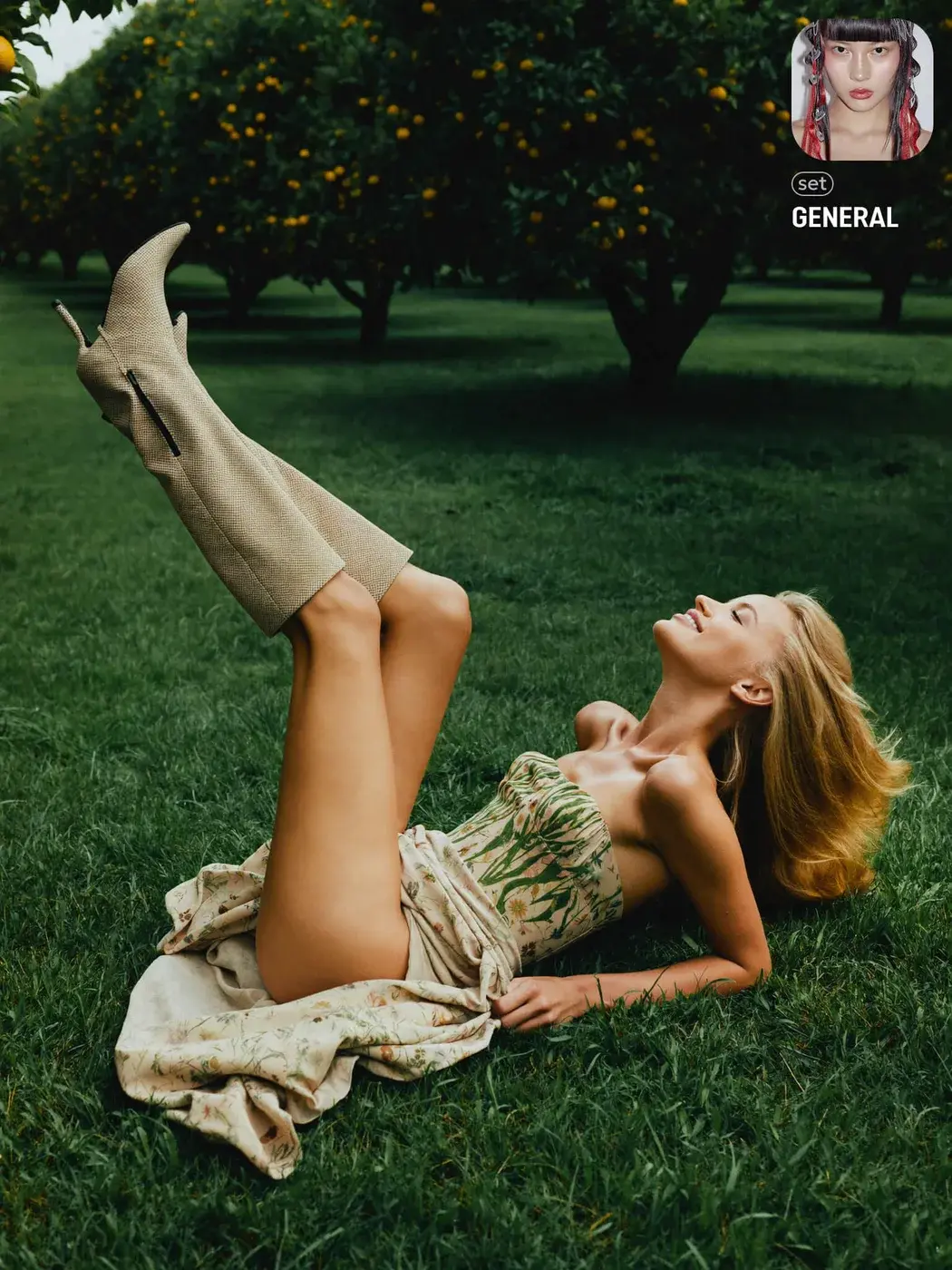
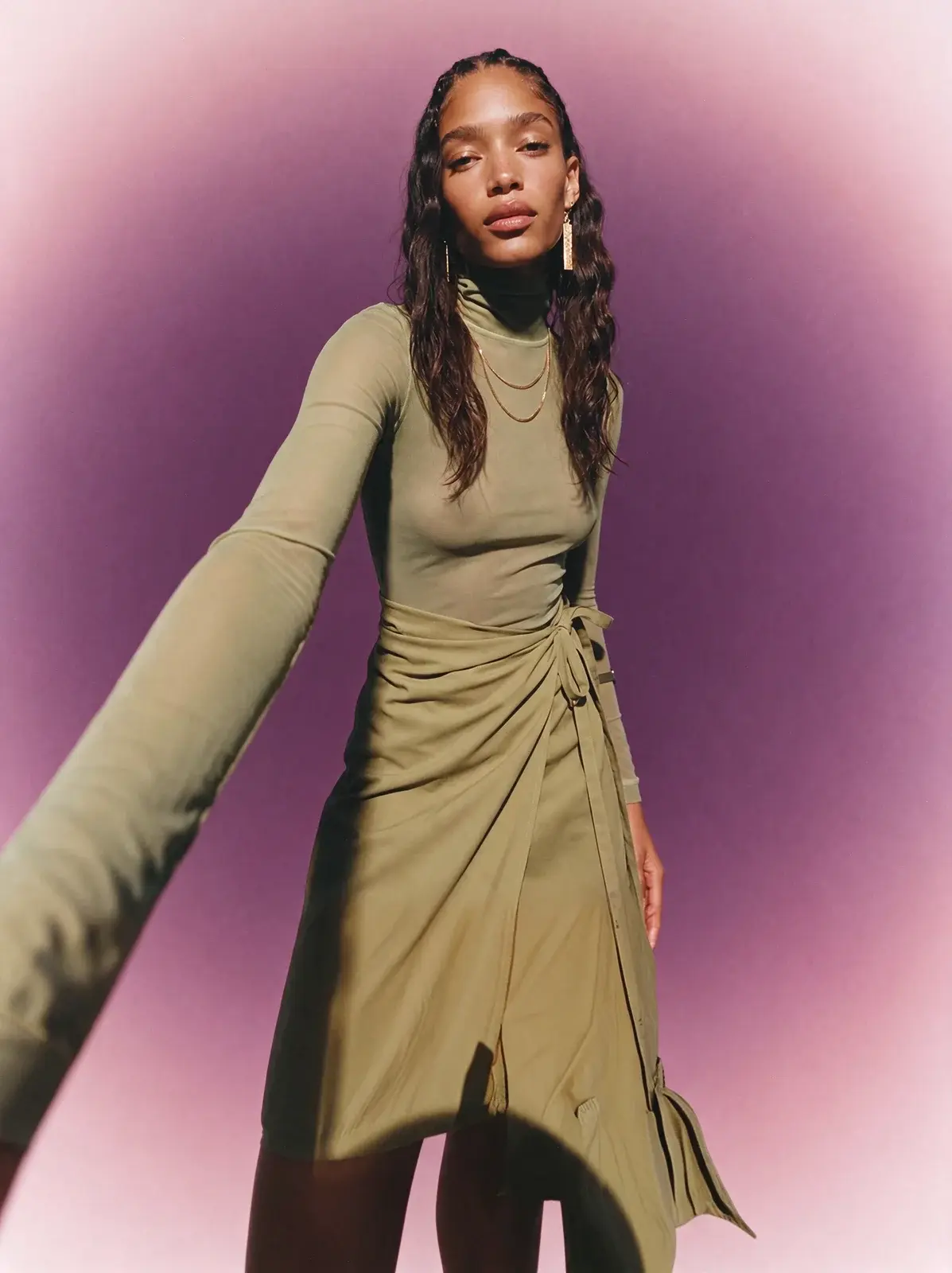
Seedream 5.5
Copy
Apply one single unified soft analog film process to the ENTIRE image, subject and background together, so that it looks like one photograph shot on medium-format film with one soft frontal light, never like a cutout placed over a new background. Film grain is a defining part of this look and must be obvious: coarse-to-medium film grain with particles about 4-5 pixels wide at 1760 pixels of image width, about 13% strength on the subject and about 5% on the smooth backdrop, made of fine irregular clumps of slightly lighter and darker tone, like a scan of a 35mm Kodak Portra 400 negative; the subject and the backdrop share exactly the same grain texture; no digital smoothness, no plastic retouching. Color grade and light: soft, diffused frontal key light with gentle shadows, slightly hazy with a mild glow, no hard specular shine; medium-high contrast, median brightness about 59%, rich overall saturation about 40%; skin and light materials take a subtle magenta-rose tint in the highlights and a warm complementary tint in the shadows, the complexion depth stays within 10% of the original. Everything that is not the subject, including the beach, the sea, the sky and the horizon, is completely replaced by one smooth, seamless, airbrushed color field that depends only on the distance from the middle of the subject and changes continuously over the whole frame, never as a plateau followed by a quick fall-off. Right at the subject it is a rich, clear color (#703A6B, hue about 306 degrees, saturation about 48%, never muddy or gray); a quarter of the way to the frame edge it is #8C5082; halfway to the edge #A86A97 with the hue turning gradually toward 341 degrees; three quarters of the way #D997BD; at the middle of every frame edge a clearly tinted light color (#EDB2CD); and in the four corners a very light, softly tinted version of the neighbouring hue (#F5CEDA at the top, #F0C6D3 at the bottom), about 16% saturation, never pure white. The color keeps visible tint all the way to the frame edges and fades with one steady, continuous slope from the subject to the corners, with no flat zone and no sudden drop. One very long, wide, soft airbrushed gradient, no outline, no horizon, no floor, no cast shadow on the backdrop: the subject floats in the color field like in an airbrushed studio portrait. Preserve exactly: the face, expression, braided hair, body, skin tone, the olive-green long-sleeve wrap dress with its tie waist; only the light, the grade and the backdrop change. No text, no logos, no watermarks.
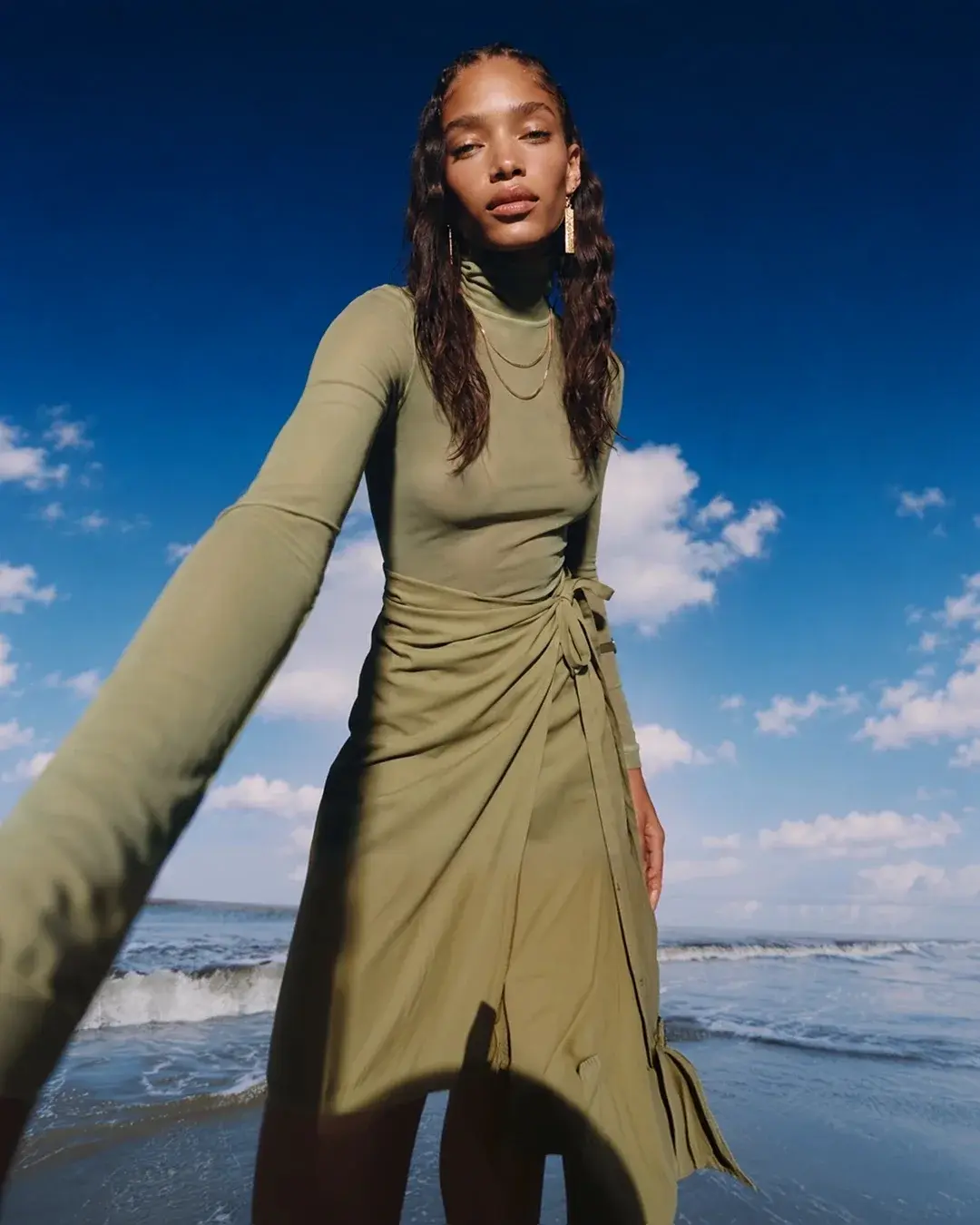
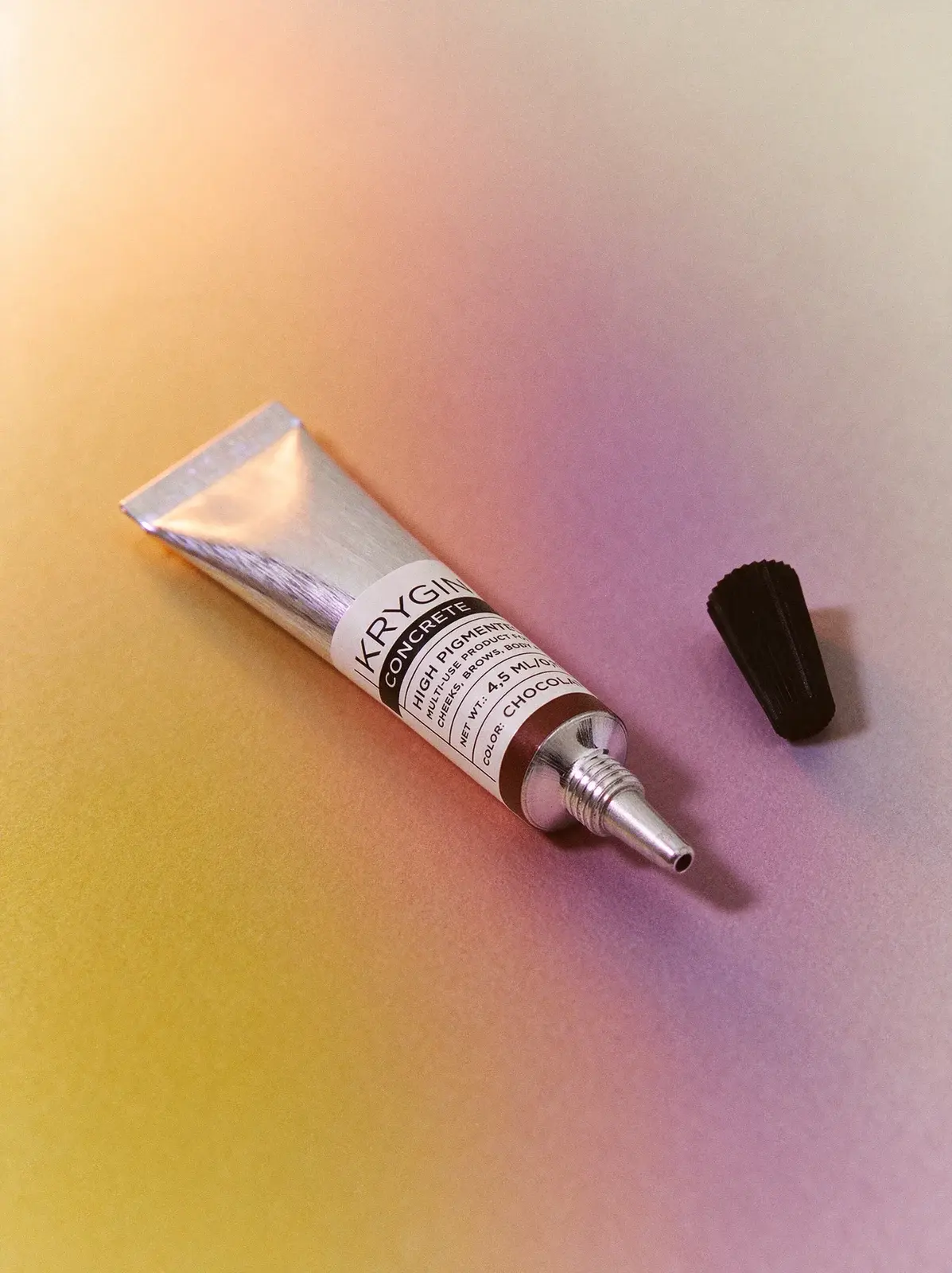
Seedream 5.5
Copy
Apply one single unified warm cross-processed vintage analog film process to the ENTIRE image, subject and background together, so that it looks like one photograph shot on expired color-reversal film, never like a cutout placed over a new background; the same treatment applies whether the subject is a person or an object. Heavy, obvious film grain is the defining part of this look: coarse film grain particles (like pushed ISO 1600-3200 color film), laid over everything at about 24% intensity, clearly visible without zooming in, even when the picture is viewed small on a phone screen, equally strong on all surfaces, props and on the backdrop, so that the smooth backdrop itself looks sandy and grainy and never smooth; no digital smoothness, no noise reduction, no retouching, no clean or plastic surfaces anywhere. Color grade and light: a split-toned warm cross-process look: highlights warm cream-yellow, midtones a soft pinkish tone (about #D2A8A4), shadows a brick-coral red (about #A8554D) and the darkest areas a deep warm orange-brown (about #311604), never neutral black or gray, with lifted blacks; every other color of the subject keeps its own hue and is only shifted by this grade, never recolored, repainted or replaced; overall saturation high (about 44%), median brightness about 66%; soft, glowing, dreamy diffused light with a gentle halation glow around the highlights and a luminous dewy, sparkling sheen on smooth surfaces; light surfaces and metal take a subtle lilac-magenta tint in the highlights and a warm complementary tint in the shadows. Depth: the backdrop is clearly deeper and richer in color around the subject than toward the outer edges of the frame, so that the subject sits inside a soft glowing atmosphere of color; add a soft contact shadow in the backdrop's own hue, a faint rim of the backdrop color on the subject's edges, a gentle halation bloom around the brightest highlights and slightly lower contrast far from the subject. Keep the subject, pose, shape, details, props, their colors, camera angle and framing exactly, adding or removing nothing; the object's materials take the grade exactly as they do in a real film photograph shot in this light, clearly tinted by the dominant light and by the backdrop color while their own base colors stay recognizable; keep all printed text, lettering and logos on the product exactly as they are, sharp, legible and unchanged, add no other text, logos or watermarks, and remove any app badge, sticker or caption from the corners of the source. Everything in the frame that is not the subject, wherever it is, and everything behind and under the subject, whether it was a wall, a floor, sky, field, room or landscape, is completely replaced by one smooth, seamless, perfectly clean airbrushed color field
that depends only on position, with no texture of the original surroundings, no horizon, crease, corner, edge, line, rectangle, light pool, beam, cone, oval, ring, steps or bands anywhere, and no hard edge between any two colors: every color change takes place gradually over at least 40% of the frame, and saturation or brightness never changes by more than about 3 points over any 5% of the frame width or height. The field shifts smoothly and strongly from one hue on the left to another on the right. The top-left corner is a glowing light leak (#FCD5B1); from there the left side flows gradually through #FAD6A5 and about #E6C173 toward a deep, vivid #CCB049 in the lower left; the right side is a muted #B086B0 (hue about 300 degrees, saturation about 24%) around the middle of the frame, becoming a dusty gray-tint toward the right edge (#BAA6B3) and a pale warm cream-gray in the top-right corner (#D6D3C1), with the lower right slightly deeper (#B89CB5); the whole transition is very long, wide and soft, one gentle airbrushed field. The aluminum tube keeps its brushed silver metal with a soft reflection of the backdrop color, the white label keeps its exact layout, the chocolate-brown band stays chocolate brown, the black ribbed cap stays black; the tube and the cap stay in exactly the same positions with the same high-angle perspective, and the white surface they rest on becomes part of the color field with only soft contact shadows. Finally, strong visible coarse film grain lies evenly over everything including the subject, and the backdrop glows softly and smoothly around the subject.
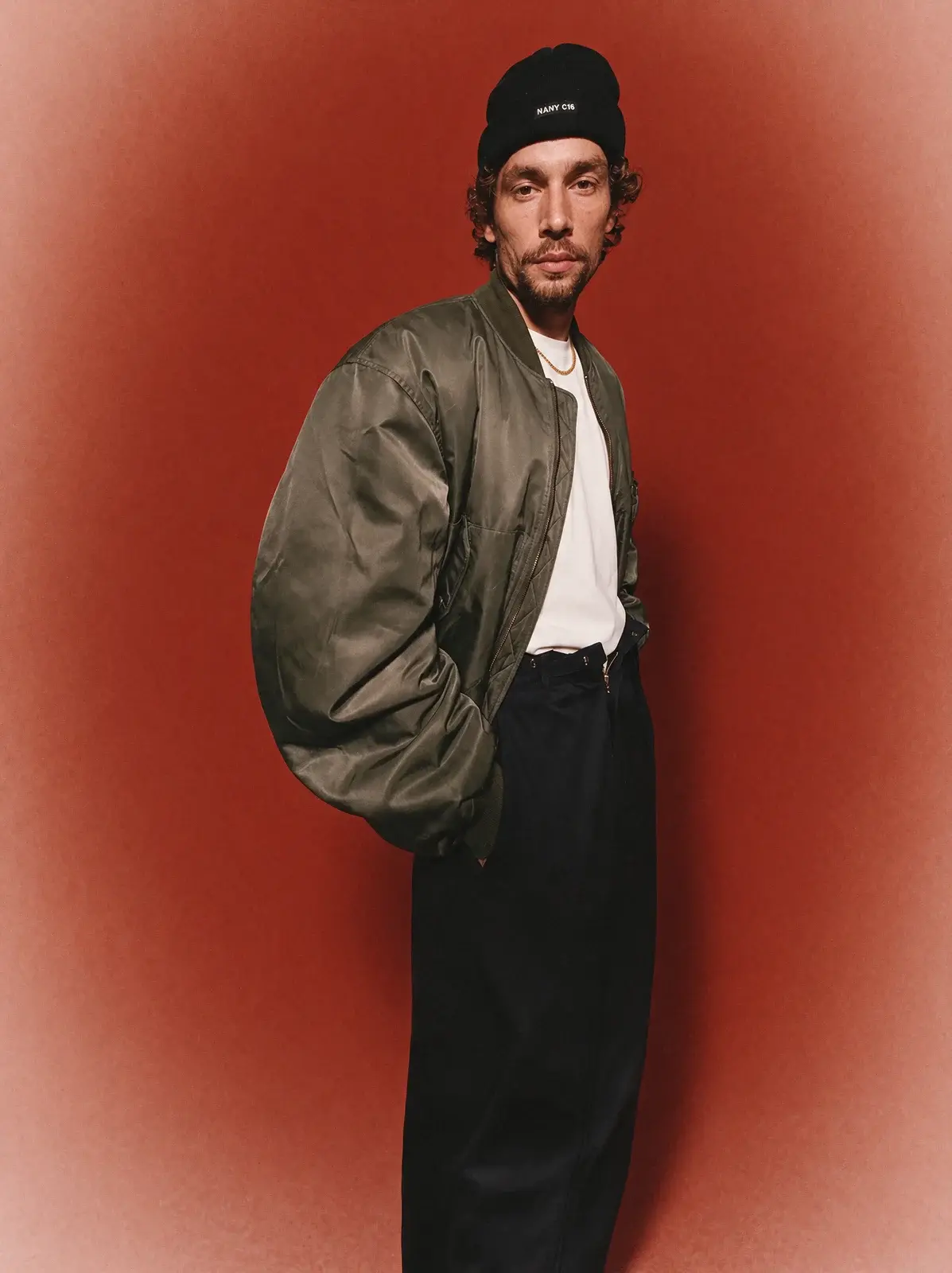
Seedream 5.5
Copy
{"edit":"Apply a dense brick-red photographic print treatment to the uploaded image. Use the original foreground composition as the complete inventory of subjects, objects, and accessories. Preserve their exact count, shapes, positions, scale, pose, viewpoint, crop, materials, base colors, and lettering. Preserve actual support points and the visible clearance beneath suspended elements.","background":"Use a single continuous matte red field from edge to edge. Keep the broad middle in saturated brick red #902619 from the upper edge through the lower edge. Along both sides, blend through burnt red #AB422D into muted warm coral #D1958A. Let the coral spread farther inward near the four corners and stay closer to the margins halfway down each side. Carry this slow lateral fade through the entire lower frame and all openings in the composition, with continuous hue, brightness, and texture.","light":"Use a controlled neutral key from the upper left with
light diffusion. On existing glossy surfaces, give bright highlights clear boundaries and retain dense cool reflections immediately beside them. On matte surfaces, give the lit side clear shape and readable texture with a gently rounded transition into shade. Use local neutral fill around the face when present and retain the original saturation of the subject's accent colors.","shadow":"For grounded elements, concentrate dense burgundy-brown shade in a narrow area along the right contact edge, fading quickly into saturated brick red. Keep the rest of the lower background within the same continuous red field. For suspended elements, keep the original gap open with uninterrupted red visible underneath.","grain":"Apply dense fine photographic grain across the whole image at one scale, approximately 1 to 2 pixels at 2000 pixels wide. Keep the grain visibly and evenly distributed through coral margins, brick-red midtones, subject surfaces, and dense shade."}
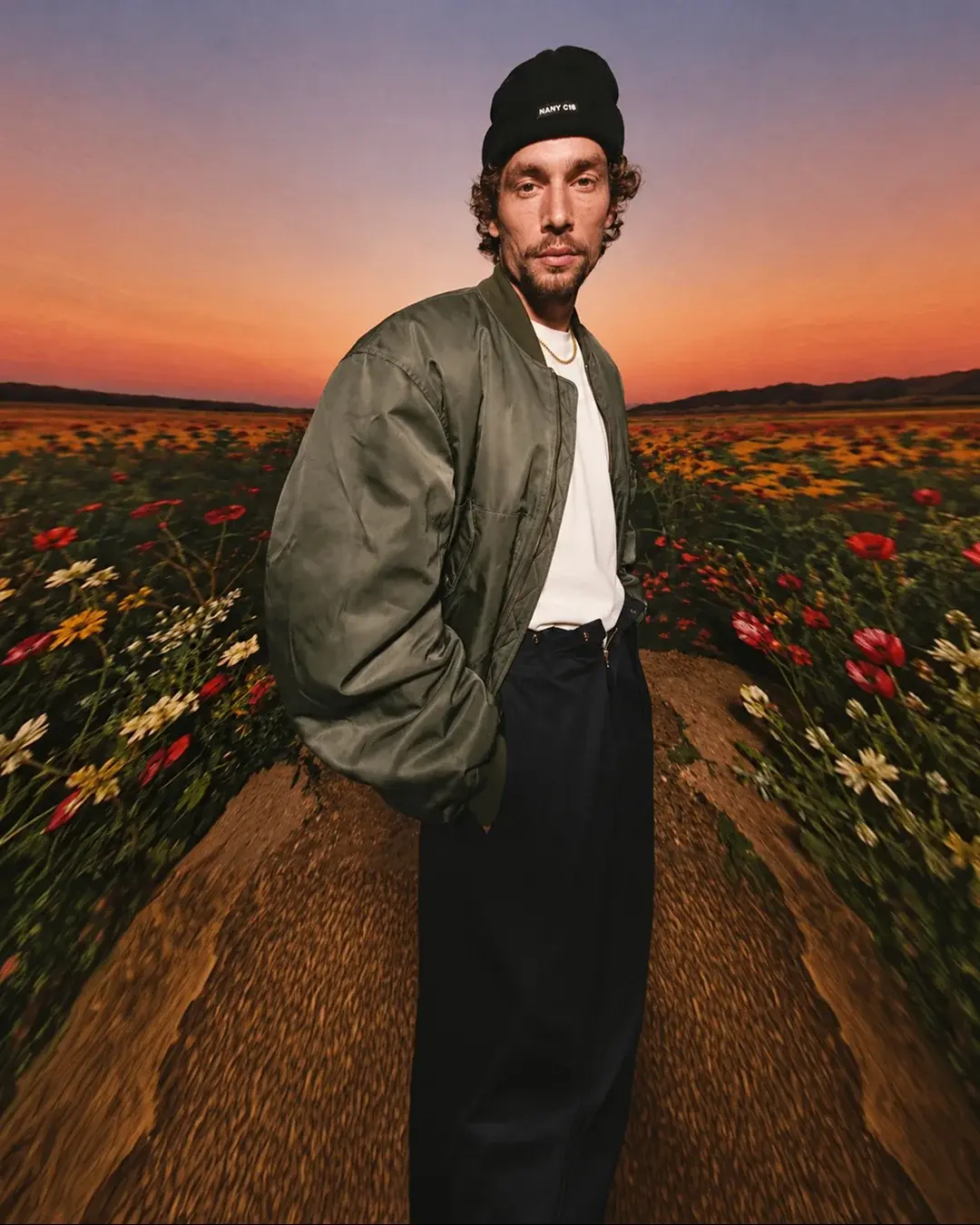

Seedream 5.5
Copy
Composite the foreground composition from the uploaded image onto a single full-frame matte pink gradient. Preserve the exact subject count, identity, expression, pose, silhouette, scale, placement, viewpoint, crop, original colors, materials, and markings. Build the gradient as a flat image layer with dusty rose (#BE858A) across the broad interior and soft powder pink (#D7AFB2) feathering inward from the outer edges, more broadly on the left. Continue the same lateral fade through the lower corners and through every open gap in the composition. Give the subject a large diffused key from the upper left and neutral frontal bounce, bringing eyes, shaded skin, and dark material textures into readable midtones. Where the original subject rests on a surface, add a compact muted rose-brown shadow immediately beside its actual contact points, fading to the right. Where the original subject is suspended, preserve its exact height, tilt, and clear air gap, with the clean pink gradient visible underneath. Finish with dense, fine, clearly resolved photographic grain at the same scale and density across subject, background, and shadows, with tiny lighter and darker variations around each local tone.
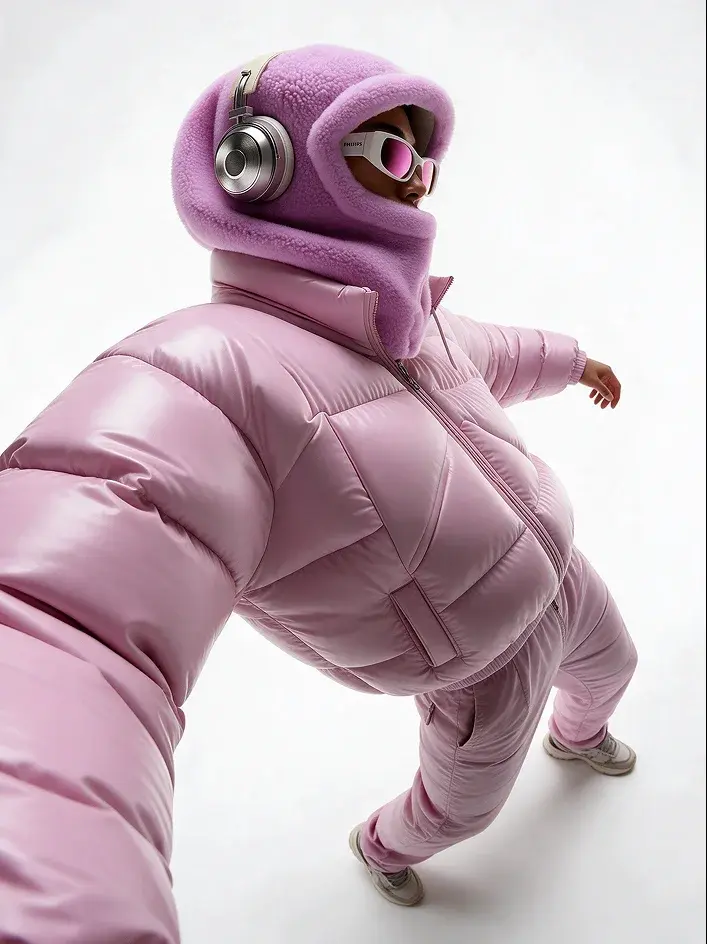
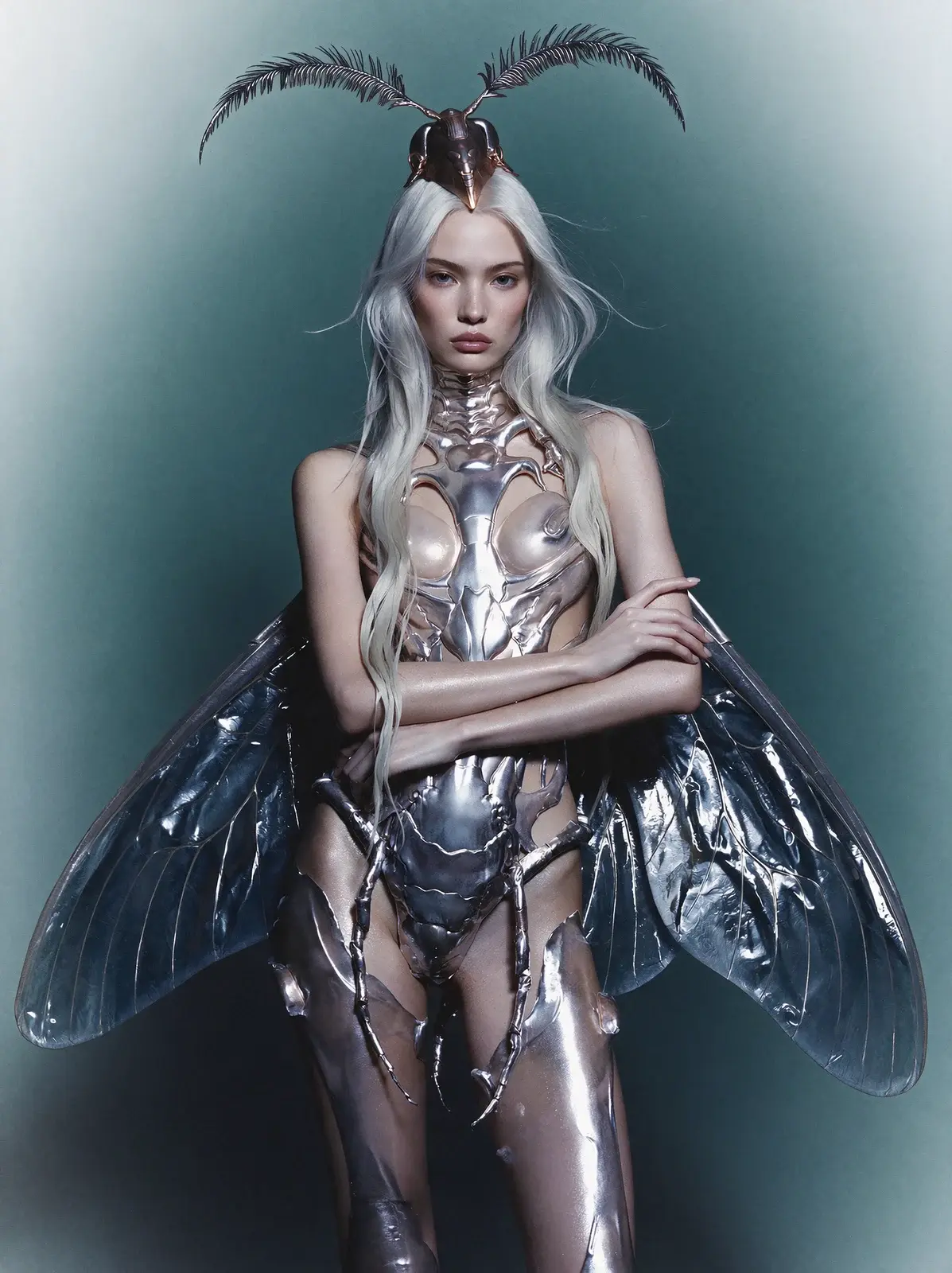
Seedream 5.5
Copy
Retouch the uploaded image as a cool editorial photograph with a clean, richly toned petrol-teal gradient and tactile fine film grain. Preserve the exact composition, subject count, identity, complexion depth, expression, pose, silhouette, hairstyle, makeup, clothing, footwear, accessories, props, camera angle, perspective and crop. Preserve each garment and object in its original cut, construction, color, texture and degree of gloss. Composite the existing foreground onto a seamless matte gradient fixed to the frame. Confine the palest silver-cyan to the upper corners, using #D8E2E5 at the upper left and #C7D9DE at the upper right, with muted teal #7FA3A4 already visible between them. At 18% down the frame, blend cool gray-cyan #B9CACF on the left through richer teal #5F8B8E in the interior to #9BB9BE on the right. Around 45% down, blend silvery sage-gray #828D86 at the left edge into petrol teal #3F6166 across the interior and #608689 at the right edge. Around 84% down, bring the interior to blue-charcoal #131B23, with slightly lighter teal-slate at the sides. Give the bottom corners a small lift toward #354A55 on the left and #2E4550 on the right. Connect these anchors with one broad, continuous two-dimensional gradient through all gaps and beneath the subject. Keep the midtone teal distinctly colored and the lower field dense. Rebalance the light on the existing surfaces using a broad cool-neutral key from above and slightly camera right, with subdued fill. Give planes facing the key luminous pearl-gray highlights with a smooth falloff. Shape the turn into shadow with cool, readable midtones, then retain denser shade in folds, recesses and overlaps. Keep black fabrics dense with visible folds and give each material the highlight softness and intensity appropriate to its original finish. Keep skin cool with muted rosy-taupe midtones and softly shaded contours. Reduce yellow-orange excess selectively and retain the chroma of existing accent colors. Place compact shadows at actual points of support, merging softly into the local teal. Preserve the exact position, tilt and visible gap of suspended subjects. Apply fine monochromatic film grain across the entire finished image, including the subject and the palest cyan areas. Use small irregular light and dark grains about 1–2 pixels across at 1440 pixels wide, with a background luma variation of roughly 2 levels on an 8-bit scale as a strength target. Keep the texture visible at normal viewing size, a touch stronger in teal midtones and still present in the petrol shadows. Keep the large-scale gradient smooth and preserve crisp edges, surface details and legible markings.
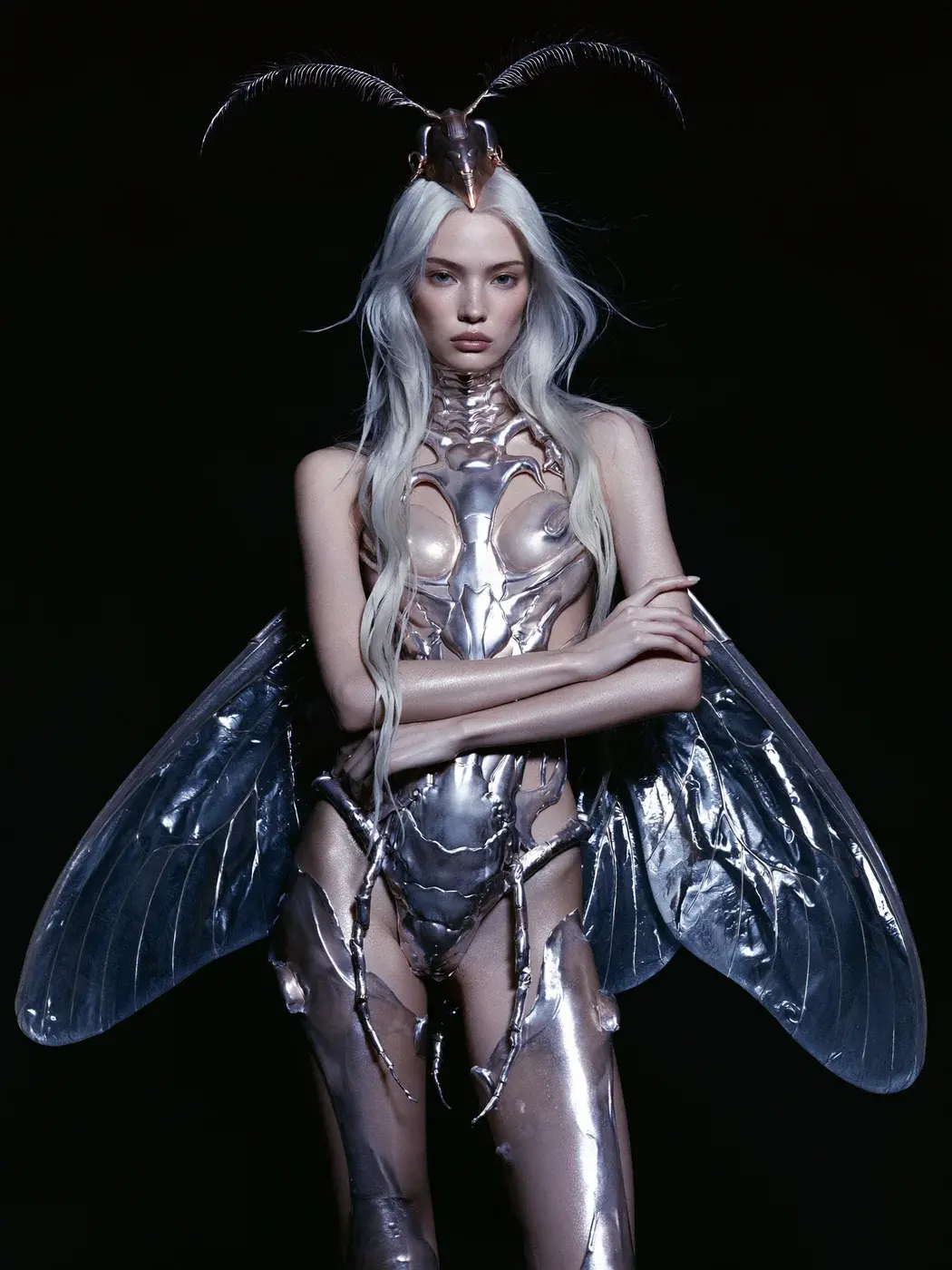
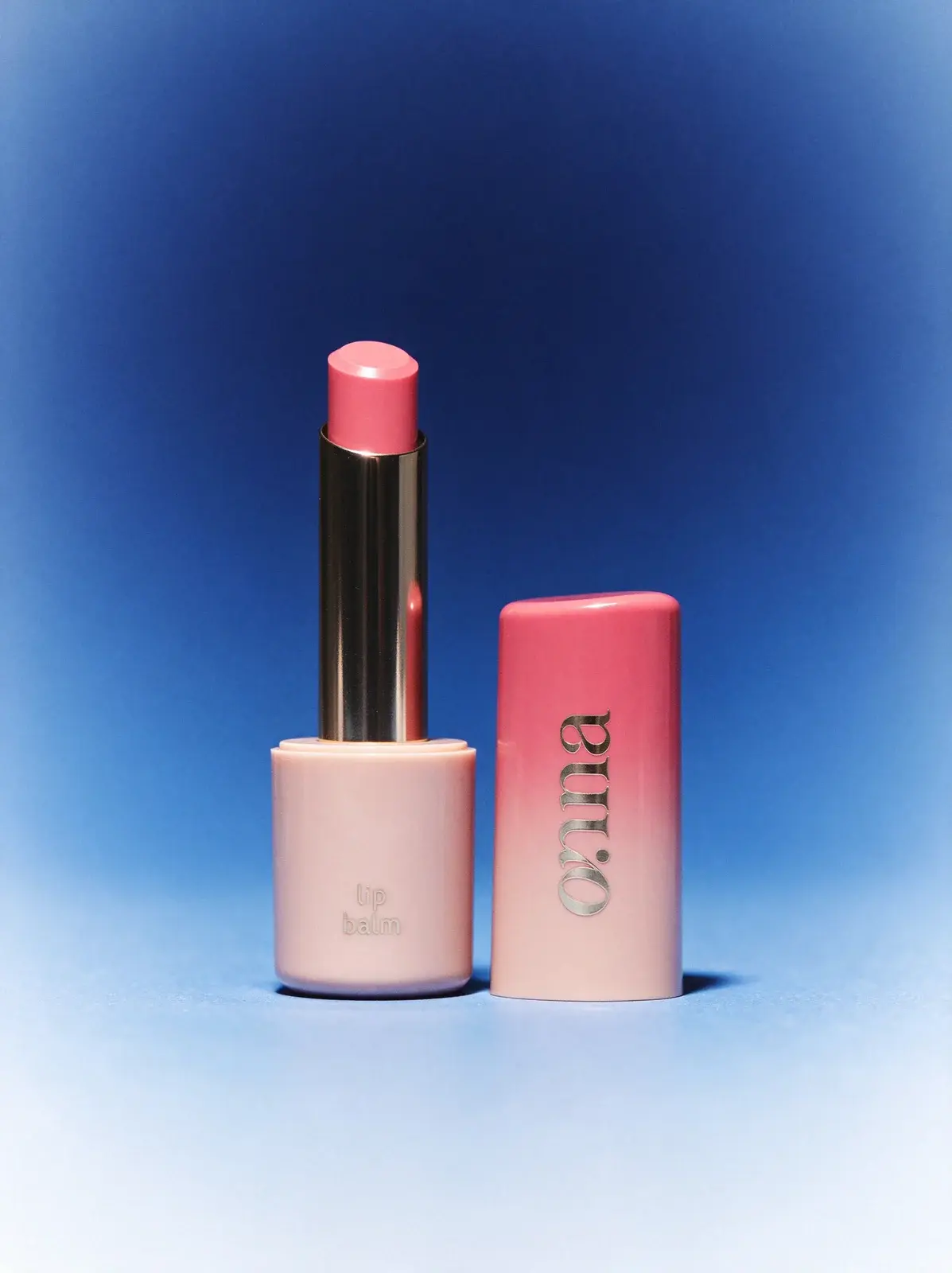
Seedream 5.5
Copy
Edit this photo. Keep the object, its label and text, colours, proportions, angle and crop exactly as in the original; do not add, remove or recolour anything. Replace the entire old background and surface with one seamless airbrushed blue colour field that runs continuously behind and under the object, with no horizon, seam, edge or floor line. The blue depends on distance from the top of the object and is perfectly smooth with no banding: the deepest, richest saturated navy-cobalt #14306B sits above and right behind the upper third of the object, then strong cobalt #2347A0 at mid height, then bright azure #6BA3E4 in the lower middle, light sky #B9D9F7 below that, and pale near-white blue #EAF4FD at the very bottom, so the lower half of the frame is already light. At every height the centre is darker than the sides: the left and right edges of the frame are clearly lighter than the middle (about #5C8FD6 at the top corners, #8DBBEB at mid height, #D3E6F8 in the lower third), so the colour is a deep core in the upper middle that fades to pale edges and a white bottom instead of running as a plain top-to-bottom gradient. High contrast, vivid saturated blue everywhere including the darkest part, never grey, never muddy, never desaturated navy. Lighting: hard direct on-camera flash, bright frontal light, specular highlights kept on metal and gloss, a crisp short shadow in a deep blue tint under or beside the object. Object colours stay clean and saturated with no blue cast; the backdrop has no yellow or orange cast. Medium-format film look with fine visible grain across the whole frame and subtle halation around the brightest highlights. No new text, no extra objects.
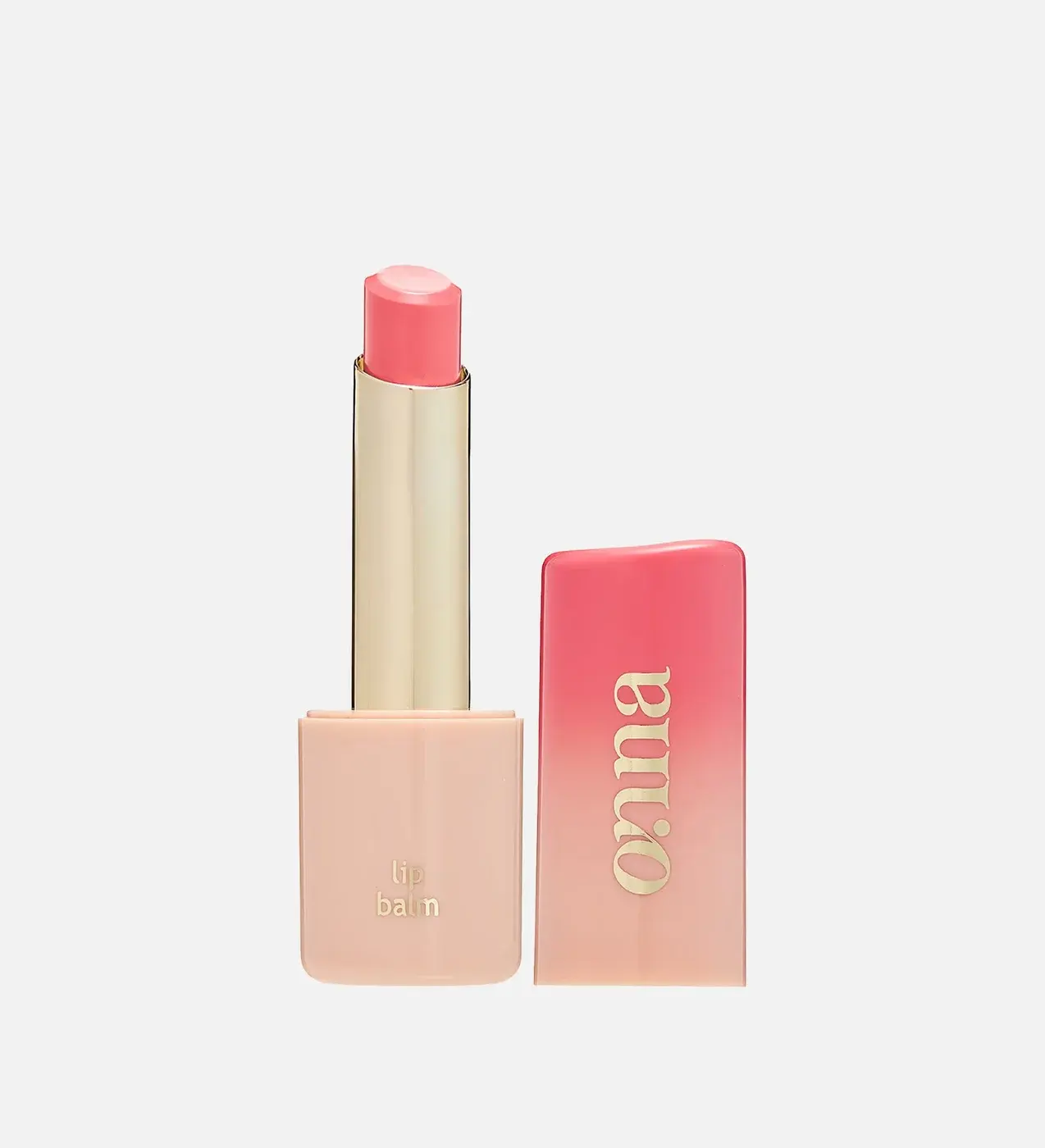
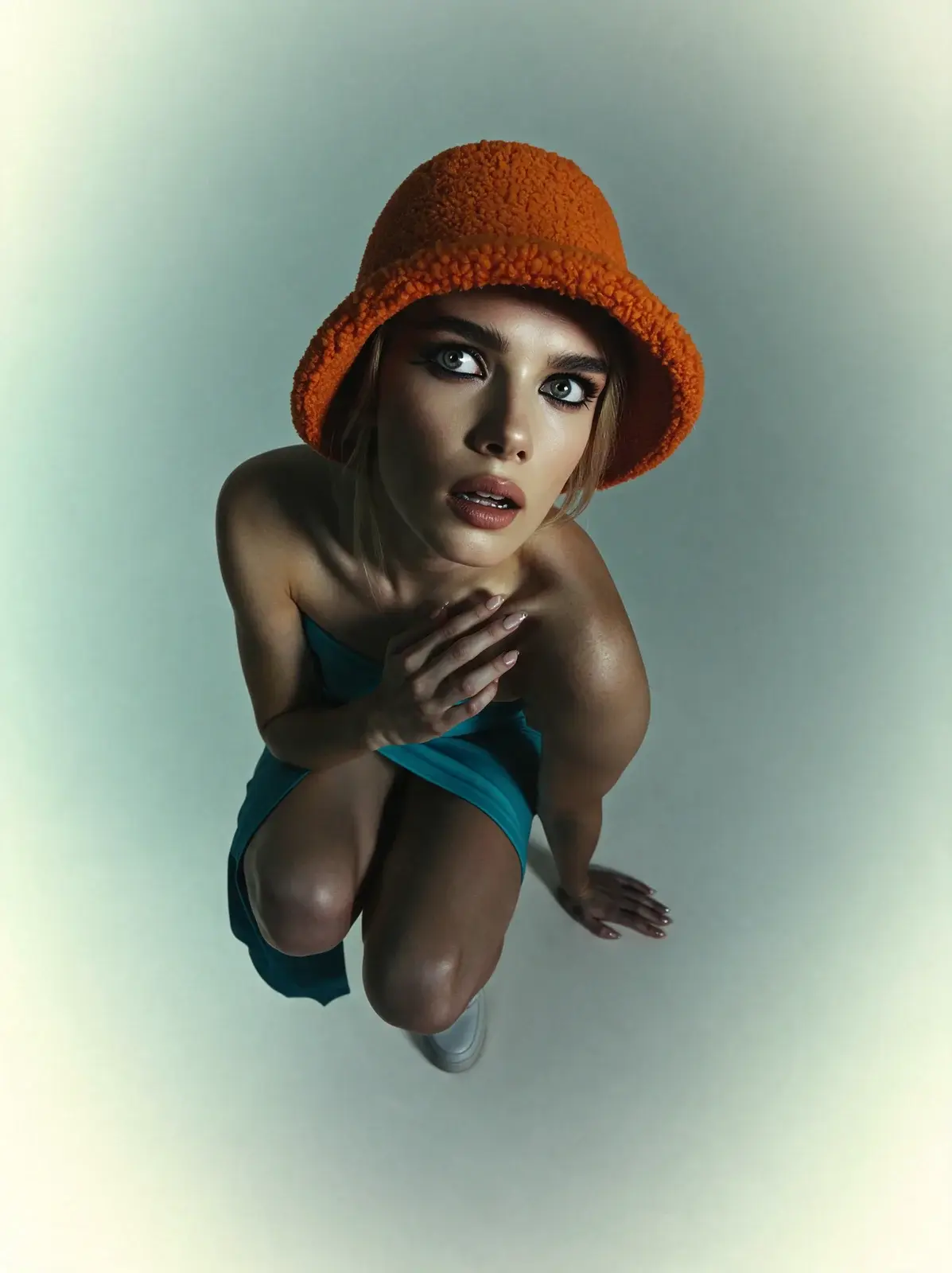
Seedream 5.5
Copy
Apply one single unified cinematic process to the ENTIRE image, subject and background together, so that it looks like one dramatic low-key editorial photograph shot with a strong directional top light, never like a cutout placed over a new background; this low-key treatment applies to the subject only and never darkens the backdrop, whose brightness is exactly as specified below. The whole frame, including the subject and every material in it (skin, hair, fabric, metal, glass, food, any object), gets: high contrast, true deep blacks (about #0D0F0B) in the subject's own shadows, highlights up to near white only on glossy or wet surfaces and on the pale edges of the frame, overall saturation about 19%; the subject is clearly darker than the pale edges of the frame and strongly modeled by a directional light from above with deep soft shadows and a fast falloff; the colors of the subject are slightly muted with a soft olive-green cast in the midtones (skin becomes muted olive-beige, about #B6B69C in the light and a warmer #7D6659 in shade), shadows and blacks are tinted deep green-olive (#191F11 to #2C2C28), never neutral black, and white or light materials turn a cool dark teal-gray in the light (about #525E5F) and nearly black in shade; surfaces are sharp and glossy with crisp specular highlights; fine, even analog film grain over the whole frame, about 3%, visible at 100% on the subject and on the backdrop alike, the same strength in light and dark areas, no blotches or ripples. Keep the subject, pose, shape, details, props, camera angle and framing exactly, adding or removing nothing, no text, no watermarks. Everything in the frame that is not the subject, wherever it is, is replaced by one smooth continuous airbrushed color field that is a function of position only, a very wide soft horizontal gradient across the whole frame width, nearly identical at every height from the top edge to the bottom edge, with no horizontal line, corner, edge, change of surface or brightness step at any height, no oval, no ring, no outline and no closed shape, and the subject's own cast shadow is just a soft slightly darker area of the same field. Behind and around the subject the field is a muted teal-green of medium darkness (#7E968C, hue about 155 degrees, saturation about 18%, brightness about 58%, never darker than 40%), and it moves outward over very long, gentle transitions that take up about 30-40% of the frame width on each side: on the left through light sage-teal (#A3C9B5) and fresh mint (#CFEAC4) to a luminous pale cream-lime at the left edge (#F2F9CA, brightness about 97%); on the right shorter and more muted, through gray-green (#889F94) and sage (#ABC4A8) to a pale sage at the right edge (#C2D7B6); the whole gradient lightens gradually, never abruptly,
toward the bottom of the frame, the right side reaching #B9D3B9 near the bottom edge and #E6F3D9 in the bottom right corner, the lowest left edge cream (#F8FBDE); the left side overall is clearly brighter and more yellow than the right, with hue shifting smoothly and no visible shape or steps anywhere.
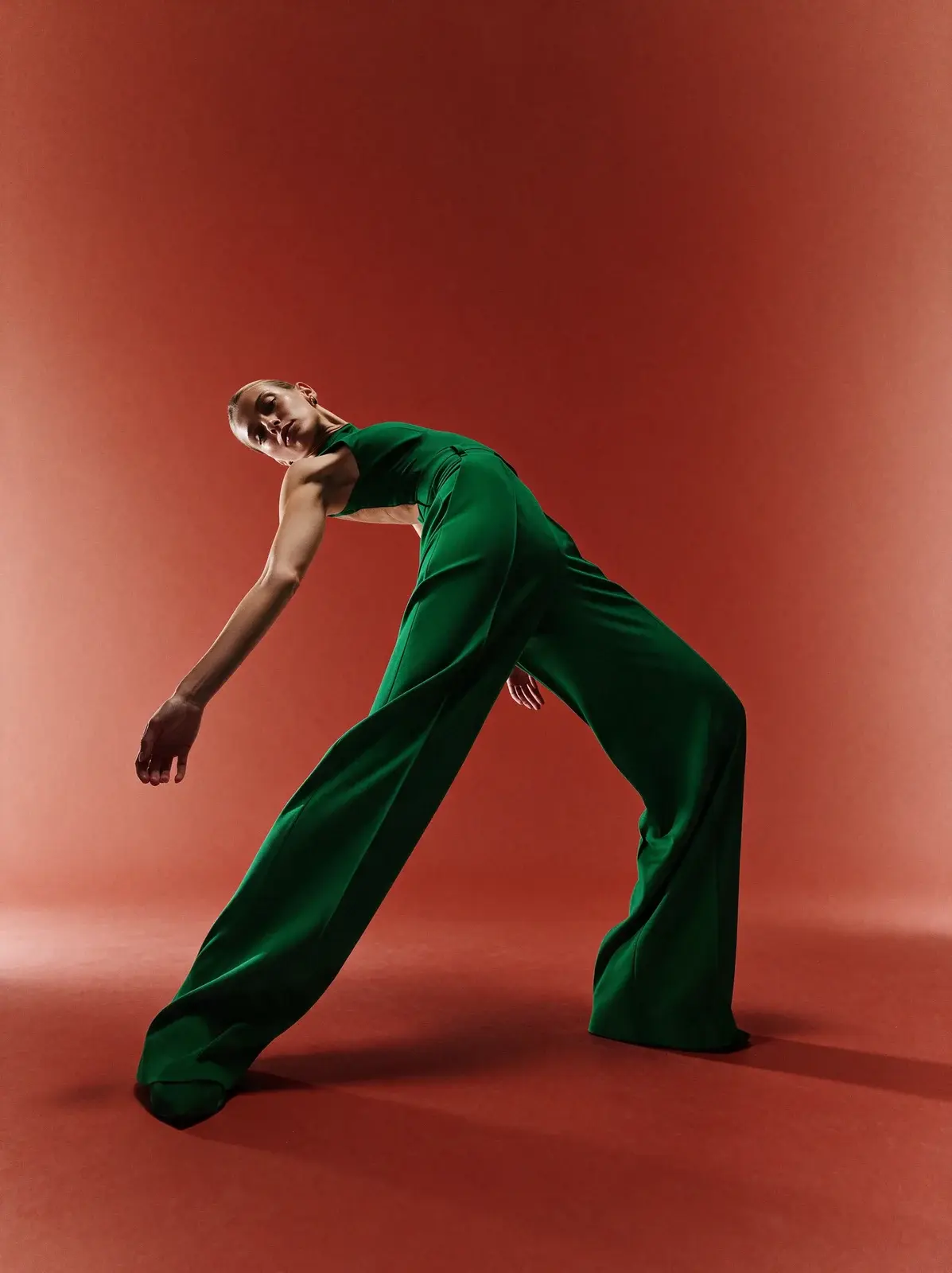
Seedream 5.5
Copy
Edit the uploaded image using it as the sole source for every subject, object, and accessory. Preserve their exact count, placement, scale, orientation, pose, expression, silhouettes, materials, original colors, lettering, viewpoint, and crop. Match the original support state, including the exact points of contact for resting subjects and the original height, tilt, and visible air gap for suspended subjects. Replace the surroundings with a single matte red gradient defined in image coordinates. Keep saturated brick red (#862B20) through the broad interior, extending above and below the composition. Let both sides gradually open through burnt terracotta (#A64434) into dusty coral (#CB8E81), with a softer, wider transition at the corners. Continue the lighter side tones through the full image height to the bottom edge, keeping color, brightness, and texture continuous throughout. Light the subjects with a broad neutral key from the upper left and soft frontal fill, with clean highlights, readable faces, and rich local colors. For resting subjects, show support only through dense burgundy-brown shading immediately beside the actual contact points, fading softly into brick red. For suspended subjects, keep the original air gap open and filled by the continuous red field. Preserve the original material finishes and reflection colors. Finish with dense, fine, evenly distributed photographic grain, clearly visible across red midtones and shadows and consistent in scale throughout the frame.
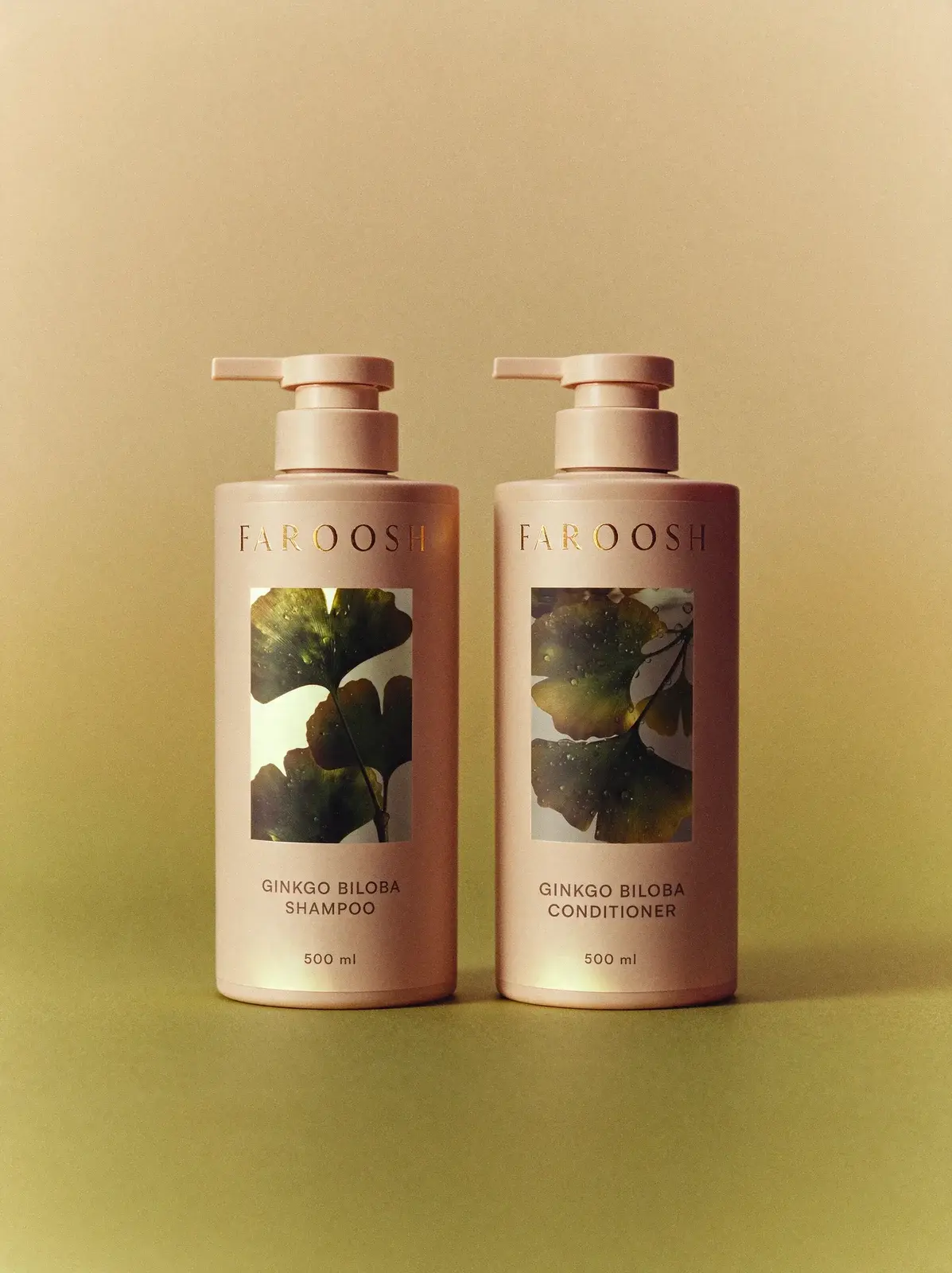
Seedream 5.5
Copy
Apply one single unified rich, warm, saturated analog film process to the ENTIRE image, subject and background together, so that it looks like one photograph shot on color film with one warm directional light, never like a cutout placed over a new background; the same treatment applies whether the subject is a person or an object. Film grain is a defining part of this look and must be obvious: coarse-to-medium film grain with particles about 4-5 pixels wide at 1760 pixels of image width, so that it stays clearly visible even when the picture is shown small on a phone screen, about 13% strength on the subject (surfaces, fabric, props, midtones) and about 5% on the smooth backdrop, made of fine irregular clumps of slightly lighter and darker tone with a faint variation in color, like a scan of a 35mm Kodak Portra 400 negative; the subject and the backdrop share exactly the same grain texture; no digital smoothness, no noise reduction, no plastic retouching, no clean synthetic surfaces anywhere. Color grade and light: very rich, deeply saturated colors (overall saturation about 48%), warm soft directional light with clear modeling of the form and deep warm shadows, median brightness about 64%; the shadows are a warm red-brown (about #7E4E43), the darkest areas a deep burgundy-brown (about #1E0D0C), never neutral black or gray; the highlights are a pale lime-cream (about #EDF4DA); every other color of the subject keeps its own hue and is only deepened by this grade, never recolored, repainted or replaced; dark materials pick up a faint olive-green sheen from the backdrop; the backdrop color softly spills onto the nearest edges of the subject; light surfaces and metal take a subtle orange tint in the highlights and a warm complementary tint in the shadows. Depth: the color field is never centered on the subject and never forms a vignette, halo or circle around it; the subject sits inside a smooth part of the gradient and the backdrop reads as one wide sweep of color across the whole frame, with a soft contact shadow in the backdrop's own hue, a faint rim of the backdrop color on the subject's edges, a gentle halation bloom around the brightest highlights and slightly lower contrast far from the subject. Keep the subject, pose, shape, details, props, their colors, camera angle and framing exactly, adding or removing nothing; the object's materials take the grade exactly as they do in a real film photograph shot in this light, clearly tinted by the dominant light and by the backdrop color while their own base colors stay recognizable; keep all printed text, lettering and logos on the product exactly as they are, sharp, legible and unchanged, add no other text, logos or watermarks, and remove any app badge, sticker or caption from the corners of the source.
Everything in the frame that is not the subject, wherever it is, and everything behind and under the subject, whether it was a wall, a floor, sky, field, room or landscape, is completely replaced by one smooth, seamless, perfectly clean airbrushed color field that depends only on position, with no texture of the original surroundings, no horizon, crease, corner, edge, line, rectangle, light pool, beam, cone, oval, ring, steps or bands anywhere, and no hard edge between any two colors: every color change takes place gradually over at least 40% of the frame, and saturation or brightness never changes by more than about 3 points over any 5% of the frame width or height. The field is one vertical ombre that depends mainly on height. At the top of the frame it is light (#DBC79E, saturation about 28%), and it deepens very gradually going down through #BDA866 at 55% of the height into a rich #A39A49 in the lowest third (hue shifting by about 15 degrees), staying clear and saturated down to the bottom edge; around the subject the color is a little deeper than at the outer edges; one single, very long, soft airbrushed gradient with no stops. The two matte warm-beige pump bottles keep their exact shape, size, color and positions side by side with the same straight-on camera angle, the green ginkgo leaf photographs on the labels keep their natural greens and water drops, the FAROOSH wordmark keeps its gold foil letters, the lines GINKGO BILOBA SHAMPOO, GINKGO BILOBA CONDITIONER and 500 ml stay exactly as they are; the pale grey studio backdrop is completely replaced by the color field and the bottles stand on it with only a soft contact shadow in the backdrop's own hue. Finally, strong visible film grain lies evenly over everything including the subject, and the backdrop glows softly and smoothly around the subject.
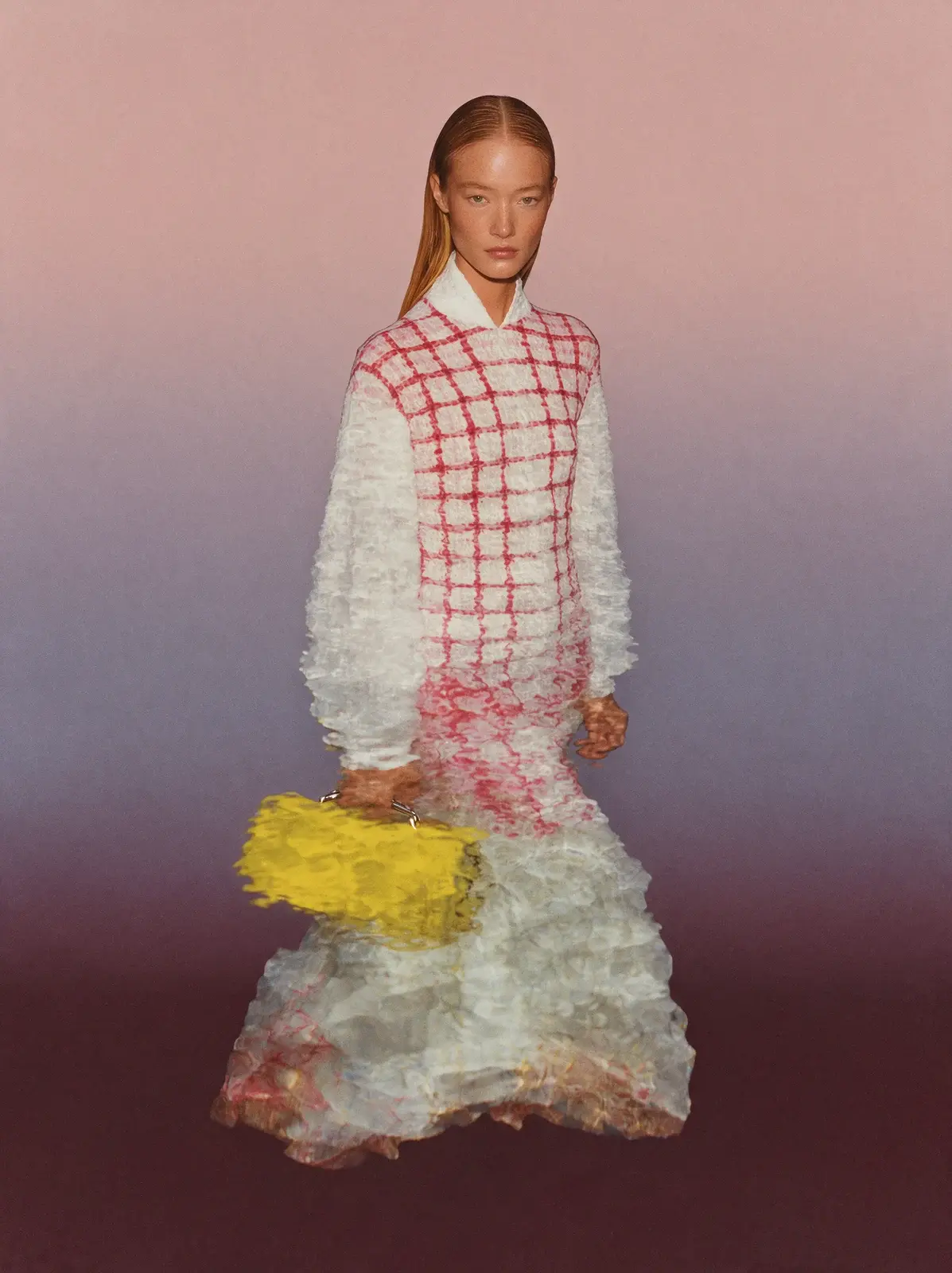
Seedream 5.5
Copy
Retouch the uploaded image as a softly lit editorial photograph with a clean rose-to-lilac-to-wine gradient and fine film grain. Preserve the exact subject, identity, expression, pose, silhouette, styling, garments, accessories, props, supports, markings, viewpoint and crop. Preserve the original color, construction, texture and sheen of every foreground material. Create the background as one flat, matte, full-frame vertical gradient. Use warm powder rose #D0A6A4 at the top, dusty mauve #B496A0 through the upper third, smoky gray-lilac #83728F across the middle and lower middle, and dark berry wine #4D202B at the bottom. Use these colors as guides for one smooth color curve, with wide transitions that overlap gradually. Keep the color and brightness essentially even from left to right at every height. Continue the same gradient through all openings in the composition and beneath the subject. Apply soft tonal adjustments to the existing foreground. Use broad neutral-ivory light on exposed planes and a gentle falloff into readable shadows, with the deepest shade inside existing folds and overlaps. Keep skin highlights softly peach-beige and shaded skin muted rose-taupe, adapted to the original complexion without changing its depth. Keep existing metal in its original hue and finish, with soft pale highlights and clear darker reflections. Apply the rose, lilac and wine palette exclusively to the background. Keep contact shadows narrow and tied to visible points of support. Preserve the original air gap beneath suspended subjects, filled by the same continuous gradient. Add fine monochromatic film grain after the lighting and color adjustments. Distribute tiny irregular light and dark grains randomly across the entire image at a consistent scale of about 1–2 pixels at 1440 pixels wide. Keep the grain visible on the rose and lilac and keep the underlying background tonally smooth at every larger scale.
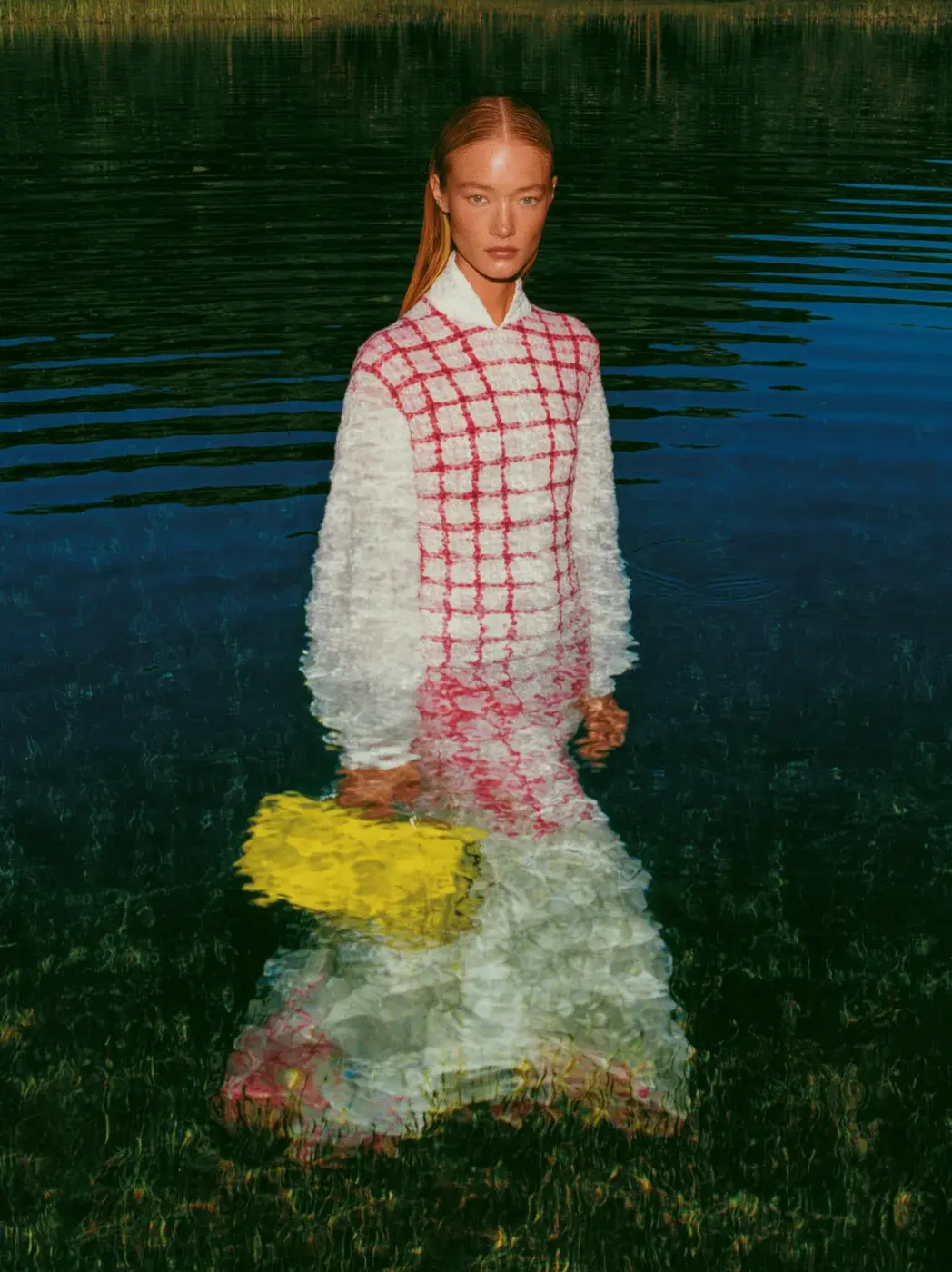
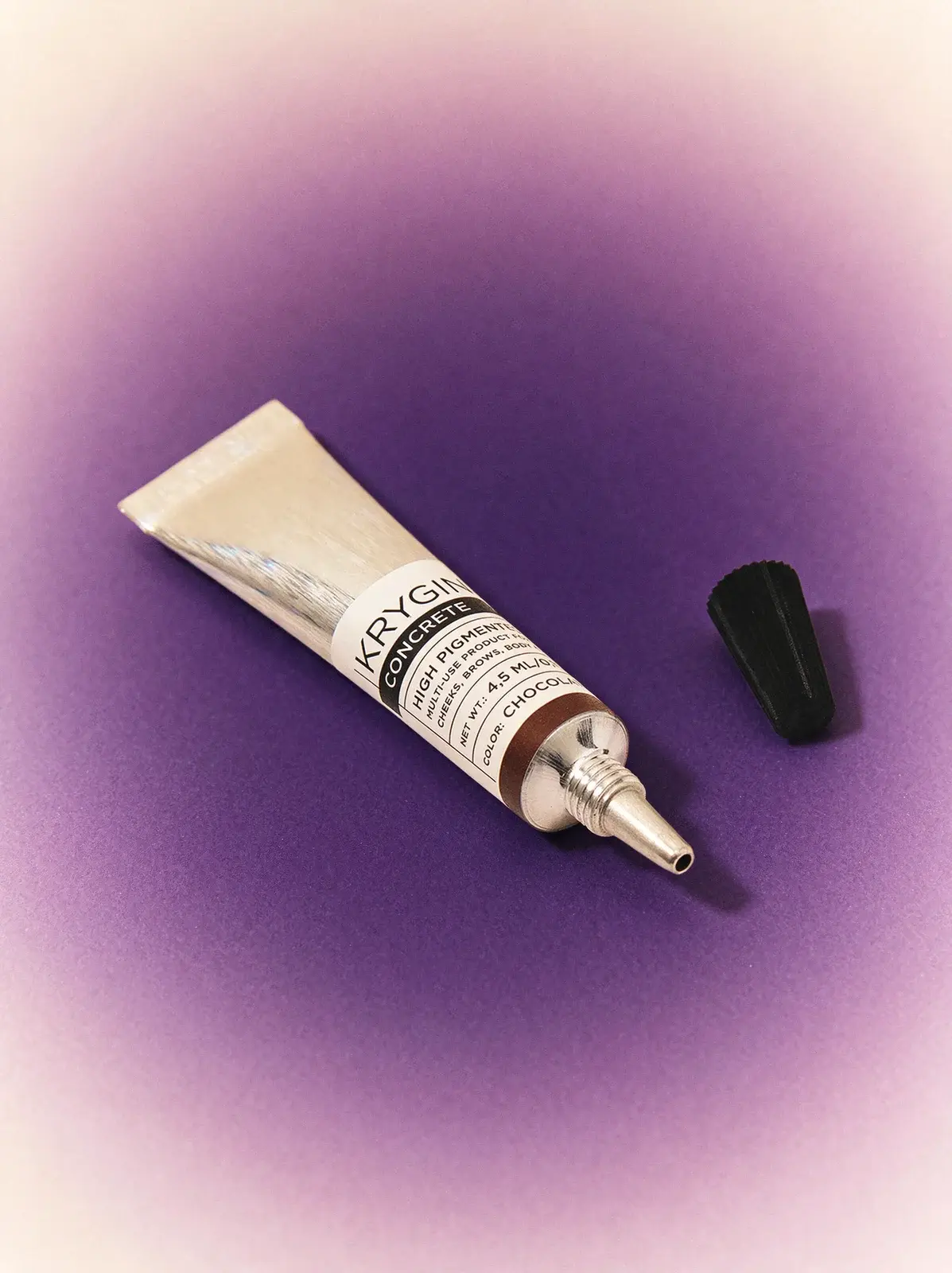
Seedream 5.5
Copy
Apply one single unified high-key glossy analog film process to the ENTIRE image, subject and background together, so that it looks like one bright magazine photograph, never like a cutout placed over a new background; the same treatment applies whether the subject is a person or an object. Film grain is a defining part of this look and must be obvious: coarse-to-medium film grain with particles about 4-5 pixels wide at 1760 pixels of image width, so that it stays clearly visible even when the picture is shown small on a phone screen, about 13% strength on the subject (surfaces, fabric, props, midtones) and about 5% on the smooth backdrop, made of fine irregular clumps of slightly lighter and darker tone with a faint variation in color, like a scan of a 35mm Kodak Portra 400 negative; the subject and the backdrop share exactly the same grain texture; no digital smoothness, no noise reduction, no plastic retouching, no clean synthetic surfaces anywhere. Color grade and light: very bright, soft, wrapping frontal light, high key, median brightness about 83%, highlights on lit fabric and glossy surfaces softly blown to near white, a glossy oiled glowing sheen on every smooth surface; light cream materials warm cream (#EFDEC4) in the light and #CDBBAC in shade; lifted blacks, overall saturation low (about 14%) except the backdrop color; light surfaces and metal take a subtle periwinkle tint in the highlights and a warm complementary tint in the shadows. Depth: the backdrop is clearly deeper and richer in color around the subject than toward the outer edges of the frame, so that the subject sits inside a soft glowing atmosphere of color; add a soft contact shadow in the backdrop's own hue, a faint rim of the backdrop color on the subject's edges, a gentle halation bloom around the brightest highlights and slightly lower contrast far from the subject. Keep the subject, pose, shape, details, props, their colors, camera angle and framing exactly, adding or removing nothing; the object's materials take the grade exactly as they do in a real film photograph shot in this light, clearly tinted by the dominant light and by the backdrop color while their own base colors stay recognizable; keep all printed text, lettering and logos on the product exactly as they are, sharp, legible and unchanged, add no other text, logos or watermarks, and remove any app badge, sticker or caption from the corners of the source. Everything in the frame that is not the subject, wherever it is, and everything behind and under the subject, whether it was a wall, a floor, sky, field, room or landscape, is completely replaced by one smooth, seamless, perfectly clean airbrushed color field that depends only on position, with no texture of the original surroundings, no horizon, crease,
corner, edge, line, rectangle, light pool, beam, cone, oval, ring, steps or bands anywhere, and no hard edge between any two colors: every color change takes place gradually over at least 40% of the frame, and saturation or brightness never changes by more than about 3 points over any 5% of the frame width or height. The field is one soft radial gradient whose color depends only on the distance from the middle of the subject, and it changes continuously over the whole frame: the saturation starts falling right at the subject and keeps falling at an even rate all the way to the corners, never a plateau followed by a quick fall-off. Right at the subject it is a rich, clear color (#422270, hue about 265 degrees, saturation about 70%, never muddy or gray); at about a quarter of the way to the frame edge it is #633D85; halfway to the edge #8B5F9E with the hue turning gradually toward 320 degrees; three quarters of the way #B884BD; at the middle of every frame edge a light tint (#DBABD5); and in the four corners a softly tinted cream of the neighbouring hue (#EDCAE1 at the top, #E8BCD9 at the bottom), never white. The hue drifts by about 55 degrees from the center to the corners, brightness rises evenly and saturation falls evenly across the whole distance, with no more than about 4 points of change over any 5% of the frame width, one very long, wide, soft airbrushed gradient with no visible outline anywhere. The aluminum tube keeps its brushed silver metal with a soft reflection of the backdrop color, the white label keeps its exact layout, the chocolate-brown band stays chocolate brown, the black ribbed cap stays black; the tube and the cap stay in exactly the same positions with the same high-angle perspective, and the white surface they rest on becomes part of the color field with only soft contact shadows. Finally, strong visible film grain lies evenly over everything including the subject, and the backdrop glows softly and smoothly around the subject.
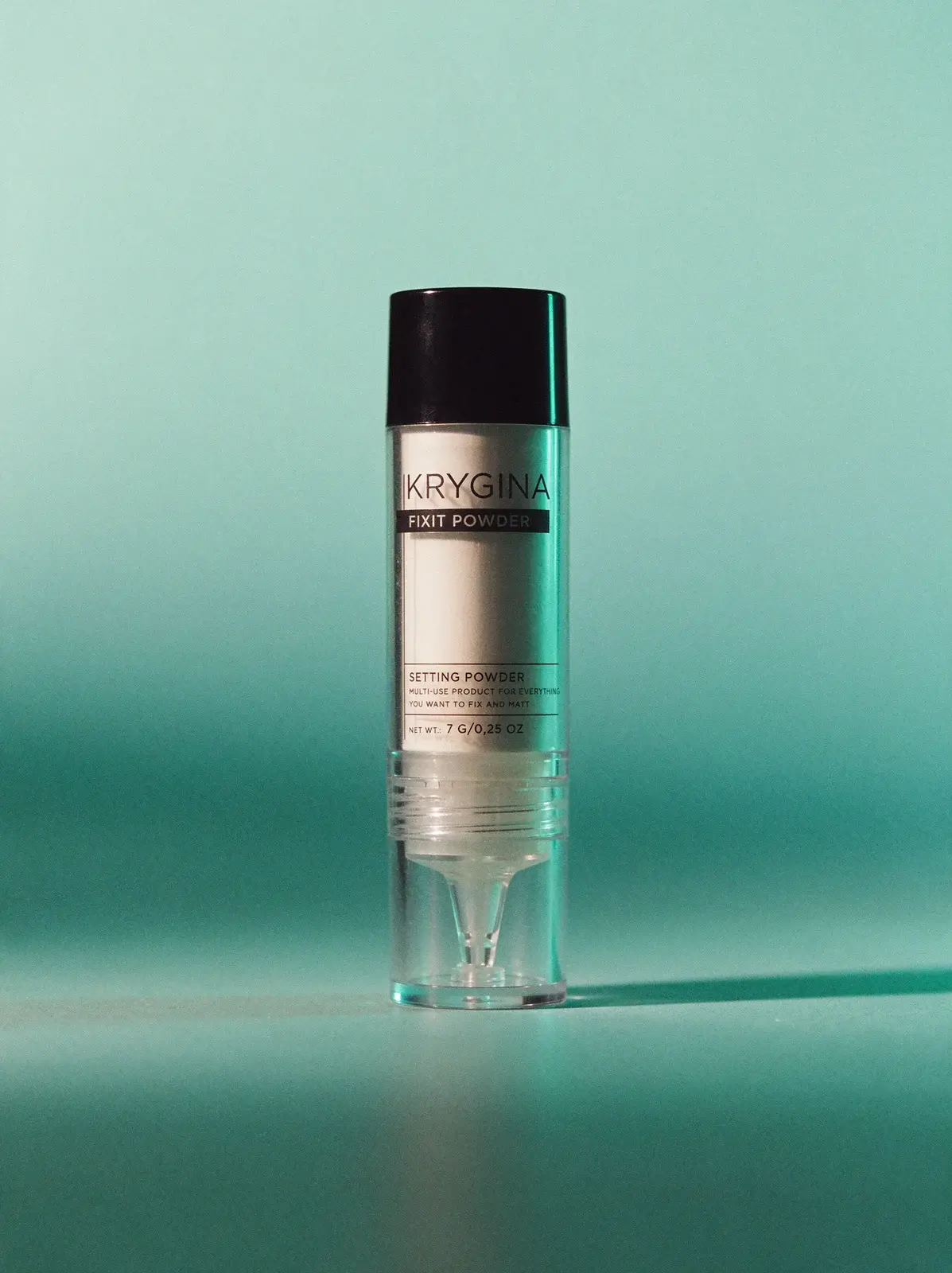
Seedream 5.5
Copy
Apply one single unified dramatic color-gel editorial analog film process to the ENTIRE image, subject and background together, so that it looks like one photograph shot on color film in a photo studio with one strong directional key light and one colored gel light, never like a cutout placed over a new background; the same treatment applies whether the subject is a person or an object. Film grain is a defining part of this look and must be obvious: coarse-to-medium film grain with particles about 4-5 pixels wide at 1760 pixels of image width, so that it stays clearly visible even when the picture is shown small on a phone screen, about 13% strength on the subject (surfaces, fabric, props, midtones) and about 5% on the smooth backdrop, made of fine irregular clumps of slightly lighter and darker tone with a faint variation in color, like a scan of a 35mm Kodak Portra 400 negative; the subject and the backdrop share exactly the same grain texture; no digital smoothness, no noise reduction, no plastic retouching, no clean synthetic surfaces anywhere. Color grade and light: one strong directional key light from the upper left with a clearly visible direction, sculpting every form with defined shadows on the right side and bright specular highlights, plus a second colored gel light in the backdrop color (mint-green) from the right that wraps every edge as a glowing rim light and colors the shadows; the shadows are deep and saturated mint-green (about #15382D, midtone shadows about #3B6658) instead of gray, the darkest areas are true near-black (about #0B090C, never lifted, never milky or faded), lit surfaces are warm and clean, highlights bright but never clipped (peak about 96%), a wide tonal range with medium-high contrast (median brightness about 56%), rich saturated colors (overall saturation about 40%) and a soft halation glow around the brightest highlights; the backdrop itself stays a smooth, luminous, airbrushed color field and only the subject receives the directional shadows, with one soft cast shadow in the backdrop's own hue; light surfaces and metal show both lights: warm highlights from the key and mint-green-tinted shadows from the gel; every other color keeps its own hue. Depth: the color field is never centered on the subject and never forms a vignette, halo or circle around it; the subject sits inside a smooth part of the gradient and the backdrop reads as one wide sweep of color across the whole frame, with a soft contact shadow in the backdrop's own hue, a faint rim of the backdrop color on the subject's edges, a gentle halation bloom around the brightest highlights and slightly lower contrast far from the subject. Keep the subject, pose, shape, details, props, their colors, camera angle and framing exactly, adding or removing
nothing; the object's materials take the grade exactly as they do in a real film photograph shot in this light, clearly tinted by the dominant light and by the backdrop color while their own base colors stay recognizable; keep all printed text, lettering and logos on the product exactly as they are, sharp, legible and unchanged, add no other text, logos or watermarks, and remove any app badge, sticker or caption from the corners of the source. Everything in the frame that is not the subject, wherever it is, and everything behind and under the subject, whether it was a wall, a floor, sky, field, room or landscape, is completely replaced by one smooth, seamless, perfectly clean airbrushed color field that depends only on position, with no texture of the original surroundings, no horizon, crease, corner, edge, line, rectangle, light pool, beam, cone, oval, ring, steps or bands anywhere, and no hard edge between any two colors: every color change takes place gradually over at least 40% of the frame, and saturation or brightness never changes by more than about 3 points over any 5% of the frame width or height. The field is one vertical ombre that depends mainly on height. At the top of the frame it is light (#9EDBC7, saturation about 28%), and it deepens very gradually going down through #66BDA8 at 55% of the height into a rich #49A39A in the lowest third (hue shifting by about 15 degrees), staying clear and saturated down to the bottom edge; around the subject the color is a little deeper than at the outer edges; one single, very long, soft airbrushed gradient with no stops. The subject stands on a seamless floor made of the same color field, with only a soft contact shadow and a soft reflection in the backdrop's own hue; no floor edge, horizon, seam or hard line is visible anywhere. Preserve exactly as in the source: the shape, size, materials and colors of the product, the contents of every container (liquid, powder, cream, or nothing), transparent, glass or empty parts stay exactly as transparent or empty as they are and are never filled, tinted or recolored (the backdrop is only seen through them), black parts stay black and white parts stay white, metal stays metal, and all printed text stays exactly the same; only the light and the backdrop reaction change. The transparent plastic bottle keeps its see-through empty body and the backdrop is visible through it, the black glossy cap stays black, the KRYGINA FIXIT POWDER label, SETTING POWDER and the net weight lines stay exactly as they are, sharp and legible; the white studio backdrop is completely replaced by the color field. Finally, strong visible film grain lies evenly over everything including the subject, and the backdrop glows softly and smoothly around the subject.
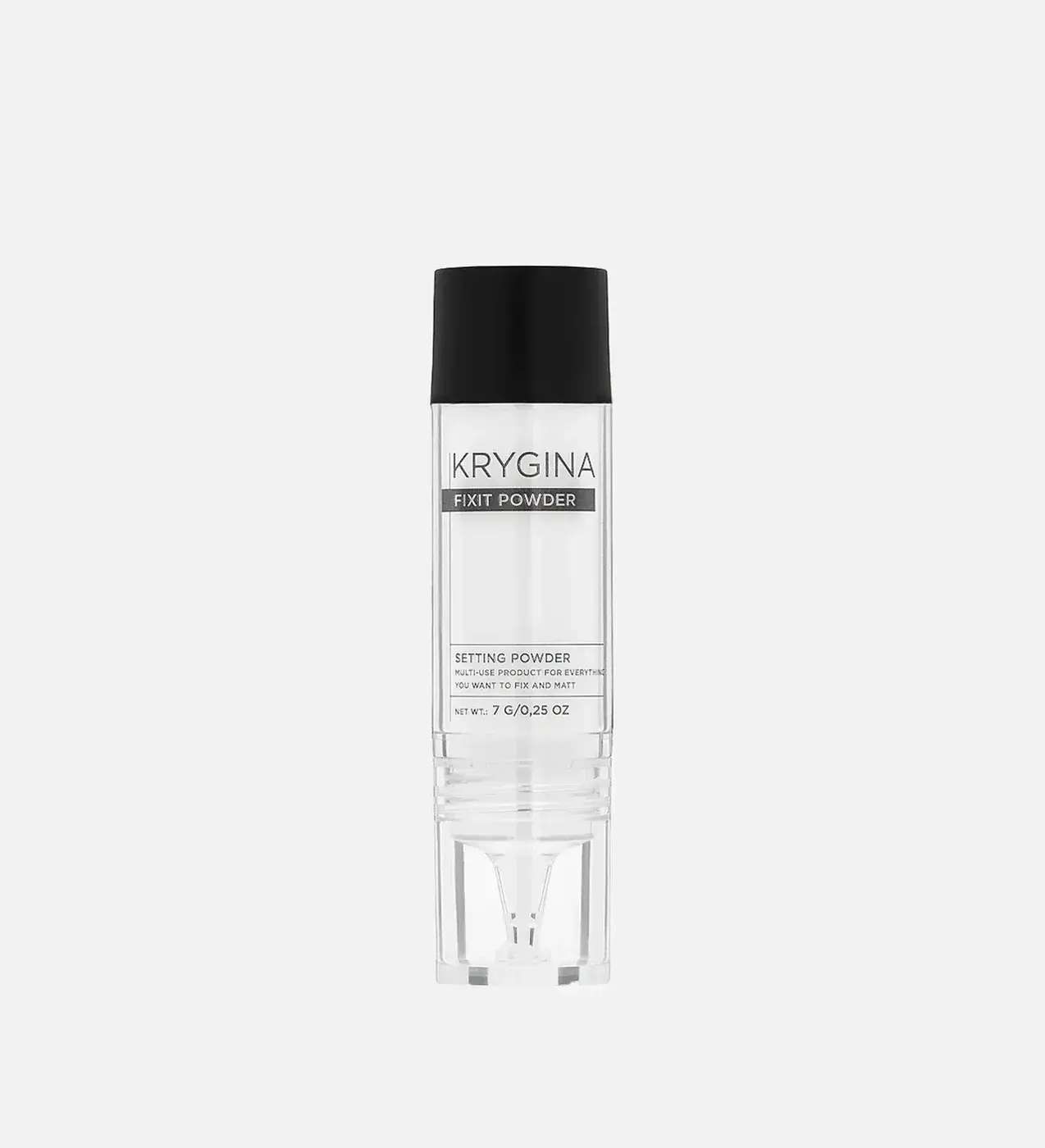
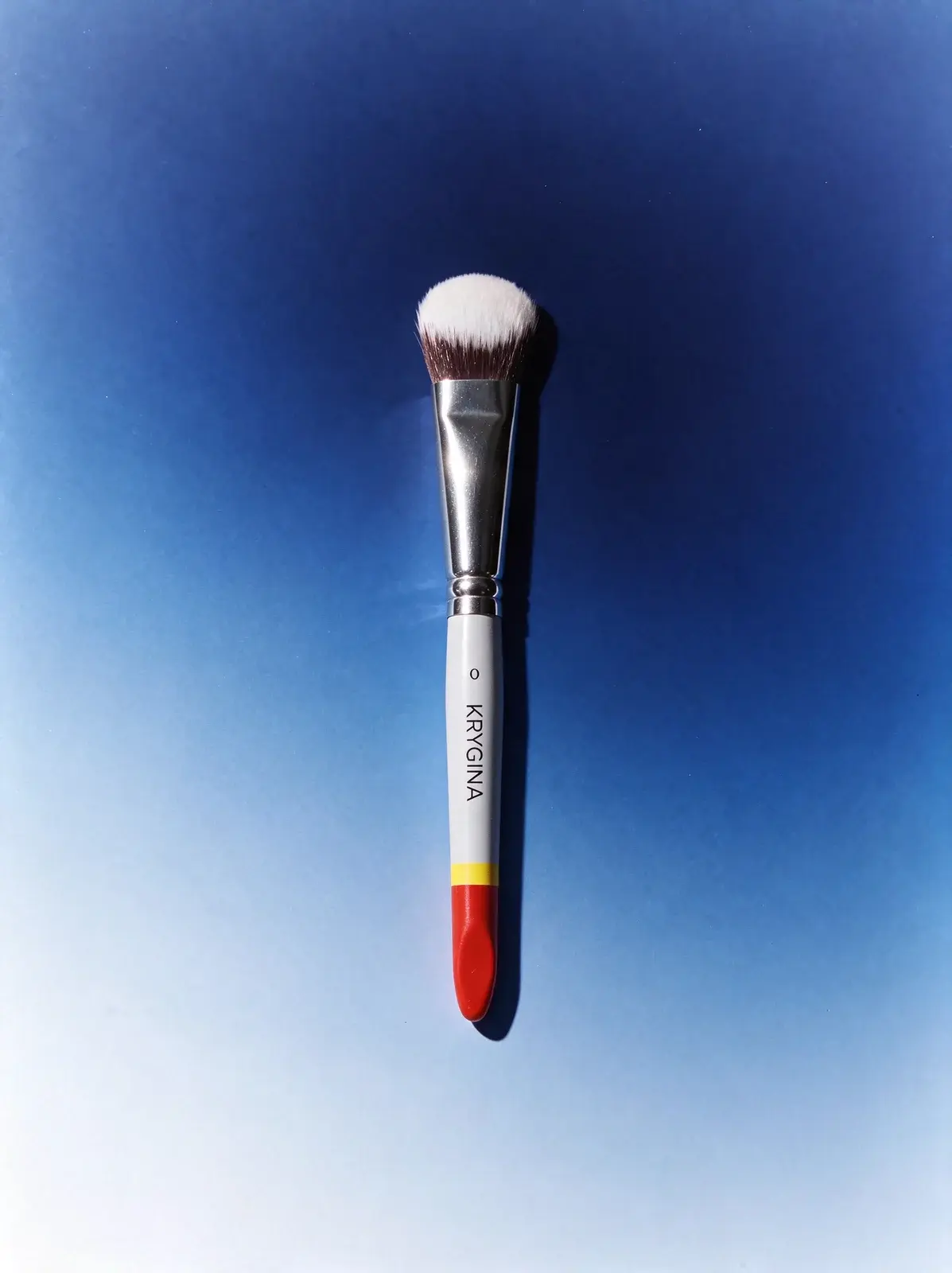
Seedream 5.5
Copy
Edit this photo. Keep the object, its label and text, colours, proportions, angle and crop exactly as in the original; do not add, remove or recolour anything. Replace the entire old background and surface with one seamless airbrushed blue colour field that runs continuously behind and under the object, with no horizon, seam, edge or floor line. The blue is smooth with no banding and is lit by a hard flash from the front left: the deepest saturated navy-cobalt #14306B sits in the upper middle, slightly right of centre, above and behind the upper third of the object, then cobalt #2347A0 around it, and the colour brightens steadily with distance through bright azure #6BA3E4 and light sky #B9D9F7 to pale near-white blue #EAF4FD at the very bottom, so the lower half of the frame is light. At the same height the left side of the frame is 10 to 15 percent lighter than the right side (about #6A9FDA at the top left corner and #4B73B8 at the top right corner, #A9CFF2 at mid left and #7FA8DC at mid right), the brightest spot of the whole frame is the lower left, and both outer edges stay lighter than the middle. The darkness is therefore a deep core in the upper middle that fades out unevenly towards a bright lower left, never an even dark oval and never a plain top-to-bottom gradient. High contrast, vivid saturated blue everywhere including the darkest part, never grey, never muddy. Light on the object: hard direct flash from the front left, bright specular highlights on metal and gloss, strong clean colours; any shadow is short, crisp, pure deep blue and falls to the lower right of the object, and no shadow is added if the object does not touch a surface. Object colours stay clean and saturated with no blue cast; the backdrop has no yellow or orange cast. Medium-format film look with fine visible grain across the whole frame and subtle halation around the brightest highlights. No new text, no extra objects.
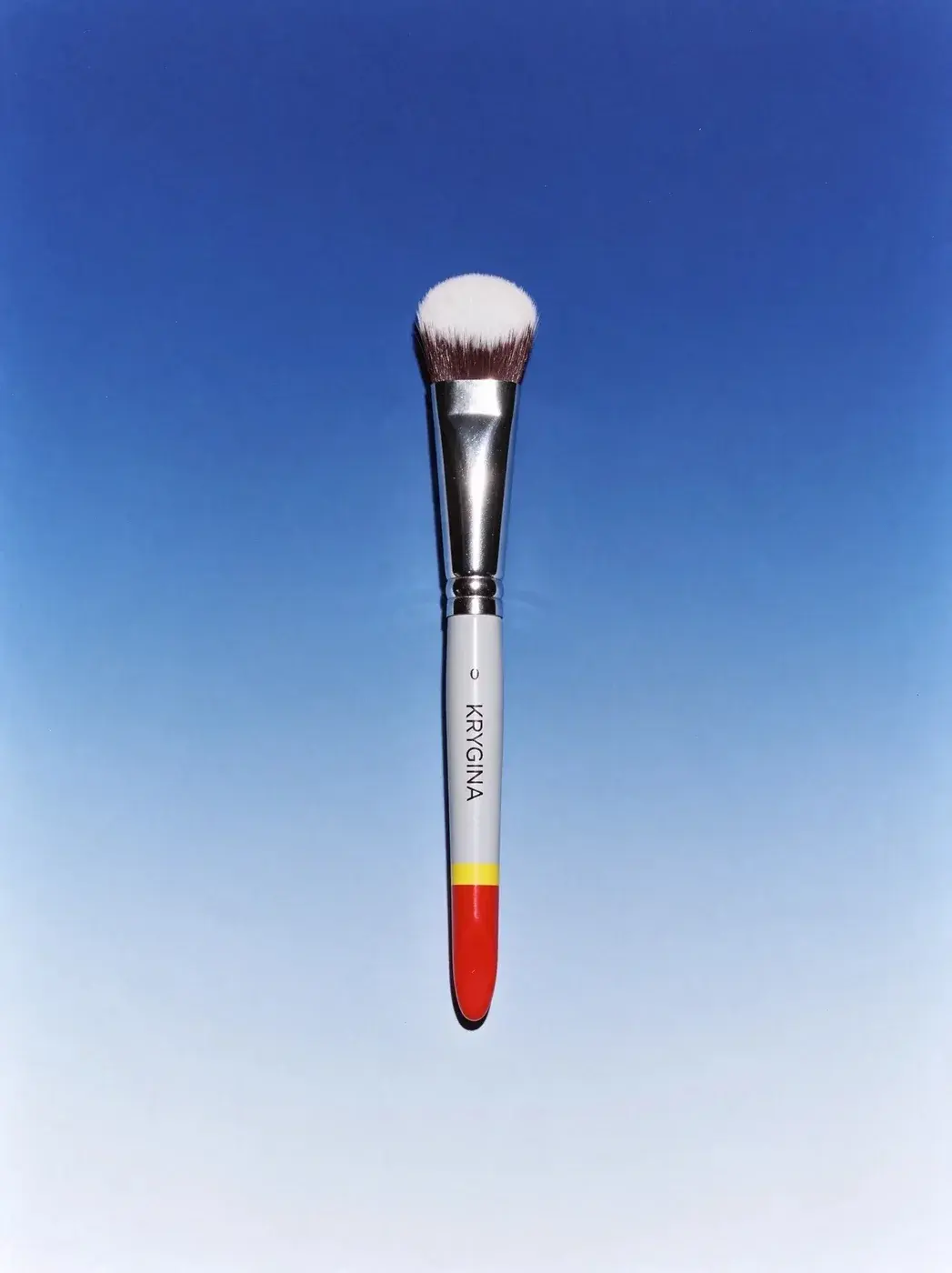
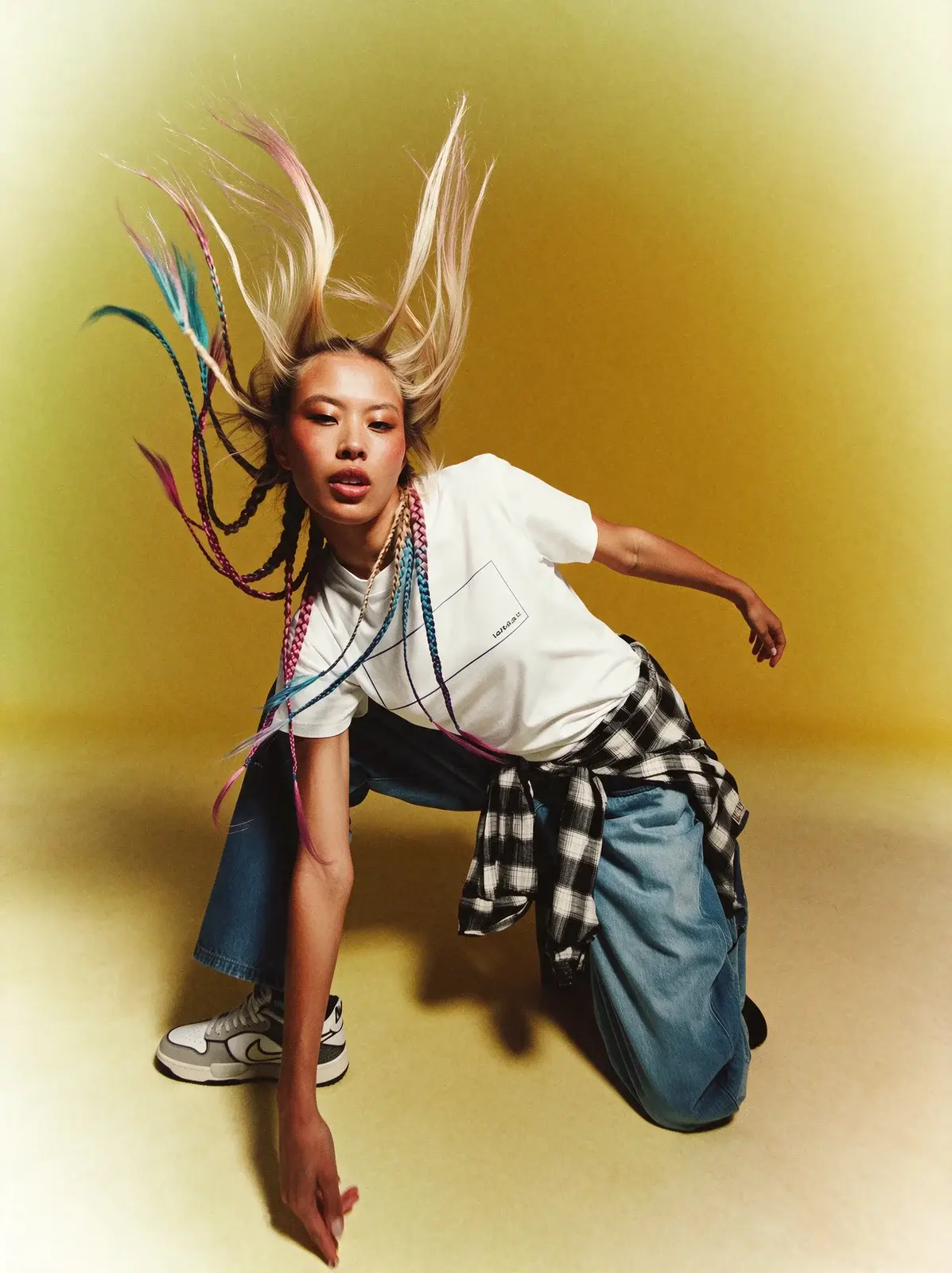
Seedream 5.5
Copy
Apply one single unified rich, warm, saturated analog film process to the ENTIRE image, subject and background together, so that it looks like one photograph shot on color film with one warm directional light, never like a cutout placed over a new background; the same treatment applies whether the subject is a person or an object. Heavy, obvious film grain is a defining part of this look: medium film grain particles (like pushed ISO 800 negative film), clearly visible without zooming in, even when the picture is viewed small on a phone screen, strongest on skin, hair, fabrics and midtones of the subject (about 14% intensity) and still clearly visible on the smooth backdrop (about 8%), so that the backdrop itself looks sandy and grainy, never smooth; the subject and the backdrop share the same grain; no digital smoothness, no noise reduction, no skin retouching, no clean or plastic surfaces anywhere. Color grade and light: very rich, deeply saturated colors (overall saturation about 46%), warm soft directional light with clear modeling of the form and deep warm shadows, median brightness about 64%; the shadows are a warm red-brown (about #7E4E43), the darkest areas a deep burgundy-brown (about #1E0D0C), never neutral black or gray; the highlights are a pale lime-cream (about #EDF4DA); skin, if present, is a rich warm terracotta in the light (about #A95B47, with a red flush #B0473C on the cheeks) and a deep warm brown-red in shade (#8B503C), with pale lit areas a soft cream-beige (#D2B9A0); every other color of the subject keeps its own hue and is only deepened by this grade, never recolored, repainted or replaced; black hair and dark materials pick up a faint olive-green sheen from the backdrop; the backdrop color softly spills onto the nearest edges of the subject. Keep the subject, pose, shape, details, props, their colors, camera angle and framing exactly, adding or removing nothing, no text, no watermarks. Everything in the frame that is not the subject, wherever it is, is replaced by one smooth continuous airbrushed field of one color family, mustard-gold to lime-cream, whose color depends only on position, with no visible shape, ring, outline, line, edge, rectangle, light pool, steps or bands anywhere, no change of surface at any height, and no hard edge between any two colors: every change of color happens gradually over at least 40% of the frame height or width, and everything behind and under the subject, whether it was a wall, a floor or both, becomes the same single continuous field. The field is richest and most saturated in a wide soft zone on both sides of the subject, centered at about mid-height of the frame and fading smoothly both upward and downward over about 40% of the frame height each way (a rich mustard-gold, about #AA8815, hue
about 46 degrees, saturation about 85%, brightness about 67%, never dark or brown), and as it moves outward it turns olive-yellow (#B1962A, then #BBA945) and then lime-yellow (#C8C066 at the left edge, #C9C061 at the right edge), with a pale lime-cream in the upper corners (#EFF6DB on the left, #E6ECBE on the right) and #C9C75E at the top center; toward the bottom the left side gradually fades into a pale cream-lime (#F3F9E8 at the bottom edge), while the right side stays a softer mustard-cream down to the bottom (#C3AF71); the transitions are very long, wide and gentle, one airbrushed gradient. Finally, strong visible film grain lies evenly over everything including the subject.
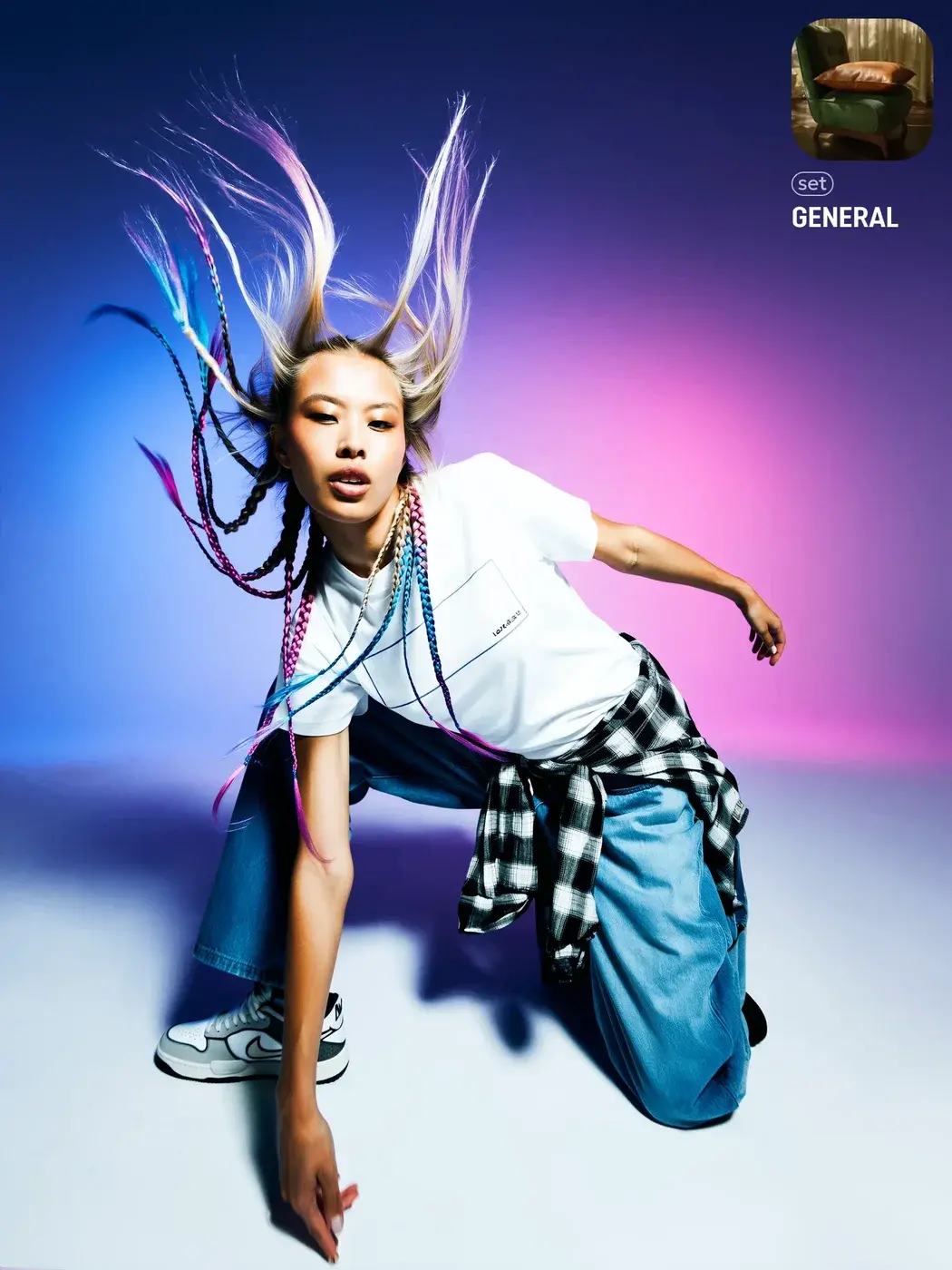
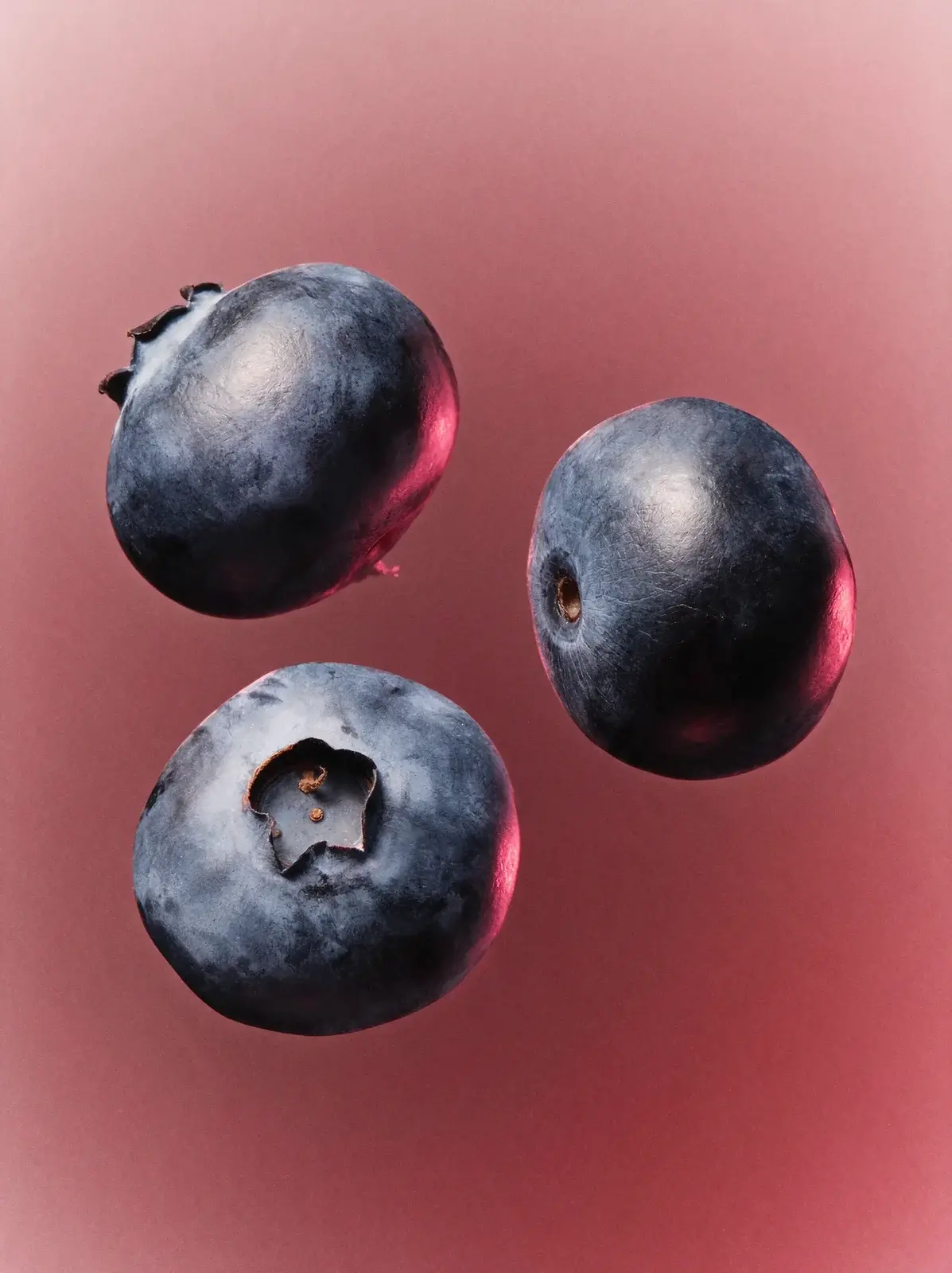
Seedream 5.5
Copy
Apply one single unified dramatic color-gel editorial analog film process to the ENTIRE image, subject and background together, so that it looks like one photograph shot on color film in a photo studio with one strong directional key light and one colored gel light, never like a cutout placed over a new background; the same treatment applies whether the subject is a person or an object. Film grain is a defining part of this look and must be obvious: coarse-to-medium film grain with particles about 4-5 pixels wide at 1760 pixels of image width, so that it stays clearly visible even when the picture is shown small on a phone screen, about 13% strength on the subject (surfaces, fabric, props, midtones) and about 5% on the smooth backdrop, made of fine irregular clumps of slightly lighter and darker tone with a faint variation in color, like a scan of a 35mm Kodak Portra 400 negative; the subject and the backdrop share exactly the same grain texture; no digital smoothness, no noise reduction, no plastic retouching, no clean synthetic surfaces anywhere. Color grade and light: one strong directional key light from the upper left with a clearly visible direction, sculpting every form with defined shadows on the right side and bright specular highlights, plus a second colored gel light in the backdrop color (pink) from the right that wraps every edge as a glowing rim light and colors the shadows; the shadows are deep and saturated pink (about #381521, midtone shadows about #663B49) instead of gray, the darkest areas are true near-black (about #0B090C, never lifted, never milky or faded), lit surfaces are warm and clean, highlights bright but never clipped (peak about 96%), a wide tonal range with medium-high contrast (median brightness about 56%), rich saturated colors (overall saturation about 40%) and a soft halation glow around the brightest highlights; the backdrop itself stays a smooth, luminous, airbrushed color field and only the subject receives the directional shadows; light surfaces and metal show both lights: warm highlights from the key and pink-tinted shadows from the gel; every other color keeps its own hue. Depth: the color field is never centered on the subject and never forms a vignette, halo or circle around it; the subject sits inside a smooth part of the gradient and the backdrop reads as one wide sweep of color across the whole frame, a faint rim of the backdrop color on the subject's edges, a gentle halation bloom around the brightest highlights and slightly lower contrast far from the subject. Keep the subject, pose, shape, details, props, their colors, camera angle and framing exactly, adding or removing nothing; the object's materials take the grade exactly as they do in a real film photograph shot in this light, clearly tinted by
the dominant light and by the backdrop color while their own base colors stay recognizable; keep all printed text, lettering and logos on the product exactly as they are, sharp, legible and unchanged, add no other text, logos or watermarks, and remove any app badge, sticker or caption from the corners of the source. Everything in the frame that is not the subject, wherever it is, and everything behind and under the subject, whether it was a wall, a floor, sky, field, room or landscape, is completely replaced by one smooth, seamless, perfectly clean airbrushed color field that depends only on position, with no texture of the original surroundings, no horizon, crease, corner, edge, line, rectangle, light pool, beam, cone, oval, ring, steps or bands anywhere, and no hard edge between any two colors: every color change takes place gradually over at least 40% of the frame, and saturation or brightness never changes by more than about 3 points over any 5% of the frame width or height. The field is one vertical ombre that depends mainly on height. At the top of the frame it is light (#DB9EB2, saturation about 28%), and it deepens very gradually going down through #BD667A at 55% of the height into a rich #A34952 in the lowest third (hue shifting by about 15 degrees), staying clear and saturated down to the bottom edge; around the subject the color is a little deeper than at the outer edges; one single, very long, soft airbrushed gradient with no stops. There is no floor, table, ground or horizon anywhere and no long cast shadow on the backdrop: the subject floats in the color field like in an airbrushed studio portrait, with only a faint soft shadow right at its own edges. Preserve exactly as in the source: the shape, size, materials and colors of the product, the contents of every container (liquid, powder, cream, or nothing), transparent, glass or empty parts stay exactly as transparent or empty as they are and are never filled, tinted or recolored (the backdrop is only seen through them), black parts stay black and white parts stay white, metal stays metal, and all printed text stays exactly the same; only the light and the backdrop reaction change. These colors of the subject stay exactly as in the source, never shifted or replaced: deep blue, slate blue, silver-grey bloom. The three blueberries keep their exact shapes, sizes, positions, deep blue color with the powdery bloom and their crowns; the white and lilac gradient backdrop is completely replaced by the color field. Finally, strong visible film grain lies evenly over everything including the subject, and the backdrop glows softly and smoothly around the subject.
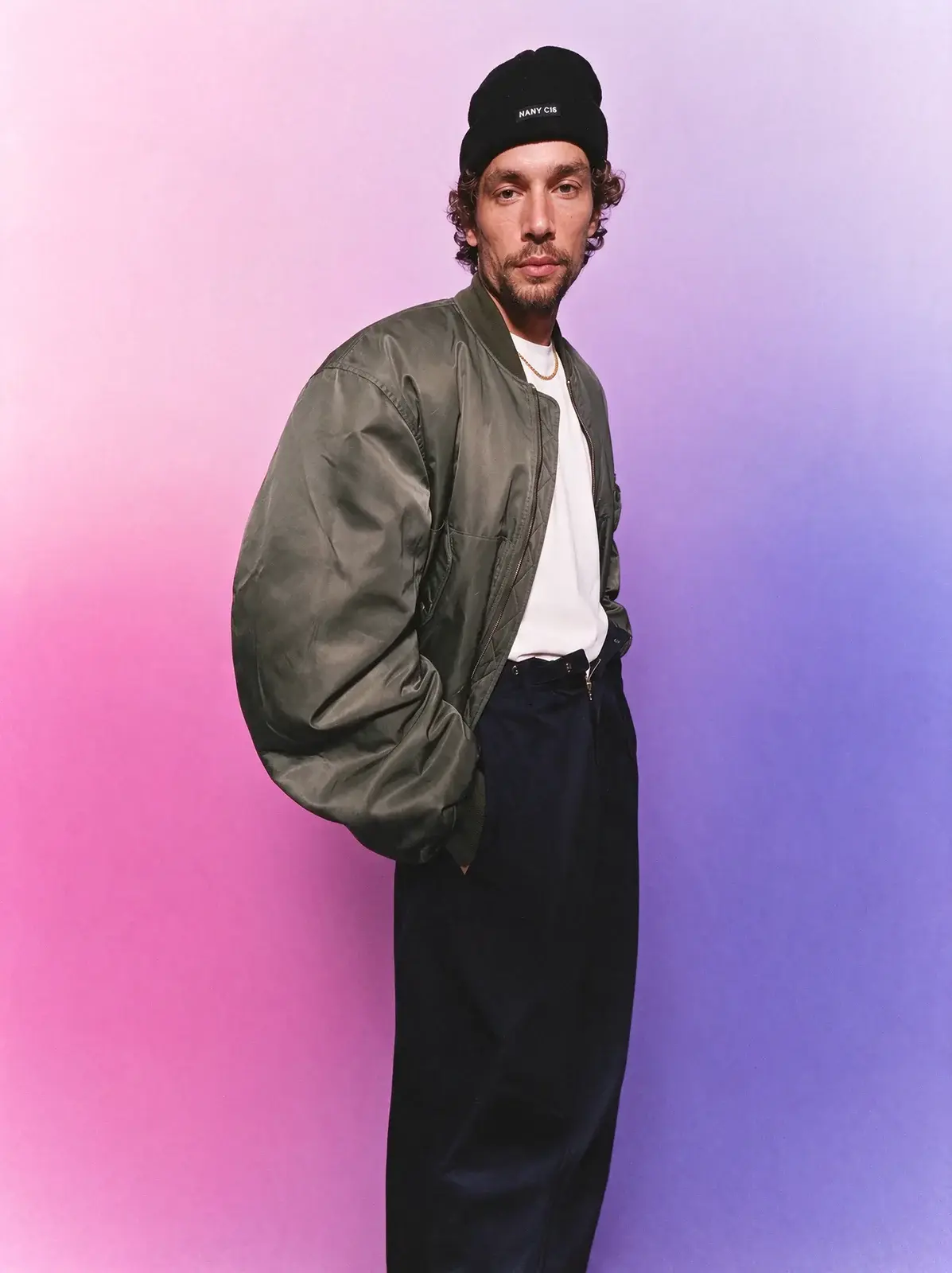
Seedream 5.5
Copy
Apply one single unified soft analog film process to the ENTIRE image, subject and background together, so that it looks like one photograph shot on medium-format film with one soft frontal light, never like a cutout placed over a new background. Film grain is a defining part of this look and must be obvious: coarse-to-medium film grain with particles about 4-5 pixels wide at 1760 pixels of image width, about 13% strength on the subject and about 5% on the smooth backdrop, made of fine irregular clumps of slightly lighter and darker tone, like a scan of a 35mm Kodak Portra 400 negative; the subject and the backdrop share exactly the same grain texture; no digital smoothness, no plastic retouching. Color grade and light: soft, diffused frontal key light with gentle shadows, slightly hazy with a mild glow, no hard specular shine; medium-high contrast, median brightness about 59%, rich overall saturation about 40%; skin and light materials take a subtle lilac tint in the highlights and a warm complementary tint in the shadows. Everything that is not the subject, including the studio wall, the floor and the horizon line, is completely replaced by one smooth, seamless, airbrushed color field with no horizon, no floor line, no band and no cast shadow on the backdrop: the subject floats in the color field like in an airbrushed studio portrait. The field is one clean airbrushed blend of two neighbouring colors, luminous and fresh, never dull, gray or brown. The upper left of the frame is a light clear tint of the first color (#FAAFEB), the left side flows down into a bright, clear first color (#EB63CF, hue about 312 degrees, saturation about 58%) in the lower left; the middle of the frame is the blended color halfway between them (#D181F0); the right side is a bright, clear second color (#8E6FE8, hue about 255 degrees, saturation about 52%) that lightens into a luminous tint toward the top right corner (#CDBEFA) and stays clear in the lower right (#8263E0); the whole transition is very long, wide and soft, one gentle airbrushed field with no gray patch anywhere. Preserve exactly: the face, expression, skin tone, the black beanie with its small white label, the olive-green bomber jacket, the white t-shirt, the thin gold chain necklace, the dark navy trousers and his pose with both hands in the pockets; only the light, the grade and the backdrop change. No text, no logos, no watermarks.
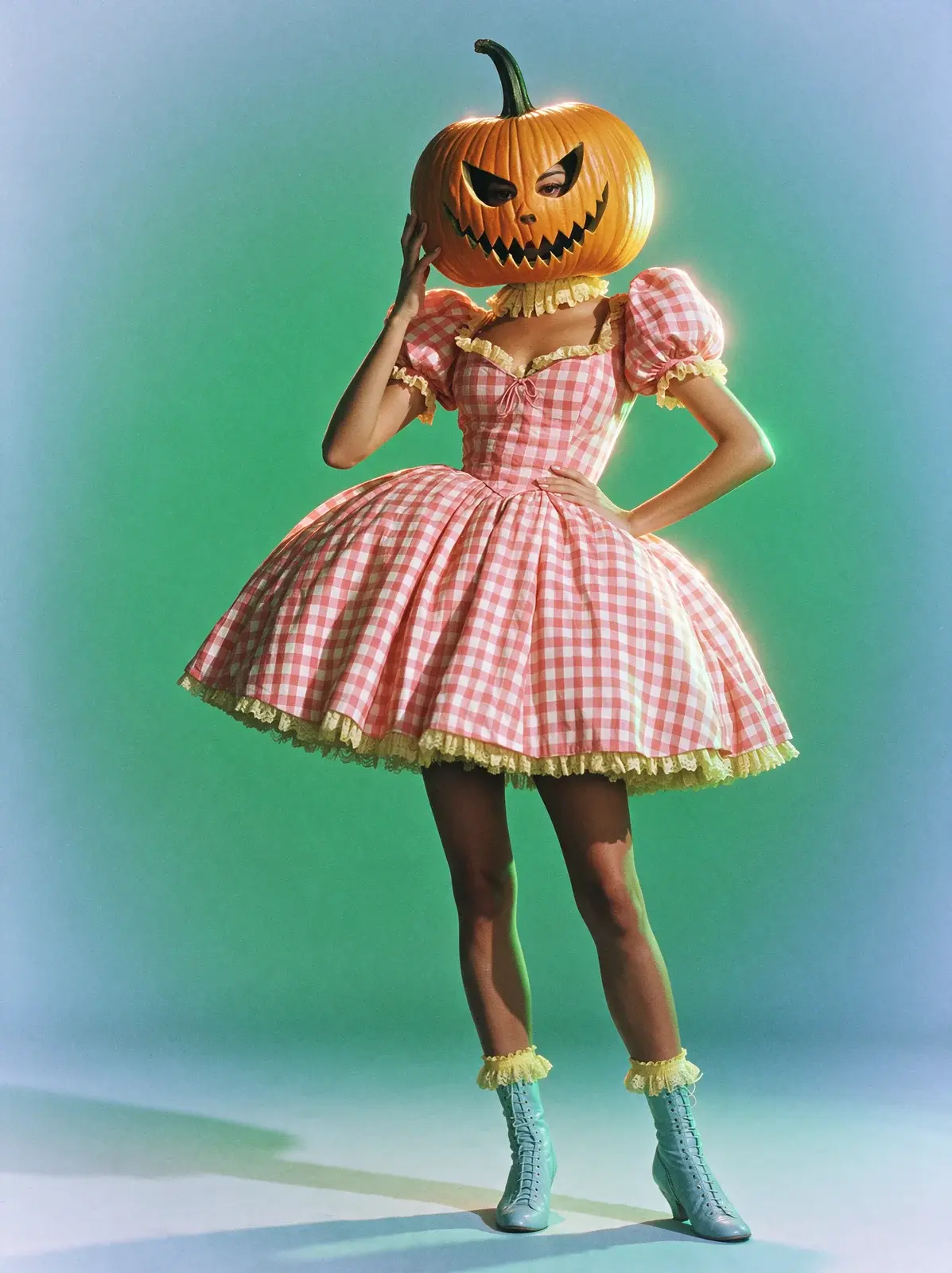
Seedream 5.5
Copy
Apply one single unified dramatic color-gel editorial analog film process to the ENTIRE image, subject and background together, so that it looks like one photograph shot on color film in a photo studio with one strong directional key light and one colored gel light, never like a cutout placed over a new background; the same treatment applies whether the subject is a person or an object. Film grain is a defining part of this look and must be obvious: coarse-to-medium film grain with particles about 4-5 pixels wide at 1760 pixels of image width, so that it stays clearly visible even when the picture is shown small on a phone screen, about 13% strength on the subject (skin, hair, fabric, props, midtones) and about 5% on the smooth backdrop, made of fine irregular clumps of slightly lighter and darker tone with a faint variation in color, like a scan of a 35mm Kodak Portra 400 negative; the subject and the backdrop share exactly the same grain texture; no digital smoothness, no noise reduction, no plastic retouching, no clean synthetic surfaces anywhere. Color grade and light: one strong directional key light from the upper left with a clearly visible direction, sculpting every form with defined shadows on the right side and bright specular highlights, plus a second colored gel light in the backdrop color (mint-green) from the right that wraps every edge as a glowing rim light and colors the shadows; the shadows are deep and saturated mint-green (about #153827, midtone shadows about #3B6651) instead of gray, the darkest areas are true near-black (about #0B090C, never lifted, never milky or faded), lit surfaces are warm, clean and luminous with glowing highlights on skin, fabric and every glossy or metallic part (peak about 99%, bright specular glints and sparkles), a visible soft bloom and halation glow spreading from the brightest areas, a wide tonal range with medium-high contrast (median brightness about 60%), rich saturated colors (overall saturation about 40%); the backdrop itself stays a smooth, luminous, airbrushed color field and only the subject receives the directional shadows, with one long soft cast shadow in the backdrop's own hue; skin and light materials show both lights: warm highlights from the key and mint-green-tinted shadows from the gel; every other color keeps its own hue. Depth: the backdrop is clearly deeper and richer in color around the subject than toward the outer edges of the frame, so that the subject sits inside a soft glowing atmosphere of color; add a soft contact shadow in the backdrop's own hue, a faint rim of the backdrop color on the subject's edges, a gentle halation bloom around the brightest highlights and slightly lower contrast far from the subject. Keep the subject, pose, shape, details, props, their colors,
camera angle and framing exactly, adding or removing nothing; skin and hair take the grade exactly as they do in a real film photograph shot in this light, clearly tinted by the dominant light and by the backdrop color (hue and saturation shift noticeably toward the tints described in the grade), while the person stays recognizable: the complexion depth (lightness) of the skin stays within about 10% of the original and is never whitened or darkened, hair keeps its base color family (blonde stays blonde, dark stays dark) with the tint on top of it, and eye color is unchanged; no text, no logos, no watermarks, and remove any app badge, sticker or caption from the corners of the source. Everything in the frame that is not the subject, wherever it is, and everything behind and under the subject, whether it was a wall, a floor, sky, field, room or landscape, is completely replaced by one smooth, seamless, perfectly clean airbrushed color field that depends only on position, with no texture of the original surroundings, no horizon, crease, corner, edge, line, rectangle, light pool, beam, cone, oval, ring, steps or bands anywhere, and no hard edge between any two colors: every color change takes place gradually over at least 40% of the frame, and saturation or brightness never changes by more than about 3 points over any 5% of the frame width or height. The field is one soft airbrushed color field whose hue changes continuously across the frame, and the color reaches every edge and every corner: it never fades to white or cream. Right behind the subject it is a rich, clear color (#40A874, hue about 150 degrees, saturation about 62%); about a quarter of the way to the frame edge it is #50B291; halfway to the edge #67BFB5 with the hue turning toward 215 degrees; three quarters of the way #7AC0CC; at the middle of every frame edge a clear soft color (#8FBAD9); and in the four corners a gently lighter version of the far hue (#9FBBE3), still clearly colored with about 30% saturation. The hue drifts by about 65 degrees from the subject to the edges so that the field reads as two or three blended colors, brightness stays between about 66% and 90% everywhere, with no more than about 4 points of change over any 5% of the frame width, one very long, wide, soft airbrushed gradient with no visible outline, ring or rim anywhere. The carved orange pumpkin head stays exactly as it is with the eyes of the woman visible in its cut-out, the pink-and-white gingham dress with pale yellow lace trim and the pale blue lace-up boots keep their own colors and exact shapes, the pose with one hand at the pumpkin and the other hand on the hip stays exactly the same; the teal sky and the grass are completely replaced by the color field, and she stands on it with only a soft
contact shadow in the backdrop's own hue under her feet. Finally, strong visible film grain lies evenly over everything including the subject, and the backdrop glows softly and smoothly around the subject.
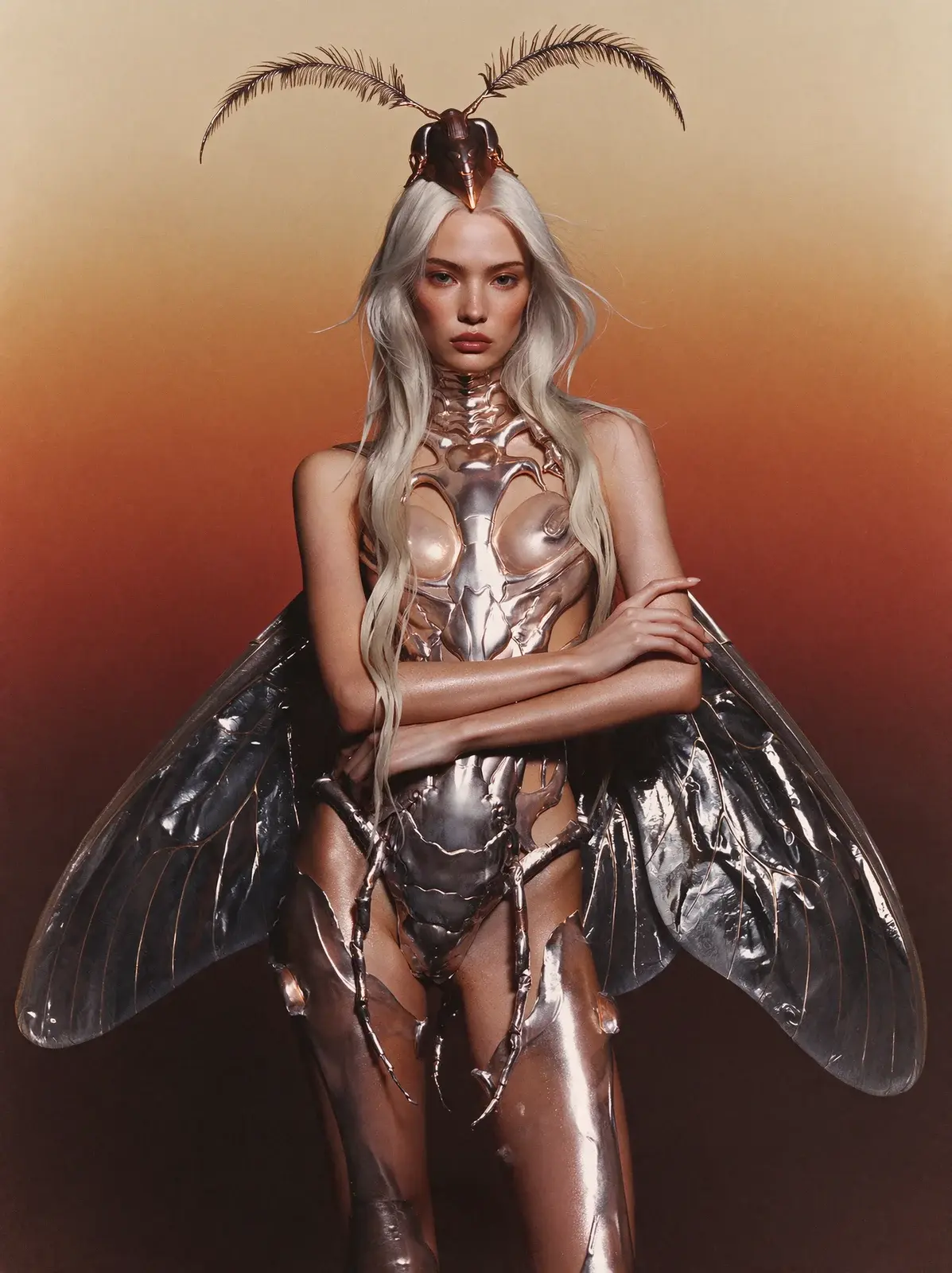
Seedream 5.5
Copy
Restyle this photo as a warm, rich, saturated, high-contrast medium-format film fashion editorial portrait; keep the subject, pose, face, clothing, props, camera angle and framing exactly, add or remove nothing. Replace the original background, whatever it was, with one single perfectly smooth, continuous ombre, a long seamless blend defined only by height, like one airbrushed sweep of color with no steps, bands, stripes or visible stages anywhere: pale sand #D9C4AA at the very top, terracotta #A85538 at 42% of the height, dark chocolate #392525 at 82%, then barely lighter #3A2828 at the bottom edge, the color flowing evenly through ochre, rust and oxblood in between with hue shifting gradually from sand to terracotta to red-brown, saturation peaking about 65% around the middle and falling to about 30% at the bottom, the darkening fastest in the upper-middle; the extreme left and right edges are very slightly lighter (5-8%), no visible shape. Light: soft directional from the front-left and slightly above, glossy natural sheen on skin, leather and metal with small clean highlights, translucent hair strands catching the light, shadows warm red-brown with detail; a wide tonal range, high contrast, true deep blacks (#150F0F, never lifted or faded) and clean bright highlights (near #F0E4DE), a rich, fairly dark image with most of the frame in dark-to-mid tones. Grade: skin warm terracotta (lit #A46A57, shaded #5B2E24), white hair and highlights warm pinkish cream (#D2BDB9), rich rust in oranges, blacks warm deep brown, strong saturation (about 38%). Grain: strong, clearly visible fine film grain like a pushed ISO 800 negative, visible at normal viewing size and equally strong at every height from the pale top to the dark bottom, tiny, no patches, ripples or blotches.
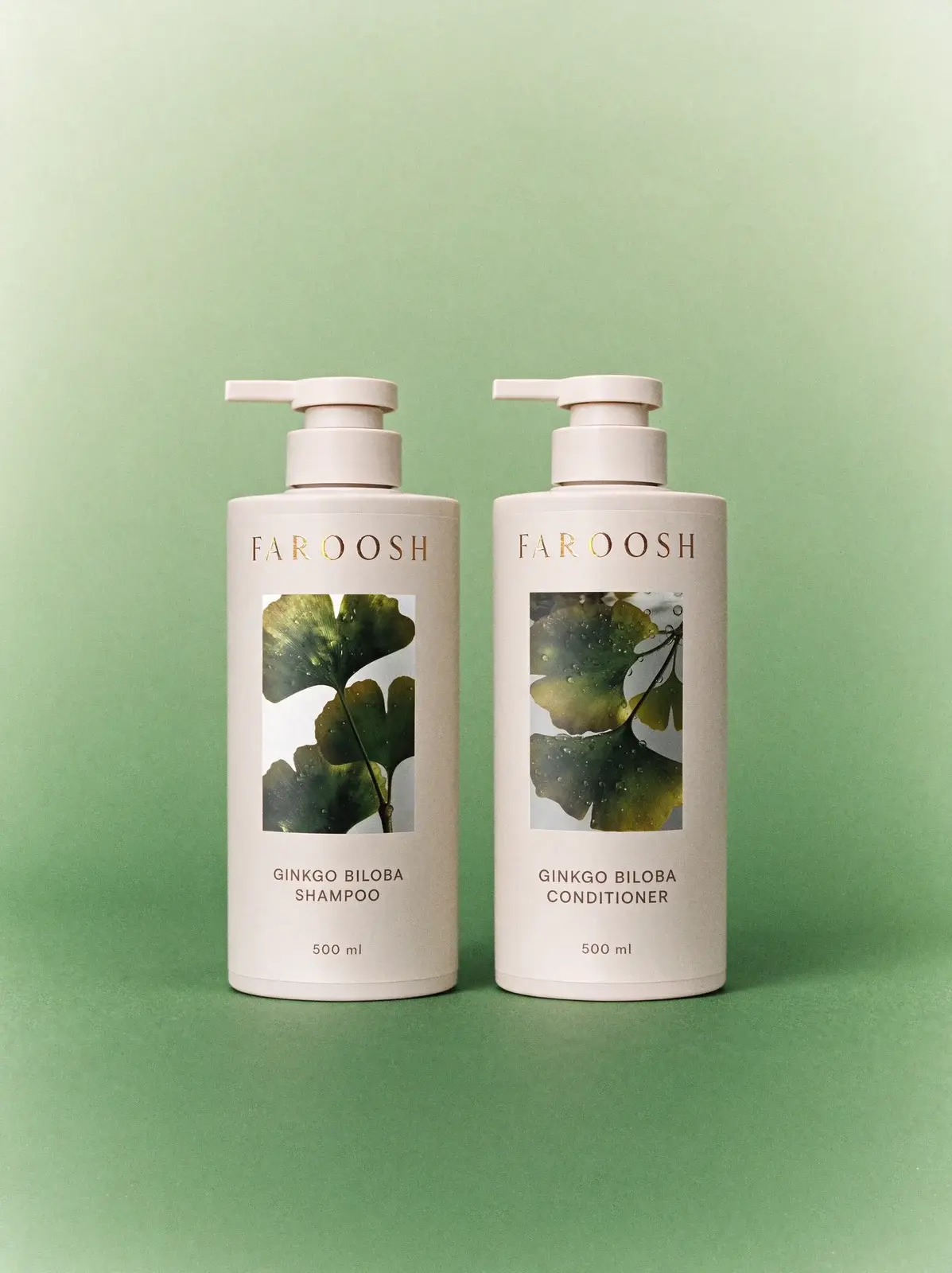
Seedream 5.5
Copy
Apply one single unified bright, airy, dreamy analog film process to the ENTIRE image, subject and background together, so that it looks like one photograph shot on medium-format film with one soft frontal light, never like a cutout placed over a new background; the same treatment applies whether the subject is a person or an object. Film grain is a defining part of this look and must be obvious: coarse-to-medium film grain with particles about 4-5 pixels wide at 1760 pixels of image width, so that it stays clearly visible even when the picture is shown small on a phone screen, about 13% strength on the subject (surfaces, fabric, props, midtones) and about 5% on the smooth backdrop, made of fine irregular clumps of slightly lighter and darker tone with a faint variation in color, like a scan of a 35mm Kodak Portra 400 negative; the subject and the backdrop share exactly the same grain texture; no digital smoothness, no noise reduction, no plastic retouching, no clean synthetic surfaces anywhere. Color grade and light: soft, bright, slightly low frontal light that wraps the figure, a delicate glow on the subject, the backdrop color bleeding onto the subject as a green tint in the edges and shadows, highlights clean and pale, shadows soft with detail; a high-key airy image with median brightness about 67%, highlights up to near white, blacks only in the darkest objects (about #101010), moderate contrast, soft pastel saturation about 24% except the dense backdrop color near the figure; every other color of the subject keeps its own hue; light surfaces and metal take a subtle green tint in the highlights and a warm complementary tint in the shadows. Depth: the color field is never centered on the subject and never forms a vignette, halo or circle around it; the subject sits inside a smooth part of the gradient and the backdrop reads as one wide sweep of color across the whole frame, with a soft contact shadow in the backdrop's own hue, a faint rim of the backdrop color on the subject's edges, a gentle halation bloom around the brightest highlights and slightly lower contrast far from the subject. Keep the subject, pose, shape, details, props, their colors, camera angle and framing exactly, adding or removing nothing; the object's materials take the grade exactly as they do in a real film photograph shot in this light, clearly tinted by the dominant light and by the backdrop color while their own base colors stay recognizable; keep all printed text, lettering and logos on the product exactly as they are, sharp, legible and unchanged, add no other text, logos or watermarks, and remove any app badge, sticker or caption from the corners of the source. Everything in the frame that is not the subject, wherever it is, and everything behind and under the
subject, whether it was a wall, a floor, sky, field, room or landscape, is completely replaced by one smooth, seamless, perfectly clean airbrushed color field that depends only on position, with no texture of the original surroundings, no horizon, crease, corner, edge, line, rectangle, light pool, beam, cone, oval, ring, steps or bands anywhere, and no hard edge between any two colors: every color change takes place gradually over at least 40% of the frame, and saturation or brightness never changes by more than about 3 points over any 5% of the frame width or height. The field is one vertical ombre that depends mainly on height. At the top of the frame it is light (#C2DBB6, saturation about 17%), and it deepens very gradually going down through #94BD89 at 55% of the height into a rich #72A36D in the lowest third (hue shifting by about 15 degrees), staying clear and saturated down to the bottom edge; around the subject the color is a little deeper than at the outer edges; one single, very long, soft airbrushed gradient with no stops. The two matte warm-beige pump bottles keep their exact shape, size, color and positions side by side with the same straight-on camera angle, the green ginkgo leaf photographs on the labels keep their natural greens and water drops, the FAROOSH wordmark keeps its gold foil letters, the lines GINKGO BILOBA SHAMPOO, GINKGO BILOBA CONDITIONER and 500 ml stay exactly as they are; the pale grey studio backdrop is completely replaced by the color field and the bottles stand on it with only a soft contact shadow in the backdrop's own hue. Finally, strong visible film grain lies evenly over everything including the subject, and the backdrop glows softly and smoothly around the subject.
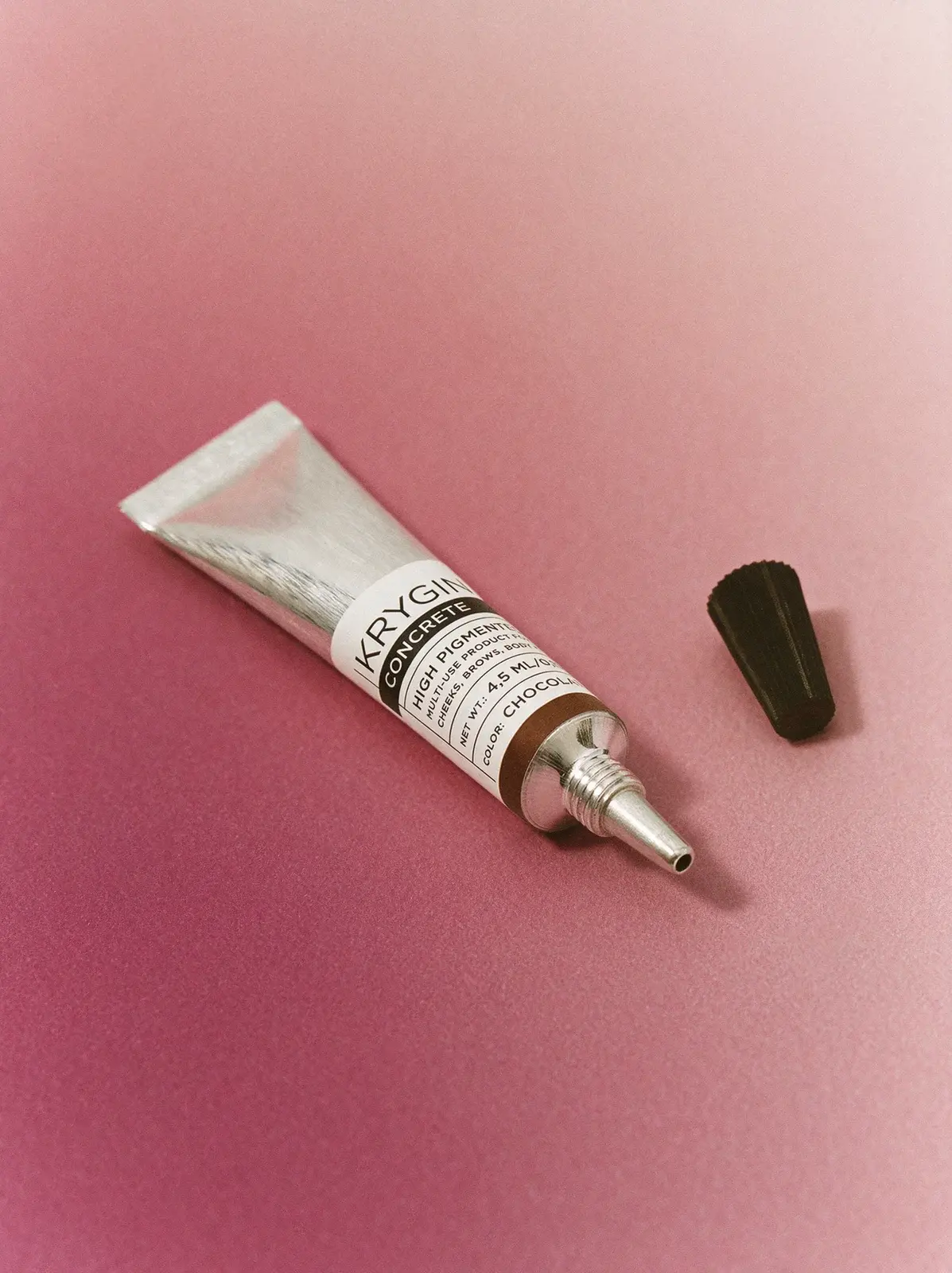
Seedream 5.5
Copy
Apply one single unified glossy beauty-editorial analog film process to the ENTIRE image, subject and background together, so that it looks like one photograph with one soft frontal light, never like a cutout placed over a new background; the same treatment applies whether the subject is a person or an object. Film grain is a defining part of this look and must be obvious: coarse-to-medium film grain with particles about 4-5 pixels wide at 1760 pixels of image width, so that it stays clearly visible even when the picture is shown small on a phone screen, about 13% strength on the subject (surfaces, fabric, props, midtones) and about 5% on the smooth backdrop, made of fine irregular clumps of slightly lighter and darker tone with a faint variation in color, like a scan of a 35mm Kodak Portra 800 negative pushed one stop; the subject and the backdrop share exactly the same grain texture; no digital smoothness, no noise reduction, no plastic retouching, no clean synthetic surfaces anywhere. Color grade and light: soft, diffused, flattering frontal light with low contrast and soft transparent shadows; a glossy, glowing, slightly wet sheen on smooth or shiny surfaces with soft specular highlights in cool mint-white (about #E9F2EB) and a fine pearly shimmer; midtones and lit colors warm, golden and peachy, shadows warm brown (#845D45), the darkest areas olive-brown (#2F251A), no pure black anywhere; highlights soft and never pure white (peak about 93% brightness), median brightness about 62%, overall saturation about 30%; the backdrop color reflects as a faint pink glow on the nearest edges of the subject; light surfaces and metal take a subtle pink tint in the highlights and a warm complementary tint in the shadows. Depth: the color field is never centered on the subject and never forms a vignette, halo or circle around it; the subject sits inside a smooth part of the gradient and the backdrop reads as one wide sweep of color across the whole frame, with a soft contact shadow in the backdrop's own hue, a faint rim of the backdrop color on the subject's edges, a gentle halation bloom around the brightest highlights and slightly lower contrast far from the subject. Keep the subject, pose, shape, details, props, their colors, camera angle and framing exactly, adding or removing nothing; the object's materials take the grade exactly as they do in a real film photograph shot in this light, clearly tinted by the dominant light and by the backdrop color while their own base colors stay recognizable; keep all printed text, lettering and logos on the product exactly as they are, sharp, legible and unchanged, add no other text, logos or watermarks, and remove any app badge, sticker or caption from the corners of the source. Everything in the frame that is not the
subject, wherever it is, and everything behind and under the subject, whether it was a wall, a floor, sky, field, room or landscape, is completely replaced by one smooth, seamless, perfectly clean airbrushed color field that depends only on position, with no texture of the original surroundings, no horizon, crease, corner, edge, line, rectangle, light pool, beam, cone, oval, ring, steps or bands anywhere, and no hard edge between any two colors: every color change takes place gradually over at least 40% of the frame, and saturation or brightness never changes by more than about 3 points over any 5% of the frame width or height. The field is one large diagonal gradient that depends on the position along the line from the lower left corner to the upper right corner of the frame, never on the position of the subject. The lower left corner and the left edge in the lower half are the richest, clearest color (#A84063, hue about 340 degrees, saturation about 62%, brightness about 66%, never washed out or muddy); it flows gradually across the middle of the frame as #BD667D and then #D1929F, and reaches the upper right corner as a light tint (#EBC7CC); the upper left corner is #D696A5 and the lower right corner is #CC8B9C, so every corner of the frame still carries a clear tint of the color and none is white; the hue drifts by a few degrees along the way; one very long, wide, soft airbrushed gradient filling the whole frame. The aluminum tube keeps its brushed silver metal with a soft reflection of the backdrop color, the white label keeps its exact layout, the chocolate-brown band stays chocolate brown, the black ribbed cap stays black; the tube and the cap stay in exactly the same positions with the same high-angle perspective, and the white surface they rest on becomes part of the color field with only soft contact shadows. Finally, strong visible film grain lies evenly over everything including the subject, and the backdrop glows softly and smoothly around the subject.
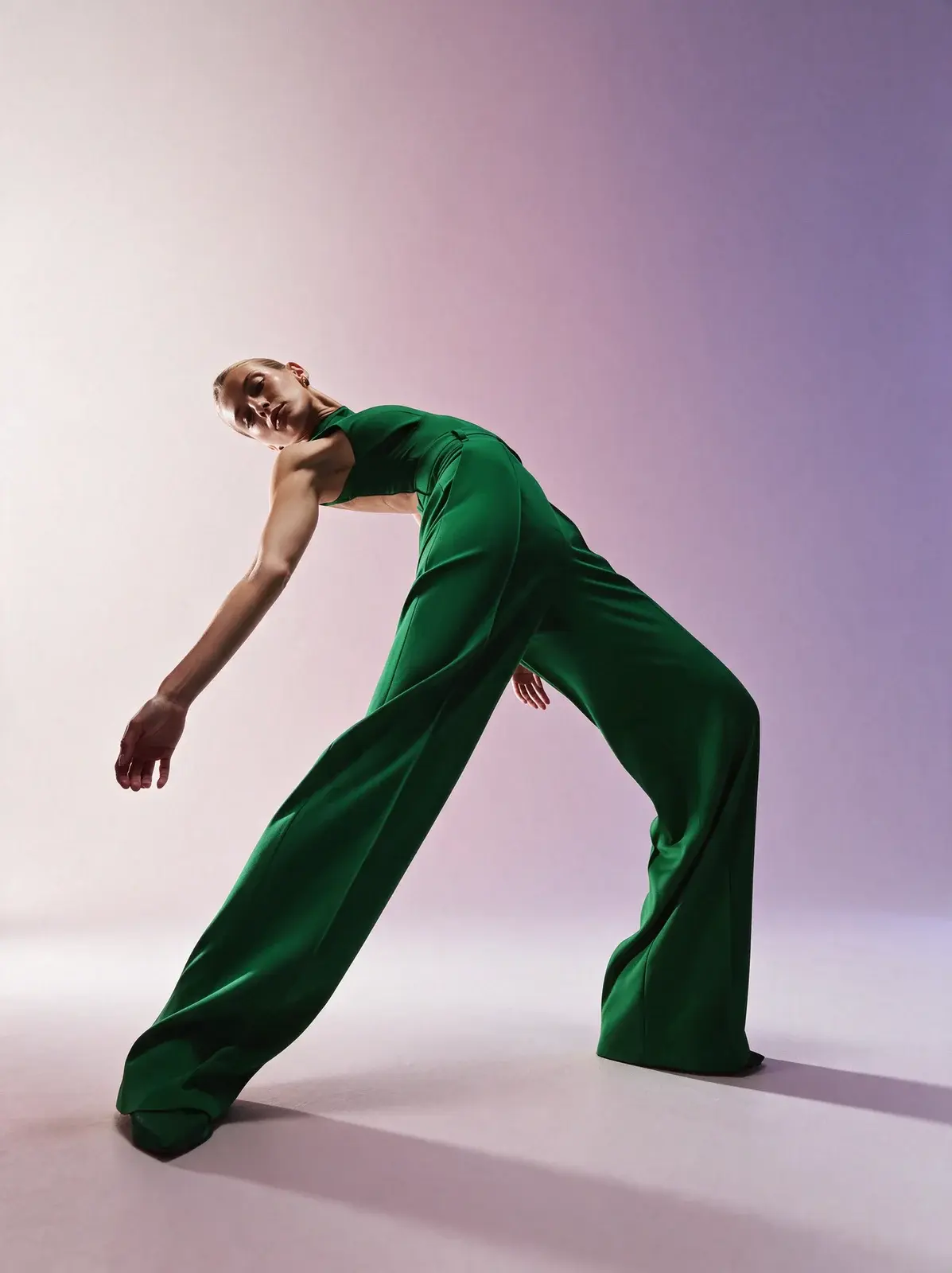
Seedream 5.5
Copy
Edit the uploaded image into a softly lit editorial photograph. Preserve the exact subjects, identity, expression, pose, silhouette, styling, material finishes, original colors, logos, lettering, camera angle and crop. Fill the visible surroundings with a seamless matte gradient, from milky pearl #ECE4E5 over the left third through dusty mauve #C8A8C4 near the middle to soft violet #9275A6 across the upper right. Let the violet taper diagonally toward pale lilac #D9CCDD at the lower right, with broad transitions that extend through gaps in the composition. Use a large diffused key from the upper left and a restrained lavender bounce on the far side, visible only on planes turned toward it. Keep the highlights creamy, the midtones clear and the shaded folds gently defined. At actual support points, let a short mauve-gray shadow taper to the right. Keep suspended subjects at their original height against the continuous color field. Apply fine, low-contrast luminance grain evenly over the finished image.